MT1 mesophilic starter
MT1 is a named dairy starter in a home Feta-style method. The brief recipe name does not establish its manufacturer or exact strains; a documented commercial MT1 product is one distinct example.
 FermenteaWhere food goes to change
Modern adaptation
Feta-style Fresh Cheese
Whole milk set with a mesophilic starter and rennet makes a fresh, crumbly feta-style cheese. Its curds pass through hot salted whey before molding.
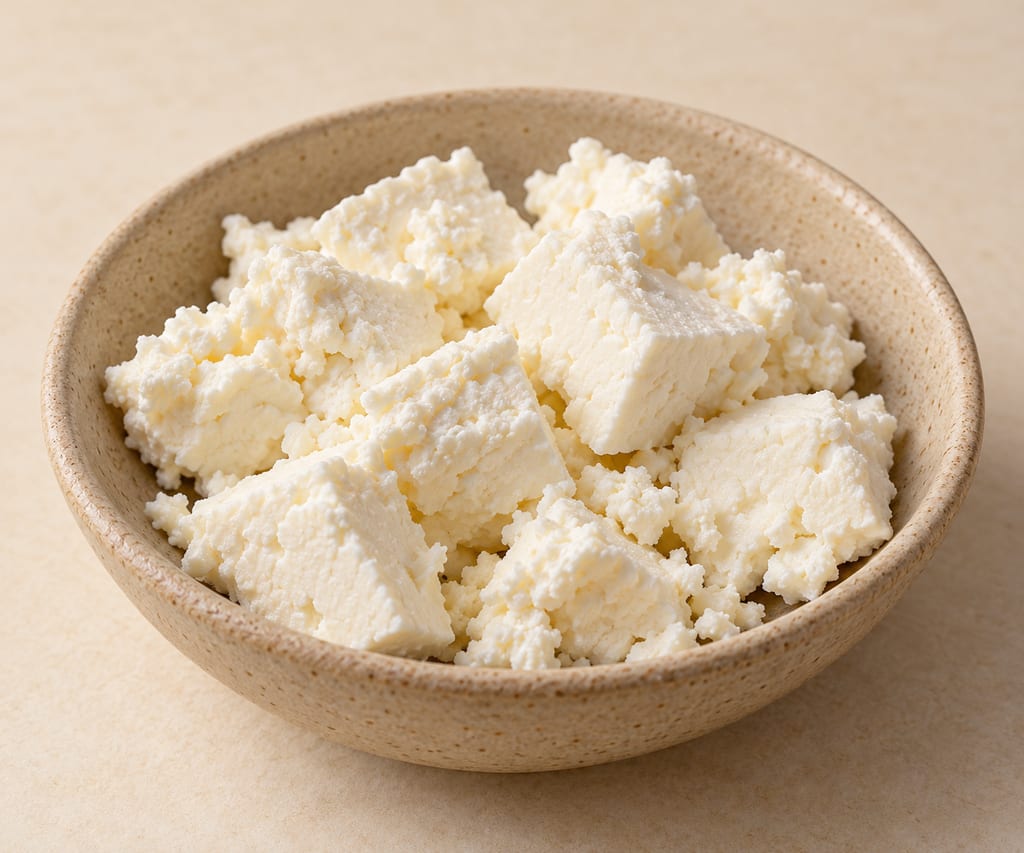
New Mexico State University’s home recipe produces a fresh, crumbly cheese that takes inspiration from feta’s salty, tangy style. It is not Greek Feta PDO. The U.S. method uses pasteurized, non-homogenized whole milk, a named mesophilic starter, rennet, and a hot whey brine; the curds are lifted into molds, drained lightly, cut, and eaten fresh. It names no milk species, does not prescribe Greek Feta’s surface salting and controlled maturation, and gives no aging regime. That distinction matters: a shared appearance or borrowed name does not make two processes interchangeable.
Greek Feta is a protected geographical indication made in Greece from ewe’s milk or a mixture of ewe’s and goat’s milk, with the goat’s portion limited by the specification. The European Commission describes traditional straining without pressure, surface salting, brine, and a ripening period of at least two months. The name is associated with slicing and is documented from the seventeenth century, while older Greek literature contains descriptions of cheese that the Commission connects to the tradition. Such literary echoes do not provide a continuous recipe from antiquity to today.
Feta-style cheeses developed outside Greece for different dairies and markets. A 1990s European court judgment records production in several countries, made with different milks and methods, and traces the dispute over protecting the name. That history helps explain why this New Mexico guide carefully says “Feta-style.” Its recipe is best read on its own terms: a U.S. home adaptation, not a simplified route to the protected Greek cheese.
Milk is not a neutral starting liquid. Casein proteins assemble into a network when rennet acts, trapping fat and water; cutting that network lets whey escape. Whole milk gives the recipe both milk fat and protein, while non-homogenized milk retains fat in a different physical state from homogenized milk. NMSU specifies these milk traits but supplies no substitution protocol. A different milk may still produce cheese, but it no longer follows the documented method exactly, and the record does not claim that all milks set or drain alike.
The use of a commercial mesophilic starter is also a modern choice within a long cheesemaking history. The American Society for Microbiology’s review of Greek cheeses describes traditional Feta made in some rural settings from warm milk and traditional rennet, alongside later commercial dairy practices. NMSU instead names MT1, a mesophilic culture. These approaches reflect different production contexts and should not be blended into a single historical recipe. The culture name alone does not identify strain composition, so this account attributes only the role the recipe gives it.
Milk supplies the water, fat, lactose, minerals, and casein proteins that determine how a curd forms and what remains in it. NMSU specifies whole milk that is pasteurized and non-homogenized, and permits two to three gallons. Those qualifiers are part of the formula, not decoration: milk processing affects the behavior of milk proteins and fat during setting. The guide does not name a species, so the recipe should not be rewritten as specifically cow, sheep, or goat milk.
The MT1 mesophilic starter is the recipe’s biological culture. Starter bacteria use lactose and produce lactic acid; as acidity develops, the milk and curd environment changes, helping set the pace and character of cheesemaking. Cheese microbiology reviews describe acidification as one of the culture’s central roles, while later microbial activity can influence texture and flavor in cheeses that ripen. This recipe’s two-hour starter rest is not a maturation period, and no claim about the exact strains in MT1 is warranted from the guide’s name alone.
Rennet supplies milk-clotting enzymes that help turn the prepared milk into a gel-like curd. Once the curd gives a clean break, cutting it into small cubes exposes more surface area. The cut curds release whey as they settle and are stirred gently. This is a physical drainage stage: it separates liquid from the protein-and-fat-rich curd and changes moisture, rather than adding a new fermentation. The source’s small cut, brief rest, gentle stir, and settling preserve a soft curd while allowing whey to drain.
The two-hour starter rest and the later rennet set are separate events. During the rest, the culture is given time to act in the warm milk; the recipe then introduces rennet and waits for a clean break. A clean break is a practical sign that the milk has formed a coherent curd suitable for cutting. It does not set a universal time for every milk or batch: NMSU says to check again at intervals if the curd has not set. Small cubes and a brief rest after cutting allow whey to drain while gentle handling avoids breaking the curds into fines.
Whey has two roles here. First, it is the liquid that drains away as the curds settle. Then a portion is retained, salted, and used as the brining liquid for the warm treatment. This reuse connects the brine to the milk from which the curd came, while added salt changes its seasoning. NMSU gives the salt amount per gallon of whey rather than a fixed total, so the amount depends on the batch’s whey volume. The source gives neither a measured whey yield nor a final brine concentration.
The distinctive step comes after the first whey has drained from the curds. Salt is dissolved into that reserved whey at the guide’s stated rate, the brine is heated, and the curds are added gradually while being stirred. They then cool in the brine to the guide’s lower target and remain floating there for a short rest before molding. Heat and salt affect the curd’s physical behavior and the salty character of the finished cheese; the exact source sequence, including its temperatures, belongs to this adaptation.
This is different from the Greek PDO process. The European Commission describes curds being molded and strained without pressure, then sliced and surface-salted before brine ripening under controlled conditions. Research on Greek Feta also examines how starter cultures, drainage temperature, salt, and ripening affect composition and texture. Those experiments explain why small changes in a cheese process can matter, but their measurements do not authorize changing NMSU’s ingredient amounts or targets.
The hot-whey step must not be mistaken for a validated pasteurization or pathogen-control process. The NMSU directions call for pasteurized milk, clean equipment, careful handling, and refrigeration; they provide no tested kill step, finished acidity limit, or long-term storage schedule for this particular cheese. The guide’s recipe should therefore remain a fresh cheese and be handled under its stated safety guidance, rather than aged or stored by guesswork.
The sequence creates two distinct heat exposures: milk is first warmed for starter ripening, and the whey brine is heated later with curds added gradually. Between them the curd has been cut and drained. The later cooling target is part of the source method, not a general safety limit or a cue to leave dairy at room temperature indefinitely. NMSU lists cold distilled water as an optional way to bring the warm brine and curds to the stated temperature. The method does not authorize changing its salt rate or holding the cheese warm beyond the described stage.
The word “brine” can conceal important differences. In Greek Feta PDO, the Commission describes surface salting followed by brine ripening for at least two months under specified conditions. In the New Mexico method, salted whey is briefly heated and used while the curd is still in the fresh-making sequence, followed by light molding and drainage. Both involve salt and liquid, but one is an early hot treatment and the other a controlled maturation program. The shared term does not make their salt levels, microbiology, moisture changes, or storage behavior equivalent.
After the warm-brine rest, the curds are transferred into plastic molds and pressed lightly, just enough to drain. They are unmolded and cut into roughly one-inch pieces. The recipe offers an additional salting option and calls for packing the cheese in a covered container. Since it supplies no measured yield, the reader should not infer a fixed number of molds or finished pounds from the milk quantity.
The result is a fresh cheese intended to be crumbly and salty, with a texture shaped by the milk, the cut, whey drainage, and the brief warm-brine stage. It is not the compact, brine-ripened texture of mature Greek Feta PDO. NMSU suggests using feta-style cheese in salads and Greek phyllo pastries; those uses make sense of its salty pieces and ability to crumble into a dish. It can also be treated as a fresh table cheese, while the recipe’s limited storage directions mean it should not be presented as a shelf-stable preserve.
Use the recipe’s optional salt as written if the curd needs additional seasoning, but do not assume that more salt turns the fresh result into a mature brined cheese. Salt level, water loss, culture activity, and time all interact differently in distinct cheese styles. A true brine-ripened Feta requires its own documented process and protected ingredients and place.
Greek Feta’s protected character includes place and material, not just a flavor description. The Commission connects the traditional cheese to Greece’s climate and terrain, milk from ewe and goat herds, and makers’ accumulated knowledge. Its official description concerns a brined cheese with a ripening period, not the immediate fresh product in this entry. The New Mexico guide uses “Feta-style” because the technique and context differ. A cook can appreciate the relationship without claiming that a New Mexico home recipe reproduces the protected cheese.
The final cut into roughly one-inch pieces is practical as well as visual: manageable pieces can be packed and served without treating the curd as a pressed block. The additional salt is expressed by weight of curd, while the principal salt is measured against whey volume. Those different denominators matter; neither quantity can replace the other without recalculation. Because the guide gives no finished yield, a cook cannot calculate an exact total salt amount from the milk alone.
Cheesemaking is sensitive to the material in the vat and the sequence used. The NMSU guide specifies temperatures and times for this particular home procedure, while leaving yield, aging, and storage duration unspecified. Keep the listed units and steps together, and use a thermometer for the stated temperature targets. Do not replace its starter, milk treatment, or hot-whey sequence with details borrowed from a separate Greek, buffalo-milk, or industrial method.
Starter cultures, rennet activity, milk composition, curd size, whey drainage, brining, and subsequent storage all affect what a cheese becomes. Published studies of Feta-type cheeses demonstrate that changing starter levels or drainage conditions can alter measured moisture, acidity, or texture in a given trial. They are comparisons, not conversion tables for this recipe. The home maker’s most useful reading is to follow the named source method faithfully and recognize that a difference in milk or culture can produce a different curd.
Finally, a clean break or an attractive curd is a cheesemaking observation, not a food-safety test. Smell, taste, bubbling, and appearance do not prove that a fresh dairy product is safe. Keep hands, utensils, and surfaces clean, use pasteurized milk, and refrigerate the finished cheese as the extension guide instructs. No unsupported aging endpoint or shelf life is added here.
Historical and modern cheese categories overlap without being identical. Ancient Greek references to white or stored cheese are evidence for long-standing cheesemaking, but do not prove that the precise modern PDO process or this fresh U.S. method existed in antiquity. The word “feta” is later, and the European legal history records how regulation, export, consumer expectations, and competing production traditions shaped its modern protected status. Keeping these layers separate avoids turning a broad story about pastoral dairy foods into a false claim that the NMSU recipe is ancient.
Published Feta research is most useful as a reminder that process details have consequences, not as a source of substitutions. A study of buffalo-milk Feta-type cheese varied starter addition and measured differences in texture and composition during ripening; other work examined Greek Feta drainage temperature and starter combinations. Each study concerns its own milk, culture, process, and measurement. None tests the NMSU hot-whey recipe, so those findings explain why precision matters without adding new time or temperature targets.
Greek feta is a sheep- and goat-milk cheese salted and matured in brine; its current name is recorded from the seventeenth century. This New Mexico extension recipe borrows the crumbly, salty style but uses pasteurized whole milk without naming the animal species, a commercial starter and an unusually warm whey-brine stage. It is meant to be eaten fresh and does not follow the protected Greek ripening process.
Scaling: source batch only
Soft fresh cheese can carry Salmonella, pathogenic E. coli, Listeria and Staphylococcus when milk or handled curd is contaminated.
Hazard sourceUse pasteurized milk, sanitize equipment and food-contact surfaces, wash hands and refrigerate the finished cheese.
Control sourceFresh curd can be contaminated during cutting, draining or molding; use sanitized tools and keep the finished cheese refrigerated.
MT1 mesophilic starter — Starter specified by NMSU.
Source does not specify maturation humidity.
New Mexico State University documents this feta-style home preparation.
Greek Feta PDO is the related tradition, not this fresh hot-whey method.
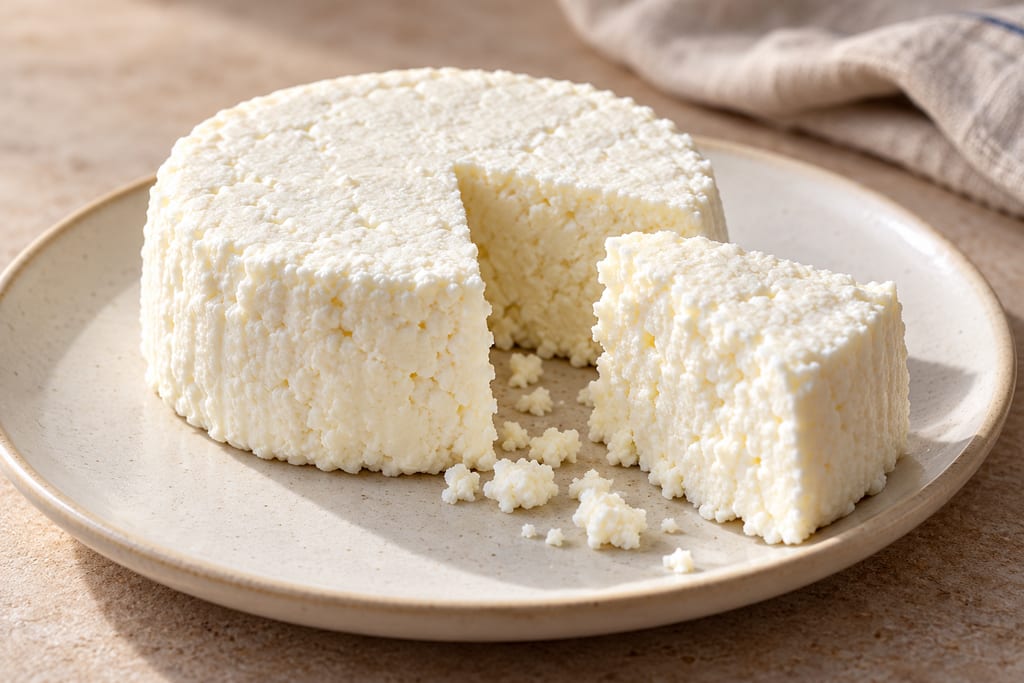
Cultured buttermilk, pasteurized milk, vinegar and rennet make this soft, crumbly queso fresco by a New Mexico home method adapted from Washington’s Abuela Project.
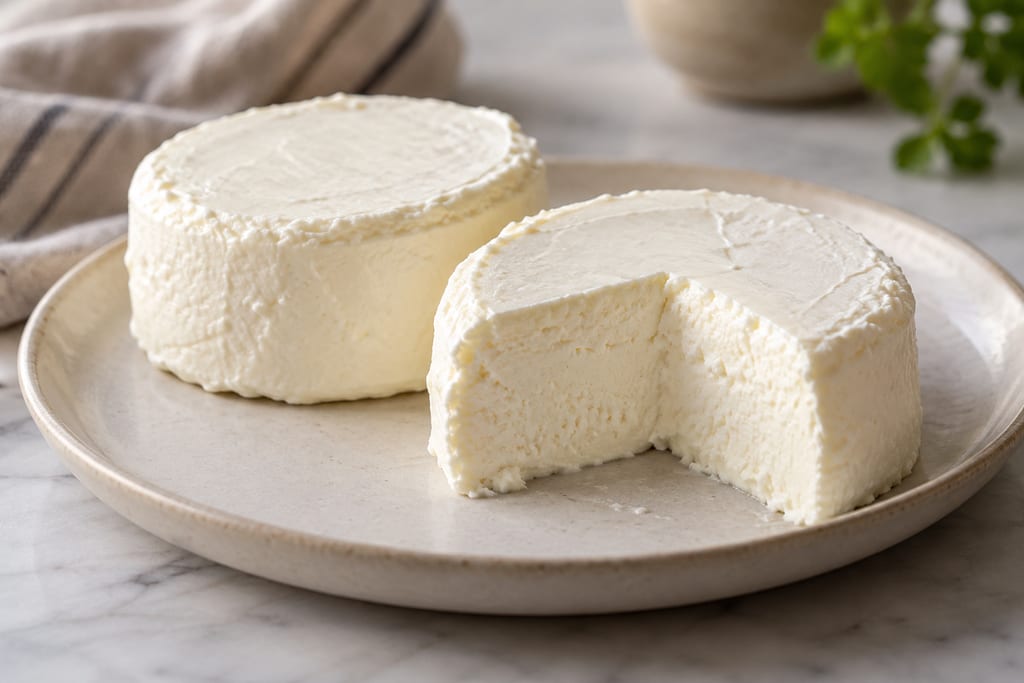
Pasteurized milk cultured with buttermilk or yogurt and set with rennet makes this soft, smooth Neufchâtel-style cheese, pressed into small forms and chilled.
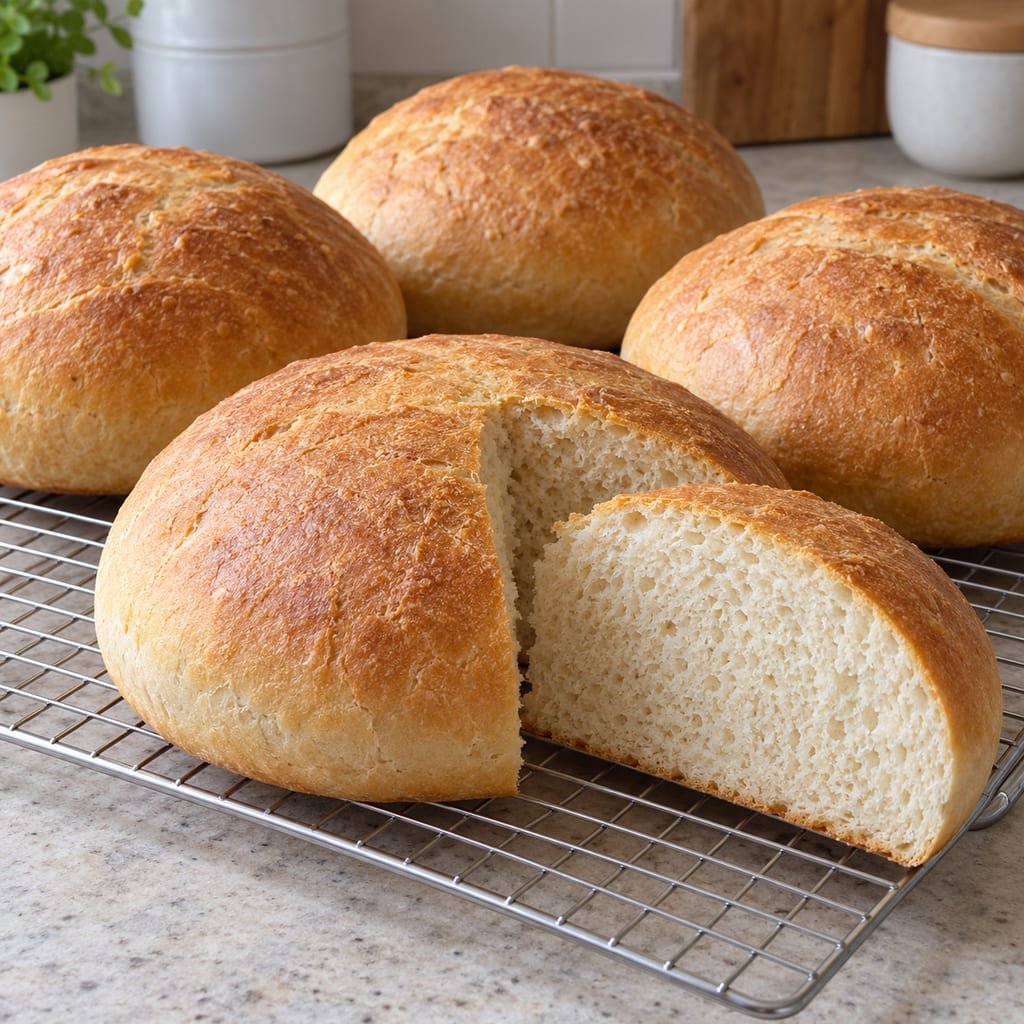
A four-loaf, yeast-raised home-oven version that Navajo Grandma identifies as Jemez Pueblo bread. It is her published adaptation, not a single formula for Pueblo communities or a horno firing protocol.
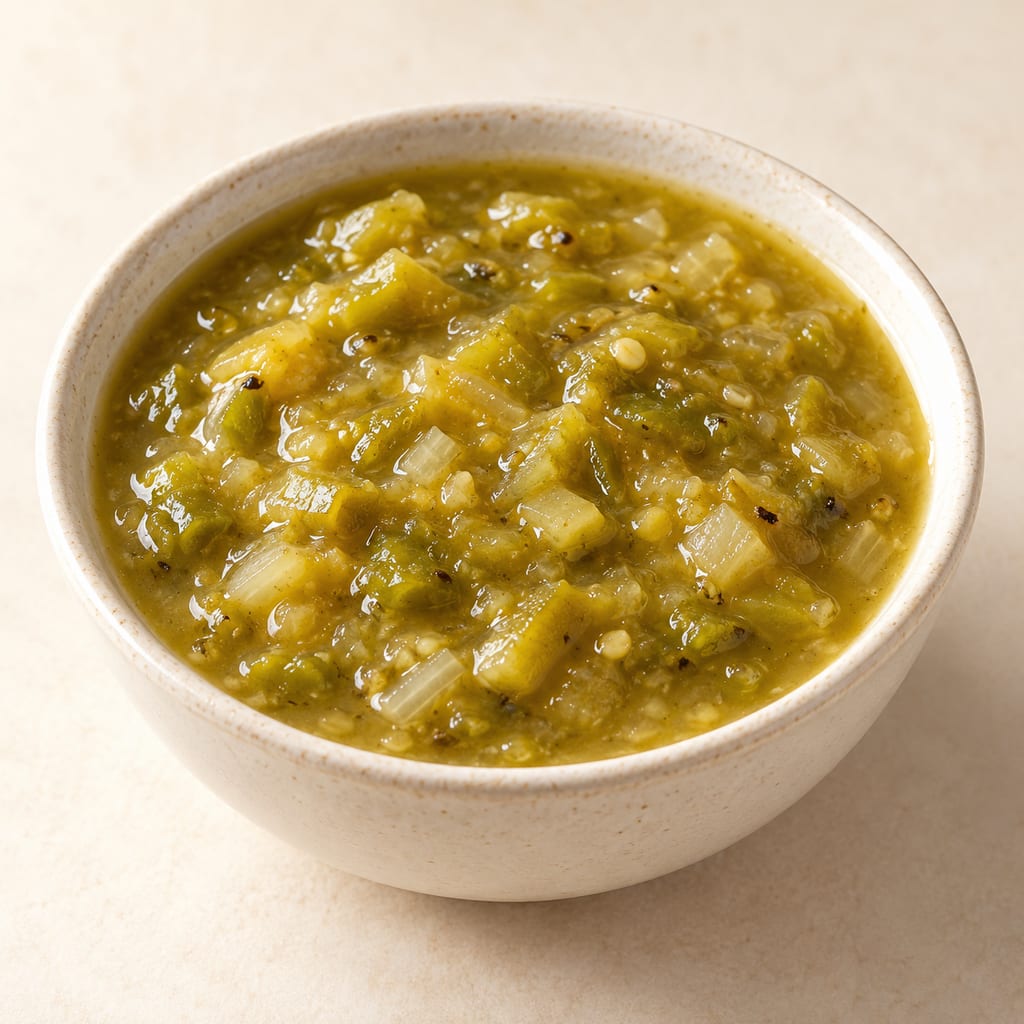
New Mexican green chile sauce is a cooked sauce of roasted fresh green chile, onion and garlic, thickened with a little flour and a 15-minute simmer in stock.
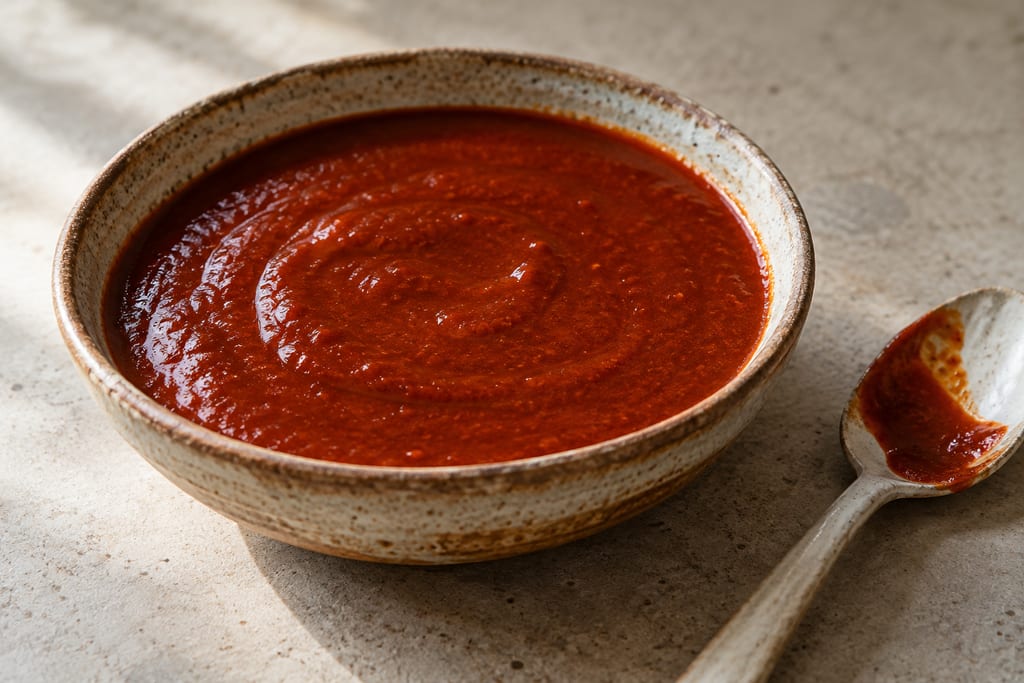
New Mexican red chile sauce is a smooth, cooked sauce of dried red chile, thickened with a little flour and loosened with water, and used to coat enchiladas and to build chile con carne.
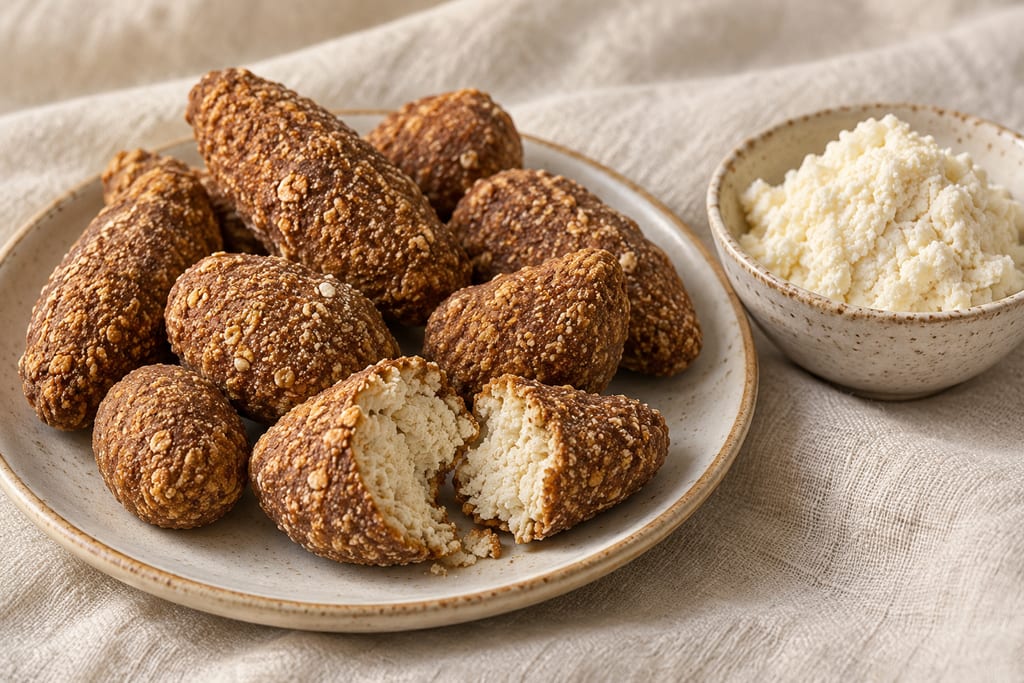
A two-stage Altai dairy preparation: sour chegen is heated into soft aarchi, then portions are drained, pressed and traditionally smoked into firm kurut.
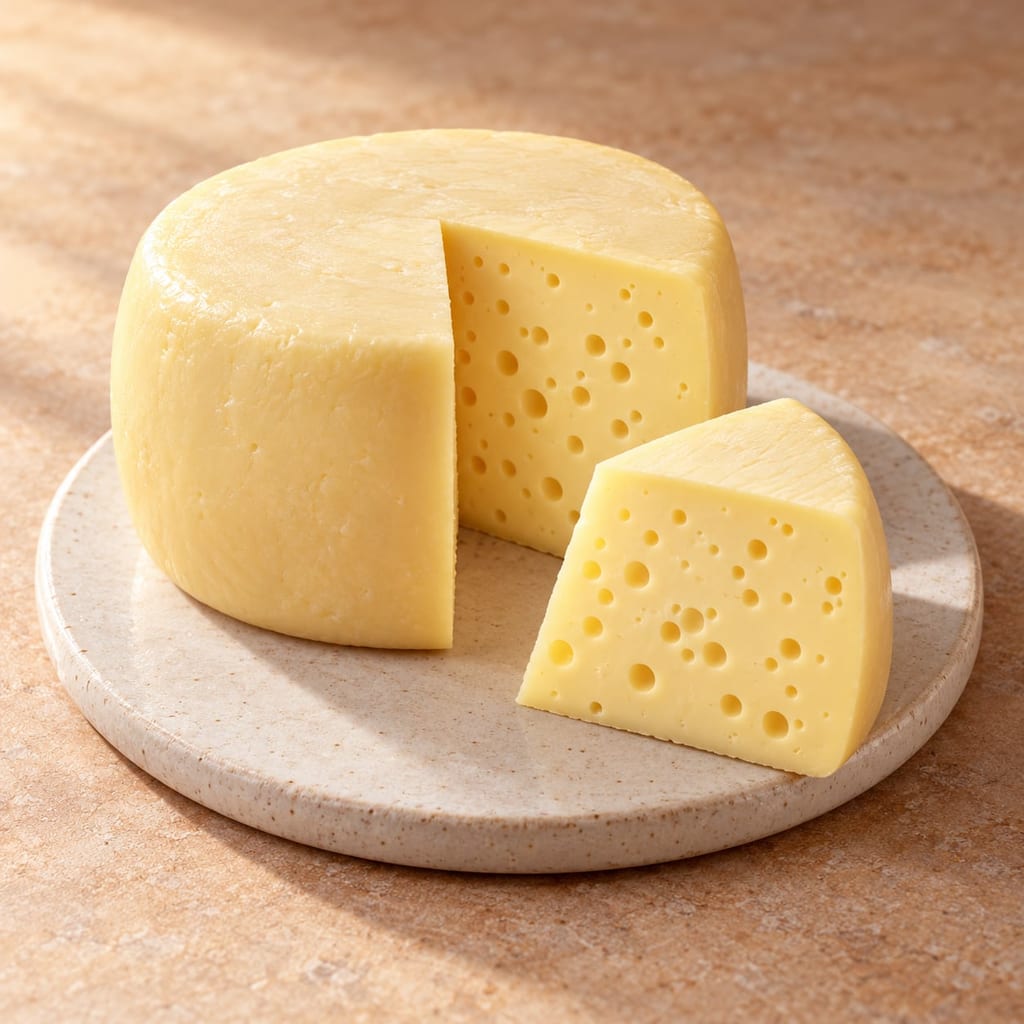
A washed-curd cheese with propionic bacteria, warmed by hot water in two steps and then held in a warm room for weeks so the bacteria can form its holes.
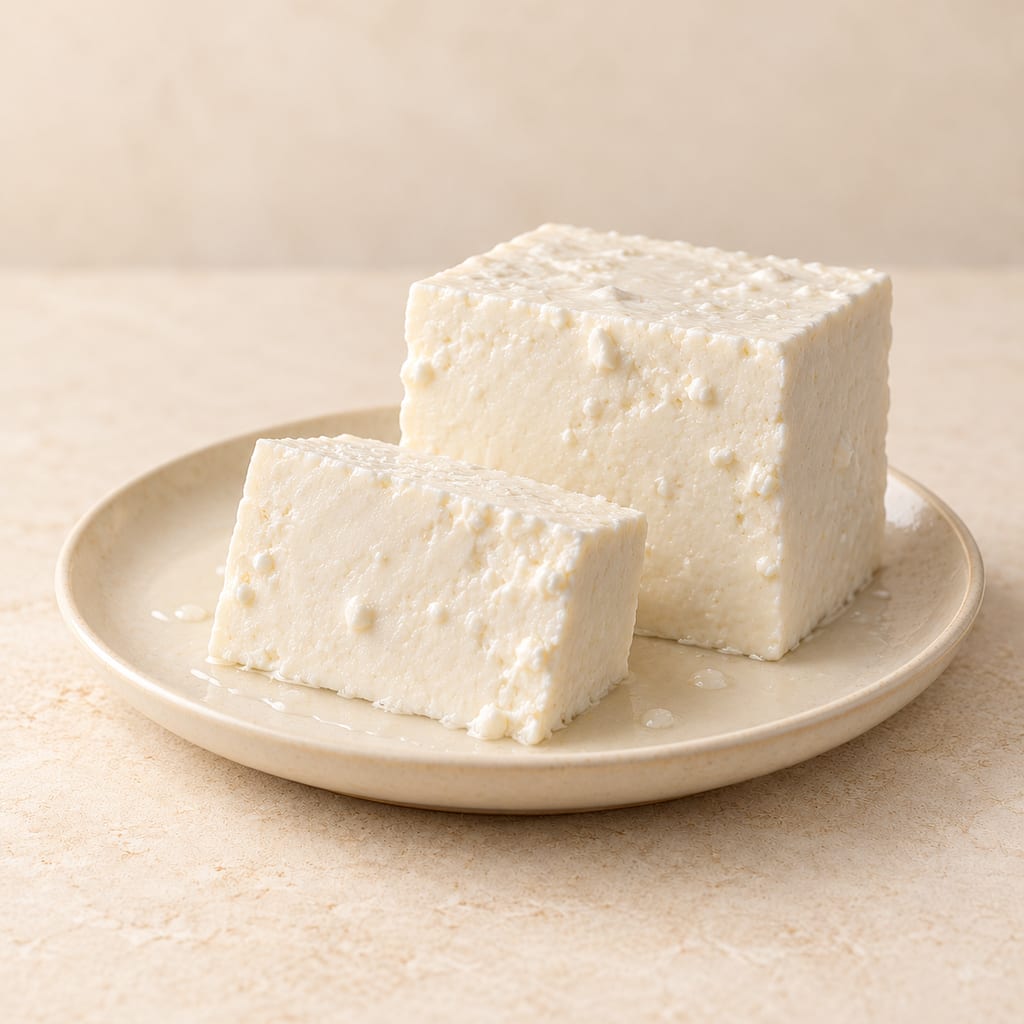
Beyaz peynir is a Turkish white cheese matured in brine. Sheep milk, alone or mixed with other milks, gives a close-textured cheese cut into blocks and packed in cans.
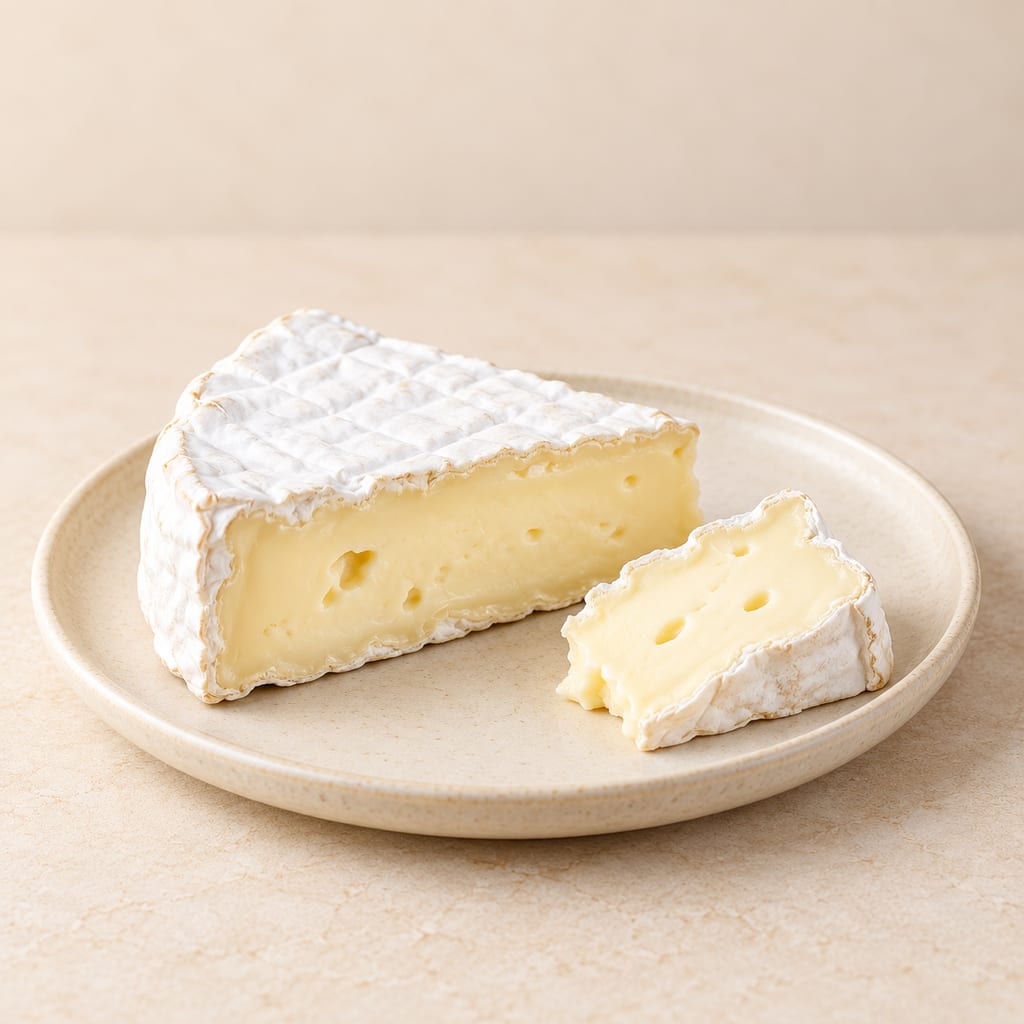
A cream-enriched Brie with a white bloomy rind and a softening center, made from pasteurized milk with lactic and surface cultures.
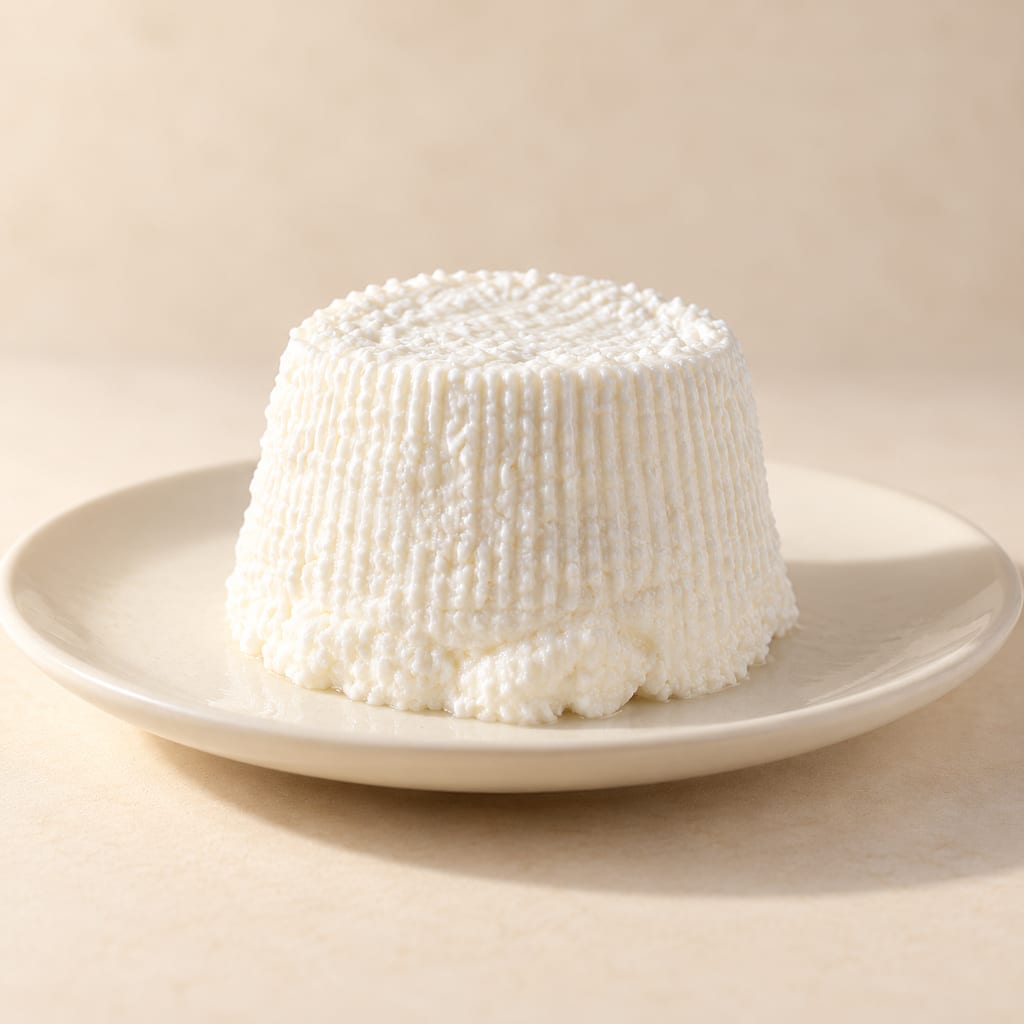
Corsican Brocciu is a whey cheese made by heating sheep's or goat's whey with whole milk and salt, then gently draining the flocculated curds. It is eaten fresh or salted and ripened as Brocciu passu.
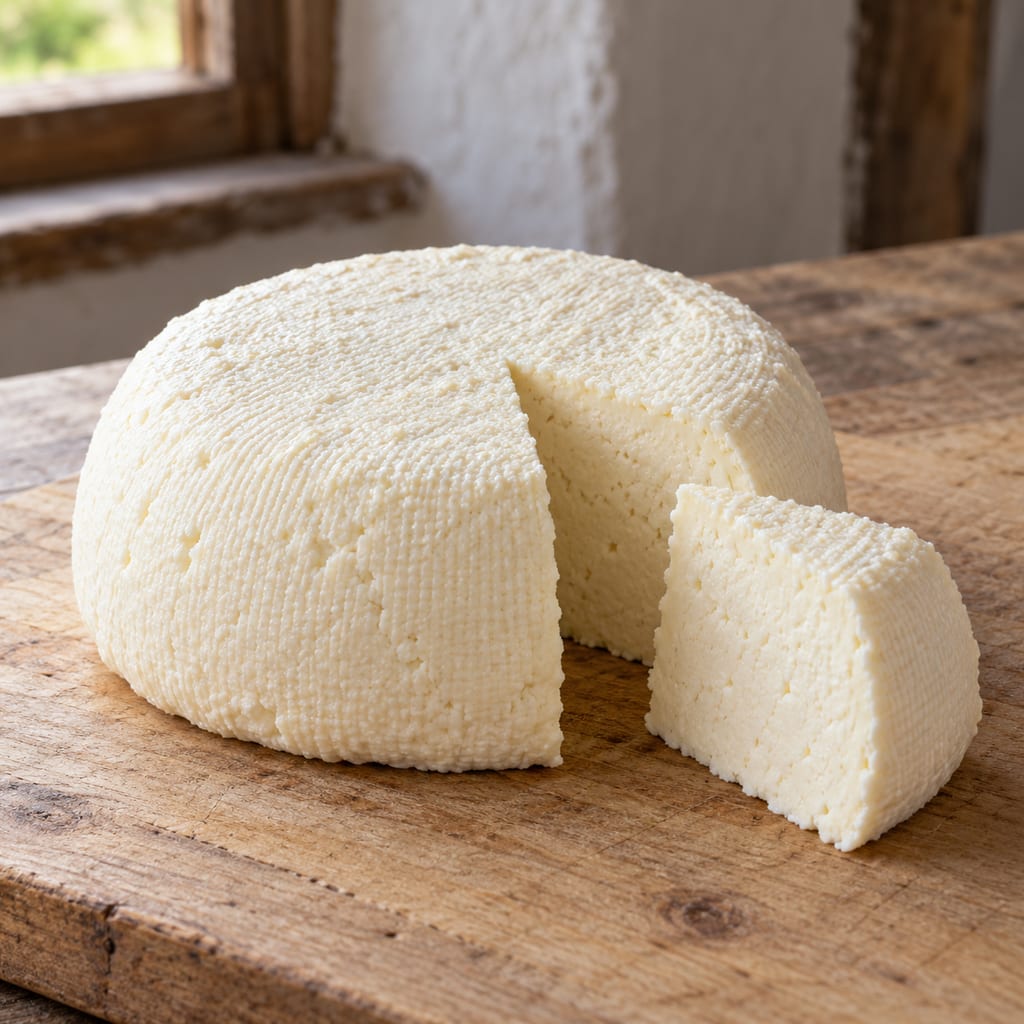
Budz is a traditional Hutsul rennet-set cheese made from sheep, cow or goat milk in the Ukrainian Carpathians, forming a fresh curd that can be eaten, smoked or processed into salted bryndza.
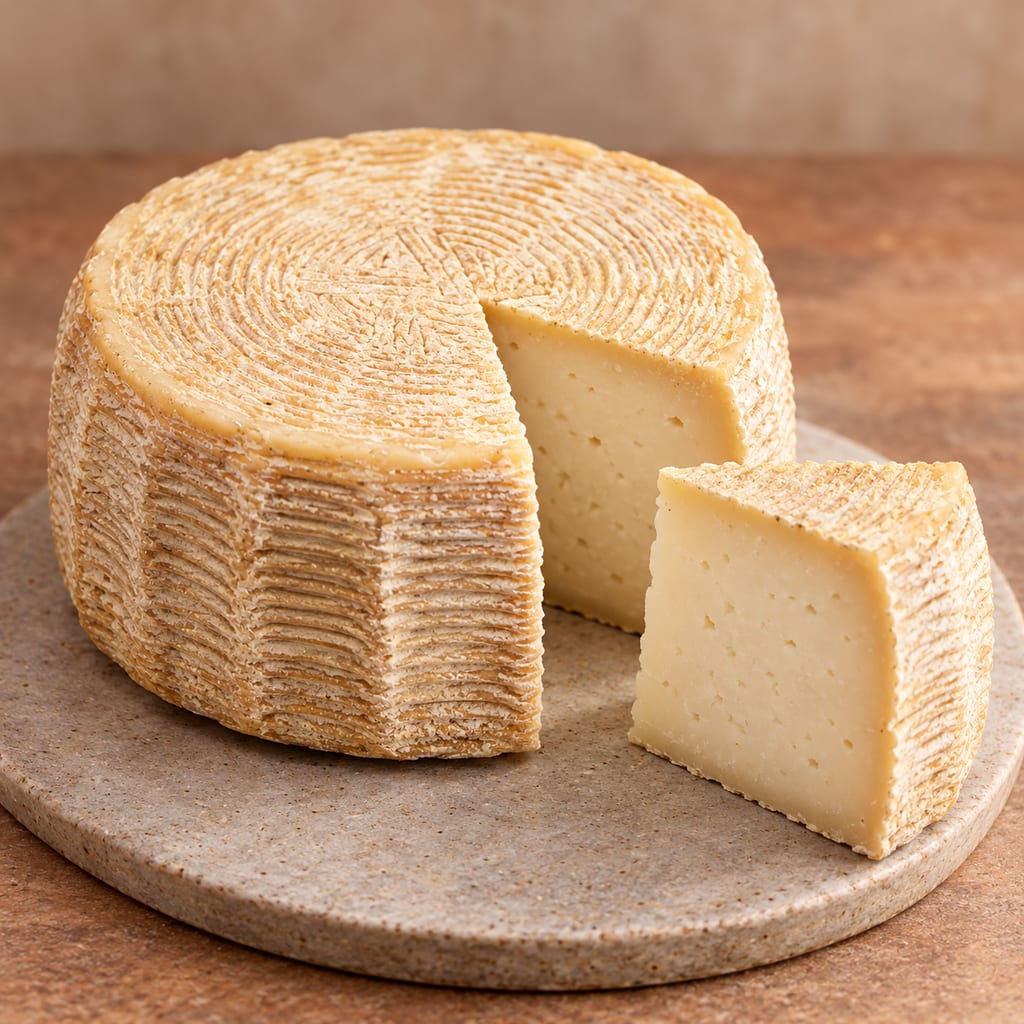
A scalded cheese moulded in baskets and re-cooked in its forms in hot whey, made alongside a ricotta from the same milk, then acidified, brined and aged for months.
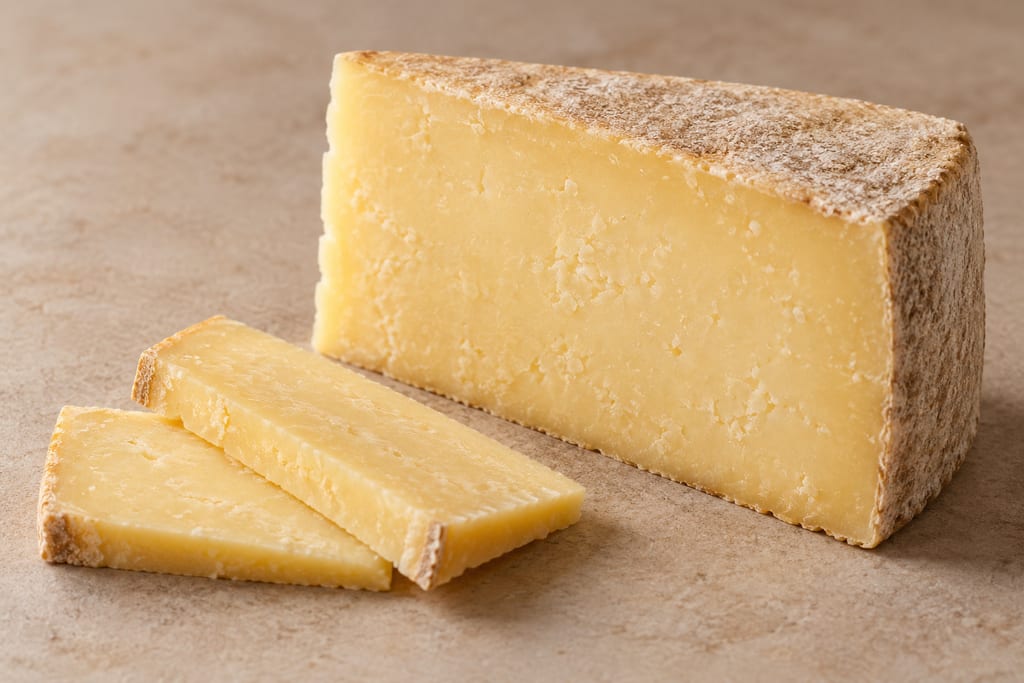
A pressed cheese whose curd is cooked slowly, then cheddared: kept warm in slabs that are turned and stacked for hours before milling, salting and pressing.

Soft, spreadable Calabrian pork sausage made with a great deal of red chilli and fatty pork, stuffed into natural casings, sometimes smoked and matured while staying soft.

A way to add independent temperature logging to an existing food dehydrator without changing its built-in controls or protections. It is a monitoring method, not a rewiring plan.

Pleurotus cystidiosus is the abalone mushroom, a cultivated oyster-type fungus with dark brown caps that grows more slowly and is more demanding than other Pleurotus species.

A dark, balanced vinegar from Emilia-Romagna made by combining cooked or concentrated grape must with wine vinegar, then acetifying and refining it in wood under a protected specification.

A living dairy inoculum that starts controlled cream fermentation, developing acidity and aroma before sour cream or cultured butter is finished.

A small electric incubator holds jars at a selected temperature for yogurt and other documented warm food preparations. Controls, capacity and vessel arrangement vary by model.

Adygean salt is a seasoned table salt associated with Adygea and the wider North Caucasian culinary tradition. Salt is blended with garlic and a variable selection of herbs and spices; the exact mix depends on the named style and maker.

The African Caesar-group mushroom, Amanita masasiensis, is a wild ectomycorrhizal species of central and southern African woodlands, eaten locally. The genus contains deadly poisonous species, so identification needs care.
No community contributions have been published for this entry yet.
Sign in to contribute. Published comments and photos are free to read.
New Mexico State UniversityProcess · Safety
Making Homemade CheeseFormula and ordered process for the NMSU Feta-style cheese; not an authentic Greek feta specification.
Cited in: A fresh New Mexico cheese and the name it borrows; Milk, starter, rennet, and the making of curd; Why this method heats the whey; From mold to table; Reading the method without turning it into a universal formula
European Commission, Directorate-General for Agriculture and Rural DevelopmentHistory · Identity
Feta PDOGreek protected Feta uses ewe and goat milk, surface salt and controlled brine ripening; the name feta is attested from the seventeenth century.
Cited in: A fresh New Mexico cheese and the name it borrows; Why this method heats the whey; From mold to table
MicroorganismsScience
Current Advances in Cheese MicrobiologyStarter cultures acidify milk and curd; other microbiota contribute to cheese appearance, texture and flavor.
Cited in: Milk, starter, rennet, and the making of curd; Reading the method without turning it into a universal formula
Microbiology Spectrum, American Society for MicrobiologyHistory · Microbiology
The Microfloras of Traditional Greek CheesesThe review describes Greek Feta as a brined cheese made from ewe's milk or mixtures with goat's milk, with local technologies and traditions.
Microbial groups develop during traditional Feta surface ripening; this is not a description of the New Mexico fresh method.
Cited in: Reading the method without turning it into a universal formula
Court of Justice of the European Communities, EUR-LexHistory · Geographical indication
Commission v Denmark, Case C-317/95The judgment recounts different Feta production styles outside Greece, and the history of Greek legal protection and PDO registration.
Cited in: A fresh New Mexico cheese and the name it borrows
Journal of Food Science and Technology, National Dairy Research InstituteScience · Comparison
Effect of rate of addition of starter culture on textural characteristics of buffalo milk Feta type cheese during ripeningIn a particular buffalo-milk Feta-type study, starter level was associated with changes in texture, moisture and other measured characteristics; those results cannot be transferred as a formula for the NMSU cheese.
Cited in: Milk, starter, rennet, and the making of curd; Why this method heats the whey; Reading the method without turning it into a universal formula