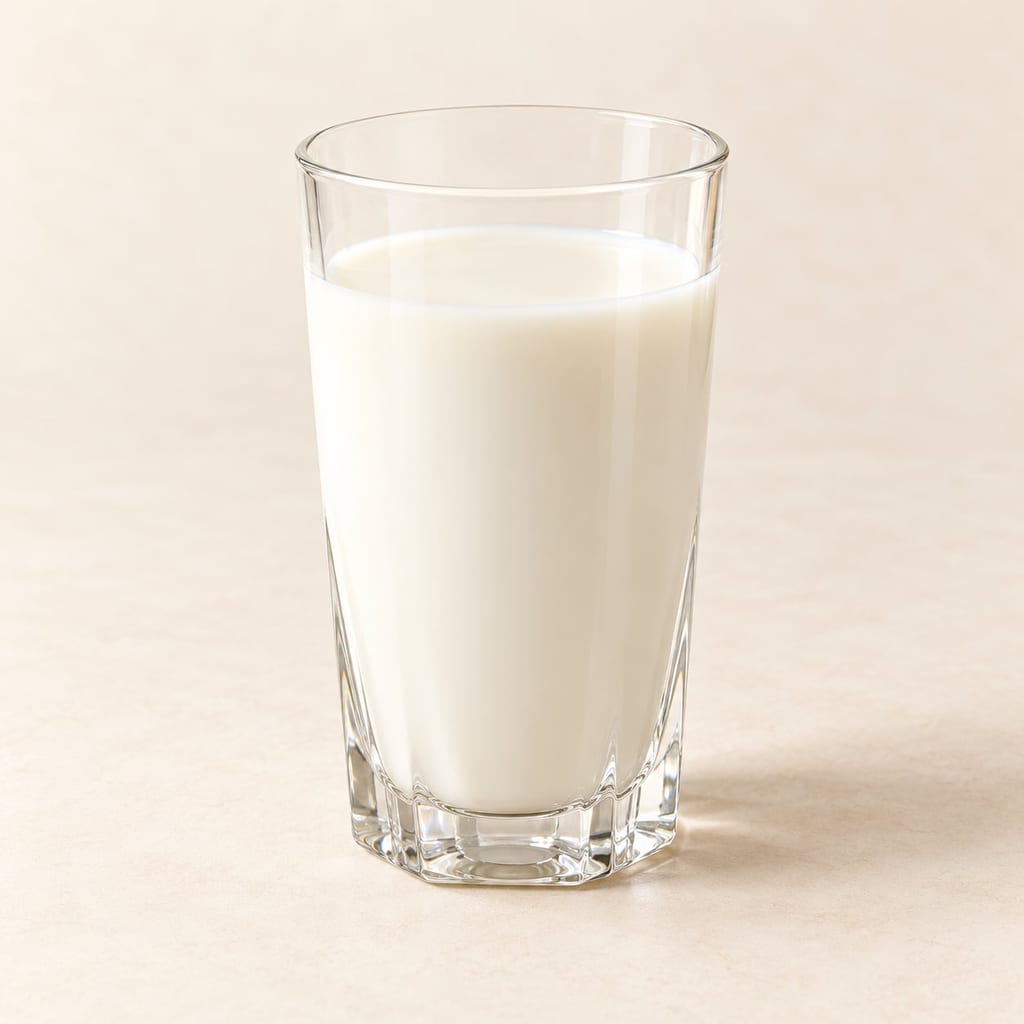
Milk
Milk is the fluid produced by dairy animals. Its species, fat level, heat treatment and handling shape the way it can be drunk, cultured or turned into curd.
 FermenteaWhere food goes to change
Modern adaptation
Queso fresco
Cultured buttermilk, pasteurized milk, vinegar and rennet make this soft, crumbly queso fresco by a New Mexico home method adapted from Washington’s Abuela Project.
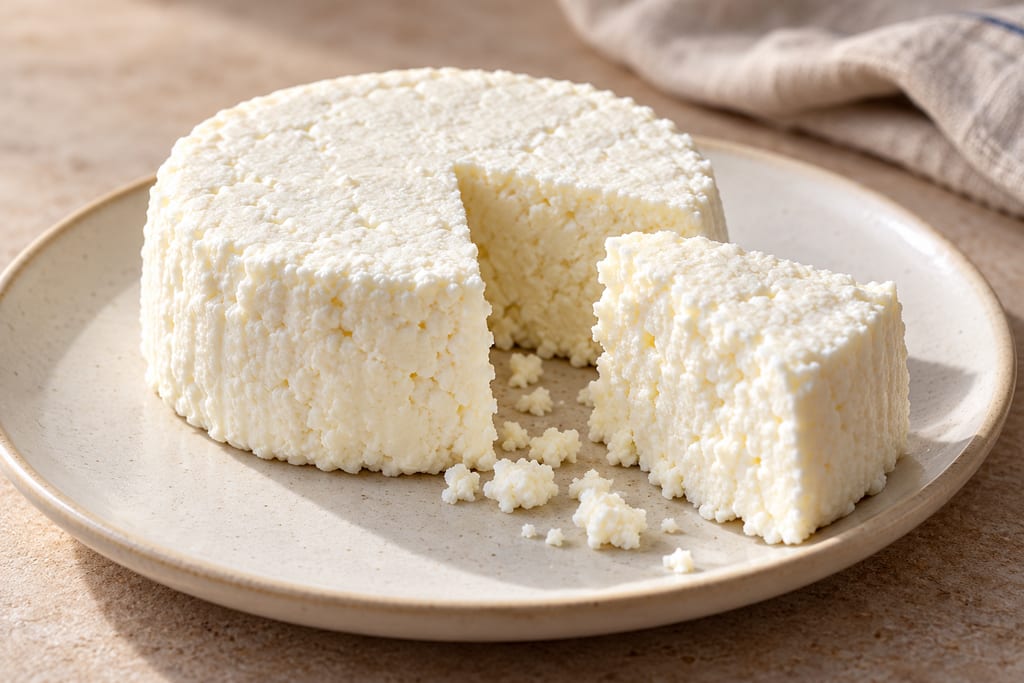
NMSU calls this preparation “SAFE Queso Fresco.” It describes a soft, grainy, crumbly cheese with a mild, fresh flavor. The extension recipe says it can be crumbled over salads and holds up to baking or broiling. These details distinguish it as a young, moist cheese intended to remain in pieces rather than melt into a smooth sauce or develop a rind and concentrated flavor through aging.
Queso fresco is also the name of a broad family of fresh cheeses. Mexican and Latin American makers use different milks and curd treatments, so the name does not specify one universal formula. This record follows New Mexico State University's home method: cultured buttermilk and vinegar are added to milk, rennet sets the curd, and a warm second stage precedes draining, salting and an overnight refrigerated mold.
The finished form is fresh rather than ripened. It can be soft yet crumbly because the curd is drained and handled before molding. A pale appearance and mild dairy character belong to the fresh-cheese family; they do not identify one regional tradition. The formula is best understood as a documented modern adaptation, not as a substitute for every queso fresco made elsewhere.
Queso fresco sits within Mexico's longer history of cheesemaking. A historical review describes Spanish livestock and cheesemaking entering Mexico during the sixteenth century and notes that writings from that century already mention queso fresco alongside jocoque, butter and requesón. Cheesemaking then changed through regional practice. Curd could be broken or milled, salted in the mass, molded in baskets or wooden forms, and pressed lightly or more firmly. Those choices varied, so a shared name can cover meaningfully different cheeses.
This recipe has a narrower, recent history in Washington State. In 1997, queso fresco made with raw milk was implicated in a Salmonella outbreak in Yakima County. Washington State University educators built a response around community food knowledge as well as food science. Julia Herrera had developed a pasteurized-milk recipe; WSU dairy specialists modified it to address unwanted microbial growth, keeping quality and ease of preparation. Bilingual “abuela” trainers taught both cheesemaking and safer handling.
NMSU identifies its “SAFE Queso Fresco” as an adaptation of the WSU Abuela Project recipe. The NMSU publication provides the amounts and overnight refrigerated molding used here. WSU's Spanish-language guide preserves a closely related but different project formula: it uses three-quarters teaspoon salt, allows herbs and pepper, and does not specify the overnight molding step. These methods share a public-health history, but their formulas should not be blended.
Milk contains casein proteins and fat dispersed through water. Cheesemaking gathers some solids into a gel-like curd and leaves a watery fraction called whey. This method uses acid and rennet, which contribute to coagulation in different ways. WSU's food-science explanation says bacteria in cultured buttermilk ferment lactose, the milk sugar, into lactic acid. Vinegar supplies additional acid directly; it is not itself a fermentation step.
Acid changes how casein behaves and encourages proteins to aggregate. Rennet supplies coagulating enzymes. In general cheesemaking, chymosin cleaves part of kappa-casein on casein micelles; this destabilizes them and helps them join into a network that traps water and fat. NMSU does not identify the source or strength of the tablet or liquid rennet, nor the species or strain of buttermilk culture. The recipe gives no target pH.
The process has no separate culture incubation. It mixes buttermilk and vinegar into the milk, warms to 90°F (32.2°C), adds dissolved rennet, and lets the mixture stand for 30–40 minutes. That setting period is not described as a controlled fermentation. The culture ingredient is real, but the source does not measure how much acid microbes produce during this short interval.
Research on other queso fresco products describes rennet-set cheeses made without starter culture, including non-melting examples. Those findings help explain why fresh cheeses do not all cook alike, but they are not measurements of this buttermilk-and-vinegar batch. Treat the source temperatures and times as directions for this method, not universal chemistry thresholds.
Cultured buttermilk is the specified culture source. It brings cultured dairy flavor and, if its bacteria remain active, organisms that can ferment lactose. The source names no species, strain or brand. Milk provides most of the casein, fat, water and solids that form the cheese. NMSU allows pasteurized or heat-treated milk but does not specify a fat percentage for its formula.
White vinegar must be 5% acidity in the listed amount: seven teaspoons, or 35 mL. The acid is mixed through the dairy before warming. A different vinegar strength would change the acid addition, so the same spoon measure cannot be assumed equivalent. Rennet is listed as one tablet or one teaspoon liquid rennet, dissolved in half a cup of water. They are alternatives, not ingredients to use together.
Salt seasons the drained curd. NMSU uses two teaspoons, recorded as 9.3 g. WSU's related project formula uses three-quarters teaspoon and allows optional herbs or ground pepper. Those differences belong to their respective sources. NMSU lists no herbs, pepper, calcium chloride, cream or further starter for this version, so this account adds none.
Mix one quart of cultured buttermilk with two quarts of pasteurized or heat-treated milk, then stir in seven teaspoons of 5% white vinegar. Warm the mixture to 90°F (32.2°C) and take the pan off the heat. This is the source's warm starting point for coagulation, not a pasteurization step.
Dissolve rennet in water, add it and stir for about two minutes. Leave the mixture still for 30–40 minutes, until the curd is firm. The rest lets the coagulating network form. Cut the curd into one-inch (2.5 cm) cubes and wait about five minutes. Cutting creates new surfaces from which whey can separate; the pause allows the curd to settle before its second warming.
Heat the curds and whey to 115°F (46.1°C) without stirring. Remove the pan from the heat and wait another five minutes. Warming and resting firm the curds and encourage moisture loss. The recipe does not describe this as a microbial kill step.
Pour through clean cheesecloth and drain for five minutes. Gather the cloth and squeeze gently, then break the curd into a bowl and mix in the salt. After another five-minute rest, squeeze again. Draining and squeezing remove whey; breaking the curd helps distribute salt. Pack it in a mold and refrigerate overnight. Unmold, package airtight and keep cold. NMSU gives no mold size or finished yield.
Reviews describe queso fresco as a family rather than one standardized product. Artisanal versions vary in milk treatment, fat, moisture, size and curd handling. Historical accounts describe practices such as fine curd milling, salting throughout the curd and molding in baskets or wooden forms. These can produce a different body from a curd gently squeezed in cheesecloth and packed into a mold.
Some traditional products use raw milk and the microbes naturally present in a farm or household process; other versions use pasteurized milk or commercial coagulants. Those choices affect flavor, texture and risk, but they are not interchangeable suggestions for this NMSU method. The source specifically calls for pasteurized or heat-treated milk and a cultured buttermilk inoculum, vinegar and rennet.
WSU's Abuela Project guide is the closest documented neighboring variation. Its 90°F setting, rennet, 30–40 minute rest, one-inch curd cuts and 115°F warming share the broad structure here. Its salt amount and optional seasonings differ, and it molds the cheese without specifying NMSU's overnight rest. Keeping the records separate preserves each source's directions.
FDA groups queso fresco, queso blanco, requesón and related soft cheeses as “queso fresco-type” cheeses for consumer guidance. This describes a broad safety category and market similarity, not proof that the cheeses have identical ingredients or methods.
NMSU's clearest serving suggestions are to crumble the cheese over salads or use it in baking and broiling. Its mild curds add a salty, milky contrast without dominating other ingredients. Scatter them over greens, beans or vegetables shortly before serving, or add them to a dish that is baked or broiled where discrete pieces are welcome.
FDA says queso fresco-type cheeses are commonly eaten crumbled, shredded or pan-fried across Hispanic and Latin American-style cuisines. That gives context for the broader family, but NMSU specifically documents crumbling over salads and baking or broiling. The broad category does not prove that every product behaves the same in a pan.
After unmolding, the cheese can be sliced or broken according to how the curd holds together. Softness and crumbly edges fit NMSU's description. The source gives no exact mold geometry, serving temperature or finished yield. Its overnight chill sets the shape; it is not an aging period.
NMSU instructs the cook to use pasteurized or heat-treated milk, keep equipment clean, package the cheese and refrigerate it. The recipe gives no storage duration. FDA says queso fresco-type cheeses need refrigeration and have short shelf lives. Its guidance says to keep them at or below 40°F (4°C), use opened cheese promptly and avoid holding it after opening.
FDA advises people at increased risk of serious listeriosis to avoid queso fresco-type cheeses, including those made with pasteurized milk. This includes pregnant people, adults 65 and older and people with weakened immune systems. Pasteurization reduces hazards in raw milk, but cannot prevent contamination during draining, squeezing, salting, packaging or later handling.
Use clean food-contact equipment and hands, keep the finished cheese cold, and follow the source's ingredient and timing directions. The 115°F (46.1°C) warming is for curd handling, not pathogen control. Neither a clean-looking surface, a pleasant smell nor a taste test establishes safety. This recipe supplies no finished pH, validated process or shelf life; none should be invented or borrowed from another formula.
WSU's project publications are for household preparation. Its Spanish guide notes that making cheese for public sale requires suitable licensing and facilities; this home recipe is not a commercial process specification.
The expected result is soft, grainy and crumbly with a mild, fresh flavor. A firm curd before cutting, visible whey separation and a molded cheese after chilling are process landmarks in NMSU's directions; they are not safety tests. Moisture depends on curd cutting, warming, draining and squeezing. Small differences in milk, cultured buttermilk or rennet can influence setting, but the source gives no troubleshooting chart that isolates them.
If the curd is not firm at the stated point, the source does not advise adding more rennet, extending the rest by an invented duration or changing the vinegar. If the batch crumbles more than expected, the method supplies no correction formula. Treat the result as process variation rather than using appearance to judge safety.
Studies report differences among queso fresco products made from raw and pasteurized milk and in different places. Reviews also describe broad variation in milk and curd handling. That evidence explains why the name alone cannot predict firmness, saltiness or cooking behavior. For this preparation, the useful reference is the exact NMSU formula and its stated mild, soft and crumbly result.
Queso fresco appears in sixteenth-century Mexican writings after Spanish livestock and cheesemaking entered New Spain. This cultured, vinegar-and-rennet home method is a modern adaptation of the Washington State University Abuela Project, developed after raw-milk queso fresco was linked to Salmonella outbreaks in Yakima County.
Scaling: source batch only
High-moisture queso fresco-type cheese can support Listeria, including after pasteurized milk is contaminated during handling.
Hazard sourceUse pasteurized or heat-treated milk, clean and sanitize equipment and food-contact surfaces, wash hands and refrigerate the finished cheese.
Control sourcePeople at increased risk of listeriosis should avoid queso fresco-type cheeses, including those made with pasteurized milk.
Control sourceFresh queso fresco can support Listeria even when the milk was pasteurized; prevent contamination during draining and molding and keep the cheese refrigerated.
People at increased risk of listeriosis should avoid queso fresco-type cheese.
Cultured buttermilk — Acidifying culture specified by NMSU.
Source does not specify maturation humidity.
NMSU traces this safer raw-milk replacement to the Washington State University Abuela project.
New Mexico State University published this version; it is not a claim of origin.
The historical association is for queso fresco generally, not this cultured adaptation.
Milk is the fluid produced by dairy animals. Its species, fat level, heat treatment and handling shape the way it can be drunk, cultured or turned into curd.
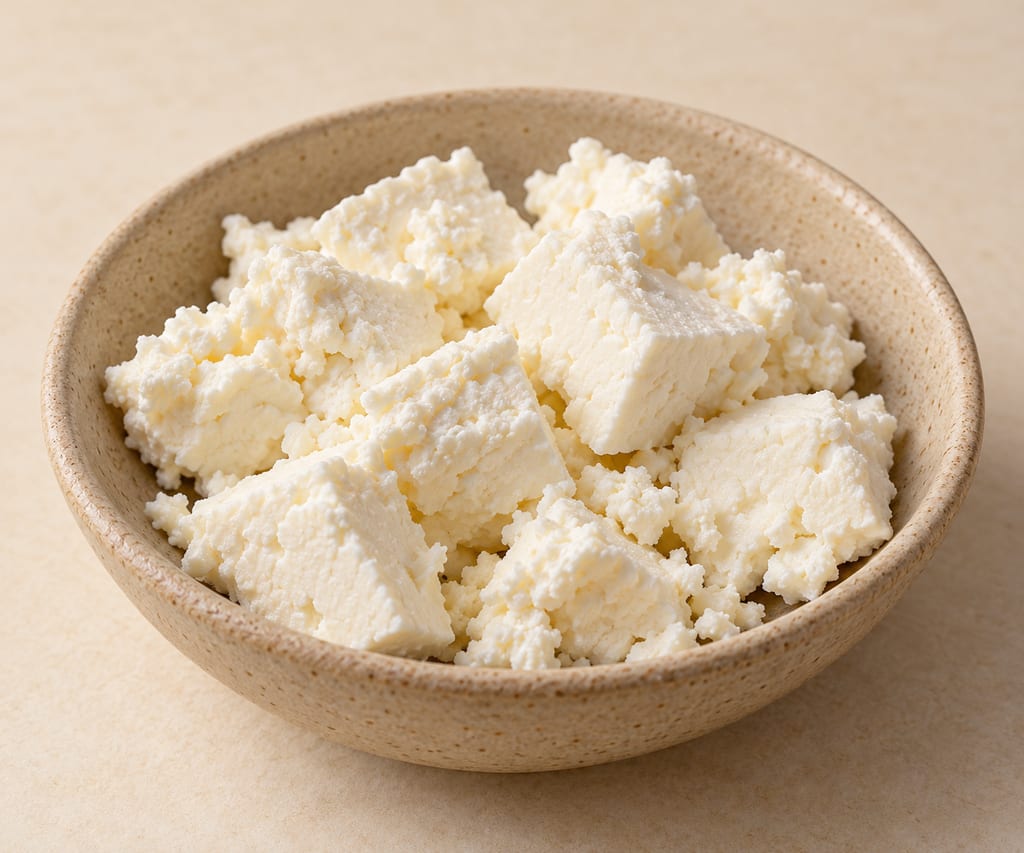
Whole milk set with a mesophilic starter and rennet makes a fresh, crumbly feta-style cheese. Its curds pass through hot salted whey before molding.
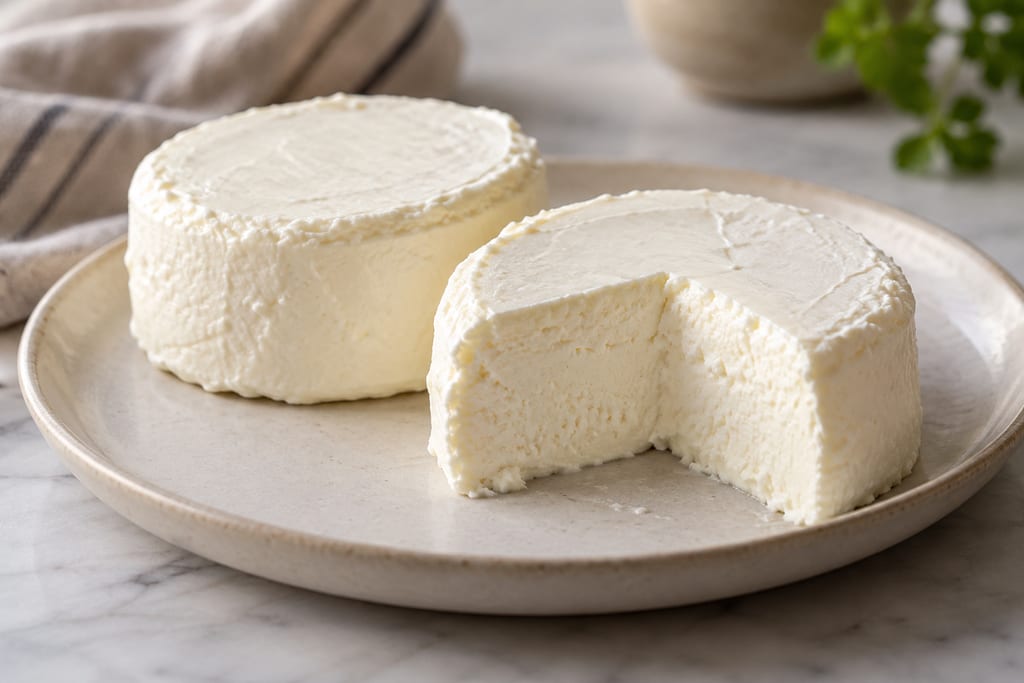
Pasteurized milk cultured with buttermilk or yogurt and set with rennet makes this soft, smooth Neufchâtel-style cheese, pressed into small forms and chilled.
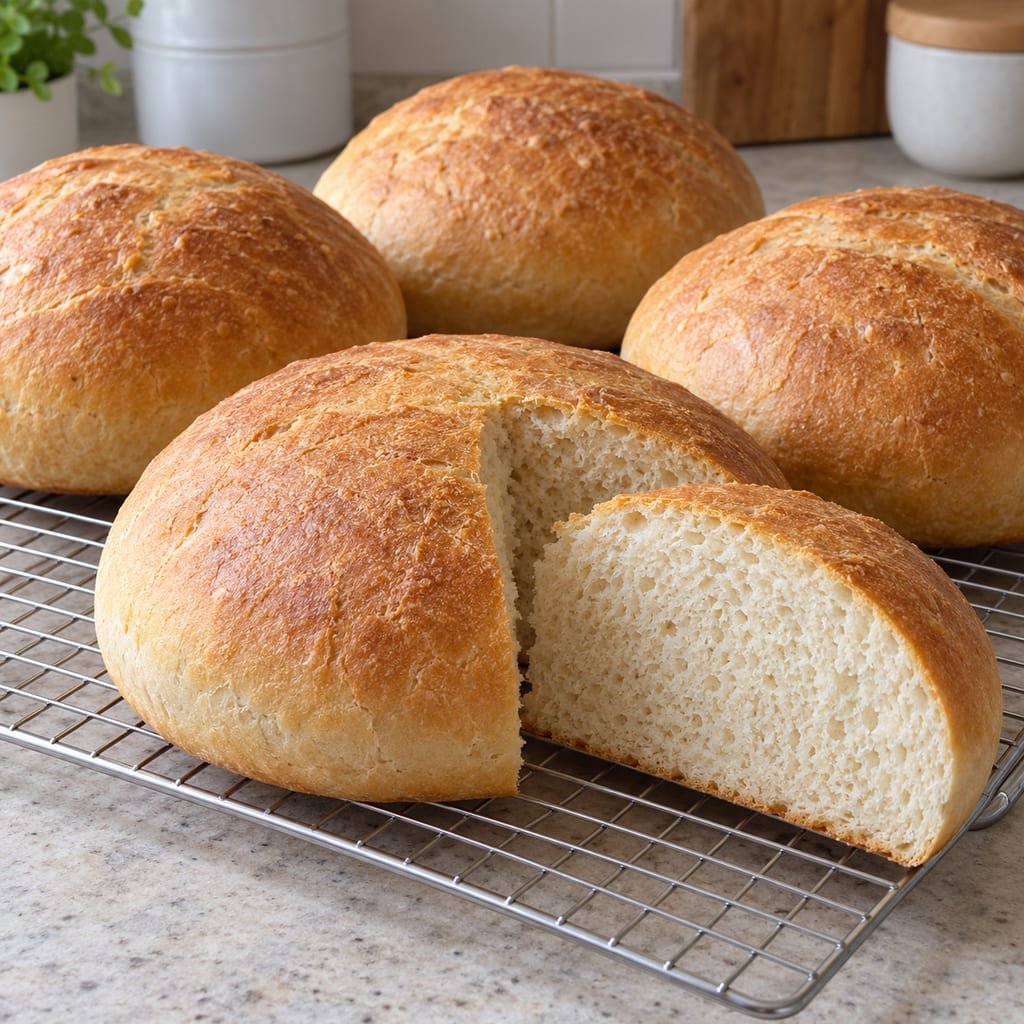
A four-loaf, yeast-raised home-oven version that Navajo Grandma identifies as Jemez Pueblo bread. It is her published adaptation, not a single formula for Pueblo communities or a horno firing protocol.
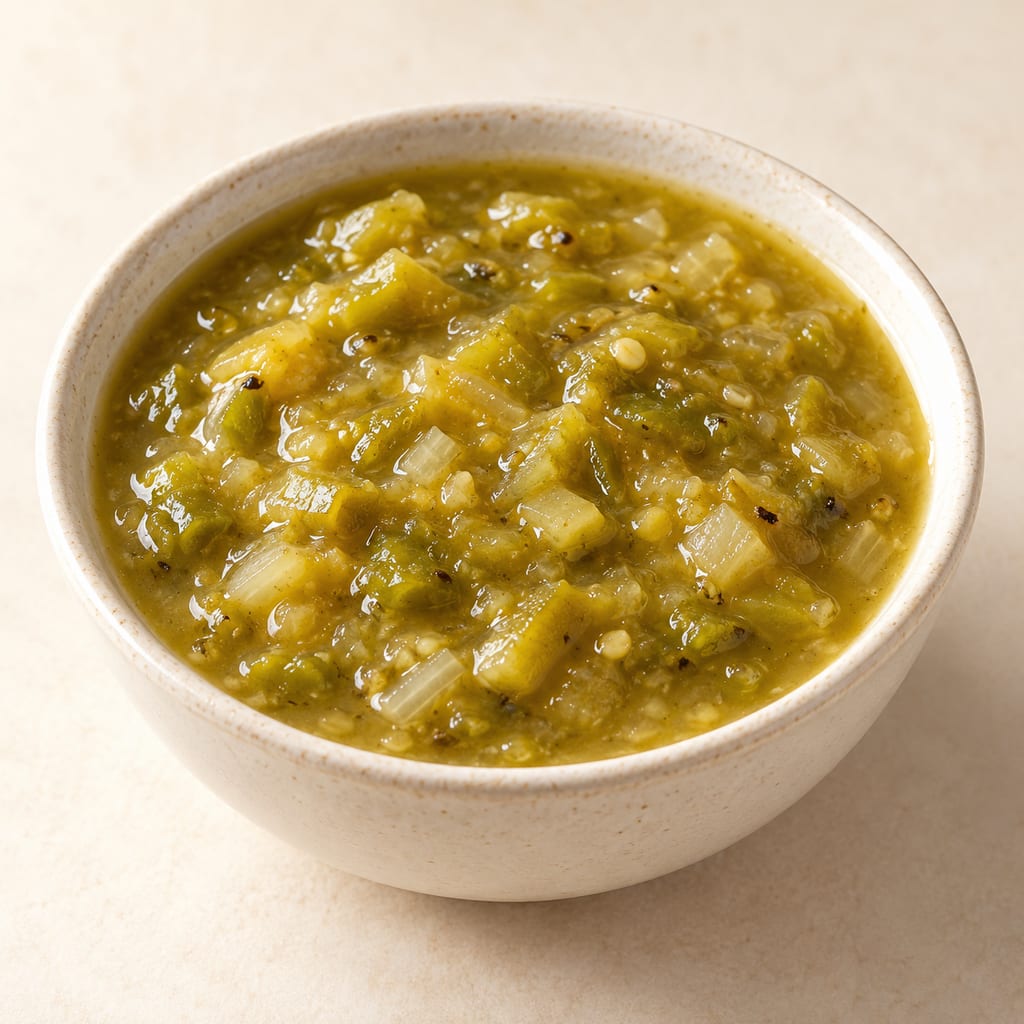
New Mexican green chile sauce is a cooked sauce of roasted fresh green chile, onion and garlic, thickened with a little flour and a 15-minute simmer in stock.
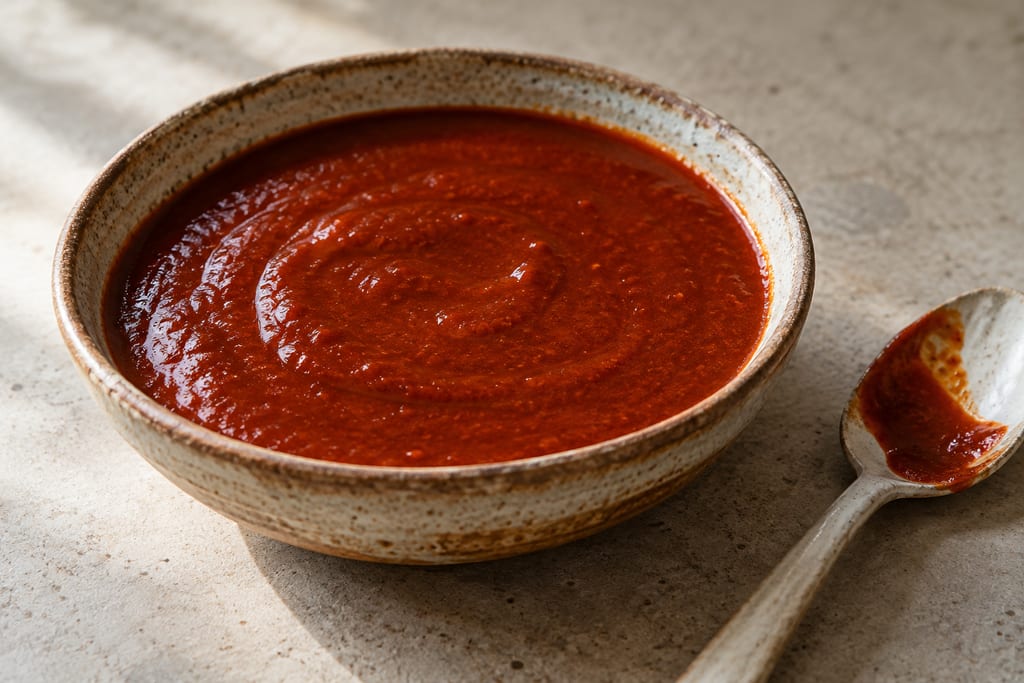
New Mexican red chile sauce is a smooth, cooked sauce of dried red chile, thickened with a little flour and loosened with water, and used to coat enchiladas and to build chile con carne.
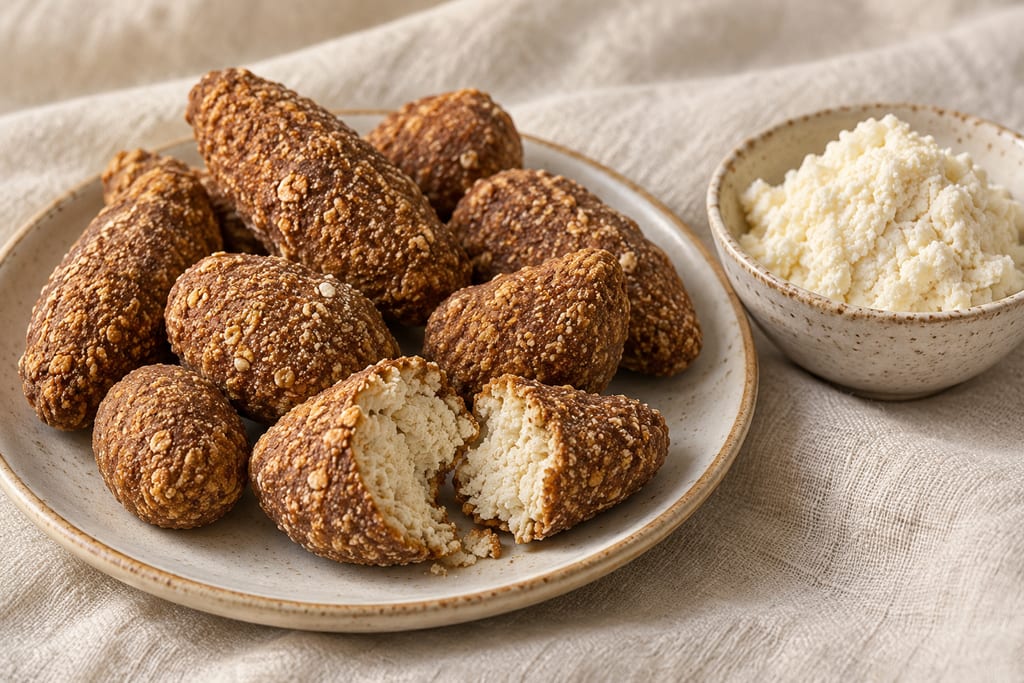
A two-stage Altai dairy preparation: sour chegen is heated into soft aarchi, then portions are drained, pressed and traditionally smoked into firm kurut.
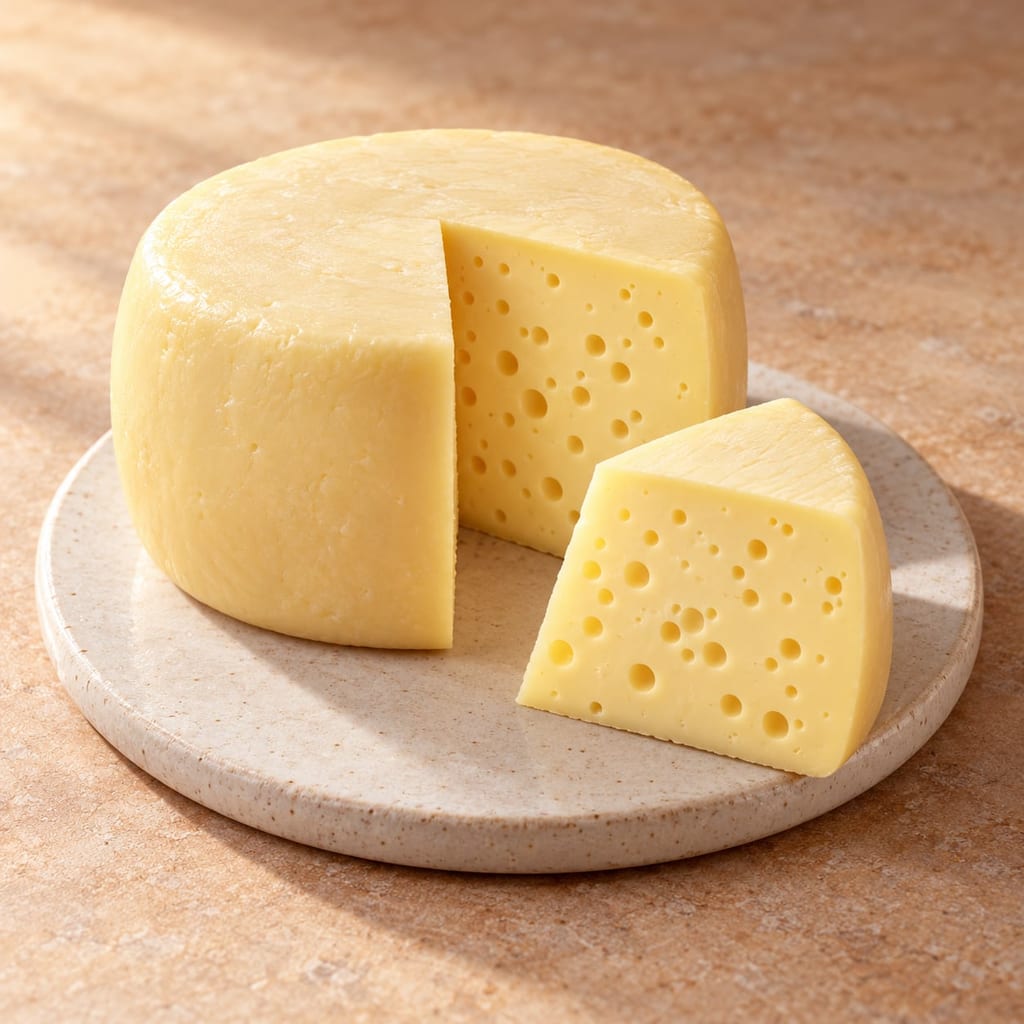
A washed-curd cheese with propionic bacteria, warmed by hot water in two steps and then held in a warm room for weeks so the bacteria can form its holes.
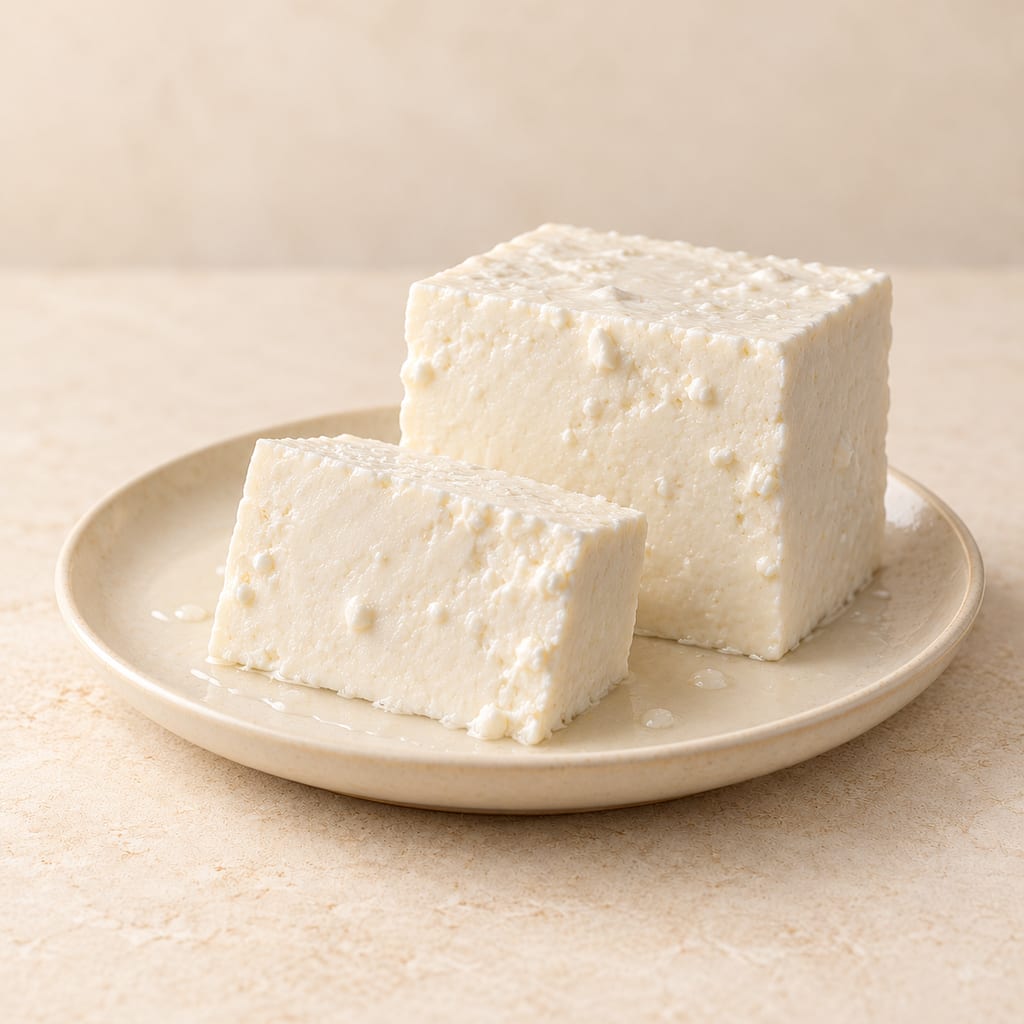
Beyaz peynir is a Turkish white cheese matured in brine. Sheep milk, alone or mixed with other milks, gives a close-textured cheese cut into blocks and packed in cans.
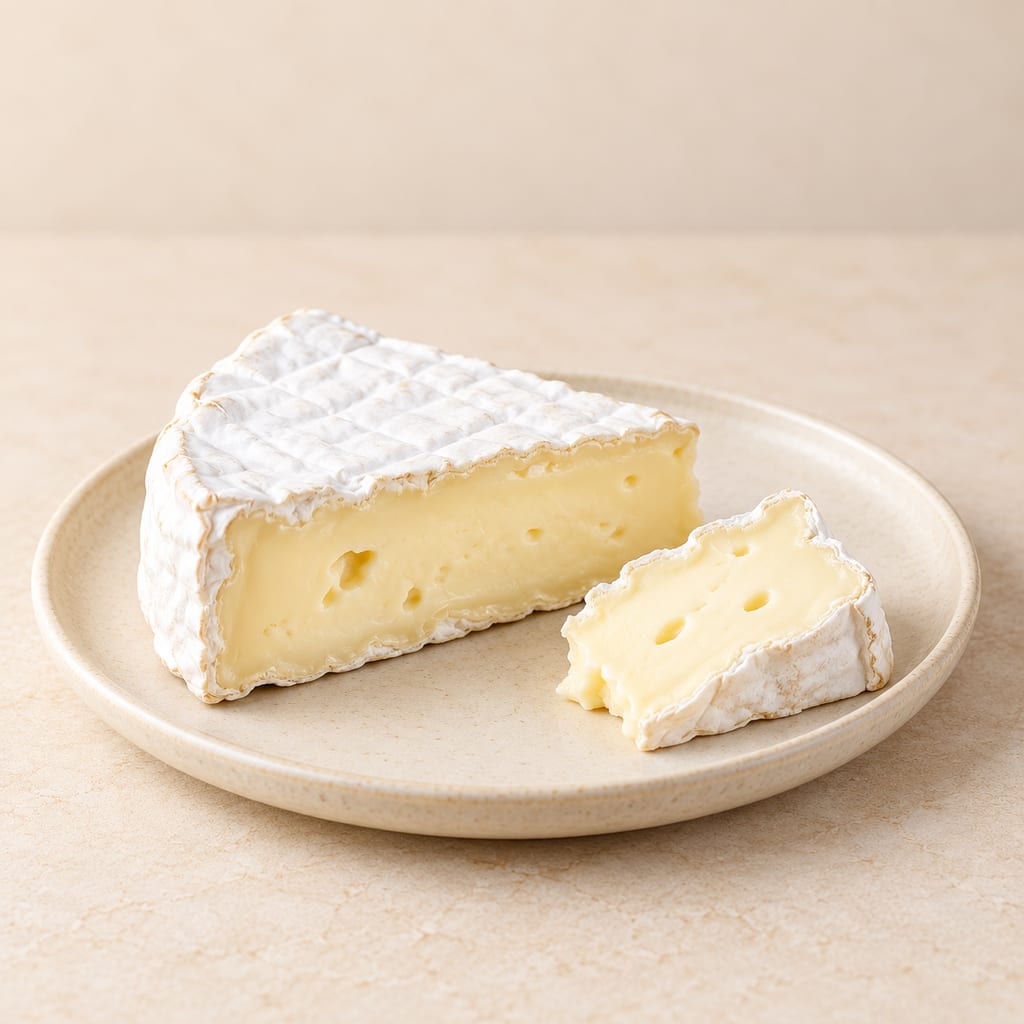
A cream-enriched Brie with a white bloomy rind and a softening center, made from pasteurized milk with lactic and surface cultures.
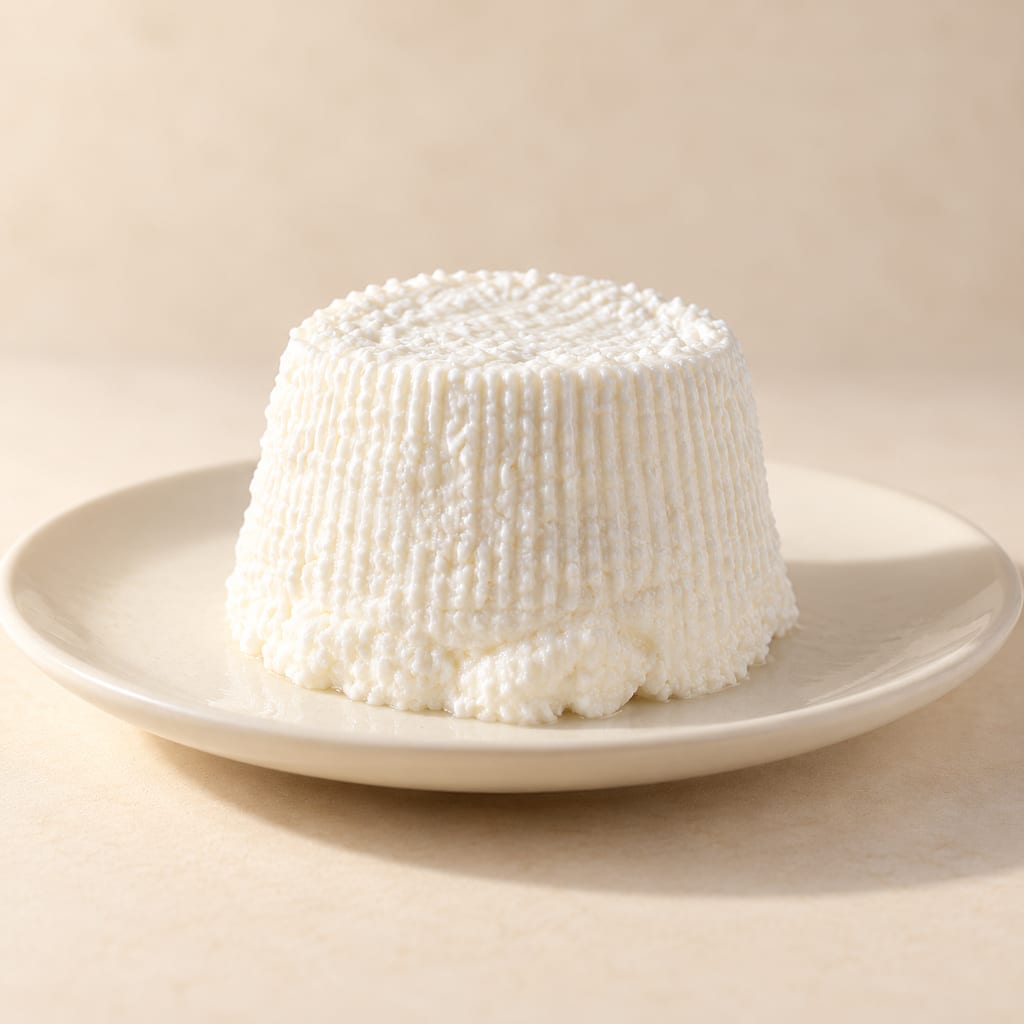
Corsican Brocciu is a whey cheese made by heating sheep's or goat's whey with whole milk and salt, then gently draining the flocculated curds. It is eaten fresh or salted and ripened as Brocciu passu.
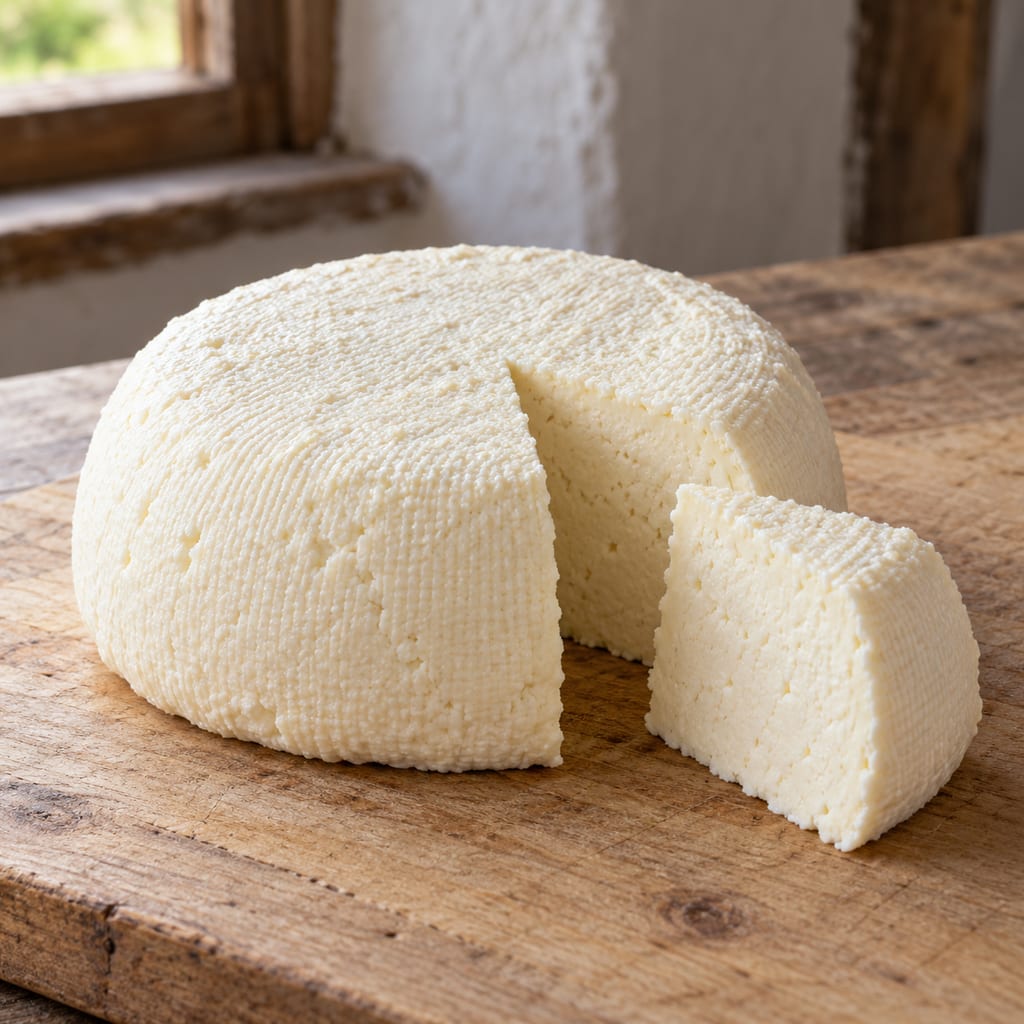
Budz is a traditional Hutsul rennet-set cheese made from sheep, cow or goat milk in the Ukrainian Carpathians, forming a fresh curd that can be eaten, smoked or processed into salted bryndza.
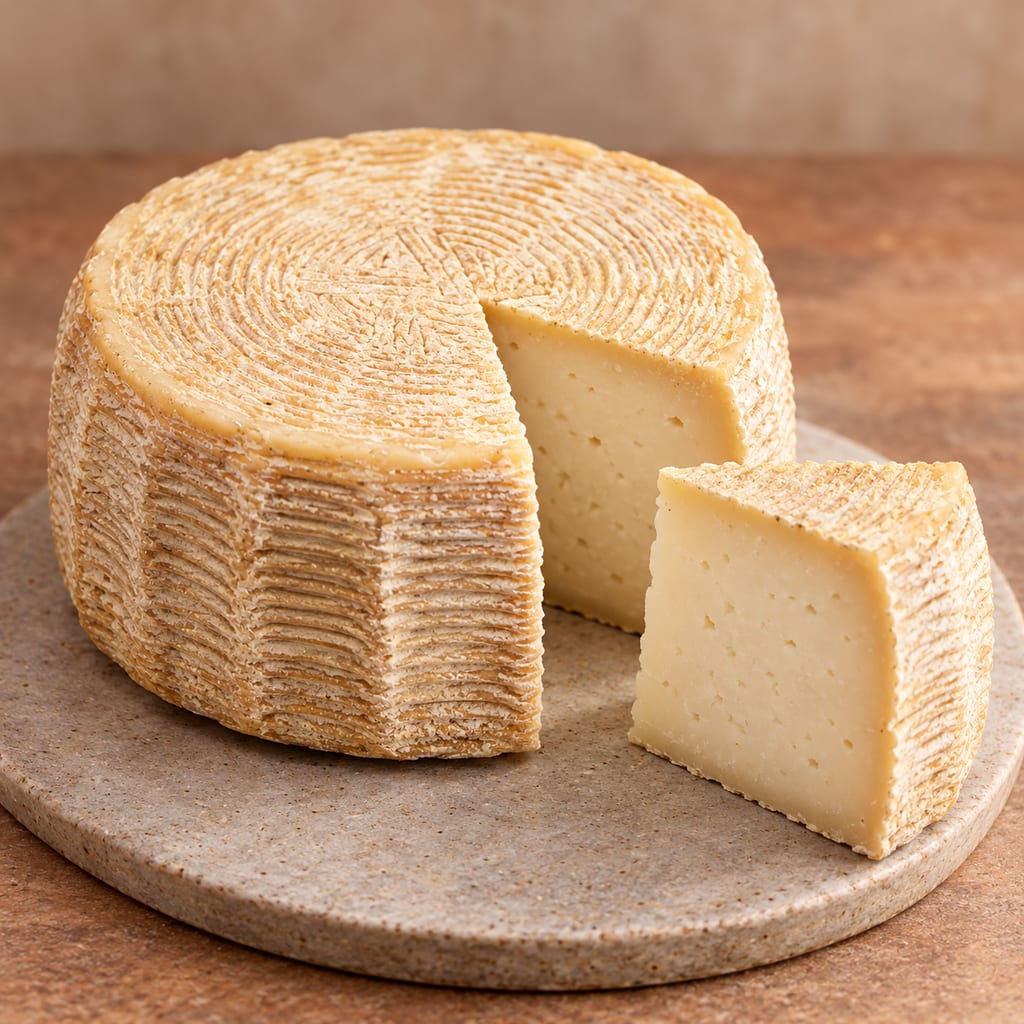
A scalded cheese moulded in baskets and re-cooked in its forms in hot whey, made alongside a ricotta from the same milk, then acidified, brined and aged for months.
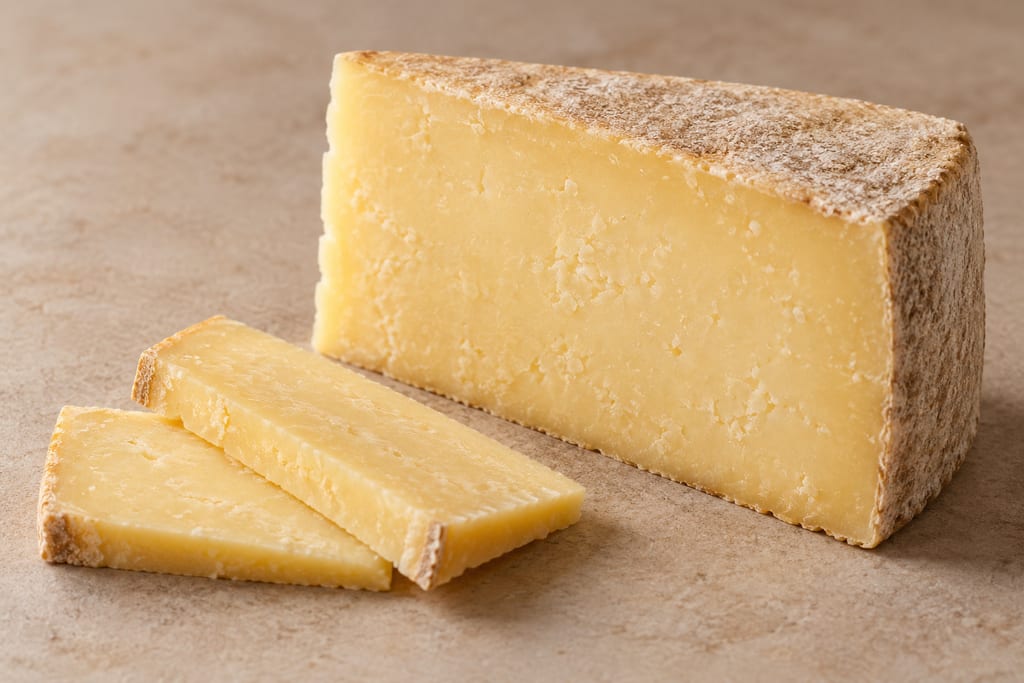
A pressed cheese whose curd is cooked slowly, then cheddared: kept warm in slabs that are turned and stacked for hours before milling, salting and pressing.

A gelling polysaccharide extracted from red seaweeds, sold as kanten strips or powder; it sets firm at a low concentration and stays solid until about 85 °C.

A Dominican table and seasoning condiment of sour orange juice, mixed with lime and salt and bottled raw; garlic, oregano or a hot pepper may be added for meat or a spicier bottle.

Cicerbita alpina is an alpine perennial whose tender shoots and leaves have been eaten raw or cooked. Sámi milk preparations and modern Carnian dishes are distinct uses, with serious identification and preservation limits.

Japanese skipjack tuna cooked, then repeatedly smoked and dried over a wood fire by the hand-fired tebiyama method into a hard block for shaving into dashi: the first stage of katsuobushi.

A Swedish-style spirit vinegar made by fermenting neutral alcohol with live vinegar bacteria, with a separate guide to commercial ättika strengths.

A yeast-raised wheat ring shaped from a firm dough, briefly boiled and baked. This source-batch formula gives a gently malted crust and a chewy crumb.

A warm dip of garlic, anchovy and olive oil, often enriched with butter, that Piedmont serves over a flame with raw and cooked vegetables and bread.

Bechamel is a white sauce of milk thickened with a butter and flour roux, one of the French mother sauces, and the base from which Mornay and other cheese and cream sauces are made.
No community contributions have been published for this entry yet.
Sign in to contribute. Published comments and photos are free to read.
New Mexico State UniversityProcess · Safety
Making Homemade CheeseFormula and ordered process for SAFE Queso Fresco; NMSU says it was designed to replace raw-milk queso fresco after Salmonella outbreaks.
Cited in: A fresh cheese with a specific recipe; A Mexican food and a Washington adaptation; Acid and rennet build the curd; What the ingredients contribute; The stages from milk to mold; Regional variation and close relatives; At the table; Fresh cheese needs careful handling; How to interpret a batch
U.S. Food and Drug AdministrationIdentity · Safety
Queso Fresco-type Cheeses Consumer GuidanceQueso fresco-type cheeses are soft, fresh, eaten crumbled or cooked; they can support Listeria after pasteurization and require refrigeration.
Cited in: A fresh cheese with a specific recipe; At the table; Fresh cheese needs careful handling
Estudios SocialesHistory
Naturaleza, evolución, contrastes e implicaciones de las imitaciones de quesos mexicanos genuinosSpanish livestock and cheesemaking entered Mexico during the sixteenth century; writings of that century mention queso fresco; fresh Mexican cheeses developed several curd handling traditions.
Cited in: A Mexican food and a Washington adaptation; Regional variation and close relatives
Washington State University ExtensionProcess · History · Safety
Fresh Cheese Made Safely (Elaboración segura del queso fresco)Spanish-language Abuela Project recipe and method; distinct salt and seasoning quantities from NMSU's version; home-use scope and separate heat-treatment advice.
Cited in: A Mexican food and a Washington adaptation; What the ingredients contribute; The stages from milk to mold; Regional variation and close relatives; Fresh cheese needs careful handling; How to interpret a batch
Journal of Dairy ScienceIdentity · History
Invited review: Artisanal Mexican cheesesVariation among artisanal Mexican cheeses; general queso fresco character and limits of treating the name as one fixed recipe.
Cited in: A fresh cheese with a specific recipe; Regional variation and close relatives; At the table; How to interpret a batch
American Chemical SocietyScience
Chemistry of Queso FrescoResearch review describes common rennet-set/no-starter products and differences among milk sources; not a test of the NMSU formula.
Cited in: Acid and rennet build the curd; How to interpret a batch
Washington State University ExtensionScience
What's on Your Plate? Exploring Food Science: Separating the Curds from the WheyExplains buttermilk culture, lactose conversion to lactic acid, vinegar acidification, casein coagulation and rennet for a queso fresco activity.
Cited in: Acid and rennet build the curd; What the ingredients contribute
American Journal of Public HealthHistory · Safety
The Abuela Project: safe cheese workshops to reduce the incidence of Salmonella typhimurium from consumption of raw-milk fresh cheese1999 multiagency intervention in Yakima County responding to Salmonella infections associated with raw-milk queso fresco.
Cited in: A Mexican food and a Washington adaptation; Fresh cheese needs careful handling
Washington State University CAHNRS NewsHistory
WSU Food Safety Program Reaps More HonorsWSU account of the 1997 outbreak context, Julia Herrera's pasteurized-milk recipe, WSU modification and bilingual Abuela Project workshops.
Cited in: A Mexican food and a Washington adaptation