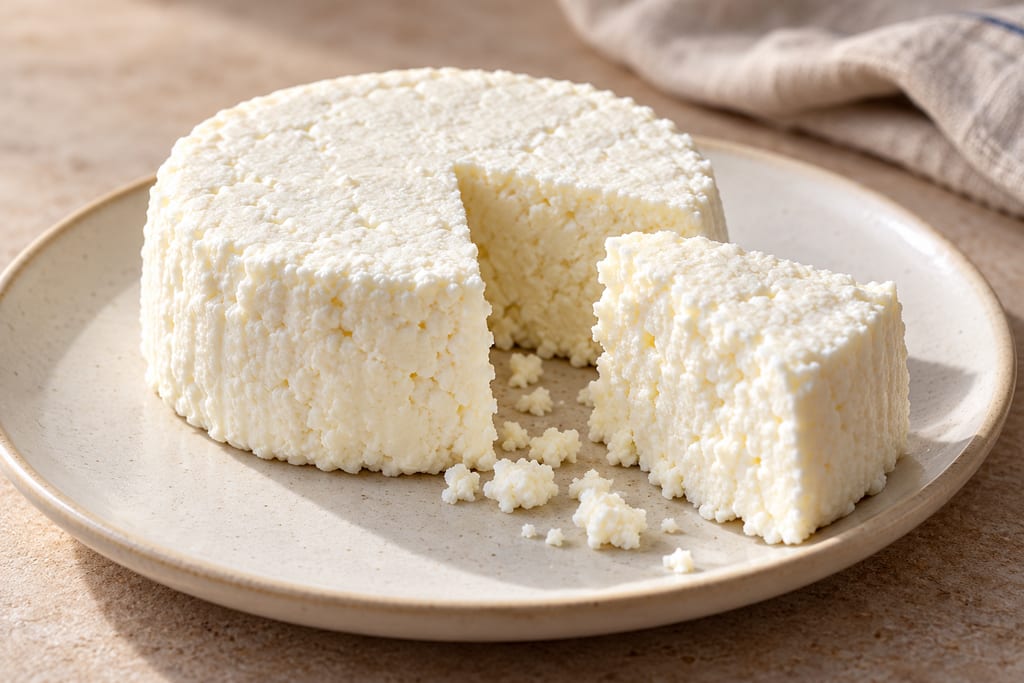
Cultured queso fresco
Cultured buttermilk, pasteurized milk, vinegar and rennet make this soft, crumbly queso fresco by a New Mexico home method adapted from Washington’s Abuela Project.
 FermenteaWhere food goes to change
Jemez Pueblo Bread
A four-loaf, yeast-raised home-oven version that Navajo Grandma identifies as Jemez Pueblo bread. It is her published adaptation, not a single formula for Pueblo communities or a horno firing protocol.
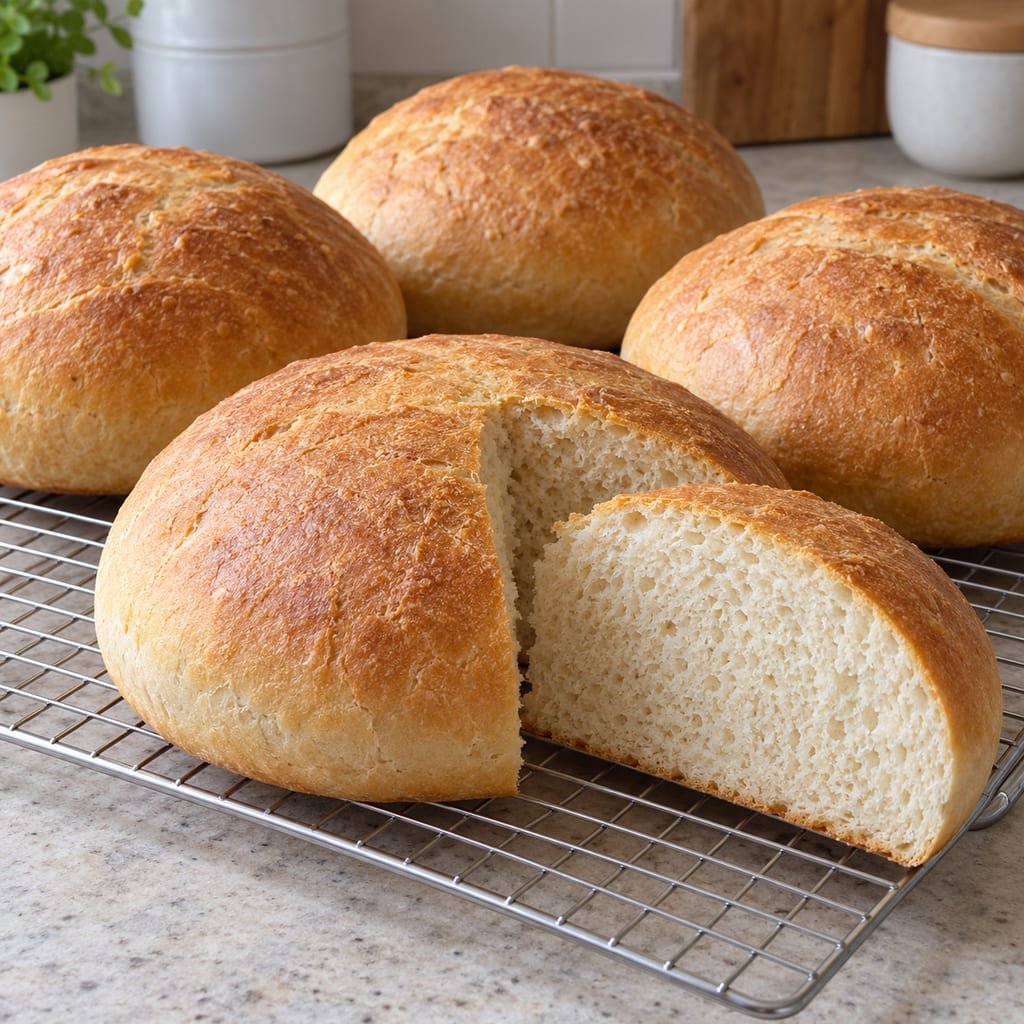
Navajo Grandma's 2023 video describes Jemez Pueblo Bread and separately presents a measured recipe for making bread at home. This page follows that creator's formula and conventional-oven method. It does not present the formula as a recipe supplied by Lyda Toya or as a standard shared by every Pueblo community.
Andi Murphy's reporting follows Lyda Toya, a Jemez baker who learned from her mother and aunties, and records her handling and shaping of dough. Murphy also describes distinct bread shapes and baking practices in other Pueblo communities. Her report gives no quantities for Lyda Toya's batch, so those observed practices are not used to fill gaps in the video's home recipe.
A separate 1972 Smithsonian excerpt reproduces a “Pueblo Bread” recipe from Phyllis Hughes's cookbook, an anthology covering 19 Pueblos. That entry is not attributed to a named Pueblo community and differs in ingredients from the modern video's recipe. It remains an archival lead and is not combined with this batch.
The home recipe specifies four round loaves, a 25-minute second rise and a 400°F conventional-oven bake for about 50 minutes. Its first rise is complete when the dough has doubled; the video gives no elapsed time. The source offers a hollow sound when tapped as a doneness cue, but that cue does not establish a food-safety endpoint.
Navajo Grandma's 2023 video names Jemez Pueblo bread and presents the formula as a way to make it in a home oven. Andi Murphy's reporting separately documents Jemez baker Lyda Toya's family practice and the community-specific variation among Pueblo breads. The measured formula is attributed only to the video creator; it is not presented as Lyda Toya's recipe or as a uniform Pueblo formula.
Yield 4 round loaves · Scaling: source batch only
Uncooked flour can contain germs; tasting or eating the raw dough can cause illness.
Hazard sourceDo not taste or serve the uncooked dough. Bake the loaves following the recipe's oven temperature and time; the source gives no validated internal-temperature limit.
Control sourceWash hands, bowls, utensils and work surfaces after handling raw flour or dough.
The source's browned crust and hollow-sound cue describe its recipe endpoint; neither is a validated food-safety test.
Navajo Grandma names the video recipe Jemez Pueblo Bread and gives a home-oven version. Andi Murphy separately reports on Jemez family baking; this row does not claim community endorsement of the video formula.
Cultured buttermilk, pasteurized milk, vinegar and rennet make this soft, crumbly queso fresco by a New Mexico home method adapted from Washington’s Abuela Project.
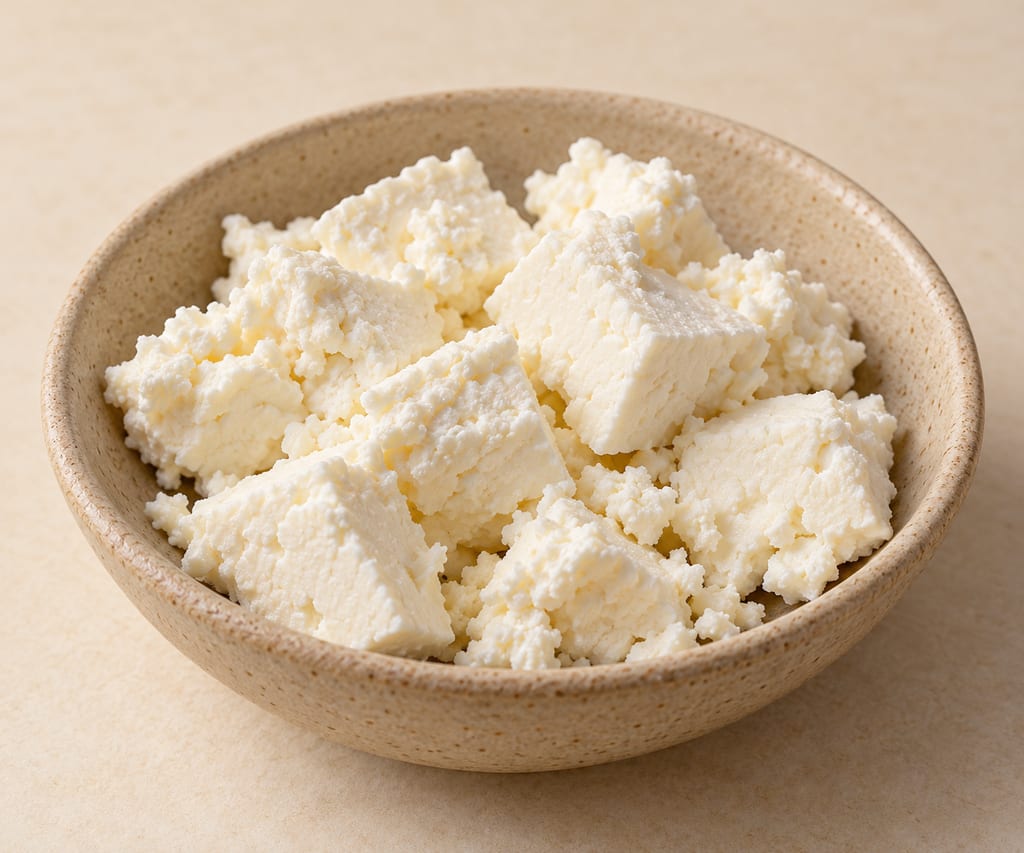
Whole milk set with a mesophilic starter and rennet makes a fresh, crumbly feta-style cheese. Its curds pass through hot salted whey before molding.
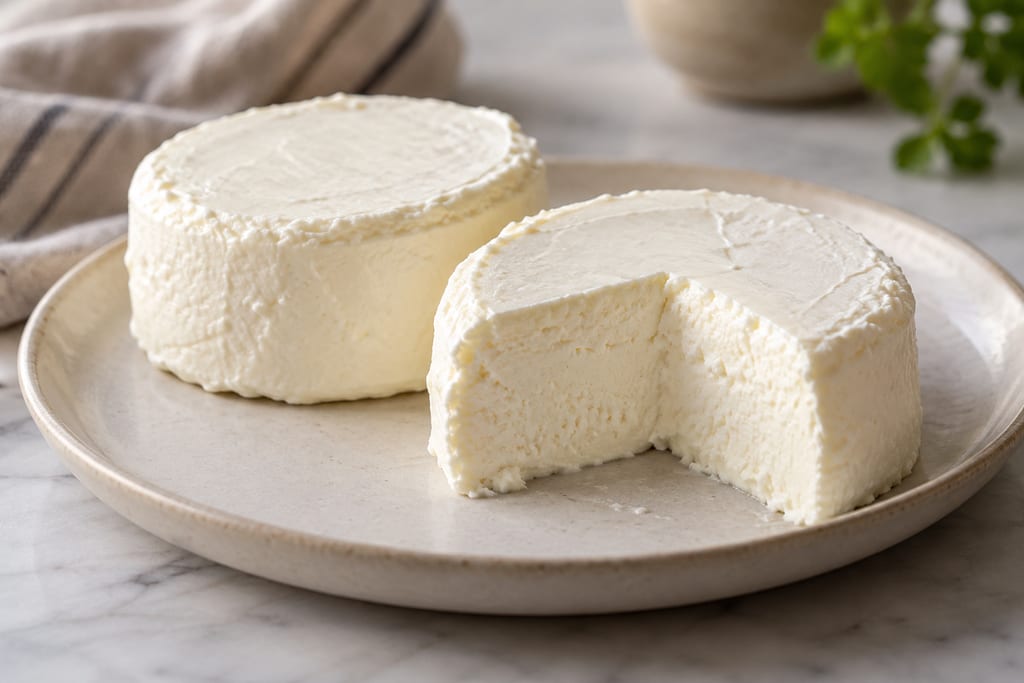
Pasteurized milk cultured with buttermilk or yogurt and set with rennet makes this soft, smooth Neufchâtel-style cheese, pressed into small forms and chilled.
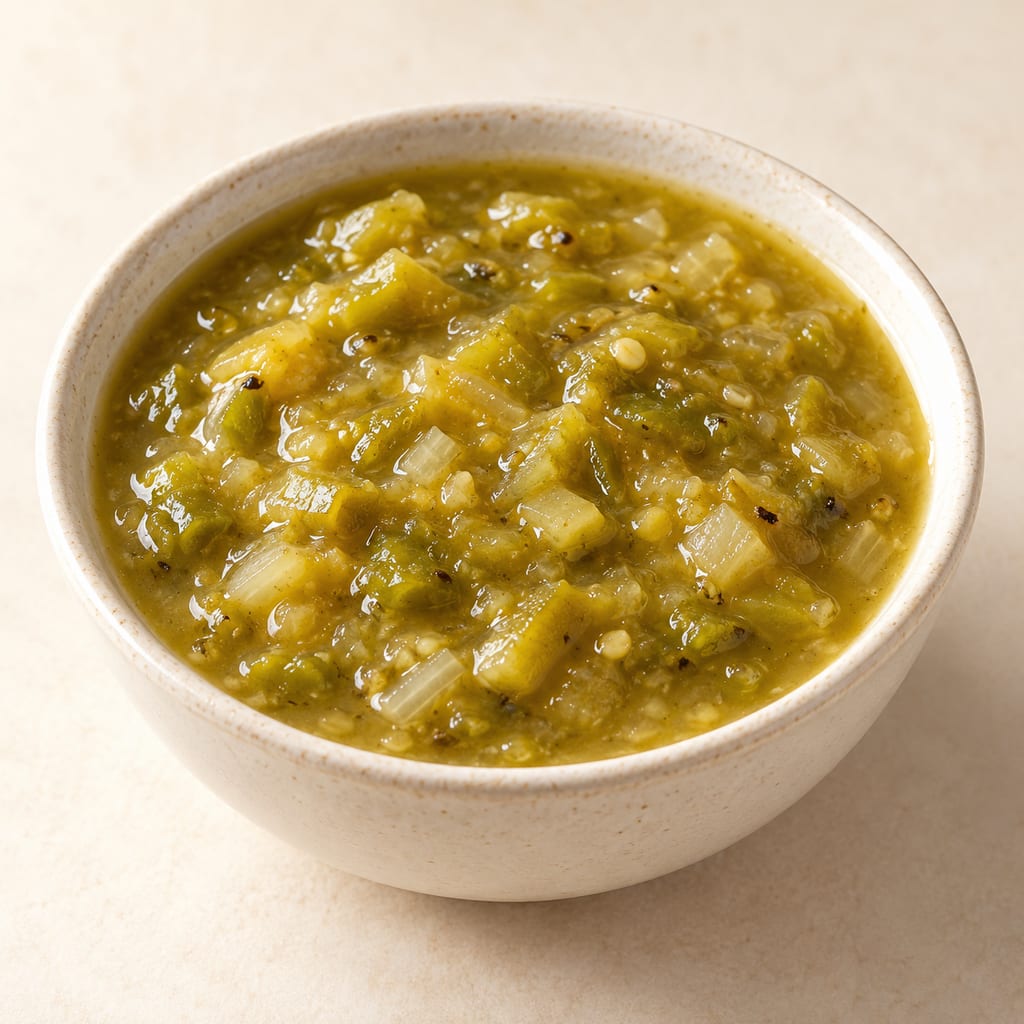
New Mexican green chile sauce is a cooked sauce of roasted fresh green chile, onion and garlic, thickened with a little flour and a 15-minute simmer in stock.
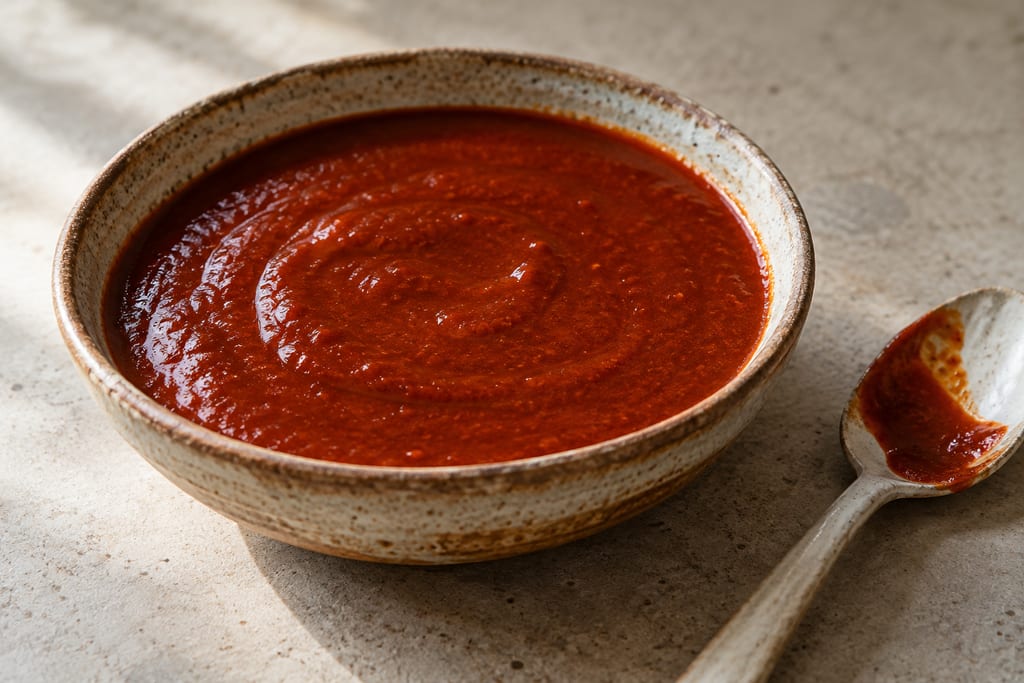
New Mexican red chile sauce is a smooth, cooked sauce of dried red chile, thickened with a little flour and loosened with water, and used to coat enchiladas and to build chile con carne.
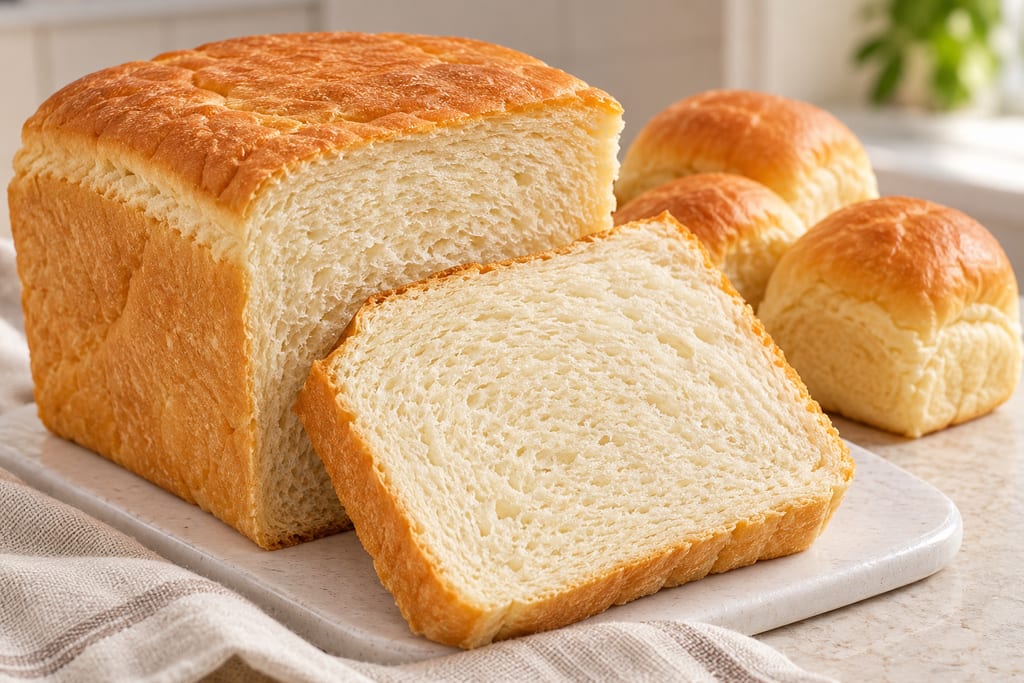
This softer home-style Agege bread uses a scalded flour paste, an enriched yeast dough and a 9×5-inch loaf pan, with rolls from the extra dough.
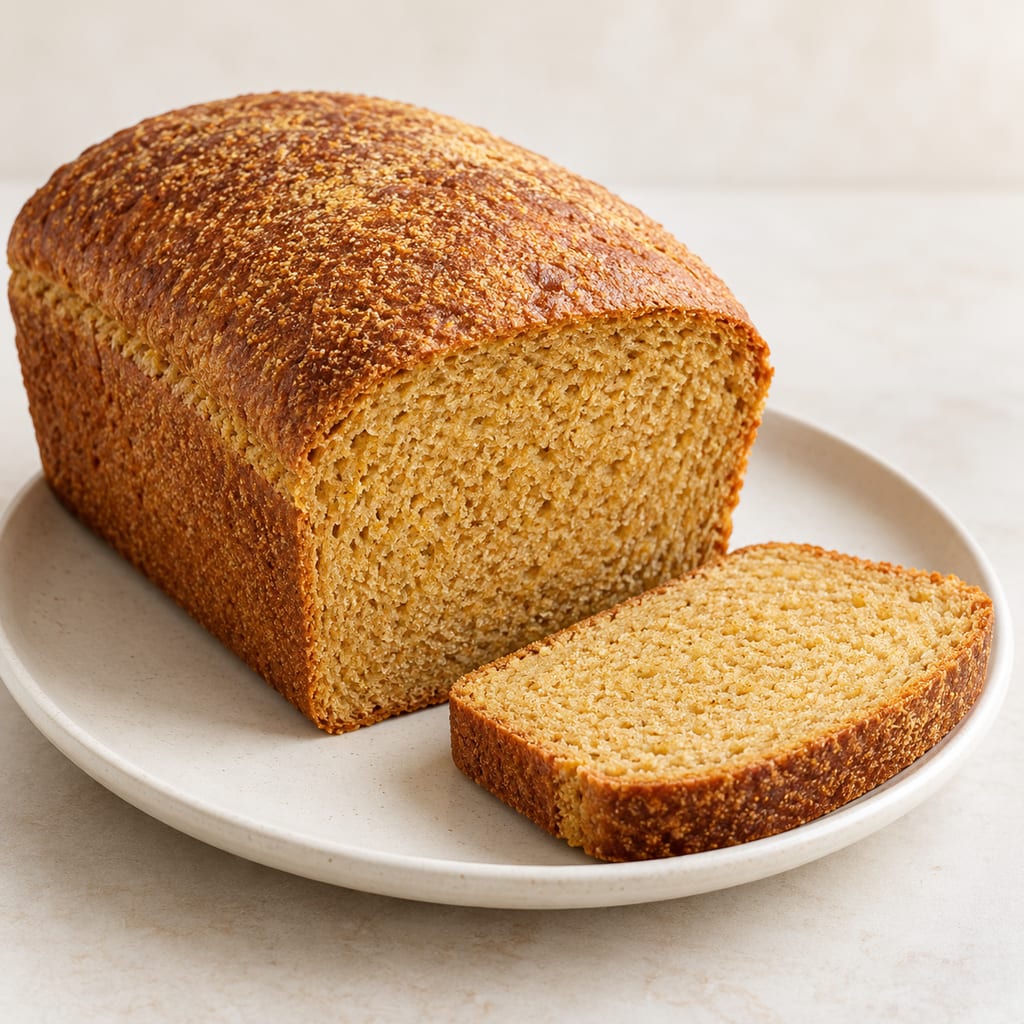
Anadama is a New England yeast loaf made with wheat flour, cornmeal and molasses. Scalded cornmeal enriches the dough, while molasses lends sweetness and a dark crust; it is especially good toasted or beside soup and baked beans.

A yeast-raised wheat ring shaped from a firm dough, briefly boiled and baked. This source-batch formula gives a gently malted crust and a chewy crumb.

Three long, crusty wheat loaves made with an overnight yeast poolish, shaped by hand and baked with steam for a crisp crust.
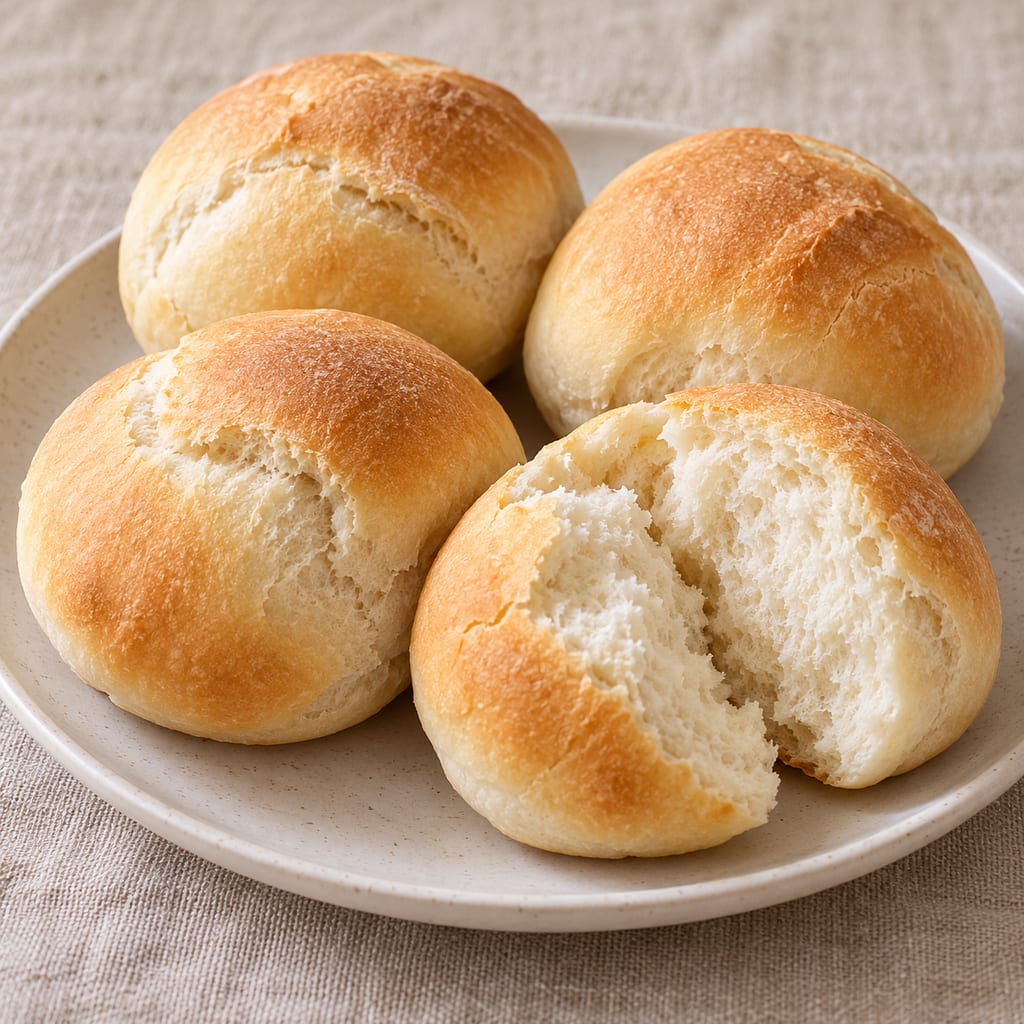
A lightly salted, yeast-raised Barbadian roll, baked in a dozen-roll home batch and often split for cutters.
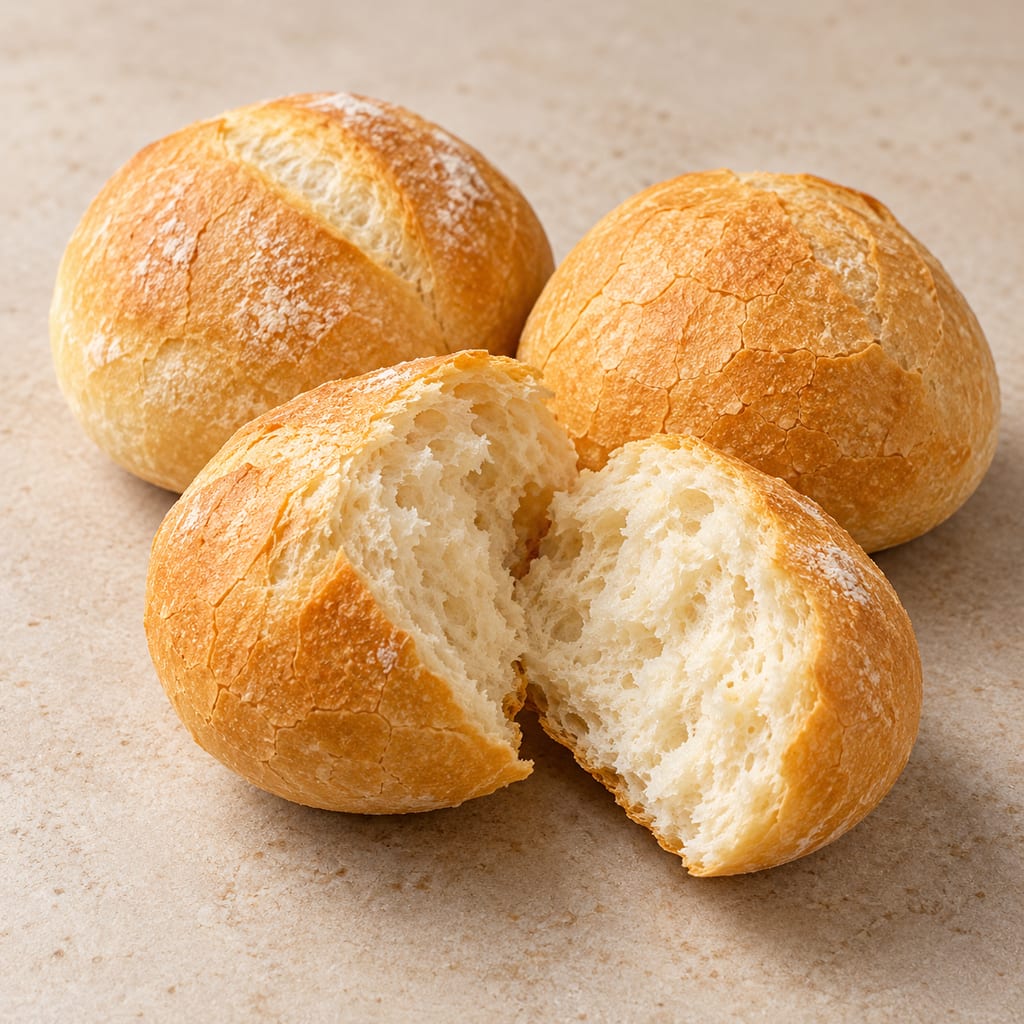
A crisp Belgian roll made from a supplier’s Croc-flour dough, mixed by hand or machine, proofed in rounds and baked with steam.
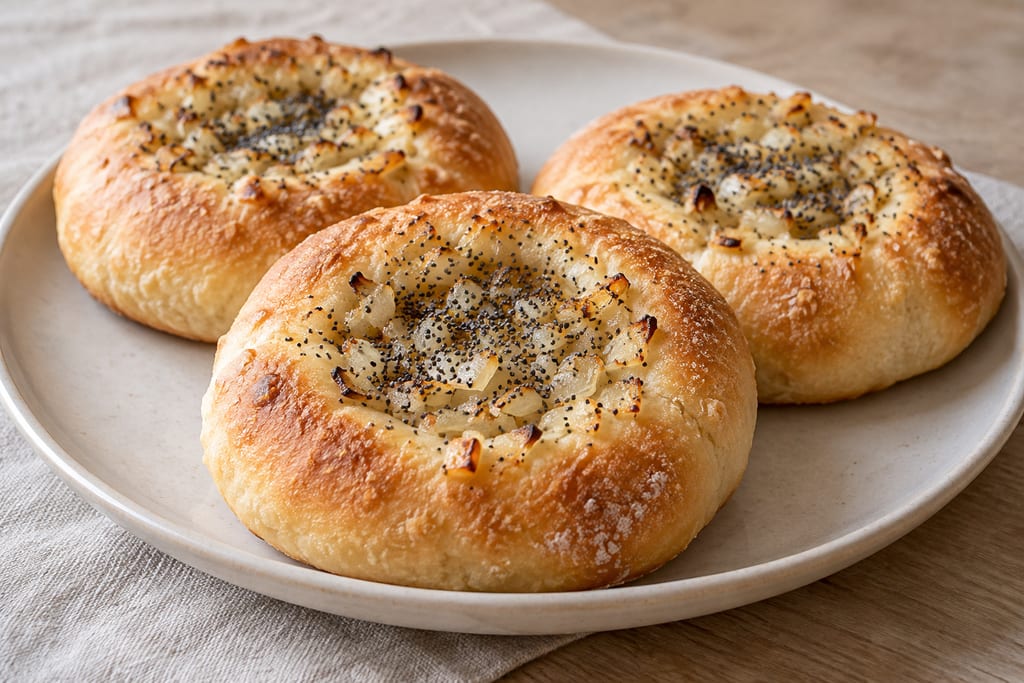
Bialys are soft, yeasted wheat rolls baked without boiling, each shaped with an onion-filled central depression instead of a hole.
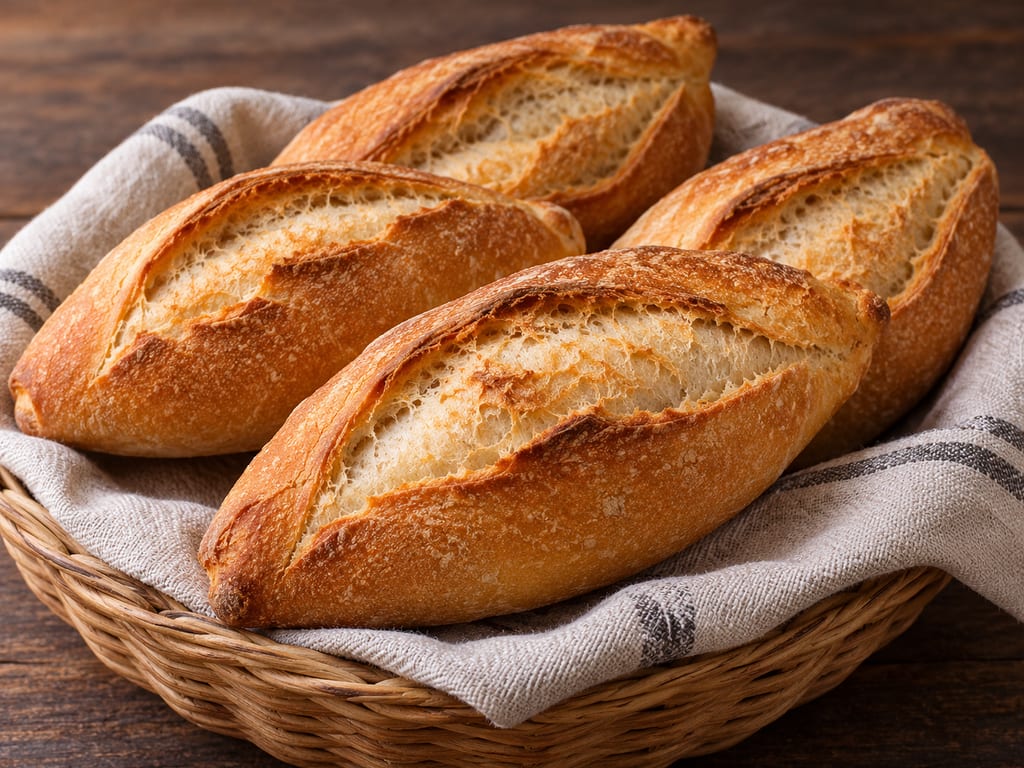
A measured, commercial-yeast home method for Guadalajara-style birote salado, with a six-hour preferment, shaped rolls and a two-temperature steam bake. This formula contains no egg.
No community contributions have been published for this entry yet.
Sign in to contribute. Published comments and photos are free to read.
Navajo GrandmaMethod · History · Geography
How Jemez Pueblo Bread is made in an HornoThe creator says she shares how Jemez Pueblo Bread (Kiis'áanii Bi Bááh) is prepared, then identifies the measurements and steps below as a recipe to make Pueblo bread at home. Formula: 9 cups flour, 2 packets dry yeast, 1/2 cup warm water, 2 teaspoons sugar, 2 teaspoons salt, 4 tablespoons lard or shortening, 2 cups water; four loaves; second rise 25 minutes; conventional oven 400°F for 50 minutes, browned with a hollow sound when tapped.
The source attribution in the page is the video creator's named Jemez-style home adaptation; it does not claim that the recipe is a community-approved or universal Pueblo formula.
Cited in: A home-oven adaptation named for Jemez Pueblo
EaterHistory · Geography
The Wondrous Bread of the Pueblo NationsAndi Murphy reports directly on Jemez baker Lyda Toya and her daughter Dorell Toya-Upshaw, observing dough portioning, round loaves and cut-slitted flower shapes, and reports that Toya learned from her mother and aunties. It gives no measured formula and distinguishes Jemez bread from other Pueblo styles.
The article reports varied bread styles across Pueblo nations and describes the distinct Zuni Paywa family horno practice; those accounts are not combined into this recipe.
Cited in: A home-oven adaptation named for Jemez Pueblo
Centers for Disease Control and PreventionSafety
Raw Flour and DoughCDC warns that uncooked flour may contain harmful germs, advises not to eat raw dough, and says to wash hands, bowls, utensils and surfaces after handling flour or dough.
Smithsonian Institution, Festival of American FolklifeHistory
Samplings from “The Pueblo Indian Cookbook”This 1972 anthology excerpt covers recipes from 19 Pueblos and prints a separate unattributed “Pueblo Bread” formula. That older formula is not the measured formula in this page and does not identify a particular Pueblo community; it is retained only as the original archive lead, not merged into this adaptation.
Cited in: A home-oven adaptation named for Jemez Pueblo