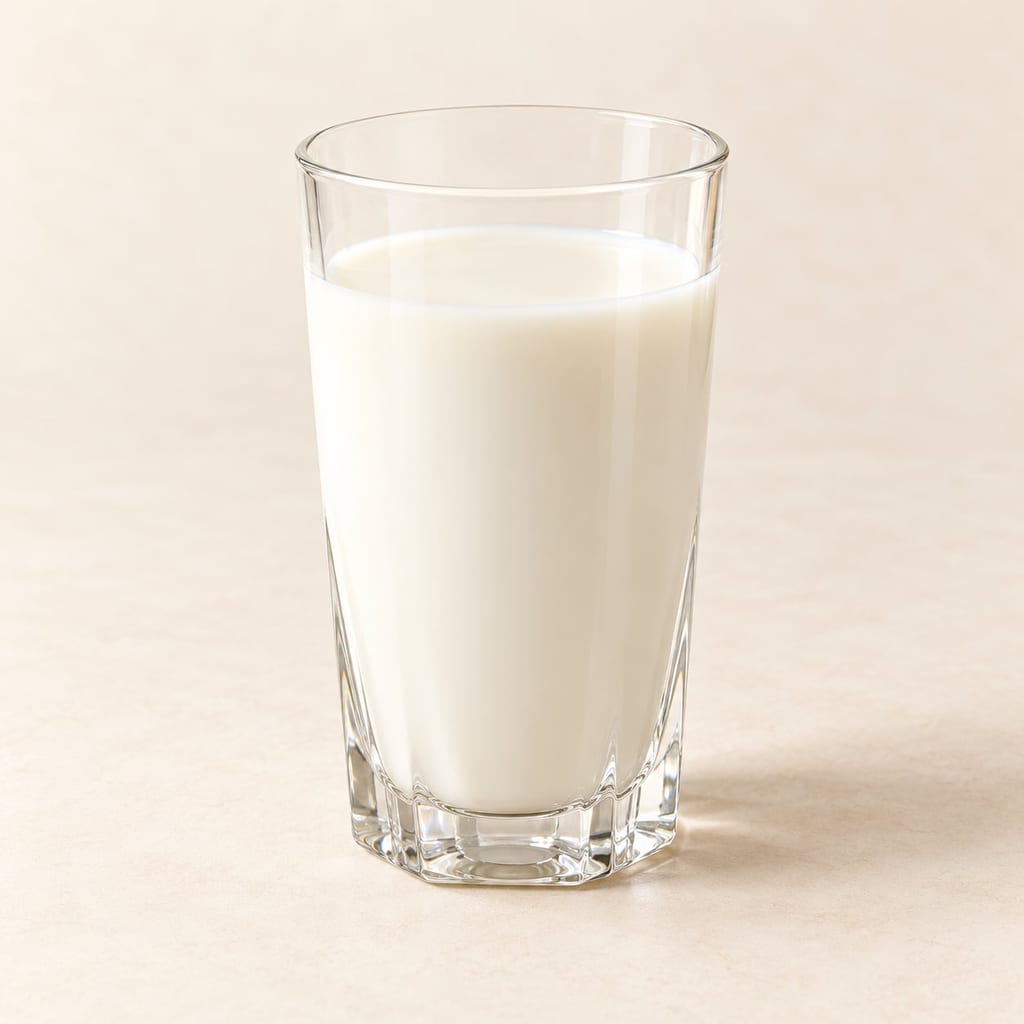
Milk
Milk is the fluid produced by dairy animals. Its species, fat level, heat treatment and handling shape the way it can be drunk, cultured or turned into curd.
 FermenteaWhere food goes to change
Modern adaptation
Neufchâtel · Neufchatel
Pasteurized milk cultured with buttermilk or yogurt and set with rennet makes this soft, smooth Neufchâtel-style cheese, pressed into small forms and chilled.
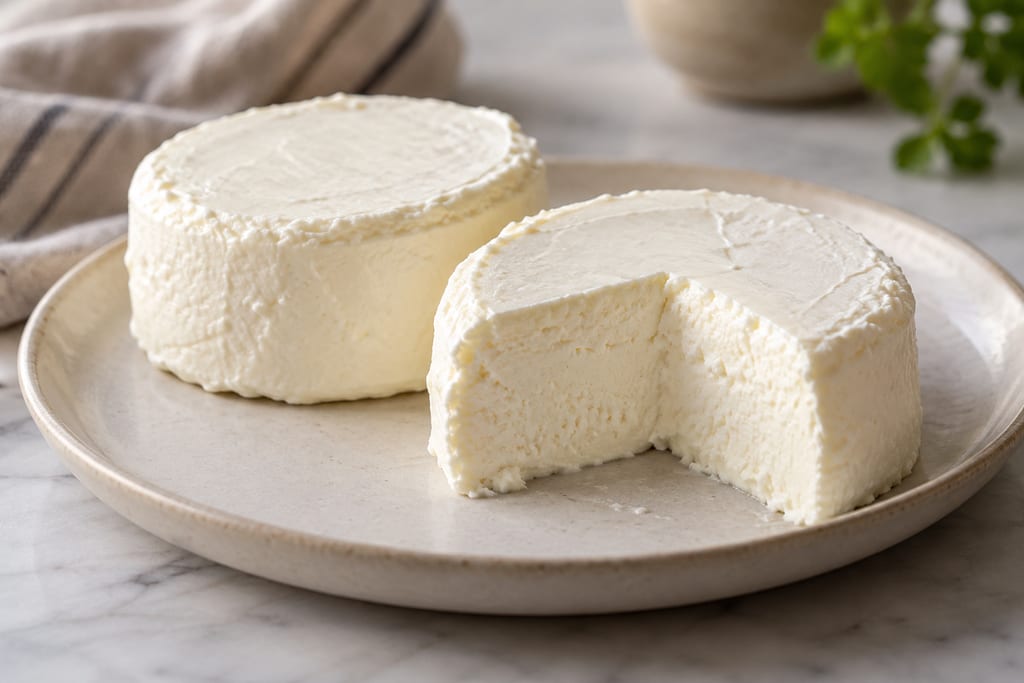
Home-style Neufchâtel is a fresh, soft cheese made from pasteurized cow’s milk, a cultured dairy starter and rennet. The New Mexico State University version produces a milky-white, smooth curd, divides it between two small perforated molds, presses it briefly and refrigerates it without a ripening stage. Its character depends on the milk’s fat level: the guide permits any level, and notes that reduced-fat or fat-free milk makes a lower-fat cheese. The result belongs to the American home tradition of unripened Neufchâtel-style cheese, not to the French cheese whose name it borrows.
That distinction matters because the French Neufchâtel AOP is a different food. It is a soft, lactic cow’s-milk cheese from the Pays de Bray, made with a white bloomy rind and sold in six recognized shapes, the heart being the best known. It is drained and pressed before molding, then ripened. The AOP’s young cheese is described as fresh, acidic and lightly salty, with cream and fresh-milk aromas; longer maturation brings more pronounced, animal notes. Those aromas and rind belong to that ripened regional cheese, not to this unaged home batch.
The shared name records a genuine historical connection rather than a shared recipe. American Neufchâtel took inspiration from the French cheese and from the broader family of soft cheeses made by acidifying milk and setting it with rennet. By the early twentieth century, American dairy writing treated Neufchâtel and cream cheese as related but distinct products. The home version here preserves the former name while simplifying the method for a domestic scale.
The name points to Neufchâtel-en-Bray in Normandy. The French Ministry of Agriculture reports early medieval writings about a cheese resembling Neufchâtel, while the cheese is named explicitly in the accounts of Rouen’s Saint-Amand abbey in 1543–44. The older resemblance and the later named record are different kinds of evidence; neither establishes a single modern recipe stretching unchanged across centuries. A popular story says Norman women shaped heart cheeses for English soldiers during the Hundred Years’ War. The ministry presents this as legend, so it is best read as a memorable explanation for the heart’s symbolism, not as a documented origin.
The Pays de Bray’s wet, clay-rich soils and climate support grass growth and dairy farming. INAO describes a farm technology shaped around that agricultural rhythm: a long lactic set, draining and pressing, molding and comparatively short affinage. The flexible stages suit work on a farm, and farm production remains a significant part of the AOP’s modern output. The protected designation now confines the cheese’s production area to the Pays de Bray, principally in Seine-Maritime with a small extension into Oise.
American dairy makers adapted the name to fresh cheeses that could be made and sold without a long ripening cellar. In its 1918 bulletin, the U.S. Department of Agriculture explains that American Neufchâtel and cream cheese were factory products whose methods and equipment had seemed inaccessible to households, then presents farm-scale techniques. It distinguishes the two by composition: its account describes Neufchâtel from ordinary milk and cream cheese from milk enriched with cream. The bulletin also connects the cheeses to surplus-milk use and local marketing. This history explains why an American recipe may use the French name while producing a smooth, unripened cheese unlike the AOP.
In this recipe, cultured buttermilk or plain yogurt supplies the acid-forming culture. The bacteria use milk sugar, lactose, and produce lactic acid; acidity contributes to curd formation and helps shape the curd’s moisture and texture. The recipe does not name a bacterial strain, measure acidity, or specify a fermentation endpoint, so its culture should be understood in the practical terms the source supplies: fresh cultured dairy used as a starter, with no claim about a particular organism or a controlled pH.
Rennet performs a separate job. Its coagulating enzyme acts on casein, the principal milk protein, allowing the proteins to form a network that traps water and fat. The New Mexico guide describes the result as a gel that becomes curd, then releases whey when cut and handled. Acid and rennet work together, but they are not interchangeable: culture develops acidity while rennet helps set a firm gel. The 1918 USDA bulletin likewise describes acid and rennet acting simultaneously in this family of cheese, and notes that a starter can make acid development more uniform.
That division of labor helps explain the texture. A gentle set creates a continuous gel; cutting it into roughly one-inch cubes exposes more surface from which whey can escape. Continued gentle stirring while the curd stays warm encourages drainage without turning this recipe into a cooked hard-cheese method. Salt is added after most whey has been removed. It seasons the curd and, as the NMSU method makes clear, at least one teaspoon is part of its stated set-up. No measured acidity or specific starter composition is provided, so neither should be inferred from the smooth appearance of the finished cheese.
The double boiler warms the milk gradually and limits scorching. The recipe asks for milk and culture to reach 92–94°F, then keeps the curd in a similar range while it is cut and stirred. These are the method’s working temperatures, not a pasteurization step: the milk is already specified as pasteurized. Dissolved rennet is stirred in for two to three minutes so it is distributed through the milk; the undisturbed rest of about thirty minutes lets the gel form without being broken prematurely.
A clean break when the curd is lifted is the source’s practical sign that the set has formed. The curd is cut into roughly one-inch cubes and stirred gently and continuously for twenty to thirty minutes. Cutting increases the area available for whey to leave, while gentle stirring helps the cubes drain evenly. The source does not prescribe a target curd size beyond this approximate cut, a moisture measurement, or an acidity endpoint, so the page retains those limits instead of inventing greater precision.
After the whey is poured off and dipped away, salt is mixed into the curds. The source allows one to three teaspoons and says at least one is needed for this cheese to form; additional teaspoons are added separately with a short wait. The curds are then divided between two clean perforated molds lined with cheesecloth. Cloth contains the soft curd while letting whey drain; the follower distributes the press’s force. A two-to-four-hour press is followed by unmolding, wrapping and refrigeration. There is no aging room, rind treatment or maturation stage in this home recipe.
Milk is the main determinant of richness because its fat is retained with the curd to varying degrees. NMSU permits any fat level and explicitly notes that reduced-fat or fat-free milk gives a lower-fat result. The recipe therefore does not promise one fixed fat content or finished weight. Its one-gallon batch is divided between two forms, but the source gives no final mass. A home maker should expect the actual yield to depend on milk composition and how much whey drains away, rather than treating two molds as a weight measure.
The culture alternative is specific: fresh unsalted cultured buttermilk or fresh plain yogurt. It is not a direction to substitute any sour dairy product; the source identifies those two as culture sources. Rennet may be a tablet or a measured liquid form dissolved in water as directed in the recipe. The amount and the dilution matter to distributing the coagulant through the milk; the method gives one tablet or one teaspoon of liquid rennet. Salt has a stated range. Other herbs, cream, flavorings or acids are not part of this batch and should not be silently folded into it.
The mold shapes the cheese while it drains. These two small forms are practical domestic shapes rather than the symbolic heart of the Normandy AOP. Pressing compacts the soft curd and helps expel whey; the AOP also presses curd, but pairs that operation with its own long lactic set, recognized shapes and ripening. Similar equipment words do not make the processes identical. Here, the short press ends in a wrapped, refrigerated fresh cheese.
Neufchâtel has never described only one texture or one eating age. The French AOP is molded and ripened, with a white rind and a texture that becomes more pronounced with age. The home-style American cheese in this record is smooth, fresh and unripened. The USDA’s 1918 account places both Neufchâtel and cream cheese within a wider group of soft cheeses, and discusses variations in fat and method. These are related approaches, not interchangeable versions of one universal formula.
Within the Pays de Bray, French Neufchâtel appears in six forms. The heart is the emblematic one, while cylindrical, double-cylinder, square, brick and large-heart forms are also recognized. Shape and short affinage belong to the protected regional tradition. By contrast, this recipe divides a single batch between two cloth-lined perforated molds, then chills the cheese. It is a practical form choice, not a regional claim.
Modern U.S. standards also preserve a distinction between cream cheese and Neufchâtel cheese as separate product types. The USDA Agricultural Marketing Service’s 2021 commercial specification treats them separately and sets requirements for commercially procured product. Such a standard describes a regulated commercial category; it does not certify that a home batch made by this recipe has a commercial shelf life or the same composition. The careful reader keeps three contexts apart: the French AOP, American fresh-cheese history and this particular New Mexico home method.
The recipe itself describes the cheese as milky-white and smooth. Because it is neither ripened nor developed under a rind, it should be approached as a fresh cheese rather than judged by the stronger aromas of aged Neufchâtel. The exact final saltiness and richness will vary with the selected milk fat and the amount of salt used. The sources do not prescribe a serving temperature, garnish or dish for this particular New Mexico batch, so the most faithful use is to serve it as a fresh soft cheese or use it where a mild, smooth cheese is wanted.
The historic USDA bulletin gives a broader culinary context. It presents Neufchâtel and cream cheese as foods eaten alone or combined with other ingredients, and includes recipes and uses that connect them with everyday meals and small-scale dairy economies. That flexibility follows from the soft, spreadable character of fresh cheese: it can be eaten simply or incorporated into a dish. But the performance of this home cheese in baking or cooking is not tested by the NMSU recipe, and it should not automatically be assumed to match commercial cream cheese.
The name can also confuse diners. A heart-shaped French cheese with a white bloomy rind is not merely this cheese in a different mold; it has a different regional identity and maturation. Conversely, the smooth home cheese is not an immature AOP Neufchâtel waiting to acquire a rind. It is a finished, fresh preparation designed to be wrapped and refrigerated after pressing.
Soft fresh cheese contains substantial moisture and is perishable. NMSU emphasizes clean equipment and food-contact surfaces, proper hand washing, careful curd handling, prompt cooling and refrigeration. Its general guide gives a short refrigerated life for soft cheeses, while the recipe-specific paragraph includes a different keeping statement. Neither is a validated shelf-life study for a particular kitchen, batch or refrigerator. The safest editorial approach is not to convert either figure into a promise: make it with pasteurized milk, keep equipment and cloth clean, avoid contamination during draining and pressing, wrap it and refrigerate it promptly.
The USDA commercial specification is not a home preservation rule. Its temperature and remaining-shelf-life requirements apply to packaged products in a commercial procurement context, alongside pasteurization requirements. They cannot validate this recipe’s handling, establish a safe storage duration for home cheese or replace current local food-safety guidance. Fresh cheese can be contaminated from milk or after curd formation, and refrigeration does not undo contamination.
The recipe’s warmth is for setting and curd work; it is not an invitation to use raw milk. Pasteurization is explicit in the ingredients and is an important safety boundary. Smell, taste, bubbles and appearance cannot establish safety. If sanitation, cooling or refrigeration has been uncertain, sensory inspection is no substitute for a validated safety decision. The published method remains intentionally modest: it records the university extension recipe, preserves its temperatures and times, and does not claim a tested process validation.
The name Neufchâtel belongs to a long-standing Normandy cheese from the Pays de Bray, noted by name in sixteenth-century Rouen abbey accounts. That French cheese develops a bloomy rind during ripening. This American home version instead makes a smooth, unripened cheese from pasteurized milk, a cultured dairy starter and rennet, then presses it in small perforated forms for refrigeration.
Yield 2 forms · Scaling: source batch only
High-moisture soft cheese can carry Salmonella, pathogenic E. coli, Listeria or Staphylococcus when milk or handled curd is contaminated.
Hazard sourceUse pasteurized milk, wash hands and clean and sanitize all equipment and food-contact surfaces before the warm set and pressing.
Control sourceWrap and refrigerate the formed cheese promptly.
Control sourceSoft curd can be contaminated while draining or pressing; work with sanitized molds and cloth and refrigerate the finished cheese.
Cultured buttermilk or plain yogurt — Either is specified as culture source.
Source does not specify maturation humidity.
New Mexico State University documents this home method; it is not the French AOP preparation.
Milk is the fluid produced by dairy animals. Its species, fat level, heat treatment and handling shape the way it can be drunk, cultured or turned into curd.
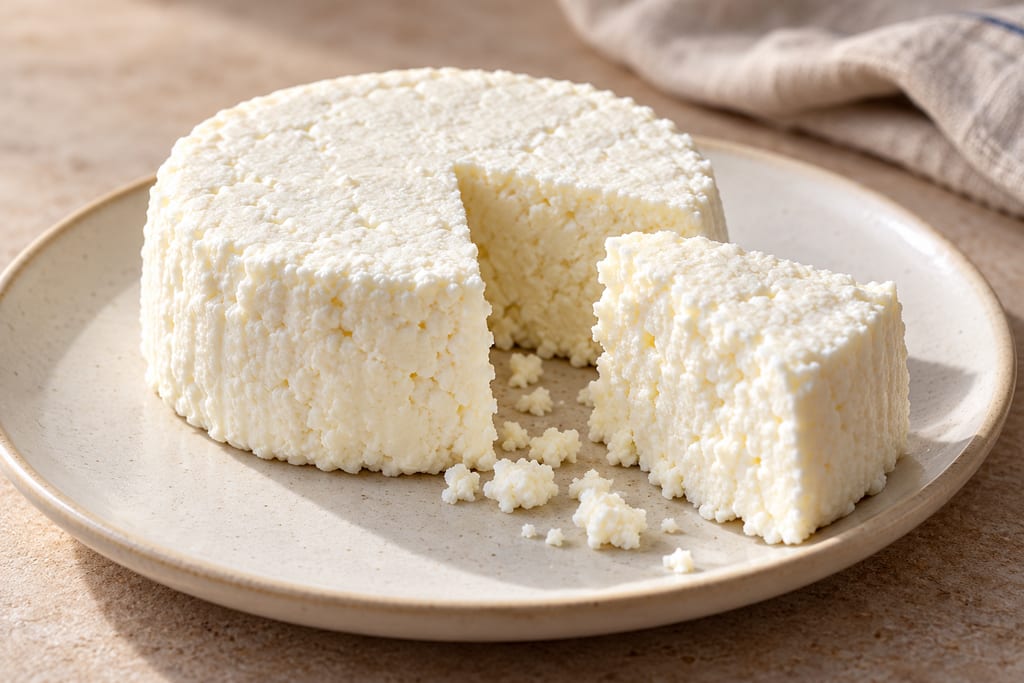
Cultured buttermilk, pasteurized milk, vinegar and rennet make this soft, crumbly queso fresco by a New Mexico home method adapted from Washington’s Abuela Project.
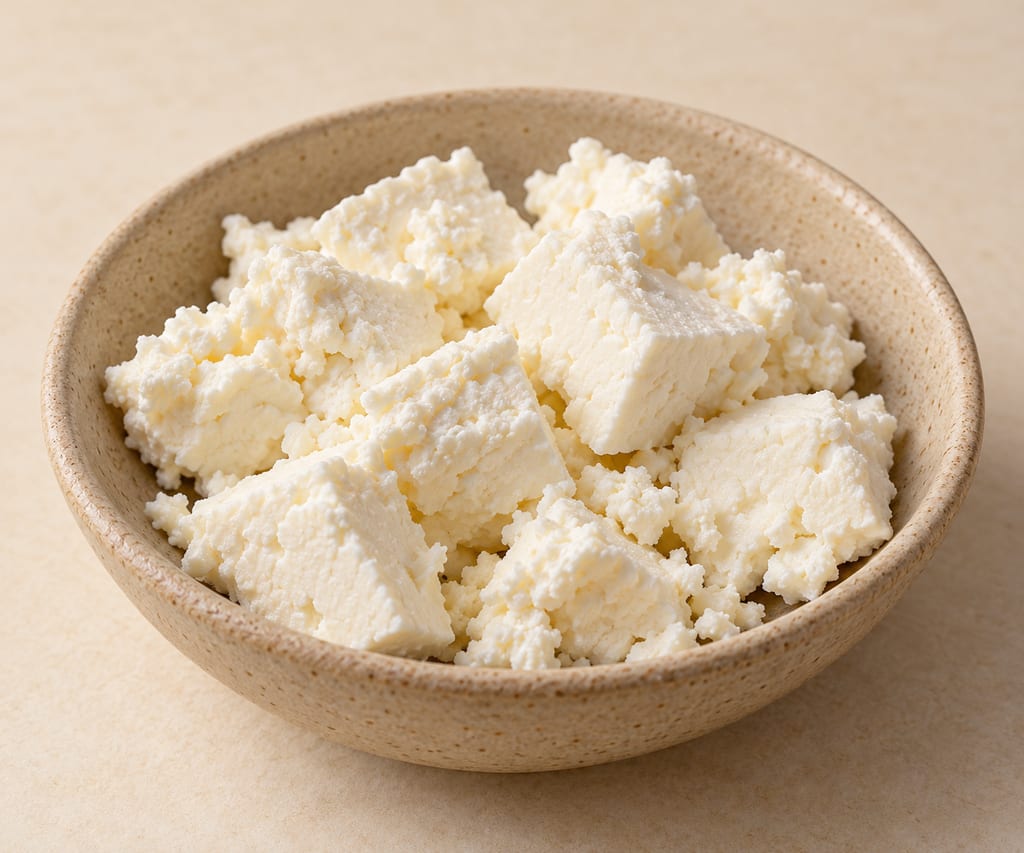
Whole milk set with a mesophilic starter and rennet makes a fresh, crumbly feta-style cheese. Its curds pass through hot salted whey before molding.
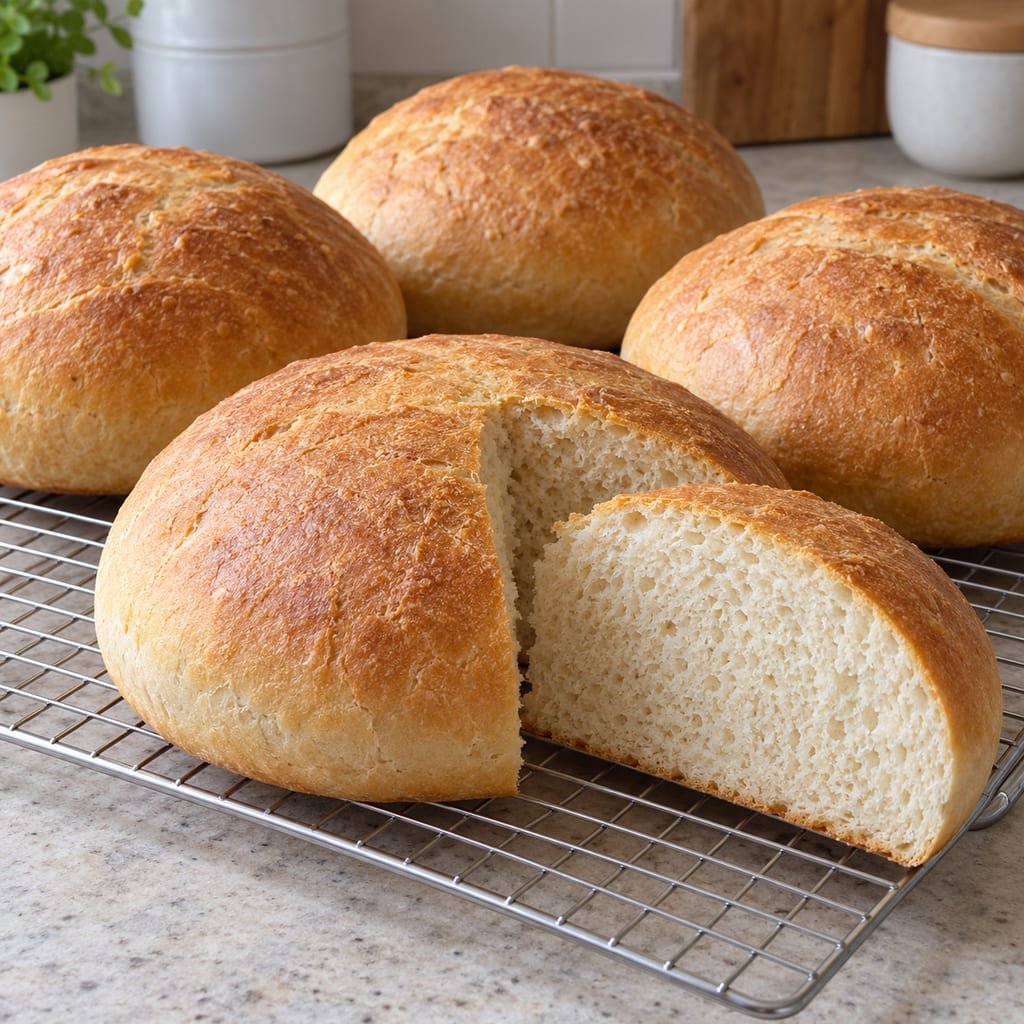
A four-loaf, yeast-raised home-oven version that Navajo Grandma identifies as Jemez Pueblo bread. It is her published adaptation, not a single formula for Pueblo communities or a horno firing protocol.
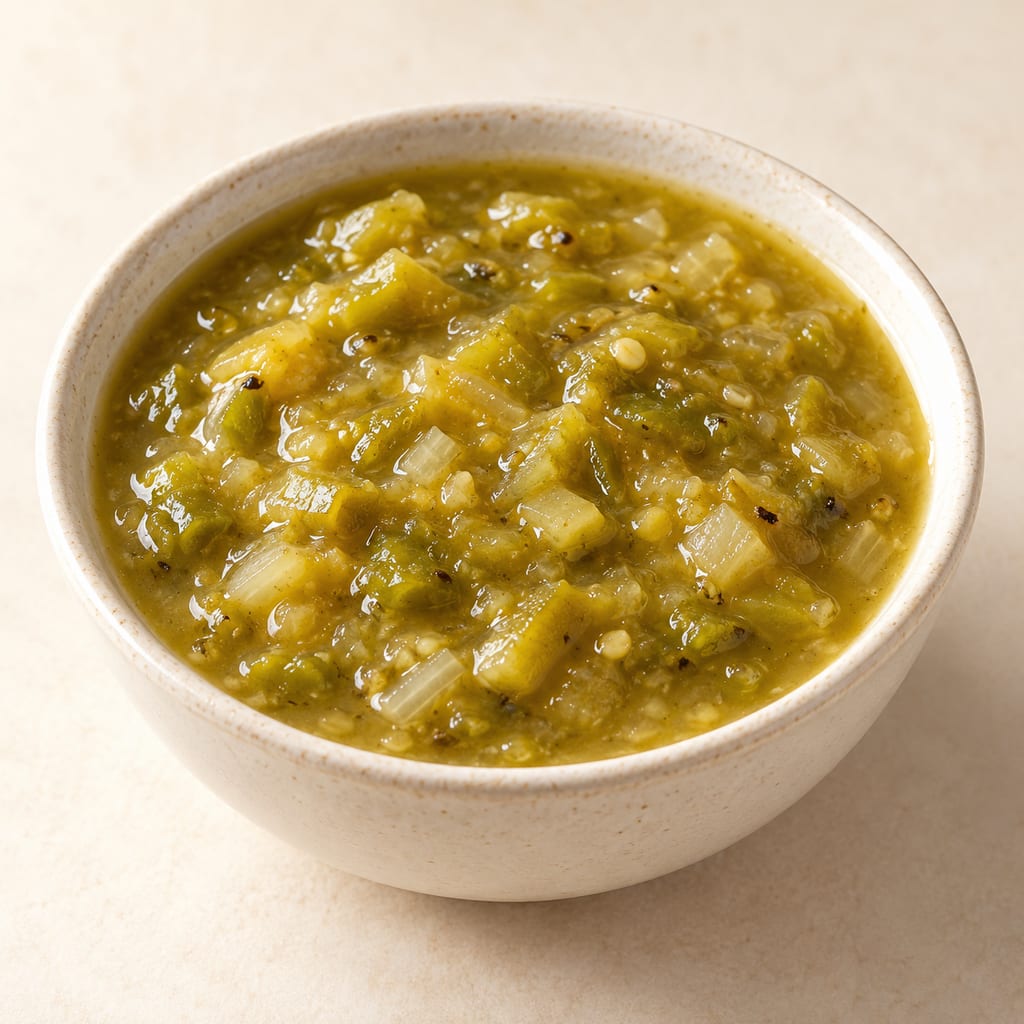
New Mexican green chile sauce is a cooked sauce of roasted fresh green chile, onion and garlic, thickened with a little flour and a 15-minute simmer in stock.
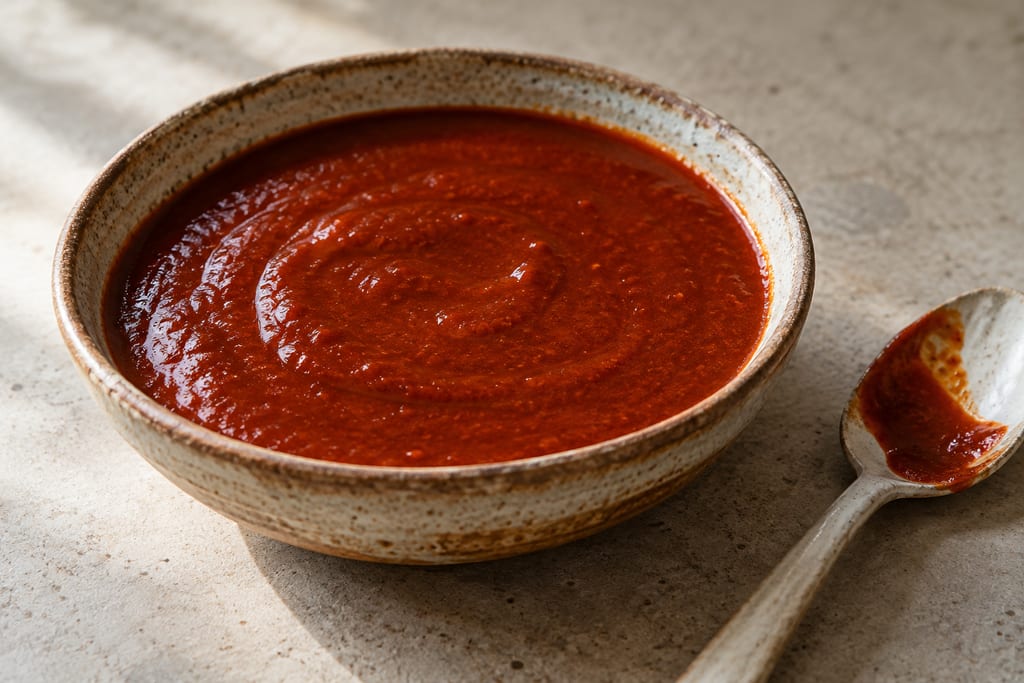
New Mexican red chile sauce is a smooth, cooked sauce of dried red chile, thickened with a little flour and loosened with water, and used to coat enchiladas and to build chile con carne.
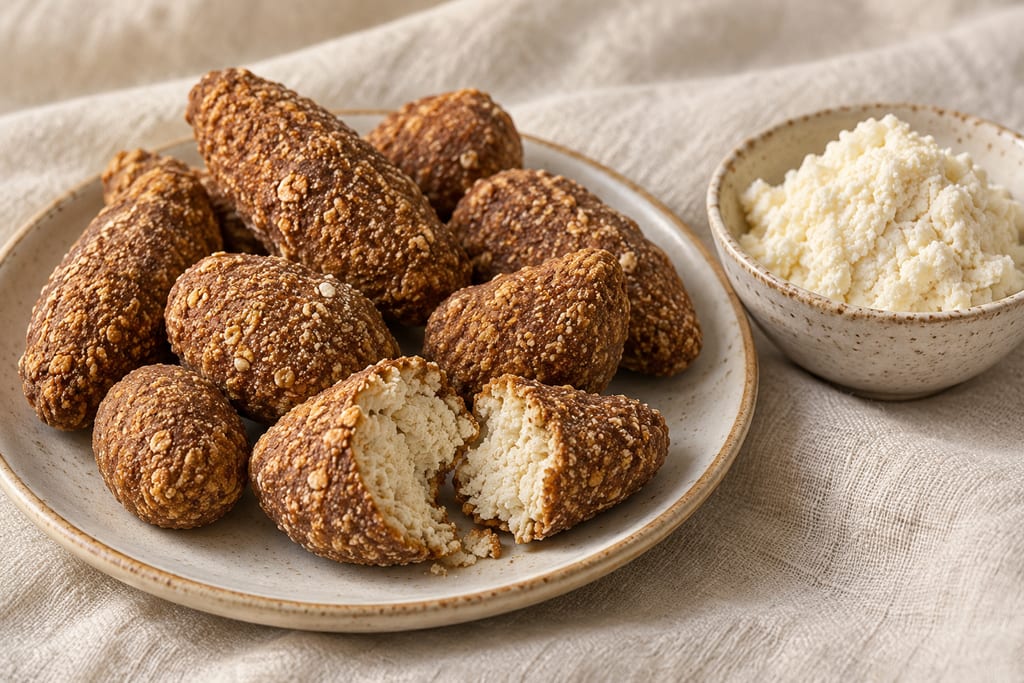
A two-stage Altai dairy preparation: sour chegen is heated into soft aarchi, then portions are drained, pressed and traditionally smoked into firm kurut.
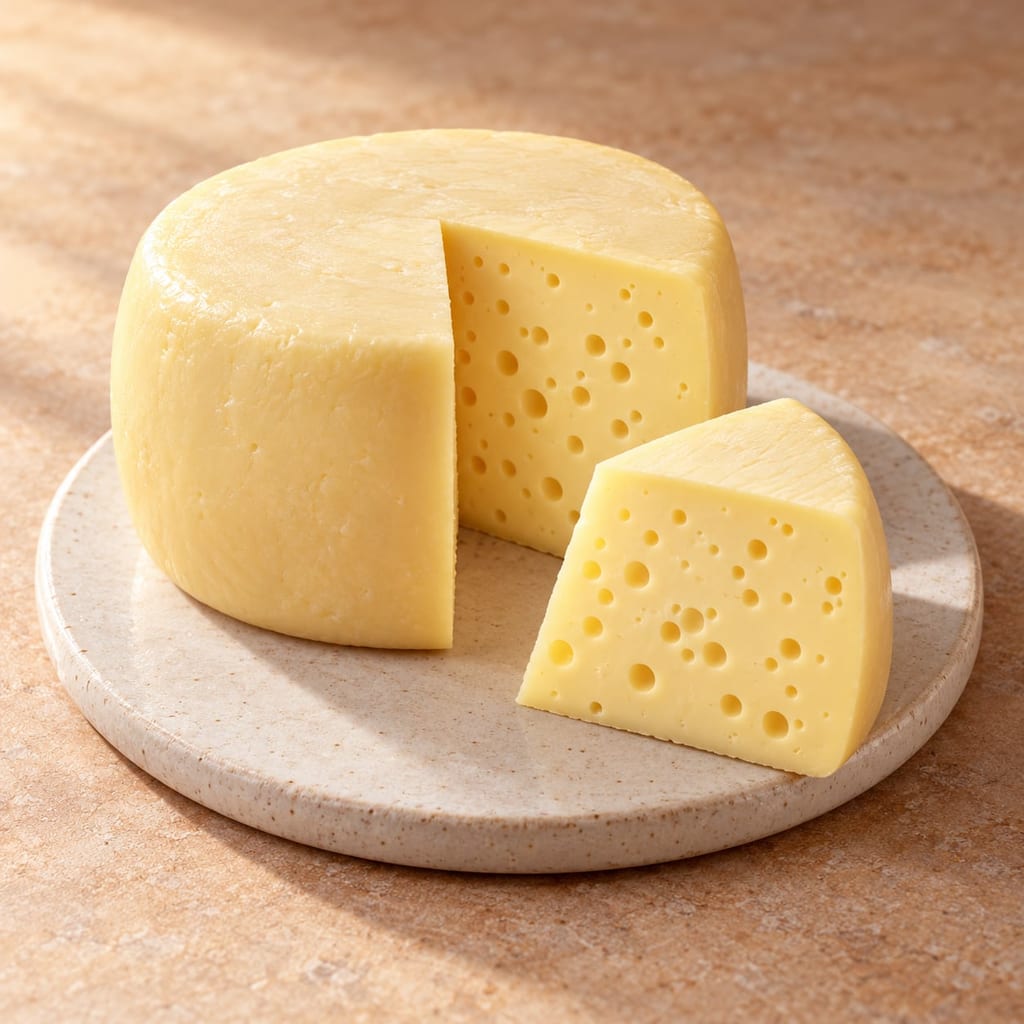
A washed-curd cheese with propionic bacteria, warmed by hot water in two steps and then held in a warm room for weeks so the bacteria can form its holes.
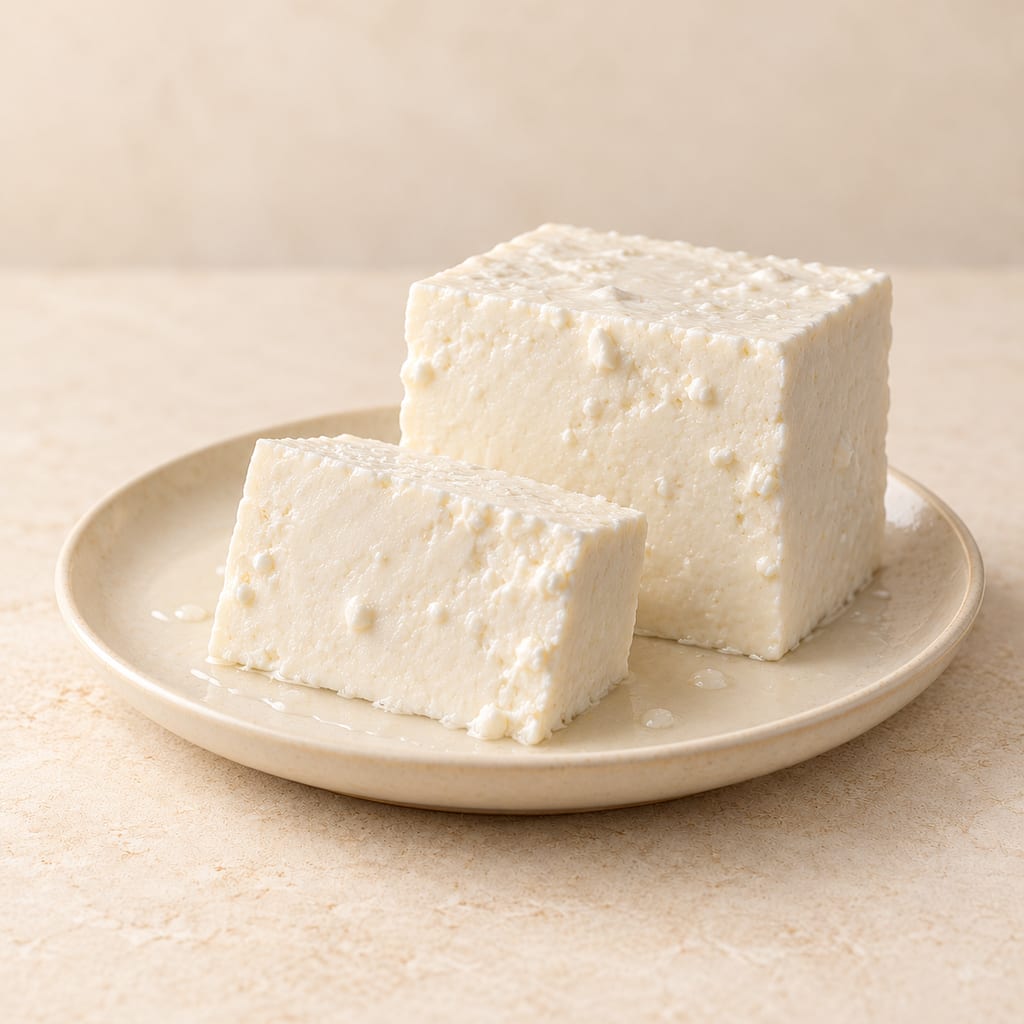
Beyaz peynir is a Turkish white cheese matured in brine. Sheep milk, alone or mixed with other milks, gives a close-textured cheese cut into blocks and packed in cans.
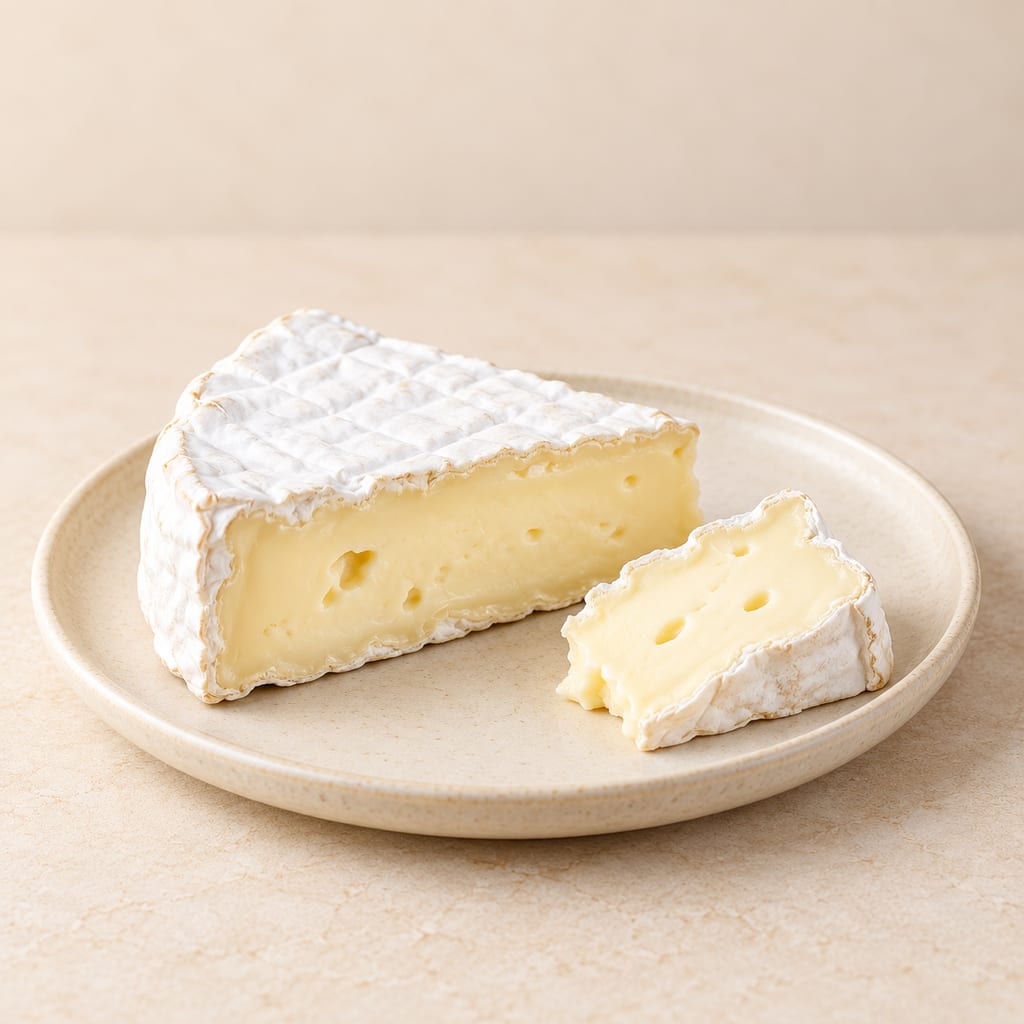
A cream-enriched Brie with a white bloomy rind and a softening center, made from pasteurized milk with lactic and surface cultures.
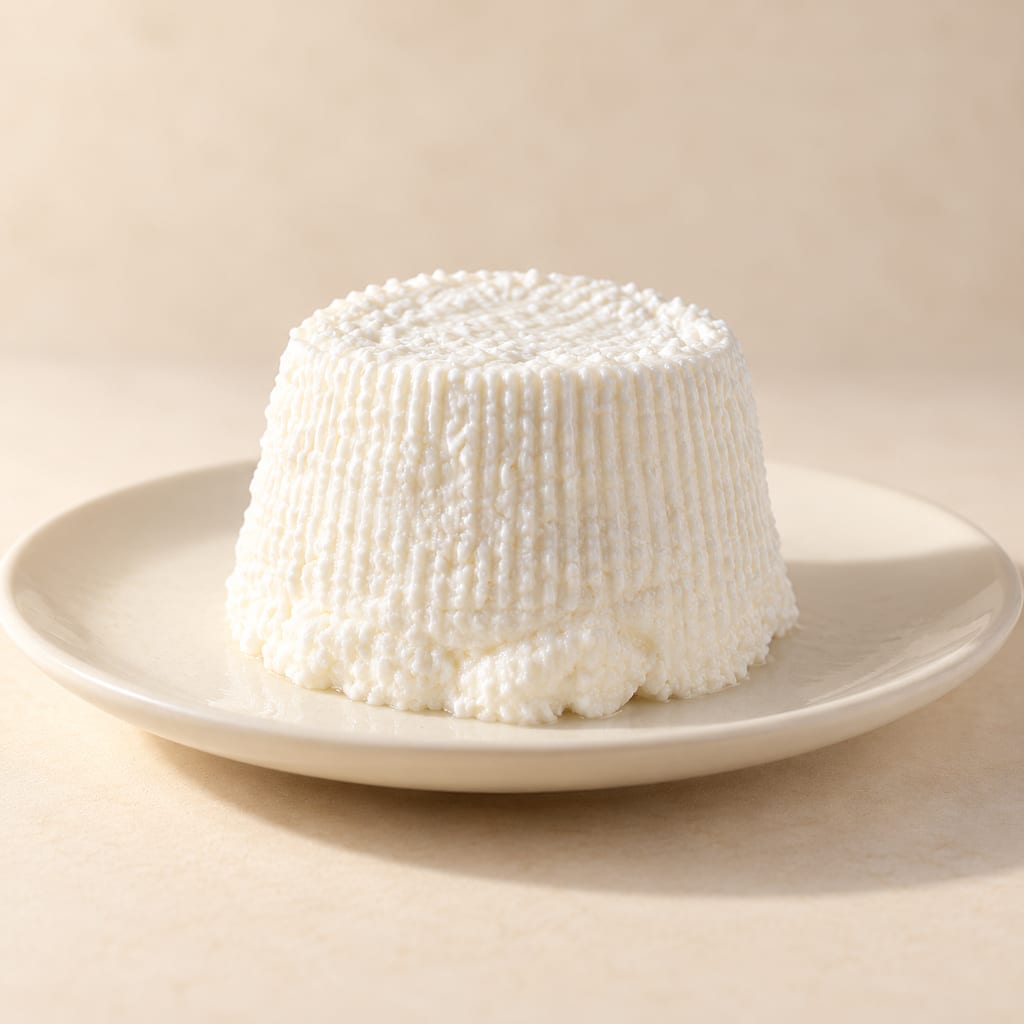
Corsican Brocciu is a whey cheese made by heating sheep's or goat's whey with whole milk and salt, then gently draining the flocculated curds. It is eaten fresh or salted and ripened as Brocciu passu.
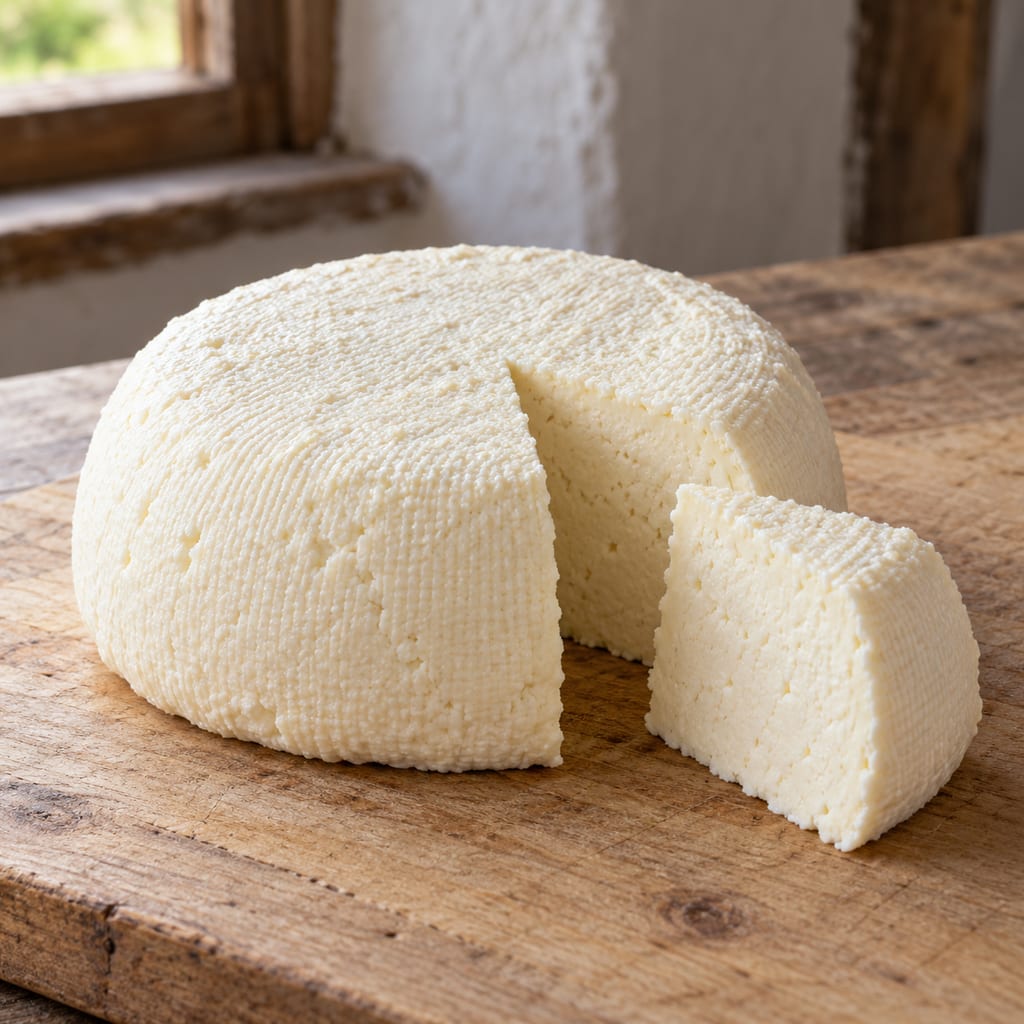
Budz is a traditional Hutsul rennet-set cheese made from sheep, cow or goat milk in the Ukrainian Carpathians, forming a fresh curd that can be eaten, smoked or processed into salted bryndza.
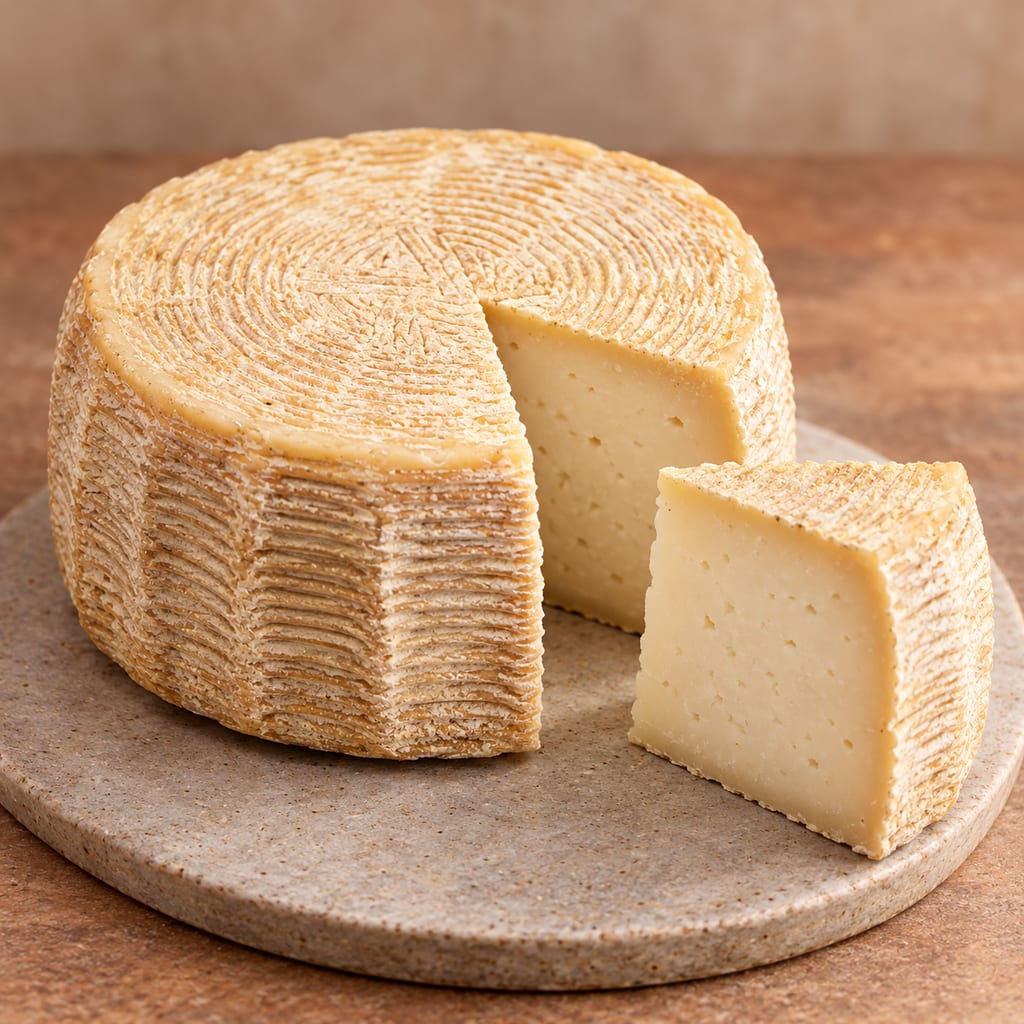
A scalded cheese moulded in baskets and re-cooked in its forms in hot whey, made alongside a ricotta from the same milk, then acidified, brined and aged for months.
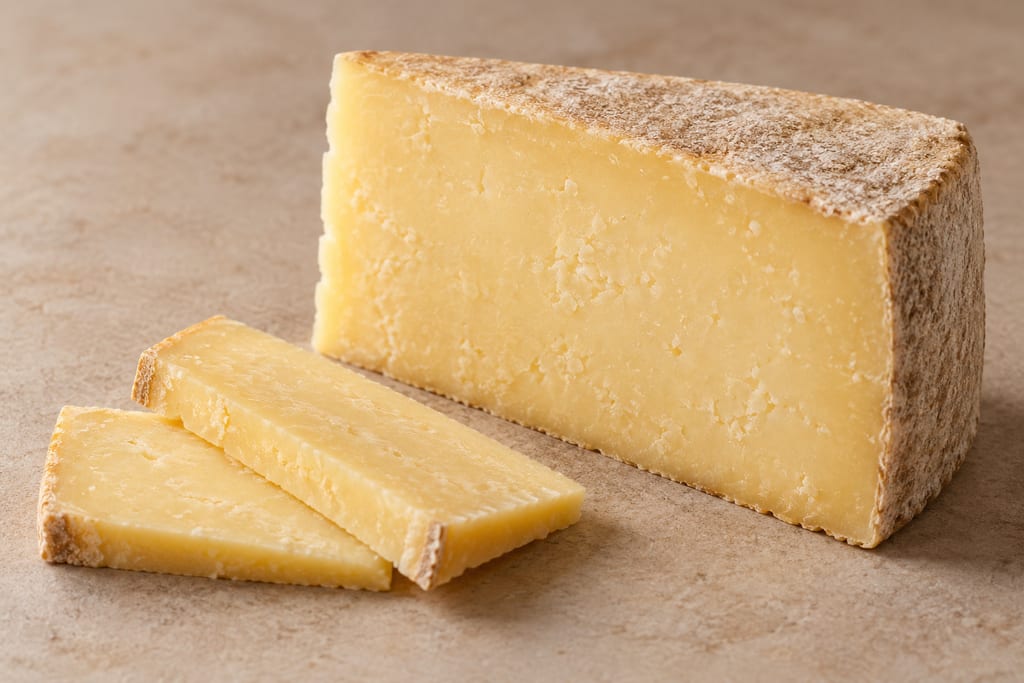
A pressed cheese whose curd is cooked slowly, then cheddared: kept warm in slabs that are turned and stacked for hours before milling, salting and pressing.

Soft, spreadable Calabrian pork sausage made with a great deal of red chilli and fatty pork, stuffed into natural casings, sometimes smoked and matured while staying soft.

A way to add independent temperature logging to an existing food dehydrator without changing its built-in controls or protections. It is a monitoring method, not a rewiring plan.

Pleurotus cystidiosus is the abalone mushroom, a cultivated oyster-type fungus with dark brown caps that grows more slowly and is more demanding than other Pleurotus species.

A dark, balanced vinegar from Emilia-Romagna made by combining cooked or concentrated grape must with wine vinegar, then acetifying and refining it in wood under a protected specification.

A living dairy inoculum that starts controlled cream fermentation, developing acidity and aroma before sour cream or cultured butter is finished.

A small electric incubator holds jars at a selected temperature for yogurt and other documented warm food preparations. Controls, capacity and vessel arrangement vary by model.

Adygean salt is a seasoned table salt associated with Adygea and the wider North Caucasian culinary tradition. Salt is blended with garlic and a variable selection of herbs and spices; the exact mix depends on the named style and maker.

The African Caesar-group mushroom, Amanita masasiensis, is a wild ectomycorrhizal species of central and southern African woodlands, eaten locally. The genus contains deadly poisonous species, so identification needs care.
No community contributions have been published for this entry yet.
Sign in to contribute. Published comments and photos are free to read.
New Mexico State UniversityProcess
Making Homemade CheeseNeufchâtel ingredients, temperature, set, stirring, pressing, salt range, refrigeration.
Cited in: Two cheeses share a name; Culture and rennet do different work; Why the stages are short and simple; The mold, the milk and the result; Serving a mild, unripened cheese; Handling a perishable cheese
French Ministry of AgricultureHistory · Identity
À la découverte du Neufchâtel AOP, cœur fondant de NormandiePays de Bray French Neufchâtel has a bloomy rind, traditional forms, and documented named mention in the sixteenth century; it differs from the NMSU fresh home cheese.
Cited in: Two cheeses share a name; A Norman name crosses the Atlantic; Fresh cheese and its regional relatives
Institut national de l'origine et de la qualité (INAO)Identity · Geography · Variant
NeufchâtelFrench AOP Neufchâtel is a cow's-milk soft cheese with bloomy rind, six forms, long lactic setting, draining and pressing before molding, short affinage, and origin area in Pays de Bray.
Cited in: Two cheeses share a name; A Norman name crosses the Atlantic; Fresh cheese and its regional relatives
United States Department of Agriculture, Agricultural Marketing ServiceIdentity · Safety
Commercial Item Description: Cream Cheese, Neufchâtel Cheese, and Related Products (A-A-20253B)The 2021 federal procurement specification distinguishes Neufchâtel cheese as its own product type and requires pasteurization or ultra-pasteurization, packaged storage at or below 7.2°C and minimum remaining shelf life in its commercial procurement context; those controls do not validate a home batch.
Cited in: The mold, the milk and the result; Handling a perishable cheese
United States Department of Agriculture, Farmers’ Bulletin 960History · Process · Uses
Neufchâtel and Cream Cheese: Farm Manufacture and UseThe 1918 bulletin distinguishes American Neufchâtel from cream cheese by milk fat level and discusses home and small-scale manufacture.
It explains simultaneous acid and rennet action, starter cultures, pressing, perishable character and uses in dishes.
Cited in: Two cheeses share a name; A Norman name crosses the Atlantic; Culture and rennet do different work; Why the stages are short and simple; The mold, the milk and the result; Fresh cheese and its regional relatives; Serving a mild, unripened cheese; Handling a perishable cheese