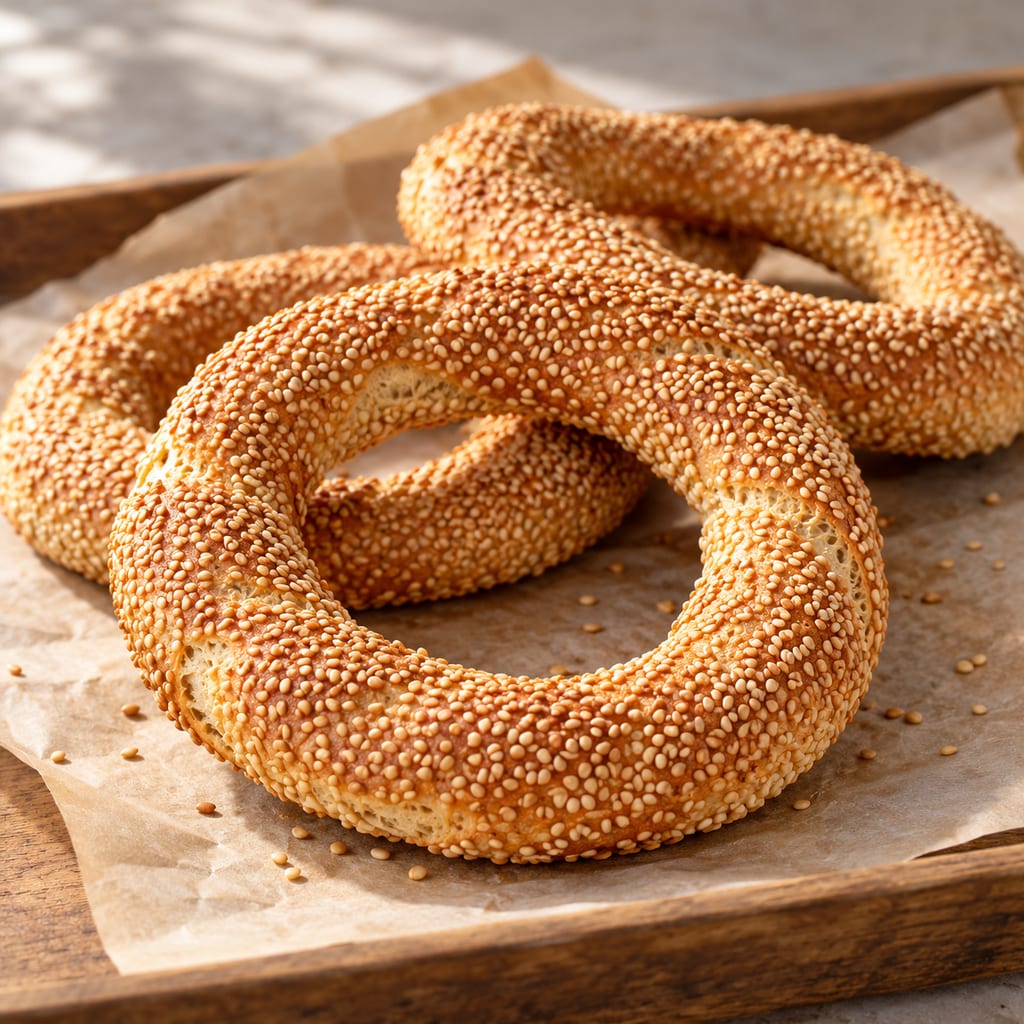
Koulouri Thessalonikis
The Thessaloniki City of Gastronomy page gives a 15–18-ring yeast dough, dipped in sweetened water and sesame before baking. Its fresh yeast is listed as one dice without a mass, which remains unresolved.
 FermenteaWhere food goes to change
Paximadi kritiko · Cretan barley rusk · Greek barley rusks
Cretan paximadi is a twice-baked rusk. This barley-wheat version is raised with yeast, baked as a loaf, sliced, and dried slowly until it keeps.
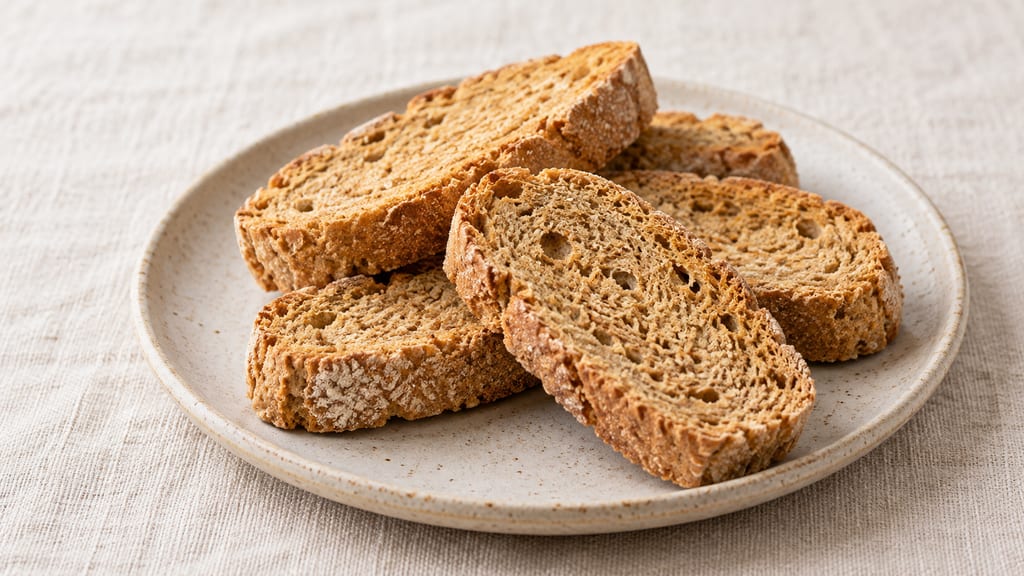
Paximadi is a rusk: bread that is baked, sliced and then dried again until it is hard enough to keep for a long time. The author distinguishes the round kouloura forms from the thin slices used for dakos. Cretan households used rusks because they could be kept and carried.
The first bake sets the crumb. Slicing while the loaf is still warm lets the cut faces dry, and the low-temperature drying stage removes the remaining moisture slowly so the rusk becomes crisp rather than hard on the outside only. slices are cooled completely before storage.
The author softens a slice slightly with water, then adds olive oil, cheese, tomato or olives. Barley and wheat flours in equal weights give the dough its character; the source does not describe alternative grain mixes.
Yield 20 servings · Scaling: source batch only
The author describes the rusks as suited to households that could not bake bread often and travelled well. No dated attestation is given.
The Thessaloniki City of Gastronomy page gives a 15–18-ring yeast dough, dipped in sweetened water and sesame before baking. Its fresh yeast is listed as one dice without a mass, which remains unresolved.
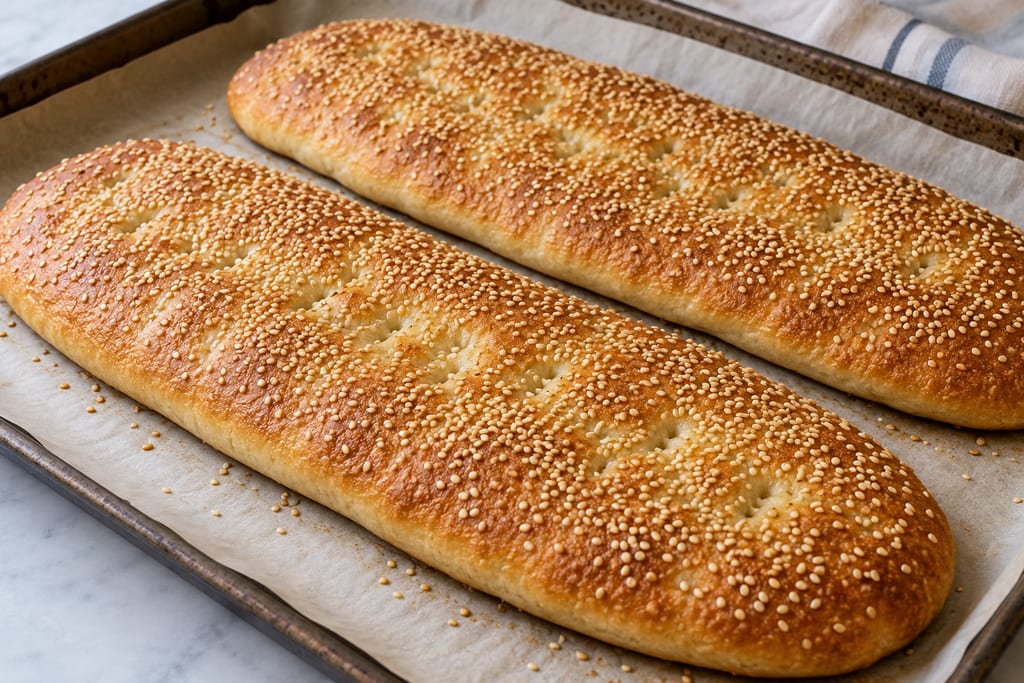
Diane Kochilas’s yeast-raised Lagana makes two wide, sesame-topped loaves for Clean Monday. Her Athens-neighborhood version is distinct from the unleavened Lagana also described in the recipe’s cultural context.
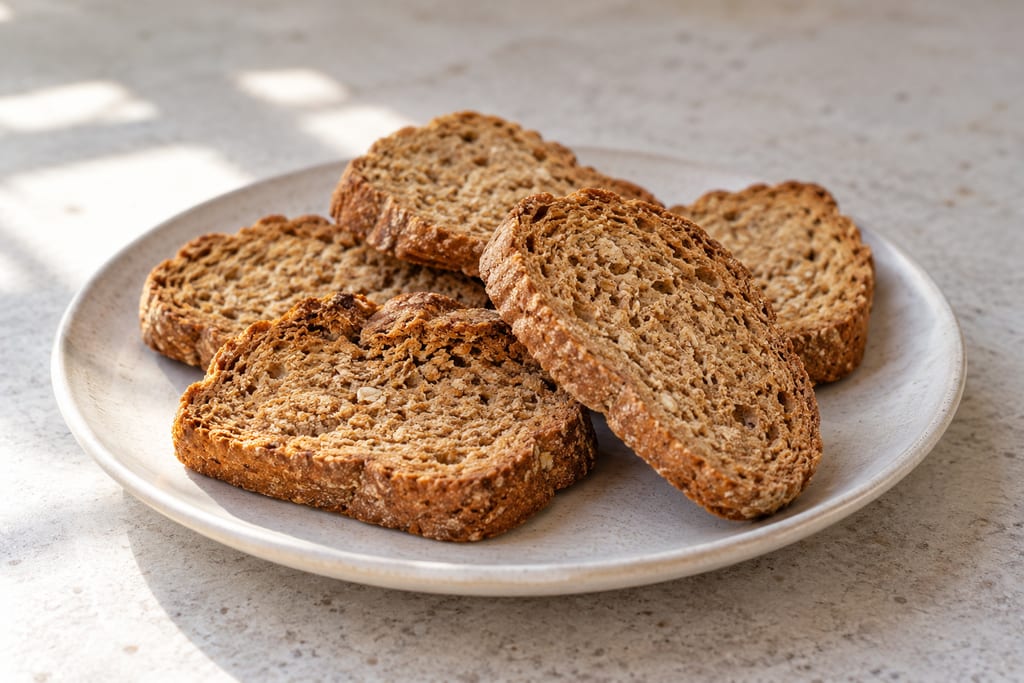
Elena Paravantes gives a modern 50/50 whole-grain barley and wheat rusk recipe, shaped as one scored loaf, baked, separated into slices and dried in a low oven. The second rise has no stated duration.
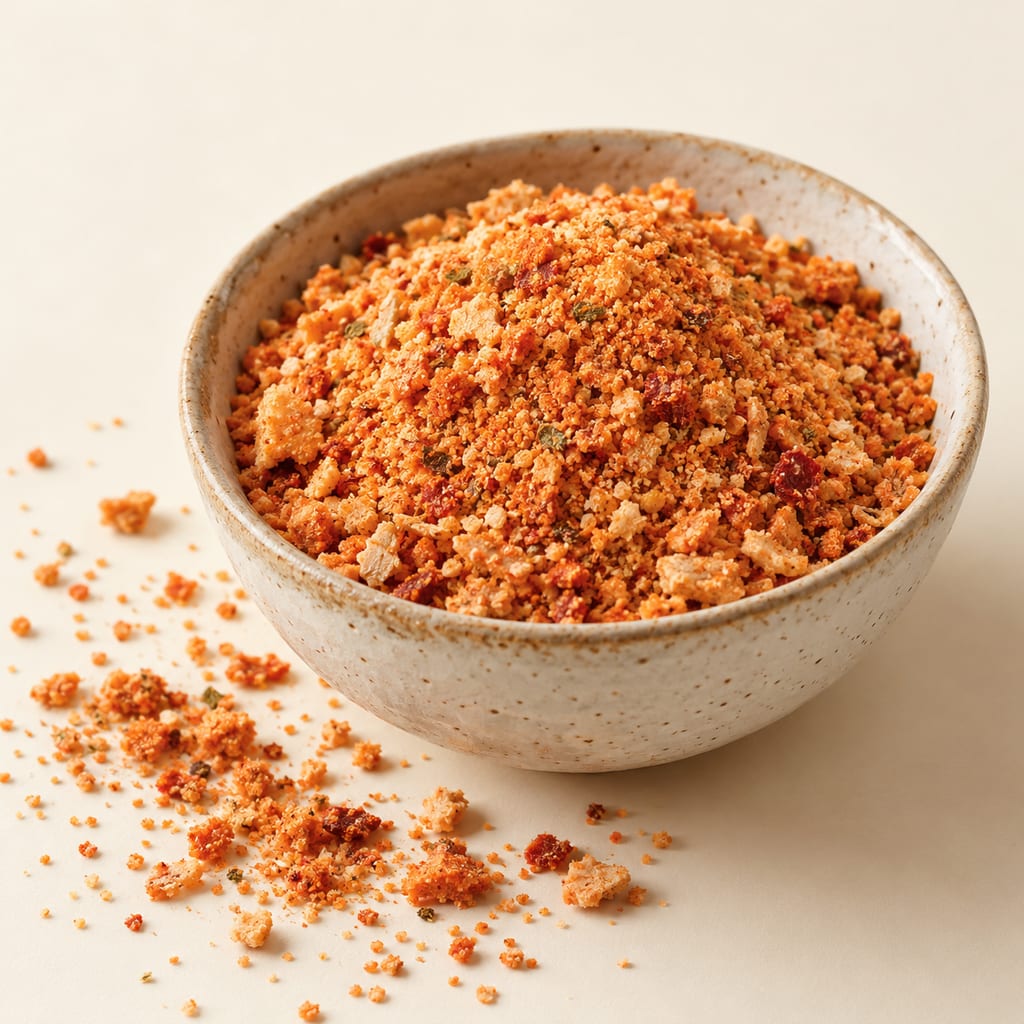
Tarhana is a Turkish soup base: yoghurt, flour or semolina and usually onion, tomato and red pepper, fermented as a dough for days, rubbed into grains and dried.
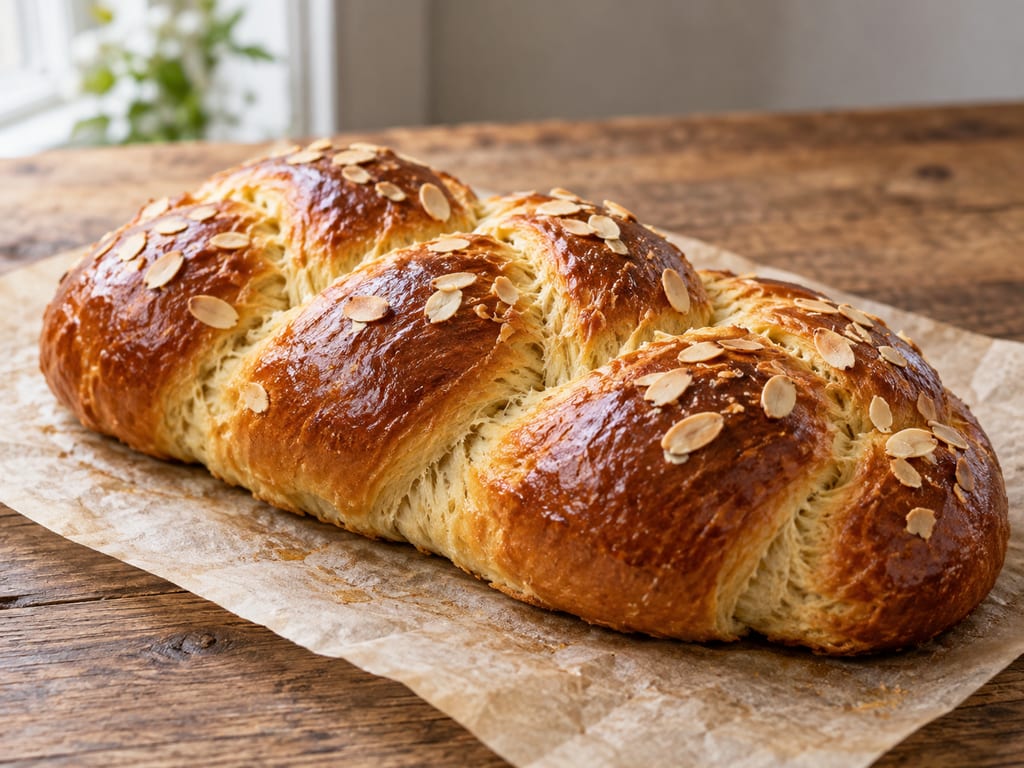
Eli K. Giannopoulos’s recipe makes two braided tsourekia with mastic, mahleb and orange, followed by an optional syrup. It is one modern Greek Easter-bread formula, not a universal regional standard.
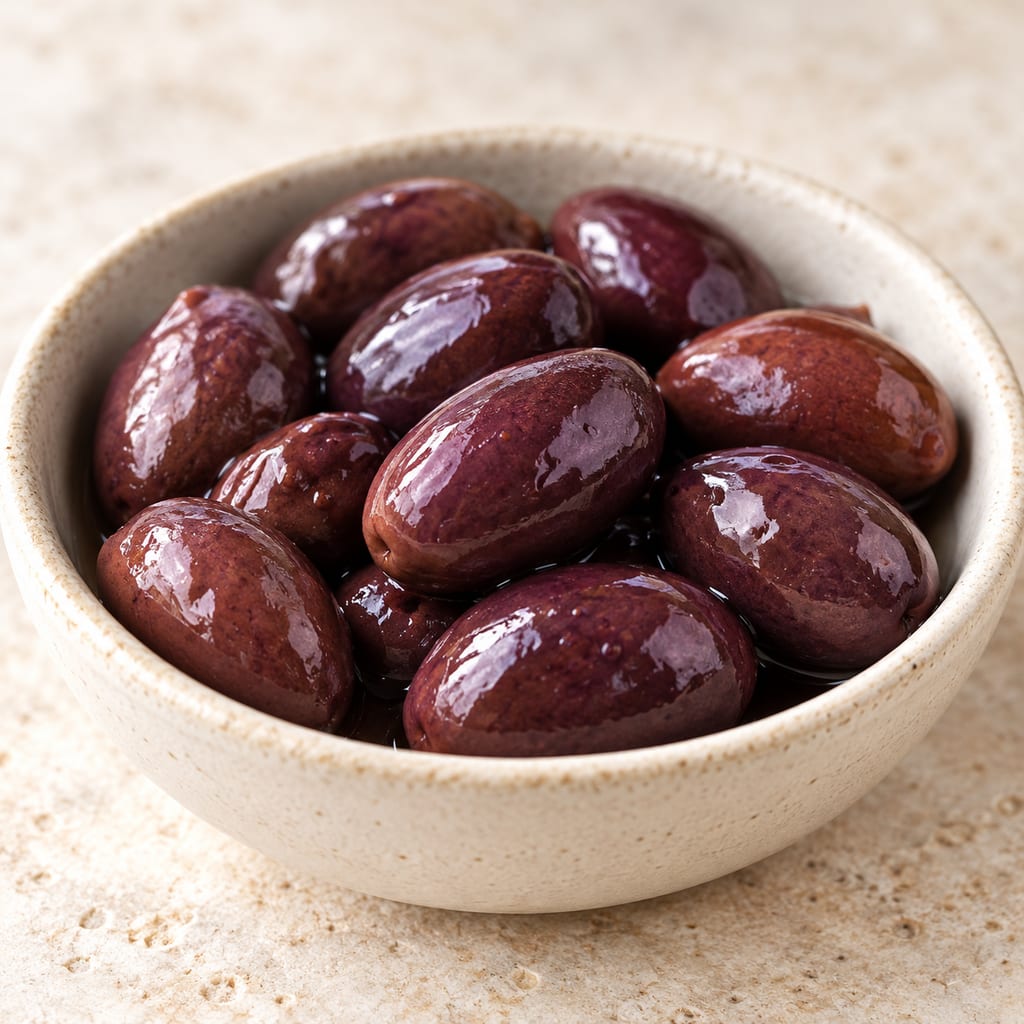
Elia Kalamatas is a Messinia table olive of the Kalamon variety, picked before full ripeness and fermented in brine for six to nine months; it is a PDO product, not a generic black olive.
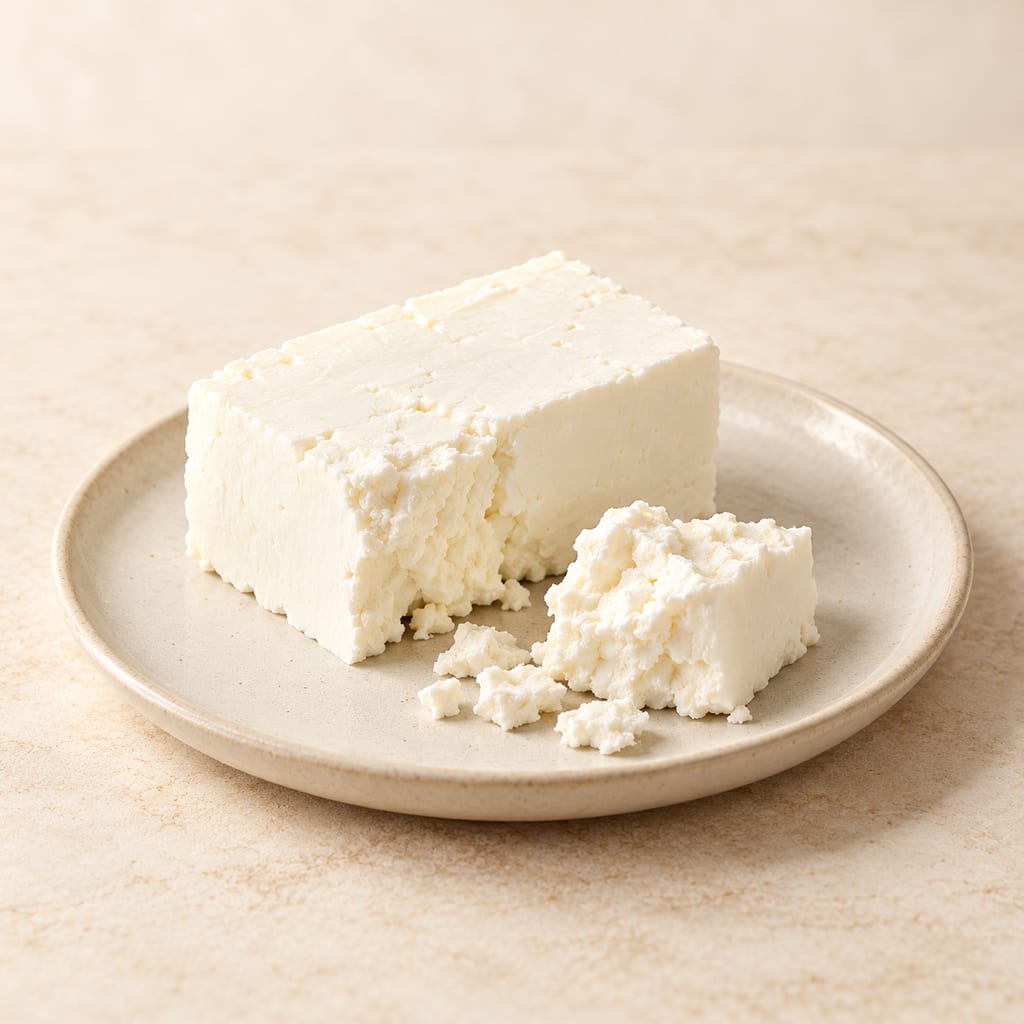
White cheese made with a lactic starter and rennet, drained without pressing, dry-salted and covered in brine. This home adaptation allows whole milk from different dairy animals.
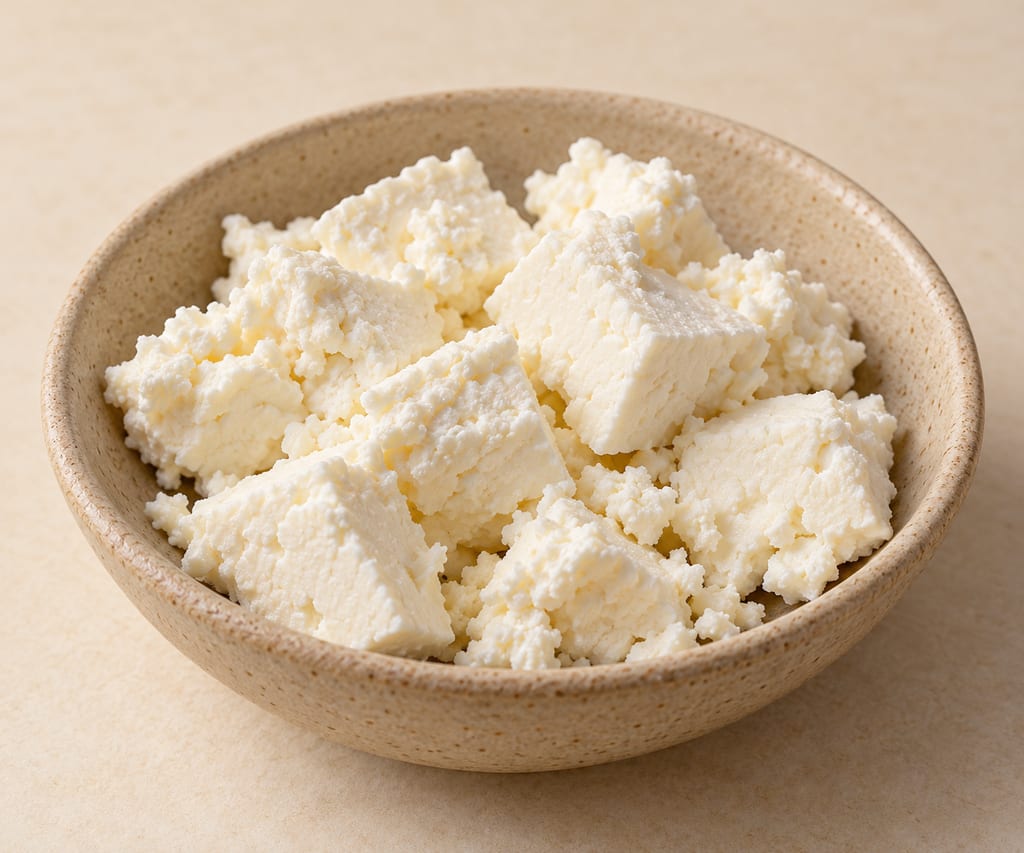
Whole milk set with a mesophilic starter and rennet makes a fresh, crumbly feta-style cheese. Its curds pass through hot salted whey before molding.
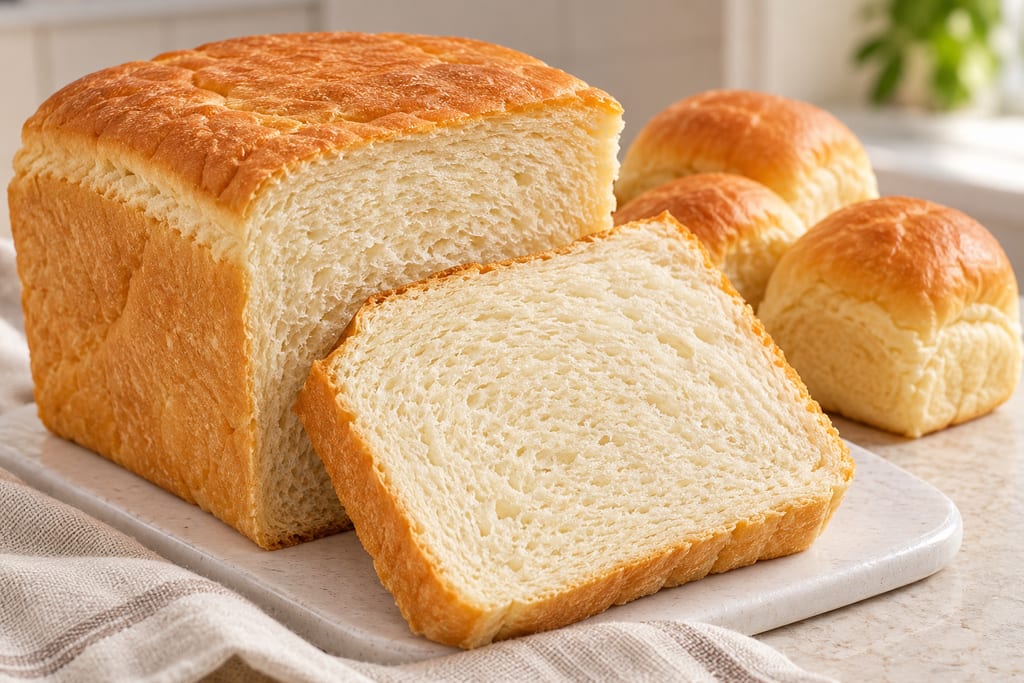
This softer home-style Agege bread uses a scalded flour paste, an enriched yeast dough and a 9×5-inch loaf pan, with rolls from the extra dough.
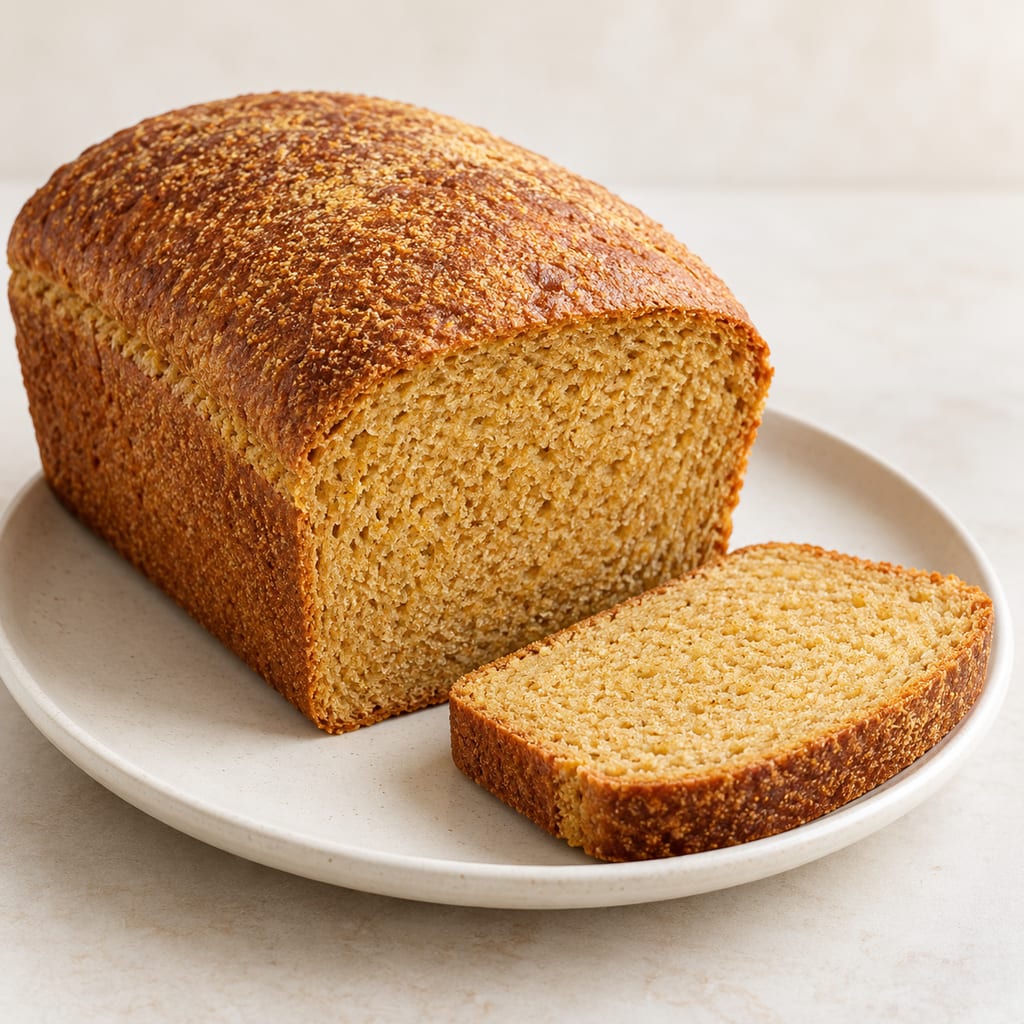
Anadama is a New England yeast loaf made with wheat flour, cornmeal and molasses. Scalded cornmeal enriches the dough, while molasses lends sweetness and a dark crust; it is especially good toasted or beside soup and baked beans.

A yeast-raised wheat ring shaped from a firm dough, briefly boiled and baked. This source-batch formula gives a gently malted crust and a chewy crumb.
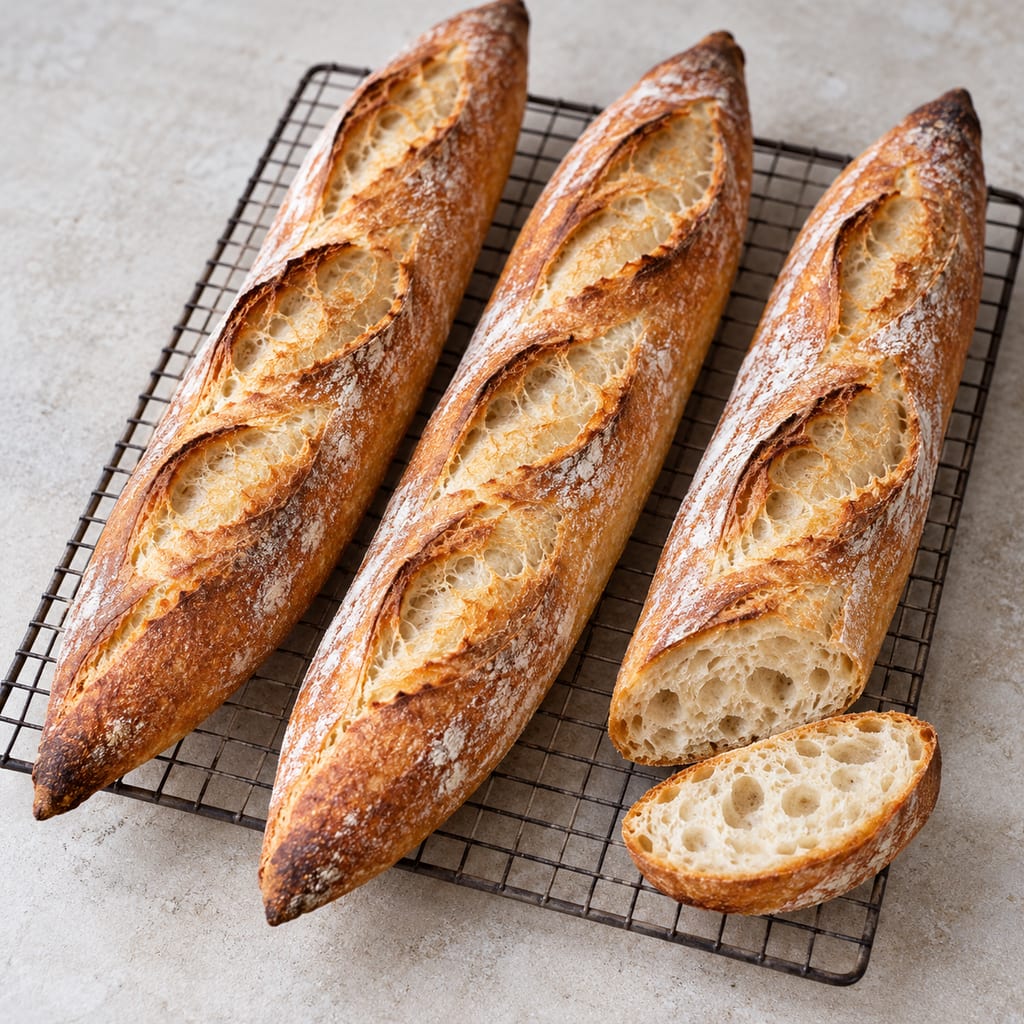
Three long, crusty wheat loaves made with an overnight yeast poolish, shaped by hand and baked with steam for a crisp crust.
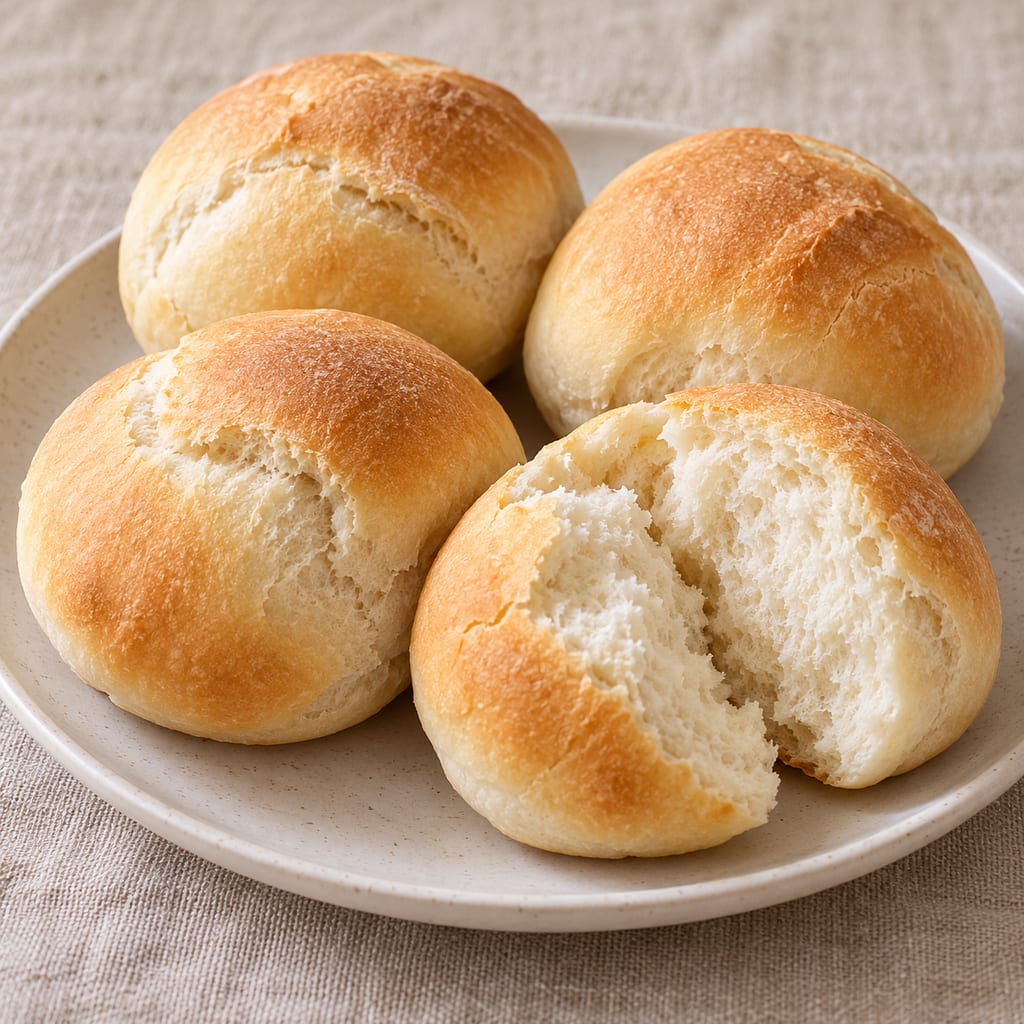
A lightly salted, yeast-raised Barbadian roll, baked in a dozen-roll home batch and often split for cutters.
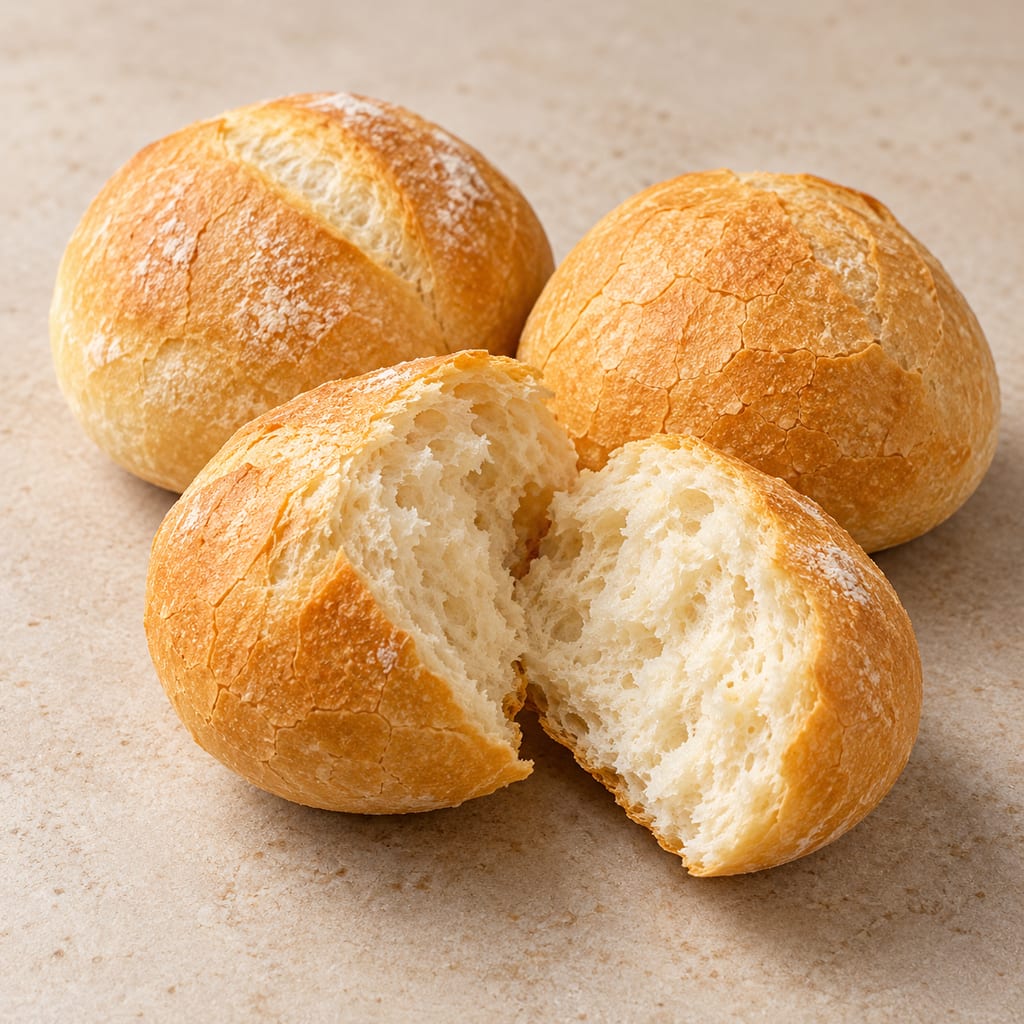
A crisp Belgian roll made from a supplier’s Croc-flour dough, mixed by hand or machine, proofed in rounds and baked with steam.
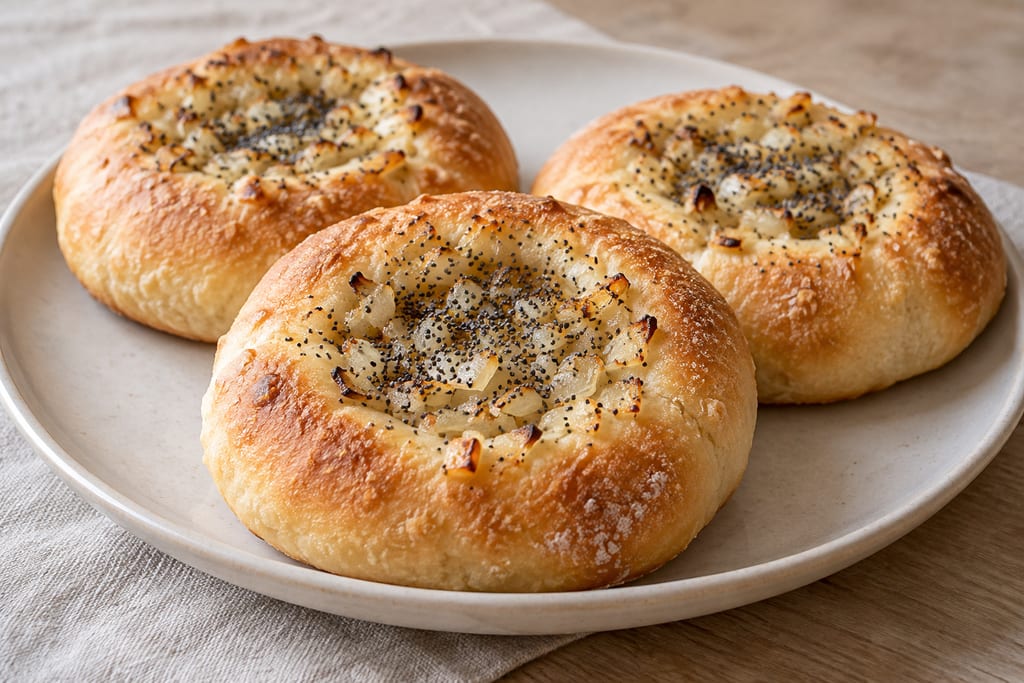
Bialys are soft, yeasted wheat rolls baked without boiling, each shaped with an onion-filled central depression instead of a hole.
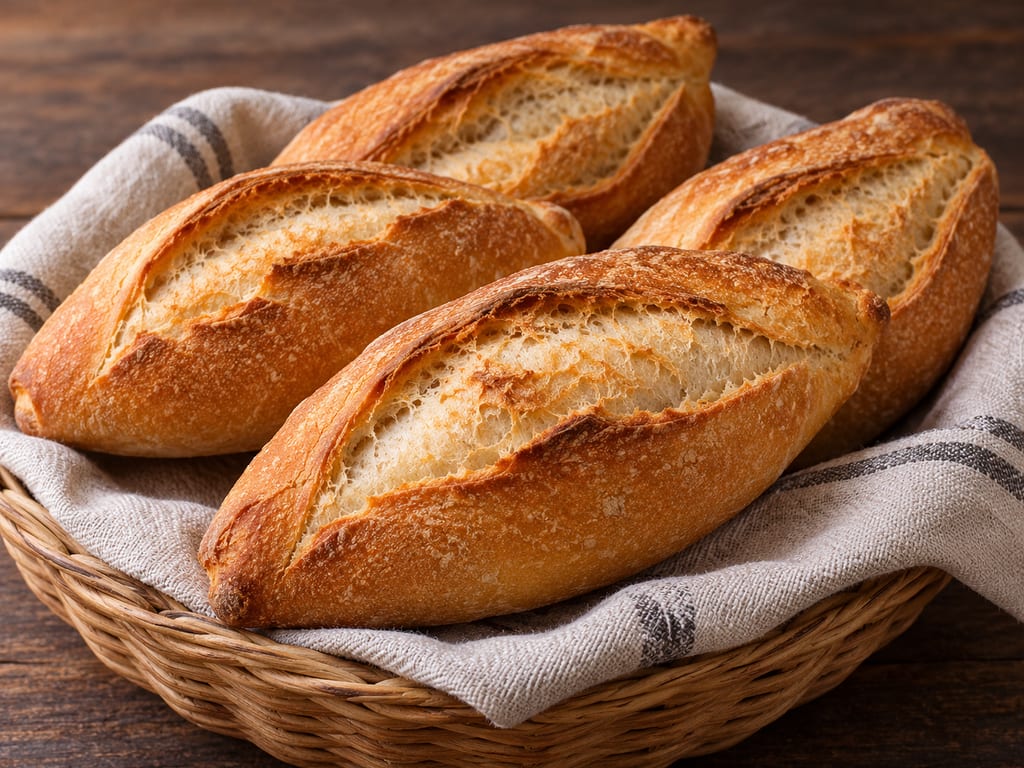
A measured, commercial-yeast home method for Guadalajara-style birote salado, with a six-hour preferment, shaped rolls and a two-temperature steam bake. This formula contains no egg.
No community contributions have been published for this entry yet.
Sign in to contribute. Published comments and photos are free to read.
OliveTomato.com / Elena ParavantesMethod · History
Authentic Greek Barley Rusks - Paximadi KritikoFlour weights, yeast activation, rises, 180 C first bake, 100 C drying, storage wording.
Rusks suited households that could not bake often; round kouloura versus sliced dakos distinction.
Cited in: Rusk, not bread; Why the loaf is dried twice; Serving