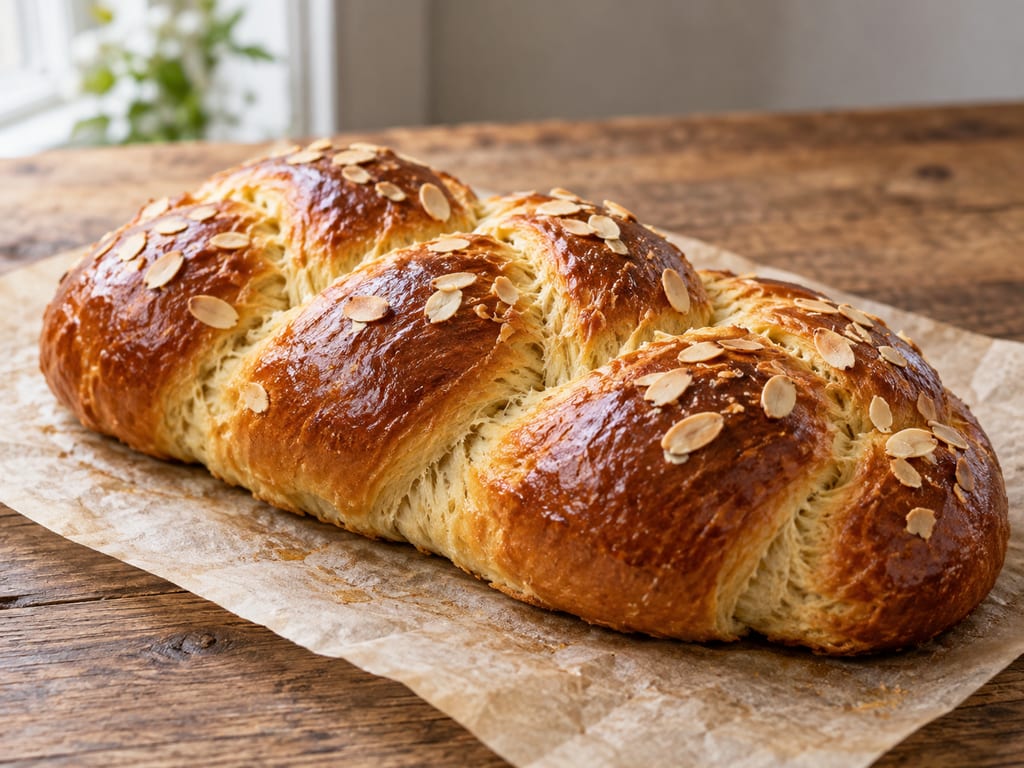
Tsoureki (My Greek Dish Easter bread)
Eli K. Giannopoulos’s recipe makes two braided tsourekia with mastic, mahleb and orange, followed by an optional syrup. It is one modern Greek Easter-bread formula, not a universal regional standard.
 FermenteaWhere food goes to change
Modern method
Λαγάνα · Lagana for Clean Monday · Greek sesame flatbread
Diane Kochilas’s yeast-raised Lagana makes two wide, sesame-topped loaves for Clean Monday. Her Athens-neighborhood version is distinct from the unleavened Lagana also described in the recipe’s cultural context.
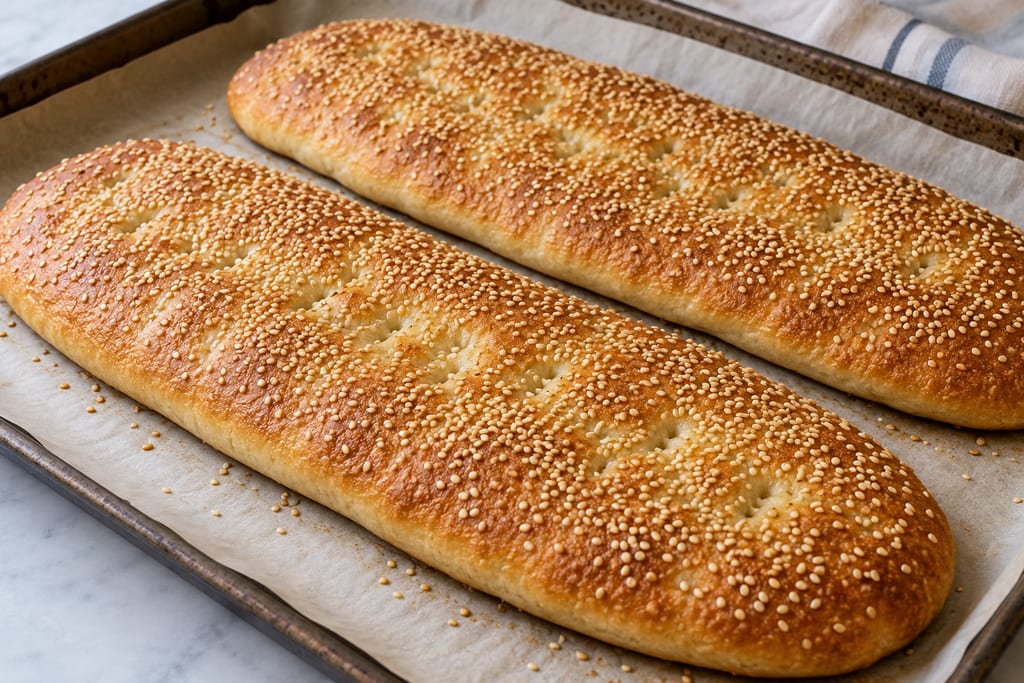
Lagana is the broad, flat bread associated with Clean Monday, the start of Lent in Greece. Diane Kochilas distinguishes the unleavened form from a yeast-raised recipe she learned from a local baker in her Athens neighborhood. This recipe records that particular yeast version; it does not make the leavened and unleavened forms into one formula.
The two-loaf batch uses bread flour, active dry yeast, warm water, sugar, salt, olive oil and sesame. Kochilas shapes the dough into two wide ovals, each about 15 by 6 inches, then bakes them until deep golden brown. Lagana is broken off by hand rather than cut with a knife. The recipe gives no weighed yeast-envelope mass, sesame quantity, measured proofing temperature or storage guidance.
The recipe gives a 15-minute yeast activation, a roughly two-hour first rise and a 45–50-minute final rise. Its method says each loaf bakes for about 30 minutes, while the recipe header lists 60 minutes of cooking for the batch. It does not say whether the two loaves bake in separate rounds, so the method and the header are both recorded without treating the difference as a tested timing rule.
The source asks for a warm, draft-free place but gives no measured proofing temperature. It names a 450°F oven and a deep-golden-brown baking cue. These are the source's home instructions, not a professionally validated internal-temperature or storage specification.
Diane Kochilas describes a traditionally unleavened Lagana and distinguishes her contemporary yeast-raised recipe, learned from a local baker in her Athens neighborhood. This record preserves that yeast-raised formula alone; the source does not establish its first attestation or represent every Greek Clean Monday bread.
Yield 2 wide loaves · Scaling: source batch only
Flour is raw and uncooked dough should not be tasted.
Hazard sourceDo not taste the raw dough. Bake the loaves before eating, following the source's deep-golden-brown cue.
Control sourceContains wheat and sesame.
The recipe page's header says 60 minutes cooking while the method says about 30 minutes for each loaf; use the source method and verify the loaves are baked through. No numeric internal temperature is provided.
The author presents Lagana as a Greek Lenten bread; the page does not locate this formula within a more specific region.
Eli K. Giannopoulos’s recipe makes two braided tsourekia with mastic, mahleb and orange, followed by an optional syrup. It is one modern Greek Easter-bread formula, not a universal regional standard.
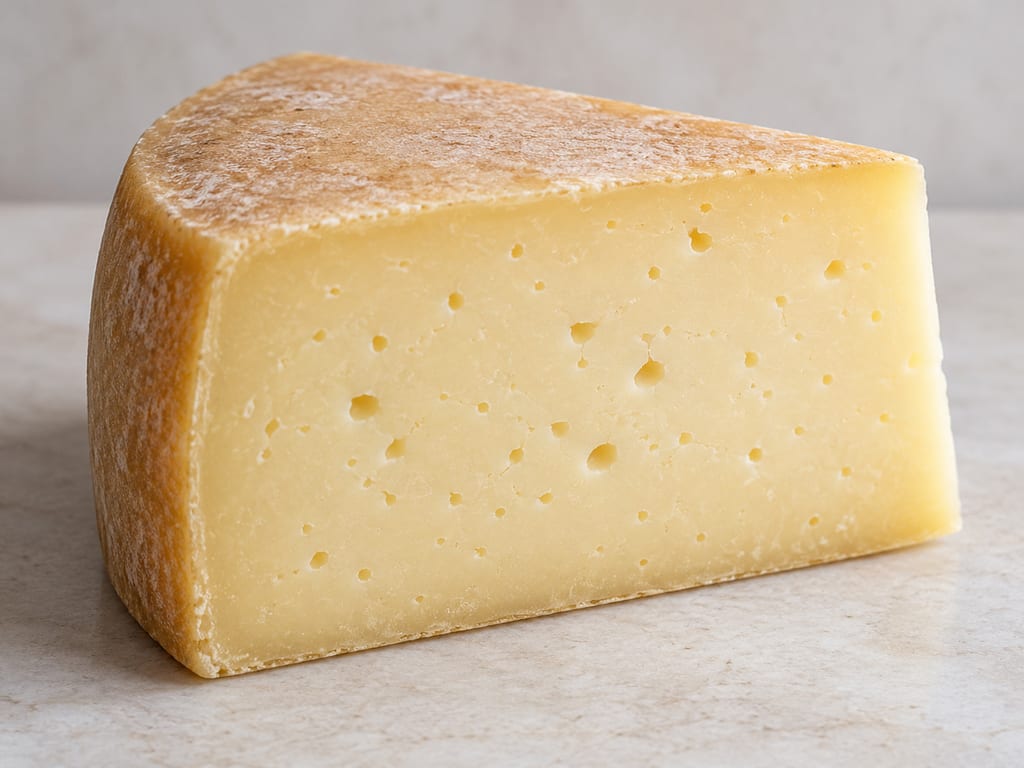
This Cypriot graviera is a hard sheep-milk cheese with a dry rind and round eyes. Its curd is heated, pressed and dry-salted before a long cool ripening.
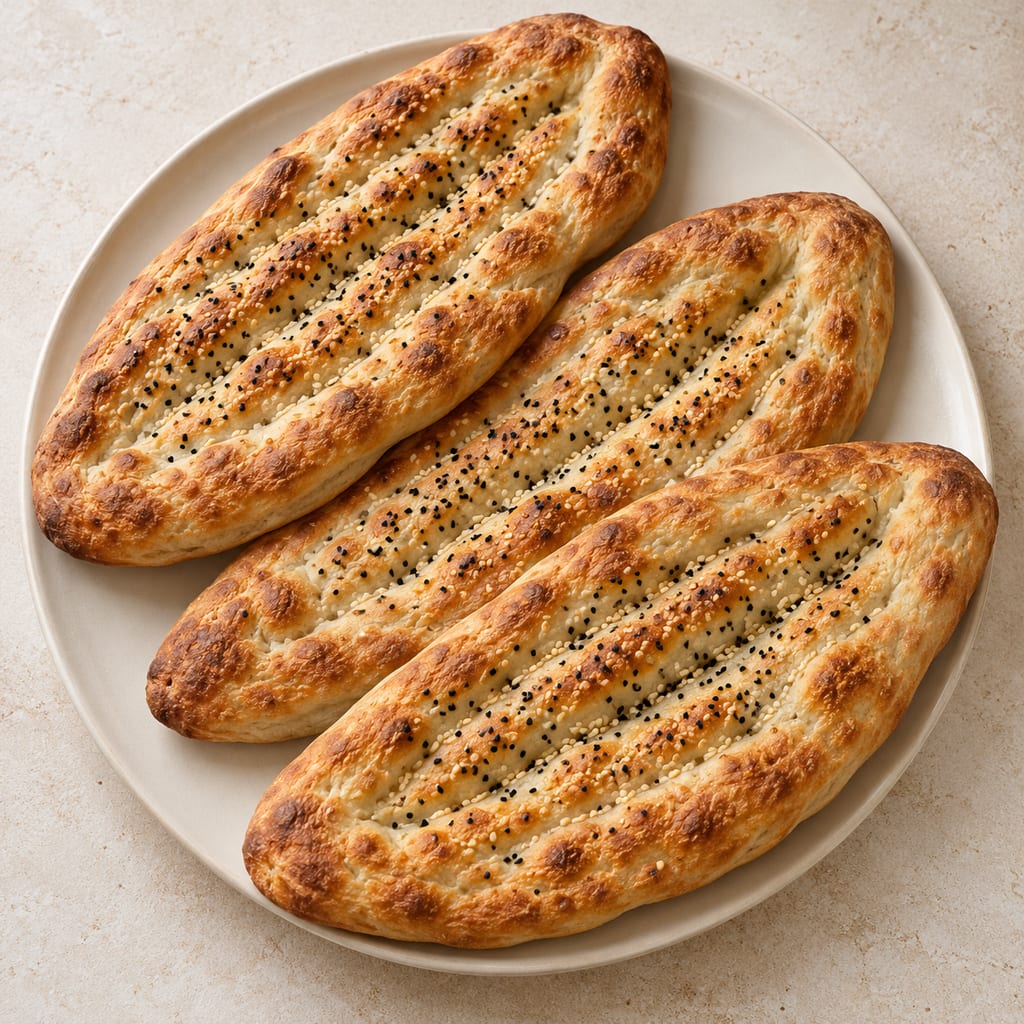
A long oval Afghan wheat bread, leavened with yeast, grooved along its length and baked until crisp outside and chewy within.
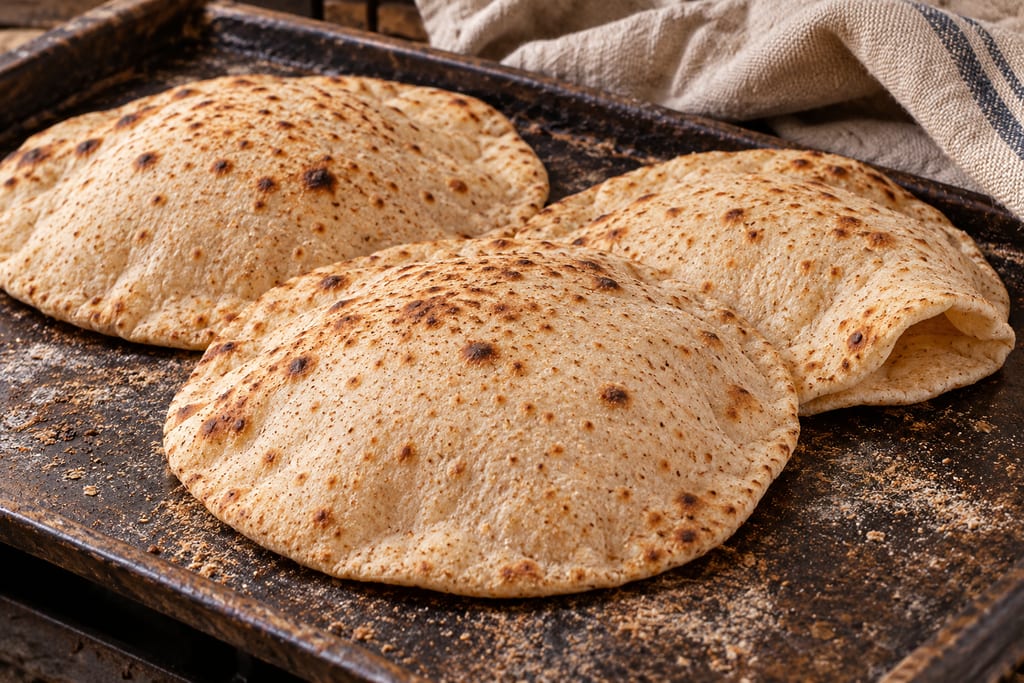
This home adaptation of Egyptian aish baladi uses a refrigerated yeast biga, whole-wheat dough, bran dusting and a very hot baking surface to make 16 pocketed rounds.
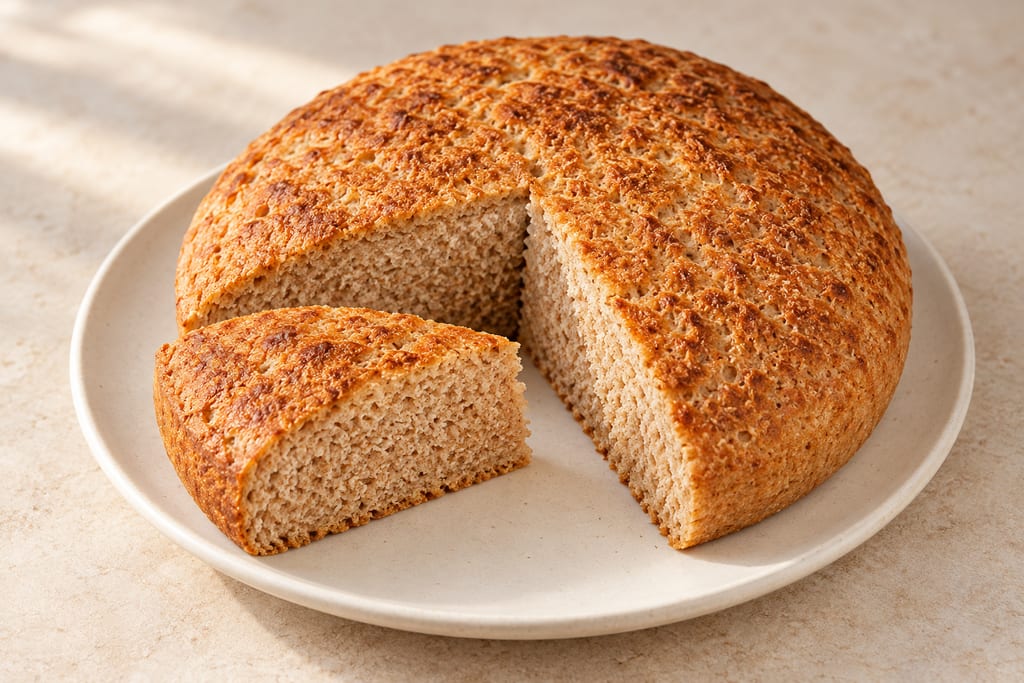
This oven-baked Amdo balep uses yeast, whole-wheat and white flour, a long covered rise and a two-sided bake in a heavy oven-safe pot.
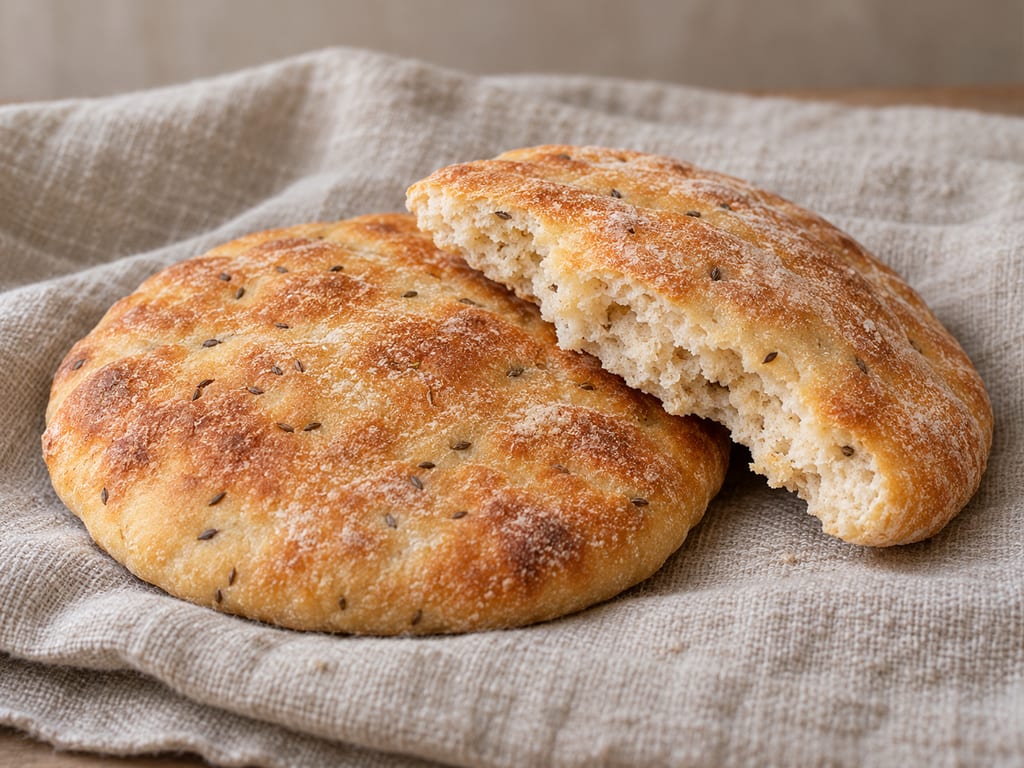
A measured, yeast-raised Ayacucho chapla home method shared by Thermomix Peru presenter Roxanna Salaverry. It makes thin, anise-scented rounds baked at 240°C; the historic qunchu-leavened form is documented separately.
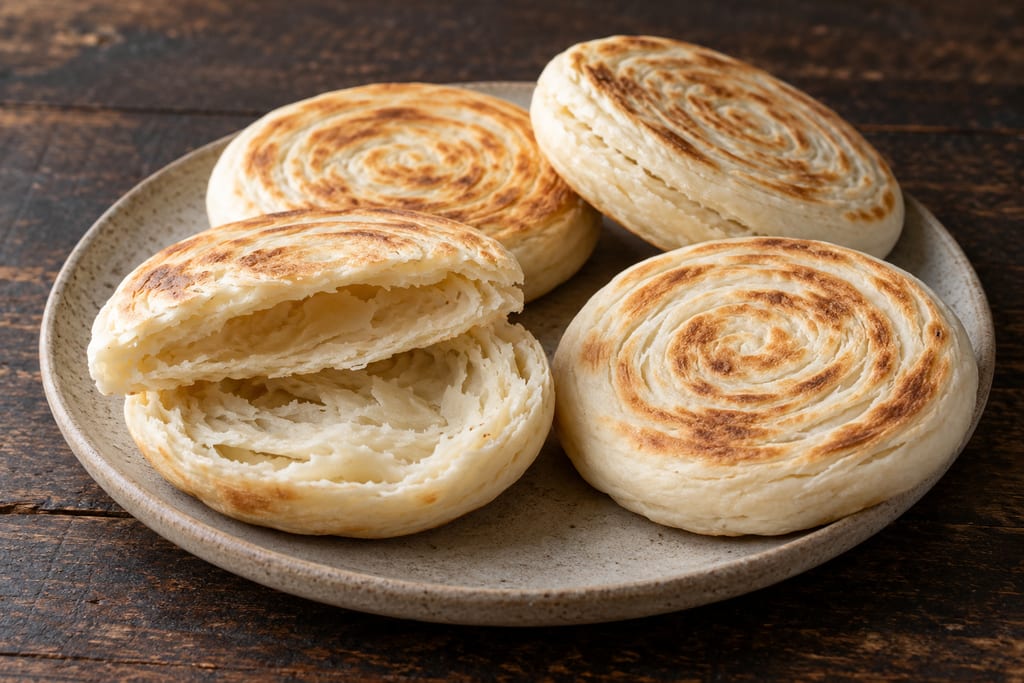
This Shaanxi-associated yeast flatbread uses a simple water dough, coiled shaping and a skillet bake. It is the bread used in roujiamo, not the filled meat dish.
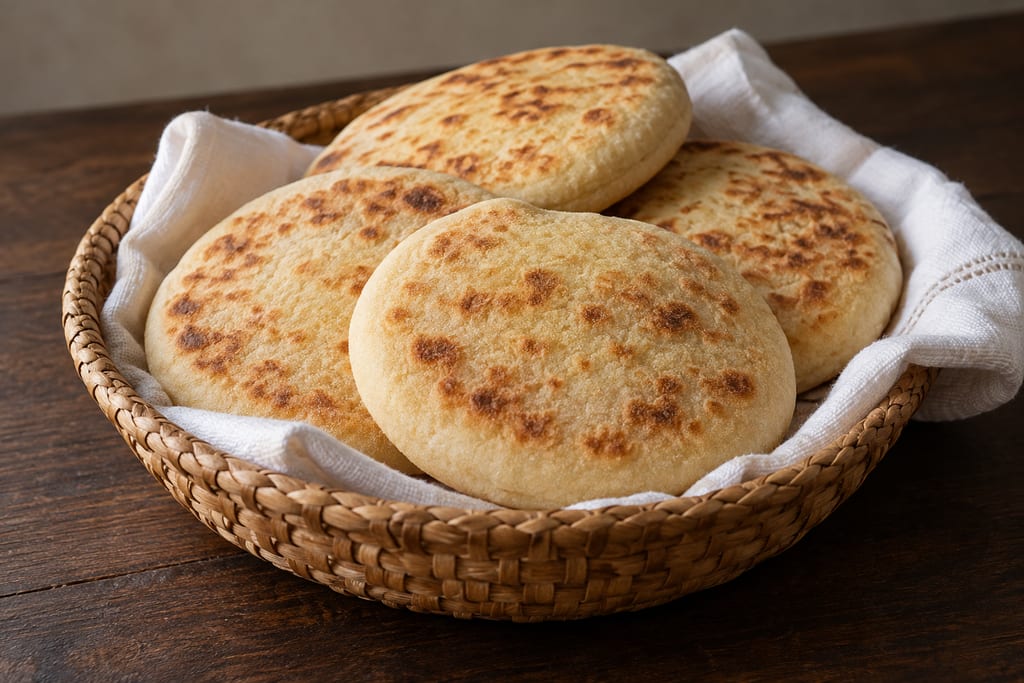
A Moroccan yeast-raised semolina pocket bread cooked on a dry pan or griddle; this measured batch makes about twenty 4-inch rounds.
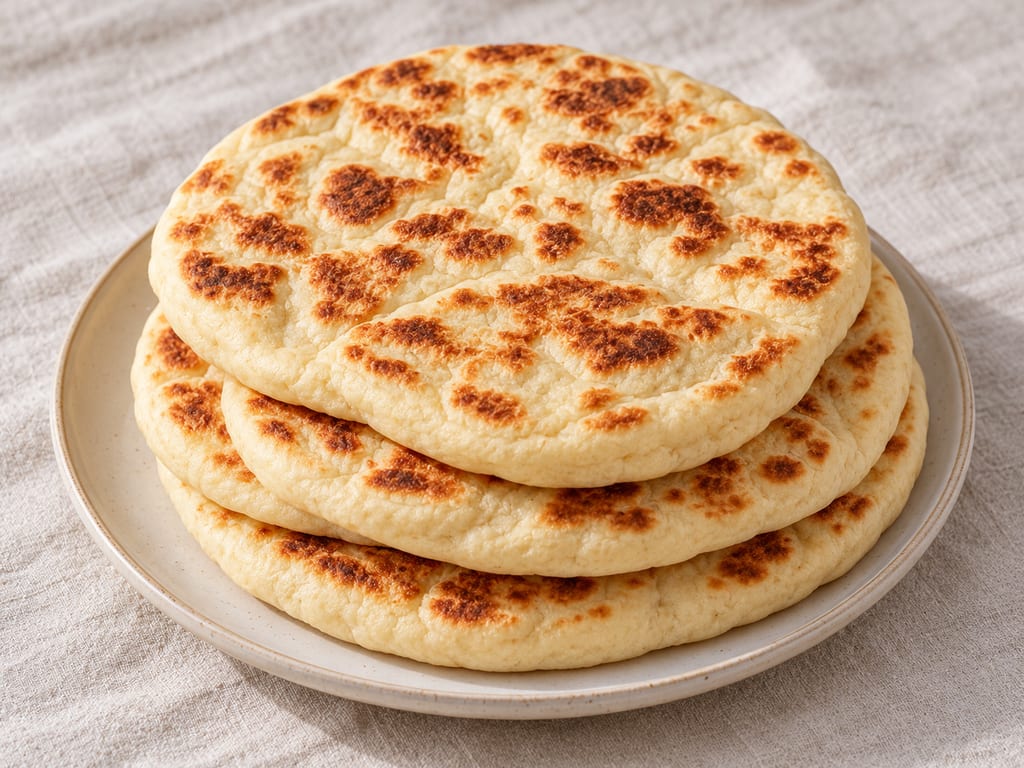
This Turkish bazlama uses yeast, plain yogurt and olive oil for a soft dough cooked in a skillet. Shape it into twelve small or six larger rounds, flip as bubbles appear, and wrap the breads to keep them soft.
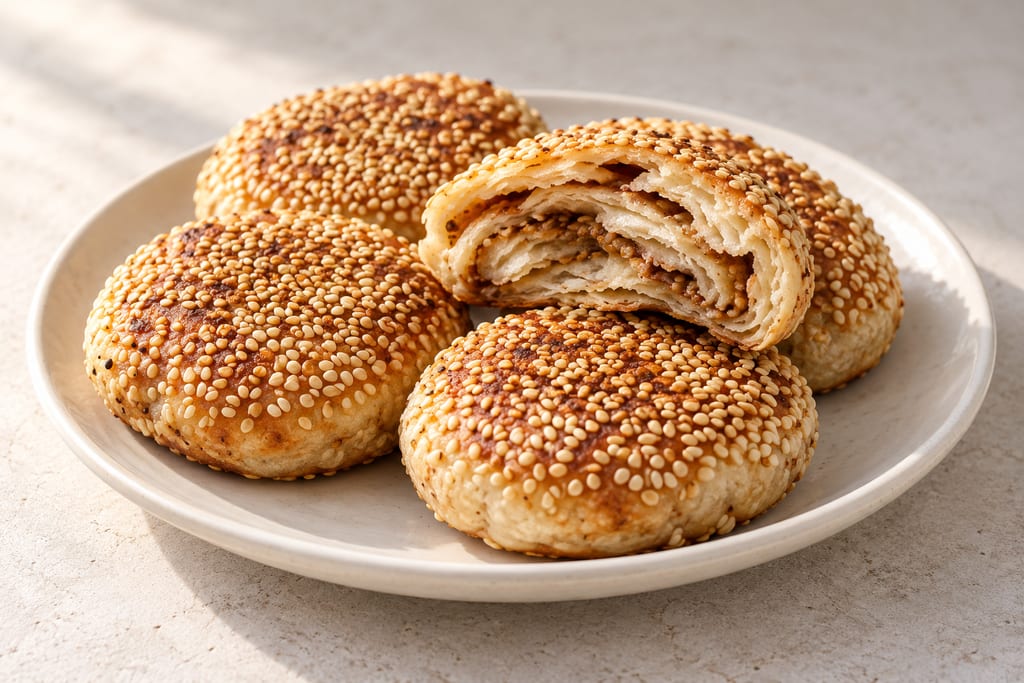
A Beijing-style yeast dough is layered with seasoned sesame paste, sealed into small buns, briefly pan-fried, seeded, and baked.
No community contributions have been published for this entry yet.
Sign in to contribute. Published comments and photos are free to read.
Diane KochilasComplete two loaf yeast raised recipe · Greek and Clean Monday context · Method and timing
Lagana (Flat, Wide Lenten Bread)The page says Lagana is eaten on Clean Monday at the start of Lent, traditionally was unleavened, and commercial bakers now use yeast; Kochilas says she learned her recipe from a local baker in her Athens neighborhood.
The batch yields two loaves and lists three envelopes active dry yeast, 1/4 cup sugar, 7–8 cups bread flour, 2 1/4 cups warm water, 1 tablespoon salt, 3 tablespoons extra-virgin Greek olive oil plus extra for handling, and sesame seeds with no amount.
The method calls for a 15-minute yeast mixture, 10–12 minutes kneading, about 2 hours first rise, 6–7 minutes additional kneading, two 15 × 6-inch rolled flat ovals, 45–50 minutes final rise, a 450°F oven and about 30 minutes baking for each loaf until deep golden brown.
The recipe header lists 60 minutes cooking but the method says about 30 minutes for each lagana, without explaining whether baking is sequential. Three yeast envelopes and sesame seeds are not assigned weights, and proofing temperature is described only as warm and draft-free.
Cited in: A yeast-raised Clean Monday version; Timing and a source discrepancy
U.S. Food and Drug AdministrationRaw flour and dough safety
Handling Flour Safely: What You Need to KnowFlour is a raw food and raw dough should not be tasted.