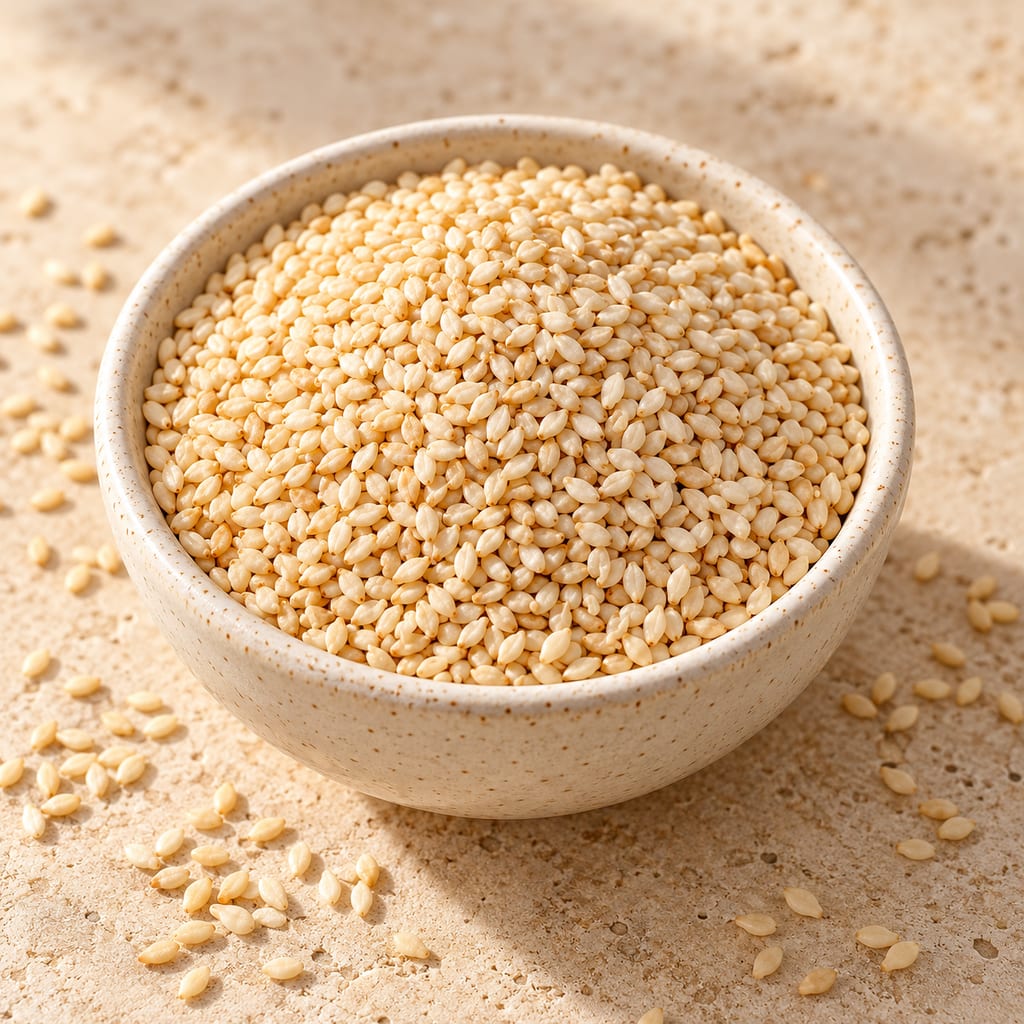
Sesame seeds
Sesame seed, from Sesamum indicum, is about half oil and is eaten whole, ground into paste or pressed into oil. It was a crop of South Asia by the Harappan period and reached Mesopotamia before 2000 BC.
 FermenteaWhere food goes to change
Modern method
Sesame bread rings from Thessaloniki · Thessaloniki koulouri
The Thessaloniki City of Gastronomy page gives a 15–18-ring yeast dough, dipped in sweetened water and sesame before baking. Its fresh yeast is listed as one dice without a mass, which remains unresolved.
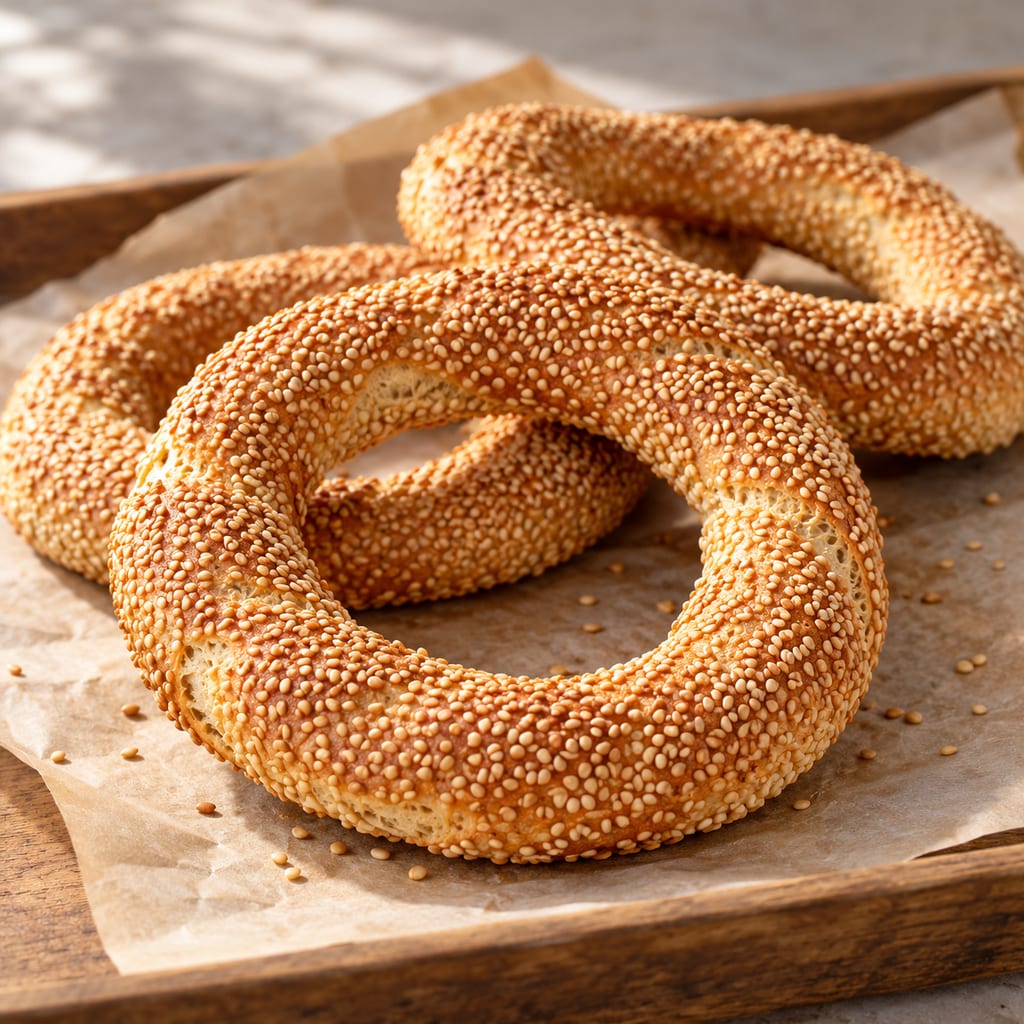
Koulouri Thessalonikis is a ring of yeast-raised wheat dough coated in sesame. The municipal recipe produces small rings from ropes about 30 centimetres long; it describes a lightly sweetened water dip before the seeds are pressed onto the surface. The method aims at a contrast between the bread inside and a sesame-covered exterior, though the source does not prescribe a finished colour, crumb texture or crispness target.
The city’s public accounts connect the bread to Thessaloniki’s everyday street trade. The recipe page describes koulourtzides carrying trays and selling warm rings early in the morning. A city food guide likewise associates the food with refugees who arrived from Asia Minor and with vendors who sold it at daybreak. These accounts explain a strong modern association; they do not establish a single inventor, a precise date of arrival, or the birthplace of ring breads as a whole.
The name has a broader and less settled story. Thessaloniki’s municipal product page says koulouri-like foods appear in ancient and Byzantine accounts and in Constantinople, but also states that the place of invention is unknown. Those broad references do not prove that the present sesame-coated wheat ring, or this recipe, existed in antiquity. Nina L. Etkin’s historical account describes koulouri as a small ring-shaped barley bread sold by mobile vendors in seventeenth- and eighteenth-century Greek marketplaces. That is useful evidence for a street-food tradition, but it is not evidence that the older barley bread had the same dough, coating or identity as the Thessaloniki recipe here.
The recipe is unusually useful as a household-scale record because it gives a yield, dimensions for shaping, timed rests and a baking setting. It starts with 500 g of hard flour, one dice of fresh yeast, 2 tablespoons of sugar, 3 tablespoons of flour and about half a cup of lukewarm water for the starter. The dough then uses 4 tablespoons of seed oil, 1 tablespoon of salt and additional water whose amount is not stated. For the coating and trays it lists 2 tablespoons of sunflower oil, 2 cups of water, 1 cup of sugar and 2 cups of sesame seeds. It yields 15–18 rings across three or four trays.
A baker can follow the sequence. The starter's half cup dissolves the yeast and sugar, and more water is added to the dough later without a quantity given.
A second Thessaloniki municipal food guide presents a related but distinct formula. Its English text names all-purpose flour, a packet or 2 teaspoons of active dry yeast, and a separate half cup of warm water for the dough; the Greek text lists hard flour and a cube of fresh yeast. Its yield is given as 10–18 pieces. Because that guide changes the flour description and yeast form and has an internally inconsistent bilingual amount listing, it is evidence of a related published version, not a basis for replacing the fresh-yeast formula above or treating the two yeast amounts as equivalent.
The first stage dissolves fresh yeast and sugar in lukewarm water, then adds a small amount of flour. The covered mixture stands for about 30 minutes until it rises. This is the recipe’s only separately named starter stage; it is a short yeast mixture for leavening the dough, not a sourdough culture kept from batch to batch. The page supplies no yeast mass and no temperature range for the water or room.
The risen starter is mixed with the remaining flour, oil, water and salt. The dough hook works first at low speed and then at high speed, with a total of eight minutes of mixing before a 30-minute rest. The recipe then calls for another five minutes of kneading. These timings and machine speeds are part of this particular instruction set. It does not describe a hand-kneading alternative, a dough temperature, a target volume increase or a test for gluten development, so those should not be invented as exact requirements.
Dividing the dough into 15–18 portions and rolling each one into a roughly 30-centimetre rope gives the ring its shape. The recipe does not state portion weights or a finished ring diameter. Pinching the ends together closes the rope into a circle; placing the rings apart on oiled, paper-lined trays leaves room for the final rise and baking. The tray oil is distinct from the seed oil mixed into the dough.
The coating sequence matters to the recorded appearance: the shaped ropes are dipped in water sweetened with one cup of sugar, then rolled in sesame before the ends are joined. The recipe gives two cups of water and two cups of sesame for this station but does not say how much coating will remain. It gives no instruction to boil or heat the sugar water. A broad dish makes the dipping and rolling operations possible, but the source does not specify dish dimensions.
After shaping, the covered rings rise for another 30 minutes. The final instruction is a preheated 200°C oven for about 15 minutes. Oven size, tray rotation, fan setting and visual doneness cues are not specified. The given setting and duration are the source’s baking directions, not a validated safety endpoint. The page also gives no cooling, packaging or storage procedure.
Hard flour supplies the main dough, while the three tablespoons of added flour go into the yeast mixture. The source does not identify a wheat cultivar, protein level or milling specification, so ‘hard flour’ is retained as written rather than mapped to a modern flour grade. Fresh yeast leavens the dough; because the recipe says only ‘one dice’, its mass cannot be recovered from this page. Sugar appears both in the starter and in the dipping bath. Salt seasons the dough, and the two oils have separate jobs in the instructions: seed oil is mixed into the dough, while sunflower oil is spread on the trays. Sesame is the defining outer coating.
The regional tourism account describes a warm, sesame-scented ring with a fluffy and crisp texture and presents it as a morning food that can also serve as a meal or snack. The municipal recipe page similarly emphasizes buying it fresh and warm from street vendors. Those descriptions speak to customary presentation, not guaranteed results from every oven or a quantified shelf life. The particular formula contains no filling; the Thessaloniki municipal product account notes that bakers also make variations such as sticks, whole-grain or corn-flour versions, and rings with additions. Those are separate adaptations, not substitutions tested in this dough.
Because flour is raw, do not taste the dough or starter. The U.S. Food and Drug Administration advises against eating raw flour or dough and explains that cooking is needed to address pathogens that may be present in flour. Follow the recipe’s baking step, keep raw flour and dough away from ready-to-eat food, and wash hands, utensils and work surfaces after handling. The source recipe does not establish a critical internal temperature, validated bake time, or safe storage duration; none is supplied here.
Thessaloniki municipal accounts associate koulouri with the city's street-vending culture and migration from Asia Minor. A separate scholarly account documents an older Greek street food also called koulouri, a small ring-shaped barley bread; equivalence with the modern sesame wheat ring is not established.
Scaling: source batch only
Flour is a raw agricultural product and uncooked dough should not be tasted.
Hazard sourceDo not taste raw dough; bake the flour-containing preparation before eating and clean hands and surfaces after handling raw flour.
Control sourceThe source gives no mass for one dice of fresh yeast or quantity for main-dough water.
The listed 200°C and about 15-minute bake are source directions, not a validated food-safety endpoint.
No storage instructions or qualified safety review are supplied.
A Thessaloniki municipal gastronomy page publishes the preparation and associates the bread with the city; no origin claim is made.
Sesame seed, from Sesamum indicum, is about half oil and is eaten whole, ground into paste or pressed into oil. It was a crop of South Asia by the Harappan period and reached Mesopotamia before 2000 BC.
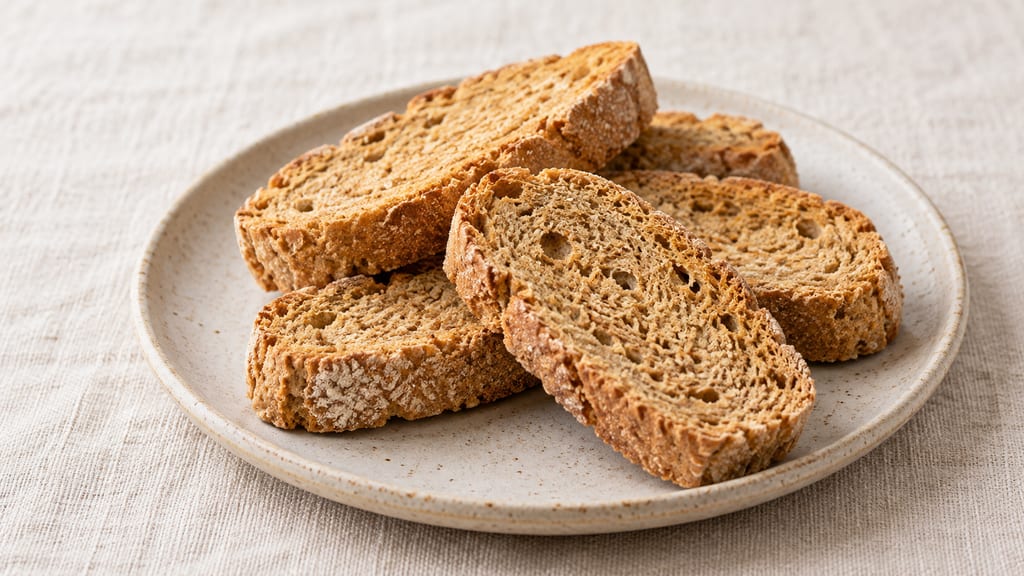
Cretan paximadi is a twice-baked rusk. This barley-wheat version is raised with yeast, baked as a loaf, sliced, and dried slowly until it keeps.
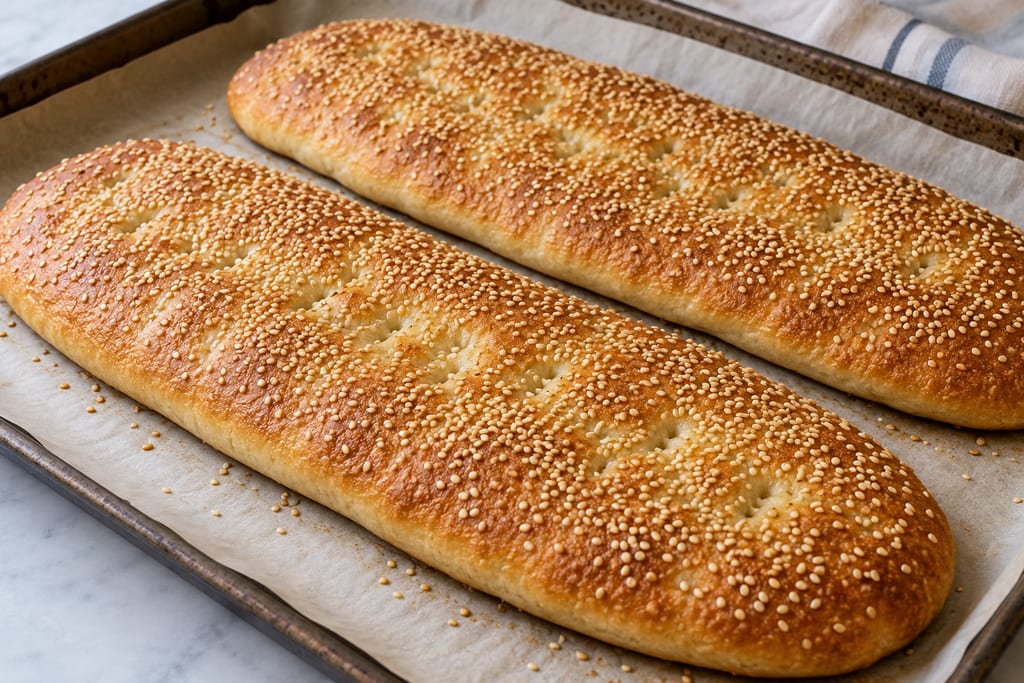
Diane Kochilas’s yeast-raised Lagana makes two wide, sesame-topped loaves for Clean Monday. Her Athens-neighborhood version is distinct from the unleavened Lagana also described in the recipe’s cultural context.
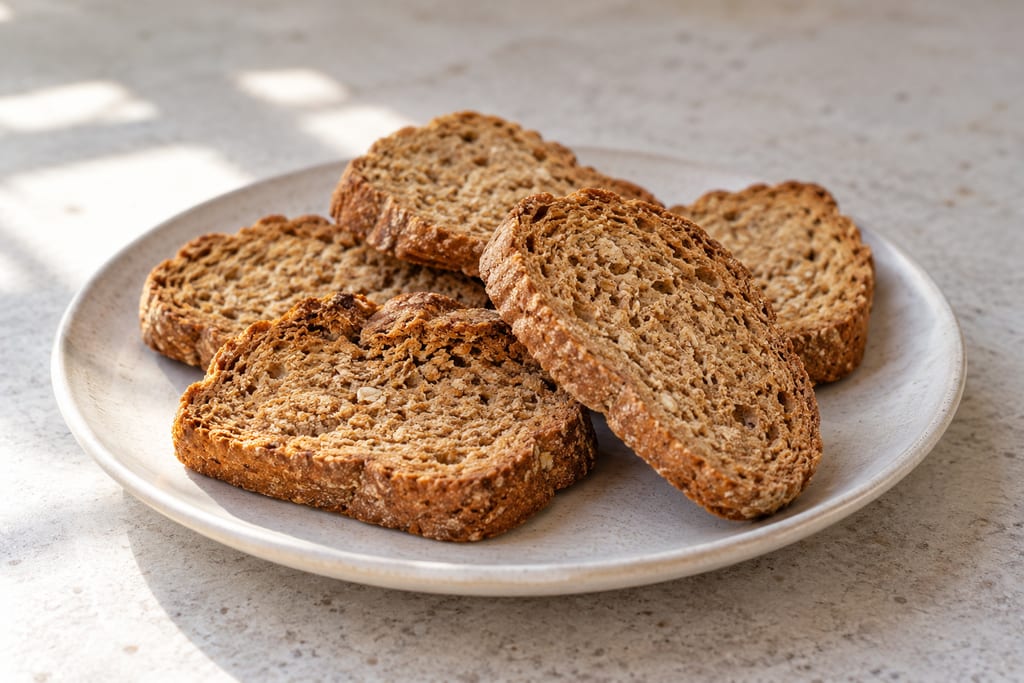
Elena Paravantes gives a modern 50/50 whole-grain barley and wheat rusk recipe, shaped as one scored loaf, baked, separated into slices and dried in a low oven. The second rise has no stated duration.
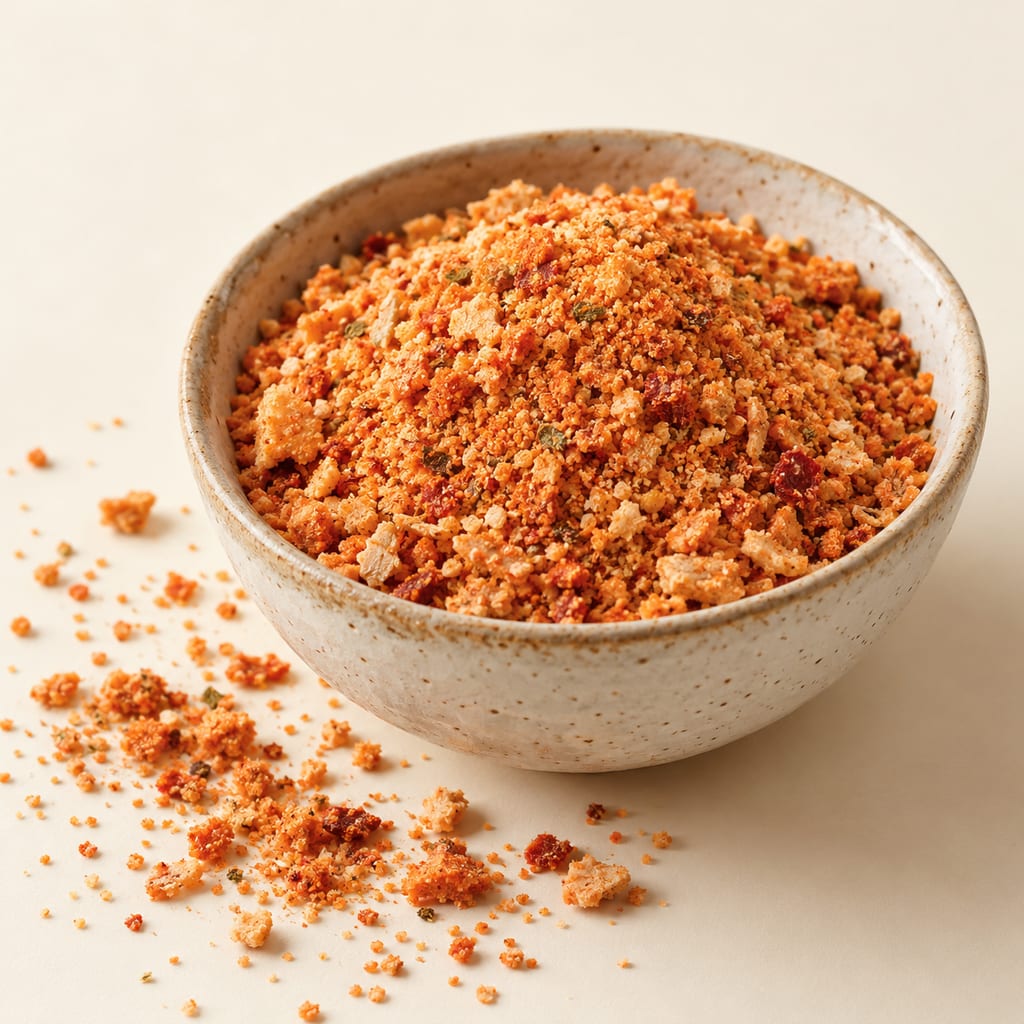
Tarhana is a Turkish soup base: yoghurt, flour or semolina and usually onion, tomato and red pepper, fermented as a dough for days, rubbed into grains and dried.
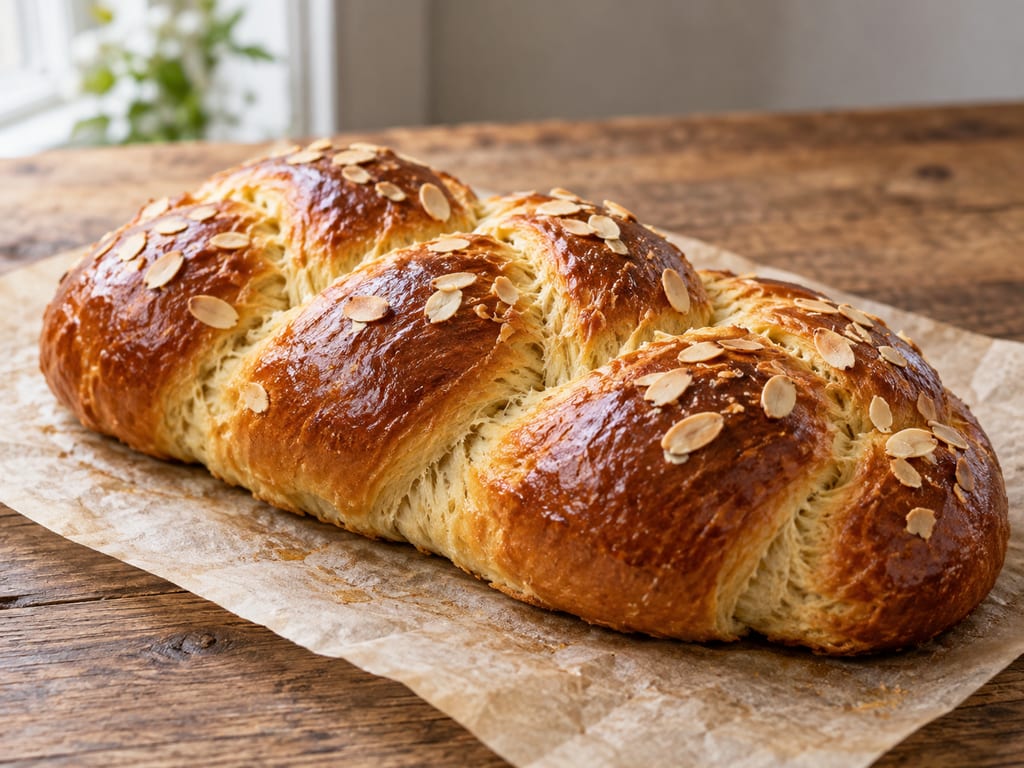
Eli K. Giannopoulos’s recipe makes two braided tsourekia with mastic, mahleb and orange, followed by an optional syrup. It is one modern Greek Easter-bread formula, not a universal regional standard.
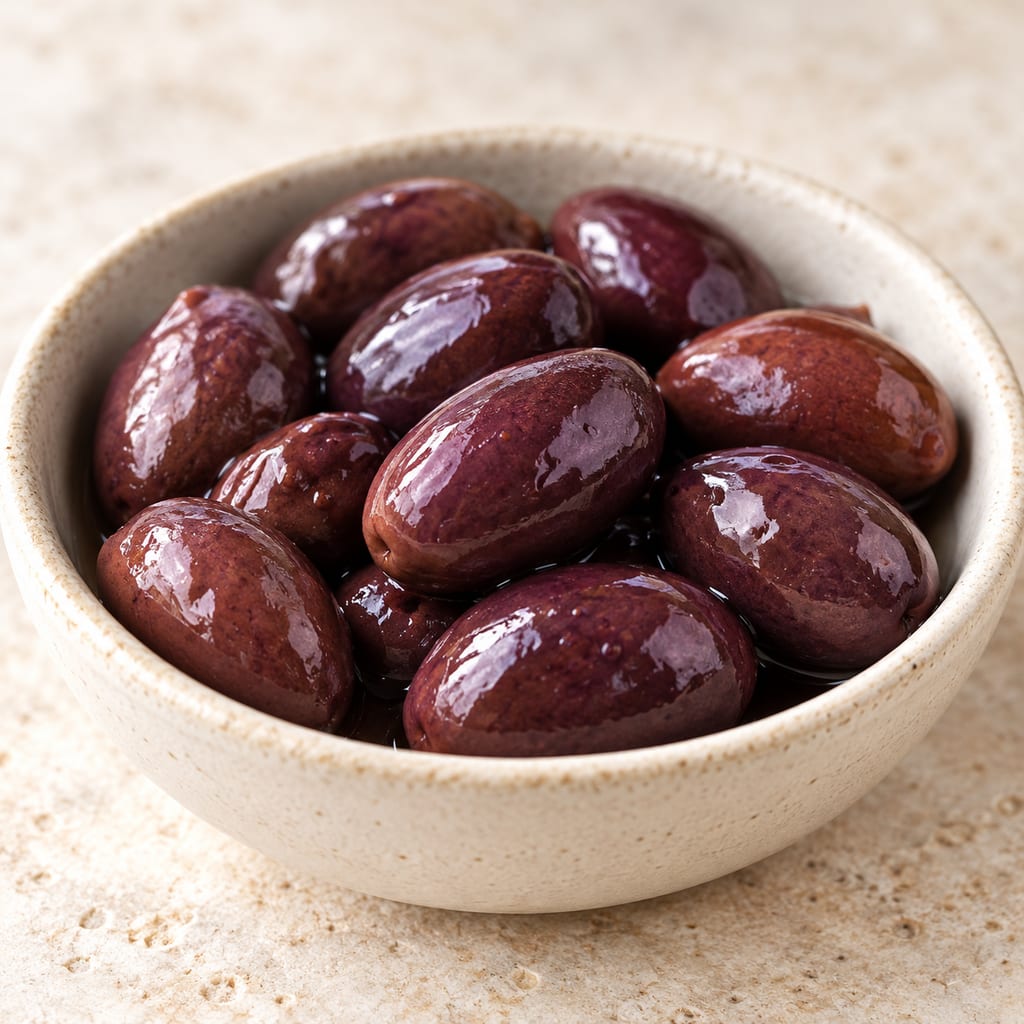
Elia Kalamatas is a Messinia table olive of the Kalamon variety, picked before full ripeness and fermented in brine for six to nine months; it is a PDO product, not a generic black olive.
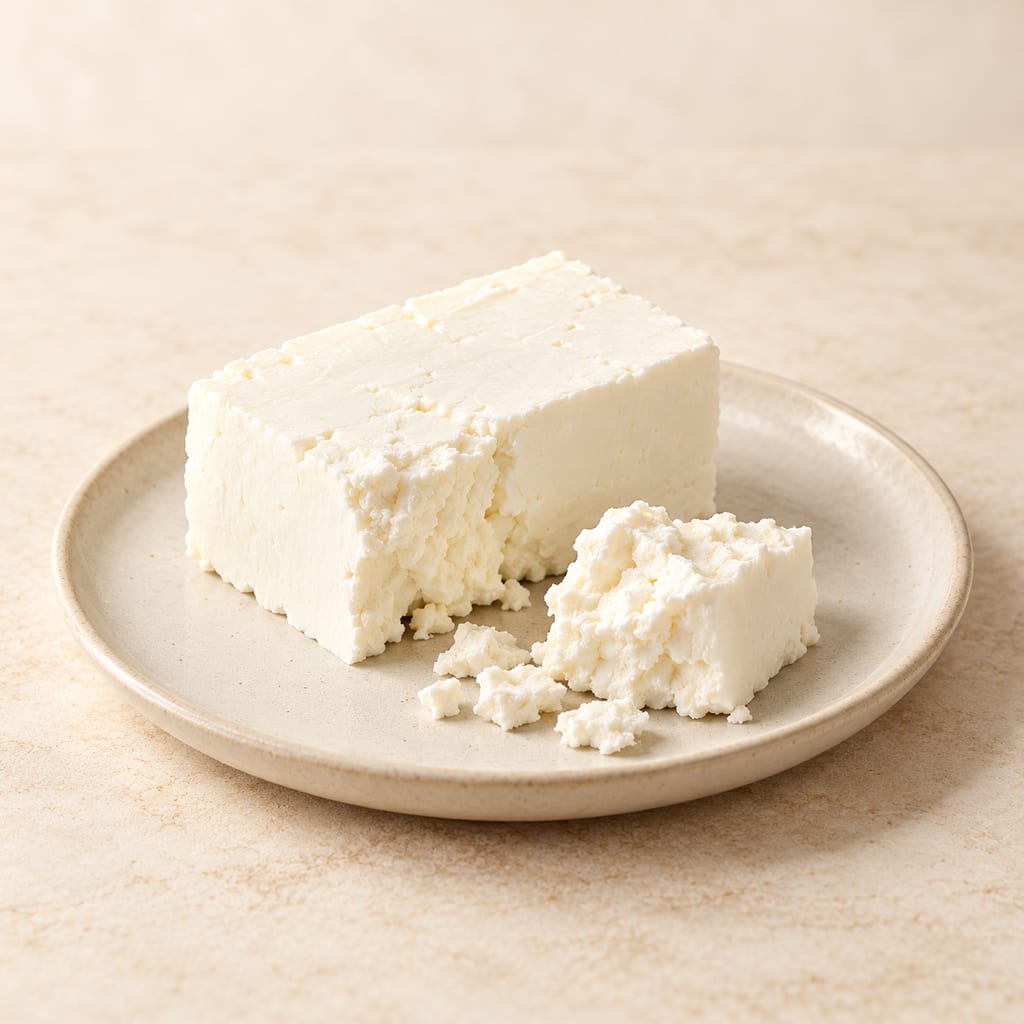
White cheese made with a lactic starter and rennet, drained without pressing, dry-salted and covered in brine. This home adaptation allows whole milk from different dairy animals.
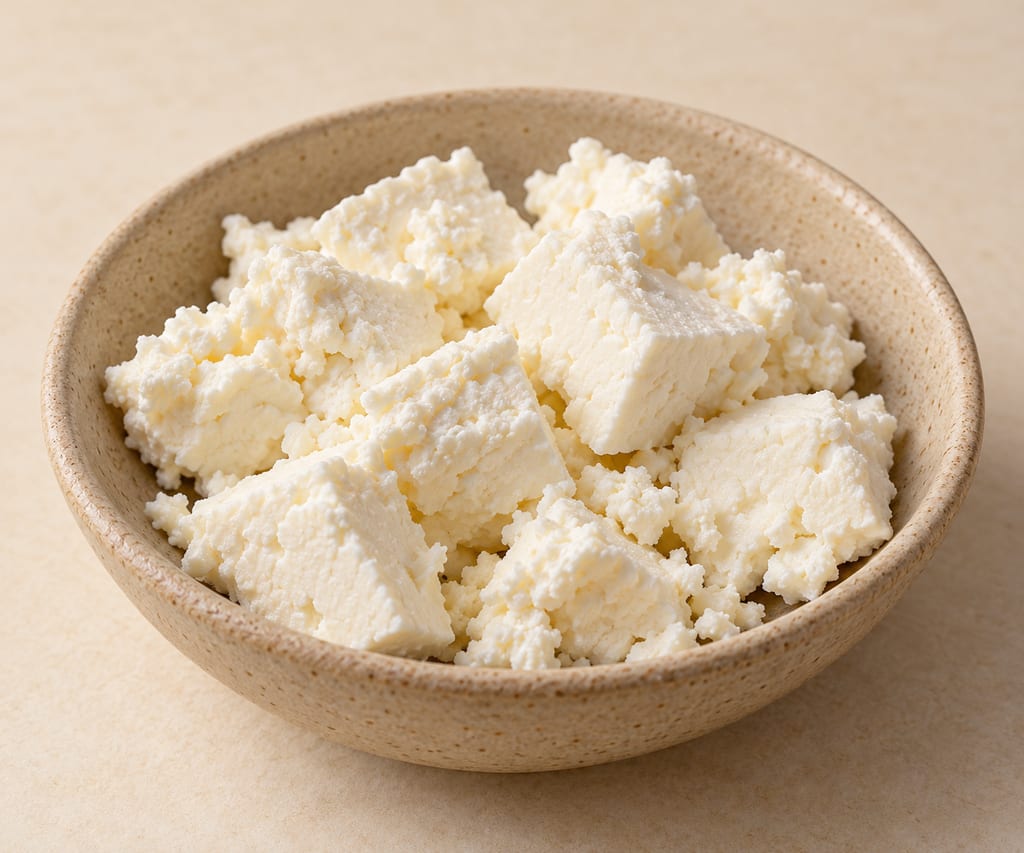
Whole milk set with a mesophilic starter and rennet makes a fresh, crumbly feta-style cheese. Its curds pass through hot salted whey before molding.
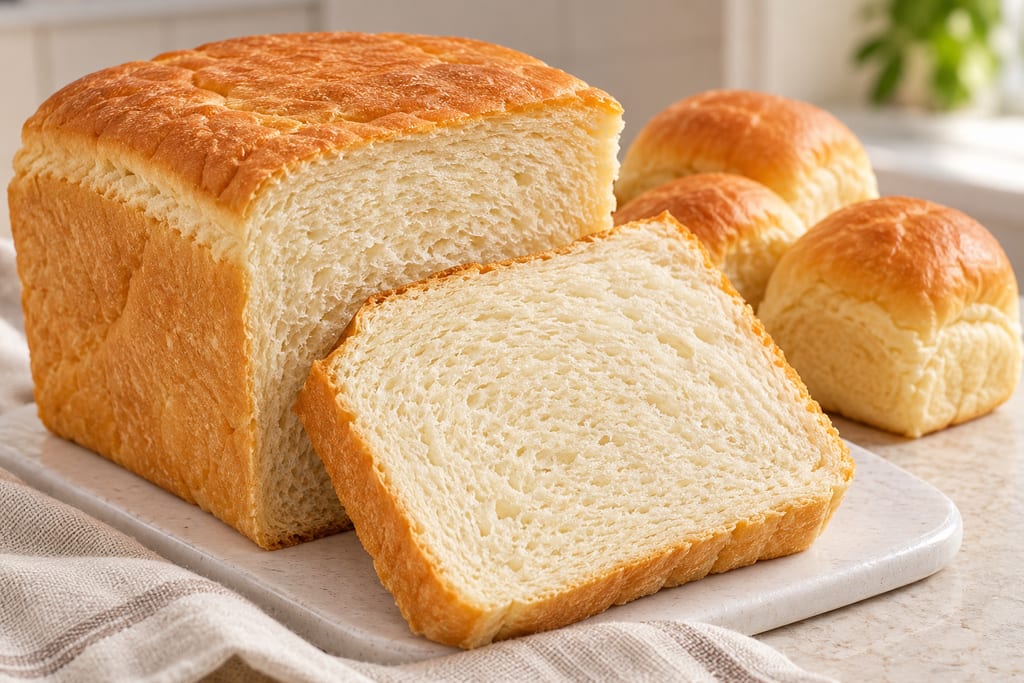
This softer home-style Agege bread uses a scalded flour paste, an enriched yeast dough and a 9×5-inch loaf pan, with rolls from the extra dough.
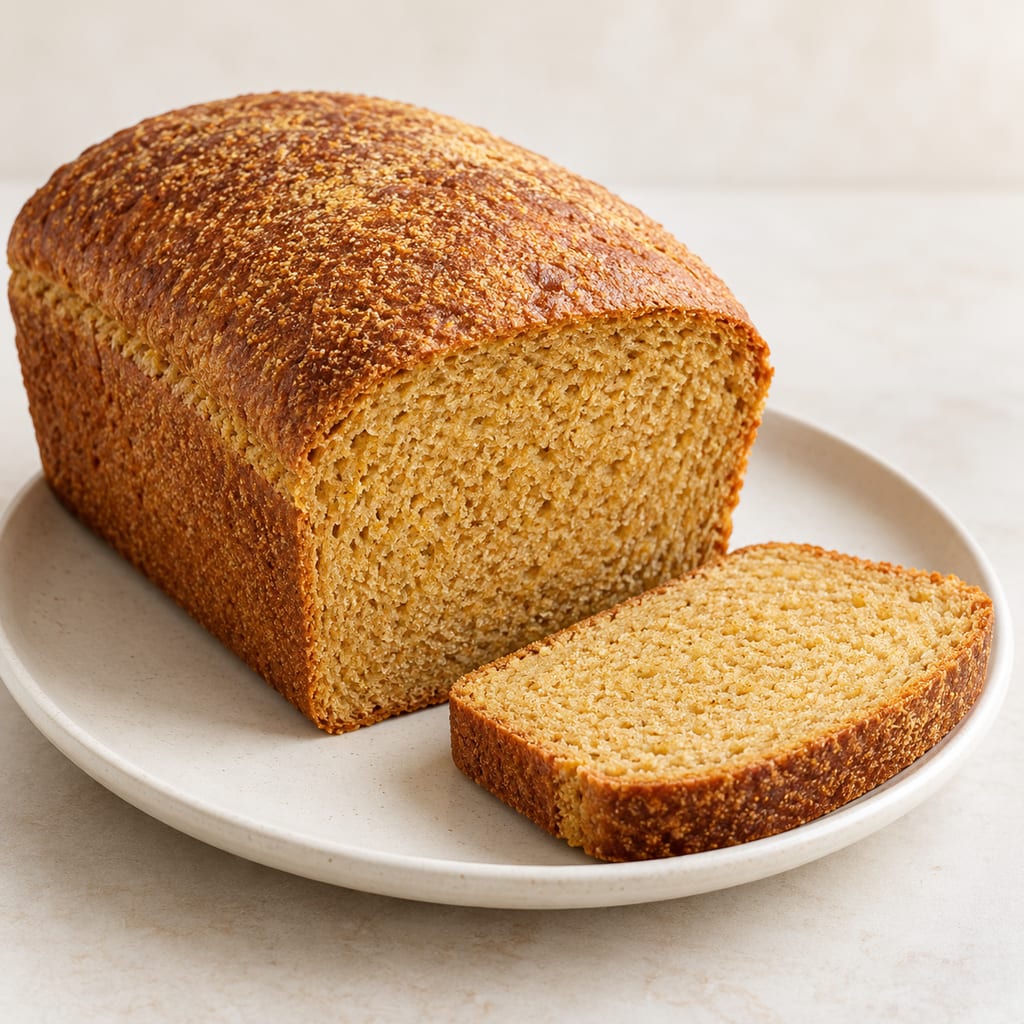
Anadama is a New England yeast loaf made with wheat flour, cornmeal and molasses. Scalded cornmeal enriches the dough, while molasses lends sweetness and a dark crust; it is especially good toasted or beside soup and baked beans.

A yeast-raised wheat ring shaped from a firm dough, briefly boiled and baked. This source-batch formula gives a gently malted crust and a chewy crumb.

Three long, crusty wheat loaves made with an overnight yeast poolish, shaped by hand and baked with steam for a crisp crust.
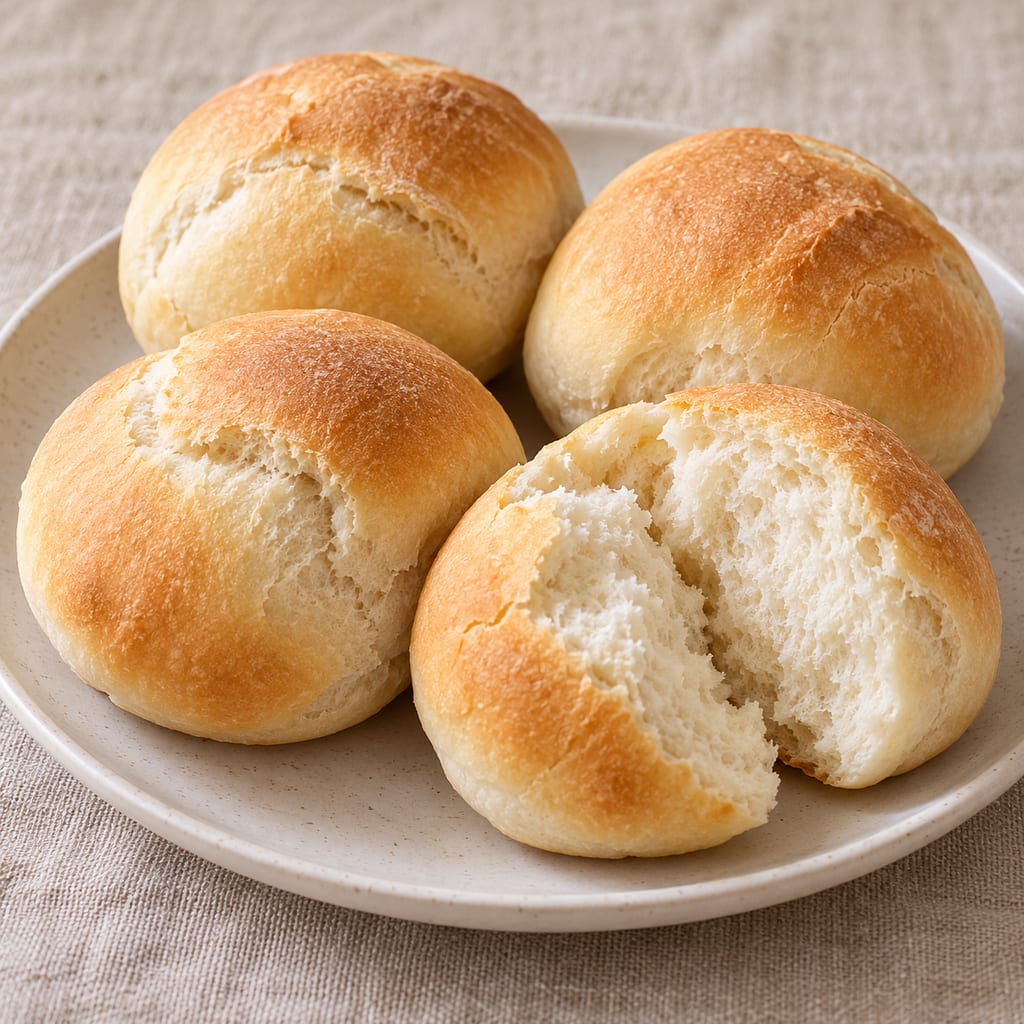
A lightly salted, yeast-raised Barbadian roll, baked in a dozen-roll home batch and often split for cutters.
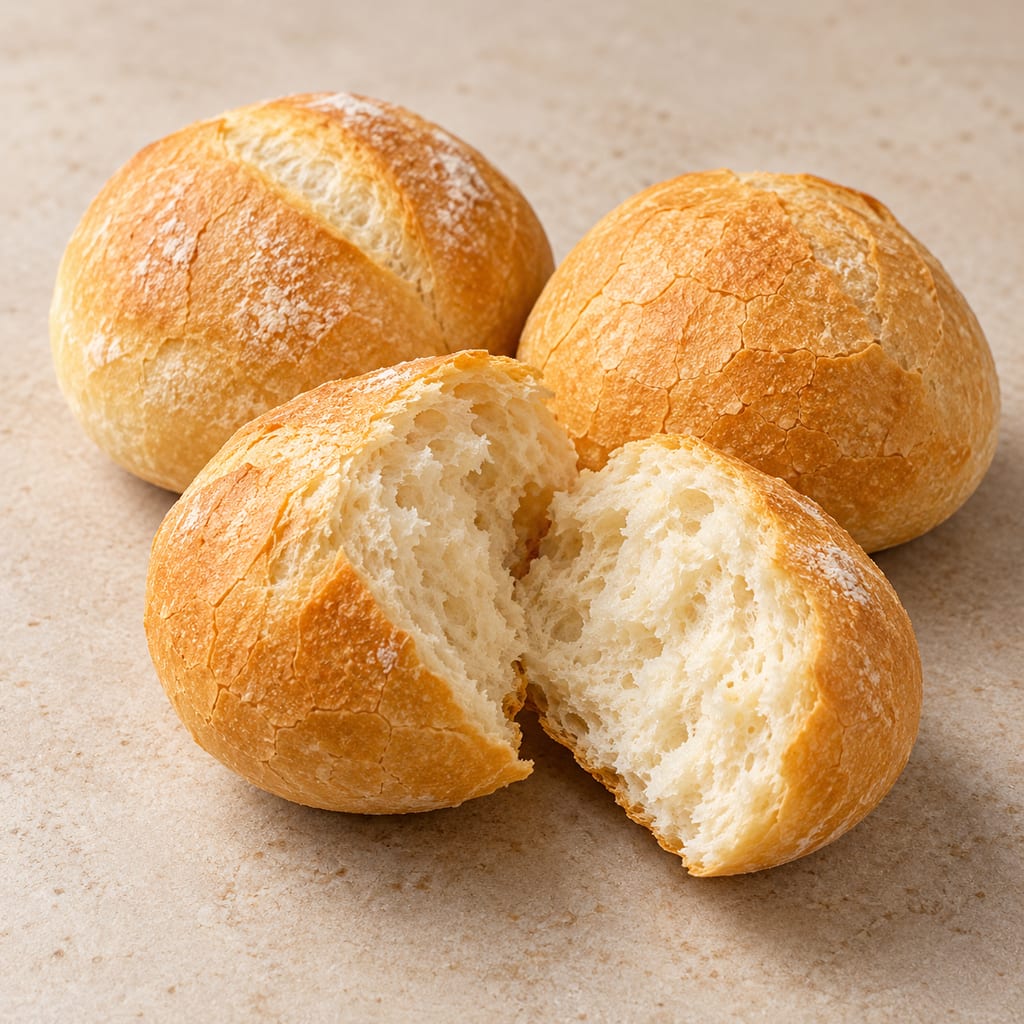
A crisp Belgian roll made from a supplier’s Croc-flour dough, mixed by hand or machine, proofed in rounds and baked with steam.
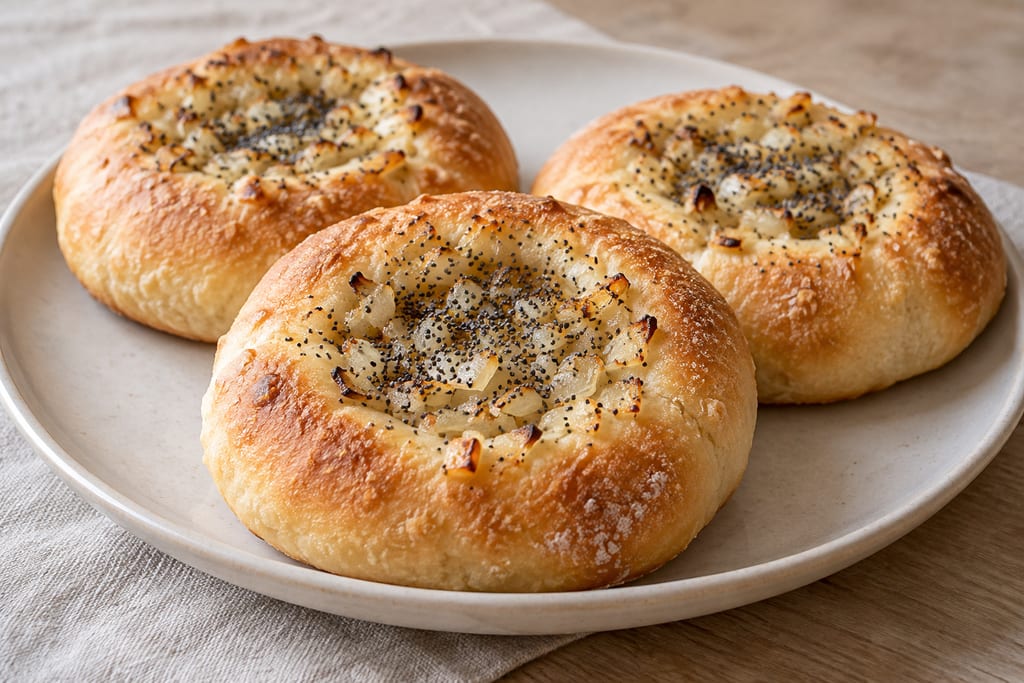
Bialys are soft, yeasted wheat rolls baked without boiling, each shaped with an onion-filled central depression instead of a hole.
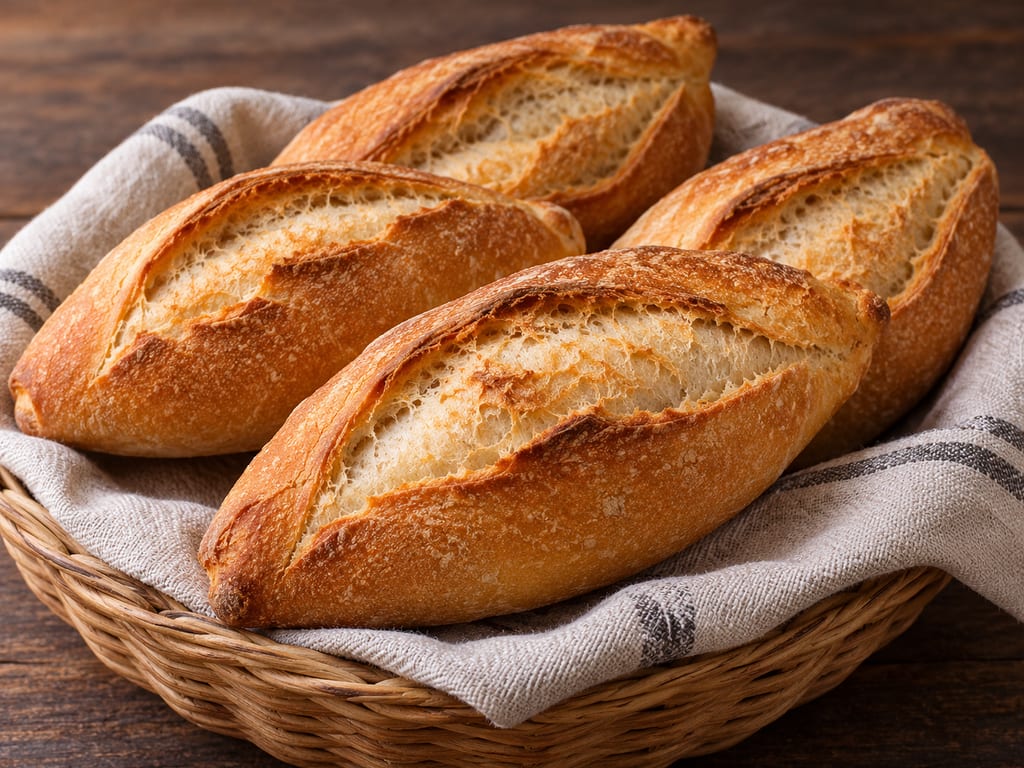
A measured, commercial-yeast home method for Guadalajara-style birote salado, with a six-hour preferment, shaped rolls and a two-temperature steam bake. This formula contains no egg.
No community contributions have been published for this entry yet.
Sign in to contribute. Published comments and photos are free to read.
Network of Creative Cities of Gastronomy, ThessalonikiRecipe · History · Geographic context
Sesame Bread Rings from Thessaloniki (Koulouri Thessalonikis)The page lists a fresh-yeast recipe with 500 g hard flour, unweighed yeast, unquantified main-dough water, 15–18 rings, 30 cm ropes, timed stages, 200°C baking and a three-to-four-tray yield.
The city page associates koulouri with morning street vendors and migration from Asia Minor but does not date its earliest attestation.
Cited in: A sesame ring tied to Thessaloniki; What this municipal formula records; From starter to shaped rings; Ingredients, eating and the limits of the record
University of Arizona PressHistorical context
Foods of Association: Biocultural Perspectives on Foods and Beverages that Mediate SociabilityEtkin describes a small ring-shaped barley bread called koulouri among foods sold by mobile vendors in seventeenth- and eighteenth-century Greek marketplaces; that evidence is not asserted to be the same formula as modern Thessaloniki sesame bread rings.
Cited in: A sesame ring tied to Thessaloniki
Visit Central MacedoniaGeographic context · Eating and cultural use
Koulouri of ThessalonikiThe regional tourism page associates the bread with Thessaloniki, migration from Constantinople and Asia Minor, morning eating, roasted sesame aroma, and fluffy/crunchy texture.
Cited in: Ingredients, eating and the limits of the record
Network of Creative Cities of Gastronomy, ThessalonikiHistory · Variation
Thessaloniki’s Most Characteristic ProductsThe municipal page says the invention place is unknown, describes historical claims as estimates rather than evidence, reports varied contemporary styles and their widespread availability in the city.
Cited in: A sesame ring tied to Thessaloniki; Ingredients, eating and the limits of the record
U.S. Food and Drug AdministrationFood safety guidance
Handling Flour Safely: What You Need to KnowFlour is a raw food; do not taste raw flour or dough, prevent cross-contamination, clean hands and surfaces, and cook flour-containing foods.
Cited in: Ingredients, eating and the limits of the record
Municipality of ThessalonikiRecipe comparison · Historical context
Food Stories: Recipes from ThessalonikiThe Greek version lists hard flour and a fresh-yeast cube. The English version lists all-purpose flour, active dry yeast, and an additional half cup of dough water. Both direct a 200°C, roughly 15-minute bake and describe migration/refugee associations and morning street vending.
Cited in: A sesame ring tied to Thessaloniki; What this municipal formula records