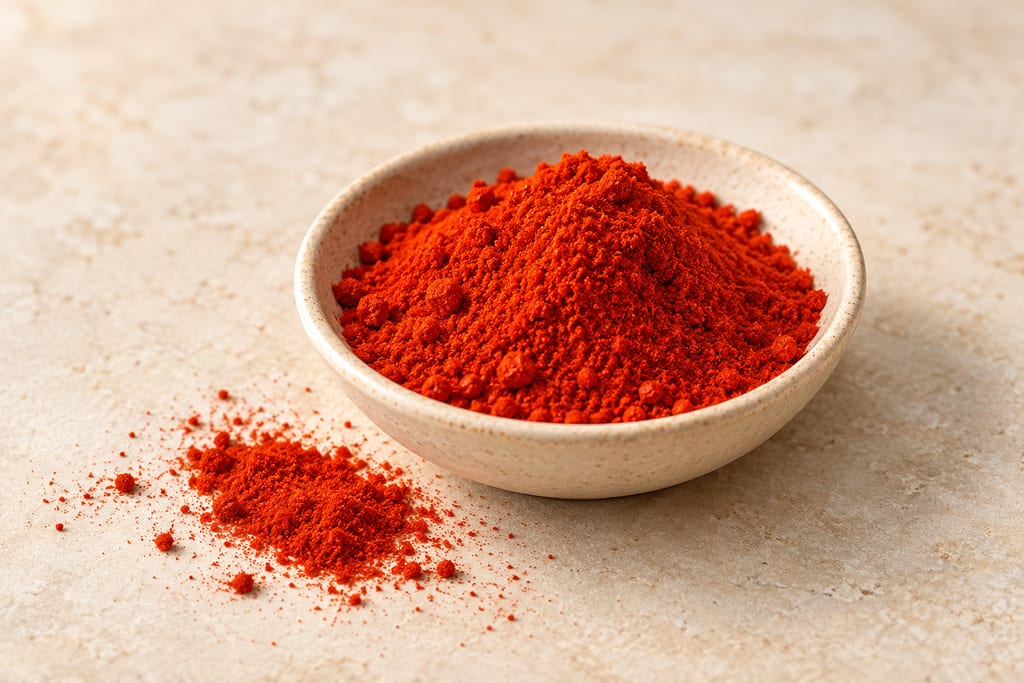
Paprika
Paprika is ground, dried Capsicum fruit used for red color and pepper flavor; the name alone does not specify its heat, smoke, cultivar or origin.
 FermenteaWhere food goes to change
Spices and aromatics
Sweet and smoked paprika are mild red powders made from dried ripe peppers, the smoked kind dried over oak or holm oak fires, used for colour and flavour in sausages, stews and rubs.
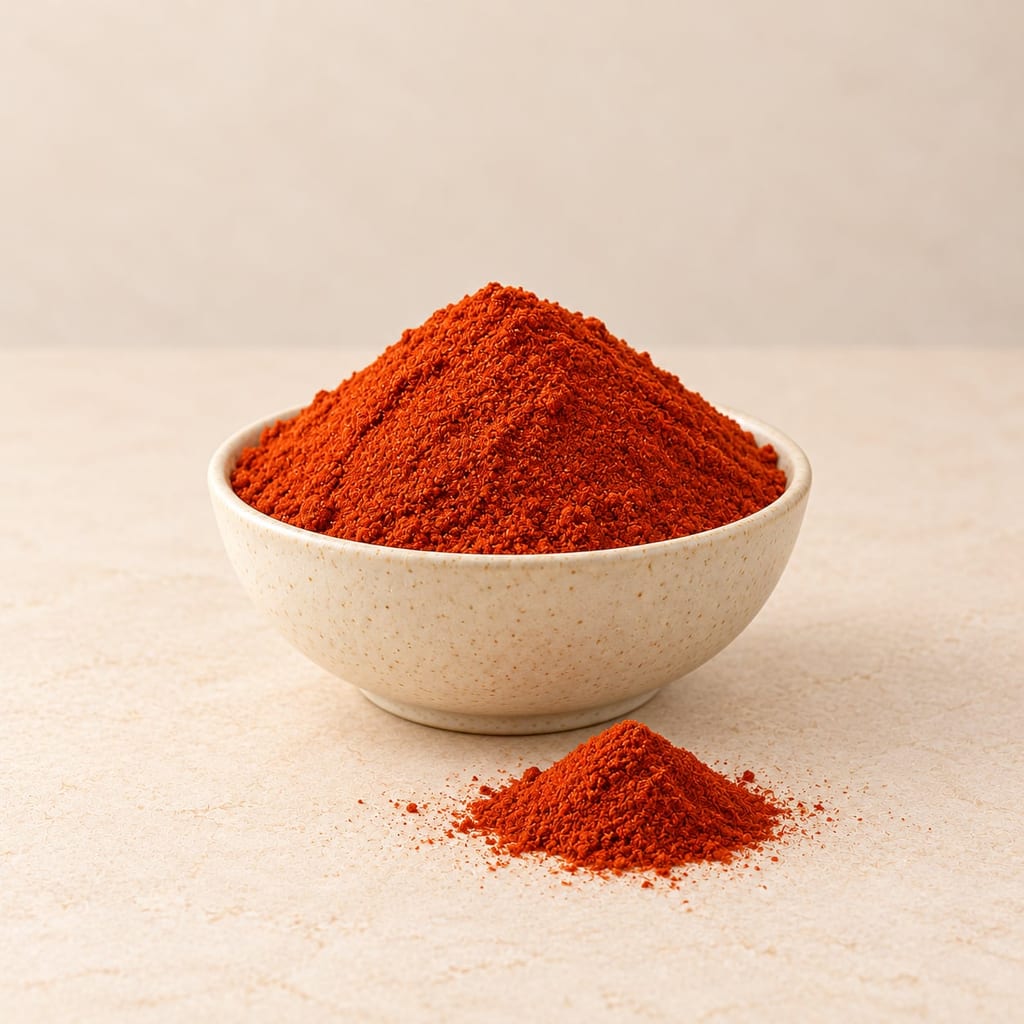
Paprika is the red powder made by drying and grinding the ripe fruit of Capsicum annuum, the same species that gives the bell pepper and the jalapeno. Two decisions separate one paprika from another, and they are independent. The first is how hot the powder is. A sweet paprika is made from varieties with little or no pungency, or from fruit with the hot parts removed, and tastes mild, never burning. A hot paprika is the opposite. Between them sits a bittersweet grade, with a mild heat. The second decision is how the peppers were dried. Smoked paprika comes from peppers dried over a wood fire, and carries that smoke into the powder; unsmoked paprika is dried in the sun or in warm air and tastes of the pepper alone. A powder can therefore be sweet and smoked, sweet and unsmoked, hot and smoked or hot and unsmoked.
The kind most often meant by the phrase "sweet or smoked paprika" in a recipe is the mild one, used for colour and flavour rather than for heat. Spanish pimentón and Hungarian paprika are the two great traditions. Pimentón de la Vera is the smoke-dried one, made in Extremadura and protected by a designation of origin. Pimentón de Murcia is an unsmoked, entirely sweet powder from southeast Spain. Szeged in Hungary is the centre of the Hungarian tradition, whose sweet and semi-sweet powders were made by removing the hot parts of the fruit. A powder labelled only "paprika" or "smoked paprika" may belong to any of these traditions, or to none of them.
The colour of paprika is one of its main uses. A deep red powder stains whatever it is cooked in, and the pigment is fat-soluble, so it carries into oil. Colour is graded by the ASTA scale, which measures the extractable red pigment; the La Vera specification, for example, sets a minimum of 90 ASTA units at milling.
The pepper behind paprika was domesticated in Mexico. A 2014 study combining genetic, archaeological, ecological and linguistic evidence found support for central-east Mexico as the place where Capsicum annuum was first domesticated, with the genetic evidence alone favouring a more northerly area. The authors treat this as a model and discuss the limits of the archaeological record. It tells us about the crop, not about paprika powder, which came later.
Peppers reached Spain from the Americas as longer, hotter fruits. The regional authority of Murcia says that the traditional huerta growers made paprika from them from the time they arrived, and that local climate, soils, scarce water and cultivation methods rounded the fruit and moved its flavour towards sweet. The Bola pepper still defines Murcia's powder. In Extremadura, the powder of La Vera is made from the Ocales group of varieties, Jaranda, Jariza and Jeromin, and from the Bola.
In Hungary, the spice came by a different route: the Hungarikum Committee says that it was brought to the Carpathian Basin by the Turks in the sixteenth and seventeenth centuries, and that it was grown from the early nineteenth century, at first as a flavouring herb for meat dishes, possibly first by the Franciscan monks of Szeged-Alsovaros. By the end of that century, ground and whole paprika was the leading commercial product of Szeged.
Pimentón de la Vera exists because of rain. The valleys of La Vera have their rainfall in autumn, the season when the peppers are harvested, and that made sun drying, the method traditional in Murcia, unreliable. The farmers developed a drying shed instead: a brick building about five metres high, with a furnace of holm oak or oak on the lower floor and, above it, a wooden grating on which the peppers are spread. Hot air and smoke rise through the grating by convection. The peppers are turned regularly, and drying takes ten to fifteen days, bringing the fruit from about 80 percent moisture to under 15 percent. About five kilos of firewood are used for each kilo of dried pepper. The dried husks are kept in dry rooms until the local mills grind them, since any moisture they take up undoes the drying.
The specification defines three groups of La Vera paprika by flavour. Sweet paprika has a mild, completely sweet flavour and is made from the Bola and Jaranda varieties. Bittersweet paprika has a mild heat and is made from Jaranda and Jariza. Hot paprika, with a pronounced heat, is made from Jeromin, Jariza and Jaranda. All three are smoky, intense and penetrating in flavour and aroma, with a deep, bright red colour. The powder must pass a sieve with 1.19 millimetre mesh, contain no more than 14 percent moisture, and may occasionally have a little sunflower oil added for consistency.
The varieties differ in their colour power. The Ocales varieties measure 120 to 200 ASTA units, depending on the variety, and the Bola 90 to 140. The specification attributes this partly to anatomy: most of the red carotenoid pigment sits in the pericarp, the fruit wall, and the Ocales varieties have a small placenta and few seeds, whereas the Bola's large placenta and many seeds almost fill the fruit. The slow smoke drying also gives, in the producers' words, a very stable red colour that fades more slowly than that of other paprikas.
The trade grew quickly in the twentieth century. The specification cites a Spanish newspaper report of 1940 that the valleys of La Vera had produced eight million kilos of paprika in 1939, against 1,200,000 kilos in 1920, and records prizes won by a La Vera firm at exhibitions in Barcelona in 1916 and Seville in 1929. It stresses that the powder works both as a colouring and as a seasoning, which is why it appears in so many Spanish recipe books and is so closely tied to pork products: the same document says the antioxidant power of the paprika gives it a high preservative capacity in sausages and cured meats, a claim made in the producers’ own specification.
Pimentón de Murcia is made by milling fully red, ripe, healthy and dry peppers of the Bola variety. Its flavour must be entirely sweet, and is described as rich and savoury; its aroma is strong and penetrating and lasts well, and its colour is bright red and stable. It carries no smoke, which makes it the standard choice when a cook wants the pepper without the fire.
Hungarian paprika went through a change of character. Until the 1940s it was hot. Sweet and semi-sweet powders were made by removing the hot parts of the fruit, which was done by hand in the work called splitting: the core was cut out, the pod cut open and turned out, and the veins scraped away. Between the two World Wars more than 10,000 people worked at splitting in the Szeged area, at least 10,000 farmers grew paprika, and about twenty mills each employed at least fifteen to twenty people. No other Szeged industry employed as many. Splitting is why the Szeged powder came to be understood as the mild one.
The red of paprika comes from carotenoid pigments made in the ripening fruit, chiefly capsanthin and capsorubin, which are found almost only in peppers. Yellow and orange fruits owe their colour to other carotenoids, such as the carotenes, zeaxanthin and lutein. The heat of a hot paprika comes from a different group of compounds, the capsaicinoids. Colour and heat are therefore separate qualities: a deeply coloured powder can be mild, and the colour tells you nothing reliable about pungency.
Aroma separates the smoked from the unsmoked. In a 2017 comparison of paprikas dried by smoke, in an oven and in the sun, a tasting panel associated the smoked samples with a persistent smoky character, the oven-dried with fruity notes of fresh pepper and the sun-dried with a straw-like aroma. Phenols and alcohols in the volatile profile went with the smoke descriptors and aldehydes with the fruity one. The result describes the tested samples, but it explains what a cook meets in the jar: smoked paprika brings the aroma of wood smoke, while sweet unsmoked paprika brings the fruit.
Paprika is the defining seasoning of Spanish chorizo. The Spanish Chorizo Consortium describes the red sausage as the product of paprika brought from the Americas, contrasts it with the earlier sausages made without it, and points to a dictionary definition of 1726; its common ingredients are pork, fat, paprika, garlic and salt. In the sausage, paprika carries colour, flavour, and effects on the fermentation itself.
Colour and the keeping of colour come first. A study of chorizo made with large amounts of paprika, and with different amounts of hot paprika, found that the sausages had greater colour intensity, that the colour stayed more stable, and that they had lower malonaldehyde, a measure of rancidity. The authors concluded that paprika, especially the hot variety, protects against rancidity. The same study found that more paprika accelerated ripening, probably by promoting the growth of lactic acid bacteria, which led to a faster fall in pH and water activity and to firmer texture sooner. Paprika does not replace the starter culture; the authors attribute the faster ripening to the seasoning favouring the acid-producing bacteria.
A starter-cultured chorizo recipe adds the powder before the culture. For a 1,000 gram batch of meat and fat it uses 17.5 g of sweet or smoked paprika and 7.5 g of spicy paprika, mixes the spices with the ground meat and fat, rests the mixture refrigerated overnight and adds the starter the next day. Smoked paprika gives the sausage a smoky aroma without the sausage being smoked, a separate operation; the choice between sweet, smoked and hot paprika changes the flavour and heat, not the process.
Choose paprika by what the label can tell you: sweet, bittersweet or hot; smoked or not; and where it was made. A protected name such as Pimentón de la Vera or Pimentón de Murcia guarantees the variety, the drying and the grade. A powder without a name guarantees less, and its red colour does not show whether it is smoked, sweet or hot.
Ground paprika loses colour as it sits. A study of paprika powders stored with different combinations of time, fluorescent light and oxygen found that all three affected the breakdown of the carotenoid pigments, and that storage time had the strongest influence while oxygen had the least. A study of paprika held under controlled industrial conditions, without added antioxidants, followed carotenoids, fatty acids, peroxide index and microbial flora and found that the quality of the samples was maintained. Neither gives a household expiry date. The sensible course is to keep paprika sealed and away from light, and to replace it when its colour and aroma fade.
Paprika is made from Capsicum, and Capsicum can cause a true food allergy. A clinical report on a patient who reacted to bell and chilli pepper identified a pepper protein, Cap a 7, that cross-reacts with a protein of Japanese cedar pollen. The report shows that such reactions occur; it does not say how often. A person with a diagnosed Capsicum allergy needs individual advice, and sweet paprika, being a pepper, is still a Capsicum. Paprika has no gluten, but a blend may contain other ingredients, so the label of a purchased product matters.
Capsicum (individual allergy)
Home of smoke-dried Pimentón de la Vera.
Home of unsmoked, sweet Pimentón de Murcia.
Centre of Hungarian paprika growing and milling.
No supplier, cultivar or growing/processing origin is identified. The author’s La Vera preference and the regional examples do not establish the powder’s provenance.
Paprika is ground, dried Capsicum fruit used for red color and pepper flavor; the name alone does not specify its heat, smoke, cultivar or origin.
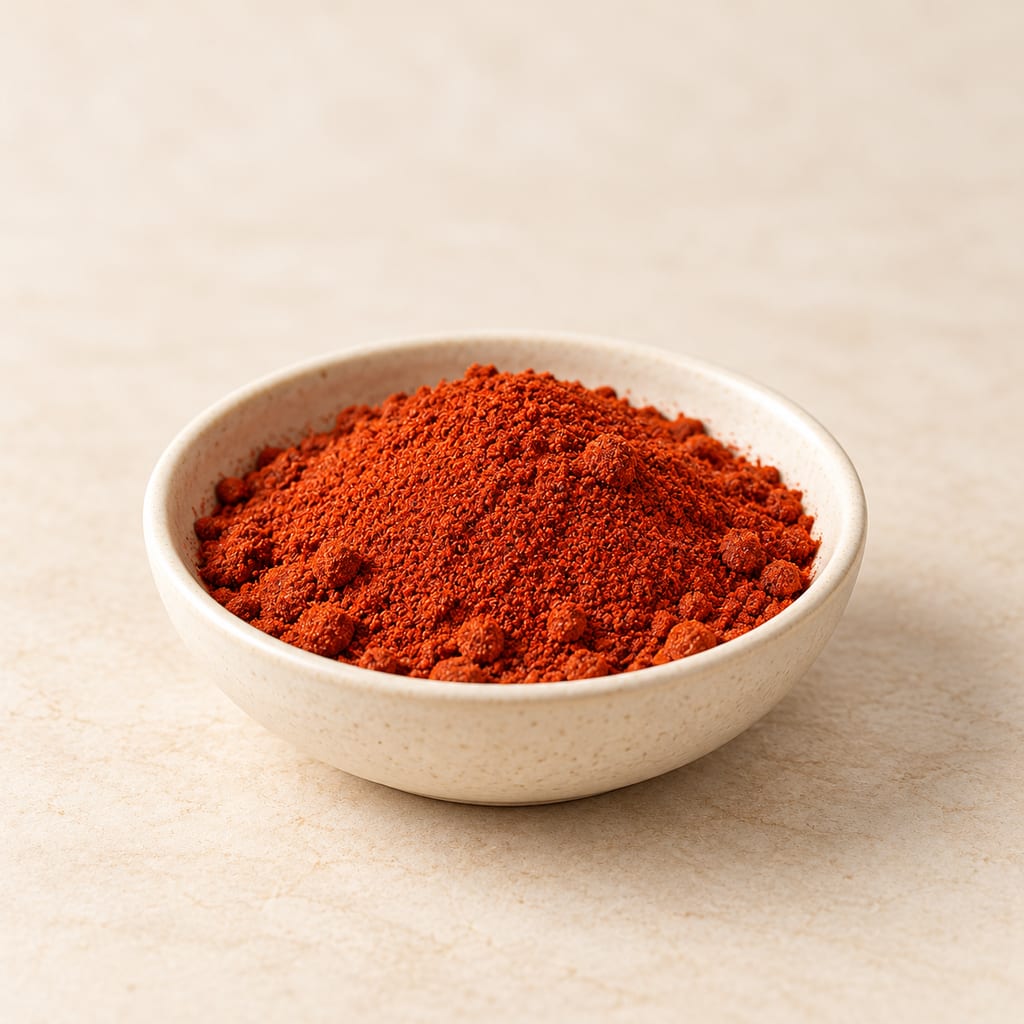
Dried ground pepper fruit supplies red-orange colour, pepper flavour and pungency. Hot, sweet and smoked describe different attributes, so the package’s exact identity matters.
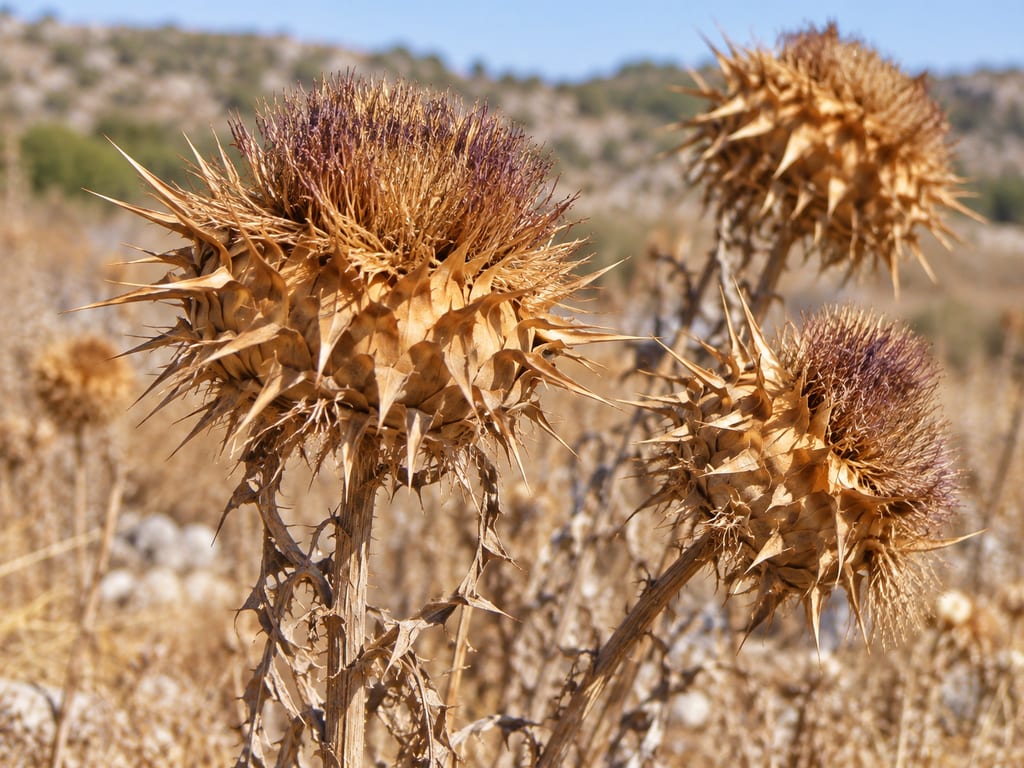
Dried flower heads of cardoon (Cynara cardunculus) supply plant proteases used to coagulate milk in several documented regional cheeses. Plant, extraction, milk and dose matter; evidence does not establish a universal home method.
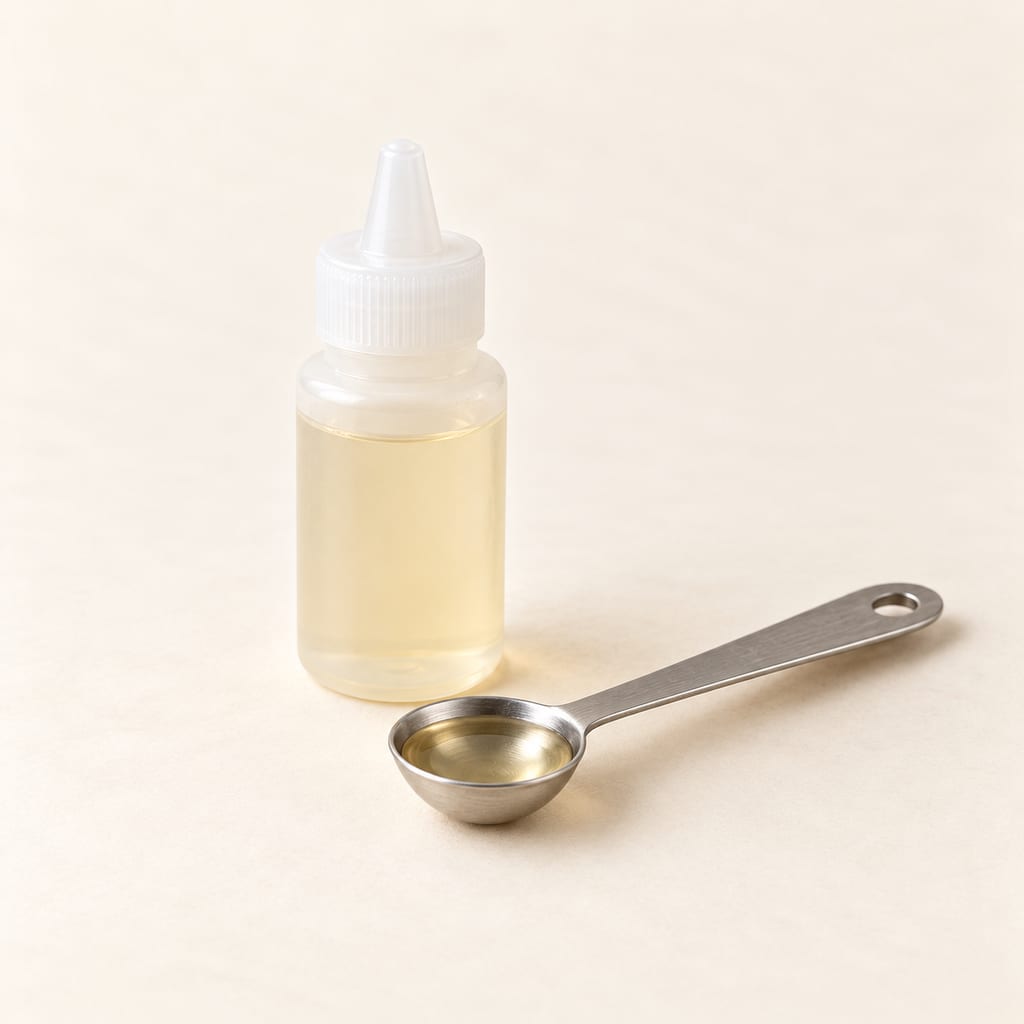
Rennet is an enzyme preparation that helps milk form a cuttable curd. Animal, microbial, fermentation-produced and plant coagulants have distinct identities and strengths.
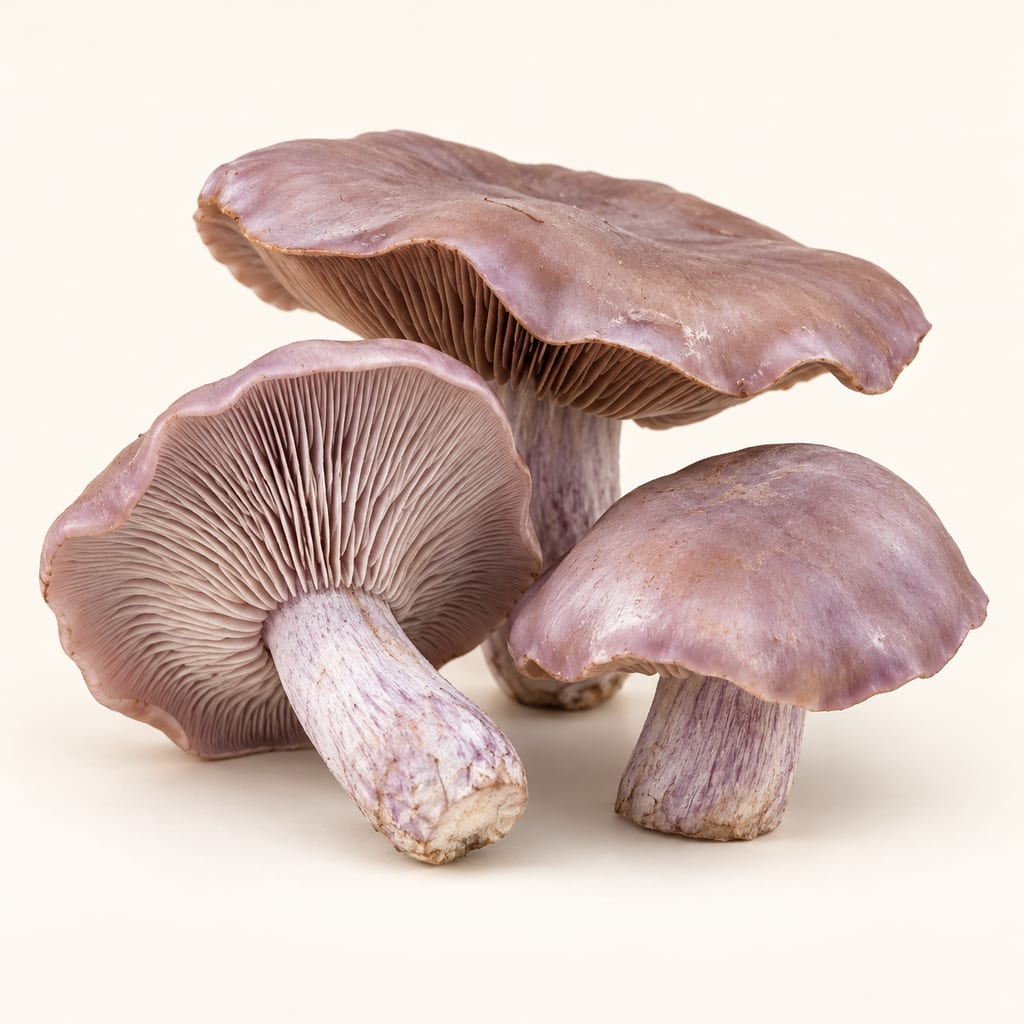
Wood blewit is a violet, litter-feeding mushroom collected and cultivated in parts of Europe. It is eaten only after thorough cooking; raw or undercooked specimens can cause gastrointestinal illness.

A gelling polysaccharide extracted from red seaweeds, sold as kanten strips or powder; it sets firm at a low concentration and stays solid until about 85 °C.

A Dominican table and seasoning condiment of sour orange juice, mixed with lime and salt and bottled raw; garlic, oregano or a hot pepper may be added for meat or a spicier bottle.

Cicerbita alpina is an alpine perennial whose tender shoots and leaves have been eaten raw or cooked. Sámi milk preparations and modern Carnian dishes are distinct uses, with serious identification and preservation limits.

Japanese skipjack tuna cooked, then repeatedly smoked and dried over a wood fire by the hand-fired tebiyama method into a hard block for shaving into dashi: the first stage of katsuobushi.

A Swedish-style spirit vinegar made by fermenting neutral alcohol with live vinegar bacteria, with a separate guide to commercial ättika strengths.

A yeast-raised wheat ring shaped from a firm dough, briefly boiled and baked. This source-batch formula gives a gently malted crust and a chewy crumb.

A warm dip of garlic, anchovy and olive oil, often enriched with butter, that Piedmont serves over a flame with raw and cooked vegetables and bread.

Bechamel is a white sauce of milk thickened with a butter and flour roux, one of the French mother sauces, and the base from which Mornay and other cheese and cream sauces are made.
No community contributions have been published for this entry yet.
Sign in to contribute. Published comments and photos are free to read.
2 Guys & A CoolerIngredient identity · Ingredient use
Spanish ChorizoA starter-cultured Spanish chorizo uses 17.5 g sweet or smoked paprika and 7.5 g spicy paprika per 1,000 g of meat and fat, mixed in before resting overnight and adding the starter.
Cited in: What paprika does in a fermented sausage
UK Government repository of protected-name specificationsIngredient identity · Ingredient use
Pimentón de la Vera: Protected Designation of Origin specificationsPimentón de la Vera specification: varieties, sweet, bittersweet and hot groups, smoke-drying in sheds over holm oak or oak for 10 to 15 days from 80 to under 15 percent moisture, about 5 kg of wood per kg of dried pepper, ASTA values, 1.19 mm sieve, 14 percent maximum moisture, colour stability.
Cited in: What sweet and smoked paprika are; From an American crop to a European spice; La Vera: smoke as part of the drying; Colour, heat and aroma; Choosing and storing paprika
Región de MurciaIngredient identity · Ingredient use
D.O.P. Pimentón de MurciaPimentón de Murcia is milled from fully red, ripe Bola peppers; entirely sweet, bright red, strong aroma; peppers arrived from the Americas elongated and hot and local conditions rounded them and made them sweet.
Cited in: What sweet and smoked paprika are; From an American crop to a European spice; Murcia and Szeged: sweet without smoke
Hungarikum CommitteeIngredient identity · Ingredient use
Ground paprika from SzegedPaprika brought to the Carpathian Basin by the Turks in the 16th and 17th centuries; grown in Szeged from the early 19th century; hot until the 1940s; splitting removed the hot parts; more than 10,000 splitters between the wars.
Cited in: What sweet and smoked paprika are; From an American crop to a European spice; Murcia and Szeged: sweet without smoke
PNASIngredient identity · Ingredient use
Multiple lines of evidence for the origin of domesticated chili pepper, Capsicum annuum, in MexicoGenetic, archaeological, ecological and linguistic evidence for central-east Mexico as the domestication area of Capsicum annuum, with genetic evidence favouring a more northerly area.
Cited in: From an American crop to a European spice
Consorcio del Chorizo EspañolIngredient identity · Ingredient use
The Spanish ChorizoSpanish chorizo is associated with paprika brought from the Americas; common ingredients pork, fat, paprika, garlic and salt; a 1726 dictionary definition.
Cited in: What paprika does in a fermented sausage
Food Research International 100,691–697Ingredient identity · Ingredient use
Impact of volatile composition on the sensorial attributes of dried paprikasSmoked, oven-dried and sun-dried paprikas compared by sensory panel and volatiles: smoky, fruity and straw-like descriptors; phenols and alcohols with smoke, aldehydes with fruity.
Cited in: Colour, heat and aroma
Journal of Chromatography A 936,139–144Ingredient identity · Ingredient use
Effects of fluorescent light and vacuum packaging on the rate of decomposition of pigments in paprika (Capsicum annuum) powder determined by reversed-phase high-performance liquid chromatographyPaprika powder pigment decomposition depends on storage time, fluorescent light and oxygen; storage time has the strongest effect and oxygen the smallest.
Cited in: Choosing and storing paprika
Journal of Agricultural and Food Chemistry 57(11),4718–4723Ingredient identity · Ingredient use
Stability of Paprika without Supplementary Antioxidants during Storage under Industrial Controlled ConditionsPaprika stored under controlled industrial conditions without added antioxidants: carotenoids, colouring capacity, fatty acids, peroxide index and microbial flora measured; quality maintained.
Cited in: Choosing and storing paprika
International Journal of Food Science and Technology 40(4):411-417 (Revilla and Vivar-Quintana, 2005)Fermentation
The effect of different paprika types on the ripening process and quality of dry sausagesChorizo with large amounts of paprika and different amounts of hot paprika: faster ripening probably through lactic acid bacteria growth, faster fall in pH and water activity, firmer texture sooner, more stable colour and lower malonaldehyde; paprika protects against rancidity.
Cited in: What paprika does in a fermented sausage
International Journal of Molecular Sciences 14 (Gomez-Garcia and Ochoa-Alejo, 2013)Colour
Biochemistry and Molecular Biology of Carotenoid Biosynthesis in Chili Peppers (Capsicum spp.)Red colour from capsanthin, capsorubin and capsanthin-5,6-epoxide; yellow-orange from carotenes, zeaxanthin, lutein and beta-cryptoxanthin.
Cited in: Colour, heat and aroma
Allergy, Asthma & Immunology Research (Takei et al.)Allergens
Capsicum Allergy: Involvement of Cap a 7, a New Clinically Relevant Gibberellin-Regulated Protein Cross-Reactive With Cry j 7Clinical report of allergy to bell and chilli pepper with the protein Cap a 7, cross-reactive with Japanese cedar pollen.
Cited in: Allergy and dietary context