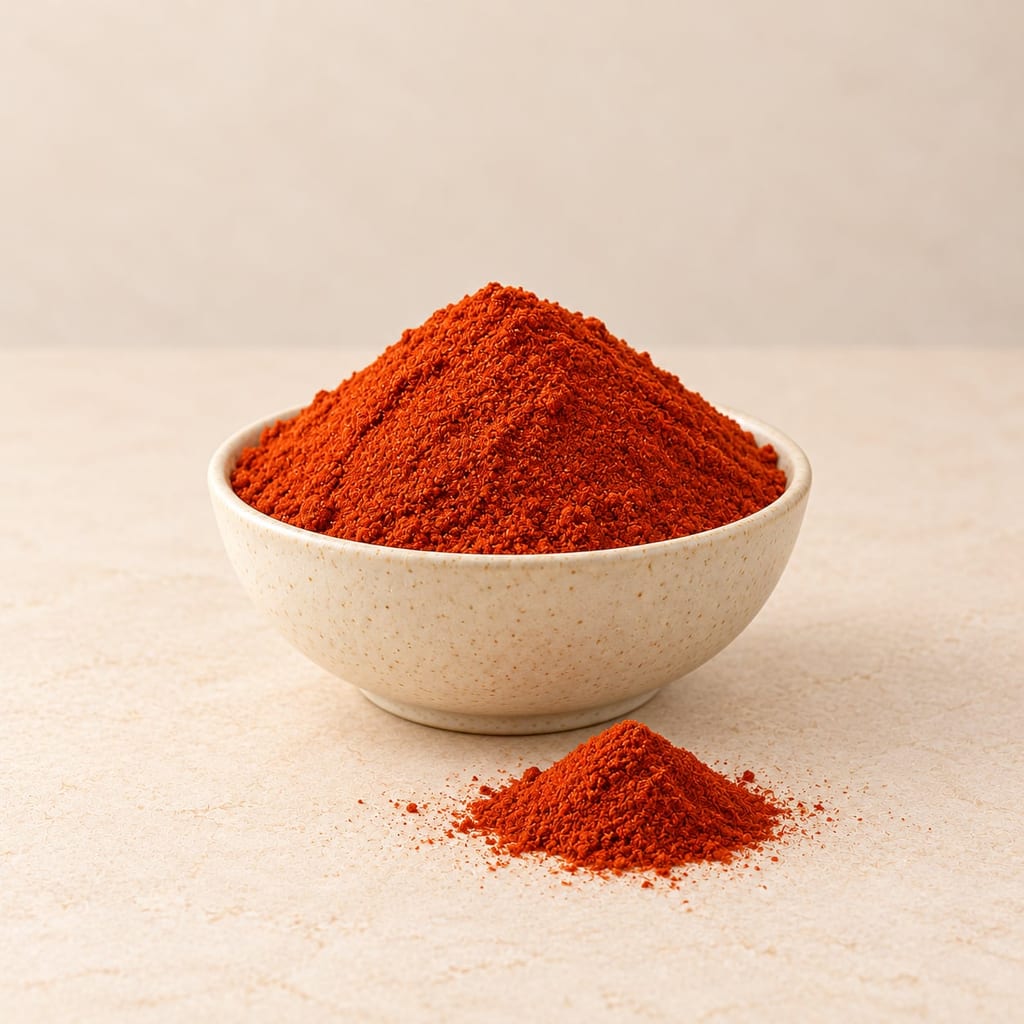
Sweet or smoked paprika
Sweet and smoked paprika are mild red powders made from dried ripe peppers, the smoked kind dried over oak or holm oak fires, used for colour and flavour in sausages, stews and rubs.
 FermenteaWhere food goes to change
Spices and aromatics
Dried ground pepper fruit supplies red-orange colour, pepper flavour and pungency. Hot, sweet and smoked describe different attributes, so the package’s exact identity matters.
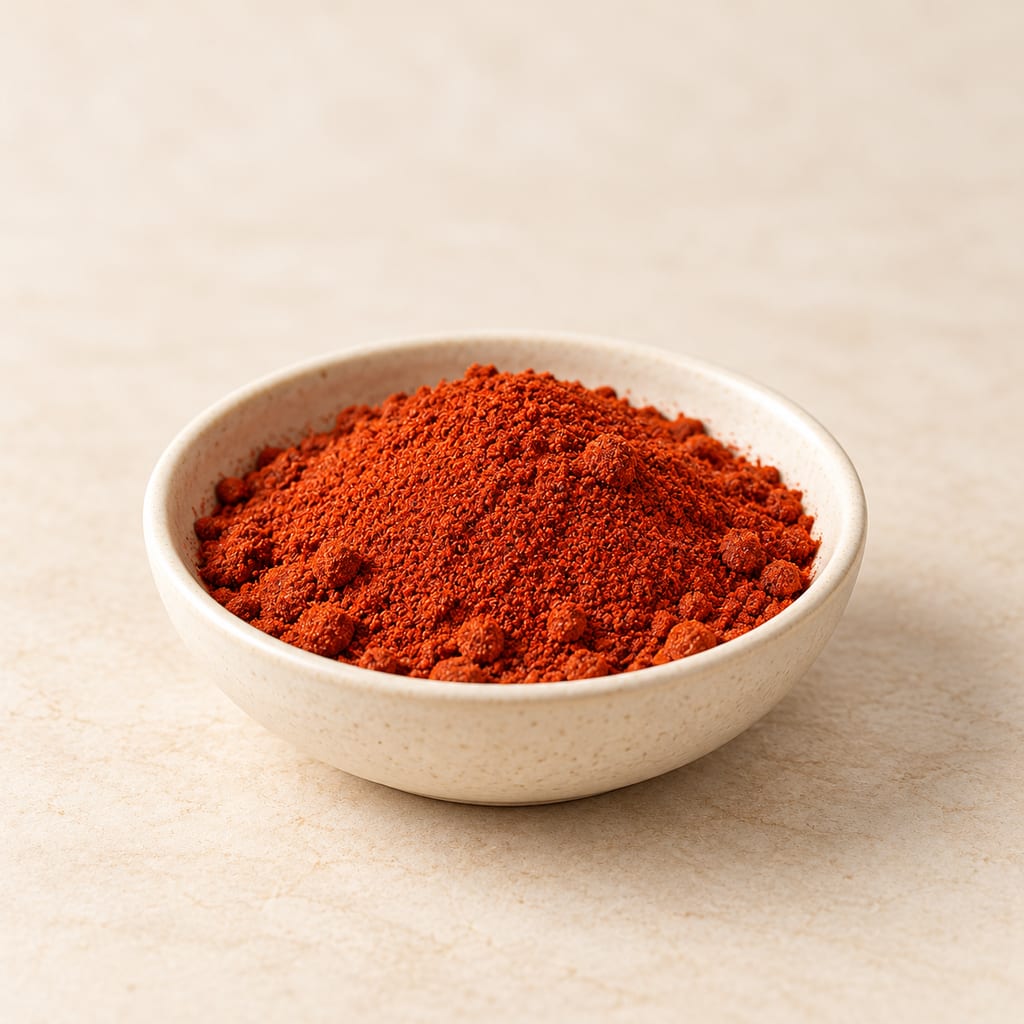
Spicy paprika is dried, ground pepper fruit selected or blended to contribute pungency as well as the red-orange colour associated with paprika. A small addition can change the character of a sausage, sauce or stew. Its heat is one part of its flavour, alongside pepper-fruit aroma and the effects of drying and processing. A powder can be vividly red without being especially hot, so colour and pungency need to be understood separately.
Paprika is commonly made from Capsicum annuum, a species that includes a wide range of cultivated peppers. The botanical name does not identify one pepper shape, cultivar or heat level. Selecting fruit and processing it into a spice creates a more specific ingredient than the species name alone. The packet's description matters because sweet, hot and smoked paprika describe different attributes.
The word spicy in a recipe tells the cook to expect a pungent product, but leaves several choices open. It does not establish a particular country, protected designation or Scoville rating. Nor does it imply smoking. A hot paprika may be smoke-dried or dried another way; a smoked paprika may be sweet or hot. Those distinctions help a cook keep the intended balance rather than treating every red pepper powder as the same seasoning.
Capsicum peppers have their native range in the Americas. Their presence in European food belongs to the movement of crops after transatlantic contact. By the sixteenth century, peppers were entering cultivation and exchange in Europe, eventually becoming important in places whose cuisines now seem inseparable from them. The familiar association of paprika with Spain and Hungary is part of that later history.
The movement of a plant is not the same event as the development of a national spice tradition. A pepper could appear first as a garden curiosity, an exchange between botanists or a locally cultivated crop before becoming an everyday ground seasoning. Historical records of seeds and plants therefore require a different reading from recipes or commercial records of paprika production.
That distinction makes the story more interesting than a single arrival date. People selected peppers, learned which fruits suited local growing conditions and developed ways to preserve their colour and flavour after harvest. A crop brought across an ocean became an agricultural and culinary material with several regional identities. The resulting traditions share a plant history while differing in their drying, grinding and use.
Spain and Hungary developed substantial production and distinctive uses for paprika. Hungarian goulash is one familiar example of the powder's place in a cooked dish, while Spanish sausage making gives another setting in which pepper colour and flavour are central. These associations describe important food traditions without making either country the sole source of every modern paprika packet.
La Vera provides a particularly clear example of how a process becomes part of a named product. Its protected pimentón is made from selected ripe peppers dried with wood smoke. The protected product distinguishes sweet, bittersweet and hot forms. Smoke belongs to the drying method, while the difference in pungency belongs to the peppers and the product type.
A generic hot-paprika ingredient is broader than that protected designation. It may come from another growing or processing region and may not have been smoked. Reading the actual name preserves the difference between a spice category and a documented regional product. A recipe can value the flavour of La Vera paprika without silently requiring every hot-paprika line to meet that designation's specification.
Ground-paprika production also changed its tools. In La Vera, peppers were once ground in water-powered flour mills beside local watercourses. Electricity made dedicated paprika mills possible, separating the trade more clearly from grain milling. The history of the spice therefore includes processing workshops as well as fields and kitchens. A regional pepper crop acquired an industry that could dry, mill and pack it for people beyond the place where it was grown.
Paprika manufacture begins with the choice of pepper and the condition of the harvested fruit. Fully coloured ripe fruit supplies the material for a red spice. The fleshy fruit wall, or pericarp, is especially important to its colouring power. Seeds and other fruit parts contribute differently to the material being milled, so the composition of the ground product depends on selection and processing.
The amount of pungency is another selection question. Capsaicinoids are the compounds associated with the hot sensation of peppers. Their presence varies with pepper type and the fruit material used. A processor making a sweet product seeks a different result from one selling hot paprika, even though both may want an attractive red colour and a recognizable pepper aroma.
This helps explain why botanical identity is only the beginning of ingredient identity. Capsicum annuum includes very different forms, and a cultivated pepper's suitability for one spice product does not establish its suitability for another. Agricultural selection, maturity and processing all contribute to what eventually reaches the kitchen in a dry packet.
Drying removes water from the harvested fruit so that it can be handled and ground as a stable commercial spice. Producers may use sun drying, controlled artificial drying or a particular smoke-drying process. These operations are not interchangeable in their effects on flavour, and a regional product can make one of them part of its defining character.
Sorting and preparing fruit parts comes before the final milling. Commercial paprika manufacture distinguishes fruit wall, seed, stalk, calyx and placental tissue. Their proportions and treatment affect the material's colour and pungency. Sweet and hot powders can therefore begin with different selections of pepper material, even when the finished products share a fine red appearance. Milling brings those selected parts together in the powdered seasoning.
Grinding produces a seasoning that can be distributed through other ingredients much more evenly than pieces of dried pepper. The fine powder becomes part of a sauce or coats particles of meat and fat during mixing. That physical form is a practical feature of the ingredient. Whole dried peppers, crushed flakes and finely milled paprika bring related pepper materials into food in different ways.
Paprika's red-orange colour comes largely from carotenoids, including capsanthin and capsorubin. These compounds are chemically different from the capsaicinoids responsible for pungency. A colour-rich powder can consequently be relatively mild, while a hot product may be selected for both colour and heat. A vivid appearance cannot supply a missing heat specification.
The pigments are oil-soluble. This helps explain why paprika can colour the fatty parts of a preparation as well as the visible dry spice. In a sausage mixture, the powder is distributed among lean meat, fat and other seasonings. The final impression comes from that whole food, rather than from looking at a spoonful of paprika in isolation.
Industrial paprika oleoresin is a different form of the pepper's colour and flavour. Extraction concentrates compounds from the spice into a material used in food manufacture, often carried in oil. It is not simply a finer grind of the powder. A recipe naming paprika should retain the powdered ingredient rather than quietly substituting a concentrated extract with a different composition and strength.
Paprika colour is not fixed indefinitely after the packet is filled. Storage experiments have measured changes in carotenoid pigments under different combinations of time, light and oxygen. Those changes explain why a powder that began with a strong colour can gradually become less vivid. The conditions around the spice matter alongside its original composition.
The powder and its package form one storage system. A sealed packet and a jar repeatedly opened beside a cooker have different exposure to air, light and warmth. The starting powder also varies with the peppers and their processing. Colour retention consequently depends on more than the name paprika: the material, packaging and storage conditions act together. The product's own package information applies to the particular spice being kept.
Keep the spice dry, closed and protected from light and unnecessary heat. Buy a quantity suited to the rate at which it will be used, and retain the label so the hot, sweet and smoked products remain distinguishable. Changes in aroma or colour can inform a quality decision, but they do not identify the pepper cultivar or measure a product's capsaicinoid content.
The linked Spanish chorizo preparation lists spicy paprika separately from sweet or smoked paprika. These are two measured seasonings with different jobs in the flavour balance. The hot powder supplies pungency, while the other line allows a different combination of pepper sweetness and smoke. Combining them under one anonymous paprika entry would lose information the recipe deliberately retains.
The same preparation names a commercial starter and dextrose separately. Those ingredients establish the intended microbial acidification system. Paprika contributes pepper material, colour and flavour; the recipe does not establish it as the dependable starter or as a substitute for the process controls. The presence of a spice in a fermented food does not make every effect of that spice fermentation.
Mixing distributes the paprika through the meat and fat before stuffing. Later acidification, drying and maturation change the surrounding food and the way its flavours are experienced. The pepper remains one contributor within that system. Understanding its role helps explain why a sausage can have a similar red appearance to another yet differ in heat, smoke aroma and overall seasoning.
Start with the package's own description. Hot or spicy concerns pungency; sweet indicates a milder type; smoked describes a processing character. A named protected product supplies another level of identity, with its own geographical and production specification. These terms can overlap, so the most useful label is the one that identifies the actual material rather than relying on a broad colour word.
Also check whether the product is pure pepper powder or a seasoning mixture. In some markets, chilli powder can mean a blend containing several spices, while elsewhere it means ground chilli alone. A recipe asking for hot paprika has not automatically asked for cumin, garlic or other additions that might be present in a blend. The ingredient statement resolves that practical ambiguity.
No fixed conversion between sweet and hot paprika follows from their similar appearance. Replacing one changes pungency and may change aroma or smoke character as well. The particular recipe determines the intended mixture. Keeping the two paprika lines distinct is therefore more useful than inventing a universal substitution based on colour, a spoon size or the word pepper.
Paprika's wider culinary role includes stews, soups, sauces and seasoned meat preparations. It can provide a red-orange background to a dish or a more noticeable pepper character. Hot forms contribute pungency; smoke-dried forms contribute another aromatic dimension. The choice affects how the spice relates to the rest of the food, rather than simply making the same dish more red.
Goulash and La Vera-seasoned sausage give these choices distinct cultural settings. In a stew, paprika joins the cooking liquid, meat and other ingredients; in a sausage, its powder is mixed through the filling. Both uses connect a pepper crop with the labour of selecting, drying and grinding fruit. Smoke treatment and pungency contribute to the character of the finished food alongside the other seasonings.
For dietary decisions, use the actual package's ingredient and cross-contact information. A single-ingredient paprika and a mixed seasoning are different products, and the generic name cannot settle an individual's allergy needs. Keep the product identifiable, select the heat and smoke character the method calls for, and let the linked recipe carry its own quantities and treatment.
The linked spicy-paprika line does not identify cultivar, origin, smoke treatment, supplier or measured pungency. Those details are not inferred from the red powder photograph.
Use the actual packet’s ingredient and cross-contact declarations, particularly for mixed seasonings; the generic name does not settle individual allergy needs.
The linked recipe does not identify the hot-paprika cultivar, growing region or supplier; Spanish/Hungarian product traditions are discussed separately.
Sweet and smoked paprika are mild red powders made from dried ripe peppers, the smoked kind dried over oak or holm oak fires, used for colour and flavour in sausages, stews and rubs.
No community contributions have been published for this entry yet.
Sign in to contribute. Published comments and photos are free to read.
Kew Science / Plants of the World OnlineIdentity · History · Production · Science · Uses
Capsicum annuum L.Capsicum annuum is an American plant with substantial variation in its cultivated fruit forms.
Cited in: A red powder with heat as well as colour; An American plant in European kitchens; Growing the colour into the fruit
Food and Agriculture OrganizationIdentity · History · Production · Science · Uses
Natural colourants and dyestuffs: PaprikaPaprika is a dried ground pepper spice used in Spanish and Hungarian cooking. Capsicum reached Europe from the Americas in the sixteenth century. Its carotenoid pigments include capsanthin and capsorubin; pigment extracts form paprika oleoresin.
Cited in: A red powder with heat as well as colour; An American plant in European kitchens; Paprika became a regional spice; Growing the colour into the fruit; Drying and milling make the spice; The pigments are not the heat; Choosing among near neighbours; At the table and beyond the sausage
Journal of Ethnopharmacology / Stefan Halikowski SmithIdentity · History · Production · Science · Uses
In the shadow of a pepper-centric historiography: Understanding the global diffusion of capsicums in the sixteenth and seventeenth centuriesThe history of European paprika involves crop movement, cultivation and culinary adoption along several regional routes.
Cited in: An American plant in European kitchens
European Commission Official Journal, hosted by Pimentón de la Vera origin councilIdentity · History · Production · Science · Uses
Pimentón de la Vera: Summary specification,2006/C287/02Pimentón de la Vera is made from ripe peppers dried with wood smoke and milled. It includes sweet, bittersweet and hot classes; dedicated electric mills followed earlier water-powered flour mills.
Cited in: A red powder with heat as well as colour; Paprika became a regional spice; Drying and milling make the spice; Choosing among near neighbours; At the table and beyond the sausage
Journal of Chromatography A / Morais and colleaguesIdentity · History · Production · Science · Uses
Effects of fluorescent light and vacuum packaging on the rate of decomposition of pigments in paprika powderPaprika pigment decomposition depends on storage time, light and oxygen exposure.
Cited in: What changes in the cupboard
Journal of Agricultural and Food Chemistry / Pérez-Gálvez and colleaguesIdentity · History · Production · Science · Uses
Stability of Paprika without supplementary antioxidants during storage under industrial controlled conditionsPaprika quality during controlled storage depends on the conditions and material being stored.
Cited in: What changes in the cupboard
2 Guys & A Cooler / EricIdentity · History · Production · Science · Uses
Spanish ChorizoThe Spanish chorizo formulation lists hot paprika separately from sweet or smoked paprika, dextrose and starter culture.
Cited in: Its work in a fermented sausage; Choosing among near neighbours; Product details still needed
U.S. Food and Drug AdministrationIdentity · History · Production · Science · Uses
Food Allergies: What You Need to KnowActual ingredient labels and supplier declarations matter for individual dietary requirements.
Cited in: At the table and beyond the sausage
Sahin EfendiIdentity · History · Production · Science · Uses
بابريكا حار (Hot paprika)The seller identifies this fine brick-red powder as hot paprika.
Cited in: Product details still needed
McCormickIdentity · Selection
McCormick Culinary Choice Chili PowderThe cited chili-powder product blends chili pepper with cumin, oregano, garlic and salt.
Cited in: Choosing among near neighbours