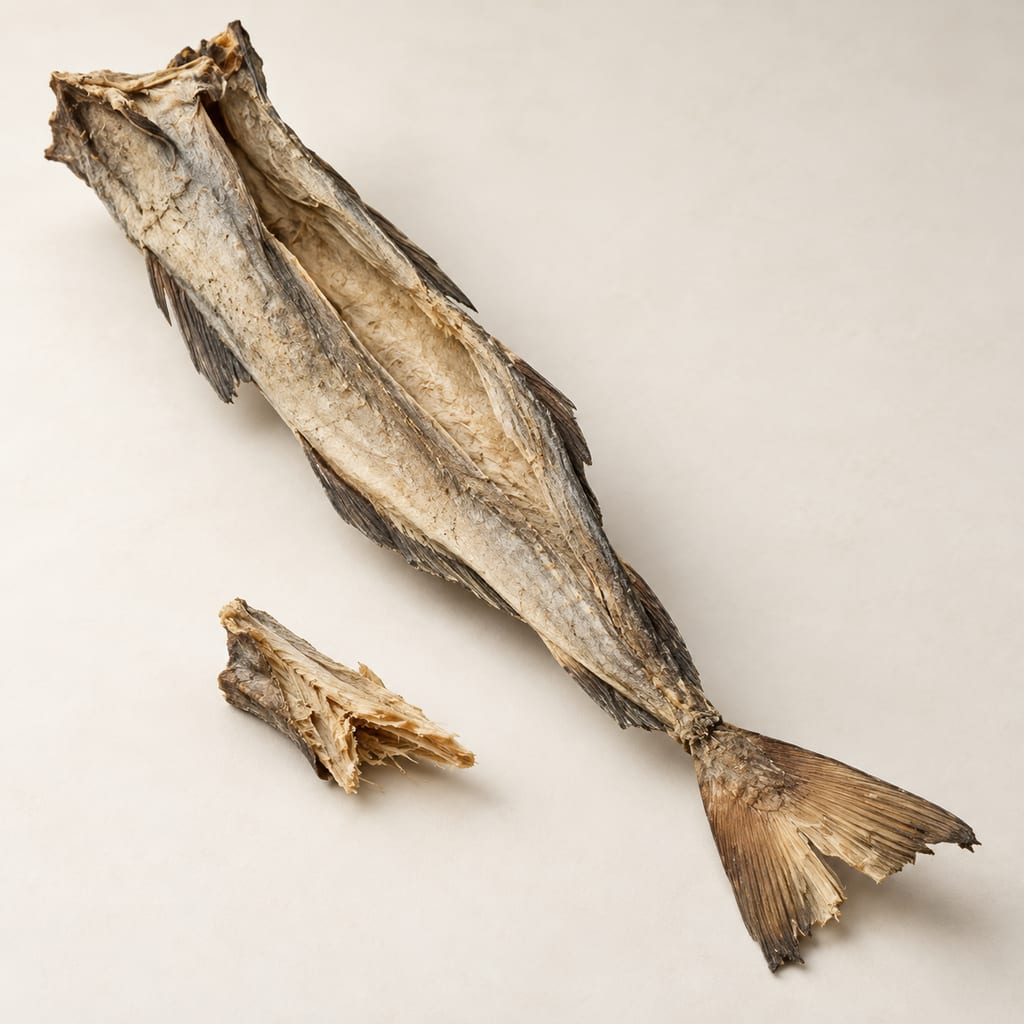
Stockfish
Cod hung on open racks in cold northern air until most of its water has gone, leaving a hard, light, unsalted fish that keeps and travels and must be soaked for days before cooking.
 FermenteaWhere food goes to change
Modern method
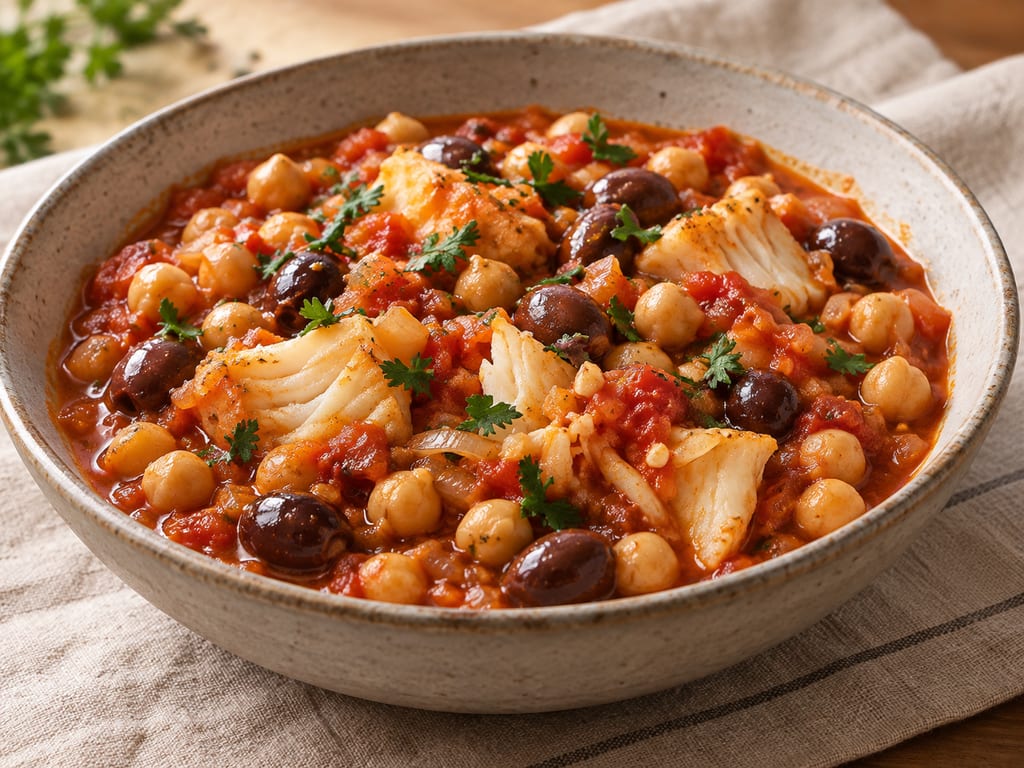
Stockfish, chickpea, tomato and olive stew · Stoccafisso con ceci, pomodoro e olive
A contemporary Mediterranean-style stew in which poached stockfish flakes are folded into a paprika-spiced tomato sauce with cooked chickpeas and olives.
Stockfish, chickpeas, tomatoes and olives are ingredients with substantial individual histories in Mediterranean food culture.
They are also well suited to one another.
The stockfish provides concentrated marine flavour and firm, flaky protein.
Chickpeas contribute starch, plant protein and a mild nutty taste.
Tomatoes form the acidic, savoury body of the sauce, while olives add saltiness and richness.
Garlic, onion, olive oil, paprika and parsley complete the combination.
The result is a substantial stew built from ingredients that are familiar across southern European kitchens.
However, this exact recipe is an original editorial formulation.
It should not be published as a traditional dish from Sicily, Calabria, Portugal or another specific region without documentary evidence.
Related dishes certainly exist. Southern Italian cooking includes stockfish with tomatoes, olives and capers, while other Mediterranean traditions combine preserved fish with legumes.
Those similarities provide culinary context, but they do not establish a historical origin for this particular stockfish-and-chickpea formula.
The Italian title is descriptive and should not be mistaken for an authenticated regional dish name.
English — Stockfish, chickpea, tomato and olive stew
Italian descriptive name — Stoccafisso con ceci, pomodoro e olive
Norwegian ingredient — Tørrfisk
Italian ingredient — Stoccafisso
Chickpea in Italian — Cece, plural ceci
Chickpea in Portuguese — Grão-de-bico
Scientific name of Atlantic cod — Gadus morhua
Scientific name of chickpea — Cicer arietinum
Scientific name of tomato — Solanum lycopersicum
Scientific name of olive — Olea europaea
Stockfish is fish preserved by drying without added salt.
In northern Norway, cod has traditionally been dried outdoors on wooden racks under suitable cold, windy conditions.
The preservation process removes moisture, reducing water activity and helping prevent spoilage during storage.
The dried product is dense and hard.
Before ordinary cooking, it must be rehydrated.
The Norwegian Seafood Council recommends 7–8 days in cold water, with daily water changes, and up to 10 days for particularly dry fish.
The temperature must remain below 4°C.
After rehydration, the fish can be cleaned, deboned and divided into portions.
A useful feature of stockfish in stew-making is its concentrated flavour.
The dried fish contributes a more distinctive character than many fresh white fish preparations.
However, its texture can vary considerably.
A piece that remains hard in the centre after soaking may not become satisfactorily tender during a brief final simmer.
The editorial recipe therefore cooks the fish separately before combining it with the tomato-and-chickpea mixture.
This adds a stage, but gives the cook greater control.
Preserved fish has travelled through European trading networks for centuries.
Norwegian stockfish was exported to markets where local cooks incorporated it into existing food traditions.
Southern Italian dishes provide especially useful comparisons.
Calabrian preparations can combine stockfish with tomato, onion, olives, potatoes, capers and hot pepper.
In Liguria, stoccafisso accomodato is associated with ingredients including olives, garlic, anchovies, vegetables, wine and tomato.
The Norwegian seafood industry's own Ligurian-style recipe includes pine nuts alongside several of those ingredients.
Calabrian stockfish salads can include tomatoes, olives, onions and herbs.
These combinations illustrate how imported northern fish became integrated into the Mediterranean pantry.
Chickpeas also have a long history of cultivation and consumption across the Mediterranean and western Asia.
They are used in soups, stews, purées, salads and other dishes.
Nevertheless, the presence of chickpeas in regional cooking and stockfish in regional cooking does not prove that this precise recipe has a documented historical lineage.
It is better characterized as a contemporary stew assembled from historically meaningful ingredients.
Chickpeas are legumes containing starch, protein, fibre and other plant compounds.
When cooked properly, they become tender but retain an identifiable shape.
Their mild flavour makes them compatible with assertive ingredients such as preserved fish and olives.
In a stew, chickpeas absorb some of the surrounding sauce, while starch and other dissolved material can contribute to its body.
They provide a substantial plant component, helping turn the dish into a complete meal.
The recipe uses 480 g cooked chickpeas, drained.
This detail is essential.
The amount is not a dry chickpea purchasing weight.
Dried chickpeas require separate soaking and thorough cooking before they can be incorporated into this recipe.
Using already cooked chickpeas avoids uncertainty about whether they will become tender in the relatively acidic tomato sauce.
Canned chickpeas may be used, provided that their drained weight matches the stated quantity.
The liquid from the can is not included in the recipe's measured amount.
Tomatoes contribute water, natural sugars, organic acids and flavour compounds.
They provide the main liquid and colour of the stew.
As chopped tomatoes heat, their tissues soften and the mixture becomes more sauce-like.
The recipe also includes tomato paste.
Tomato paste is concentrated by the removal of water during processing. It brings a denser tomato flavour and additional solids.
Cooking the paste briefly with onion, garlic and paprika distributes it through the oil before the larger quantity of tomatoes is added.
Acidity influences the flavour and can affect how some vegetables and legumes soften during cooking.
This is another reason to use fully cooked chickpeas rather than expecting dry legumes to cook in the finished tomato stew.
Tomato acidity does not make the cooked seafood mixture shelf-stable.
Olive oil is the principal cooking fat.
It softens the onion and distributes flavour from the garlic and paprika.
Paprika is produced from dried and ground peppers belonging to cultivated forms of Capsicum annuum.
The recipe specifies 2 g sweet paprika.
That means the flavour should be warm and rounded, not necessarily hot.
Paprika also provides red pigments that reinforce the colour of the tomato sauce.
Brief cooking in oil can help distribute flavour and colour.
However, paprika can scorch when exposed to excessive heat.
The recipe therefore adds the wet ingredients shortly after the paprika and tomato paste have been stirred into the onion base.
Serves 4 generously · Approximately 60–75 minutes after rehydration · Original, not kitchen-tested
1. Poach the fish. Place the prepared stockfish in 1,500 ml water and bring to a gentle simmer.
Start checking tenderness after approximately 20 minutes.
Continue cooking until the fish is tender and separates readily.
2. Reserve the cooking liquid. Measure 400 ml of the fish cooking water before draining.
Carefully separate the stockfish into large flakes and inspect again for bones.
3. Begin the vegetable base. Warm the olive oil in a heavy saucepan.
Add the diced onion and cook gently for approximately 10 minutes.
The onion should soften without becoming heavily browned.
4. Add the aromatics. Stir in the chopped garlic, tomato paste and sweet paprika.
Cook for approximately one minute, stirring to avoid scorching.
5. Build the tomato sauce. Add the canned tomatoes, including their juice, and 250 ml of the reserved fish cooking liquid.
Bring to a gentle simmer.
6. Reduce the sauce. Cook for approximately 15 minutes.
The tomato mixture should begin to thicken.
7. Incorporate the chickpeas. Add the fully cooked, drained chickpeas and the olives.
Continue cooking for another eight minutes.
8. Add the fish. Fold in the stockfish flakes carefully.
Heat through gently for approximately five minutes.
Avoid stirring so vigorously that the fish breaks into tiny fragments.
9. Adjust consistency. Add more reserved cooking liquid if a looser stew is desired.
10. Finish. Add the chopped parsley and lemon juice.
Taste before adding salt and black pepper.
11. Serve. Spoon into warmed bowls, keeping recognizable fish pieces and chickpeas distributed throughout.
There are two main advantages.
The first is control over tenderness.
Stockfish can require a variable cooking period because its condition after rehydration depends upon the original product and soaking process.
If a particularly tough piece is introduced directly into a tomato stew, prolonged cooking may be required.
That can lead to the tomatoes becoming over-reduced and the chickpeas losing their shape.
Separate poaching avoids that problem.
The second advantage is control over the cooking liquid.
The fish's poaching water contains dissolved flavour compounds.
A measured portion can be incorporated into the tomato sauce, providing stockfish flavour without requiring the fish itself to remain in the pan throughout the reduction.
The recipe reserves 400 ml but initially adds only 250 ml to the sauce.
The remainder is available for adjustment.
This is an editorial technique, not a documented historical requirement for Mediterranean stockfish stews.
The final dish should contain three recognizable main components.
The fish should be tender and flaky.
The chickpeas should be soft but not disintegrated.
The tomato sauce should coat both ingredients.
If the sauce is very thin, the result resembles a soup rather than the intended substantial stew.
If the sauce is excessively thick, the fish and chickpeas may become dry and difficult to combine.
The amount of liquid absorbed by the chickpeas varies according to their size, preparation and previous cooking.
Canned chickpeas can differ in firmness.
The cook should therefore use the measured liquid as a starting point and make adjustments based on the final consistency.
These adjustments do not require inventing a new fixed quantity.
Olives are usually preserved in brine or another curing medium.
Their salt content varies.
Some are noticeably bitter or strongly flavoured, while others are relatively mild.
The recipe uses 70 g drained pitted olives.
Green and black olives can produce different flavours.
The choice is a genuine variation because it changes saltiness, bitterness and colour.
However, there is no historical basis for claiming that one particular olive variety is mandatory for this original recipe.
Salt should be added only after the fish, chickpeas and olives are combined.
Even though the stockfish itself is unsalted, the olives and canned ingredients may contribute considerable sodium.
This stew has affinities with several Mediterranean fish traditions.
Calabrian stockfish dishes demonstrate the long-established use of tomato, olives and preserved fish together.
Ligurian preparations show how fish, aromatic vegetables, olive oil and preserved seasonings can be combined in slow cooking.
Portuguese cooking offers numerous combinations of cod, legumes and tomato-based sauces, although the most familiar bacalhau traditions use salt cod rather than unsalted stockfish.
The particular combination here should not be assigned to any of those regions as an authenticated traditional dish.
It is legitimate to describe it as Mediterranean-inspired.
It is not legitimate to invent a historical village, family or festival association.
The stew is substantial enough to stand alone as a main course.
Bread is a natural accompaniment because it absorbs the tomato-rich liquid.
It may also be served with cooked greens.
A small amount of lemon juice added at the end helps balance the savoury fish and olive flavours.
The recipe already contains chickpeas, so potatoes or other starches are optional rather than essential.
A drizzle of olive oil at the table would be a possible modern variation, but no additional oil is specified in the measured formulation.
The fish is tough. The stockfish may not have been sufficiently rehydrated or poached. Assess tenderness before introducing it to the sauce.
The stew is too salty. Olives or prepared ingredients may be responsible. Salt should be withheld until final tasting.
The chickpeas are hard. They were not fully cooked before incorporation. The recipe assumes cooked chickpeas throughout.
The sauce is watery. Reduction may have been insufficient or too much reserved liquid may have been added.
The sauce tastes harshly acidic. Tomato type, tomato paste and lemon juice all influence acidity. Taste the finished sauce before the final lemon addition.
The fish disintegrates. Excessive stirring after incorporation can break the flakes apart. Fold it in gently at the end.
The paprika tastes burnt. The aromatics were probably heated too aggressively before the tomatoes were added.
Keep the rehydrating fish and water below 4°C.
Cook the fish thoroughly, using 63°C as the published general safe cooking temperature.
Use fully cooked chickpeas.
If using canned ingredients, inspect the containers before opening and follow the manufacturer's handling instructions.
The finished stew contains cooked seafood and cannot be stored safely at room temperature for extended periods.
Cool and refrigerate leftovers promptly.
This is not a home-canning recipe. Its tomato content, lemon juice and cooking schedule have not been validated for shelf-stable preservation.
Do not bottle or jar it for unrefrigerated storage.
The dish contains fish. Other allergen declarations depend upon the commercial ingredients selected.
What this page can honestly offer is context rather than descent. Preserved fish has travelled through European trading networks for centuries, and Norwegian stockfish was exported into markets where local cooks folded it into food traditions that already existed; the clearest examples for this dish are southern Italian. Calabrian preparations combine stockfish with tomato, onion, olives, potatoes, capers and hot pepper, and a Calabrian stockfish salad does something similar without cooking at all, with tomatoes, olives, onions and herbs. In Liguria, stoccafisso accomodato is associated with olives, garlic, anchovies, vegetables, wine and tomato, and the Norwegian seafood industry's own Ligurian-style recipe adds pine nuts to that group. Chickpeas, separately, have a long history of cultivation and eating across the Mediterranean and western Asia, in soups, stews, purées and salads. Those facts explain why the combination works and why it feels familiar; they do not make it a traditional dish, and the Italian descriptive name on this page is a description rather than an authenticated regional title. One design decision is worth explaining, because it is the reason the recipe is built the way it is. Stockfish needs an unpredictable amount of cooking: how it behaves after rehydration depends on the original product and the soak, and a tough piece dropped straight into a tomato stew forces a long simmer that over-reduces the tomatoes and breaks down the chickpeas. Poaching the fish separately removes that conflict, and it has a second benefit: the poaching water holds dissolved flavour compounds, so a measured part of it can carry stockfish flavour into the sauce while the fish itself stays out of the pan during the reduction. That is an editorial technique rather than a documented requirement of any Mediterranean stockfish tradition. The Portuguese comparison is the one most likely to mislead, and it is worth naming: Portuguese cooking offers many combinations of cod, legumes and tomato, but the familiar bacalhau traditions use salt cod rather than unsalted stockfish, and the two products are not interchangeable.
Scaling: source batch only
Drying lowered the water activity and made the fish stable; the soak puts the water back, so for the week or more it takes the fish is perishable raw seafood held in water.
Hazard sourceA stew of tomato, tomato paste and lemon juice tastes sharp, but none of that makes a cooked seafood dish safe to leave standing, and its acidity has not been validated for any kind of shelf-stable storage.
Hazard sourceThe recipe assumes fully cooked chickpeas throughout, and dried chickpeas added without separate soaking and thorough cooking will not be made good by the stew's short simmer.
Hazard sourceThe fish is broken into flakes and folded through a thick sauce, where a bone that survived deboning is hard to see and harder to feel.
Hazard sourceKeep the rehydrating fish and its water refrigerated throughout the soak
Control sourcePoach the fish through on its own, before it meets the sauce
Control sourceUse fully cooked chickpeas, and inspect cans before opening and follow the manufacturer's handling instructions
Control sourceCool and refrigerate leftovers promptly rather than leaving the pan out
Control sourceThis is not a home-canning recipe: its tomato content, lemon juice and cooking schedule have not been validated for shelf-stable preservation, and it must not be bottled or jarred for unrefrigerated storage.
The 480 g of chickpeas is drained cooked weight; dried chickpeas need their own soaking and thorough cooking before they can be used here.
The dish contains fish, and the other allergen declarations depend on which commercial ingredients are chosen.
The soaking figures on this page belong to unsalted air-dried stockfish; salted cod is a different product that has to be desalted, and substituting it changes the seasoning of the whole stew.
Withhold salt until the fish, chickpeas and olives are all in the pan, because the olives and canned ingredients may already carry plenty of sodium.
This recipe is original to this collection, has not been kitchen-tested, and should not be presented as a traditional dish of any region.
No place is claimed, and that is deliberate. This is an original editorial recipe. Stockfish with tomato and olives is long established in Calabria, and Ligurian stoccafisso accomodato combines the fish with olives, garlic, anchovies, vegetables, wine and tomato, while chickpeas have a long history across the Mediterranean and western Asia; the cited sources are that context, not an origin. Describing the dish as Mediterranean-inspired is legitimate, and inventing a village, family or festival association for it is not.
Cod hung on open racks in cold northern air until most of its water has gone, leaving a hard, light, unsalted fish that keeps and travels and must be soaked for days before cooking.
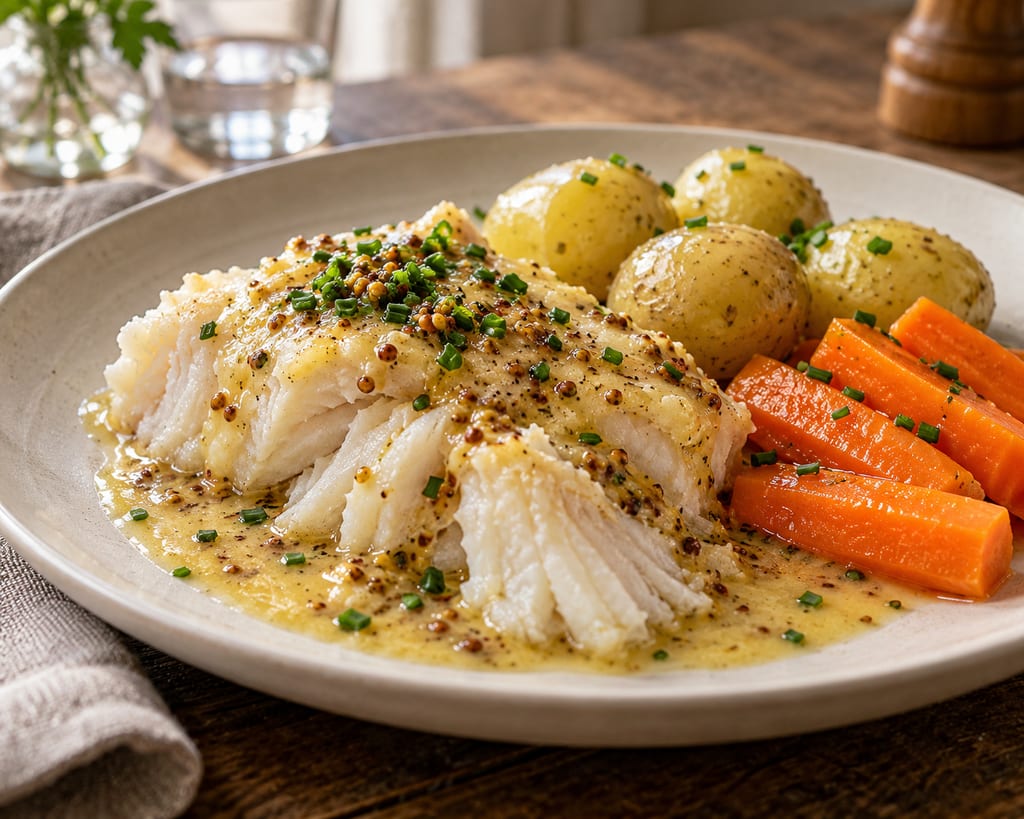
Rehydrated air-dried Norwegian cod simmered until it flakes, served with boiled potatoes and carrots under a wholegrain-mustard butter whisked from the fish's own poaching liquid.
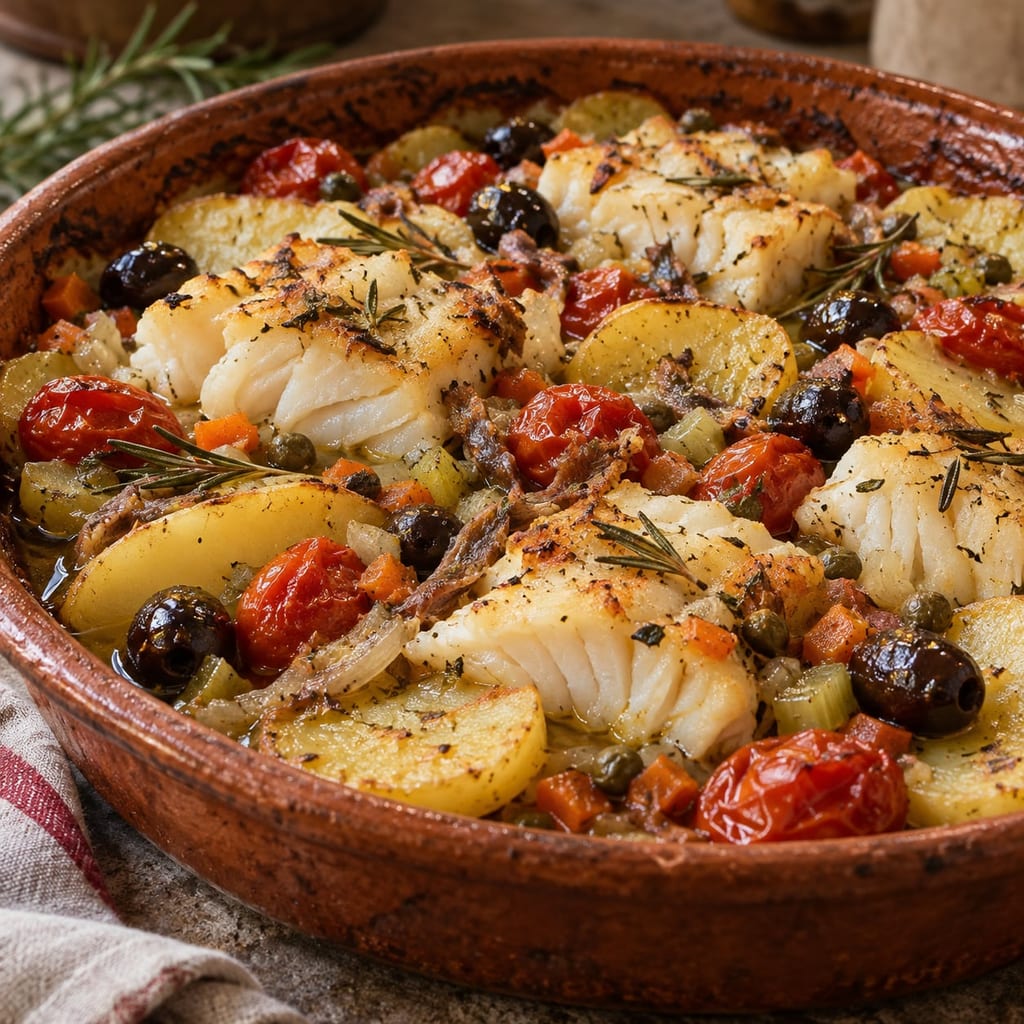
Ancona's baked stockfish: thick pieces layered with potatoes, tomatoes, olives, capers and anchovy under olive oil and white wine, cooked slowly in a covered dish.
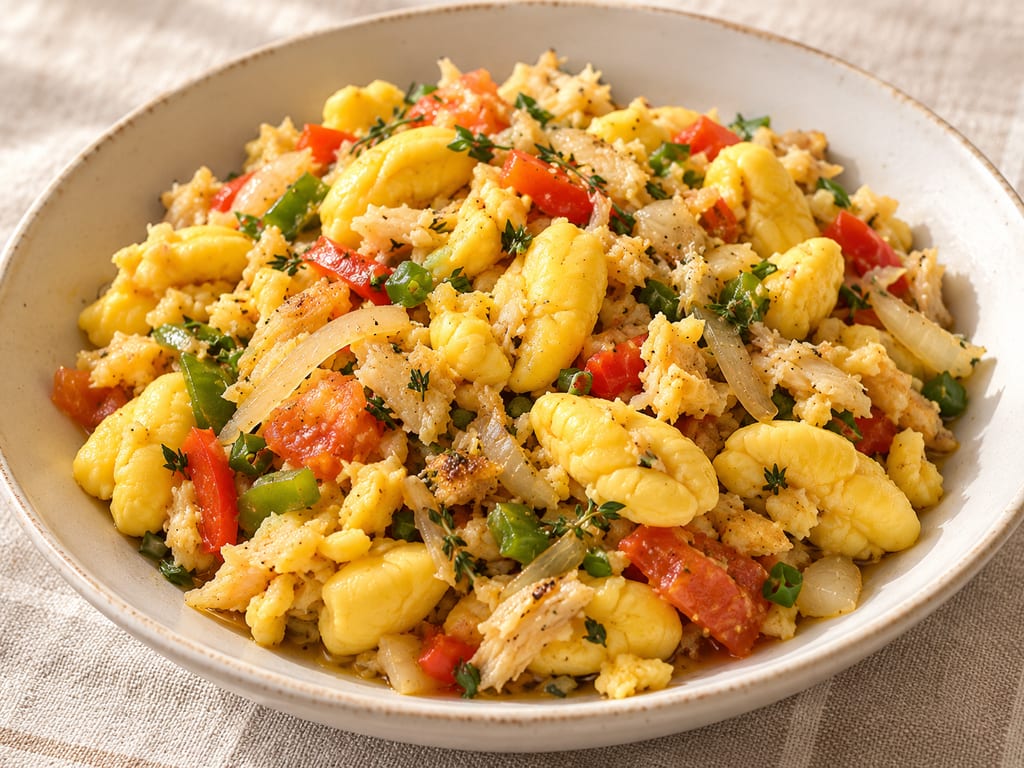
Jamaica's best-known dish: salt-cured cod desalted and flaked, then folded through ackee arils with onion, tomato, sweet pepper, thyme and Scotch bonnet.
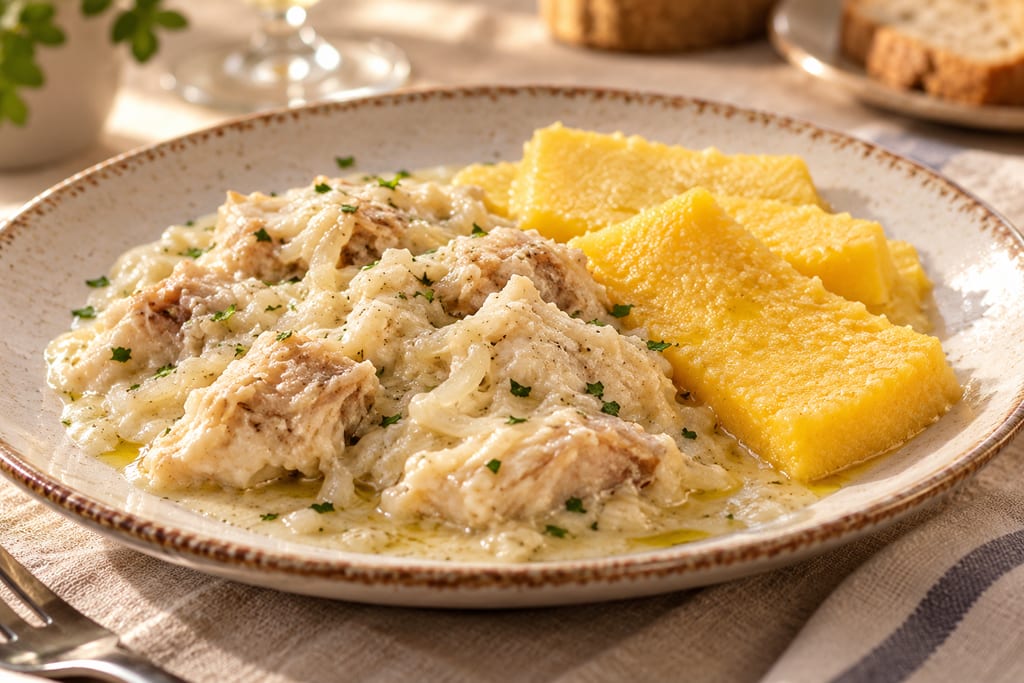
Stockfish from Vicenza, left barely bubbling for hours with onion, preserved anchovy, olive oil, milk and a little cheese until it is tender under a dense pale sauce, and eaten with polenta.
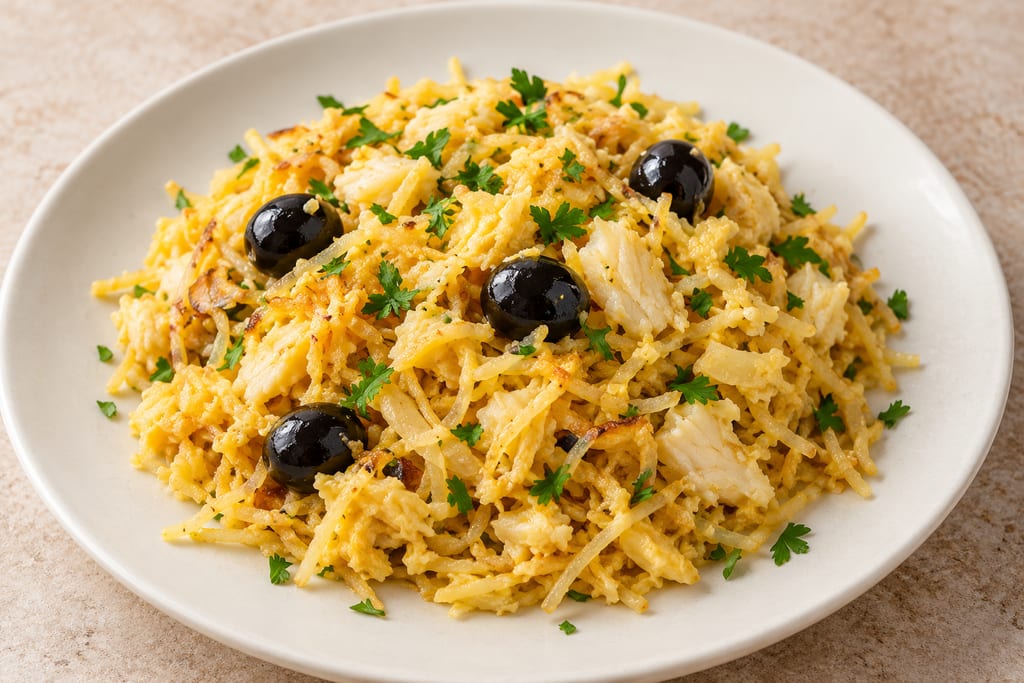
Lisbon's salt cod dish: shredded desalted cod and fine fried potato matchsticks folded through softened onion and bound with beaten egg, finished with parsley and black olives.
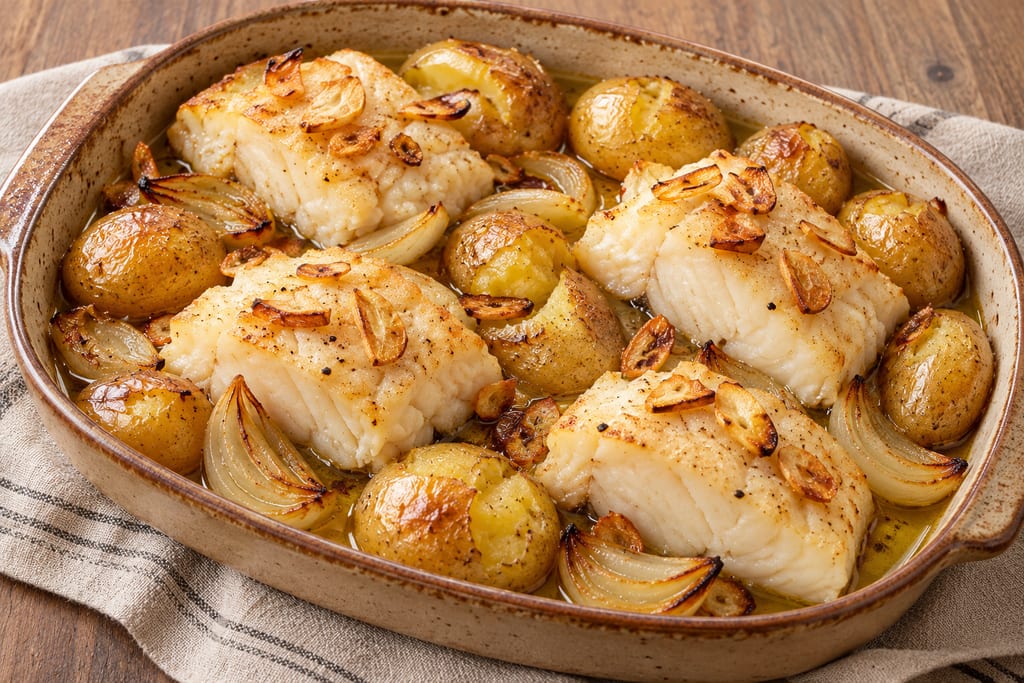
Thick pieces of desalted salt cod roasted in olive oil with garlic and onion, served with small potatoes cooked and then crushed until their skins split.
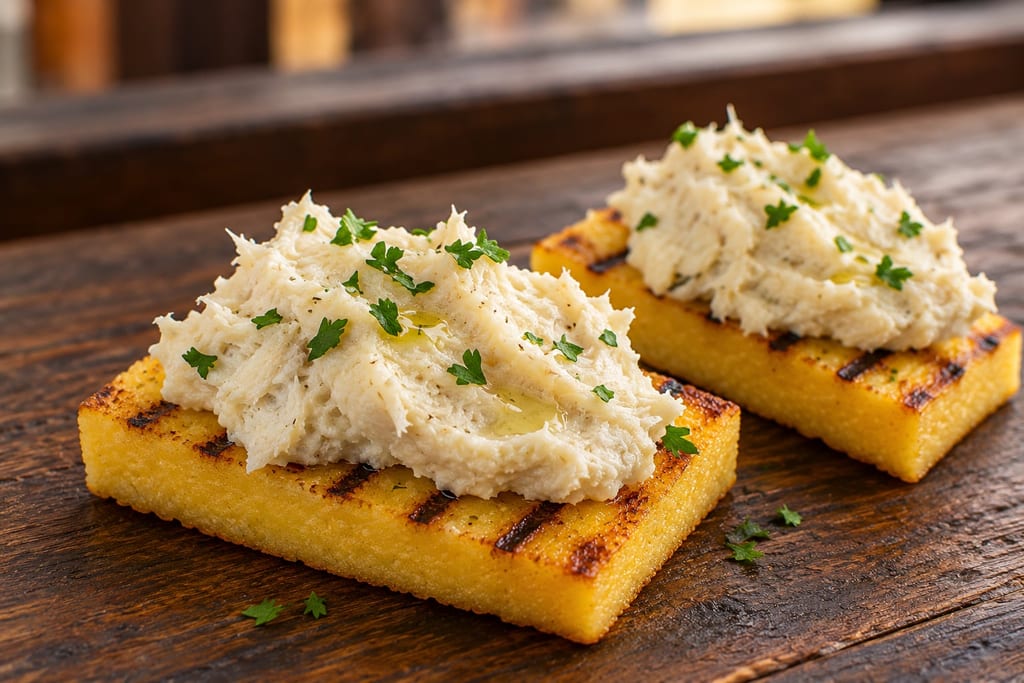
A Venetian cicchetto of cooked unsalted stockfish beaten with oil until it turns into a pale, aerated cream, spooned onto grilled polenta in the city's wine bars.
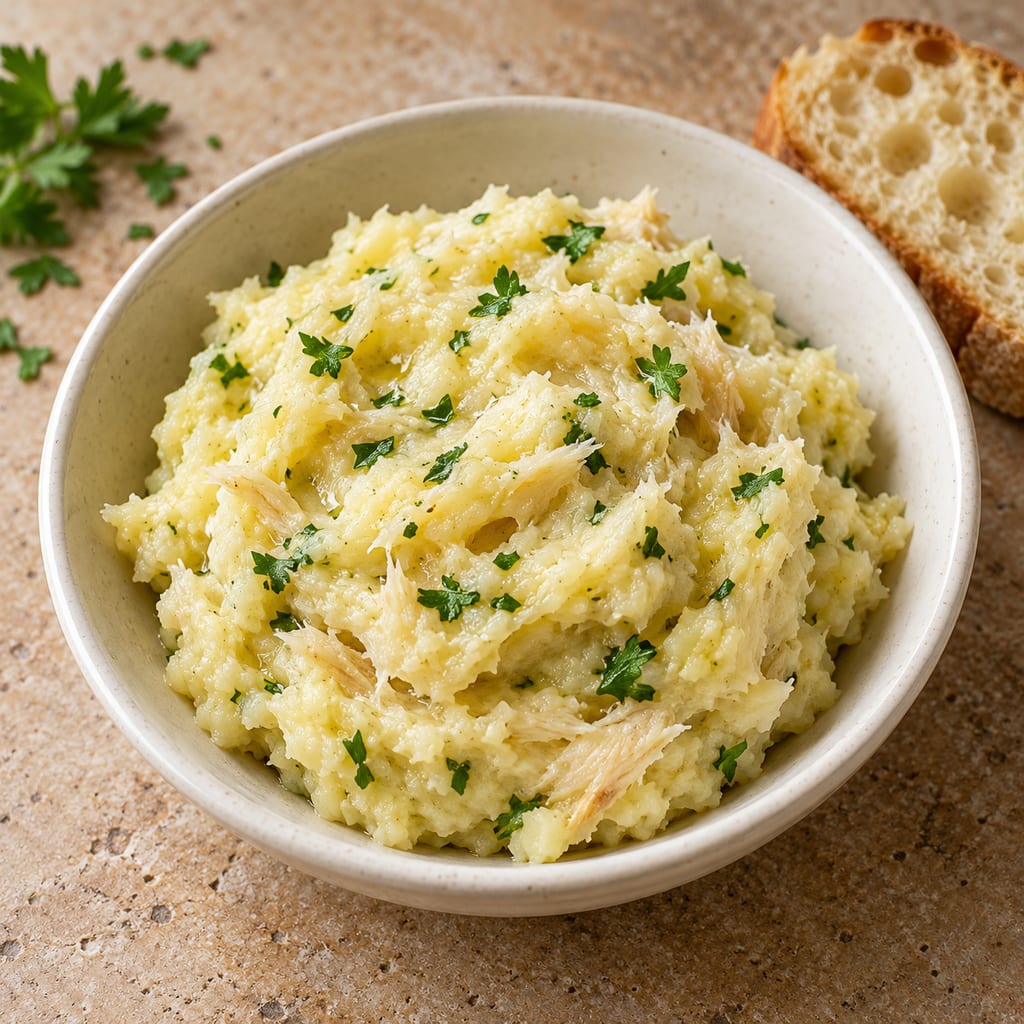
An Istrian festive spread of cooked stockfish beaten with olive oil and garlic until pale and cohesive, here bulked out with hand-mashed floury potato.
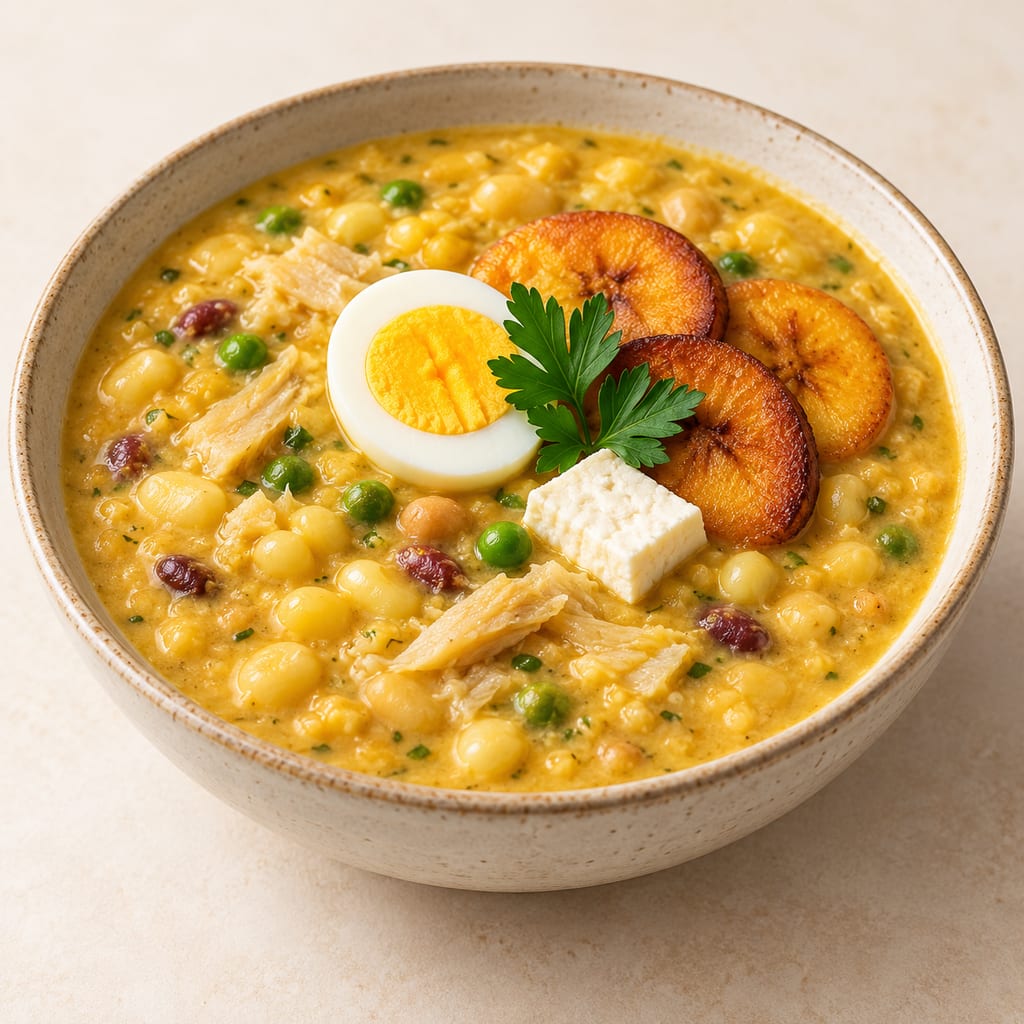
Ecuadorian Holy Week soup of tender grains and pulses, squash, milk and salted fish, thickened with peanut paste and served with contrasting garnishes.
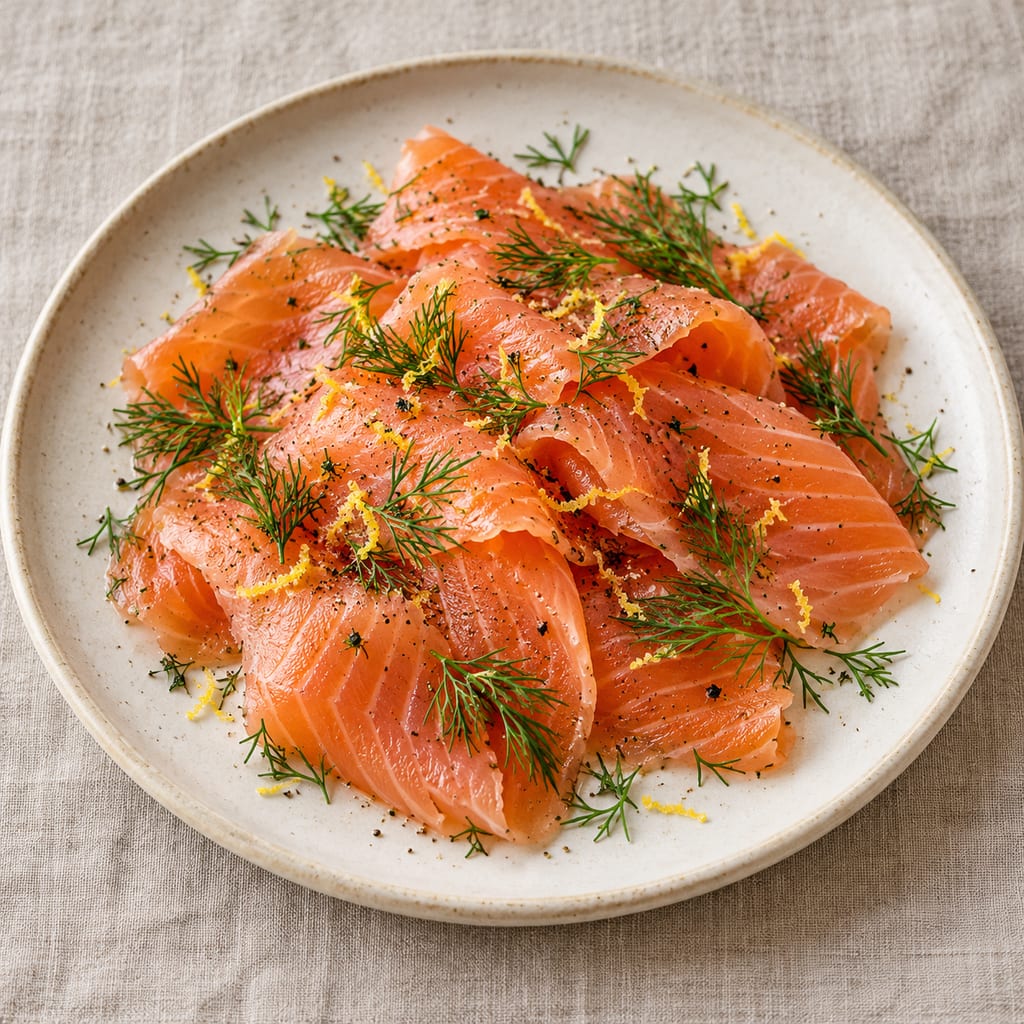
Salmon is cured with salt, sugar, pepper, dill and lemon zest under refrigeration.
No community contributions have been published for this entry yet.
Sign in to contribute. Published comments and photos are free to read.
Norwegian Seafood CouncilMethod · Safety
Norwegian Seafood Council — Rehydrating stockfishStockfish as fish preserved by drying without added salt, traditionally dried outdoors in northern Norway on wooden racks under cold, windy conditions, with moisture removal lowering water activity and helping prevent spoilage in storage.
Rehydration before ordinary cooking: 7 to 8 days in cold water with daily changes, up to 10 days for particularly dry fish, with the temperature kept below 4°C, after which the fish is cleaned, deboned and divided into portions.
Cited in: A modern stew built around a historic ingredient; Names and ingredients; Stockfish as the central ingredient; Recipe: stockfish, chickpea and olive stew; Method; Why the fish is cooked separately; Troubleshooting; Food safety
Seafood from NorwayMethod
Seafood from Norway — Ligurian-style stockfishA Ligurian-style stockfish recipe published by the Norwegian seafood industry which includes pine nuts alongside olives, garlic, anchovies, vegetables, wine and tomato, used here as culinary context rather than as a source for this formulation.
Cited in: The wider culinary background; Regional comparisons
La Cucina ItalianaMethod
La Cucina Italiana — Calabrian stockfish, Mammola styleA Calabrian stockfish preparation in the Mammola style, showing the established southern Italian combination of stockfish with tomato, onion, olives, potatoes, capers and hot pepper.
Cited in: A modern stew built around a historic ingredient; The wider culinary background; What chickpeas contribute; The effect of tomato acidity; Method; Controlling texture; Regional comparisons; Serving suggestions; Troubleshooting
Stocco & StoccoMethod
Stocco & Stocco — Stockfish with tomato and olives in Calabrian cookingA Calabrian stockfish salad in the Cittanova style containing tomatoes, olives, onions and herbs, which demonstrates the same pairing in an uncooked preparation.
Cited in: The wider culinary background; Olives and salt balance
Cucina CalabreseMethod
Cucina Calabrese — Stockfish with olives and potatoesA Calabrian stockfish preparation with olives and potatoes, further evidence of the long-established regional use of stockfish with olives and tomato.
Cited in: The role of olive oil and paprika; Olives and salt balance
Food and Agriculture Organization of the United NationsScience
FAO — Fish salting and preservationFish preservation by salting and drying and the role of reduced water activity, used here to mark the boundary between this dish's unsalted dried fish and the salt cod of the Portuguese bacalhau traditions.
Cited in: Regional comparisons
FoodSafety.govSafety
FoodSafety.gov — Safe cooking temperaturesThe published general safe cooking temperature for fish, 63°C.
Cited in: Food safety