Stockfish
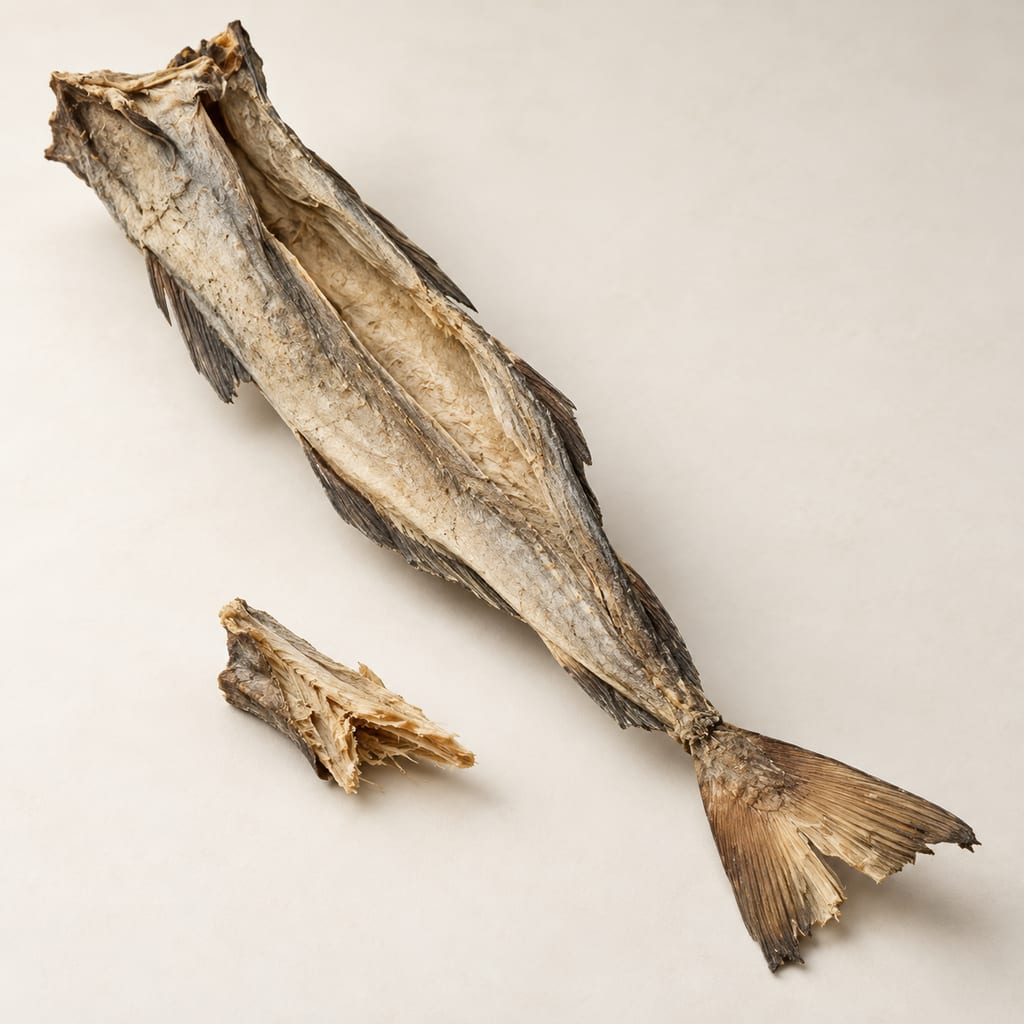
Cod hung on open racks in cold northern air until most of its water has gone, leaving a hard, light, unsalted fish that keeps and travels and must be soaked for days before cooking.
 FermenteaWhere food goes to change
Modern method
Poached stockfish with mustard butter and potatoes
Rehydrated air-dried Norwegian cod simmered until it flakes, served with boiled potatoes and carrots under a wholegrain-mustard butter whisked from the fish's own poaching liquid.
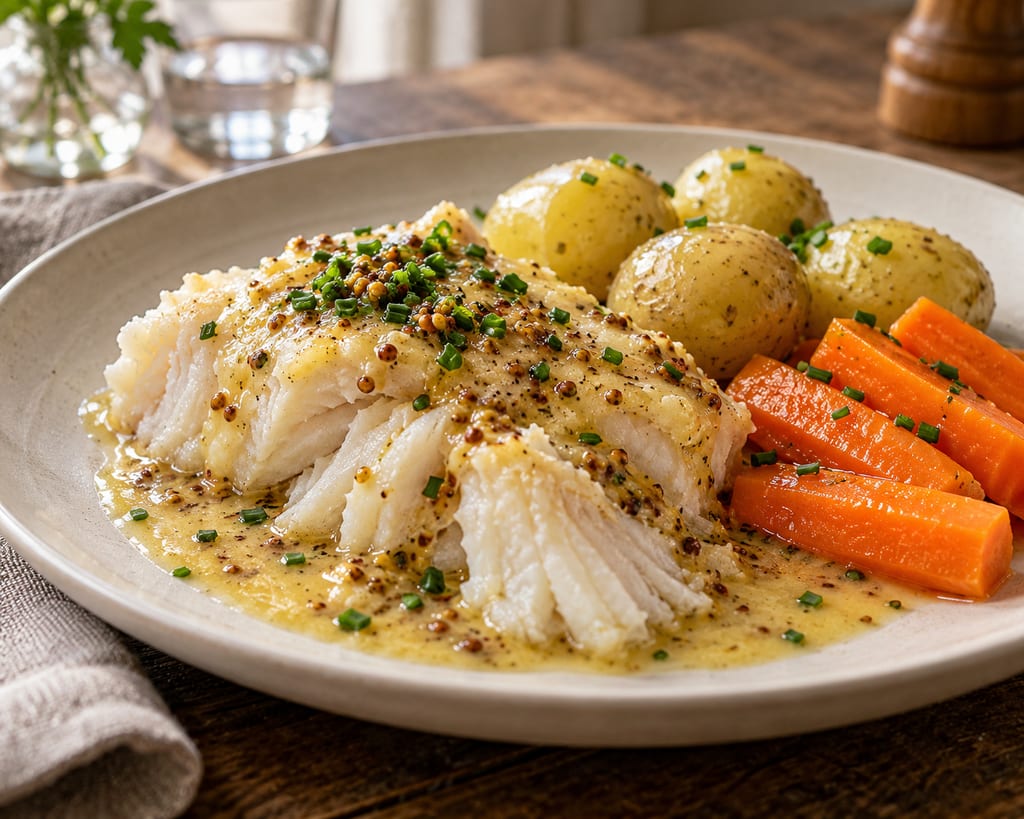
There is a striking transformation between a dried Norwegian stockfish and the pale, tender fish served at the table. The dry product can be rigid, deeply textured and strongly aromatic. Once rehydrated and gently cooked, it becomes recognizable as cod again, but not quite the same as fresh cod: the drying process has altered its muscle structure and contributed to a distinctive flavour.
Poached stockfish with potatoes, vegetables and butter is a straightforward way to appreciate those changes. It places the preserved fish at the centre of the meal rather than burying it beneath a complicated sauce.
This particular preparation adds wholegrain mustard, lemon and chives to a butter sauce. Those additions belong to a contemporary editorial recipe. They should not be described as a documented historical Norwegian dish.
The broader combination of stockfish, potatoes, vegetables and butter, however, fits established Norwegian cooking. Coastal recipes frequently allow the fish's concentrated flavour to stand beside comparatively mild accompaniments.
Stockfish describes a product and process, not a biological species. Atlantic cod is the best-known raw material, although other fish have historically been air-dried.
Skrei is not a separate species. It is the commercially and culturally important migratory cod that reaches the northern Norwegian coast during the spawning season.
Norwegian — Tørrfisk
Norwegian — Torsk — cod
Norwegian — Skrei — migrating Northeast Arctic cod
English — Stockfish, air-dried cod
Italian — Stoccafisso
German — Stockfisch
Scientific name — Gadus morhua — Atlantic cod
The production of stockfish depends upon an unusual alignment of fishing seasons and climate.
Along the coast of Lofoten, cod arrive during the colder months. Once caught, cleaned and prepared, they can be hung on outdoor drying structures known as hjeller. Cold air and persistent wind remove moisture without the need for salt.
Traditional preservation was a practical necessity in communities where fresh fish could not be transported quickly. Dried fish could be accumulated, traded and carried over long distances.
Norwegian stockfish was an important medieval export. Bergen became a major commercial centre, with significant participation by Hanseatic merchants, ecclesiastical landowners and northern fishing communities.
The export economy connected Norwegian fisheries to consumers elsewhere in northern and southern Europe. Fish could function as rent or tithe as well as merchandise.
An especially well-documented cultural connection dates to 1432, when the Venetian merchant Pietro Querini and other shipwreck survivors were sheltered on Røst in the Lofoten archipelago. Their accounts provide valuable evidence of northern fishing and stockfish production.
The episode is often used to explain how stockfish entered Venetian cuisine. It is an important historical encounter, but it would be incorrect to claim that Querini single-handedly invented the trade or that all subsequent Italian stockfish recipes originated with him. Broader trade relationships existed and continued to evolve.
In modern Norway, stockfish remains both an export commodity and a regional food. It can be grilled, baked, poached, shredded or incorporated into composed dishes.
Stockfish preservation is principally a process of controlled dehydration.
Fresh fish contains substantial water. Much of that water is available to microorganisms and chemical reactions responsible for spoilage.
Drying removes moisture and reduces water activity, the availability of water for microbial growth.
Successful stockfish production must remove sufficient moisture while preventing unacceptable bacterial spoilage and deterioration. Cold temperatures help slow unwanted processes during the early drying stages.
Natural enzymatic activity and microbial changes may contribute to the characteristic flavour and texture. This does not mean that stockfish should be treated as an intentionally fermented product in the same sense as sauerkraut or cultured milk.
Microbiological investigations have identified changing bacterial populations during stockfish production. One published investigation of dried blue ling found substantial changes in the microbial flora, including an increasing proportion of organisms identified as Lactobacillus plantarum. That observation relates to the particular fish and production conditions studied; it does not establish a universal stockfish fermentation process.
Drying also alters the physical properties of muscle proteins. The flesh contracts, its structure becomes denser, and its behaviour during subsequent hydration changes.
When dry stockfish is immersed in water, liquid gradually penetrates the tissue. The fish swells, softens and recovers enough flexibility to be cooked.
This process does not perfectly reverse drying. Some changes in texture are persistent, helping distinguish cooked stockfish from fresh cod.
A well-prepared piece should retain recognizable flakes while becoming tender enough to separate under a fork.
Start with commercially produced stockfish intended for human consumption.
Whole dried fish may require considerable preparation. Some suppliers sell already rehydrated, cleaned or portioned stockfish, which is much easier for occasional home cooks.
For dry stockfish, the Norwegian Seafood Council gives these general directions:
- Soak for 7–8 days in cold water, changing the water daily. - Particularly dry fish may require up to 10 days. - Keep the fish and soaking water below 4°C. - Remove skin and bones after hydration, then divide into portions.
These directions are not universal fixed soaking times for every cut of dried fish. Thickness, processing, initial dryness and the supplier's product specification all affect rehydration.
The important safety change occurs once the fish becomes wet. Dried stockfish's preservation advantage is being reversed, and the product must be treated as perishable fish.
A sufficiently hydrated piece should be flexible throughout rather than retaining a rigid, dry centre.
The outer surface can become soft before the centre is ready. Cutting a thick piece can reveal the difference.
Remove the backbone and visible pin bones carefully. Check by touch as well as sight. Bone fragments can remain concealed between flakes.
For this recipe, weigh the fish only after it has been rehydrated, cleaned, drained and deboned.
Serves 4 · Approximately 45–60 minutes after rehydration · Not kitchen-tested
1. Prepare the vegetables. Wash the potatoes and cook them in boiling water until tender. Add the sliced carrots for their final 8–10 minutes of cooking. Drain and keep warm.
The potatoes provide starch without introducing another assertive flavour. The carrots add sweetness and colour to an otherwise pale dish.
2. Poach the stockfish. Place 1,500 ml water in a saucepan large enough to accommodate the fish without crowding.
Bring it to a gentle simmer, then add the fish portions. Maintain quiet movement in the liquid rather than vigorous boiling.
Begin checking tenderness after 20 minutes. Continue cooking until the fish is cooked through and separates readily.
The 20-minute starting check belongs to this editorial recipe. It is not a universal minimum cooking period. Some properly rehydrated stockfish cooks much faster, while tougher pieces may need longer.
3. Reserve cooking liquid. Remove the cooked fish carefully and keep it warm. Measure 60 ml of hot poaching liquid into a small saucepan.
This liquid contains dissolved flavour compounds released by the fish and provides an aqueous base for the sauce.
4. Make the mustard butter. Remove the saucepan from direct heat and whisk in the cubed butter gradually.
Add the wholegrain mustard and lemon juice. If required, return the pan briefly to very gentle heat.
Do not boil the finished sauce vigorously.
5. Adjust the consistency. Add another 15–30 ml hot poaching liquid if the sauce is too thick. Season after tasting.
6. Serve. Divide the stockfish, potatoes and carrots between warm plates. Spoon the mustard butter over the fish and scatter with chives.
Butter contains fat, water and milk solids. When cold butter is whisked into a small quantity of warm liquid, it can produce a temporarily stable, glossy sauce.
This is different from simply pouring melted butter over food.
The goal is to disperse the fat through the water phase. Gradual additions and controlled heat help produce a smooth texture.
Wholegrain mustard contributes several things: acidity, pungency, visible texture and compounds that can help the mixture remain dispersed.
Lemon juice brightens the sauce, balancing the butter against the naturally savoury fish.
A sauce that becomes excessively hot can separate into liquid fat and water. If that happens, remove it from the heat and whisk in a little warm water or poaching liquid.
The chives are added last so their freshness remains noticeable.
The finished fish should be hot throughout, opaque and readily separable into flakes. It should not retain a hard centre.
The sauce should lightly coat the fish rather than collect as a pool of pure melted butter.
Potatoes should hold their shape but yield easily to a fork. Carrots should be tender without becoming watery or disintegrating.
The flavour should begin with fish, followed by butter, mild mustard heat and acidity.
If mustard overwhelms the stockfish, the dish has lost its intended balance. The purpose of the sauce is to support the preserved fish rather than conceal it.
The fish remains tough. Incomplete rehydration is one possible cause. Older or heavily dried pieces can also behave differently during cooking. Continue gentle cooking when appropriate, but do not assume prolonged boiling can reverse every rehydration defect.
The fish falls into small fragments. It may have been handled too aggressively, overcooked or broken during deboning. Lift portions with a wide spatula and avoid stirring them unnecessarily.
The sauce separates. Excess heat or adding the butter too quickly may be responsible. Try whisking in a small amount of hot liquid away from direct heat.
The sauce tastes flat. Acidity may be insufficient. The supplied formulation uses 15 ml lemon juice, but the correct final balance also depends on the mustard and butter.
The dish tastes too salty. Stockfish is not normally salted during drying. Excess salt may come from cooking water, prepared ingredients or confusion with salt-dried fish. Identify the actual product before soaking.
There is no reason to treat this mustard-butter dish as the only Norwegian approach.
Cooked stockfish is served with various combinations of potatoes, root vegetables, butter sauces, cream sauces and bacon.
Some preparations use almond potatoes, a valued Norwegian potato type. Others introduce peas, fennel, celeriac or sautéed vegetables.
Modern northern Norwegian restaurant dishes sometimes combine stockfish with browned butter or bacon, bringing roasted flavours and additional fat.
The Norwegian Seafood Council also publishes preparations where stockfish is pan-fried rather than poached. Pan-frying produces surface browning and a firmer exterior, whereas poaching emphasizes softness and delicate flavour.
For this particular recipe, the carrots could be served separately rather than cooked with the potatoes. The supplied amounts remain unchanged.
Fresh bread is useful for the remaining sauce, although it is not part of the measured recipe.
Use a food thermometer to check the thickest section. The published US safe-minimum-temperature guidance for fish is 63°C (145°F), or fish that is no longer translucent and separates easily with a fork.
Keep rehydrating fish below 4°C.
Reject fish with obvious signs of putrefaction, inappropriate discoloration, slime or suspicious deterioration. Dry stockfish can have a strong natural aroma, so smell alone should not be used to declare a product safe.
Do not sample raw or partially rehydrated fish to assess its readiness.
Chill cooked leftovers promptly and reheat them appropriately before serving again.
Stockfish exists because of an unusual alignment of season and climate. Cod reach the Lofoten coast in the cold months, and once caught and prepared they can hang on outdoor racks called hjeller, where cold air and persistent wind take the moisture out without any salt at all. That made dried fish something a household could accumulate, trade and carry over long distances in places where fresh fish could not travel. Norwegian stockfish became a significant medieval export: Bergen grew into a major commercial centre, with Hanseatic merchants, ecclesiastical landowners and northern fishing communities all drawing on the trade, and fish could serve as rent or tithe as readily as merchandise. The most vivid single episode is the shipwreck of 1432, when the Venetian merchant Pietro Querini and other survivors were sheltered on Røst and left accounts of northern fishing and drying. That encounter is often used to explain how stockfish entered Venetian cooking, and it is real evidence of contact, but it would be wrong to say Querini invented the trade or that every later Italian stockfish dish descends from him; broader trading relationships existed before and kept changing after. What belongs to this page is narrower. Modern Norway eats stockfish grilled, baked, poached, shredded and built into composed dishes, commonly alongside potatoes, root vegetables and butter or cream sauces, and that combination is what the page rests on. The wholegrain mustard, lemon and chives are the collection's own, added to a documented pairing rather than recovered from one.
Scaling: source batch only
Soaking deliberately reverses the drying that made the fish stable, so from the moment it is wet it has to be handled as perishable raw seafood, for a week or more, not as a dry store cupboard item.
Hazard sourceThe outer surface softens before the middle does, so a thick piece can feel ready while its centre is still dry and rigid; prolonged boiling does not reliably correct an incomplete soak.
Hazard sourceThe backbone and pin bones are taken out after hydration rather than before, and fragments can stay concealed in the flesh where they are not visible.
Hazard sourceParasites are a recognised hazard in fish generally, and nothing in this recipe's soaking or simmering schedule has been assessed as a control for them.
Hazard sourceKeep the fish and its soaking water refrigerated for the whole rehydration period and change the water daily
Control sourceCheck the thickest section with a food thermometer rather than judging by appearance alone
Control sourceSkin, bone and inspect the fish after hydration, by touch as well as by sight
Control sourceChill cooked leftovers promptly and reheat them properly before serving again
Control sourceDry stockfish has a strong natural aroma of its own, so smell cannot be used to decide that a soaked piece is still good.
Do not taste raw or part-soaked fish to judge how far the rehydration has got.
The 7-8 day soak and the below-4°C limit belong to unsalted tørrfisk; salt-dried klippfisk is a different product that has to be desalted, and these figures do not transfer to it.
The mustard, lemon and chives are this collection's own addition. The dish should not be described as a documented historical Norwegian preparation.
This formulation has not been kitchen-tested, and the 20-minute tenderness check is where to start looking rather than a safe cooking time.
Reject fish showing putrefaction, unexpected discoloration or slime, and do not try to rescue it by longer cooking.
A country-level association for the ingredient and the broader way it is cooked: stockfish with potatoes, root vegetables and butter sauces is established Norwegian practice. The mustard-butter formulation on this page is editorial and is not attributed to Norway.
A region-level association for where the fish comes from, not for this dish. Cod arrive off Lofoten in the colder months and are hung on outdoor racks called hjeller. The 1432 sheltering of Pietro Querini and other shipwreck survivors on Røst is an attestation of the production and trade, and no locality is claimed for any recipe.
Cod hung on open racks in cold northern air until most of its water has gone, leaving a hard, light, unsalted fish that keeps and travels and must be soaked for days before cooking.
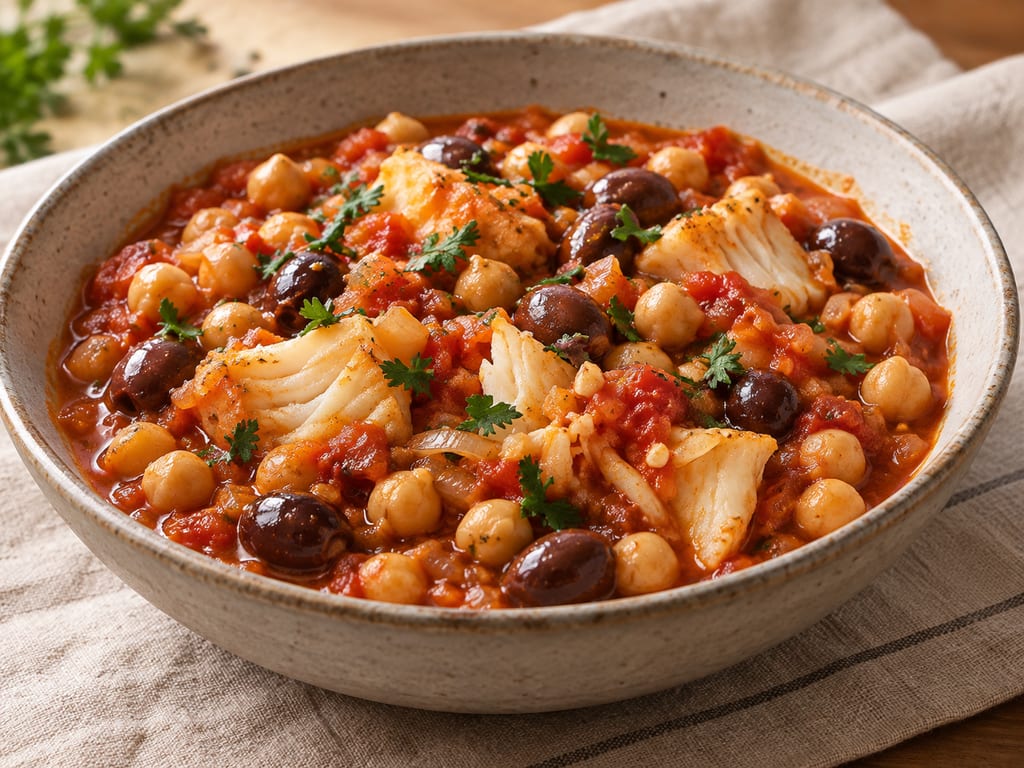
A contemporary Mediterranean-style stew in which poached stockfish flakes are folded into a paprika-spiced tomato sauce with cooked chickpeas and olives.
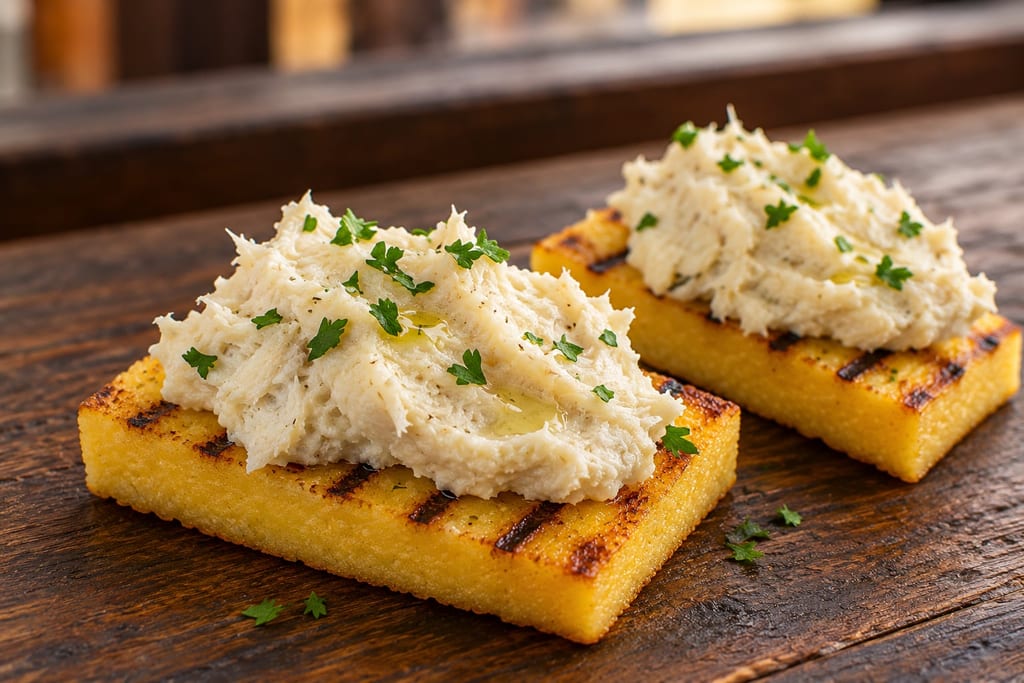
A Venetian cicchetto of cooked unsalted stockfish beaten with oil until it turns into a pale, aerated cream, spooned onto grilled polenta in the city's wine bars.

Jamaica's best-known dish: salt-cured cod desalted and flaked, then folded through ackee arils with onion, tomato, sweet pepper, thyme and Scotch bonnet.
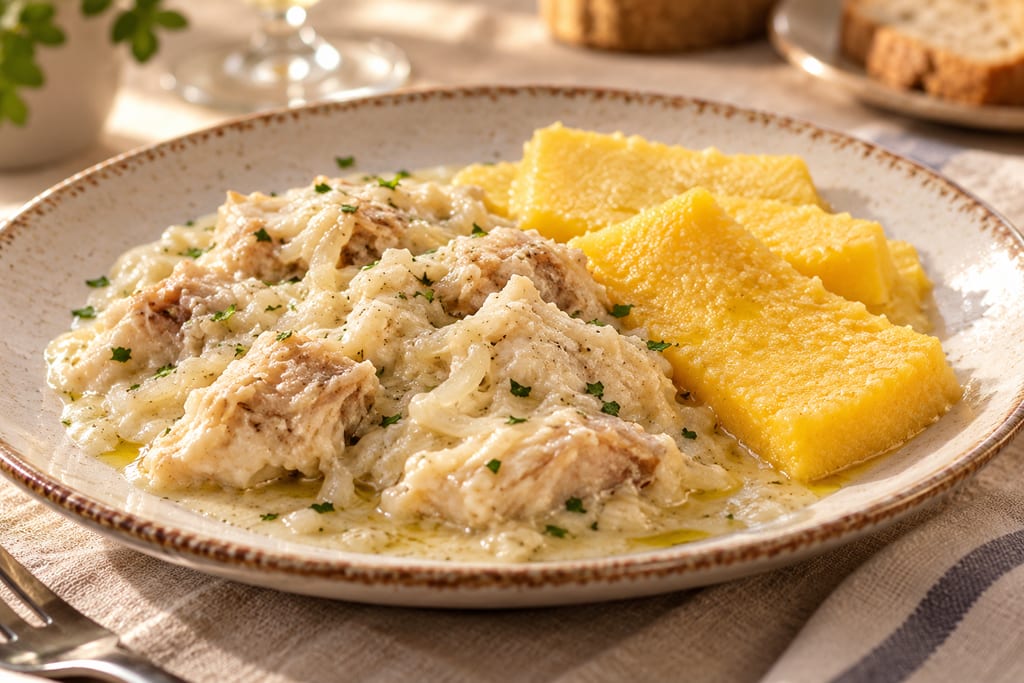
Stockfish from Vicenza, left barely bubbling for hours with onion, preserved anchovy, olive oil, milk and a little cheese until it is tender under a dense pale sauce, and eaten with polenta.
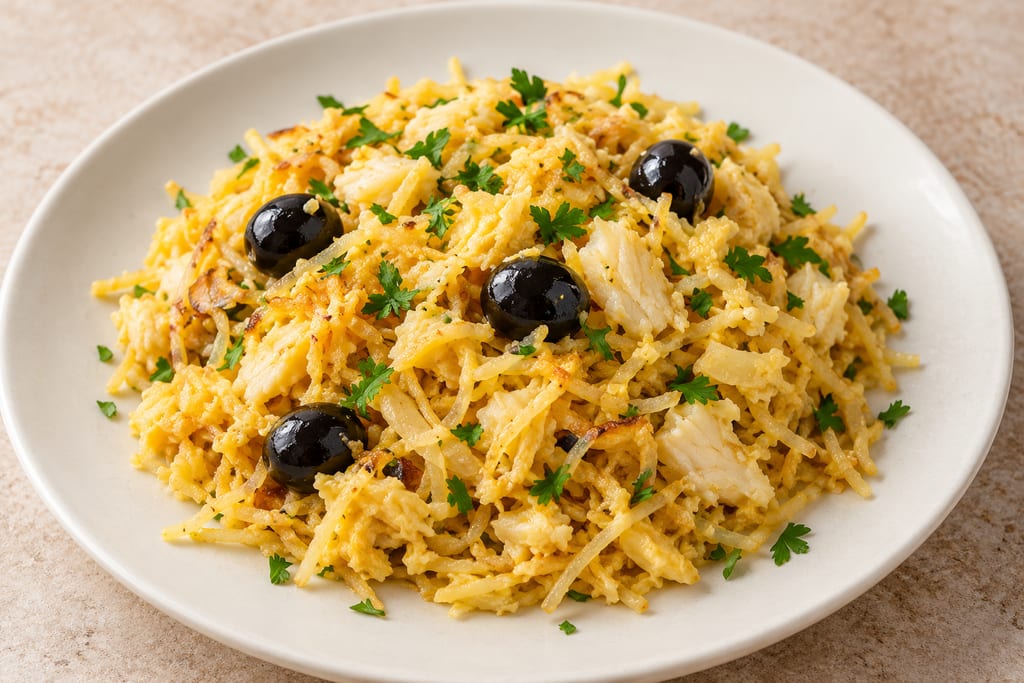
Lisbon's salt cod dish: shredded desalted cod and fine fried potato matchsticks folded through softened onion and bound with beaten egg, finished with parsley and black olives.
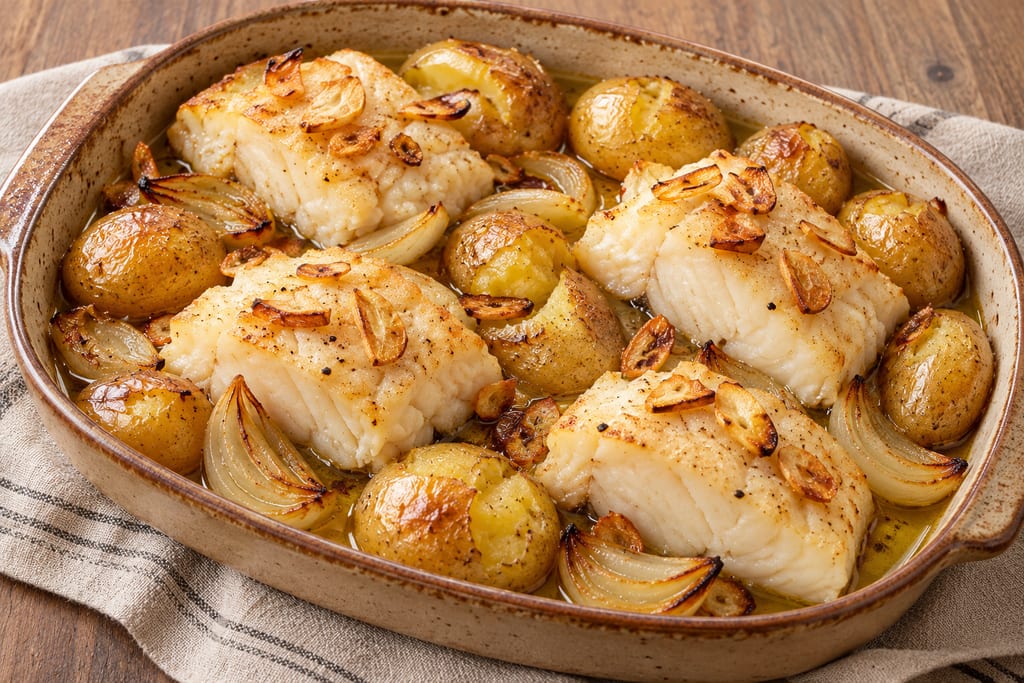
Thick pieces of desalted salt cod roasted in olive oil with garlic and onion, served with small potatoes cooked and then crushed until their skins split.
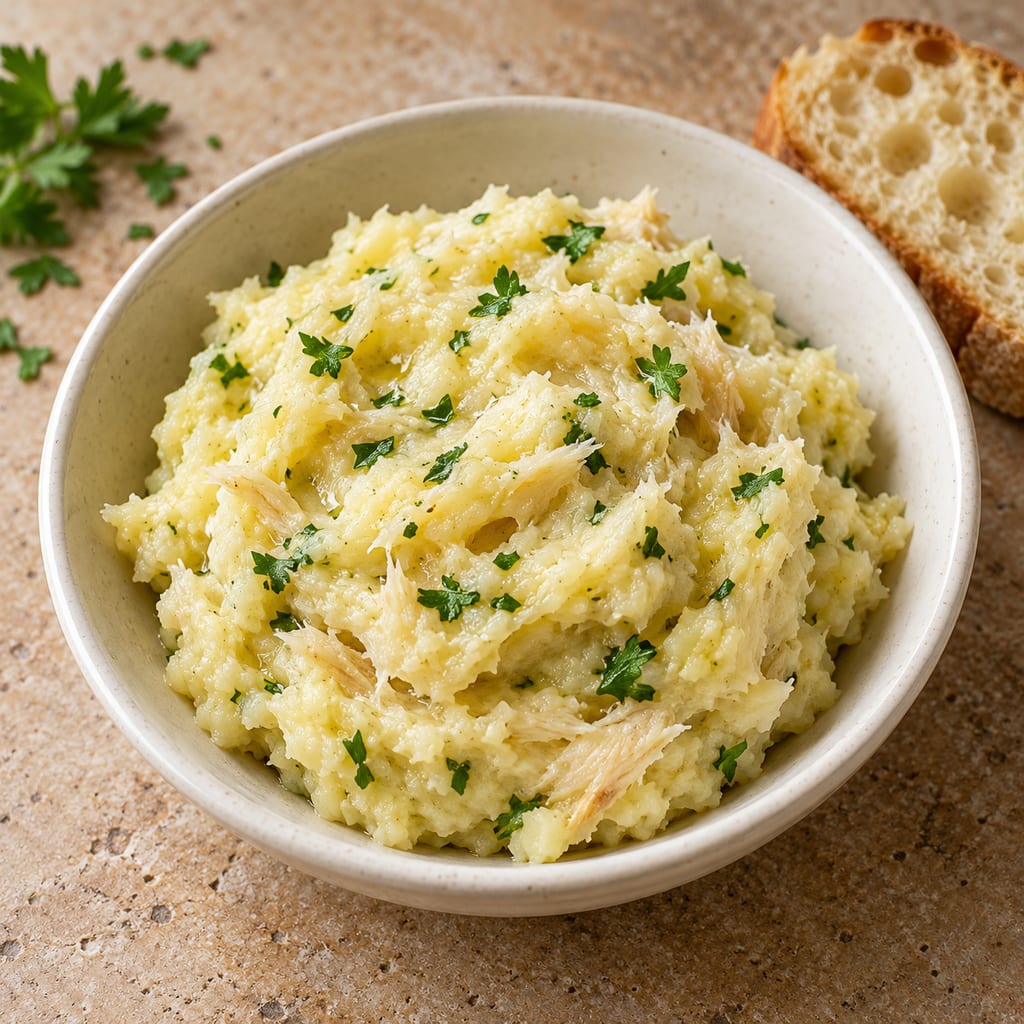
An Istrian festive spread of cooked stockfish beaten with olive oil and garlic until pale and cohesive, here bulked out with hand-mashed floury potato.
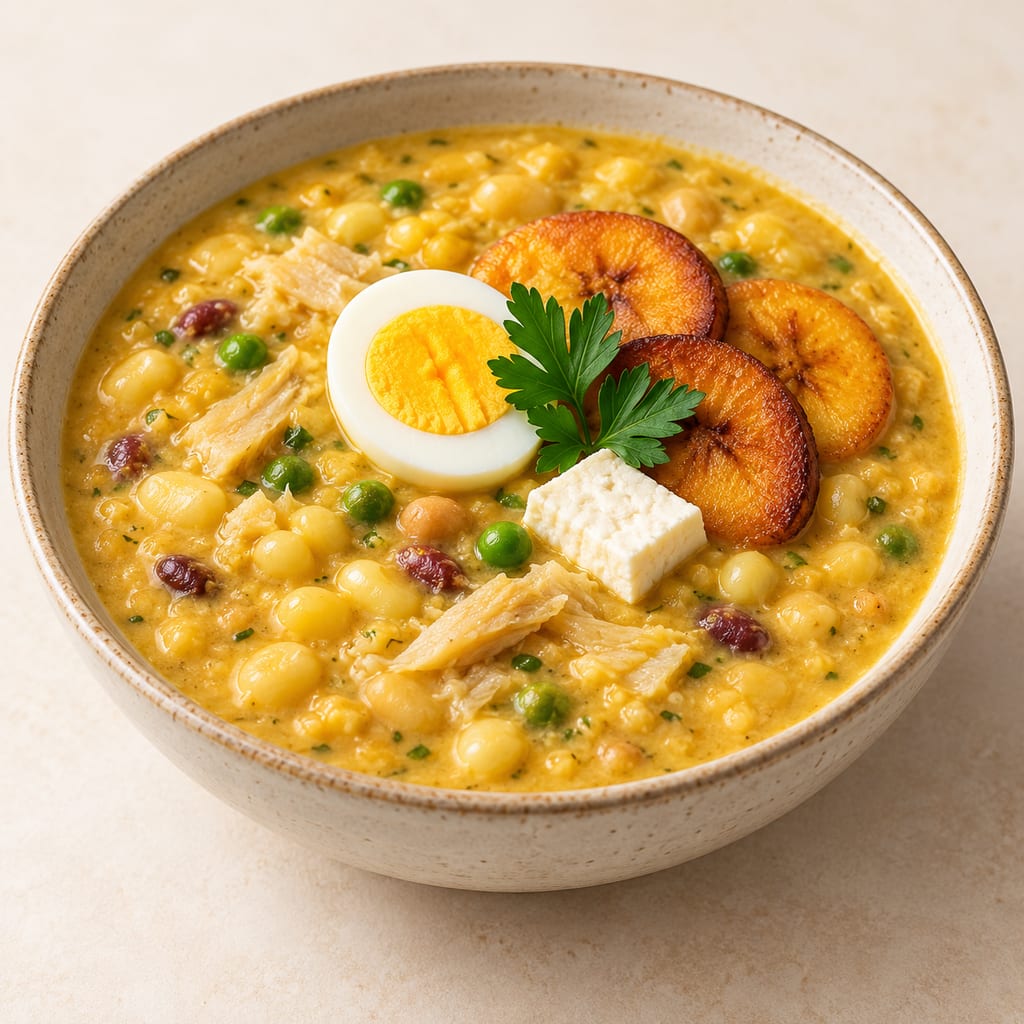
Ecuadorian Holy Week soup of tender grains and pulses, squash, milk and salted fish, thickened with peanut paste and served with contrasting garnishes.
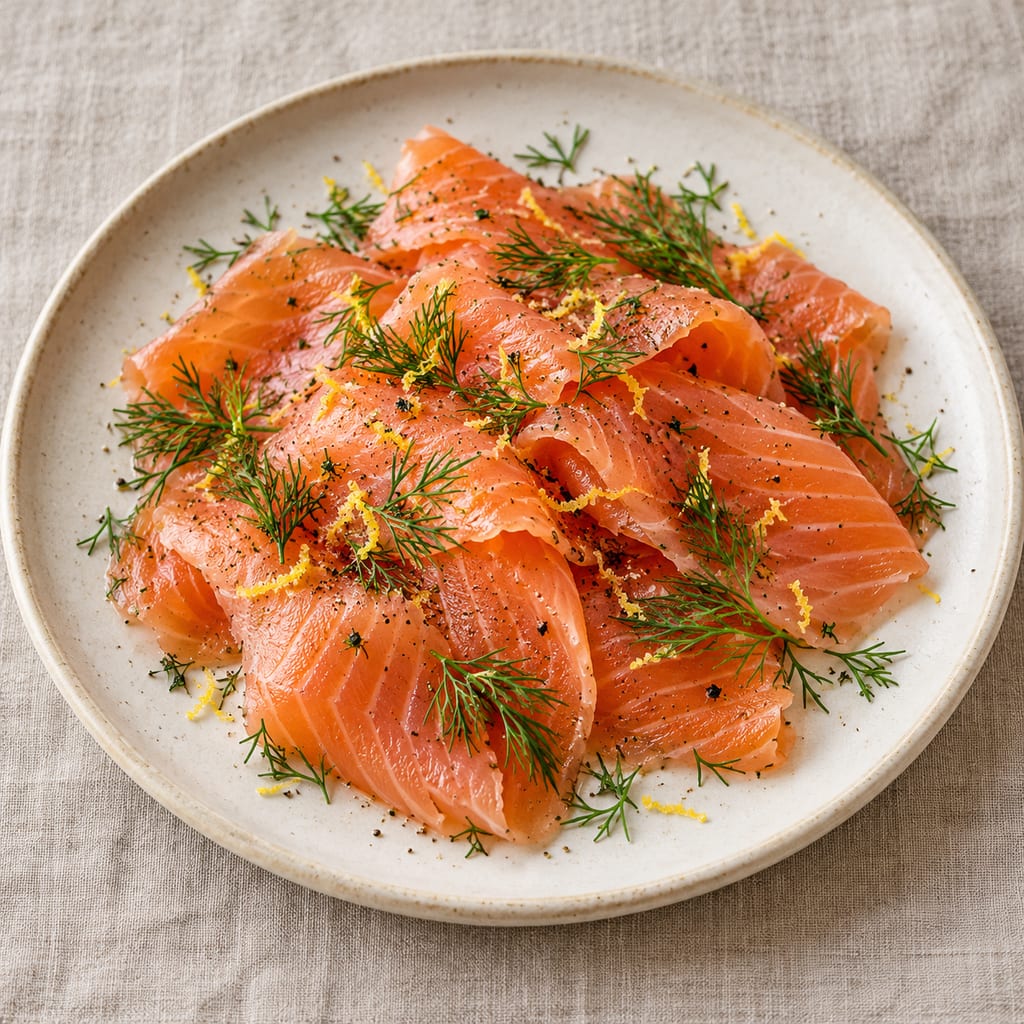
Salmon is cured with salt, sugar, pepper, dill and lemon zest under refrigeration.
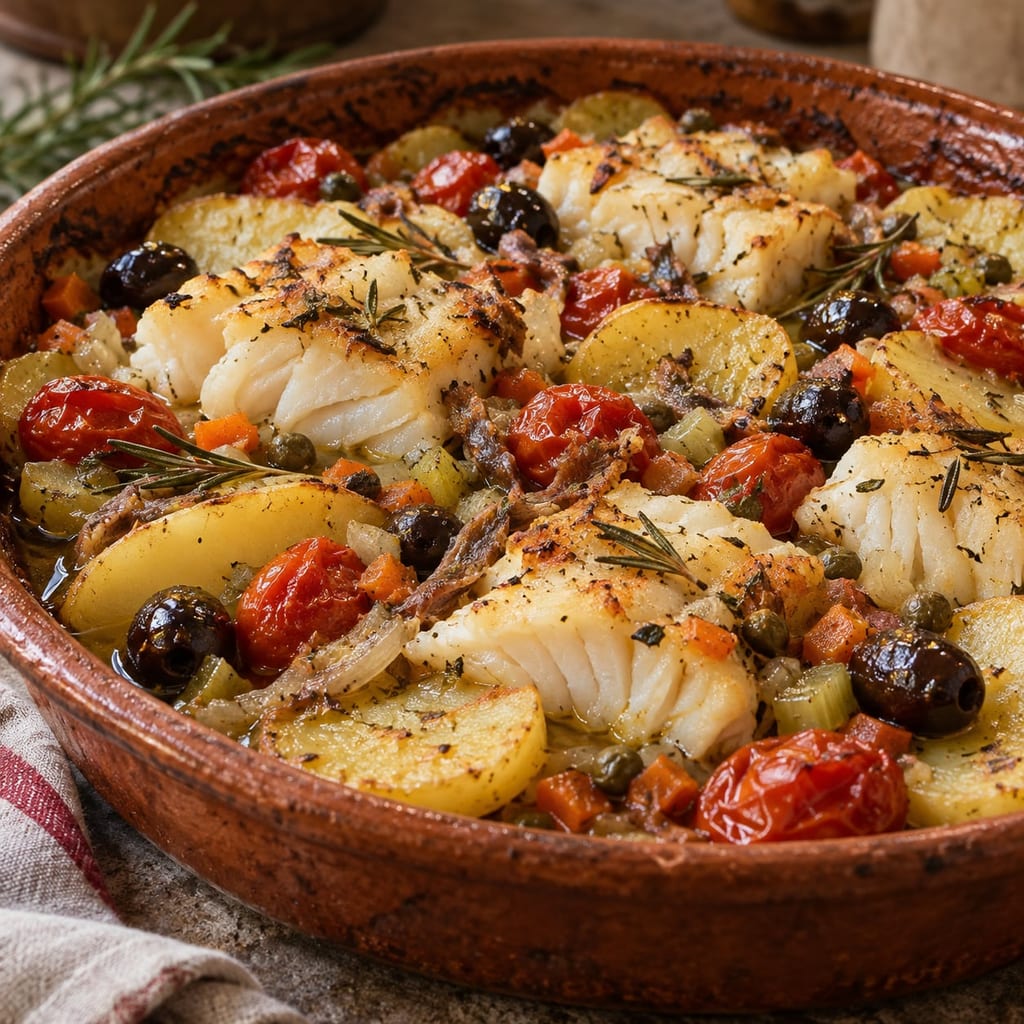
Ancona's baked stockfish: thick pieces layered with potatoes, tomatoes, olives, capers and anchovy under olive oil and white wine, cooked slowly in a covered dish.
No community contributions have been published for this entry yet.
Sign in to contribute. Published comments and photos are free to read.
Norwegian Seafood CouncilMethod · Safety
Norwegian Seafood Council — Rehydrating stockfishGeneral directions for rehydrating dry unsalted stockfish: soak for 7 to 8 days in cold water, changing the water daily, with particularly dry fish needing up to 10 days.
Keep the fish and its soaking water below 4°C, and remove skin and bones after hydration before dividing the fish into portions.
These are general directions rather than a fixed soaking time for every cut: thickness, processing, initial dryness and the supplier's product specification all affect rehydration.
Cited in: A northern ingredient in a modern kitchen; What drying does to fish; Preparing the stockfish; Recipe: stockfish with wholegrain mustard butter; Method; Recognizing good results; Common problems
Norwegian Seafood CouncilMethod
Norwegian Seafood Council — Stockfish with salt-baked almond potatoesA published stockfish dish with salt-baked almond potatoes, which establishes the pairing of cooked stockfish with a valued Norwegian potato type rather than this page's mustard butter.
Preparations in which stockfish is pan-fried rather than poached, giving surface browning and a firmer exterior.
Cited in: Method; Why the sauce works; Variations and serving traditions
Visit NorwayHistory · Method
Visit Norway — Traditional stockfishCod arriving off Lofoten in the colder months and being hung on outdoor drying structures known as hjeller, where cold air and persistent wind remove moisture without salt.
Stockfish in present-day Norway as both an export commodity and a regional food, grilled, baked, poached, shredded or built into composed dishes, and served with potatoes, root vegetables, butter sauces, cream sauces and bacon.
Cited in: A northern ingredient in a modern kitchen; Names and identity; From winter fisheries to international trade; Variations and serving traditions
Cambridge University PressHistory
Cambridge University Press — Stockfish distribution in medieval ScandinaviaStockfish distribution in medieval Scandinavia and how dried fish reached consumers: Bergen as a major commercial centre, with Hanseatic merchants, ecclesiastical landowners and northern fishing communities all involved, and fish functioning as rent or tithe as well as merchandise.
Cited in: From winter fisheries to international trade
European Food Safety AuthoritySafety
EFSA — Fish parasite risk assessment, 2024A 2024 assessment of parasite risk in fishery products, used here for the general hazard of parasites in fish rather than for any claim that a particular drying or soaking schedule controls them.
Cited in: Food safety
PubMedScience
PubMed — The microbiology of stockfish during the drying processA published investigation of the microbiology of fish during the drying process: in dried blue ling the microbial flora changed substantially, including a rising proportion of organisms identified as Lactobacillus plantarum. That observation belongs to the fish and production conditions studied and does not establish a universal stockfish fermentation.
Cited in: What drying does to fish
FoodSafety.govSafety
FoodSafety.gov — Safe minimum internal temperaturesThe published safe minimum internal temperature for fish, 63°C (145°F), or fish that is no longer translucent and separates easily with a fork.
Cited in: Food safety