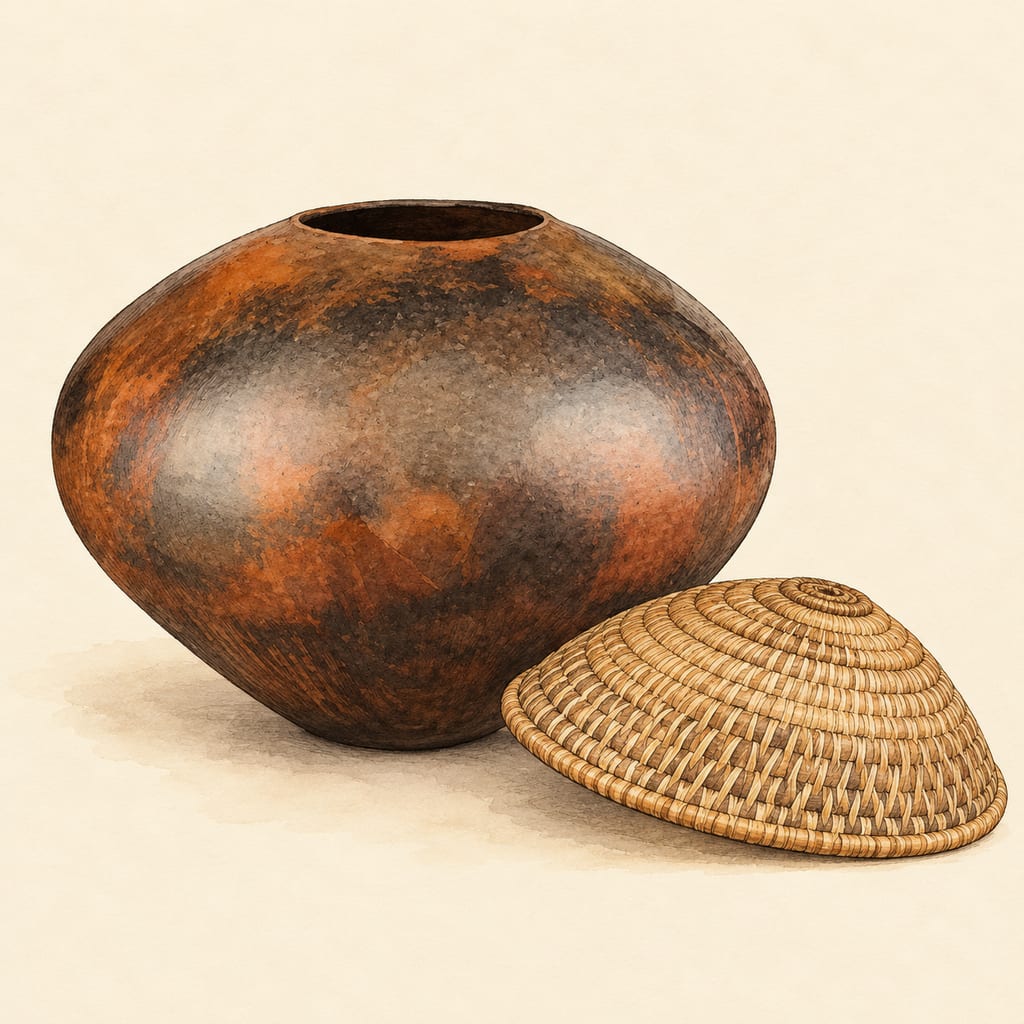
Imbiza
A Zulu earthenware brewing vessel used for grain beer; a woven basket cover keeps out dirt and insects. Imbiza is a distinct pot class, not the serving ukhamba or transport uphiso.
 FermenteaWhere food goes to change
Traditional method
Utshwala besiZulu · Utywala
South Africa's opaque sorghum beer, soured by lactic acid bacteria before its mash is cooked and fresh malt stirred in, leaving a cloudy, creamy, cereal-thick drink that keeps only a day or two.
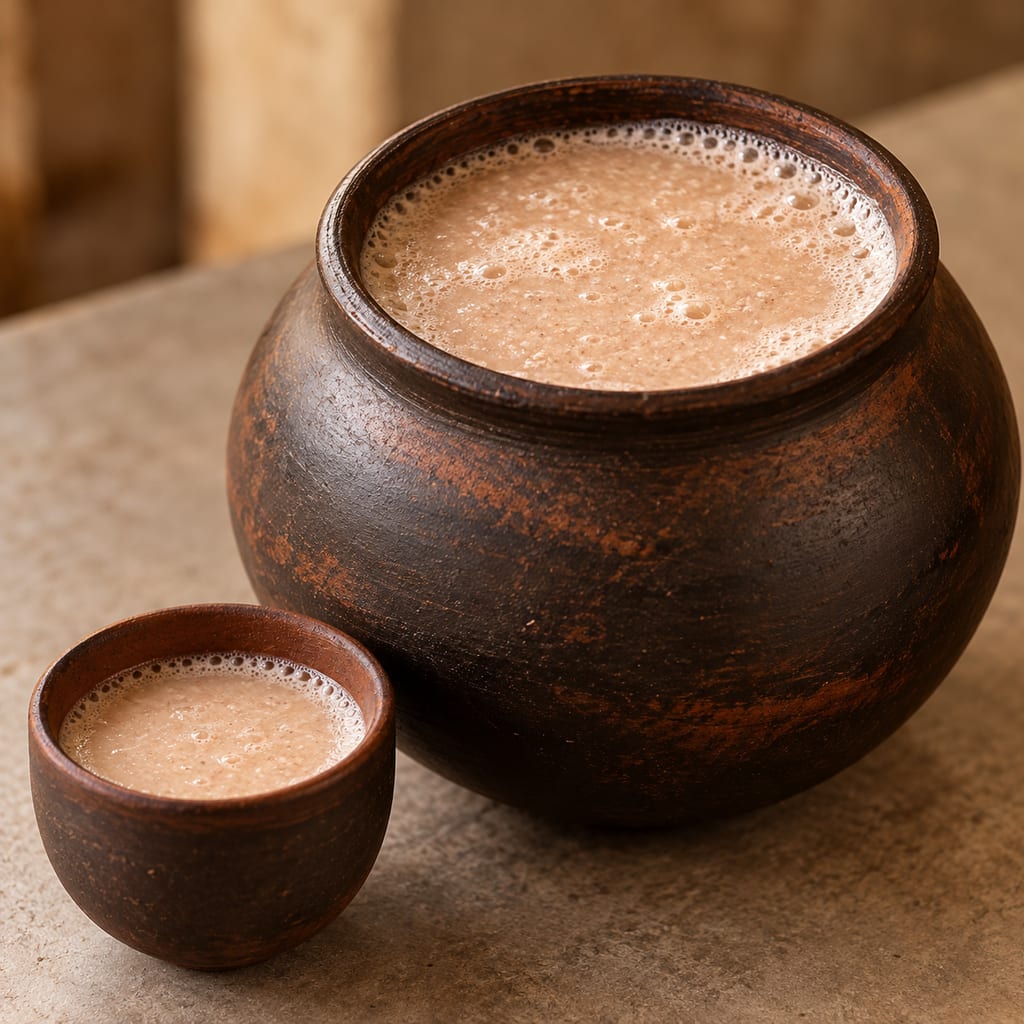
Umqombothi is a cloudy, traditionally fermented cereal beer strongly associated with isiXhosa- and isiZulu-speaking communities of South Africa.
It is a substantial drink, unlike a clear, filtered lager. Suspended grain particles, fermentation organisms and colloidal material give it body, opacity and a characteristic creamy appearance.
Its flavour combines cereal sweetness, lactic acidity, yeast fermentation notes and varying amounts of alcohol.
Traditional sorghum is the foundational brewing grain, while many contemporary preparations also incorporate maize meal. Commercial sorghum malt is now widely used by household brewers.
The name umqombothi appears in both isiXhosa and isiZulu contexts. In isiZulu, utshwala besiZulu identifies traditional Zulu beer more generally. Related descriptions may use utywala in isiXhosa.
The languages are written in the Latin alphabet.
The main botanical ingredients are Sorghum bicolor for sorghum and Zea mays for maize.
Umqombothi belongs to a larger family of opaque African cereal beers, but it should not be confused with every regional drink made from sorghum. Ghanaian pito, Burkinabè dolo and Zimbabwean doro share certain principles without being identical beverages.
Sorghum originated in Africa and has a long agricultural history on the continent. Its domestication and development as a cereal crop substantially predate European contact.
Traditional sorghum beer production developed within this wider agricultural environment.
However, the precise date at which the modern name umqombothi entered use cannot be securely established.
The historical distinction between sorghum beer and maize-containing beer is significant.
Maize originated in the Americas. Its introduction to Africa occurred after transatlantic contact, with documentary evidence of maize cultivation on parts of the African coast during the sixteenth and seventeenth centuries.
Consequently, a recipe built around maize meal cannot be treated as an unchanged prehistoric African formula.
Maize became incorporated into older brewing traditions as cultivation and food preferences changed.
In South Africa, traditional beer production was closely connected with domestic work and frequently undertaken by women.
Beer could be consumed as everyday food, offered to visitors, distributed during social gatherings or used in ceremonies.
In some communities, beer was prepared for occasions involving ancestors. The offering of a portion of the brew before communal drinking could signify respect and continuity with family or spiritual traditions.
The vessels used for brewing and serving were themselves culturally significant.
Large containers were used for preparation and storage, while smaller vessels served the finished beer.
The isiZulu ukhamba is a particularly recognisable black earthenware serving pot, frequently decorated with raised or incised patterns. Other named vessels serve distinct production, transport and ritual purposes.
Contemporary beer may be prepared in plastic buckets or metal cooking vessels, while traditional pottery remains important to ceremonial presentation and material heritage.
Unlike marula fruit, cereal grains contain most of their carbohydrate as starch rather than readily fermentable sugar.
Yeast cannot efficiently convert intact starch directly into ethanol.
The starch must first be broken into smaller carbohydrates.
Malting achieves this by allowing suitable cereal grains to germinate.
During germination, the growing seed activates or synthesises enzymes that mobilise its stored energy reserves.
The most relevant enzymes include alpha-amylase and beta-amylase.
Alpha-amylase attacks internal bonds within starch chains, producing shorter dextrins.
Beta-amylase releases maltose from accessible chain ends.
Other enzymatic activities help alter proteins and the physical structure of the grain.
Once malted sorghum is incorporated into a hydrated mash, the enzymes can act on accessible gelatinised starch.
Gelatinisation is important because intact starch granules resist enzyme attack. Heating starch in water causes granules to swell and lose their ordered structure, making them easier to hydrolyse.
The challenge is that heating also affects the enzymes.
Excessive heat can denature them, while insufficient starch cooking can limit sugar release.
Umqombothi brewing resolves this by combining distinct souring, cooking and malt-addition stages.
Umqombothi is commonly described as having two fermentation stages, though household methods vary.
The first stage promotes souring. Lactic acid bacteria consume accessible carbohydrate and produce organic acids.
The second stage promotes stronger alcoholic fermentation as yeast metabolises sugars liberated from cereal starch.
These stages are not completely separate microbial worlds. Both bacteria and yeasts can be present throughout production.
The process nevertheless changes their relative activity and the available substrates.
Souring contributes acidity and helps create the flavour expected of the finished beer.
Cooking can reduce the microbial population from the first stage while gelatinising starch.
Later malt addition introduces additional enzymatic activity, enabling the production of sugars needed during final fermentation.
Yeasts, particularly Saccharomyces species, then generate ethanol and carbon dioxide.
Lactic acid bacteria remain important to flavour and acidity.
In addition to ethanol and lactic acid, fermentation can produce acetic acid, carbon dioxide, glycerol and numerous volatile compounds.
The finished beer is biologically active unless deliberately stabilised.
This is why traditional umqombothi is generally consumed fresh rather than stored like a pasteurised commercial beer.
A published South African brewing experiment provides a useful precisely measured formulation.
This is a laboratory study of a traditional-style product, not a universal household recipe.
The ingredients were:
- 1,000 g maize meal - 500 g malted sorghum for the initial mixture - A further 500 g malted sorghum after cooking - 7 litres water
The researchers used a 10-litre preparation vessel.
The maize meal and first portion of sorghum malt were mixed with water.
The mixture was covered and incubated at 25°C for 24 hours.
During this period, accessible carbohydrates supported microbial activity and acid development.
The initial preparation was then heated to produce a cereal porridge, commonly called isdudu.
An earlier experimental procedure describes 30 minutes at 45°C for this stage. A subsequent controlled comparison specified 30 minutes at 95°C for the customary brew and investigated longer cooking under optimised conditions.
These figures should not be merged into a single procedure. The studies report different experimental treatments.
The later controlled study provides a clearer high-temperature cooking schedule, with 95°C used for the customary preparation.
The cooked porridge was cooled to 25°C.
The second 500 g portion of malted sorghum was added and mixed.
Adding fresh malt after cooking matters because enzymes destroyed during high-temperature treatment cannot subsequently hydrolyse starch.
The customary comparison fermented the mixture at 25°C for 24 hours.
An optimised experimental version used 95°C cooking for 1.1 hours, followed by fermentation at 29.3°C for 25.9 hours.
The optimised conditions were developed for measured process outcomes. They should not be presented as an independently established traditional brewing standard.
A 2024 experiment investigated umqombothi over 52 hours using three two-stage temperature combinations:
The finished products had measured pH values of 3.96, 4.12 and 4.34, respectively.
The observed lactic acid bacterial counts were approximately 5.18, 5.36 and 5.25 log CFU/mL, respectively.
All three treatments showed microbial growth and falling pH during fermentation.
Heating temporarily reduced detectable microbial populations at the sampled post-cooking stage.
The temperature treatment using 30°C for both fermentation stages received the highest consumer preference scores in that particular experiment.
These are useful measurements because they demonstrate that seemingly small process changes can produce measurable differences.
They are not legal safety thresholds or universal targets for traditional beer.
U1 — 30°C — 30°C
U2 — 30°C — 25°C
U3 — 25°C — 30°C
Ingredients differ between households.
Some brewers use sorghum malt with maize meal, while others use different combinations of malted and unmalted grains.
The proportions affect starch availability, residual sweetness, body, colour and fermentation behaviour.
The degree of grain separation also changes the product.
A more thoroughly strained beverage contains fewer suspended particles and may have a lighter mouthfeel.
Less extensive straining produces a thicker, more food-like drink.
The use of particular vessels influences temperature control, agitation and microbial carryover.
Some households deliberately use material from a previous brew to stimulate fermentation. Others rely primarily on microorganisms already associated with grain and equipment.
The degree of sourness and preferred fermentation time also vary.
Commercial opaque beers may draw on traditional methods but use industrial controls and packaging. They should be described separately from home-brewed umqombothi.
Umqombothi is commonly shared at gatherings rather than treated solely as an individual drink.
Traditional presentation in an ukhamba allows the vessel to become part of the social occasion.
A serving may be passed between participants, with local conventions governing who receives it and how it is offered.
The beer appears at weddings, funerals, family ceremonies and gatherings involving ancestral observances.
It can also accompany meals.
The cereal content means the beverage contributes more suspended solids and nutritional material than a filtered clear beer.
Its nutritional composition varies with grain choice, fermentation and straining.
It should not be assumed to provide a fixed protein content or to be a complete nutritional substitute for a meal.
Fresh umqombothi is typically opaque and visibly cereal-based.
A successful fermentation should develop acidity and recognisable fermented-grain aromas.
Carbon dioxide generation may produce bubbles or foam, while suspended particles can settle.
Some separation is expected because the beverage contains solids that do not remain indefinitely in suspension.
The timing of preparation matters. Fresh beer can become progressively more acidic, drier or more alcoholic as fermentation continues.
Unexpected putrid smells, visible mould growth, signs of contamination or unusual coloration inconsistent with the intended ingredients are reasons to reject a batch.
A sour smell alone does not demonstrate safety.
Nor does vigorous bubbling guarantee that the desired organisms dominate.
Two major safety concerns are contamination during grain preparation and uncontrolled microbial activity during storage.
Grains can carry undesirable bacteria, moulds or mycotoxins before brewing.
Malting requires moisture, so poor grain handling can encourage fungal growth.
Discard visibly mouldy grain. Brewing and fermentation must not be assumed to destroy pre-existing mycotoxins.
Cooking reduces vegetative microbial populations, but spores and some heat-stable compounds may survive.
Later additions of malt and exposure during straining can reintroduce microorganisms.
For this reason, a short shelf life is characteristic of the traditional product.
The 2024 study describes customary consumption within one or two days after production, reflecting continuing fermentation and carbon dioxide generation.
That observation is not a guarantee that every household batch remains safe for two days at ambient temperature.
Refrigeration can slow further fermentation, but does not repair contamination introduced earlier.
Sealing actively fermenting umqombothi in an unsuitable bottle can cause dangerous pressure accumulation.
For controlled preparation, clean food-contact equipment, sound grain, appropriate starter cultures, measured acidity and prompt refrigerated storage are preferable to relying entirely on appearance.
Maize became incorporated into older brewing traditions as cultivation and food preferences changed, which is why the distinction between sorghum beer and maize-containing beer matters. In South Africa traditional beer production was closely connected with domestic work and frequently undertaken by women, and the beer could be everyday food, hospitality for visitors, something distributed at social gatherings, or part of a ceremony: in some communities it was prepared for occasions involving ancestors, where offering a portion before communal drinking signified respect and continuity with family or spiritual traditions. The vessels mattered in their own right. Large containers served for preparation and storage and smaller ones for the finished beer, and the isiZulu ukhamba, a black earthenware serving pot often decorated with raised or incised patterns, is the most recognisable; other named vessels had distinct production, transport and ritual purposes. Contemporary brewing may use plastic buckets or metal pots while the pottery remains important to ceremonial presentation and material heritage.
Yield 7 L · Scaling: source batch only
Grains can carry undesirable bacteria, moulds or mycotoxins before brewing, and malting requires moisture so poor grain handling encourages fungal growth. Brewing and fermentation must not be assumed to destroy pre-existing mycotoxins.
Hazard sourceCooking reduces vegetative populations but spores and some heat-stable compounds may survive, and the later malt addition and the straining both reintroduce microorganisms.
Hazard sourceThe finished beer is biologically active unless deliberately stabilised, and sealing actively fermenting umqombothi in an unsuitable bottle can cause dangerous pressure accumulation.
Hazard sourceDiscard visibly mouldy grain and use sound, well-stored cereal
Control sourceUse clean food-contact equipment, appropriate starter cultures, measured acidity and prompt refrigerated storage rather than relying on appearance
Control sourceConsume fresh
Control sourceThe 45°C and 95°C cooking figures belong to different experimental treatments and must not be merged into one procedure.
The optimised 95°C for 1.1 hours and 29.3°C for 25.9 hours conditions were developed for measured process outcomes and are not an established traditional brewing standard.
Customary consumption within one or two days is an observation of practice, not a guarantee that any household batch stays safe for two days at ambient temperature.
Refrigeration slows further fermentation but does not repair contamination introduced earlier.
A sour smell alone does not demonstrate safety, and vigorous bubbling does not guarantee that the desired organisms dominate.
Umqombothi should not be assumed to provide a fixed protein content or to replace a meal: its nutritional composition varies with grain choice, fermentation and straining.
A country-level association with isiXhosa- and isiZulu-speaking communities, as the sources name them. No locality is claimed, and the related opaque cereal beers of Ghana, Burkina Faso and Zimbabwe are separate drinks that share certain principles rather than regional versions of this one.
A Zulu earthenware brewing vessel used for grain beer; a woven basket cover keeps out dirt and insects. Imbiza is a distinct pot class, not the serving ukhamba or transport uphiso.
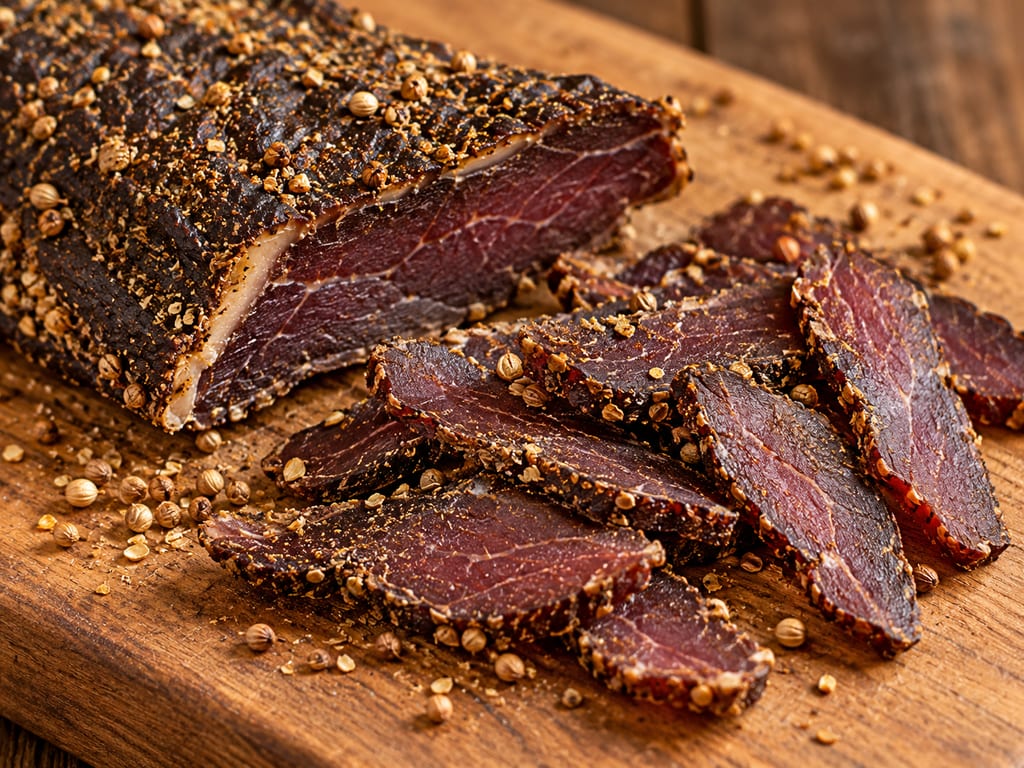
Strips of whole-muscle beef or game seasoned with salt, vinegar, roasted coriander and pepper and air-dried without cooking, sold anywhere from soft and moist to hard and very salty.
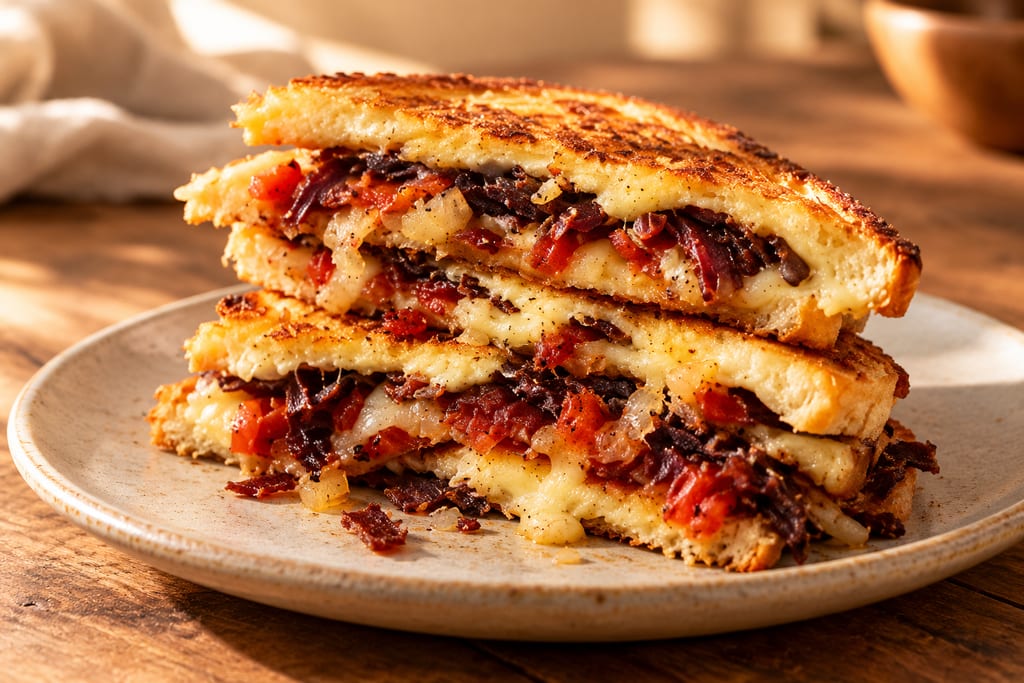
Chopped biltong, sweet onion, cream cheese and Cheddar fill bread toasted in a hinged grid over gentle coals, then finished with biltong dust.
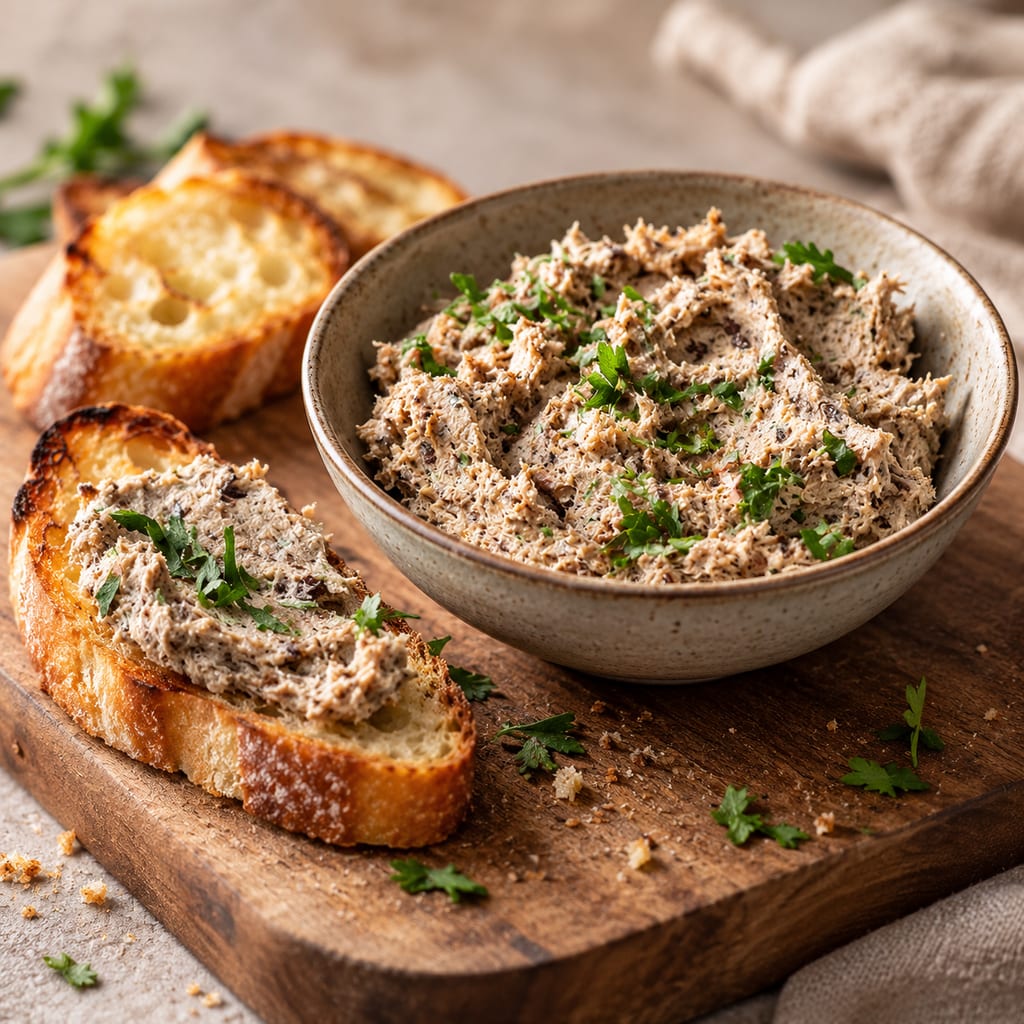
A cold biltong spread with sour cream, mayonnaise, mustard, lemon and herbs; serve it with crackers, crostini or bread.

Biltong, bacon and vegetables simmer in tomato-herb stock, then join cooked pasta, milk, cream and Cheddar in this outdoor potjie.
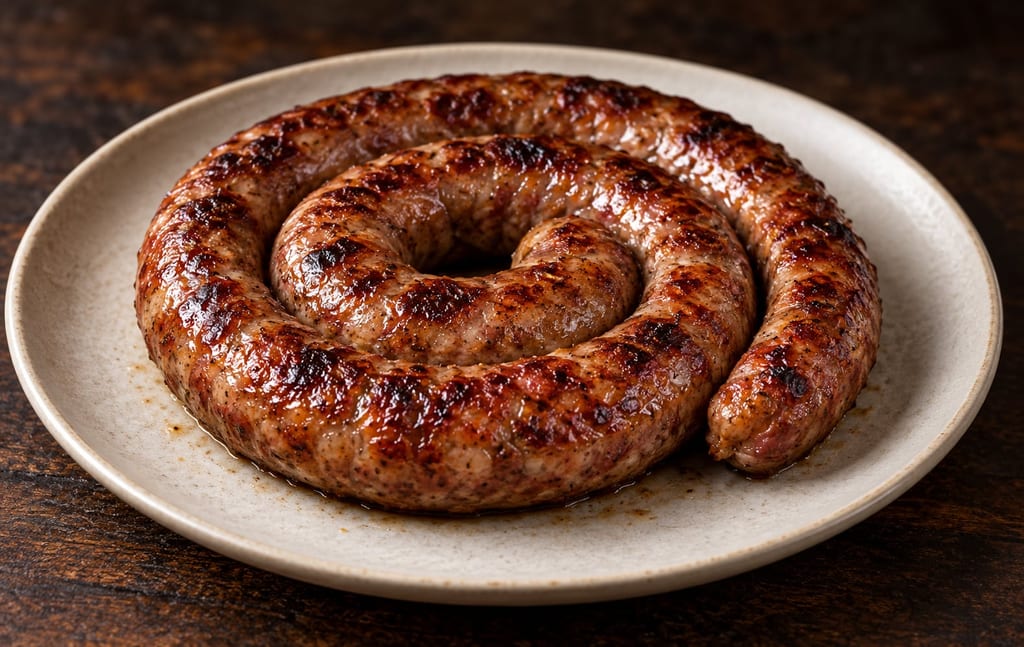
A coarse South African farmhouse sausage of beef with pork or mutton fat, defined by its coriander seasoning and cooked fresh over coals rather than preserved.
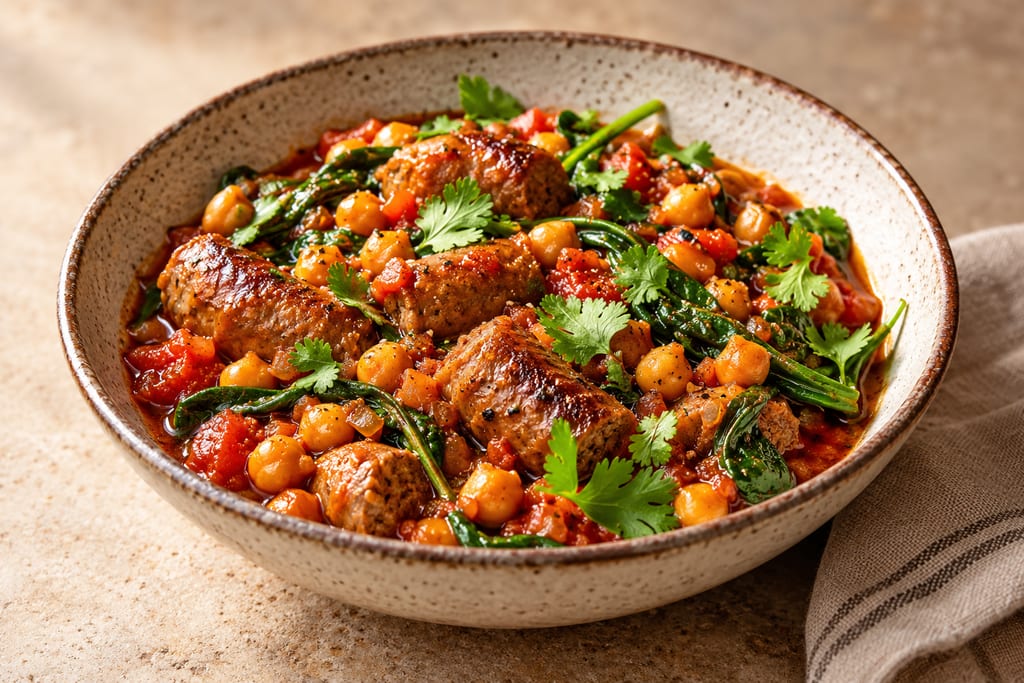
Lesego Semenya’s contemporary South African stew combines browned boerewors, chickpeas, tomato, spinach and warm spices.

A South African boerie roll puts fully cooked boerewors in a soft bread roll and tops it with warm tomato-and-onion smoor.
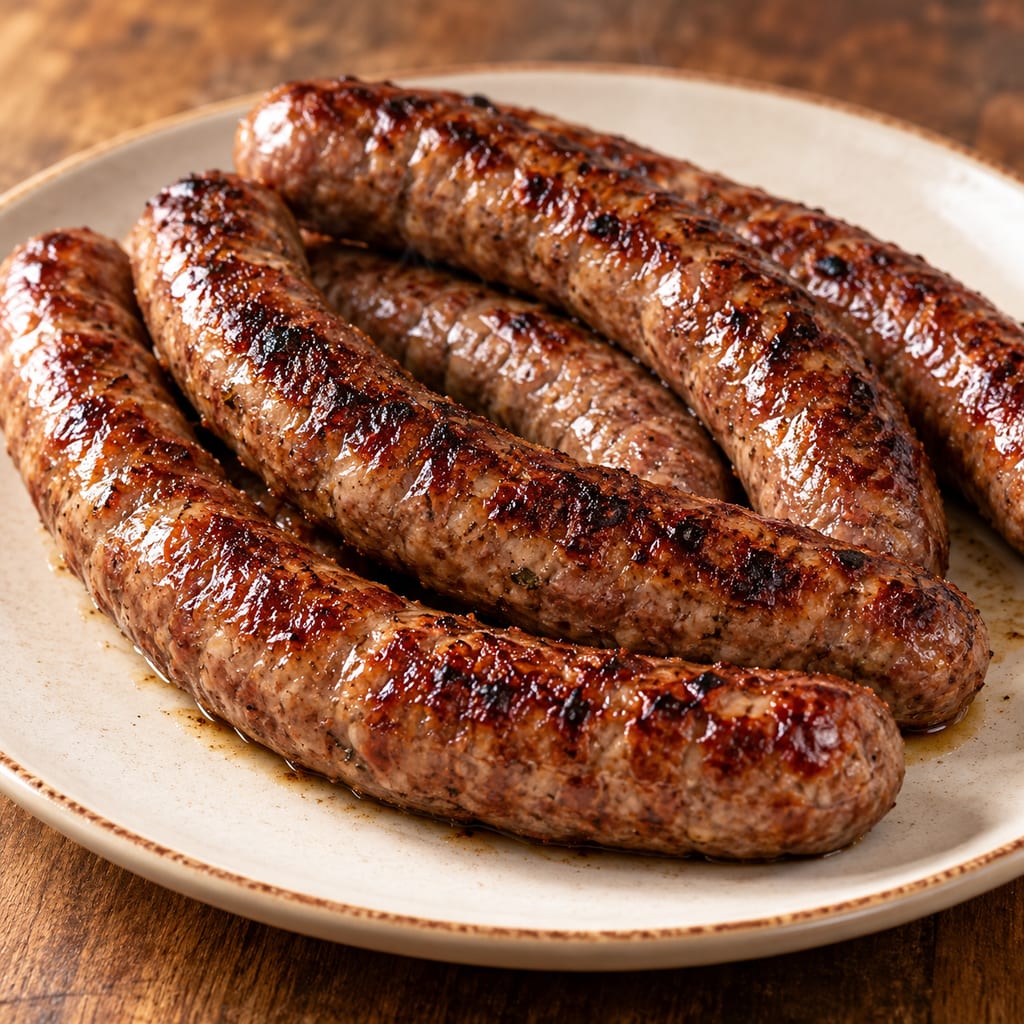
South Africa's regulated grilling-sausage class, looser than boerewors: a minimum of 40% meat, vegetable protein and mechanically recovered meat allowed, and sold raw.

A deep amber-red American ale brewed from pale, Munich, CaraVienne and chocolate malts, bittered with Columbus hops and finished with Amarillo.

A source-specific modern extract adaptation of Düsseldorf Altbier, with specialty malts, two hop additions and an ale yeast. It is distinct from a brewery's commercial Altbier process and from Kölsch.

Andong soju is a rice spirit from North Gyeongsang, distilled from steamed rice and wheat nuruk. This method makes the starter before fermenting the rice mash in a jar.
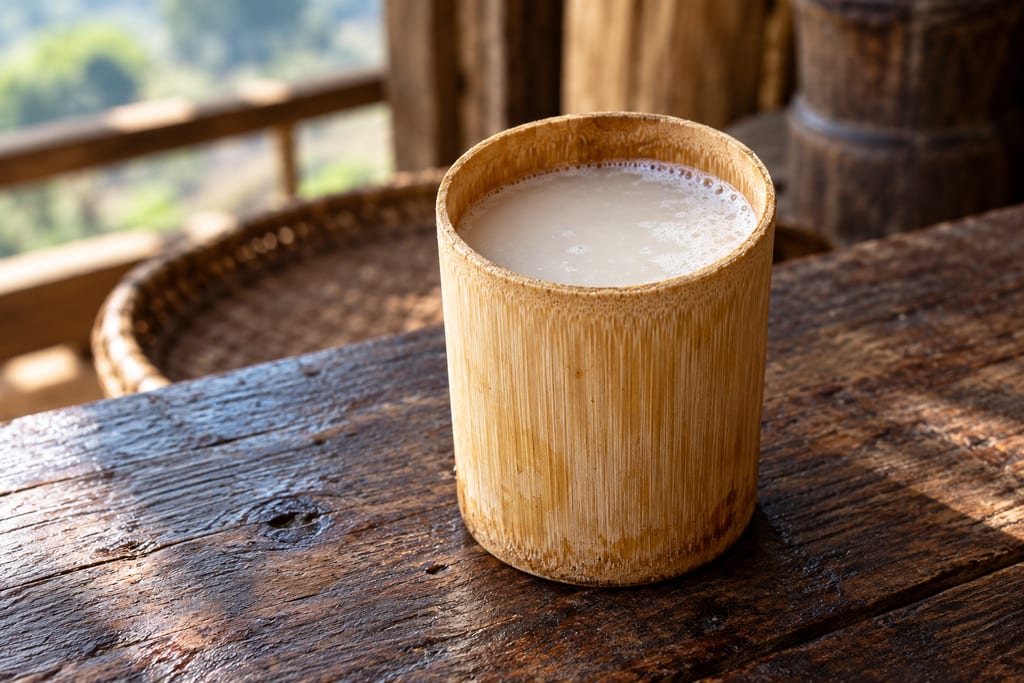
Angami rice beer from Nagaland. A surveyed method mixed cooked rice with piazu, fermented it for about four days in summer or a week in winter, then added water and filtered it. The starter ratio leaves the rice-weight basis unclear.

Apong names Mising rice beverages in Assam, including pale Nogin and ash-associated Po:ro. Sources describe distinct preparations and do not establish one unified household recipe or validated safety endpoint.

An Okinawan rice spirit made by turning all the rice into black koji, fermenting it with water and yeast, then pot-distilling and maturing the spirit.

This is a process overview, not a complete batch recipe: key quantities, yield and packaging directions are absent. The AHA tutorial uses Hop Hammer Imperial IPA as an example; this page is not that full formulation.
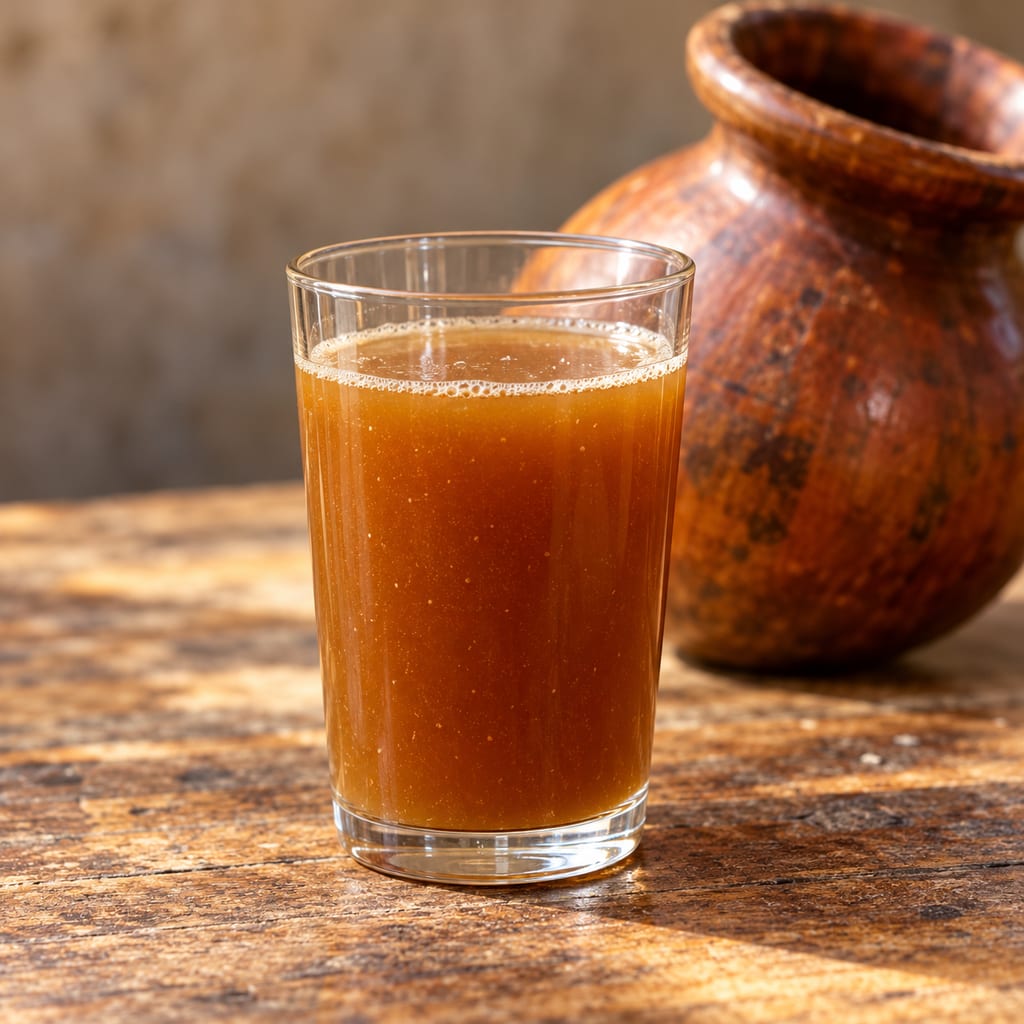
A darker Ethiopian maize tella, brewed from maize baked into a hot, dry kita pancake and then fermented in three stages with barley malt, gesho and water.
No community contributions have been published for this entry yet.
Sign in to contribute. Published comments and photos are free to read.
National Museum PublicationsHistory
Umqombothi: Our African BeerSocial practices, history and vessels, 2020: traditional beer production closely connected with domestic work and frequently undertaken by women; beer consumed as everyday food, offered to visitors, distributed at social gatherings or used in ceremonies, including occasions involving ancestors where a portion is offered before communal drinking.
The isiZulu ukhamba, a black earthenware serving pot frequently decorated with raised or incised patterns, with other named vessels serving distinct production, transport and ritual purposes.
Cited in: Historical background; How it is served
Scientific ReportsMethod · Science
A modeling method for the development of a bioprocess to optimally produce umqombothiA 2021 modelling study with precise quantities: 1,000 g maize meal, 500 g malted sorghum in the initial mixture, a further 500 g malted sorghum after cooking, and 7 litres of water in a 10-litre preparation vessel.
Souring: the maize meal and first malt portion mixed with water, covered and incubated at 25°C for 24 hours. An earlier experimental procedure describes 30 minutes at 45°C for the cooking stage.
The cooked porridge cooled to 25°C before the second 500 g of malted sorghum is added, because enzymes destroyed at high temperature cannot afterwards hydrolyse starch.
An optimised experimental version used 95°C cooking for 1.1 hours followed by fermentation at 29.3°C for 25.9 hours. These were developed for measured process outcomes, not as a traditional standard.
Cited in: What is umqombothi?; The biology of malt; A documented experimental preparation; Stage 1: Souring; Stage 2: Cooking the soured mixture; Stage 3: Cooling and fresh malt addition; Stage 4: Alcoholic fermentation; Regional and household variations; Recognising a successful batch
FermentationScience · Method
Nutritional Compositions of Optimally Processed UmqombothiA 2021 controlled brewing comparison specifying 30 minutes at 95°C for the customary brew and investigating longer cooking under optimised conditions, with the customary comparison fermenting at 25°C for 24 hours.
Nutritional composition varies with grain choice, fermentation and straining.
Cited in: The biology of malt; Stage 2: Cooking the soured mixture; Stage 4: Alcoholic fermentation; How it is served
World Journal of Microbiology and BiotechnologyScience
Analysis of the bacterial and fungal populations in South African sorghum beerAnalysis of the bacterial and fungal populations in South African sorghum beer, 2023: the microbial composition of the finished drink, with Saccharomyces species generating ethanol and carbon dioxide while lactic acid bacteria remain important to flavour and acidity.
Cited in: Two fermentations in one drink; Safety and shelf life
HeliyonScience
Physicochemical and microbiological changes during two-stage fermentation production of umqombothiA 2024 experiment over 52 hours using three two-stage temperature combinations: U1 at 30°C then 30°C, U2 at 30°C then 25°C, and U3 at 25°C then 30°C. The finished products measured pH 3.96, 4.12 and 4.34 respectively, with lactic acid bacterial counts of approximately 5.18, 5.36 and 5.25 log CFU/mL. All three showed microbial growth and falling pH, heating temporarily reduced detectable populations at the sampled post-cooking stage, and the 30°C/30°C treatment received the highest consumer preference scores.
Customary consumption within one or two days after production, reflecting continuing fermentation and carbon dioxide generation.
Cited in: Two fermentations in one drink; What recent experiments found; Safety and shelf life
Journal of African HistoryHistory
The Introduction and Spread of Maize in AfricaThe introduction and spread of maize in Africa, 1965: maize originated in the Americas and reached Africa after transatlantic contact, with documentary evidence of cultivation on parts of the African coast during the sixteenth and seventeenth centuries.
Cited in: Historical background