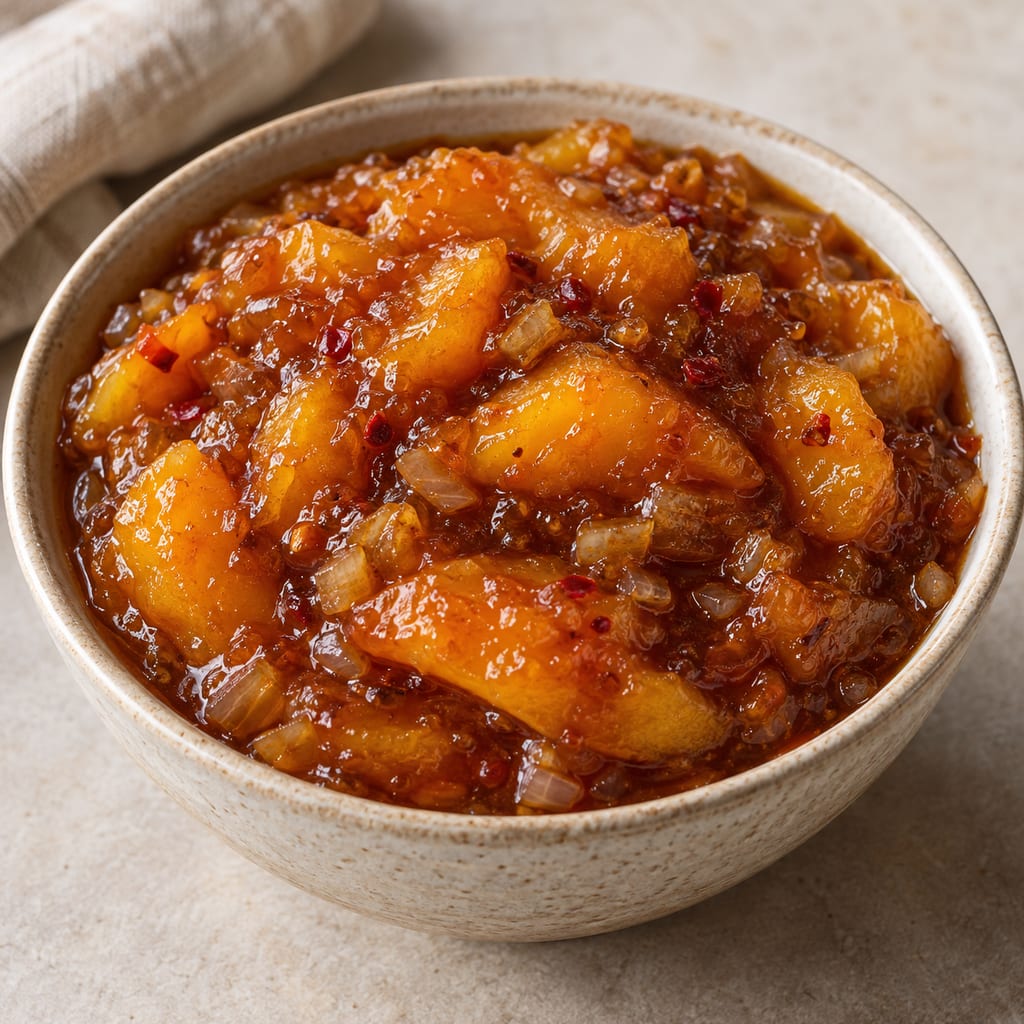
South African fruit chutney
South African fruit chutney ranges from Cape-style sweet-sour fruit pastes to spiced dried-fruit versions; this page records a measured peach and apricot home recipe inspired by Mrs Ball’s.
 FermenteaWhere food goes to change
Traditional method
Sosatie · Sosatie · Sasatie · Sasaatie · Sasaatje · Sasaitie · Sosati · Kabobs
Cape skewers of marinated lamb or mutton threaded with onion, fat or dried fruit and grilled, their marinade balancing curry spice against vinegar or tamarind and something sweet.
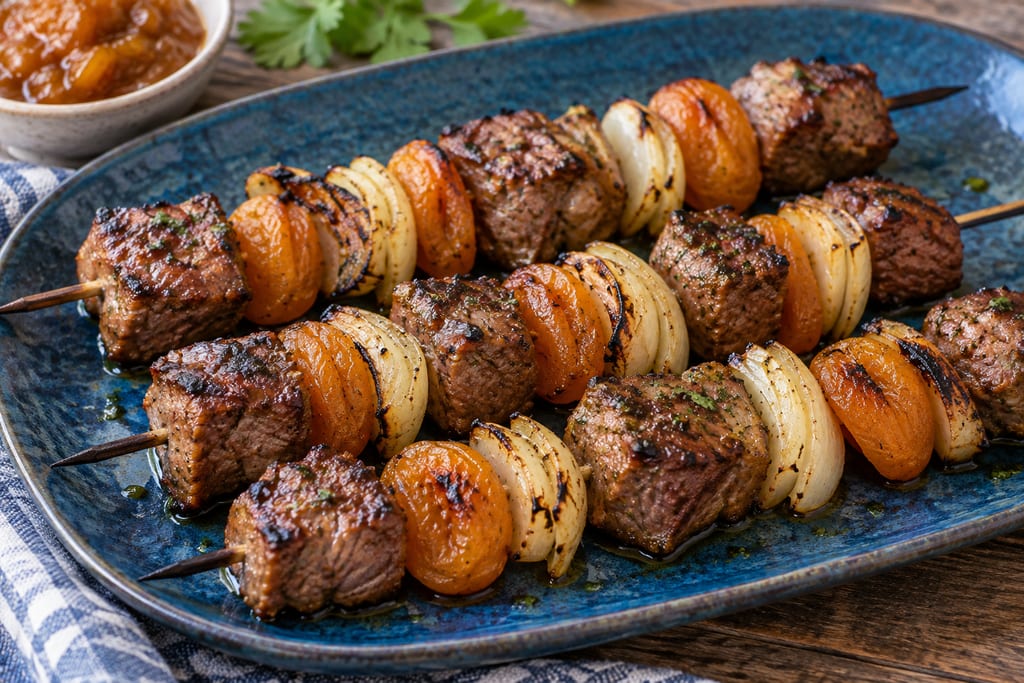
A sosatie is a South African skewer of seasoned meat, traditionally associated with curry-flavoured marinades and cooking over coals. Lamb or mutton is especially familiar, although beef and chicken versions are common.
The meat may be alternated with onion, pieces of fat or dried fruit. The marinade often combines a sour ingredient such as vinegar or tamarind with curry spices and a sweet ingredient such as sugar, jam or chutney.
The result brings together several contrasts: savoury meat, warm spice, acidity, sweetness and the smoky character of grilling.
Sosaties are particularly revealing as a historical food because the written evidence reaches well into the nineteenth century and shows recognisable elements of the modern dish.
They also illustrate why the modern South African sausage catalogue is so varied. The flavour profile can be transferred from a skewer of marinated meat into a fresh sausage sold as sosatie wors.
Those are related products, but not identical ones. A traditional sosatie consists of pieces of meat on a skewer; sosatie-style sausage is ground meat seasoned to evoke that dish.
The Dictionary of South African English records a long list of historical spellings, including sasaitie, sasaatie, sasaatje, sosati and sosatie.
Its etymology traces the Afrikaans and earlier South African Dutch forms to the Javanese sesate, referring to skewered meat.
This is stronger evidence than a popular folk etymology that simply combines words for sauce and satay.
The dictionary documents sasaitie in print by 1833, when the Cape of Good Hope Literary Gazette referred to sasaitie or cabobs.
A later account from 1882 describes chunks of meat grilled on wooden skewers and flavoured with curry powder.
These records establish the dish's presence and recognisable character in nineteenth-century Cape food culture. They do not establish the exact date of its original introduction.
The linguistic link to Java also needs historical context. Cape cooking developed through contact between settlers, enslaved people and their descendants, people brought from across the Indian Ocean, and Indigenous southern African communities.
The influence of Asian cooking traditions is relevant, but the history should not be simplified into an invented recipe carried intact by one individual or at one documented moment.
Hildagonda Duckitt's Hilda's "Where Is It?" of Recipes, published in 1891, includes a preparation headed Sasaties or Kabobs.
The recipe is especially valuable because it describes an actual sequence of operations rather than offering only a vague ingredient list.
The central ingredient is mutton cut into small pieces, with pieces of fat included.
One part of the seasoning uses raw onion, lemon leaves, sugar and milk. A second sauce is built by cooking onions and combining them with tamarind liquid and curry powder.
The original quantities include:
The method also mentions garlic as an optional addition, though its quantity is not fixed.
The original book does not establish standardised modern weights for the mutton, fat, lemon leaves or all accompanying seasonings.
The meat is seasoned, held until the following day, then threaded onto skewers with alternating lean and fat pieces.
The sauce is subsequently cooked again for serving.
This original preparation shows that the characteristic combination of meat, curry, onions, acid and sweetness is well established in the historical record.
It does not justify holding marinated raw meat unrefrigerated overnight today. A nineteenth-century instruction must be interpreted separately from modern food-safety requirements.
Brown sugar — 1 tablespoon
Milk — a fraction of a cup that did not survive the handover of this research
Onions for cooked sauce — 3 or 4
Tamarinds — 1 ounce
Boiling water for tamarinds — 1 cup
Curry powder or paste — 2 spoonfuls
The marinade is more than a coating. Its ingredients change the surface chemistry of the meat and shape the eventual flavour.
Vinegar supplies acetic acid. Tamarind contributes organic acids and a different fruit flavour.
Acidic liquids alter the environment around meat proteins. At sufficient exposure, acid can modify surface texture and contribute to protein denaturation.
However, penetration into a thick cube is limited by diffusion and the meat's buffering properties.
A sour surface does not mean the centre has become sterile or that the meat can be stored without refrigeration.
Sugar, dried apricots, jam and chutney contribute different combinations of sweetness and fruit acidity.
During grilling, sugars on the surface can contribute browning and flavour development.
They also create a practical problem: sugary marinades can scorch before the meat has cooked completely.
Controlling heat is therefore particularly important.
Curry powder is a blend rather than one botanical ingredient.
Depending on the formulation, it may include coriander, cumin, turmeric, fenugreek, chilli and other spices.
Different commercial curry powders can produce significantly different sosaties even if the same measured quantity is used.
The old recipes' reference to good curry powder therefore does not identify a chemically reproducible ingredient.
Onions supply sweetness, water, savoury flavour and sulphur-containing compounds.
Cooking the onions before using them in a marinade changes their flavour from sharp and raw to softer and more rounded.
Garlic adds another group of sulphur-derived aromas.
Alternating pieces of fat with mutton is part of the older documented method.
Rendered fat contributes lubrication and flavour during grilling.
Modern lean-meat versions often achieve a different texture because they omit the separate fat pieces.
Contemporary recipes show how sosaties have developed while retaining recognisable elements of the older dish.
One professional food-service recipe combines lamb with apricot jam, fruit chutney, vinegar and curry seasoning.
Its South African publication gives the following quantities:
A useful editorial warning appears in the source itself: the UK and US versions of a closely related recipe describe garlic as 10 cloves, while the South African version gives 10 g.
Those are substantially different quantities. They must not be silently treated as equivalent.
For a reproducible formulation, the South African gram specification is the clearer measure.
The recipe uses relatively large lamb cubes of approximately 4–5 cm, and directs the cook to marinate them for several hours or overnight under refrigeration.
Dried apricots are soaked in hot water for 15–20 minutes before being threaded onto skewers.
These are documented preparation choices for a particular recipe, not universal rules for every sosatie.
Lamb leg — 1 kg
Onion for marinade — 125 g
Garlic — 10 g
Fresh ginger — 5 g
Apricot jam — 45 ml
Fruit chutney — 45 ml
Wine vinegar — 90 ml
Medium curry powder — 30 g
Aromat seasoning — 5 g
Barbecue spice — 5 g
Dried apricots — 32 pieces
Additional onion — 1
The chosen cut should be suitable for grilling and trimmed of unsuitable tissue.
Uniform pieces cook more predictably than a skewer carrying widely different sizes.
Poultry and red meat must not be assumed to share identical cooking requirements.
Add garlic and ginger, followed by the vinegar, jam, chutney and seasonings.
Heat sufficiently to combine the ingredients, then allow the mixture to cool.
Cooling before contact with raw meat avoids partially cooking the surface and unnecessary warming.
Use a clean food-grade container and refrigerate during marination.
The acidity is there principally to develop the intended taste and texture. It should not be treated as a substitute for cold storage.
Cut the onion into pieces that can be secured on the skewers without falling apart.
The fruit contributes sweetness but can blacken quickly over intense heat.
Pieces should be held securely without packing everything so tightly that heat cannot circulate.
A skewer with extremely uneven pieces creates a risk of some pieces becoming dry before others are cooked.
Direct flames can burn the fruit sugars and outer marinade while the centre remains undercooked.
The final temperature should be assessed according to the meat species and applicable food-safety guidance.
Pap, rice, salads, vegetable relishes and additional chutney are suitable accompaniments.
Any sauce that has contacted raw meat must not be served untreated. Keep a separate clean portion for serving, or apply a validated cooking treatment before reuse.
Cape mutton sosaties are strongly associated with the curry-and-onion preparations documented in older household recipes.
Cape Malay-style sosaties commonly emphasise sweet-sour curry marinades and may use apricots, chutney or other fruit ingredients.
Tamarind sosaties retain a form of acidity particularly visible in older printed formulas.
Apricot sosaties use dried apricots or apricot jam to supply fruit sweetness.
Chicken sosaties replace red meat with poultry and are widely found in contemporary cooking and retail.
Beef sosaties use beef cubes or strips and may employ the same general marinade family.
These are broad preparation families, not protected recipes with compulsory ingredient ratios.
A modern sauce might contain both apricot jam and commercially prepared chutney. An older household sauce might obtain its acidity from tamarind.
The distinction affects flavour as well as texture.
South African sausage manufacturers also sell sosatie wors, where the flavour of the traditional skewer is recreated in a ground-meat filling.
A Deli Spices published example specifies:
The supplier describes the flavour as mildly spiced, sweet and tangy, with chutney and curry notes.
The ready pack is proprietary. Its complete spice proportions are not disclosed in the available material.
This is therefore not a recipe that can be reproduced exactly from basic spices using only the published meat block.
Sosatie wors may be stuffed into edible casings and grilled like other fresh sausages. It is not skewered meat, and its processing behaviour follows sausage science rather than the chemistry of intact marinated cubes.
Its name describes flavour inspiration and commercial positioning.
Meat, described as 70/30 — 12.000 kg
Ice water — 3.000 kg
Sosatie beef wors ready pack — 1.000 kg
Total — 16.000 kg
Well-made sosaties should have properly cooked meat, recognisable spice, balanced sweetness and enough acidity to prevent the flavour from becoming cloying.
Burned exterior and raw centre: Heat too intense, particularly with a sugary marinade.
Dry meat: Excessive cooking or an unsuitable cut.
Uneven flavour: Incomplete mixing or inconsistent marinade contact.
Fruit disintegrating: Over-softened fruit, unsuitable skewer assembly or excessive handling.
Meat slipping from skewers: Pieces too small, weakly secured or broken apart during cooking.
Excessive acidity: The marinade may overpower the meat or affect surface texture unpleasantly.
Unpleasant raw-meat odour: Reject the batch rather than assuming curry spices or vinegar will disguise or correct spoilage.
Sosaties are a raw-meat preparation until fully cooked.
Their marinades are not curing systems and do not make the meat shelf-stable.
Keep prepared skewers chilled, prevent contamination from raw juices, and clean utensils and work surfaces after handling.
For a UK food-service setting, appropriate cooking requirements and validated centre temperatures apply. Poultry must be thoroughly cooked.
Care is also needed with wooden skewers, which may char, and metal skewers, which become hot enough to cause burns.
The historical practice of preparing the dish the day before remains compatible with modern cookery only when safe refrigerated holding is used.
The name's etymology runs from the Afrikaans and earlier South African Dutch forms back to the Javanese sesate, skewered meat, which is firmer ground than the folk explanation combining words for sauce and satay. The Asian connection needs its context: Cape cooking developed through contact between settlers, enslaved people and their descendants, people brought from across the Indian Ocean, and Indigenous southern African communities, and the history should not be reduced to one recipe carried intact by one individual at one moment. Hildagonda Duckitt's Sasaties or Kabobs of 1891 is the most informative early record because it describes a sequence of operations rather than an ingredient list, and it shows the characteristic combination of meat, curry, onions, acid and sweetness already well established.
Scaling: source batch only
Direct flames burn the fruit sugars and outer marinade while the centre remains undercooked.
Hazard sourceThe sauce in the historical method is cooked again for serving; any portion that has contacted raw meat must not be served untreated.
Hazard sourceMarinate in a clean food-grade container under refrigeration rather than at room temperature
Control sourceCook over controlled heat and assess the final temperature by species
Control sourceKeep a separate clean portion of sauce for serving, or apply a validated cooking treatment before reuse
Control sourceThe marinade is not a curing system: the acidity is there for taste and texture and does not make the meat shelf-stable or allow it to be held unrefrigerated.
A sour surface does not mean the centre of a thick cube has been changed; acid penetration is limited by diffusion and the meat's buffering properties.
The 1891 instruction to hold the seasoned meat until the following day is only compatible with modern practice under safe refrigerated holding.
Reject meat with an unpleasant raw-meat odour rather than assuming curry spices or vinegar will correct or disguise spoilage.
Wooden skewers may char and metal skewers become hot enough to burn.
A regional association with Cape food culture from South African lexicography and a nineteenth-century Cape household cookbook. It is not a claim about a locality, and the linguistic link to Java is a connection between cuisines rather than a documented transfer by one person or at one moment.
South African fruit chutney ranges from Cape-style sweet-sour fruit pastes to spiced dried-fruit versions; this page records a measured peach and apricot home recipe inspired by Mrs Ball’s.
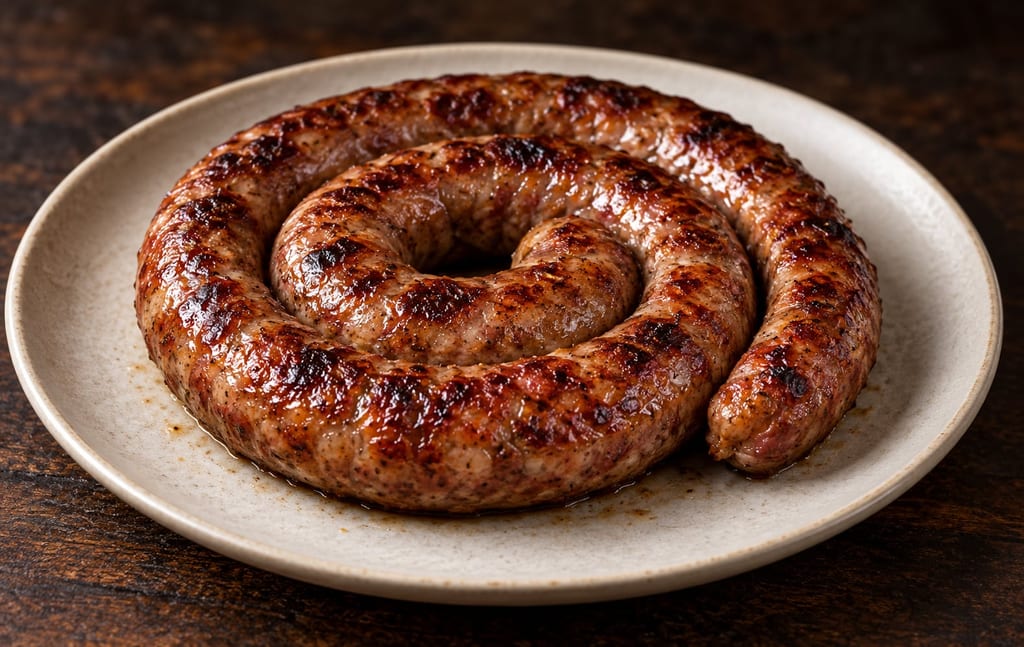
A coarse South African farmhouse sausage of beef with pork or mutton fat, defined by its coriander seasoning and cooked fresh over coals rather than preserved.
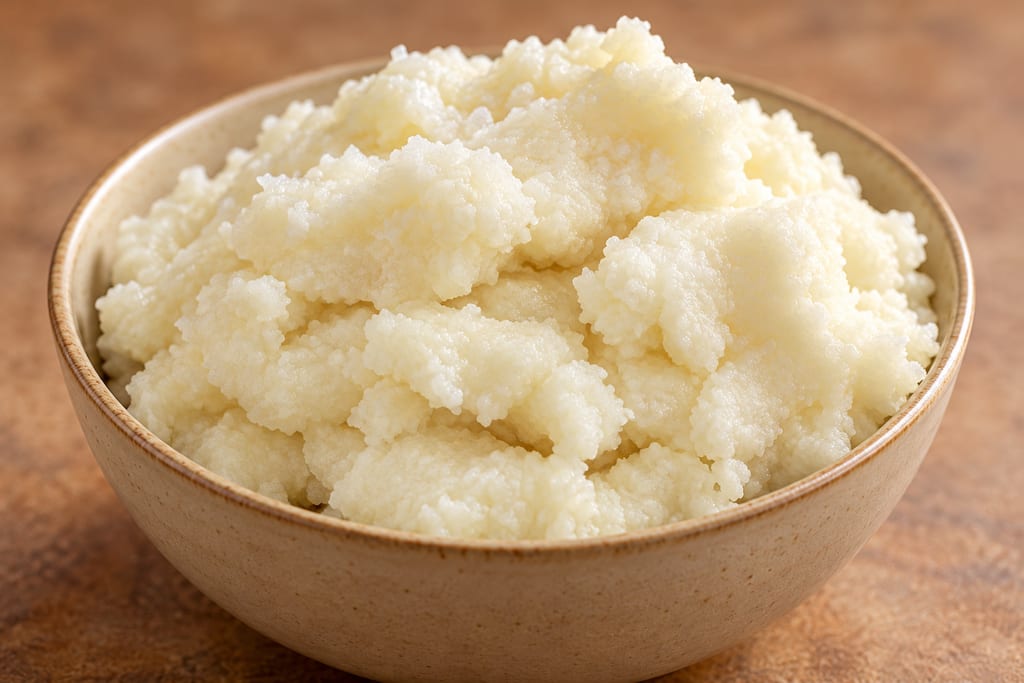
South Africa's maize-meal porridge, which the same white meal turns into a soft breakfast pap, a firm sliceable mound or the separate moist granules of phuthu depending only on water and handling.
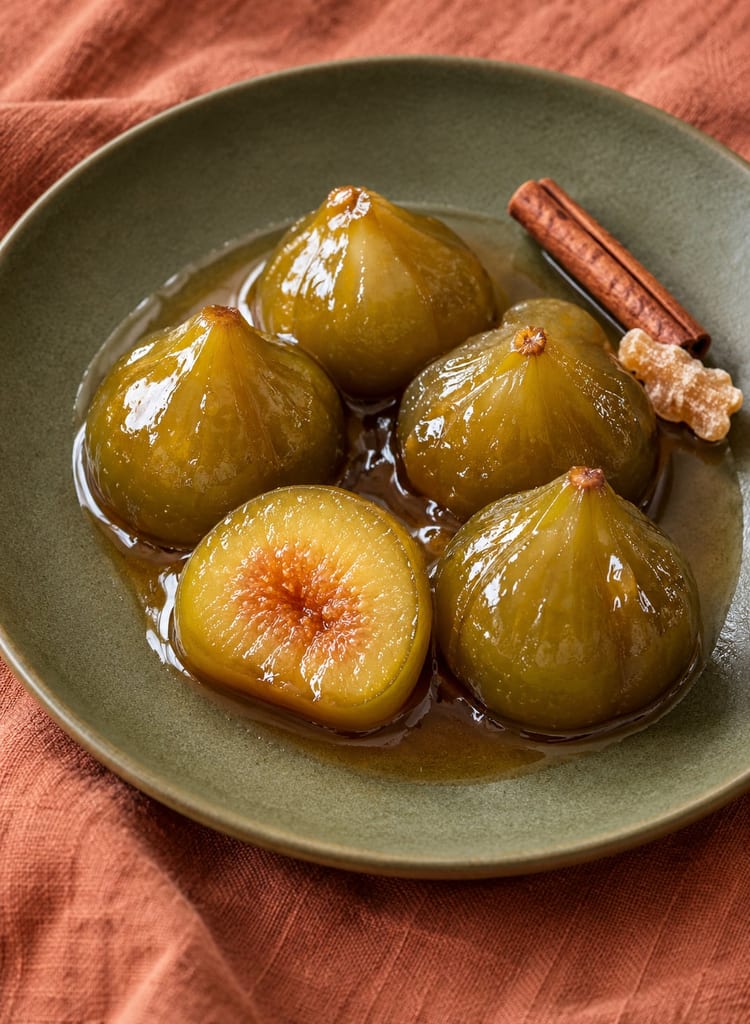
Whole unripe figs are softened and cooked in cinnamon and ginger syrup as a refrigerator-only South African konfyt; this method does not provide a shelf-stable canning process.
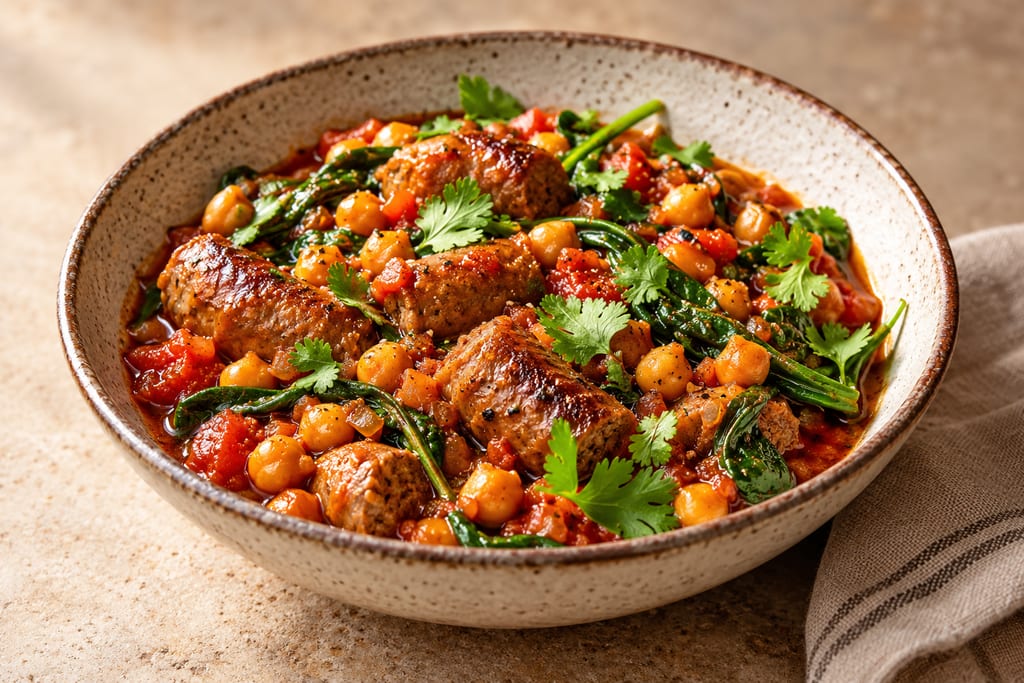
Lesego Semenya’s contemporary South African stew combines browned boerewors, chickpeas, tomato, spinach and warm spices.
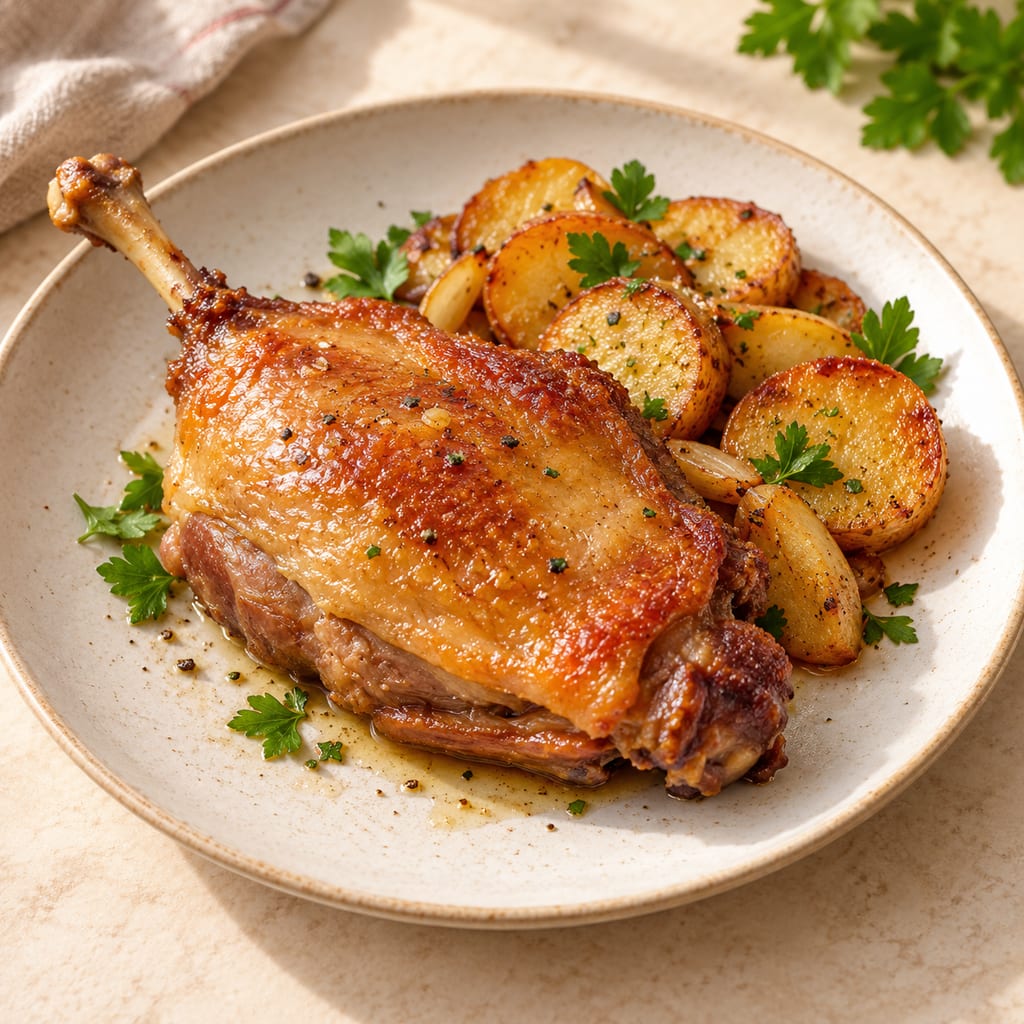
Meat salted, slowly cooked in its own fat and kept under a covering of that fat. The fat cap limits air but does not acidify or sterilise, so home confit needs refrigeration or freezing.
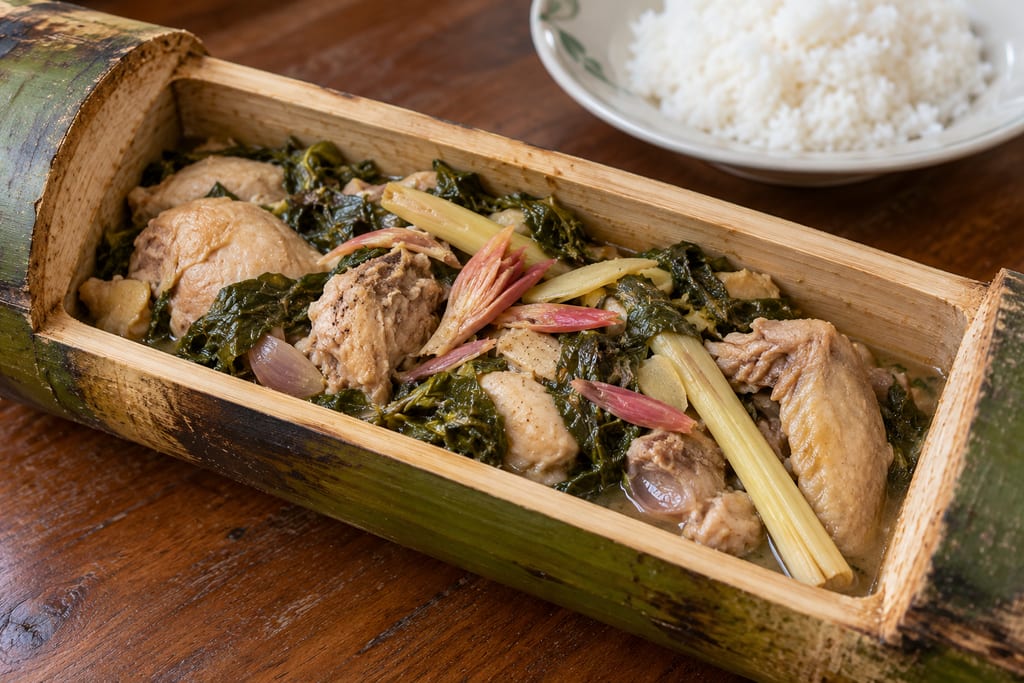
Manuk pansuh is Iban chicken cooked slowly inside a fresh bamboo tube with aromatics and leafy greens. The bamboo holds the food and shapes the steamy, fragrant cooking environment; recipes vary by household and locality.
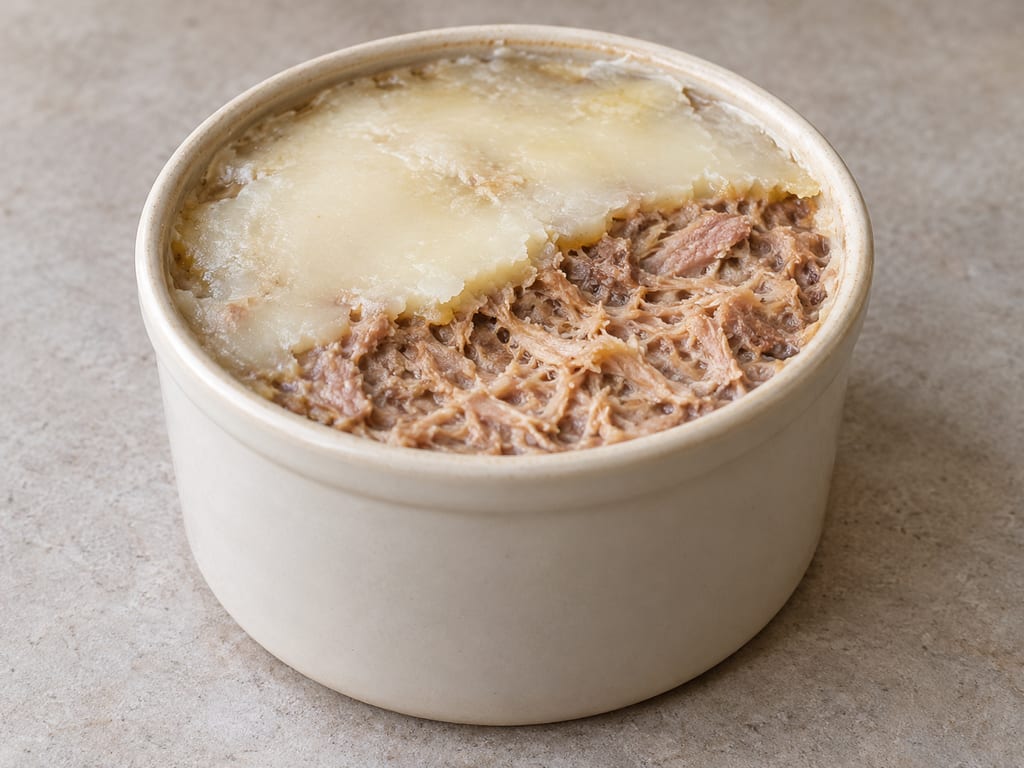
Cooked meat or fish shredded or pounded, packed into pots and covered with fat. Heat, salt, moisture reduction and the fat cover work together, and the texture separates rillettes from whole-piece confit.

Omani celebration dish of spiced meat wrapped in leaves, sewn into palm-fibre bags and cooked in a sealed pit of embers for up to a day.
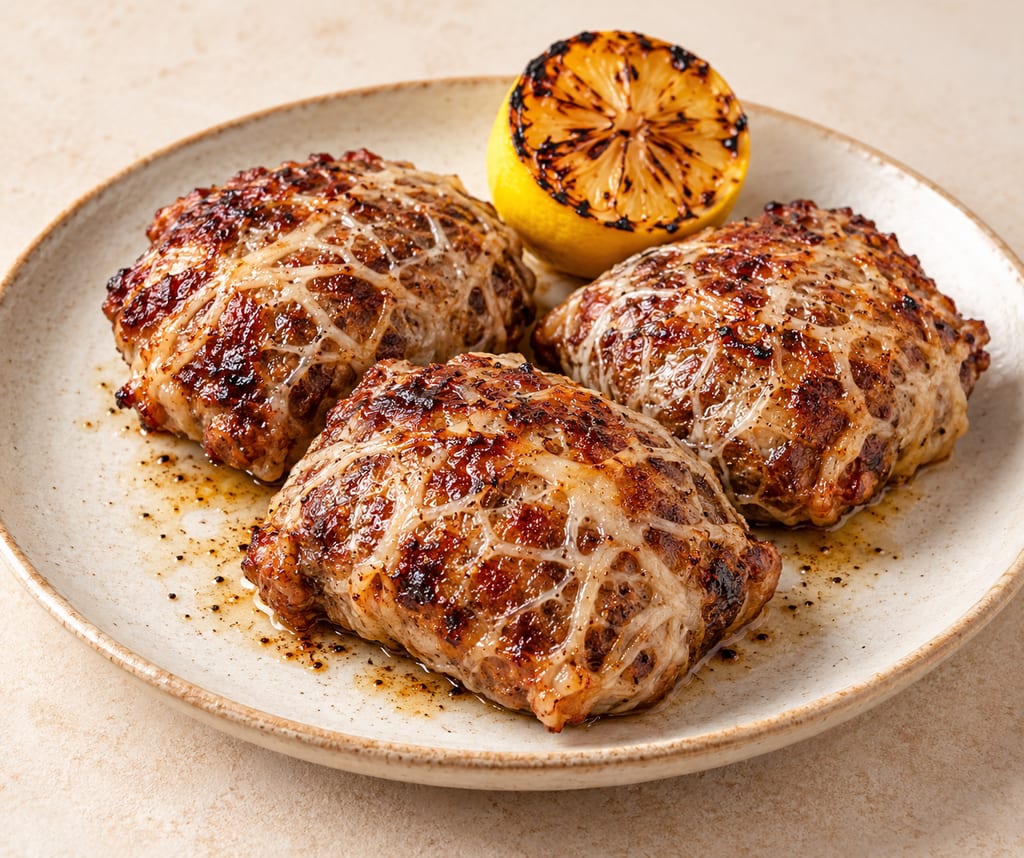
South African braai parcels of seasoned lamb liver wrapped in caul fat (netvet), which crisps and renders as the filling cooks.
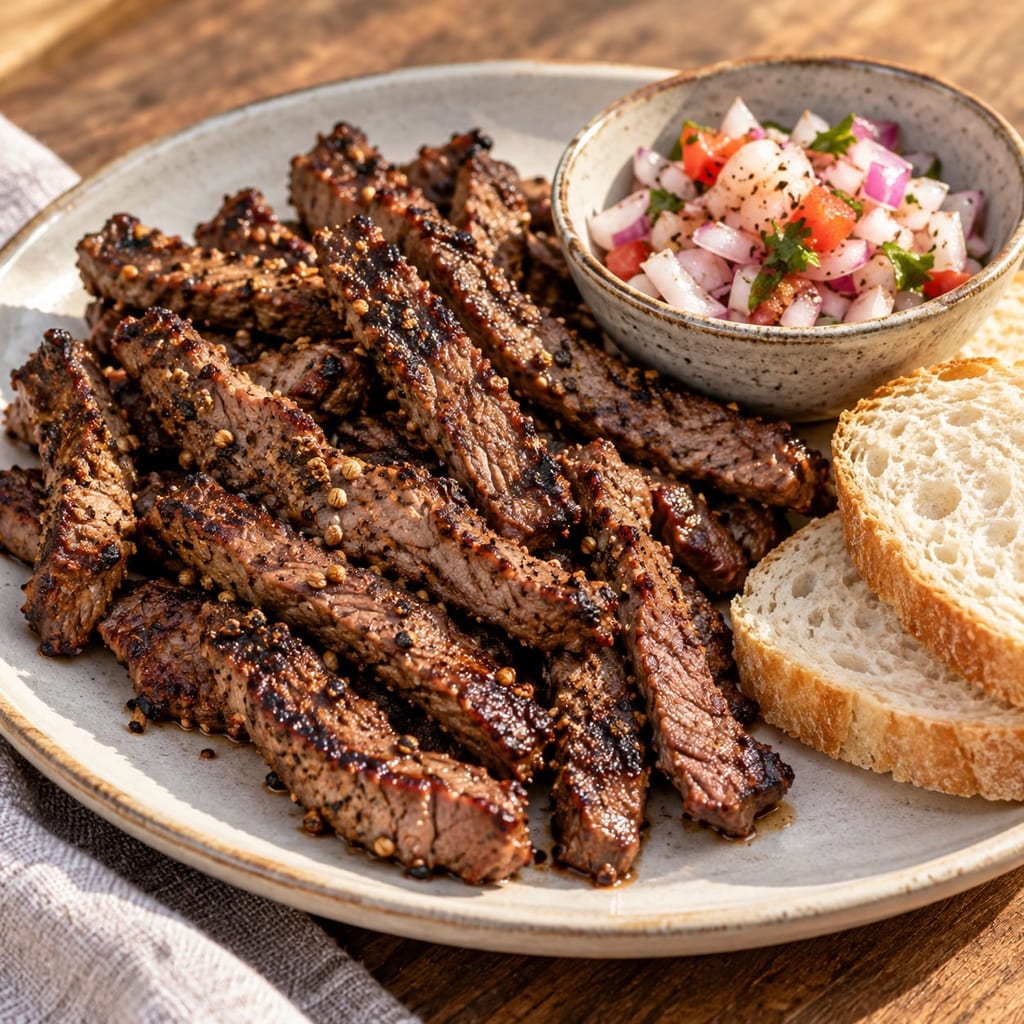
Beef rump takes vinegar, toasted coriander and pepper from the flavour family of tassal, then meets a thermometer-checked braai fire as a fresh-cooked meal.

A Cap-Pelé boucanière is an Acadian herring-smoking building. The documented Willie Niles example is a one-storey wood-frame structure with a ridge smoke vent and interior bays for hanging fish-bearing cannes.

Achcharu is a family of Sri Lankan vinegar pickles made with mixed vegetables or seasonal fruit and a piquant spice dressing. This version is a quick, refrigerated, non-fermented mixed-vegetable pickle.

The acocote is a long, hollowed and dried gourd used to draw aguamiel from a mature maguey. It is a harvesting tool: the sap is transferred to a separate vessel before it ferments into pulque.

Adrak murabba preserves young ginger in sugar syrup, a sweet South Asian preparation recorded in Indian cookery and food-processing sources.

Parkia biglobosa seeds are fermented into regional West African seasonings, including nététou, iru, dawadawa and soumbala. The yellow fruit pulp is a separate food, and names and methods vary by place.

Japanese reddish-brown vinegar from sake lees matured about three years, turned to vinegar by acetic bacteria; the vinegar of Handa and Edomae sushi rice.

A refined common-wheat flour blended for a broad range of baking; its protein and behavior vary with wheat, milling and market.

The almond mushroom, Agaricus subrufescens, was cultivated in eastern North America in the 1800s, lost its market, and returned as a cultivated mushroom from Brazil, where it is grown under several names.
No community contributions have been published for this entry yet.
Sign in to contribute. Published comments and photos are free to read.
Dictionary of South African EnglishHistory
Dictionary of South African English — Sosatie, historical spelling and 1833 evidenceHistorical spellings sasaitie, sasaatie, sasaatje, sosati and sosatie, with the Afrikaans and earlier South African Dutch forms traced to the Javanese sesate, skewered meat.
Sasaitie in print by 1833, when the Cape of Good Hope Literary Gazette referred to sasaitie or cabobs, and a later account from 1882 describing chunks of meat grilled on wooden skewers and flavoured with curry powder.
Cited in: A sweet, sour and spiced skewer; The name and its origins; How the marinade works; Acidity; Sweetness; Curry spices; Onion and garlic; Fat; Choose the meat; Prepare the marinade; Season the meat; Prepare the fruit and onions; Assemble the skewers; Grill; Serve; Regional and household variations; How to judge the result
Chest of BooksHistory · Method
Hildagonda Duckitt (1891) — Sasaties or KabobsSasaties or Kabobs, from Hilda's "Where Is It?" of Recipes, 1891: mutton cut small with pieces of fat; one seasoning of raw onion, lemon leaves, sugar and milk; a second sauce of cooked onions with tamarind liquid and curry powder; garlic optional. Published amounts: 1 tablespoon brown sugar, 3 or 4 onions for the cooked sauce, 1 ounce tamarinds, 1 cup boiling water for the tamarinds, 2 spoonfuls curry powder or paste.
The meat is seasoned, held until the following day, then threaded onto skewers with alternating lean and fat pieces, and the sauce cooked again for serving. The book does not give standardised weights for the mutton, fat or lemon leaves.
Cited in: The nineteenth-century household recipe
Unilever Food Solutions South AfricaMethod
Unilever Food Solutions South Africa — Lamb and apricot sosatiesLamb and apricot sosaties, South African publication: 1 kg lamb leg, 125 g onion for the marinade, 10 g garlic, 5 g fresh ginger, 45 ml apricot jam, 45 ml fruit chutney, 90 ml wine vinegar, 30 g medium curry powder, 5 g Aromat seasoning, 5 g barbecue spice, 32 pieces dried apricots and 1 additional onion.
Lamb cubes of approximately 4-5 cm, marinated for several hours or overnight under refrigeration; dried apricots soaked in hot water for 15-20 minutes before threading.
Cited in: A sweet, sour and spiced skewer; How the marinade works; Acidity; Sweetness; Curry spices; Onion and garlic; Fat; A documented modern lamb-and-apricot version; Choose the meat; Prepare the marinade; Season the meat; Prepare the fruit and onions; Assemble the skewers; Grill; Serve; Regional and household variations; How to judge the result
Unilever Food Solutions UKMethod
Unilever Food Solutions UK — Variant recipe, including differing garlic specificationA closely related variant recipe that describes garlic as 10 cloves where the South African version gives 10 g. These are substantially different quantities and must not be treated as equivalent.
Cited in: A documented modern lamb-and-apricot version
Deli SpicesMethod
Deli Spices — Sosatie beef wors commercial meat blockSosatie beef wors commercial meat block: 12.000 kg meat described as 70/30, 3.000 kg ice water and 1.000 kg sosatie beef wors ready pack, total 16.000 kg, described as mildly spiced, sweet and tangy with chutney and curry notes. The ready pack is proprietary and its spice proportions are not disclosed.
Cited in: Sosatie-style sausage: a related modern product
Government of the United KingdomSafety
UK Government — Food cooking safety guidanceCooking guidance for food businesses, applied here to assessing the final temperature according to the meat species, and to the requirement that poultry be thoroughly cooked.
Cited in: Safety and storage