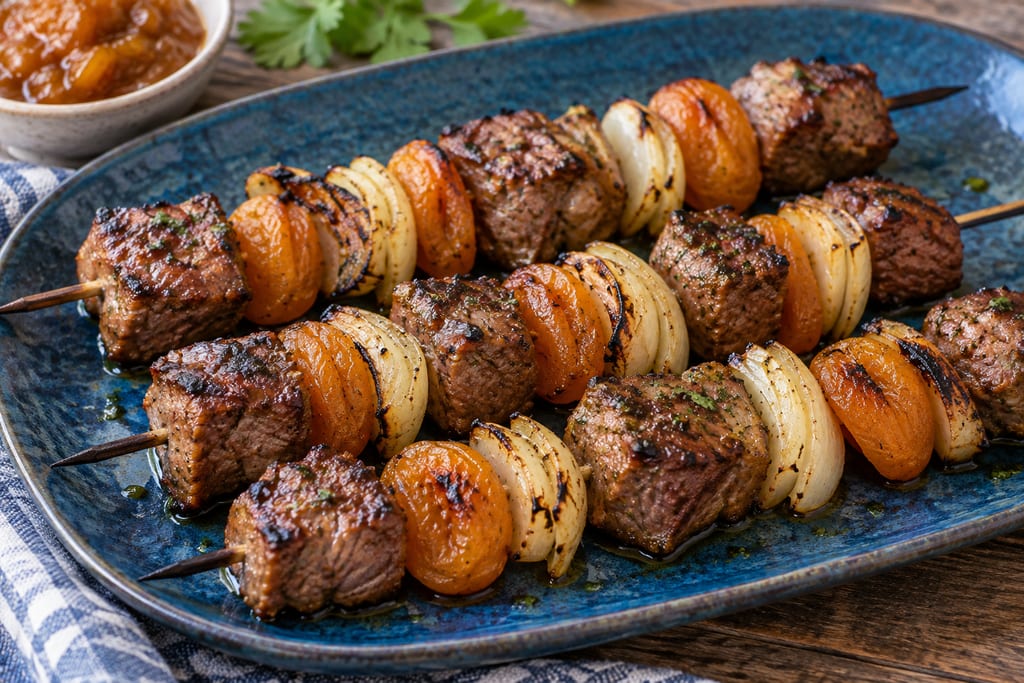
Sosaties
Cape skewers of marinated lamb or mutton threaded with onion, fat or dried fruit and grilled, their marinade balancing curry spice against vinegar or tamarind and something sweet.
 FermenteaWhere food goes to change
Modern adaptation
South African peach and apricot chutney
South African fruit chutney ranges from Cape-style sweet-sour fruit pastes to spiced dried-fruit versions; this page records a measured peach and apricot home recipe inspired by Mrs Ball’s.
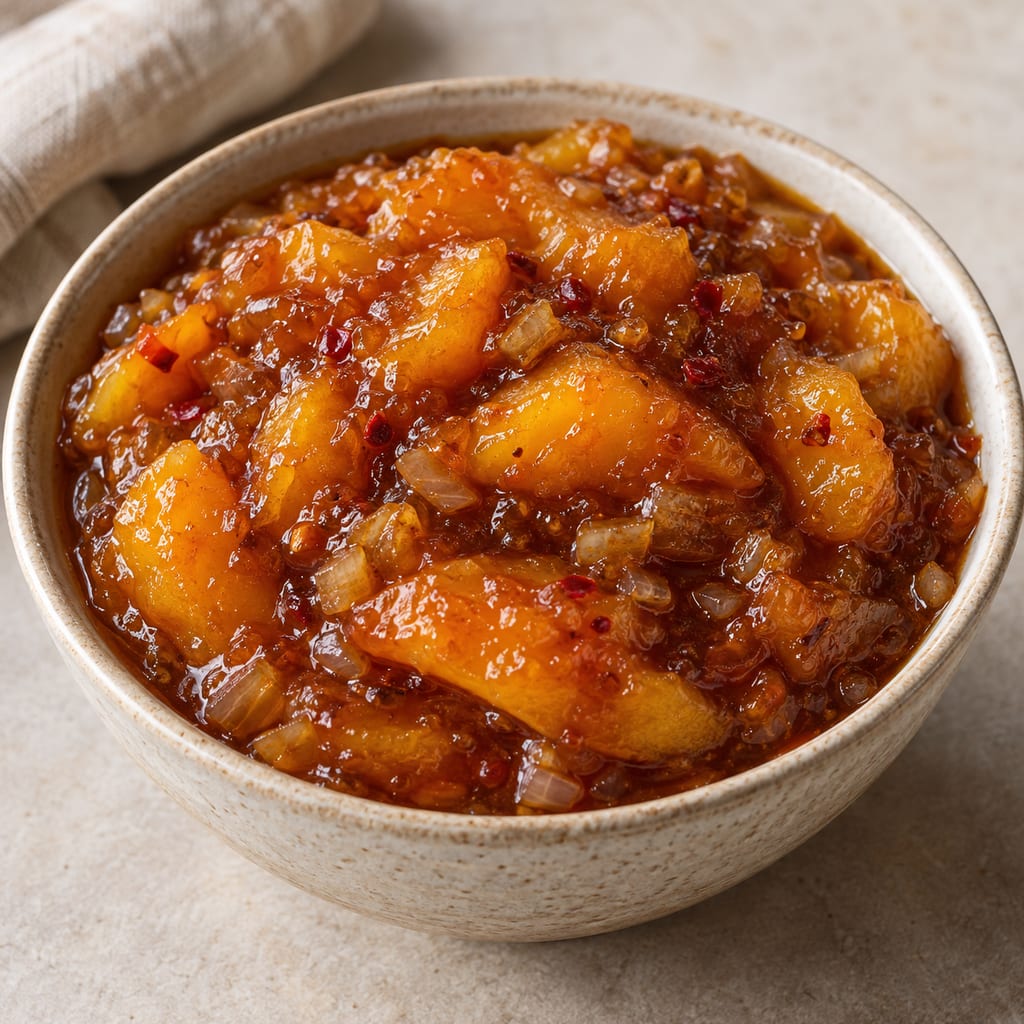
South African fruit chutney is not one fixed formula. The recipe recorded here is a sweet-sour preserve built around dried peaches and apricots, vinegar, sugar and spice. The cited writer presents it as a home recipe inspired by Mrs Ball’s chutney; it is not the factory product or a claimed reconstruction of a secret family recipe.
The Amathole Museum describes Mrs Ball’s chutney as a South African condiment associated with King William’s Town in the Eastern Cape. Its history distinguishes Sarah Adkins’s earlier family production from the later recipe associated with her daughter Amelia Ball. The museum says Sarah produced and sold chutney at Fort Jackson and that other family members continued making it after her death. Amelia continued the family practice and her chutney became popular at church bazaars during the First World War.
The museum also challenges the familiar shipwreck origin story. It reports that the SS Quanza sank in 1872 rather than 1852 and that Amelia’s parents met in South Africa, not aboard a ship carrying a Canadian recipe. Its account treats the recipe’s commercial history as a family and local enterprise rather than an imported formula with a proven shipwreck origin.
Michelle Minnaar’s measured home recipe yields about 5 kg. It uses dried peaches and apricots soaked in malt vinegar, then cooked with more vinegar, white sugar, onion, sea salt, cayenne and dried chilli flakes. The author calls it a South African Mrs Ball style and suggests it with cold cuts, boerewors, cheese, curries and barbecue foods. This attribution is to the author’s modern version, not to the commercial manufacturer.
The 24-hour soak softens the dried fruit and leaves a vinegar liquid that is retained in the cooking pot. The fruit is processed to a coarse minced texture. The source then dissolves the sugar into the vinegar and fruit over medium heat before bringing the mixture to a boil and lowering it to a simmer. It gives about two hours of cooking or a thickened consistency as the endpoint, with no measured temperature.
The source describes the result as fruity and tangy, with enough spice for a warm finish. Cayenne and chilli are both present, but the page does not give a measured pungency or identify a cultivar. The fruit, vinegar and sugar make the flavour sweet and sharp; the author’s formula, rather than a universal national standard, sets its balance.
The museum places Sarah Adkins’s chutney making at Fort Jackson and reports that she sold it in commercial quantities. After Sarah’s death, her daughter Florence and then her son Harold continued production there. Amelia married Herbert Saddleton Ball in 1886 and continued the family practice while raising a family. The museum dates her chutney’s rise at church bazaars to the First World War years, 1914–1919.
The museum says demand outgrew the home kitchen and the Ball family opened a factory. In 1936 they commissioned businessman Fred Metter to assist with the business; he designed the octagonal bottle and family-crest label. These details describe the development and packaging of the well-known Mrs Ball brand. They do not show that the home formula on this page is identical to an early family or commercial recipe.
The museum’s historical correction matters because the popular shipwreck tale has been used to explain both the family’s arrival and the recipe’s supposed origin. Its article says the timeline is inconsistent and that the couple met in South Africa. The home formula here is linked to the South African style through the author’s adaptation; it does not claim a particular nineteenth-century recipe.
The dried-fruit recipe combines sweet peaches and apricots with a large quantity of vinegar and sugar, onion and two sources of chilli heat. The author describes a fruity, tangy chutney. The formula gives separate amounts for cayenne and chilli flakes but no heat scale, so the published quantities are more reliable than a universal description such as mild or hot.
The author recommends the chutney with cold cuts, boerewors and cheeseboards, and also lists curries and barbecue foods. The museum describes the branded condiment as popular in South African cuisine. Those sources document a broad condiment role; they do not limit chutney to one dish or meal.
Fruit choices and processing differ across chutneys. This recipe uses dried peaches and apricots and processes them after soaking. It should remain distinct from fresh-fruit chutneys and from other regional fruit recipes, even when they share sugar, vinegar or spices.
The recipe author’s final step is to spoon the hot chutney into hot, sterilised jars, seal them and cool. The recipe page does not describe a tested water-bath or steam-canning schedule, provide a measured acidity, or validate room-temperature shelf stability. Hot filling and a closed lid are not the same as a documented canning process.
University of Minnesota Extension advises using a research-based recipe and its specified canning procedures for safe home preservation. That guidance cannot supply missing process parameters for this chutney. This record therefore makes no shelf-life claim and does not present the author’s hot-fill step as a validated preservation control.
The source gives no measured pH, water activity or jar-processing time. The taste, thickness, vinegar quantity and appearance do not establish these values. The recipe remains a source-based home method with preservation validation unresolved.
The Amathole Museum’s historian describes a family chutney enterprise at Fort Jackson near King William’s Town. Sarah Adkins produced and sold chutney there; after her death, her children continued the business. The museum places the popularity of Amelia Ball’s later chutney at church bazaars during the First World War and says the Ball family later opened a factory. It also corrects the popular shipwreck story: the SS Quanza sank in 1872, not 1852, and Amelia’s parents met in South Africa rather than arriving together from Canada. The measured formula here is Michelle Minnaar’s modern home recipe inspired by Mrs Ball’s, not the commercial formula or a recovered family original.
Yield 5 kg · Scaling: source batch only
The cited home recipe calls for hot filling jars but does not give a research-based jar-processing schedule or measured acidity. A seal or thick texture alone does not establish shelf stability.
Hazard sourceFor shelf-stable jars, use a research-based recipe with its specified jar-processing method. This recipe does not supply a validated process, so no room-temperature storage duration is assigned.
Control sourceThis home recipe's hot-fill instruction is not a validated canning process. It gives no measured pH or tested jar-processing schedule; do not infer room-temperature stability from sugar, vinegar, thickness or a sealed lid.
The museum identifies Mrs Ball’s chutney as a South African condiment, and the independent recipe source presents this dried-fruit version as South African-inspired. The commercial formula is not reproduced.
The museum records the Adkins family’s chutney making and Amelia Ball’s association with King William’s Town. This is a documented historical association for the Mrs Ball style, not a claim that all South African chutney originated there.
Cape skewers of marinated lamb or mutton threaded with onion, fat or dried fruit and grilled, their marinade balancing curry spice against vinegar or tamarind and something sweet.

A spicy South African vegetable relish of onion, carrot, pepper, tomato, curry seasoning and beans, cooked briefly and served warm or cold beside pap and grilled meat.
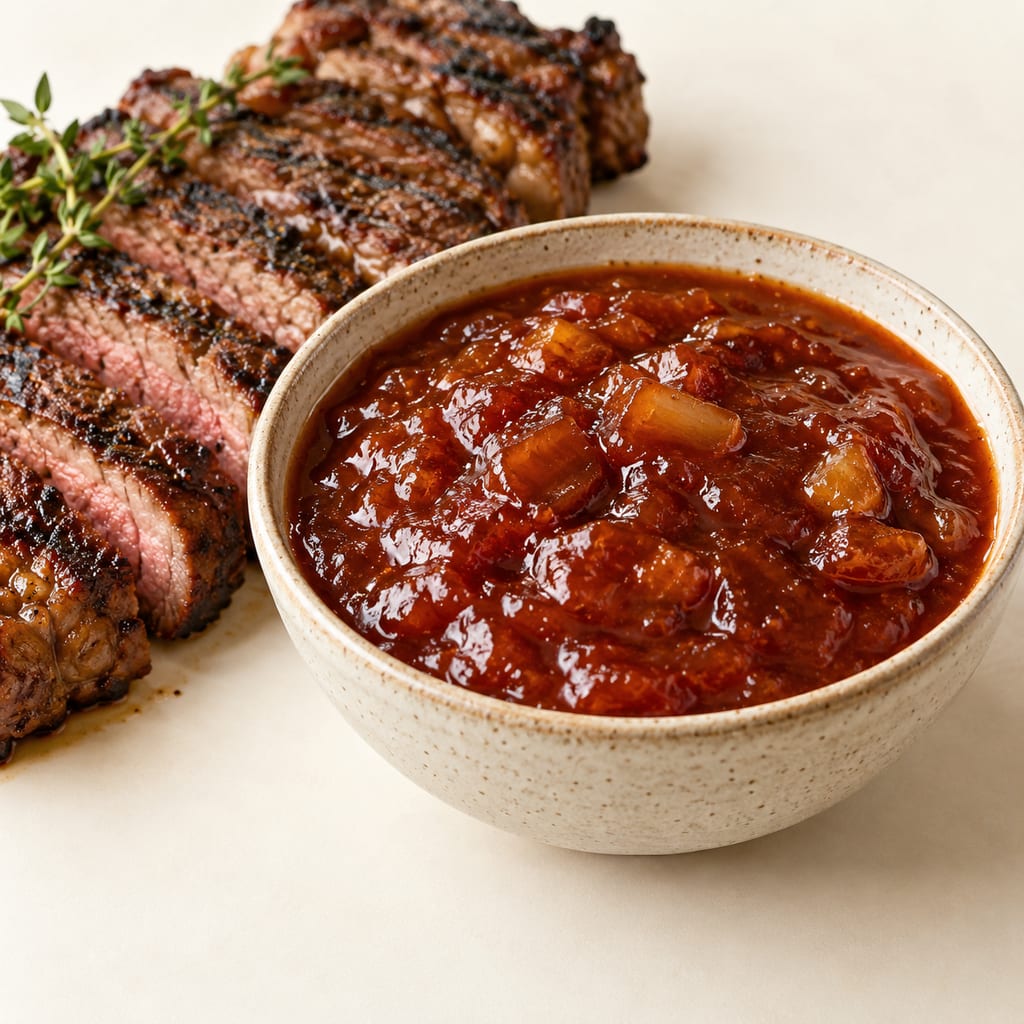
A sweet and tangy South African condiment of fruit chutney and tomato sauce, served with grilled meat and steak. It contains no monkey gland.
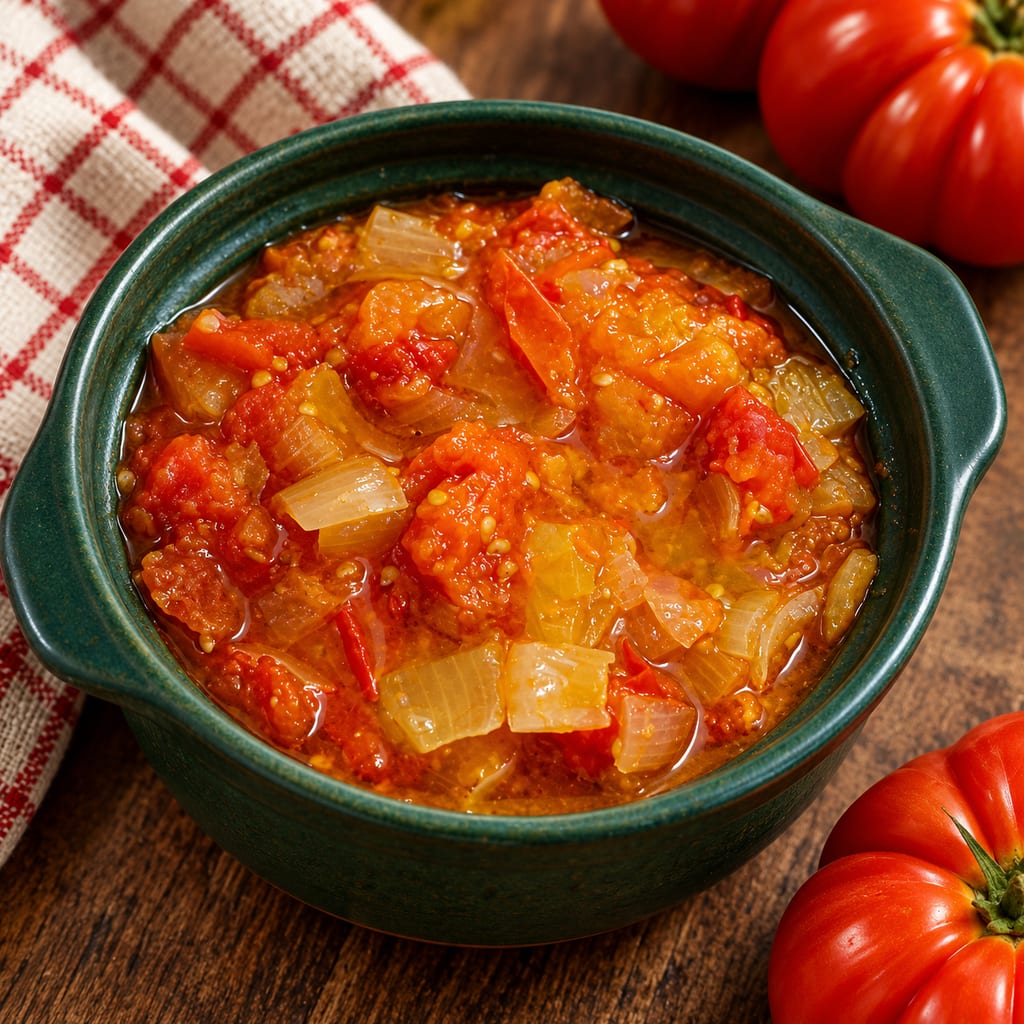
A thick South African tomato-and-onion relish simmered slowly and served warm with boerewors, pap or bread.
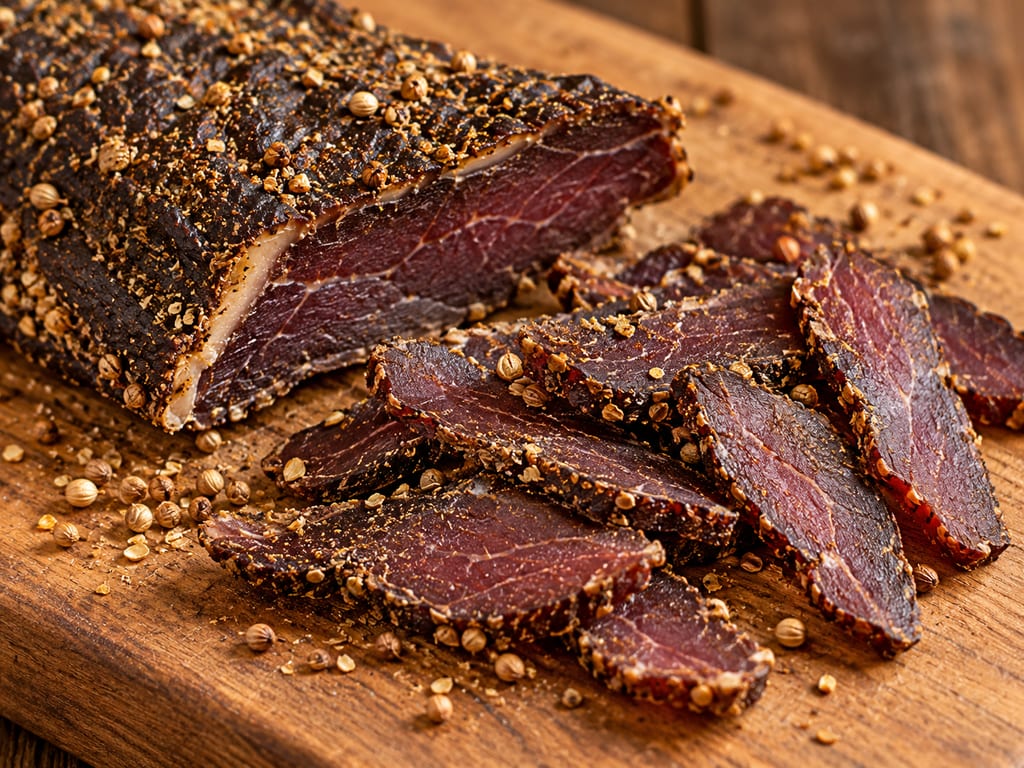
Strips of whole-muscle beef or game seasoned with salt, vinegar, roasted coriander and pepper and air-dried without cooking, sold anywhere from soft and moist to hard and very salty.
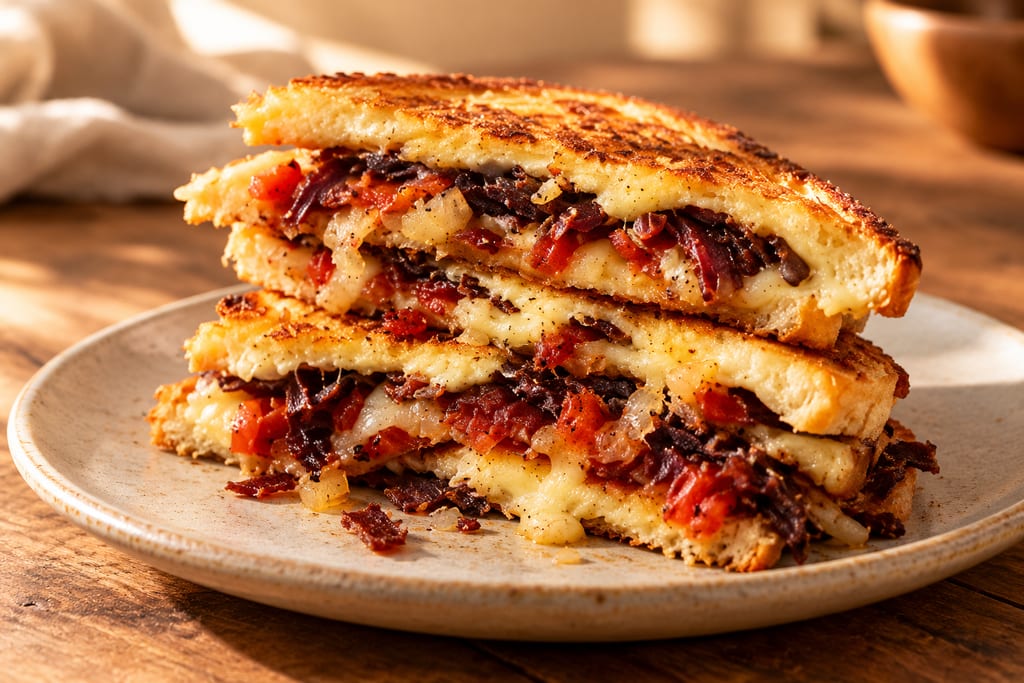
Chopped biltong, sweet onion, cream cheese and Cheddar fill bread toasted in a hinged grid over gentle coals, then finished with biltong dust.
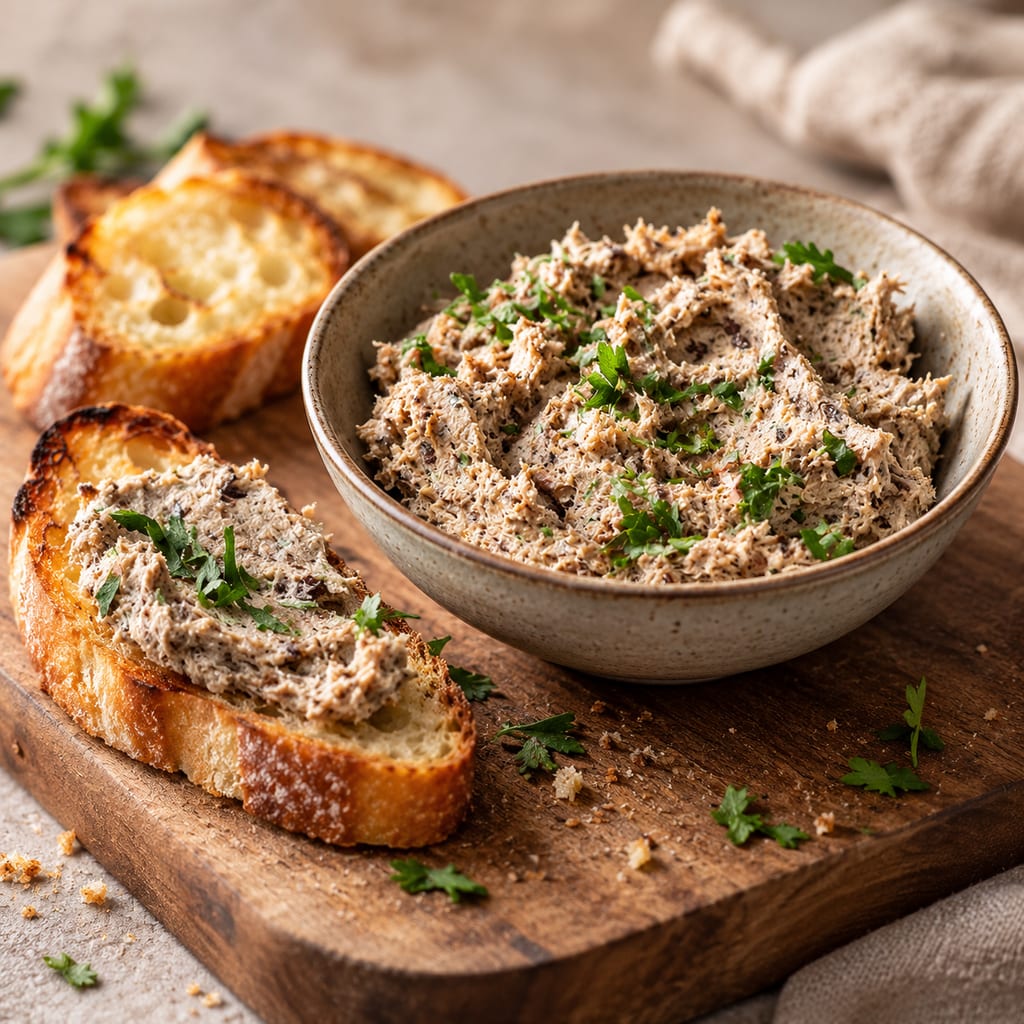
A cold biltong spread with sour cream, mayonnaise, mustard, lemon and herbs; serve it with crackers, crostini or bread.
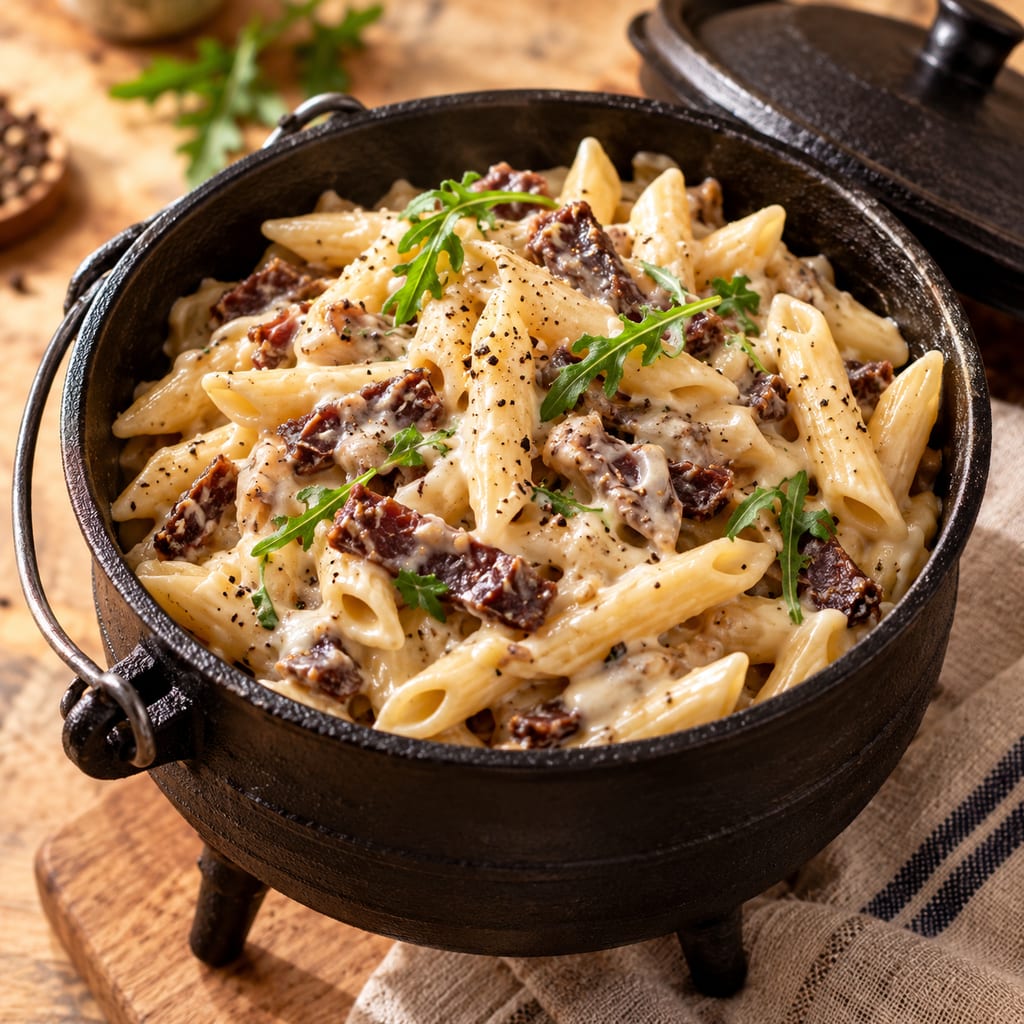
Biltong, bacon and vegetables simmer in tomato-herb stock, then join cooked pasta, milk, cream and Cheddar in this outdoor potjie.
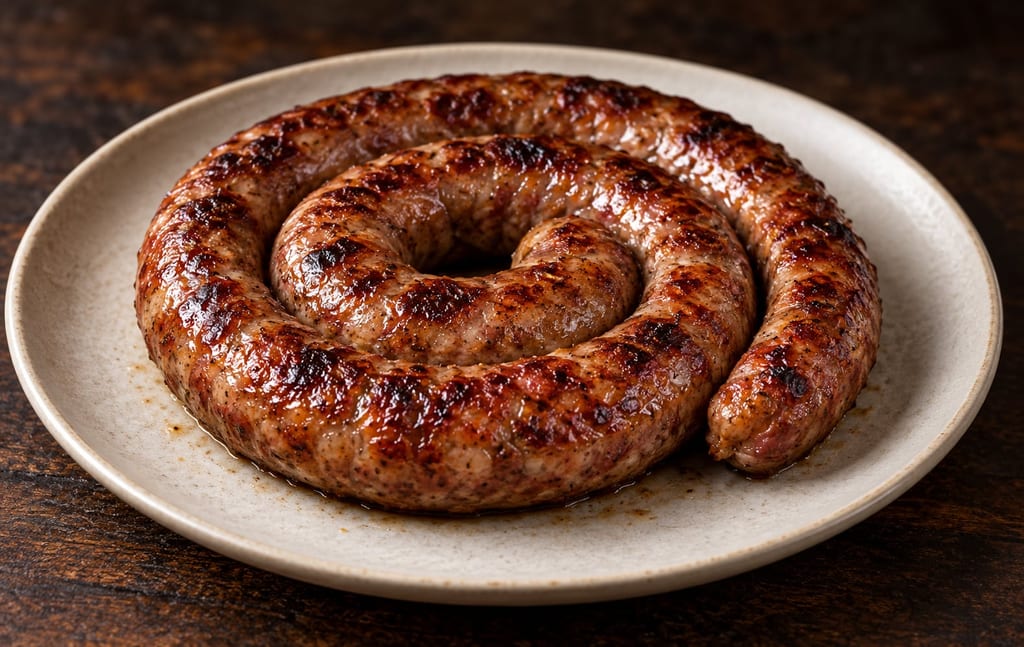
A coarse South African farmhouse sausage of beef with pork or mutton fat, defined by its coriander seasoning and cooked fresh over coals rather than preserved.
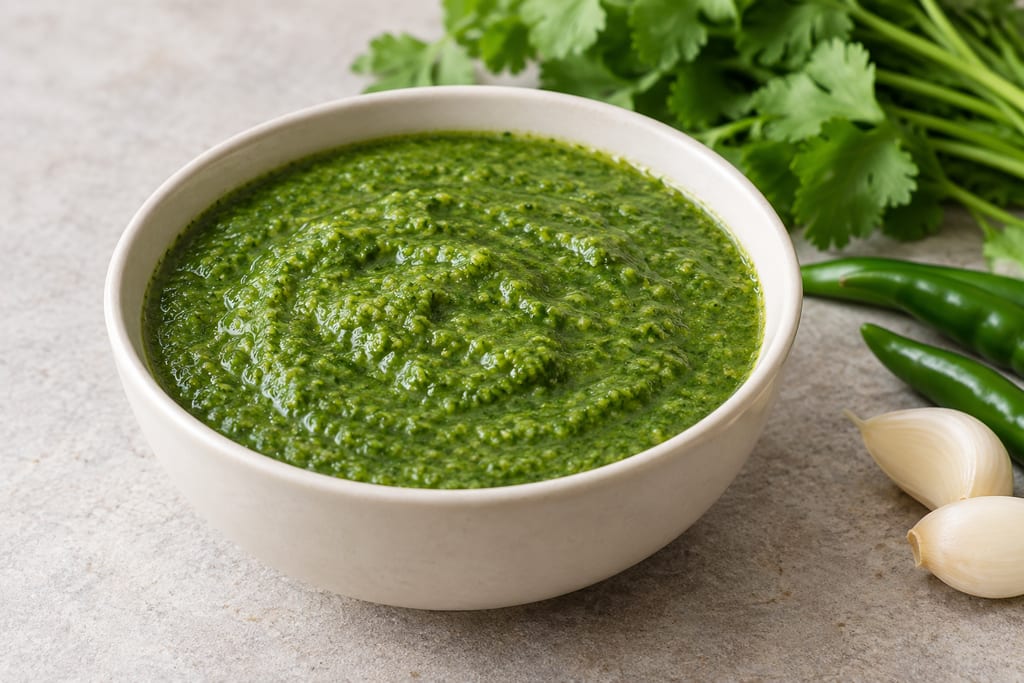
Afghan coriander chatni is a sharp, hot herb sauce with garlic and vinegar. A 2008 Afghanistan manual records green or red pepper and optional walnut; heat and household versions vary.
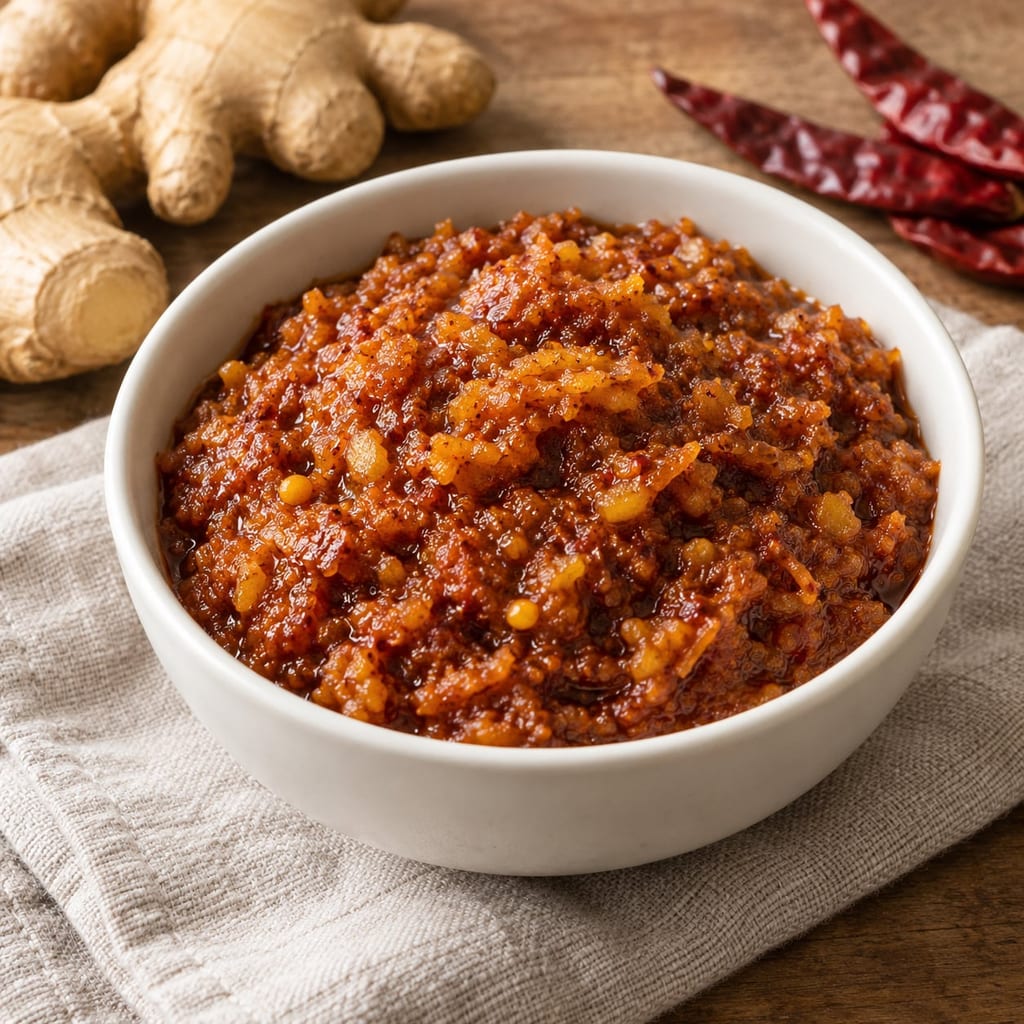
An Andhra ginger-and-urad chutney in which browned dal and briefly fried ginger and chillies are cooled, then ground with jaggery to a coarse paste.
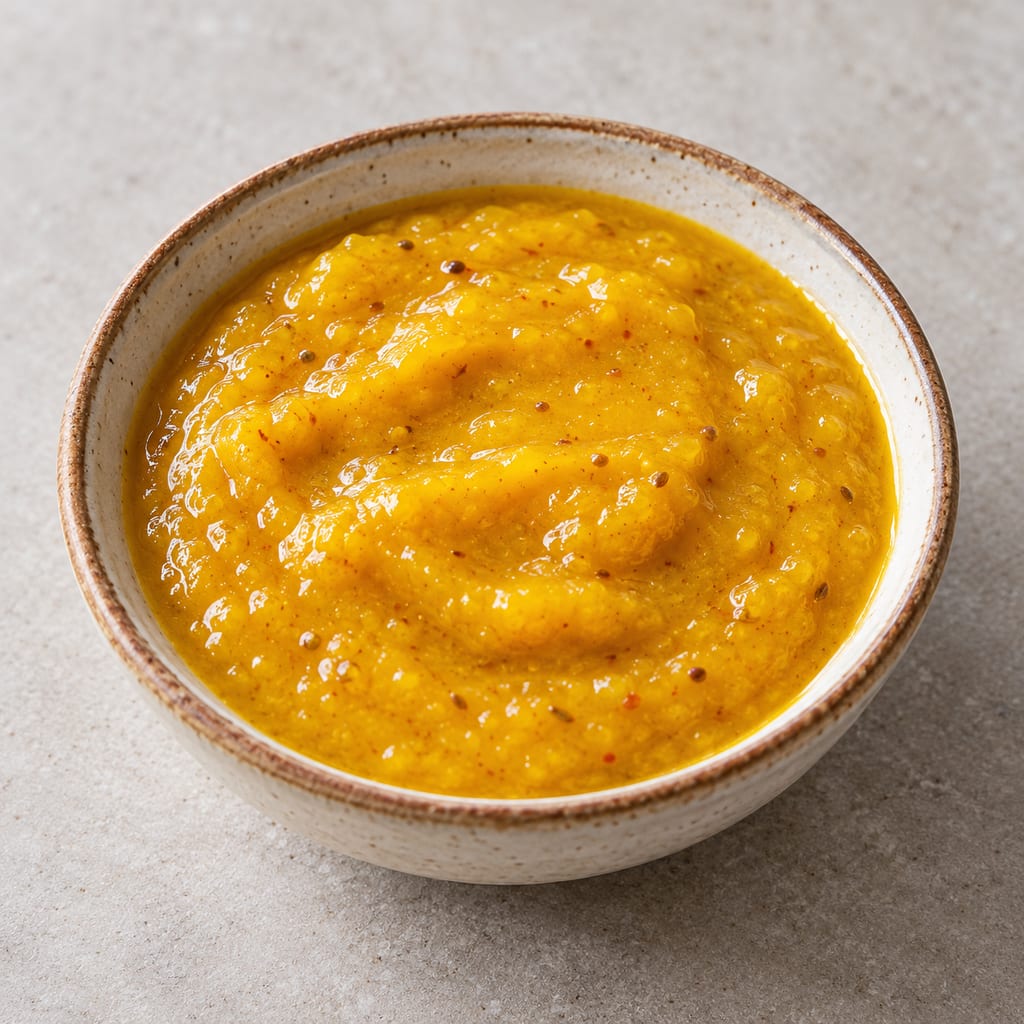
This cooked amba follows a Jewish Food Society recipe that simmers ripe mango with onion, garlic, mustard seed and warm spices into a tangy Middle Eastern condiment.
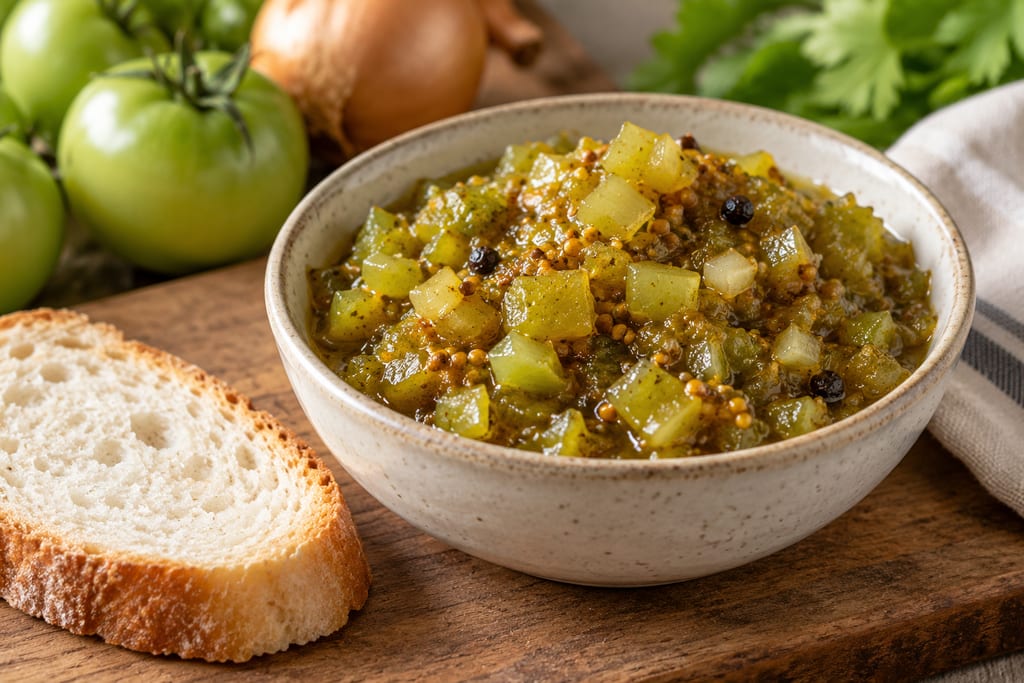
Australian green tomato pickles and relishes vary. This partial version follows ABC Western Victoria’s 2018 pickle recipe, not Beerenberg’s commercial formula. Sources document examples from 1944 onward, not a single origin.
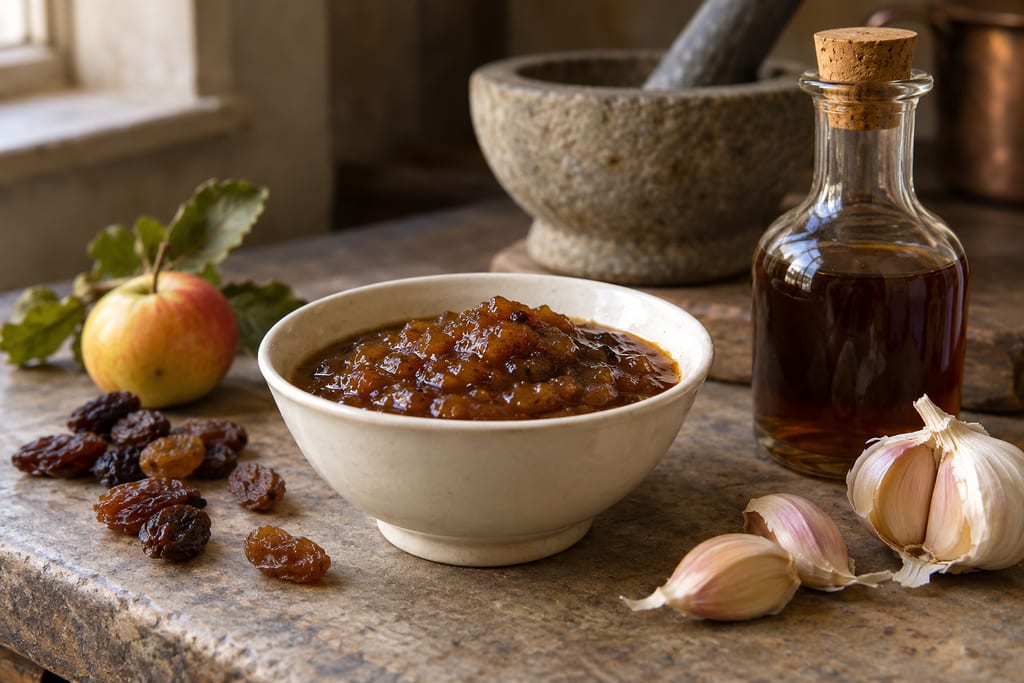
Eliza Acton's Bengal receipt for chetney sauce: stoned raisins and a hard acid fruit pounded with brown sugar, ginger, salt, cayenne and garlic, then thinned with vinegar to the consistence of thick cream.
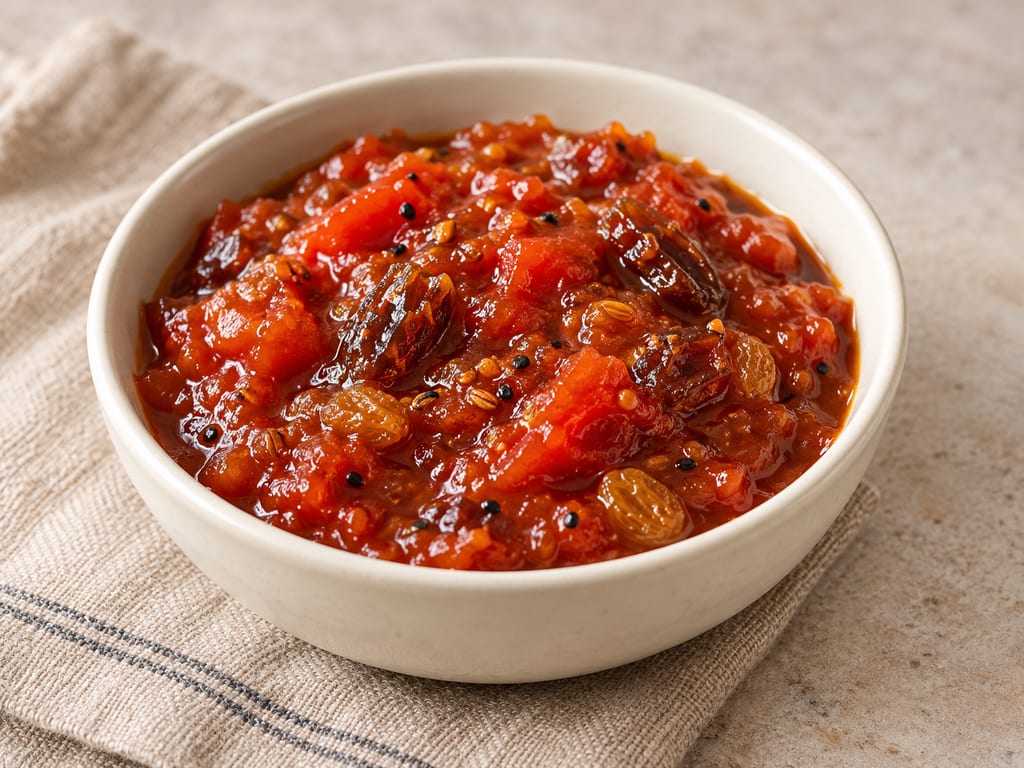
A cooked Bengali meal chutney combining tomatoes, dates, raisins, ginger and panch phoron.
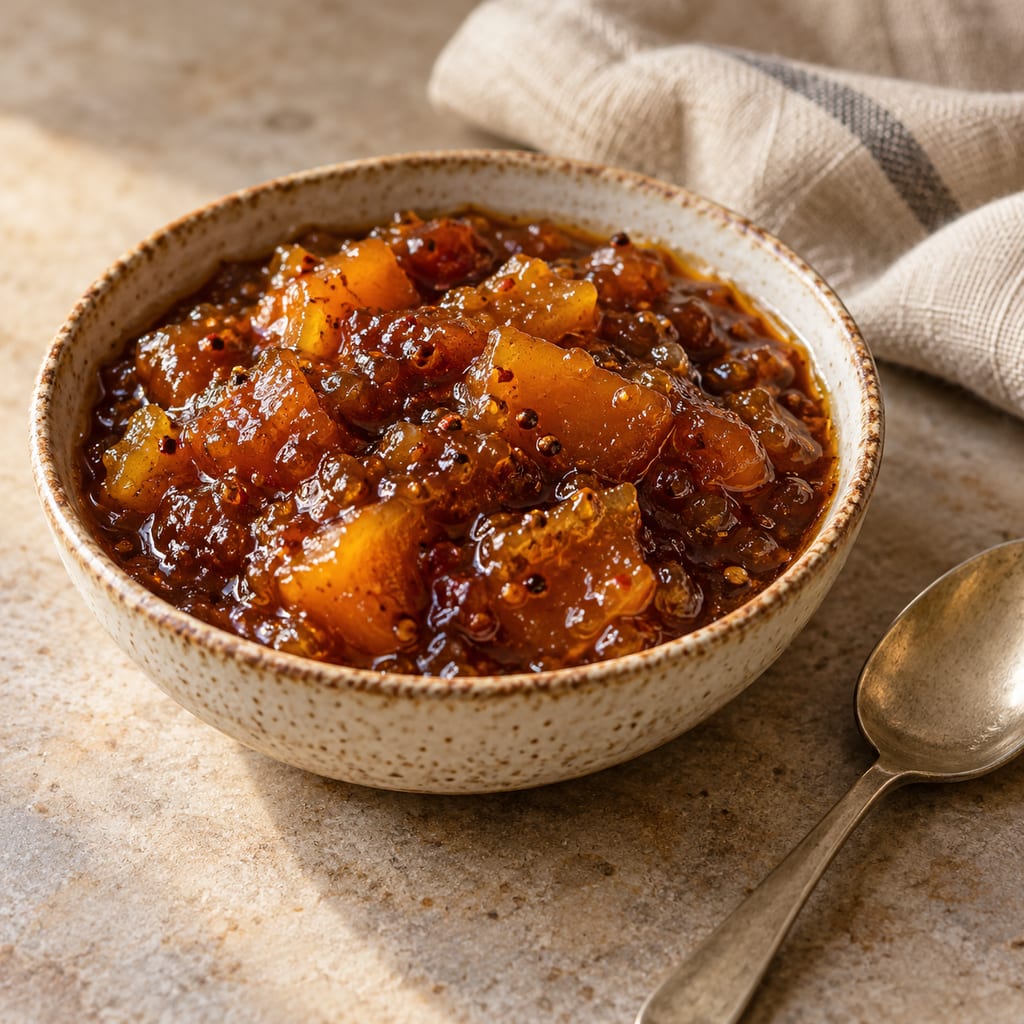
A broad account of cooked chutney traditions: fruit or vegetables combined with sugar, spices and sometimes acid, often boiled into a thick condiment. This record is historical and process context, not a formula or storage recipe.
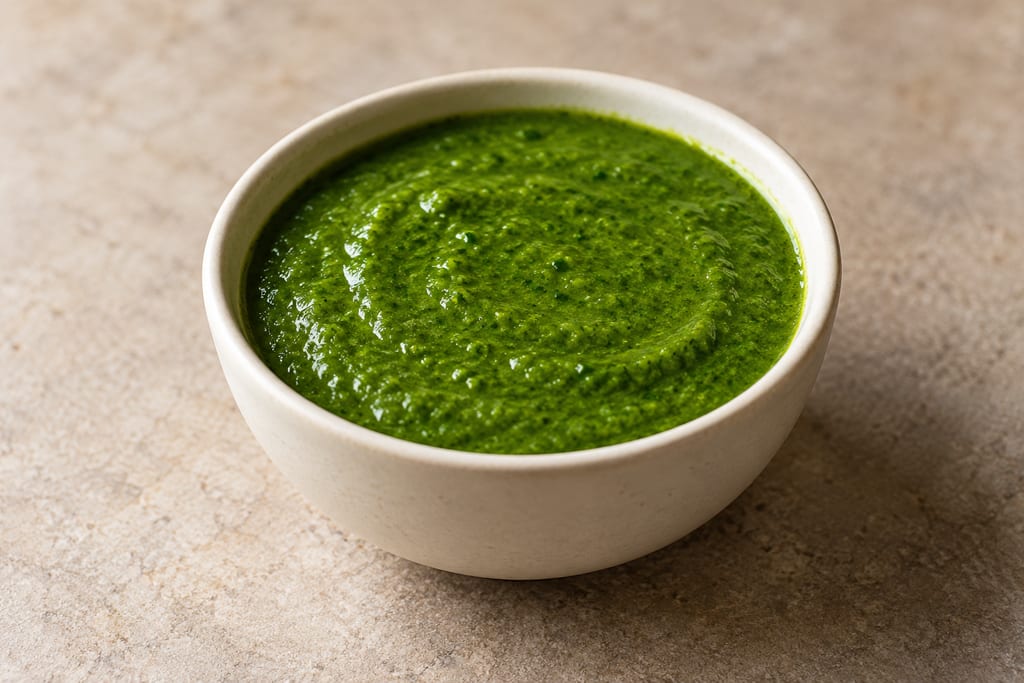
A cold-blended coriander and mint chutney with ginger, green chilli and optional cumin and lemon; the author serves it with snacks, chaat and sandwiches.

Soft, spreadable Calabrian pork sausage made with a great deal of red chilli and fatty pork, stuffed into natural casings, sometimes smoked and matured while staying soft.

A way to add independent temperature logging to an existing food dehydrator without changing its built-in controls or protections. It is a monitoring method, not a rewiring plan.

Pleurotus cystidiosus is the abalone mushroom, a cultivated oyster-type fungus with dark brown caps that grows more slowly and is more demanding than other Pleurotus species.

A dark, balanced vinegar from Emilia-Romagna made by combining cooked or concentrated grape must with wine vinegar, then acetifying and refining it in wood under a protected specification.

A living dairy inoculum that starts controlled cream fermentation, developing acidity and aroma before sour cream or cultured butter is finished.

A small electric incubator holds jars at a selected temperature for yogurt and other documented warm food preparations. Controls, capacity and vessel arrangement vary by model.

Adygean salt is a seasoned table salt associated with Adygea and the wider North Caucasian culinary tradition. Salt is blended with garlic and a variable selection of herbs and spices; the exact mix depends on the named style and maker.

The African Caesar-group mushroom, Amanita masasiensis, is a wild ectomycorrhizal species of central and southern African woodlands, eaten locally. The genus contains deadly poisonous species, so identification needs care.
No community contributions have been published for this entry yet.
Sign in to contribute. Published comments and photos are free to read.
Greedy GourmetInspiration · Method · Ingredients · Use
Mrs Balls ChutneyThe author gives a 5 kg dried peach and apricot home formula with malt vinegar, sugar, onion, salt, cayenne and chilli flakes.
The fruit soaks in vinegar for 24 hours; the method processes it, simmers the mixture until thick and gives hot filling into jars without a validated canning schedule.
The author describes the chutney as fruity and tangy and suggests it with cold cuts, boerewors, cheese, curries and barbecue foods.
Cited in: A modern dried-fruit version; From Fort Jackson to church bazaars; Heat, flavour and serving; Preservation limits
Amathole Museum, Imvubu 27(2)History · Geography · Use
Mrs Ball, KWT, and her famous chutneyThe museum records Sarah Adkins’s chutney production and sale at Fort Jackson and Amelia Ball’s later association with King William’s Town.
The museum places Amelia Ball’s chutney popularity at church bazaars during the First World War and describes later factory and packaging development.
The museum corrects the popular SS Quanza account, reporting a 1872 shipwreck and that Amelia’s parents met in South Africa.
Cited in: Fruit chutney in South Africa; From Fort Jackson to church bazaars; Heat, flavour and serving
University of Minnesota ExtensionSafety
Preserving food at home: CanningThe extension advises following research-based recipes and the prescribed canning method for home preservation.
It explains that acidity and correct jar-processing time and temperature affect safety and that appearance, smell and taste cannot establish safety.
Cited in: Preservation limits