
Chakalaka
A spicy South African vegetable relish of onion, carrot, pepper, tomato, curry seasoning and beans, cooked briefly and served warm or cold beside pap and grilled meat.
 FermenteaWhere food goes to change
Monkey gland
A sweet and tangy South African condiment of fruit chutney and tomato sauce, served with grilled meat and steak. It contains no monkey gland.
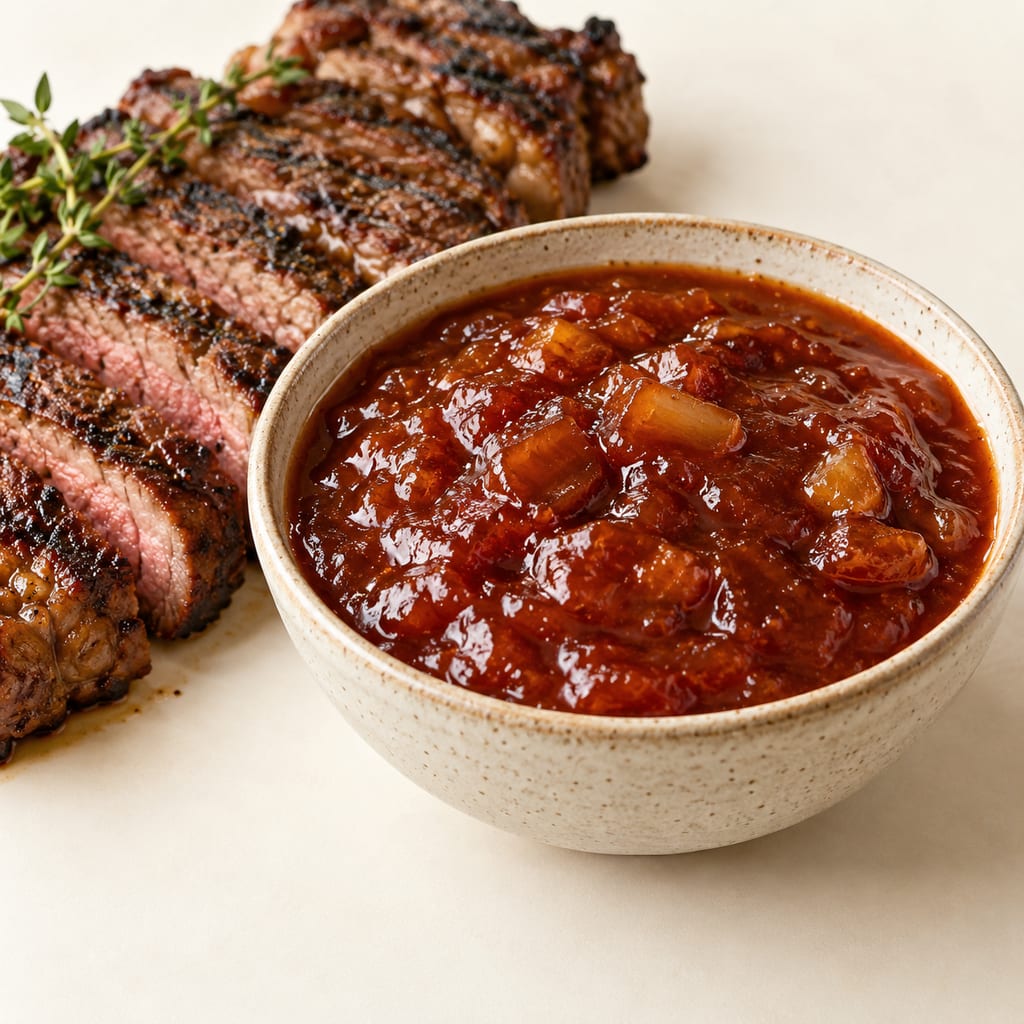
Monkey gland sauce is a thick, dark, sweet and tangy condiment from South Africa. Its name has nothing to do with its contents. It contains no monkey glands. The name is usually tied to the medical fad of monkey gland grafting promoted by the scientist Serge Voronoff, whose work was well known in the 1920s and 1930s.
The sauce is best understood as a restaurant condiment built from pantry bottles. Chutney and tomato sauce give it its sweetness and body. Onion, garlic, vinegar and Worcestershire sauce supply the savoury and sour notes.
The most cited account places the sauce in the old Carlton Hotel in Johannesburg in the 1930s, with French kitchen staff who added condiments already on the table to their dishes. A second account has an ex-Savoy waiter bring a steak named for Voronoff's experiments to South Africa, where the sauce later took its name.
These stories have not been settled. The Wikipedia article draws on a 2020 Briefly article, and the sources read do not give a primary document for either account. This page presents both as claims.
The sauce is served on grilled steaks and burgers. It is also used as a marinade, a dip for onion rings and chips, and a topping for roasted potatoes. The sources read describe its use on steak and burgers, and do not describe its role in the braai in detail.
Recipes vary in their proportions. Because the base is commercial chutney and tomato sauce, the result tastes sweet first and sour and savoury after, which is why it suits fatty grilled meat.
The sauce is generally traced to the 1930s. The origin accounts differ. One links it to French chefs at the Carlton Hotel in Johannesburg, where diners added chutney, tomato sauce and Worcestershire sauce to French dishes. Another links it to an ex-Savoy waiter who brought a monkey gland steak, named after the scientist Serge Voronoff, to South Africa in the 1930s. The article notes that the Voronoff connection and the Savoy renaming are not dated in the source.
Scaling: source batch only
The sauce is linked to the Carlton Hotel in Johannesburg. The article gives this as the likeliest origin, from the Briefly article it cites, and does not treat it as settled.
Now a standard condiment in South African restaurants and fast food.
A spicy South African vegetable relish of onion, carrot, pepper, tomato, curry seasoning and beans, cooked briefly and served warm or cold beside pap and grilled meat.
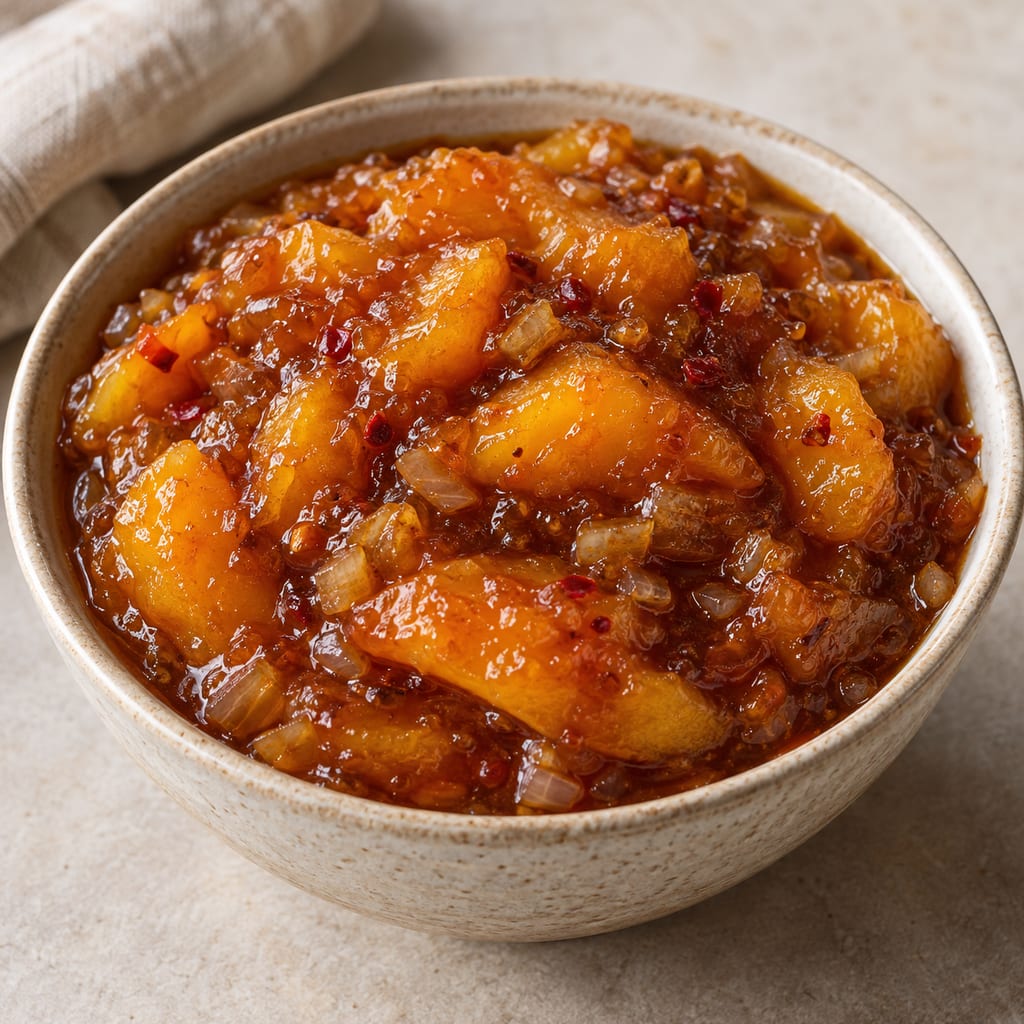
South African fruit chutney ranges from Cape-style sweet-sour fruit pastes to spiced dried-fruit versions; this page records a measured peach and apricot home recipe inspired by Mrs Ball’s.
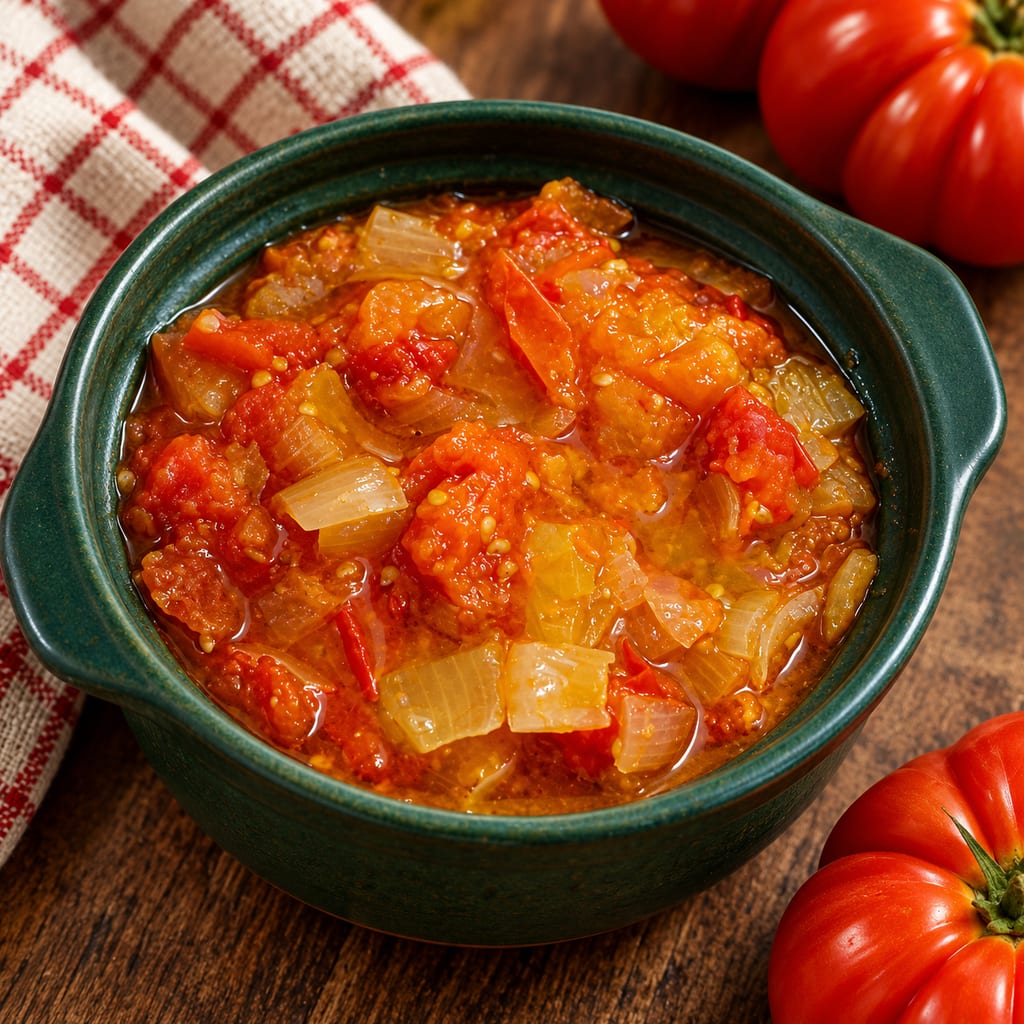
A thick South African tomato-and-onion relish simmered slowly and served warm with boerewors, pap or bread.
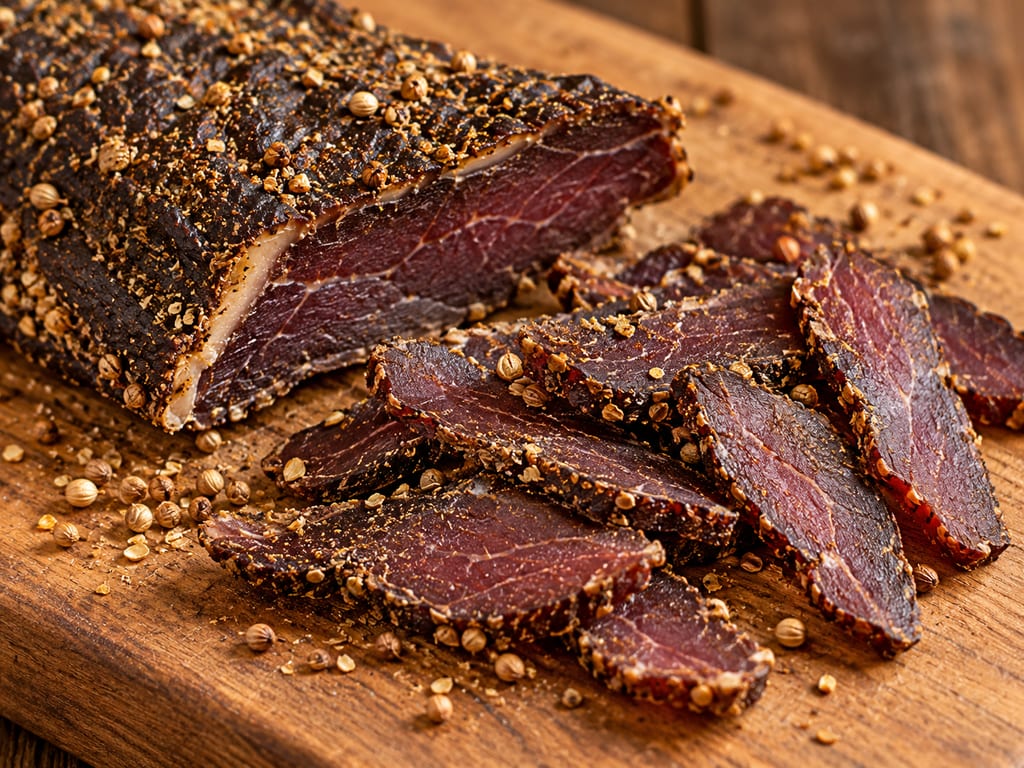
Strips of whole-muscle beef or game seasoned with salt, vinegar, roasted coriander and pepper and air-dried without cooking, sold anywhere from soft and moist to hard and very salty.
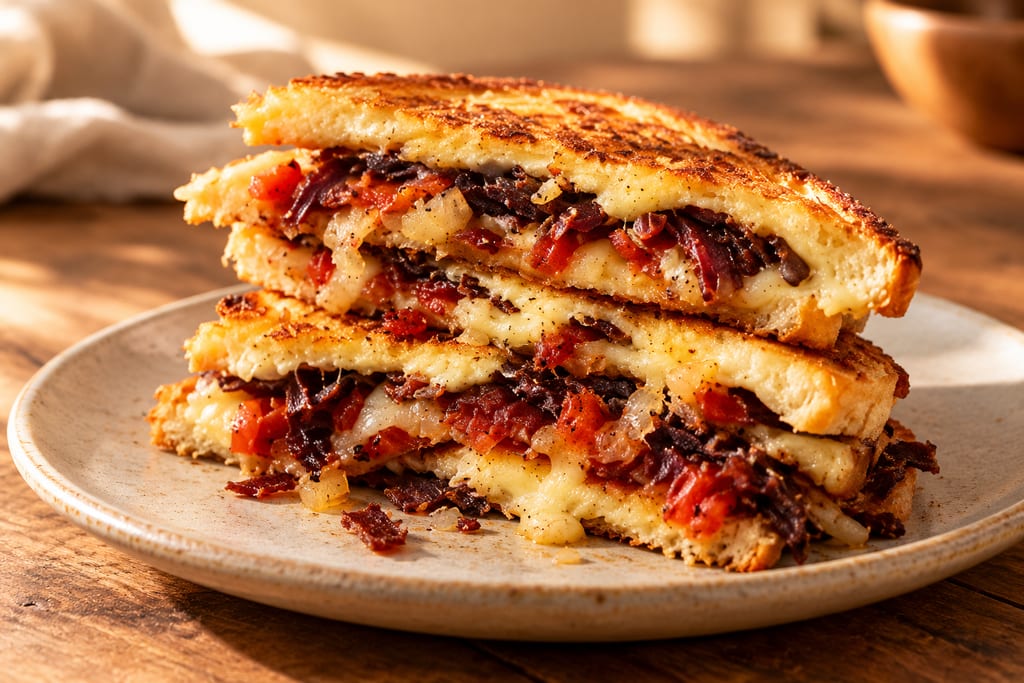
Chopped biltong, sweet onion, cream cheese and Cheddar fill bread toasted in a hinged grid over gentle coals, then finished with biltong dust.
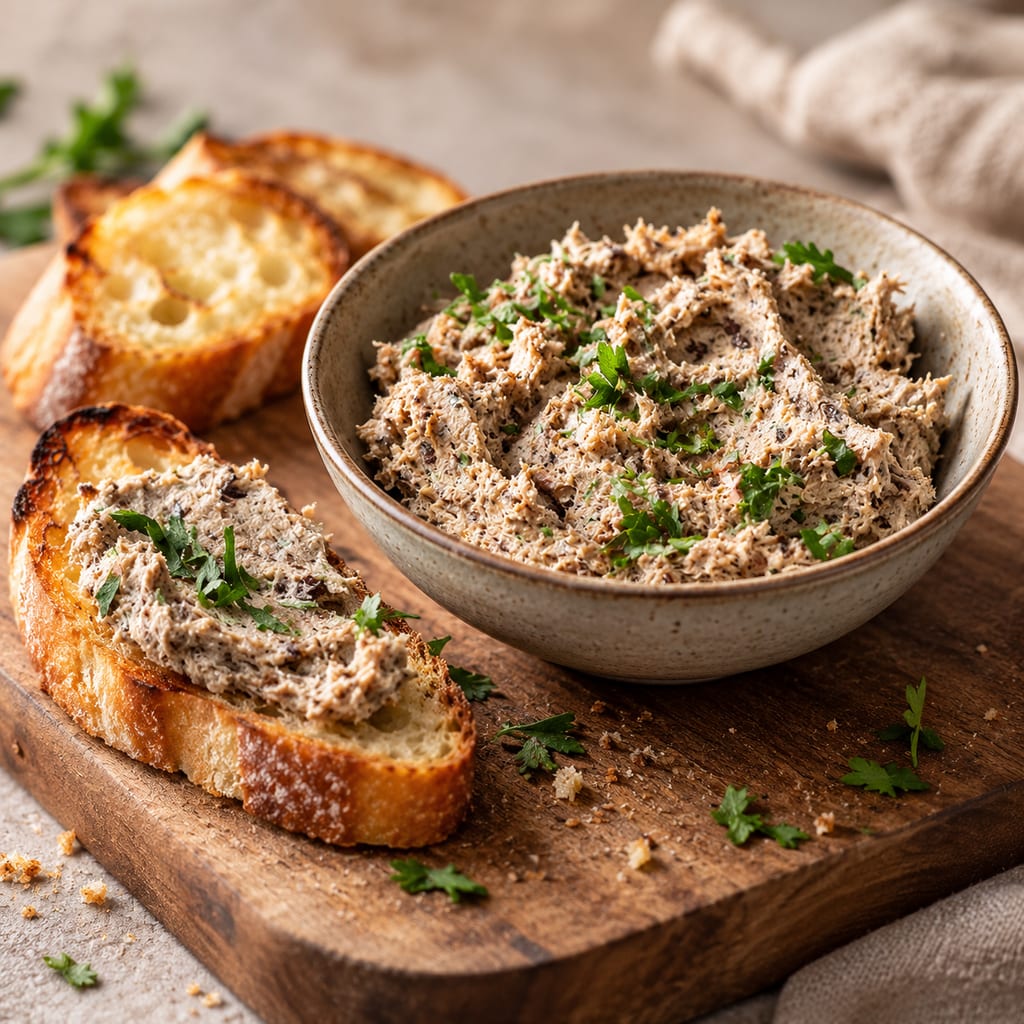
A cold biltong spread with sour cream, mayonnaise, mustard, lemon and herbs; serve it with crackers, crostini or bread.
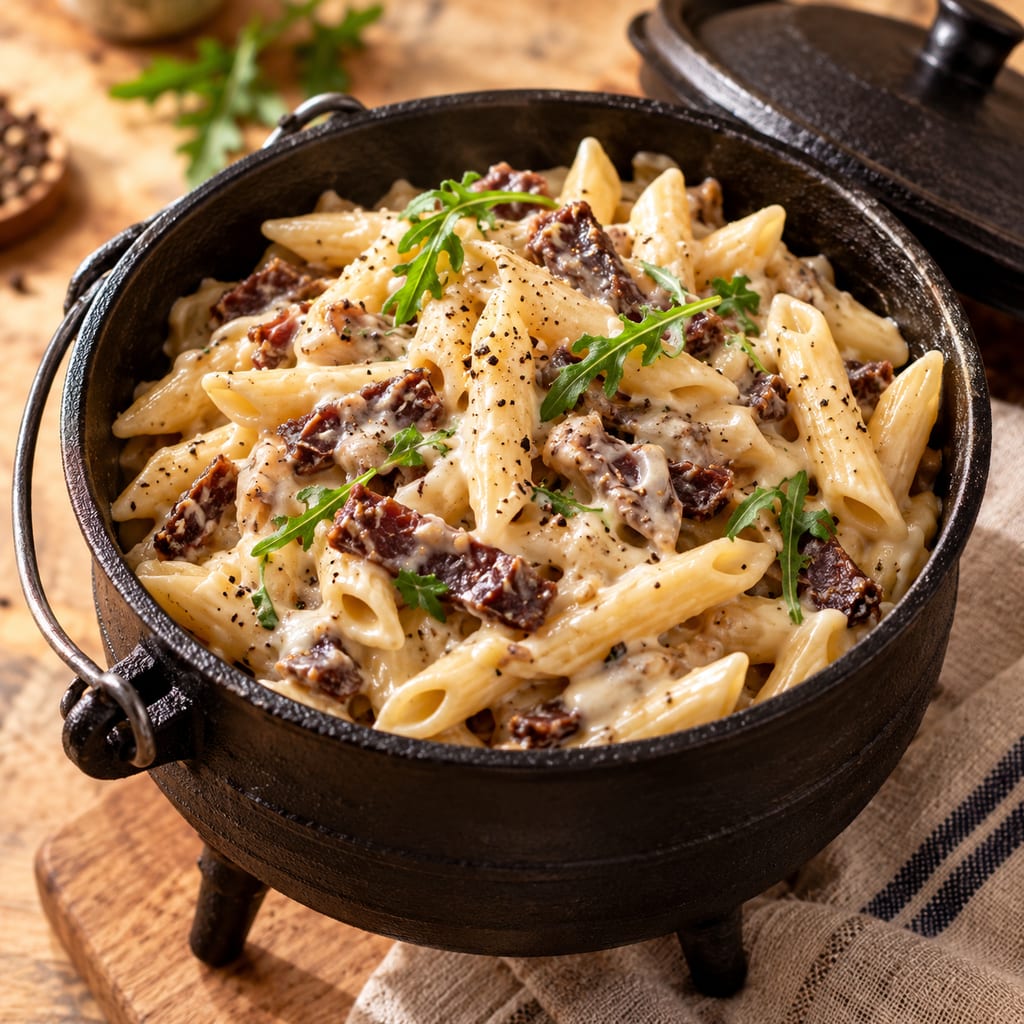
Biltong, bacon and vegetables simmer in tomato-herb stock, then join cooked pasta, milk, cream and Cheddar in this outdoor potjie.
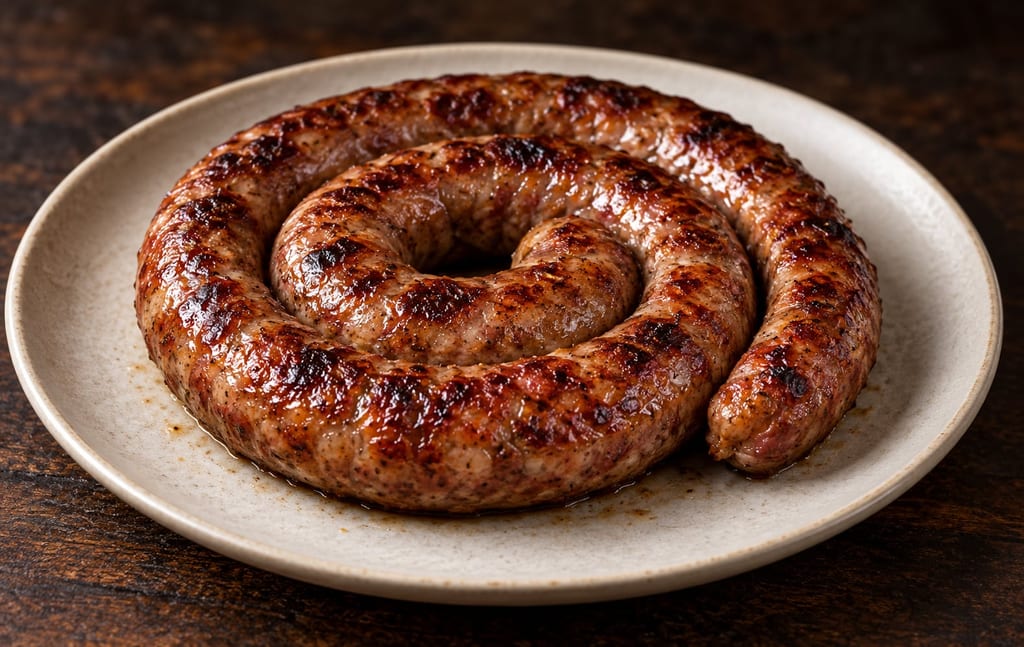
A coarse South African farmhouse sausage of beef with pork or mutton fat, defined by its coriander seasoning and cooked fresh over coals rather than preserved.

Ajvar is a cooked Balkan pepper preserve built around roasted red peppers, peeled, drained, ground and slowly fried with oil and seasoning. Leskovac’s protected version is a pepper specialty; regional versions vary.

Amlou is a nutty, lightly sweet Moroccan spread of roasted almonds, culinary argan oil and honey. The almonds are ground first, then loosened with oil and sweetened; the balance can range from a thick spread to a dip.

Apple sauce for goose and pork is a plain English accompaniment: cooked apples pulped with water, then sweetened with sugar and finished with a little butter.

A warm dip of garlic, anchovy and olive oil, often enriched with butter, that Piedmont serves over a flame with raw and cooked vegetables and bread.

A sweet-hot table sauce of ripe banana simmered with vinegar, sugar, onion, garlic and fresh chilli, in the manner of Philippine banana ketchup. An untested development batch of about 500 g.

A Georgian walnut sauce of ground walnuts, garlic, vinegar and spices, thinned with water or broth. It is served with poultry, vegetables and bread, and is the sauce of the dish satsivi.

A pourable dessert sauce of brown sugar, butter and cream, with a little corn syrup and salt. It is the sauce form of the butterscotch confection and is made without water, unlike caramel.

Byzantine murrī is a cooked imitation of murrī from the medieval Arabic repertoire, made from scorched honey, toasted bread, walnuts, quince, carob and spices rather than from a long grain fermentation.

Soft, spreadable Calabrian pork sausage made with a great deal of red chilli and fatty pork, stuffed into natural casings, sometimes smoked and matured while staying soft.

A way to add independent temperature logging to an existing food dehydrator without changing its built-in controls or protections. It is a monitoring method, not a rewiring plan.

Pleurotus cystidiosus is the abalone mushroom, a cultivated oyster-type fungus with dark brown caps that grows more slowly and is more demanding than other Pleurotus species.

A dark, balanced vinegar from Emilia-Romagna made by combining cooked or concentrated grape must with wine vinegar, then acetifying and refining it in wood under a protected specification.

A living dairy inoculum that starts controlled cream fermentation, developing acidity and aroma before sour cream or cultured butter is finished.

A small electric incubator holds jars at a selected temperature for yogurt and other documented warm food preparations. Controls, capacity and vessel arrangement vary by model.

Adygean salt is a seasoned table salt associated with Adygea and the wider North Caucasian culinary tradition. Salt is blended with garlic and a variable selection of herbs and spices; the exact mix depends on the named style and maker.

The African Caesar-group mushroom, Amanita masasiensis, is a wild ectomycorrhizal species of central and southern African woodlands, eaten locally. The genus contains deadly poisonous species, so identification needs care.
No community contributions have been published for this entry yet.
Sign in to contribute. Published comments and photos are free to read.
WikipediaHistory · Method · Uses
Monkey gland sauceChutney and tomato sauce base with onion, vinegar, garlic and Worcestershire sauce
Carlton Hotel and Savoy origin accounts, both disputed
Contains no monkey glands
Uses on steak, burgers, onion rings and potatoes
Cited in: A name that does not describe the sauce; Competing origin stories; On the grill