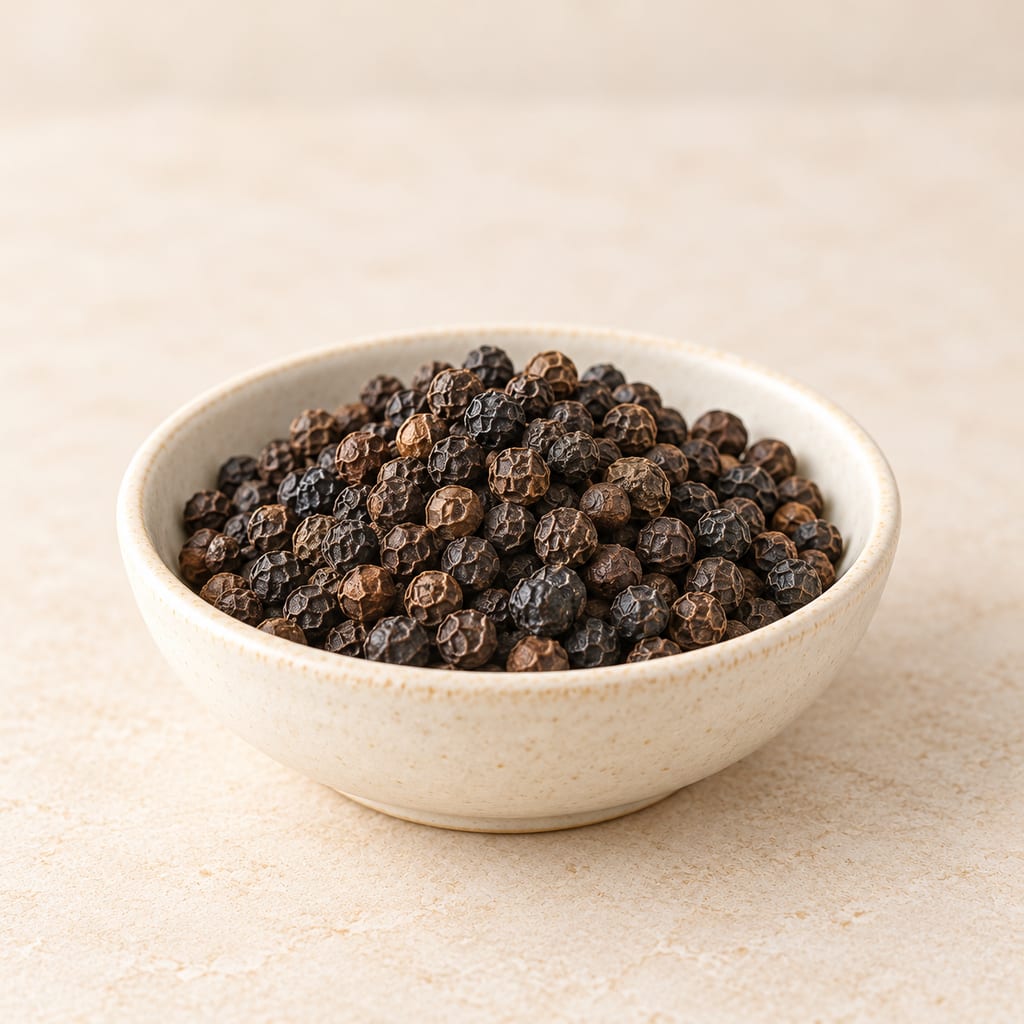
Black pepper
Black pepper is the dried fruit of Piper nigrum, a tropical climbing vine, used whole, cracked or ground for its pungency and aromatic oils.
 FermenteaWhere food goes to change
Beef rump takes vinegar, toasted coriander and pepper from the flavour family of tassal, then meets a thermometer-checked braai fire as a fresh-cooked meal.
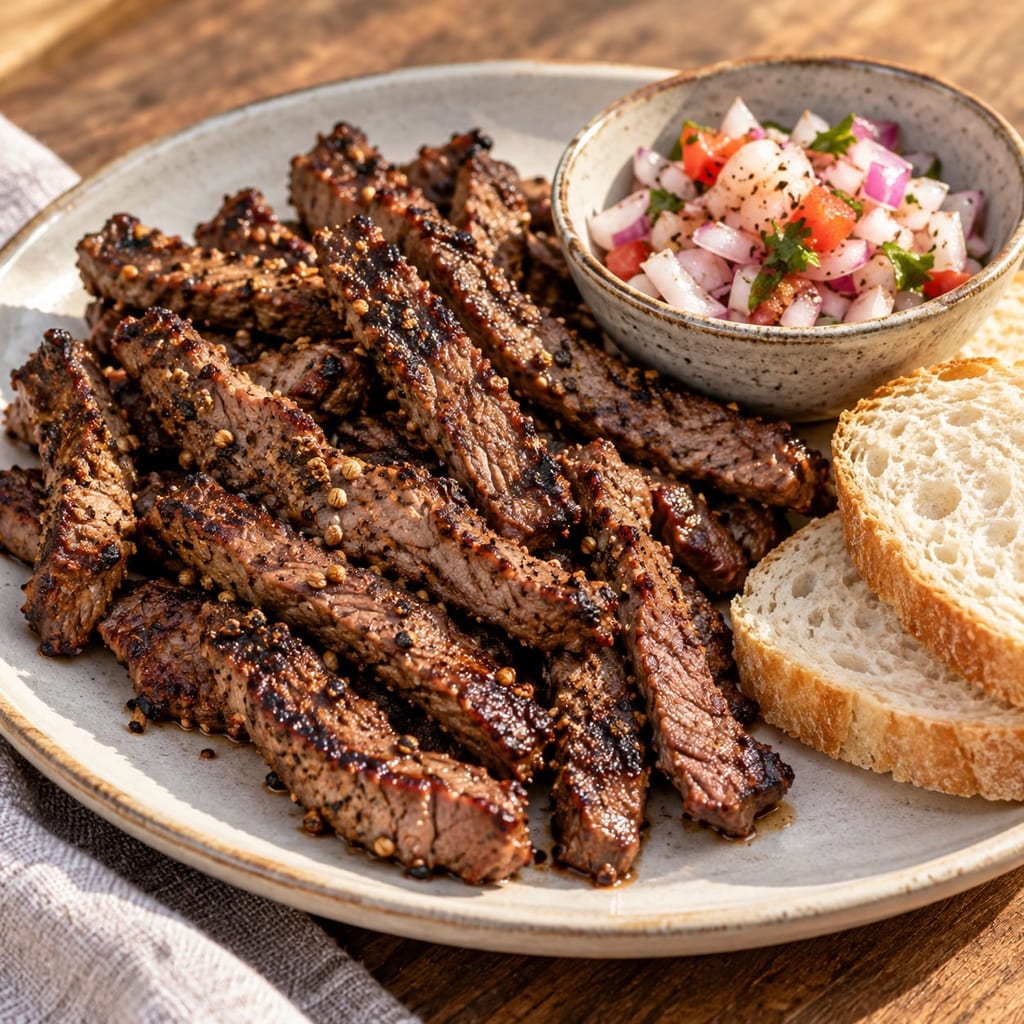
This grilled beef is a fresh-cooked development built around a historical flavour association: meat, vinegar, pepper and coriander. Its name signals that relationship while keeping the distinction visible. The recipe does not make tassal, biltong or a shelf-stable product. It takes an old, aromatic combination as a starting point and cooks fresh beef for a meal.
The old word never described one perfectly fixed product. The Dictionary of South African English traces tassal through Afrikaans and South African Dutch to Portuguese tassalho, a large slice or piece of food. It records meanings associated with biltong as well as dried pickled meat. An 1826 journal entry uses the term while describing eland meat being cut up; a later source calls it an old-fashioned way of curing meat in the open air.
Tasseltjies also appears in overlapping historical usage, sometimes for pickled strips that were wind-dried and grilled. This range matters because a historical name cannot, on its own, supply a repeatable process. Hildagonda Duckitt's 1891 cookbook separates its biltong and tassal entries, preserving evidence that the two terms and methods were not interchangeable in that household account.
Duckitt's tassal description gives strips of beef or game with salt, pepper, bruised coriander and vinegar, a day's standing, and hanging. Dried strips could be soaked and grilled over coals. The account is valuable for the food's history and use, but it gives no dependable salt percentage, controlled drying conditions or measured dryness endpoint. Those omissions make it a historical description, not a modern preservation method.
The recipe here borrows only the seasoning idea and the later association with a fire. Its beef is not cured or dried first; vinegar belongs to a refrigerated marinade and the meat goes directly to the grill. The difference between a newly developed cooked dish and preserved tassal is essential: no historical authority or shelf-stability claim is carried over.
Rump is the named cut in this development formula. Cutting it into strips about 15 millimetres thick creates portions that can be moved and turned individually. The dimensions are part of the recipe: a thin shaving, a thick roast and a narrow strip do not warm at the same rate. The source specifies rump and gives no tested alternate cut, so the text keeps that choice instead of implying that every cut behaves identically.
The historical tassal entry also refers to meat in strips, but it should not be mistaken for the direct ancestor of this exact fresh-cooked formula. Its strips were salted and seasoned, left standing, and hung; only after drying could they be soaked and grilled. The similar geometry and coriander-vinegar association make a useful comparison, while the preservation stage changes the food. A cook using this recipe starts with fresh beef and does not hang it.
A grill exposes the surface to direct radiant heat and hot air while the centre warms more slowly. At the surface, heat-driven reactions between amino acids and reducing sugars contribute to browned colour; Texas A&M's meat-science explanation calls this the Maillard reaction. The brown surface gives flavor and visual contrast, but says nothing conclusive about the centre temperature.
The brief cooking window means the fire should be ready before the beef leaves the refrigerator. The source gives no clock time for grilling. Time changes with the strip thickness, starting temperature, coal intensity, grate position and crowding. Turning the strips for even exposure and measuring the centre are therefore more faithful to the source than inventing minutes per side.
Moderate coals are the source's description, not a temperature reading. A small fire can have hot and cool areas, and close-packed pieces may cook differently from pieces with space around them. Arrange the strips so they can be turned without compressing them. Move them when one surface browns quickly while the centre remains below the specified endpoint, then continue checking with the clean probe.
For four portions, this development batch combines 700 grams of rump with 25 millilitres wine vinegar, 10 millilitres neutral oil, 9 grams salt, 6 grams coarsely crushed toasted coriander and 1.5 grams black pepper. These are the formula's stated quantities, not a historical Duckitt ratio. The research file marks the development recipe untested, so the numbers are recorded without claiming kitchen optimization.
Vinegar gives the marinade a tart note and echoes the older combination. Here it seasons fresh meat before cooking; it is not a validated acidification or preservation step. The short refrigerated rest lets the seasoning coat the strips, but it does not make raw meat sterile and cannot replace cooking. The recipe makes no claim about shelf stability, drying or a safe raw product.
Salt seasons the beef. Neutral oil helps distribute the seasonings in the bowl without introducing a strong additional flavor that the recipe does not name. This is a culinary interpretation of their roles rather than a claim that either ingredient has been measured for preservation. The mixture is not calculated as a curing formula, and the amount must not be reused as a salt percentage for a dried meat.
The coriander is toasted and crushed coarsely. Crushing breaks the seeds into smaller pieces and exposes their aroma to the mixture; the coarse grind leaves spice texture on the cooked surface. The source gives the coriander quantity but no particle-size standard or precise toasting time. Black pepper provides a second pungent seasoning; no additional spice blend is documented.
The ingredients also distinguish this dish from neighboring South African meat preparations. It contains no casing or minced meat, so it is not boerewors or cabanossi. It does not use a drying or smoking stage, so it is not droëwors or a cold-smoked stick. Keeping the list short protects the identity of this particular development recipe rather than turning it into a universal account of spiced beef.
Combine the beef with the vinegar, oil, salt, coriander and pepper until all pieces are coated. Cover the bowl and refrigerate for two to four hours. The research file does not specify a particular container. A covered food-safe container keeps the meat separate from other foods, while the recipe's actual control is the stated refrigerator rest, not a room-temperature hold.
Drain the beef before grilling. Thread the strips loosely onto skewers if that helps with turning, or place them directly on a clean grate. Skewers are optional and the source does not name a material or length. Avoid packing strips tightly together, because the method depends on turning and exposing the pieces to the coals rather than forming a single thick mass.
Grill over moderate coals and turn the strips for even cooking. The source does not specify a braai model, grate material, fuel, airflow setting or fire temperature. A thermometer is needed because the method gives no dependable grill duration. The color of the outside can develop before the centre reaches its cooking condition.
Insert a clean food thermometer into the centre of the thickest pieces. Cook to 70°C held for two minutes, or 75°C for 30 seconds, the two combinations used by the Food Standards Agency in its general guidance. They are paired time and temperature instructions: reaching 70°C momentarily is not the same as holding it there for two minutes.
Serve the cooked beef hot with bread and a sharp onion relish, as suggested in the development formula. The relish is a serving idea, not part of the measured ingredients, and no recipe or quantity is provided for it. It can be offered separately so that each diner chooses how much to use. This keeps the meat formula unchanged.
Raw meat can carry harmful bacteria, and the Food Standards Agency recommends using a clean probe thermometer to check the centre of food. This recipe chooses the documented 70°C for two minutes or 75°C for 30 seconds combinations. Put the probe in the centre of a thick strip, not against the grill or on the browned surface.
Clean the thermometer probe after it touches raw or partly cooked meat and before it touches cooked food. Keep raw juices away from bread, relish and other foods ready to eat without cooking. Refrigeration during the marination limits the time the raw beef spends outside the cold environment; it does not remove the need to cook the meat.
The recipe uses strips of rump rather than a single intact steak and gives a thorough-cooking endpoint. Do not infer a different endpoint from the cut name or from a photograph of browned beef. The FSA notes that raw meats can carry bacteria and that undercooked food can cause food poisoning. A numerical temperature-and-time check is more useful than an estimate from color or touch.
The source gives no safe storage life for the marinated raw beef, no cooling instructions for leftovers, and no method for preserving the cooked dish. This is a freshly cooked meal, not a pantry product. Keep the meat chilled before cooking and follow current local guidance for any leftovers rather than inventing a number of days for this recipe.
Safety and quality are separate. The thermometer checks a time-temperature condition at the centre. A pleasant smell, attractive char or peppery crust can describe the eating experience, but none shows that the centre reached the stated endpoint. The old tassal description also provides no modern safety assurance because it lacks measured salt and drying limits.
Direct grilling gives narrow strips a short path between their surface and the heat. The surface can lose moisture and brown while the centre is still heating. The recipe's moderately hot coals and turning instruction balance those changes: turning exposes more than one face to the fire, while checking the thickest strip addresses the slower-heating centre.
The Maillard reaction helps explain why the grill produces a brown surface and a characteristic cooked aroma. It involves reactions between amino acids and reducing sugars under heat. That general food-science description explains browning, but it does not provide a special temperature or duration for this exact batch. Texas A&M's barbecue science account explains the reaction without prescribing a validated setting for 15-millimetre beef strips.
The recipe includes no sugar, so it should not be described as a sweet glaze or a caramelized coating. It also includes no smoking step. Any smoke that happens to rise from dripping fat or charcoal is a feature of the cooking environment, not a controlled curing treatment. A smoky flavor does not turn a fresh-cooked dish into cold-smoked meat.
Because the ingredient mixture is untested, the expected balance should be approached as a starting point rather than a guaranteed sensory outcome. The formula does not specify the acidity of the wine vinegar, the salt crystal size, the exact pepper grind, or a coriander roasting endpoint. Those details can change flavor intensity, so a reader should keep to the given ingredients and avoid treating the formula as an analytically standardized product.
Historical tassal is best understood through documented uses rather than a single modern definition. The 1826 citation records eland being cut into food called tasaal vleesch. Duckitt's 1891 entry places strips, salt, pepper, coriander and vinegar in a process that continues through hanging. Another account notes soaking and grilling the dried pieces. These descriptions show that preserved meat could return to the fire before eating.
That history does not show that this fresh-cooked recipe is an exact copy. The development formula retains beef, coriander, pepper, vinegar and grilling as a meal, but removes the standing and hanging stages. It uses a measured refrigerated marination and a modern thermometer endpoint. The historical preservation process and the modern cooked adaptation have different purposes and cannot share a safety claim.
Duckitt's separate biltong entry offers a further reminder that adjacent food names do not guarantee identical ingredients. Her biltong description uses hind-leg beef, salt, brown sugar and saltpetre, followed by rubbing, turning, pressing and drying. The supplied research cautions that the old saltpetre amount is obsolete and must not be converted into a contemporary curing-salt dose. None of those ingredients or preservation steps belongs in this recipe.
The overlapping words should likewise not be turned into strict product standards. The dictionary traces an array of meanings and references rather than a modern manufacturing specification. That is why the title says tassal-inspired: it points to a historical flavor and eating association while leaving the distinct preserved food in its own history.
Bread offers a plain, starchy accompaniment to the seasoned beef. A sharp onion relish is named as an option in the development formula, but it is not quantified. The page therefore lists the measured meat ingredients and keeps the relish in the serving instruction. This difference lets the reader identify what is necessary to prepare the described batch and what is an accompaniment.
The braai setting fits the South African association of the historical food and the method supplied for this adaptation. Still, this exact formulation is not established as an inherited regional tradition. The historical evidence concerns preserved meat that could be soaked and grilled after drying; the current formula is cooked directly from fresh beef. It should be introduced as a modern meal rather than as an old household recipe.
A useful way to read the recipe is to separate its three kinds of information. The first is the measured development batch: cut, marinade, refrigerate and grill. The second is the modern cooking control: use a clean thermometer and meet one of the stated time-temperature pairs. The third is the historical context: tassal names a related family of preserved meats whose old method is not fully measurable from the evidence.
This structure also helps when comparing it with biltong. Biltong is dried meat, while this dish is cooked immediately. The recipe has no drying endpoint, no smoking stage and no storage claim. A reader interested in those older preparations should consult a separately sourced recipe whose validated controls match the process; this fresh-cooked version cannot be extended into one by simply adding a hanging step.
The four-portion yield, 15-millimetre strip size, ingredient quantities, two-to-four-hour refrigerator rest and serving suggestion are retained from the supplied development recipe. That source labels the formula untested. The page does not claim that a test kitchen has optimized the seasoning, that every fire gives the same result or that the recipe scales without change.
No alternate beef cut, grill duration, coal temperature, reduced-salt version, allergen substitution or storage period is documented. Changing the batch size can change how much surface area is coated and how crowded the grill becomes. The source offers no tested scaling factor, so this page keeps one four-portion batch as written and tells readers what is not established.
The intended character is restrained: beef, wine vinegar, neutral oil, salt, toasted coriander and black pepper. Historical tassal supplies context for the flavor association, not proof that these quantities are traditional. The dish adds refrigeration and a measured thorough-cooking endpoint, while omitting the historical hanging and drying stages.
A properly cooked serving will have browned surfaces where they meet the fire and will satisfy the thermometer condition at the centre. Browning varies with the coals and turning; the science source describes the reaction but provides no single grill setting for this batch. Let the probe, not appearance, determine when the strips are ready.
This boundary preserves the history without borrowing authority it cannot provide. An archival method can explain how people prepared and ate preserved meat, but without full quantitative and environmental controls it cannot certify a present-day preservation process. This fresh-cooked dish can be followed with its documented ingredients and cooking endpoint; its title keeps inspiration visible while naming a different preparation.
A contemporary fresh-cooked dish inspired by the historical South African flavor association associated with tassal; it is not a reconstruction of preserved meat.
Yield 4 portions · Scaling: source batch only
The dish uses raw beef strips handled and marinated before cooking.
Hazard sourceKeep the marinating beef refrigerated and check the centre with a clean thermometer; reach 70°C for 2 minutes or 75°C for 30 seconds.
Control sourceDo not judge the cooking endpoint from browning; check the centre of the thickest strips with a clean thermometer.
Keep raw beef and its juices away from ready-to-eat foods.
This fresh-cooked development draws on historical South African tassal; it is not itself the preserved preparation.
Black pepper is the dried fruit of Piper nigrum, a tropical climbing vine, used whole, cracked or ground for its pungency and aromatic oils.
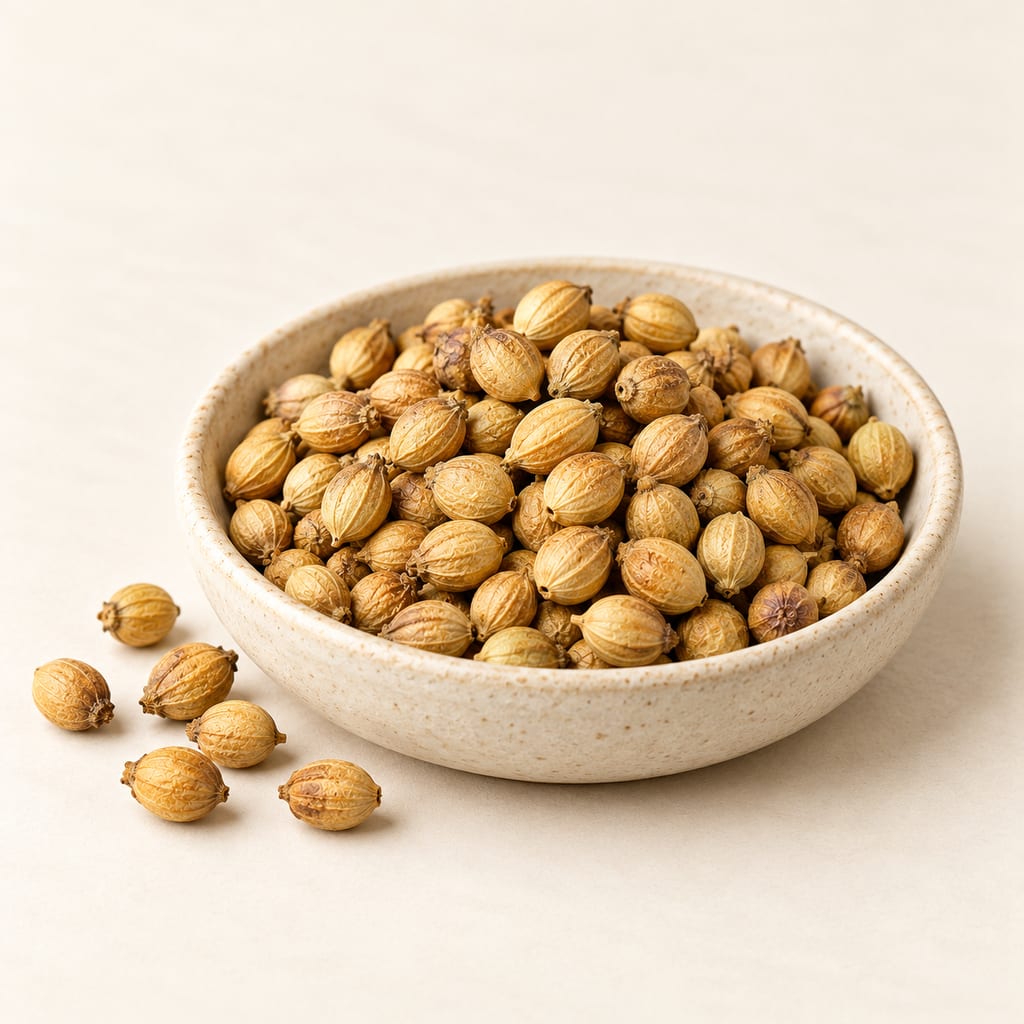
Coriander seed is the dried, aromatic fruit of Coriandrum sativum, used whole, cracked or ground in spice blends, pickles and cooked dishes.

Food-grade sodium chloride seasons food and changes water movement in brines and cures; crystal size and the recipe's measurement method matter.
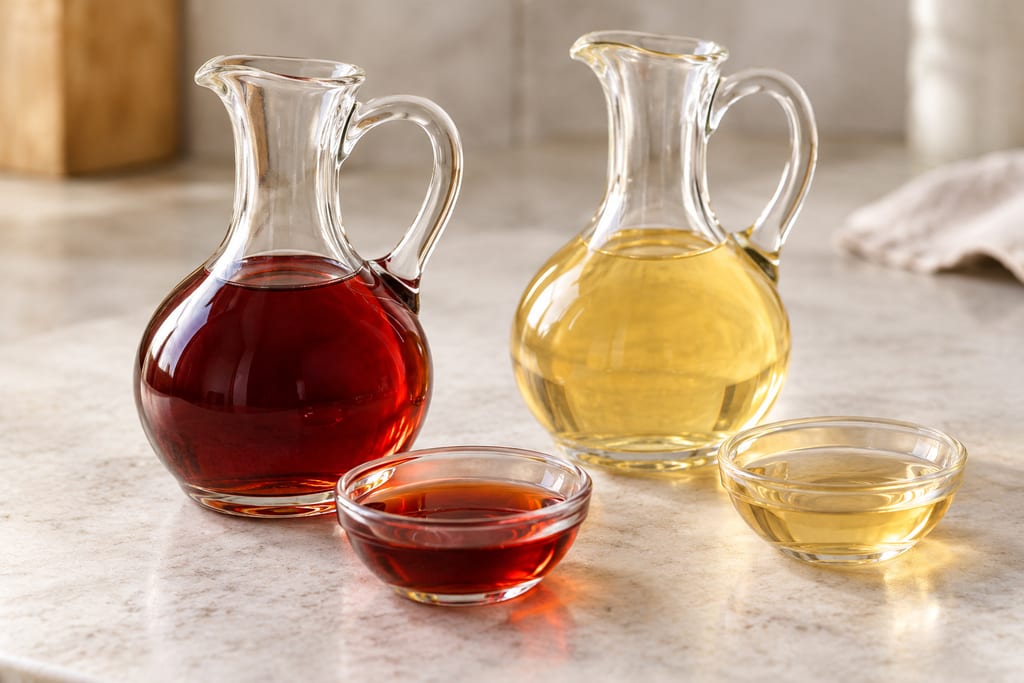
Wine vinegar is made by the aerobic oxidation of wine's alcohol into acetic acid by bacteria, producing a sour, wine-derived condiment used in dressings, sauces, marinades and preserved foods.
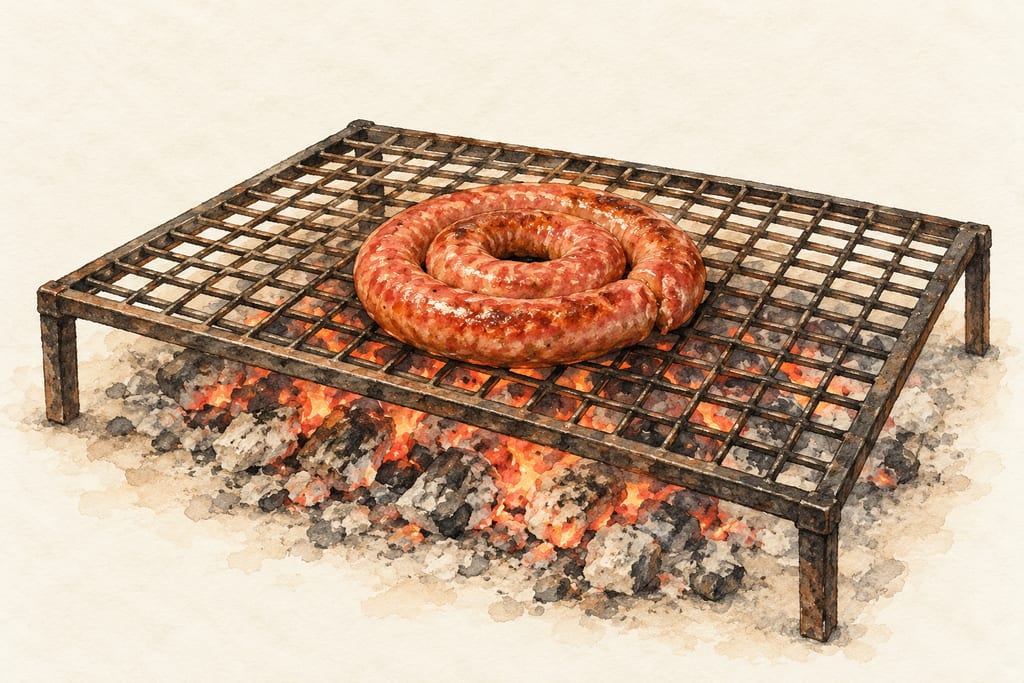
A braai is a South African open-fire cooking practice. This record focuses on the movable cooking grid over coals shown in a documented photograph; sources do not establish one standard grill design or size.
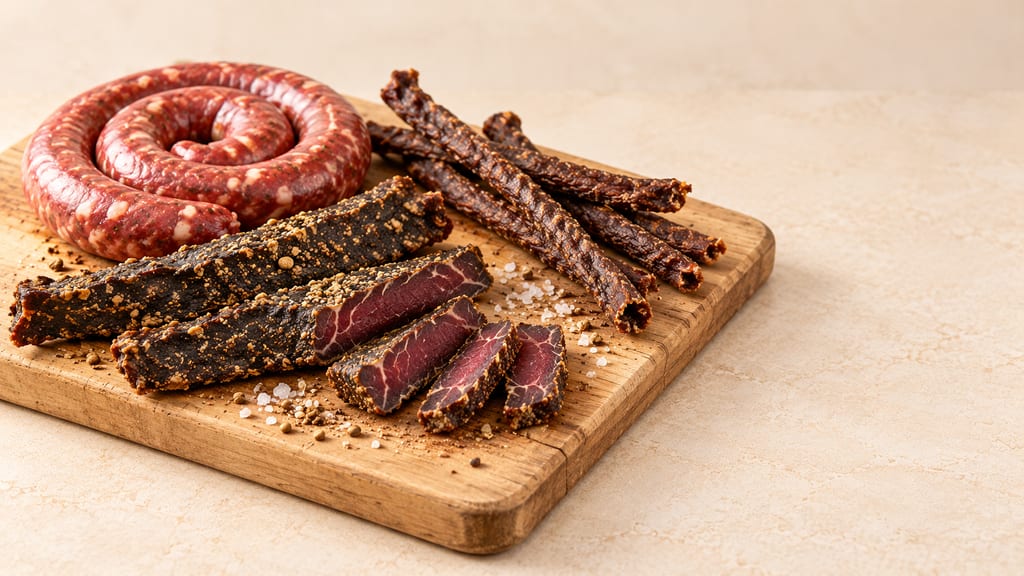
Boerewors, biltong and droëwors share a table but follow different paths from meat to meal. Their histories lead from the braai and butcher's counter to drying lines, household pots and the science of keeping food.
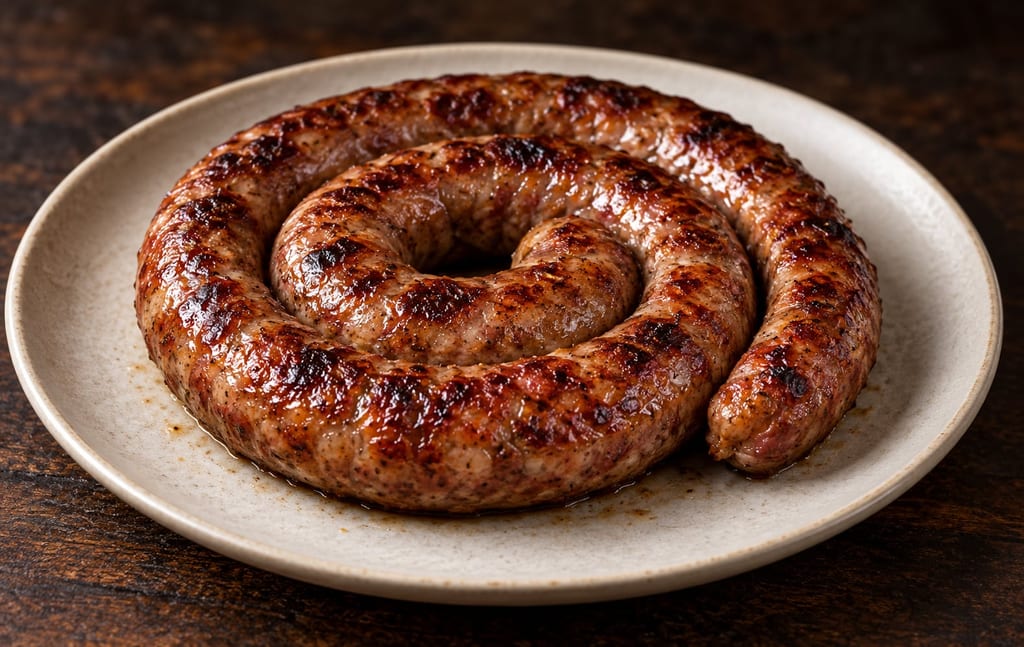
A coarse South African farmhouse sausage of beef with pork or mutton fat, defined by its coriander seasoning and cooked fresh over coals rather than preserved.
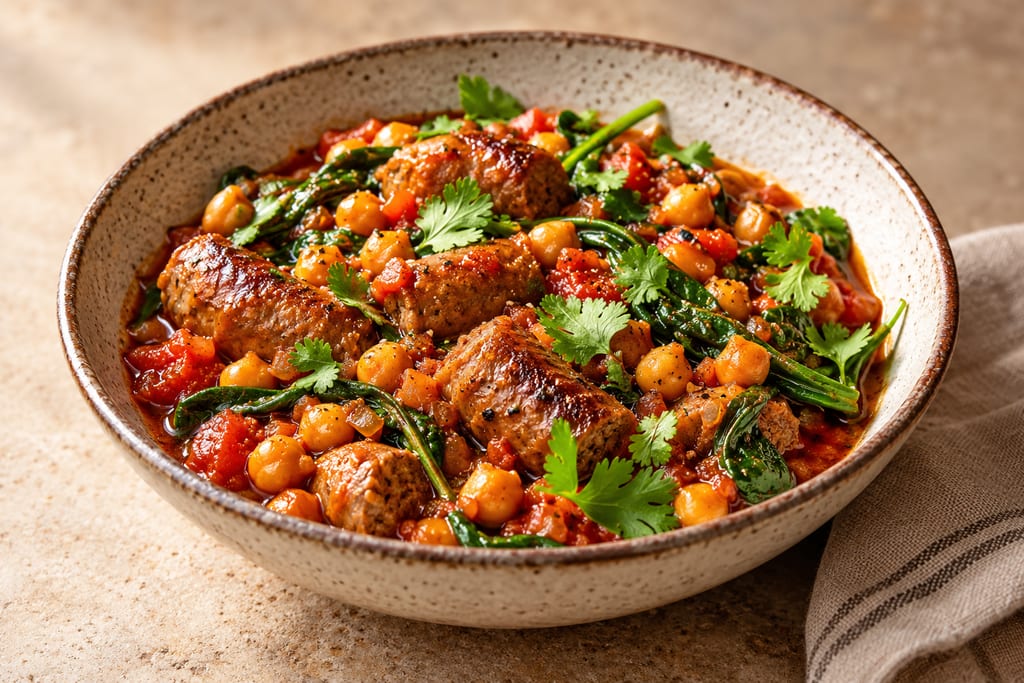
Lesego Semenya’s contemporary South African stew combines browned boerewors, chickpeas, tomato, spinach and warm spices.
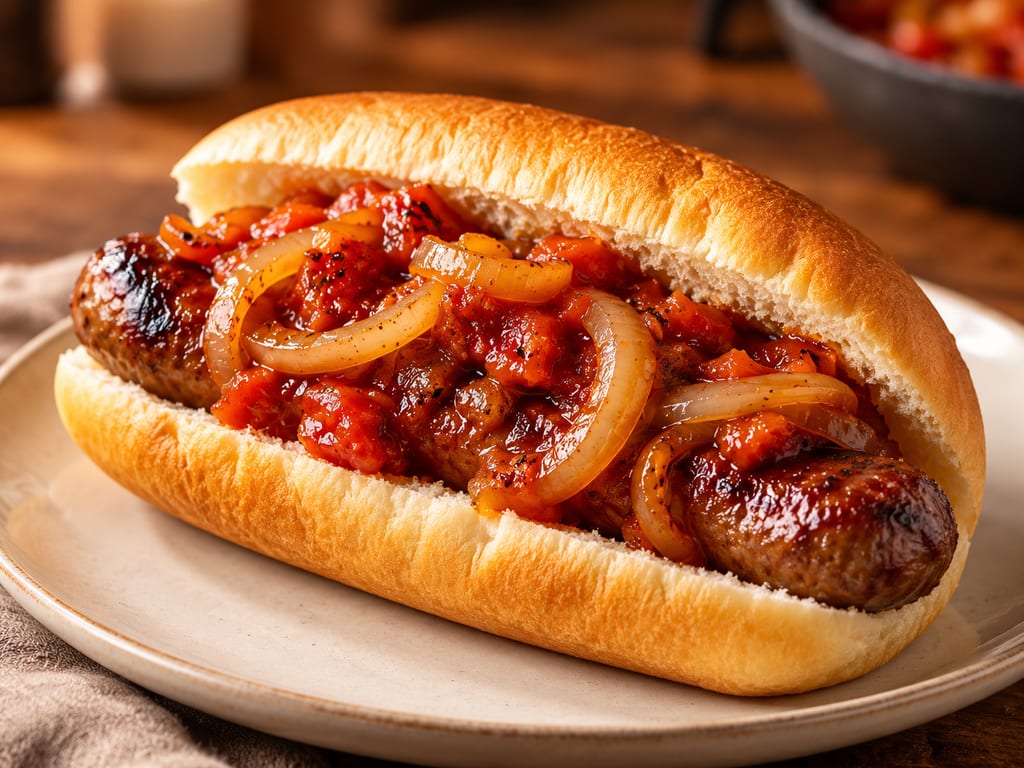
A South African boerie roll puts fully cooked boerewors in a soft bread roll and tops it with warm tomato-and-onion smoor.
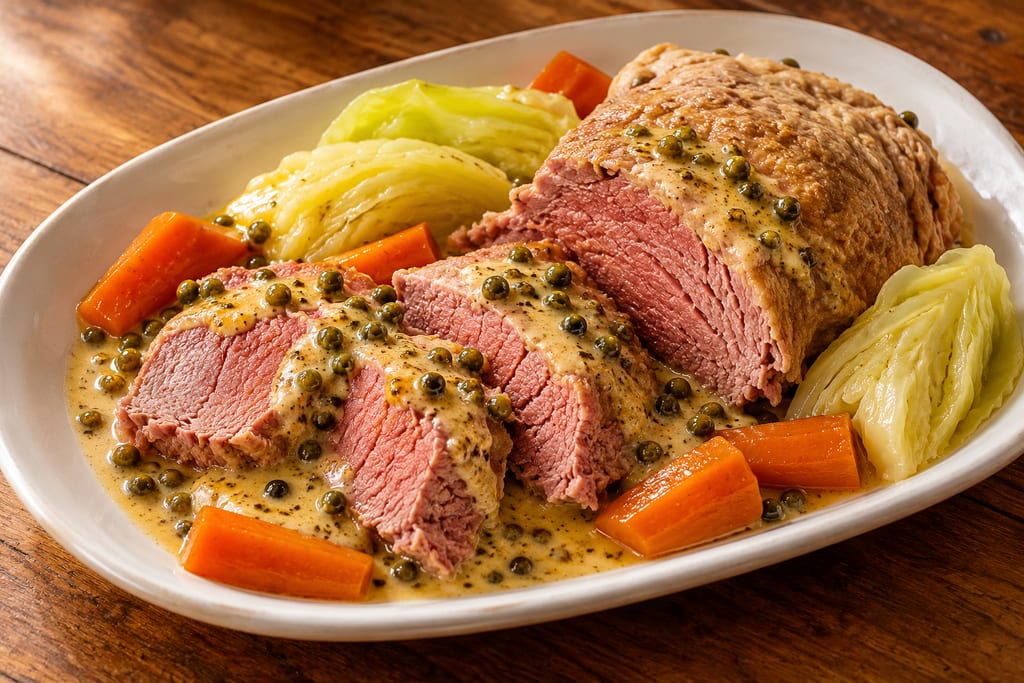
A Karoo-style festive dish of already cured salt beef simmered with vegetables and aromatics, served with a cream sauce of brined green peppercorns and wholegrain mustard.
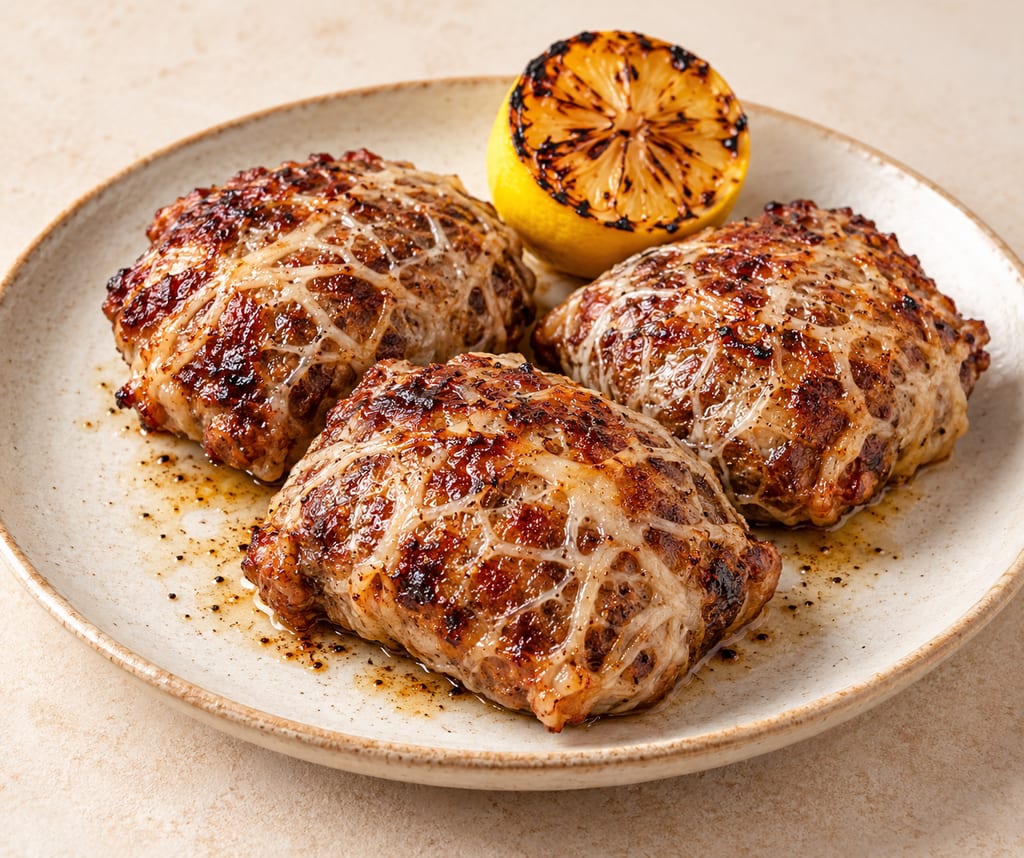
South African braai parcels of seasoned lamb liver wrapped in caul fat (netvet), which crisps and renders as the filling cooks.
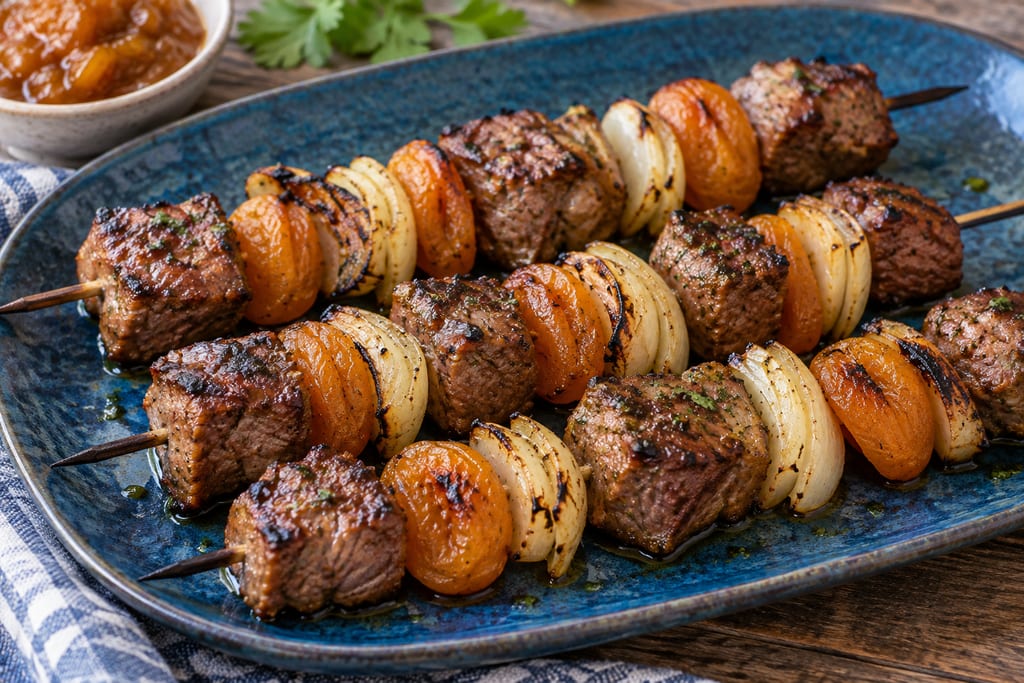
Cape skewers of marinated lamb or mutton threaded with onion, fat or dried fruit and grilled, their marinade balancing curry spice against vinegar or tamarind and something sweet.
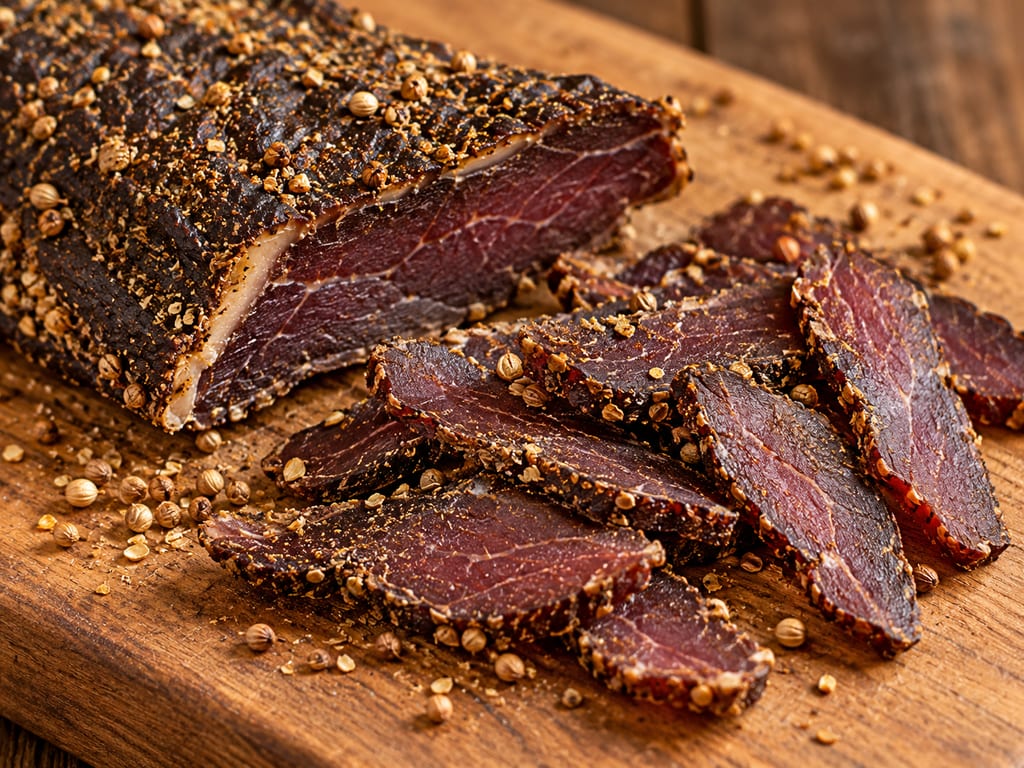
Strips of whole-muscle beef or game seasoned with salt, vinegar, roasted coriander and pepper and air-dried without cooking, sold anywhere from soft and moist to hard and very salty.
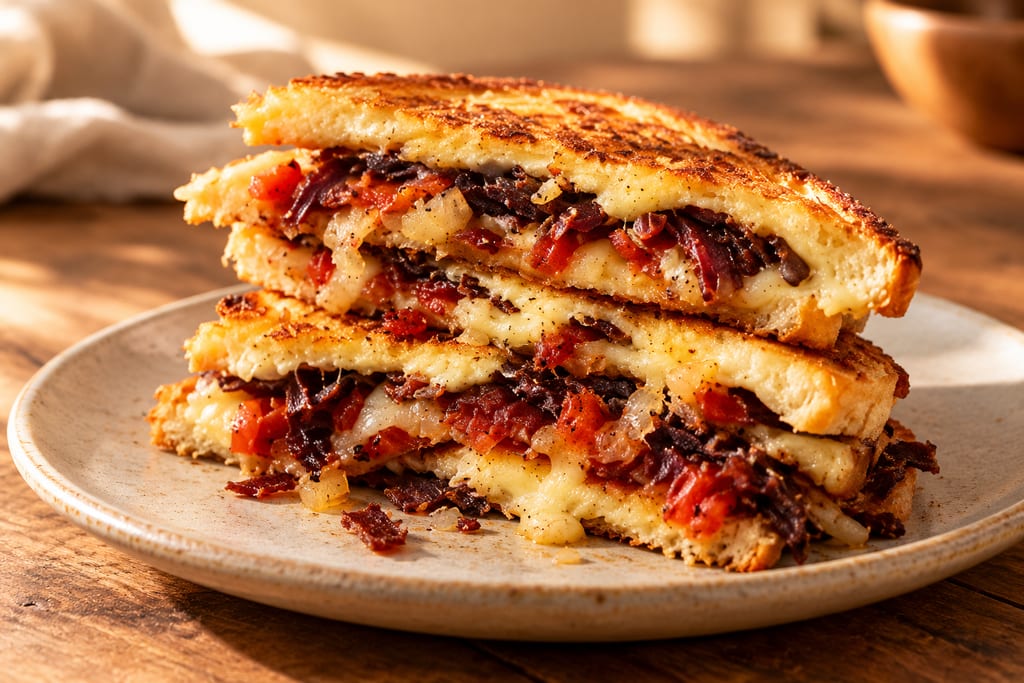
Chopped biltong, sweet onion, cream cheese and Cheddar fill bread toasted in a hinged grid over gentle coals, then finished with biltong dust.
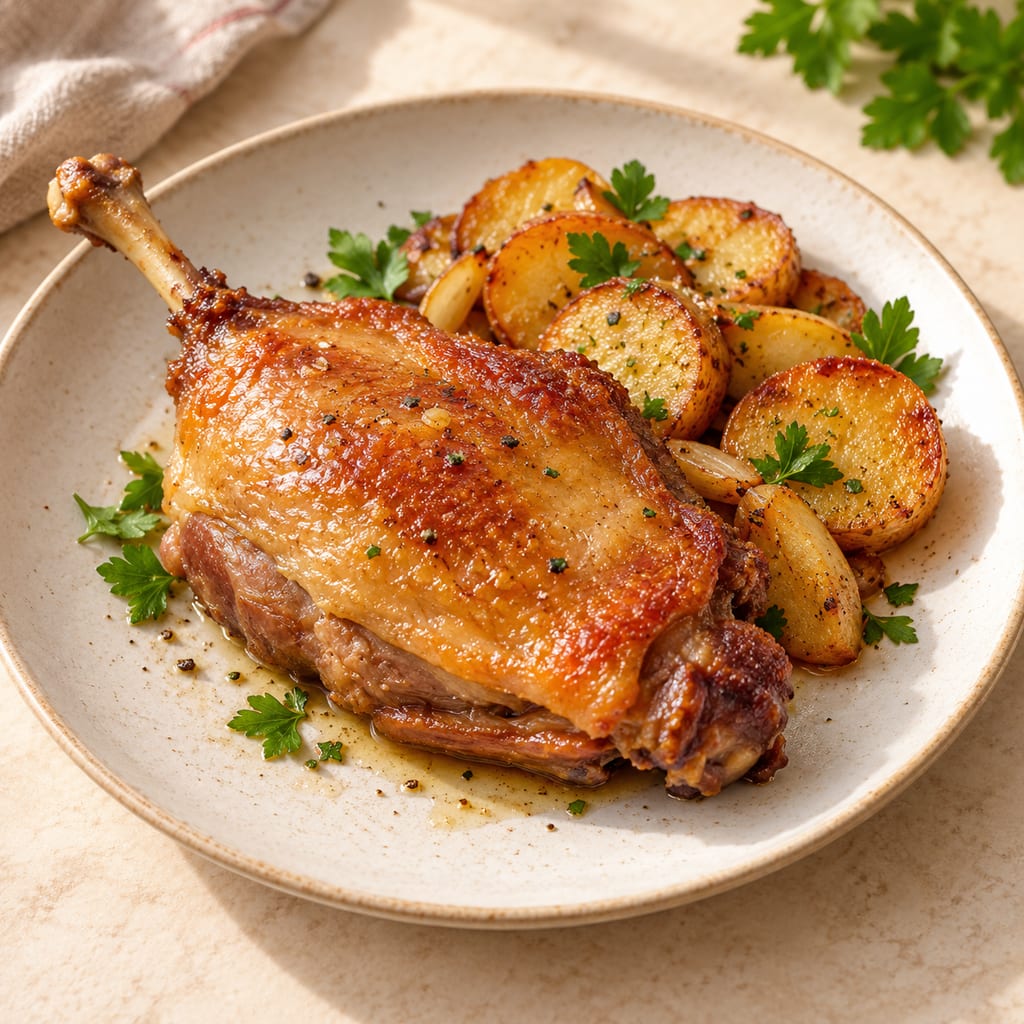
Meat salted, slowly cooked in its own fat and kept under a covering of that fat. The fat cap limits air but does not acidify or sterilise, so home confit needs refrigeration or freezing.
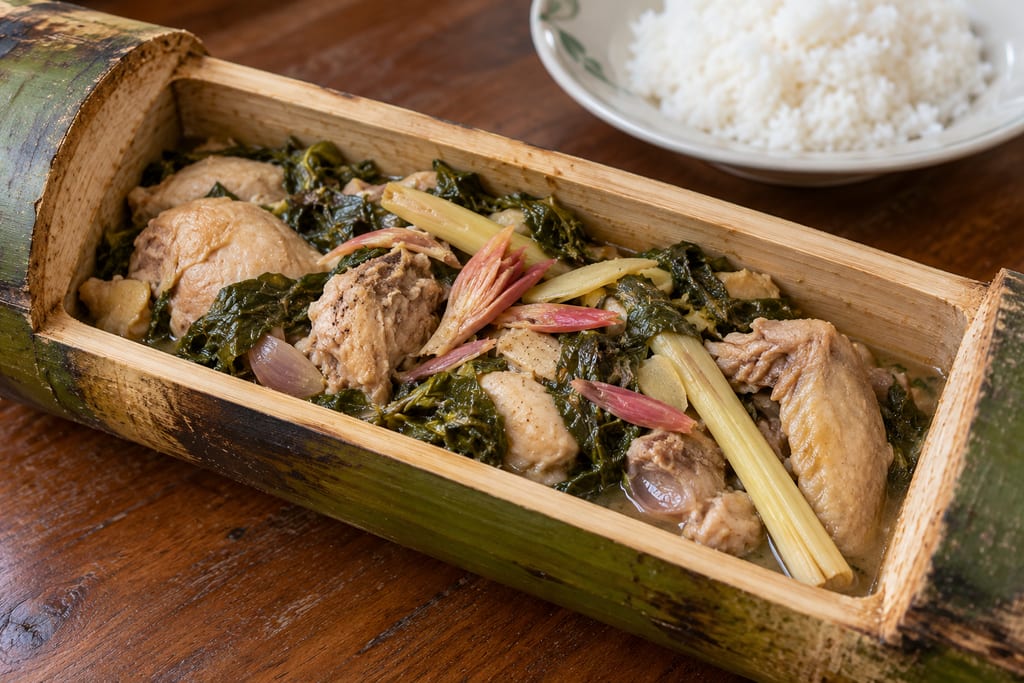
Manuk pansuh is Iban chicken cooked slowly inside a fresh bamboo tube with aromatics and leafy greens. The bamboo holds the food and shapes the steamy, fragrant cooking environment; recipes vary by household and locality.
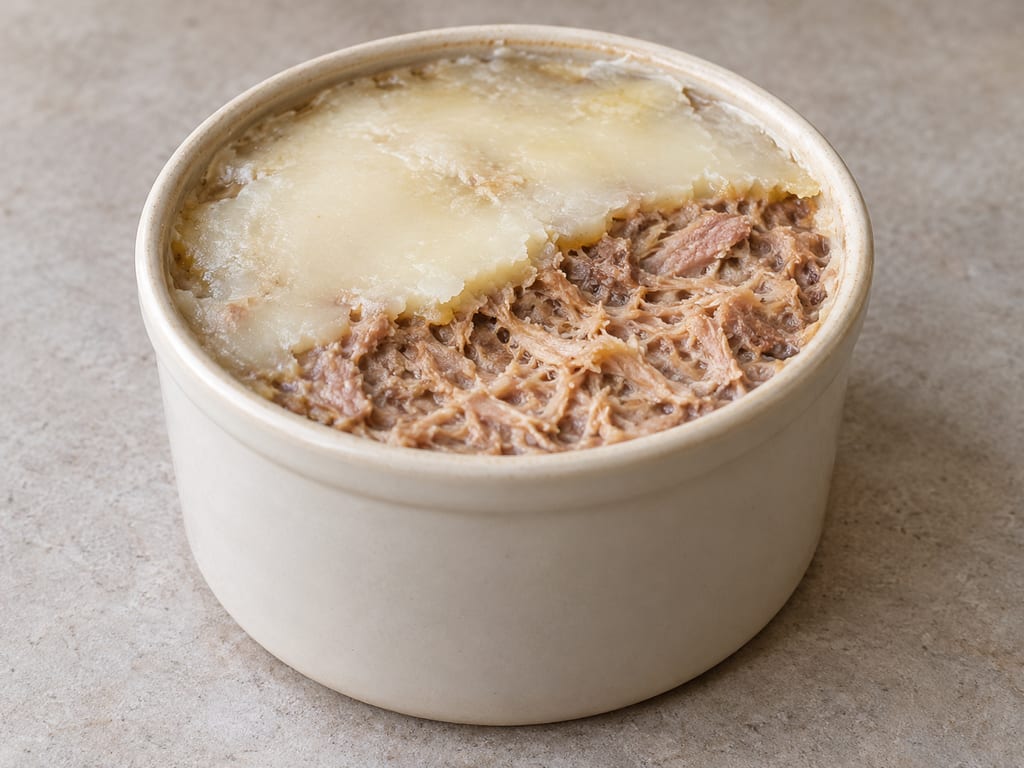
Cooked meat or fish shredded or pounded, packed into pots and covered with fat. Heat, salt, moisture reduction and the fat cover work together, and the texture separates rillettes from whole-piece confit.

Omani celebration dish of spiced meat wrapped in leaves, sewn into palm-fibre bags and cooked in a sealed pit of embers for up to a day.
No community contributions have been published for this entry yet.
Sign in to contribute. Published comments and photos are free to read.
Internet Archive; original publisher: London, 1891History · Inspiration
Hilda's 'Where Is It?' of RecipesDuckitt's separate historical tassal entry describes beef or game strips with salt, pepper, bruised coriander and vinegar, standing for a day and hanging; dried strips could later be soaked and grilled. It gives no dependable salt percentage, controlled drying conditions or measured endpoint.
Cited in: A cooked meal beside a preserved food; Why beef rump and narrow strips suit a quick fire; The ingredient balance is not a cure; The historical comparison has limits; Serving and reading the recipe; A bounded fresh-cooked development
Dictionary of South African EnglishHistory · Terminology
tassalThe term is obsolete except in historical contexts, with meanings overlapping biltong and dried pickled meat; its linguistic origin passes through Afrikaans and South African Dutch from Portuguese tassalho. It includes an 1826 attestation for eland meat.
Cited in: A cooked meal beside a preserved food; The ingredient balance is not a cure; The historical comparison has limits; Serving and reading the recipe
Dictionary of South African EnglishHistory · Terminology
tasseltjiesHistorical usage overlaps with tassal; the term can refer to pickled strips that were subsequently wind-dried and grilled.
Cited in: A cooked meal beside a preserved food; The historical comparison has limits; Serving and reading the recipe
Food Standards AgencySafety · Method
Cooking your foodA clean thermometer should check the centre; 70°C for two minutes or 75°C for 30 seconds are stated time-temperature combinations. Raw meat may carry bacteria and thorough cooking helps prevent food poisoning.
Cited in: From refrigerated bowl to coals; A measurable cooking control; A bounded fresh-cooked development
Texas A&M University, Meat ScienceMethod · Science
Barbecue ScienceThe Maillard reaction involves amino acids reacting with reducing sugars and contributes the characteristic brown colour of cooked food.
Cited in: Why beef rump and narrow strips suit a quick fire; From refrigerated bowl to coals; How the fire shapes the surface; A bounded fresh-cooked development