A celebration dish cooked in a pit
Shuwa is an Omani special-occasion dish, often cooked for Eid. Meat is seasoned, wrapped in leaves and cooked slowly in a pit. It is served with rice at family and community gatherings.
It is cooked rather than fermented or preserved. The technique relies on stored heat from embers, and the cooking is often communal.
Sources for this section
Seasoning and wrapping
The cook mixes a spice blend, called tabzeer, and adds the meat to it. Spice mixes vary from one cook to another, so no fixed list exists. The seasoned meat is wrapped in banana or Shoo'a leaves, which flavour the meat and protect it from burning. Some cooks add a layer of foil.
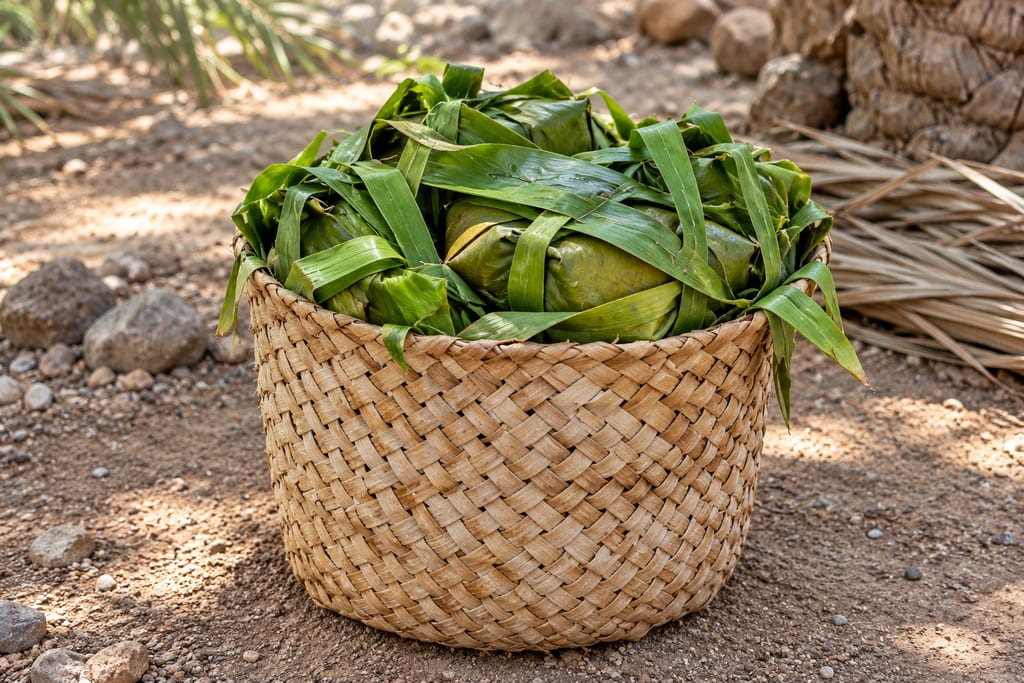
The wrapped meat goes into a bag woven from palm leaves. Gaps are filled with more leaves, and the bag is sewn shut with a thin rope of palm fibre.
Sources for this section
The tanoor
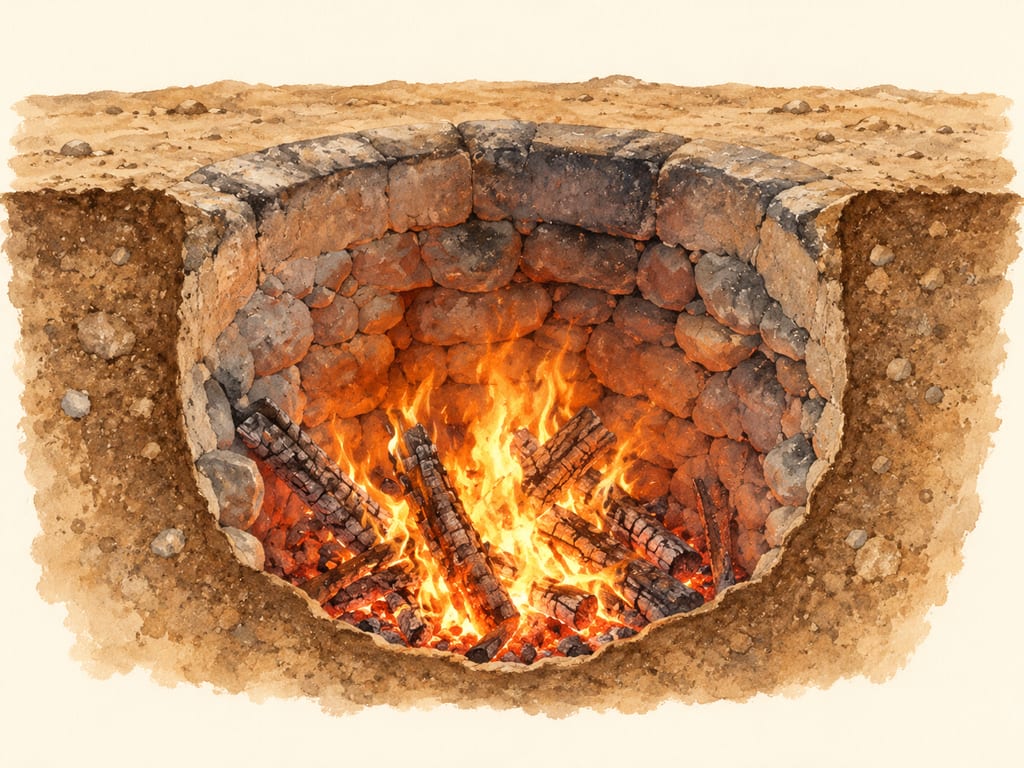
A tanoor is a hole filled with embers from burned-down firewood. The bags go into the pit, which is closed with a metal cover. Mud is heaped over the sides and top so the pit seals, and the heat and steam cook the meat over 12 to 24 hours.
The pit is opened after the cooking period, and the meat is served with rice. In some places a single communal pit cooks hundreds of family bundles, and each family collects its own.
Sources for this section
History
Accounts describe shuwa as an Omani special-occasion dish, often linked with Eid. The centuries-old date is local transmitted history.
Method
Risks and precautions · Elevated risk
Undercooked meat from an inadequately heated pitA large joint cooked in an inadequately heated pit can stay in unsafe conditions. No internal temperature or doneness check is given.
Hazard source
Cook the meat until it is fully cooked, and check the centre with a thermometer if you cook a joint at home.
No validated end point for pit cooking is established in accounts.
- Mix the spices into a seasoning, the step called tabzeer, and rub it into the meat.
- Wrap the seasoned meat in banana or Shoo'a leaves. Some cooks wrap it in foil as well.
- Put the wrapped meat into a bag woven from palm-tree leaves, filling gaps with more leaves, and sew the bag shut with palm-fibre rope.
- Fill a tanoor pit with embers from burned-down firewood. Place the bags in the pit and close it with a metal cover.
- Seal the cover with mud heaped over the sides and top, so the heat and steam cook the meat.
- Leave the meat to cook for 12 to 24 hours. Reopen the pit and serve the meat with rice.
Places
Al Kharasen near Nizwa
Traditional preparation · Locality evidenceLocality given in a contemporary report of communal pit cooking. Other households use other pits and spice mixes.