
Shuwa
Omani celebration dish of spiced meat wrapped in leaves, sewn into palm-fibre bags and cooked in a sealed pit of embers for up to a day.
 FermenteaWhere food goes to change
Equipment · Bags, sacks and casings
خصفة · khasfah
A khasfah is a woven palm container for leaf-wrapped marinated meat as it is lowered into the heated underground oven for Omani shuwa. At Al Kharasen near Nizwa, a documented communal oven receives hundreds of family bundles.
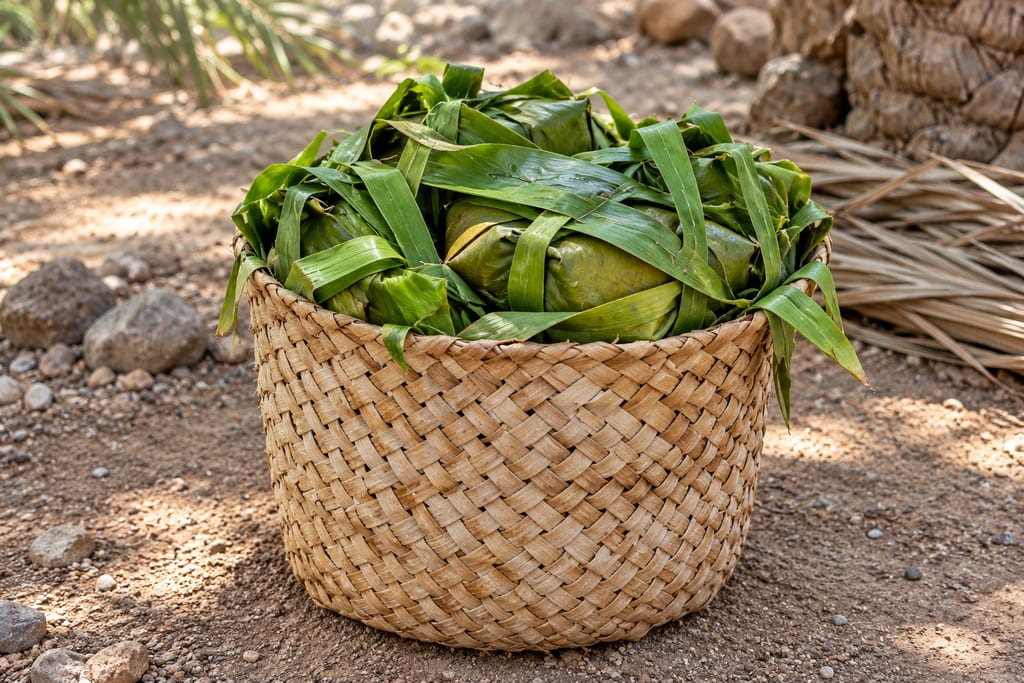
Khasfah (خصفة) is the woven palm container used in one documented Omani shuwa method. Marinated meat is first wrapped in leaves, then placed in the container as a bundle for the underground oven. A contemporary Times of Oman account also describes date-palm or jute bags holding the leaf-wrapped meat. The supplied research names the khasfah as woven palm; it does not give a standard pattern, dimensions, weight limit or construction instructions.
The container belongs to a larger cooking system. Shuwa is meat cooked in a heated underground oven, not a fermentation. The khasfah carries and groups the wrapped portion; it is not itself the oven, pit, fuel chamber or food wrapper. Keeping those parts distinct matters: banana leaves touch the marinated meat, the woven container surrounds that parcel, and the heated installation receives the bundle.
At Al Kharasen near Nizwa, an Oman Observer report describes a large communal oven receiving hundreds of separately identifiable family bundles. The report places the khasfah in an active social arrangement: households prepare their own parcels, and the oven brings them together for a shared cooking event. It records 280–300 bundles in the reported event and the local overseer, Mahfudh bin Eisa Ambusaidi. The article presents the practice's long continuity as local transmitted history. It does not provide a dated first use of this particular container.
A 2023 Times of Oman account describes another concise sequence: meat marinated with local spices, wrapped in banana leaves, put into date-palm or jute bags, and lowered into an underground pit. Dina Macki's British Omani Society page also calls shuwa a special-occasion dish cooked in an underground tanoor, but its recipe is a domestic oven adaptation and does not document the khasfah. These accounts support the container's place in Omani shuwa without making every shuwa preparation identical.
The consulted material does not state who weaves khasfah, which palm parts are used, how the container is finished, how it is cleaned, or whether it is reused. It gives no standard capacity or dimensions, and does not describe the weave's effect on heat, steam or the meat. Those details should not be inferred from the appearance of a single photograph. The reported bundle count belongs to one communal event, not a capacity rating for an individual khasfah.
The container should be understood within the reported system rather than treated as a stand-alone cooking vessel. Sources place the wrapped bundle in a separate heated oven or pit. The Society's indoor recipe gives instructions for a foil-and-leaf parcel in a conventional oven, not a tested way to use a palm container or a substitute for the communal pit. No temperature, safe cooking endpoint or handling standard for khasfah itself is established here.
The supplied verified research describes the khasfah in contemporary Omani shuwa. Oman Observer's report records local transmission of the Al Kharasen practice over centuries, but gives no earliest dated attestation for the container itself.
The khasfah is a carrier for a leaf-wrapped bundle, not the heated oven or pit. The report describes the bundle being lowered into a separate heated underground cooking installation.
Source →A country-level association for shuwa use; not a claim that khasfah originated in Oman.
Oman Observer reports a communal oven at Al Kharasen near Nizwa; this locality describes documented use, not manufacture or origin.
Omani celebration dish of spiced meat wrapped in leaves, sewn into palm-fibre bags and cooked in a sealed pit of embers for up to a day.
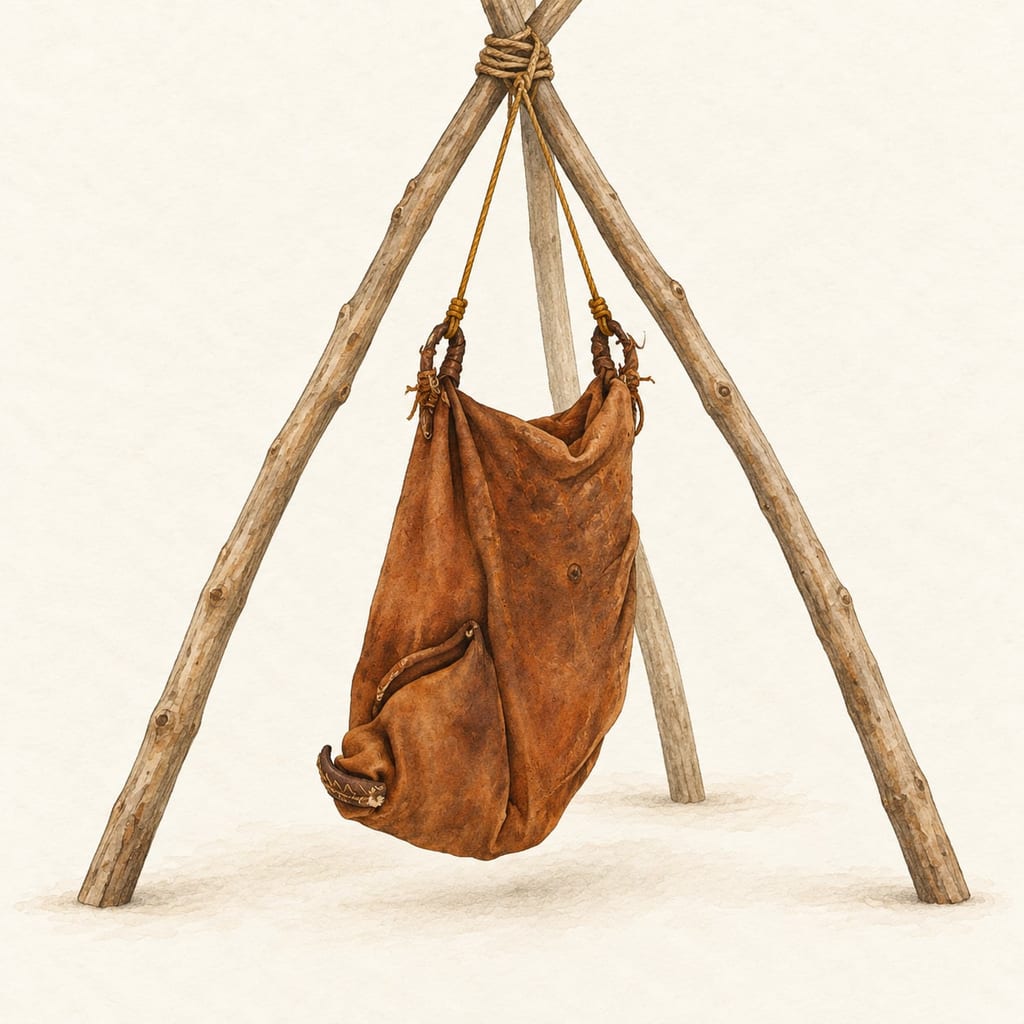
A flexible goat-skin bag from Dhofar hangs by a long cord and is rocked to churn milk or buttermilk. The British Museum records one 1970s specimen; churning is mechanical separation, not proof that the milk fermented.
No community contributions have been published for this entry yet.
Sign in to contribute. Published comments and photos are free to read.
Oman ObserverUse · Geography · History
In Oman, No Two Celebrations Are the SameContemporary reporting from Al Kharasen near Nizwa describes khasfah woven palm bags holding identifiable family bundles in a large communal shuwa oven.
The local overseer attributes centuries of continuity to the Al Kharasen practice; this is transmitted local history, not a dated origin for the container or a universal date for shuwa.
Cited in: A woven carrier for a family bundle; A communal oven near Nizwa; What the sources do not establish
Times of OmanForm · Use · Image reference
In pictures: Do you know about Omani Shuwa?Reports meat wrapped in banana leaves and placed in a date-palm or jute bag before lowering into an underground fire pit.
Its photograph shows a woven palm container filled with leaf-wrapped meat being prepared; page identifies the image as supplied and gives no reuse license.
Cited in: A woven carrier for a family bundle; A communal oven near Nizwa; What the sources do not establish
British Omani SocietyContext · Comparison
Gastronomy of OmanDescribes shuwa as a traditional Omani special-occasion dish cooked in an underground tanoor; the included recipe is an oven adaptation and does not describe khasfah.
Cited in: A communal oven near Nizwa; What the sources do not establish