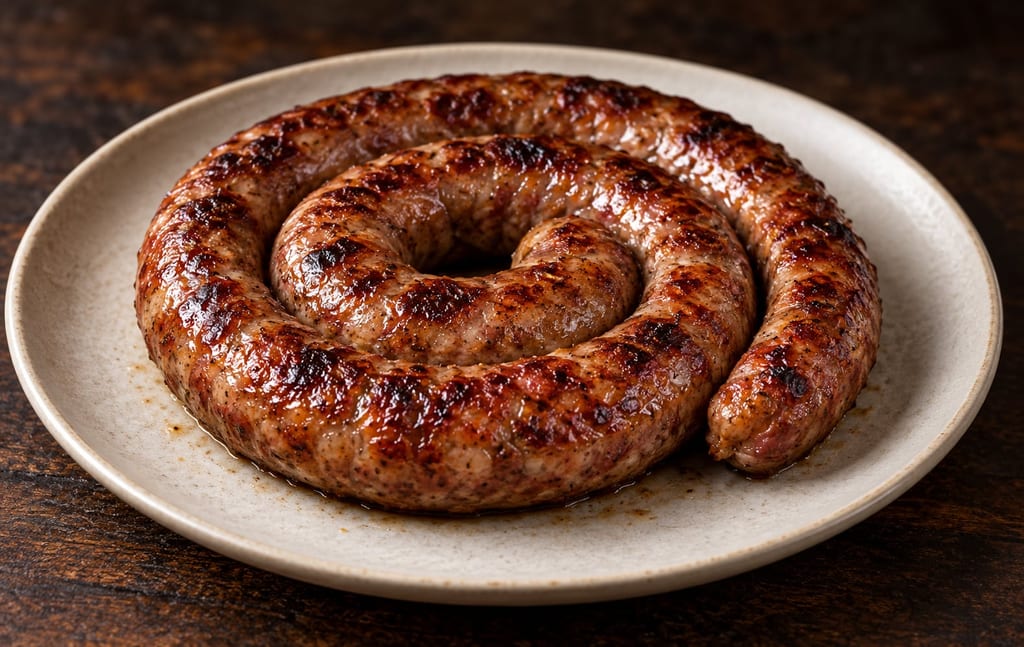
Boerewors
A coarse South African farmhouse sausage of beef with pork or mutton fat, defined by its coriander seasoning and cooked fresh over coals rather than preserved.
 FermenteaWhere food goes to change
Equipment · Meat mincers
A meat mincer forces meat through a perforated plate to produce a chosen texture. South African sausage sources record plate size as a process choice, not a single defining standard.
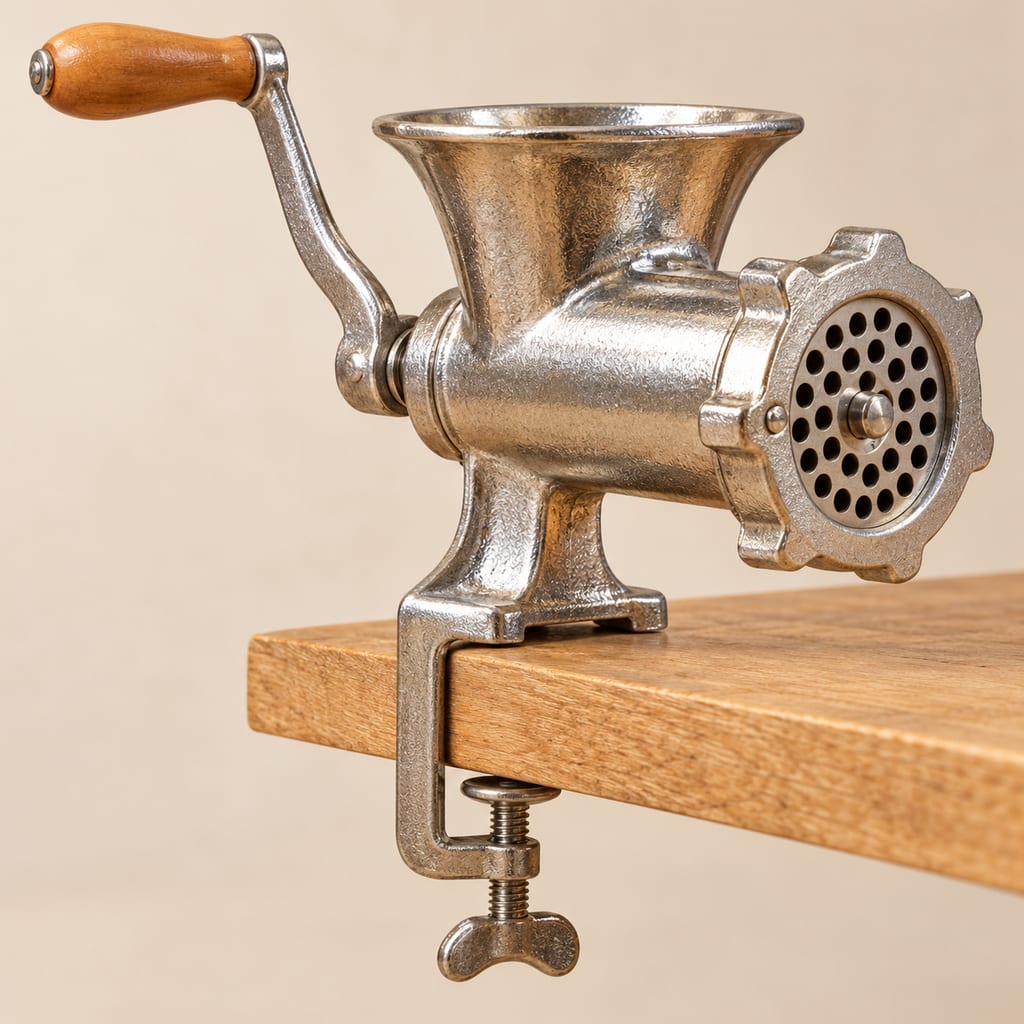
A meat mincer is a machine for reducing meat to smaller particles. It may be operated by a hand crank or by an electric motor. In the familiar screw-fed design, the screw carries meat along a horizontal barrel toward a cutting assembly; a rotating knife works against a stationary perforated plate, and the meat emerges through that plate's holes. The linked photograph shows one hand-cranked mincer in use, with meat leaving the front plate. It is a documented example, not a specification for every domestic or industrial model.
The plate is the tool's defining working surface in this entry. Its holes set an important part of the output texture, while the knife, screw, assembly and number of passes also matter. A plate is not a sieve used after mincing: it forms the outlet of the cutting head, and the knife must meet it correctly for the machine to work as intended.
The South African sources gathered for boerewors, cabanossi and droëwors show why recording the plate matters. Championship Boerewors guidelines use a 4.5 mm plate. Nuwe Blare Homestead describes an 8–10 mm grind and calls 6 mm its fine limit. The Crown National cabanossi process documented in the supplied manufacturing dossier grinds in stages, ending at 4.5 mm. These figures belong to those particular processes; they do not establish one correct plate for all sausages.
Research and commercial examples vary further. The supplied droëwors dossier records a two-stage 10 mm then 5 mm grind in one study, alongside other examples using 4.5 mm or a 4–6 mm range. A coarse first pass followed by a finer plate can therefore be a deliberate staged method, but the relevant recipe or validated manufacturing specification determines whether that is appropriate. A plate's hole diameter alone does not capture the whole process.
A mincer cuts and extrudes; a sausage stuffer moves an already mixed filling into casing. Some units combine these functions or accept a separate stuffing tube, but the operations and attachments remain distinct. Likewise, a stand mixer can provide power through an accessory hub without its grinding attachment becoming part of the mixer itself. Keep the mincer, mixer base and stuffer identifiable when a process uses all three.
For boerewors, cabanossi and droëwors, a plate choice contributes to the specified texture, but the machine does not determine the recipe's meat and fat proportions, seasoning, casing, curing or drying controls. The supplied South African process records explicitly ask manufacturers to record equipment, plate size and passes; the numbers should be read alongside the rest of that formulation.
A manual mincer is clamped to a work surface and driven by its handle; an electric machine uses a motor. Parts, guards, plate arrangements and compatible accessories vary, so fit the knife and plate in the order given by the exact model's instructions. The Ethiopian Federal TVET Agency's occupational guide treats mincing as a controlled workplace operation and describes separate cleaning procedures for machine components. It directs operators to disconnect powered machinery before cleaning, clean the plate openings carefully and dry components completely before reassembly.
Treat raw-meat hygiene and safety as part of the whole process. A clean plate or a fine grind cannot establish safe handling, cooking, fermentation or drying. Do not borrow a plate size from another sausage merely because its name sounds similar, and do not transfer a recipe's curing or drying conditions to another formulation. The source material gives no universal capacity, throughput, dimension or material for all mincers; use the maker's specification for the actual machine.
The consulted sources document manual and powered mincers and contemporary South African sausage production, but do not establish when the meat mincer was first invented or a continuous history for this equipment class.
Keep hands clear of the feed opening and use the machine's intended pusher and guards; follow the exact model's instructions.
Disconnect a powered mincer before disassembly or cleaning, as directed in the occupational mincer guide.
Clean food-contact parts under a validated hygiene procedure; the guide specifies model- and workplace-specific sanitation procedures.
These sources document mincing practices in South African sausage production; they do not claim the meat mincer originated there or is exclusive to the country.
A coarse South African farmhouse sausage of beef with pork or mutton fat, defined by its coriander seasoning and cooked fresh over coals rather than preserved.
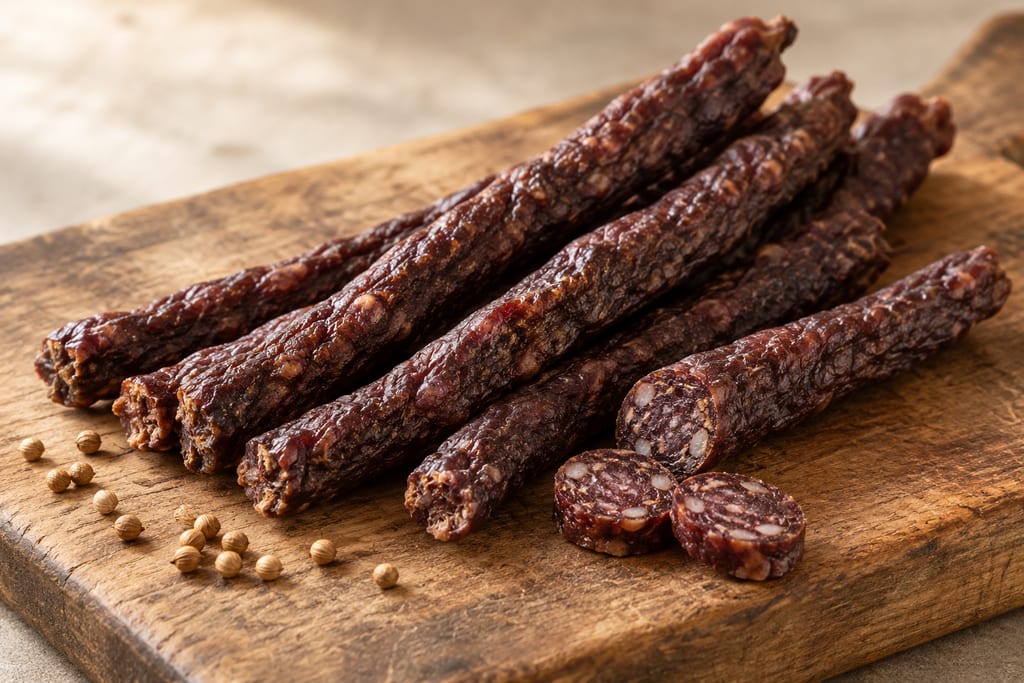
South Africa's dried sausage: seasoned minced meat in narrow casings, dried until it can be eaten without cooking, which makes it a far more demanding product than fresh boerewors.
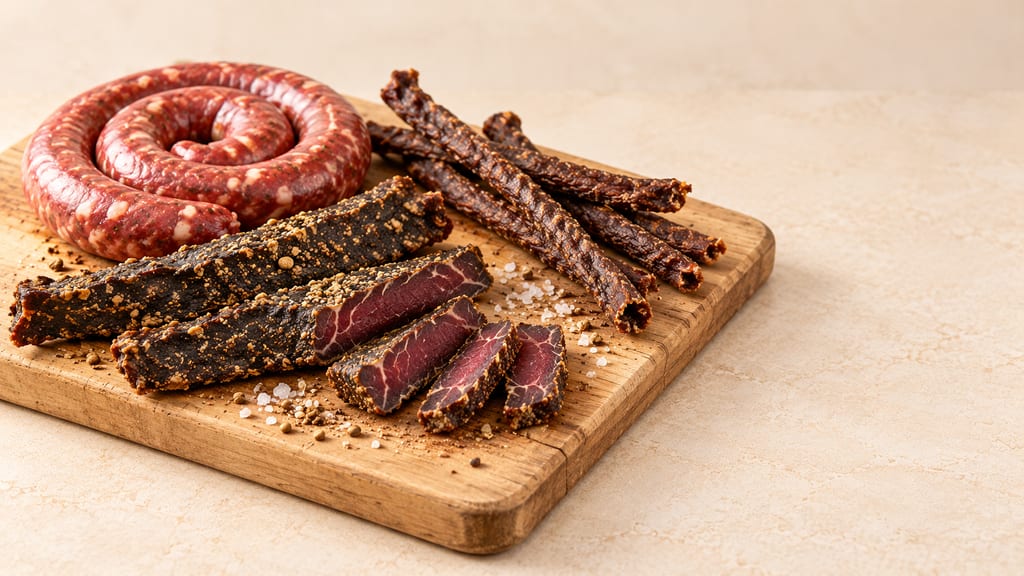
Boerewors, biltong and droëwors share a table but follow different paths from meat to meal. Their histories lead from the braai and butcher's counter to drying lines, household pots and the science of keeping food.

In Velddrif, makers hang whole harders in threaded bunches on lines and beams, moving them between outdoor air and fish-house drying spaces. Reported drying times vary with season and weather.
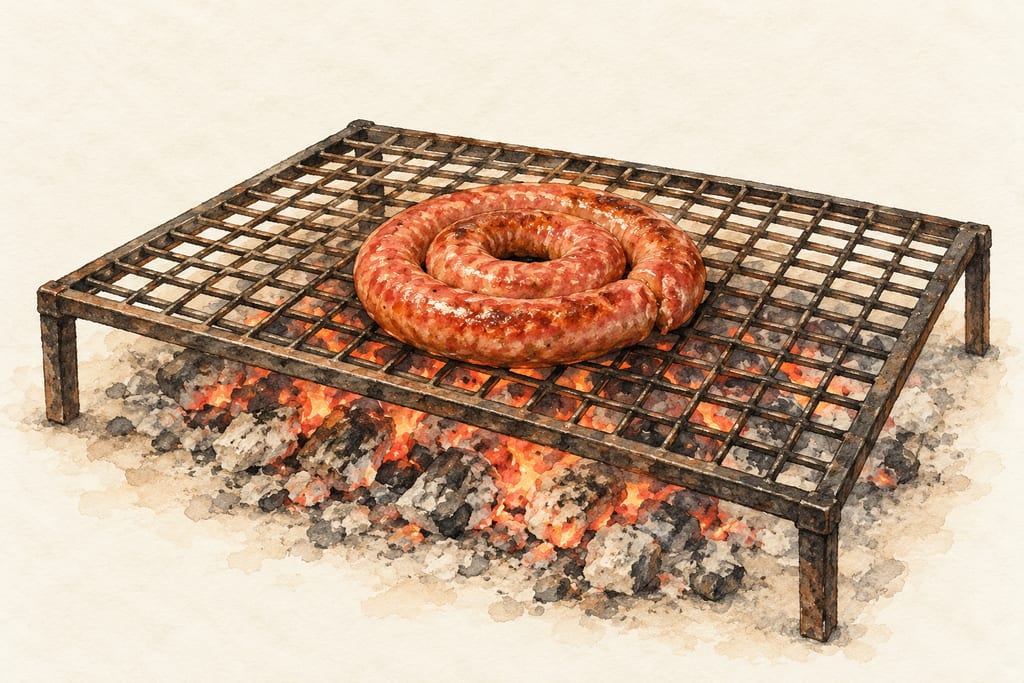
A braai is a South African open-fire cooking practice. This record focuses on the movable cooking grid over coals shown in a documented photograph; sources do not establish one standard grill design or size.
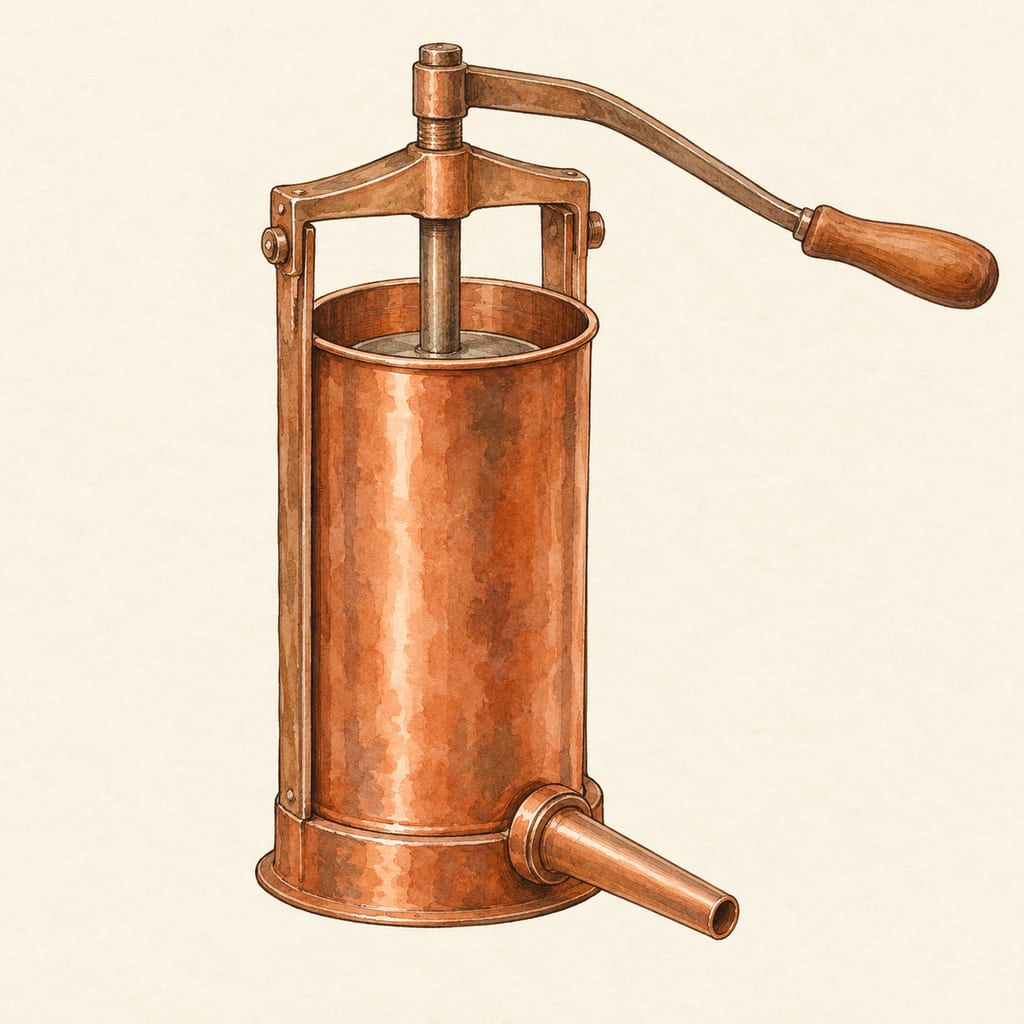
An old-fashioned copper sausage stuffer appears in C. Louis Leipoldt’s 1945 account of family boerewors in South Africa. The essay records hand operation, but not the tool’s dimensions or exact mechanics.
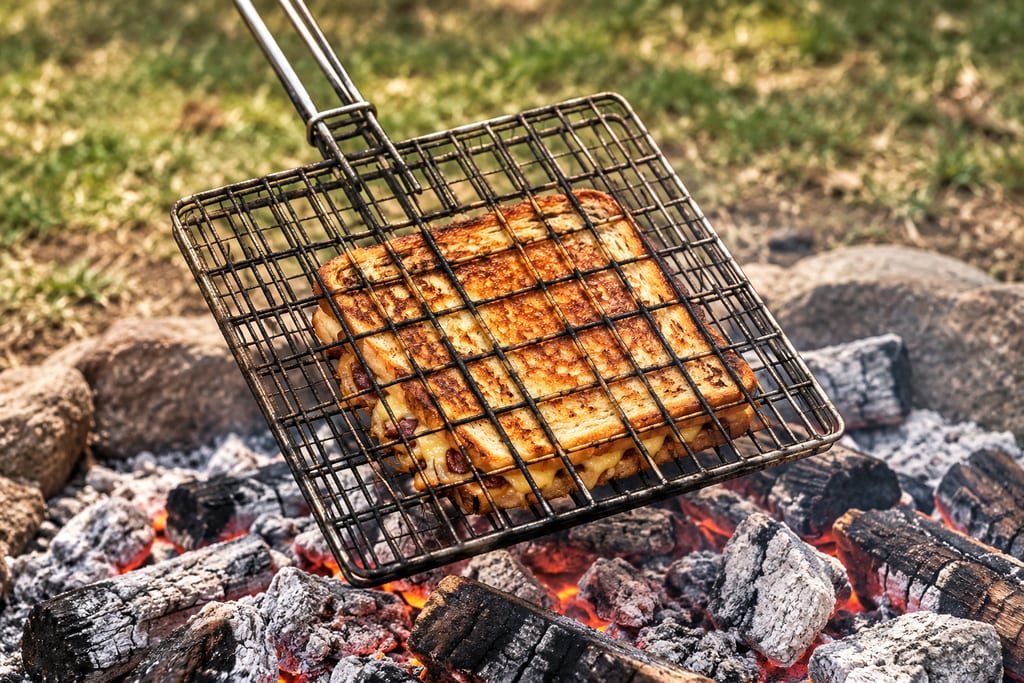
A closed, hinged grid holds food between two cooking faces so a braaier can turn it together over coals. Braaibroodjie recipes specify this tool, but sources do not establish one standard design or size.
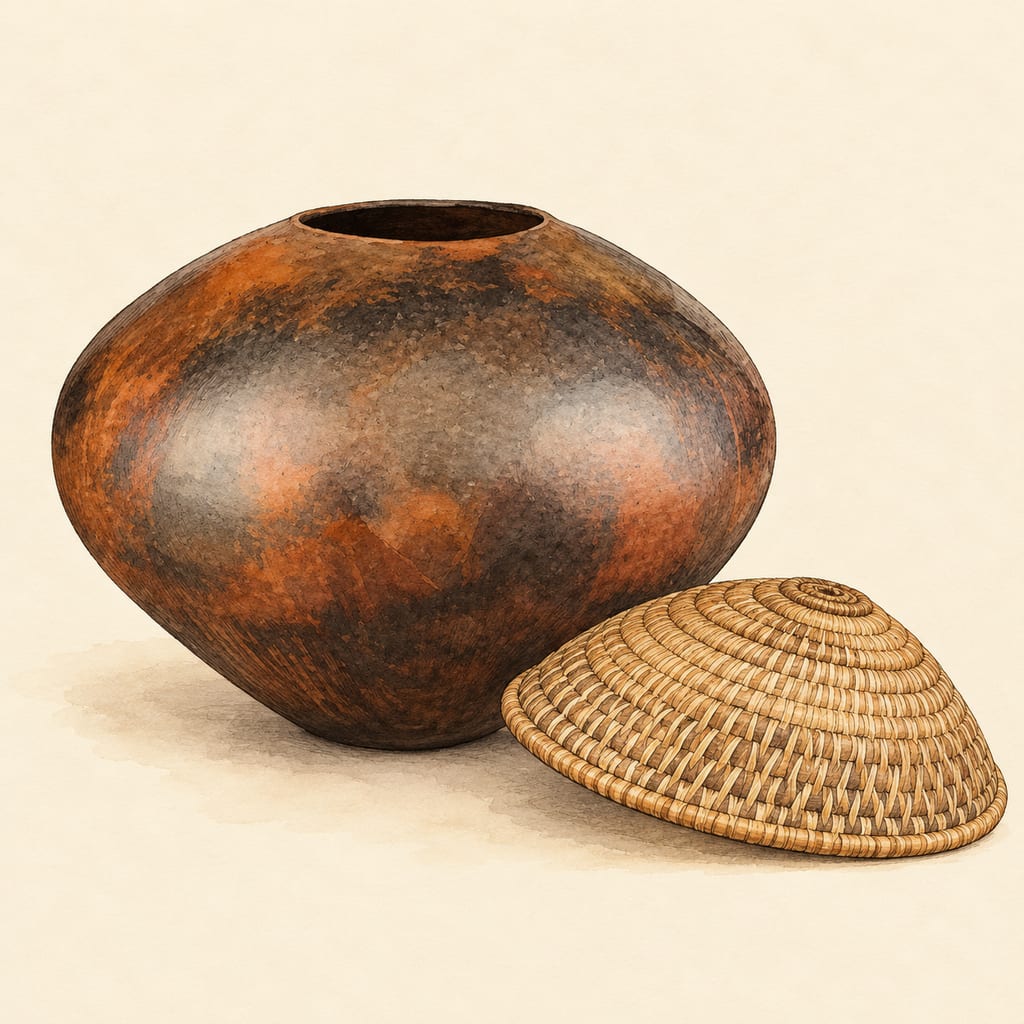
A Zulu earthenware brewing vessel used for grain beer; a woven basket cover keeps out dirt and insects. Imbiza is a distinct pot class, not the serving ukhamba or transport uphiso.
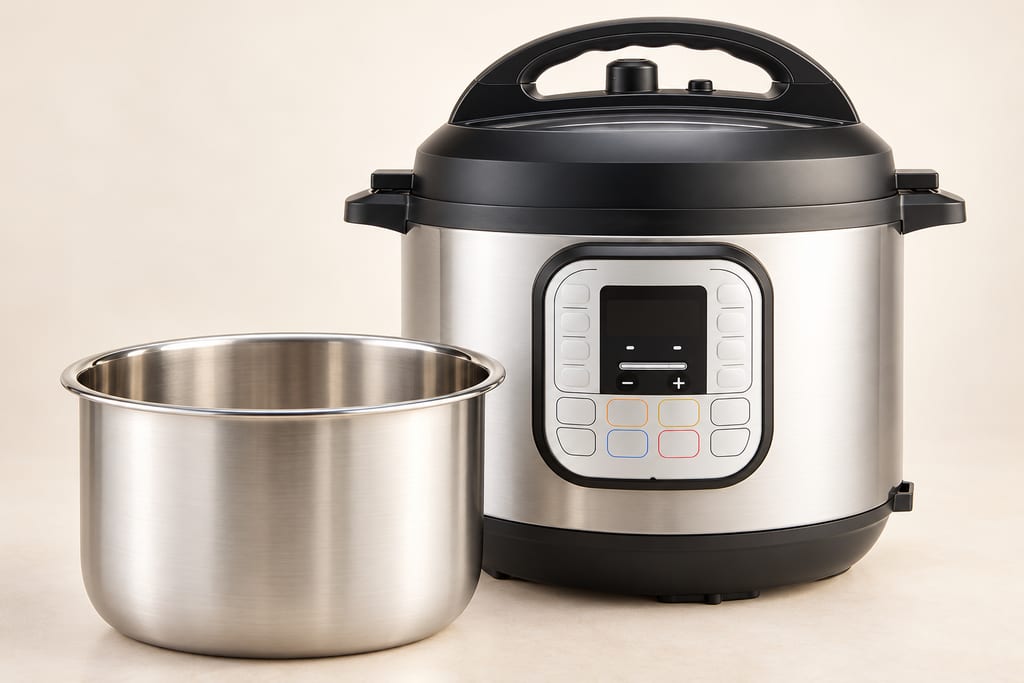
The Instant Pot Duo is a manufactured electric multicooker with a removable inner pot, locking lid and electronic programs. A 2016 IP-DUO60/80 manual documents yogurt and jiu niang settings; later revisions may differ.
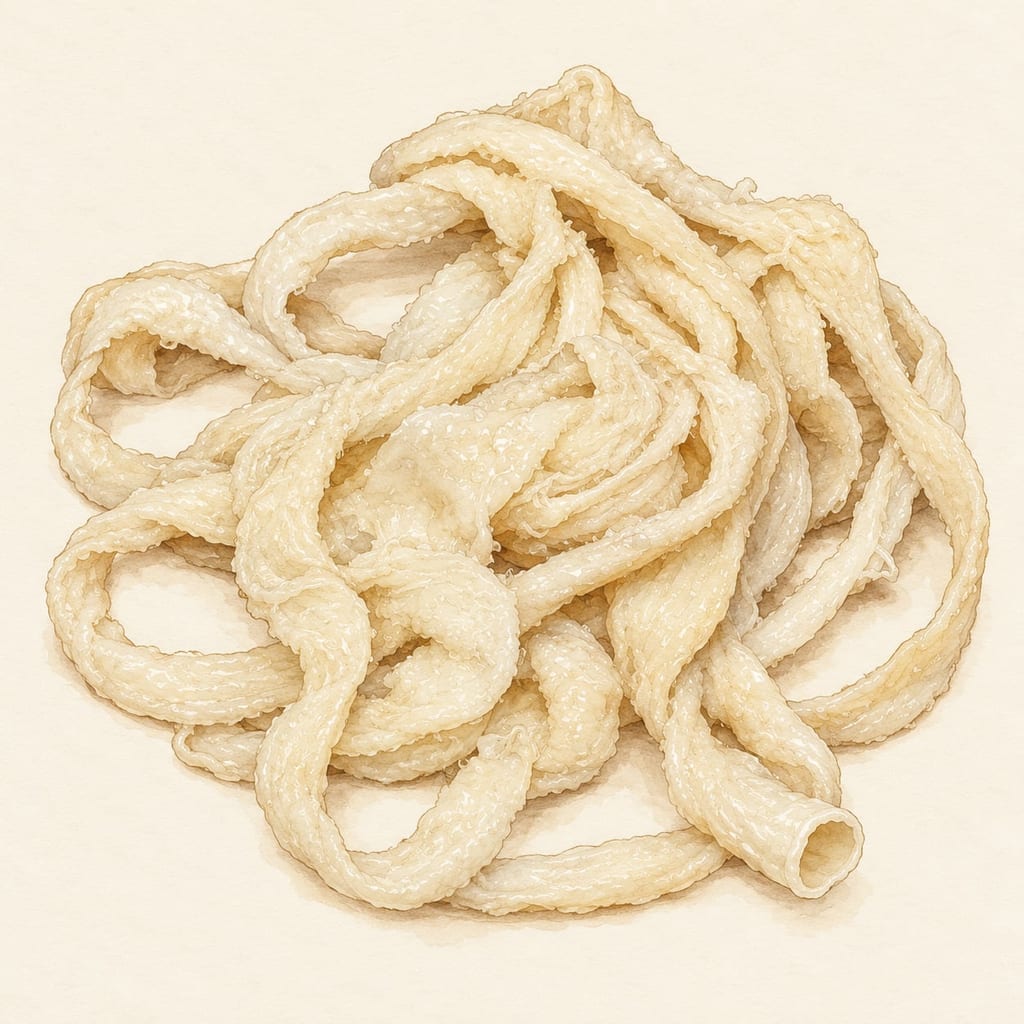
A natural sausage casing is a cleaned animal intestine or, for some products, another prepared organ used as an edible envelope. Its anatomy shapes the sausage, while diameter and material affect stuffing and drying.
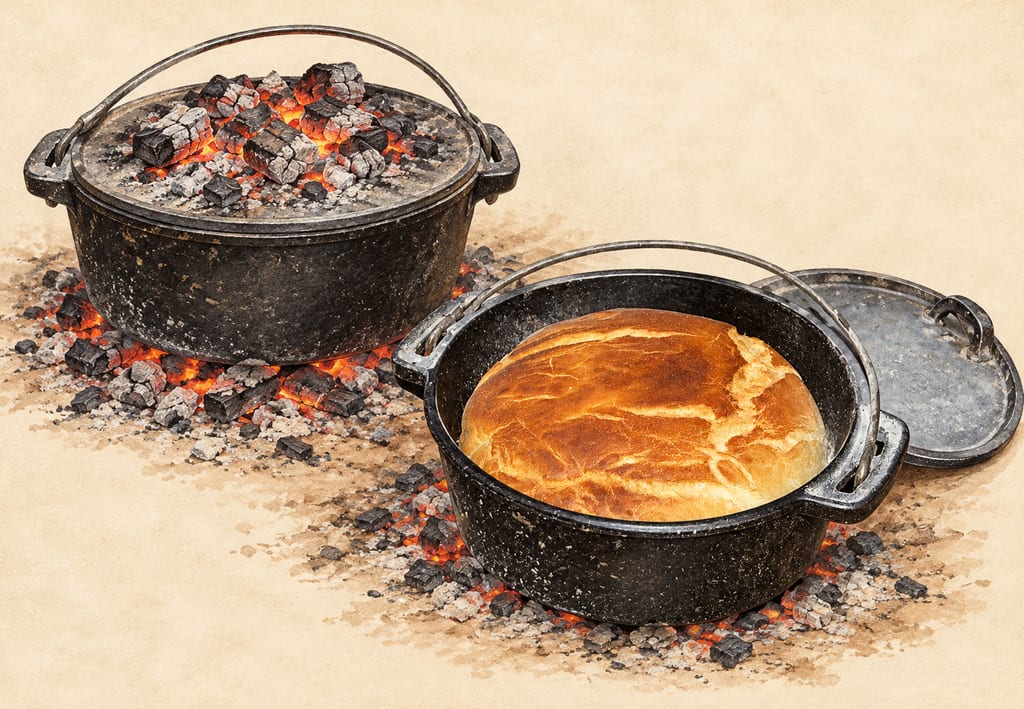
A closed cast-iron pot used to bake potbrood with heat from the hearth or embers; documented in South African English by 1883 and in a contemporary Namibian recipe.
No community contributions have been published for this entry yet.
Sign in to contribute. Published comments and photos are free to read.
Federal TVET Agency, EthiopiaMechanism · Manual and electric forms · Operation · Care
Meat and Meat Product Processing Level III: Operating Tenderiser and MincerThe guide describes manual crank-operated and electric mincers.
It explains mincing as forcing meat through small holes and includes assembly, operation, workplace controls and cleaning guidance.
The equipment guide requires power disconnection before cleaning powered machinery and careful cleaning and drying of the components.
Cited in: A screw, knife and perforated plate; Mincing is not stuffing or mixing; Assembly, hygiene and limits
Shoprite/Checkers Championship BoereworsSouth African documented use · Plate choice
Championship Boerewors GuidelinesThe guidelines specify a 4.5 mm plate for their competition method; the cited research dossier identifies this as a competition choice rather than a universal definition.
Cited in: Plate size is a process choice; Mincing is not stuffing or mixing; Assembly, hygiene and limits
Nuwe Blare HomesteadPlate choice · South African diaspora example
Grabouw Boerewors RecipeThe recipe uses an 8–10 mm plate and calls 6 mm its fine limit; its quantities contain an inconsistency recorded in the supplied research dossier.
Cited in: Plate size is a process choice
Crown NationalCommercial sausage production · Plate choice
Food Ingredients CatalogueThe supplied South African manufacturing dossier reports a cabanossi process with staged grinding, ending at 4.5 mm.
Cited in: Plate size is a process choice; Mincing is not stuffing or mixing
Wikimedia CommonsVisual reference
A Meat Mincer.jpgThe file page describes a 2007 photograph of a hand-operated Porkert #5 meat mincer in use and records CC BY-SA 2.0.
Cited in: A screw, knife and perforated plate