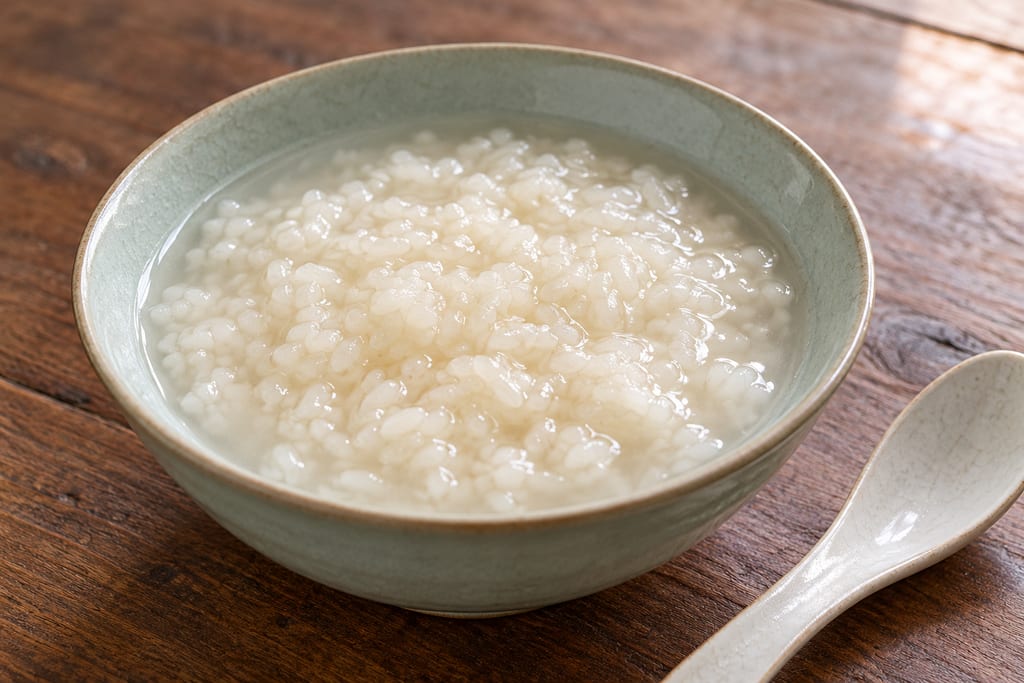
Jiuniang (sweet fermented glutinous rice)
Chinese sweet fermented glutinous rice: steamed rice and a mixed jiuqu starter, where mould enzymes release sugar and yeast makes a little alcohol, eaten with its sweet liquid.
 FermenteaWhere food goes to change
Equipment · All-in-one appliances
Instant Pot Duo · IP-DUO60 · IP-DUO80 · Instant Pot Duo 6QT
The Instant Pot Duo is a manufactured electric multicooker with a removable inner pot, locking lid and electronic programs. A 2016 IP-DUO60/80 manual documents yogurt and jiu niang settings; later revisions may differ.
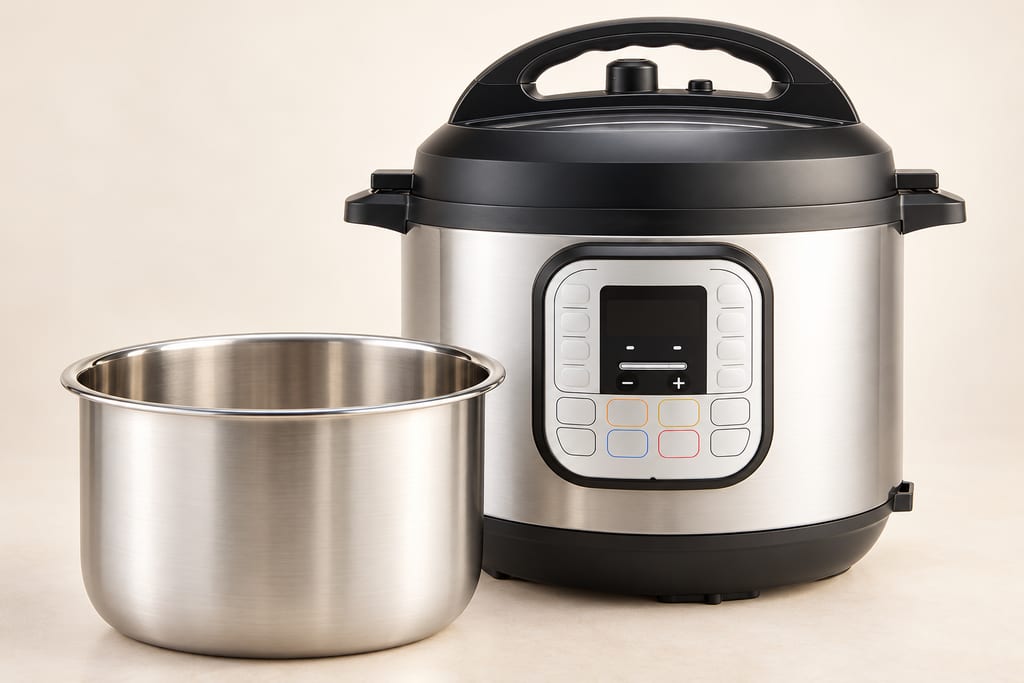
The Instant Pot Duo is a countertop electric multicooker built around a removable metal inner pot, a powered heating base, and a locking lid with pressure-release hardware. The name covers a family rather than one unchanging set of controls. A September 2016 manual covers IP-DUO60 and IP-DUO80: six- and eight-quart North American models with different power ratings and dimensions. The manufacturer's current US listing describes a 6QT Duo with seven cooking functions; its UK support directory lists the Duo separately from Duo Plus, Duo Evo Plus and Duo Nova. A later version should not be identified from an older control panel or assigned the older manual's temperature program without checking the exact model.
In the 2016 manual's parts list, the stainless cooking pot, pressure lid, sealing ring, anti-block shield, steam rack and condensation collector are separate components around the base. The manufacturer describes that inner pot as food-grade 304 (18/8) stainless steel with a three-ply bottom. The device combines pressure cooking with open-lid sautéing and non-pressure functions such as rice, slow cooking, steaming, warming and yogurt. Its removable pot and electronic controls make it useful as a small water-bath incubator as well as a pressure cooker, but those are different operating modes with different limits.
The most unusual fermentation detail in the 2016 IP-DUO60/80 manual is on its Yogurt program. It specifies Normal at 36–43 °C for yogurt, Less at 30–34 °C for jiu niang (sweet fermented glutinous rice), and More at 71–83 °C for milk pasteurization. The manual gives a maximum program duration of 99 hours 30 minutes. These are device specifications for those named models, not a universal yogurt setting and not a measured temperature guarantee for every batch. Later manuals and models can rename, change or omit settings; the manufacturer itself notes that controls vary by model.
The documented jiu niang arrangement uses the Duo as a warm water bath: the rice mixture is held in a lidded glass or ceramic container on the included rack, while water in the inner pot reaches the model's three-cup mark. The manual says the water comes about one centimetre up the sides of the smaller containers to transfer heat evenly. The appliance's Less mode then maintains a low-temperature hold for the manual's default period, subject to the starter's instructions. This use does not make the pressure vessel itself the fermenting container: the food is in the separate lidded jar, and the multi-cooker surrounds it with gently warmed water.
For yogurt, the manual separates milk heating from incubation. Its More mode is for pasteurizing milk; after cooling and adding starter, Normal holds the inoculated milk at the stated yogurt range. Jars may sit in the inner pot without added water under the 2016 instructions. That workflow is specific to the manual and starter product; the equipment page does not turn it into a general yogurt recipe or a safety claim.
A program name describes the appliance's control choice, not necessarily the food's actual temperature throughout a batch. The 2016 manual lists temperature ranges for its functions, but it does not replace measurement of the contents or establish one fermentation outcome. The 30–34 °C Less mode is a particularly clear example: it is described for jiu niang on IP-DUO60/80, while the same manual lists Keep Warm at 63–78 °C, above that fermentation range. A Keep Warm function therefore cannot be substituted for the jiu niang setting on the basis of its name.
The appliance also has material limits. Its pressure modes require liquid and a properly closed, inspected lid; the manual warns that certain foaming or sticky foods can obstruct the release system. It sets a two-thirds maximum fill for pressure cooking and a one-half maximum for foods that expand. The Yogurt program is a non-pressure temperature hold. In the manual's jiu niang method, the small food jar is lidded but placed inside the water-filled inner pot; the outer pressure lid closes the appliance, not the jar. A reader should not confuse those closures or assume that every vessel used with a Duo is pressure-rated.
For the 2016 IP-DUO60/80, the manual rates the six-quart unit at 1000 W and the eight-quart at 1200 W, both for North American 120 V/60 Hz supplies. It gives body dimensions in length, width and height, not a universal cylindrical diameter. The current US manufacturer listing also identifies a 6QT Duo at 1000 W and 120 V/60 Hz, while international products may differ. Check the rating plate and the manual supplied with the actual cooker before using it, particularly when a long, warm fermentation depends on a named preset.
The 2016 manual treats cleaning as part of keeping the pressure hardware functional: wash the removable food-contact pieces, wipe the powered base rather than immersing it, and remove debris from the pressure-release valves and anti-block shield. It says to inspect the silicone sealing ring before use and replace a damaged ring immediately. Those details are useful for the documented older models; the manufacturer may revise maintenance instructions, accessories and parts for later Duo lines. The Duo is a manufactured domestic appliance, not a traditional fermentation vessel, and its documented jiu niang program is one model-specific adaptation of the appliance's temperature controls.
The oldest dated equipment source used here is Instant Pot's September 2016 IP-DUO60/80 manual. That documentary date is not a claim that the Duo was invented or first sold in 2016. The manufacturer currently sells a Duo 6QT and maintains separate manuals for Duo revisions.
The appliance cooks under pressure; the manual warns that opening before pressure is released can be hazardous and that hot liquid can scald.
Hazard sourceFollow the manual for the exact model, inspect the pressure-release handle, float valve and anti-block shield, keep at least one measuring cup of liquid when pressurizing, and respect the stated fill limits.
Control sourceThe 2016 manual says not to exceed two-thirds full for pressure cooking, or one-half for foods that expand, and not to force the lid open while pressure remains.
The manual's Yogurt Less setting is a temperature-control mode, not a pressure-fermentation vessel; the documented jiu niang method uses lidded glass or ceramic containers inside the pot.
Yogurt-mode temperatures and the jiu niang program are documented for the September 2016 IP-DUO60/80; the manufacturer lists multiple Duo revisions and warns that program names and controls vary. Do not transfer the older settings to another model without its own manual.
Source →The IP-DUO60/80 manual specifies North American 110–120 V, 60 Hz systems; electrical compatibility cannot be inferred from the Duo name alone.
Source →Manufacturer lists current 6QT model and 2016 North American IP-DUO60/80 manual; these sources do not establish factory location.
Official UK manuals and recipes document local support; this does not establish product manufacture or traditional geographic origin.
A retailer lists a Duo 60 model; availability is revision-specific and the listing does not establish product manufacture or traditional geographic origin.
Chinese sweet fermented glutinous rice: steamed rice and a mixed jiuqu starter, where mould enzymes release sugar and yeast makes a little alcohol, eaten with its sweet liquid.
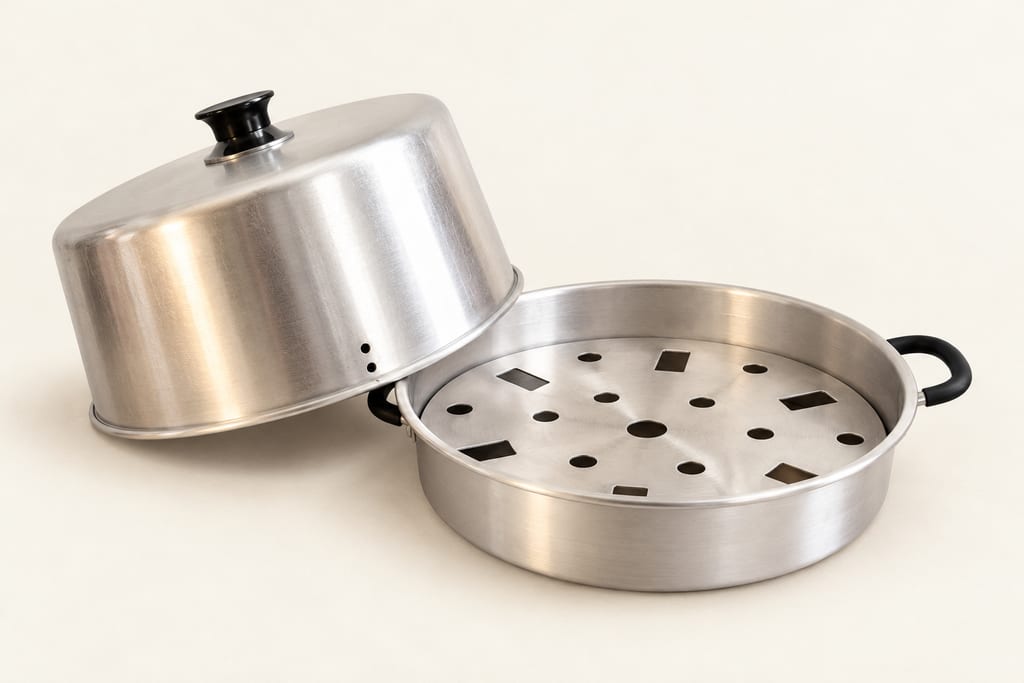
A shallow rack base and tall vented cover process jars in atmospheric steam. NCHFP limits the method to tested high-acid or acidified recipes requiring no more than 45 minutes, including altitude adjustment; this is not pressure canning.

A covered iron vessel used in Maine bean-hole cooking, set into a preheated stone-lined pit and buried for a slow cook.
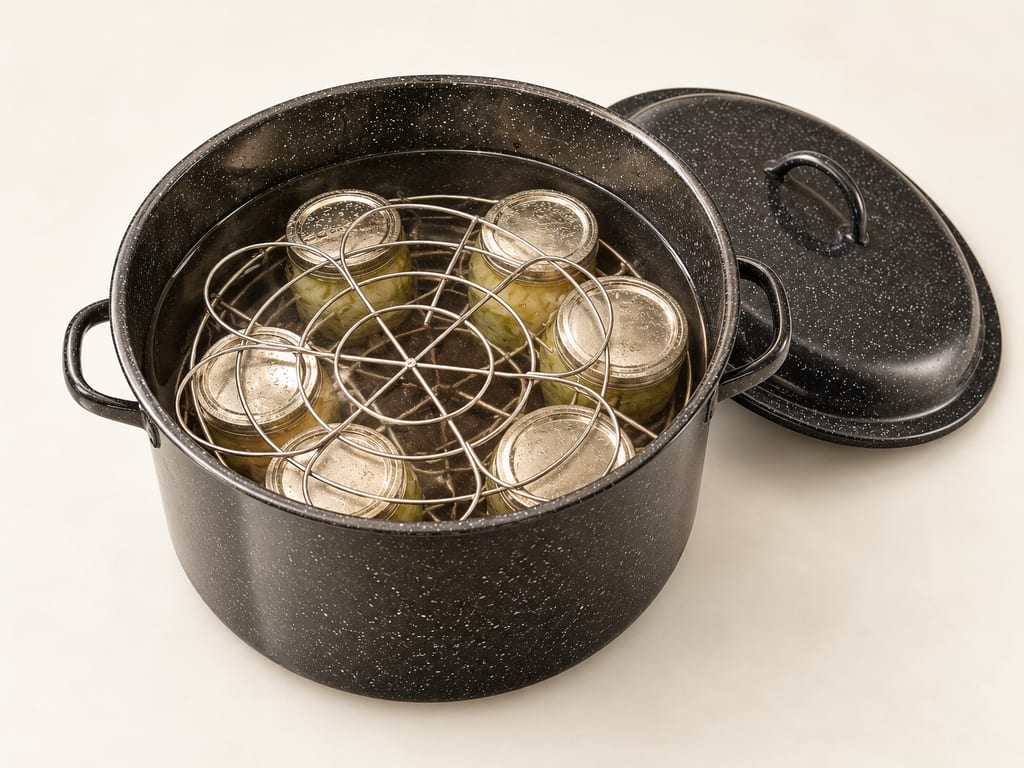
A deep, lidded pot with a removable rack processes jars beneath boiling water. It is intended for foods with tested boiling-water processes; low-acid foods require pressure canning.
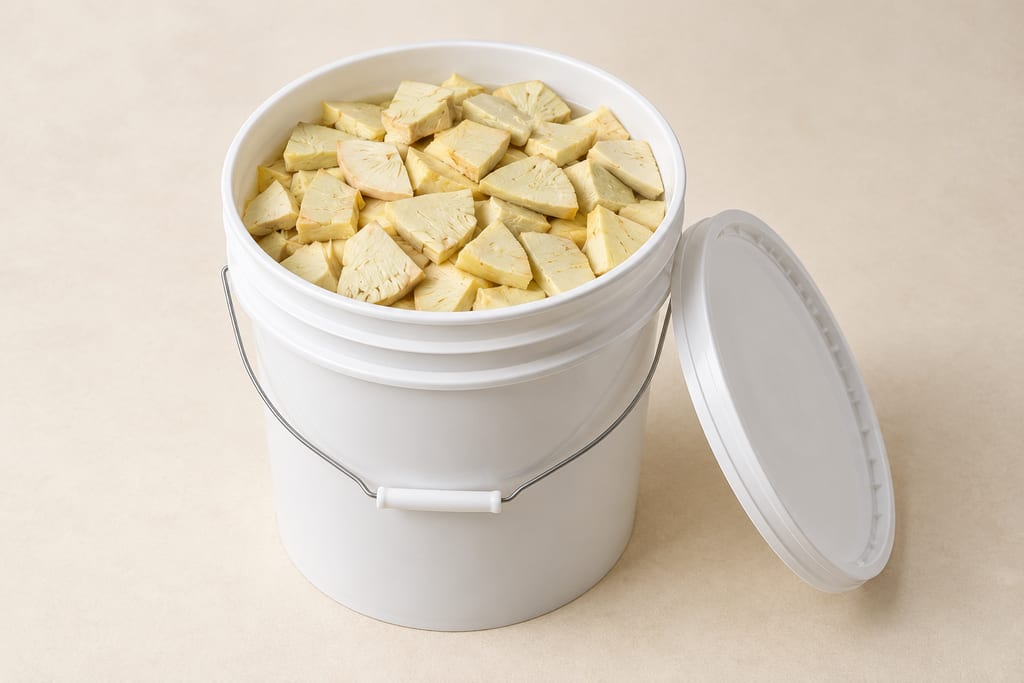
A contemporary household enclosure for preparing mā, fermented breadfruit, documented in Hawai‘i using food-safe buckets, coolers or large sealable bags in place of a pit.

Containers for salt-curing fish and meat range from broad-mouthed stoneware crocks to tubs, cut-down barrels and chests. Their material, depth, cover and ability to retain or drain liquid shape how the food sits in salt or brine.
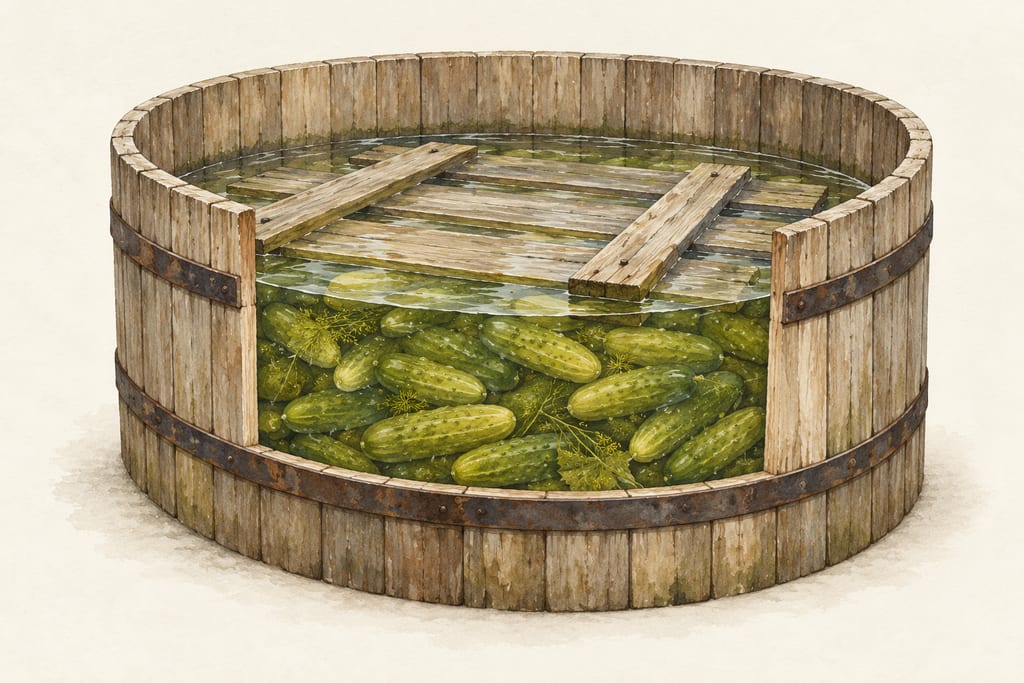
A bulk brining vat holds cucumbers and other vegetables under cover brine for fermentation and storage. North Carolina sources document a mid-century wooden tank yard and later outdoor fiberglass systems.

Threaded, heat-processing jars hold food and a fitted lid during a tested canning process; jar size and process belong to the specific recipe.
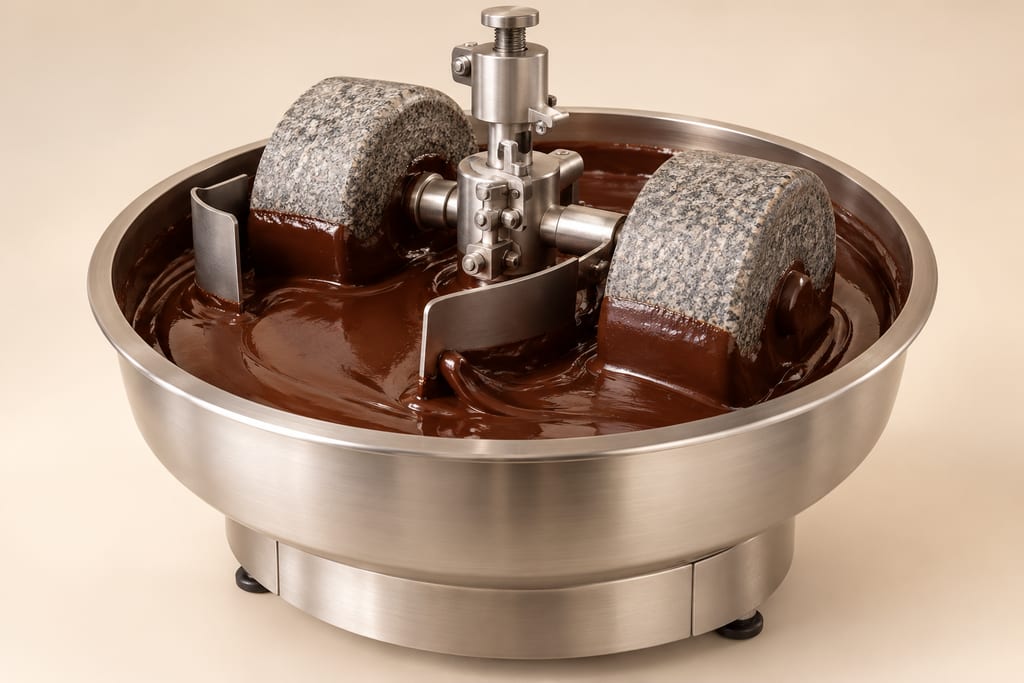
A chocolate refiner or melanger uses powered rotation and stone rollers to refine cocoa mass. Some models also process nut and seed pastes; design, material and operating limits vary.

Soft, spreadable Calabrian pork sausage made with a great deal of red chilli and fatty pork, stuffed into natural casings, sometimes smoked and matured while staying soft.

A way to add independent temperature logging to an existing food dehydrator without changing its built-in controls or protections. It is a monitoring method, not a rewiring plan.

Pleurotus cystidiosus is the abalone mushroom, a cultivated oyster-type fungus with dark brown caps that grows more slowly and is more demanding than other Pleurotus species.

A dark, balanced vinegar from Emilia-Romagna made by combining cooked or concentrated grape must with wine vinegar, then acetifying and refining it in wood under a protected specification.

A living dairy inoculum that starts controlled cream fermentation, developing acidity and aroma before sour cream or cultured butter is finished.

A small electric incubator holds jars at a selected temperature for yogurt and other documented warm food preparations. Controls, capacity and vessel arrangement vary by model.

Adygean salt is a seasoned table salt associated with Adygea and the wider North Caucasian culinary tradition. Salt is blended with garlic and a variable selection of herbs and spices; the exact mix depends on the named style and maker.

The African Caesar-group mushroom, Amanita masasiensis, is a wild ectomycorrhizal species of central and southern African woodlands, eaten locally. The genus contains deadly poisonous species, so identification needs care.
No community contributions have been published for this entry yet.
Sign in to contribute. Published comments and photos are free to read.
Instant Pot Company; manual hosted by Williams-SonomaIdentity · Specifications · Fermentation · Safety · Care
Programmable Electric Pressure Cooker User Manual, Models IP-DUO60/80 (September 2016)The manual describes the IP-DUO60 and IP-DUO80 as 6- and 8-quart electric pressure multicookers and lists their power, dimensions, parts and safety limits.
Its Yogurt program has distinct Normal, Less and More settings; the manual identifies these, respectively, with yogurt, jiu niang and milk pasteurization for these models.
The manual gives pressure-cooking liquid and fill limits, cleaning instructions, and inspection of the sealing ring, valves and anti-block shield.
Cited in: One appliance, several revisions; A specific low-temperature program; What the settings do not establish; Model-specific use and care
Instant Pot BrandsIdentity · Specifications · Materials · Modern market
Instant Pot Duo 6QT Multi-Use Pressure CookerThe current manufacturer page describes a 6QT Duo with seven functions, 13 customizable programs, a stainless steel tri-ply inner pot and 1000 W, 120 V/60 Hz electrical specifications.
Current model features and exterior details are not assumed to match the 2016 IP-DUO60/80 manual in every respect.
Cited in: One appliance, several revisions; Model-specific use and care
Instant Pot UKMarket · Model variation
Product ManualsThe UK manufacturer site lists the Duo alongside distinct Duo Plus, Duo Evo Plus and Duo Nova models and revisions.
Cited in: One appliance, several revisions; A specific low-temperature program
New WorldIdentity · Materials · Market
Instant Pot Duo 60 6L Smart Cooker 112-0007-03The South African retailer identifies a 6 L Duo 60, with stainless inner pot, brushed stainless exterior and 1000 W; the page is a listing, not evidence that this exact revision is universally available.
Cited in: Model-specific use and care
Instant Pot UKModel variation · Yogurt use
Creamy, Home-Made YoghurtThe current UK manufacturer's recipe says that the names and controls for the Yogurt programme vary between Instant Pot models and directs users to consult the appliance instructions.
Cited in: What the settings do not establish