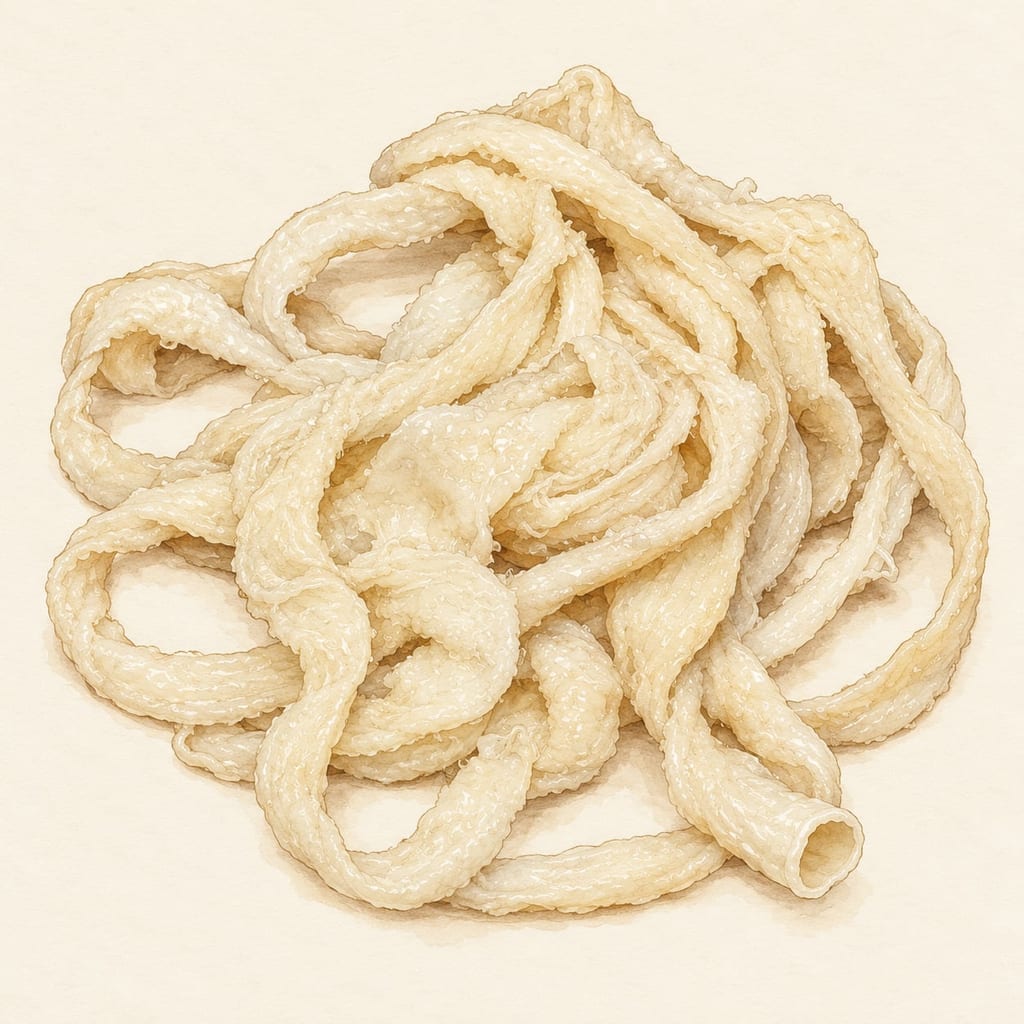
Natural sausage casing
A natural sausage casing is a cleaned animal intestine or, for some products, another prepared organ used as an edible envelope. Its anatomy shapes the sausage, while diameter and material affect stuffing and drying.
 FermenteaWhere food goes to change
Equipment · Stuffing and filling tools
An old-fashioned copper sausage stuffer appears in C. Louis Leipoldt’s 1945 account of family boerewors in South Africa. The essay records hand operation, but not the tool’s dimensions or exact mechanics.
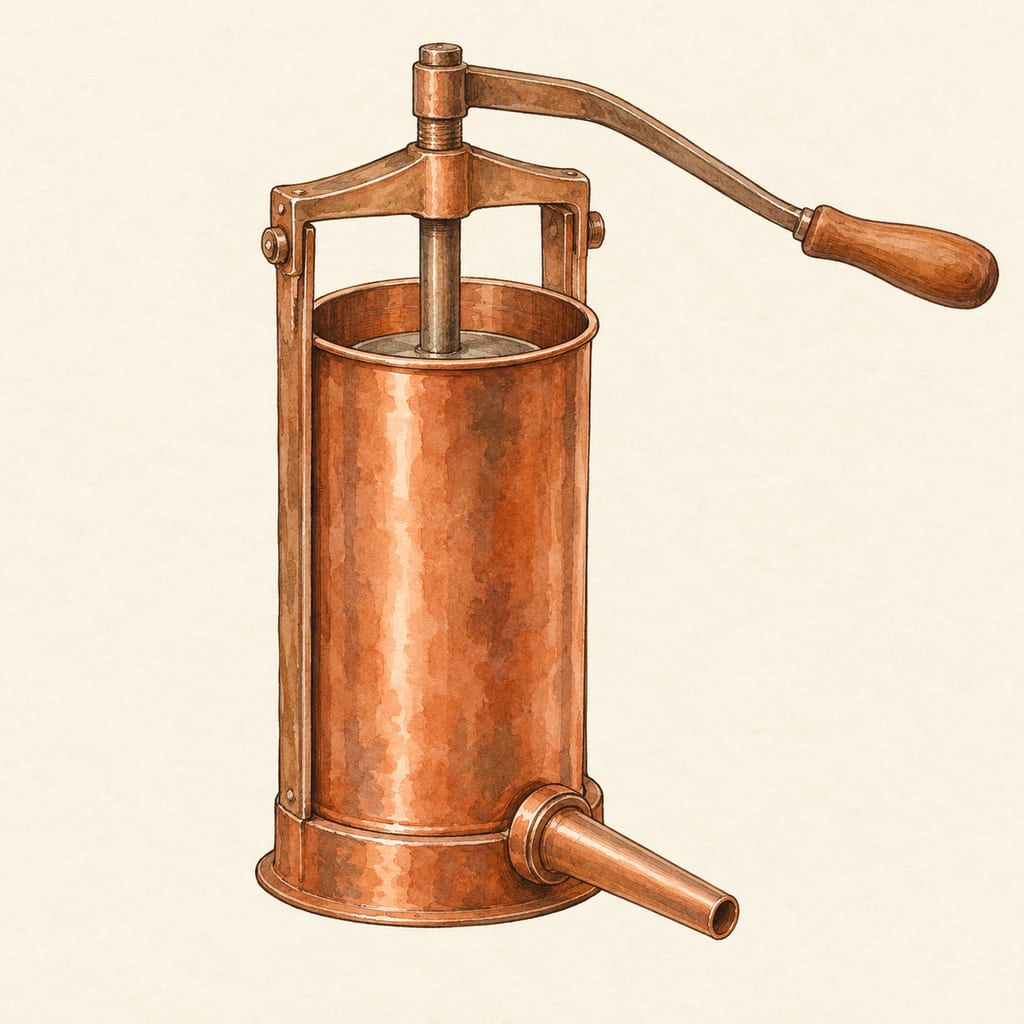
A family passage published by the South African writer C. Louis Leipoldt gives this small tool an unusually precise name. In “Wors,” dated 1 June 1945, he recalls his aunt's boerewors and says that she filled cleaned intestines with her old-fashioned copper sausage stuffer. The source directly supports the material and the hand-operated function; it does not show the tool, name its maker, or describe its shape.
That boundary matters. This is a record of one household implement, not a claim that all sausage stuffers were copper, that copper was the standard South African material, or that the tool originated in South Africa. Its date is the date of a written attestation, not an invention date. The surviving account tells us what the device did in that kitchen more clearly than how a craftsperson built it.
Leipoldt's account places the stuffer after the meat and seasonings have been worked together and before the filled sausage is hung or cooked. The machine's job is to move the prepared mixture into a casing and give it a continuous enclosed form. That is different from chopping or grinding the meat, and different again from cooking, drying or fermenting a sausage.
A museum catalog makes the mechanical principle visible through a separate early-nineteenth-century bench stuffer: a hand lever drives a pressing part into a chamber and directs the charge toward a casing. It is a wood-and-metal comparator, not a photograph of Leipoldt's aunt's copper model. Modern extension guidance likewise distinguishes manual screw-type stuffers from piston-type devices. Across these designs, the operator supplies the force; the chamber and outlet guide the mixture into its casing. Sources do not establish which mechanism the copper tool used.
The 1945 essay situates the implement in a household account of boerewors. Leipoldt describes beef as the base, with some pork and mutton, and keeps small pieces of pork fat distinct from finely worked meat. He presents the filling tool as one part of that particular method. His literary remembrance is evidence of a named tool in use, but it is not a measured recipe or a survey of equipment across South Africa.
Other historical objects show how widely the mechanics and materials can differ. The Smithsonian catalog's circa-1820 comparator is a bench-mounted hand-lever device, with uncertain parts history; neither that object nor its location proves the copper tool's design. Modern hand-operated stuffers are also documented, but their existence does not establish that the copper form continued after Leipoldt's account.
No source consulted here gives the copper stuffer's capacity, dimensions, nozzle, internal mechanism, maker, price, metal thickness, care instructions or exact place of manufacture. The image is therefore an interpretive illustration, not a reconstruction of a known artifact. A linked museum-catalog image offers a comparison with a documented hand-lever stuffer and is explicitly identified as a different, wood-and-metal object.
The tool does not supply the casing, grind the meat or make a fresh sausage safe to eat. Nor does a stuffing device validate a fermented or dried sausage process. The historical account is valuable for household food history; it should not be mistaken for a present-day construction plan or meat-handling procedure.
C. Louis Leipoldt's Afrikaans essay “Wors,” dated 1 June 1945, recounts his aunt's boerewors and says she filled cleaned intestines with her old-fashioned copper sausage stuffer. The date establishes a written attestation for one household tool, not an invention date. The sources consulted do not establish whether this copper form continued after the account or remains in use.
The source supports a country-level household example; it gives no precise locality, place of manufacture or origin claim.
A natural sausage casing is a cleaned animal intestine or, for some products, another prepared organ used as an edible envelope. Its anatomy shapes the sausage, while diameter and material affect stuffing and drying.
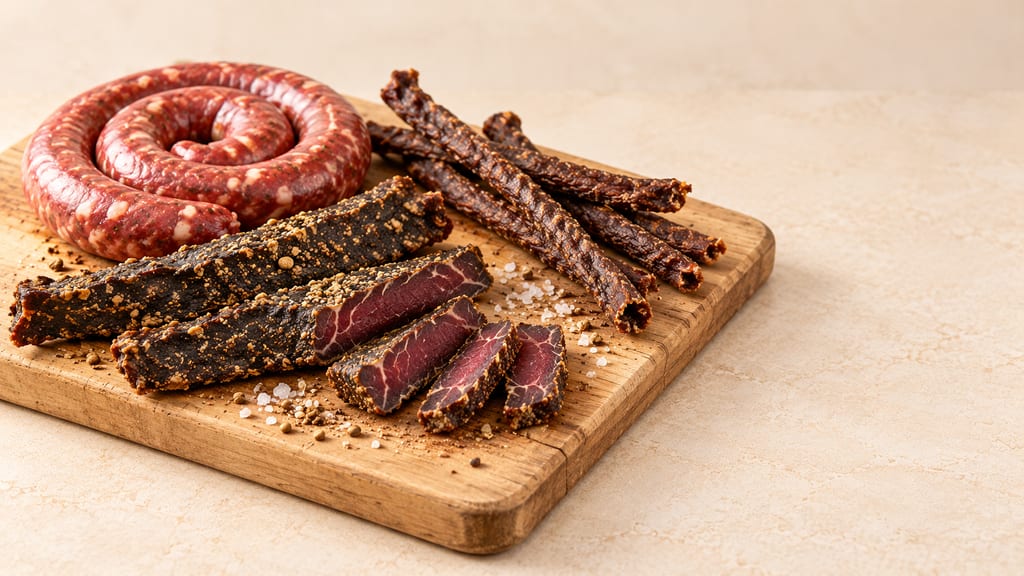
Boerewors, biltong and droëwors share a table but follow different paths from meat to meal. Their histories lead from the braai and butcher's counter to drying lines, household pots and the science of keeping food.

In Velddrif, makers hang whole harders in threaded bunches on lines and beams, moving them between outdoor air and fish-house drying spaces. Reported drying times vary with season and weather.
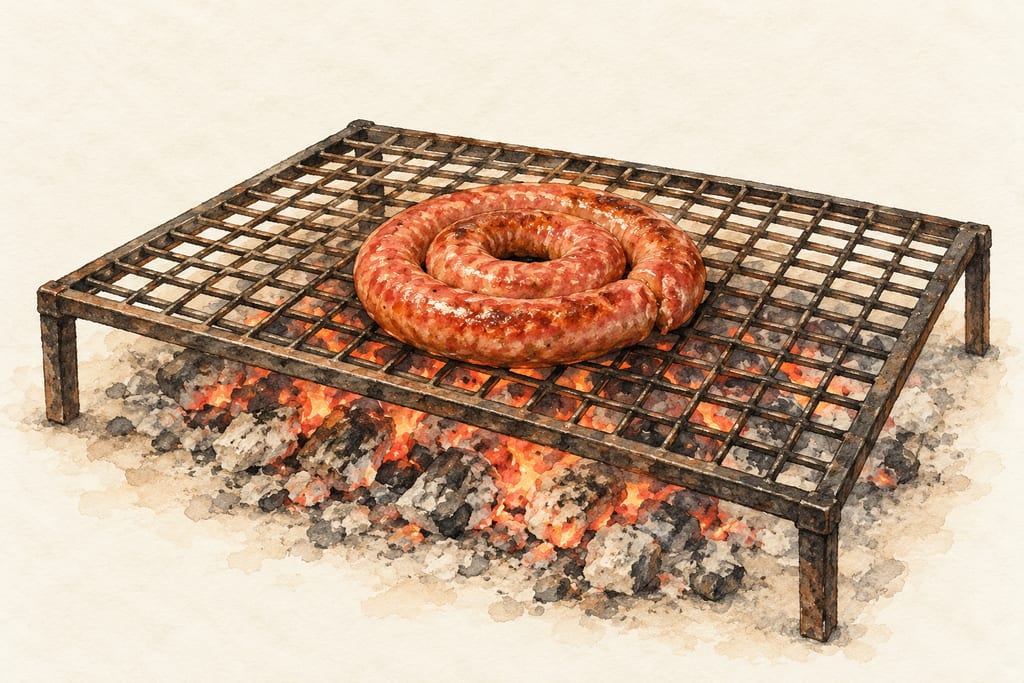
A braai is a South African open-fire cooking practice. This record focuses on the movable cooking grid over coals shown in a documented photograph; sources do not establish one standard grill design or size.
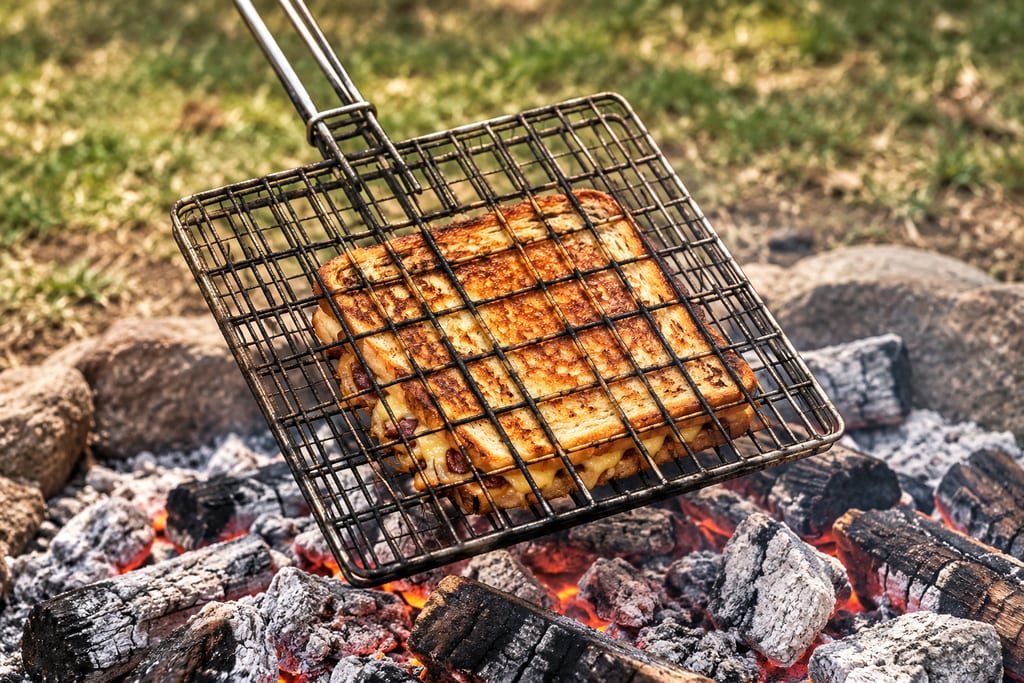
A closed, hinged grid holds food between two cooking faces so a braaier can turn it together over coals. Braaibroodjie recipes specify this tool, but sources do not establish one standard design or size.
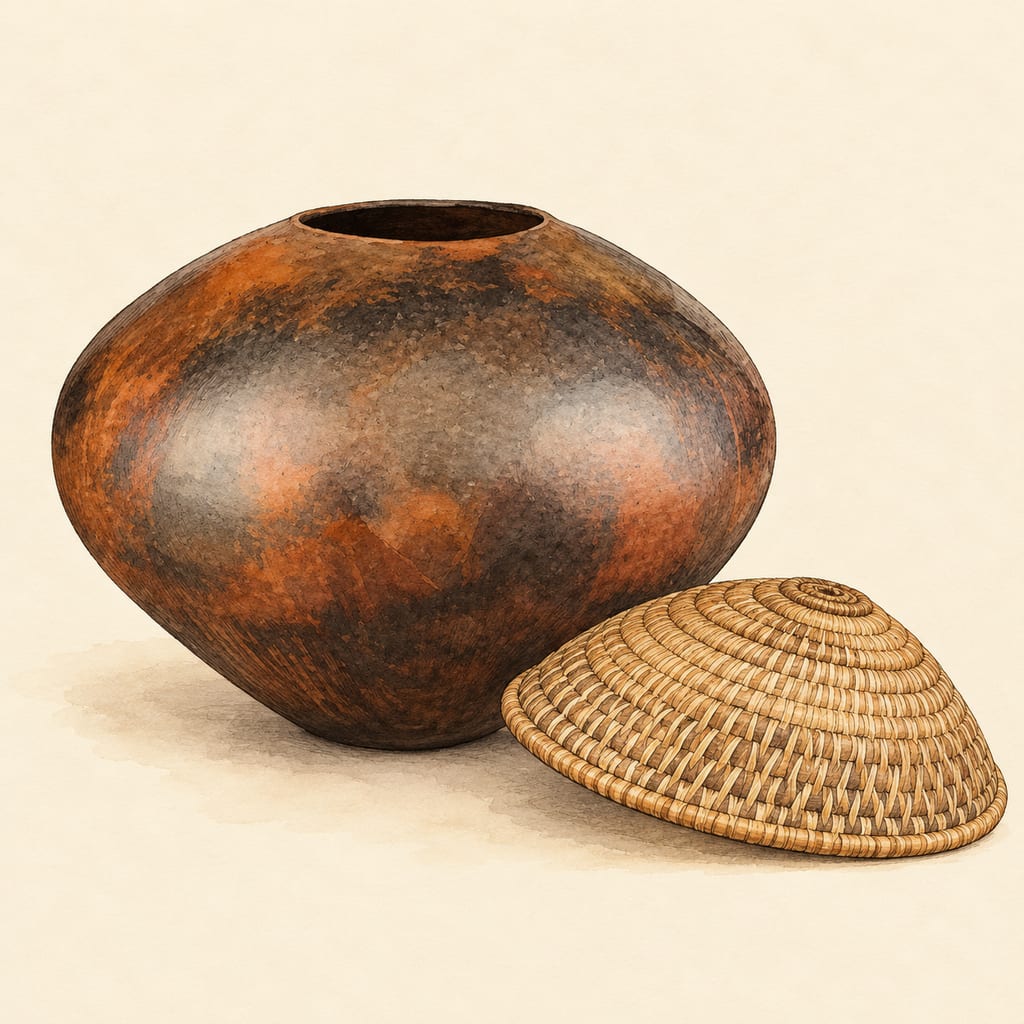
A Zulu earthenware brewing vessel used for grain beer; a woven basket cover keeps out dirt and insects. Imbiza is a distinct pot class, not the serving ukhamba or transport uphiso.
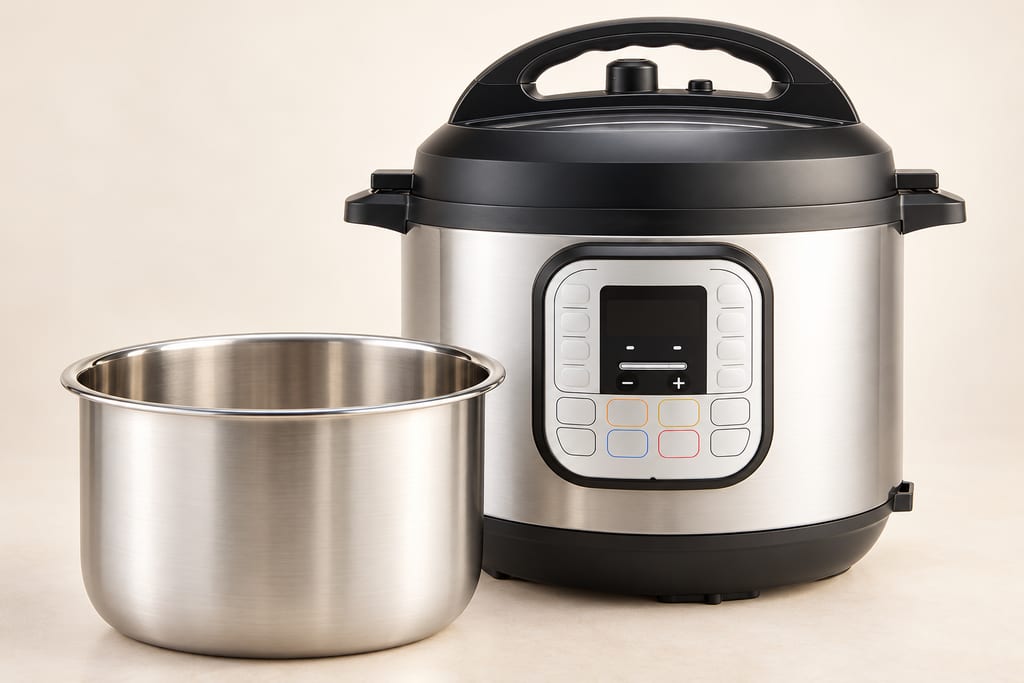
The Instant Pot Duo is a manufactured electric multicooker with a removable inner pot, locking lid and electronic programs. A 2016 IP-DUO60/80 manual documents yogurt and jiu niang settings; later revisions may differ.
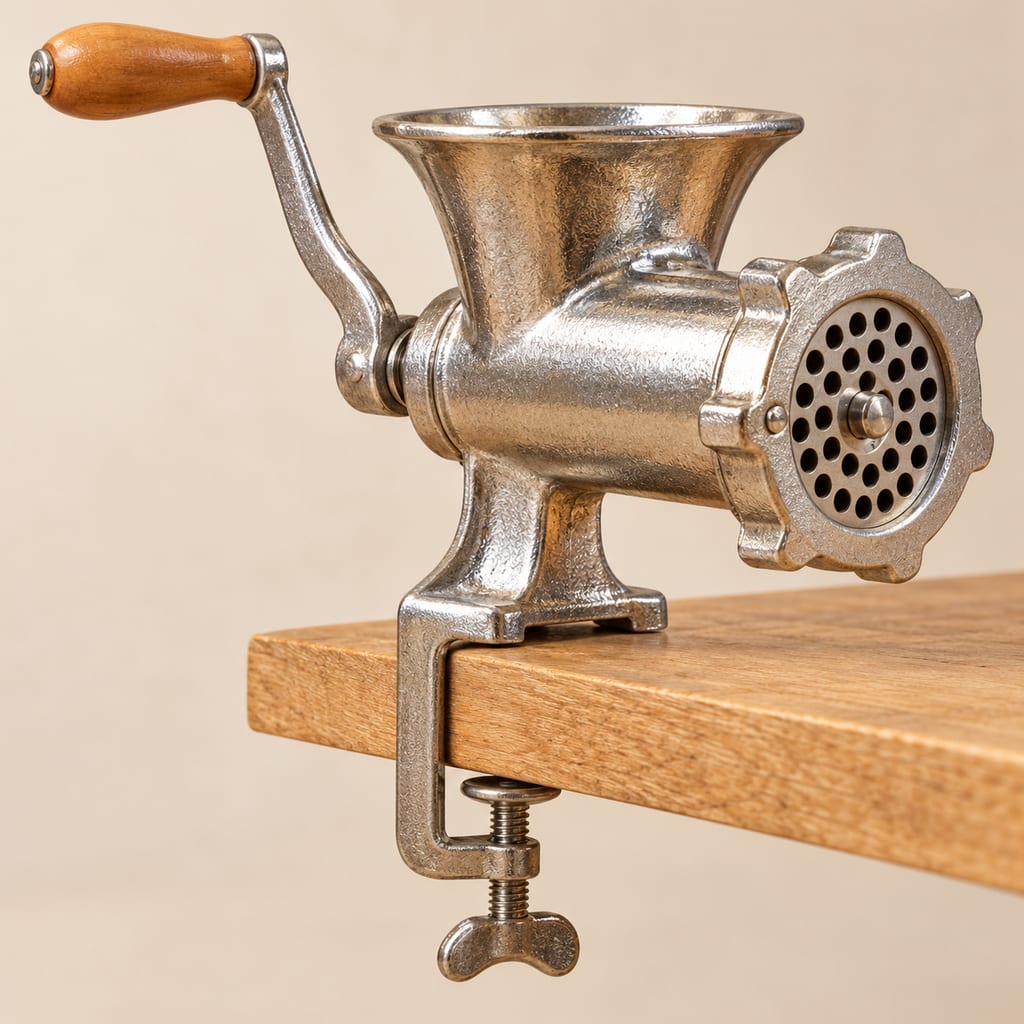
A meat mincer forces meat through a perforated plate to produce a chosen texture. South African sausage sources record plate size as a process choice, not a single defining standard.
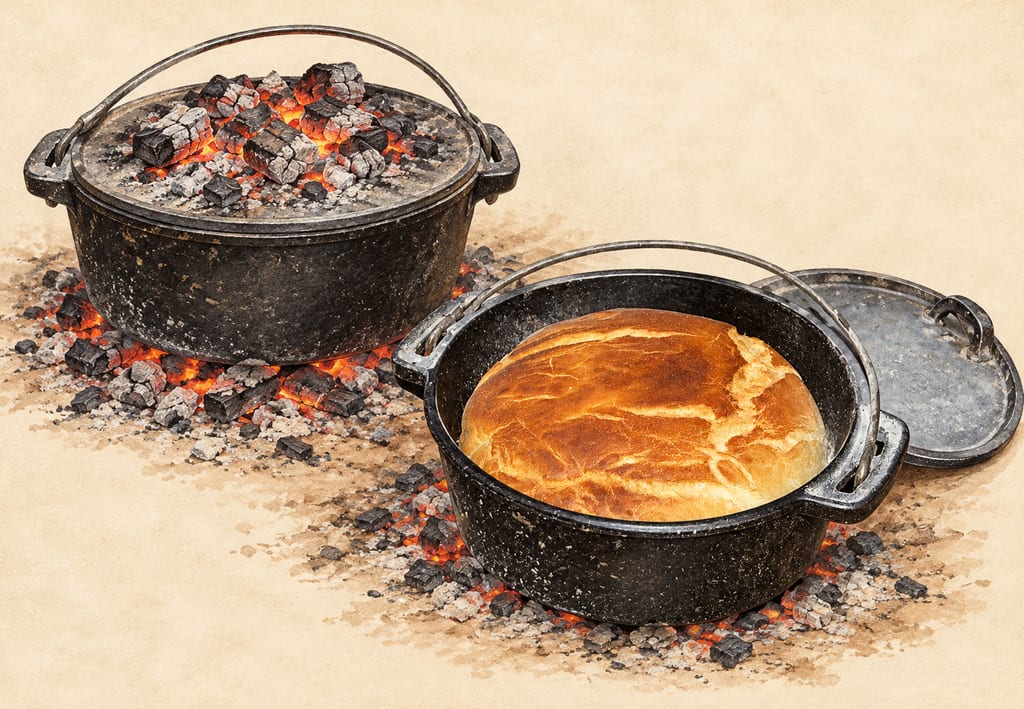
A closed cast-iron pot used to bake potbrood with heat from the hearth or embers; documented in South African English by 1883 and in a contemporary Namibian recipe.
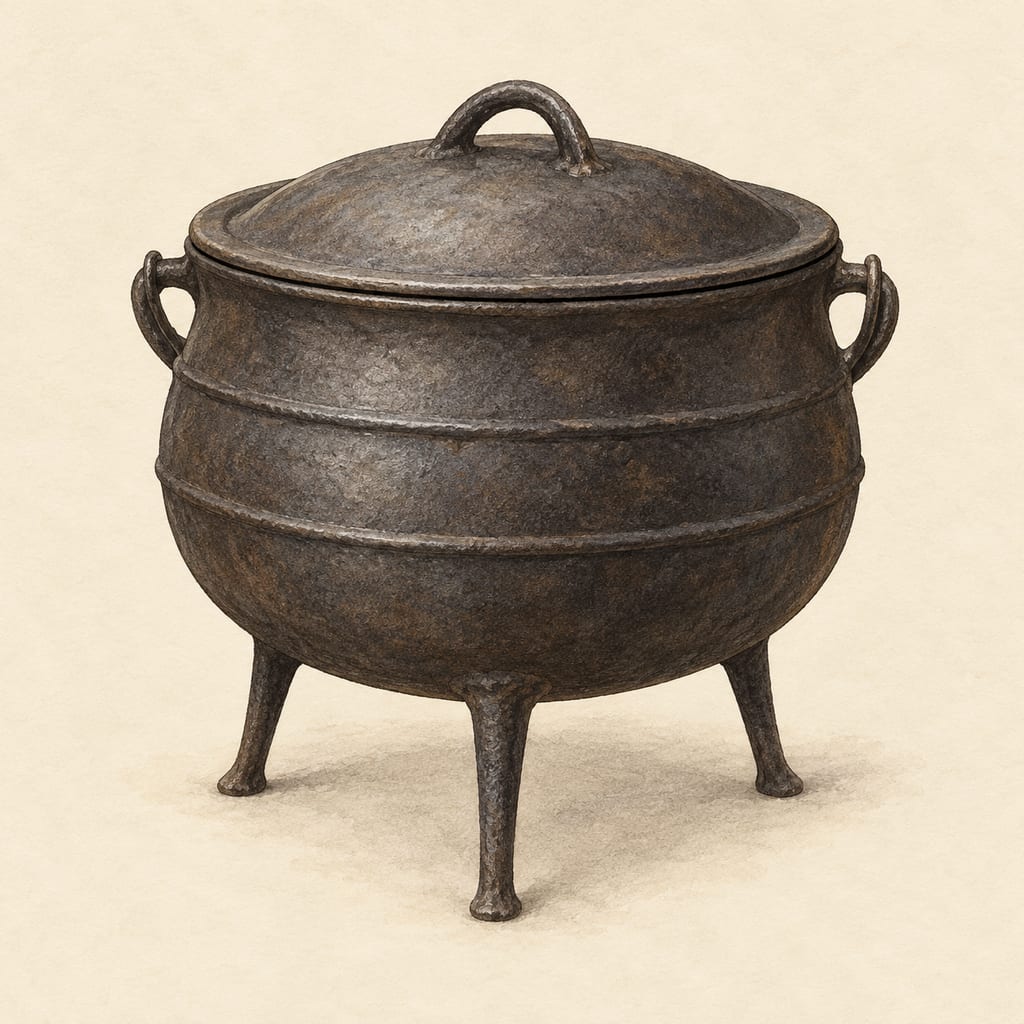
A lidded, rounded cast-iron pot with three legs, used over open fires and embers across southern Africa. Its African history belongs to the vessel's adoption and use, not a claim of European invention.

Soft, spreadable Calabrian pork sausage made with a great deal of red chilli and fatty pork, stuffed into natural casings, sometimes smoked and matured while staying soft.

A way to add independent temperature logging to an existing food dehydrator without changing its built-in controls or protections. It is a monitoring method, not a rewiring plan.

Pleurotus cystidiosus is the abalone mushroom, a cultivated oyster-type fungus with dark brown caps that grows more slowly and is more demanding than other Pleurotus species.

A dark, balanced vinegar from Emilia-Romagna made by combining cooked or concentrated grape must with wine vinegar, then acetifying and refining it in wood under a protected specification.

A living dairy inoculum that starts controlled cream fermentation, developing acidity and aroma before sour cream or cultured butter is finished.

A small electric incubator holds jars at a selected temperature for yogurt and other documented warm food preparations. Controls, capacity and vessel arrangement vary by model.

Adygean salt is a seasoned table salt associated with Adygea and the wider North Caucasian culinary tradition. Salt is blended with garlic and a variable selection of herbs and spices; the exact mix depends on the named style and maker.

The African Caesar-group mushroom, Amanita masasiensis, is a wild ectomycorrhizal species of central and southern African woodlands, eaten locally. The genus contains deadly poisonous species, so identification needs care.
No community contributions have been published for this entry yet.
Sign in to contribute. Published comments and photos are free to read.
Digitale Bibliotheek voor de Nederlandse Letteren (DBNL)History · Geography · Use · Materials
39. Wors, Polfyntjies vir die proeIn an essay dated 1 June 1945, Leipoldt says his aunt filled cleaned intestines with an old-fashioned copper sausage stuffer.
The passage documents a particular South African household account; it gives no dimensions, maker, price, exact mechanism or construction drawing.
The account describes the tool's role in filling sausage after mixing; it is not a current meat-safety or process specification.
Cited in: A copper tool remembered in a family kitchen; The stuffer's place in sausage making; One documented South African use, not a universal pattern; What the record leaves open
Smithsonian Institution Press, reproduced by Project GutenbergForm · History · Visual reference
Agricultural Implements and Machines in the Collection of the National Museum of History and Technology, catalog no. 112The catalog describes a separate sausage stuffer of about 1820, mounted on a bench and operated by a hand lever; it may have been made in England and later brought to Brampton, Ontario.
The catalog says not all parts of that artifact are the same age and that this hand-lever style was common in the eighteenth and nineteenth centuries.
The photographed wood-and-metal comparator does not establish the construction of Leipoldt's copper tool.
Cited in: The stuffer's place in sausage making; One documented South African use, not a universal pattern; What the record leaves open
Food and Agriculture Organization of the United Nations (FAO)Function · Context
Small-scale sausage production, chapter 3: Sausage casingsNatural and artificial casings serve as forms and containers for sausages; they bind and protect the mixture and regulate contraction and expansion.
The FAO distinguishes casing from the sausage mixture itself and documents multiple animal-derived casing forms; casing choice does not make the stuffer a grinder or preservation process.
Cited in: What the record leaves open
University of Connecticut ExtensionFunction · Modern context
Home Sausage MakingThe extension guide describes home sausage stuffers and distinguishes manual screw-type stuffers from piston-type models; it explains that the stuffing operation is separate from grinding.
This contemporary guidance documents continued use of hand-operated stuffer mechanisms in general, not continued production or use of copper models.
Cited in: The stuffer's place in sausage making; One documented South African use, not a universal pattern; What the record leaves open