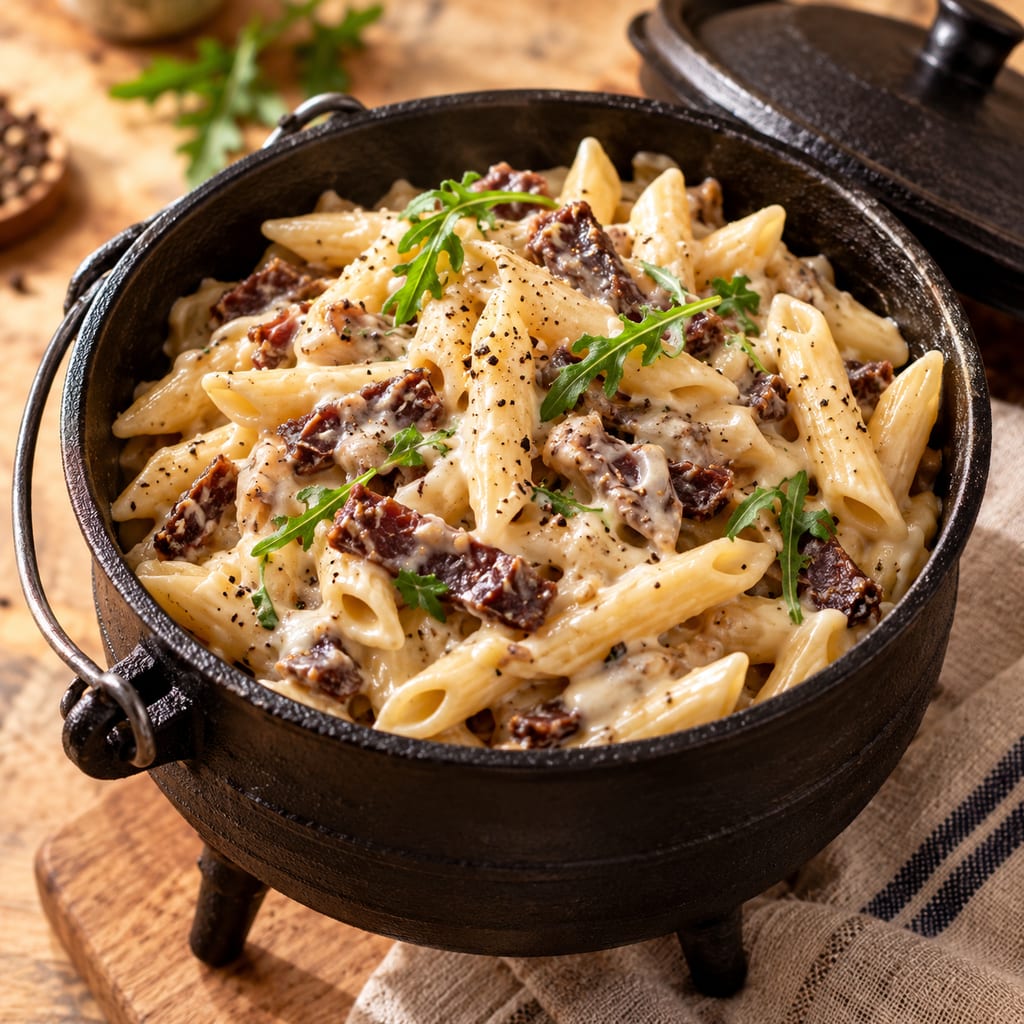
Biltong potjie with creamy pasta
Biltong, bacon and vegetables simmer in tomato-herb stock, then join cooked pasta, milk, cream and Cheddar in this outdoor potjie.
 FermenteaWhere food goes to change
Equipment · Covered pot ovens
potjie · Potjiekos pot · Three-legged cast-iron pot
A lidded, rounded cast-iron pot with three legs, used over open fires and embers across southern Africa. Its African history belongs to the vessel's adoption and use, not a claim of European invention.
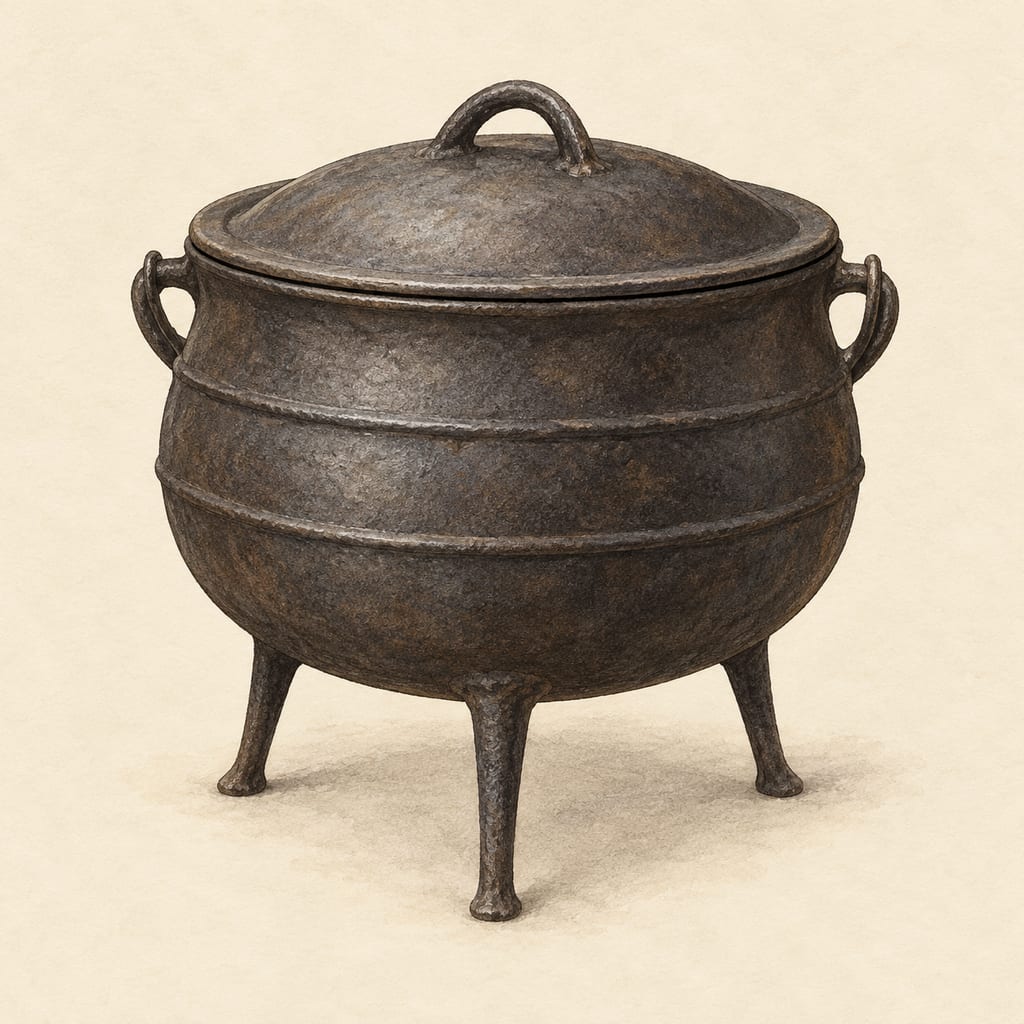
Potjie is Afrikaans for “little pot.” The Dictionary of South African English defines it as a lidded, almost spherical cast-iron pot made for an open fire, and links the name to the familiar three-legged cooking pot. The silhouette matters: a rounded iron body sits on three feet, with a fitted cover that helps enclose food while the vessel is heated outdoors. The photographed museum example has a ribbed body, side handles and a loop on its lid; these are details of that example, not a specification for every potjie.
The object is different from potjiekos, the food cooked in the pot. A cooking pot can be used for different dishes, and a recipe does not become a potjie merely because it is cooked outdoors. A contemporary biltong potjie with creamy pasta is one documented use of the vessel; it is a modern cooking dish, not a historical recipe or the only way a potjie is used.
The pot's material and support suit cooking over a hearth. Its legs let the belly stand above coals or a fire; the VEM archive also describes suspending a pot, setting it among glowing embers, or covering it with embers. The heavy lid closes the top while heat reaches the iron from outside. The same museum account notes that cast iron holds heat for a long time, which helps explain its use for slowly cooked stews and soups and for fireside bread.
These descriptions are not a single required setup. The same type can be placed over a fire, hung, set into embers or covered with them. No one heat level or arrangement follows from the name alone, and the exact use depends on the particular pot and the cook's method. The vessel itself supplies no controlled temperature; its thick metal can retain heat after the fire is reduced, so cooking instructions still need to account for the chosen model and fuel.
The VEM archive's museum note traces the type's arrival in southern Africa to the seventeenth century, carried on Dutch ships. It says pots were first used on expeditions and were later adopted by Cape Dutch settlers on farms. The same account describes Rhenish missionaries using such cooking pots during ox-cart journeys from the 1830s, then notes their spread among communities including Herero and Nama. That narrative places the vessel in regional movement and adoption; it does not make the Afrikaans name a claim that one group alone used or made the pot.
The Dictionary of South African English preserves later quotations about three-legged pots in South African kitchens and over hot coals. Together with the VEM museum account, they show a vessel whose history includes imported industrial objects and local use, not a single unchanging ethnic or national tradition. The archive describes a twentieth-century potjie labelled South Africa/Namibia and notes a 0.5-litre model weighing 2.7 kg; a large version from the maker it discusses can reach 70.5 litres and 71 kg. These are example measurements, not a universal size chart.
A separate European history helps explain the foundry connection without collapsing it into the pot's southern African story. The Smithsonian records a Carron cast-iron covered tripod pot made in the Falkirk area from 1760 to 1830. Falkirk Local History Society documents a 1919 agreement between the Falkirk Iron Company and a Durban manufacturer. Neither record proves that the Smithsonian object was used in southern Africa or that Scotland invented potjie cooking. They document a European cast-iron industry and one later commercial connection.
Current makers continue to cast iron potjies for outdoor cooking. Big5 Cookware says its factory has operated in Thaba Nchu, Free State, since 1977 and lists Big5 Outdoor potjies from size No. 1/4 through No. 25. Its own care guide describes the numbering as a diameter-based size system and gives its own model range; other makers may vary, so the size number is not a reliable substitute for a stated capacity. The available sources establish present manufacture, but they do not supply one universal diameter, weight or capacity.
Cast iron needs care against rust. Big5's guidance for its pots recommends hot-water washing and drying, seasoning a new pot with a thin oil coat, then cleaning, drying over heat and lightly oiling after use before storage. These are that maker's instructions rather than a rule for every iron pot: check whether a particular pot is already seasoned or has another finish, then follow the maker's care directions. The sources do not establish one single seasoning treatment or lifespan for every potjie.
The item belongs to a southern African setting, while its metalworking history includes imported pots and later manufacture. The museum archive names South Africa and Namibia for its twentieth-century object; a current manufacturer places its factory in South Africa's Free State. These sources are useful at their stated precision: a museum's country label and a manufacturer's factory address do not establish that every potjie is made in those places.
This record focuses on the three-legged cast-iron cooking pot described by the dictionary and museum sources. Modern product lines can also include other configurations, such as flat-bottomed pots sold for indoor cooking, but the name on a product page does not erase the distinction in form. Check the pot itself for legs, lid, material, weight and capacity, and use a recipe that names an appropriate cooking method. No source here establishes that potjie is a fermentation vessel; the documented biltong example is a cooked dish.
The Archiv- und Museumsstiftung der VEM describes the potjie as a European-origin cast-iron vessel that arrived in southern Africa on Dutch ships in the seventeenth century, initially used on expeditions and later adopted on farms. The same account documents Rhenish missionaries using pots of this type on ox-cart journeys from the 1830s and a twentieth-century example labelled South Africa/Namibia. The Dictionary of South African English records the Afrikaans name, meaning “little pot,” and defines a potjie as a lidded, almost spherical cast-iron pot for an open fire. A Carron covered tripod pot in the Smithsonian collection was made in the Falkirk area between 1760 and 1830; it is a European comparison, not proof that this particular object travelled to southern Africa or that Scotland invented potjie cooking. Falkirk Local History Society separately documents a 1919 agreement between the Falkirk Iron Company and a Durban manufacturer. That is a specific industrial connection, not an origin story for the dish or vessel.
The sources document several sizes and particular manufacturer ranges, not one standard potjie capacity or dimension. Check the exact model rather than treating size numbers as litres.
Source →Cast iron can rust when stored wet; the cited manufacturer recommends drying and a light oil coating as part of care for its pots.
Source →The VEM museum archive documents a twentieth-century potjie labelled South Africa/Namibia and describes its use and spread; the Dictionary of South African English records the regional name and historical quotations. These sources do not claim one exclusive origin or identical use across communities.
The museum catalogue labels its twentieth-century potjie example South Africa/Namibia. This is evidence for a documented example, not a claim of uniform Namibian use.
Big5 Cookware says it manufactures cast-iron potjies at its Thaba Nchu factory in the Free State. This identifies one current producer, not the origin of the form.
Biltong, bacon and vegetables simmer in tomato-herb stock, then join cooked pasta, milk, cream and Cheddar in this outdoor potjie.
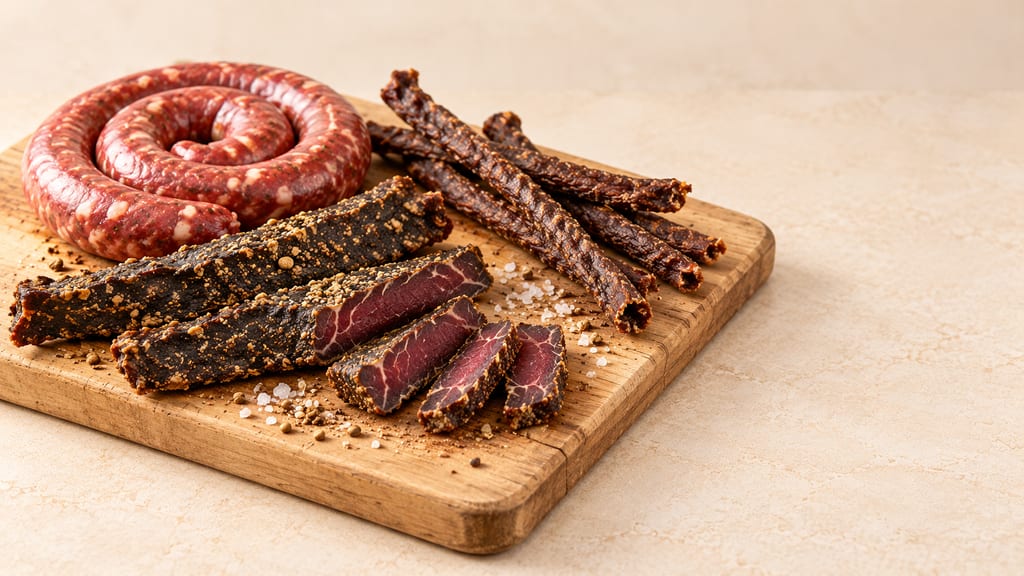
Boerewors, biltong and droëwors share a table but follow different paths from meat to meal. Their histories lead from the braai and butcher's counter to drying lines, household pots and the science of keeping food.
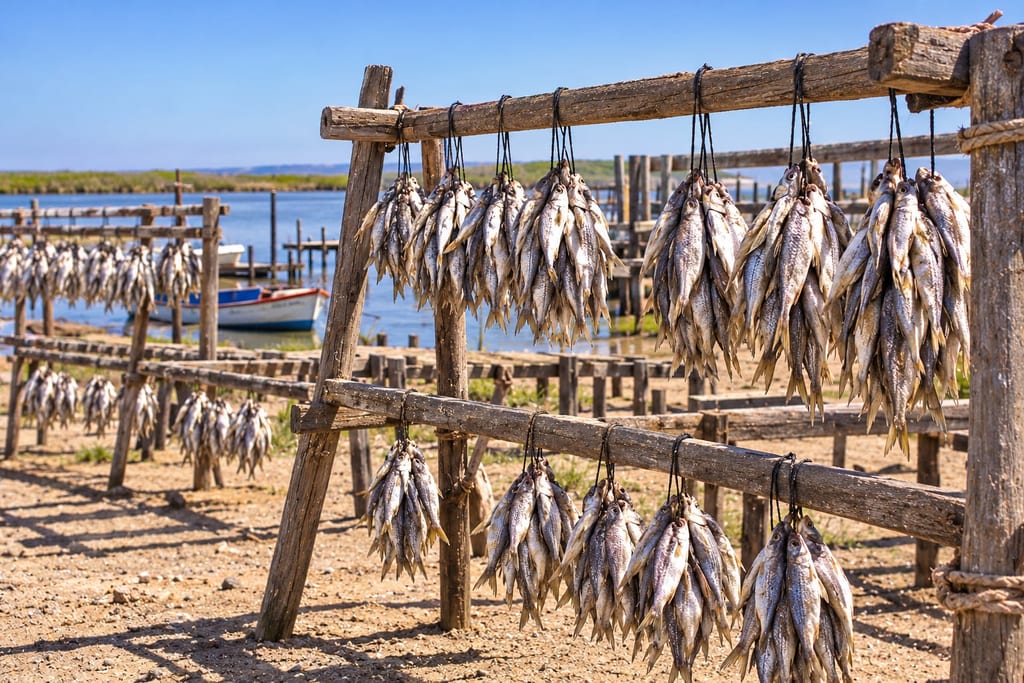
In Velddrif, makers hang whole harders in threaded bunches on lines and beams, moving them between outdoor air and fish-house drying spaces. Reported drying times vary with season and weather.
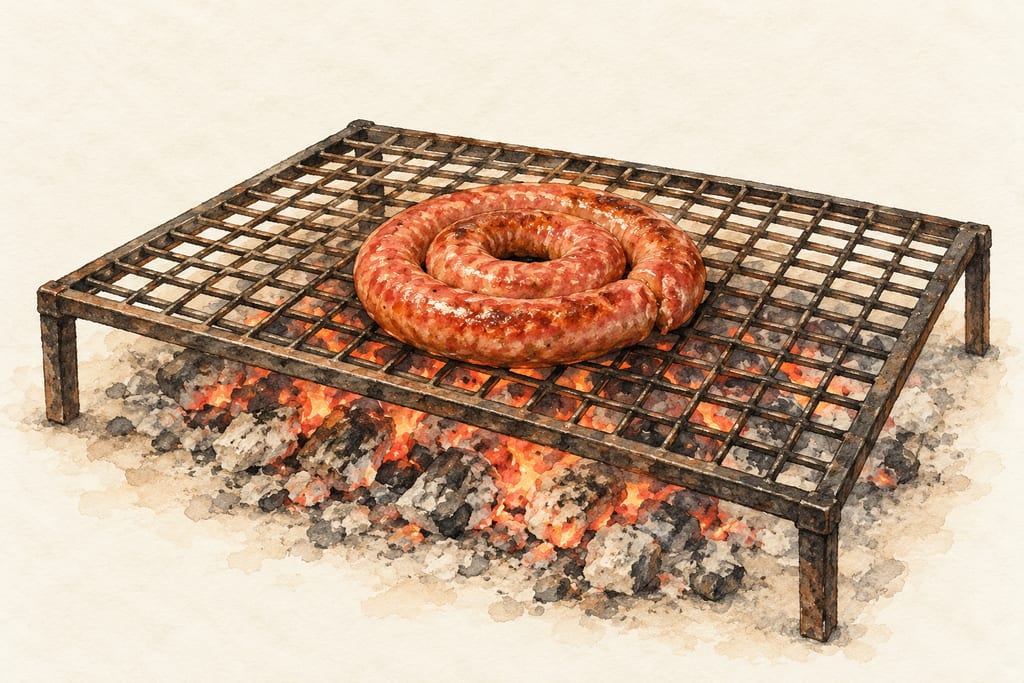
A braai is a South African open-fire cooking practice. This record focuses on the movable cooking grid over coals shown in a documented photograph; sources do not establish one standard grill design or size.
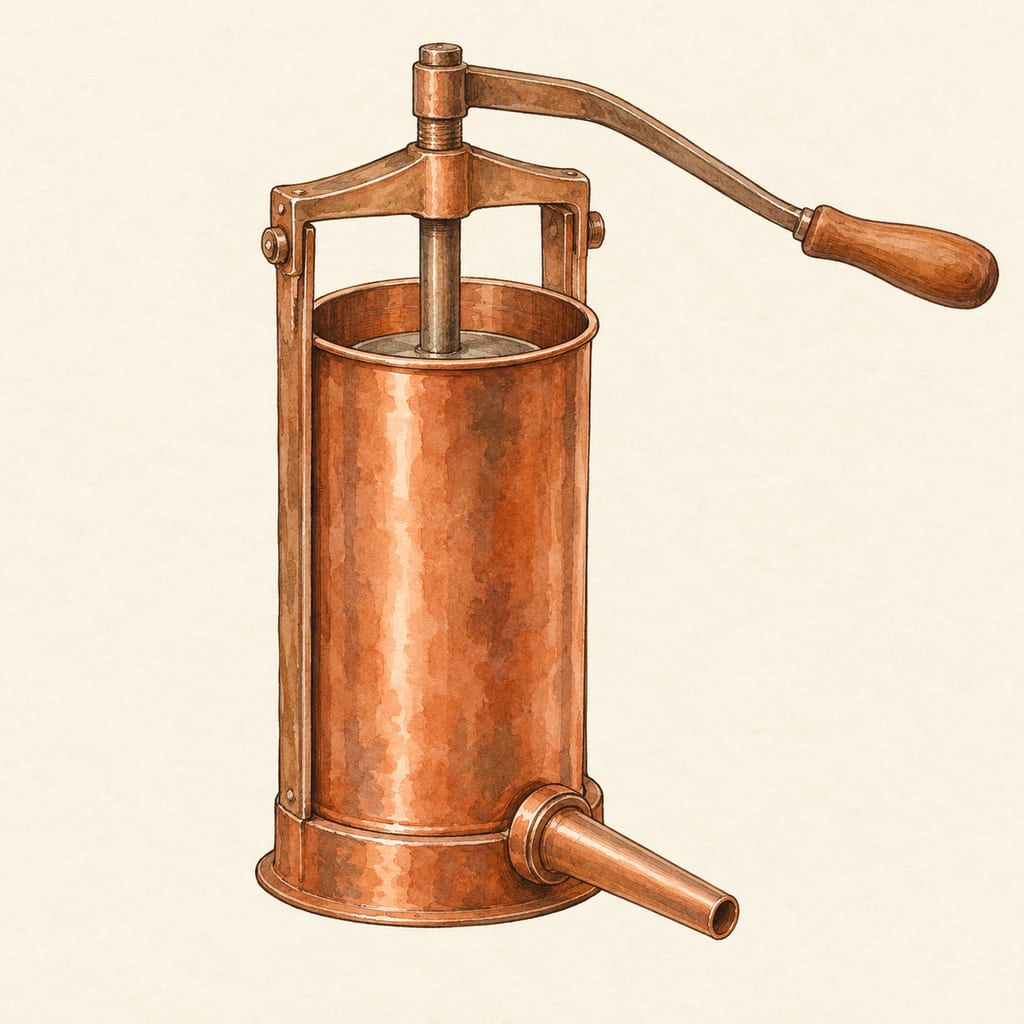
An old-fashioned copper sausage stuffer appears in C. Louis Leipoldt’s 1945 account of family boerewors in South Africa. The essay records hand operation, but not the tool’s dimensions or exact mechanics.
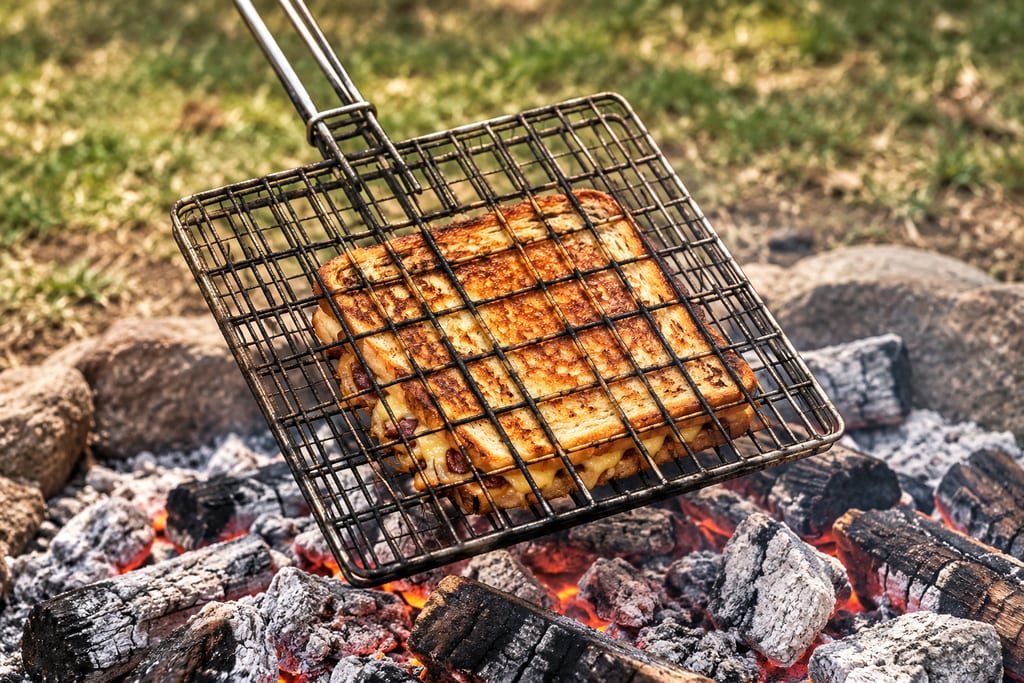
A closed, hinged grid holds food between two cooking faces so a braaier can turn it together over coals. Braaibroodjie recipes specify this tool, but sources do not establish one standard design or size.
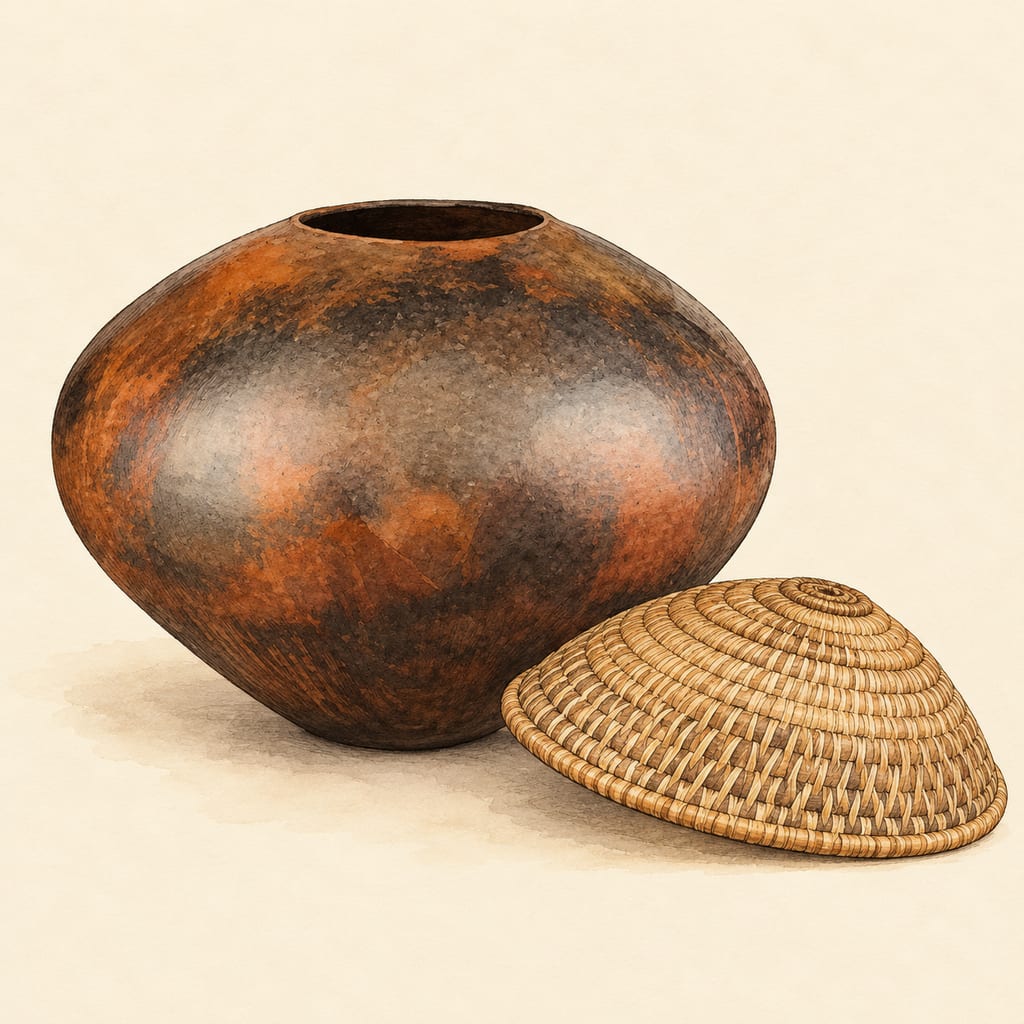
A Zulu earthenware brewing vessel used for grain beer; a woven basket cover keeps out dirt and insects. Imbiza is a distinct pot class, not the serving ukhamba or transport uphiso.
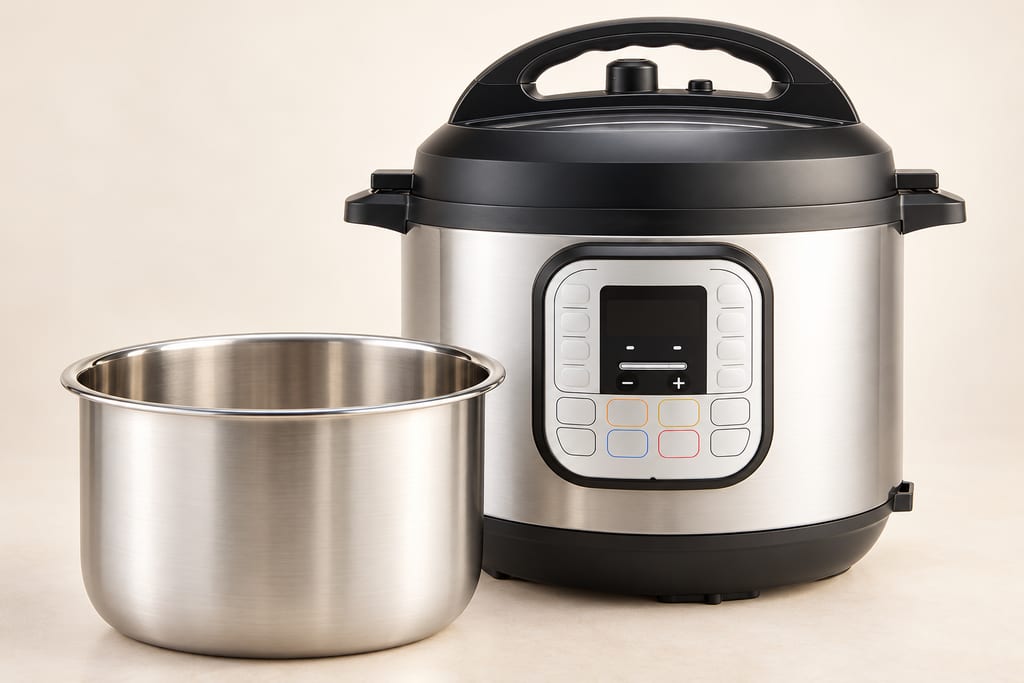
The Instant Pot Duo is a manufactured electric multicooker with a removable inner pot, locking lid and electronic programs. A 2016 IP-DUO60/80 manual documents yogurt and jiu niang settings; later revisions may differ.
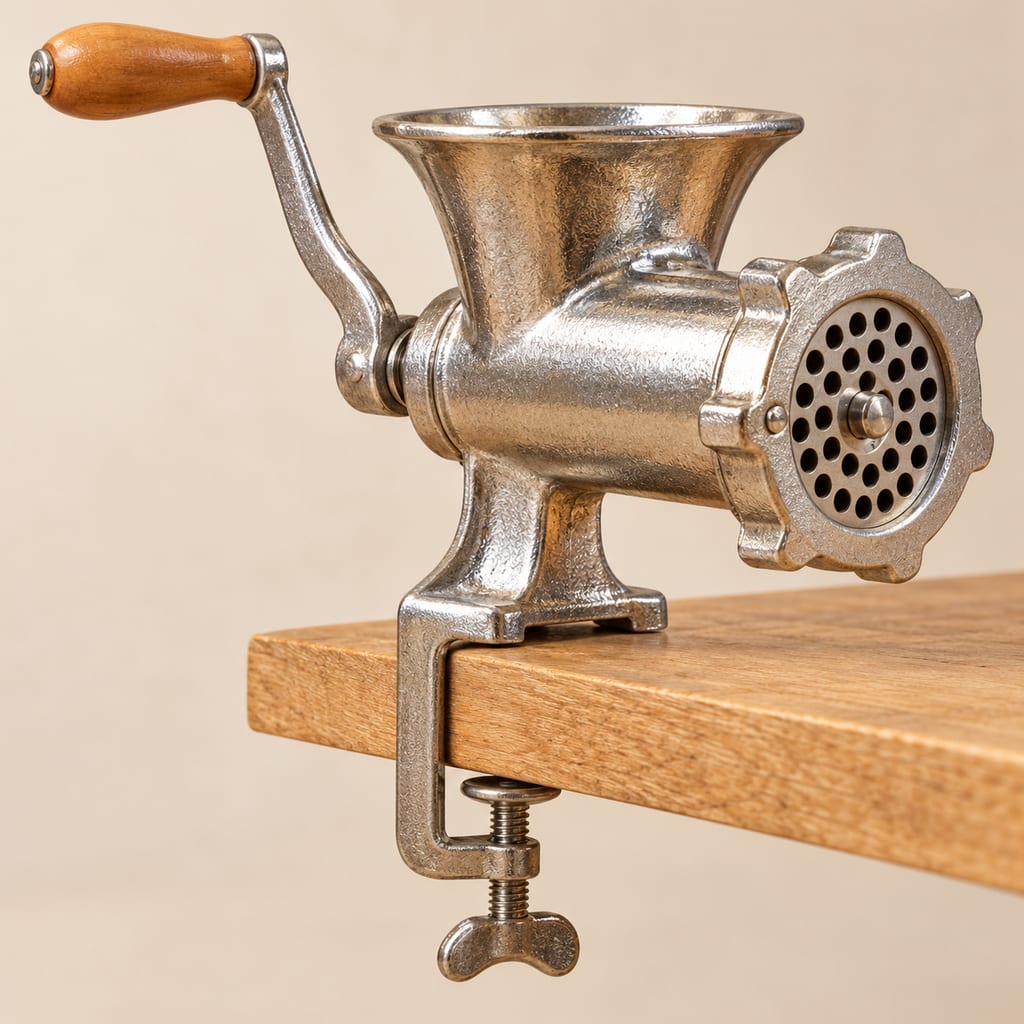
A meat mincer forces meat through a perforated plate to produce a chosen texture. South African sausage sources record plate size as a process choice, not a single defining standard.
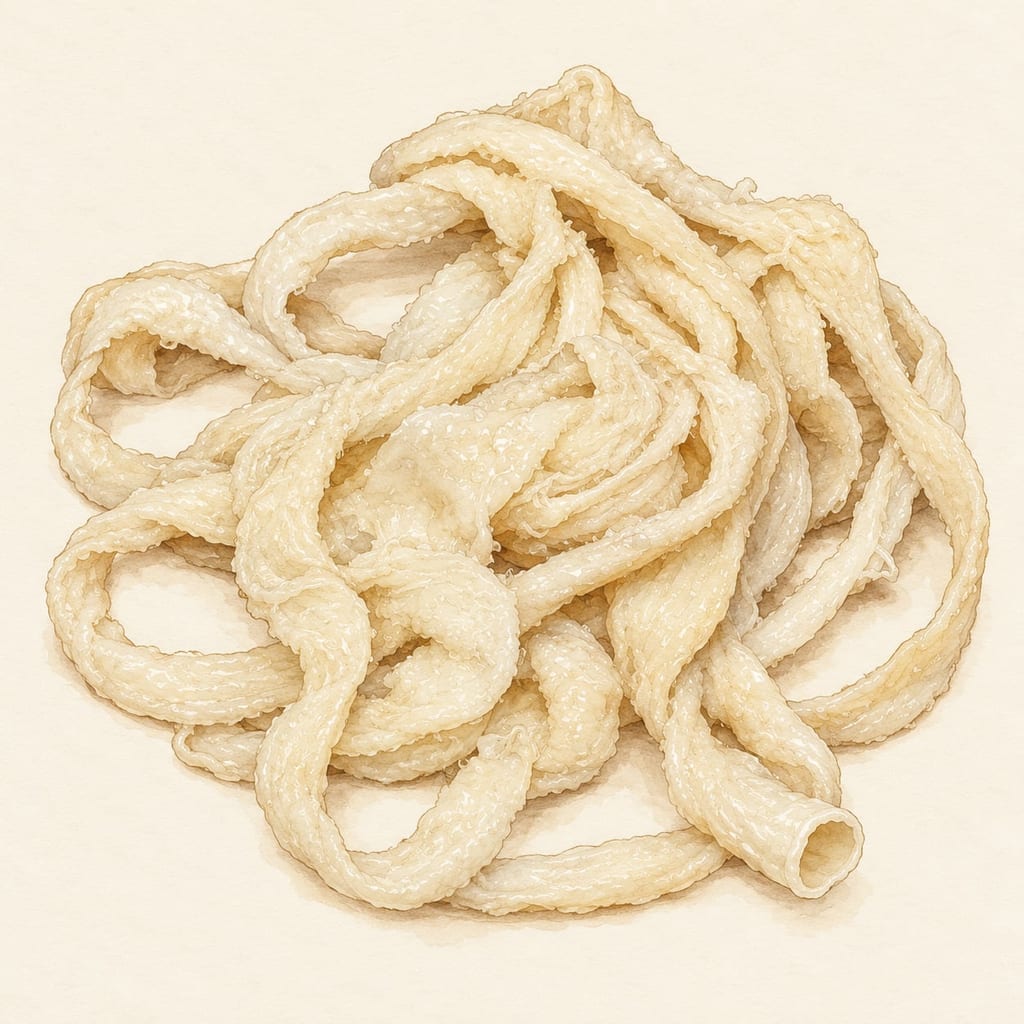
A natural sausage casing is a cleaned animal intestine or, for some products, another prepared organ used as an edible envelope. Its anatomy shapes the sausage, while diameter and material affect stuffing and drying.

A gelling polysaccharide extracted from red seaweeds, sold as kanten strips or powder; it sets firm at a low concentration and stays solid until about 85 °C.

A Dominican table and seasoning condiment of sour orange juice, mixed with lime and salt and bottled raw; garlic, oregano or a hot pepper may be added for meat or a spicier bottle.

Cicerbita alpina is an alpine perennial whose tender shoots and leaves have been eaten raw or cooked. Sámi milk preparations and modern Carnian dishes are distinct uses, with serious identification and preservation limits.

Japanese skipjack tuna cooked, then repeatedly smoked and dried over a wood fire by the hand-fired tebiyama method into a hard block for shaving into dashi: the first stage of katsuobushi.

A Swedish-style spirit vinegar made by fermenting neutral alcohol with live vinegar bacteria, with a separate guide to commercial ättika strengths.

A yeast-raised wheat ring shaped from a firm dough, briefly boiled and baked. This source-batch formula gives a gently malted crust and a chewy crumb.

A warm dip of garlic, anchovy and olive oil, often enriched with butter, that Piedmont serves over a flame with raw and cooked vegetables and bread.

Bechamel is a white sauce of milk thickened with a butter and flour roux, one of the French mother sauces, and the base from which Mornay and other cheese and cream sauces are made.
No community contributions have been published for this entry yet.
Sign in to contribute. Published comments and photos are free to read.
Archiv- und Museumsstiftung der VEMForm · Materials · Function · History · Geography
Object and Picture of the Month: Cooking Pot Potjie, South Africa/Namibia, 20th centuryThe archive identifies a twentieth-century potjie as South Africa/Namibia and describes cast iron, three legs, a heavy lid, a 0.5-litre example weighing 2.7 kg, and a maker's larger model up to 70.5 litres and 71 kg.
Its museum narrative describes the type's arrival on Dutch ships in the seventeenth century, expedition use, subsequent farm use, Rhenish missionary journeys from the 1830s, open-fire and ember cooking, heat retention, and later adoption by groups including Herero and Nama communities. These are reported as the archive's historical account, not a universal origin claim.
Cited in: The potjie: a fire-standing iron vessel; Iron, legs and the open fire; A travelling vessel and a southern African name; Places, uses and limits of the record
Dictionary of South African EnglishTerminology · Form · Function · History · Geography
potjie, nounDefines potjie as an Afrikaans-derived name meaning little pot, and as a lidded, almost spherical cast-iron pot made for an open fire.
Records dated South African English quotations about the three-legged cast-iron form and its use over hot coals.
Cited in: The potjie: a fire-standing iron vessel; Iron, legs and the open fire; A travelling vessel and a southern African name
Smithsonian National Museum of American HistoryHistorical comparison · Materials · Geography
Carron covered pot, object 1982.0090.76The museum record describes a cast-iron covered tripod pot made by Carron in the Falkirk area, dated 1760–1830. It is a comparative European vessel, not evidence that this exact object was used in southern Africa.
Cited in: A travelling vessel and a southern African name
Falkirk Local History SocietyIndustrial history
Falkirk Men AbroadThe society's account describes a 1919 agreement between the Falkirk Iron Company and a Durban manufacturer that put the Falkirk name on products; it supports a specific trade connection, not invention or origin claims about potjie cooking.
Cited in: A travelling vessel and a southern African name
Big5 CookwareManufacture · Acquisition · Geography
About Big5 CookwareBig5 states that its cookware company was established in 1977 at Thaba Nchu, Free State, and that its Big5 Outdoor range includes cast-iron potjie pots from No. 1/4 to No. 25, manufactured in South Africa. This is one maker's range and account.
Cited in: Current sizes, manufacture and care; Places, uses and limits of the record
Big5 CookwareCare · Materials · Acquisition
How to Season and Clean a Potjie Pot — South African Cast Iron Care GuideThe maker's guide says its new cast-iron pot should be washed, thoroughly dried, coated with a thin layer of oil and seasoned; its after-use guidance emphasizes removing residue, drying promptly and oiling before storage to limit rust. Specific care guidance is maker-specific.
Cited in: Current sizes, manufacture and care; Places, uses and limits of the record
LK's KitchenDocumented use
Biltong PotjieA published recipe source for a contemporary biltong potjie; the linked Fermentea recipe record is the equipment's existing typed use link.
Cited in: The potjie: a fire-standing iron vessel