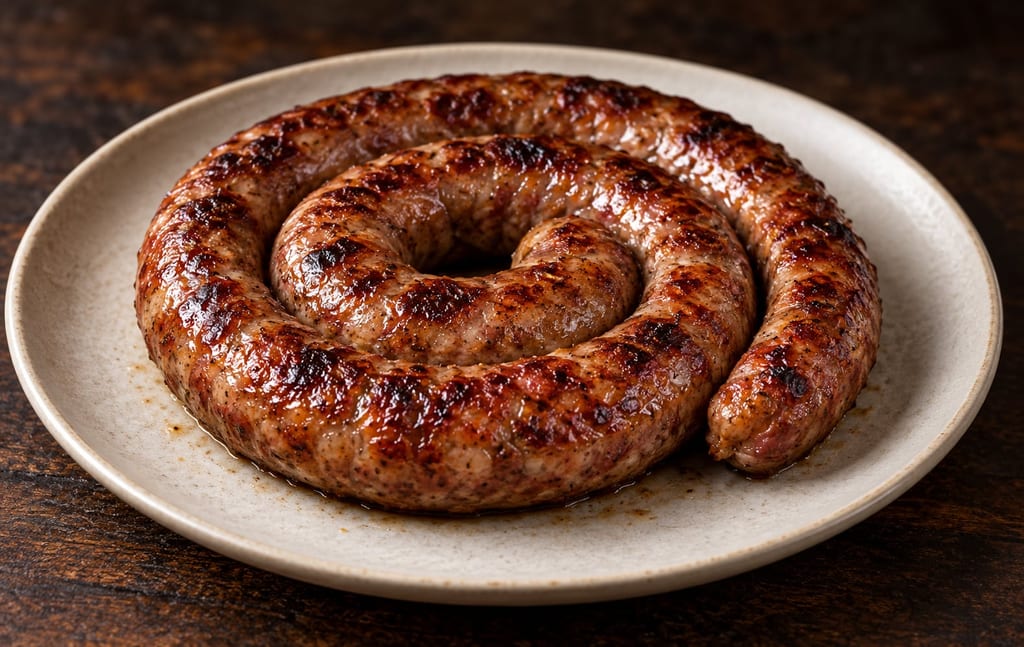
Boerewors
A coarse South African farmhouse sausage of beef with pork or mutton fat, defined by its coriander seasoning and cooked fresh over coals rather than preserved.
 FermenteaWhere food goes to change
Equipment · Bags, sacks and casings
A natural sausage casing is a cleaned animal intestine or, for some products, another prepared organ used as an edible envelope. Its anatomy shapes the sausage, while diameter and material affect stuffing and drying.
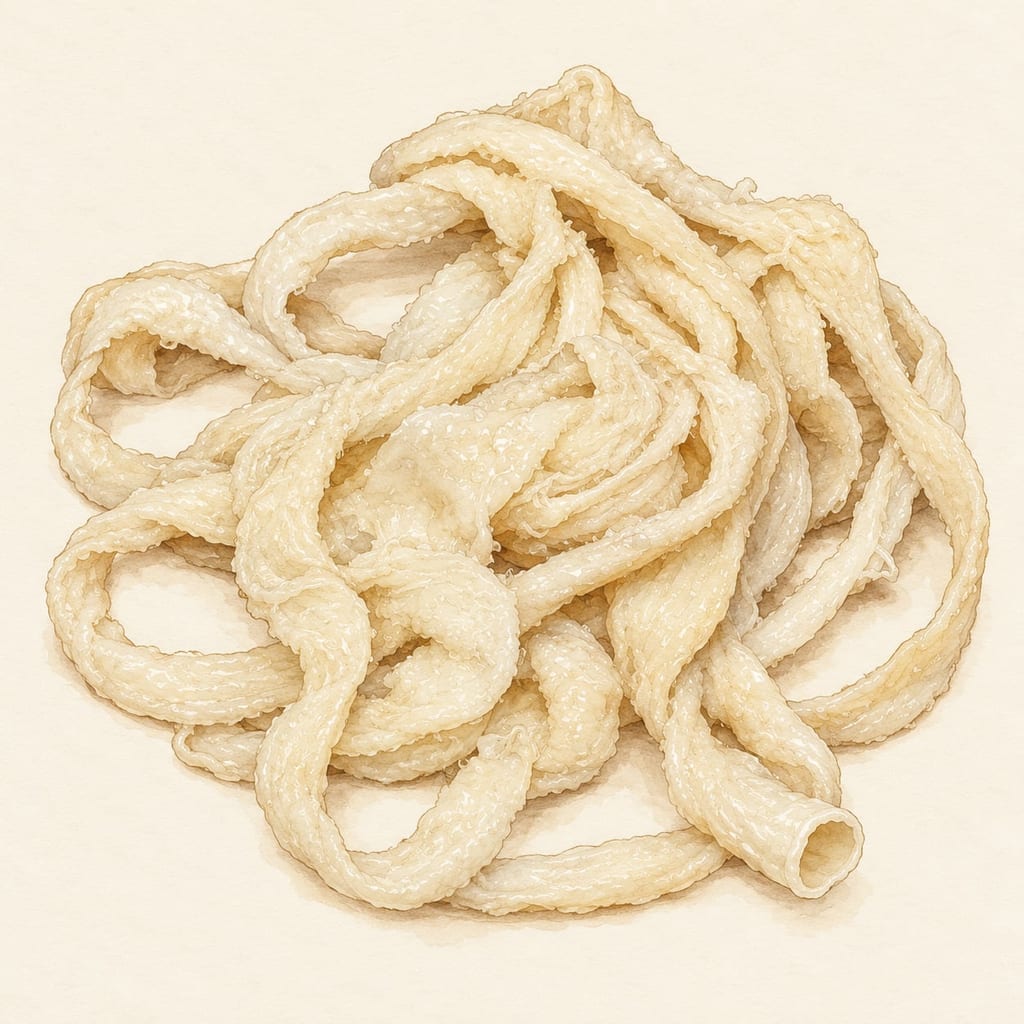
A natural sausage casing is a prepared animal envelope: most often a length of intestine, but some sausage traditions also use a stomach, caecum or bladder. It is flexible, hollow or pouch-shaped, and the animal’s anatomy gives it a form before a maker fills, closes or ties it. That makes casing more than an edible wrapper. It contains the mince, holds the sausage together and helps determine whether the finished product is a narrow link, a larger cylinder or a closed-ended shape.
“Natural” does not mean that the tissue is left untouched. Industry guidance describes casings as cleaned and salt-treated intestines or bladders. For pig and small-ruminant small-intestine casings, processing leaves principally the collagen-rich submucosa; cattle casings can retain other wall layers. The inspected photograph shows loose, pale pig casings before stuffing, but it cannot stand for every species, organ or commercial grade.
Different anatomical sections make different envelopes. A small intestine forms a long, narrow tube suited to links; broader intestinal sections make larger cylinders; a caecum or bladder supplies a closed or pouch-like end. Trade names such as rounds, middles, bung and fat end have species- and region-specific meanings. The FAO and the casing industry's anatomy guide do not always use those names in the same way, so the organ and species are more reliable than an isolated market term.
The casing constrains the filling as it expands during processing and helps the sausage keep its shape. In dry sausage, diameter and material properties affect how far moisture must move from the centre and how the outer layer behaves as the meat shrinks. FAO notes that casings and their physical properties change drying time; United States inspection guidance likewise treats casing type, permeability and product size as relevant validation parameters. A natural membrane alone does not ferment or preserve a filling.
Natural casings are not interchangeable. Sheep and pig small intestines, cattle rounds and middles, large intestinal sections, stomachs and bladders differ in wall structure, thickness, diameter and shape. The casing chosen for a fine breakfast link is not automatically suitable for a large dried sausage. Specific specifications name a particular animal part and calibre for a reason; a generic label cannot replace that source detail.
Manufactured alternatives—collagen, cellulose and plastic—form a separate equipment family even when they serve a similar containment function. Their permeability and edible or peelable character differ by product. The natural casing entry therefore documents a material tradition and its equipment role without suggesting that every sausage uses animal casing or that one alternative is a like-for-like substitute.
Animal envelopes appear in ancient food writing, but that does not reveal when or where people first used a casing. Varro’s late-Republic Latin account distinguishes sausage names associated with intestine and a closed-ended form. The Roman recipe compilation attributed to Apicius also includes sausage preparations. These are evidence for ancient use, not proof of an exact invention date or a continuous, unchanged recipe.
The equipment remains tied to many food traditions. South African boerewors sources document natural intestinal casing while the national product standard requires an edible casing; the protected Nürnberger Bratwürste specification in Germany names sheep casing. They are examples, not a universal map of species or practice, and they do not make either country the casing’s point of origin.
Natural casings reach sausage makers as processed food-contact material from casing suppliers, not as a standardized reusable vessel. The industry guide describes salted and dried preservation and controlled distribution. Species, anatomical section, processing and calibre belong in the supplier’s product description; “natural casing” alone leaves those details open. This page does not prescribe one cleaning, storage or stuffing procedure for all grades.
A casing is one part of a sausage system. Fermentation, salt, drying, smoking and other steps belong to the product’s own formulation and validated process. A casing can shape and influence the exchange at the surface, but it cannot by itself make raw meat safe, supply starter culture or certify shelf stability. The named recipe links show where a natural casing is documented in use.
Roman late-Republic writing distinguishes intestinal sausage forms and closed-ended forms, while the Roman recipe compilation attributed to Apicius includes sausage preparations. These texts document ancient animal-envelope use; they do not date the first casing or identify a single invention place.
A casing shapes and contains the filling but does not itself ferment, cure, dry or make the sausage safe. Those results depend on the formulation and a validated process.
Source →Natural casing is not one material specification: species, organ, diameter and retained tissue layers differ. A recipe or validated process cannot be transferred to a different casing solely because both are called natural.
Source →The term “bung” is not anatomically consistent across trade and older technical sources; check the named organ and species rather than assuming that every regional label means the same section.
Source →A documented sausage use, not a claim that every boerewors casing is natural or that the material originated in South Africa.
The cited product specification documents one protected sausage use; it does not make Germany the origin of natural casings.
A coarse South African farmhouse sausage of beef with pork or mutton fat, defined by its coriander seasoning and cooked fresh over coals rather than preserved.
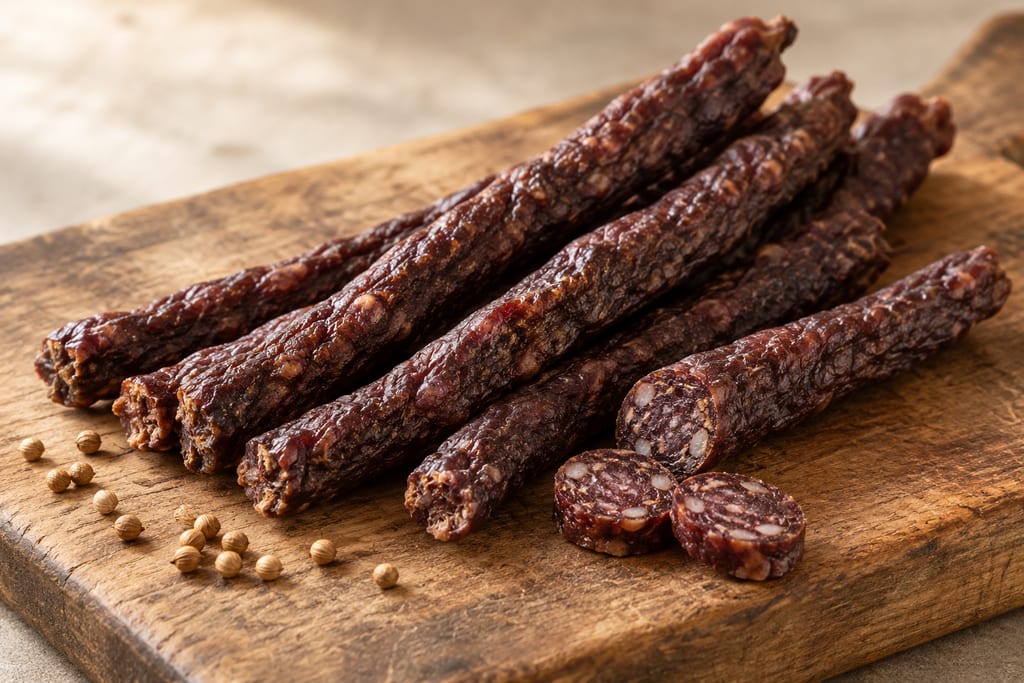
South Africa's dried sausage: seasoned minced meat in narrow casings, dried until it can be eaten without cooking, which makes it a far more demanding product than fresh boerewors.

An old-fashioned copper sausage stuffer appears in C. Louis Leipoldt’s 1945 account of family boerewors in South Africa. The essay records hand operation, but not the tool’s dimensions or exact mechanics.
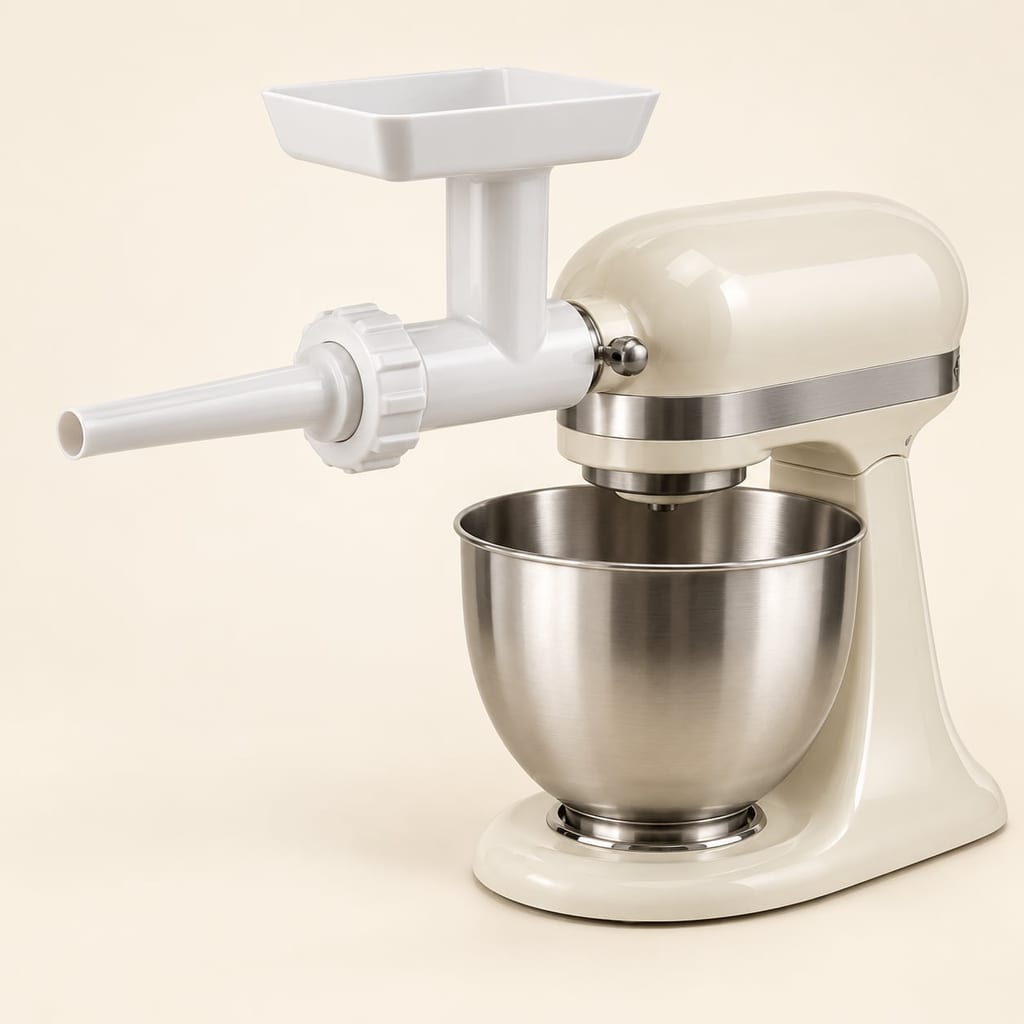
A stand-mixer attachment that grinds meat through a plate and can be reconfigured with a separate stuffer plate and tube to fill sausage casing.
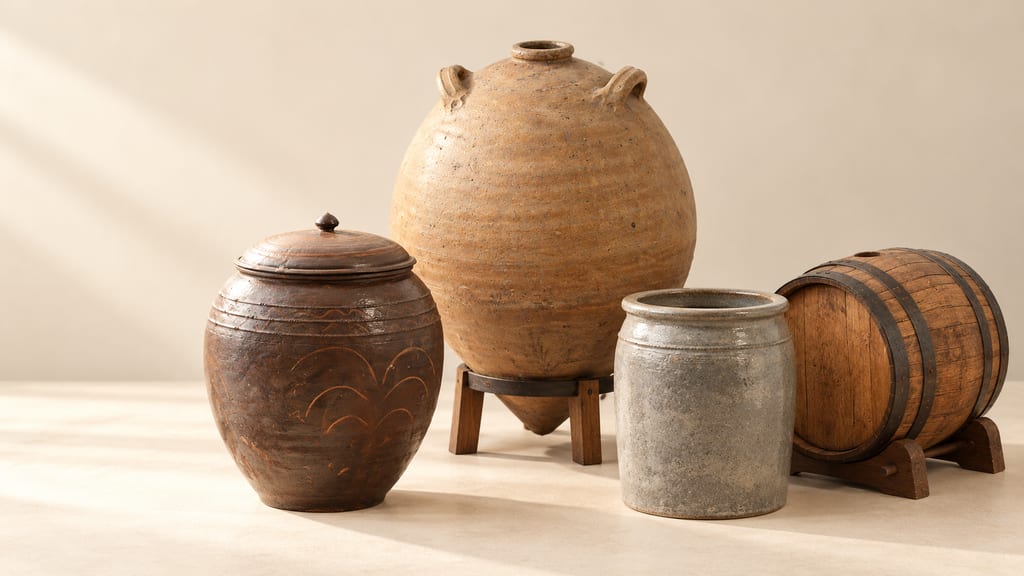
Jars, barrels, skins, leaves, pits and whole rooms decide much of what happens to fermented and cured food. This is how a container works on its contents, and how people in different places chose theirs.
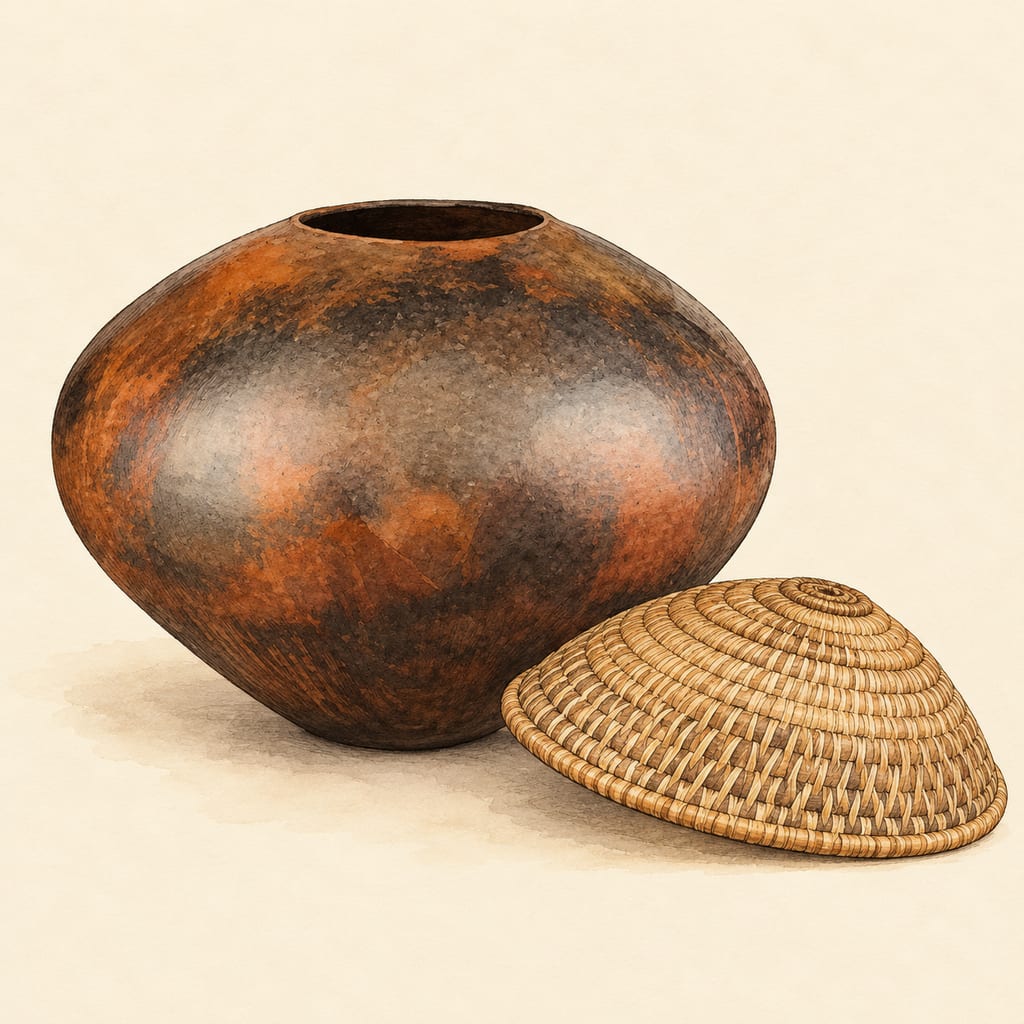
A Zulu earthenware brewing vessel used for grain beer; a woven basket cover keeps out dirt and insects. Imbiza is a distinct pot class, not the serving ukhamba or transport uphiso.
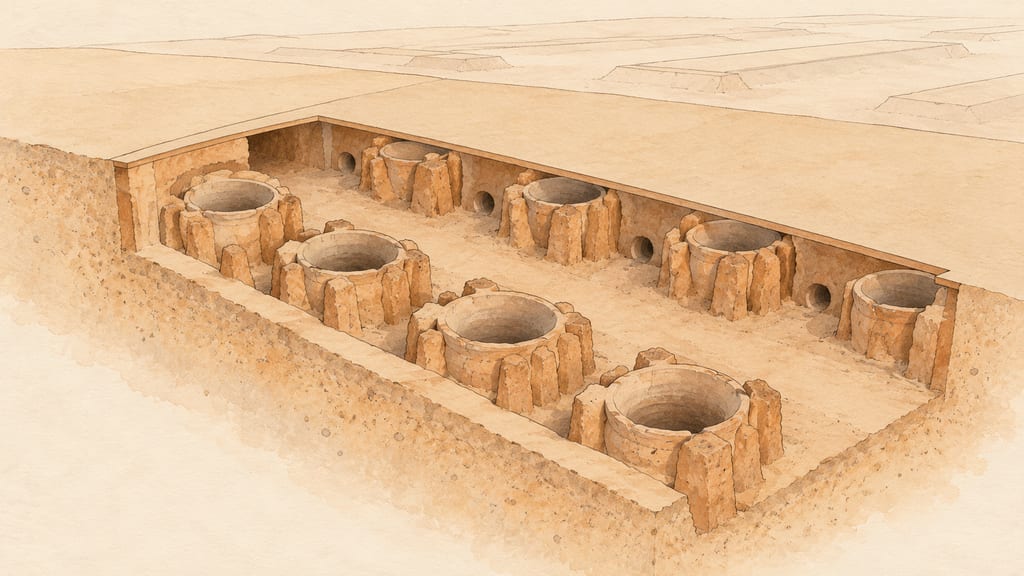
At North Abydos in Egypt, a fixed early Dynastic brewery comprised parallel semi-subterranean installations with rows of ceramic mash vats; excavation reports revise their number, scale and estimated batch capacity.
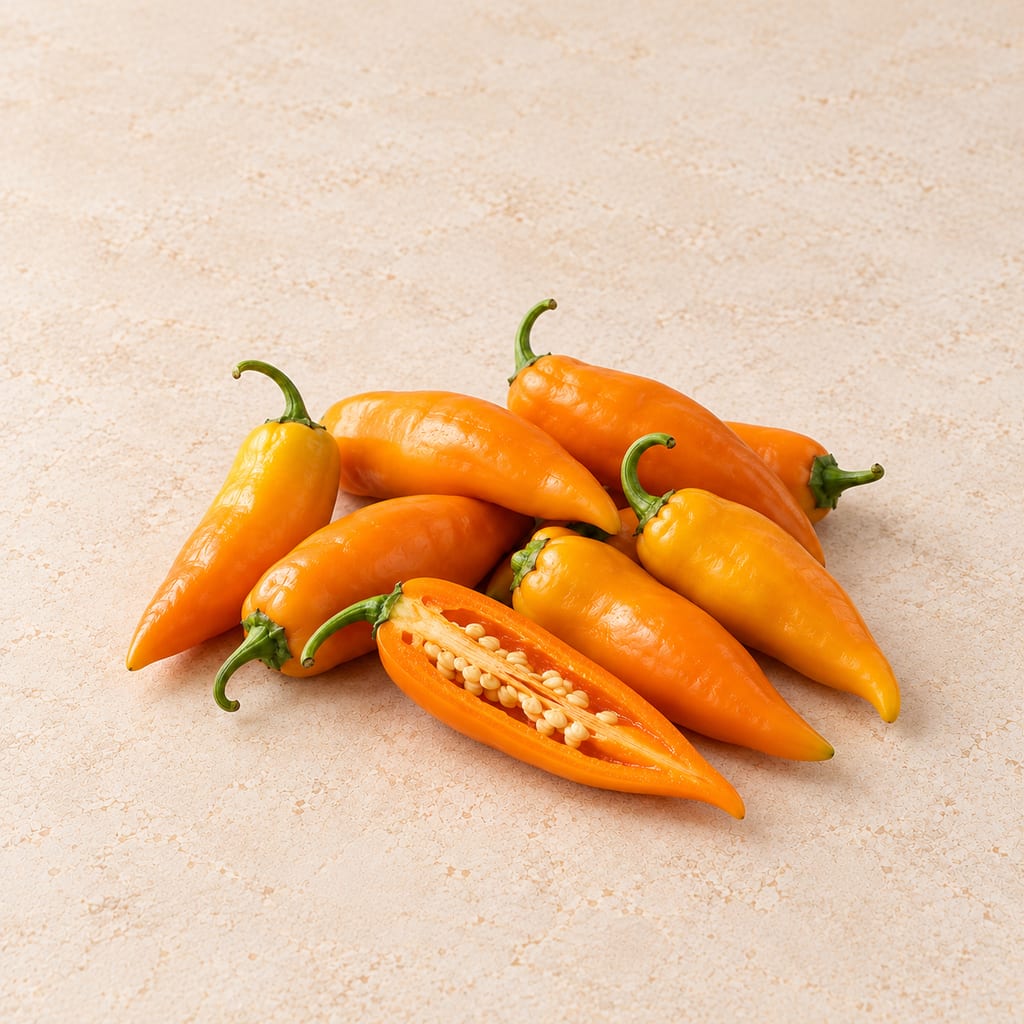
Ají amarillo is the orange-yellow Peruvian chilli cultivar group of Capsicum baccatum, used to colour and season huancaína sauce and ají de gallina. Published heat estimates do not establish one range for the named cultivar.

Toasted almonds are whole sweet almond kernels dry-roasted until golden to brown. Heat replaces their marzipan note with a roasted, nutty one; they thicken and flavour romesco.

Kodiak salmon, halibut and cod cut as seg'aq and hung on an initaq rack to become tamuuq, with kac'amaasaq and kupcuunaq named as different results.
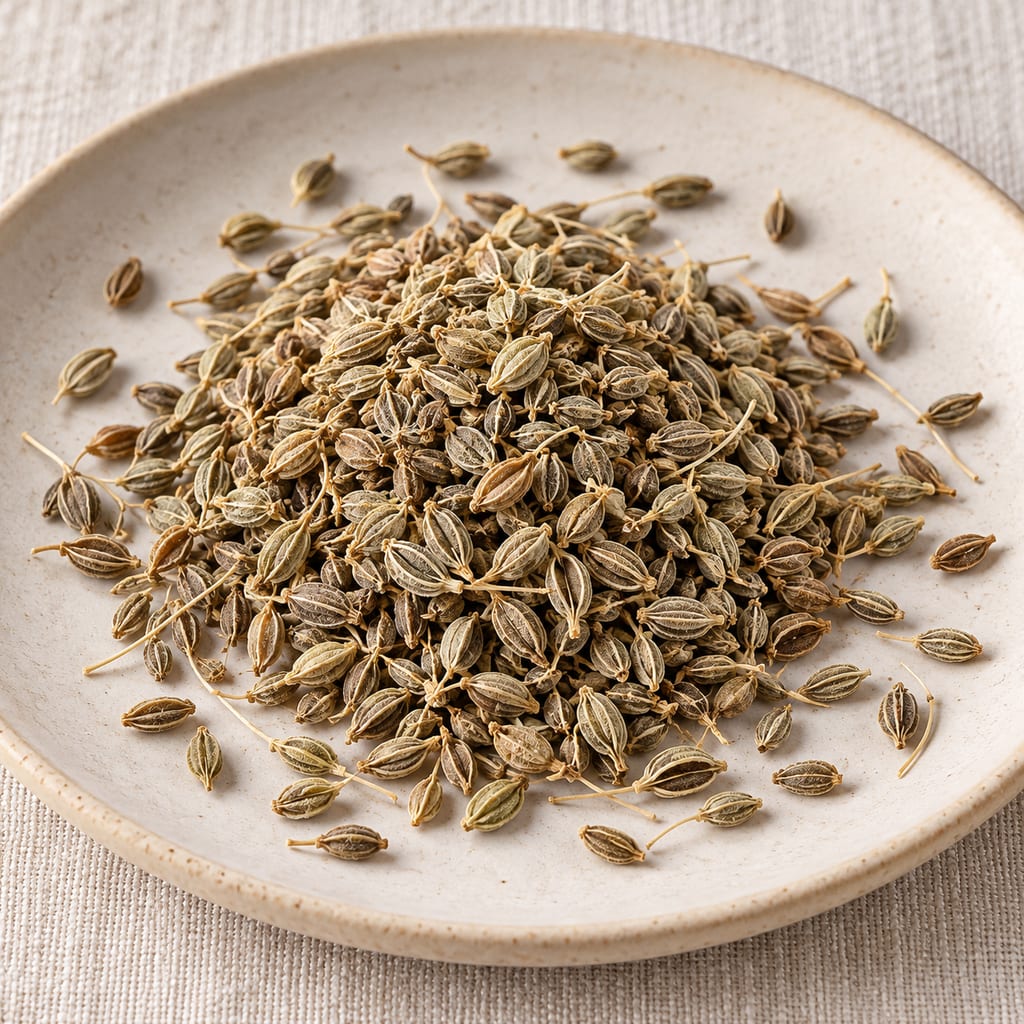
Aniseed is the dried ripe fruit of Pimpinella anisum, an aromatic Apiaceae spice commonly called a seed. It adds a sweet, warm aroma to breads such as Moroccan krachel and South African mosbolletjies, and is distinct from star anise.
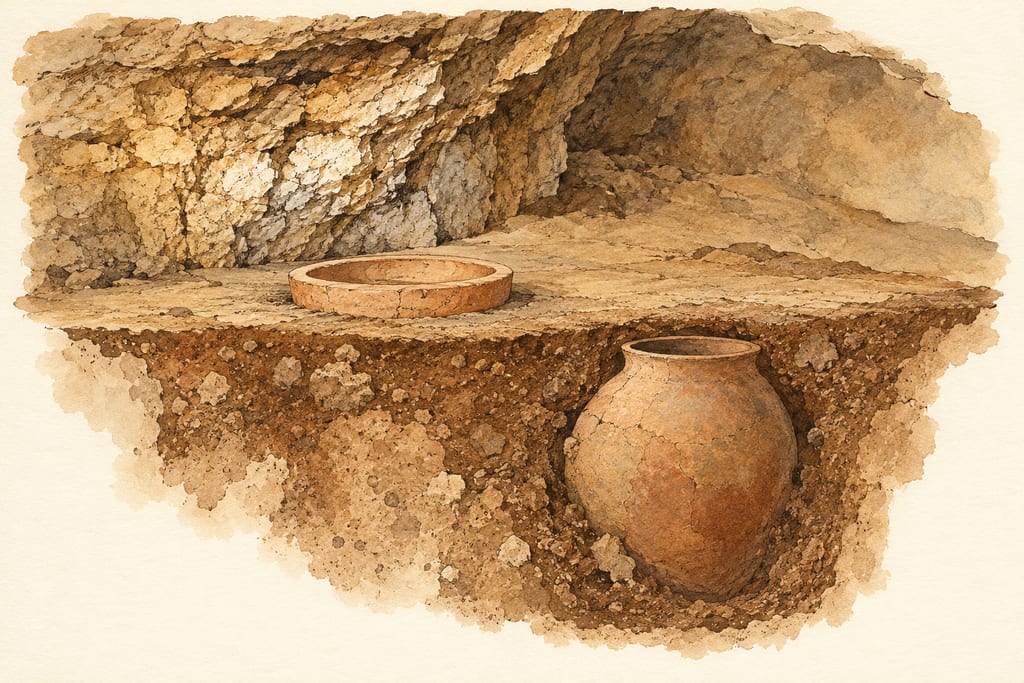
A fixed Late Chalcolithic installation in Areni-1 cave combined a shallow clay pressing basin with a large jar set into the cave floor and storage vessels nearby.

Ripe avocado flesh is the soft, buttery, fat-rich pulp of Persea americana, eaten raw. It is low in acid, so it is a fresh ingredient that needs care in chilled dishes.
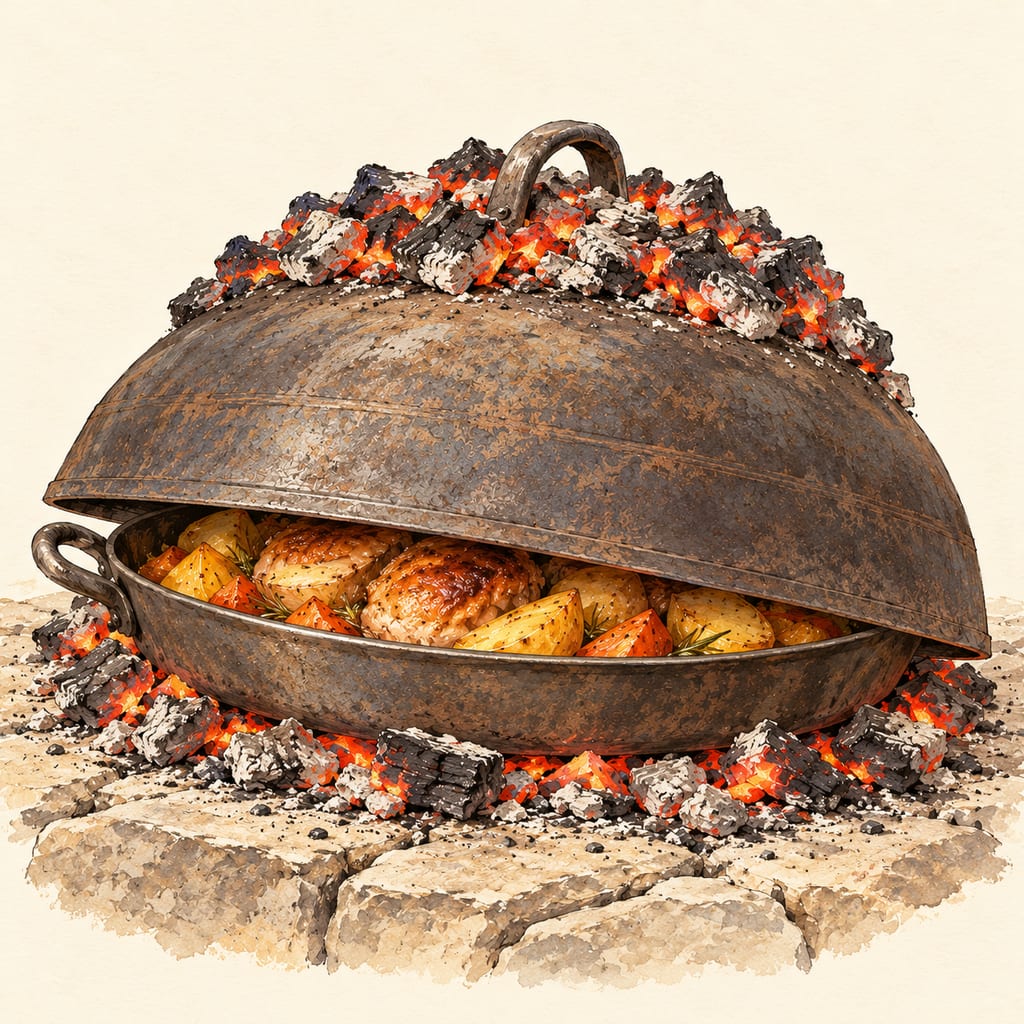
A portable dome and pan used over a hearth, with embers on the lid and heat from below. Regional peka and saç forms share this principle while differing in materials, pan shape and how the food is cooked.
No community contributions have been published for this entry yet.
Sign in to contribute. Published comments and photos are free to read.
Food and Agriculture Organization of the United Nations (FAO), Animal Production and Health Paper 52Form · Materials · Function · History
Small-scale sausage production, chapter 3: Sausage casingsNatural and artificial casings serve as sausage forms and containers; casings bind and protect the mixture and regulate contraction and expansion.
The FAO describes natural casings from different anatomical sections of pigs and cattle and small intestines of sheep; anatomy, size and common uses vary.
The text says sausages have historically been made in natural casings but gives no secure first date for the technology.
Cited in: A natural envelope made from animal tissue; Shape, diameter and the work of containment; A family of materials, not one universal design
International Natural Sausage Casing Association, International Scientific Working GroupMaterials · Manufacture · Care · Safety
Community Guide to Good Practice for Hygiene and the Application of HACCP Principles in Natural Sausage Casing Production, Revision VIIIThe industry guide defines natural casings as cleaned, salt-treated intestines and bladders from farmed pigs, cattle, sheep, goats and horses, with some species/organ combinations documented and others excluded.
Processed pig and small-ruminant intestinal casings principally retain the submucosa; cattle casings retain their characteristic tissue layers.
Commercial casings are preserved with salt, dry salt or saturated brine, and the guide describes closed-container transport and hygiene controls; these are industry specifications, not universal household instructions.
Cited in: A natural envelope made from animal tissue; Buying and interpreting the record
Food and Agriculture Organization of the United Nations (FAO)Function · Limits · Context
Small-scale sausage production, chapter 6: Fermented sausage productionFermented sausages depend on bacterial action and subsequent drying, smoking or ageing, rather than on casing alone.
The FAO notes that casing diameter and physical properties affect dry-sausage processing time and that both natural and artificial casings are used.
Natural casings may adhere as the sausage shrinks, but product formulation and drying conditions remain part of the process.
Cited in: Shape, diameter and the work of containment; A family of materials, not one universal design; Buying and interpreting the record
US Department of Agriculture, Food Safety and Inspection ServiceLimits · Safety
FSIS Ready-to-Eat Fermented, Salt-Cured, and Dried Products GuidelineThe guideline treats casing type, permeability, diameter and product size as relevant parameters in fermented and dried sausage validation; it does not imply that one casing makes a product safe.
Cited in: Shape, diameter and the work of containment; A family of materials, not one universal design; Buying and interpreting the record
The Latin LibraryHistory
De lingua Latina, Book VThe late-Republic text distinguishes the intestinal lucanica and the closed-ended fundolus, showing that animal-envelope form mattered to Roman sausage terminology; it does not date invention.
Cited in: History and geography without a single origin story
LacusCurtius, University of ChicagoHistory
De Re Coquinaria, Book II: MincesThe Roman recipe compilation includes sausage preparations and smoked casing sausage references; the evidence documents use without fixing a single date of invention.
Cited in: History and geography without a single origin story
University of the Free StateGeography · Use
Evaluation of a natural preservative in a boerewors model systemThe thesis describes South African boerewors using natural intestine casing from pig, cattle or sheep; the formulation and casing may vary.
This is a South African example, not evidence that one animal species or casing material is universal.
Government of South AfricaGeography · Use
Regulation R.2410 (2022): BoereworsThe national composition standard requires an edible casing for boerewors; it does not require one specific natural casing species.
Cited in: History and geography without a single origin story
European Union; legislation.gov.ukGeography · Use
Commission Implementing Regulation (EU) No 973/2013: Nürnberger Bratwürste / Nürnberger RostbratwürsteThe protected-product specification documents sheep casing for Nürnberger Bratwürste; this supports a German example rather than a global rule.
Cited in: History and geography without a single origin story
Wikimedia CommonsVisual reference · Form
Sausage casingsThe inspected photograph shows loose pale natural pork casings beside their opened packet; the Commons file page identifies the creator and CC BY-SA 4.0 licence.
Cited in: A natural envelope made from animal tissue
ClaasensUse
Droëwors recipe and manufacturing processThe published recipe specifies 22 mm sheep casings for one South African droëwors formulation; it is an example rather than a universal casing size.