Potbrood
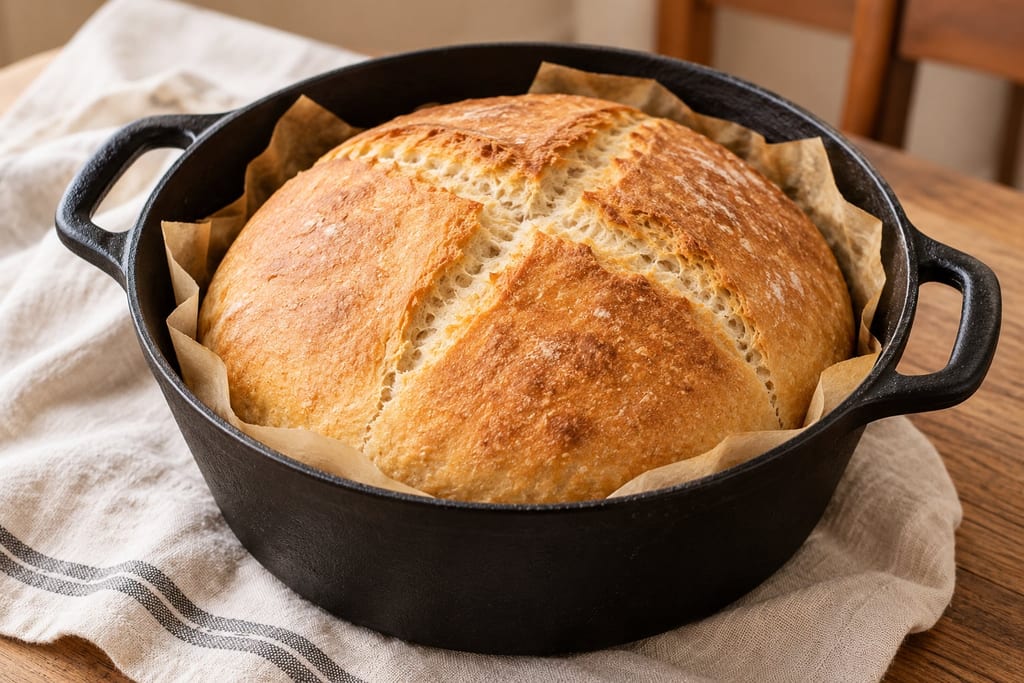
A modern South African potbrood home method: a yeast dough proofs in a 4 L cast-iron pot and bakes covered, then uncovered, in a domestic oven.
 FermenteaWhere food goes to change
Equipment · Covered pot ovens
A closed cast-iron pot used to bake potbrood with heat from the hearth or embers; documented in South African English by 1883 and in a contemporary Namibian recipe.
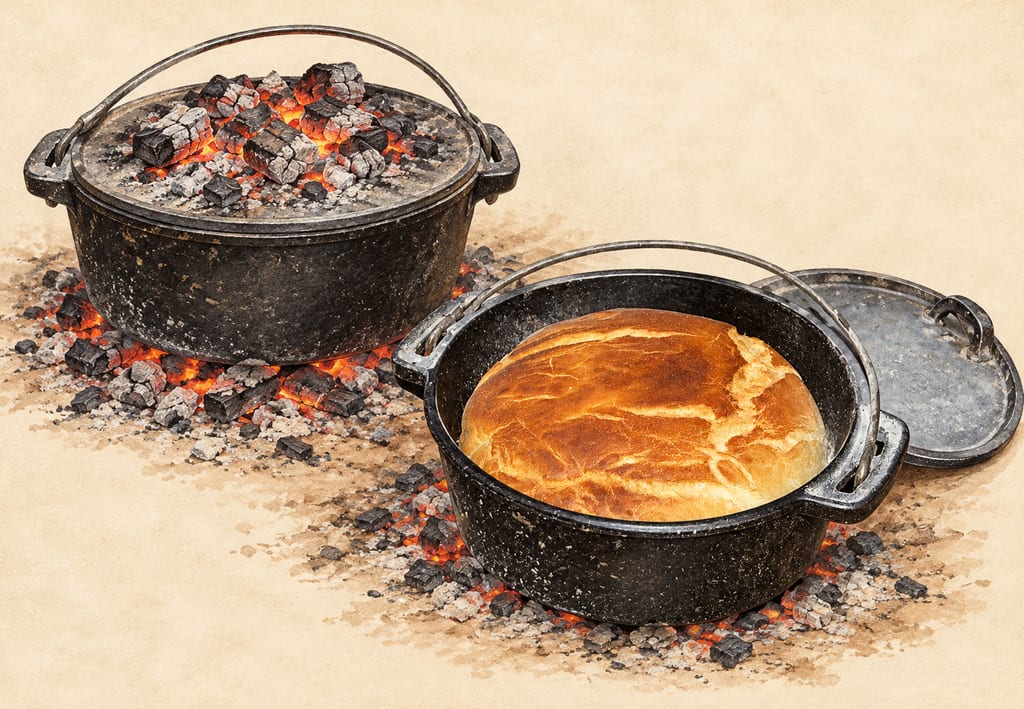
Potbrood is bread baked inside a pot rather than on an exposed griddle. The Dictionary of South African English traces the South African English term “pot-bread” to Afrikaans potbrood and defines it as bread baked in a closed cast-iron pot, either buried in hot embers or placed over a fire. That definition identifies the equipment’s essential combination: a heat-holding vessel and a cover that encloses the dough while heat reaches the pot from outside.
The sources do not establish one standard capacity or a single universal pot shape. A later dictionary quotation describes a heavy, flat-bottomed pot, while its 1986 quotation describes arranging coals around a covered pot and putting coals on the lid near the end of baking. Those examples should not be collapsed into a claim that every potbrood pot has the same base, lid or support. The useful distinction is from a baking stone or open griddle: this is a covered vessel used as a small oven.
The cooking heat is supplied externally by a fire and embers. The 1883 quotation records a pot-loaf baked on the road when home bread had run out; the dictionary’s definition preserves two arrangements, burial in hot embers or placement over a fire. A later quotation describes coals around the vessel and coals on its lid. Together these accounts show why the closed pot matters: it contains the loaf while heat is applied around the cooking chamber, rather than requiring a built-in oven.
A contemporary Namibian example adds a different, carefully bounded observation. Josefine Kido’s recipe in the World Food Programme’s Namibian Food Print identifies Hardap as its region and directs the cook to place shaped dough in an oiled pot away from the fireplace, then surround its base and top with coals. The recipe calls the vessel a pot but does not identify the material or dimensions. It therefore documents a contemporary use of the covered-pot method, not proof that this particular household vessel was cast iron.
The earliest dated evidence cited here is an 1883 letter included in the Dictionary of South African English. It mentions “the pot-loaf” baked while travelling after the household bread had run out. That is an attestation of the practice in a travel context, not a date of invention. The dictionary also records later South African examples, including a 1986 description of potbread baked in a covered pot with embers arranged around it and over the lid.
The equipment’s geography is broader than that one historical quotation. The WFP’s Namibian Food Print preserves a Hardap contributor’s contemporary pot-bread recipe, where the pot is placed away from the fireplace and heated by coals at both base and top. The two records differ in date and in the detail they report. They support linking South Africa to the documented historical attestation and Hardap, Namibia, to a contemporary documented preparation; they do not justify assigning a single origin or claiming every potbrood community uses identical cookware.
Neither cited account specifies a standard capacity, metal thickness, lid fit, or universal dimensions. The WFP recipe does not state what its pot is made from. The dictionary supports cast iron for its definition of pot-bread, but that material should not be retroactively assigned to every later or contemporary pot. The sources also do not give a general acquisition route, maintenance routine, or safety procedure for this equipment. Those details vary by actual pot and use and are not supplied here.
The pot is a tool within the named preparation, not the bread itself. Its job is to hold the dough and provide a covered chamber for externally applied heat. The evidence supports this functional account while leaving exact pot forms, sizes and household practices open. Related recipe and research links on this page connect the vessel to potbrood and to the broader heat-processing evidence without treating those records as proof of details the cited accounts do not state.
The dictionary quotes an 1883 letter and later examples, including a 1986 account placing coals around a covered pot and then on its lid. The WFP Namibian Food Print documents Josefine Kido's contemporary Hardap recipe, which describes dough in an oiled pot with coals around the base and top. These sources establish both historical attestation and contemporary use, not one uniform design or an exclusive national origin.
The cited definition concerns a closed pot; it does not describe the pot as an open griddle or as a built-in oven.
Source →The dictionary is a South African English source and dates its earliest quoted pot-loaf attestation to an 1883 letter; this does not establish an exclusive origin.
The WFP collection identifies contributor Josefine Kido's pot bread recipe with Hardap; the recipe says to surround the pot's base and top with coals.
A modern South African potbrood home method: a yeast dough proofs in a 4 L cast-iron pot and bakes covered, then uncovered, in a domestic oven.
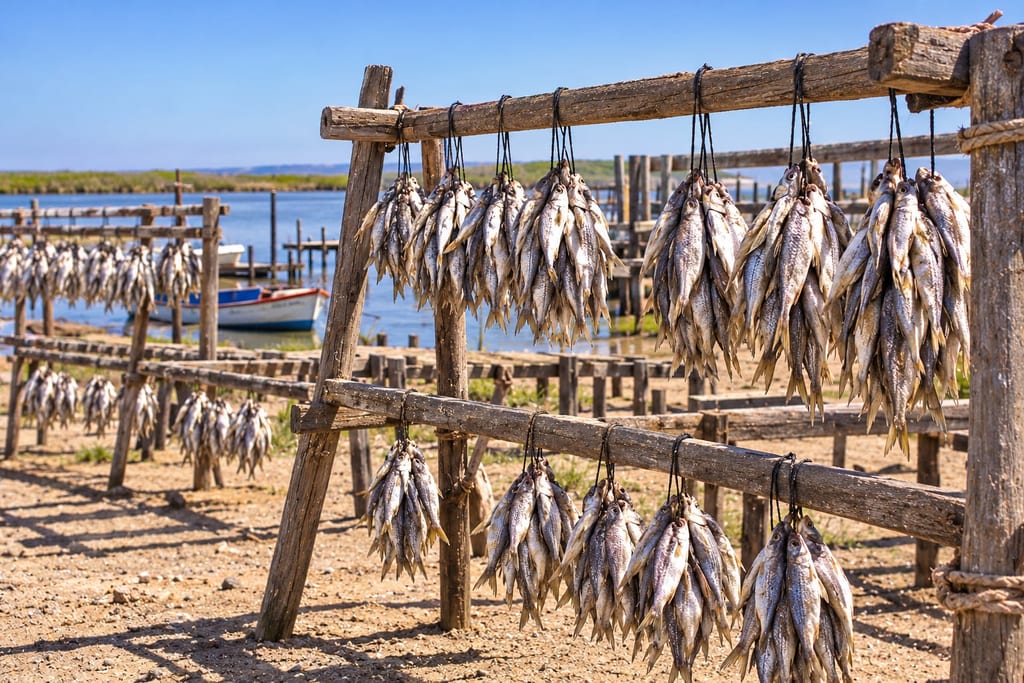
In Velddrif, makers hang whole harders in threaded bunches on lines and beams, moving them between outdoor air and fish-house drying spaces. Reported drying times vary with season and weather.
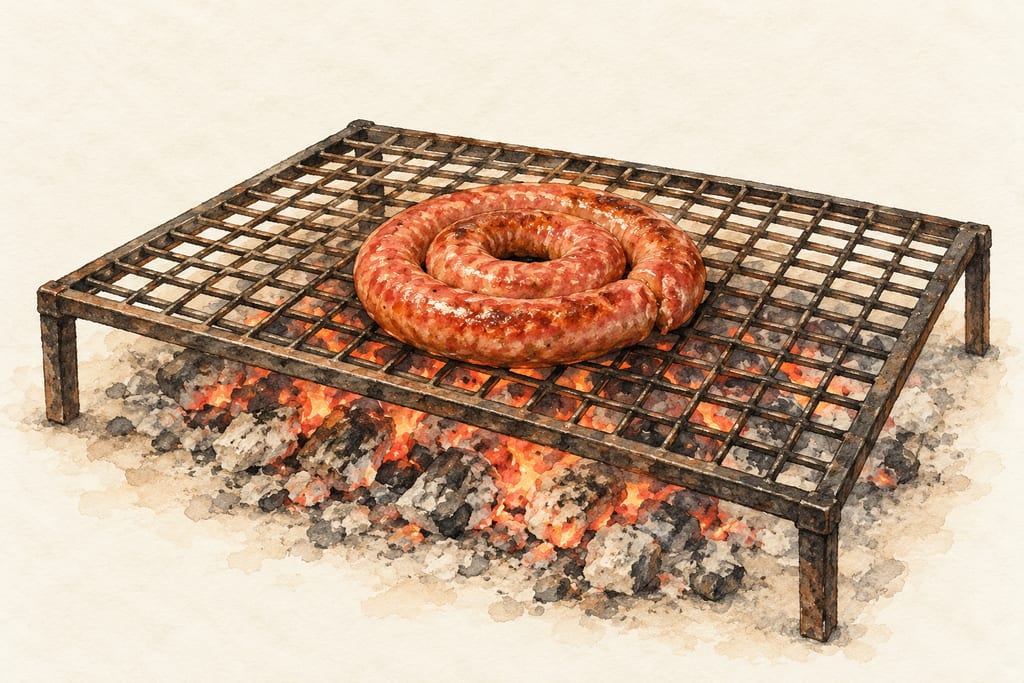
A braai is a South African open-fire cooking practice. This record focuses on the movable cooking grid over coals shown in a documented photograph; sources do not establish one standard grill design or size.
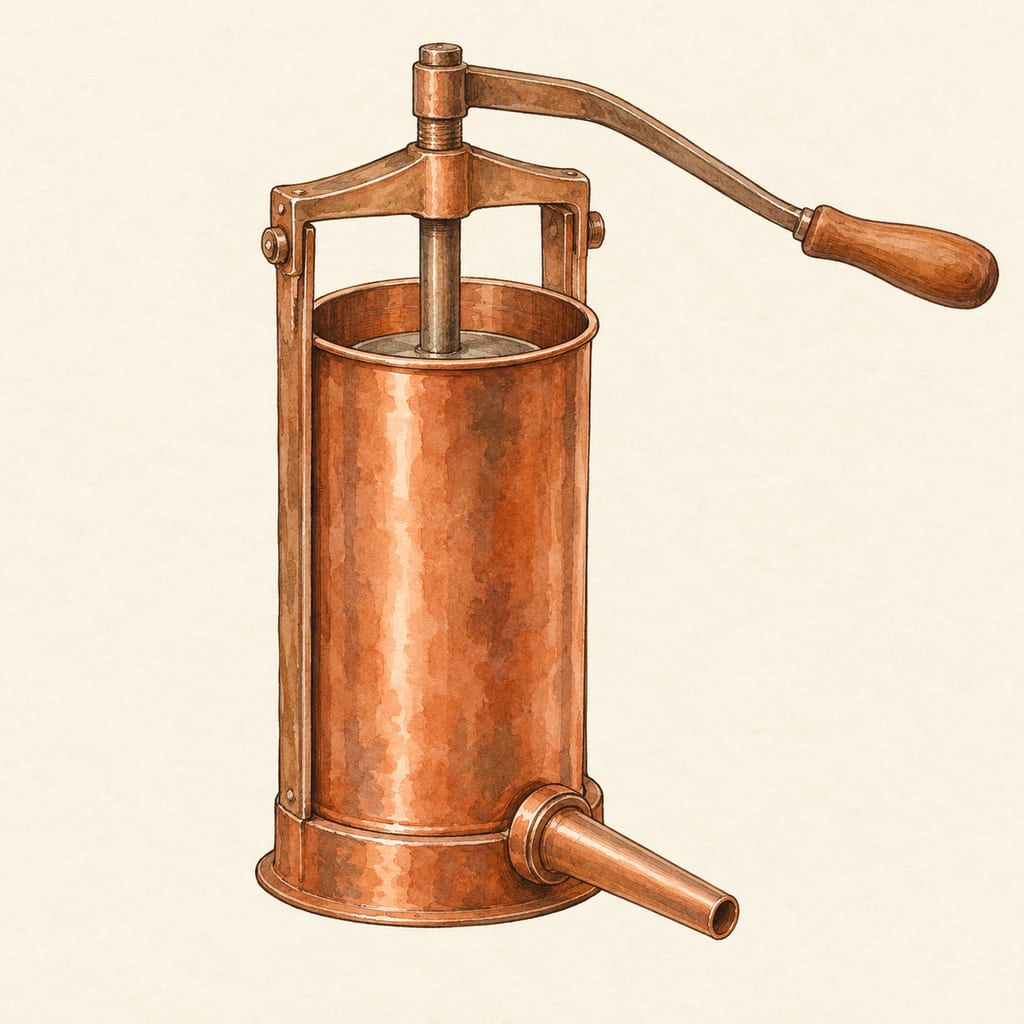
An old-fashioned copper sausage stuffer appears in C. Louis Leipoldt’s 1945 account of family boerewors in South Africa. The essay records hand operation, but not the tool’s dimensions or exact mechanics.
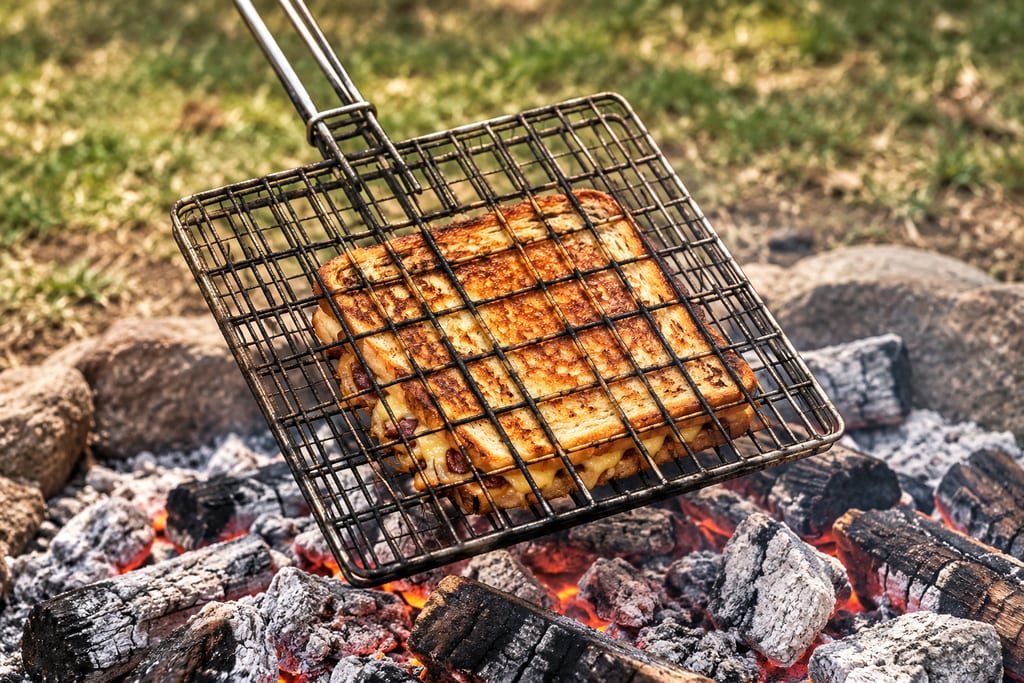
A closed, hinged grid holds food between two cooking faces so a braaier can turn it together over coals. Braaibroodjie recipes specify this tool, but sources do not establish one standard design or size.
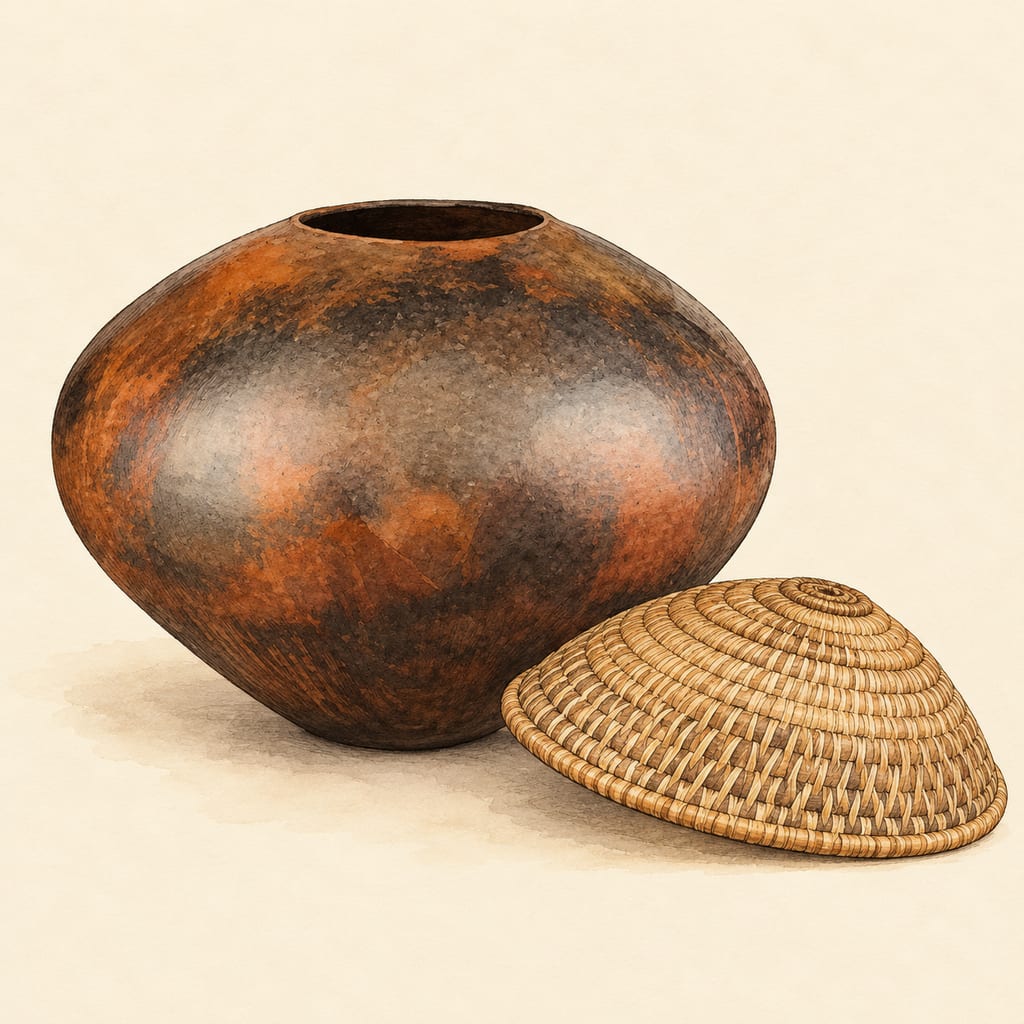
A Zulu earthenware brewing vessel used for grain beer; a woven basket cover keeps out dirt and insects. Imbiza is a distinct pot class, not the serving ukhamba or transport uphiso.
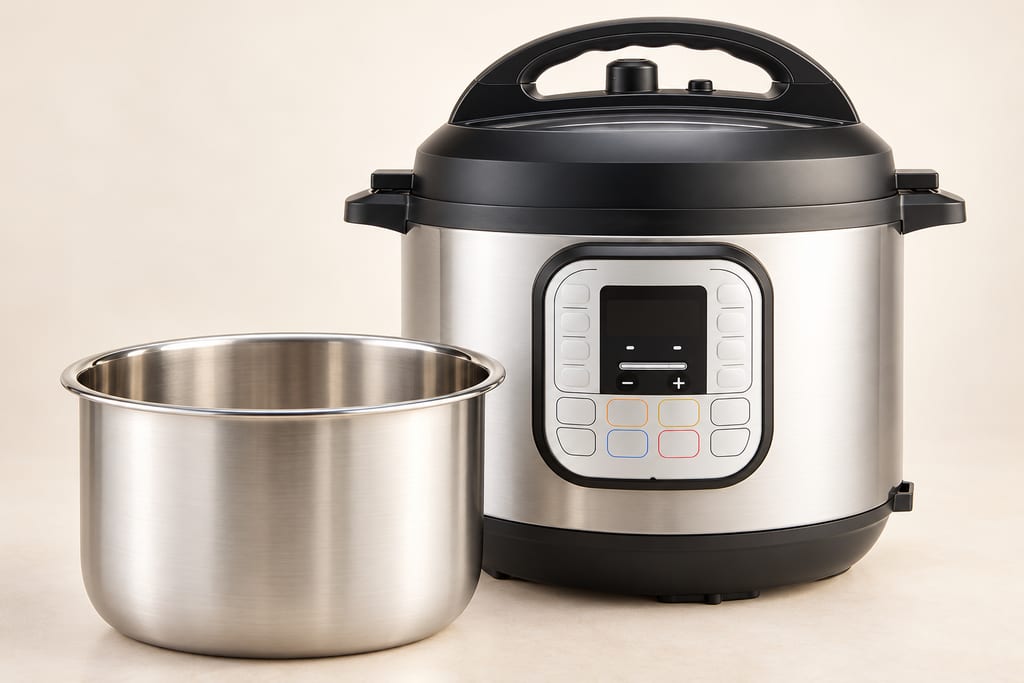
The Instant Pot Duo is a manufactured electric multicooker with a removable inner pot, locking lid and electronic programs. A 2016 IP-DUO60/80 manual documents yogurt and jiu niang settings; later revisions may differ.
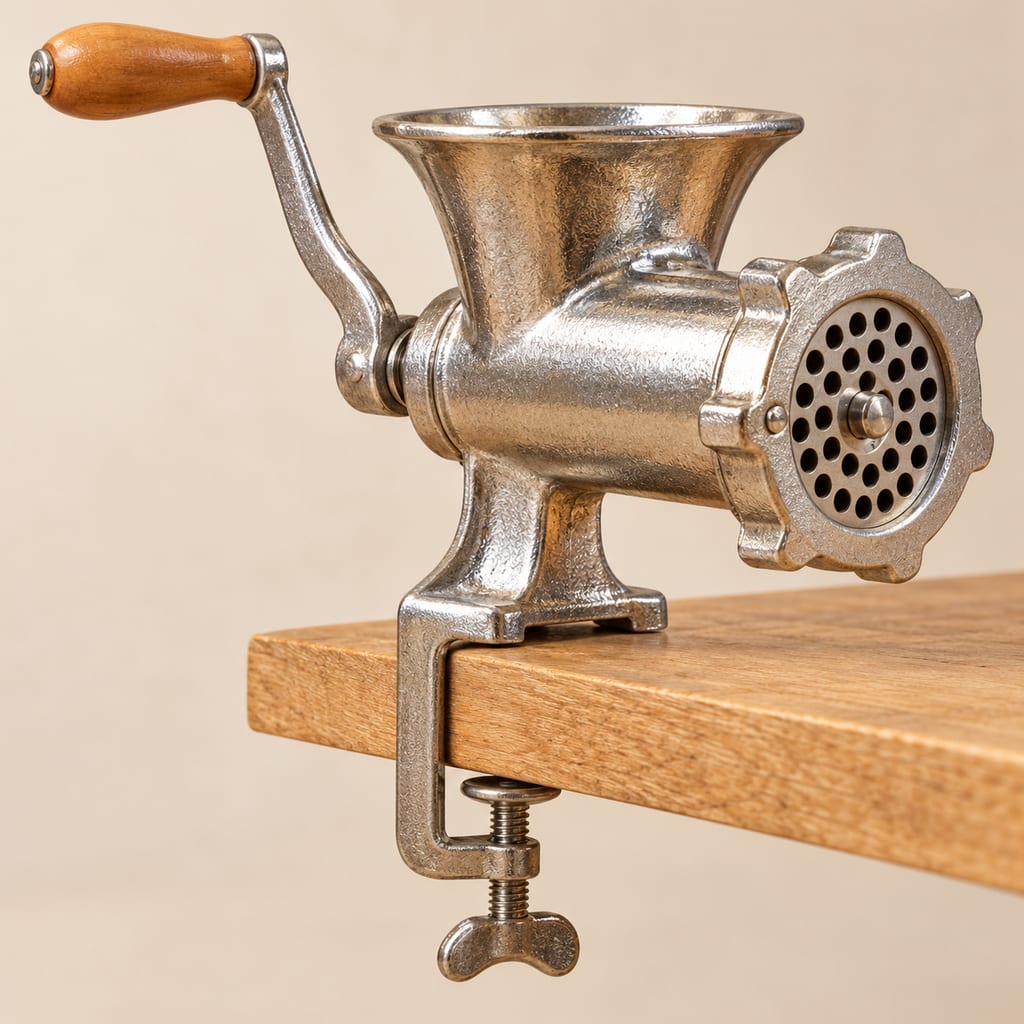
A meat mincer forces meat through a perforated plate to produce a chosen texture. South African sausage sources record plate size as a process choice, not a single defining standard.
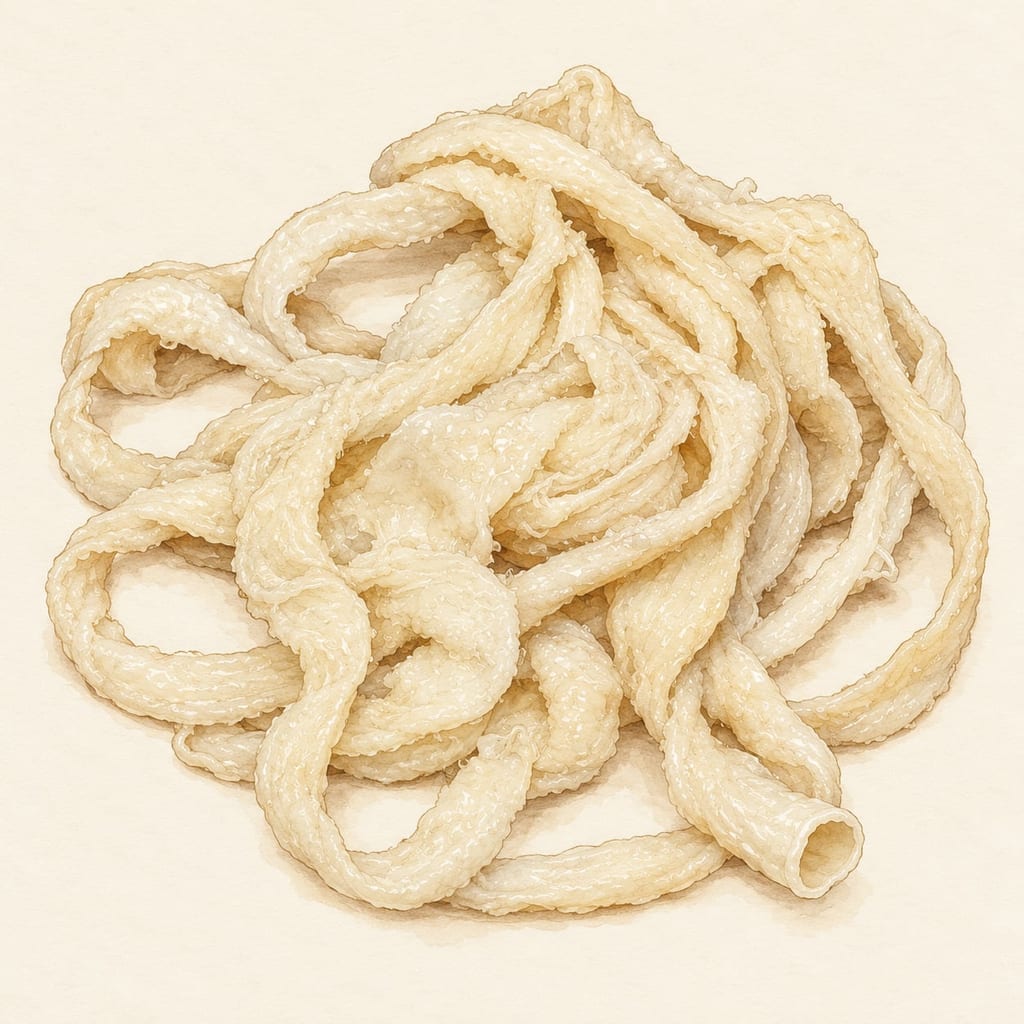
A natural sausage casing is a cleaned animal intestine or, for some products, another prepared organ used as an edible envelope. Its anatomy shapes the sausage, while diameter and material affect stuffing and drying.

A Cap-Pelé boucanière is an Acadian herring-smoking building. The documented Willie Niles example is a one-storey wood-frame structure with a ridge smoke vent and interior bays for hanging fish-bearing cannes.

Achcharu is a family of Sri Lankan vinegar pickles made with mixed vegetables or seasonal fruit and a piquant spice dressing. This version is a quick, refrigerated, non-fermented mixed-vegetable pickle.

The acocote is a long, hollowed and dried gourd used to draw aguamiel from a mature maguey. It is a harvesting tool: the sap is transferred to a separate vessel before it ferments into pulque.

Adrak murabba preserves young ginger in sugar syrup, a sweet South Asian preparation recorded in Indian cookery and food-processing sources.

Parkia biglobosa seeds are fermented into regional West African seasonings, including nététou, iru, dawadawa and soumbala. The yellow fruit pulp is a separate food, and names and methods vary by place.

Japanese reddish-brown vinegar from sake lees matured about three years, turned to vinegar by acetic bacteria; the vinegar of Handa and Edomae sushi rice.

A refined common-wheat flour blended for a broad range of baking; its protein and behavior vary with wheat, milling and market.

The almond mushroom, Agaricus subrufescens, was cultivated in eastern North America in the 1800s, lost its market, and returned as a cultivated mushroom from Brazil, where it is grown under several names.
No community contributions have been published for this entry yet.
Sign in to contribute. Published comments and photos are free to read.
Dictionary of South African EnglishHistory · Equipment · Geography
pot-bread, nounDefines pot-bread as bread baked in a closed cast-iron pot, buried in hot embers or placed over a fire.
Quotes an 1883 letter referring to pot-loaf baked on a journey.
Includes a 1986 description of coals around the covered pot and on its lid.
Cited in: What the pot is; How heat is used; History and regional evidence; What the sources leave open
World Food Programme, Namibian Food PrintEquipment · Method · Geography
Josefine’s Pot BreadRecipe is attributed to Hardap.
Describes dough in an oiled pot set away from the fireplace and coals around its base and top.
Cited in: How heat is used; History and regional evidence; What the sources leave open