Alutiiq clay-lined subfloor pit
A large clay-lined depression built beneath some Alutiiq house floors in the Kodiak region, documented in Koniag contexts for food storage and possibly fermentation.
 FermenteaWhere food goes to change
Built structures · Pits and cavities
bean-hole · bean hole oven · bean hole pit
A Maine bean hole is a fixed, stone-lined pit that holds a covered iron pot among coals beneath earth. Logging-camp testimony and present-day demonstrations document related local practices.
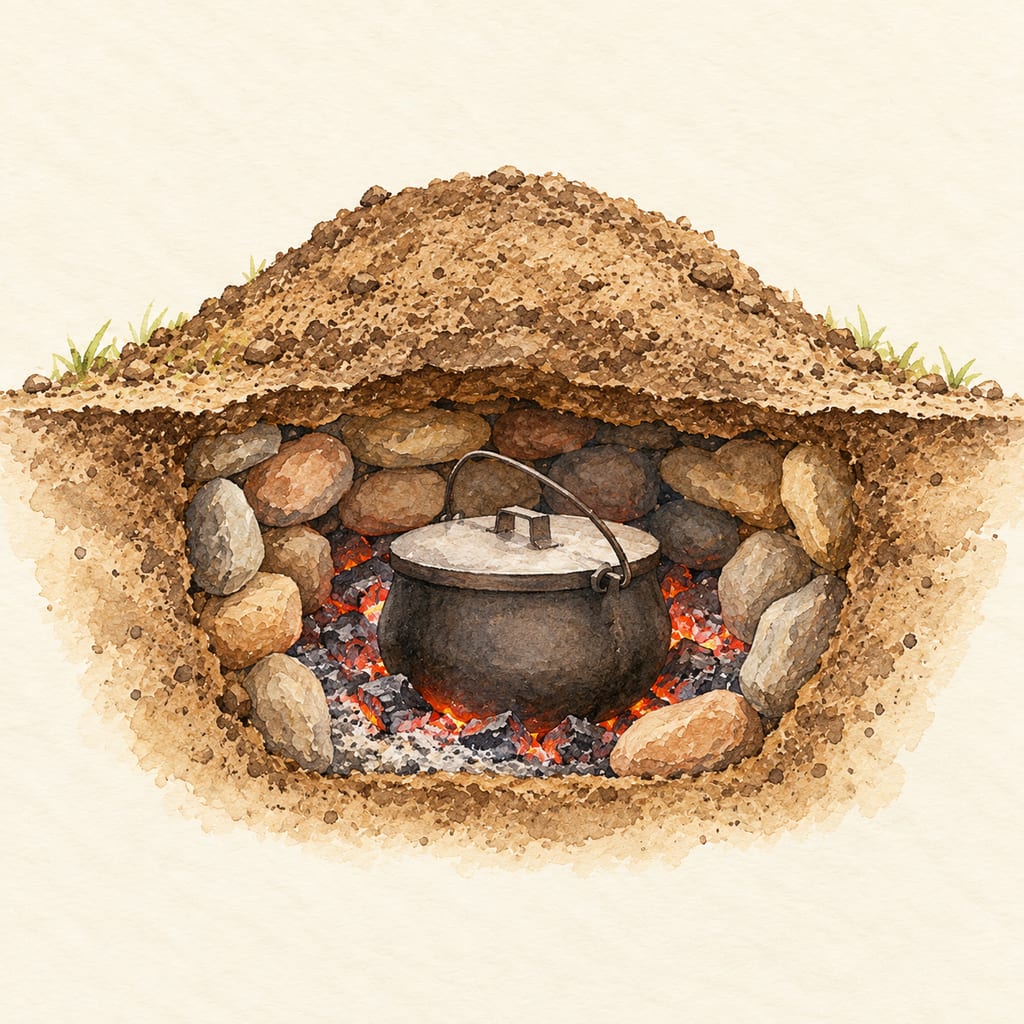
A bean hole is an in-place cooking installation: a stone-lined cavity is heated with a fire, then used to hold a covered iron pot beneath earth or ash. The pit belongs to the site; the pot is cookware lowered into it. This distinction matters because the buried structure and the vessel have different forms and roles. A bean pot can be moved to another kitchen, while the pit is made where the meal will be cooked.
Maine records describe this method in logging settings and at present-day public events. The Maine State Museum presents baked beans as a lumber-camp staple, while a first-person logger account describes holes used on log drives and in the woods. These accounts support a Maine association but do not establish a single origin, an uninterrupted history, or one standard construction.
The fire first heats the stone-lined cavity. When it has burned down to coals, the fire and ash can be moved to make room for the pot, or coals can be banked around it. A lid closes the pot so food remains separated from soil and loose stones. Earth or ash then covers the opening, retaining heat around the covered vessel during a long, slow cook.
The sources show that loading details vary. Mike Pelletier recalled raking coals and ashes back over the pot and filling the hole with ashes. The Maine State Museum's recipe puts a covered cast-iron pot into the pit, adds foil, then soil. MOFGA's fair method describes coals around and over pots before soil closes the pit. The museum's foil instruction should be read as part of its particular recipe, not as a universal historical feature.
One logger's recollection gives a pit about two feet deep and three feet square, with some holes as large as four feet square. That is valuable evidence for one work practice, but the sources do not establish it as a building standard. MOFGA describes its own fair pit as about three feet deep with space around the pot; the variation reflects different sites and events, not a single canonical drawing.
Cooking times also belong to individual accounts. Pelletier remembered roughly twelve hours. The museum recipe specifies eight hours, while the Common Ground Fair report describes leaving pots in the pit for about twenty-two hours. Pot size, fuel, heat, food preparation and event scheduling differ; these figures must not be combined into a supposedly definitive schedule.
The Maine State Museum reproduces a lumber-camp menu from 1923 that includes baked beans. The Library of Congress oral history preserves Pelletier's personal account of bean holes in logging work, and the University of Maine archive identifies a June 1925 article called “Bean-Hole” Beans. Together, these are dated evidence of the method by the early twentieth century; they do not date its invention.
The method also appears in contemporary Maine demonstrations. MOFGA's Common Ground Fair in Unity and the Patten Lumbermen’s Museum dinner reported in 2021 show the pit as a public cooking event as well as a remembered camp practice. Modern event descriptions document how those organizers cook; they should not be mistaken for archaeological evidence or a universal historical specification.
These records support a stone-lined pit, a fire reduced to coals, a covered iron pot and a closure of earth or ash. They do not establish one required stone type, fixed geometry, standard lid, permanent lining, or universal heat schedule. A pit is not simply a portable bean pot placed outdoors: its ground cavity and surrounding heated material are part of the build.
The Maine State Museum warns that wet or previously watered stones can explode when heated. That caution is a real hazard, not an ornamental historical detail. The cited museum and oral-history sources are not engineering plans or modern food-safety validation. Excavation stability, fire control and food handling depend on local conditions and current guidance; a historical account cannot certify a newly dug pit as safe.
A 1923 lumber-camp menu reproduced by the Maine State Museum includes baked beans; Mike Pelletier's first-person logger account describes bean holes used on log drives and in the woods. A 1925 article titled “Bean-Hole Beans” supplies a dated attestation, but none of these sources establishes an origin date.
A build is made where it stands: moving it means building it again.
The Maine State Museum warns that wet or previously water-soaked stones can fracture or explode when heated; follow the museum's cited stone-selection caution and do not treat this historical description as a tested construction plan.
Regional scope for documented Maine practice; not a claim that all Maine pits shared one design.
The report documents a contemporary demonstration, not the origin of the practice.
MOFGA's contemporary fair method is one local demonstration, not a universal historic specification.
A large clay-lined depression built beneath some Alutiiq house floors in the Kodiak region, documented in Koniag contexts for food storage and possibly fermentation.
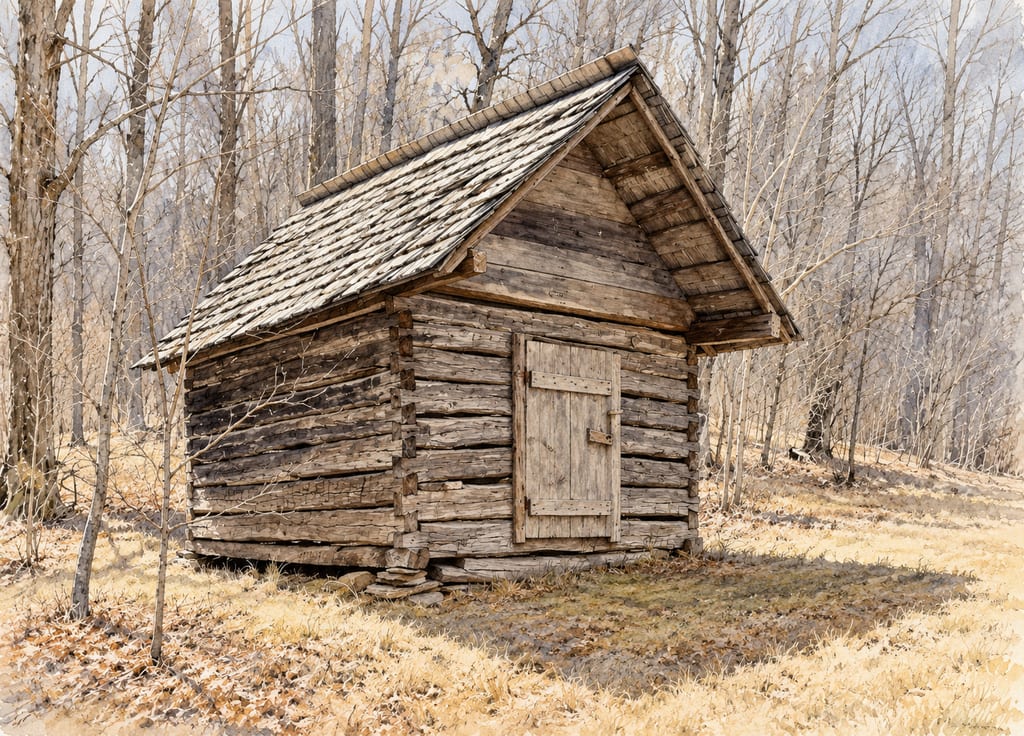
A source-based account of Appalachian meat-curing outbuildings, centered on the Henry Whitehead Place smokehouse at Cades Cove, Tennessee. Regional practice and this one building are kept distinct.
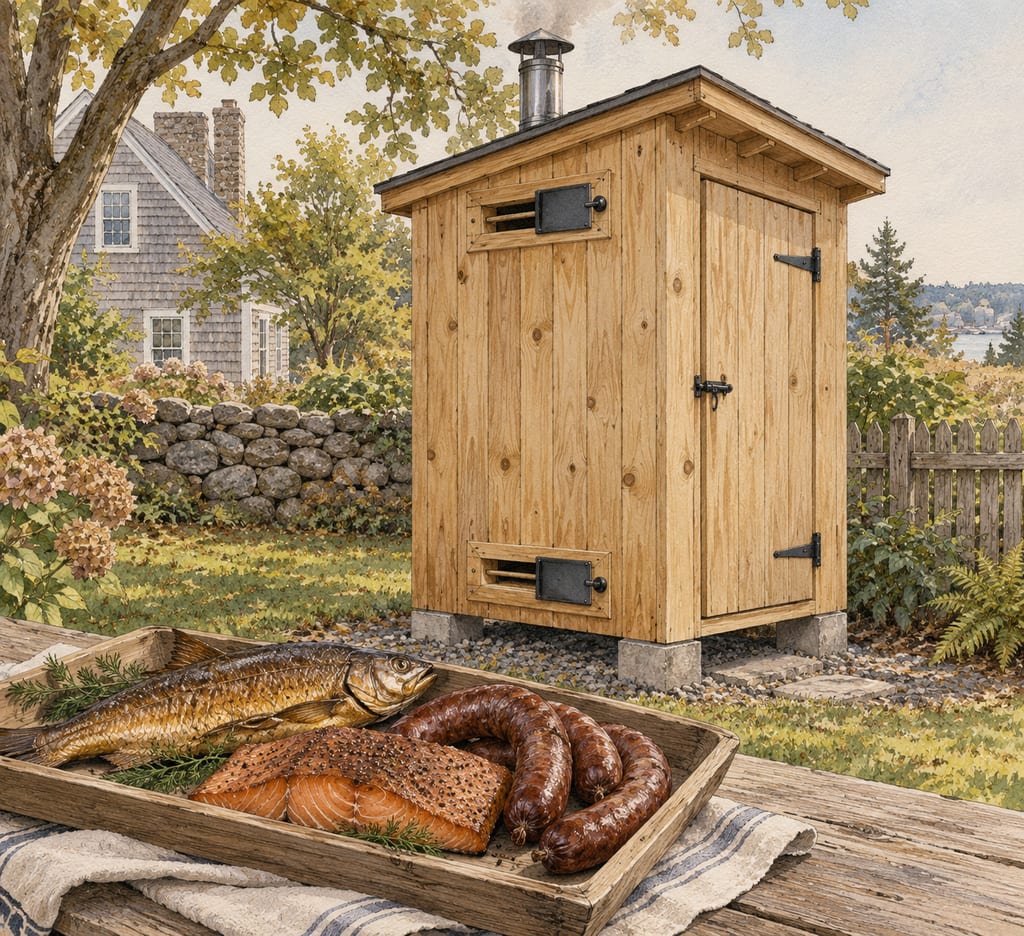
A wood-framed backyard smokehouse built from pine tongue-and-groove boards, with a sloped roof, vent dampers and a door, set out in a Connecticut Extension guide for smoking fish, pork, turkey, jerky and sausage.
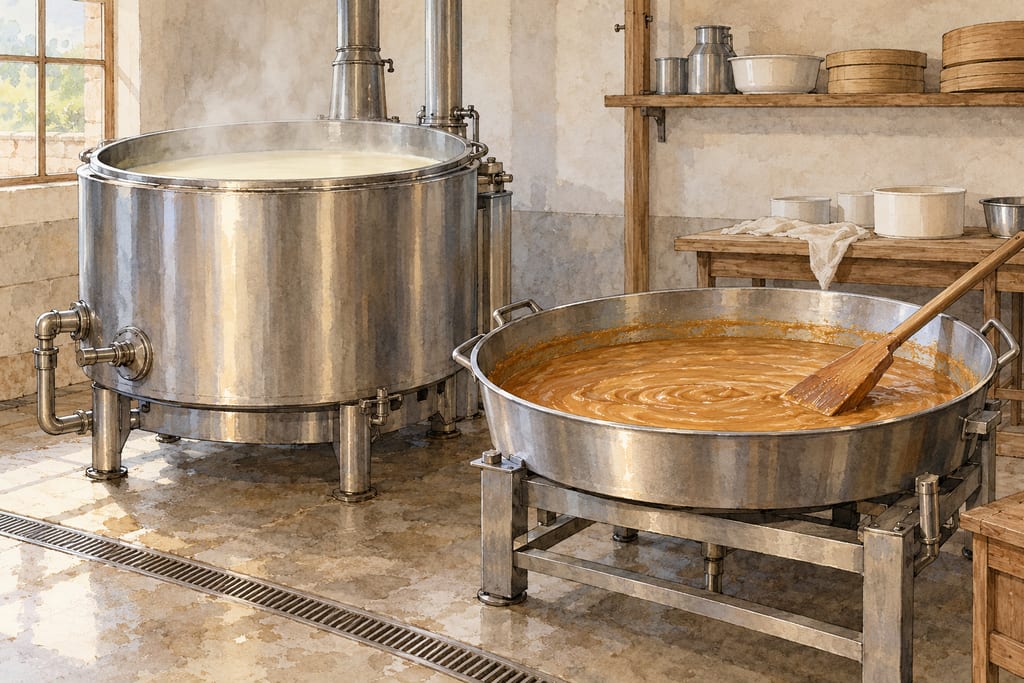
The kettle heats and reduces a large volume of thin liquid such as whey; before it nears the brewer's minimum fill the batch moves to a wide pan for the thick, stirred finish.
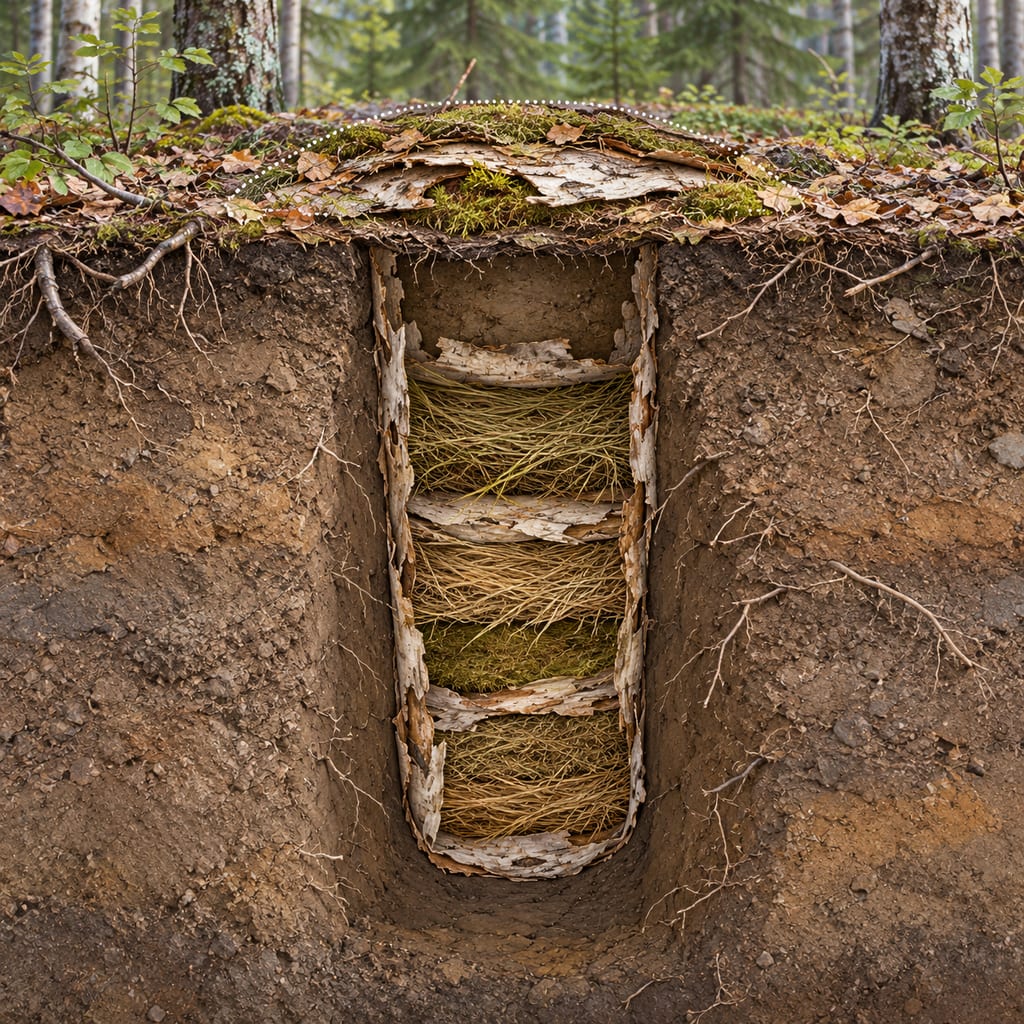
A Dene cache pit at Upper Cook Inlet, Alaska, initially dated to around 1,000 years ago. JBER documents a below-ground feature lined with birch bark and grasses; exact contents and construction details remain under study.
CDC guidance depicts fish heads in a grass-lined hole in the ground and describes it as a traditional Alaska Native food-preparation method; it names no specific Nation or community.
George Washington’s Mount Vernon ice house stored winter-cut Potomac ice in a hillside dry well for use in warmer months. The official description and 1798 estate inventory give distinct details of its form.
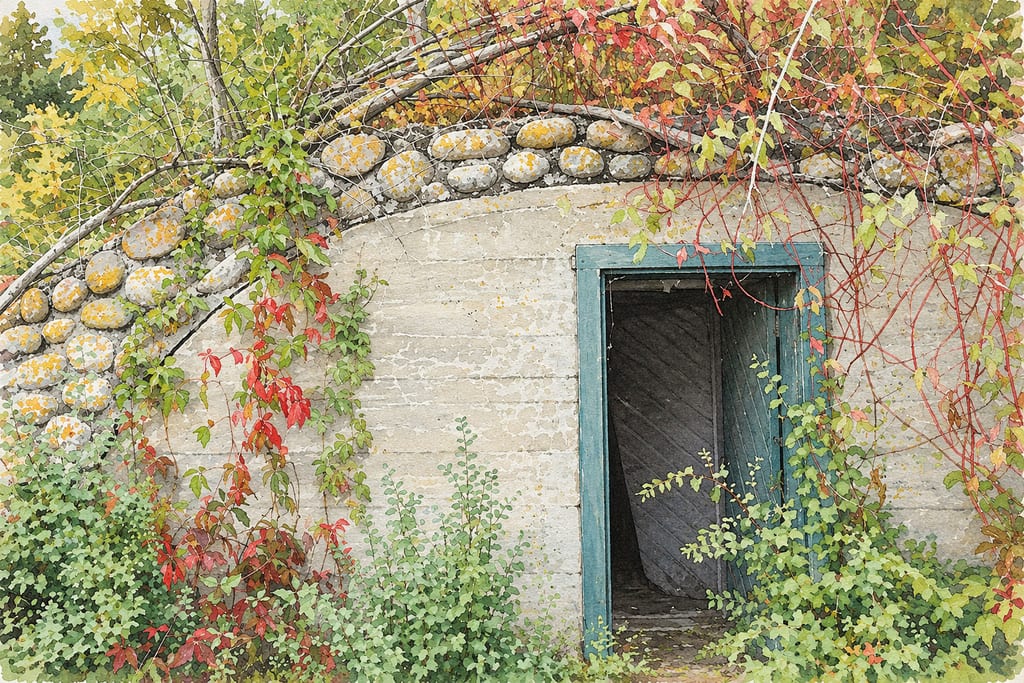
A documented root cellar at Minnesota’s Joyce Estate was built into a hillside near the kitchen to store garden produce. Its exposed east wall is concrete trimmed with fieldstone.

A Cap-Pelé boucanière is an Acadian herring-smoking building. The documented Willie Niles example is a one-storey wood-frame structure with a ridge smoke vent and interior bays for hanging fish-bearing cannes.

Achcharu is a family of Sri Lankan vinegar pickles made with mixed vegetables or seasonal fruit and a piquant spice dressing. This version is a quick, refrigerated, non-fermented mixed-vegetable pickle.

The acocote is a long, hollowed and dried gourd used to draw aguamiel from a mature maguey. It is a harvesting tool: the sap is transferred to a separate vessel before it ferments into pulque.

Adrak murabba preserves young ginger in sugar syrup, a sweet South Asian preparation recorded in Indian cookery and food-processing sources.

Parkia biglobosa seeds are fermented into regional West African seasonings, including nététou, iru, dawadawa and soumbala. The yellow fruit pulp is a separate food, and names and methods vary by place.

Japanese reddish-brown vinegar from sake lees matured about three years, turned to vinegar by acetic bacteria; the vinegar of Handa and Edomae sushi rice.

A refined common-wheat flour blended for a broad range of baking; its protein and behavior vary with wheat, milling and market.

The almond mushroom, Agaricus subrufescens, was cultivated in eastern North America in the 1800s, lost its market, and returned as a cultivated mushroom from Brazil, where it is grown under several names.
No community contributions have been published for this entry yet.
Sign in to contribute. Published comments and photos are free to read.
Maine State MuseumConstruction · Method · History · Safety
Lumber Camp FoodThe museum describes a stone-lined bean hole, a fire reduced to coals, a cast-iron pot covered with earth, and an overnight cooking method.
Its recipe specifies eight hours and includes foil as a contemporary recipe detail; that duration and foil are not universal historic specifications.
The museum warns that wet or previously watered stones can explode when heated.
Cited in: A fixed pit and a portable pot; How the pit works; Local dimensions and timing; A working tradition documented in Maine; Evidence and safe interpretation
American Folklife Center, Library of Congress; Maine Living LoreMethod · History · Construction
The Life of Mike PelletierLogger Mike Pelletier recalls bean holes used on log drives and in the woods.
His account gives one example around two feet deep and three feet square, lined with rocks; fire and ashes were moved around a covered iron pot and closed with ash.
He recalls about twelve hours of cooking; his measurements and schedule are testimony for one account, not standards.
Cited in: A fixed pit and a portable pot; How the pit works; Local dimensions and timing; A working tradition documented in Maine; Evidence and safe interpretation
Maine Organic Farmers and Gardeners AssociationConstruction · Method · Geography · Modern use
Common Grounds Bean Hole BeansMOFGA documents a current Common Ground Fair method at Unity, Maine: stone-lined pit, fire and coals, covered pots placed in the pit, and soil over the opening.
The event method uses a long schedule and illustrates contemporary practice, not a universal duration or historical plan.
Cited in: How the pit works; Local dimensions and timing; A working tradition documented in Maine
The Northern, University of Maine Northeast Archives of Folklore and Oral HistoryHistory
“Bean-Hole” BeansThe University of Maine archive identifies a June 1925 article titled “Bean-Hole” Beans, a dated attestation of the method rather than proof of its origin.
Cited in: A working tradition documented in Maine
The County / Houlton Pioneer TimesModern use · Geography
Patten’s bean hole dinner shows strong turnout despite rainA 2021 report describes a contemporary bean-hole dinner at Patten Lumbermen’s Museum, including a pit, coals, a cast-iron pot and earth cover.
Cited in: A working tradition documented in Maine