Icehouse
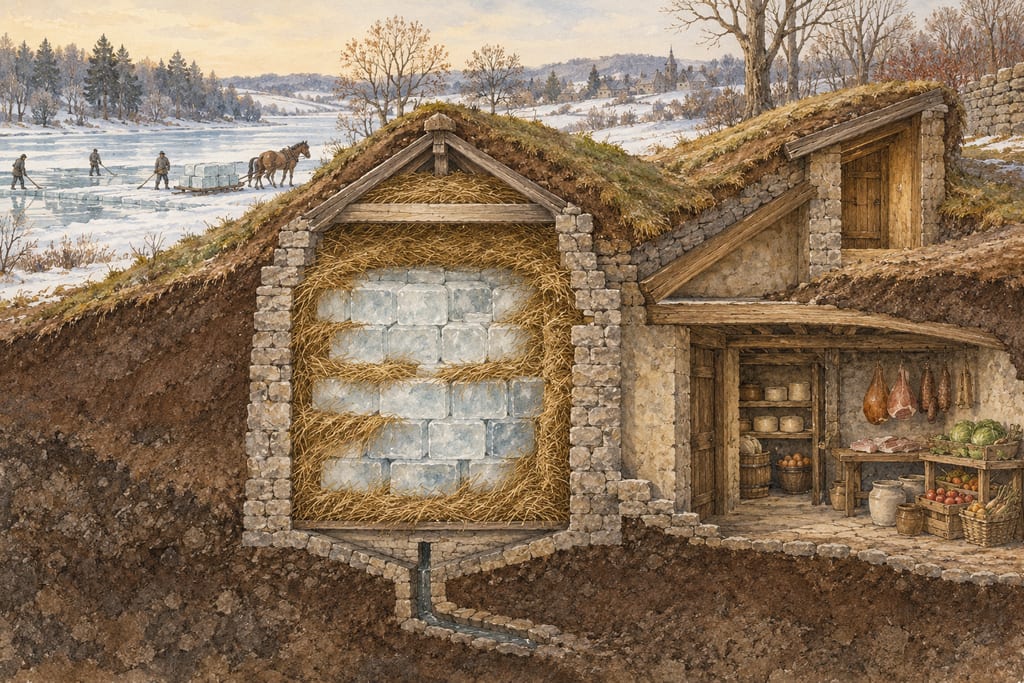
A structure in which winter ice or compacted snow is stored in insulation and drained, then drawn on later to cool food, separating the season of collecting cold from the season of using it.
 FermenteaWhere food goes to change
Built structures · Place · Pits and cavities
Ice house · George Washington’s ice house
George Washington’s Mount Vernon ice house stored winter-cut Potomac ice in a hillside dry well for use in warmer months. The official description and 1798 estate inventory give distinct details of its form.
Historical structure account only; not a construction, food-storage, or food-safety guide.
The official Mount Vernon account places the original ice house on the riverbank hillside above the Potomac; this page documents that named estate example, not a universal American design.
A structure in which winter ice or compacted snow is stored in insulation and drained, then drawn on later to cool food, separating the season of collecting cold from the season of using it.
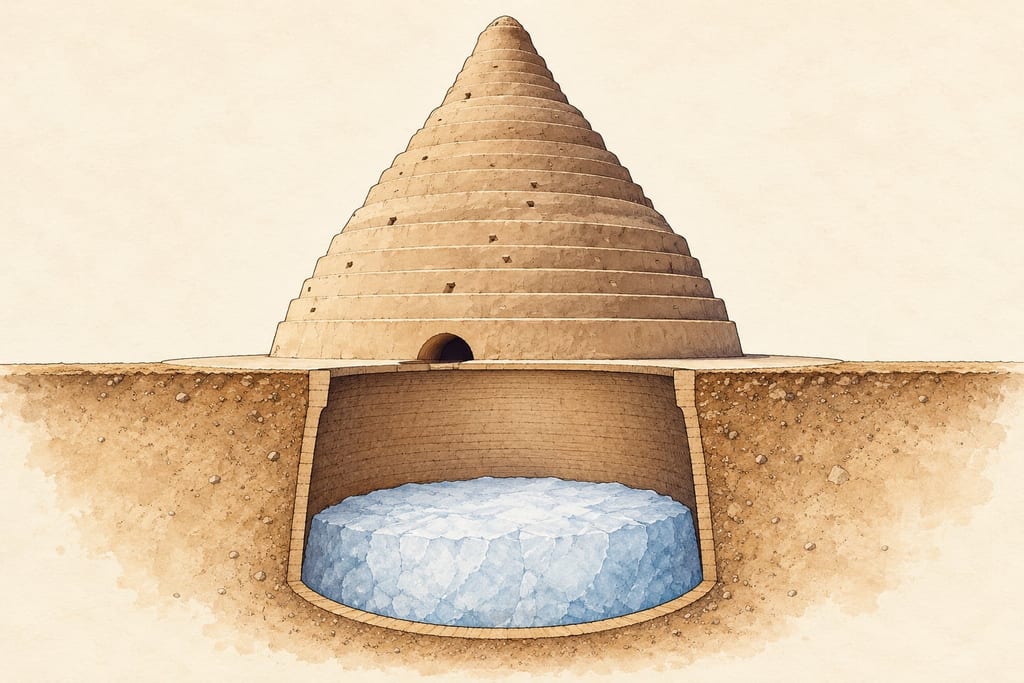
A yakhchāl is an Iranian building or covered pit for storing ice harvested in winter for summer distribution. Its forms vary, and the sources do not show that it was a food cellar.
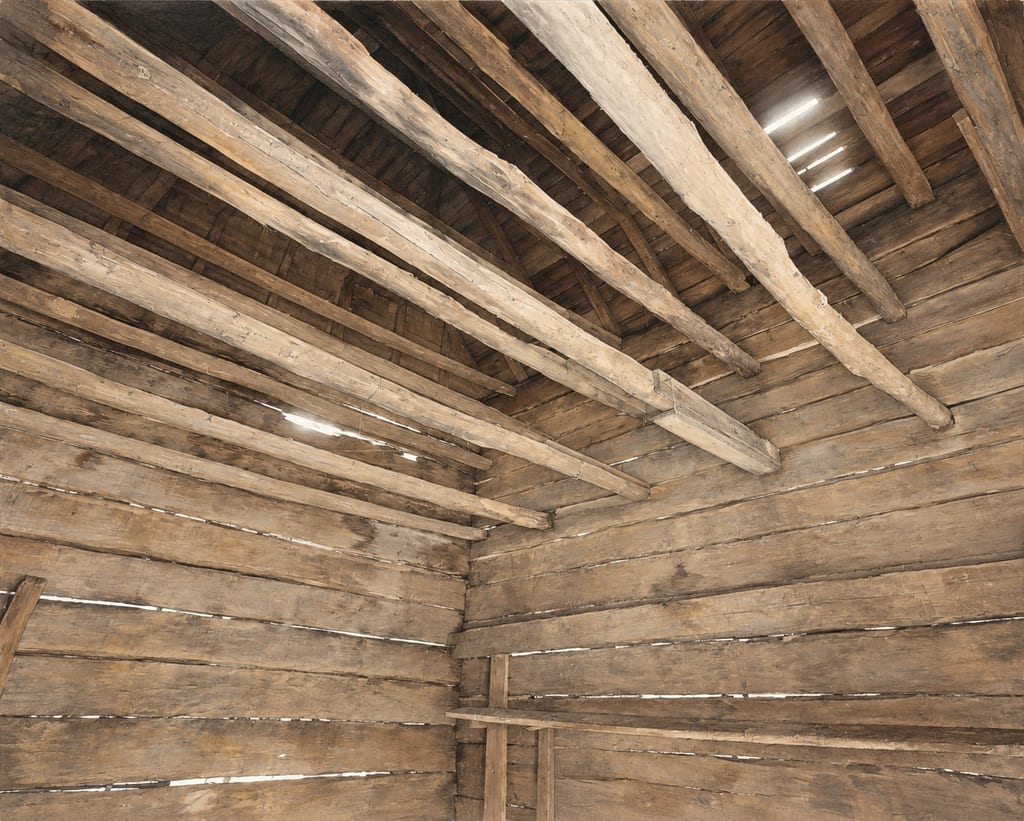
Tidewater Virginia smokehouses were separate buildings for curing and storing meat. Documentary references attest to purpose-built examples by the early eighteenth century; a HABS photograph records one interior at Sherwood Forest.

A gelling polysaccharide extracted from red seaweeds, sold as kanten strips or powder; it sets firm at a low concentration and stays solid until about 85 °C.

A Dominican table and seasoning condiment of sour orange juice, mixed with lime and salt and bottled raw; garlic, oregano or a hot pepper may be added for meat or a spicier bottle.

Cicerbita alpina is an alpine perennial whose tender shoots and leaves have been eaten raw or cooked. Sámi milk preparations and modern Carnian dishes are distinct uses, with serious identification and preservation limits.

Japanese skipjack tuna cooked, then repeatedly smoked and dried over a wood fire by the hand-fired tebiyama method into a hard block for shaving into dashi: the first stage of katsuobushi.

A Swedish-style spirit vinegar made by fermenting neutral alcohol with live vinegar bacteria, with a separate guide to commercial ättika strengths.

A yeast-raised wheat ring shaped from a firm dough, briefly boiled and baked. This source-batch formula gives a gently malted crust and a chewy crumb.

A warm dip of garlic, anchovy and olive oil, often enriched with butter, that Piedmont serves over a flame with raw and cooked vegetables and bread.

Bechamel is a white sauce of milk thickened with a butter and flour roux, one of the French mother sauces, and the base from which Mornay and other cheese and cream sauces are made.
No community contributions have been published for this entry yet.
Sign in to contribute. Published comments and photos are free to read.
George Washington's Mount VernonForm · Materials · Use · Geography · History
Ice HouseThe original ice house is described as a dry well dug into a hillside above the Potomac and encased in an outer wall of wood planks.
A three-to-four-inch layer of straw insulated the well; dirt and sod provided further insulation, and a ten-foot ladder enabled workers to retrieve ice.
Enslaved workers cut blocks from the Potomac, hauled them up the hillside, and deposited them into the well.
Mount Vernon connects stored ice with summer cooling and says the Washingtons enjoyed ice cream.
George Washington's Mount VernonHistory · Use · Geography
Ice, A Most Luxurious CropThe Mount Vernon account says ice was collected by enslaved workers from the Potomac and helped the household enjoy fresh meats and cold drinks after spring.
The site quotes Washington's 1784 correspondence with Robert Morris about building an ice house and records the 1792 two-week ice collection effort.
The account reports Washington's 1794 instruction to fill the ice house during freezing weather and Martha Washington's 1793 comment on warm-season ice.
George Washington Presidential Library at Mount VernonHistory · Dimensions · Materials
An Account of Property at Mount Vernon, 1798: complete transcriptionThe 1798 estate inventory lists an ice house as 12 feet square and arched with bricks.