Mount Vernon ice house
George Washington’s Mount Vernon ice house stored winter-cut Potomac ice in a hillside dry well for use in warmer months. The official description and 1798 estate inventory give distinct details of its form.
 FermenteaWhere food goes to change
Built structures · Cellars, caves and ripening rooms
ice house · ice store · snow pit
A structure in which winter ice or compacted snow is stored in insulation and drained, then drawn on later to cool food, separating the season of collecting cold from the season of using it.
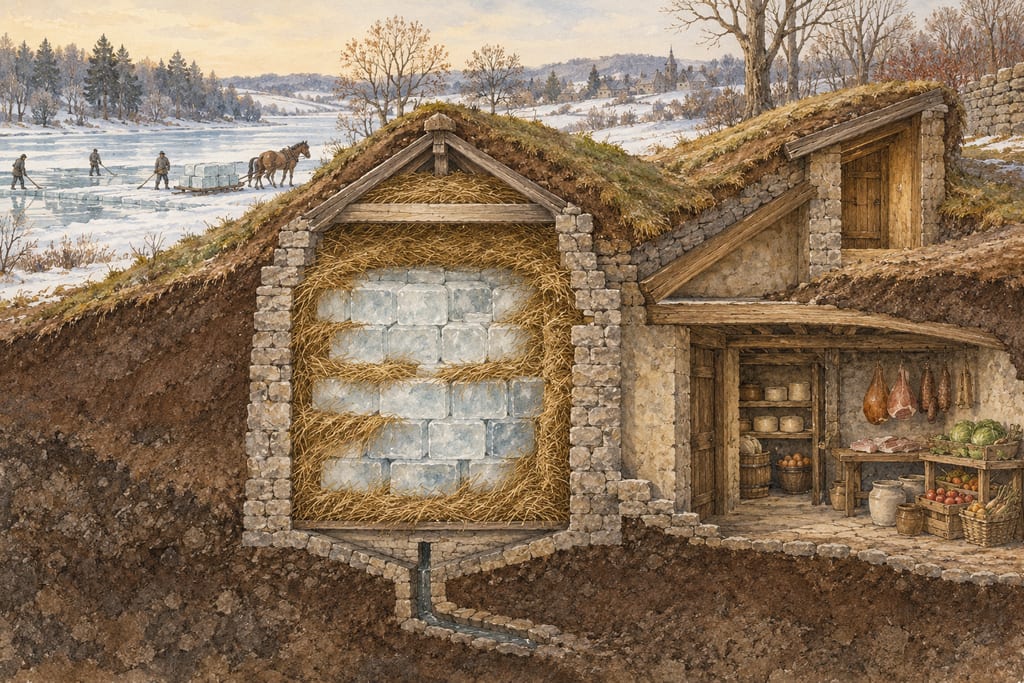
An icehouse holds winter ice or compacted snow through a warmer season. Insulation slows melting, and drainage keeps the meltwater from pooling in the store.
The ice is then drawn on to cool food, which made cold available long after the winter that produced it.
European estate icehouses are the catalogue's well-documented examples. The surviving records and conservation notes describe them as built structures tied to a particular house or estate.
The catalogue does not give dimensions or the exact insulation used in each case.
The sources give no quantities of ice, storage durations or melt rates. The materials and steps above are the general arrangement the catalogue describes, not a construction specification.
Icehouses separate the season of collecting cold from the season of using it. The catalogue points to European estate icehouses as the well-documented examples.
A build is made where it stands: moving it means building it again.
The catalogue cites estate icehouses in Britain as well-documented examples.
George Washington’s Mount Vernon ice house stored winter-cut Potomac ice in a hillside dry well for use in warmer months. The official description and 1798 estate inventory give distinct details of its form.
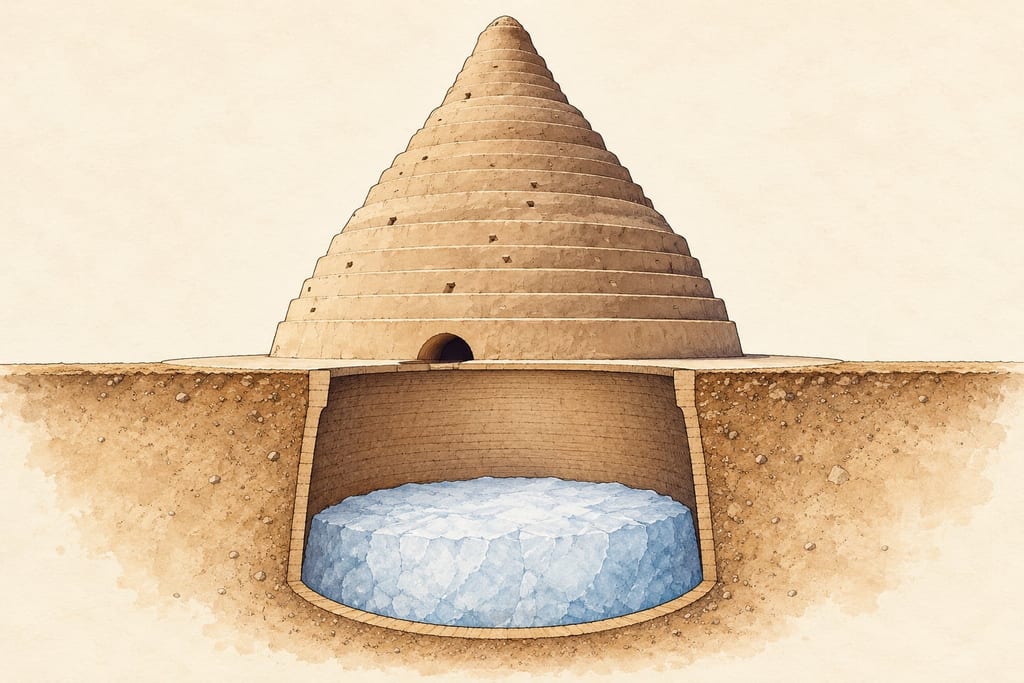
A yakhchāl is an Iranian building or covered pit for storing ice harvested in winter for summer distribution. Its forms vary, and the sources do not show that it was a food cellar.
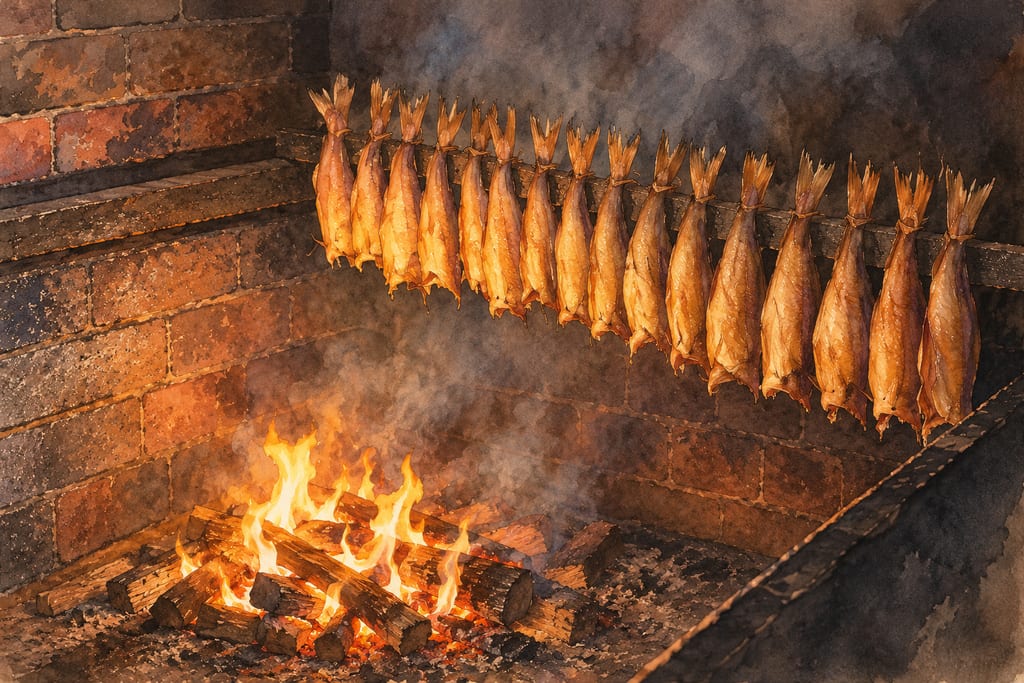
The Arbroath “barrel” is a hardwood-fired smoking pit with triangular rails and a cover. Its documented form belongs to the traditional hot-smoking of haddock around Arbroath and Auchmithie, Scotland.

Crisp battered white fish in warm corn tortillas with shredded cabbage, lime and fresh salsa. This home version draws on the Ensenada style without claiming to be a definitive historic formula.
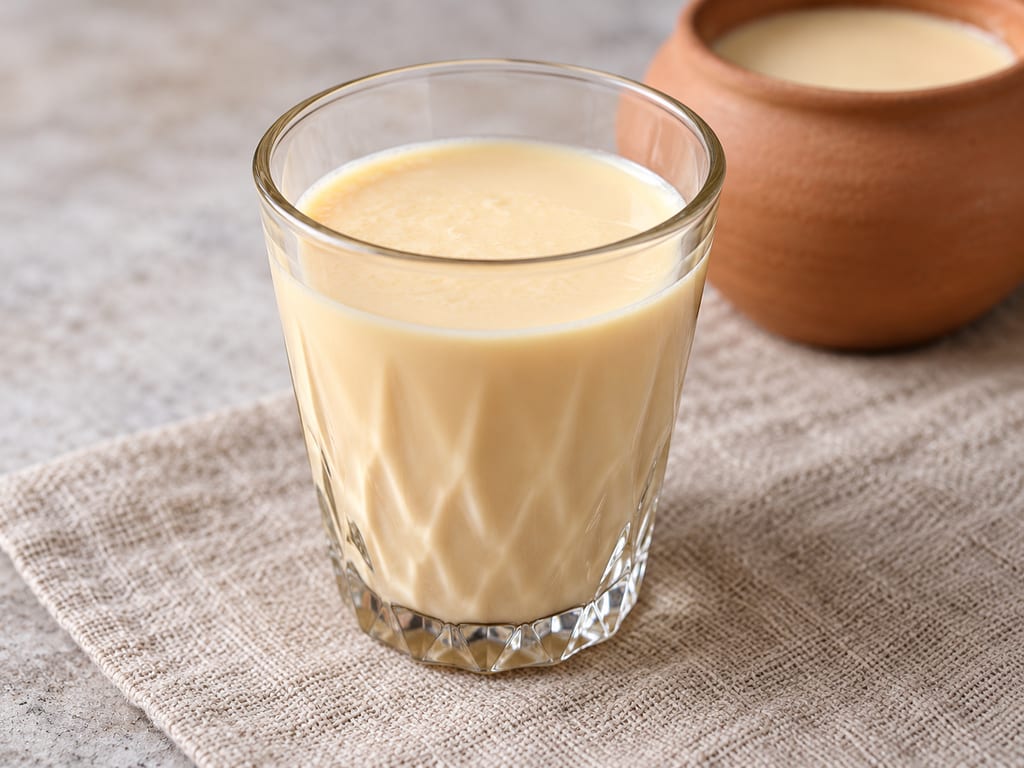
Baked milk is an Eastern European preparation of milk held at high heat for hours until it turns cream-coloured with a cooked, mildly sweet flavour, without any fermentation.

A coarse South African farmhouse sausage of beef with pork or mutton fat, defined by its coriander seasoning and cooked fresh over coals rather than preserved.
A flood-season pit store described for Omagua communities along the Amazon: manioc tubers were buried before inundation and recovered as waters receded. Its shape and lining are not recorded.
A temporary, in-place earthen oven used to cook camas with heat retained by fire-heated stones. The dimensions described here belong to one Kalispel-supervised reconstruction, not a universal form.

Chuño negro is a source-documented Andean potato-preservation practice. This entry records producer tradition; it is not a validated household process for making potentially toxic bitter potatoes safe.
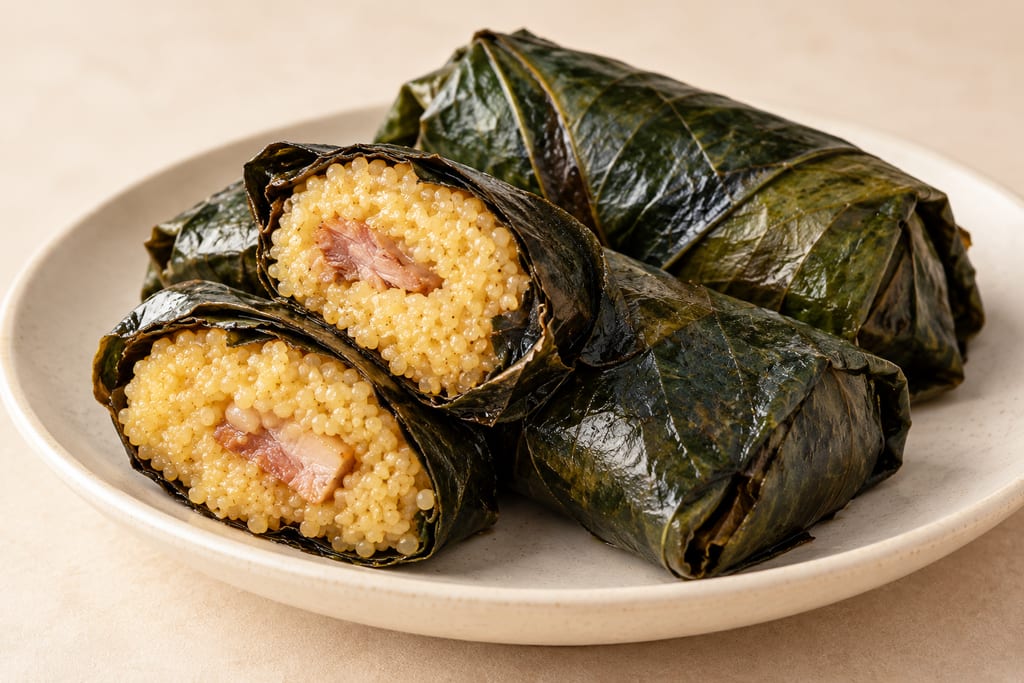
Cinavu is a Paiwan leaf-wrapped parcel built around millet or taro, meat and locally gathered leaves. It belongs to a food culture of harvest, hospitality and shared work, with village recipes differing in both filling and cooking time.
No community contributions have been published for this entry yet.
Sign in to contribute. Published comments and photos are free to read.
National TrustHistory
Historic Buildings and Monuments Record (National Trust) icehouse recordEstate icehouse record
Cited in: Estate icehouses
Society for the Protection of Ancient BuildingsHistory · Method
Archive: ice houses (SPAB)Ice or compacted snow stored in insulated, drained structures
Cited in: Cold kept for summer; What the record does not settle