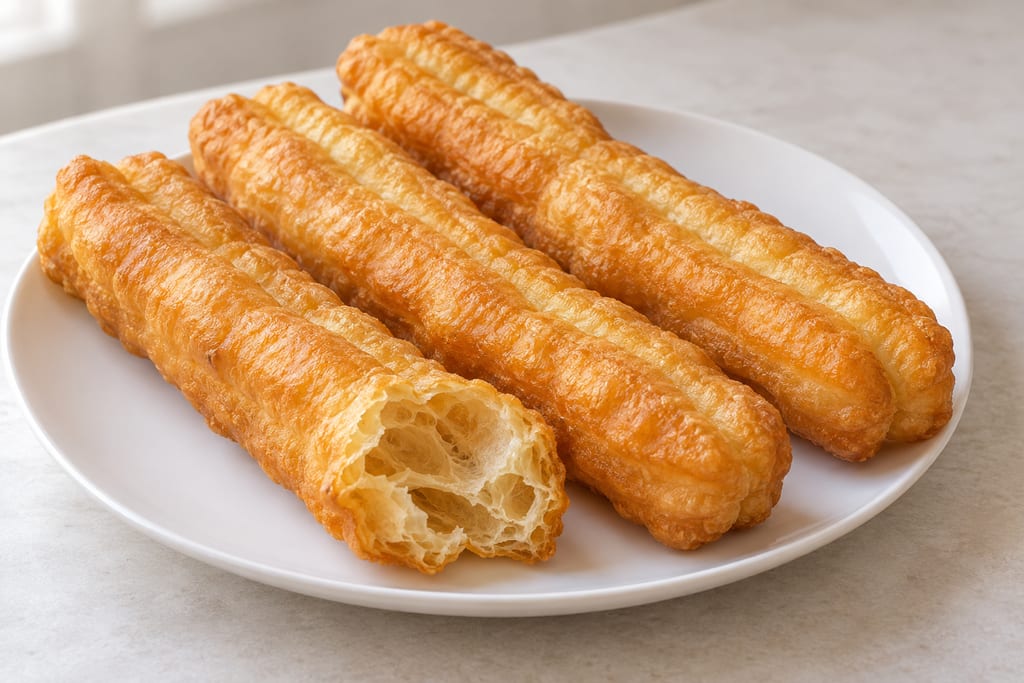
Youtiao
Youtiao are Chinese breakfast crullers made from soft baking-powder dough, chilled overnight, stretched into paired strips and fried until light golden.
 FermenteaWhere food goes to change
Modern adaptation
Shao bing (燒餅) · Taiwanese sesame flatbread · Taiwanese shao bing · Taiwanese shaobing
A Taichung family recipe uses a hot-and-cool water dough, vegetable-oil roux, repeated folds and sesame seeds for crisp, layered shaobing.
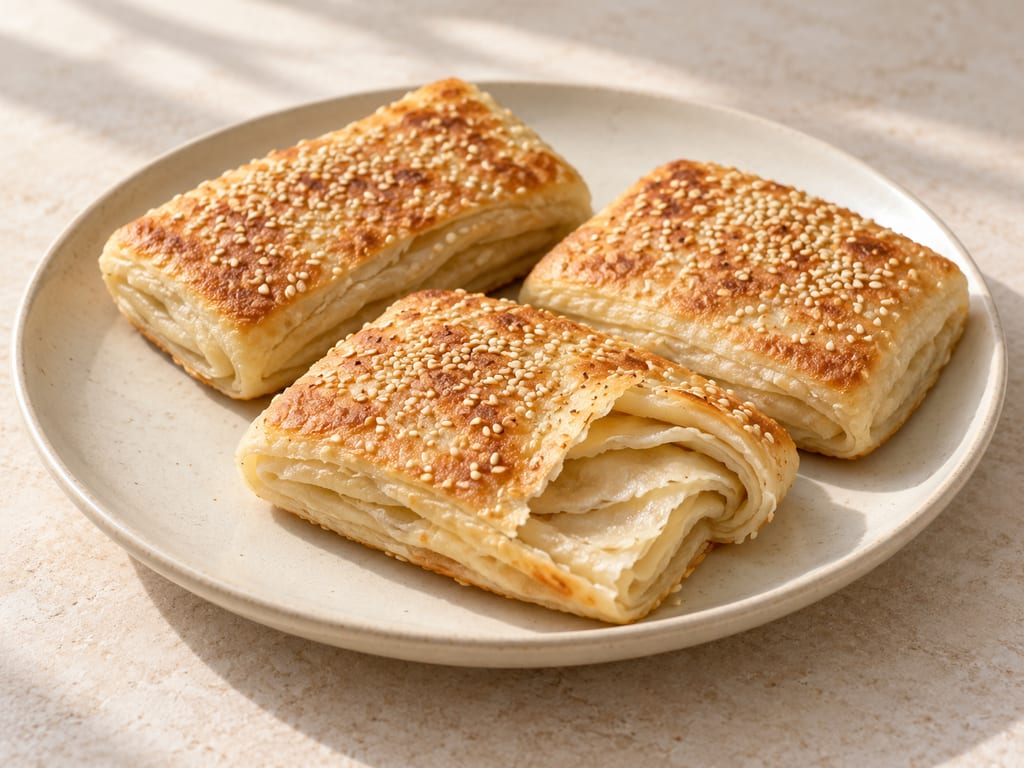
This version follows Hsiao-Ching Chou's family shao bing: a plain, layered sesame flatbread baked in eight pieces. Chou says her uncle and his family run a shao bing shop in Taichung, where they make the bread for a breakfast sandwich with you tiao. She learned the method there while visiting family. Her recipe comes from that Taiwanese shop context and is not presented here as the only form of shao bing made in Taiwan.
A Taiwan Ministry of Education learning resource independently lists shao bing among familiar Taiwanese breakfast foods, alongside soy milk and fried dough sticks. The Ministry's dictionary defines the word more broadly as a thin flour bread baked with sesame on the surface and gives the same breakfast pairing as an example. These sources support both the local name and breakfast use, but they do not date the first Taiwanese shao bing.
The batch itself stays plain. You tiao, egg and soy milk appear as service context, not additions to the dough. Chou describes splitting a finished bread while leaving one side joined so it can hold the fried strip. Keeping the bread separate lets a reader make and judge the layered shao bing on its own terms before assembling a breakfast sandwich.
The Taichung connection is narrow and useful. Chou ties this recipe to one family shop and a Taiwanese breakfast pattern; the Ministry of Education material gives broader evidence that shao bing belongs in the Taiwanese breakfast vocabulary. Neither identifies the first shop or first baker. The period remains unknown, and the location record distinguishes Taiwan-wide use from the family's documented Taichung preparation.
The Beijing recipe is a useful contrast because the names overlap while the methods do not. Sean St John's Old Beijing sesame-paste shaobing uses a yeast-and-baking-soda dough, spreads a sesame paste through the rolled dough, cuts the roll into spiral buns, seals each piece and briefly fries it before an oven bake. Beijing Tourism describes sesame-paste shaobing with sesame inside a layered bun.
Chou's Taichung family method uses no yeast, no sesame paste and no frying stage. Boiling and cold water are mixed into the flour, a cooked flour-and-oil roux is spread across a sheet, and the dough is rolled, portioned and folded into repeated flat layers. Sesame seeds go on the outside. The loaves bake directly on a tray at 450°F. Both are layered sesame breads called shaobing, but the dough, filling, shaping and heat path are distinct.
These differences matter when a recipe or regional label is chosen. This page does not call Chou's bread a Beijing pastry or borrow Beijing's sesame-paste filling and shallow fry. It records the Taichung family method and keeps the older Beijing style as a comparison. The shared Chinese characters and sesame topping do not make two formulas interchangeable.
The Beijing comparison also differs at the ingredient stage. St John's dough includes yeast and baking soda, then carries a sesame paste with sesame oil, soy and Sichuan pepper. Chou's dough uses boiling and cold water but no leavener, and its roux contains only vegetable oil and flour. Chou's bread is seed-coated after folding; St John's buns are sealed around a sesame-filled spiral. This entry does not combine the Beijing paste or its browned pan stage with the Taichung formula.
Measure 3 cups all-purpose flour and 1 teaspoon kosher salt into a large bowl. Add ⅔ cup boiling water and stir quickly so the hot liquid is distributed through the flour. Then add ⅓ cup cold tap water and combine it with the mixture. Chou's account says that the boiling water helps make the dough more pliable, while the cooler water lets the cook handle and knead it.
Bring the dough together by hand once it is cool enough to handle. Knead on the counter for about two minutes until smooth. It should remain damp without sticking to the hand. The recipe includes 1–2 tablespoons of warm water for adjustment if the flour still feels dry; add it as needed rather than automatically pouring in the entire amount. The formula gives no dough rest or proof.
This method differs from a straight room-temperature water dough. The two water temperatures are deliberate and both belong in this version. The instructions do not use yeast or baking soda, so a cook should not wait for a rise or look for a proofing cue. The dough goes from mixing and brief kneading to rolling once it is cohesive and smooth.
The water adjustment is modest and conditional. The recipe first supplies set quantities of boiling and cold water, then gives 1–2 tablespoons of warm water only if the dough remains dry. Chou describes the desired dough as damp rather than sticky. Because flour absorbs water differently, the small additional amount is a tactile correction in her directions; it is not a new hydration target or an invitation to add water until the dough becomes soft and slack.
Make a flour-and-oil roux from ¼ cup vegetable oil and ¼ cup all-purpose flour. Heat the oil for about a minute in a small pan over medium heat, until its surface starts to shimmer. Stir in the flour, then lower the heat and keep stirring for about three minutes, until the mixture resembles peanut butter in color. Take the pan off the burner and continue stirring for about a minute while its remaining heat deepens the color. Transfer it to a heatproof bowl.
Dust the work surface lightly and roll the dough into a rectangle about 18 inches long, 12 inches wide and ¼ inch thick. Spread about 4 tablespoons of roux over the sheet, leaving a half-inch border at its edge, and sprinkle the teaspoon of salt across the roux. The source gives ¼ cup each for the roux batch and directs the cook to use about 4 tablespoons; it does not say to apply all the roux.
This oil-flour paste creates a thin fat layer between portions of dough. Chou's article describes the roux and folds as the steps that create the interior layers. Keep the paste cooled enough to spread and leave the border so the rolled cylinder can be pinched closed. The recipe does not call for sesame paste, scallions or a stuffed center.
The roux includes equal ¼-cup measures of oil and flour. Chou's method cooks the oil briefly, stirs in flour, lowers the heat, and stirs until the color changes, then keeps stirring after removing the pan. These stages matter because the flour paste is spread over the full sheet before rolling. The recipe card lists about ½ cup combined starting ingredients, while the shaping step calls for about 4 tablespoons to spread; the page does not say how to use or store any remaining roux. The record keeps both quantities visible instead of increasing the amount applied.
Start at the long side and roll the sheet into a cylinder. Pinch the ends together to make a closed seam, then cut the cylinder into eight equal portions. Turn each portion so its seam faces down and the cut coil faces the cook. Roll it into a small rectangle about 5 inches by 3½ inches and ¼ inch thick.
Turn the piece so the seam faces up and fold it in thirds like a letter. Turn it so the open sides face up and down, roll it to about five inches long, and fold the lower edge toward the middle. Bring the upper edge down until it sits about half an inch from the lower edge. Repeat this pattern across the remaining pieces, keeping the folded flap facing down when they are set aside.
Put ¼ cup sesame seeds on a plate. Brush water on the exposed face, dip that face into the seeds and press lightly with a rolling pin so they stick. Lay the seeded side down and roll each piece to about 5 inches by 3½ inches and ¼ inch thick. The repeated folds establish internal layers; the sesame stays on the outside rather than being tucked between the layers.
Each portion is folded repeatedly after being rolled into small rectangles, then finished with the sesame-coated face rolled outward. The sequence makes a series of folds rather than the sealed spiral bun shape of the Beijing recipe. Keep the portions that are not being shaped under cover if the work takes time; the source repeats the same set of actions for each piece but does not give a separate covered rest between folds.
Preheat the oven to 450°F (about 232°C) and line a baking sheet with parchment. Place each formed bread on the tray with its sesame coating facing up. Bake for 15 minutes, turn each bread over, and bake for 4 minutes more. Chou gives puffing and light browning as the finish cue. Let the breads cool briefly before serving.
The family shop serves shao bing with you tiao and soy milk, and Chou describes slicing the bread along one side so the cruller can fit inside while the bread remains joined. Egg is another familiar breakfast pairing in Taiwan, but it is not part of this formula. The recipe produces eight plain breads and supplies no total preparation time, storage period or batch-scaling instructions.
Raw flour can carry germs. CDC advises against eating raw dough and recommends cooking flour-containing foods according to the recipe, then washing hands, bowls, utensils and work surfaces after handling flour. This recipe's dough should not be tasted before baking. The roux is hot while it cooks, so use a heatproof pan and keep stirring as directed; its color cue belongs to the roux, not to the baked bread's safety.
The 450°F oven setting belongs to the Chou family formula. Her instructions bake the breads for 15 minutes, turn them and continue for 4 minutes, looking for puffing and light browning. The recipe gives no pan fry, internal temperature or total elapsed time. Those are meaningful limits for planning: the reader can prepare the measured batch and use the supplied oven cue, but should not infer a tested scale-up, a specific bake time for another size, or the Taichung shop's commercial oven settings.
Hsiao-Ching Chou describes shao bing as a common Taiwanese breakfast and says she learned the recipe at her uncle's family shop in Taichung. Taiwan's Ministry of Education resource also lists shao bing among Taiwanese traditional breakfast foods. These sources support regional use and one family's method, not an origin date for the wider shaobing family.
Yield 8 flatbreads · Scaling: source batch only
The dough contains uncooked flour during mixing, kneading and shaping. Do not taste it raw.
Hazard sourceThe roux uses heated oil and flour; it is stirred over medium and low heat and continues to brown after leaving the burner.
Hazard sourceDo not taste the raw dough. Bake the breads following the recipe, then wash hands, utensils, bowls and work surfaces after handling flour.
Control sourceUse a heatproof pan and utensil for the roux, lower the heat after adding flour, and keep stirring during cooking and while residual heat continues to brown it.
Control sourceContains wheat and sesame. Check ingredient labels and disclose sesame seeds when serving.
This recipe is a plain sesame bread. Egg and you tiao are cited as breakfast pairings, not ingredients in this batch.
Chou and a Taiwan Ministry of Education resource document shao bing as Taiwanese breakfast food; this does not assert origin.
Chou locates her uncle's family shop in Taichung and says she learned this family method there; it is not a claim that all Taiwanese shaobing are made there.
Youtiao are Chinese breakfast crullers made from soft baking-powder dough, chilled overnight, stretched into paired strips and fried until light golden.
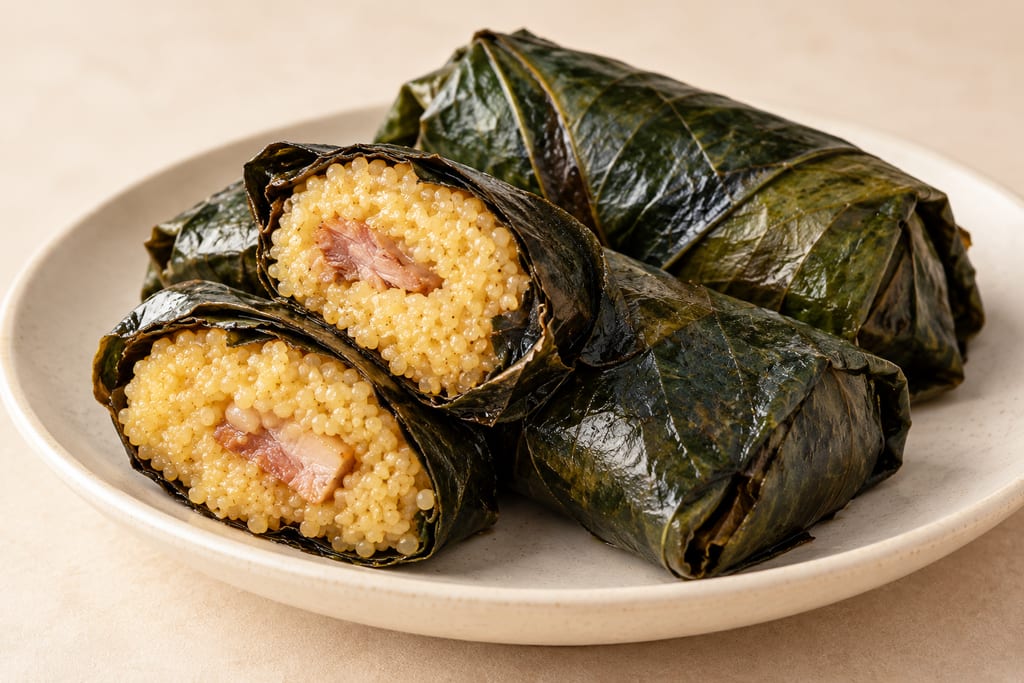
Cinavu is a Paiwan leaf-wrapped parcel built around millet or taro, meat and locally gathered leaves. It belongs to a food culture of harvest, hospitality and shared work, with village recipes differing in both filling and cooking time.
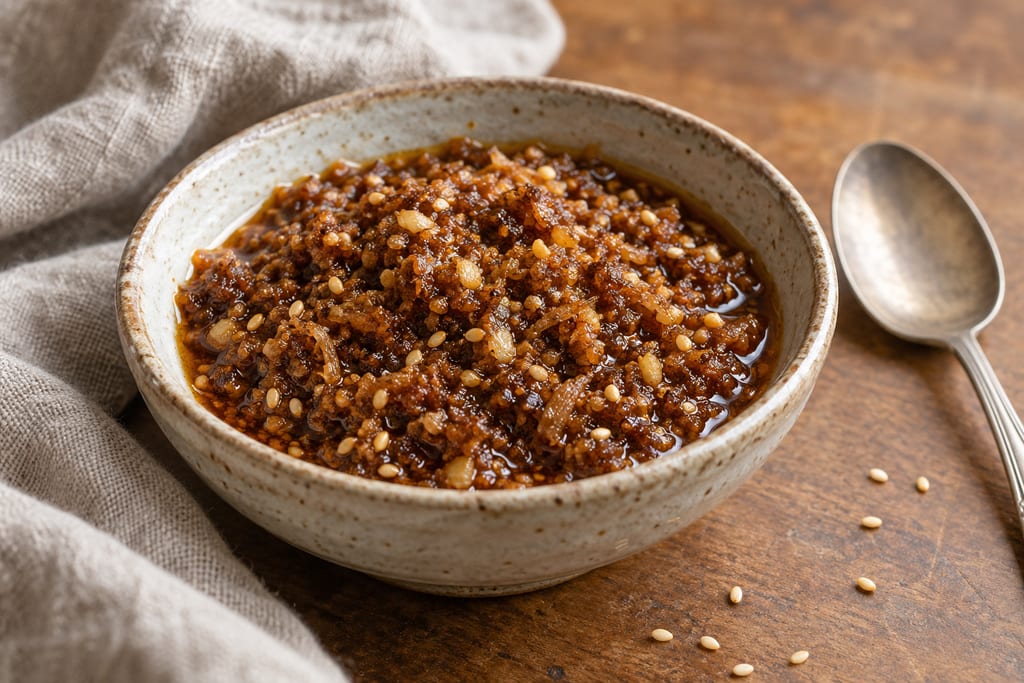
Shacha is a savoury, granular Fujian, Teochew and Taiwanese condiment of oil, garlic, shallot and dried seafood, often sold as Chinese barbecue sauce.
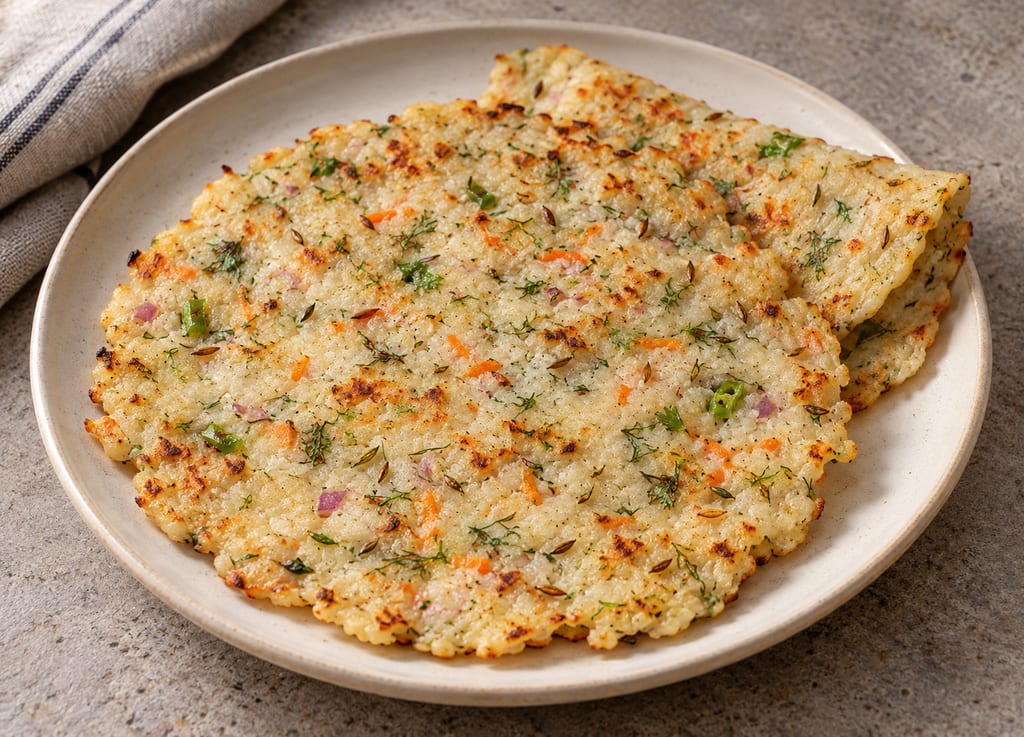
This Karnataka-style akki rotti mixes fine rice flour with vegetables, coconut, herbs and spices, then hand-pats and griddle-cooks the dough.
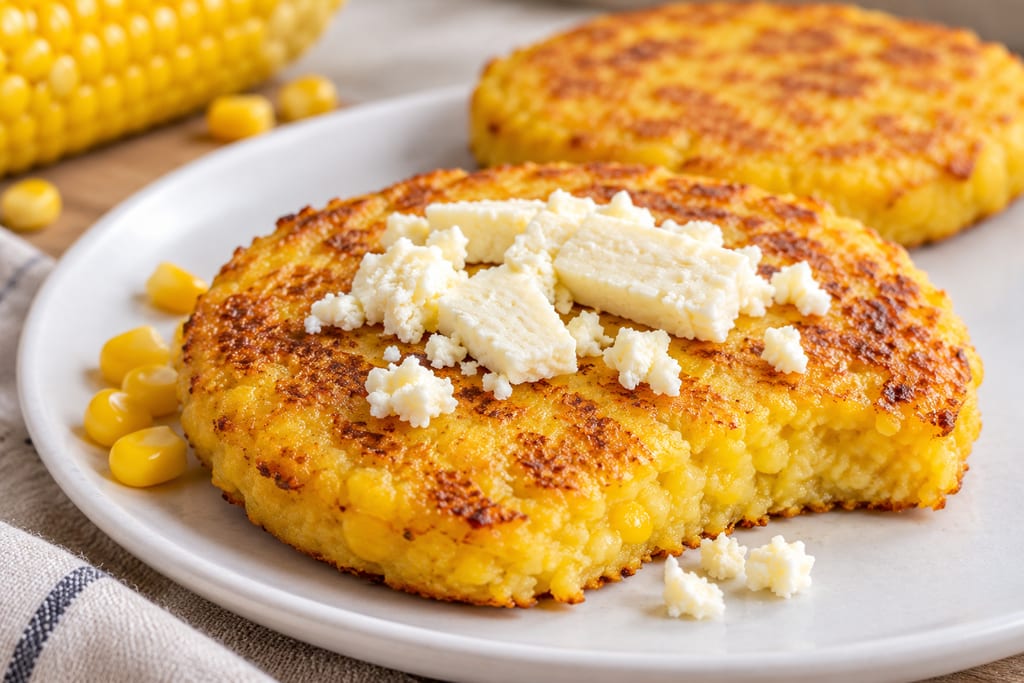
A Colombian Andean griddle cake made from fresh sweet-corn batter, cooked in butter and served with white cheese.
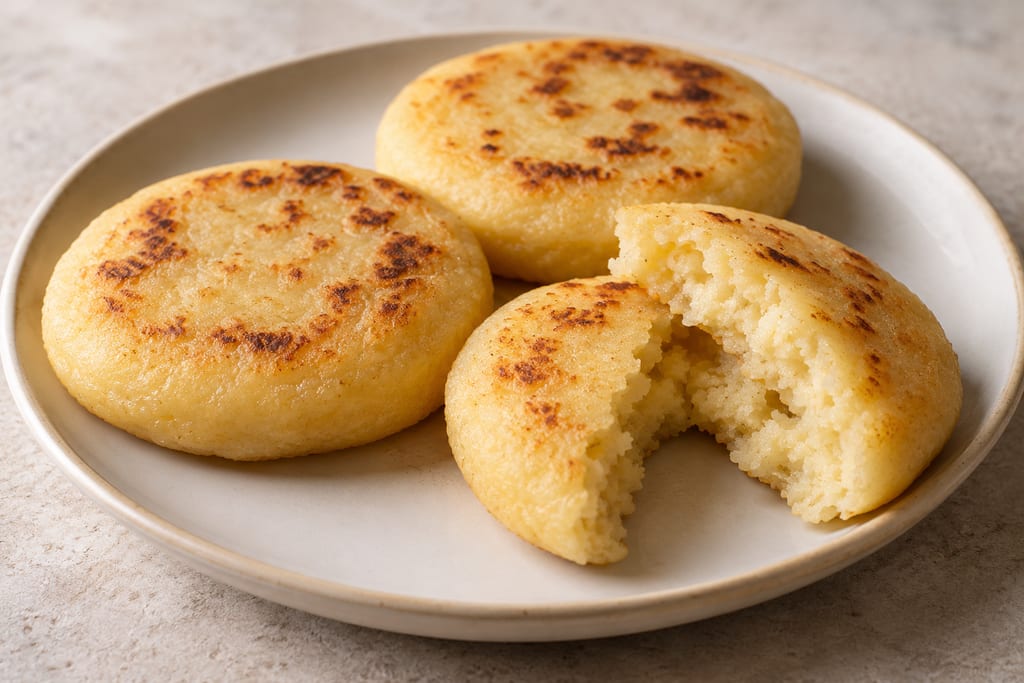
This household version combines precooked corn flour, warm water and salt, then cooks thick rounds on a lightly oiled skillet or griddle. It is one source-specific arepa method, not a universal Colombian or Venezuelan formula.
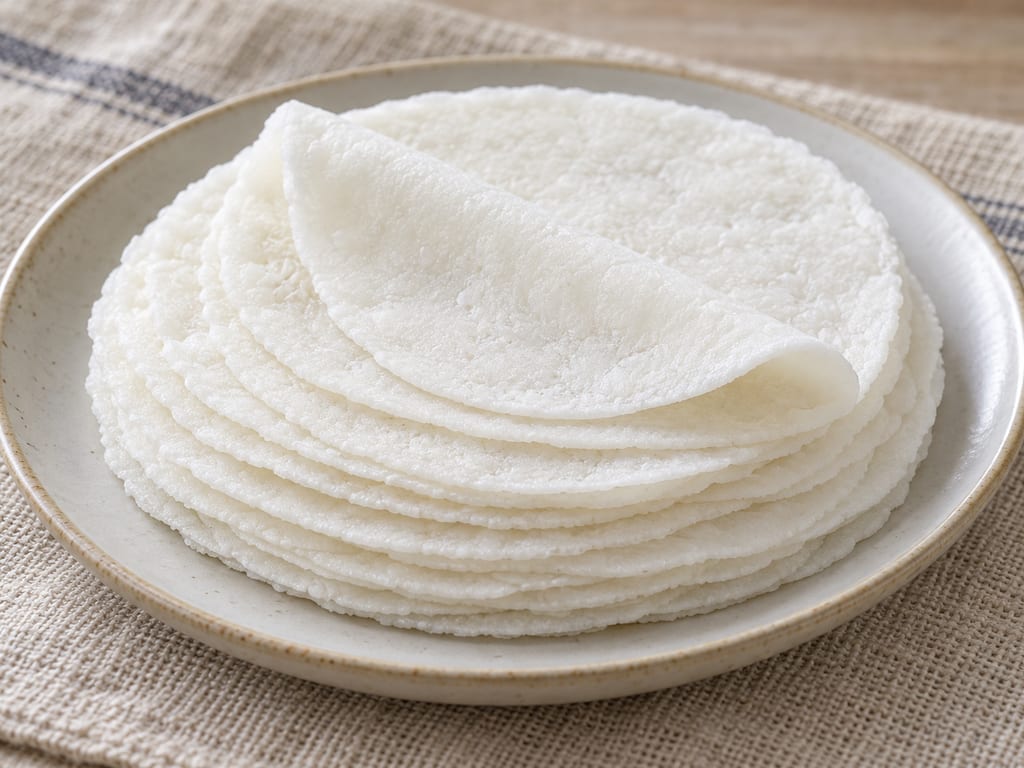
Thin Malabar rice-flour rounds made from roasted rice flour cooked into salted boiling water, kneaded after cooling, and rolled to about 1 mm. They cook on a hot griddle without taking on colour.
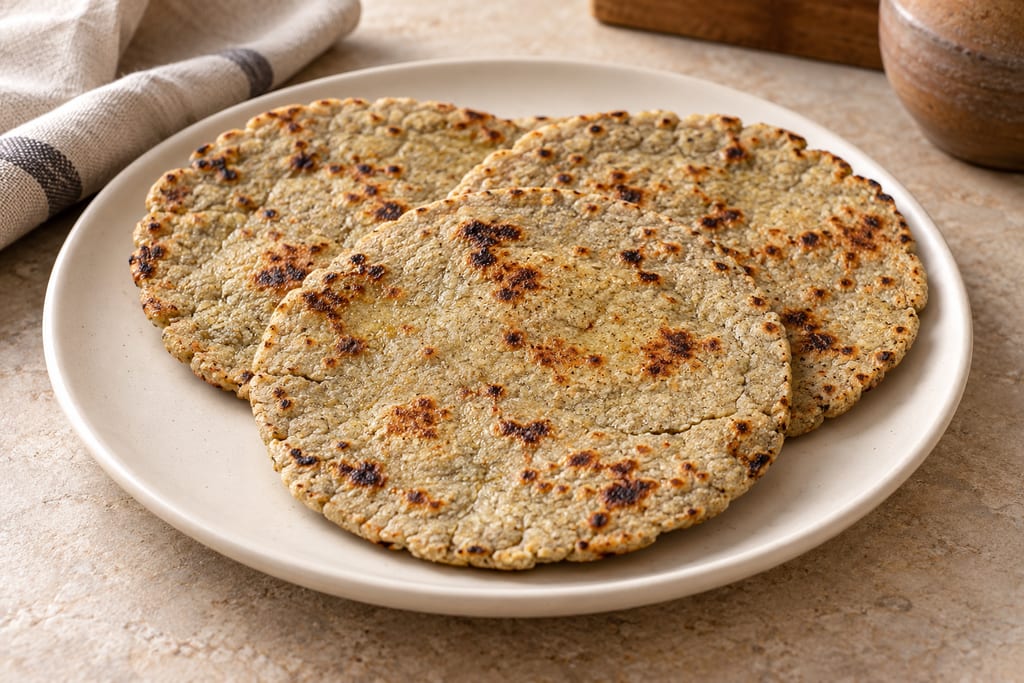
A pearl-millet flatbread shaped between sheets and cooked on a hot tawa. This home batch makes eight.
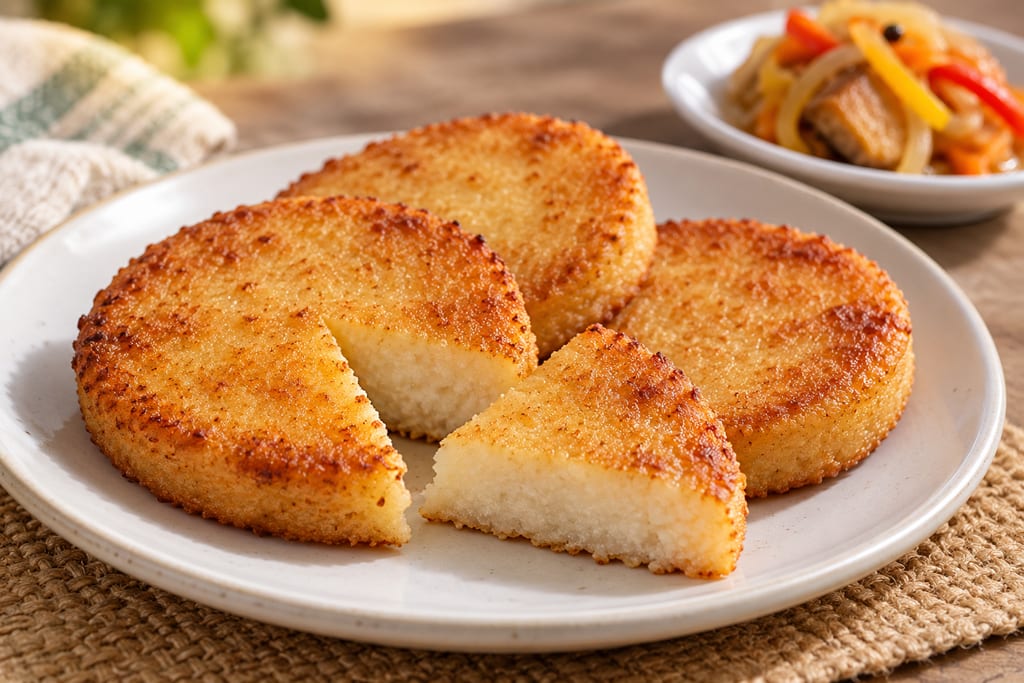
A serving method for approved, prepared bammy rounds: soak them in coconut milk and refry until golden. It does not process raw cassava.
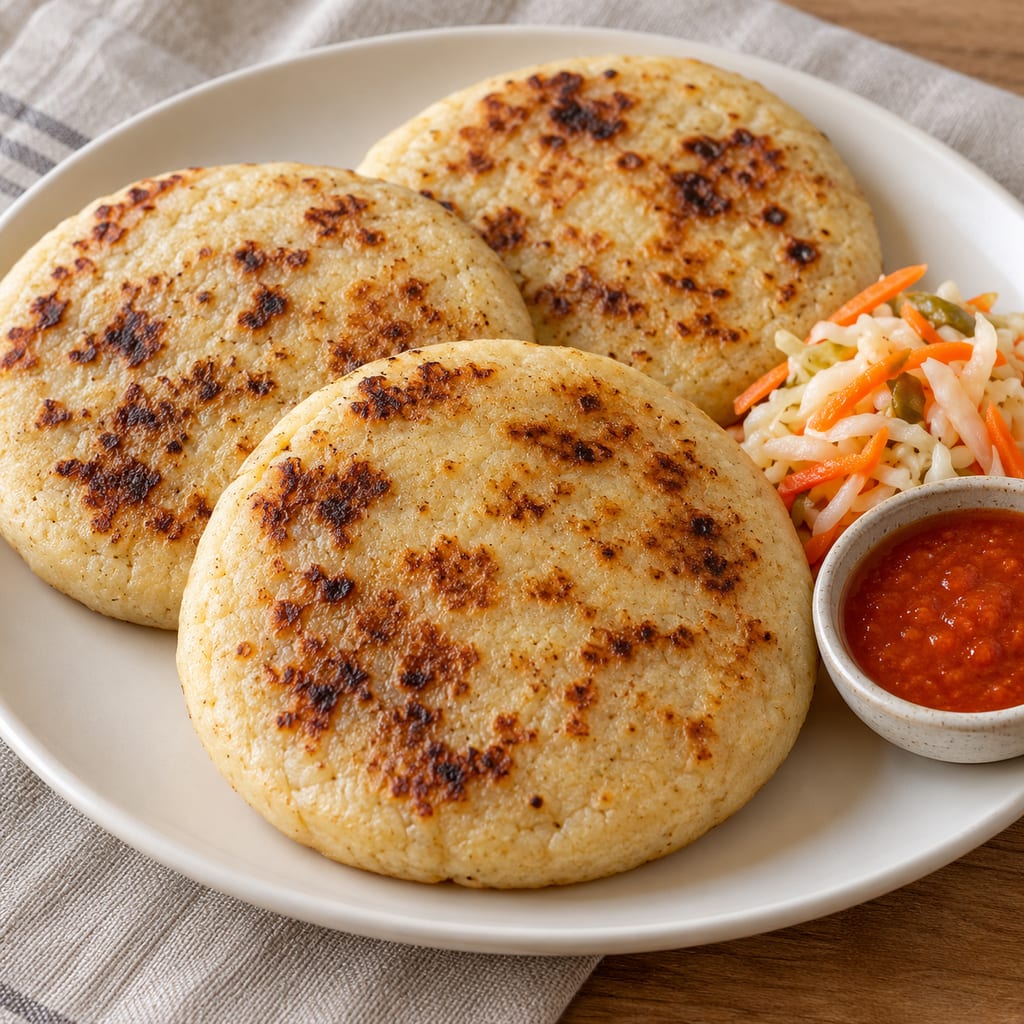
Salvadoran-style masa harina cakes filled with refried beans and cheese, sealed and cooked on an oiled skillet.
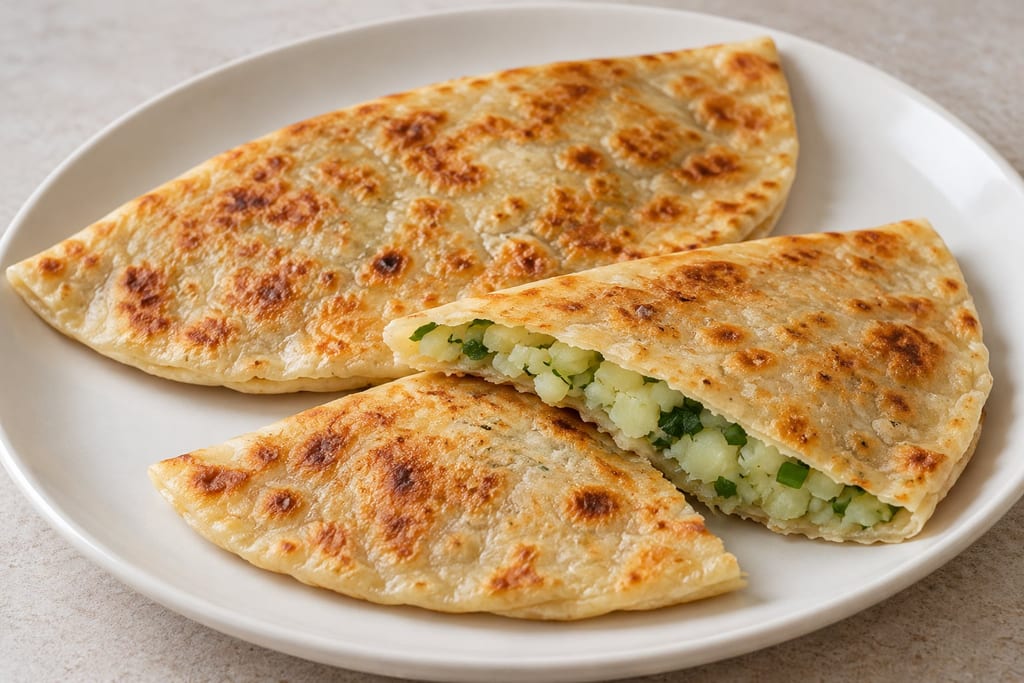
A thin, unleavened Afghan flatbread filled with mashed potato, scallion and cilantro, folded and pan-browned. This version uses a dough made from scratch.
No community contributions have been published for this entry yet.
Sign in to contribute. Published comments and photos are free to read.
EpicuriousRecipe · Method
Shao BingChou's recipe makes eight flatbreads and uses a hot-and-cool water dough, oil-flour roux, salt and sesame seeds.
Roux uses ¼ cup vegetable oil and ¼ cup flour, heated until peanut-butter colored; the method spreads about 4 tablespoons on an 18-by-12-inch sheet.
The dough uses 3 cups all-purpose flour, ⅔ cup boiling water, ⅓ cup cold water, 1–2 tablespoons warm water as needed, and 1 teaspoon kosher salt.
The rolled dough is divided into eight, folded repeatedly, coated with sesame seeds, baked at 450°F for 15 minutes, flipped and baked 4 minutes more.
Cited in: How the Taiwanese and Beijing forms differ; Mix the hot-and-cool water dough; Cook the roux and roll out one sheet; Portion, fold and coat with sesame; Bake, serve and handle raw flour safely
EpicuriousRegional identity · Foodways
For a Classic Taiwanese Breakfast, You Need Shao BingChou says her uncle and family run a shao bing shop in Taichung and she learned the method from them; she describes the bread split and filled with you tiao and served with soy milk as a common Taiwanese breakfast.
Chou describes the baked bread's outer crust and chewy inside and notes thinner, flakier versions also exist.
Cited in: A Taichung family recipe for Taiwanese breakfast; Mix the hot-and-cool water dough; Cook the roux and roll out one sheet; Bake, serve and handle raw flour safely
Taiwan Ministry of Education; National Taichung UniversityRegional identity · Foodways
What do you eat for breakfastA Ministry of Education commissioned educational resource lists shaobing among familiar Taiwanese traditional breakfast foods with soy milk and youtiao.
Cited in: A Taichung family recipe for Taiwanese breakfast
Taiwan Ministry of EducationName · Food definition
燒餅The Ministry of Education dictionary defines shaobing as a thin flour cake baked and commonly topped with sesame, and gives a breakfast example pairing it with youtiao and soy milk.
Cited in: A Taichung family recipe for Taiwanese breakfast
Tea & OrangesRegional distinction
Old Beijing Sesame BunsThe Beijing version uses yeast and baking soda in warm-water dough, sesame paste layered inside, sealed spiral buns, a brief medium-heat pan fry and an 18-minute oven bake; it differs from Chou's Taiwanese hot-water dough with oil-flour roux, repeated folds and sesame seeds on the exterior.
Cited in: How the Taiwanese and Beijing forms differ
Promotional Centre of Beijing Municipal Bureau of Culture and TourismRegional distinction
Traditional snacks in BeijingBeijing Tourism lists sesame-paste shaobing as a Beijing snack and describes sesame paste inside a layered bun, distinguishing the sesame-filled Beijing form from this plain, exterior-seeded Taiwanese bread.
Cited in: How the Taiwanese and Beijing forms differ
Centers for Disease Control and PreventionFood safety guidance
Raw Flour and DoughUncooked flour can contain germs; do not eat raw dough; cook flour-containing foods according to directions and clean hands, bowls, utensils and surfaces after handling flour.
Cited in: Bake, serve and handle raw flour safely