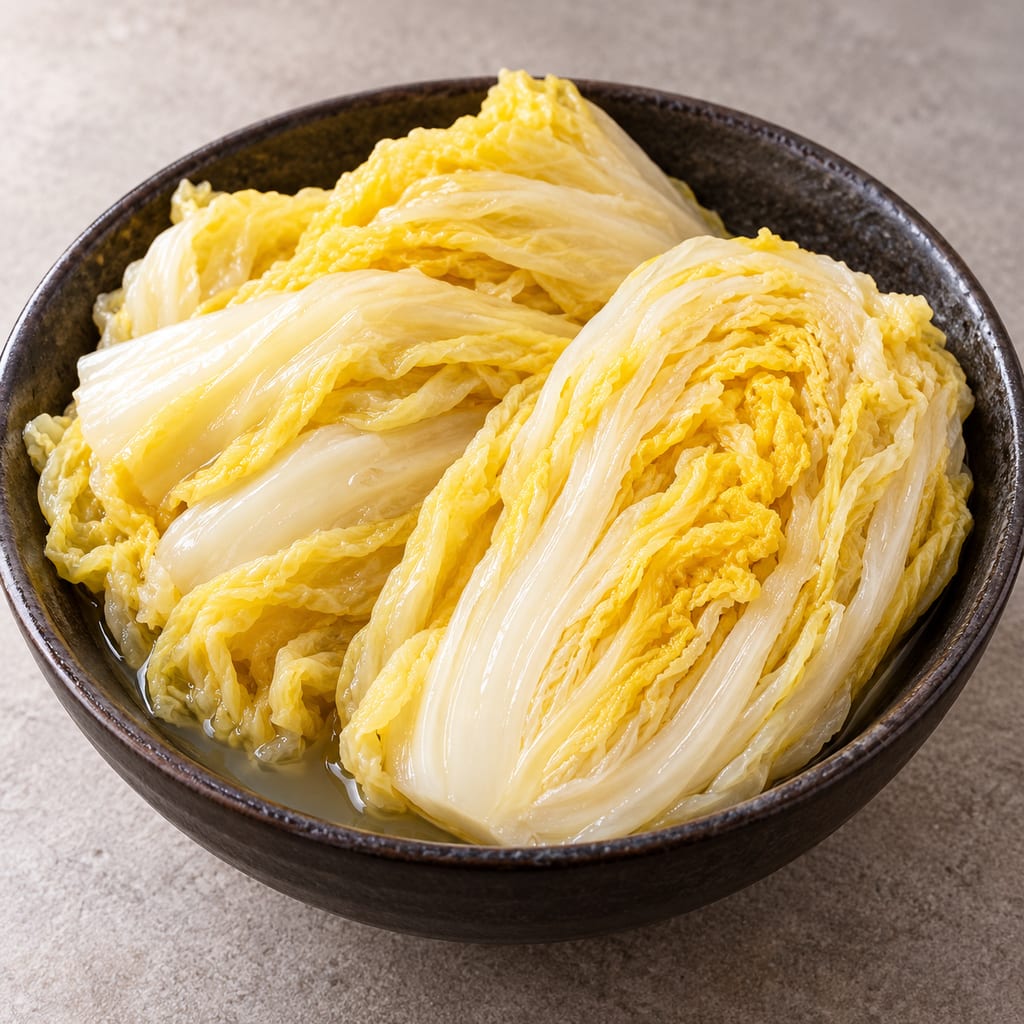
Dongbei suancai
Napa cabbage fermented in a salt brine in Northeast China, traditionally in large ceramic or glass jars, until it turns sour.
 FermenteaWhere food goes to change
Traditional method
Chinese cabbage or mustard greens salted and held under a weight until lactic fermentation turns them sour; northeastern and southern China keep distinct traditions of it.
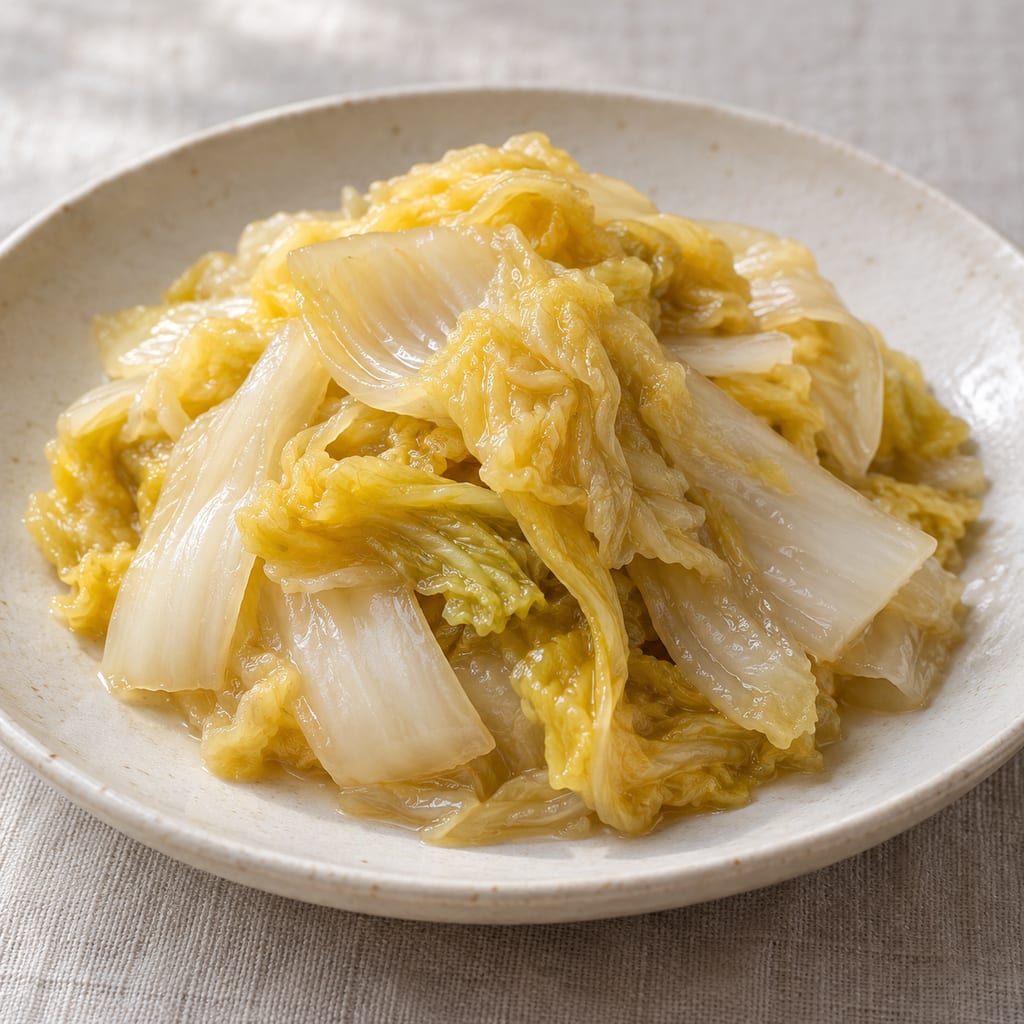
Suan cai (simplified Chinese: 酸菜; traditional Chinese: 酸菜; pinyin: suān cài) literally means sour vegetables.
It is a broad Chinese name for preserved, acidic vegetable preparations rather than one single formula.
Two particularly important traditions are the fermented Chinese cabbage associated with northeastern China and the fermented mustard greens commonly used in southern Chinese cooking.
Both can develop acidity through microbial fermentation, but their raw vegetables, seasonings and production methods differ.
Northeastern suan cai commonly uses Chinese cabbage, Brassica rapa subsp. pekinensis, also known as napa cabbage.
Southern mustard-green versions use forms of Brassica juncea.
The distinction is important because a recipe simply labelled suan cai does not necessarily identify the vegetable.
In Cantonese cooking, salted and soured mustard greens may be called haam choy (鹹菜 or 咸菜). The literal meaning emphasises salting rather than providing one universal botanical identity.
Northeastern China, commonly called Dongbei (东北), includes Liaoning, Jilin and Heilongjiang.
Cold winters historically restricted fresh vegetable production.
Cabbage was an important crop because it could be harvested in substantial quantities and stored or preserved.
Fermentation transformed part of the harvest into a sour vegetable that remained useful in winter cooking.
Large earthenware crocks were traditionally used.
Cabbages could be compressed beneath weights and allowed to mature in saltwater.
The finished product became strongly associated with pork dishes, dumplings and warming winter stews.
The precise invention date is unknown.
Scientific research describes the tradition as longstanding but does not identify a single secure origin year.
In southern China, suan cai often refers to preserved mustard greens rather than napa cabbage.
The leaves and substantial stems are salted and fermented.
The result can have a firmer, more fibrous texture and a different flavour from northeastern cabbage.
Southern versions commonly appear in stir-fries and dishes combining preserved greens with meat or fish.
Sichuan-style paocai (泡菜) belongs to a related but distinct brine-fermentation family, often using mixed vegetables such as radish, beans, cabbage and chilli.
Research comparing Chinese fermented vegetables finds that their microbial communities and flavour profiles differ materially.
It would therefore be inaccurate to use a northeastern napa-cabbage recipe as the universal method for every product sold as suan cai.
A published investigation into traditional northeastern suan cai provides a useful process description.
Ingredient or material — Documented amount
Chinese cabbage — Base vegetable quantity
Salt — 1% of cabbage weight in the studied process
Ceramic fermentation jar — 750 L in the research production
Weight — Stone placed above cabbage
Water — Used in the traditional submerged preparation; exact batch volume not supplied
The study fermented three jars for 30 days.
It does not provide a small household batch weight or a fixed water volume for reproduction.
A separate scientific description reports northeastern cabbage submerged in 2% weight/volume salt solution and fermented for almost two months.
These are different investigated conditions. The 1% salt-by-cabbage-weight method must not be silently combined with the 2% salt-by-brine-volume method.
The 2014 research method provides this sequence.
Harvest suitable Chinese cabbage. Remove damaged outer material and use healthy vegetables.
Wilt. The cabbage is air dried for two days before fermentation.
Trim and prepare. Remove unsuitable leaves and arrange the cabbage for packing.
Salt. The investigated method uses salt equal to 1% of cabbage weight.
Pack in a ceramic vessel. The research used 750 L jars, which reflects its studied traditional-scale process rather than a domestic batch.
Apply weight. A stone holds the cabbage beneath the fermentation liquid.
Allow spontaneous fermentation. The study followed the batch for 30 days.
Monitor change. Samples were collected on days 0, 6, 12, 18, 24 and 30 to study microbial and chemical development.
The source does not supply a validated universal fermentation temperature or final consumer storage procedure for a smaller recipe.
A separate northeastern process describes approximately two months of fermentation in a 2% salt solution. That remains a separate documented variant.
Suan cai is a spontaneous lactic-acid fermentation in the documented traditional methods.
The cabbage carries microorganisms from cultivation and handling.
The salt and fermentation environment influence which organisms grow.
As appropriate lactic-acid bacteria become established, they consume available vegetable carbohydrates and generate organic acids.
This changes pH and flavour.
Important microorganisms identified in different studies include Leuconostoc mesenteroides, Lactiplantibacillus plantarum and other lactic-acid bacterial groups.
The species composition changes during fermentation.
Early-stage organisms may tolerate relatively mild acidity.
More acid-tolerant bacteria can become important as organic acids accumulate.
Different cabbage varieties, salt concentrations and fermentation temperatures produce different microbial communities.
The resulting food is not microbiologically identical to European sauerkraut merely because both use fermented cabbage.
One of the most important safety topics in northeastern suan cai research is nitrite.
Vegetables naturally contain nitrate.
Under particular conditions, microorganisms can convert nitrate into nitrite.
Nitrite concentrations may rise during the early stages of fermentation before subsequently declining.
Studies of northeastern sour cabbage have examined this changing pattern.
This creates a problem for simplistic instructions to eat fermented cabbage after a fixed short period.
The nitrite level may not decline predictably across every batch.
The actual pattern depends on microorganisms, ingredients, temperature and other conditions.
A fermentation duration described by one household cannot be treated as a universally safe endpoint.
The published studies are particularly useful for understanding why product-specific testing and validated processes matter in commercial production.
As lactic acid accumulates, the cabbage develops its characteristic sour flavour.
The original fresh sweetness becomes less prominent.
Salt, acid and enzymes change the vegetable's texture.
Cabbage leaves become softer and more flexible.
They can also become translucent.
This is important for cooking because fermented cabbage behaves differently from fresh cabbage.
Fresh cabbage may require a different cooking time and has a sweeter, less acidic flavour.
Suan cai brings acidity directly into a stew or filling.
The fermented vegetable therefore serves as a seasoning ingredient as well as a source of plant material.
A characteristic dish is suan cai bai rou (酸菜白肉), combining sour cabbage with sliced pork.
Pork belly is particularly suitable because its richness is balanced by the cabbage's acidity.
Another familiar preparation is suan cai with pork and glass noodles.
The noodles absorb the sour, savoury cooking liquid.
Suan cai also appears in dumpling fillings.
Pork-and-suan-cai dumplings are particularly associated with northeastern cooking.
The cabbage is often chopped before being mixed into the filling.
This distributes acidity through the meat and changes the dumplings' overall flavour.
The fermented cabbage can also be cooked with other meats or incorporated into soups.
Mustard-green suan cai is used in a range of stir-fried and braised dishes.
It can be cooked with pork, beef, chicken or squid.
Its sourness and salty character contribute strongly to the dish.
In parts of southern China, preserved mustard greens accompany fish and other seafood.
The fibrous stems provide a different texture from shredded northeastern cabbage.
This is why the principal vegetable should be identified when writing or indexing a recipe.
Chinese preserved vegetables form a large and diverse category.
Sichuan paocai often involves mixed vegetables fermented in a maintained brine.
Yacai refers to another family of preserved mustard preparations.
Zhàcài (榨菜) is associated with the swollen stem of a mustard variety and involves a distinct processing system.
Meigan cai (梅干菜) is a dried preserved-vegetable ingredient.
These foods may share salting or fermentation technologies, but their raw materials and processing stages differ.
The broad Chinese term suan cai should therefore be interpreted within its regional culinary context.
Good northeastern suan cai has a distinctly acidic flavour and softened but recognisable cabbage texture.
The colour may be yellowish or pale green.
Southern mustard suan cai can be darker and firmer.
Visible mould, abnormal slime, putrefaction or severe deterioration are warning signs.
However, appearance alone cannot establish the absence of harmful microorganisms or unacceptable nitrite levels.
The source's fermentation duration and salt percentage are documented research conditions.
They do not substitute for a validated preservation procedure.
The main controls include raw-material quality, salt concentration, submersion, fermentation conditions and the development of suitable acidity.
The risk of nitrite accumulation during early fermentation deserves particular attention.
No universal pH or nitrite endpoint for all suan cai products is established by the original Fermentea record.
Commercial production should use appropriate process monitoring.
Consumers should follow the storage instructions for purchased products.
Recipe status: completed regional and microbiological reference with documented production variants; no single universal suan cai recipe or validated shelf life is asserted.
Taxonomy only.
Scaling: source batch only
Poor brine coverage or inadequate acidity monitoring can allow spoilage; recipe-specific validated limits are not established.
Hazard sourceIn the three research jars, nitrite peaked at 54.6 mg/kg fresh matter on day 6 before declining to 4.2 mg/kg by day 30. Those measurements apply to that study batch and are not a universal expected value or safety threshold; no household monitoring endpoint is established.
Hazard sourceUse clean food-grade equipment, keep produce submerged and monitor acidity; no universal endpoint is supplied for this recipe.
Control sourceThe cited study measured a nitrite rise and later decline in its jars; it provides no validated household nitrite endpoint or control.
The source supports this broad area and no precise location.
Napa cabbage fermented in a salt brine in Northeast China, traditionally in large ceramic or glass jars, until it turns sour.
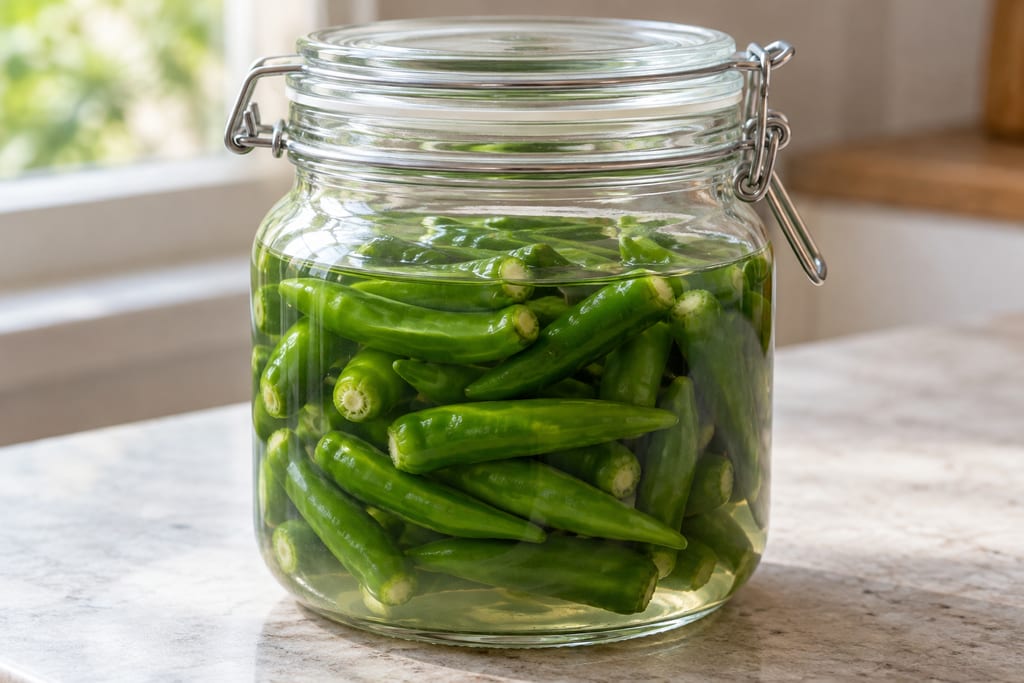
Whole green chiles are blanched briefly, then fermented in 3% salt brine with sake in a modern Japanese presentation of a wider Asian preparation.
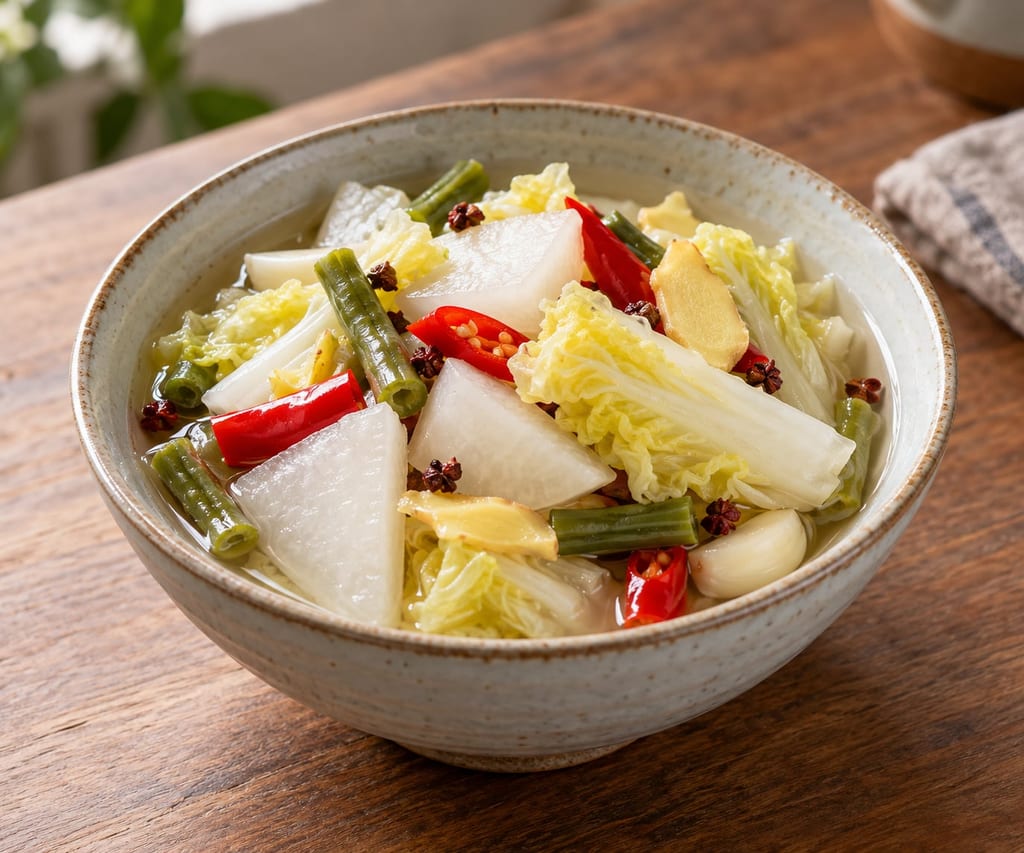
Sichuan paocai is a family of vegetables, most often radish, fermented by lactic-acid bacteria in a salted, spiced brine in a water-sealed pottery jar, with mature brine kept and reused.
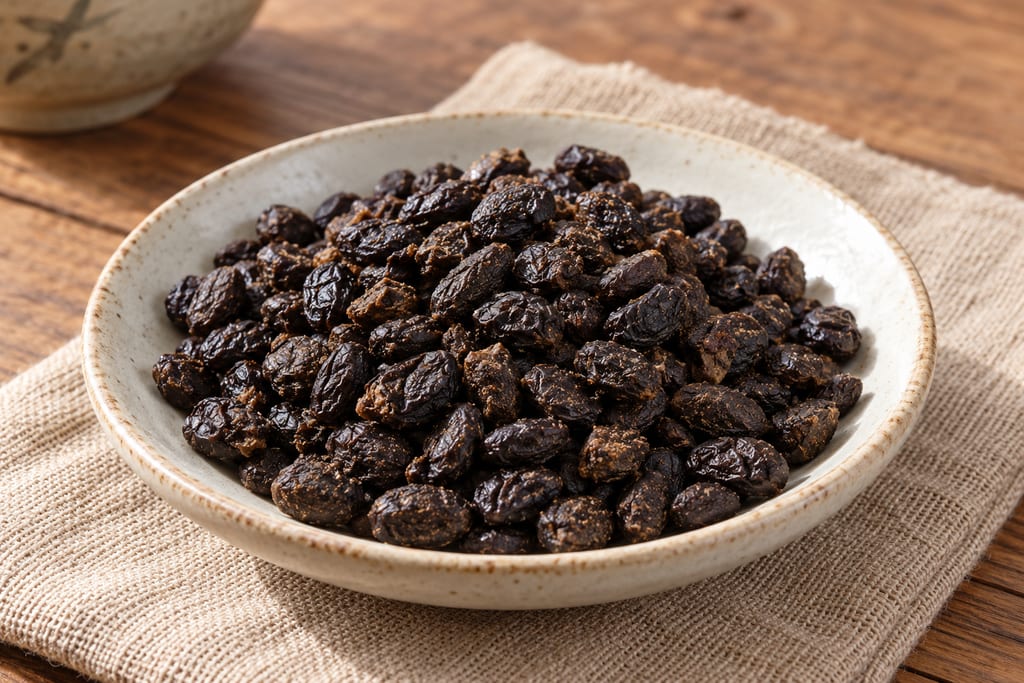
A Chinese fermented soybean condiment in which Bacillus-led bacteria, not moulds, drive the fermentation. Documented in Zunyi, Guizhou, and kept separate from mould-led douchi.
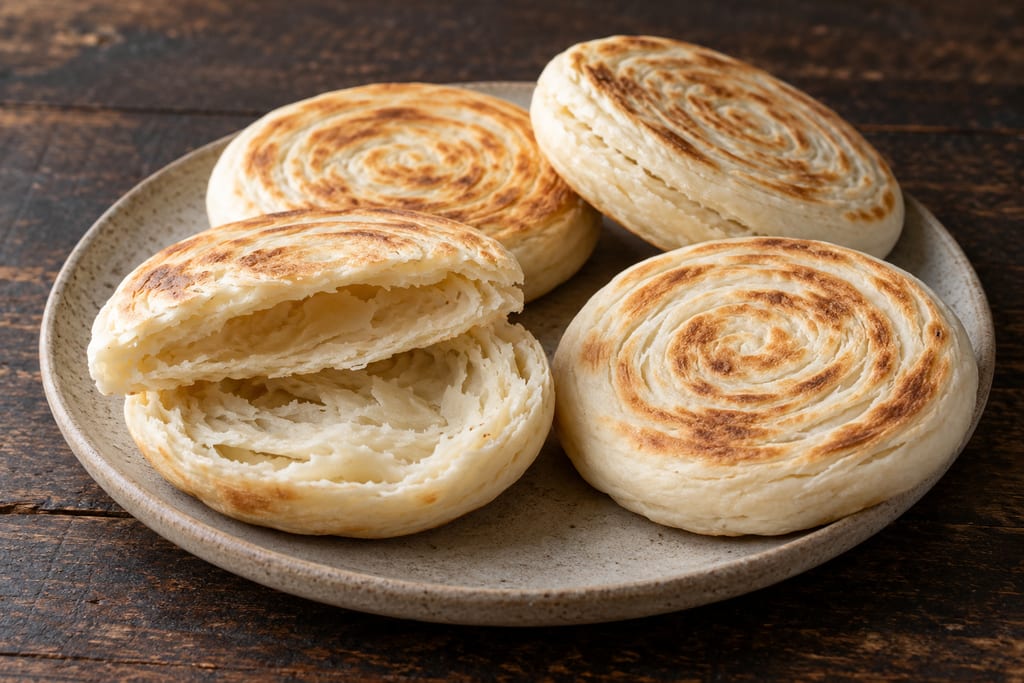
This Shaanxi-associated yeast flatbread uses a simple water dough, coiled shaping and a skillet bake. It is the bread used in roujiamo, not the filled meat dish.
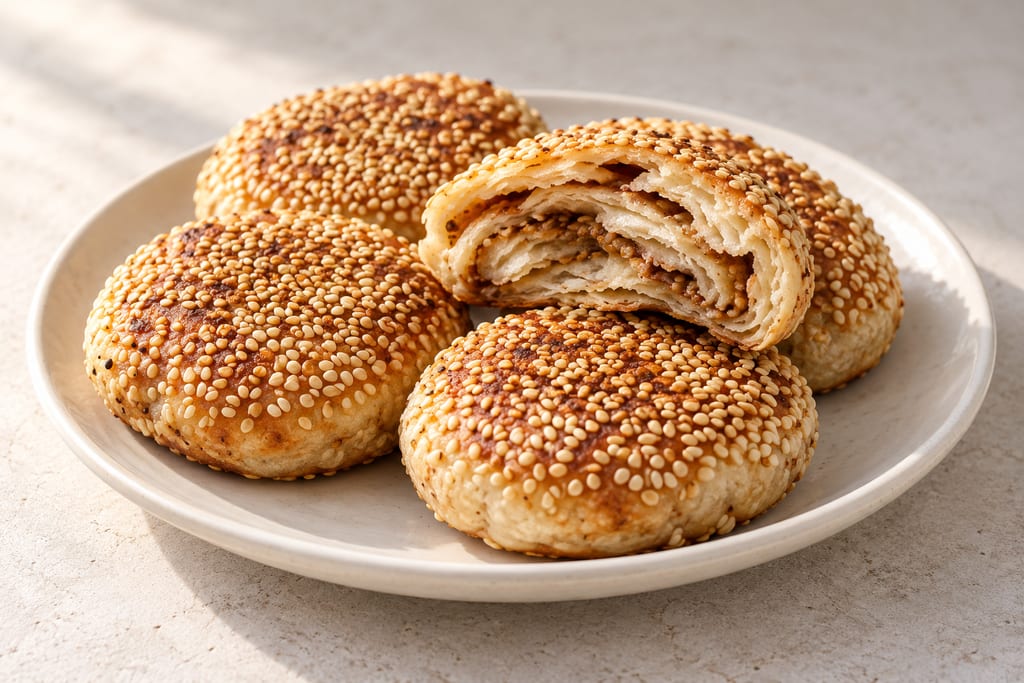
A Beijing-style yeast dough is layered with seasoned sesame paste, sealed into small buns, briefly pan-fried, seeded, and baked.
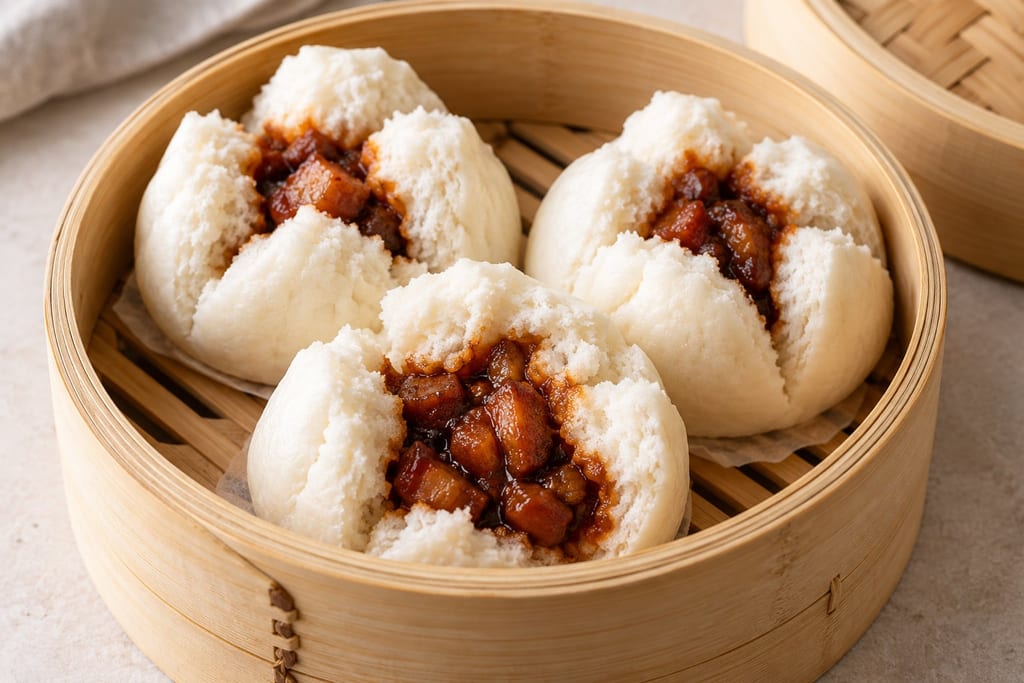
Fourteen fluffy steamed buns filled with cooked char siu and a thickened oyster-soy sauce.
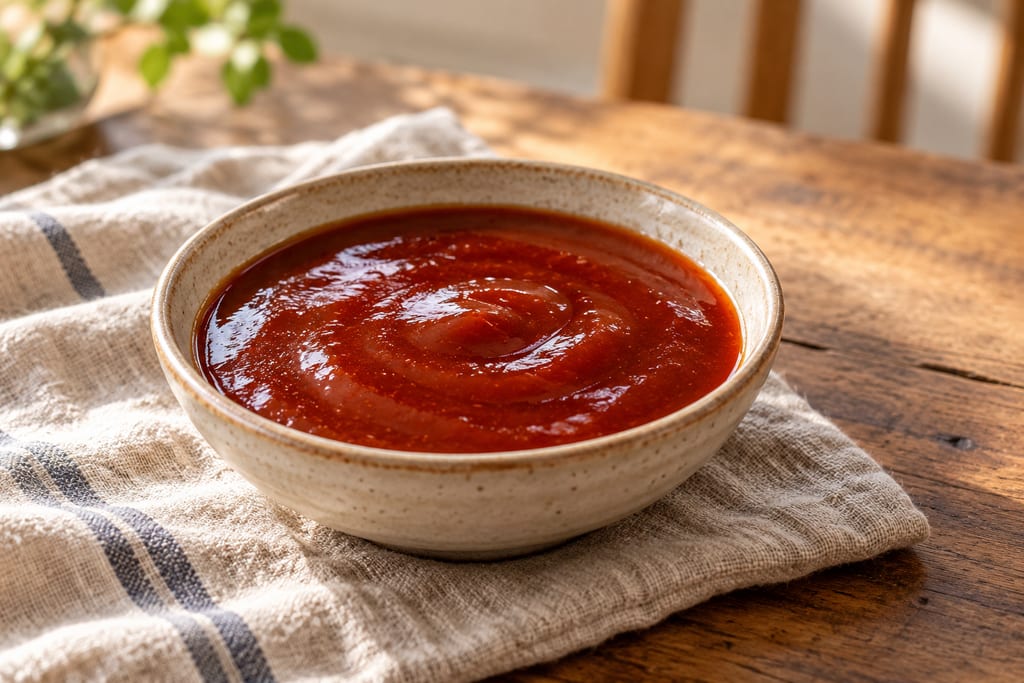
A smooth, tomato-based sweet-and-sour sauce of sugar, vinegar, tomato paste and soy sauce, thickened with starch for dipping or coating; it is not the sauce on Hangzhou's sweet-and-sour ribs.
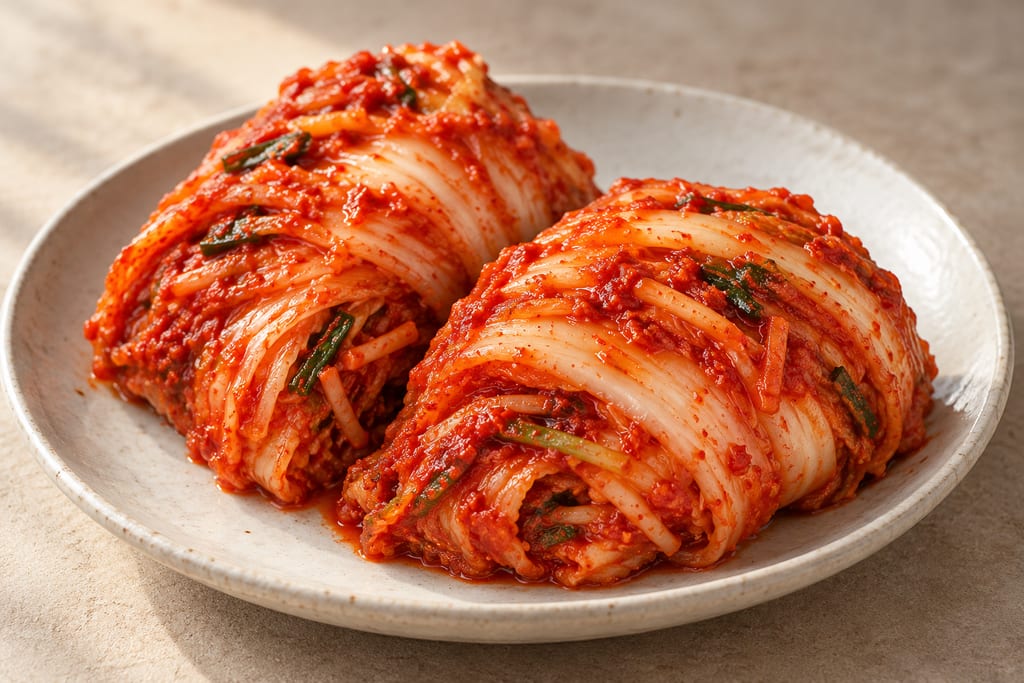
Napa cabbage salted, seasoned with a paste of gochugaru, garlic, ginger and salted seafood, and left to sour through lactic fermentation; Korea's everyday winter preserve.
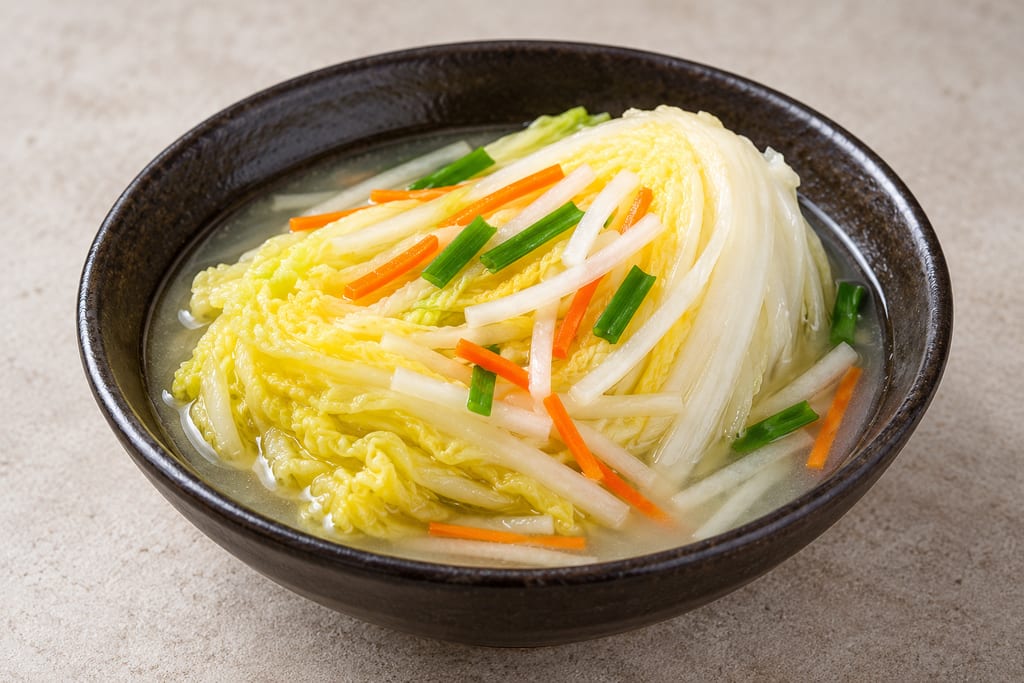
Napa cabbage is brined and filled with pear, radish, alliums, chives and fruit; this Korean kimchi omits red pepper flakes.
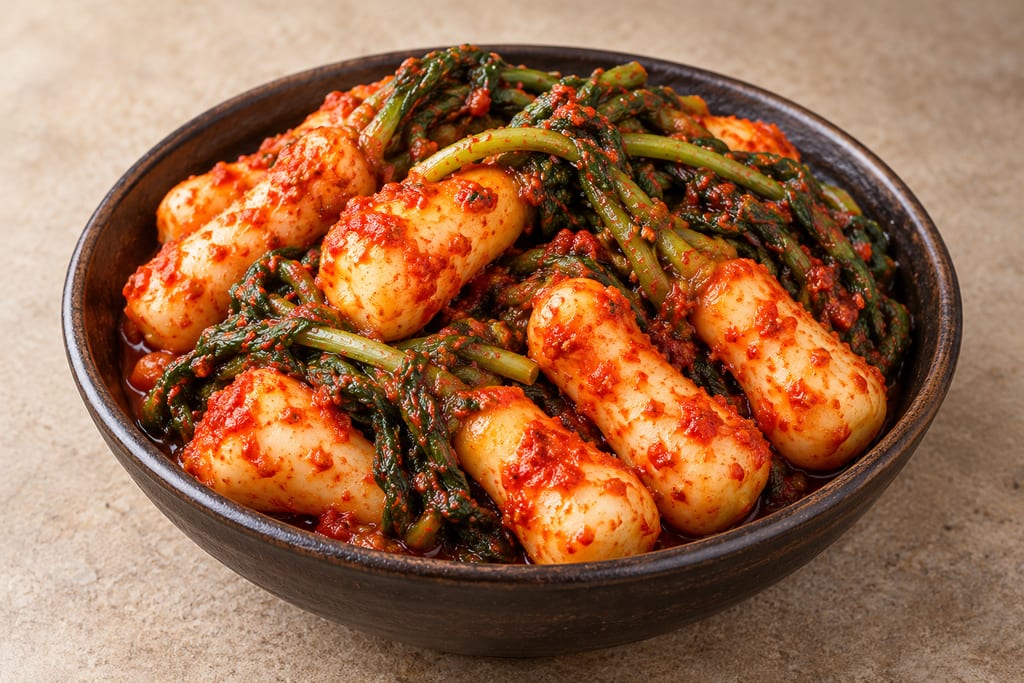
Small ponytail radishes keep their greens attached and ferment in a flour-and-chile seasoning paste.
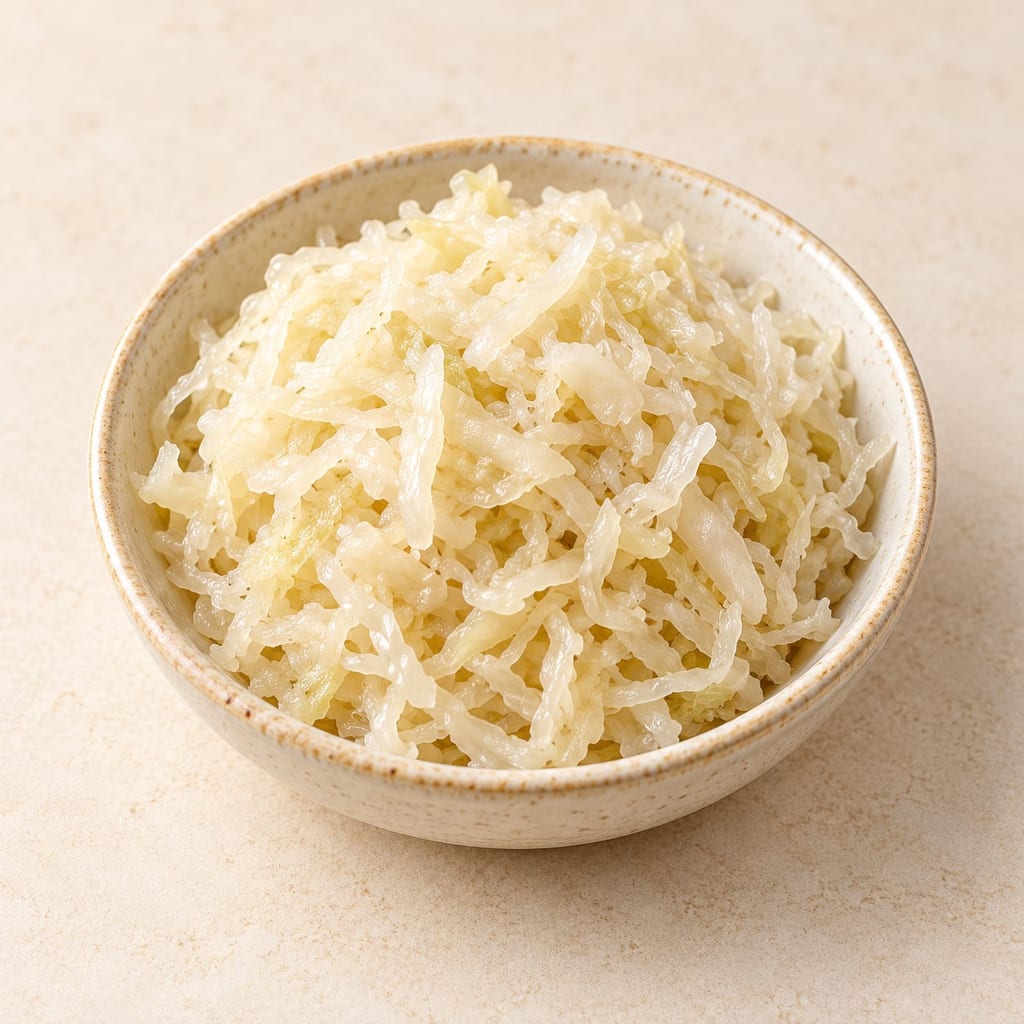
Finely cut cabbage fermented with salt in vats by natural lactic fermentation, a protected Alsatian product sold raw or cooked after fermentation.
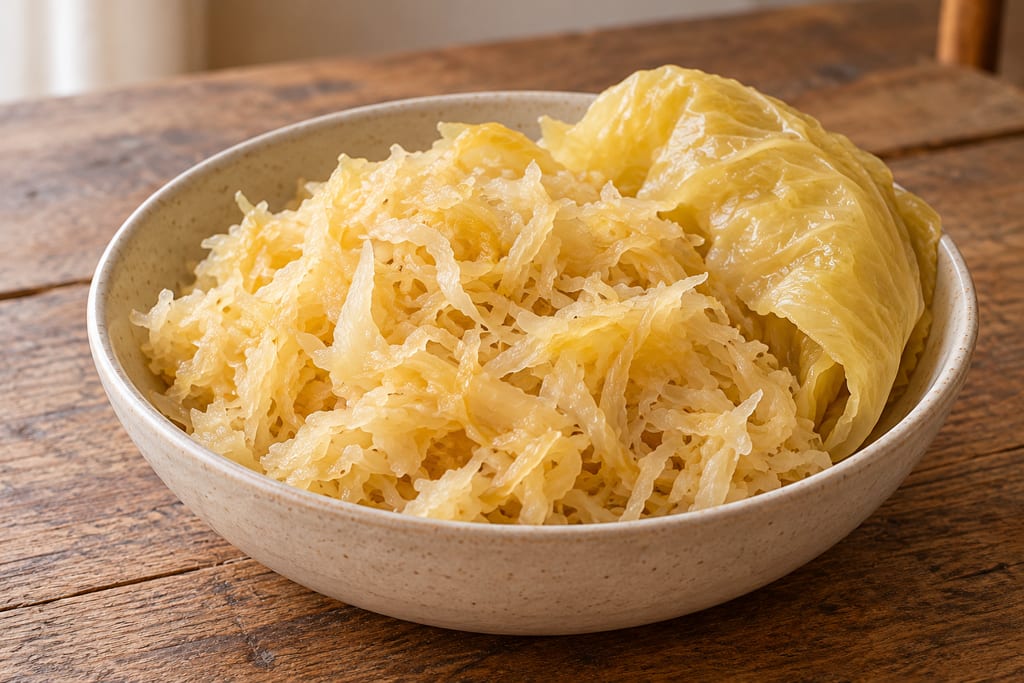
Serbian sour cabbage from the Futog area, made from the autochthonous Futoški cabbage population and registered as a protected product in 2008. It is a subset of general Serbian kiseli kupus.
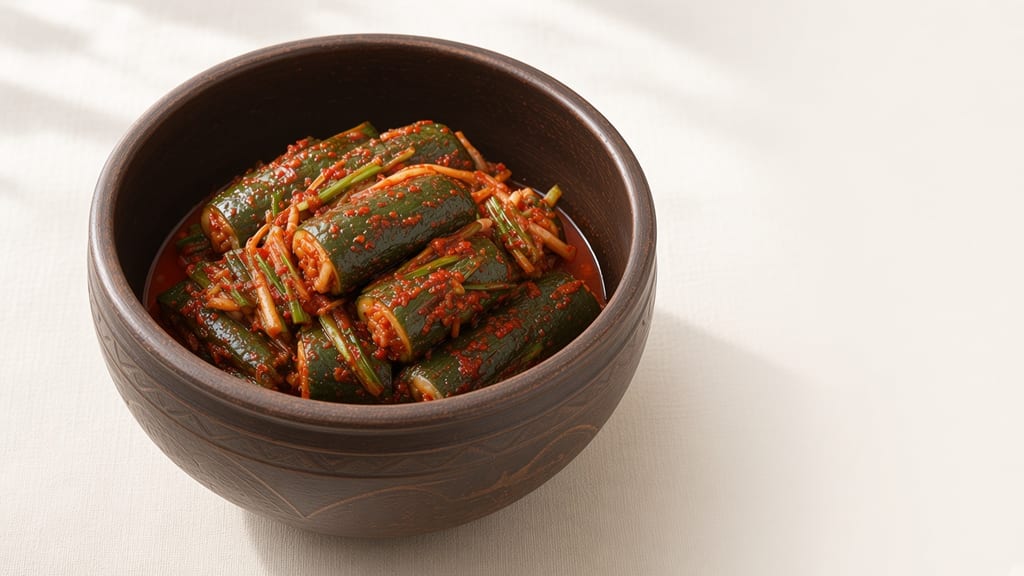
Hwanggwa damjeo is a cucumber kimchi from Yu Jung-rim's Jeungbo sallim gyeongje of 1766. Slit cucumbers are packed with chilli powder and garlic, scalded with hot salted water and sealed overnight.
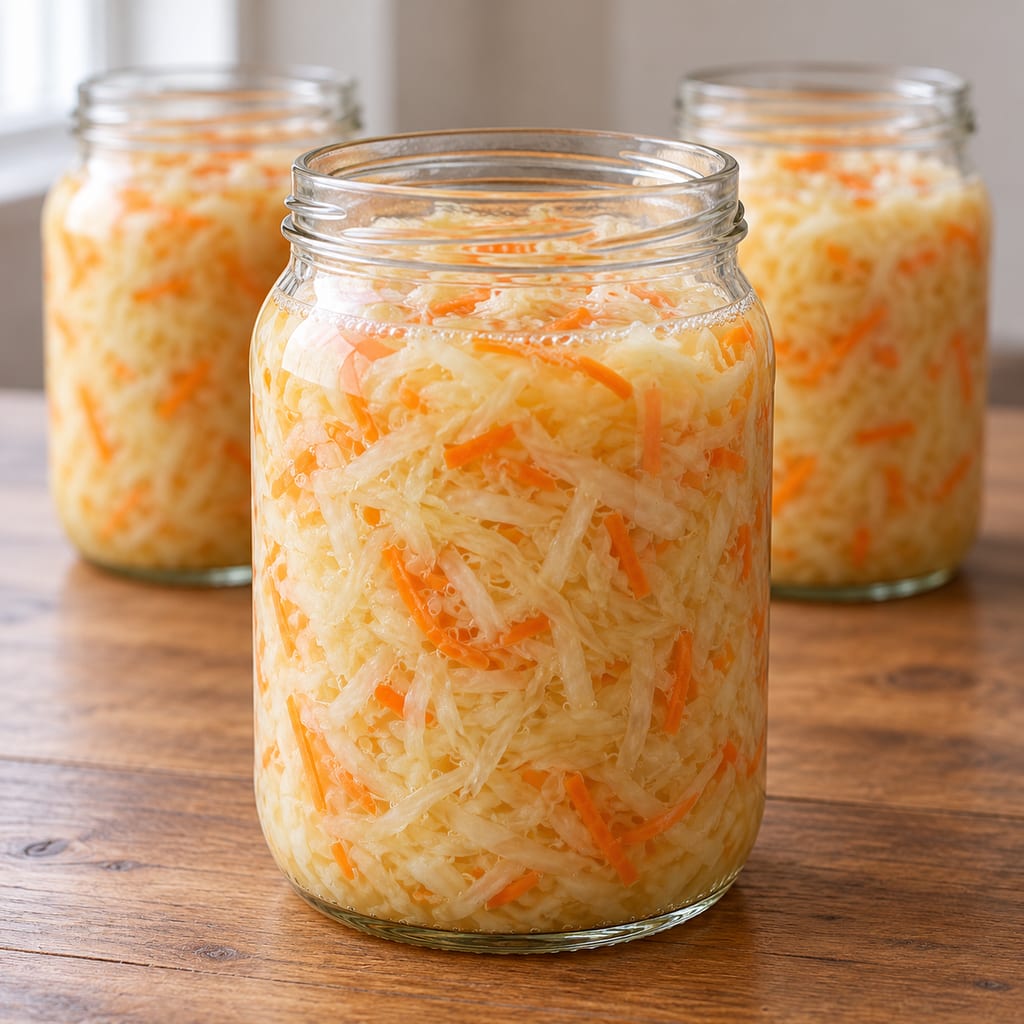
Shredded cabbage and grated carrot are salted to 20 g/kg, rested, packed into three jars and monitored during a creator-reported eight-day fermentation; measured temperature is not given.
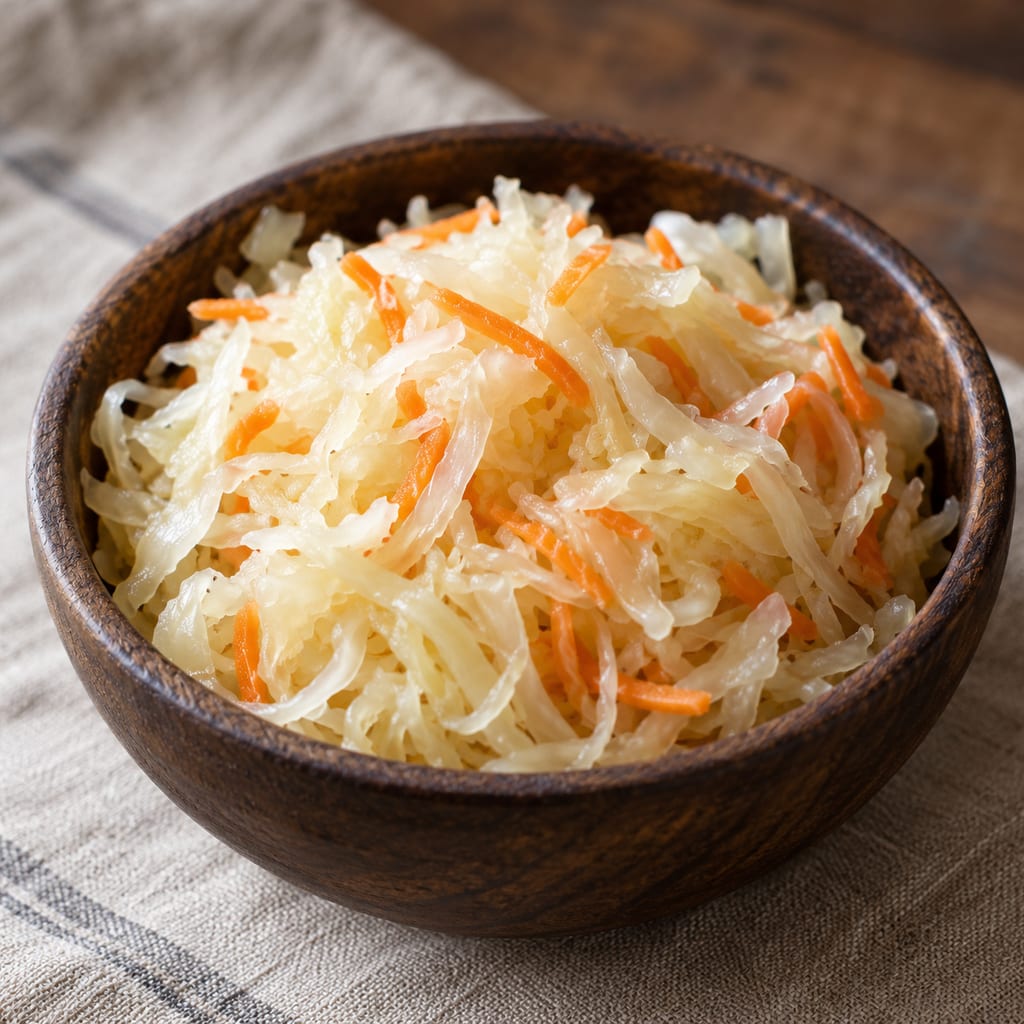
Kapusta kiszona z beczki is barrel-fermented cabbage from the Kołobrzeg area, entered on Poland’s List of Traditional Products in 2008. It is salted and fermented, with raw grated carrot added after souring.
No community contributions have been published for this entry yet.
Sign in to contribute. Published comments and photos are free to read.
ReviewInspiration
Fermented Fruits and Vegetables of Asia: A Potential Source of Probioticsfood names, regions and substrates
University of Minnesota ExtensionSafety
Preserving food at home: FermentationProduce fermentation equipment, acidity monitoring and submersion controls.
Cited in: Quality and problems; Safety and storage
Method · Process science
Dominant Microorganisms During Spontaneous Suan Cai Fermentation, 2014Supports this record's account of: What is suan cai?; Northeastern China's sour cabbage; Ingredients — northeastern research method; Preparation stages; The microbiology of suan cai; The chemistry of sourness and texture.
In the three 750 L study jars, nitrite reached 54.6 mg/kg fresh matter on day 6 and declined to 4.2 mg/kg by day 30; the study does not establish a household control limit.
Cited in: What is suan cai?; Northeastern China's sour cabbage; Ingredients — northeastern research method; Preparation stages; The microbiology of suan cai; The chemistry of sourness and texture
Method · Process science · Safety
Dynamic Changes in Bacterial Communities and Nitrite During Northeastern Chinese Sauerkraut FermentationSupports this record's account of: Northeastern China's sour cabbage; Ingredients — northeastern research method; The microbiology of suan cai; Nitrite and the importance of fermentation progress; Safety and storage.
Cited in: Northeastern China's sour cabbage; Ingredients — northeastern research method; The microbiology of suan cai; Nitrite and the importance of fermentation progress; Safety and storage
Process science
The Microbial Communities and Flavour Compounds of Jiangxi Yancai, Sichuan Paocai and Dongbei SuancaiSupports this record's account of: The southern mustard-green tradition; The microbiology of suan cai; The chemistry of sourness and texture; Comparison with paocai and other Chinese pickles.
Cited in: The southern mustard-green tradition; The microbiology of suan cai; The chemistry of sourness and texture; Comparison with paocai and other Chinese pickles
The Woks of LifeUse
Chinese Preserved IngredientsSupports this record's account of: What is suan cai?; How northeastern suan cai is eaten; How southern suan cai is eaten.
Cited in: What is suan cai?; How northeastern suan cai is eaten; How southern suan cai is eaten
Use
Recent Advances in Fermented Mustard Plants, 2026Supports this record's account of: The southern mustard-green tradition; How southern suan cai is eaten; Comparison with paocai and other Chinese pickles.
Cited in: The southern mustard-green tradition; How southern suan cai is eaten; Comparison with paocai and other Chinese pickles