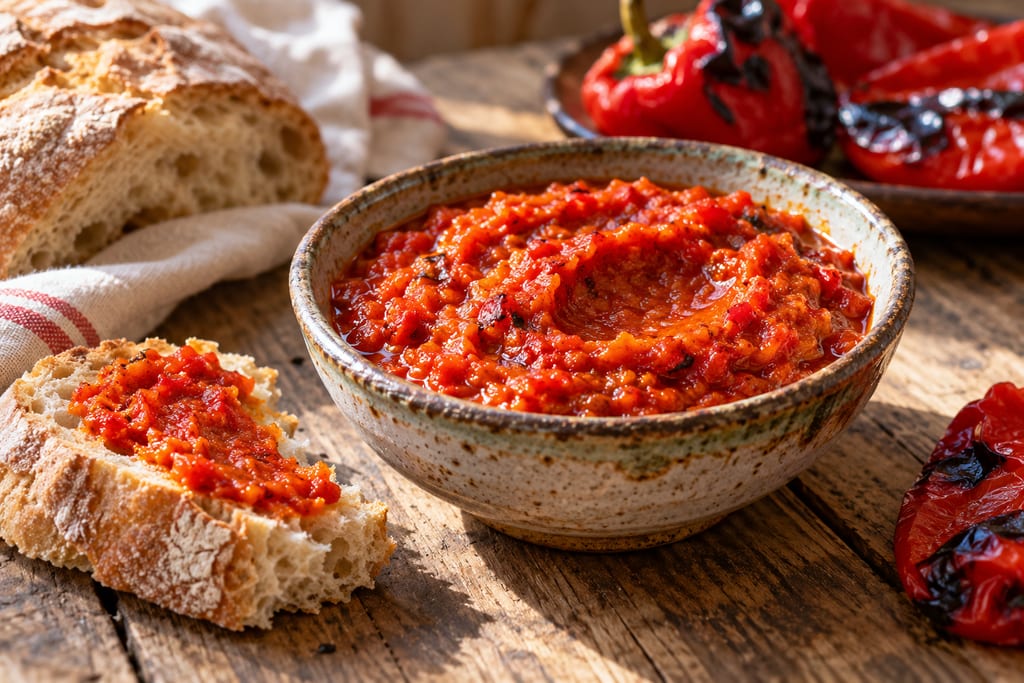
Ajvar
Ajvar is a cooked Balkan pepper preserve built around roasted red peppers, peeled, drained, ground and slowly fried with oil and seasoning. Leskovac’s protected version is a pepper specialty; regional versions vary.
 FermenteaWhere food goes to change
Futoški kupus · Futoški sveži i kiseli kupus · Futoški kiseli kupus · Futog cabbage · kiseli kupus
Serbian sour cabbage from the Futog area, made from the autochthonous Futoški cabbage population and registered as a protected product in 2008. It is a subset of general Serbian kiseli kupus.
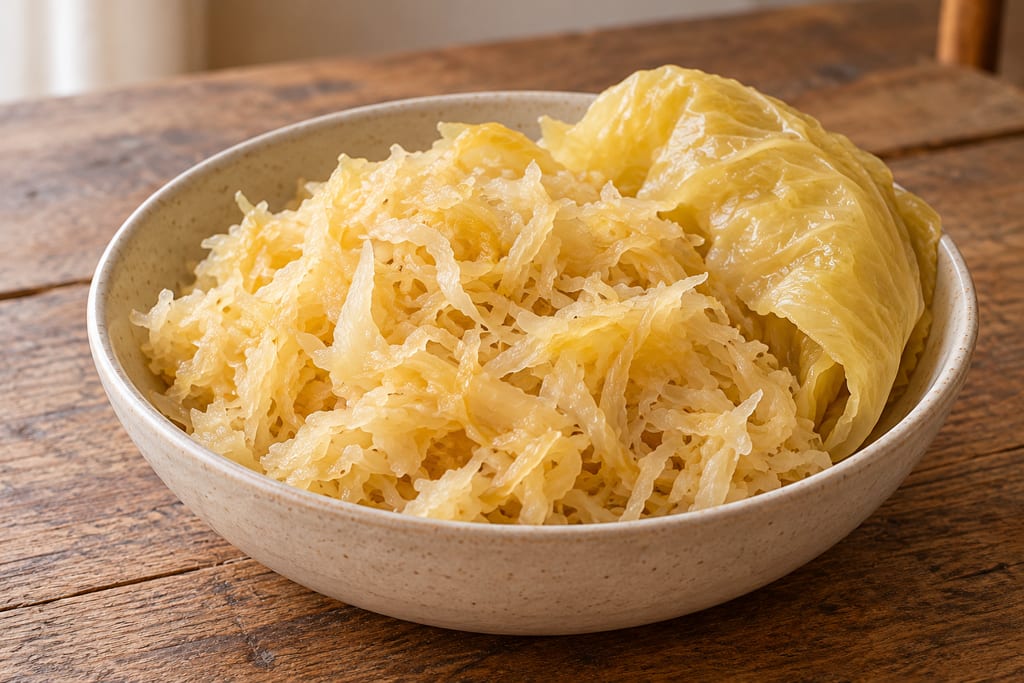
Futoški kupus is a sour cabbage from Futog, a settlement in Vojvodina, Serbia. It is made from the autochthonous Futoški cabbage population, sold fresh, as whole sour heads, or as shredded sour cabbage.
The name is a protected subset. It does not make Futoški a synonym for Serbian kiseli kupus, which is a broad term for sour cabbage of many kinds.
The Serbian Intellectual Property Office registered the appellation of origin for Futoški fresh and sour cabbage on 12 May 2008. The registered production area is the cadastral municipality of Futog. The registration is a legal milestone, and the registration dossier does not establish an origin date.
The producer's assortment uses sour leaves for sarma, the stuffed-cabbage dish that is served at holidays and family celebrations. Shredded sour cabbage is used for salads and cooking. These are the producer's descriptions of its products.
The commercial product is made by natural biological fermentation, according to the producer. A 2014 laboratory study used a barrel with a plastic-film cover and measured brine pH. Its figures are research data, not a household process.
Online accounts from home cooks describe fermenting cabbage in barrels of 80 litres, using a salt cavity in each head. These are pseudonymous accounts with no verified cultivar and no tested endpoint, and they should not be read as a recipe.
No validated household quantities, endpoint, storage limit or after-opening rule is established. The current list of authorised producers was not verified. Anyone making this at home needs a tested method and a spoilage check before relying on it.
The Serbian Intellectual Property Office registered the appellation of origin for Futoški fresh and sour cabbage by decision of 12 May 2008. The producer's own account says Futog residents have grown and processed the cabbage for generations, but no independent historical record was inspected. A Futog family farm says it has made sauerkraut since 1979 and produces about 1,000 tonnes a year.
Scaling: source batch only
The commercial and study descriptions are not validated household methods and give no household safety limit.
Hazard sourceKeep the cabbage under brine or its own juice with a weight during fermentation.
Control sourceProtected-product rules and producer claims do not give household safety limits.
Smell, taste or appearance do not establish safety.
The registered production area is the cadastral municipality of Futog, as the registration dossier defines it.
Serbian kiseli kupus is a broad name that covers many forms of sour cabbage.
Ajvar is a cooked Balkan pepper preserve built around roasted red peppers, peeled, drained, ground and slowly fried with oil and seasoning. Leskovac’s protected version is a pepper specialty; regional versions vary.
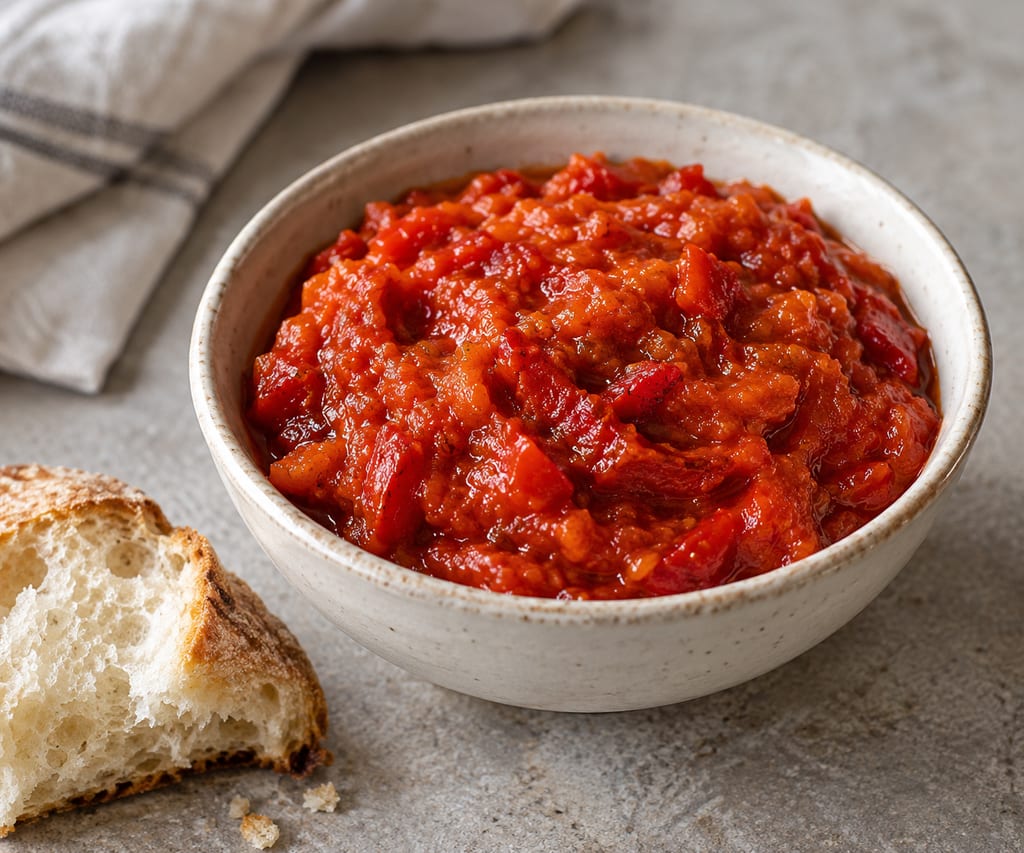
A Balkan relish of cooked peppers, tomatoes, aubergine and garlic in oil, sometimes made hot, served cold and named for its spiciness.
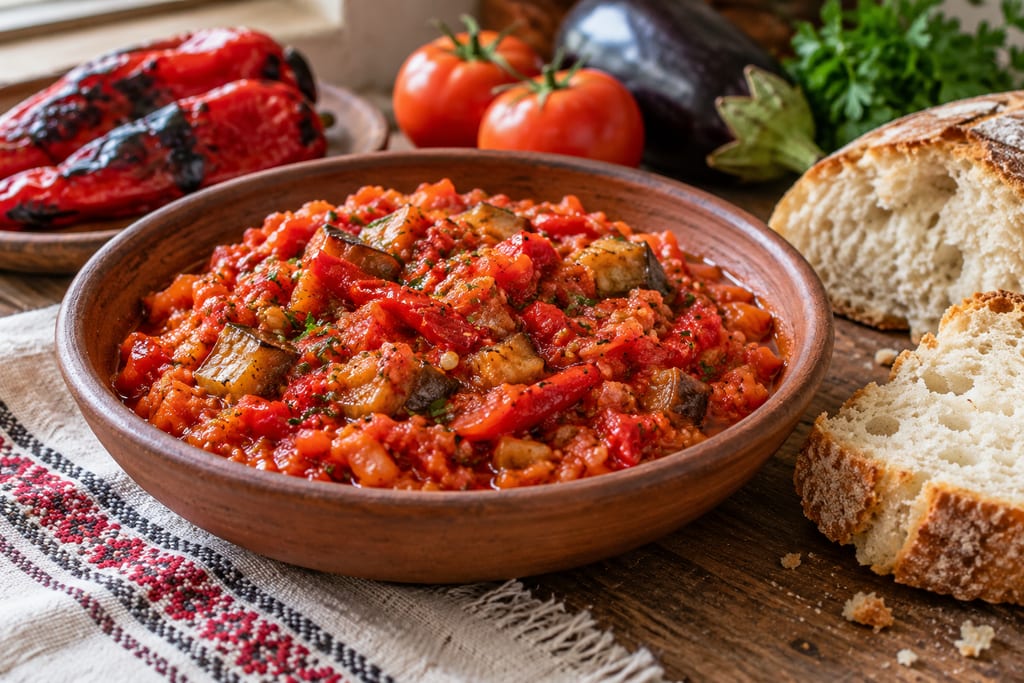
A Balkan relish of roasted red peppers and tomatoes, often with aubergine and garlic, cooked down into a spread for the winter store.
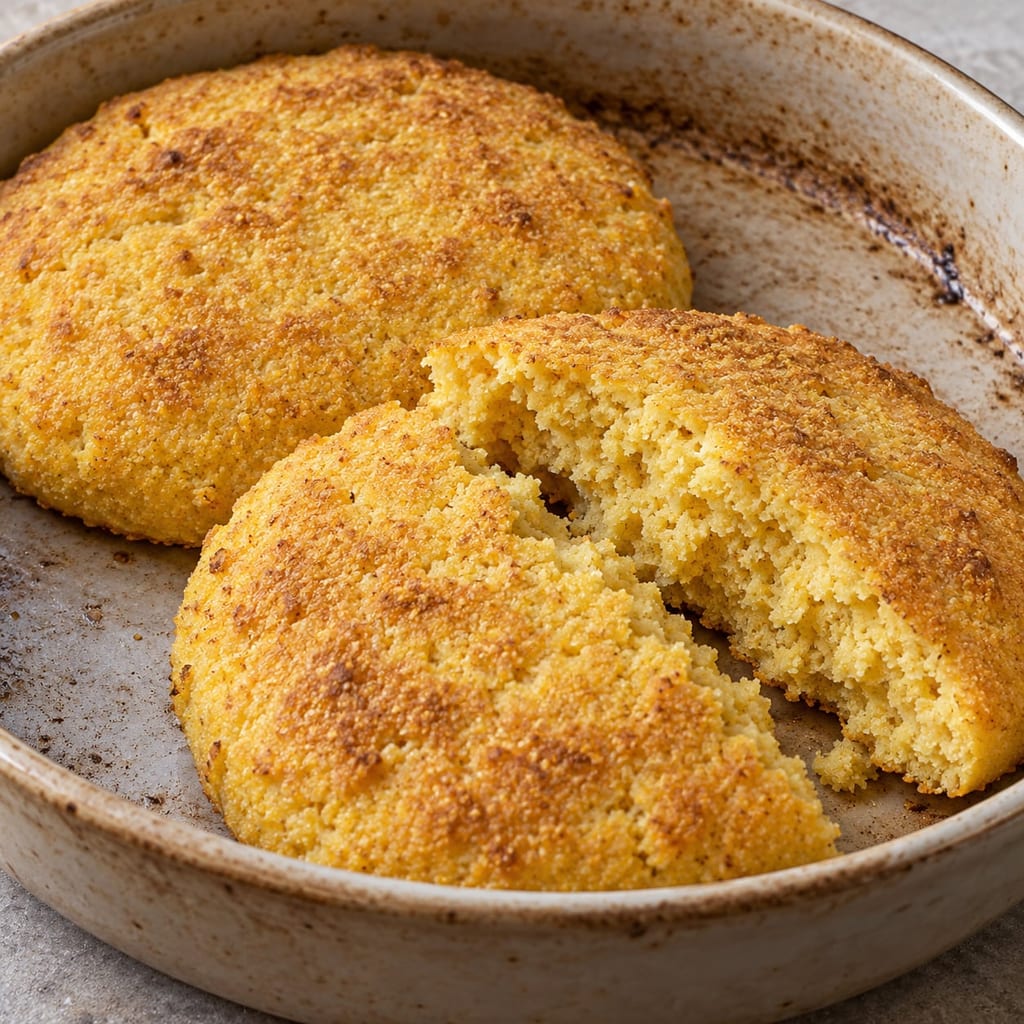
A plain Serbian cornmeal bread made with heated water and salt, shaped into low rounds and baked in a preheated shallow dish. This home method keeps the simple cornmeal form separate from richer dairy-filled projara.
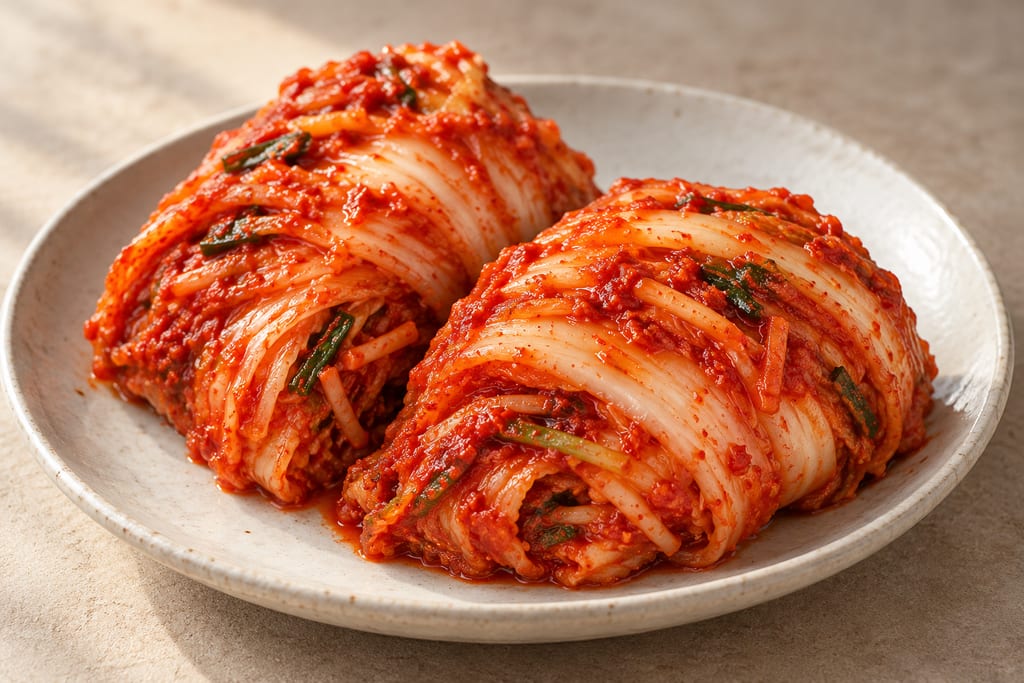
Napa cabbage salted, seasoned with a paste of gochugaru, garlic, ginger and salted seafood, and left to sour through lactic fermentation; Korea's everyday winter preserve.
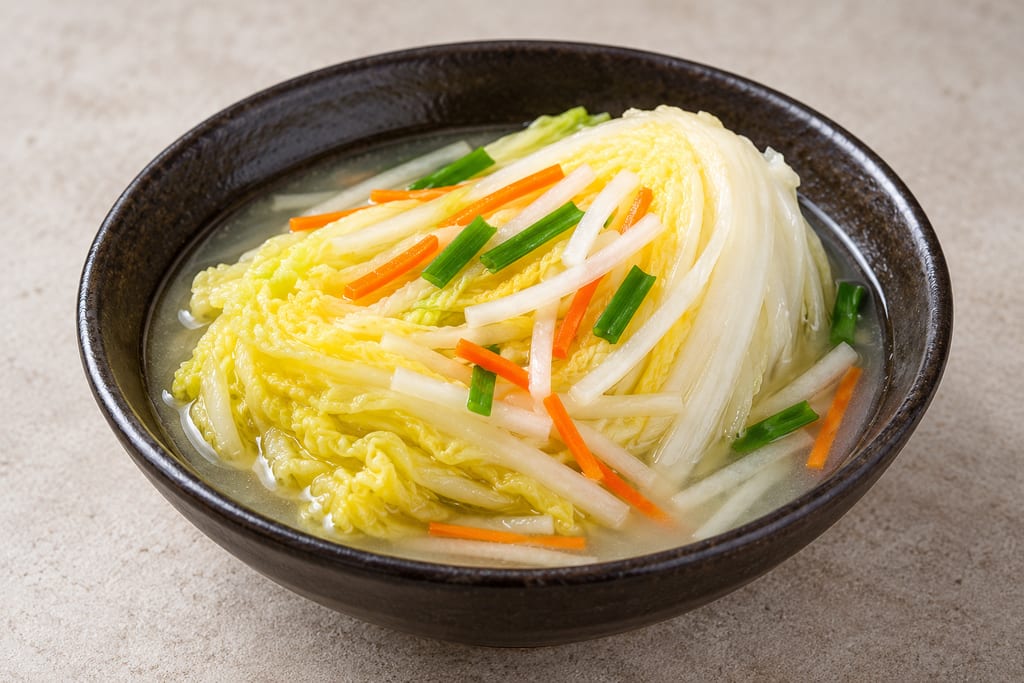
Napa cabbage is brined and filled with pear, radish, alliums, chives and fruit; this Korean kimchi omits red pepper flakes.
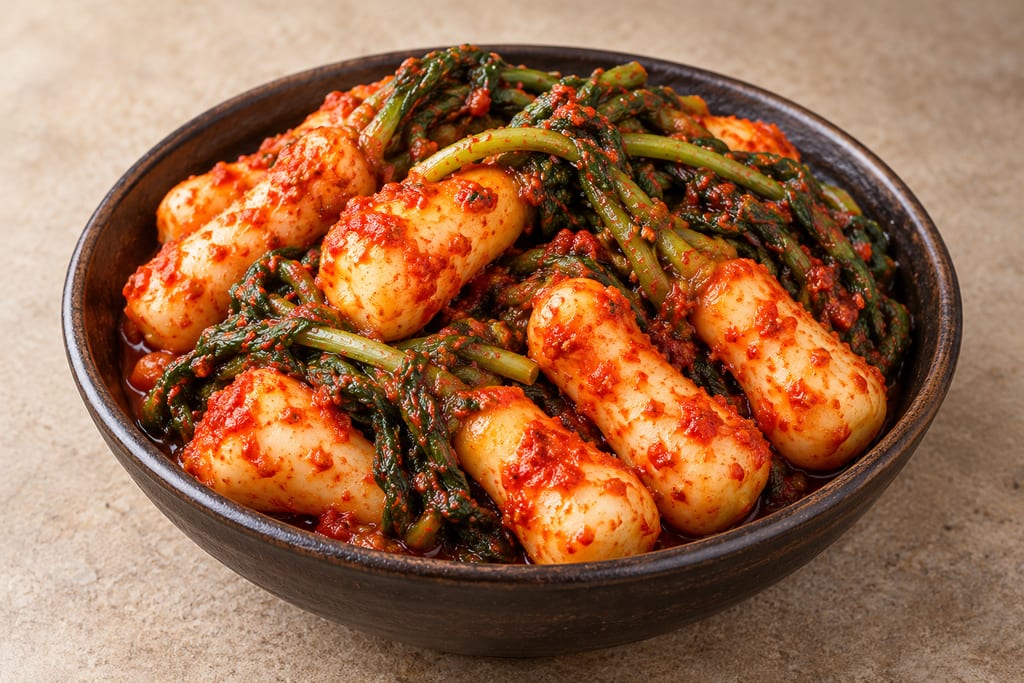
Small ponytail radishes keep their greens attached and ferment in a flour-and-chile seasoning paste.
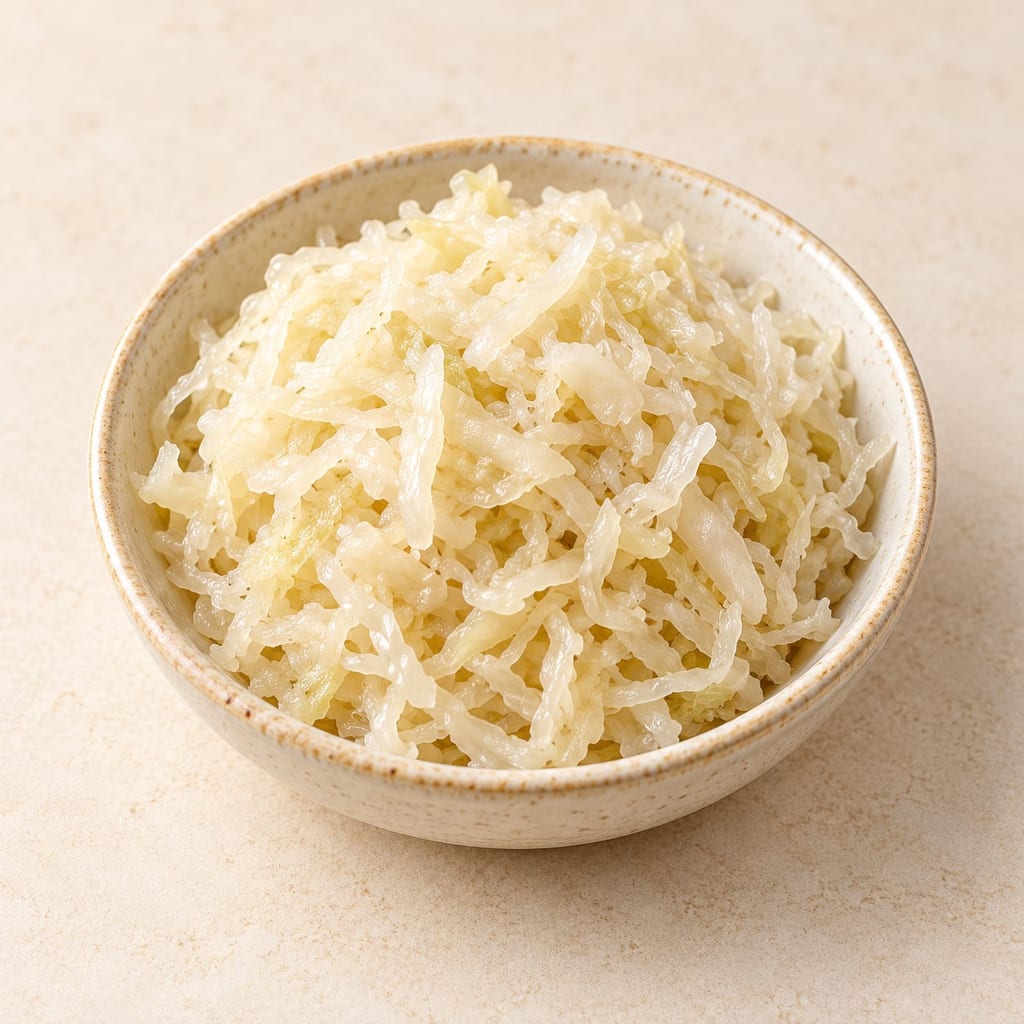
Finely cut cabbage fermented with salt in vats by natural lactic fermentation, a protected Alsatian product sold raw or cooked after fermentation.
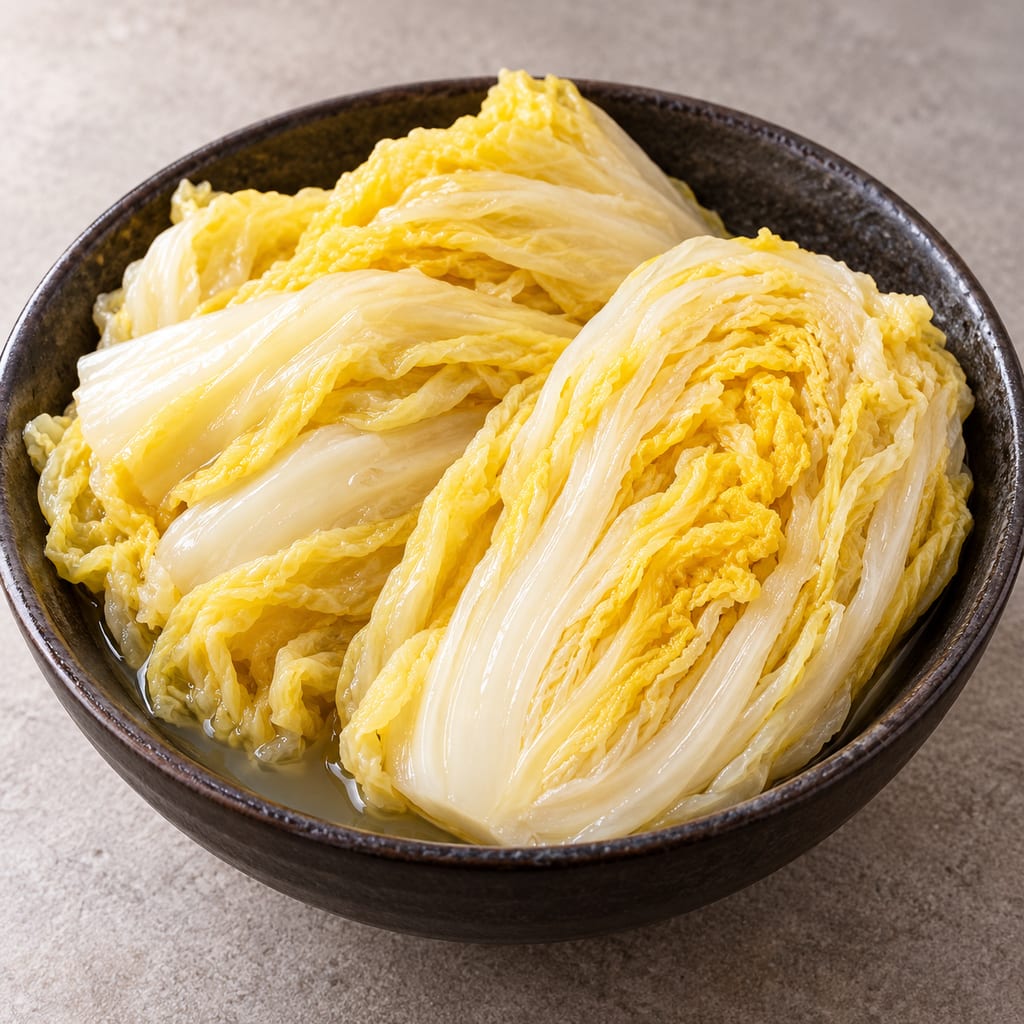
Napa cabbage fermented in a salt brine in Northeast China, traditionally in large ceramic or glass jars, until it turns sour.
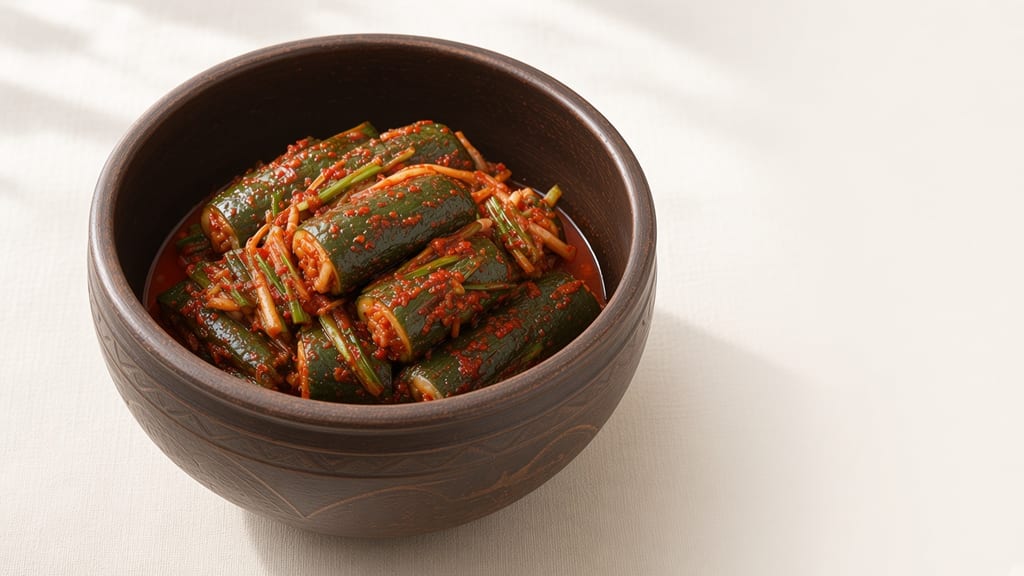
Hwanggwa damjeo is a cucumber kimchi from Yu Jung-rim's Jeungbo sallim gyeongje of 1766. Slit cucumbers are packed with chilli powder and garlic, scalded with hot salted water and sealed overnight.
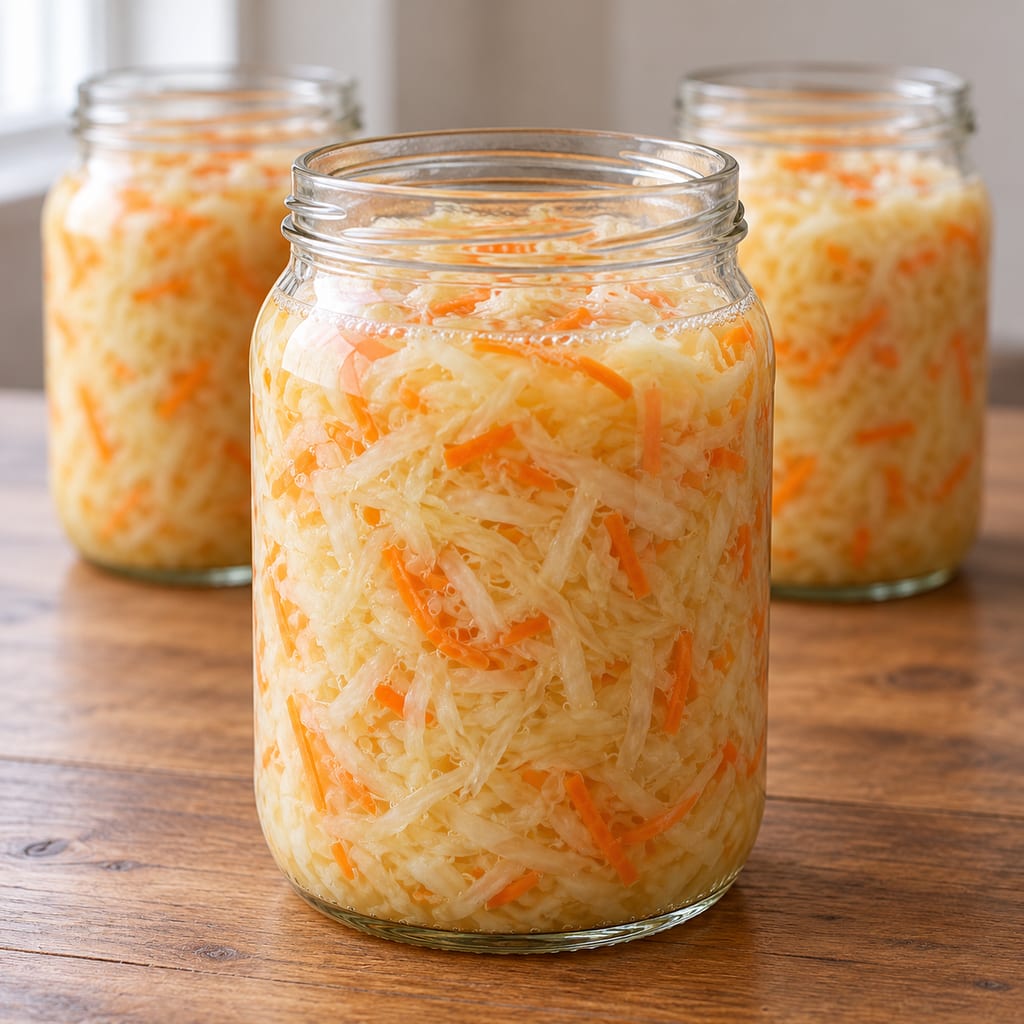
Shredded cabbage and grated carrot are salted to 20 g/kg, rested, packed into three jars and monitored during a creator-reported eight-day fermentation; measured temperature is not given.
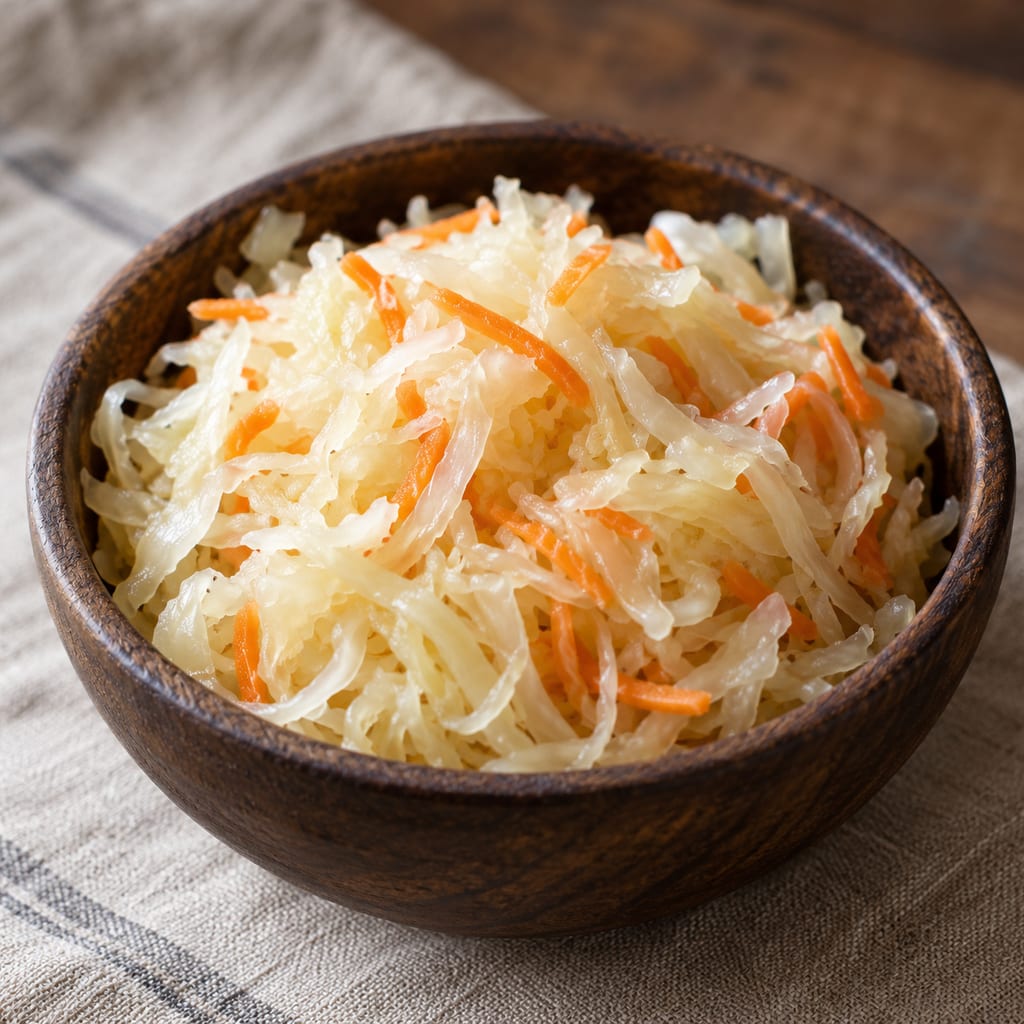
Kapusta kiszona z beczki is barrel-fermented cabbage from the Kołobrzeg area, entered on Poland’s List of Traditional Products in 2008. It is salted and fermented, with raw grated carrot added after souring.
No community contributions have been published for this entry yet.
Sign in to contribute. Published comments and photos are free to read.
Futog cabbage producerIdentity · History
Geografsko poreklo (geographical origin), Futoški kupusRegistration decision of 12 May 2008 and the production area of Futog.
Futog cabbage producerUses
Assortment, Futoški kupusSour leaves for sarma, and shredded product for salads and cooking.
Futog sour cabbage producerHistory · Method
Proizvodnja (production)Production since 1979, about 1,000 tonnes a year, natural biological fermentation.
ScindeksMethod · Safety
Chemometric approach to optimization of white cabbage fermentationLaboratory study of Futoški and Bravo cabbage in a barrel with plastic-film cover; brine pH measured.