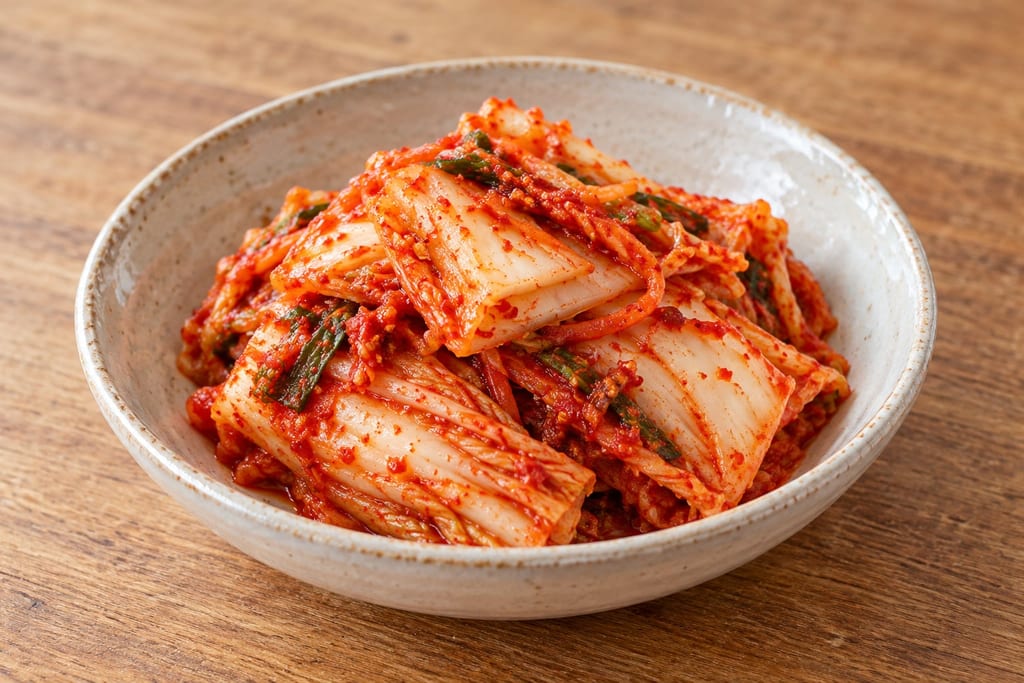
Kimchi
Kimchi is a Korean preserved vegetable food, most often cabbage, salted and seasoned, then fermented by the lactic acid bacteria that arrive with the vegetables. Some studies test added starter cultures, but a home jar is usually spontaneous.
 FermenteaWhere food goes to change
Historical attestation
황과담저법 (黃瓜淡菹法) · Hwanggwa damjeo · Hwanggwadamjeobeop
Hwanggwa damjeo is a cucumber kimchi from Yu Jung-rim's Jeungbo sallim gyeongje of 1766. Slit cucumbers are packed with chilli powder and garlic, scalded with hot salted water and sealed overnight.
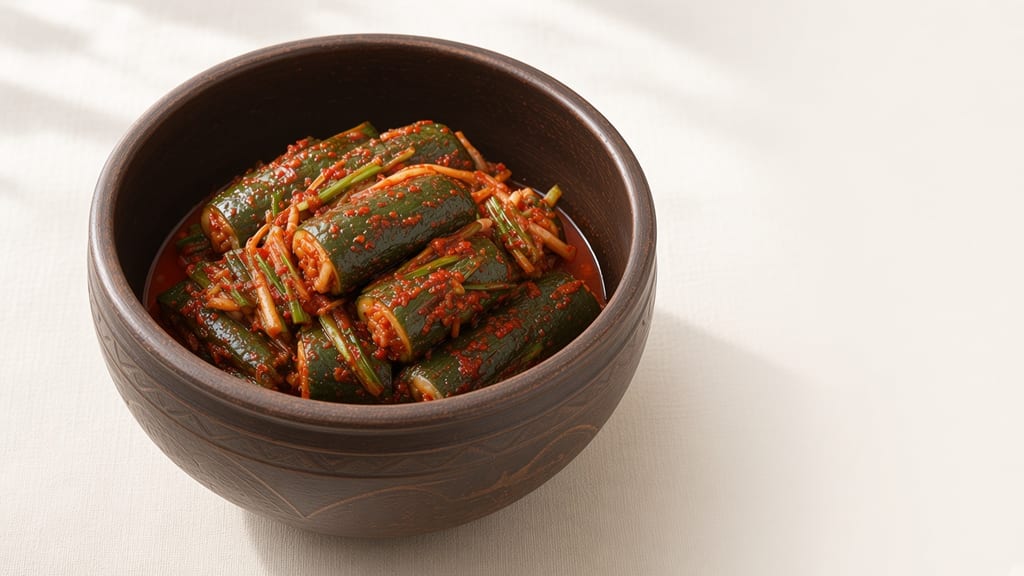
Hwanggwa damjeo is a cucumber kimchi recorded in Jeungbo sallim gyeongje, a household manual expanded by Yu Jung-rim in 1766. Hwanggwa is the cucumber, and damjeo means a lightly salted pickle.
Small cucumbers are cut three times along their length, filled with a little chilli powder and sliced garlic, and covered with boiling salted water. The jar is tied shut, and the text says the cucumbers are ready the next day.
The Encyclopedia of Korean Culture names it as the first recorded kimchi made with chilli powder. The same book also gives a radish kimchi with chilli, Sichuan pepper and mustard.
In the Korean translation, the cook takes young cucumbers, removes the stems and washes them. Each cucumber gets three slits, and a little chilli powder and four or five pieces of garlic go into them.
Salt goes into water that has boiled for a long time. The cook pours this water, very hot, over the cucumbers already packed in the jar, then ties the mouth of the jar tightly. The cucumbers can be eaten the following day.
The text gives no weights for the salt, the chilli or the water. The term it uses for the chilli powder is 蠻椒末, the southern barbarian pepper, a name that marks chilli as a foreign plant.
Read closely, the 1766 recipe puts chilli in a cucumber pickle. It does not describe red cabbage kimchi of the modern kind.
Standard Korean reference works say yes. Encykorea finds no chilli in Sallim gyeongje of about 1715, in Eumsik dimibang of about 1670 or in the late seventeenth-century Yorok. Earlier kimchi spices were Sichuan pepper and fennel.
The National Institute of Korean History says chilli reached Korea from Japan around the Imjin War of 1592 to 1598. Yi Su-gwang's Jibong yuseol of 1614 warned that the plant was poisonous.
Some researchers dispute this account. A 2015 paper in the Journal of Ethnic Foods by Kwon and colleagues argues that gochu grew in Korea before 1592. That remains a minority position, and the 1766 date in this recipe refers only to the first written chilli kimchi.
Hwanggwa damjeo is one of several kimchi in Jeungbo sallim gyeongje. The book also has dongchimi, a clear radish water kimchi, and a cabbage kimchi, songchimjeo. It gives Yongin oiji, a cucumber pickle named after Yongin, a winter aubergine kimchi and kimchi made with abalone and with oysters.
Its second chilli recipe, chim nabok hamjeo, is a salted radish kimchi. Radish goes in with its leaves and stems, along with the green seaweed cheonggak, pumpkin and aubergine. The seasoning is chilli, Sichuan pepper and mustard with plenty of garlic juice. The Encyclopedia of Korean Culture compares it with modern chonggak kimchi.
Together the two recipes show chilli joining the older spices rather than pushing them out. The cucumber kimchi uses chilli alone, and the radish kimchi keeps Sichuan pepper beside it.
Hwanggwa damjeo is a quick summer pickle, ready the day after it is made. Winter kimchi was a different job. Joseon households made it in bulk in late autumn, a custom later called kimjang, and kept it in onggi jars through the cold months.
UNESCO inscribed kimjang on its intangible heritage list in 2013 and describes a year-long cycle behind it. Salted seafood is prepared in spring, salt is bought in summer and red chillies are dried and ground in late summer, before the cabbage and radish arrive in late autumn. The chilli powder in that cycle descends from the small pinch this cucumber recipe asks for.
Fermentea's oi-sobagi, the modern stuffed cucumber kimchi, follows the same idea of slitting and filling a cucumber, with a much fuller seasoning paste.
Small cucumbers, 6, about 100 g each, young and firm
Korean chilli powder, 1 tsp in total
Garlic, 6 cloves, thinly sliced
Non-iodised salt, 40 g
Water, 1 l
The 1766 text gives no amounts. These quantities are an editorial modern version. The 40 g of salt in 1 l of water makes a brine of about 4%, inside the 2–5% final salt range given by Colorado State University Extension for kimchi.
Wash the cucumbers and cut off the stem ends. Make three lengthwise slits in each, leaving both ends whole so the cucumber holds together.
Push a pinch of chilli powder and four or five slices of garlic into the slits of each cucumber. Stand them upright in a clean jar of about 1.5 l.
Dissolve the salt in the water, bring it to the boil and let it boil for several minutes. Pour it over the cucumbers at 100 °C until they are covered.
Close the jar tightly and leave it at room temperature overnight. Taste a cucumber the next day, then move the jar to the refrigerator.
Boiling brine softens the cucumber skin and lets the salt and garlic into the flesh within hours. That is why the 1766 text can promise a cucumber ready by the next morning.
Cheigh and Park's 1994 review describes kimchi fermentation as starting from the microbes on the raw materials, with lactic acid bacteria gradually taking over. Organic acids accumulate and the texture softens over time.
A scalded cucumber eaten the next day is barely fermented. Left longer, it sours and loses crispness.
Colorado State University Extension advises clean hands, equipment and surfaces throughout. Store finished kimchi tightly covered in the refrigerator, keep it pressed down under its liquid and discard it if surface mould appears.
University of Minnesota Extension advises food-grade containers and keeping produce under the brine.
The next-day timing in the 1766 text is a quality statement. It is not a safety limit, and this recipe has not had professional process validation.
Jeungbo sallim gyeongje (1766) gives hwanggwa damjeo with chilli powder and garlic; Encykorea calls it the first recorded kimchi made with chilli powder.
Yield 1 jar of about 1.5 l · Scaling: linear
Kimchi relies on lactic acid bacteria already on the vegetables; poor hygiene or air exposure allows spoilage and surface mould.
Hazard sourceUse clean equipment and hands, keep the cucumbers under the brine, store the finished kimchi tightly covered in the refrigerator and discard it if surface mould appears.
Control sourceUse clean food-grade containers and keep produce submerged during fermentation.
Control sourceThe 1766 method is reproduced for history. It is not a validated preservation process.
No pH, time or temperature limit has been validated for this recipe.
The 1766 text is a Joseon household manual; it names no single town.
Kimchi is a Korean preserved vegetable food, most often cabbage, salted and seasoned, then fermented by the lactic acid bacteria that arrive with the vegetables. Some studies test added starter cultures, but a home jar is usually spontaneous.
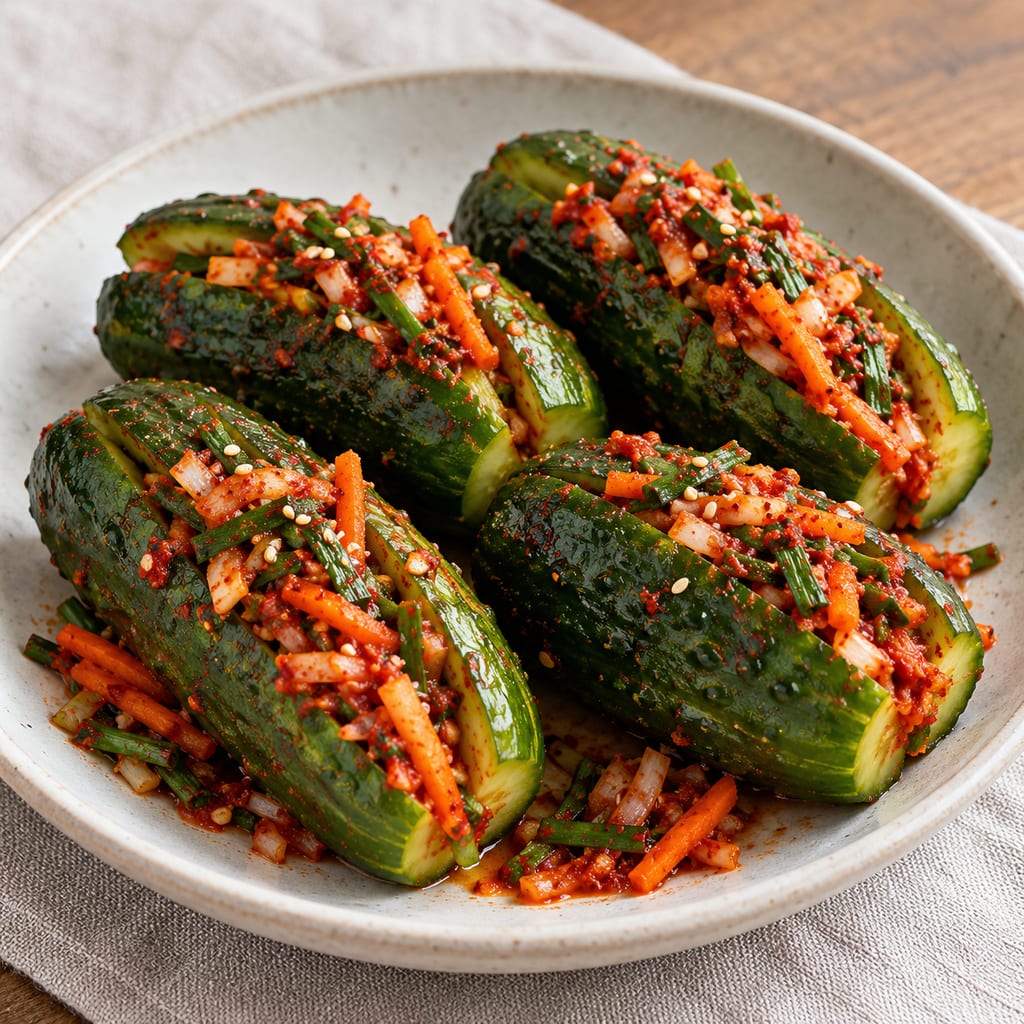
Oi-sobagi is a Korean stuffed cucumber kimchi: salted cucumbers slit and filled with a chive-and-chilli seasoning, eaten fresh or left to ferment.
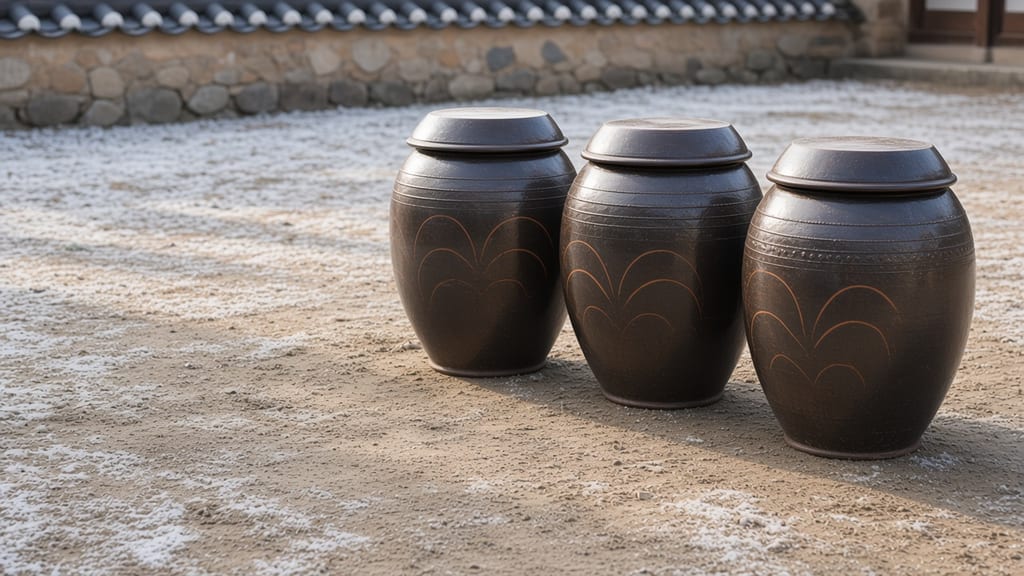
In 1766 chilli entered a Korean kimchi recipe for the first time. Joseon households made winter kimchi in late autumn and kept it in onggi jars buried in straw, at a few degrees above freezing until spring.
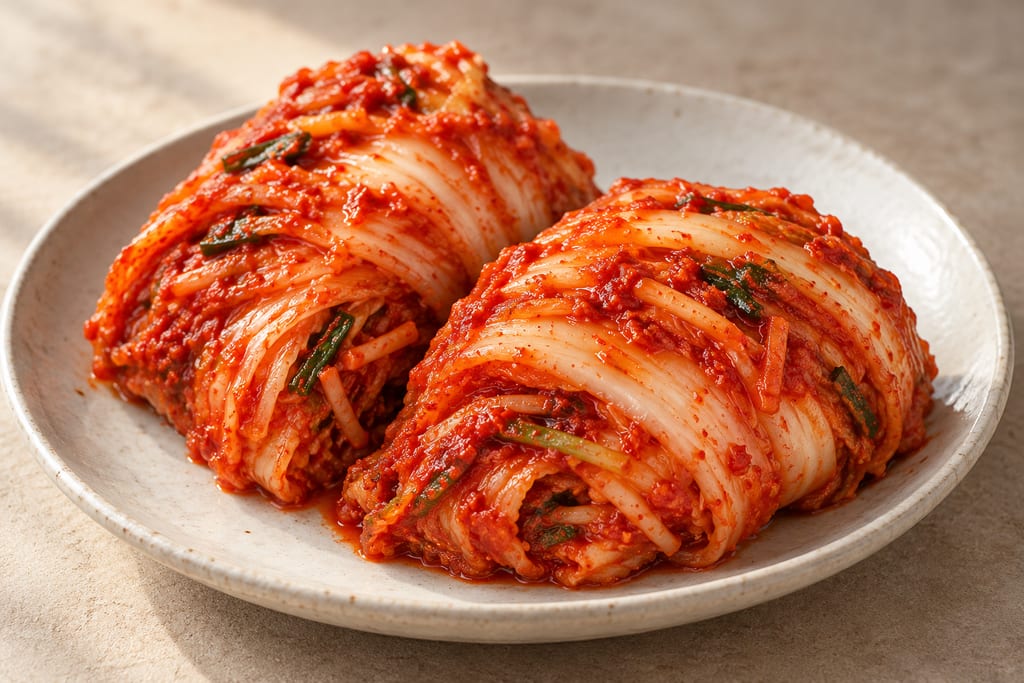
Napa cabbage salted, seasoned with a paste of gochugaru, garlic, ginger and salted seafood, and left to sour through lactic fermentation; Korea's everyday winter preserve.
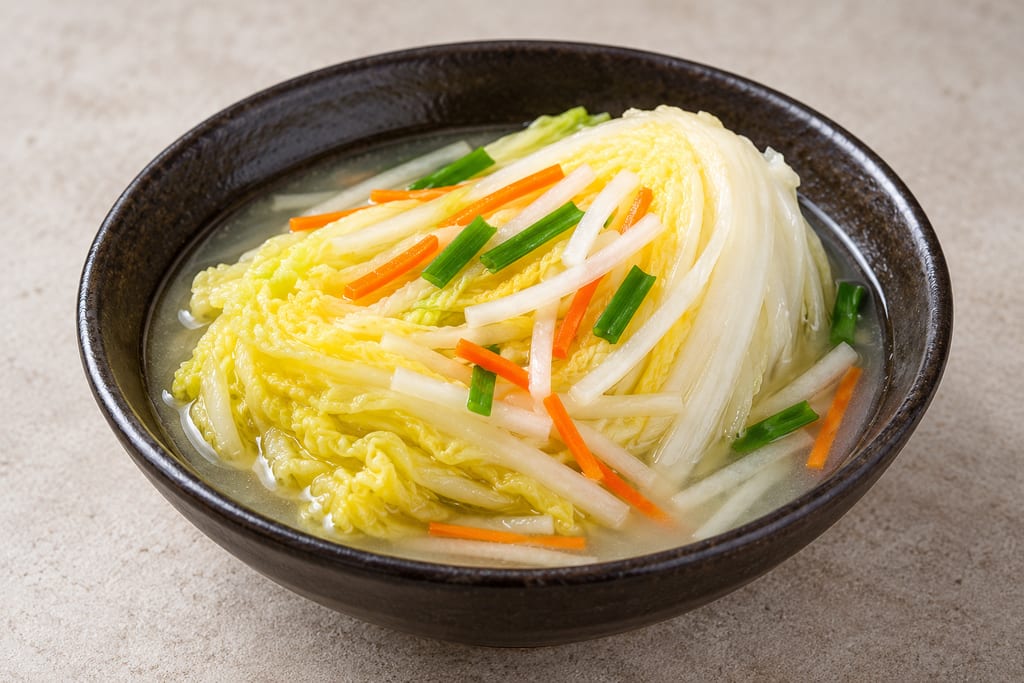
Napa cabbage is brined and filled with pear, radish, alliums, chives and fruit; this Korean kimchi omits red pepper flakes.
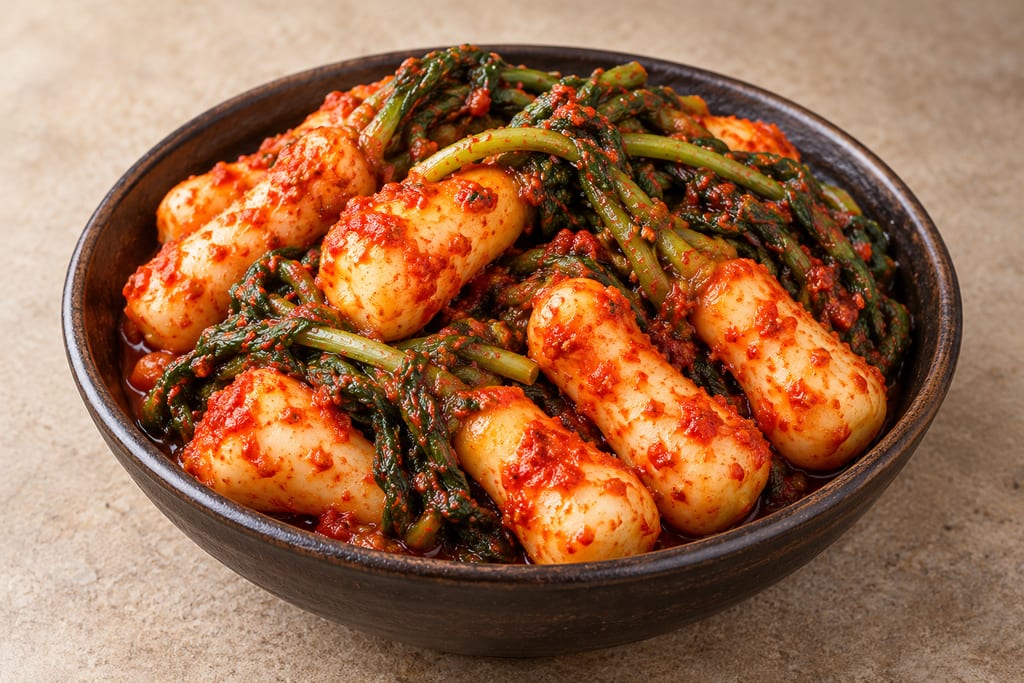
Small ponytail radishes keep their greens attached and ferment in a flour-and-chile seasoning paste.
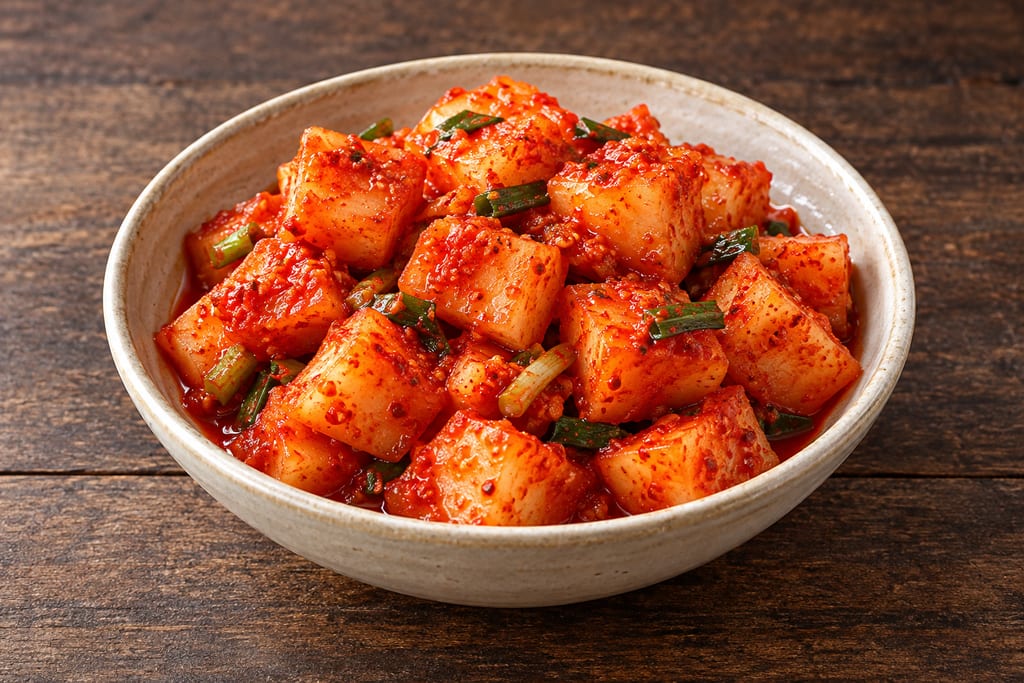
A radish kimchi cut into cubes and seasoned with gochugaru, fish sauce, garlic and ginger, eaten fresh or fermented a few days at room temperature.
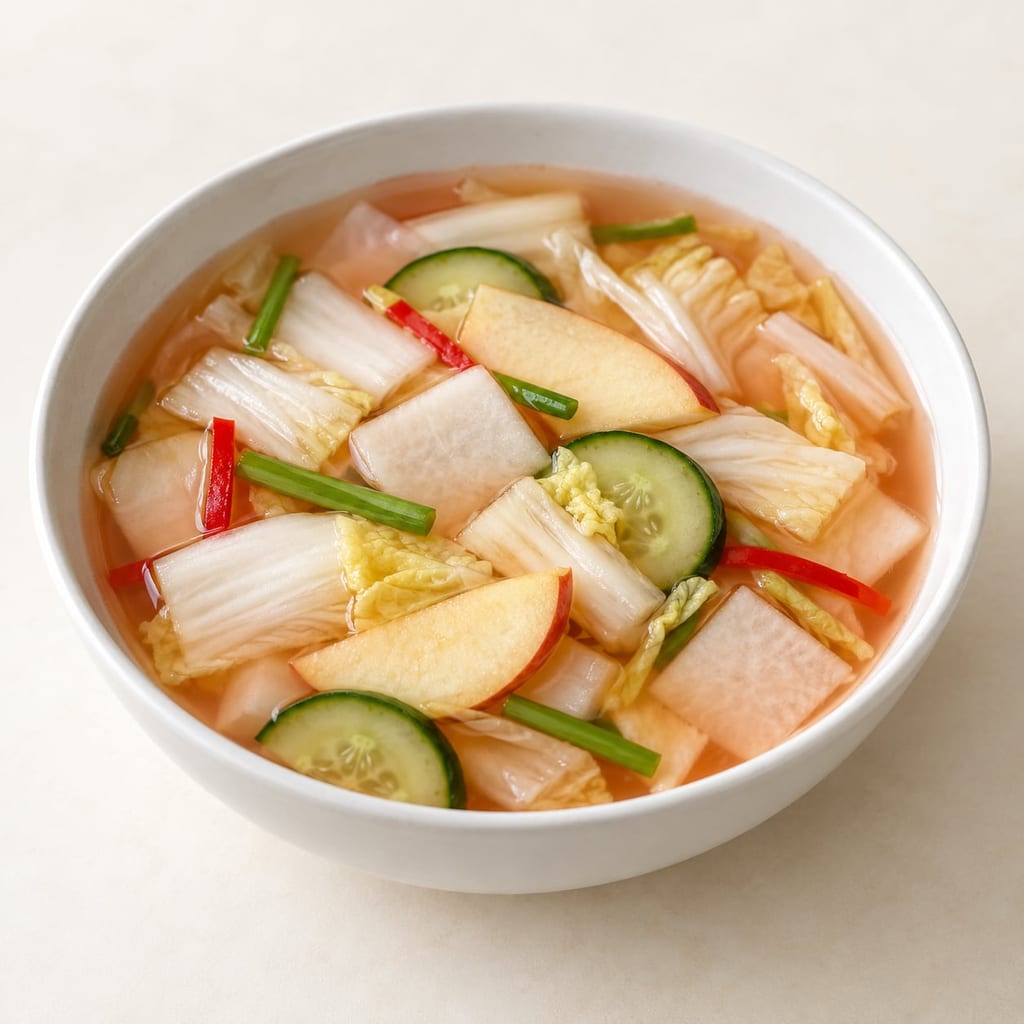
Napa cabbage and radish ferment in a rose-coloured broth with cucumber, apple, pear, alliums and chile.
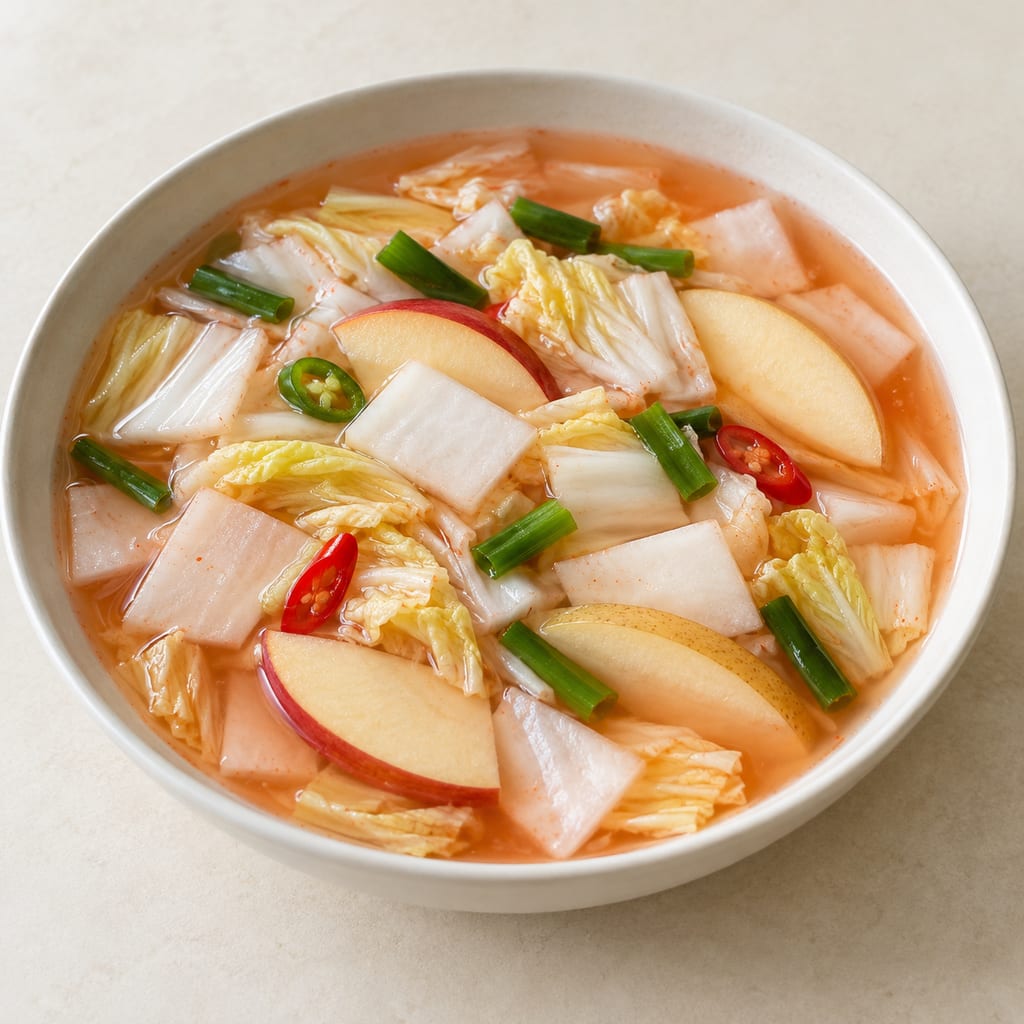
Cabbage-and-radish water kimchi with pear, apple and strained chili broth, following one Korean creator’s batch.
Kimchi of salted napa cabbage and daikon with garlic, green onion and red pepper, kept at room temperature one to four days, then refrigerated.
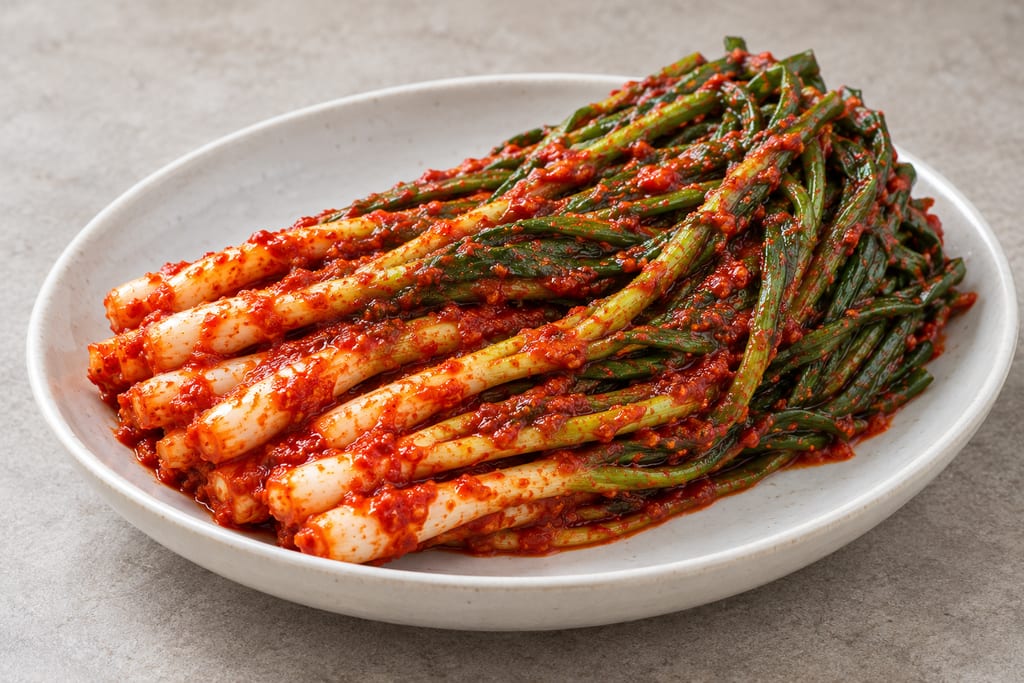
Pa-kimchi is a Korean kimchi of whole green onions salted, dressed with chilli and fish sauce, and fermented until pungent and sour.
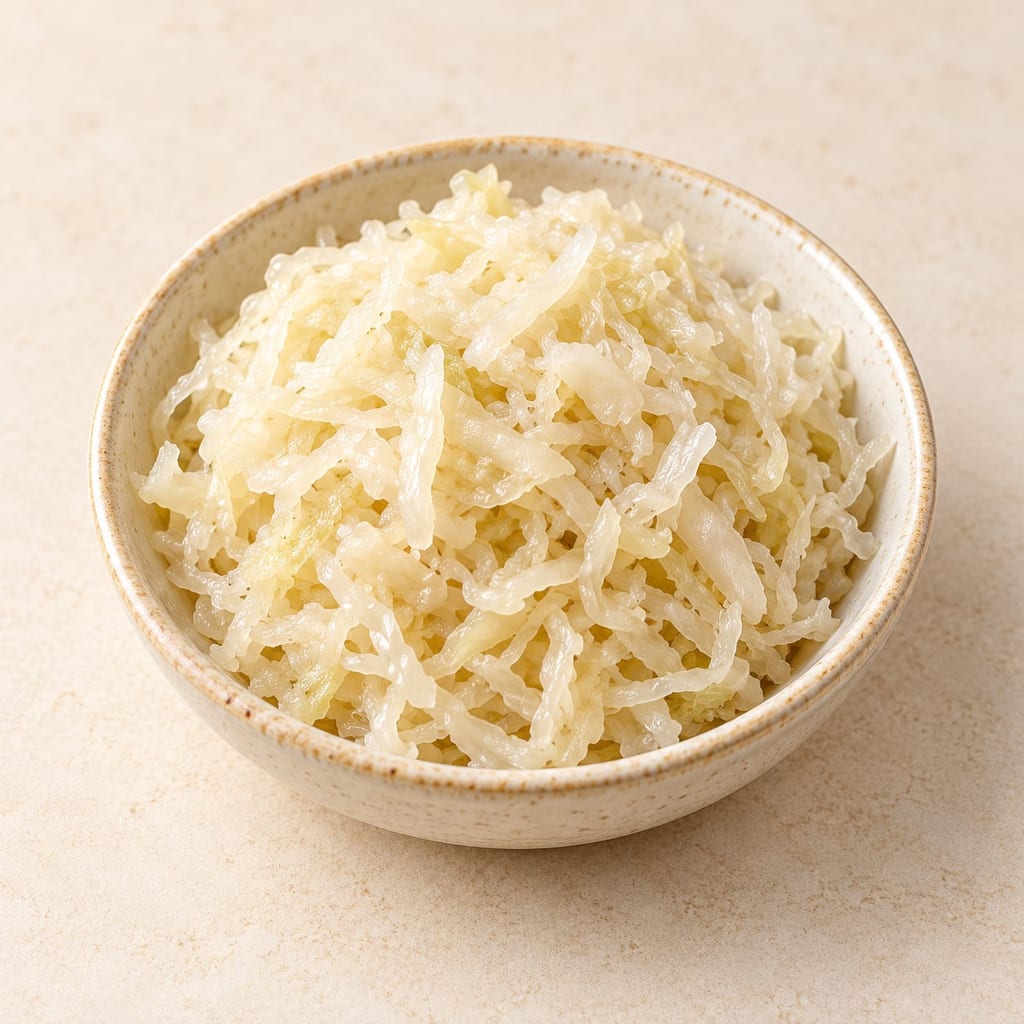
Finely cut cabbage fermented with salt in vats by natural lactic fermentation, a protected Alsatian product sold raw or cooked after fermentation.
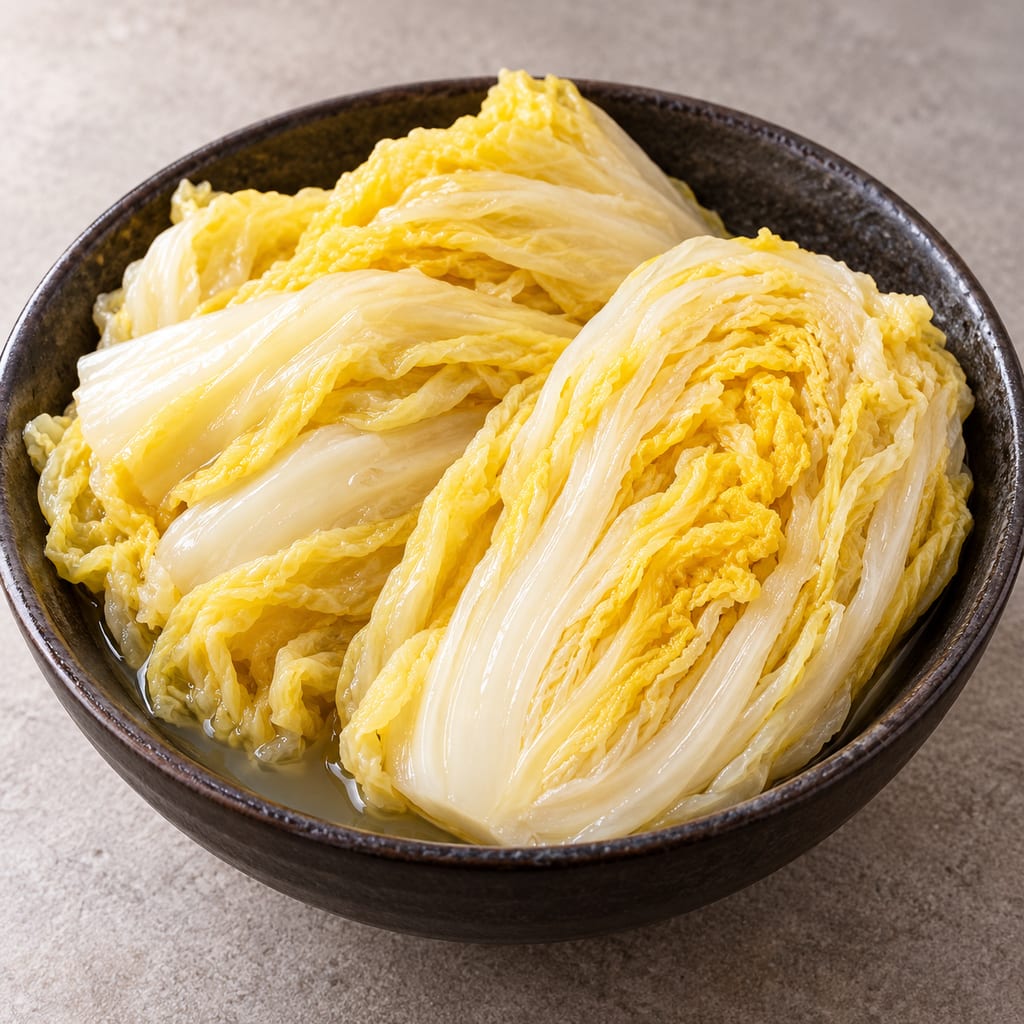
Napa cabbage fermented in a salt brine in Northeast China, traditionally in large ceramic or glass jars, until it turns sour.
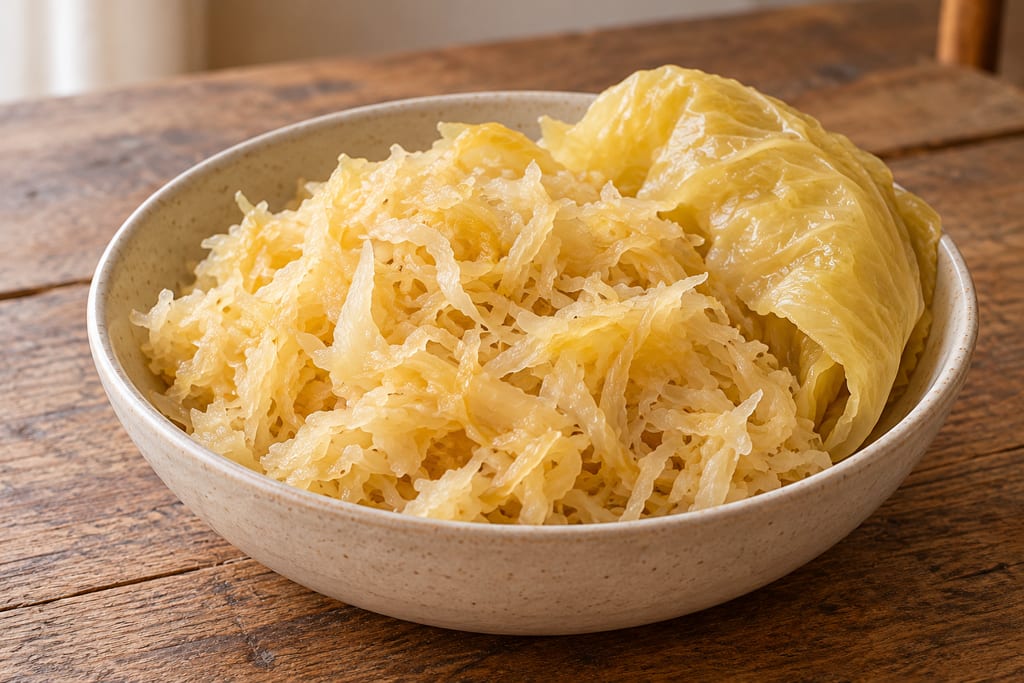
Serbian sour cabbage from the Futog area, made from the autochthonous Futoški cabbage population and registered as a protected product in 2008. It is a subset of general Serbian kiseli kupus.
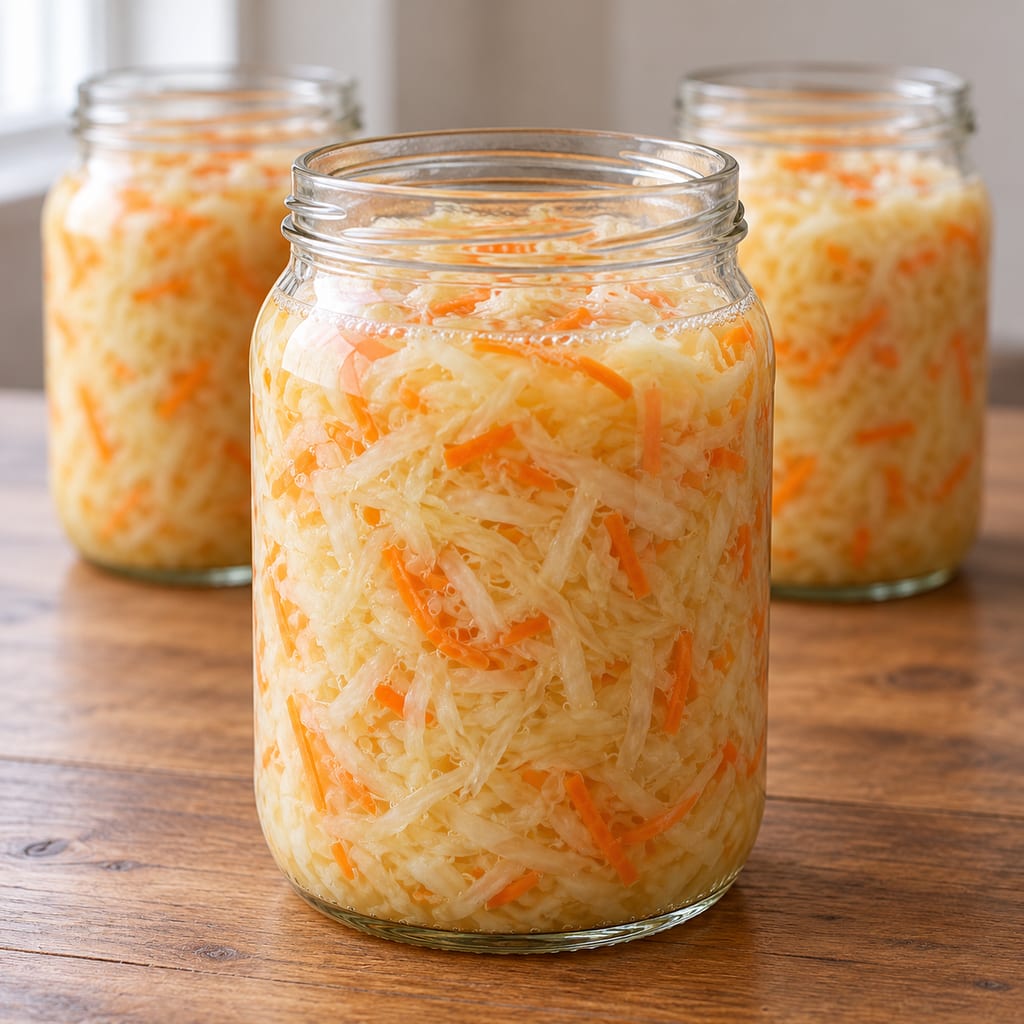
Shredded cabbage and grated carrot are salted to 20 g/kg, rested, packed into three jars and monitored during a creator-reported eight-day fermentation; measured temperature is not given.
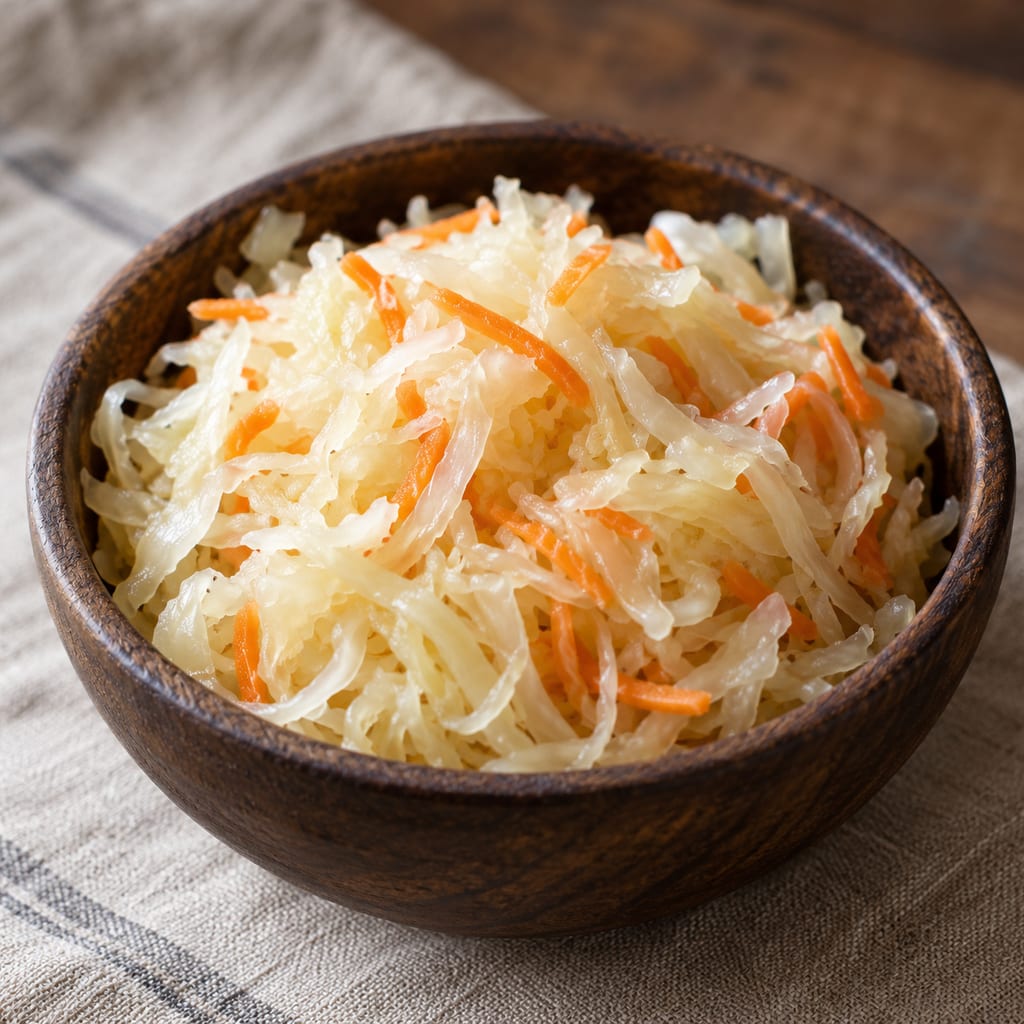
Kapusta kiszona z beczki is barrel-fermented cabbage from the Kołobrzeg area, entered on Poland’s List of Traditional Products in 2008. It is salted and fermented, with raw grated carrot added after souring.
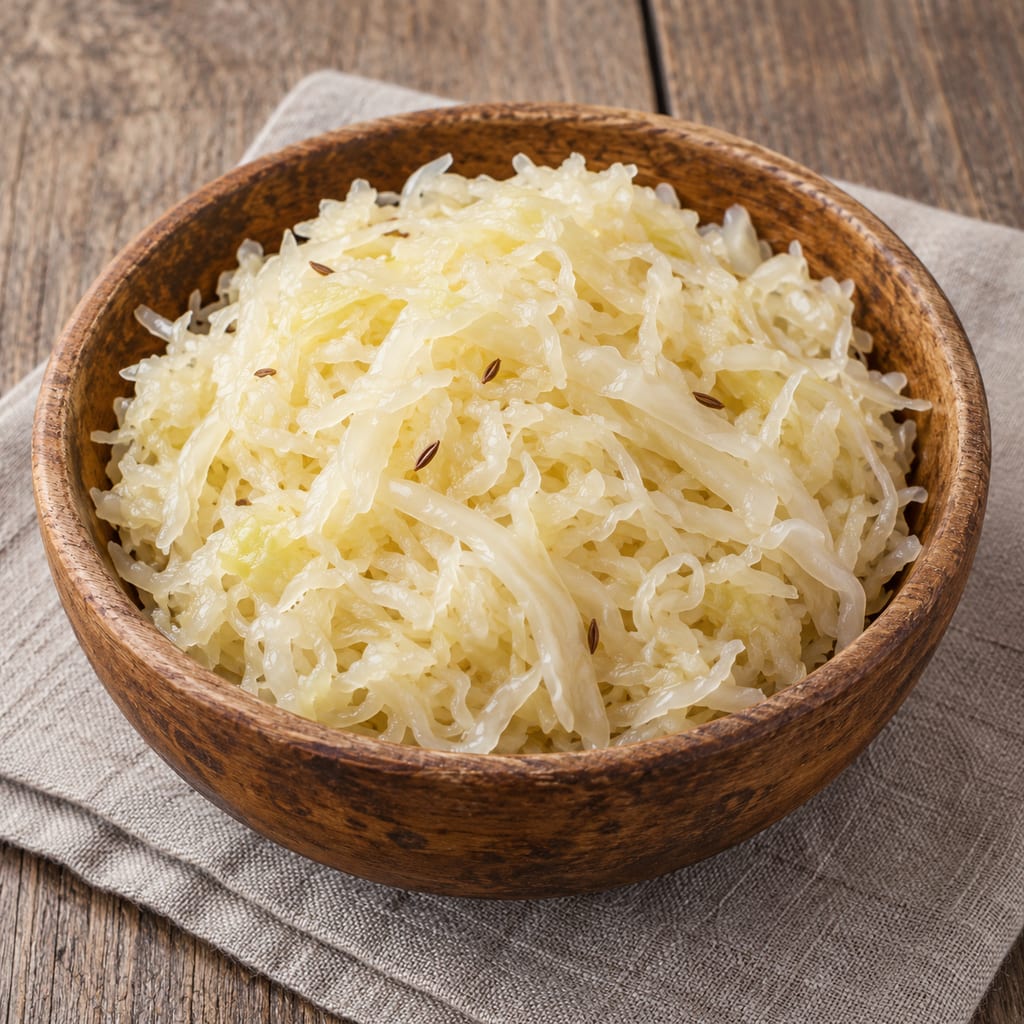
Kysané zeľí is Czech sour cabbage: shredded cabbage layered with salt and caraway and pressed in a wooden barrel. The regional account is descriptive and gives no validated salt ratio or endpoint.
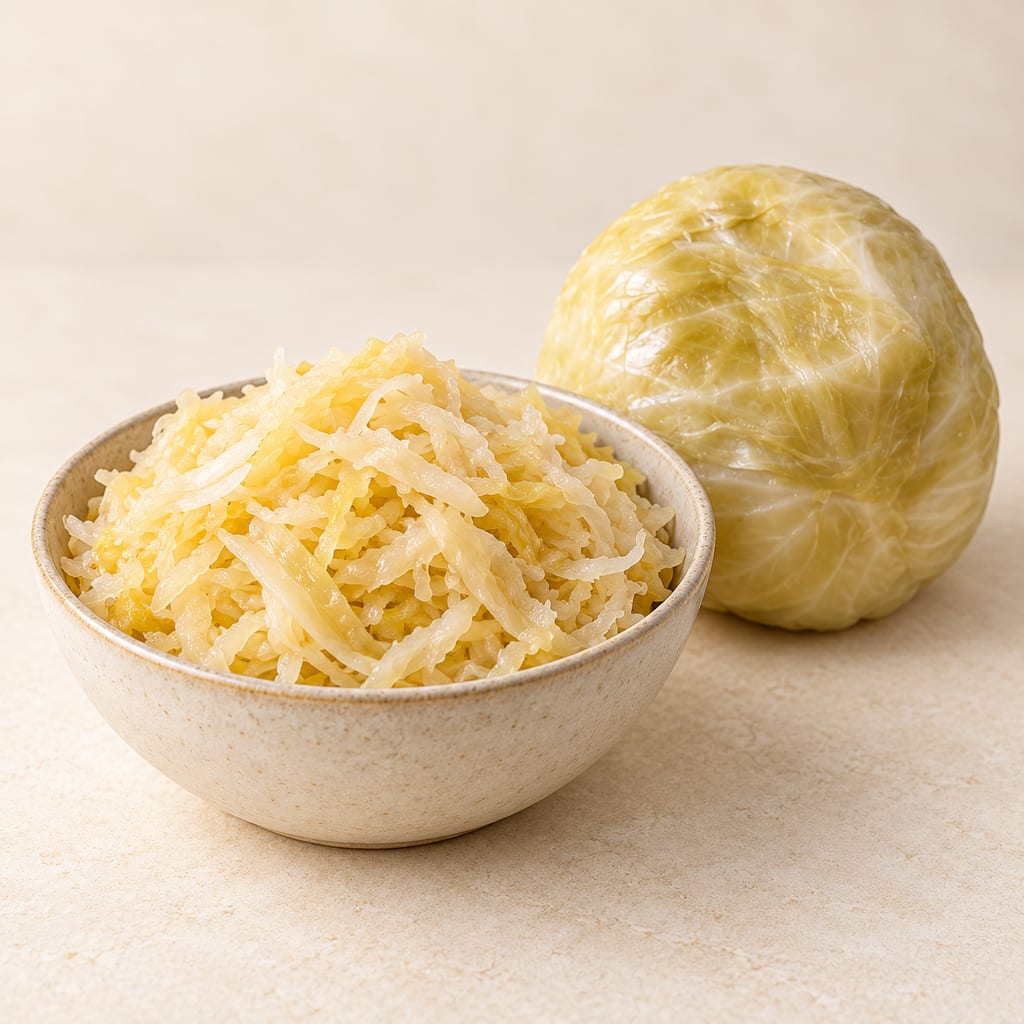
Protected Croatian sauerkraut from the Ogulin area: fresh white cabbage naturally lactic-fermented without preservatives, sold whole or shredded, from registered establishments.
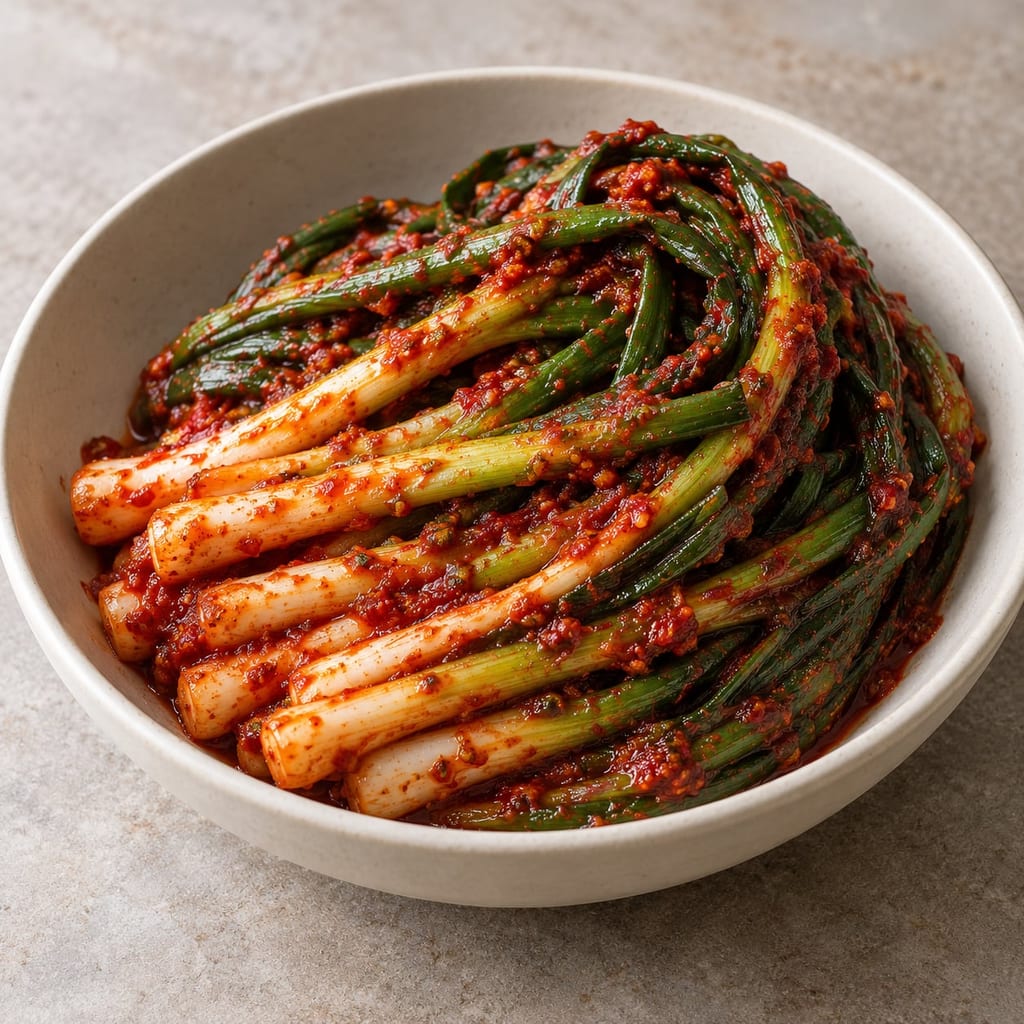
Scallion kimchi coated with fruit, chili, rice paste and salted-seafood seasonings, following one Korean creator’s measured batch.

A gelling polysaccharide extracted from red seaweeds, sold as kanten strips or powder; it sets firm at a low concentration and stays solid until about 85 °C.

A Dominican table and seasoning condiment of sour orange juice, mixed with lime and salt and bottled raw; garlic, oregano or a hot pepper may be added for meat or a spicier bottle.

Cicerbita alpina is an alpine perennial whose tender shoots and leaves have been eaten raw or cooked. Sámi milk preparations and modern Carnian dishes are distinct uses, with serious identification and preservation limits.

Japanese skipjack tuna cooked, then repeatedly smoked and dried over a wood fire by the hand-fired tebiyama method into a hard block for shaving into dashi: the first stage of katsuobushi.

A Swedish-style spirit vinegar made by fermenting neutral alcohol with live vinegar bacteria, with a separate guide to commercial ättika strengths.

A yeast-raised wheat ring shaped from a firm dough, briefly boiled and baked. This source-batch formula gives a gently malted crust and a chewy crumb.

A warm dip of garlic, anchovy and olive oil, often enriched with butter, that Piedmont serves over a flame with raw and cooked vegetables and bread.

Bechamel is a white sauce of milk thickened with a butter and flour roux, one of the French mother sauces, and the base from which Mornay and other cheese and cream sauces are made.
No community contributions have been published for this entry yet.
Sign in to contribute. Published comments and photos are free to read.
Encyclopedia of Korean Culture (Academy of Korean Studies)History
김치 담그기Hwanggwa damjeo in Jeungbo sallim gyeongje (1766) as the first kimchi recorded with chilli powder and sliced garlic
Sanga yorok (c. 1450) as the first book with kimchi recipes
Cited in: What is hwanggwa damjeo?; What does the 1766 text say?; What else is in the 1766 book?
Encyclopedia of Korean Culture (Academy of Korean Studies)History
김치Sallim gyeongje (c. 1715) has no chilli kimchi
Earlier spices were Sichuan pepper and fennel
Jeungbo sallim gyeongje also gives a radish kimchi with chilli, Sichuan pepper and mustard
Cited in: What is hwanggwa damjeo?; Is this the first chilli kimchi?; What else is in the 1766 book?; How does it relate to winter kimchi?
Joseon Wangjo Sillok Wiki (Academy of Korean Studies)History · Method
침채 (沈菜)Korean translation of the hwanggwa damjeo method: stems removed, three slits, a little chilli powder and four or five pieces of garlic, boiled salted water poured hot, jar sealed, eaten next day
Cited in: What is hwanggwa damjeo?; What does the 1766 text say?; Ingredients; Method; How the hot brine works
National Institute of Korean HistoryHistory
우리역사넷: 고추와 김치Chilli reached Korea via Japan around the Imjin War; Yi Su-gwang's Jibong yuseol (1614) warned that it was poisonous
Cited in: Is this the first chilli kimchi?; What else is in the 1766 book?
Journal of Ethnic FoodsHistory
History of Korean gochu, gochujang, and kimchiArgues that gochu was present in Korea before 1592; a contested position
Cited in: Is this the first chilli kimchi?
Critical Reviews in Food Science and Nutrition 34(2):175–203 (Cheigh and Park, 1994)Science
Biochemical, microbiological, and nutritional aspects of kimchiFermentation starts from microbes on the raw materials and is gradually dominated by lactic acid bacteria; organic acids accumulate and texture softens
Cited in: How the hot brine works
Colorado State University ExtensionSafety
Understanding and Making KimchiClean equipment, refrigerated storage tightly covered, discard on surface mould, final salt 2-5%
Cited in: Ingredients; Method; Food safety and storage
University of Minnesota ExtensionSafety
Preserving food at home: FermentationFood-grade equipment and keeping produce submerged
Cited in: Food safety and storage
UNESCO Intangible Cultural HeritageHistory
Kimjang, making and sharing kimchi in the Republic of KoreaKimjang inscribed in 2013
Year-long cycle of jeotgal in spring, salt in summer, chilli drying in late summer, cabbage in late autumn
Cited in: How does it relate to winter kimchi?