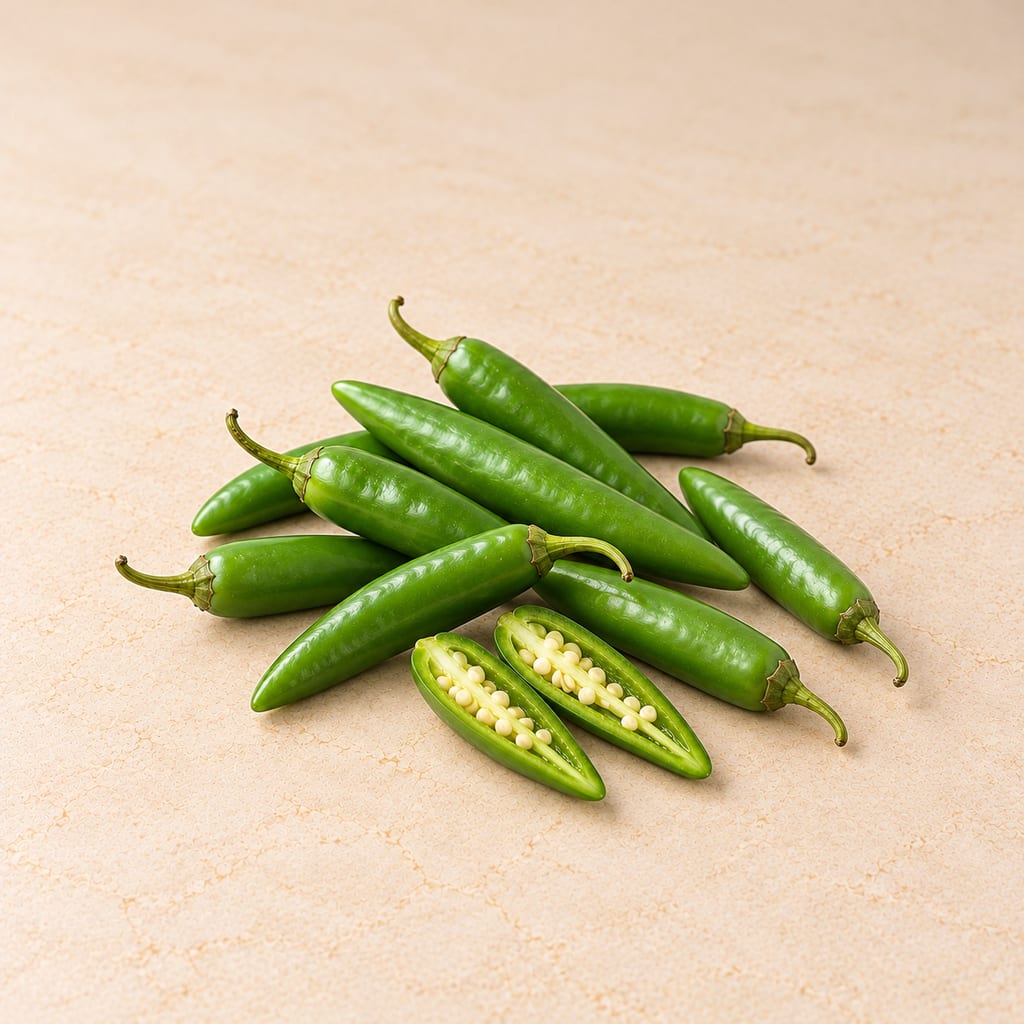
Chilli
Chilli is the pungent fruit of Capsicum plants, native to the Americas and eaten fresh, dried, ground or fermented in cuisines around the world.
 FermenteaWhere food goes to change
Traditional method
Kimchi
Pa-kimchi is a Korean kimchi of whole green onions salted, dressed with chilli and fish sauce, and fermented until pungent and sour.
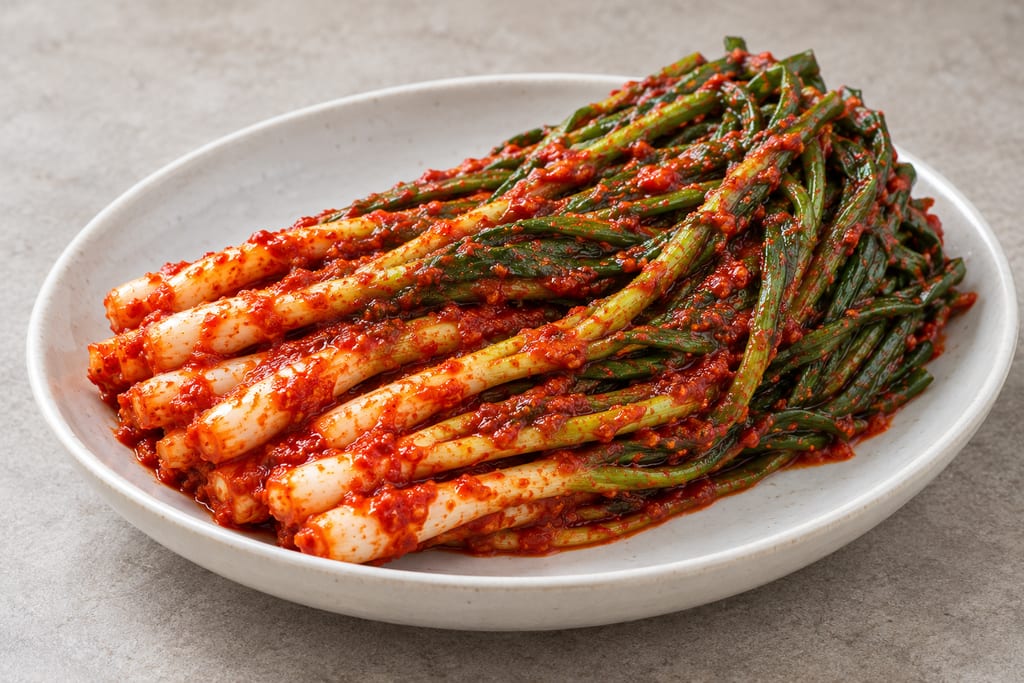
Pa-kimchi is a traditional Korean kimchi made from whole green onions, salted and coated in a thick red-pepper seasoning. It is pungent, savory, hot and strongly aromatic, with a flavor that changes noticeably as fermentation progresses.
The name combines pa, meaning green onion or scallion, with kimchi, the broader Korean family of seasoned and often fermented vegetables. It is also called green onion kimchi, scallion kimchi or jjokpa-kimchi when made specifically with the slender onions known as jjokpa.
Pa-kimchi differs from familiar napa-cabbage kimchi in its construction. The onions are not shredded into pieces or heavily supplemented with other vegetables. Their own sulfur-rich flavor is the central feature.
A strong fish-sauce seasoning, glutinous rice porridge and generous Korean red-pepper flakes provide salt, body, savoriness and heat.
Pa-kimchi can be eaten immediately after preparation, while its onions remain sharply pungent and fresh, or allowed to ferment until they become softer, sourer and more complex.
It is particularly associated with Jeolla food culture in southwestern Korea, including South Jeolla, or Jeollanam-do, where assertively seasoned vegetable dishes are characteristic of many regional cooking traditions.
Green onions have a long history as cultivated food plants in Korea, but the precise invention date of pa-kimchi is not established.
Korean kimchi traditions developed over centuries from vegetable salting, fermentation and seasonal preservation. Historical references to preserved vegetables do not necessarily identify the same chili-seasoned preparations eaten today.
Red chili peppers became incorporated into Korean cooking during the early modern period. That matters because modern red pa-kimchi depends on gochugaru, which cannot be assumed to have been an ingredient in every earlier salted-onion preparation.
The specific South Jeolla association is documented in contemporary regional cooking, but a historical claim that the modern recipe originated in a particular village or century would go beyond the available evidence.
Modern recipes also reflect changing agricultural and commercial ingredients. Korean cooks may buy bundles of slender jjokpa, while cooks in Europe or North America often adapt the recipe to thicker spring onions.
That substitution affects texture and the distribution of seasoning, even when the quantities remain the same.
Pa-kimchi belongs to the category of Korean side dishes called banchan. It accompanies rice and other foods rather than usually being eaten as the entire meal.
Preparation
Salt, coat and ferment
Salting time
1 hour
Paste preparation
4–5 minutes heating, then 1 minute
Pepper-paste resting
30 minutes
Fermentation
About 2 weeks refrigerated, or 5–7 days at room temperature
Yield
Not specified by the original recipe
The recorded method does not give a numerical fermentation temperature or a validated final pH for this recipe.
One original recipe batch. US volume measures retained to avoid unsupported conversion of salt or pepper-flake quantities.
Green onions, roots removed — 3 lb — Main vegetable
Fish sauce — 1 cup — Salt, amino acids, umami
Glutinous rice flour — ¼ cup — Thickens the seasoning
Water — 3 cups — Makes the rice porridge
White or brown sugar — 2 tbsp — Sweetness and fermentable carbohydrate
Gochugaru — 1½ cups — Chili heat, color and aroma
Green onions contribute sulfur-containing compounds responsible for their sharp aroma. These compounds develop when onion tissue is cut or damaged, allowing enzymes and their substrates to interact. Their concentration changes as the kimchi ages.
The white bases have a different texture from the green leaves. Thick bases need particular attention during coating because their shape can prevent the paste from adhering evenly.
Fish sauce, called aekjeot, contributes salt and soluble products of protein breakdown, including amino acids. Its savory effect is much greater than would be expected from salt alone.
Fish sauces vary in salt concentration. Consequently, the recipe's cup measure cannot be converted into an exact final salt percentage without knowing the sauce composition and how much liquid is retained by the onions.
Glutinous rice flour is made from a sticky-rice variety of Oryza sativa. Despite its name, it contains no wheat gluten. Its starch forms a viscous paste when heated with water.
The paste helps the chili seasoning cling to the onion leaves instead of immediately running into the bottom of the container.
Sugar balances salt and onion pungency. Some of it may be metabolized by microorganisms, although the amount consumed depends on fermentation conditions.
Gochugaru is Korean dried red-pepper flake, generally made from cultivated Capsicum annuum peppers. Its particle size, heat and flavor vary.
Coarse Korean kimchi flakes behave differently from fine chili powder. They gradually absorb liquid and develop a paste rather than merely coloring it.
Use a large non-reactive bowl, a saucepan, a stirring utensil, a colander and clean food-grade storage containers.
A container should have enough room for the vegetables and seasoning, with capacity for any gas production. Fermenting kimchi must not be placed in a completely sealed vessel that cannot safely release pressure.
Glass and suitable food-grade plastic are practical. Avoid reactive metal containers and damaged equipment.
1. Trim and inspect the onions.
Remove roots and any tough or damaged outer leaves. Discard spoiled or visibly deteriorated pieces. The green tops and white bases are both used.
Cut the onions in half crosswise, following the original adapted recipe. This makes thick supermarket onions easier to handle while retaining recognizable lengths.
2. Wash and drain.
Wash the onions in several changes of cold water, separating clustered leaves so soil cannot remain trapped near the bases.
Drain thoroughly. Excess surface water can dilute the fish sauce and weaken the coating.
3. Salt with fish sauce.
Place the onions in a large bowl and distribute the full 1 cup fish sauce through them.
Leave for 1 hour, turning the onions every 20 minutes.
The fish sauce draws water from the onions and introduces salt into their surface tissues. Turning prevents the upper onions from receiving much less contact than those at the bottom.
4. Cook the rice porridge.
Combine ¼ cup glutinous rice flour and 3 cups water in a saucepan.
Heat over medium-high heat while stirring. The mixture should begin bubbling after approximately 4–5 minutes in the documented method.
Add 2 tablespoons sugar and stir for another minute.
The mixture becomes slightly translucent as starch gelatinizes and thickens the liquid.
5. Cool the porridge.
Remove from heat and cool thoroughly before mixing with the chili and onions.
Hot porridge would alter the vegetables and could reduce the populations of desirable microorganisms that remain on the raw ingredients.
6. Reserve the fish sauce.
Lift the onions from their bowl, leaving the liquid behind.
Do not discard it: the seasoned liquid becomes part of the kimchi paste. The amount of onion juice released may vary with the onions used.
7. Make the pepper seasoning.
Combine the cooled rice porridge, reserved fish sauce and 1½ cups gochugaru.
Mix thoroughly and leave for 30 minutes.
During this period, the dried pepper flakes absorb moisture and the paste develops a thicker, more consistent texture.
8. Coat the onions.
Return the onions to the bowl and distribute the paste gently through them.
Pay attention to the white bases, where the leaves join. The object is to coat the surfaces without crushing the delicate green stems.
Food-safe gloves can protect hands from the concentrated chili mixture.
9. Pack the kimchi.
Transfer to a clean jar or kimchi container. Arrange the onions compactly and remove large trapped air pockets.
Traditional presentation may involve gathering several slender onions into small bundles. This makes them easy to remove and serve.
Use a container designed to accommodate fermentation gas.
10. Choose fresh or fermented service.
The kimchi can be served immediately.
For the refrigerated version, the original recipe describes approximately 2 weeks of fermentation.
For a faster version, it describes 5–7 days at room temperature, depending on conditions, followed by refrigeration.
Those are culinary schedules, not verified temperature-controlled safety specifications. Monitor acidity and apply appropriate food-safety controls rather than treating elapsed time alone as proof of safety.
Pa-kimchi is generally a spontaneous lactic-acid vegetable ferment.
Microorganisms carried on the onions and other ingredients compete and change in abundance as the fermentation environment develops.
Green onions themselves can carry organisms from groups including Weissella, Leuconostoc and Lactococcus. These groups have been identified among organisms associated with Korean kimchi ingredients.
Lactic acid bacteria consume available carbohydrates and produce organic acids, particularly lactic acid.
As acid accumulates, the pH falls and the flavor becomes noticeably sourer.
Some kimchi microorganisms are heterofermentative. They can produce carbon dioxide and other metabolites alongside lactic acid.
This explains why a properly fermenting container may release gas.
Different species dominate at different stages, depending on temperature, salt, ingredient composition and the existing microbial population.
Fermentation also changes the onion's own flavor chemistry.
Fresh onion pungency comes partly from reactive sulfur compounds. As time passes, enzymatic and microbial changes alter these compounds and the overall sensory balance.
This is why fermented pa-kimchi can taste markedly less like raw onion even though the onions were never cooked.
The rice paste contributes texture and accessible carbohydrate, but it is not an independent fermentation starter. Cooking the flour changes the starch physically; the microbial fermentation develops afterward.
The chili flakes influence more than color. Research on kimchi has shown that red-pepper addition can alter microbial succession and the relative abundance of lactic-acid bacteria.
Consequently, changing the amount or type of chili does not necessarily produce the same fermentation with a different heat level.
South Jeolla preparations are particularly associated with assertive seasoning.
Some households use additional salted seafood ingredients, while others prefer a relatively short ingredient list.
A traditional Korean jjokpa preparation may retain much longer onion leaves than the adaptation using larger supermarket scallions.
Vegetarian versions can use soup soy sauce in place of fish sauce. However, this changes the salt, amino-acid and aroma profile, so it should be treated as a genuine variation rather than an identical substitution.
Some cooks introduce ginger, garlic or additional sesame-based seasoning. These are optional variations, not missing ingredients from the source batch.
The principal recipe here deliberately retains its original six ingredients.
Pa-kimchi is served as banchan alongside warm rice.
Freshly prepared onions provide crispness and sharpness against mild rice, egg dishes, tofu and meat.
More fermented pa-kimchi becomes particularly useful in cooked dishes.
Its concentrated seasoning can be incorporated into kimchi fried rice (kimchi-bokkeumbap), kimchi soup or stews.
The remaining chili paste can flavor kimchi pancakes or other vegetable dishes.
There is a practical difference between serving fresh and mature batches. The former contributes a clean onion bite; the latter contributes more acidity and softened, integrated flavors.
Both are recognized ways of enjoying the food.
Fresh pa-kimchi should have recognizable onion texture and a well-distributed seasoning.
As it ferments, increasing sourness, some softening and gas production may be observed.
A clear shift toward acidic aroma can be expected, but odor and bubbling do not establish safety on their own.
A thin layer of liquid collecting near the bottom is not necessarily a defect. The onion tissues continue to release moisture.
Unexpectedly slimy decomposition, rotten odors, substantial fuzzy mold or other visible contamination indicate a failed batch.
Do not attempt to rescue visibly spoiled kimchi by adding more salt or chili.
The recipe does not establish a validated finished pH, salt concentration or microbiological shelf life.
Its room-temperature fermentation schedule should therefore not be presented as a universally safe process independent of kitchen temperature.
Use clean equipment, suitable ingredients and a fermentation container that accommodates gas pressure.
Maintain appropriate contact between vegetables and their seasoning or liquid, monitor acidity where possible, and refrigerate the product when fermentation reaches the intended stage under a controlled method.
The presence of fish sauce makes this recipe unsuitable for people with fish allergy and means it is not vegetarian.
Do not treat refrigerated kimchi as commercially shelf-stable. It is not a water-bath-canning recipe, and ordinary sealing does not make it safe for unrefrigerated storage.
A South Jeolla tradition is named for whole-scallion kimchi; no narrower origin is claimed.
Scaling: source batch only
Poor brine coverage or inadequate acidity monitoring can allow spoilage; recipe-specific validated limits are not established.
Hazard sourceUse clean food-grade equipment, keep produce submerged and monitor acidity; no universal endpoint is supplied for this recipe.
Control sourceThe source supports this broad area and no precise location.
Chilli is the pungent fruit of Capsicum plants, native to the Americas and eaten fresh, dried, ground or fermented in cuisines around the world.
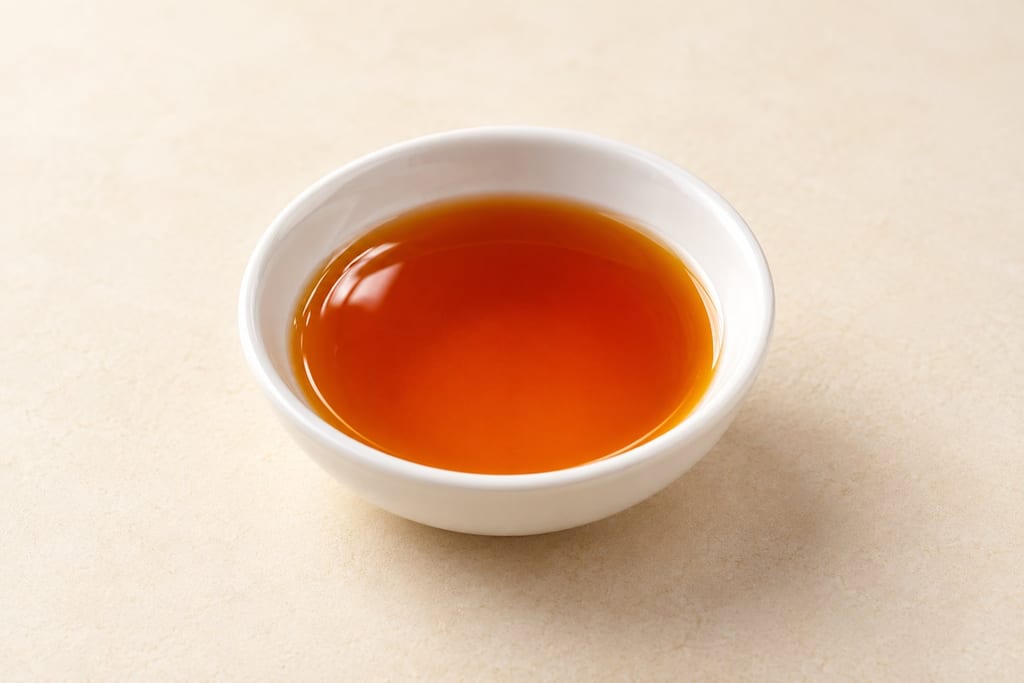
Fish sauce is a clear, salty seasoning made by maturing fish with salt and drawing off the liquid. The broad family includes distinct regional sauces rather than one interchangeable method.
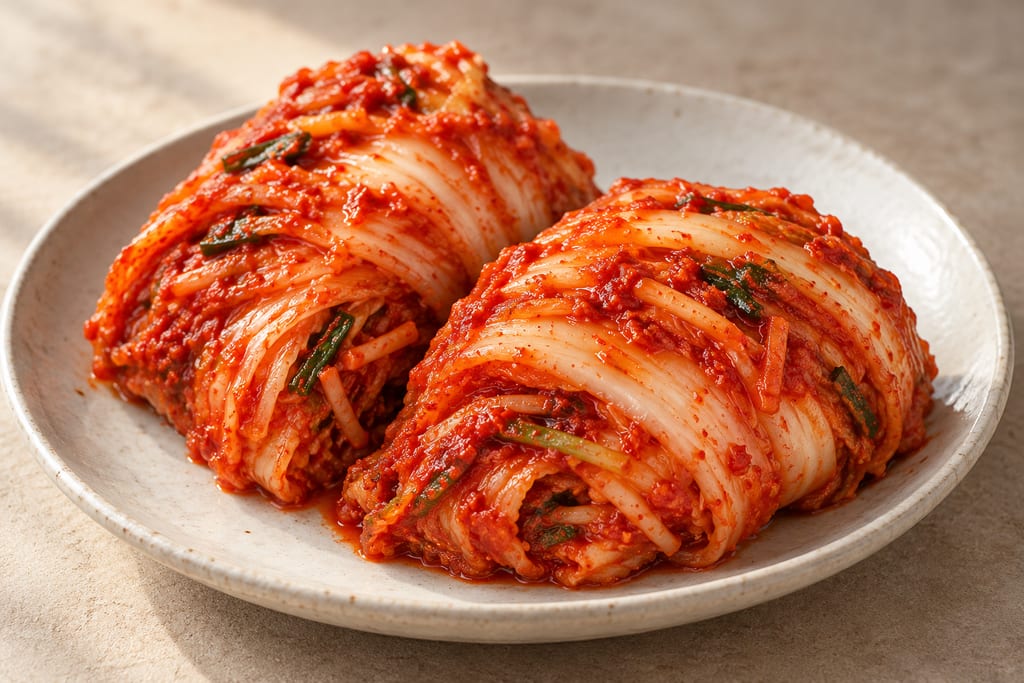
Napa cabbage salted, seasoned with a paste of gochugaru, garlic, ginger and salted seafood, and left to sour through lactic fermentation; Korea's everyday winter preserve.
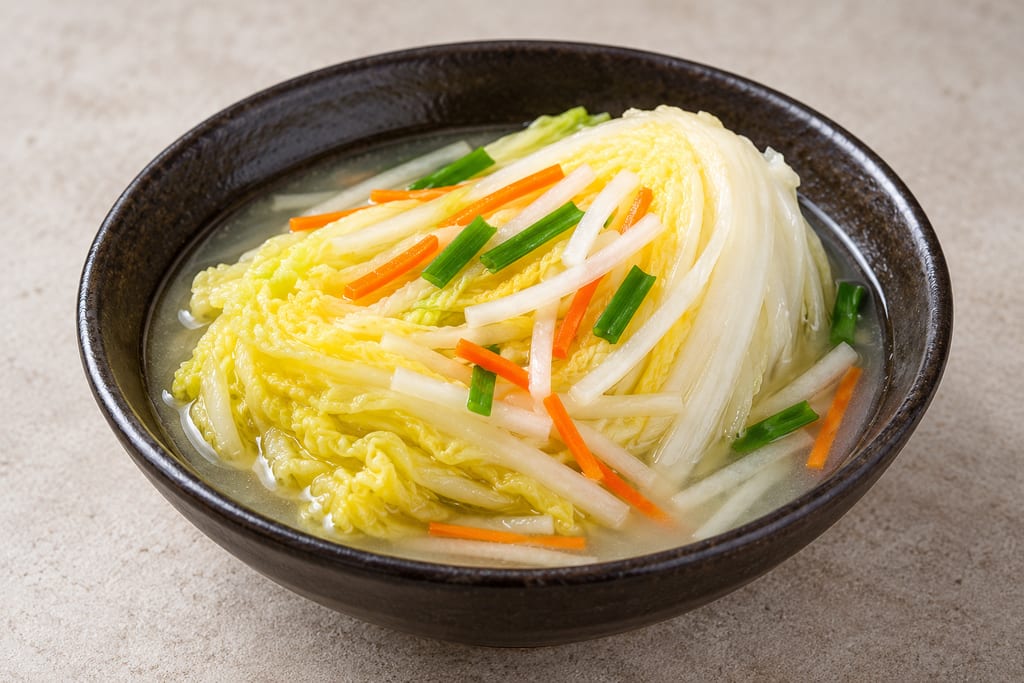
Napa cabbage is brined and filled with pear, radish, alliums, chives and fruit; this Korean kimchi omits red pepper flakes.
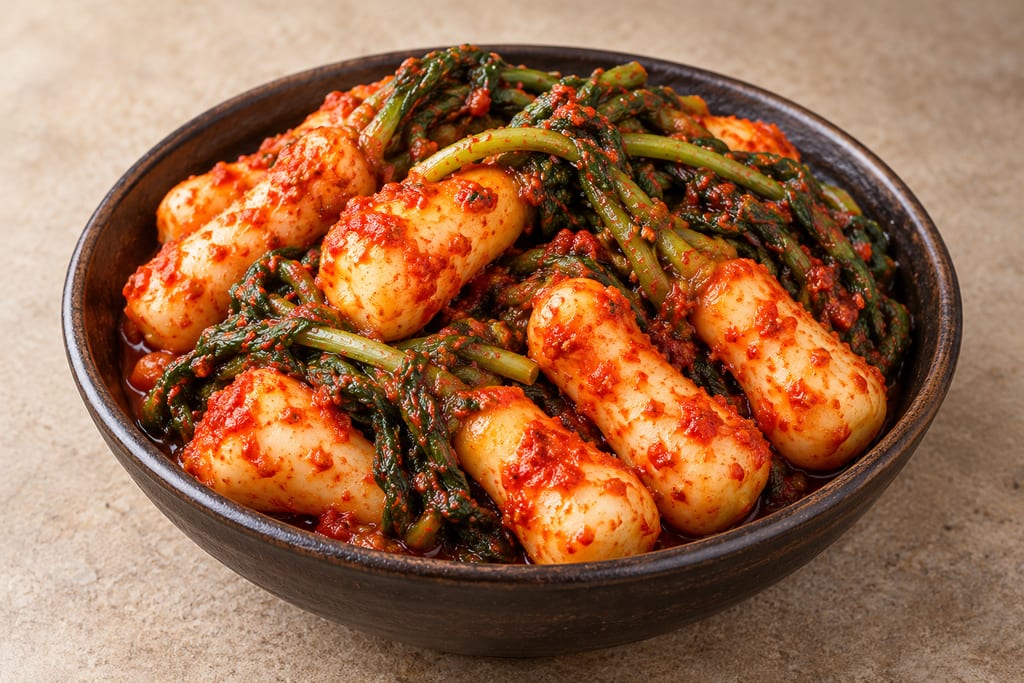
Small ponytail radishes keep their greens attached and ferment in a flour-and-chile seasoning paste.
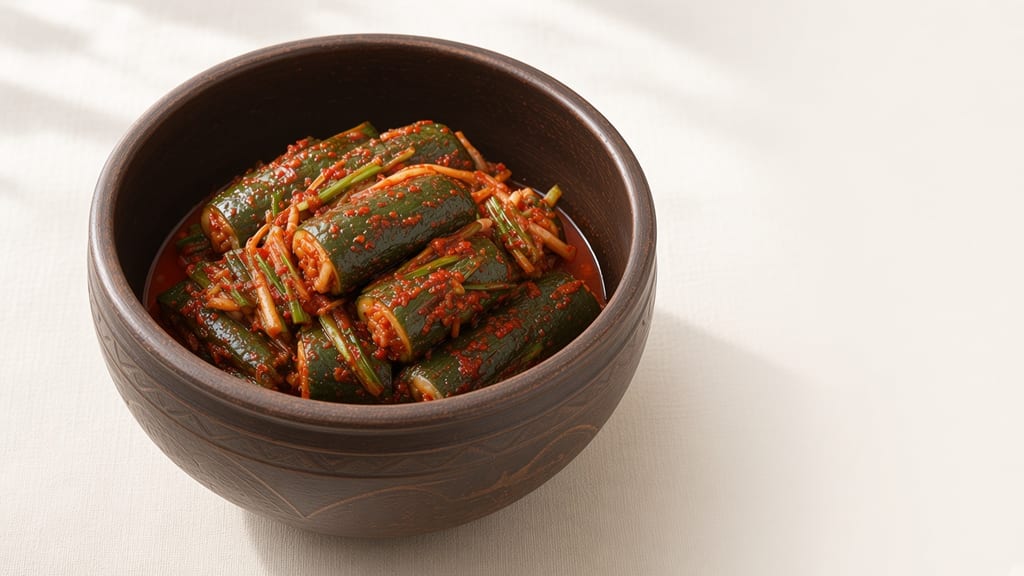
Hwanggwa damjeo is a cucumber kimchi from Yu Jung-rim's Jeungbo sallim gyeongje of 1766. Slit cucumbers are packed with chilli powder and garlic, scalded with hot salted water and sealed overnight.
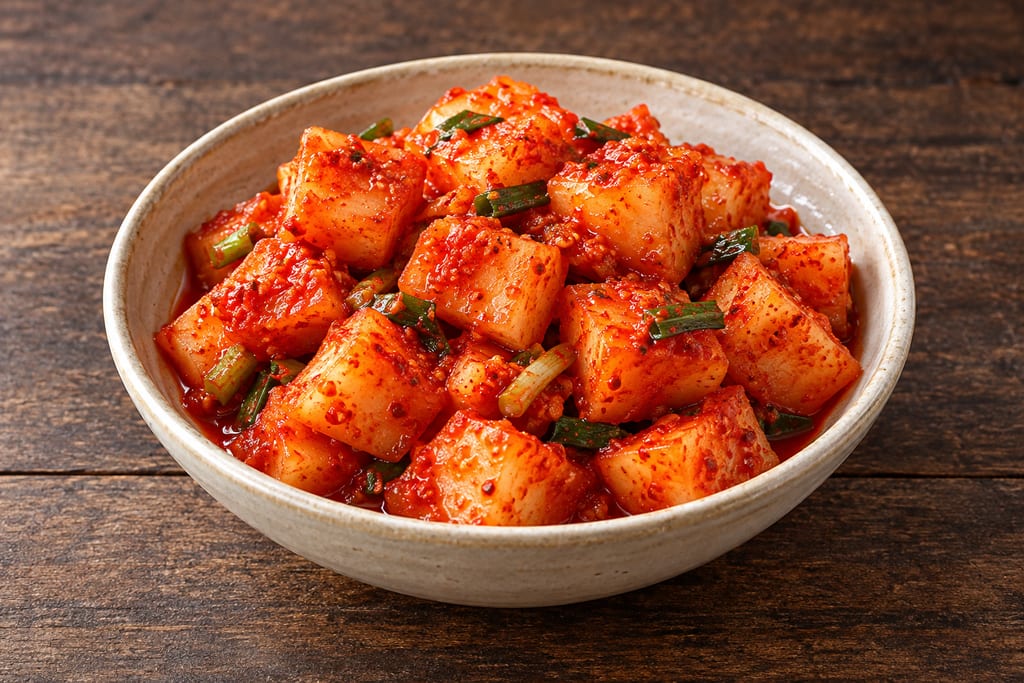
A radish kimchi cut into cubes and seasoned with gochugaru, fish sauce, garlic and ginger, eaten fresh or fermented a few days at room temperature.
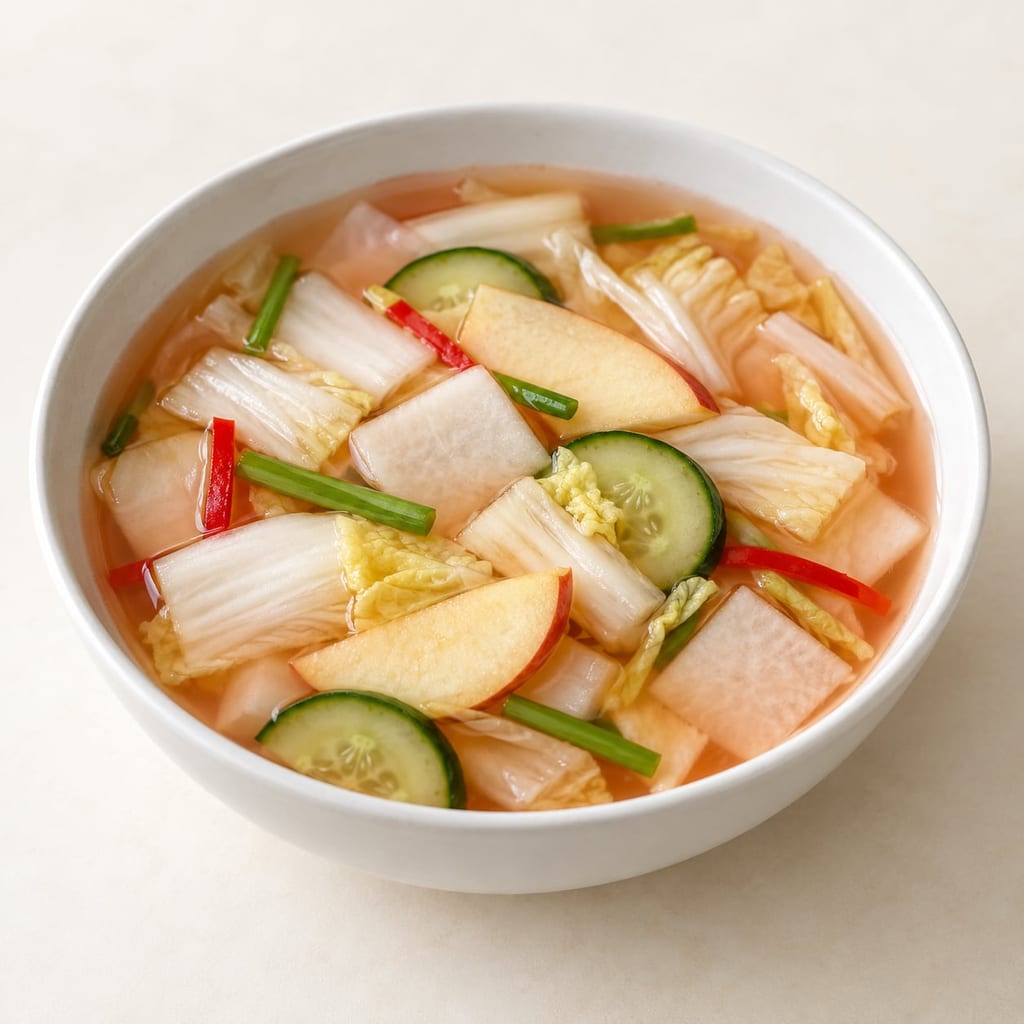
Napa cabbage and radish ferment in a rose-coloured broth with cucumber, apple, pear, alliums and chile.
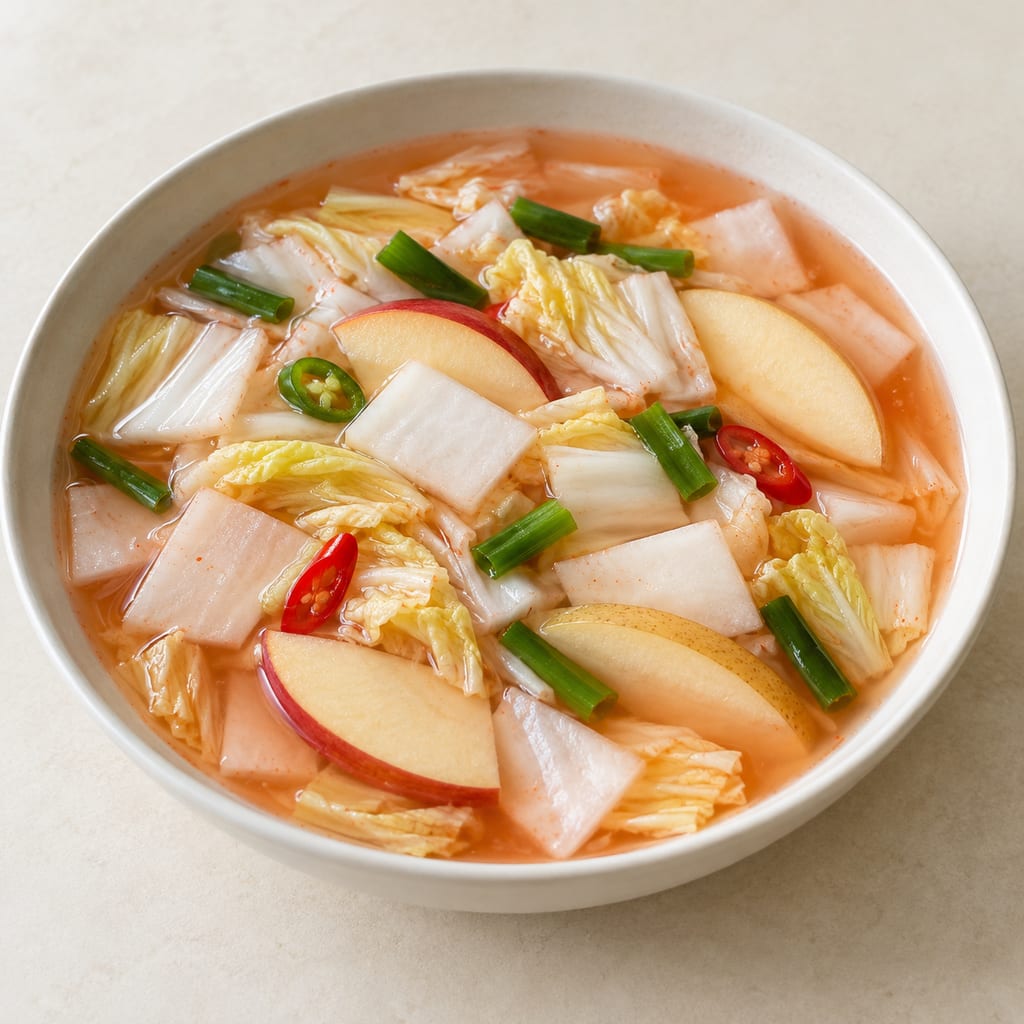
Cabbage-and-radish water kimchi with pear, apple and strained chili broth, following one Korean creator’s batch.
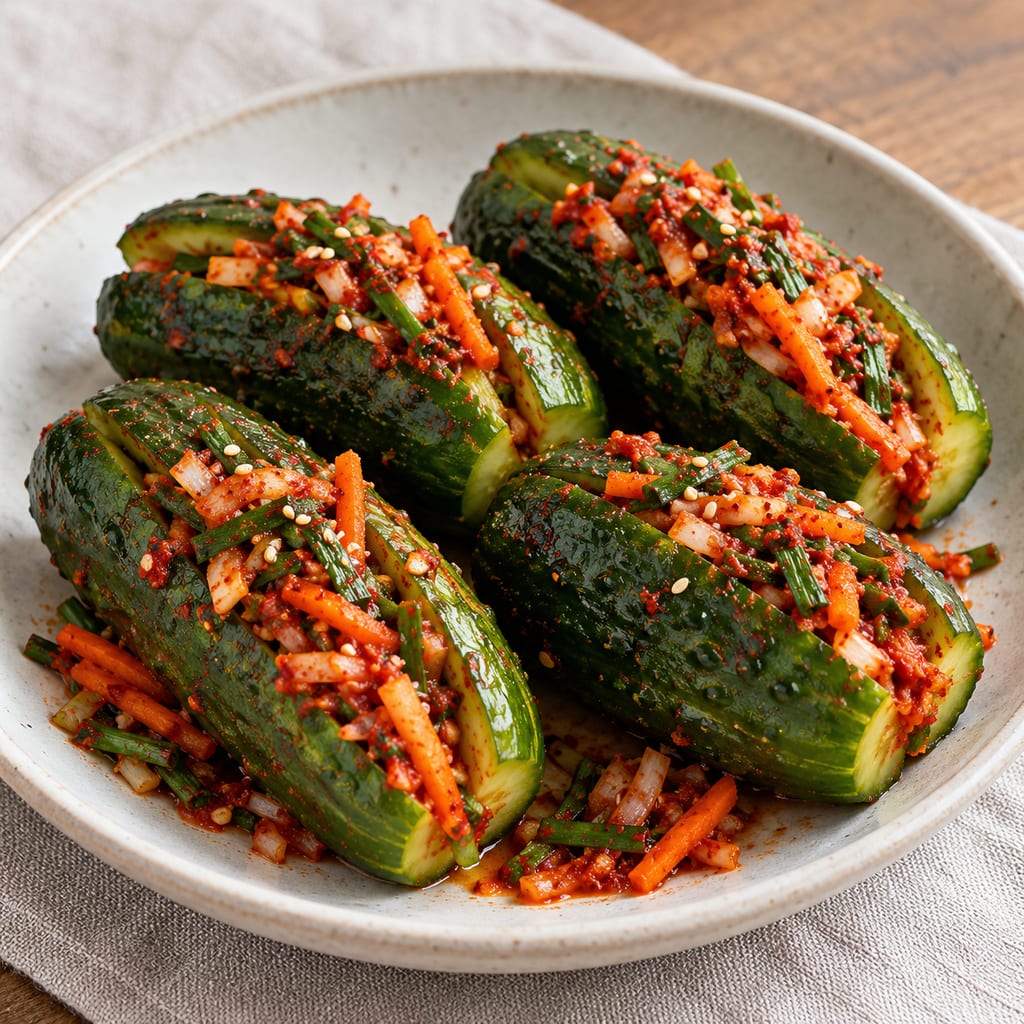
Oi-sobagi is a Korean stuffed cucumber kimchi: salted cucumbers slit and filled with a chive-and-chilli seasoning, eaten fresh or left to ferment.
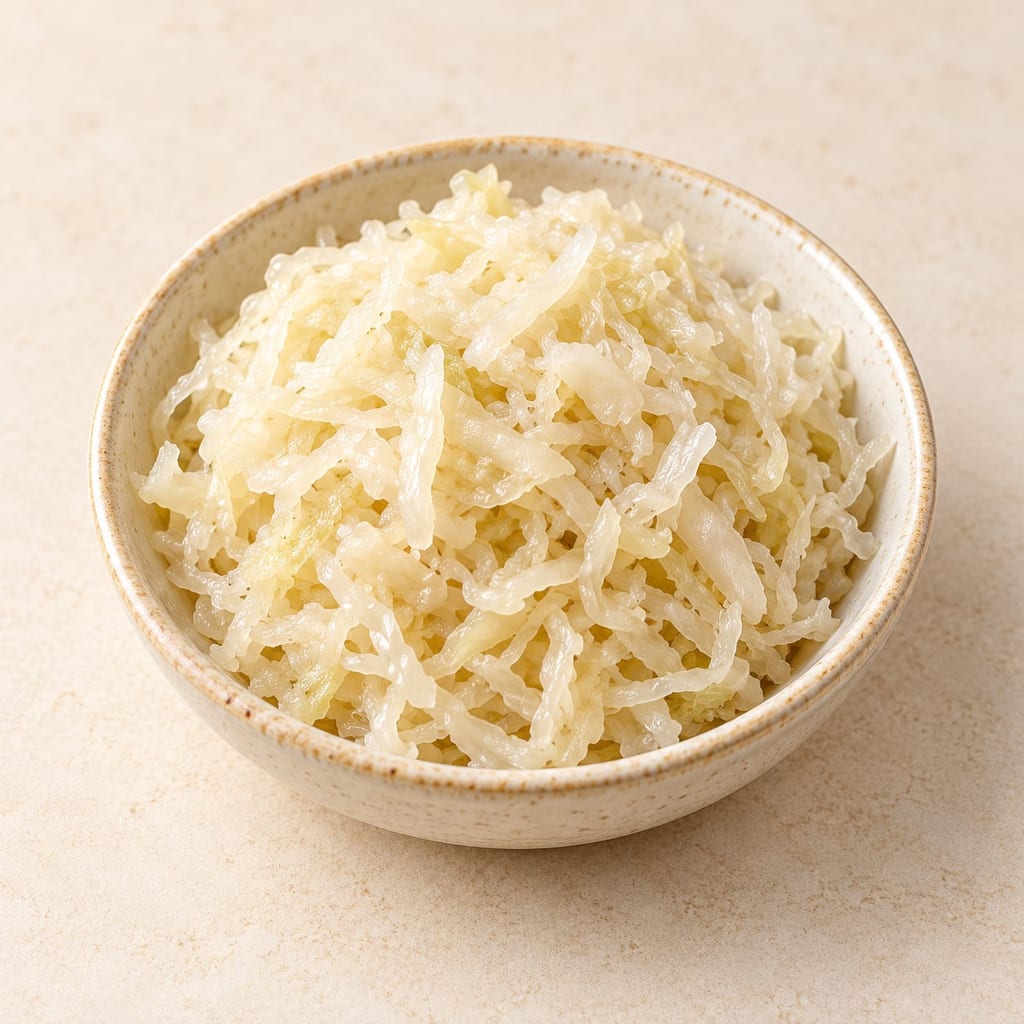
Finely cut cabbage fermented with salt in vats by natural lactic fermentation, a protected Alsatian product sold raw or cooked after fermentation.
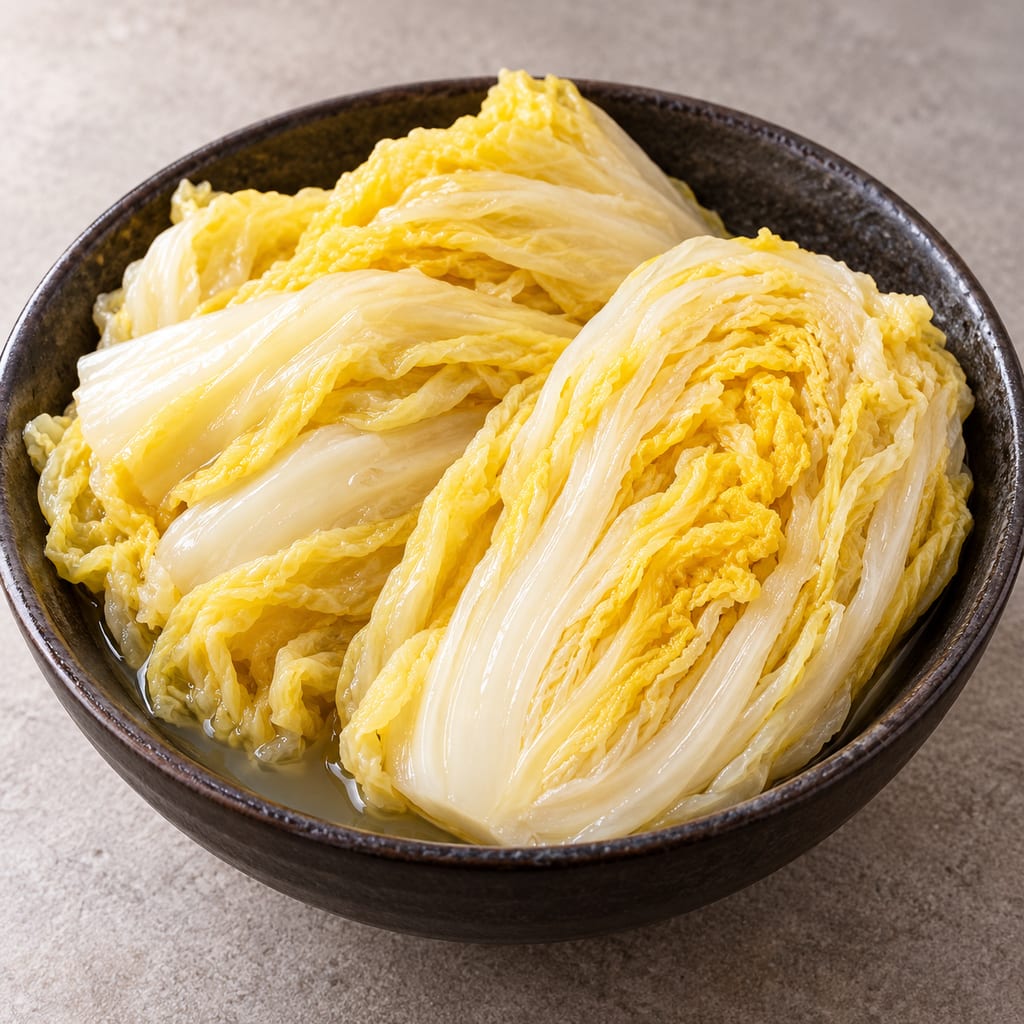
Napa cabbage fermented in a salt brine in Northeast China, traditionally in large ceramic or glass jars, until it turns sour.
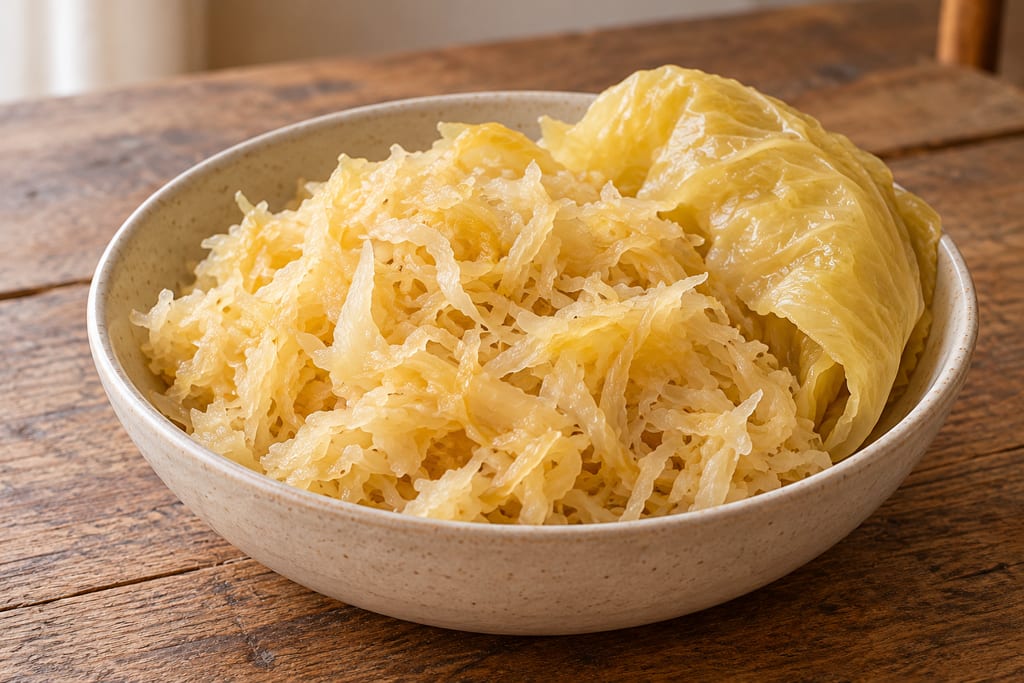
Serbian sour cabbage from the Futog area, made from the autochthonous Futoški cabbage population and registered as a protected product in 2008. It is a subset of general Serbian kiseli kupus.
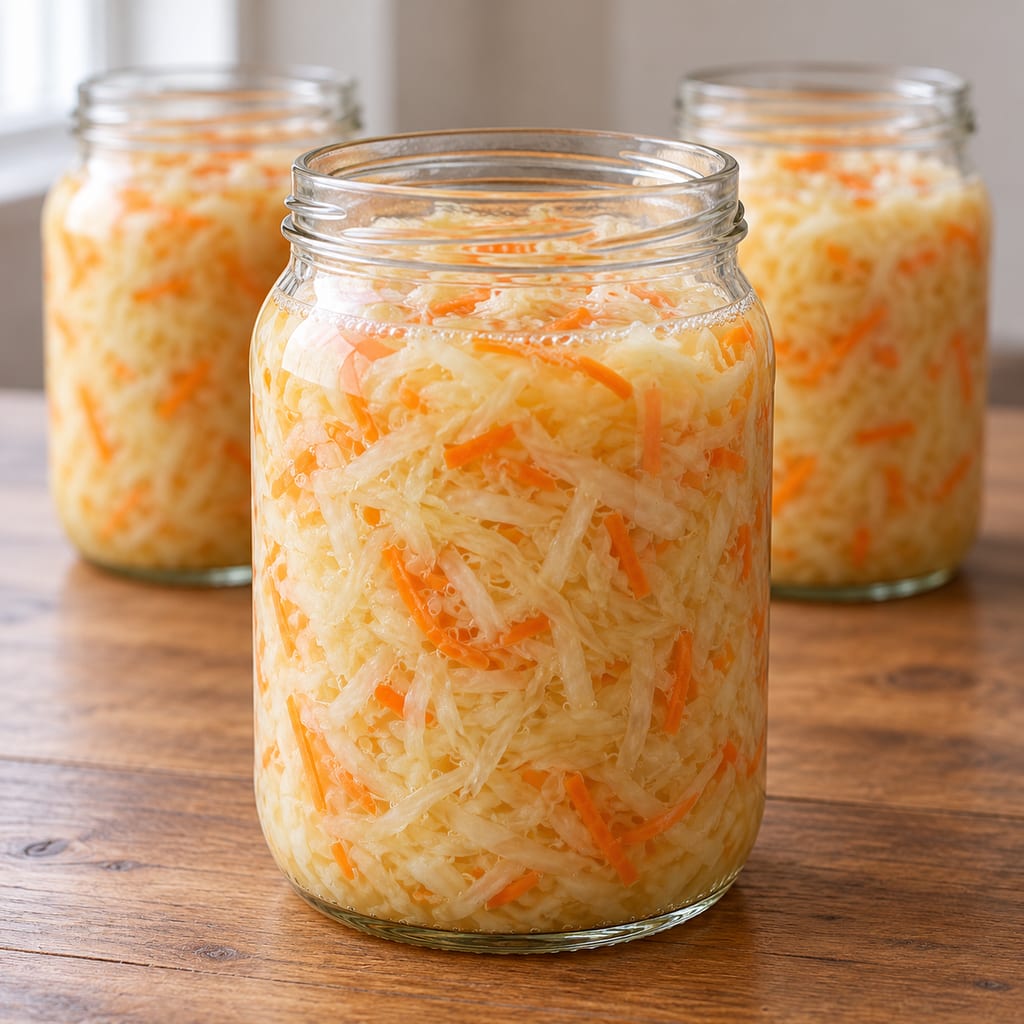
Shredded cabbage and grated carrot are salted to 20 g/kg, rested, packed into three jars and monitored during a creator-reported eight-day fermentation; measured temperature is not given.
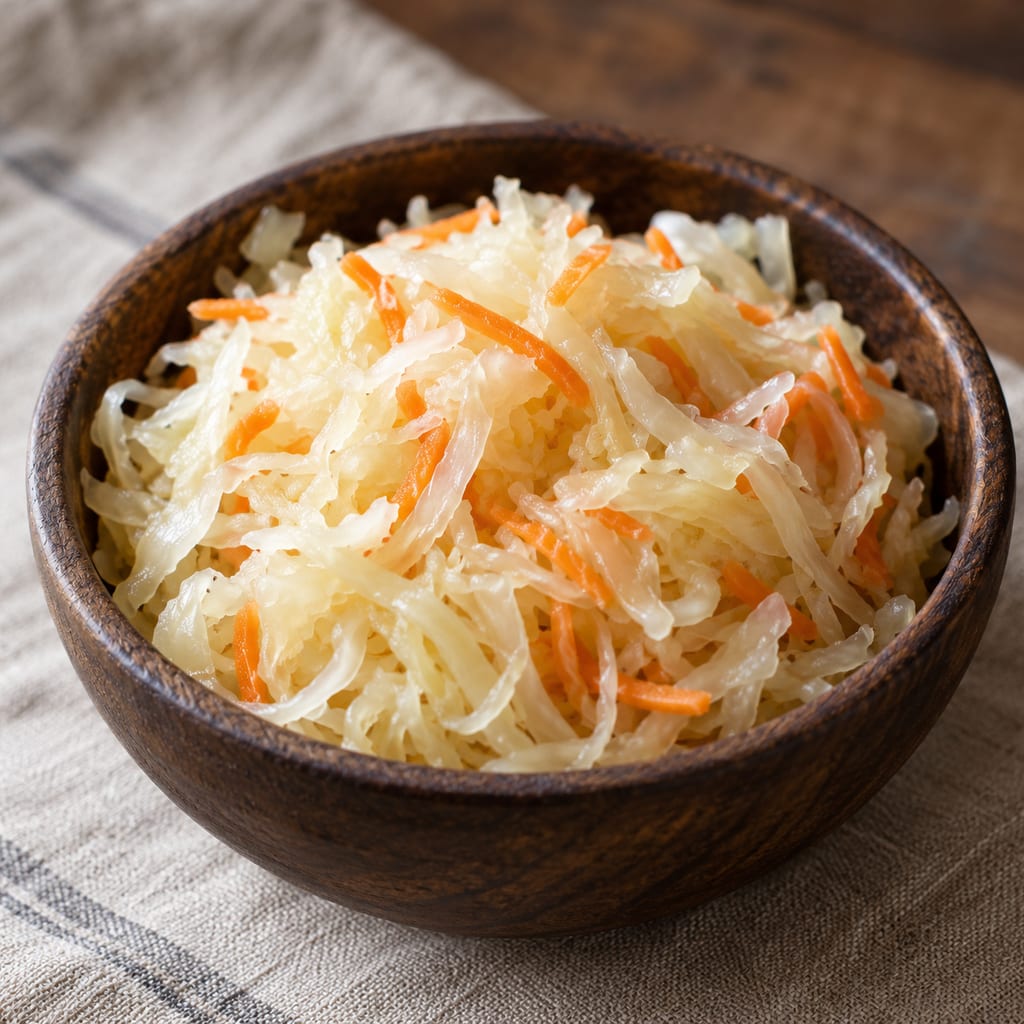
Kapusta kiszona z beczki is barrel-fermented cabbage from the Kołobrzeg area, entered on Poland’s List of Traditional Products in 2008. It is salted and fermented, with raw grated carrot added after souring.
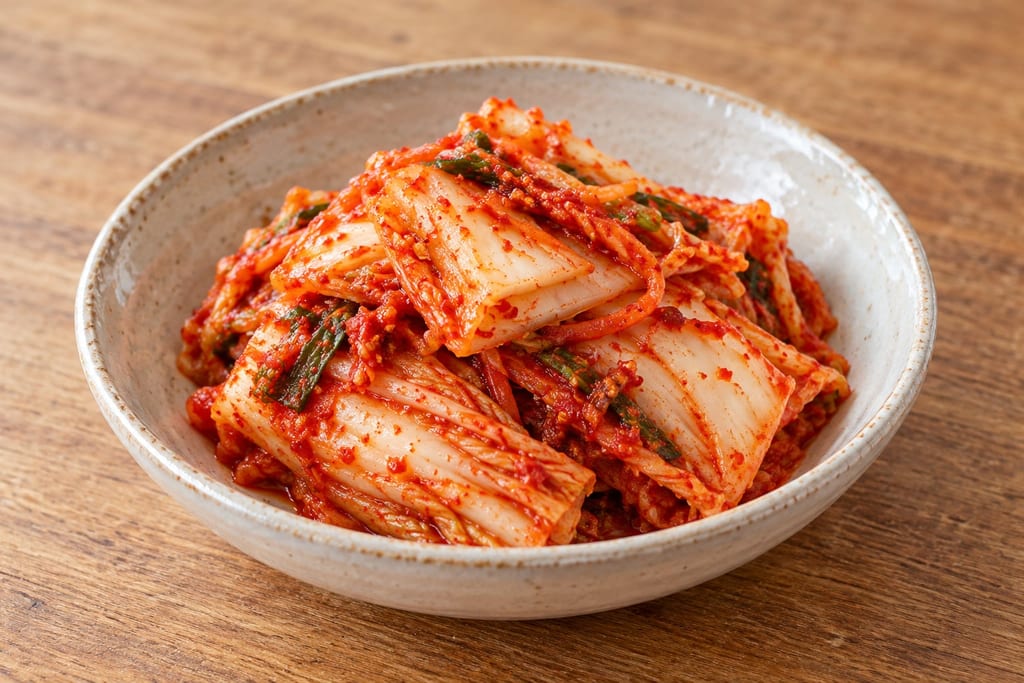
Kimchi is a Korean preserved vegetable food, most often cabbage, salted and seasoned, then fermented by the lactic acid bacteria that arrive with the vegetables. Some studies test added starter cultures, but a home jar is usually spontaneous.
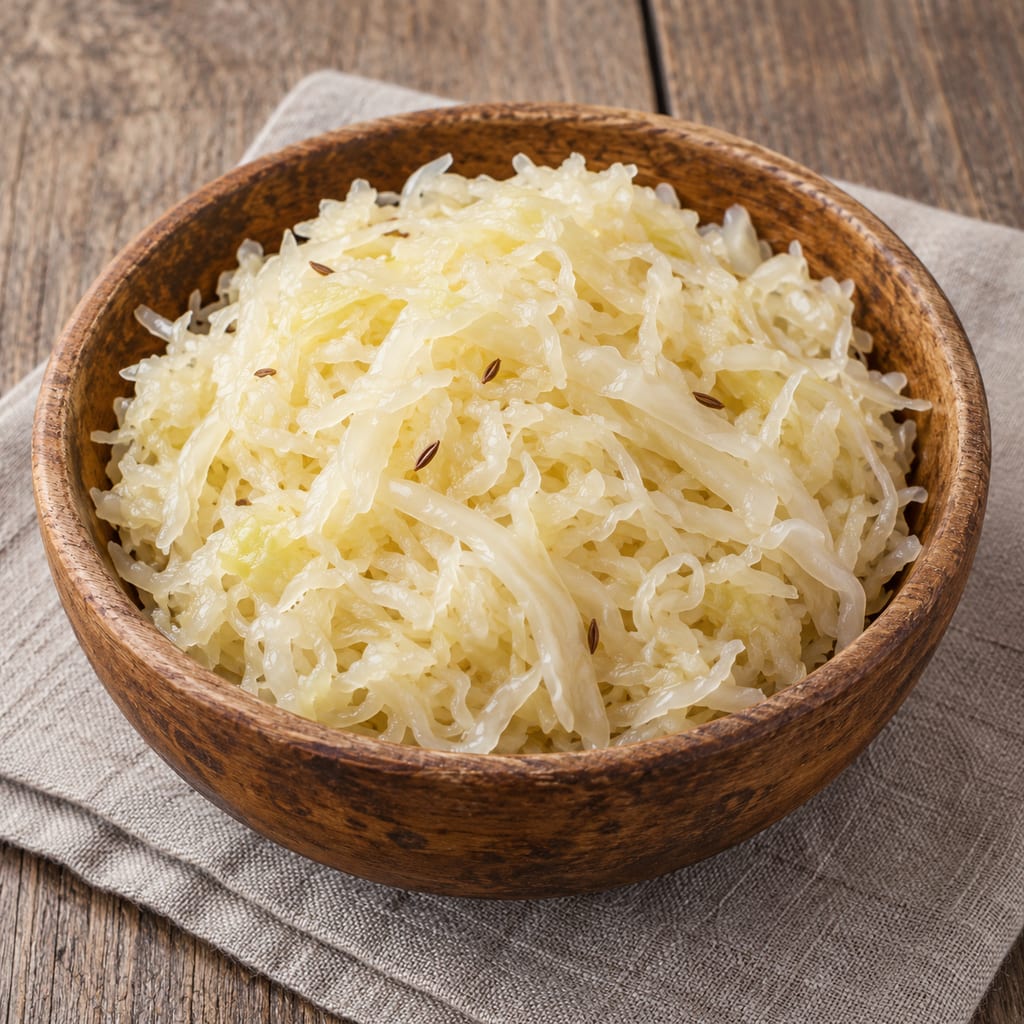
Kysané zeľí is Czech sour cabbage: shredded cabbage layered with salt and caraway and pressed in a wooden barrel. The regional account is descriptive and gives no validated salt ratio or endpoint.
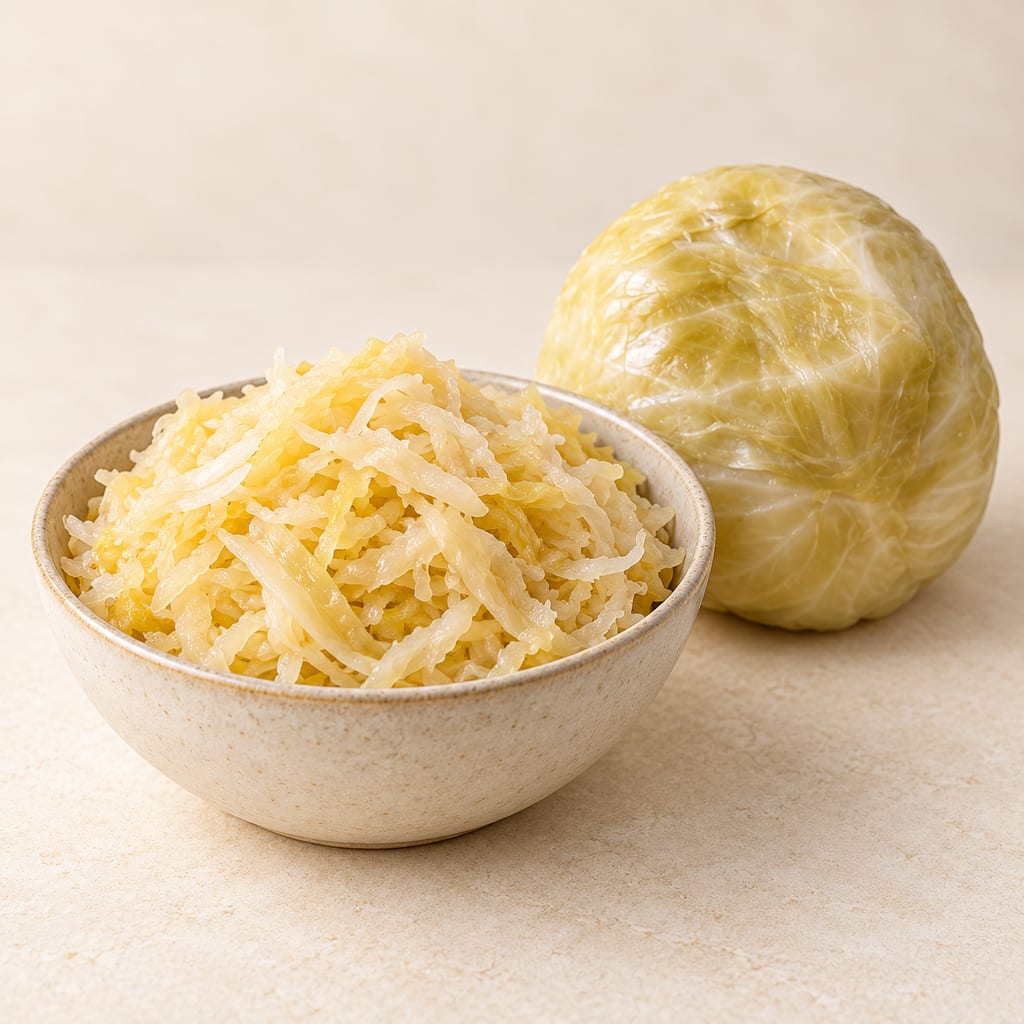
Protected Croatian sauerkraut from the Ogulin area: fresh white cabbage naturally lactic-fermented without preservatives, sold whole or shredded, from registered establishments.
No community contributions have been published for this entry yet.
Sign in to contribute. Published comments and photos are free to read.
MaangchiInspiration
Pa-kimchimeasured green onion kimchi recipe
Cited in: What is pa-kimchi?; Recipe overview; Ingredients; Understanding the ingredients; Equipment; Method; Regional variations; How to eat pa-kimchi; Safety and storage
University of Minnesota ExtensionSafety
Preserving food at home: FermentationProduce fermentation equipment, acidity monitoring and submersion controls.
Cited in: Recipe overview; Ingredients; Understanding the ingredients; Equipment; Method; Regional variations; Recognizing successful results; Safety and storage
MaangchiReference
Maangchi — Green Onion Kimchi (Pa-kimchi)Measured recipe and South Jeolla context. Originally published 2021; updated 2026
Cited in: History and culinary background; Recipe overview; Ingredients; Understanding the ingredients; Equipment; Method; Regional variations; Safety and storage
Frontiers in MicrobiologyReference
Frontiers in Microbiology — Kimchi and Other Widely Consumed Traditional Fermented Foods of KoreaIngredient-associated organisms and fermentation conditions
Cited in: History and culinary background; What happens during fermentation?; Recognizing successful results
PubMedReference
PubMed — Microbial niches in raw ingredients determine microbial community assembly during kimchi fermentationExperimental microbial source tracking
Cited in: What happens during fermentation?; Recognizing successful results
USDA Agricultural Research ServiceReference
USDA Agricultural Research Service — The Health Benefits of Fermented VegetablesFermentation and acidity background
Cited in: What happens during fermentation?; Recognizing successful results; Safety and storage