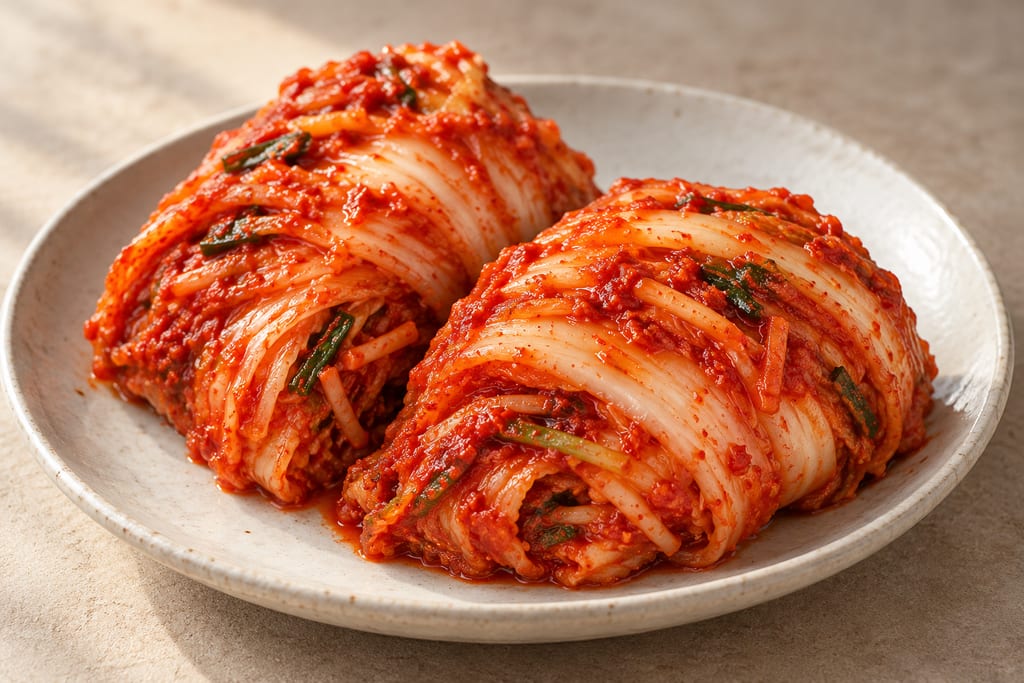
Baechu kimchi
Napa cabbage salted, seasoned with a paste of gochugaru, garlic, ginger and salted seafood, and left to sour through lactic fermentation; Korea's everyday winter preserve.
 FermenteaWhere food goes to change
Modern adaptation
나박김치 (nabak-kimchi) · 나박김치 · water kimchi
Cabbage-and-radish water kimchi with pear, apple and strained chili broth, following one Korean creator’s batch.
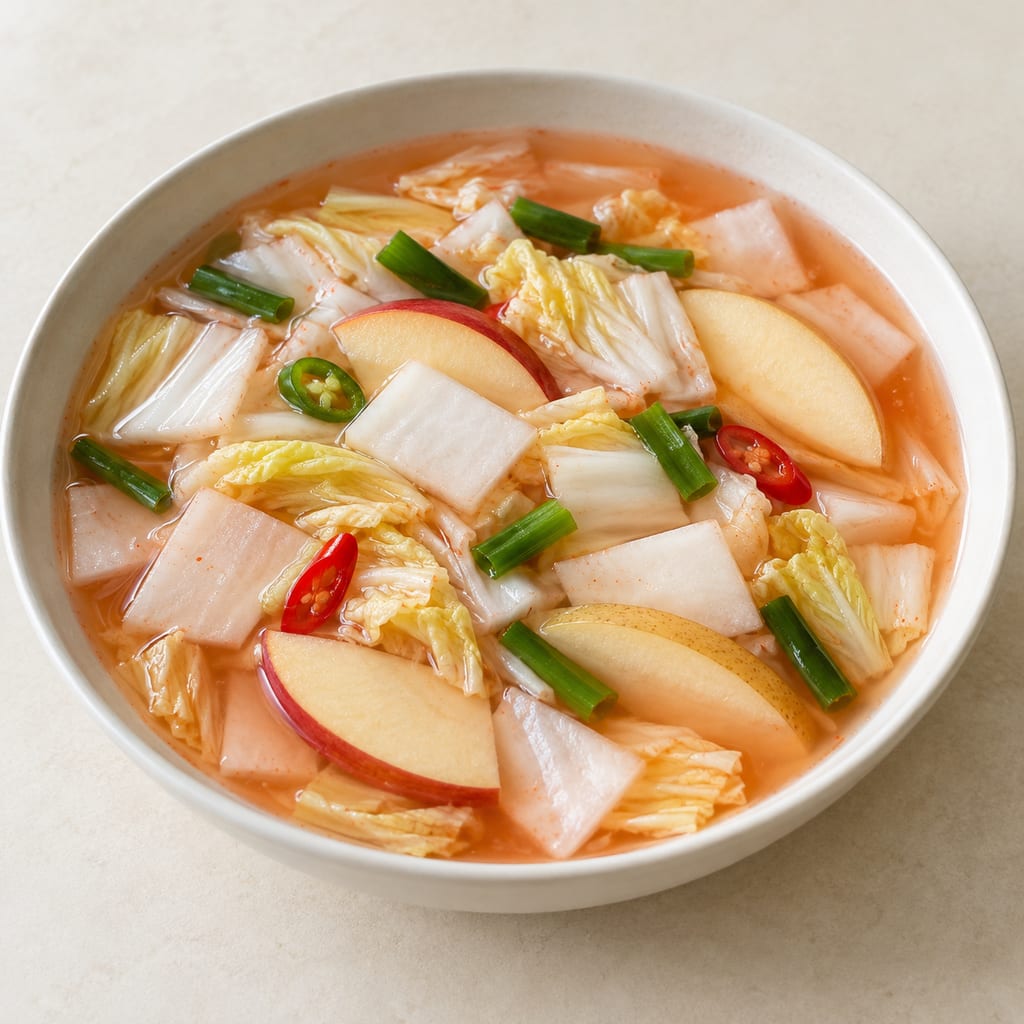
Contemporary creator batch; publication date is not an attestation.
Scaling: source batch only
The creator states 3.5 L total water, but the captions do not reconcile the sub-allocations with that total or measure all water used to rinse the blender through the sieve. The prepared-paste quantity is garbled; a later light spoon of flour and half cup water cooked for about three minutes may not produce the stated cup of paste. No numeric ripening temperature, measured endpoint, finished yield or storage duration is stated.
The Korean-language captions do not establish the place where this batch was prepared.
Context from Korean historical cookbook references named by the entry, not an origin claim or the place where the creator's batch was prepared.
Napa cabbage salted, seasoned with a paste of gochugaru, garlic, ginger and salted seafood, and left to sour through lactic fermentation; Korea's everyday winter preserve.
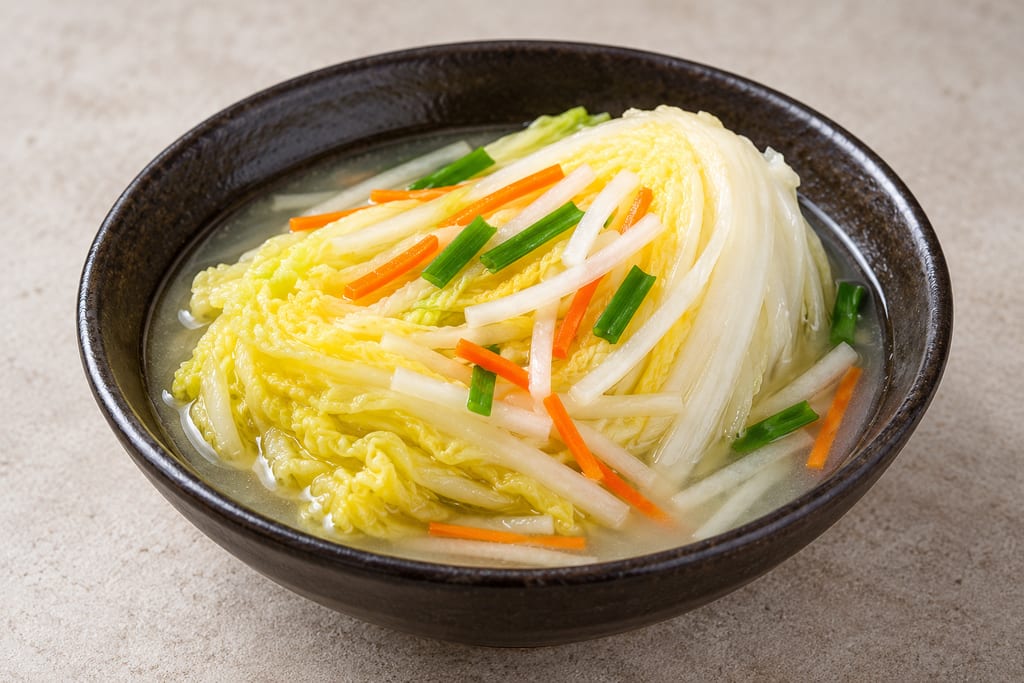
Napa cabbage is brined and filled with pear, radish, alliums, chives and fruit; this Korean kimchi omits red pepper flakes.
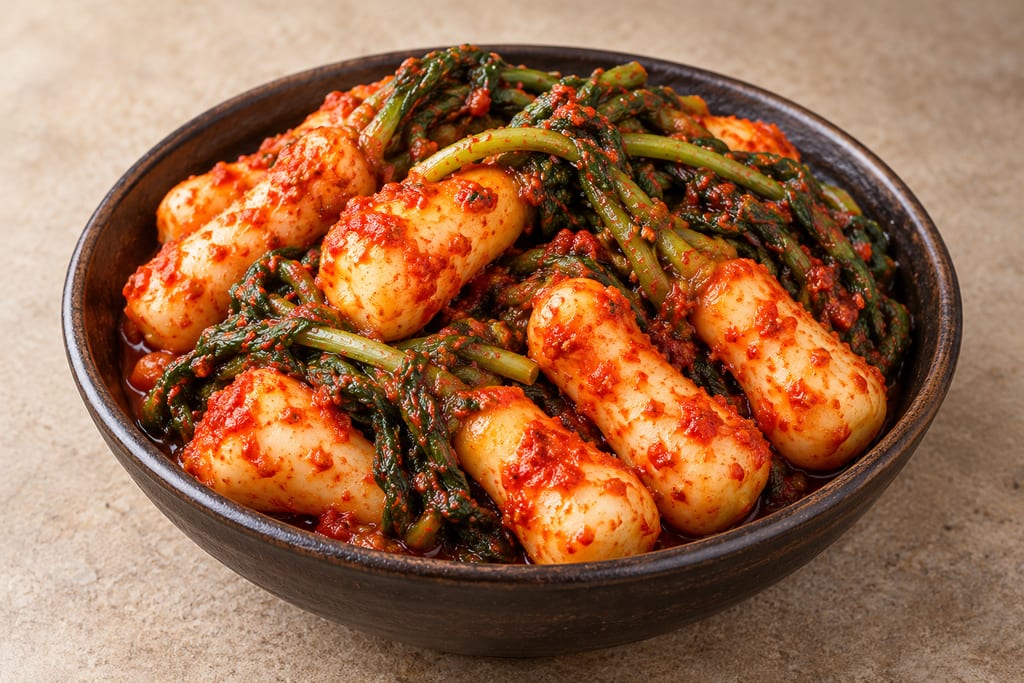
Small ponytail radishes keep their greens attached and ferment in a flour-and-chile seasoning paste.
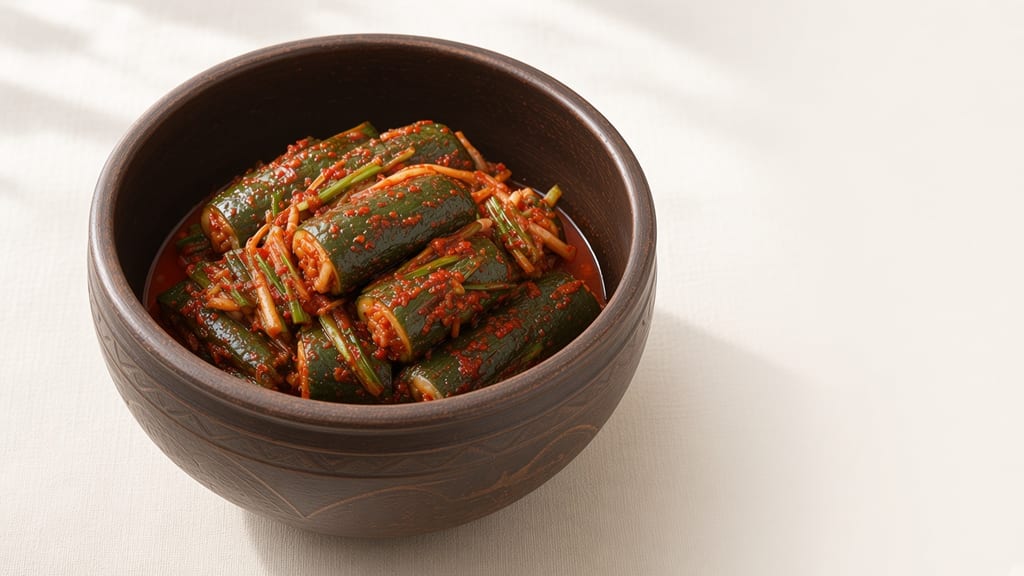
Hwanggwa damjeo is a cucumber kimchi from Yu Jung-rim's Jeungbo sallim gyeongje of 1766. Slit cucumbers are packed with chilli powder and garlic, scalded with hot salted water and sealed overnight.
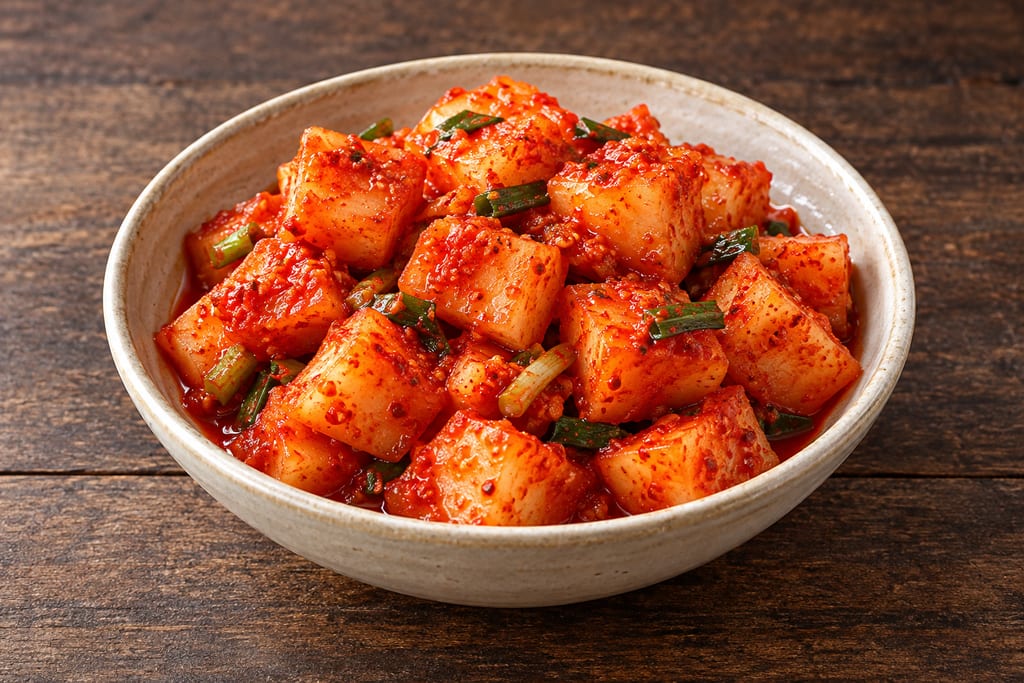
A radish kimchi cut into cubes and seasoned with gochugaru, fish sauce, garlic and ginger, eaten fresh or fermented a few days at room temperature.
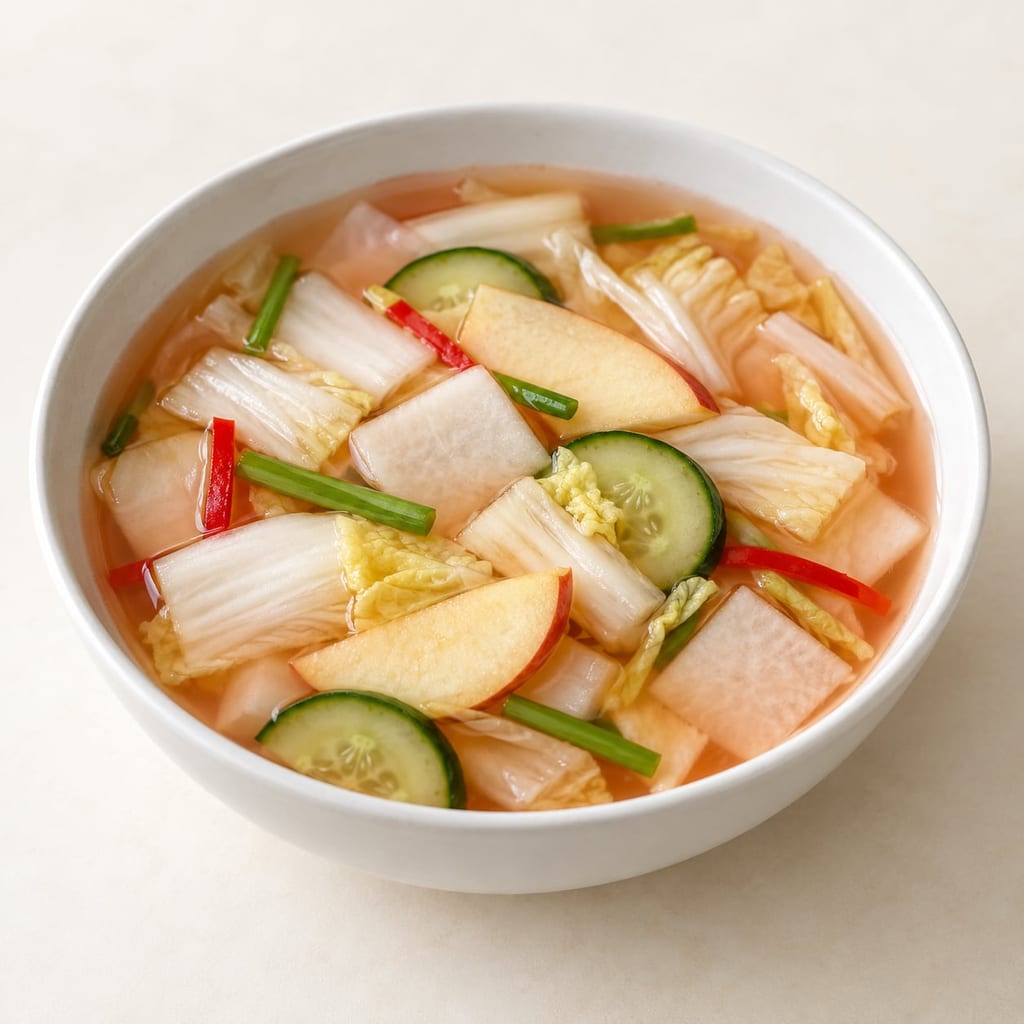
Napa cabbage and radish ferment in a rose-coloured broth with cucumber, apple, pear, alliums and chile.
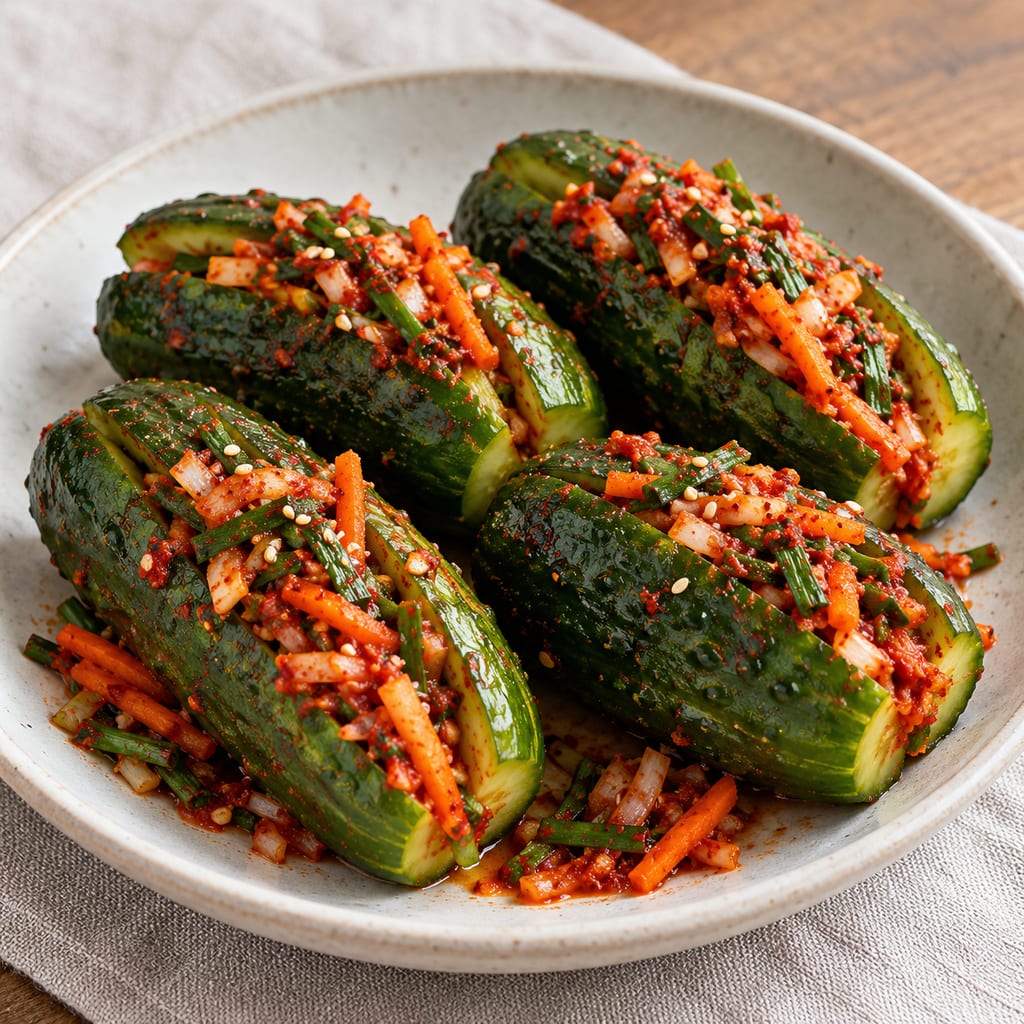
Oi-sobagi is a Korean stuffed cucumber kimchi: salted cucumbers slit and filled with a chive-and-chilli seasoning, eaten fresh or left to ferment.
Kimchi of salted napa cabbage and daikon with garlic, green onion and red pepper, kept at room temperature one to four days, then refrigerated.
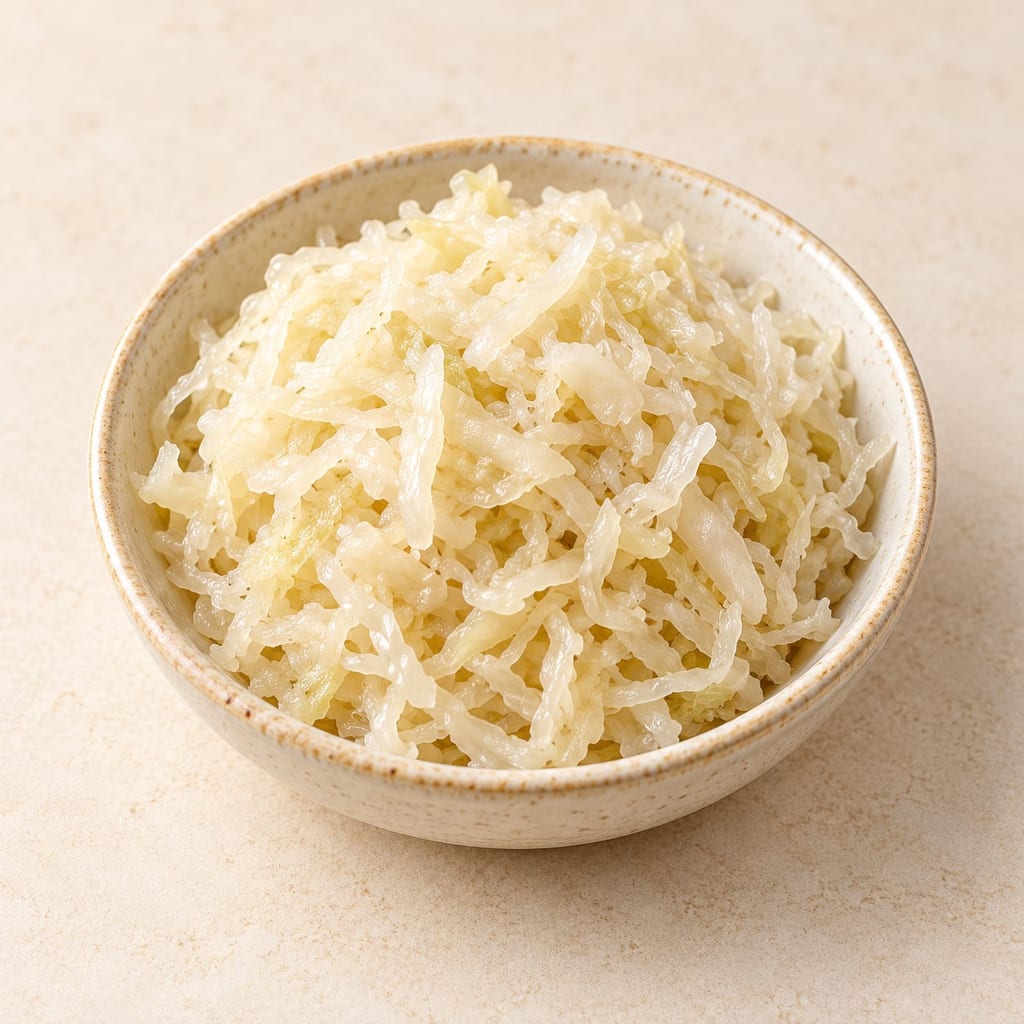
Finely cut cabbage fermented with salt in vats by natural lactic fermentation, a protected Alsatian product sold raw or cooked after fermentation.
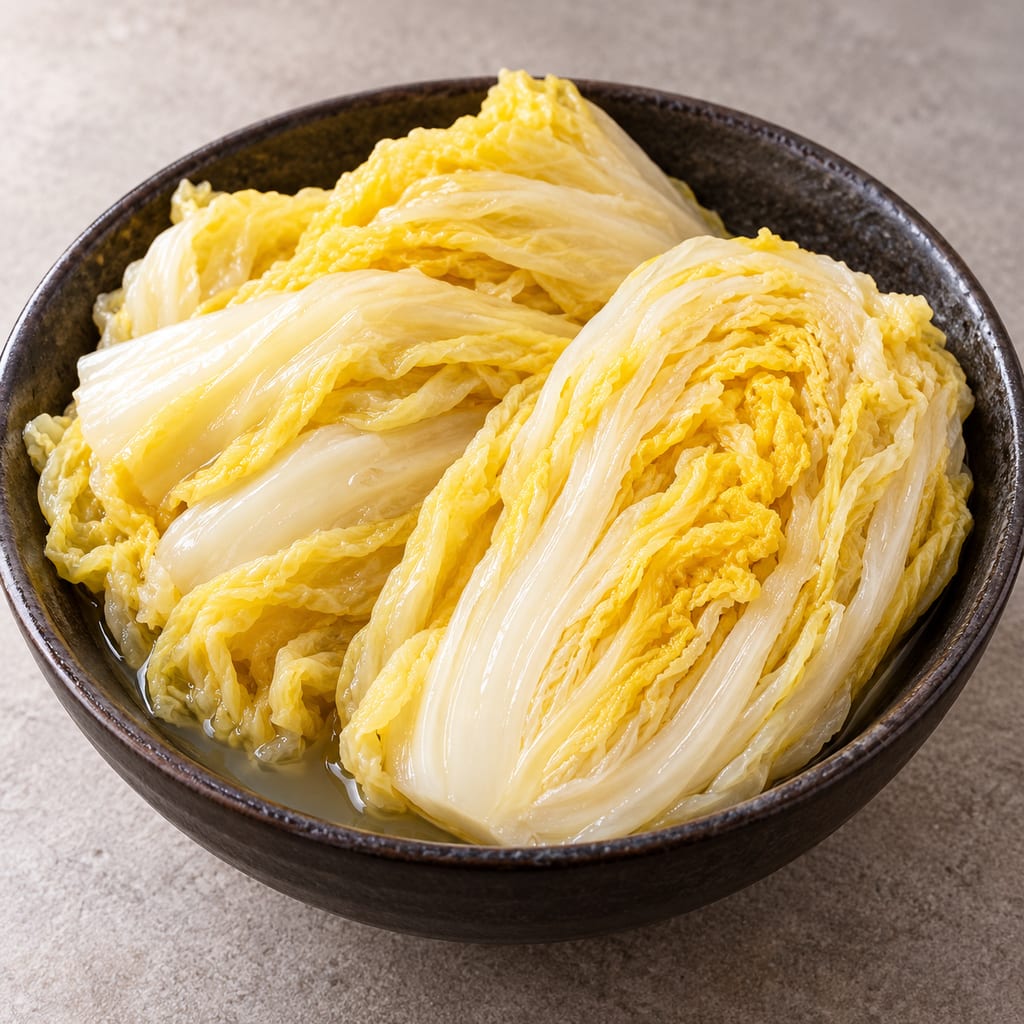
Napa cabbage fermented in a salt brine in Northeast China, traditionally in large ceramic or glass jars, until it turns sour.
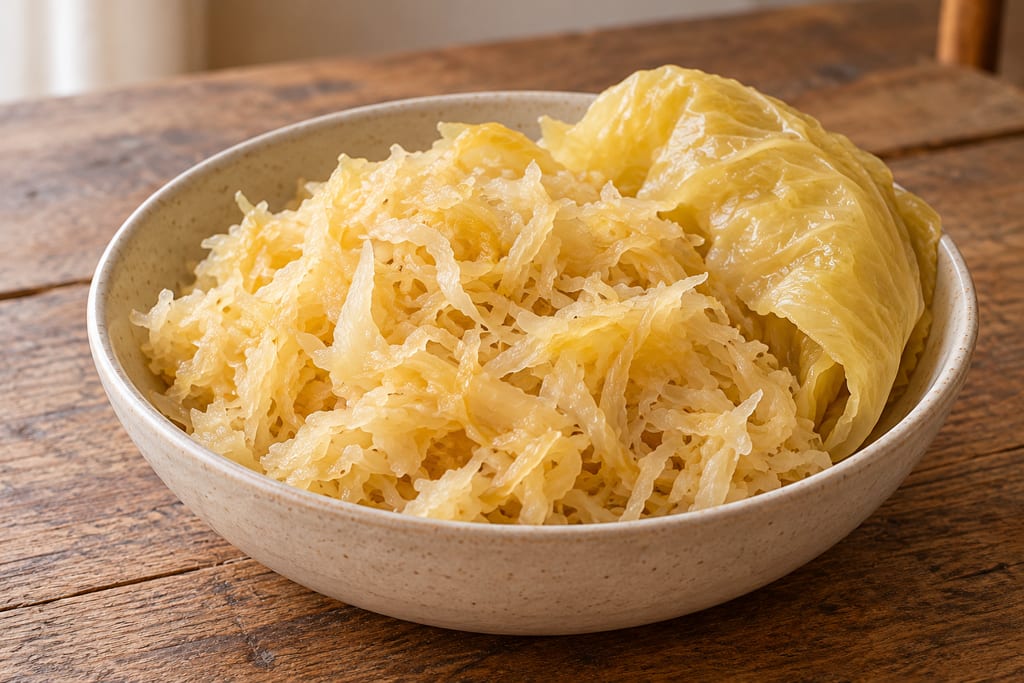
Serbian sour cabbage from the Futog area, made from the autochthonous Futoški cabbage population and registered as a protected product in 2008. It is a subset of general Serbian kiseli kupus.
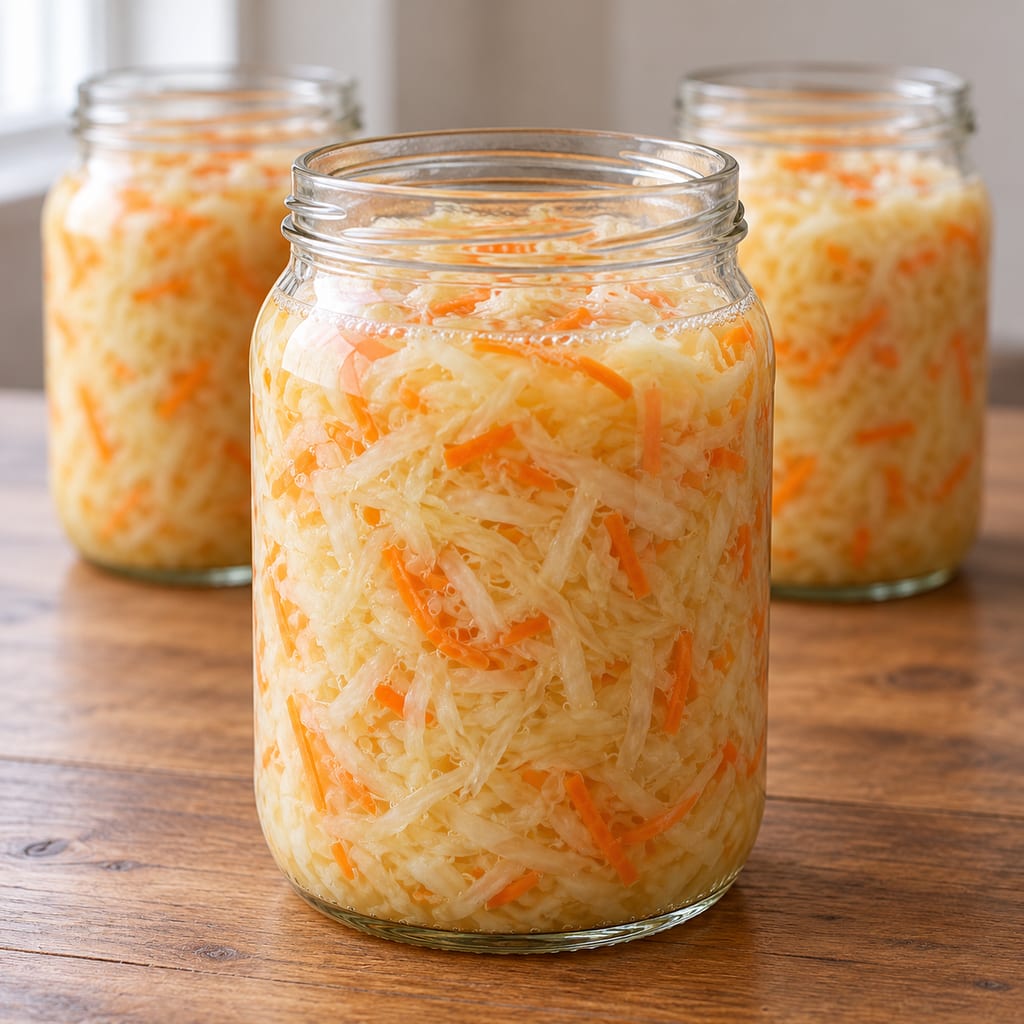
Shredded cabbage and grated carrot are salted to 20 g/kg, rested, packed into three jars and monitored during a creator-reported eight-day fermentation; measured temperature is not given.
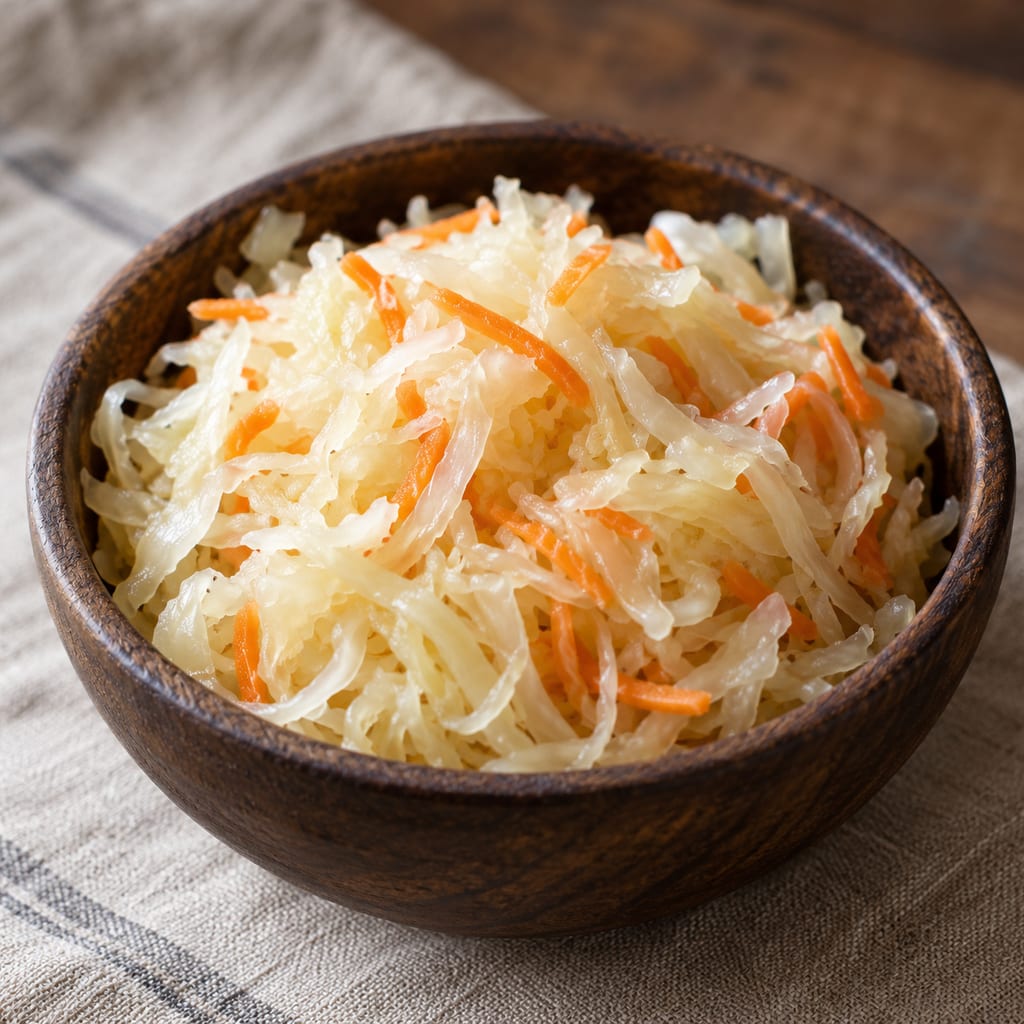
Kapusta kiszona z beczki is barrel-fermented cabbage from the Kołobrzeg area, entered on Poland’s List of Traditional Products in 2008. It is salted and fermented, with raw grated carrot added after souring.
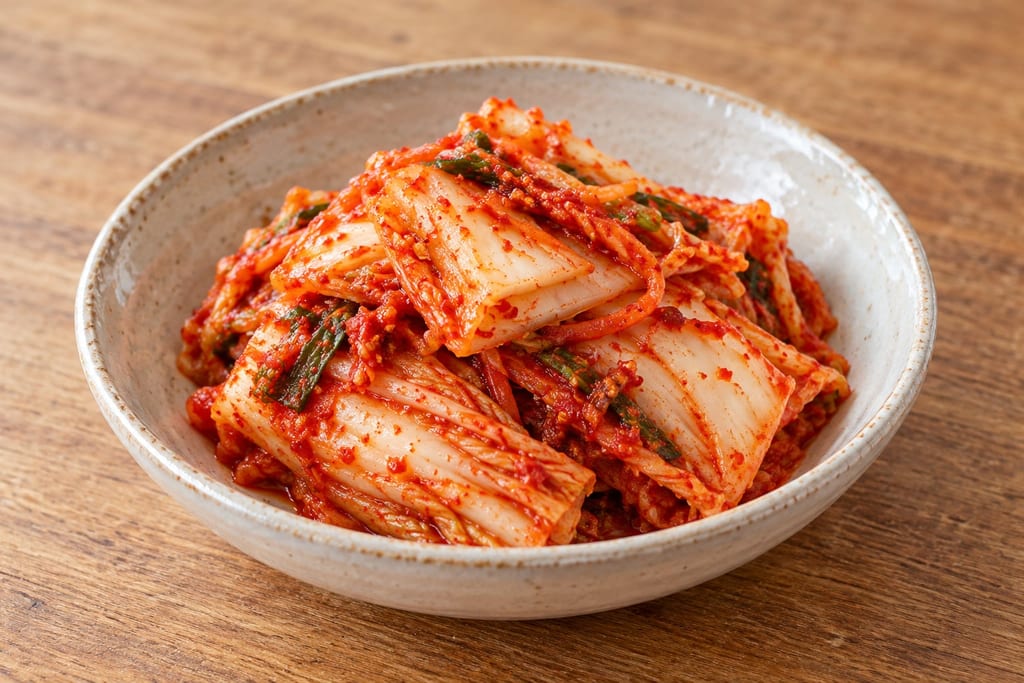
Kimchi is a Korean preserved vegetable food, most often cabbage, salted and seasoned, then fermented by the lactic acid bacteria that arrive with the vegetables. Some studies test added starter cultures, but a home jar is usually spontaneous.
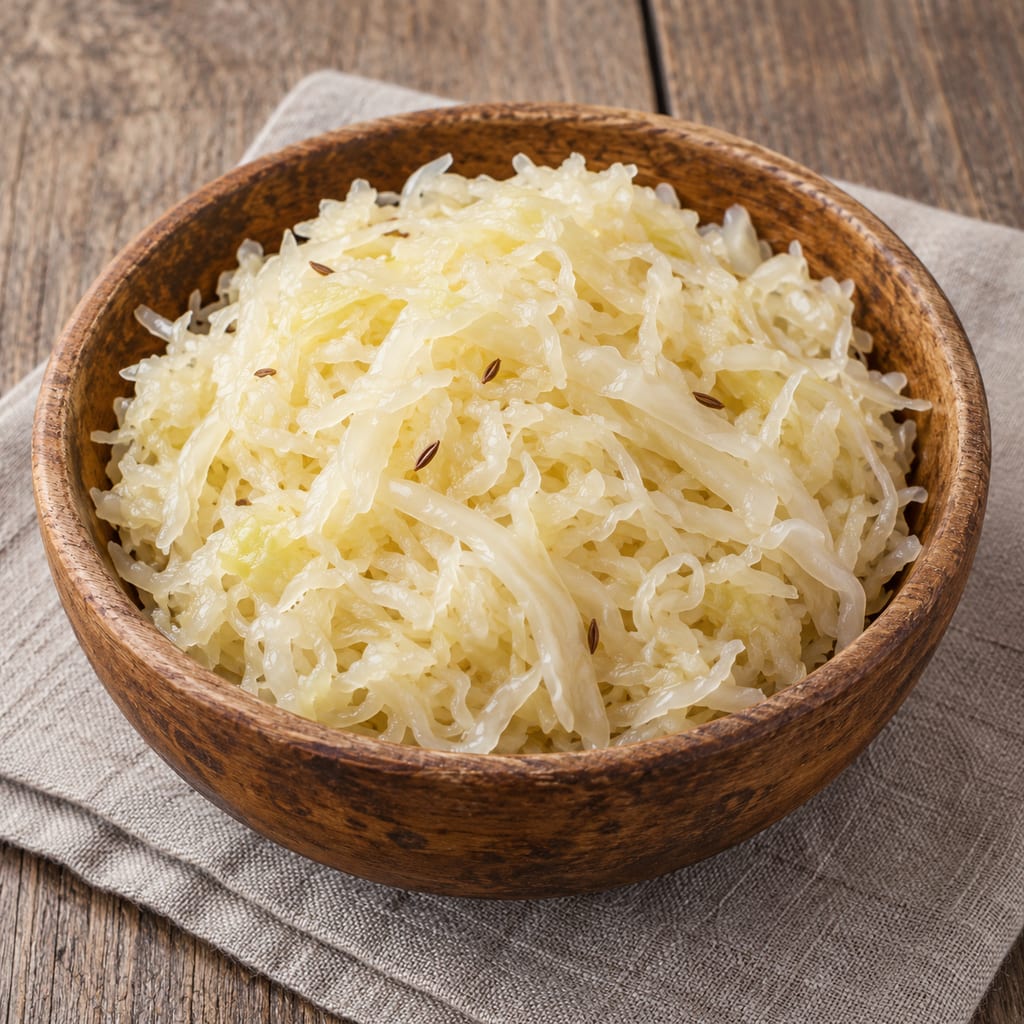
Kysané zeľí is Czech sour cabbage: shredded cabbage layered with salt and caraway and pressed in a wooden barrel. The regional account is descriptive and gives no validated salt ratio or endpoint.
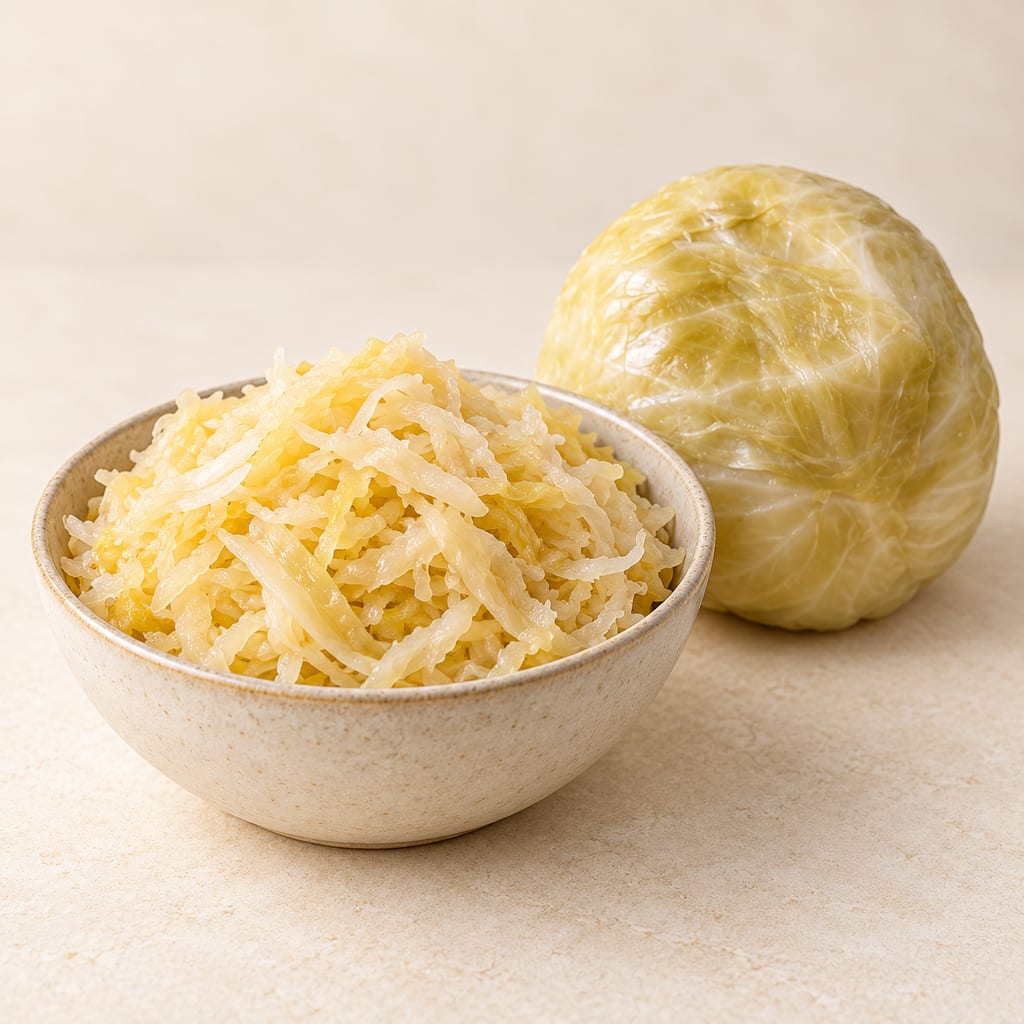
Protected Croatian sauerkraut from the Ogulin area: fresh white cabbage naturally lactic-fermented without preservatives, sold whole or shredded, from registered establishments.
No community contributions have been published for this entry yet.
Sign in to contribute. Published comments and photos are free to read.
김대석 셰프TVProcess · Ingredients · Handling
속이 뻥 뚫리는 "나박김치" 이 방법이 가장 맛있습니다The accepted source review reports that the complete archived Korean caption track was read; no audiovisual review was made.
Recipe instructions cite caption offsets where inspected segments support them. Other cited times identify method-start or source-context anchors, not exact stage offsets.
Encyclopedia of Korean Culture, Academy of Korean StudiesIdentity · History · Geography
나박김치Official cultural encyclopedia entry supports dish identity and stated geographic or historical context only, not the preparation location or recipe controls.
Korea Tourism Organization, VISITKOREAIdentity · Uses
Water Kimchi (나박김치 / Nabakkimchi)General dish description and serving context, not this source batch.