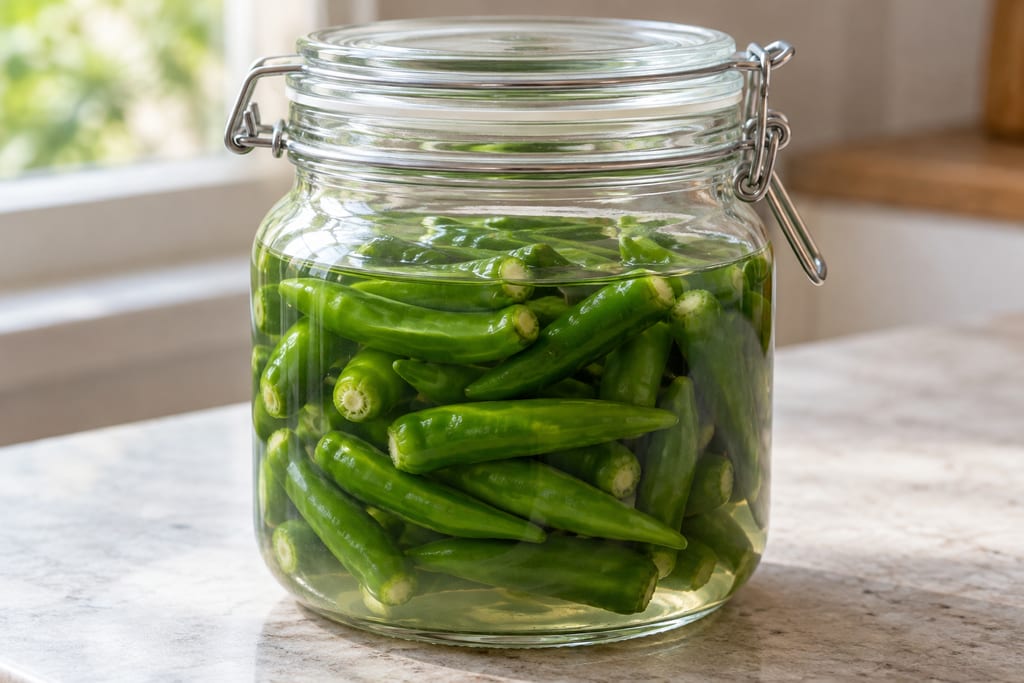
Salt-brined green chiles, pao-lajiao style
Whole green chiles are blanched briefly, then fermented in 3% salt brine with sake in a modern Japanese presentation of a wider Asian preparation.
 FermenteaWhere food goes to change
东北酸菜 · Suancai (northern) · Northeast Chinese sour cabbage
Napa cabbage fermented in a salt brine in Northeast China, traditionally in large ceramic or glass jars, until it turns sour.
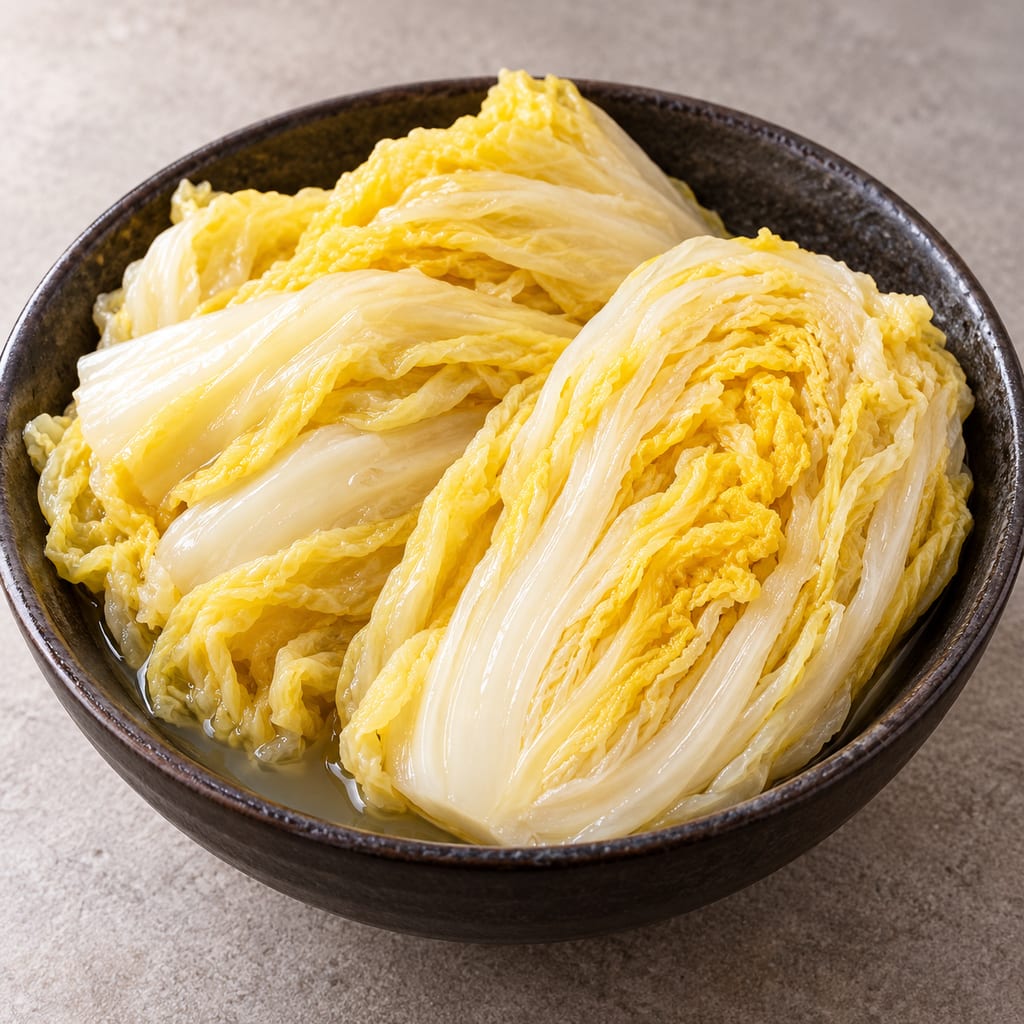
Dongbei suancai (东北酸菜) is fermented napa cabbage from Northeast China. Suancai means sour vegetable; the 2022 study describes it as a sour or salty-sour food that is popular in the region. The supplied atlas describes a relatively plain salt brine as the usual medium, and cautions that practice varies.
The study's introduction describes traditional fermentation in large ceramic or glass jars, which is the setting this page describes. The study's own experiment is a different thing: cabbage is blanched, shredded, packed with brine into 555 mL bottles and incubated for sampling. Observations from those bottles describe one tested process, not the whole-cabbage jar tradition.
In the 2022 experiment, researchers followed napa cabbage in salt solution over time and examined its bacterial communities, acidity and other measures. Four lactic-acid-bacteria genera, Weissella, Leuconostoc, Lactococcus and Lactobacillus, appear in the early or late samples. These findings describe the sampled bottles; they do not show that the same organisms occur in every traditional jar or that any one culture is required.
A 2016 study, read through its PubMed abstract only, inoculated suancai fermentations with Lactobacillus curvatus and Leuconostoc mesenteroides and reports that the inoculated treatments lowered pH more quickly. That controlled comparison does not establish a household starter or a traditional culture sequence.
The reviewed sources tie suancai to Northeast China but give no origin or date, and a cold climate alone cannot show when households began making it or fix a season. They also do not describe how families serve it or name dishes; local food histories and cookbooks would be needed for that.
The brine strength, blanching, temperature and sampling period of the laboratory study are not directions, and its pH, nitrite and acidity measurements are research observations rather than home thresholds. No household batch, endpoint, storage period or discard rule is established here.
No origin or date is established in the reviewed sources.
Scaling: source batch only
The inspected sources are a laboratory study and an abstract, not a validated household process; they give no safe endpoint, storage duration or discard rule.
Hazard sourceUse a process-matched, qualified source for brine strength, endpoint and storage; the study's pH, nitrite and acidity measurements are research observations, not home thresholds. Appearance, smell and bubbles do not establish safety.
Control sourceNo household brine strength, time, endpoint or storage guidance is established.
A regional association; the sources give no origin place or date.
Whole green chiles are blanched briefly, then fermented in 3% salt brine with sake in a modern Japanese presentation of a wider Asian preparation.
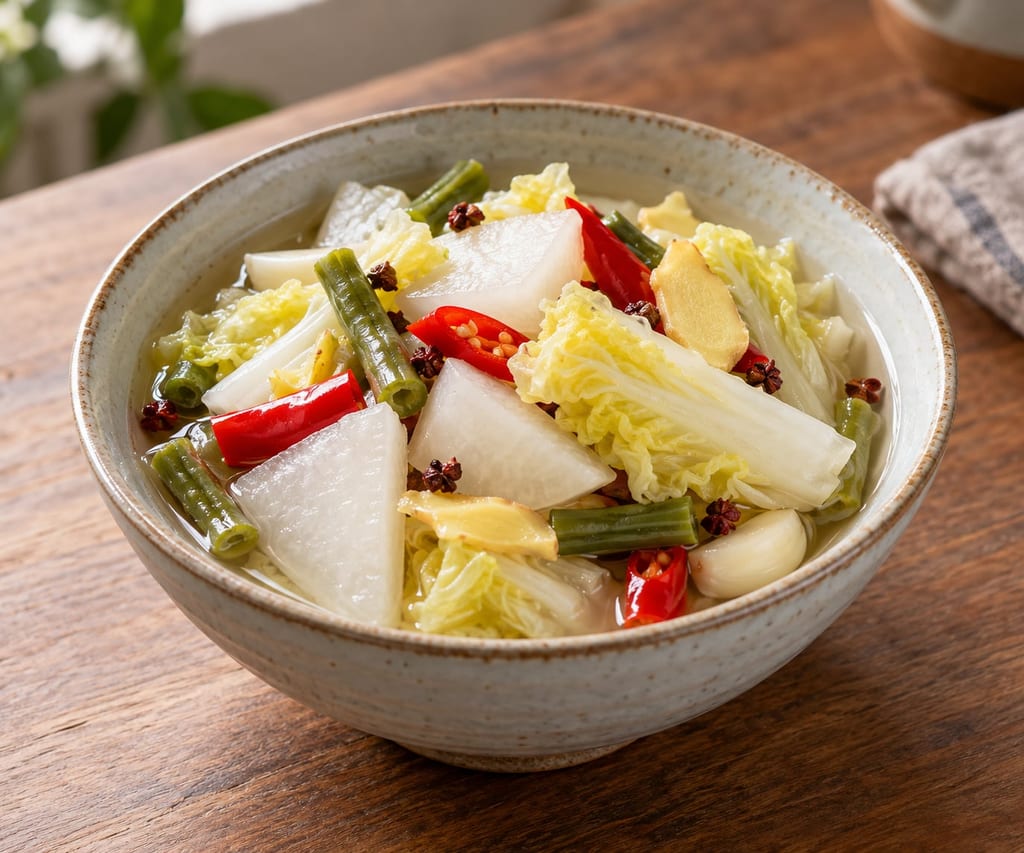
Sichuan paocai is a family of vegetables, most often radish, fermented by lactic-acid bacteria in a salted, spiced brine in a water-sealed pottery jar, with mature brine kept and reused.
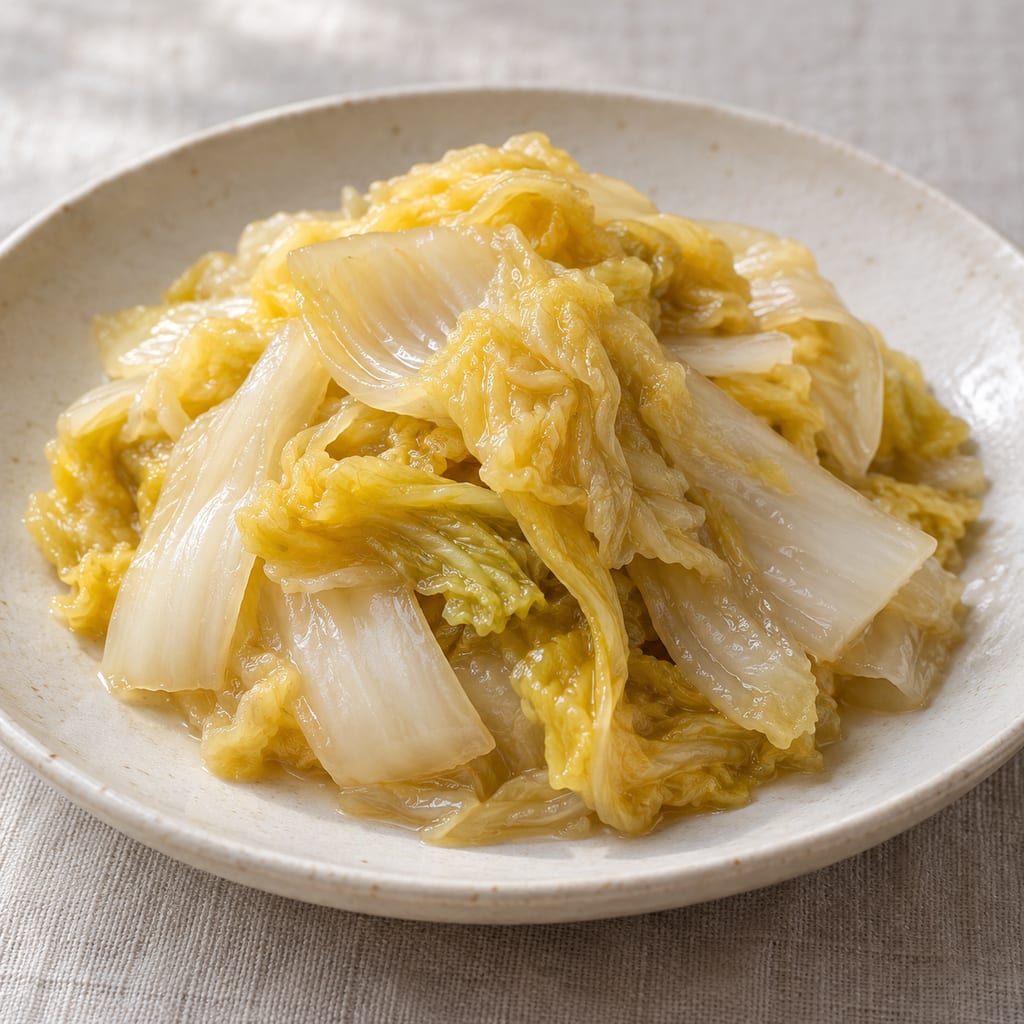
Chinese cabbage or mustard greens salted and held under a weight until lactic fermentation turns them sour; northeastern and southern China keep distinct traditions of it.
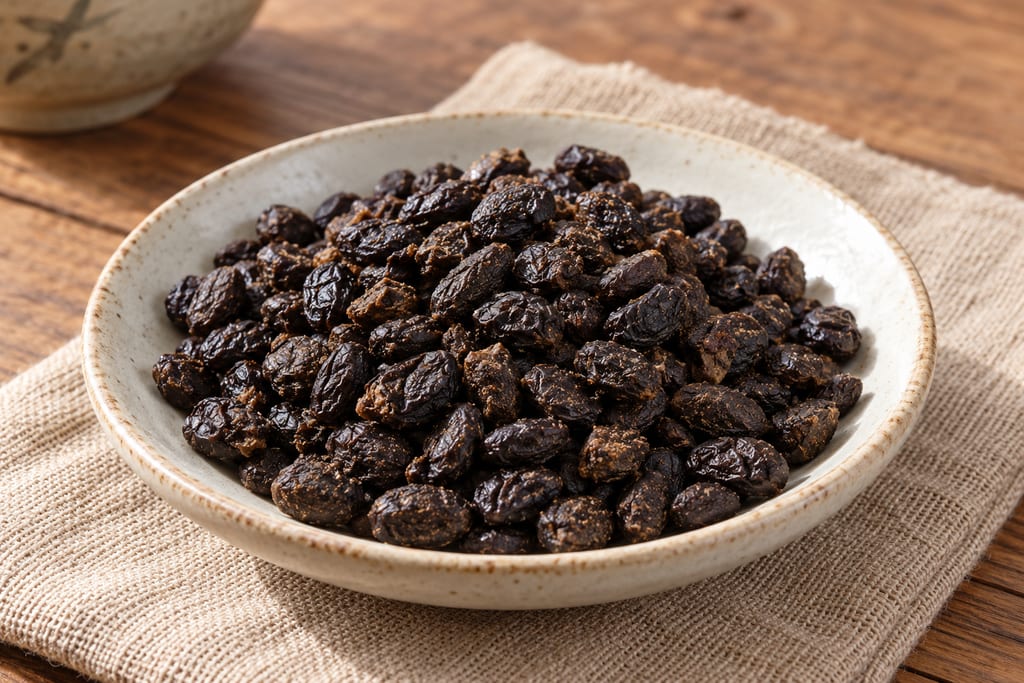
A Chinese fermented soybean condiment in which Bacillus-led bacteria, not moulds, drive the fermentation. Documented in Zunyi, Guizhou, and kept separate from mould-led douchi.
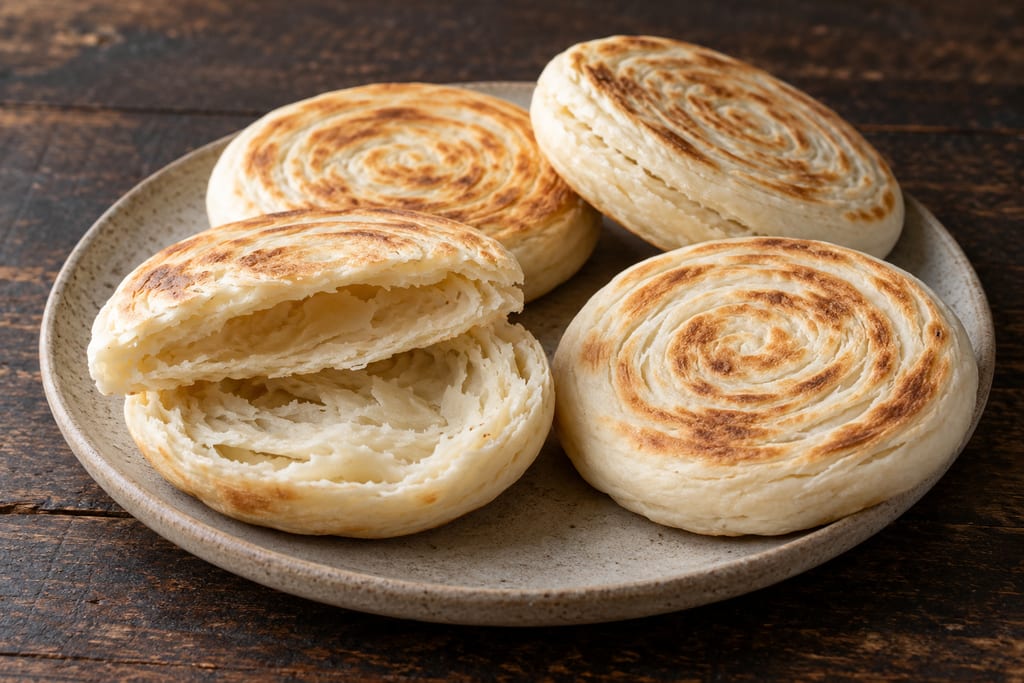
This Shaanxi-associated yeast flatbread uses a simple water dough, coiled shaping and a skillet bake. It is the bread used in roujiamo, not the filled meat dish.
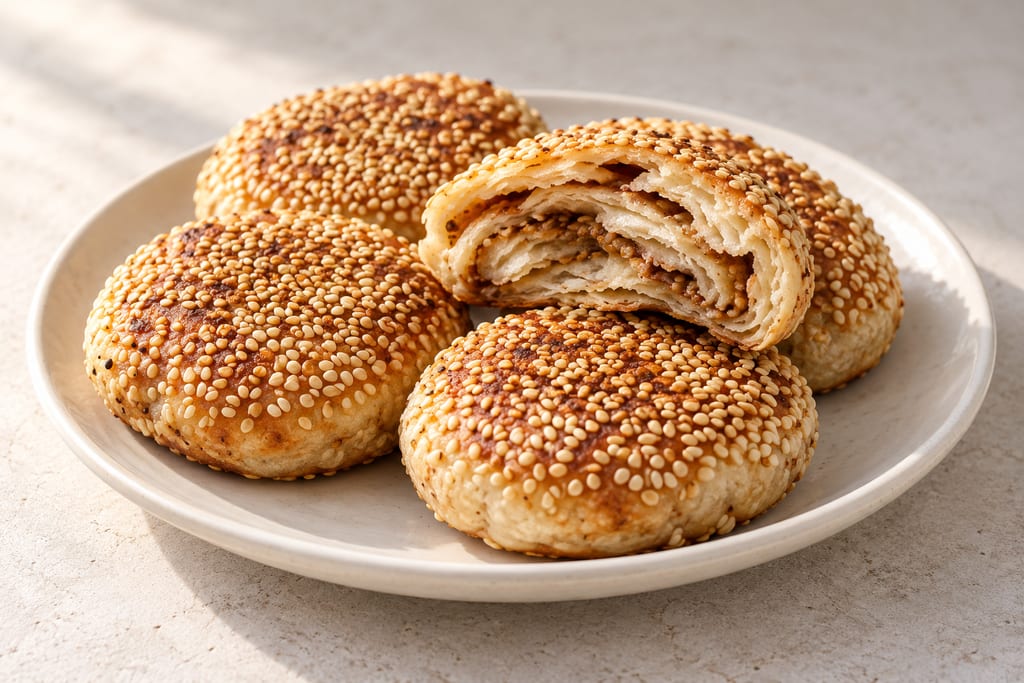
A Beijing-style yeast dough is layered with seasoned sesame paste, sealed into small buns, briefly pan-fried, seeded, and baked.
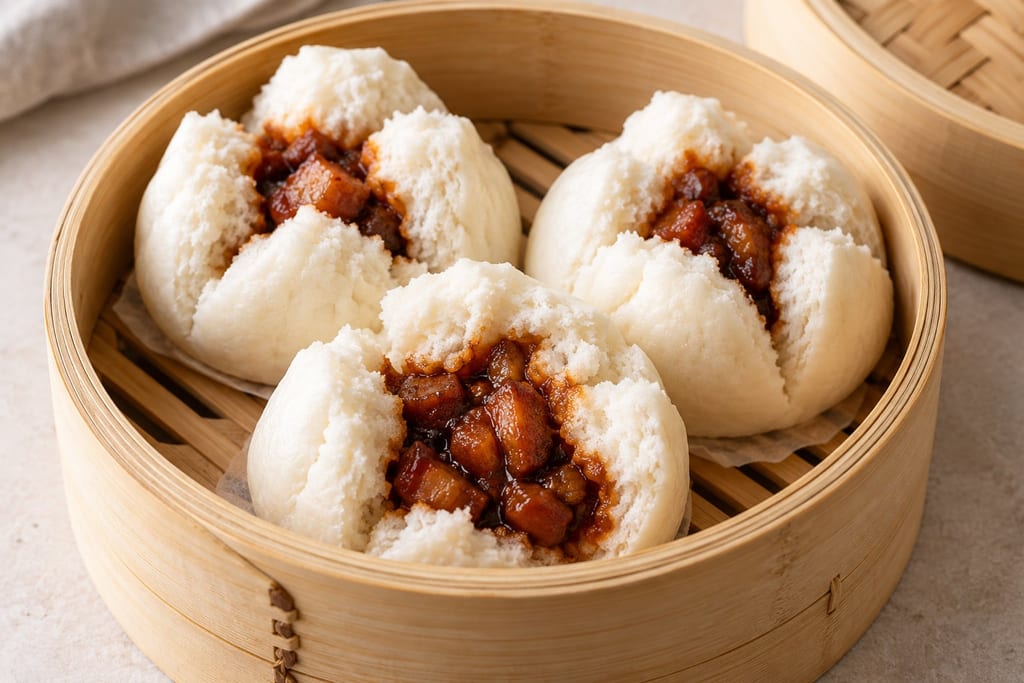
Fourteen fluffy steamed buns filled with cooked char siu and a thickened oyster-soy sauce.
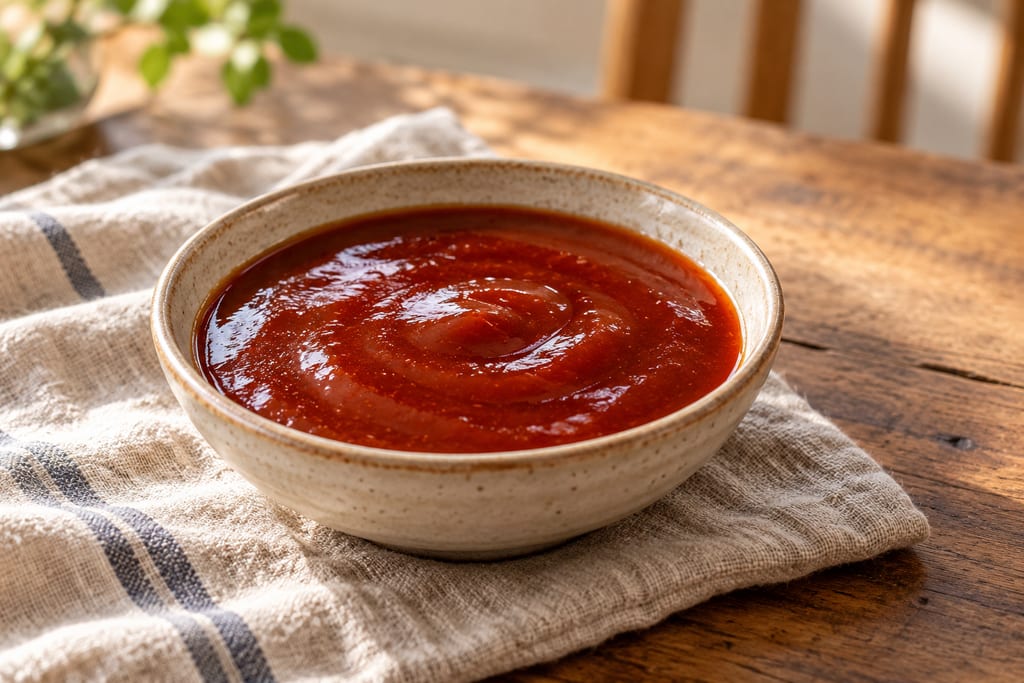
A smooth, tomato-based sweet-and-sour sauce of sugar, vinegar, tomato paste and soy sauce, thickened with starch for dipping or coating; it is not the sauce on Hangzhou's sweet-and-sour ribs.
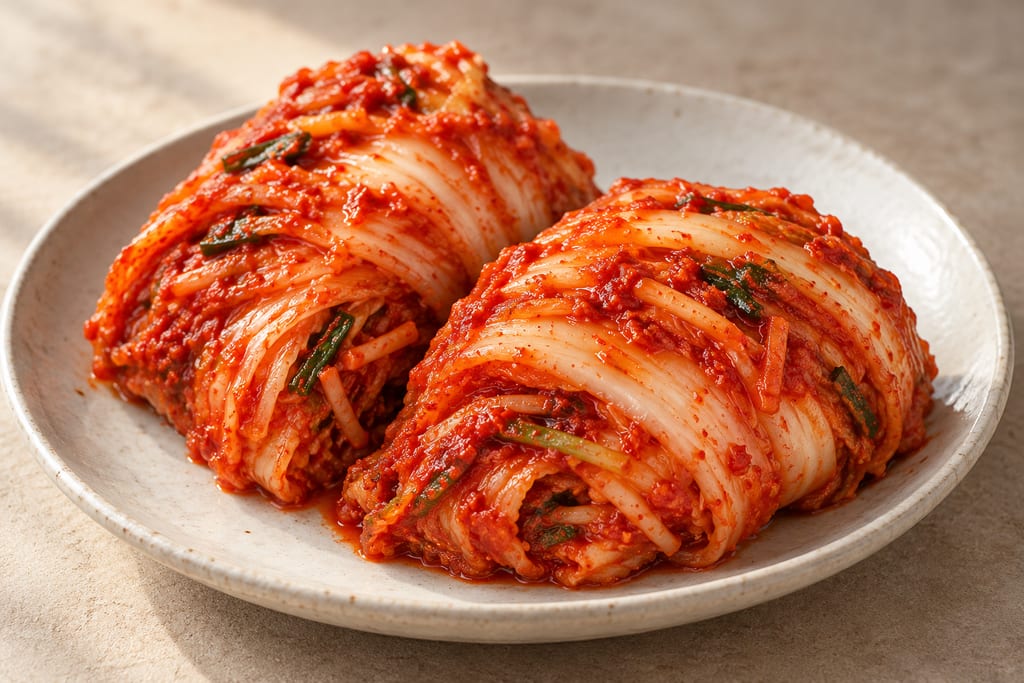
Napa cabbage salted, seasoned with a paste of gochugaru, garlic, ginger and salted seafood, and left to sour through lactic fermentation; Korea's everyday winter preserve.
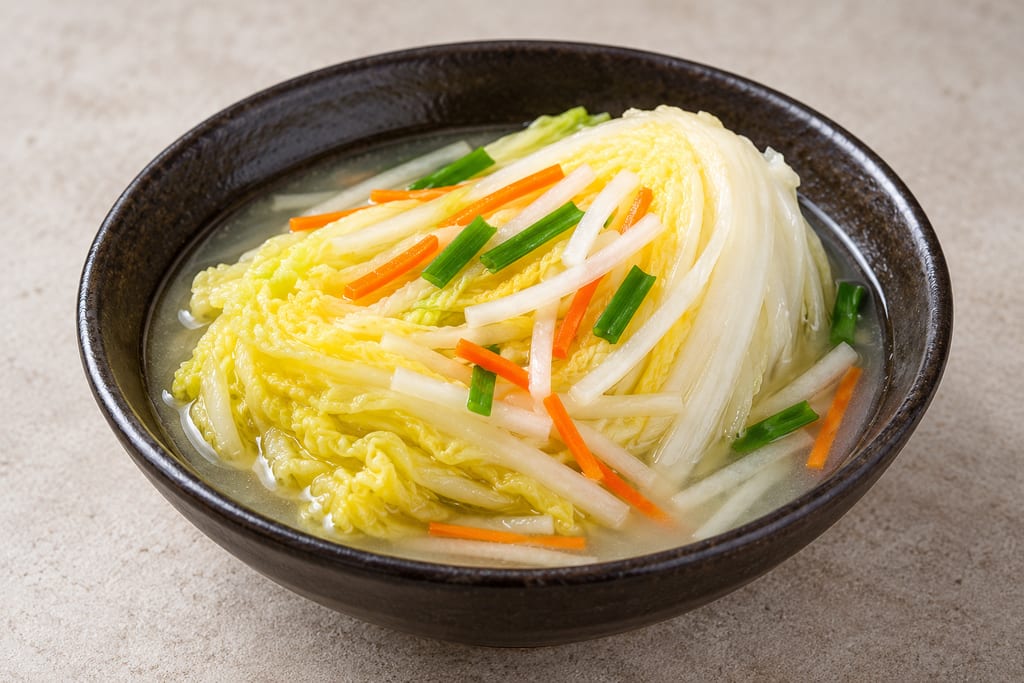
Napa cabbage is brined and filled with pear, radish, alliums, chives and fruit; this Korean kimchi omits red pepper flakes.
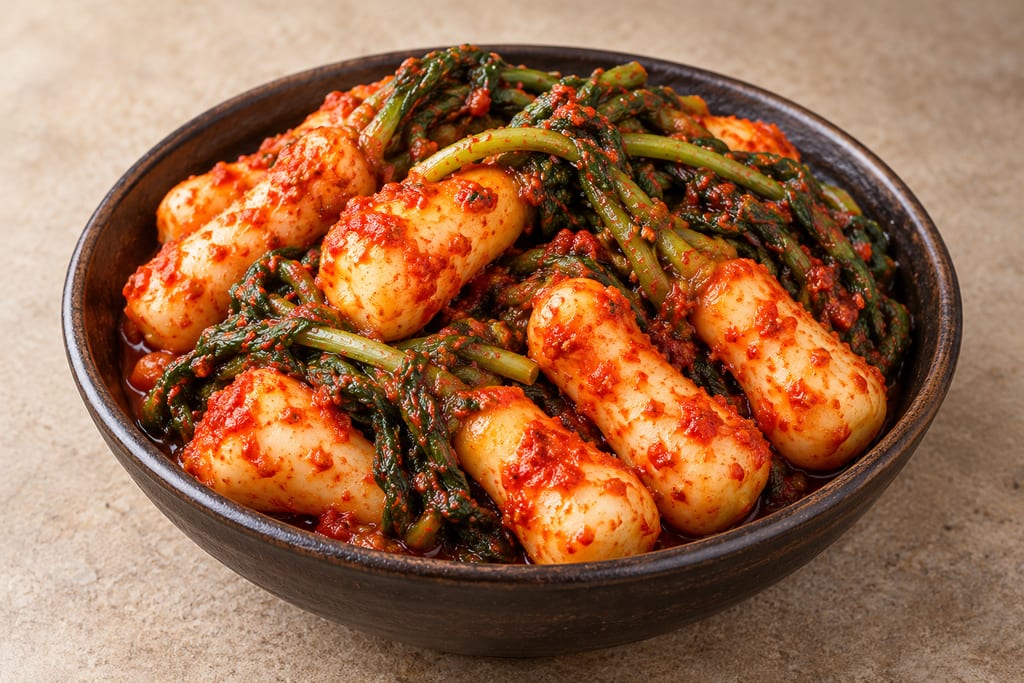
Small ponytail radishes keep their greens attached and ferment in a flour-and-chile seasoning paste.
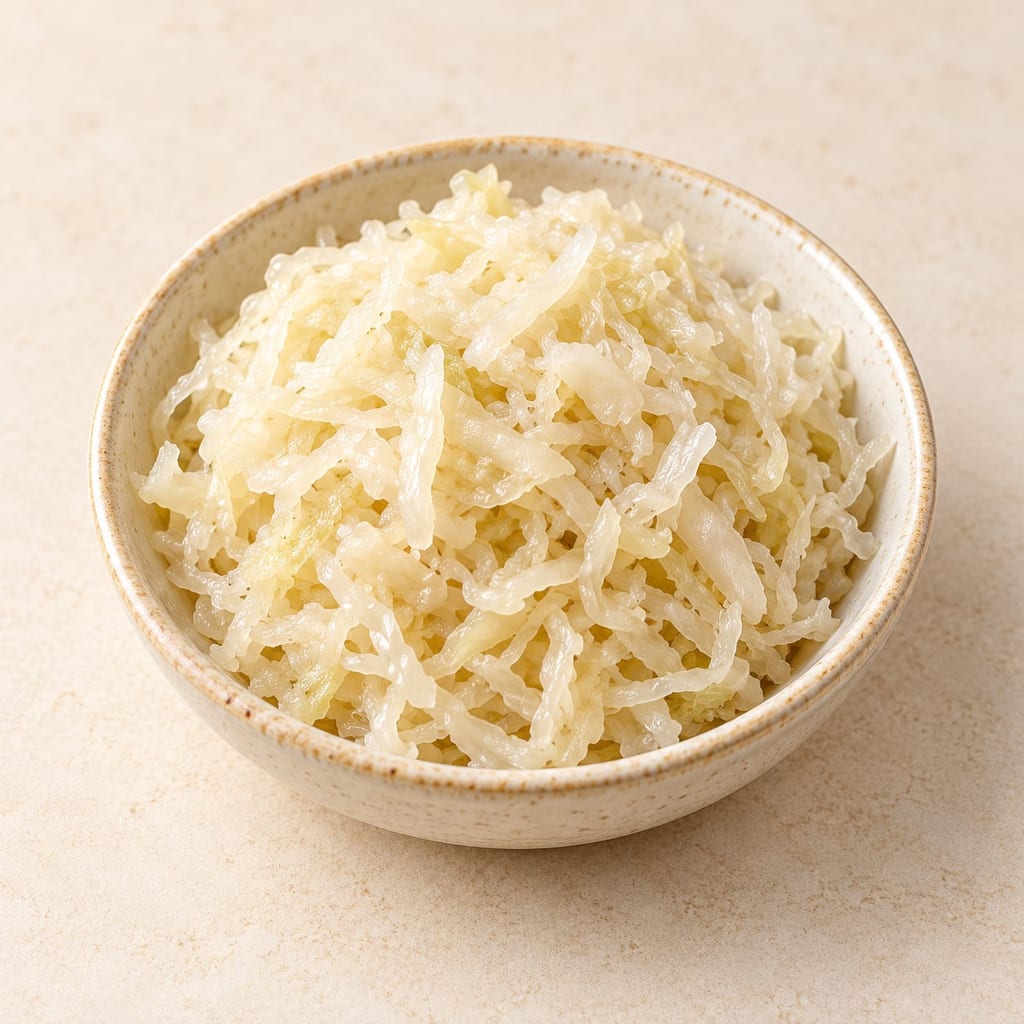
Finely cut cabbage fermented with salt in vats by natural lactic fermentation, a protected Alsatian product sold raw or cooked after fermentation.
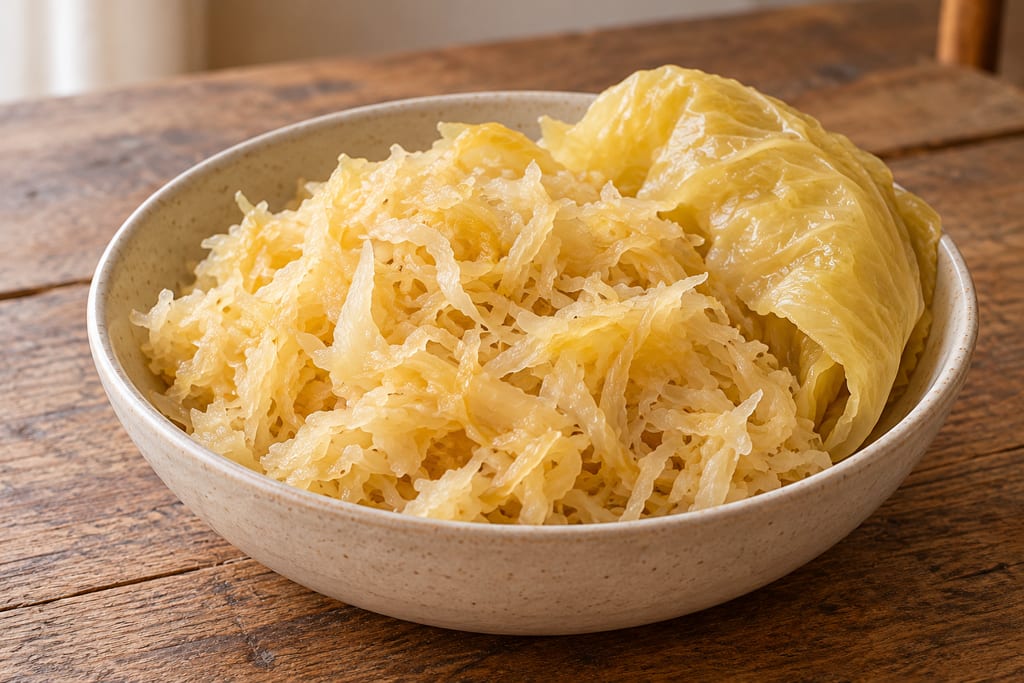
Serbian sour cabbage from the Futog area, made from the autochthonous Futoški cabbage population and registered as a protected product in 2008. It is a subset of general Serbian kiseli kupus.
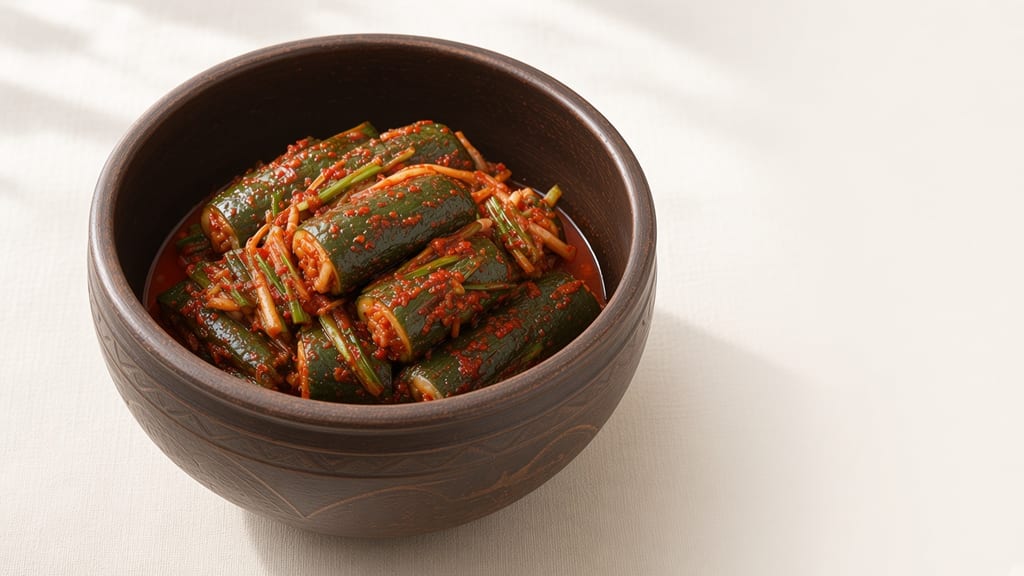
Hwanggwa damjeo is a cucumber kimchi from Yu Jung-rim's Jeungbo sallim gyeongje of 1766. Slit cucumbers are packed with chilli powder and garlic, scalded with hot salted water and sealed overnight.
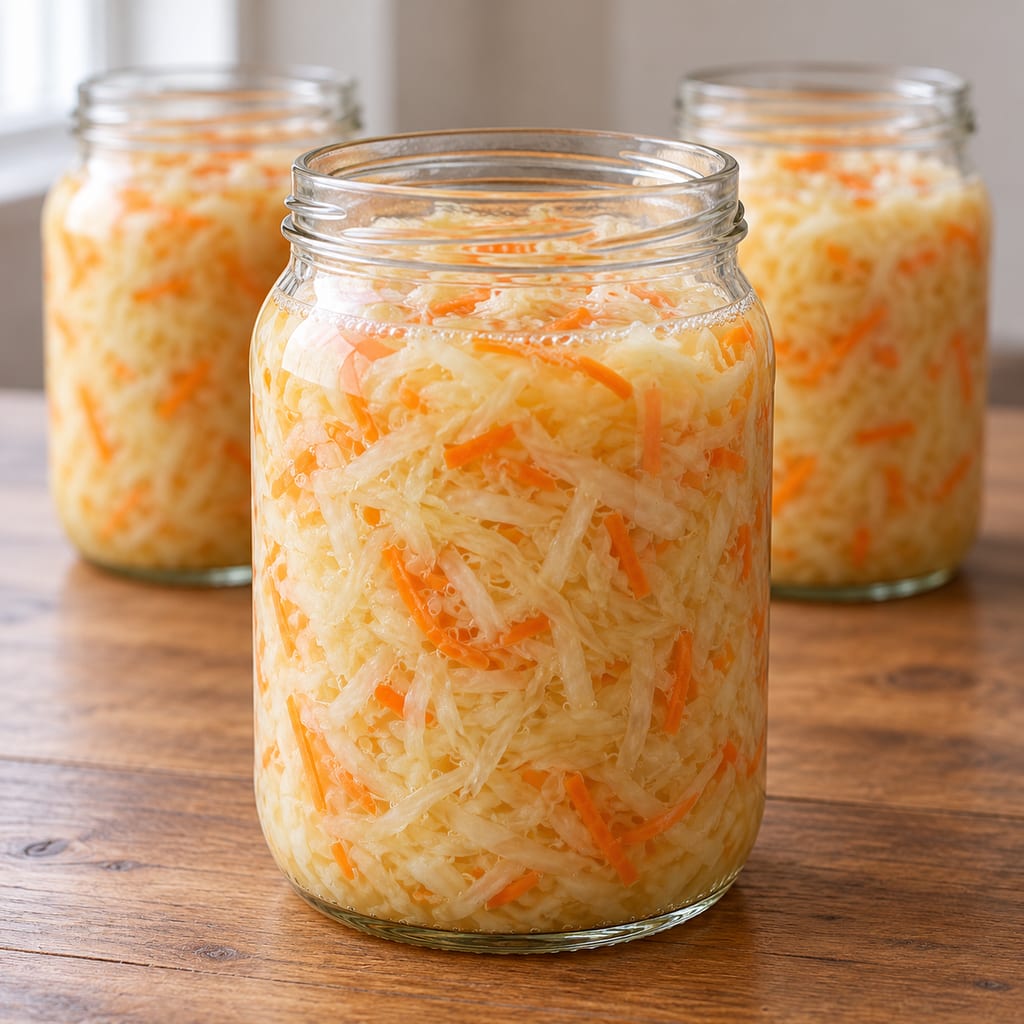
Shredded cabbage and grated carrot are salted to 20 g/kg, rested, packed into three jars and monitored during a creator-reported eight-day fermentation; measured temperature is not given.
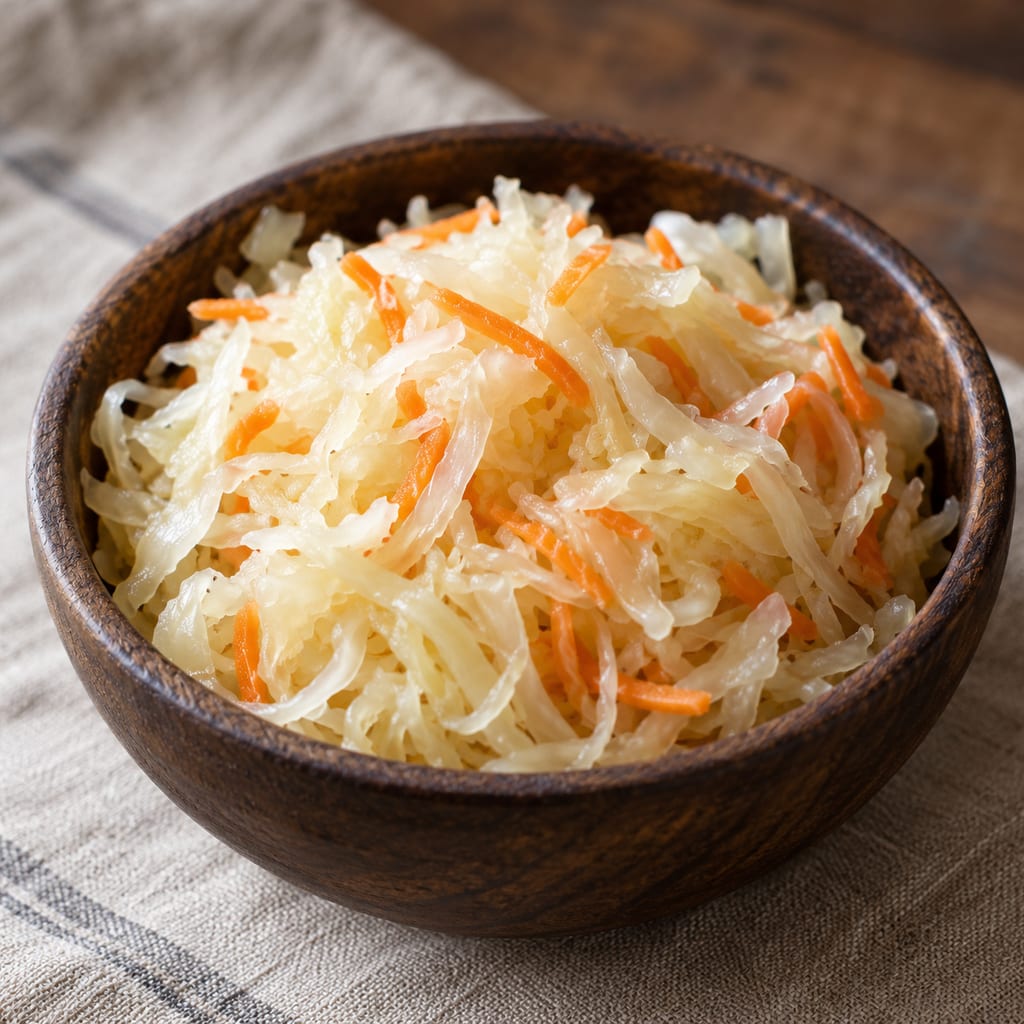
Kapusta kiszona z beczki is barrel-fermented cabbage from the Kołobrzeg area, entered on Poland’s List of Traditional Products in 2008. It is salted and fermented, with raw grated carrot added after souring.
No community contributions have been published for this entry yet.
Sign in to contribute. Published comments and photos are free to read.
China Brewing, 2022; DOI 10.11882/j.issn.0254-5071.2022.05.008Method · Science
东北酸菜发酵前后期细菌菌群多样性分析 [Analysis of bacterial community diversity in early and late fermentation of Northeast suancai]Suancai associated with Northeast China; fermented napa cabbage in salt solution
Traditional fermentation in large ceramic or glass jars
Laboratory setup: blanched, shredded cabbage in 555 mL bottles with brine, incubated
Weissella, Leuconostoc, Lactococcus and Lactobacillus appear in early or late samples
Cited in: What it is; How it ferments; Place, history and use
Journal of Microbiology and Biotechnology 26(12), 2148–2158 (2016); PubMed recordScience
Effects of Lactobacillus curvatus and Leuconostoc mesenteroides on Suan Cai Fermentation in Northeast ChinaInoculation with Lactobacillus curvatus and Leuconostoc mesenteroides lowered pH more quickly in a controlled experiment (abstract only)
Cited in: How it ferments