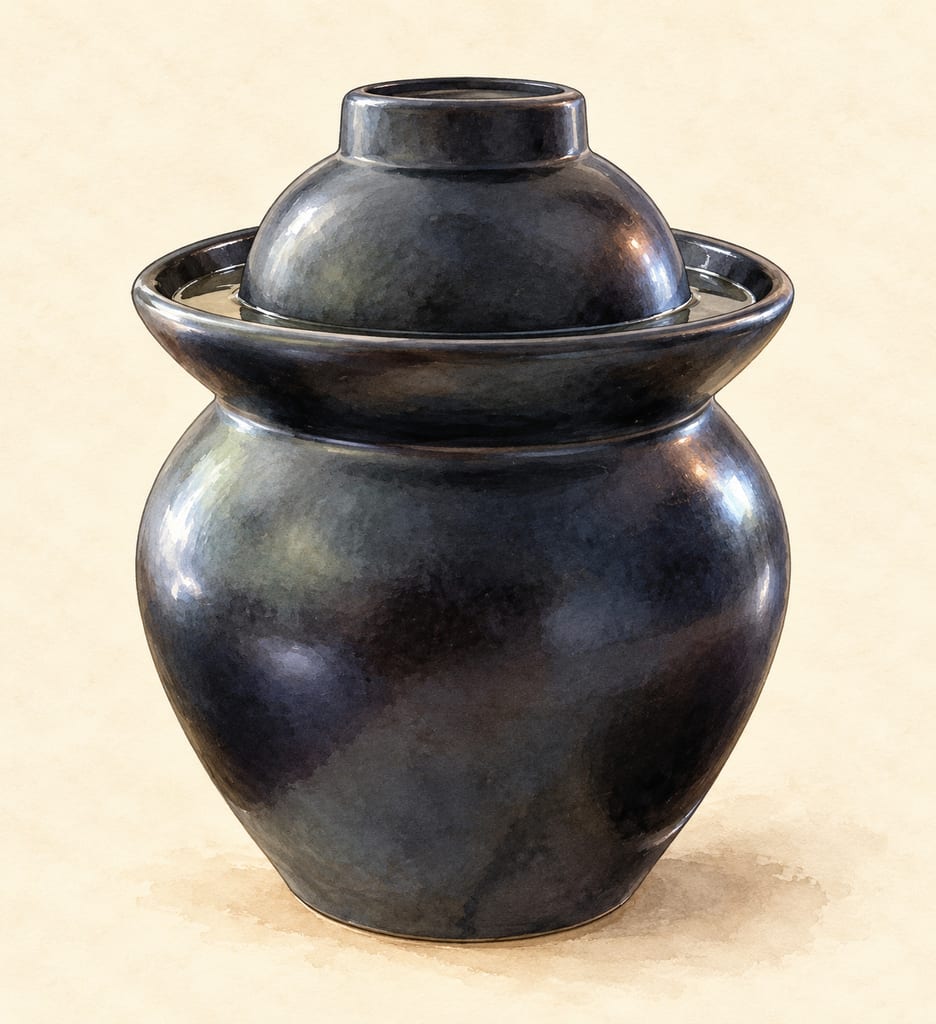
Paocai water-seal jar
The Sichuan paocai jar is a pottery or ceramic crock with a broad body, narrow neck, and annular water trough around its rim. An inverted lid rests in the trough; the seal is separate from the food brine.
 FermenteaWhere food goes to change
四川泡菜 · Sichuan pao cai · Sichuan pickled vegetables
Sichuan paocai is a family of vegetables, most often radish, fermented by lactic-acid bacteria in a salted, spiced brine in a water-sealed pottery jar, with mature brine kept and reused.
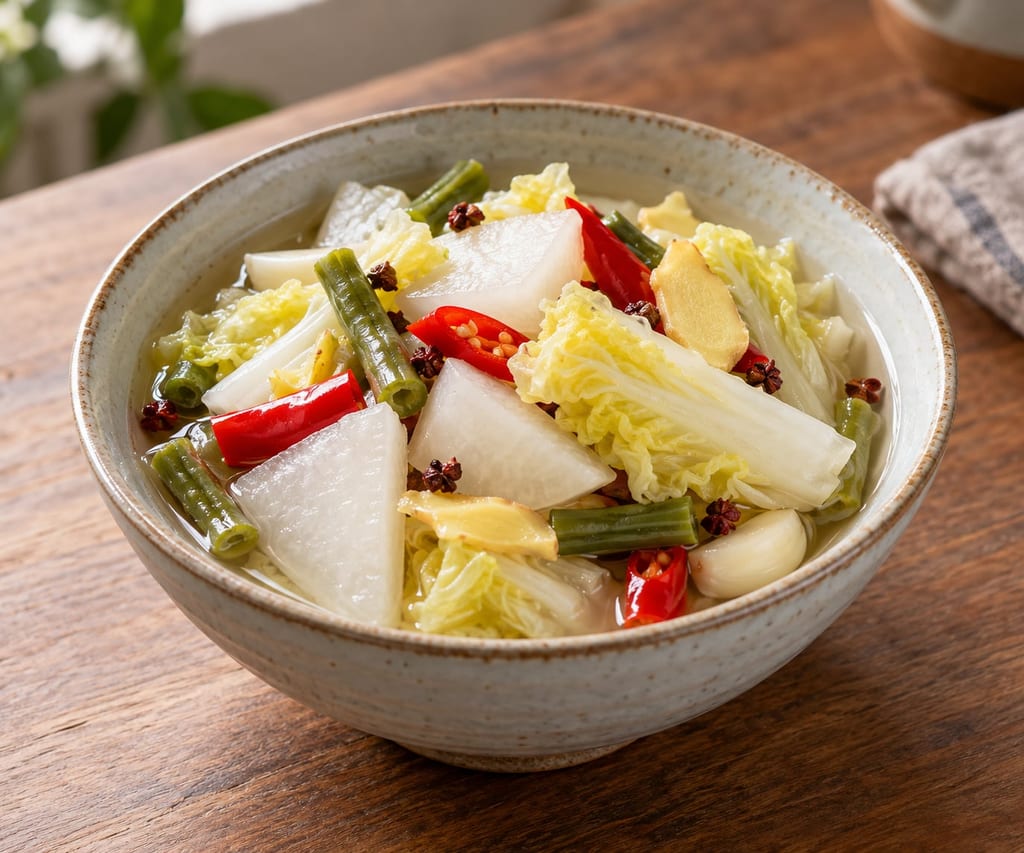
Paocai (泡菜) means vegetables kept in brine. In Sichuan it names a whole family of ferments rather than one dish: radish, cabbage, long beans and other vegetables are packed in a seasoned brine, sealed with water at the jar rim and left until lactic-acid bacteria have made them sour. The studies describe the finished product by its aroma, acidity and crispness, and the brine carries garlic, ginger, hot red pepper and Chinese prickly ash.
Two published studies are the basis of this page. One sampled red-skinned, white-fleshed radish paocai from five Sichuan production areas. The other followed a home batch in Ya'an, in which red radish and cabbage were each fermented in pottery jars. The radish batch is a documented variant. It does not define every paocai.
The method turns on the brine, not the vegetable. Sichuan makers keep a jar of mature brine and use it as the starter for the next batch. In the home study the new brine was 8% salt and 1% baijiu in cooled boiled water, with 20% aged brine from a family jar that had been in use for more than five years. The producer paper describes the same logic on a larger scale: vegetables are added and salt replenished over repeated cycles, and aged brine becomes stable after about four of them.
The jar completes the system. The pottery jars in both studies carry a water seal, a channel at the rim filled with water, through which gas escapes. A producer jar in the radish study holds 50 kg or more of product; the home jar was 4 L. The sources do not show that the clay itself shapes the flavour.
The seasoning is a fixed set. The Ya'an batch used garlic at 3% of the brine volume, hot red pepper at 3.5%, ginger at 3% and Chinese prickly ash at 3%. The producer radish paocai names the same four: red pepper, garlic, ginger and Chinese pepper. Some producers may also add a little liquor before fermentation to suppress unwanted microbes, a practice the producer paper mentions from earlier work without confirming it for its own samples.
Fermentation is spontaneous. The vegetables and aromatics carry bacteria, and the brine favours the ones that tolerate salt and make acid. In the home study Firmicutes made up more than 98% of every sample. Lactobacillus dominated at first but its share fell over the rounds, while Pediococcus rose from about 2.6 to 2.8% to 26 to 28% by the last round. Cabbage paocai held more species than radish paocai (1,923 against 1,525), and each vegetable had its own characteristic species.
The five producers did not share one community. One producer's samples were mainly Lactobacillus, as was the home aged-brine control. Two producers were mainly Lentilactobacillus, one mixed Lactobacillus, Lentilactobacillus, Lactiplantibacillus and Secundilactobacillus, and one was the most diverse, with Acinetobacter, Lactococcus and Weissella as well. Only Lactobacillus and Lactiplantibacillus variants appeared in all of them. A fresh-brine control looked different again: about 38.9% Pediococcus and 38.2% Lactococcus. Place, jar history and the starting brine all shape the culture, which is why no single starter species can be named for paocai.
The chemistry follows the acid. Sample pH ran from about 3.25 in the most acidic producer sample to about 3.70 in the fresh-brine control, and titratable acidity from 1.65 g per 100 g in the fresh-brine control to 11.22 g per 100 g in the most acidic producer sample. Lactic acid ran from about 5.4 to 18.9 mg per gram. Salinity stayed at 2 to 5 g per 100 g, and nitrite was below 2.5 mg/kg in every sample, lowest in the aged-brine control at about 1.4 mg/kg. In the home study the most abundant volatile was linalool, about 35% in radish and 41.6% in cabbage paocai.
Paocai belongs to Sichuan and the southwest of China. The best dated evidence the sources give is a 2022 article in the Journal of Sichuan Tourism University. Its abstract reports Ming and Qing references to Bashu pickles and traces how ceramic pickle jars developed, using archaeological and surviving-material evidence. That supports a bounded historical record. It does not give an invention date, a single birthplace, or an unbroken line to every paocai made today. A claim of more than three thousand years appears in one modern paper's introduction, but no dated source is given for it.
The jar is part of the history. The ceramic vessel and the water seal appear in both the historical article and the modern studies. This page does not say which jar sizes, glazes or cleaning methods are suitable for a household.
A raw vegetable fermenting in seasoned brine is not the only thing sold as paocai. The producer paper describes a separate modern industrial route in which vegetables are held in 10 to 15% brine, desalted to 5 to 8% salt, seasoned, sterilised and packaged. That is salted, preserved vegetable later seasoned. It is not the jar ferment above, and its microbiology is different.
Within the jar ferment, the differences that the studies measure are the vegetable (radish against cabbage), the brine (aged or fresh) and the maker. The Ya'an work also followed how six successive rounds changed the community and the volatile profile. These are variations of one family. They do not make a single universal formula.
The Ming and Qing abstract describes Bashu pickles as a cold dish. The microbiology papers describe aroma, acidity and crispness but not serving customs, so this page claims no wider table use.
The producer study gives no fermentation time and no vegetable-addition schedule for aged-brine making. Neither paper sets a safe endpoint, storage period or discard rule. Lab results describe the products that were sampled and cannot stand in for a validated household method.
Paocai is tied to Sichuan and neighbouring southwest China. A 2022 history article reports Ming and Qing references to Bashu pickles and traces the development of ceramic pickle jars. One 2021 paper calls paocai a food with more than 3,000 years of history without citing a dated source, so that figure is not used here.
Scaling: source batch only
Neither paper gives a pH, salt or time limit that makes a home batch safe. They measure finished products (pH about 3.25 to 3.70, nitrite under 2.5 mg/kg in the producer study), which are results rather than controls.
Hazard sourceSalted brine (8% in the studied home batch), aged brine as the starter, and a water-sealed jar kept at 24 ± 2 °C, as in the studied batch.
Control sourceNo source here validates an endpoint, storage period or discard rule for a household paocai batch. Smell, taste and bubbles do not show that a batch is safe.
Aged brine is a starter. Brine from an unknown or contaminated jar cannot be assumed safe.
A radish paocai study sampled producers in five Sichuan production areas. No single origin place is claimed.
The place where the studied homemade paocai was prepared in pottery jars with a water seal.
A 2022 article's abstract reports references to Bashu pickles and their ceramic jars; the article itself was not read.
The Sichuan paocai jar is a pottery or ceramic crock with a broad body, narrow neck, and annular water trough around its rim. An inverted lid rests in the trough; the seal is separate from the food brine.
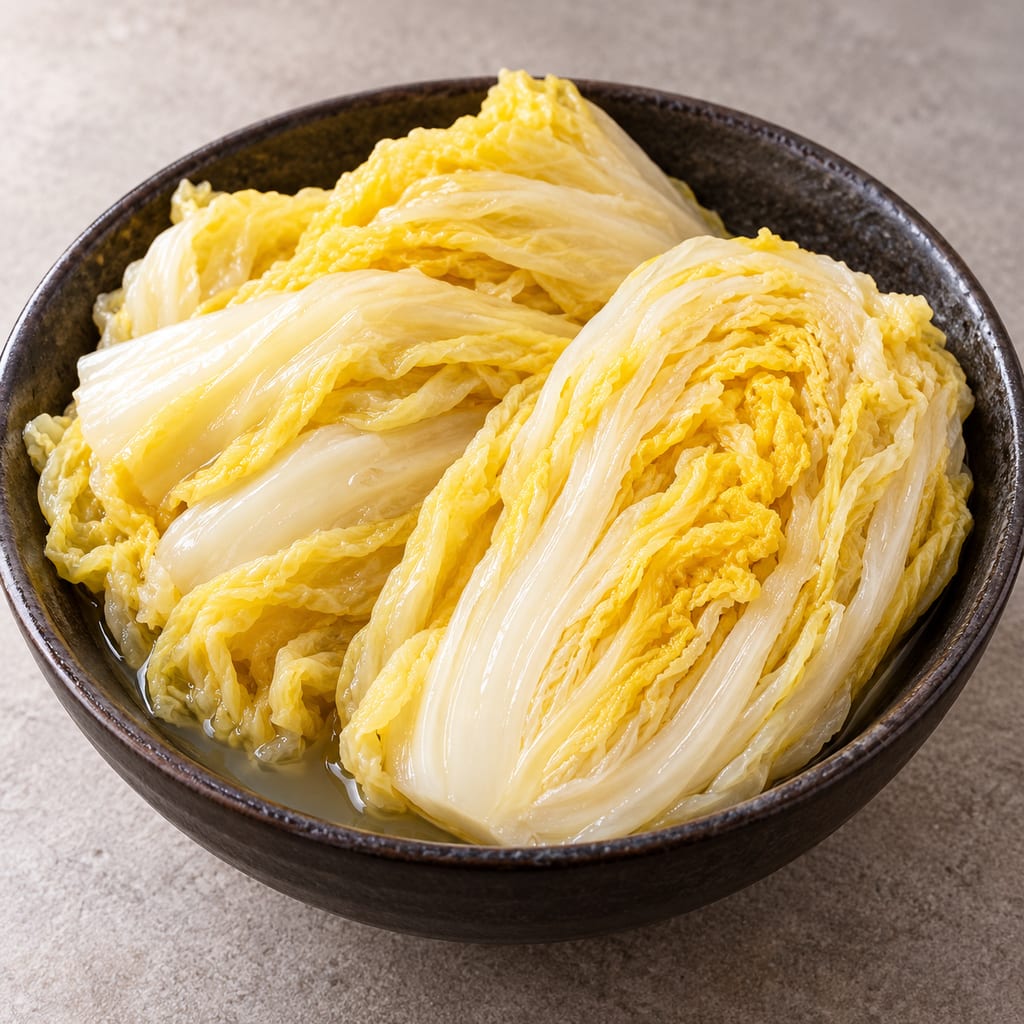
Napa cabbage fermented in a salt brine in Northeast China, traditionally in large ceramic or glass jars, until it turns sour.
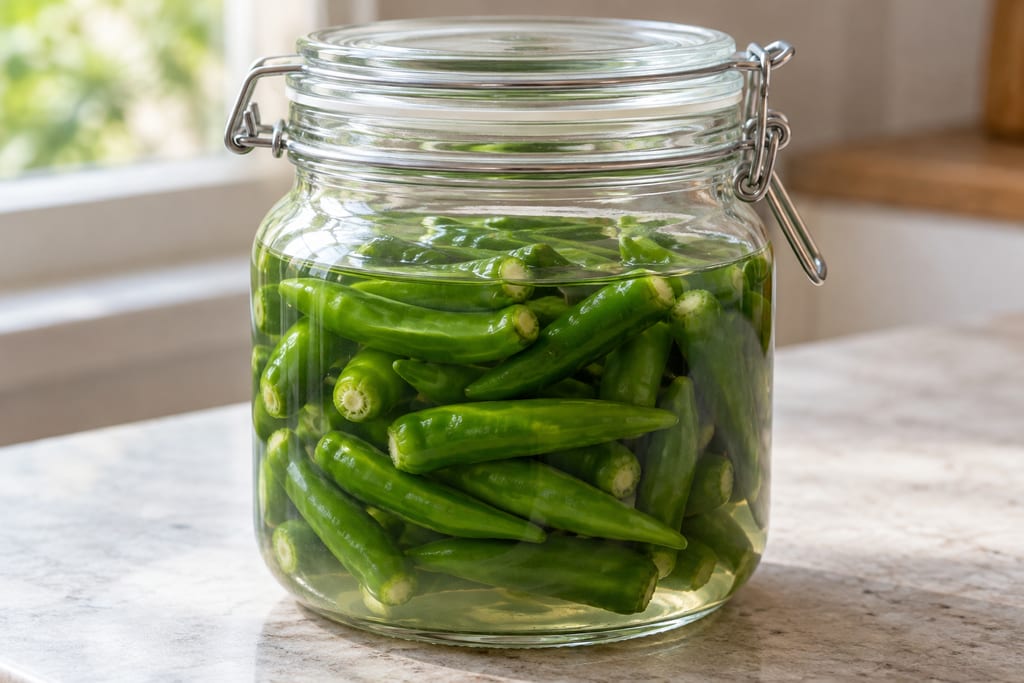
Whole green chiles are blanched briefly, then fermented in 3% salt brine with sake in a modern Japanese presentation of a wider Asian preparation.
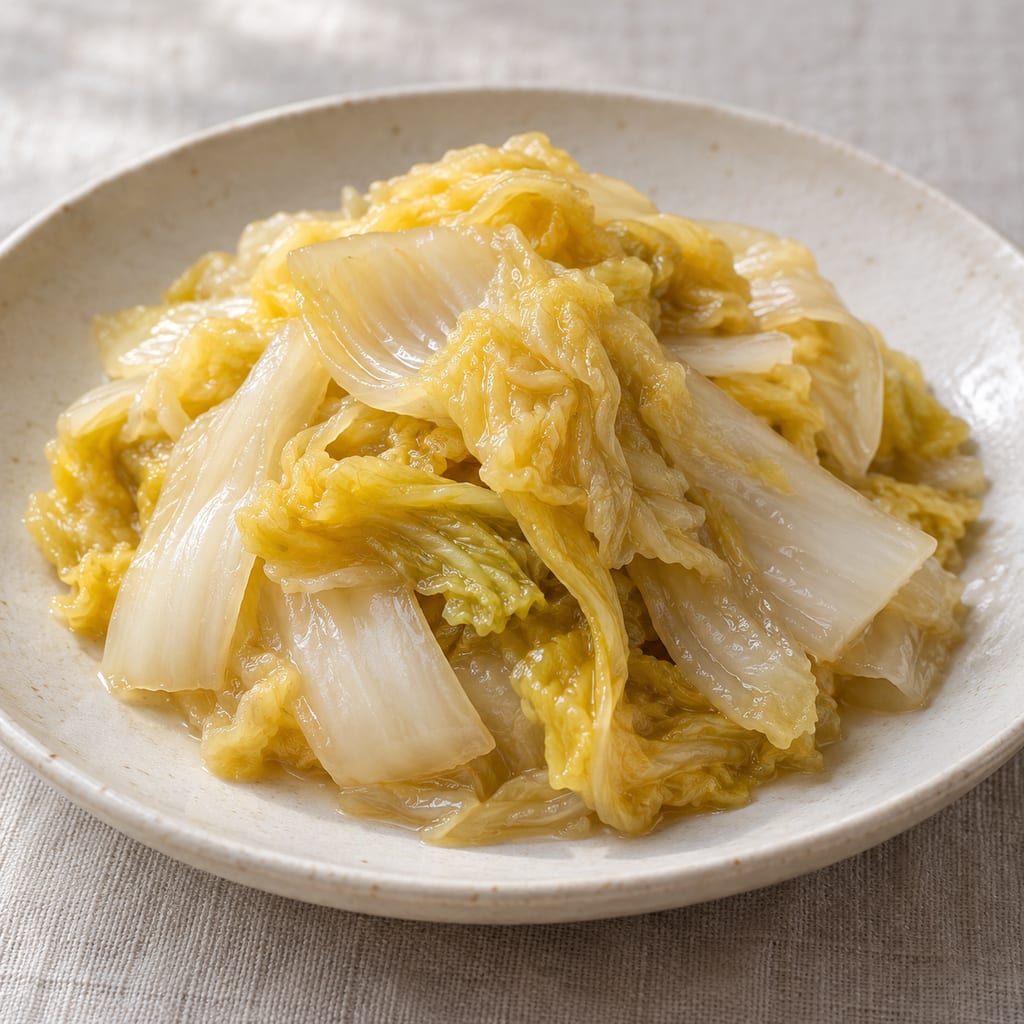
Chinese cabbage or mustard greens salted and held under a weight until lactic fermentation turns them sour; northeastern and southern China keep distinct traditions of it.
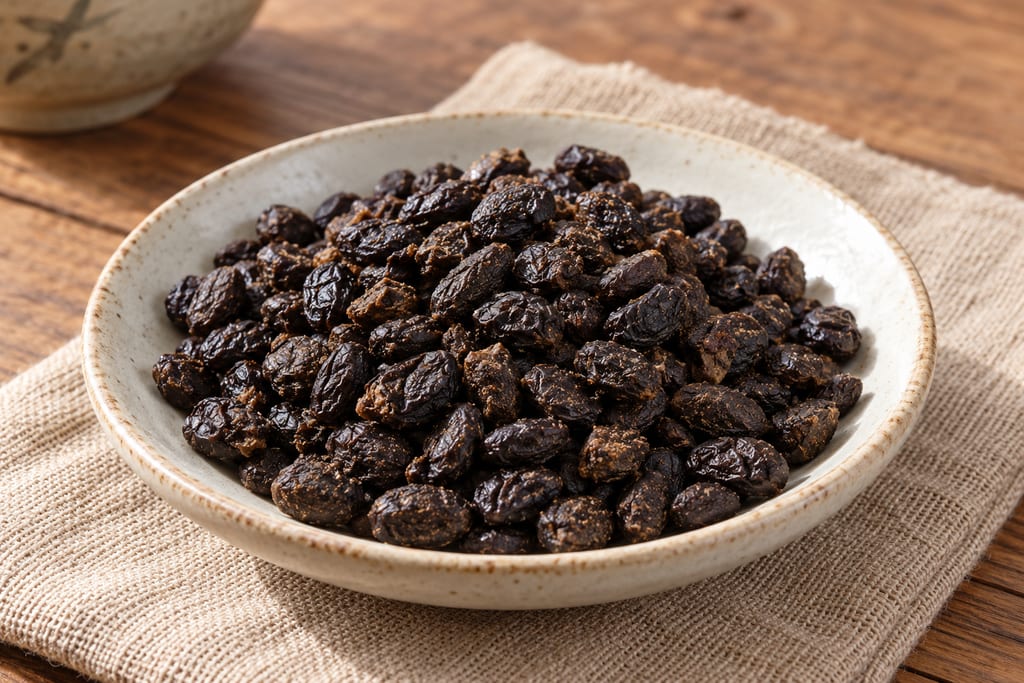
A Chinese fermented soybean condiment in which Bacillus-led bacteria, not moulds, drive the fermentation. Documented in Zunyi, Guizhou, and kept separate from mould-led douchi.
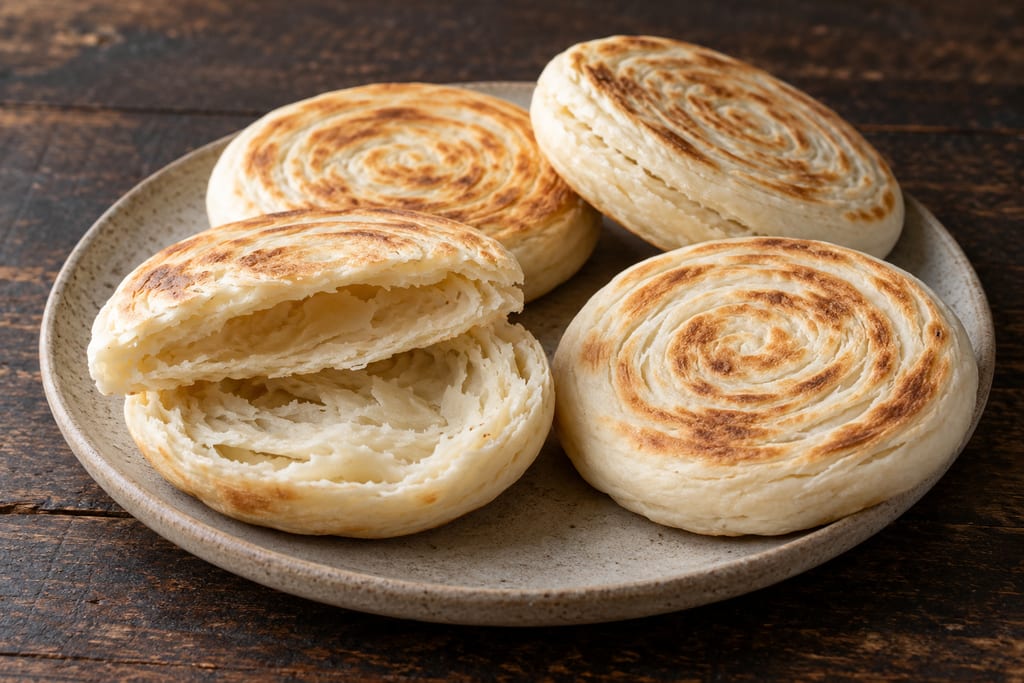
This Shaanxi-associated yeast flatbread uses a simple water dough, coiled shaping and a skillet bake. It is the bread used in roujiamo, not the filled meat dish.
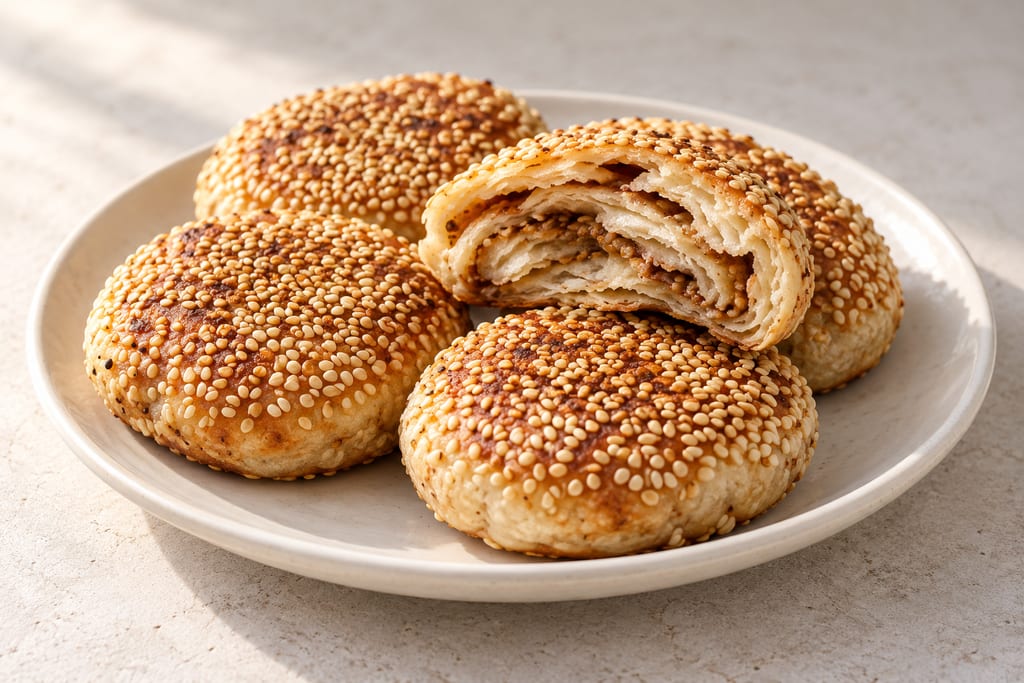
A Beijing-style yeast dough is layered with seasoned sesame paste, sealed into small buns, briefly pan-fried, seeded, and baked.
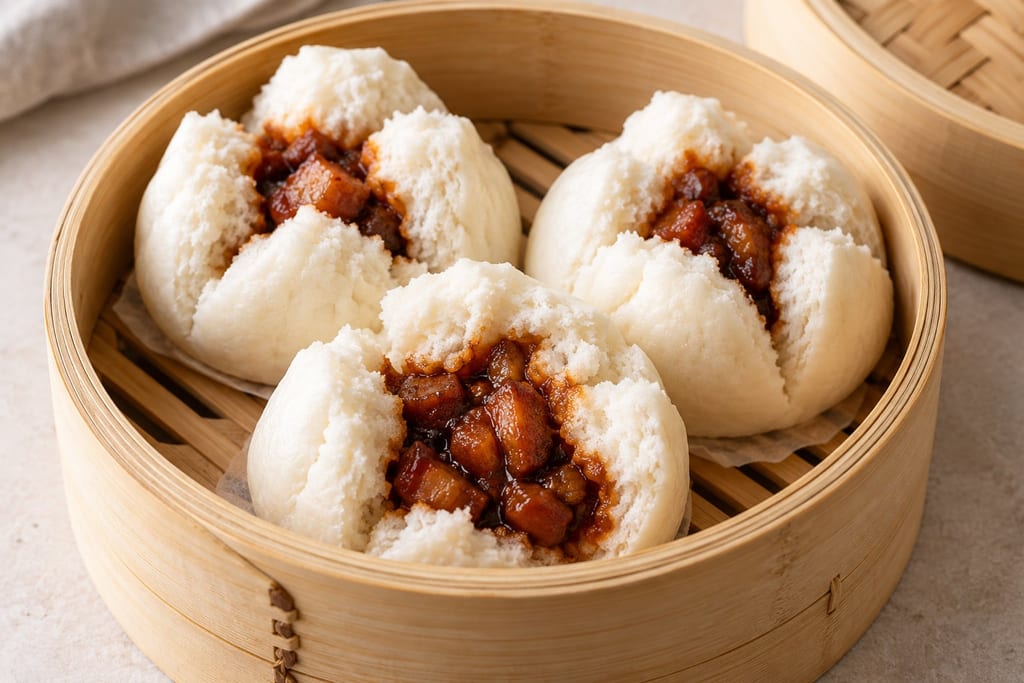
Fourteen fluffy steamed buns filled with cooked char siu and a thickened oyster-soy sauce.
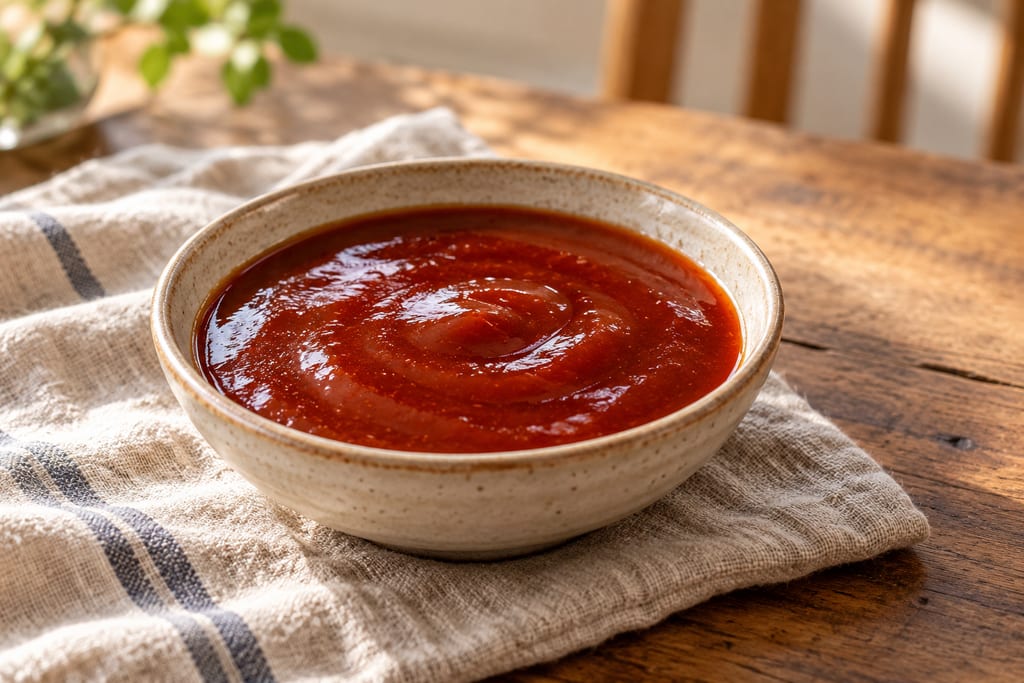
A smooth, tomato-based sweet-and-sour sauce of sugar, vinegar, tomato paste and soy sauce, thickened with starch for dipping or coating; it is not the sauce on Hangzhou's sweet-and-sour ribs.
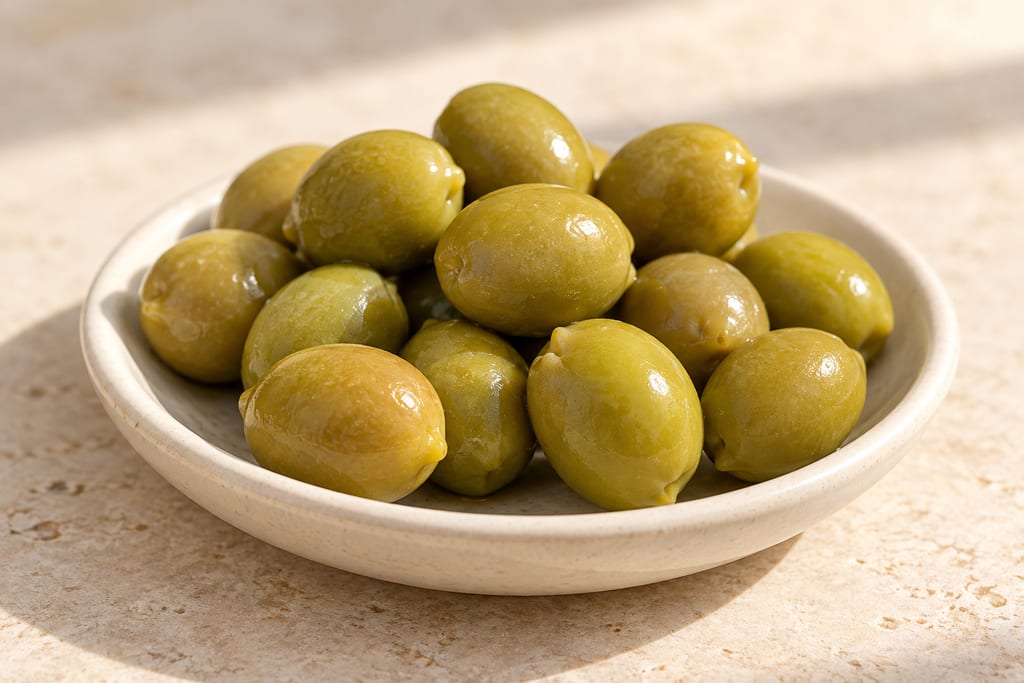
A Portuguese table-olive product from the Negrinha cultivar in northeastern Portugal, sold in three commercial styles, two of them brined fermentations and one oxidised to black.
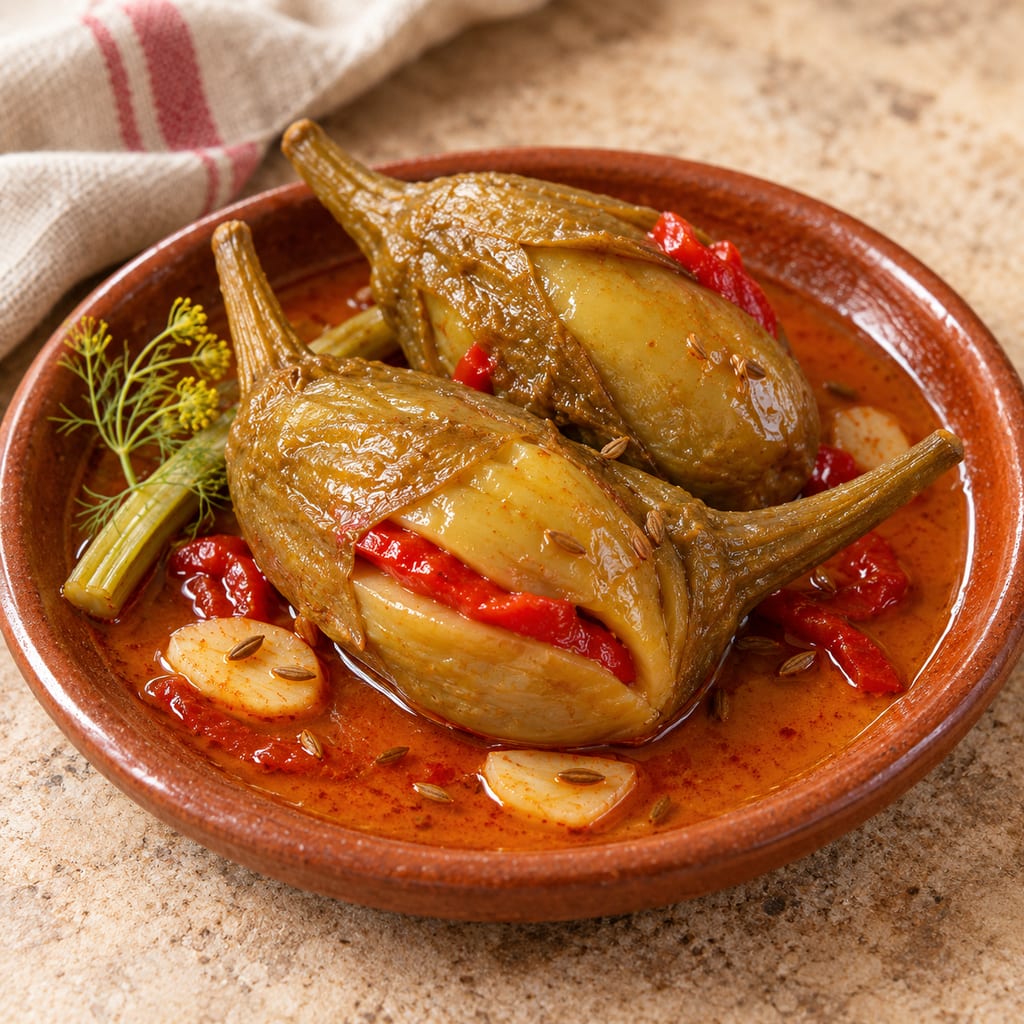
A protected aubergine preserve from Ciudad Real in Spain: tender fruit of the local Dealmagro variety, cooked briefly and then fermented in a vinegared, paprika-seasoned dressing.
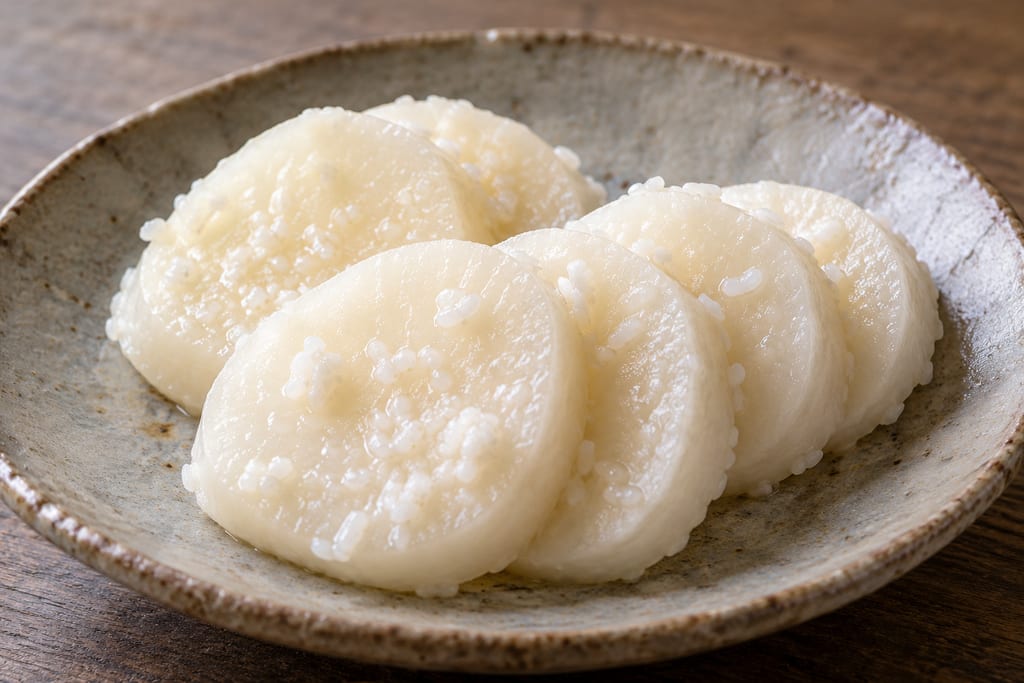
A sweet, crisp Japanese daikon pickle from Tokyo's Nihonbashi district, made by salting fresh radish and dressing it in rice koji, sugar or koji amazake without the heavy drying used for takuan.
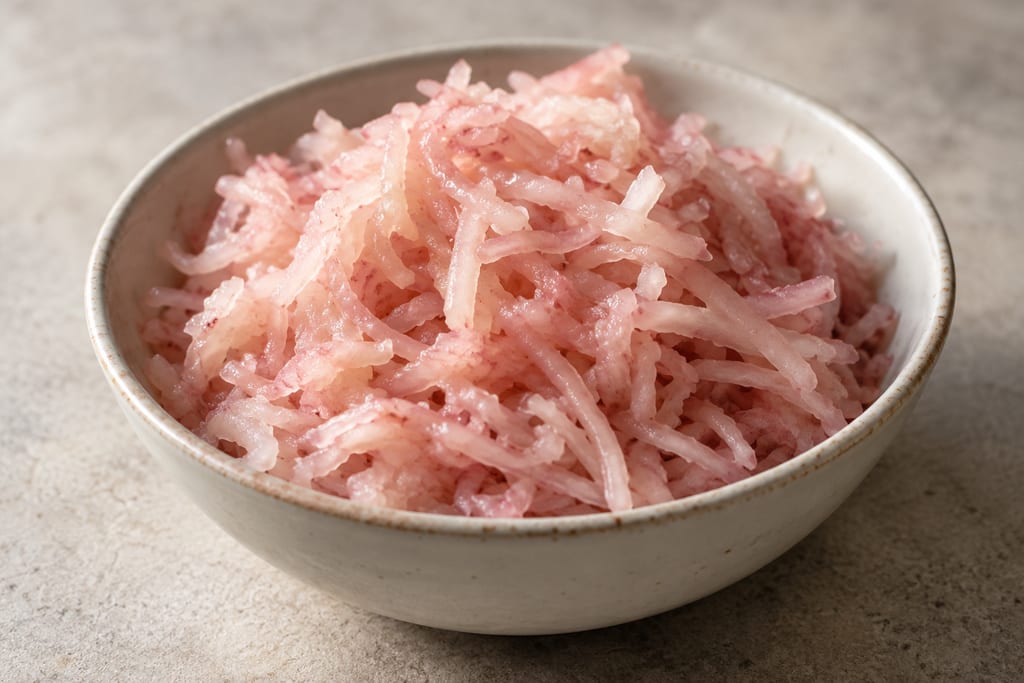
Source-specific Brovada DOP producer method for Friuli Venezia Giulia turnips and red-grape marc. This records a regulated producer process; it is not a validated home-scale recipe.
An industrial fermentation patio places factory-made fiberglass-reinforced polyester olive tanks below floor level, with drainage and transfer infrastructure arranged around the buried vessels.
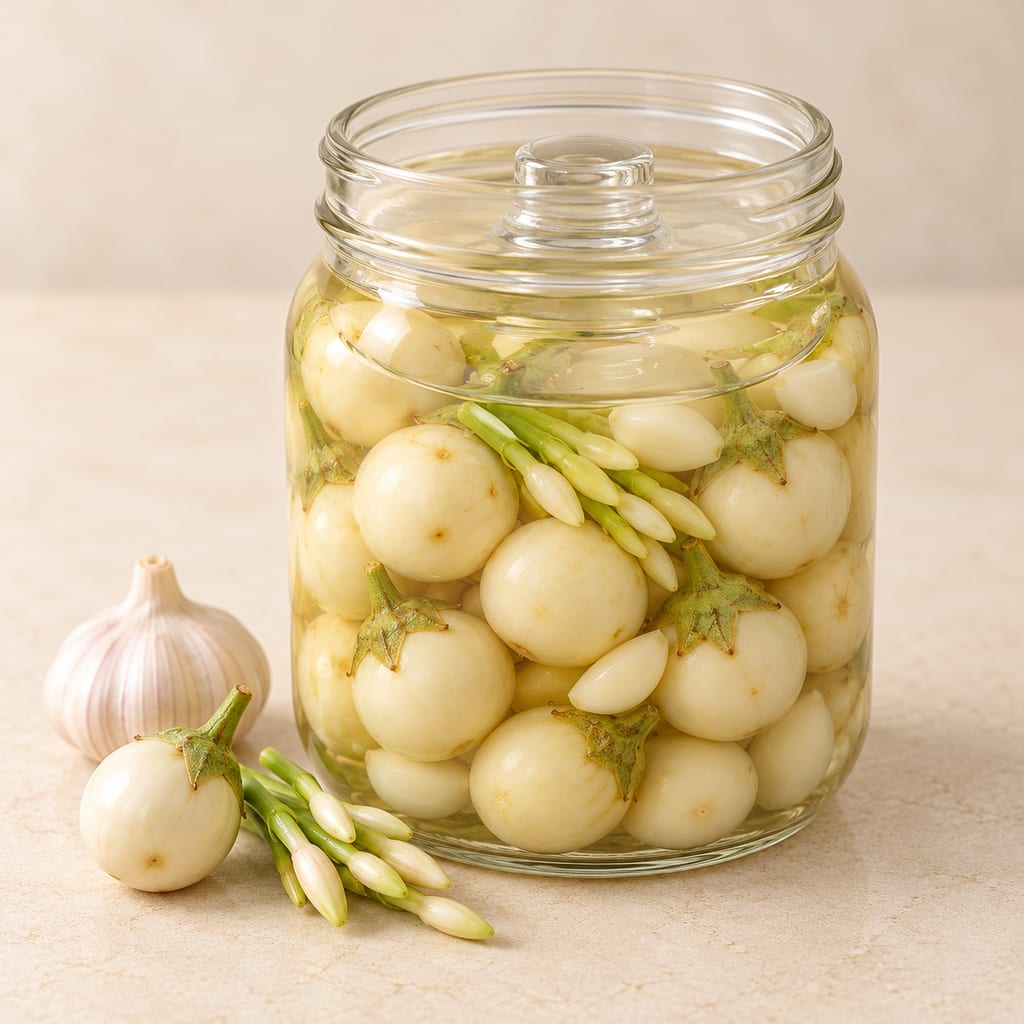
Vietnamese salted and fermented small eggplant, dried on the day of purchase, then held submerged in warm salty water with garlic and galingale flower for a week or longer.
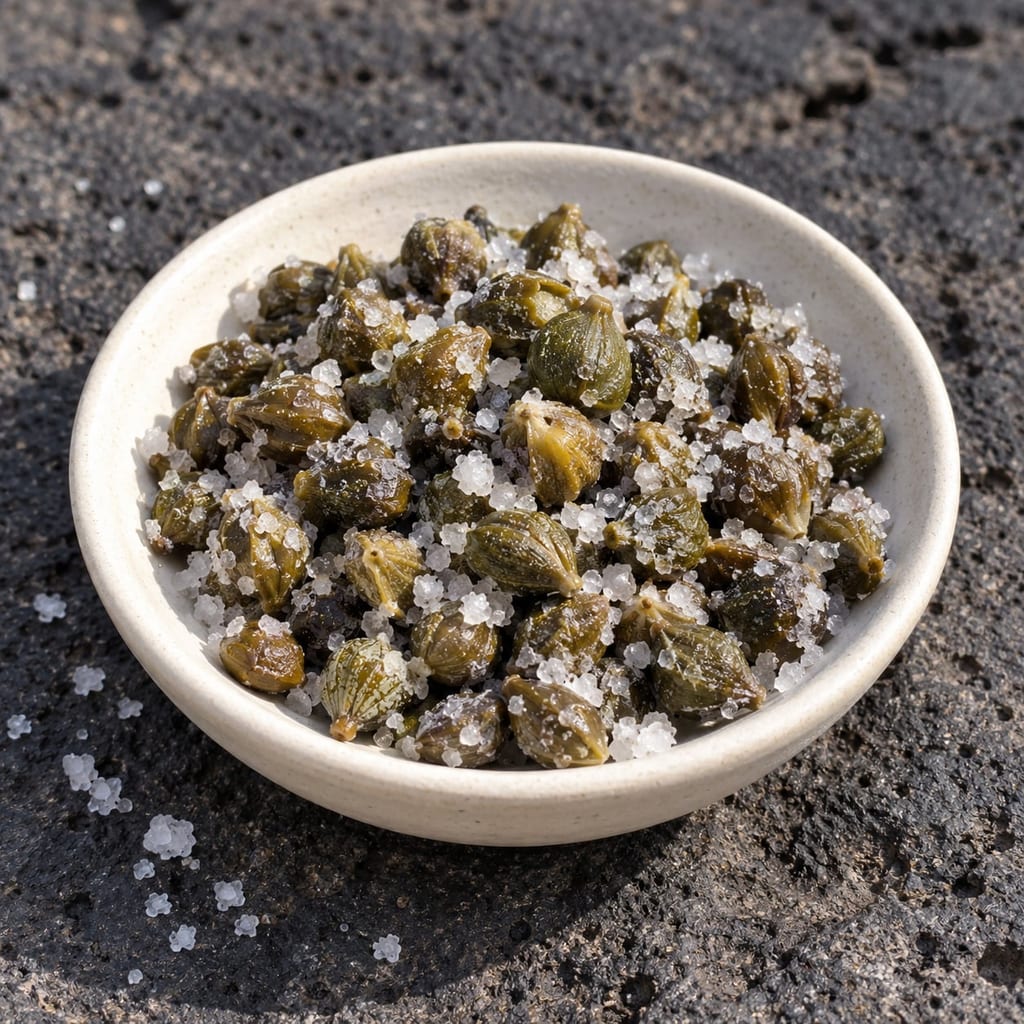
A protected Sicilian product: unopened caper buds from the island of Pantelleria, dry-salted with sea salt in a two-stage process that encourages lactic fermentation.
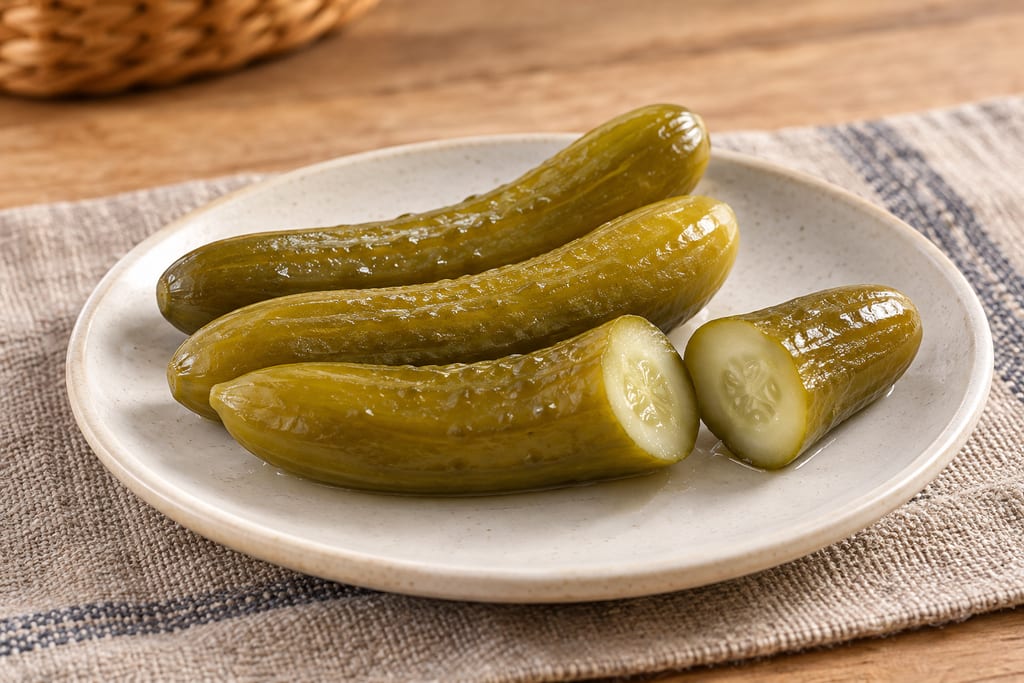
Çubuk turşusu is a registered pickle from Çubuk district in Ankara. Its cucumber variant is sold as Salatalık Turşusu, and a commercial specification sets its brine and room-temperature period.
No community contributions have been published for this entry yet.
Sign in to contribute. Published comments and photos are free to read.
Foods 14(18), 3232 (2025)Method · Science · Safety
Analysis of Physicochemical Characteristics, Flavor, and Microbial Community of Sichuan Industrial Paocai Fermented by Traditional TechnologyProducer radish paocai from five Sichuan areas: spices, 4 to 8% brine, 50 kg pottery jars with a water seal, room temperature
Aged brine against fresh brine; stable aged brine after about four cycles of vegetable additions and salt replenishment
Dominant lactic-acid bacteria genera by sample
pH 3.25 to 3.70, nitrite below 2.5 mg/kg, salinity 2 to 5 g per 100 g in the products
Industrial route of 10 to 15% brine marination, desalting, seasoning and packaging
Cited in: What Sichuan paocai is; The brine and the jar; What the microbes do; Place, jars and history; Two routes to the same name; Using it, and what is still unknown
Foods 11(1), 62 (2022; published 28 December 2021)Method · Science
Metagenomic Study on Chinese Homemade Paocai: The Effects of Raw Materials and Fermentation Periods on the Microbial Ecology and Volatile ComponentsYa'an home batch: red radish or cabbage, 4 L pottery jar, 8% salt, 1% baijiu, 20% aged brine, spice percentages, water seal, 24 ± 2 °C, six rounds
Firmicutes above 98%; Lactobacillus declining and Pediococcus rising across rounds
Linalool the most abundant volatile
Cited in: What Sichuan paocai is; The brine and the jar; What the microbes do; Place, jars and history; Two routes to the same name; Using it, and what is still unknown
Journal of Sichuan Tourism University, 2022(6), pp. 6-10History
明清时期巴蜀泡菜及其陶瓷泡菜坛探析 [Bashu pickles and their ceramic jars in the Ming and Qing periods]Ming and Qing references to Bashu pickles; development of ceramic pickle jars; abstract only
Cited in: Place, jars and history; Using it, and what is still unknown