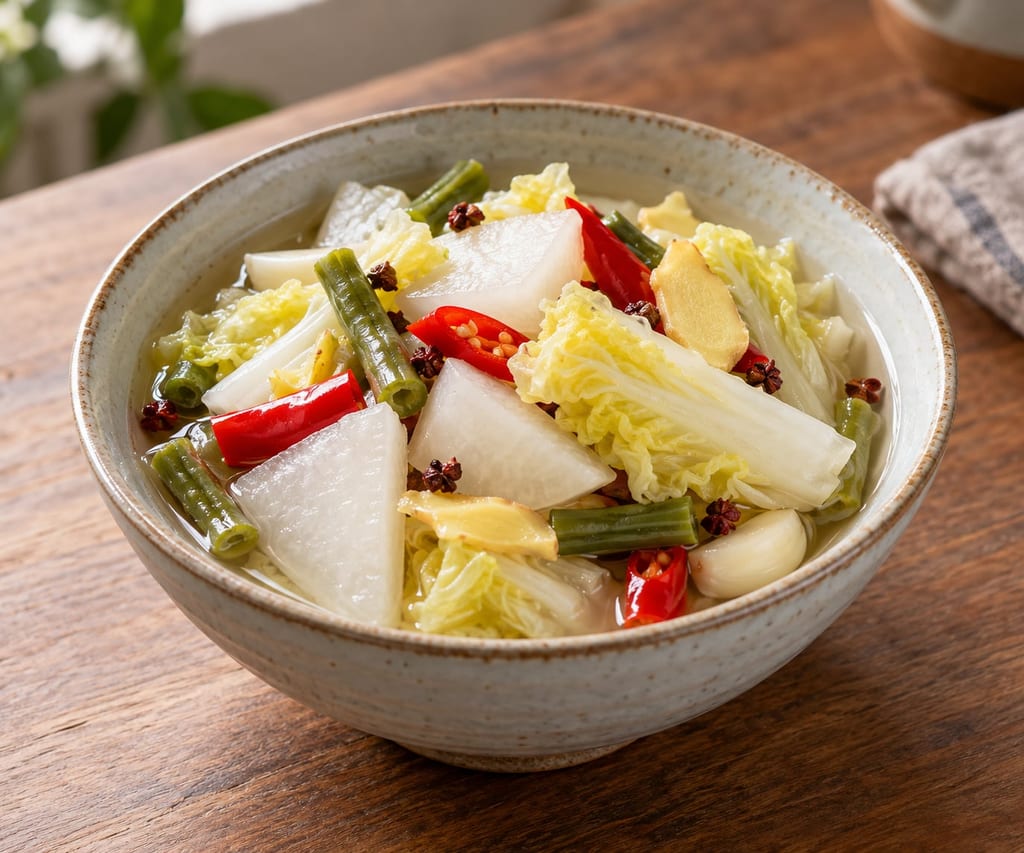
Sichuan paocai
Sichuan paocai is a family of vegetables, most often radish, fermented by lactic-acid bacteria in a salted, spiced brine in a water-sealed pottery jar, with mature brine kept and reused.
 FermenteaWhere food goes to change
Equipment · Jars, pots and crocks
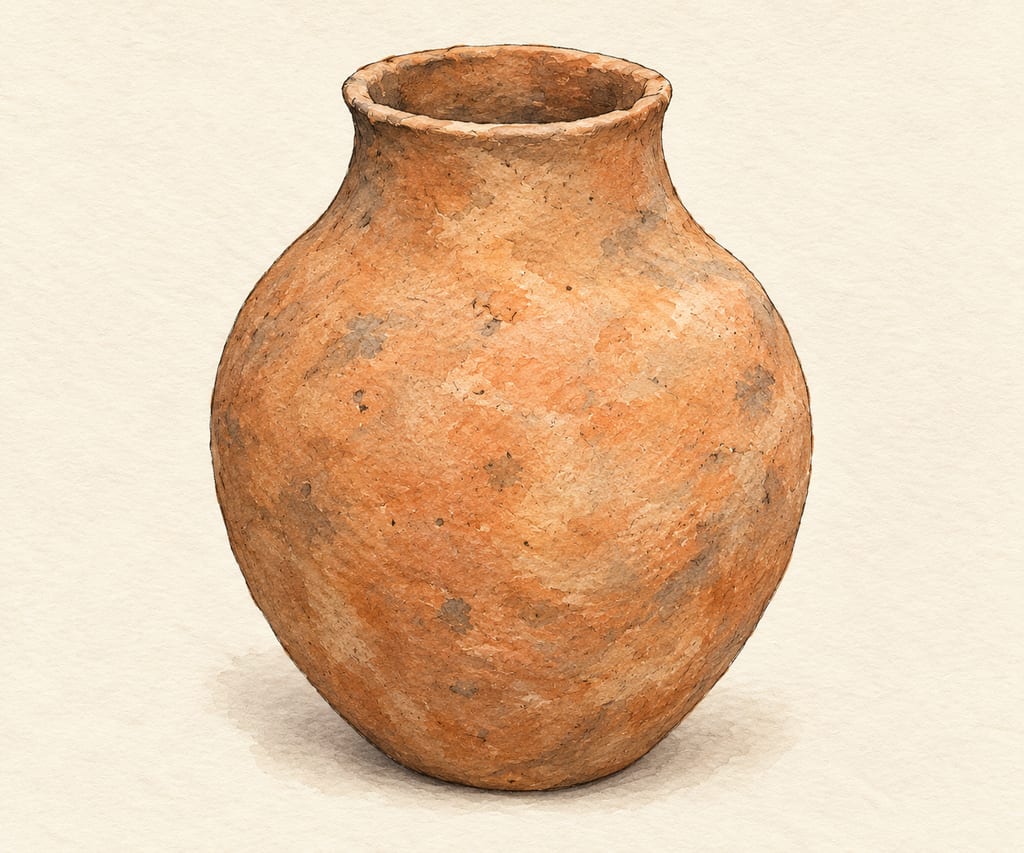
The Sichuan paocai jar is a pottery or ceramic crock with a broad body, narrow neck, and annular water trough around its rim. An inverted lid rests in the trough; the seal is separate from the food brine.
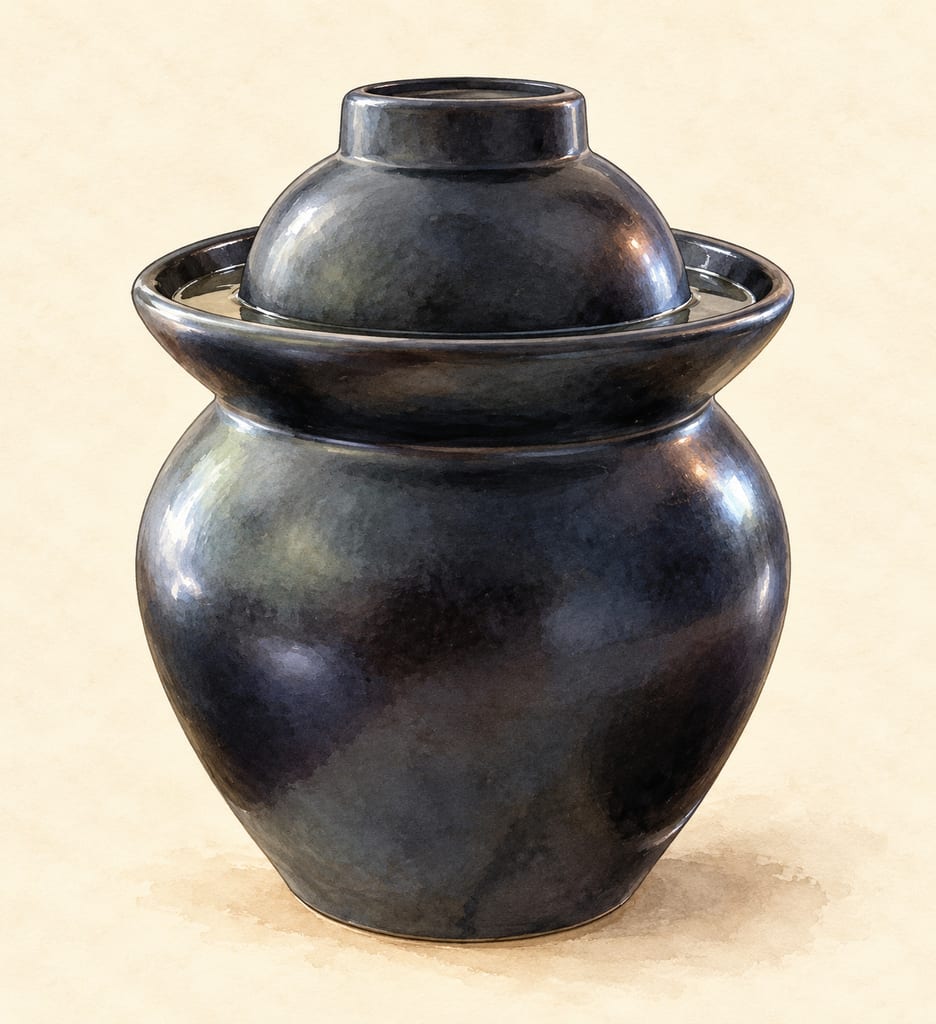
The paocai tan is a pottery or ceramic crock distinguished by a circular water trough around the rim. The jar has a comparatively narrow opening over broad shoulders and a rounded or full body. An inverted, cup-like lid sits in the outer trough; it does not clamp onto the inner neck. A dark glazed ceramic example appears in The Mala Market photograph, while the article also shows a white ceramic variant.
A home-scale study of Chinese paocai reports making Sichuan paocai in 4 L pottery jars and sealing them by adding water to the jar edge. That experimental size describes the study, not a standard household capacity. The sources do not establish one universal clay body, glaze, decoration or profile.
The water in the outer trough surrounds the lid's edge. The Mala Market account explains that fermentation gas escapes as bubbles through this water while the seal reduces direct air exchange. It is a passive water seal, not a metal clamp or pressure vessel. The jar's food brine remains inside the central chamber; water in the outer moat is not added to that brine.
Keeping those liquids distinct is part of reading the object correctly. The visible trough is not a second food compartment or a decorative rim. The inverted cover rests in its water channel, while vegetables and brine occupy the crock below the shoulders.
The 2021 study places its local-method pottery-jar preparation in Ya'an, Sichuan. It used vegetables from a local market and home-scale aged brine in the experimental rounds. The paper demonstrates a pottery vessel and water seal in a Sichuan context; it does not show that all paocai is made this way.
The page centers the traditional ceramic form because it is the equipment documented for the local practice. The Mala Market also shows a glass version, but that variation does not replace the ceramic crock in this account. Neither source establishes a single capacity, exact clay composition, glaze recipe or historical date of invention.
A 2021 study of homemade paocai in Ya'an used pottery jars and water at the jar rim to seal them. This documents local practice at that date but does not establish the vessel's origin.
The study identifies vegetable sourcing from Ya'an, Sichuan, and documents homemade paocai in pottery jars under the local method. It does not establish use of the same jar by every Sichuan household.
Sichuan paocai is a family of vegetables, most often radish, fermented by lactic-acid bacteria in a salted, spiced brine in a water-sealed pottery jar, with mature brine kept and reused.
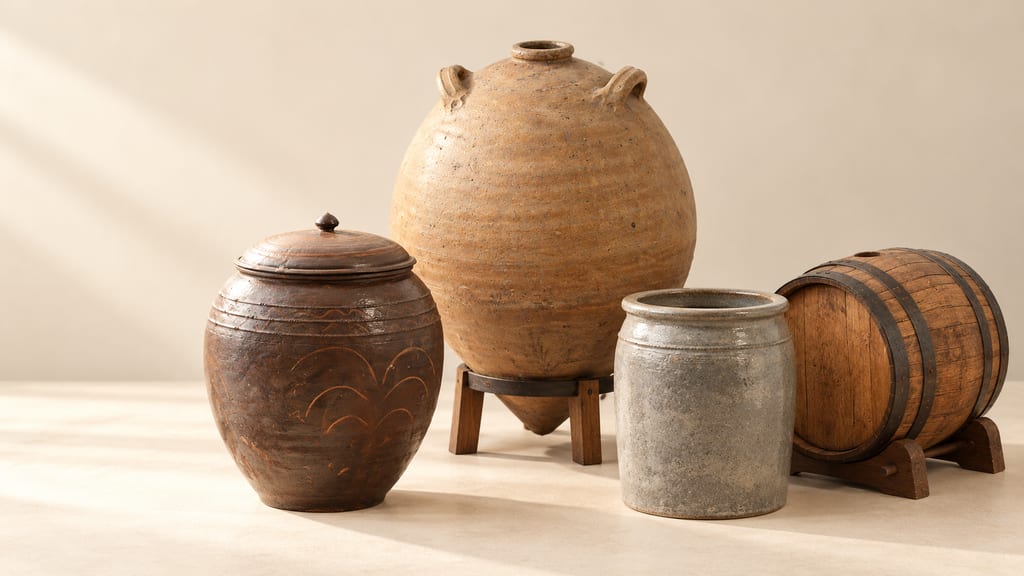
Jars, barrels, skins, leaves, pits and whole rooms decide much of what happens to fermented and cured food. This is how a container works on its contents, and how people in different places chose theirs.
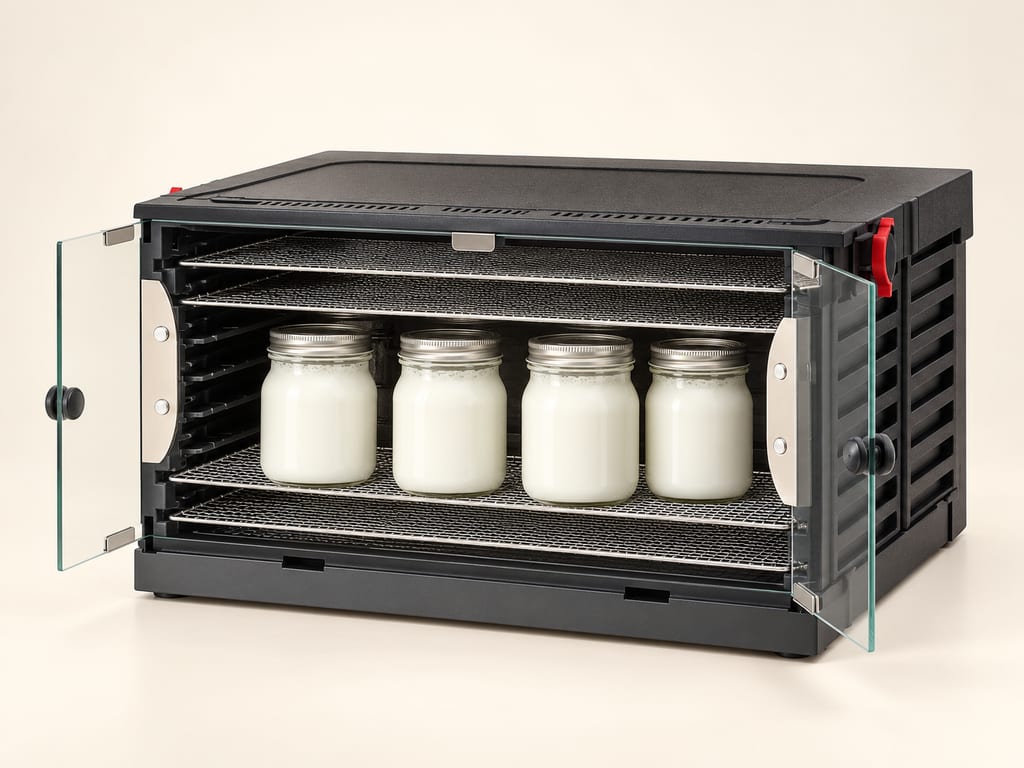
A folding electric food dehydrator with glass front doors, mesh shelves, filtered circulating air and two programmable time-temperature stages. Brød & Taylor also documents its use as a chamber for sealed yogurt jars.
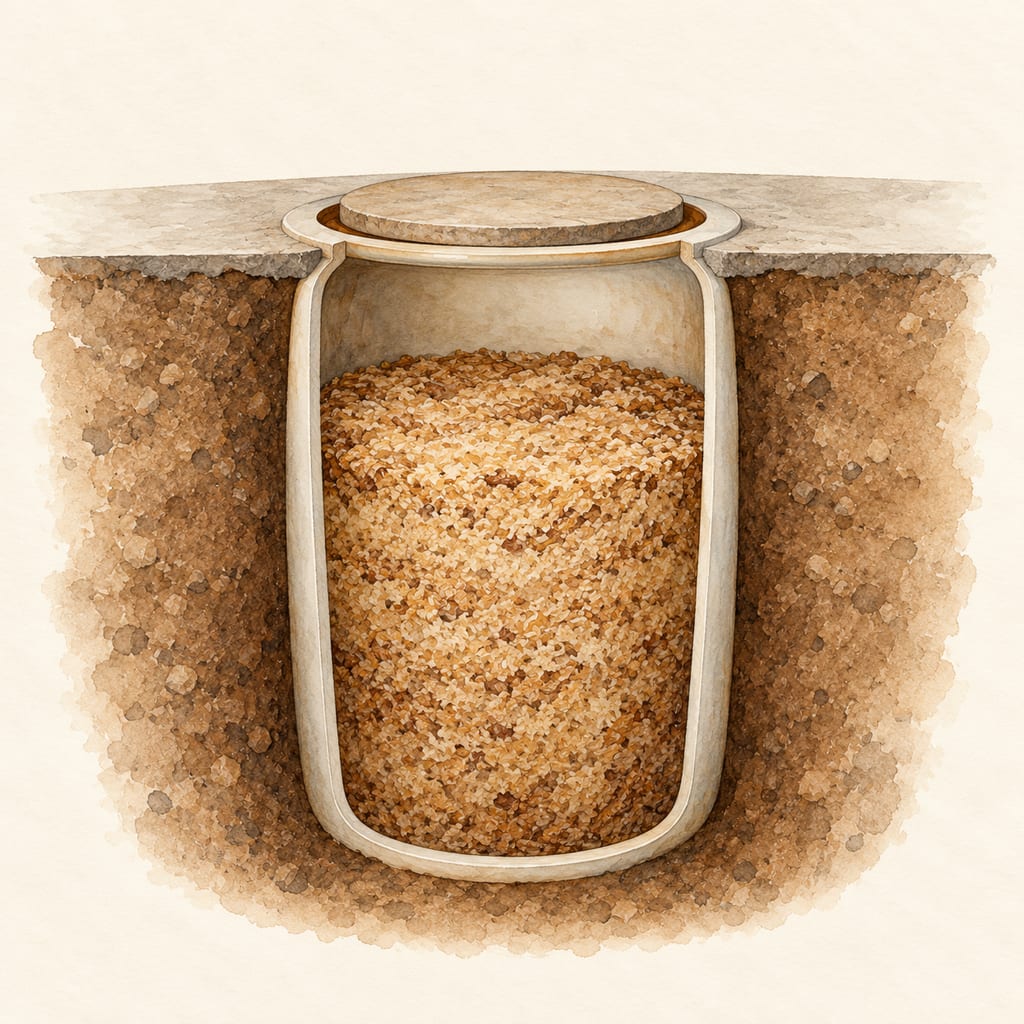
A buried ceramic fermentation jar holds the solid-state grain charge for light-aroma baijiu. Fenjiu reportage describes porcelain vats set into the floor; the cited sources establish no universal historical profile or dimensions.
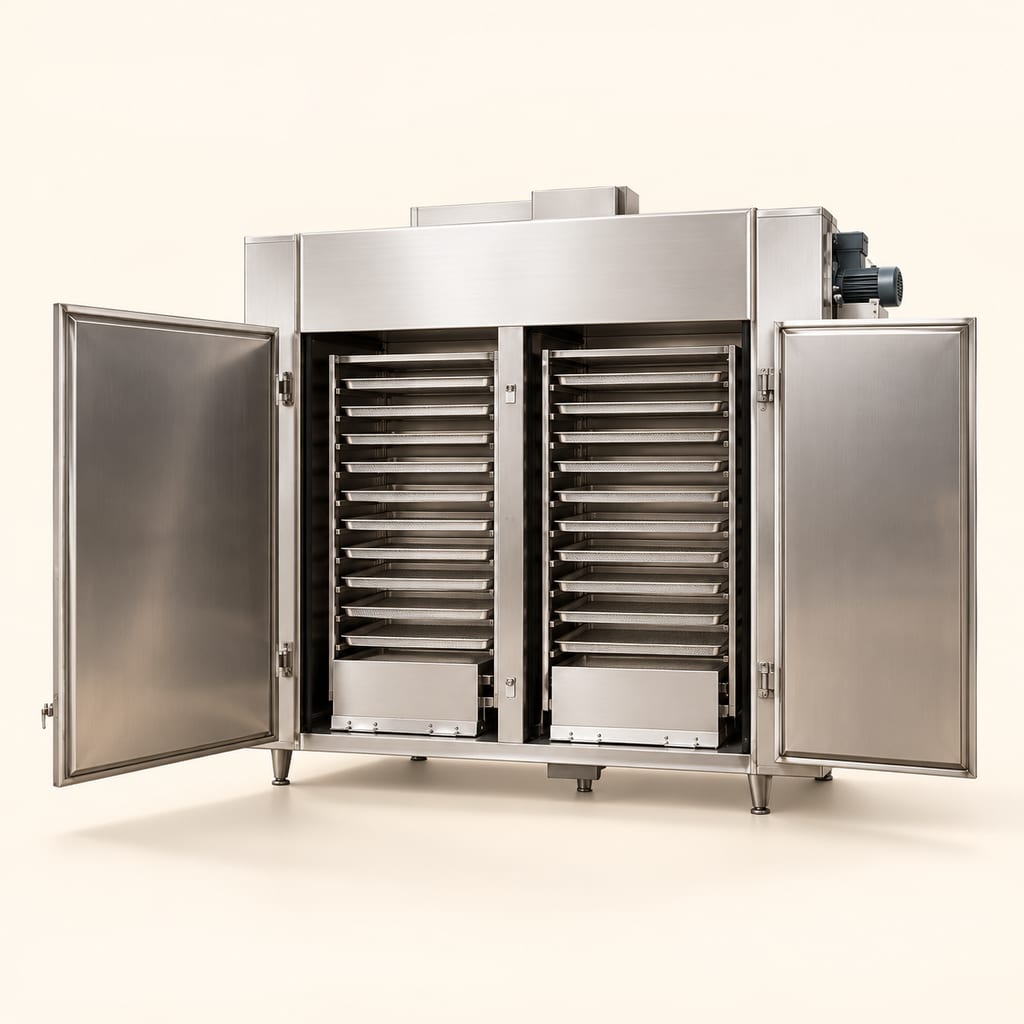
A heated-air cabinet with trays for drying fruit and other crops; PHilMech documents cabinet/convection dryers in Cebu's dried-mango trade and several Philippine equipment variants.
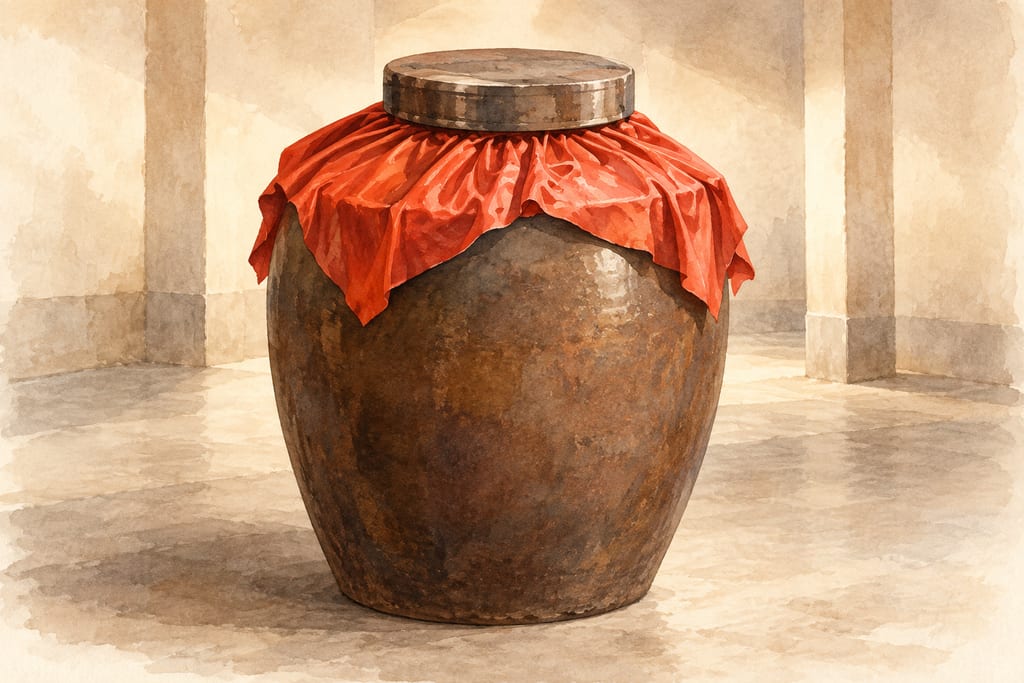
Large ceramic jars hold distilled baijiu during maturation. Fenjiu documents rows of aging jars in Shanxi, including specially specified unglazed earthenware; available sources do not establish one universal shape, volume or closure.

A maker-branded range of electric food dehydrators using forced horizontal airflow. Tray counts, controls and dimensions vary by model; the 3900B is one documented nine-tray example.
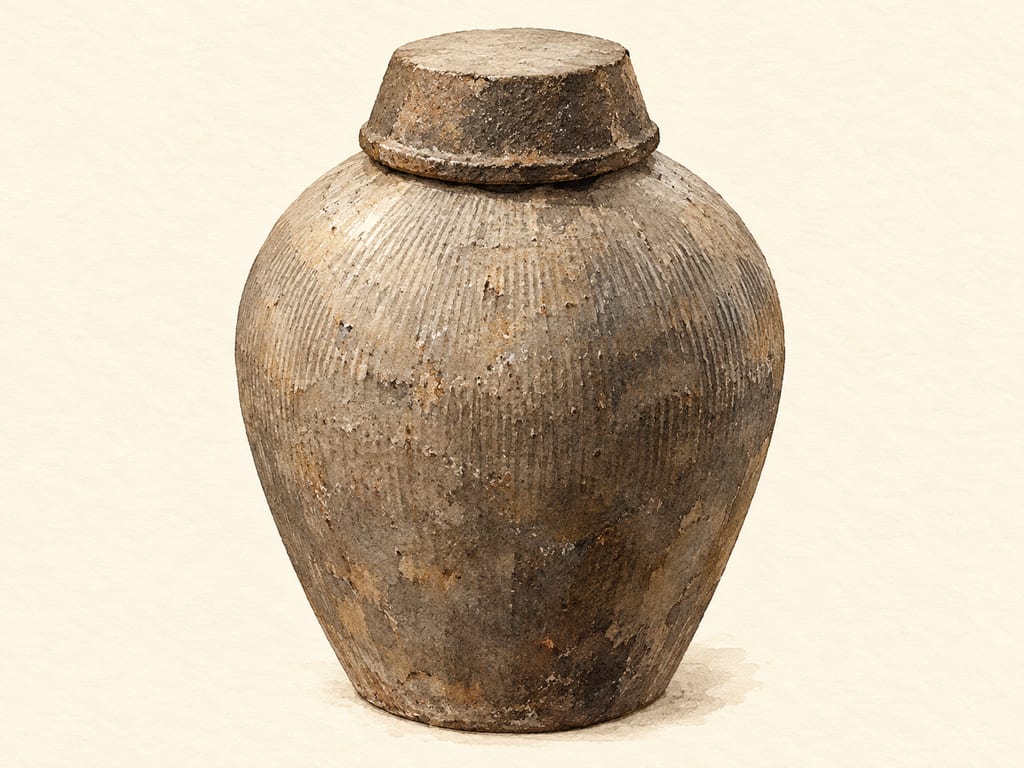
In Shaoxing Huangjiu production, broad-mouthed pottery vats hold the actively worked rice mash, while smaller pottery jars receive it for post-fermentation. Those jars may later serve a separate storage role.

The INKBIRD ITC-308 is a plug-in, probe-led temperature controller with separate heating and cooling outputs. Its relays switch compatible appliances; they do not heat, cool or validate the food themselves.
Jiahu pottery preserves chemical evidence of an early mixed fermented drink involving rice, honey and fruit. Its jar forms provide archaeological context, not proof one vessel served every brewing stage.

Soft, spreadable Calabrian pork sausage made with a great deal of red chilli and fatty pork, stuffed into natural casings, sometimes smoked and matured while staying soft.

A way to add independent temperature logging to an existing food dehydrator without changing its built-in controls or protections. It is a monitoring method, not a rewiring plan.

Pleurotus cystidiosus is the abalone mushroom, a cultivated oyster-type fungus with dark brown caps that grows more slowly and is more demanding than other Pleurotus species.

A dark, balanced vinegar from Emilia-Romagna made by combining cooked or concentrated grape must with wine vinegar, then acetifying and refining it in wood under a protected specification.

A living dairy inoculum that starts controlled cream fermentation, developing acidity and aroma before sour cream or cultured butter is finished.

A small electric incubator holds jars at a selected temperature for yogurt and other documented warm food preparations. Controls, capacity and vessel arrangement vary by model.

Adygean salt is a seasoned table salt associated with Adygea and the wider North Caucasian culinary tradition. Salt is blended with garlic and a variable selection of herbs and spices; the exact mix depends on the named style and maker.

The African Caesar-group mushroom, Amanita masasiensis, is a wild ectomycorrhizal species of central and southern African woodlands, eaten locally. The genus contains deadly poisonous species, so identification needs care.
No community contributions have been published for this entry yet.
Sign in to contribute. Published comments and photos are free to read.
Linjun Jiang, Shuang Xian and colleagues; Foods 11(1) (2022)Form · Process · Geography
Metagenomic Study on Chinese Homemade Paocai: The Effects of Raw Materials and Fermentation Periods on the Microbial Ecology and Volatile ComponentsThe authors report obtaining vegetables from a local market in Ya'an, Sichuan, and preparing paocai by the local traditional method in pottery jars.
In the method, vegetables and brine are placed in pottery jars and the jars are sealed by adding water to the jar edge.
The documented study uses 4 L pottery jars; this is an experimental vessel size, not a universal capacity.
Cited in: A ceramic crock shaped around a water seal; The moat and the food brine do different jobs; Documented in Sichuan, with material variation
Taylor Holliday; The Mala MarketForm · Materials · Process · Visual reference
Sichuan Lacto-Fermented Pickles (Paocai, 泡菜): Starting Your First BatchSichuan paocai crocks may be ceramic or glass and have a moat around the top for a water seal.
The article describes a narrow opening and broad shoulders, with an inverted lid in the water moat; fermentation gas can escape through the water while direct air exchange is reduced.
The article shows dark and white ceramic jars; the linked foreground jar is the dark ceramic example.
Cited in: A ceramic crock shaped around a water seal; The moat and the food brine do different jobs; Documented in Sichuan, with material variation