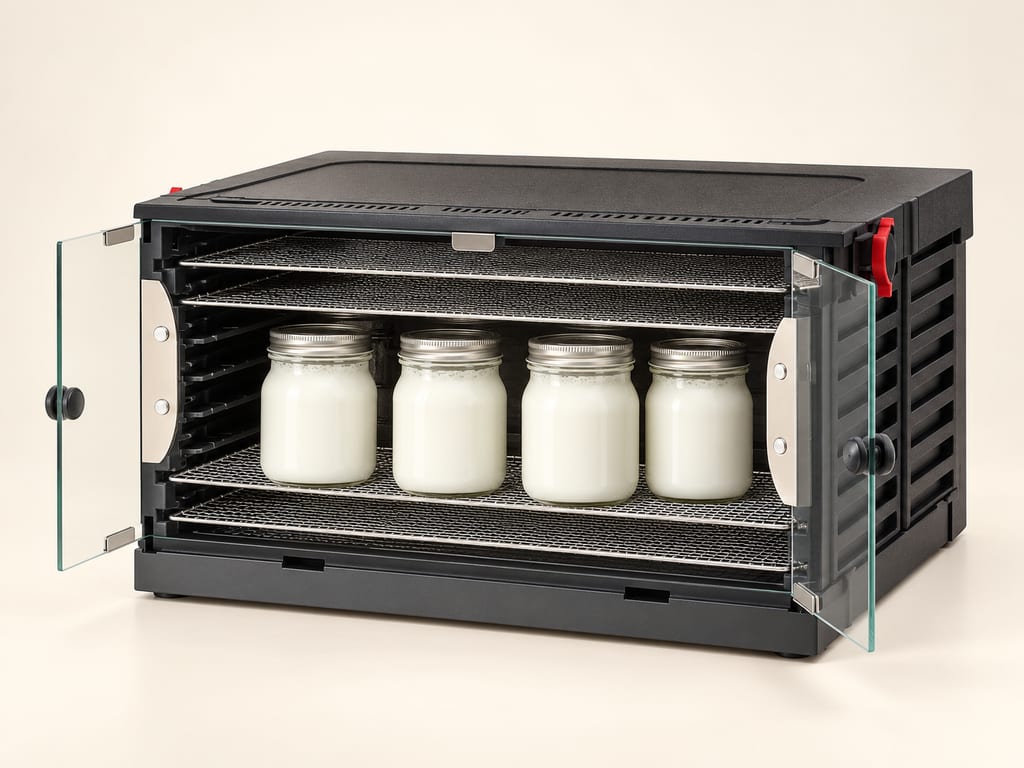
Brød & Taylor Sahara dehydrator
A folding electric food dehydrator with glass front doors, mesh shelves, filtered circulating air and two programmable time-temperature stages. Brød & Taylor also documents its use as a chamber for sealed yogurt jars.
 FermenteaWhere food goes to change
Equipment · Jars, pots and crocks
In Shaoxing Huangjiu production, broad-mouthed pottery vats hold the actively worked rice mash, while smaller pottery jars receive it for post-fermentation. Those jars may later serve a separate storage role.
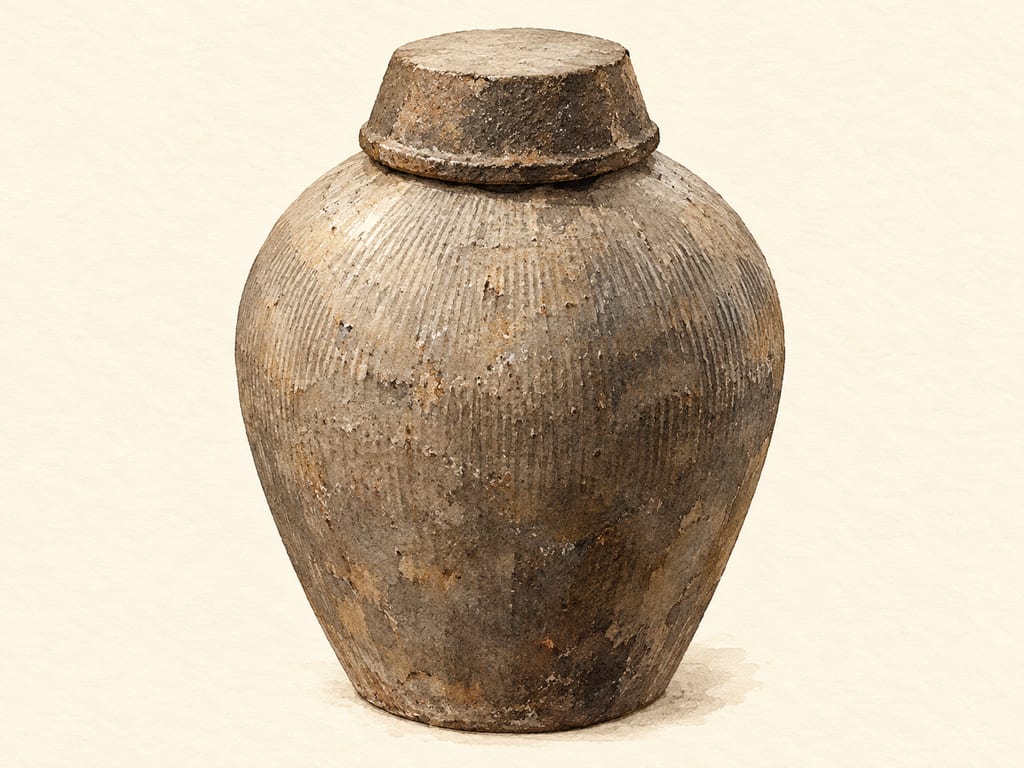
Shaoxing Huangjiu production can involve an open, broad-mouthed vat and smaller pottery wine jars in sequence. The vat gives the brewer access to the rice mash while it is being worked; the jars receive mash for a later fermentation stage. A jar used to store finished wine is another use again. These roles belong to one production tradition, but they are not interchangeable: a finished-wine jar cannot be assumed to show active fermentation, and a vessel captioned simply “Huangjiu jar” leaves the stage unclear. The tools are part of a wider kit that includes wooden rakes and covers, not a single standardized container.
During the early fermentation described by Zhejiang Dayue, a wooden rake is used to stir the mash in the vat. The producer says this mixes material through the vessel, evens conditions between its upper and lower parts, releases carbon dioxide and brings in oxygen. The open mouth makes that physical work possible. The study of Huangjiu production likewise describes fermentation in an open environment, but it compares manually made batches with mechanized production and should not be read as proof that every workshop uses the same vessel or schedule.
When the producer’s pre-fermentation stage ends, mash is transferred from the large vat into smaller wine jars for post-fermentation. Dayue explains the fuller jar as a way to reduce air contact and limit alcohol loss by volatilization; it describes the later fermentation as continuing for a long period in cooler, oxygen-limited conditions. These are the producer’s stated purposes for its process, not measured performance guarantees for every jar. Xie and colleagues report pottery jars in both fermentation stages of the traditional manual method they studied, alongside stainless-steel tanks for mechanized production. The difference between these reports is useful: Shaoxing brewing has both craft-specific vessel practices and production systems that do not share one material or vessel sequence.
The national intangible-heritage record places Shaoxing Huangjiu within Zhejiang and describes a seasonal craft whose main brewing begins around the winter solar term and proceeds through open raking and jar-based secondary fermentation. After pressing and heating, the wine is put into jars for ageing, commonly for at least three years. That storage stage follows fermentation; it should not be mistaken for the jar’s earlier use with active mash. The same record lists pottery vats, wine jars and grass vat covers among the traditional tools, and records the craft in 2006 as part of China’s first national intangible cultural heritage list. It traces written references to the Spring and Autumn and Warring States periods, while describing the brewing tradition as developing by the Northern Song and flourishing in the Ming and Qing. Those dates concern the documented Shaoxing wine craft, not the proven age of any particular vat shape.
A photograph in Wikimedia Commons shows large covered jars captioned as rice wine ageing in Wuzhan, China, in 2006. It is a useful visual reference for the repeated, rounded pottery jars and their covers, but its caption describes ageing, not open mash or the transfer into jars for secondary fermentation. It supplies neither scale nor a link to a specific Shaoxing producer. The vessels in this record therefore remain described by their documented functions rather than by an assumed capacity, exact profile or universal lid.
China’s national intangible-heritage record traces written accounts of Shaoxing wine to the Spring and Autumn and Warring States periods and describes the craft as developing by the Northern Song and flourishing in the Ming and Qing. It does not date the open-vat and jar pairing itself.
The producer describes one process, while the research study includes manual and mechanized Huangjiu production; these accounts should not be collapsed into a universal vessel sequence.
Source →No general dimensions, capacity, wall thickness or service life are reported for the pottery vessels.
Source →The heritage record describes Shaoxing Huangjiu craft and its regional production area. This locates the documented tradition, not the place where every individual vat or jar was made.
A folding electric food dehydrator with glass front doors, mesh shelves, filtered circulating air and two programmable time-temperature stages. Brød & Taylor also documents its use as a chamber for sealed yogurt jars.
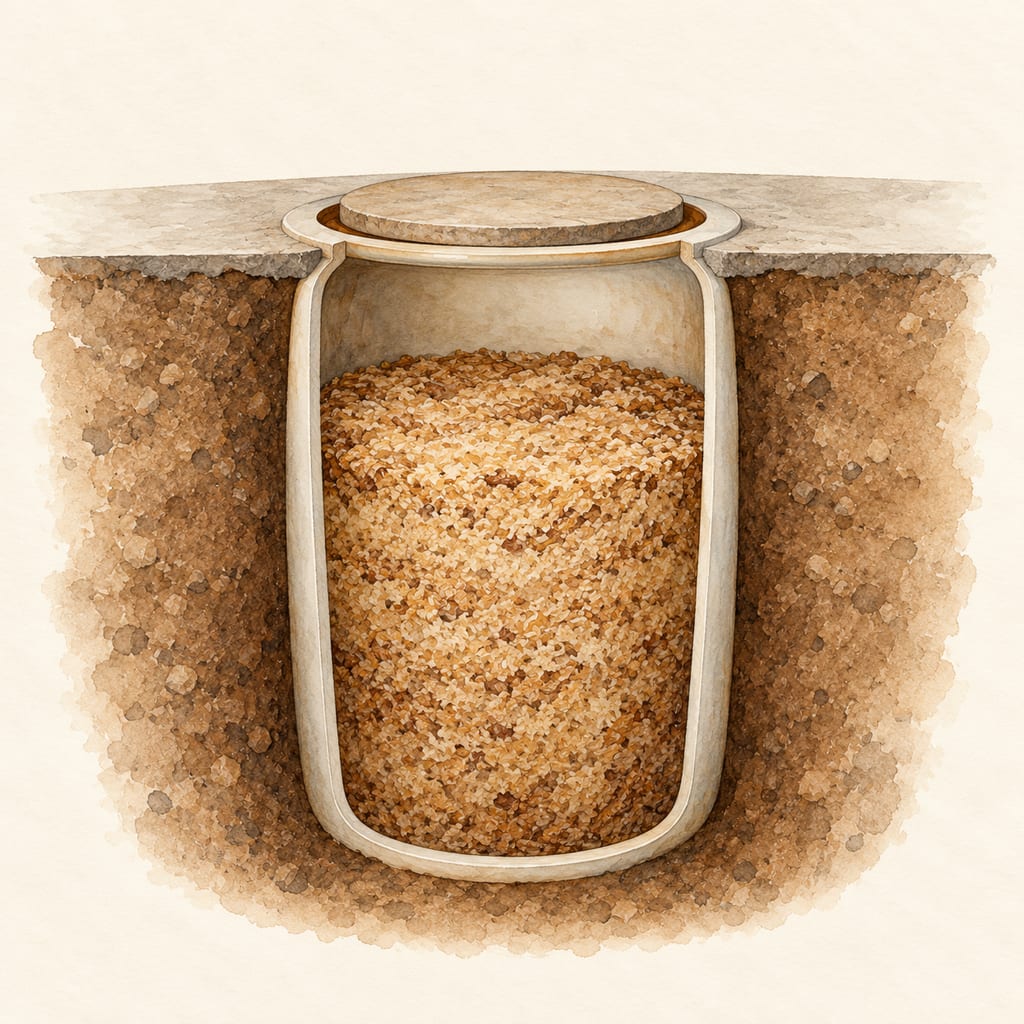
A buried ceramic fermentation jar holds the solid-state grain charge for light-aroma baijiu. Fenjiu reportage describes porcelain vats set into the floor; the cited sources establish no universal historical profile or dimensions.
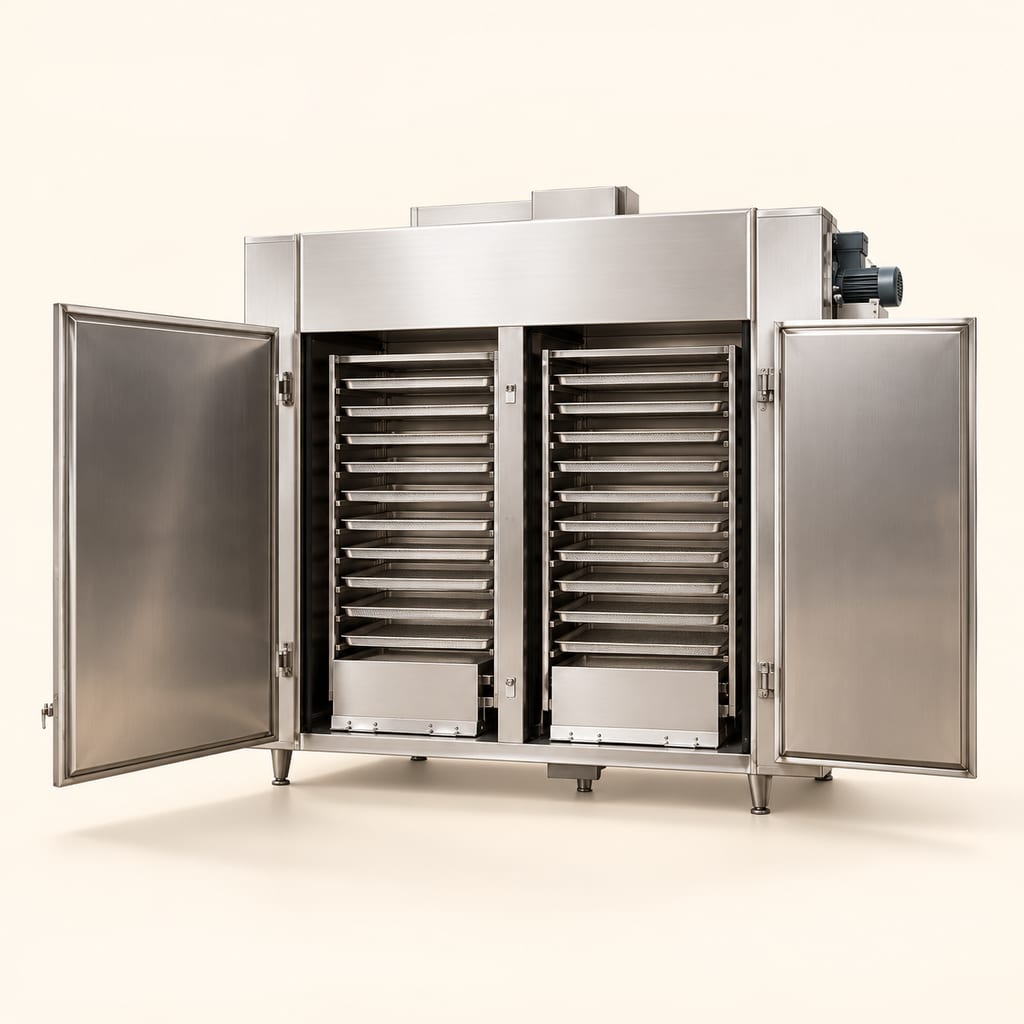
A heated-air cabinet with trays for drying fruit and other crops; PHilMech documents cabinet/convection dryers in Cebu's dried-mango trade and several Philippine equipment variants.
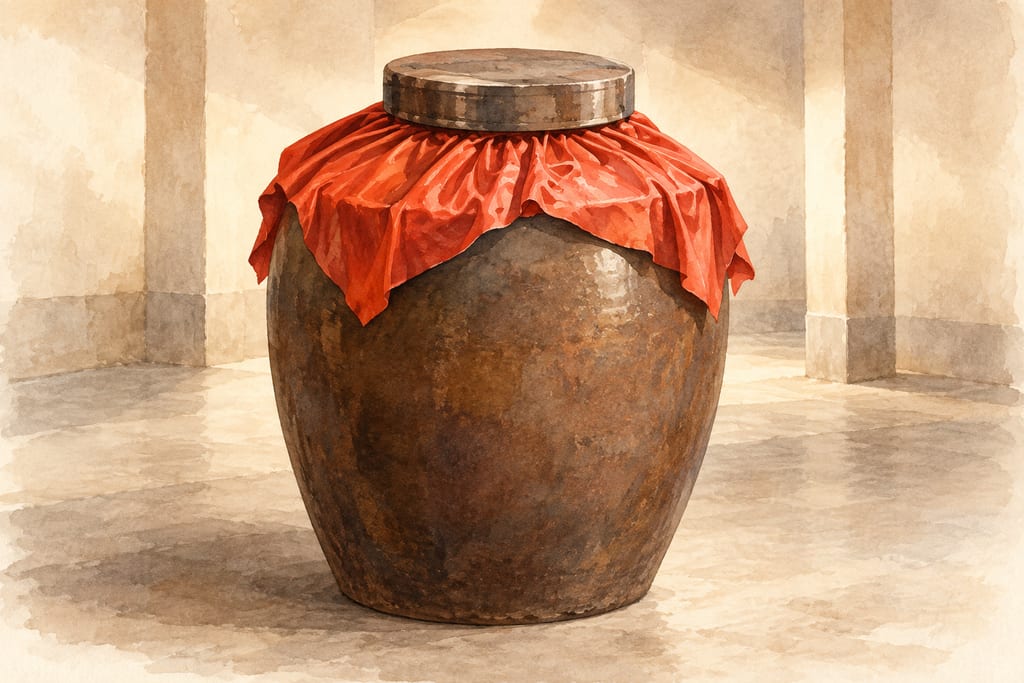
Large ceramic jars hold distilled baijiu during maturation. Fenjiu documents rows of aging jars in Shanxi, including specially specified unglazed earthenware; available sources do not establish one universal shape, volume or closure.
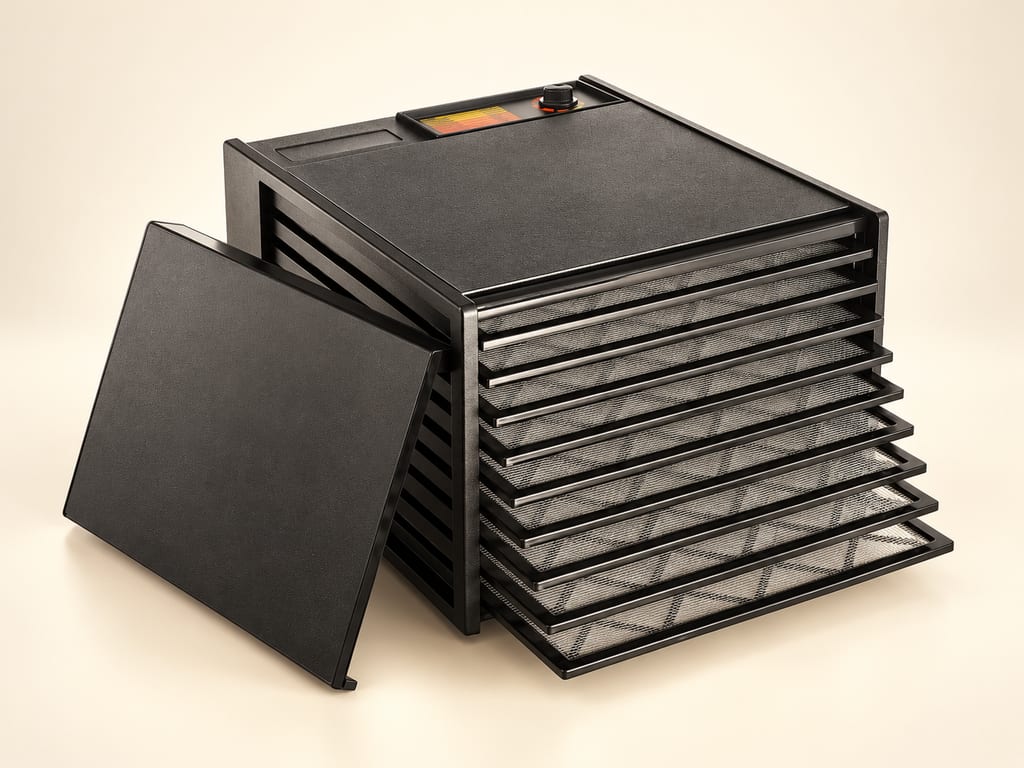
A maker-branded range of electric food dehydrators using forced horizontal airflow. Tray counts, controls and dimensions vary by model; the 3900B is one documented nine-tray example.

The INKBIRD ITC-308 is a plug-in, probe-led temperature controller with separate heating and cooling outputs. Its relays switch compatible appliances; they do not heat, cool or validate the food themselves.
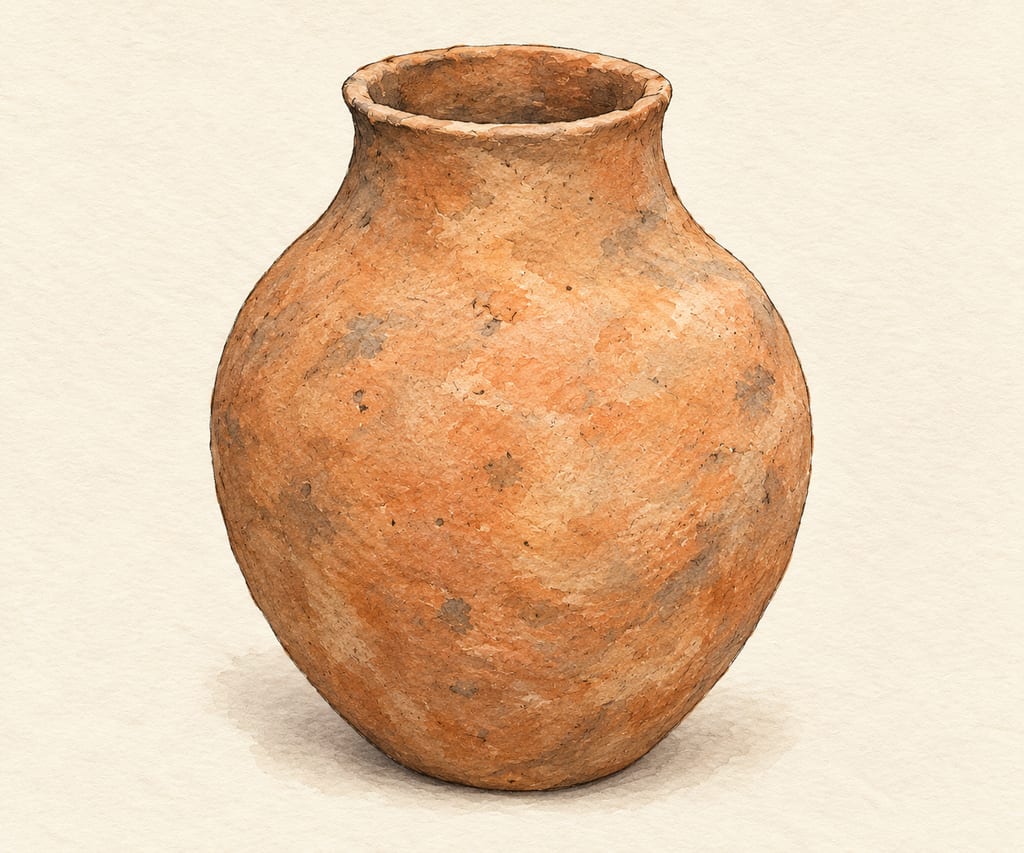
Jiahu pottery preserves chemical evidence of an early mixed fermented drink involving rice, honey and fruit. Its jar forms provide archaeological context, not proof one vessel served every brewing stage.
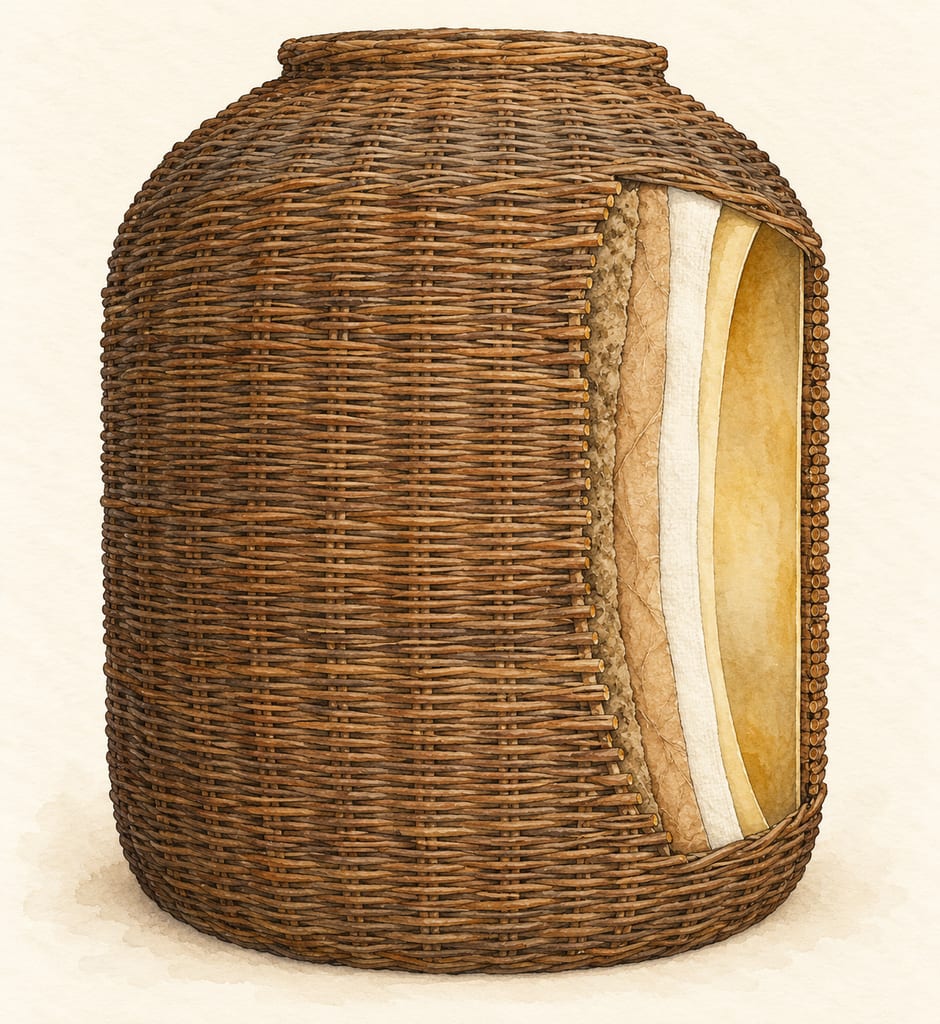
A jiuhai is a large vessel for storing and maturing baijiu. This entry focuses on a documented Xifeng example: a giant basket woven from local twigs and lined with layered paper, cloth and coatings. Other jiuhai use different materials.
No community contributions have been published for this entry yet.
Sign in to contribute. Published comments and photos are free to read.
Zhejiang Dayue Shaoxing Wine Co., Ltd.Method · Equipment
Winemaking processDescribes working rice mash in an open fermentation tank with a wooden rake.
Describes transferring mash after pre-fermentation into a large wine jar for post-fermentation; the producer says filling reduces air contact and alcohol volatilization and supports long fermentation under cooler, low-oxygen conditions.
Distinguishes later jar filling for storage from the post-fermentation transfer.
Cited in: Two pottery vessels, two different jobs; Working the open mash; Transfer into the smaller jar
Food Science & Nutrition 9(7), 3885–3892Method · Research
Study on relationship between bacterial diversity and quality of Huangjiu (Chinese Rice Wine) fermentationStates that Huangjiu is brewed in an open environment and describes manual and mechanized production studied at Guyuelongshan Shaoxing Huangjiu Company.
States that pottery jars are used in both the first and second fermentation stages of traditional manual Huangjiu; mechanized Huangjiu uses large stainless-steel tanks.
Reports that lactic acid bacteria predominate in the sampled fermentation communities and that Lactobacillus brevis dominated the spoilage sample; these results do not establish a vessel safety rule.
Cited in: Two pottery vessels, two different jobs; Working the open mash; Transfer into the smaller jar
China Intangible Cultural Heritage Digital Museum, Ministry of Culture and Tourism of the PRCHistory · Geography · Method · Equipment
绍兴黄酒酿制技艺 [Shaoxing Huangjiu brewing technique]Lists the Shaoxing Huangjiu brewing technique in the first national intangible cultural heritage list in 2006 and names Shaoxing, Zhejiang, as the reporting region.
Describes seasonal starter preparation, main brewing, open raking, transfer into jars for secondary fermentation, pressing, heating, and jar ageing for three years or more.
Lists pottery vats, wine jars and grass vat covers among traditional tools; its historical account traces written records to the Spring and Autumn and Warring States periods and describes the craft as developing by the Northern Song and flourishing in the Ming and Qing.
Cited in: Two pottery vessels, two different jobs; A regional craft and a longer storage stage
Wikimedia CommonsVisual reference
Rice wine, aging in jars, Wuzhan, China 2006The file page identifies the photograph as rice wine aging in jars in Wuzhan, China, photographed in 2006, and lists a CC BY-SA 2.0 license. The image documents a storage scene, not the open-vat or secondary-fermentation stage.
Cited in: Reading a photograph by its stage