A vessel for the spirit after distillation
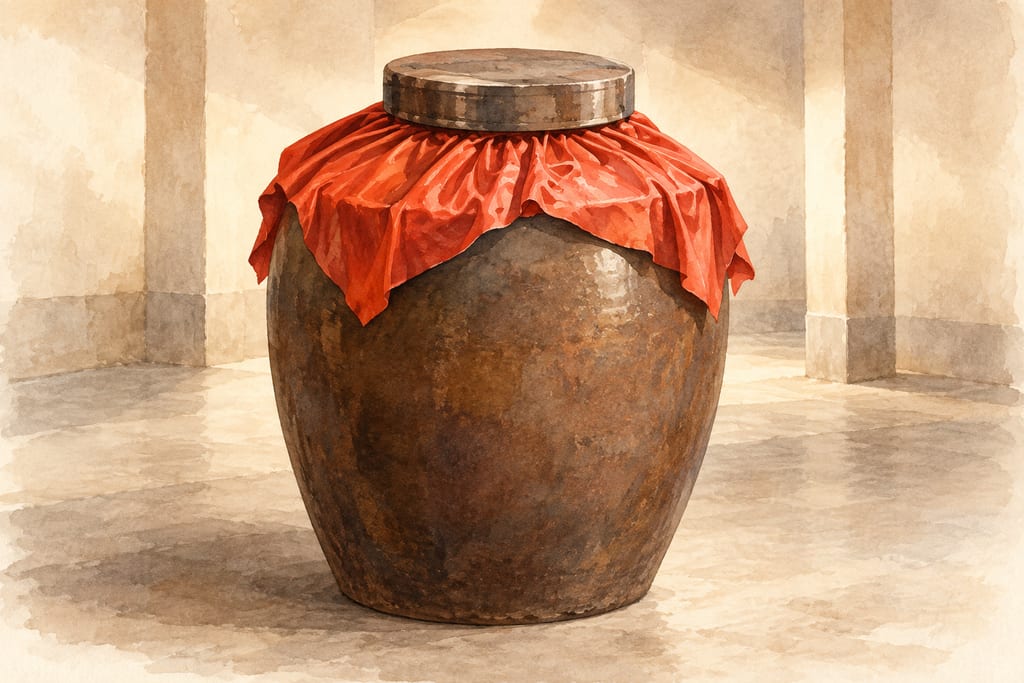
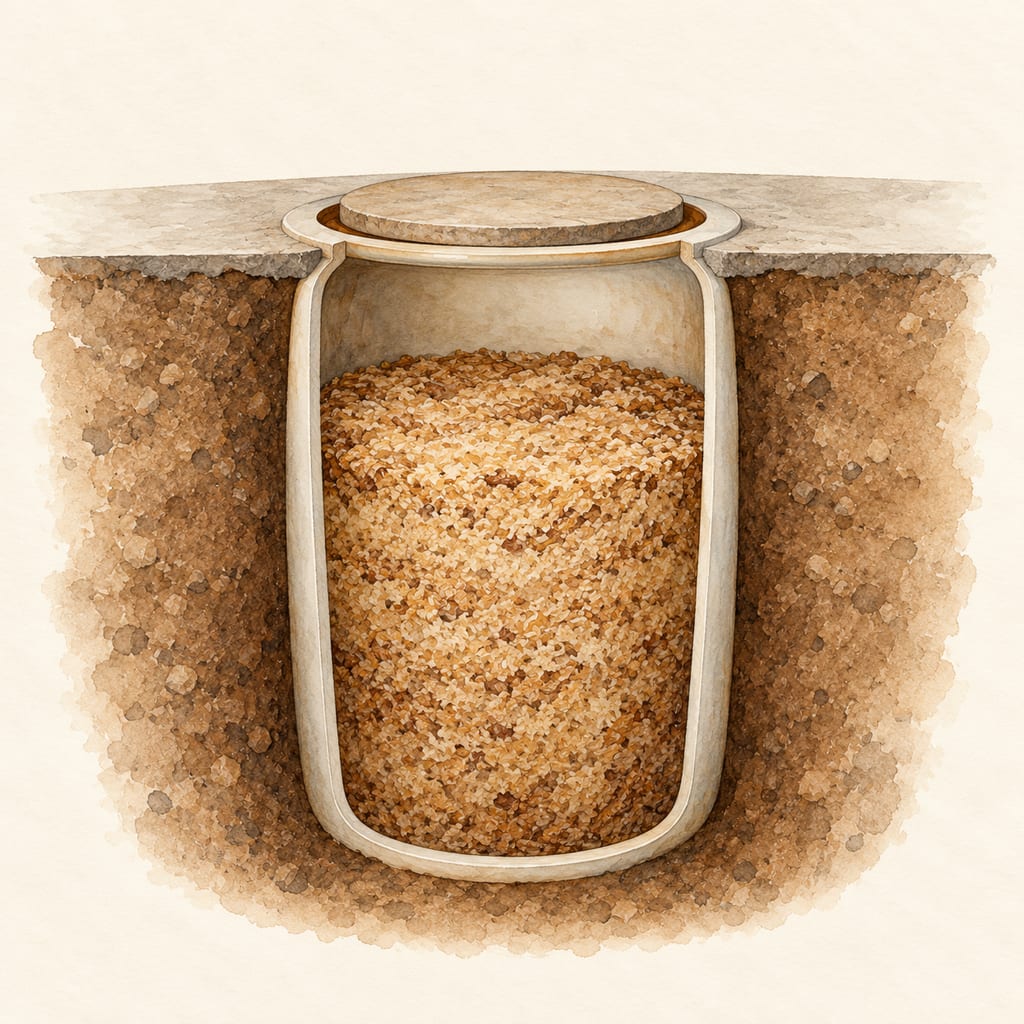
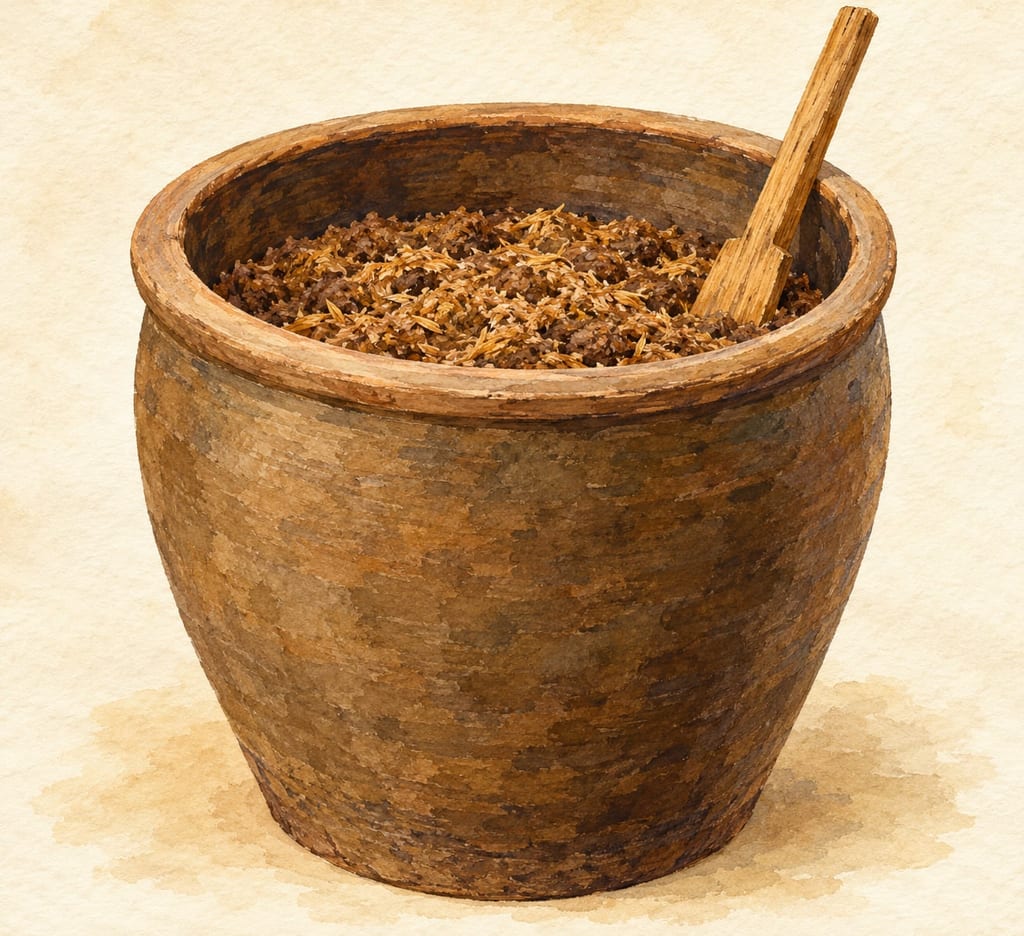
A ceramic baijiu aging jar stores distilled spirit while it matures. It belongs to a later step than the clay fermentation vessels used for grain before distillation. Fenjiu's 2025 company account describes base spirit stored in ceramic jars at its cellar in Xinghua Village, Shanxi, and shows rows of jars in an indoor storage setting. The item here follows that documented storage role: it is not a fermentation vat, still, or retail bottle.
The company describes its specified aging jars as unglazed earthenware and connects their material properties with gradual exchange during storage. That is evidence about Fenjiu's named practice, not a rule for every baijiu cellar. Ceramic jars differ by maker and use; the source material does not provide one standard clay body, firing schedule, glazing pattern, jar volume or lid design. The photograph documents the visible forms and arrangement, not hidden construction details.
Sources for this section
What the material can change
Baijiu-aging research treats the container as part of the storage environment rather than a neutral wrapper. A 2023 study compared Jiangxiangxing baijiu held in pottery jars and stainless steel tanks over 24 months. It measured changes in sensory qualities, flavor compounds and metal ions, and reported differences between the two storage conditions. This is evidence for those samples and vessels; it cannot establish that a Fenjiu jar behaves identically, or that every ceramic jar improves every spirit.
Separate laboratory research examined how compounds in Chinese liquor sorb onto pottery powder. Powder tests help investigate contact with ceramic surfaces, but powder is not a whole aging jar, and those results do not define a vessel's capacity or determine how a cellar should be run. Together, these studies make the material relevant while leaving the exact pathway and outcome dependent on the spirit, jar and conditions.
Sources for this section
Documented form and its limits
The official Fenjiu photograph shows many large jars grouped in rows inside a storage room, with covered mouths. It is useful evidence for an actual producer's storage arrangement. It does not establish the covering as a universal closure or show whether the jars share a particular internal coating. The page reports that Fenjiu specified unglazed earthenware jars for some stored spirits; no dimensions or individual jar capacity are given in the sources used here, so this account leaves those fields open.
The Chinese text supplied with the item—白酒 陶坛 储存 老熟—describes baijiu, a pottery jar, storage and maturation. It is retained as a descriptive source phrase, not presented as a verified local name or a standardized technical term. The evidence supports a contemporary Fenjiu example in Shanxi and broader research on ceramic storage, but not a date for the origin of this equipment class or a single traditional profile.
Sources for this section
History
A Fenjiu company article published in 2025 documents ceramic-jar storage as part of its base-spirit maturation and describes a named unglazed jar specification. This dates that report, not the origin of ceramic aging jars.
Equipment details
CareThe sources consulted do not give a general cleaning, sealing, handling or storage-room specification for this jar. Fenjiu's reported practice should not be generalized to other producers.
Made of
- ceramic (earthenware) — storage vessel
Fenjiu describes specially specified unglazed earthenware jars; ceramic formulations and surface treatments vary by producer.
Limits
The sources do not establish a single standard jar profile, capacity, closure or glaze for baijiu aging; the linked producer photograph documents one Fenjiu storage setting.
Source →A study of Jiangxiangxing baijiu compares pottery jars and stainless steel tanks over 24 months; its results do not directly establish the performance of Fenjiu jars or all ceramic vessels.
Source →Places
China
Documented use · Country evidenceCountry-level setting of the Fenjiu producer example; not a claim of universal use across China.
Shanxi
Documented use · Region evidenceFenjiu's documented ceramic storage operation is at Xinghua Village in Fenyang, Shanxi; the jar type is not restricted here to a single regional origin.