Equipment

626 sourced equipment pages: vessels, tools, appliances and built structures.

Everything

19 items

Built structures · Place

Lower Yangtze nut-storage pits (Hemudu)

At Hemudu in Yuyao, Zhejiang, later Neolithic pits held stored acorns. Archaeologists describe profiles from straight-sided to bell-shaped, while cautioning that excavated outlines may be truncated.

Show on map
Pits and cavities
Hemudu Site, Yuyao City
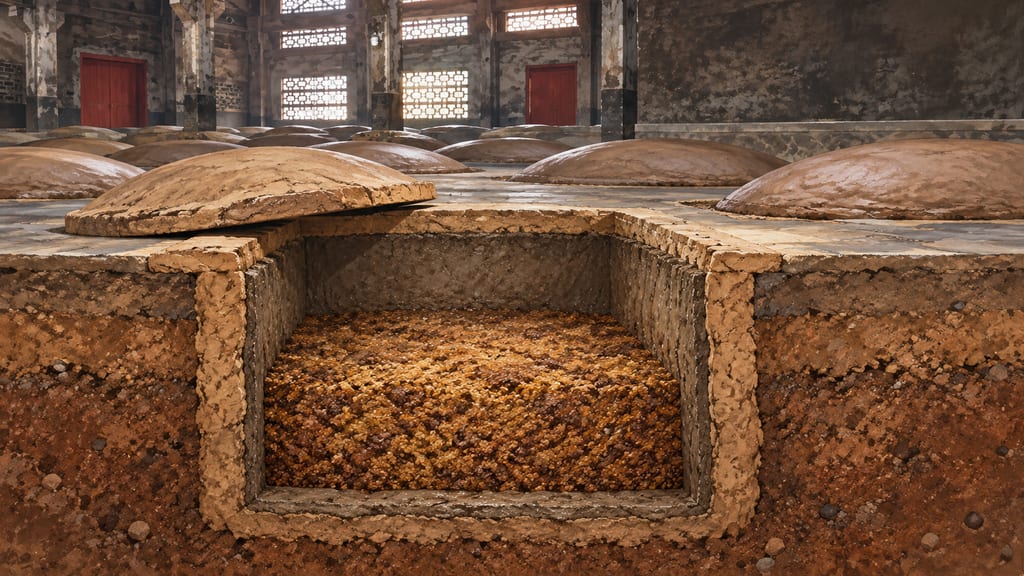
Unscaled cutaway illustration of a mud-lined strong-aroma baijiu fermentation pit below a workshop floor, with fermenting grain inside, a mud cap beside the opening and covered pits behind it.
Built structures

Strong-aroma baijiu fermentation pit

A below-floor, mud-lined fermentation chamber used in Chinese strong-aroma baijiu production. Its grain mash ferments in contact with the chamber’s microbial pit mud; shape and pit ecology vary among cellars.

Pits and cavities
Luzhou, Sichuan
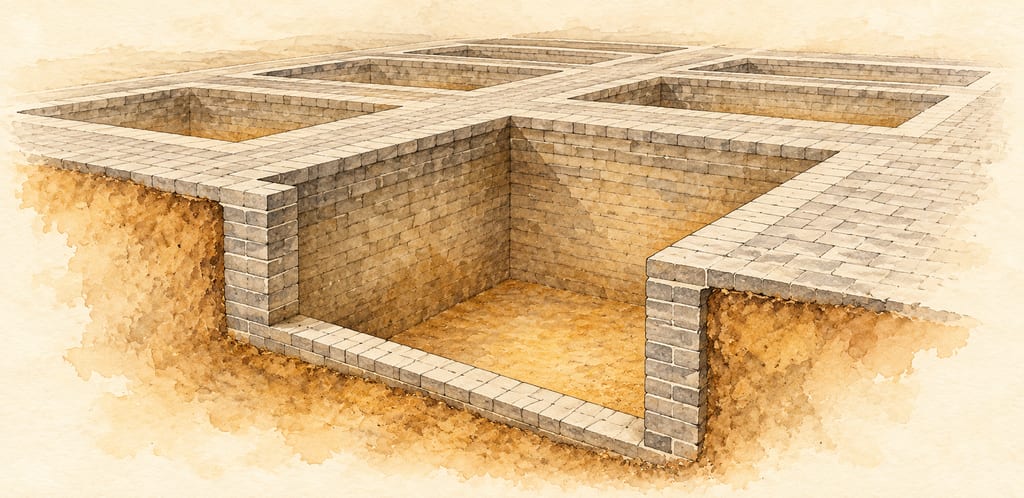
Watercolor cutaway of a rectangular brick-lined Liu Ling Zui fermentation pool, set into the ground with neighboring pool rims in parallel rows.
Built structures · Place

Liu Ling brick-lined fermentation pools

Fixed rectangular brick-lined fermentation pools at the Liu Ling Zui distillery in Xushui, Hebei. Heritage accounts disagree on their date and total number.

Show on map
Pits and cavities
Liu Ling Zui, Xushui
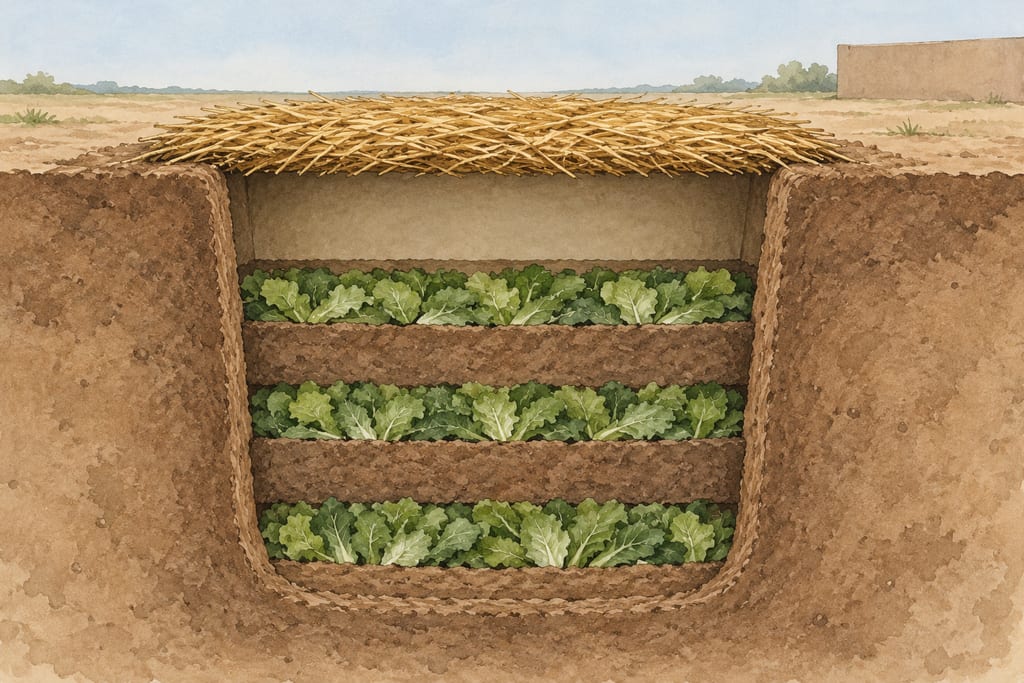
Editorial cutaway illustration of an earthen pit with alternate rows of leafy vegetables and soil beneath a straw cover, with open space below the rim.
Built structures

Fresh-vegetable storage pit in the Qimin yaoshu

A sixth-century Chinese agricultural text describes a seasonal earthen pit for keeping fresh vegetables through winter, with vegetable kinds separated by alternating rows of produce and soil under a thick straw cover.

Pits and cavities
China
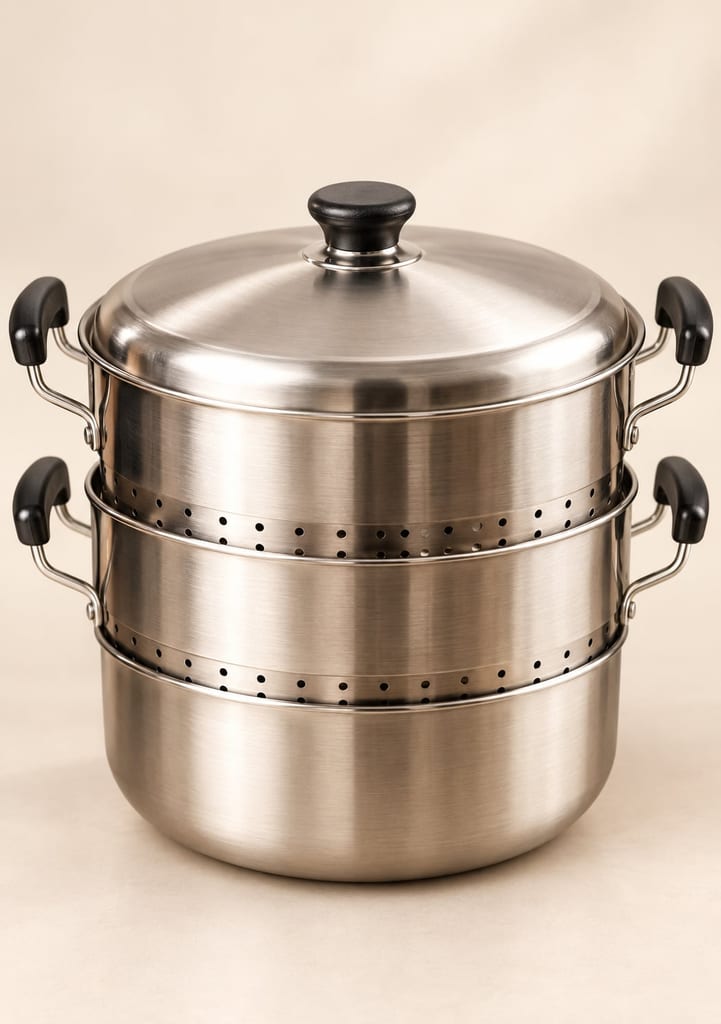
Editorial photorealistic image of a lidded stainless-steel steamer with two perforated tiers against a warm ivory background.
Equipment

Steamer

A steamer cooks food above heated water under a cover. The broad term includes improvised pot-and-rack setups, metal tiers and basket steamers; individual forms have different designs and uses.

Kettles, coppers and boilers
China
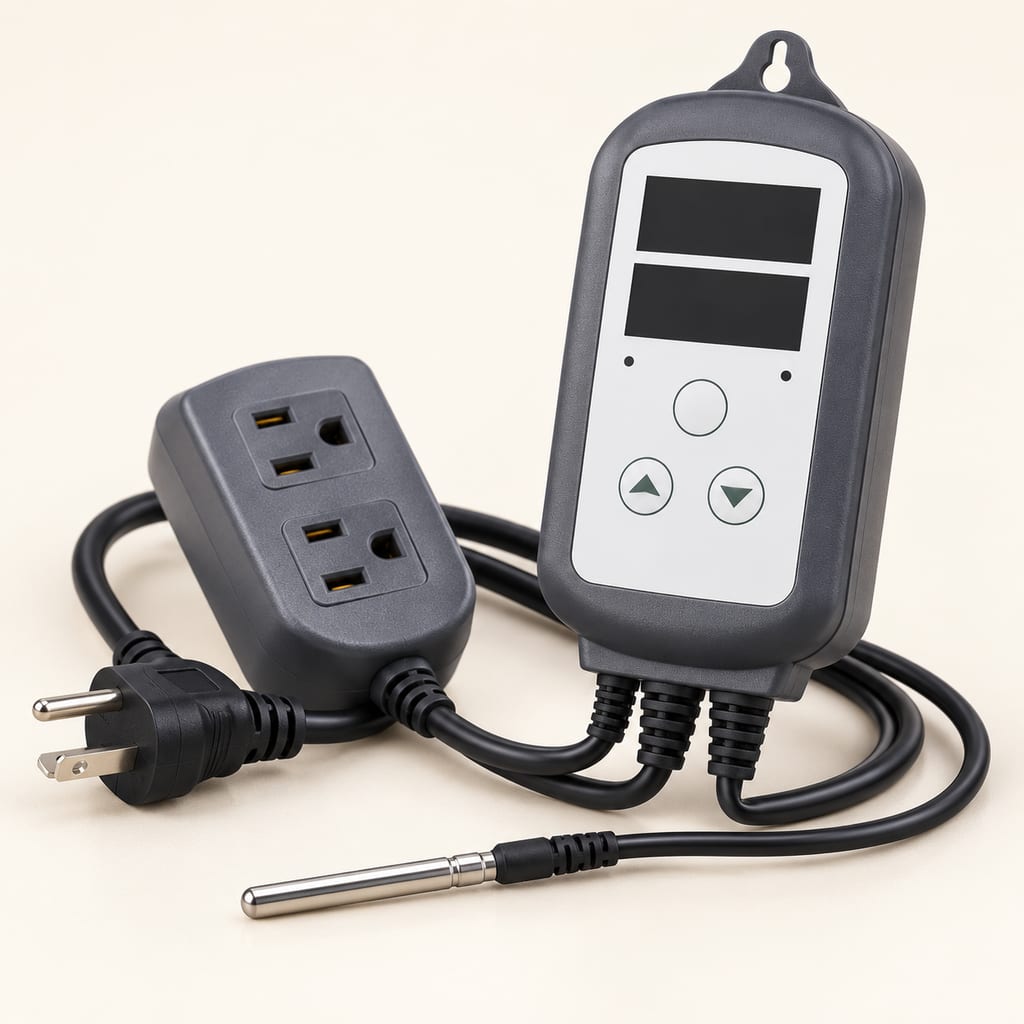
An unbranded plug-in controller with twin display windows, separate dual-outlet block, power plug and metal probe on warm ivory.
Equipment

INKBIRD ITC-308

The INKBIRD ITC-308 is a plug-in, probe-led temperature controller with separate heating and cooling outputs. Its relays switch compatible appliances; they do not heat, cool or validate the food themselves.

Instruments
Shenzhen
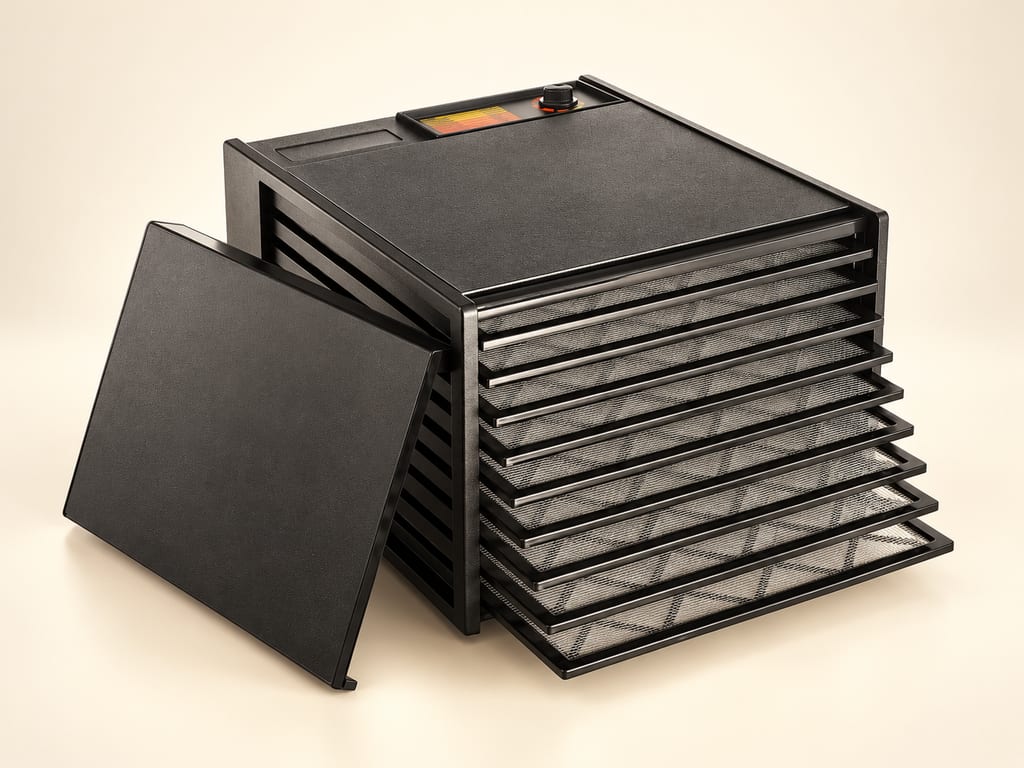
Photorealistic studio depiction of a black nine-tray horizontal-airflow dehydrator cabinet with its removable cover set aside.
Equipment

Excalibur dehydrator

A maker-branded range of electric food dehydrators using forced horizontal airflow. Tray counts, controls and dimensions vary by model; the 3900B is one documented nine-tray example.

All-in-one appliances
United States
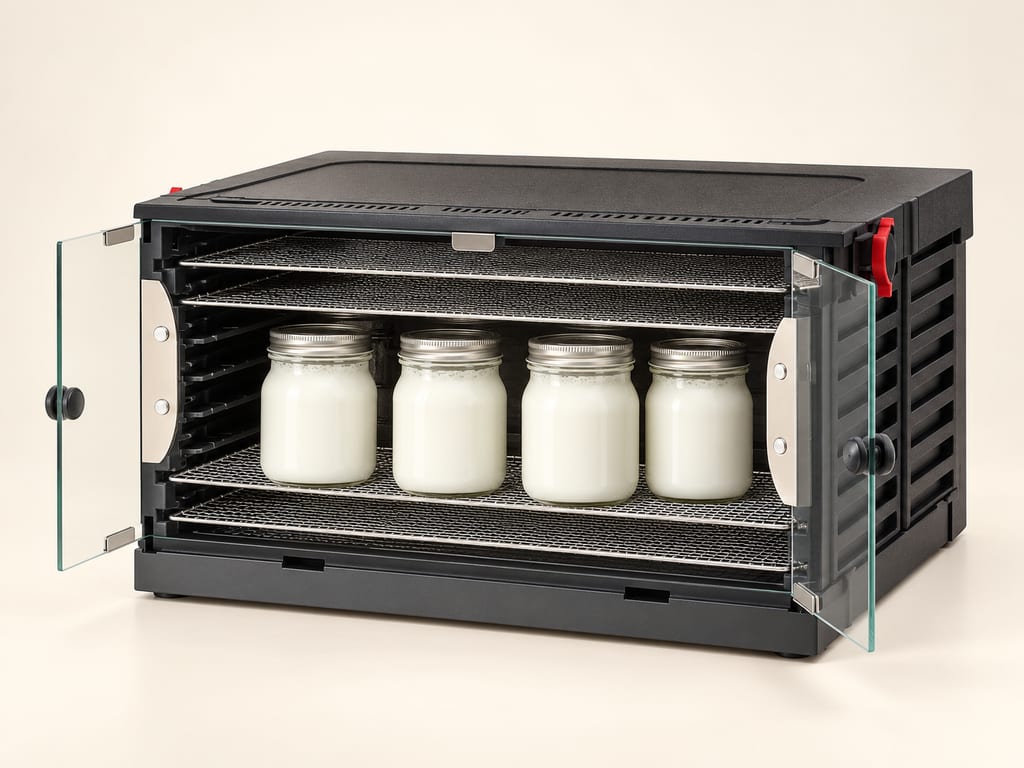
Photorealistic illustration of an open, dark folding dehydrator holding four lidded glass jars on a wire shelf against a warm ivory studio background.
Equipment

Brød & Taylor Sahara dehydrator

A folding electric food dehydrator with glass front doors, mesh shelves, filtered circulating air and two programmable time-temperature stages. Brød & Taylor also documents its use as a chamber for sealed yogurt jars.

All-in-one appliances
China
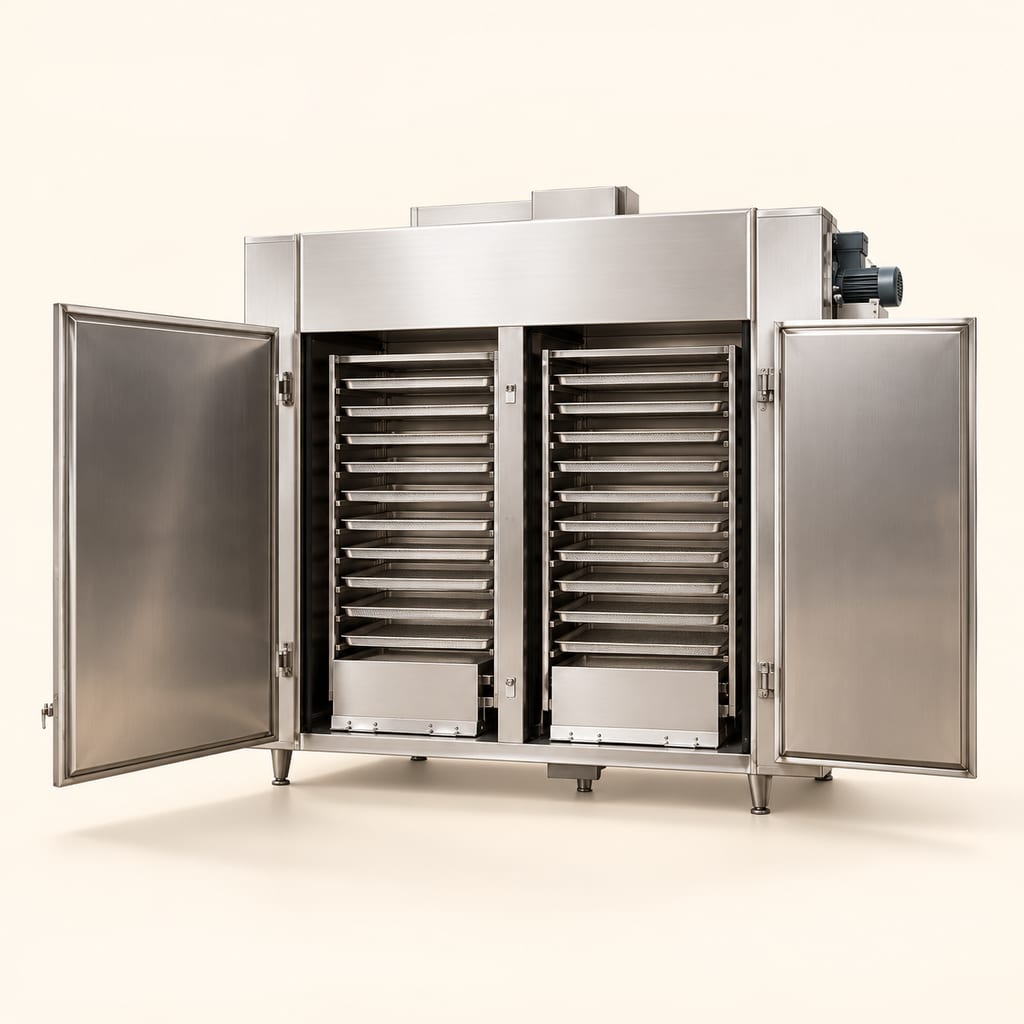
Photorealistic warm-ivory product illustration of an empty modern batch cabinet dryer with open doors, removable tray racks and a side fan housing.
Equipment

Cabinet and convection dryer

A heated-air cabinet with trays for drying fruit and other crops; PHilMech documents cabinet/convection dryers in Cebu's dried-mango trade and several Philippine equipment variants.

Drying kilns and dryers
Cebu
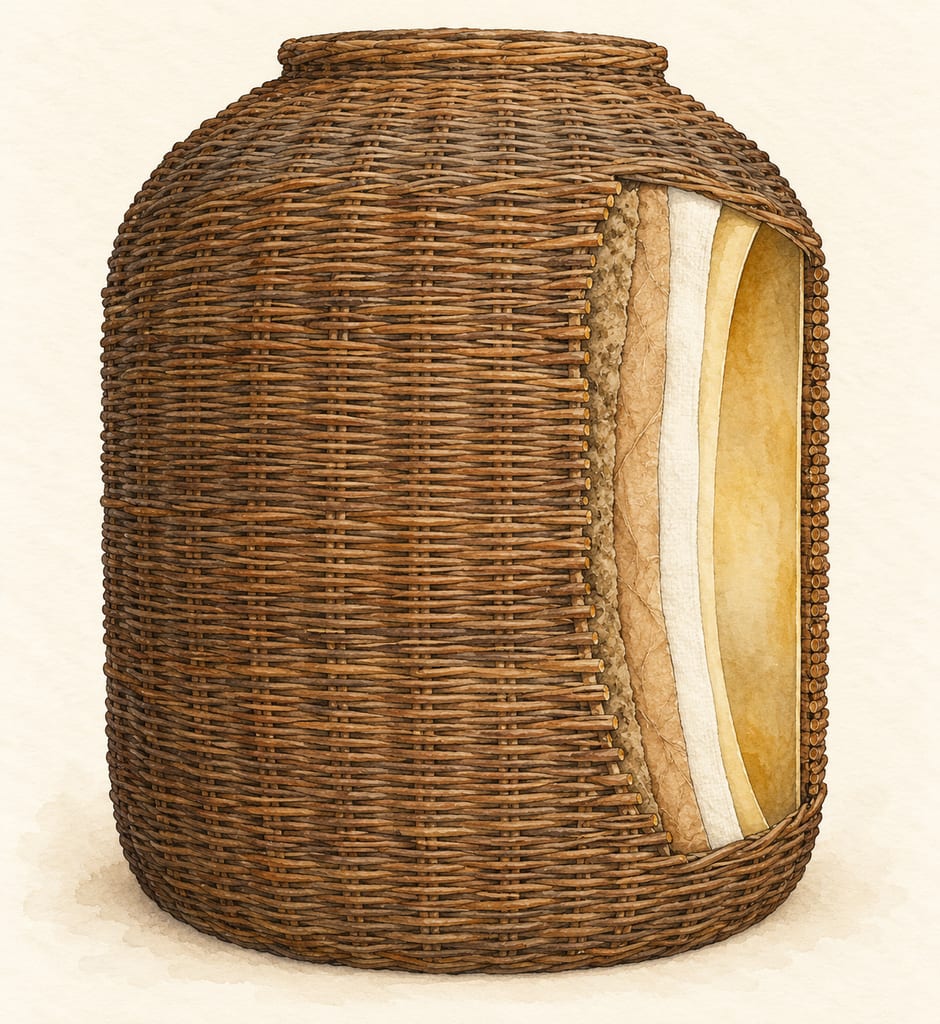
Watercolor cutaway illustration of a large Xifeng jiuhai with a woven local-twig outer shell and simplified interior lining layers.
Equipment

Jiuhai

A jiuhai is a large vessel for storing and maturing baijiu. This entry focuses on a documented Xifeng example: a giant basket woven from local twigs and lined with layered paper, cloth and coatings. Other jiuhai use different materials.

Tanks and vats
Liulin Town, Fengxiang County
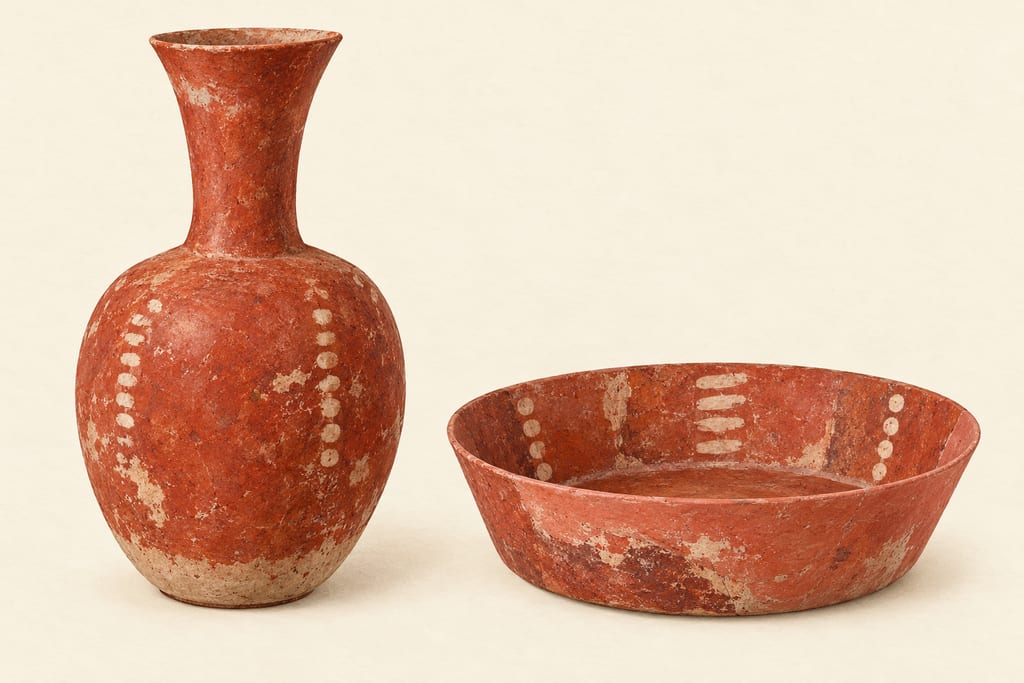
Editorial illustration of a slip-painted long-necked hu and broad bowl from Qiaotou, based on the forms shown in the published archaeological figure.
Equipment · Historical object

Qiaotou painted hu and bowls

Painted long-necked hu vessels and bowls from Qiaotou, Zhejiang, associated with residues the researchers interpret as beer; the evidence concerns drinking and serving, not proof that these vessels were fermenters.

Show on map
Jars, pots and crocks
Zhejiang, China
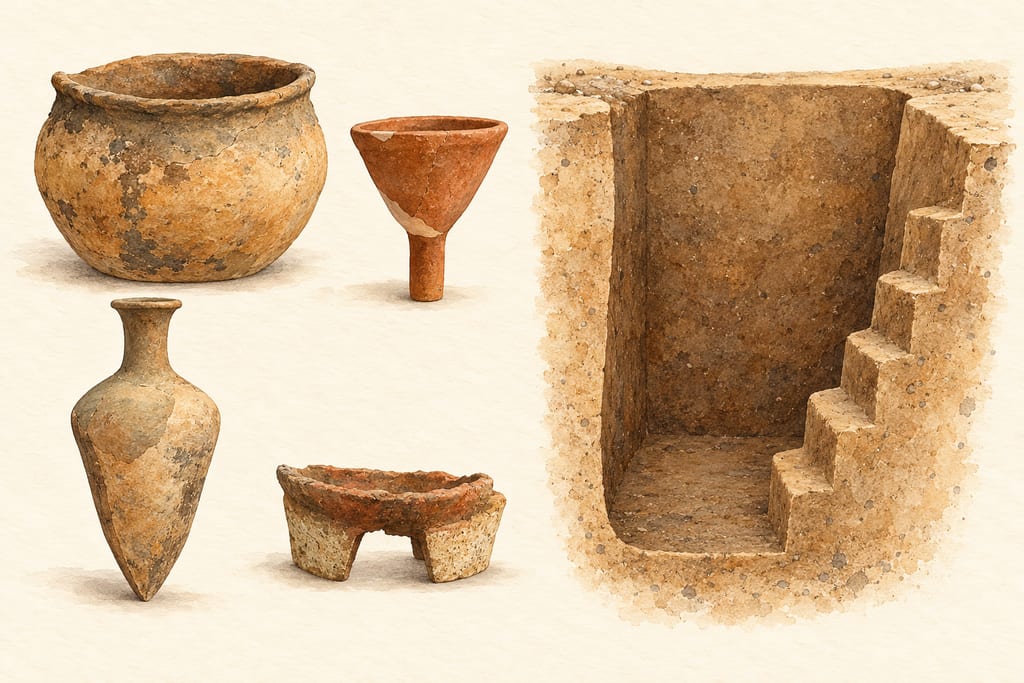
Watercolor archaeological reconstruction showing Mijiaya pottery forms separate from an empty cutaway of stepped Pit H82, clarifying portable equipment and fixed feature.
Equipment · Historical object

Mijiaya brewing suite

Excavated Mijiaya pottery includes wide-mouth pots, funnels, pointed-bottom jiandiping jars and pottery stoves. Residue analyses support a beer-making interpretation; exact vessel roles remain uncertain.

Show on map
Jars, pots and crocks
Mijiaya archaeological site
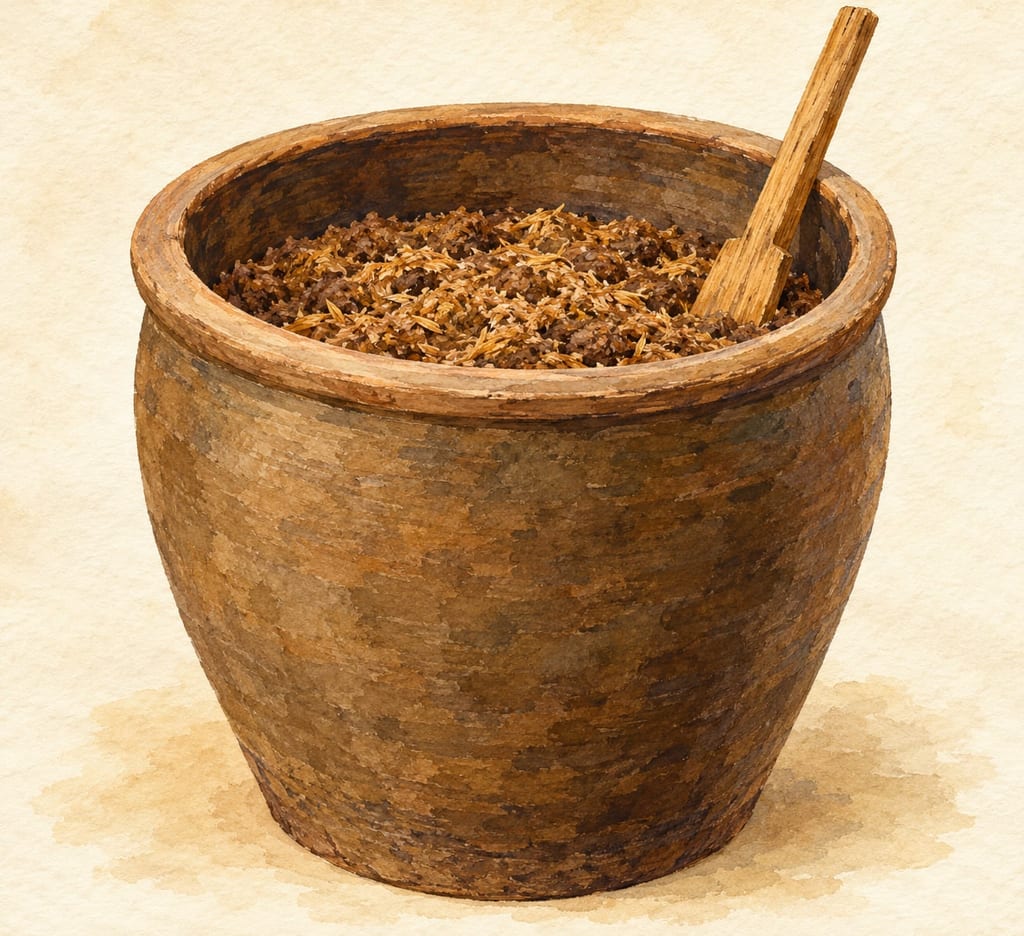
Watercolor and gouache illustration of an open upright ceramic Shanxi vinegar-pei vat with damp solid mash and a wooden paddle.
Equipment

Shanxi vinegar ceramic vat

An open ceramic vat holds the moist solid mash, or vinegar pei, during Shanxi aged vinegar’s aerobic acetic fermentation. A 2025 study records a Taiyuan example about 1 m wide and 1.2 m high.

Tanks and vats
Taiyuan
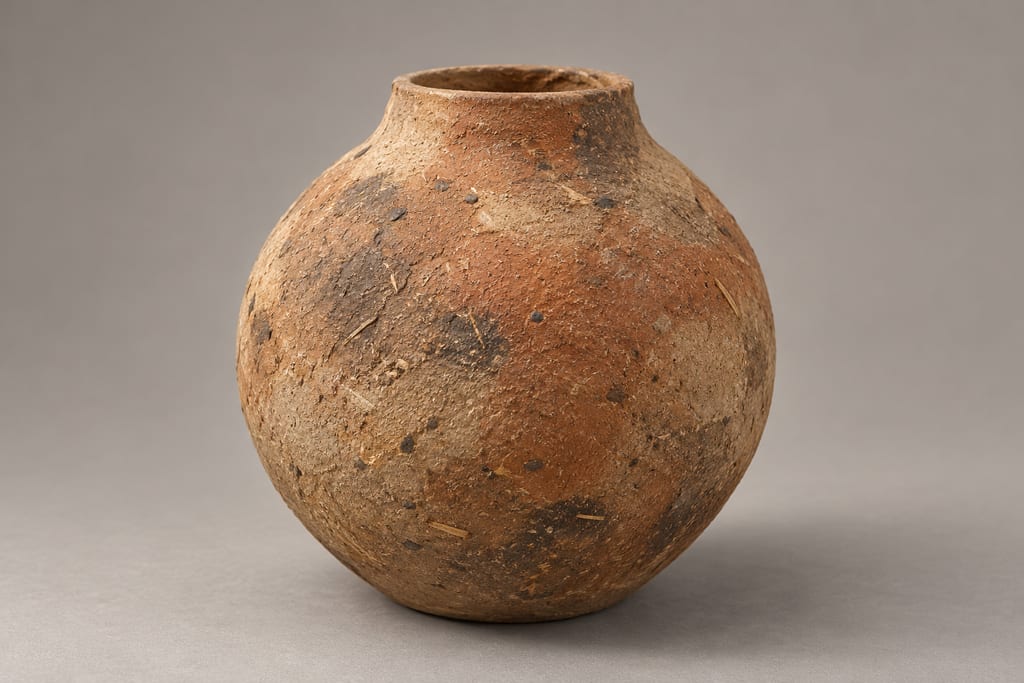
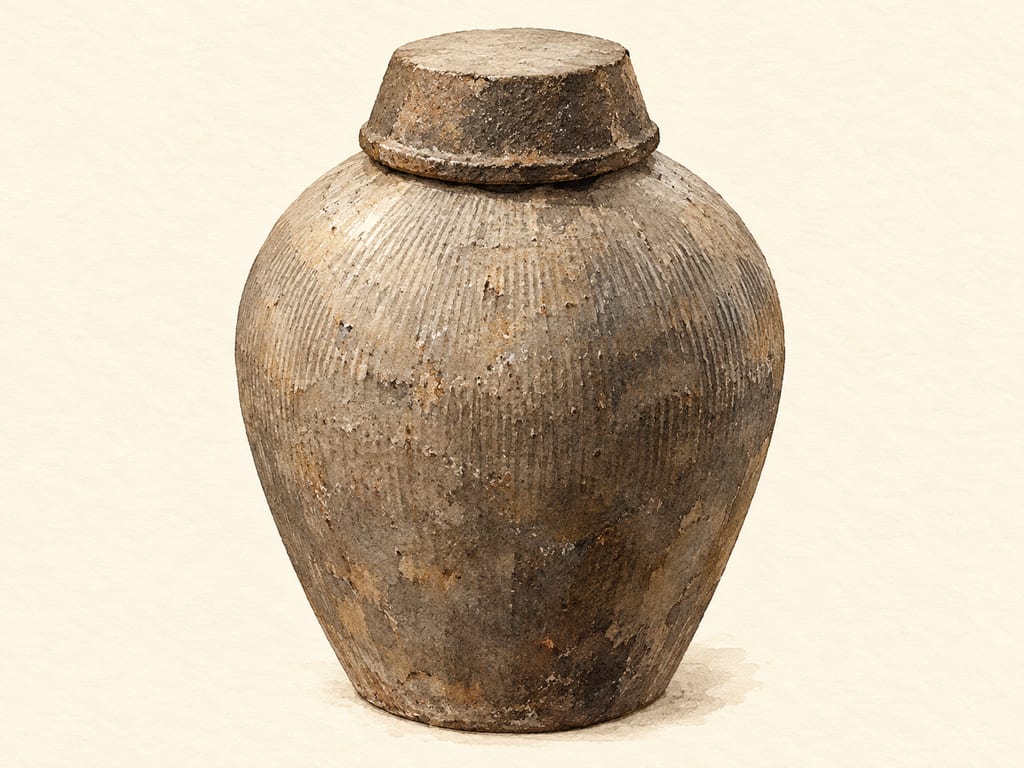
Interpretive illustration of a coarse plant-tempered Shangshan globular jar with a rounded body and small restricted mouth; the specific burial or use of the illustrated vessel is unknown.
Equipment · Historical object

Shangshan globular rice-beverage jars

A small-mouth globular pottery jar from early Shangshan, ca. 10,000–9,000 cal BP. Residue study supports its possible use in rice-beverage fermentation, while leaving individual vessel functions uncertain.

Show on map
Jars, pots and crocks
Shangshan site
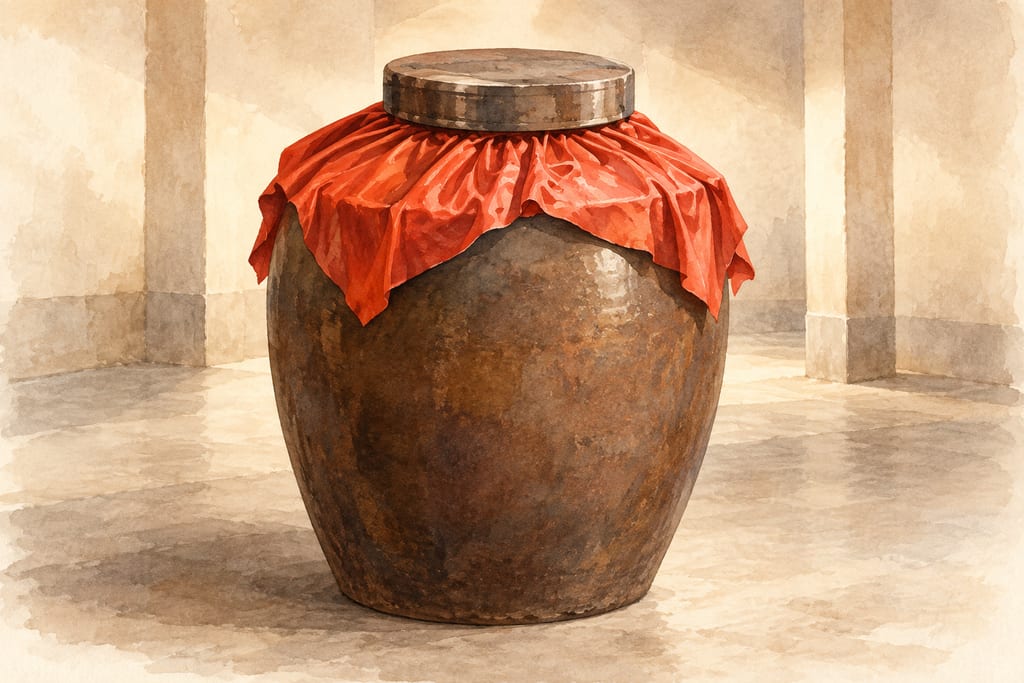
Watercolor illustration of a large earthenware baijiu aging jar with a covered mouth and reddish cloth drape, based on an official Fenjiu cellar photograph.
Equipment

Ceramic baijiu aging jar

Large ceramic jars hold distilled baijiu during maturation. Fenjiu documents rows of aging jars in Shanxi, including specially specified unglazed earthenware; available sources do not establish one universal shape, volume or closure.

Jars, pots and crocks
China
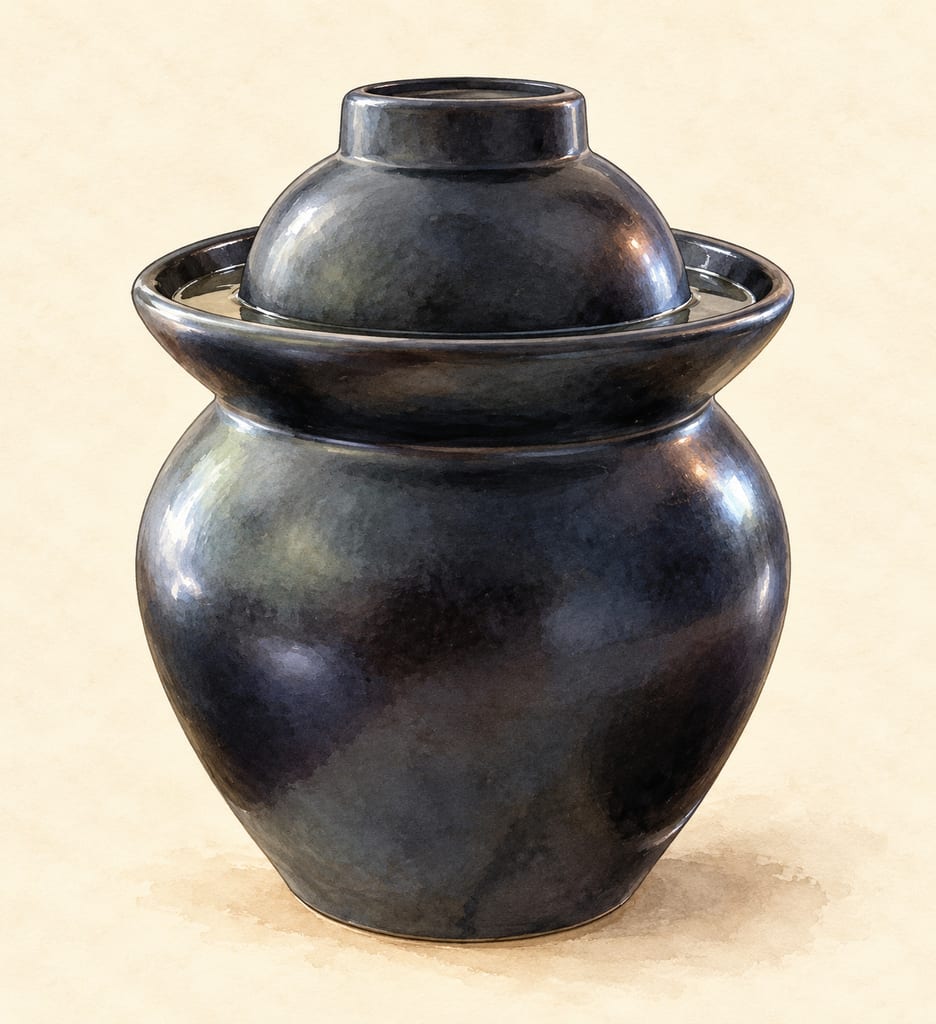
Editorial illustration of a dark glazed ceramic Sichuan paocai crock with a raised water moat around its narrow neck and an inverted lid seated in the trough.
Equipment

Paocai water-seal jar

The Sichuan paocai jar is a pottery or ceramic crock with a broad body, narrow neck, and annular water trough around its rim. An inverted lid rests in the trough; the seal is separate from the food brine.

Jars, pots and crocks
Sichuan
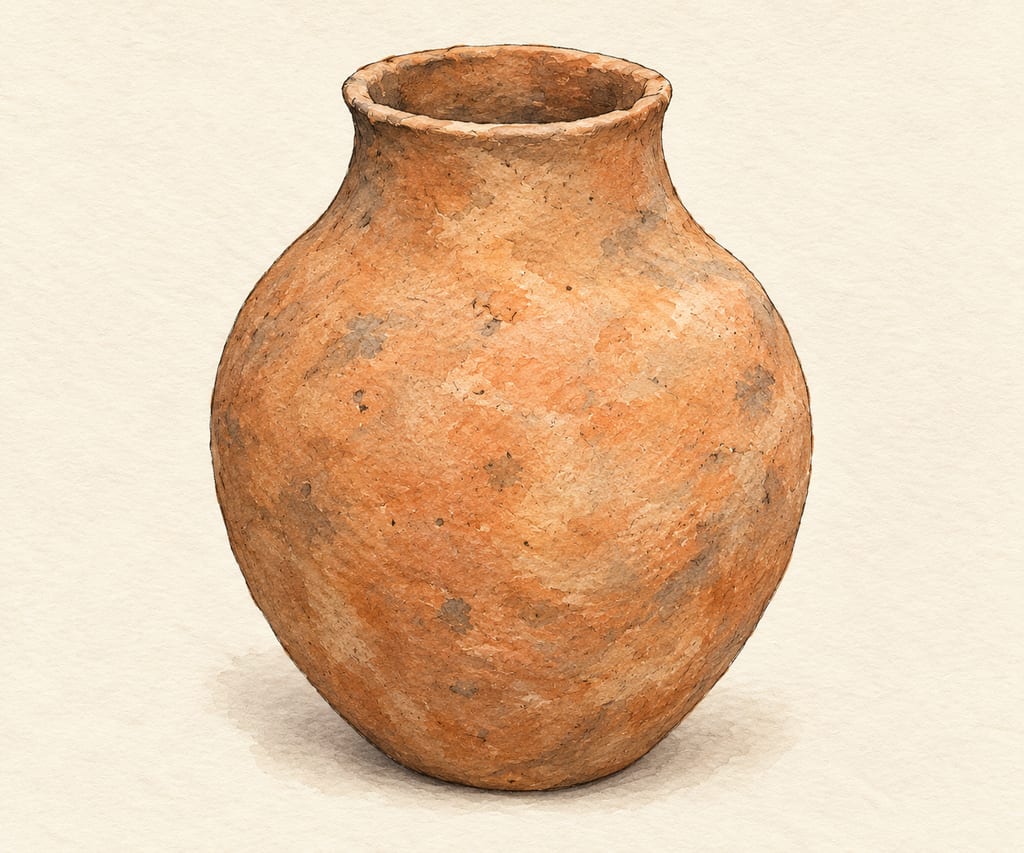
Editorial watercolor-and-ink illustration of a rounded Jiahu pottery jar with a pronounced shoulder and narrowed neck; interpretive, not an identified residue-tested vessel.
Equipment · Historical object

Jiahu jars for a mixed rice, honey and fruit beverage

Jiahu pottery preserves chemical evidence of an early mixed fermented drink involving rice, honey and fruit. Its jar forms provide archaeological context, not proof one vessel served every brewing stage.

Show on map
Jars, pots and crocks
Jiahu, Henan
Editorial watercolor illustration of a rounded pottery Huangjiu jar with a separate clay cover.
Equipment

Huangjiu open vats and secondary-fermentation jars

In Shaoxing Huangjiu production, broad-mouthed pottery vats hold the actively worked rice mash, while smaller pottery jars receive it for post-fermentation. Those jars may later serve a separate storage role.

Jars, pots and crocks
Shaoxing
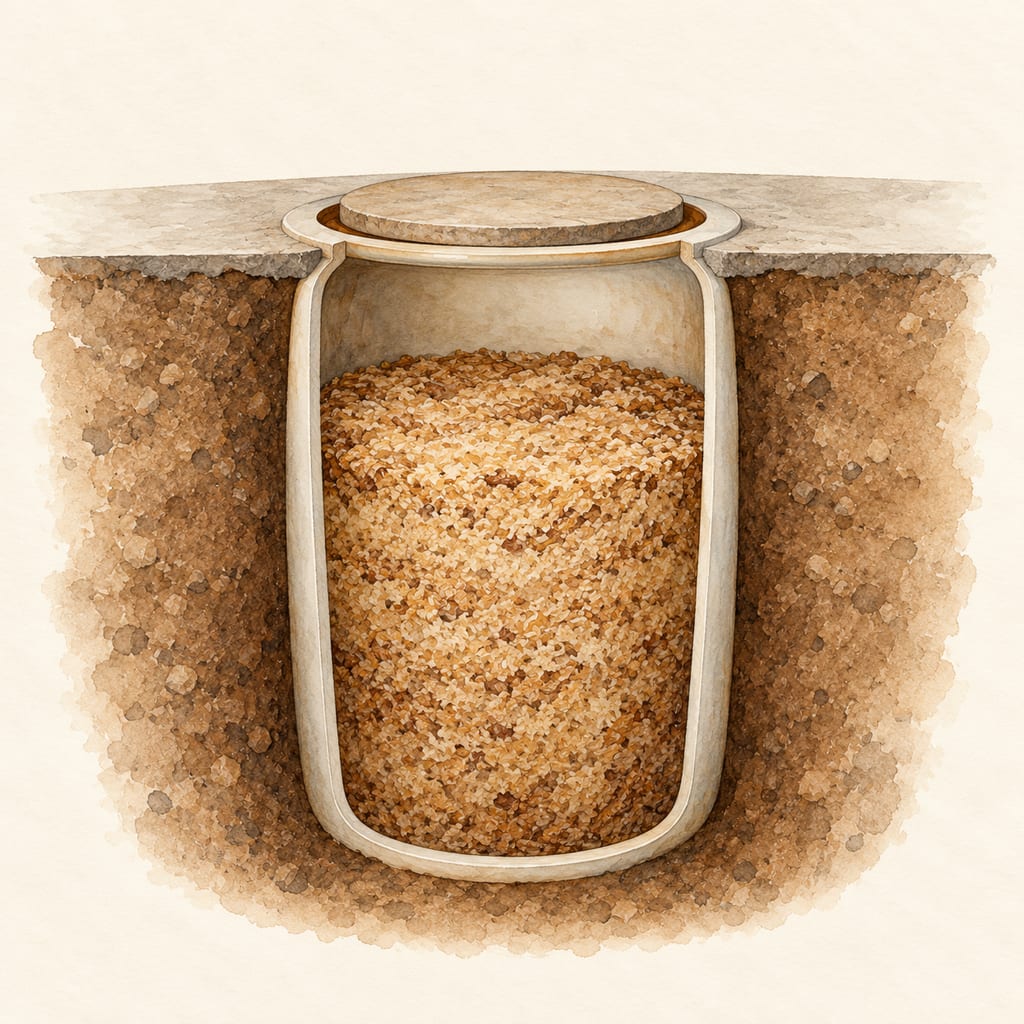
Watercolor cutaway of one sealed porcelain fermentation vat below the floor, showing grain mash inside the vessel and soil outside its walls.
Equipment

Buried ceramic jar for light-aroma baijiu

A buried ceramic fermentation jar holds the solid-state grain charge for light-aroma baijiu. Fenjiu reportage describes porcelain vats set into the floor; the cited sources establish no universal historical profile or dimensions.

Jars, pots and crocks
China