← Equipment

Equipment · Historical object · Jars, pots and crocks

Shangshan globular rice-beverage jars

Loading ratings…

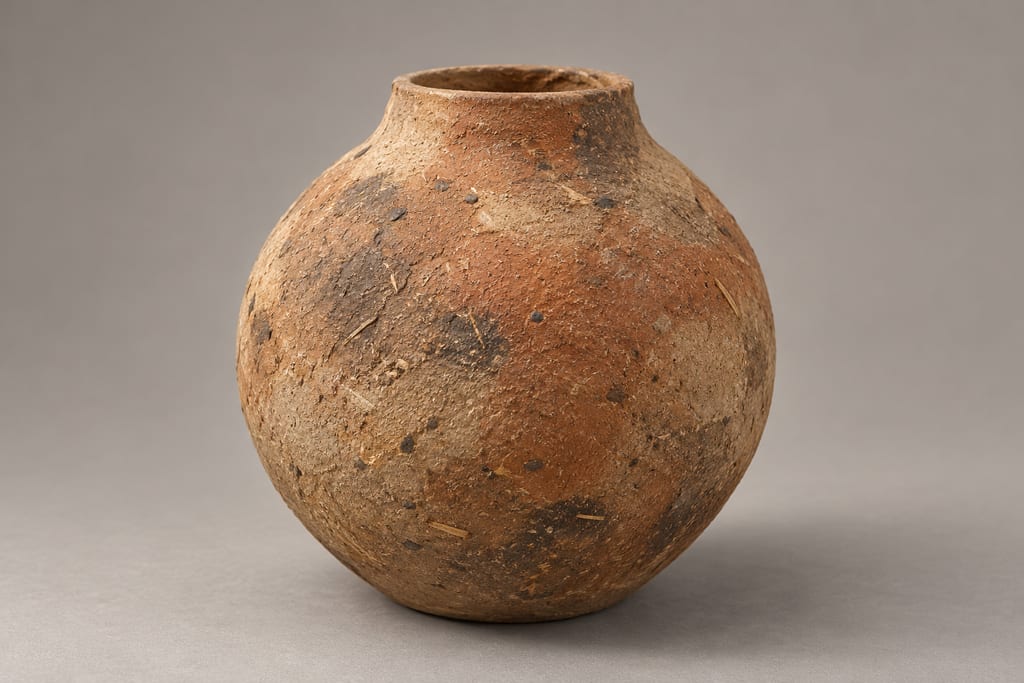
A small-mouth globular pottery jar from early Shangshan, ca. 10,000–9,000 cal BP. Residue study supports its possible use in rice-beverage fermentation, while leaving individual vessel functions uncertain.

Interpretive illustration of a coarse plant-tempered Shangshan globular jar with a rounded body and small restricted mouth; the specific burial or use of the illustrated vessel is unknown.

A small-mouth jar in early Shangshan

The globular jar is a rounded pottery vessel with a restricted mouth and short neck. It belongs to the diverse ceramic assemblage of early Shangshan, where large basins were common and smaller forms included globular jars, cups, plates and bowls. These shapes should not be collapsed into one generic fermenting pot: the jar is a distinct form, and a cup or ring-foot bowl could serve a different role.

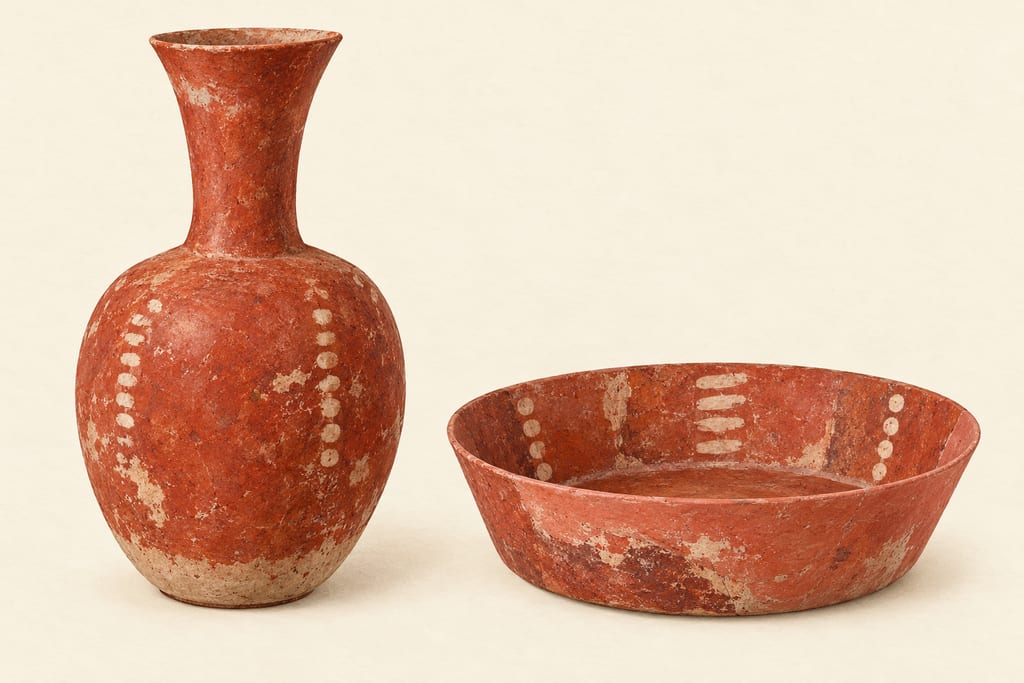
A 2024 study examined twelve sherds from the early deposits at Shangshan, representing eight globular jars as well as a cup, ring-foot bowl, large basin and cooking pot. The figure pairs selected sherds with comparative complete vessel forms; the globular jar is the first vessel in that comparison. It is an illustration of the form, not a claim that each complete jar is a one-to-one reconstruction of a sampled sherd.

Sources for this section

Pottery, plant temper and residues

All the analyzed sherds were plant-tempered, although one cooking-pot sherd also had visible sand temper. Shangshan ceramic fabrics used plant material such as grasses, leaves and rice chaff mixed with clay. Plant inclusions are part of the documented material context; the study does not give a single standardized recipe for every jar, nor a firing schedule, wall thickness, lid, capacity or dimensions for this class.

Researchers examined microscopic plant remains, starch and fungi preserved on vessel interiors and compared pottery with soil controls. Their results support rice-based fermented beverages in the early Shangshan assemblage. The globular jars were categorized as potential fermentation vessels, while the study treats the other forms separately as serving, processing or cooking vessels. That functional grouping is an archaeological interpretation grounded in residue patterns, not an instruction to use every globular jar in the same way.

Sources for this section

What the evidence says about use

The early deposits studied at Shangshan are dated to about 10,000–9,000 calibrated years before present. The authors interpret rice as a principal ingredient in a qu-based beverage, with molds and yeasts and other starchy plants also implicated. The sherds preserve evidence of activity; they do not provide a complete recipe, a measured batch size or instructions for preparing a vessel.

The site lies in the Lower Yangzi region of present-day Zhejiang, China; the institutional research summary identifies the sampled assemblage with Shangshan in Pujiang County. This is a historical archaeological attestation, not evidence that the same production practice continues there today. No source examined documents these jars buried underground, so the illustration presents one freestanding comparative form rather than an unsupported cellar cutaway.

Sources for this section

Equipment details

PowerNo power The vessel is an unpowered pottery object; the study does not describe its exact manufacturing process.
How you get oneNot established The study reports excavated sherds and comparative complete vessel forms, but does not document how these particular jars were made, acquired or exchanged.
CareNo ancient care or maintenance procedure is documented for this jar class. The archaeological evidence does not establish a modern-use or cleaning protocol.

Made of

  • Plant-tempered clay — Vessel body
    The analyzed Shangshan sherds were plant-tempered. The study describes Shangshan ceramics tempered with grasses, leaves and rice chaff; it does not establish an identical temper recipe for every jar.

Limits

No measured capacity, dimensions, wall thickness, firing schedule, closure or documented burial arrangement is supplied for the analyzed globular jars.

Source →

Residue evidence and vessel-form comparison support a fermentation interpretation, but do not establish that every globular jar, or every analyzed vessel shape, was used to ferment beer.

Source →

Places

Shangshan site

Historical attestation · Locality evidence

The 2024 study sampled early deposits at the Shangshan site; CAS identifies the site as being in Pujiang County, Zhejiang. No coordinates are asserted.

Lower Yangzi

Historical attestation · Region evidence

The study situates the archaeological record in the Lower Yangzi River valley; this regional label does not imply every jar originated at one settlement.

Related

Community

No community contributions have been published for this entry yet.

Share what you made

Sign in to contribute. Published comments and photos are free to read.

Sources