A measured open vat
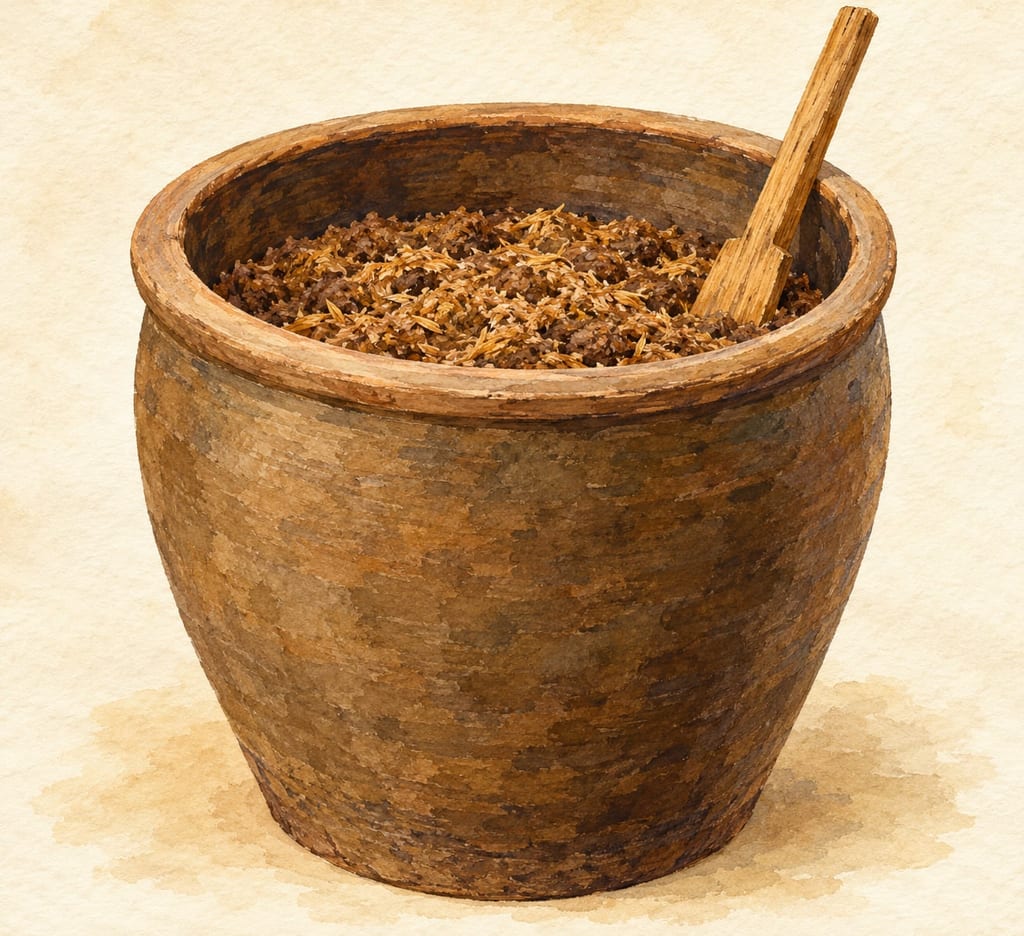
At Shanxi Zilin Vinegar Industry in Taiyuan, ceramic vats about one metre in diameter and 1.2 metres high hold vinegar-pei during acetic fermentation. The sampling record spans the mash from its surface to the vat base, showing that workers handle a deep solid bed rather than a shallow layer. These dimensions apply to this documented factory, not to every Shanxi producer.
Vinegar pei (醋醅) is the moist solid fermentation material at this stage, not a vat filled with clear vinegar. Bran and rice husk are among the materials associated with the acetic-fermentation stage, but the reported ingredients do not establish one fixed mash formula. The vat’s open access lets workers reach the dense bed for turnover and sampling.
Sources for this section
Air and turning
The acetic stage is aerobic and follows an earlier anaerobic alcoholic stage. Workers turn the vinegar pei during acidification to expose the mash to oxygen; turnover also reaches material through the depth of the bed. The vat’s open mouth lets workers work the mash as this stage proceeds.
Turning frequency varies by workshop. One producer describes daily turnover, while its account of a larger traditional workshop reports twice-daily turning. Those company-specific schedules should not be treated as a universal Shanxi method.
Sources for this section
A living production vessel
A company in Qingxu reports a traditional solid-state workshop with 10,000 ceramic vats and manual turnover twice a day. Its account attributes oxygen access to the earthenware, but this is a producer’s description, not a comparative test of ceramic against other materials. Dimensions are reported for the Taiyuan factory only; the Qingxu account does not specify the size of its vats.
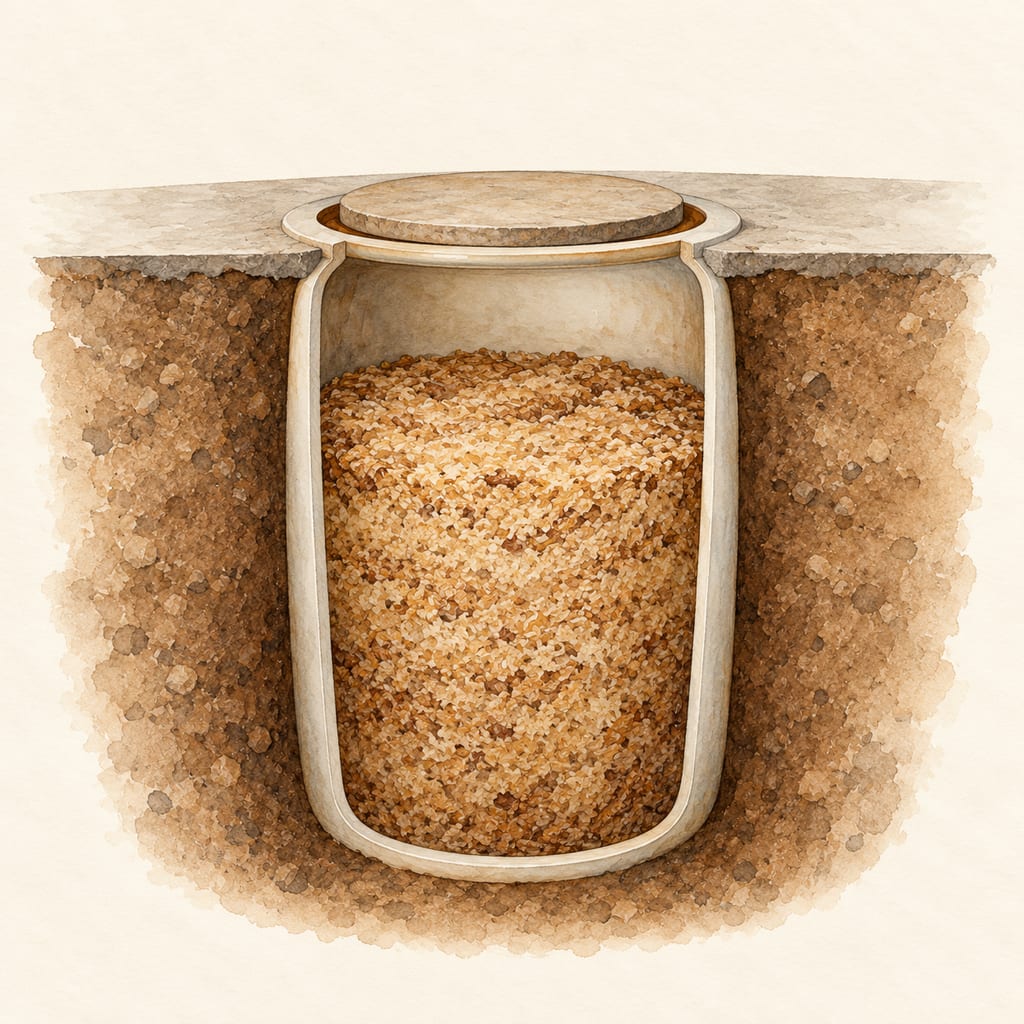
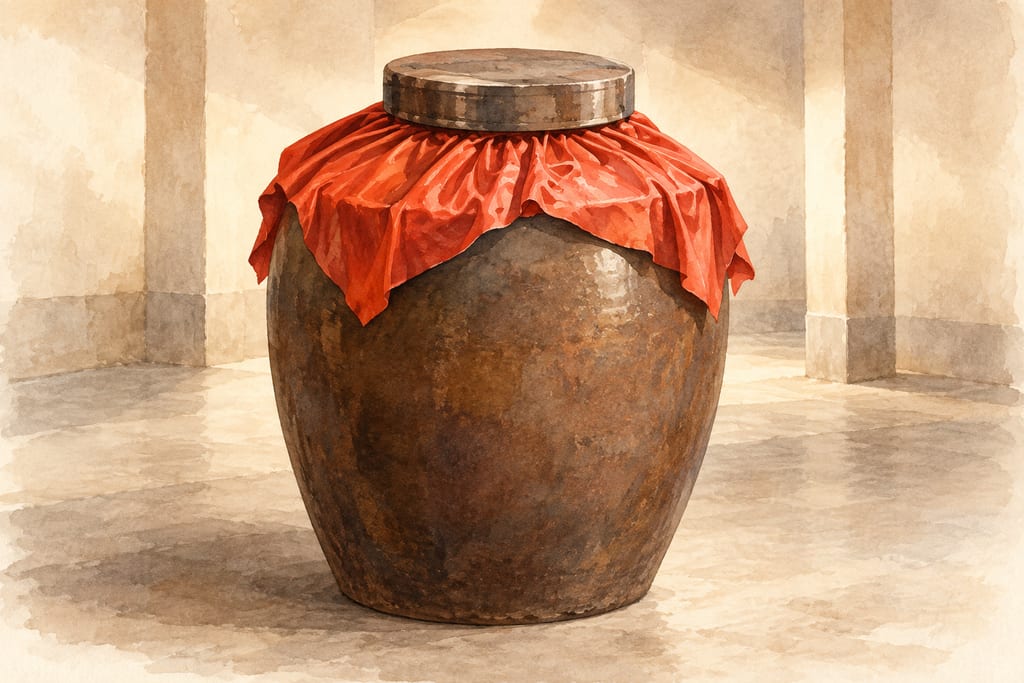
The available descriptions establish ceramic construction and the open vat’s working role, but not a standard clay body, glaze, lining, firing method or supplier. They also give no cleaning or repair instructions. The generated image is an explanatory reconstruction, not a photograph of a named vat.
Sources for this section
History
The inspected sources document current ceramic-vat use in Shanxi but do not date the origin of this vat form.
Equipment details
Size120 cm tall, 100 cm across A 2025 study reports approximately 1 m diameter × 1.2 m height for ceramic vats at one Taiyuan factory. Converted to centimetres; not a standard for all Shanxi vinegar producers.
PowerNo power The vat is passive. The producer describes manual turnover of the mash; that work is not power supplied by the vessel.
How you get oneNot established The sources identify ceramic vats in production but do not say who makes them, whether the producer commissions them or how a reader could obtain one.
CareThe inspected sources describe fermentation and turnover but do not establish a cleaning, seasoning, storage or repair protocol for the ceramic vats.
Made of
- Ceramic — Vessel body
The study identifies ceramic vats. It does not specify the clay body, glaze, lining, firing method or makers.
Places
Taiyuan
Documented use · Locality evidenceThe 2025 study collected vinegar-pei samples from ceramic vats at Shanxi Zilin Vinegar Industry in Taiyuan; its reported dimensions apply to that documented factory.
Qingxu County
Documented use · Locality evidenceShuita locates its vinegar business in Qingxu and describes ceramic vats and turnover in its own traditional process; the sources do not establish that these are identical to the measured Taiyuan vats.