A floor-level fermentation vessel
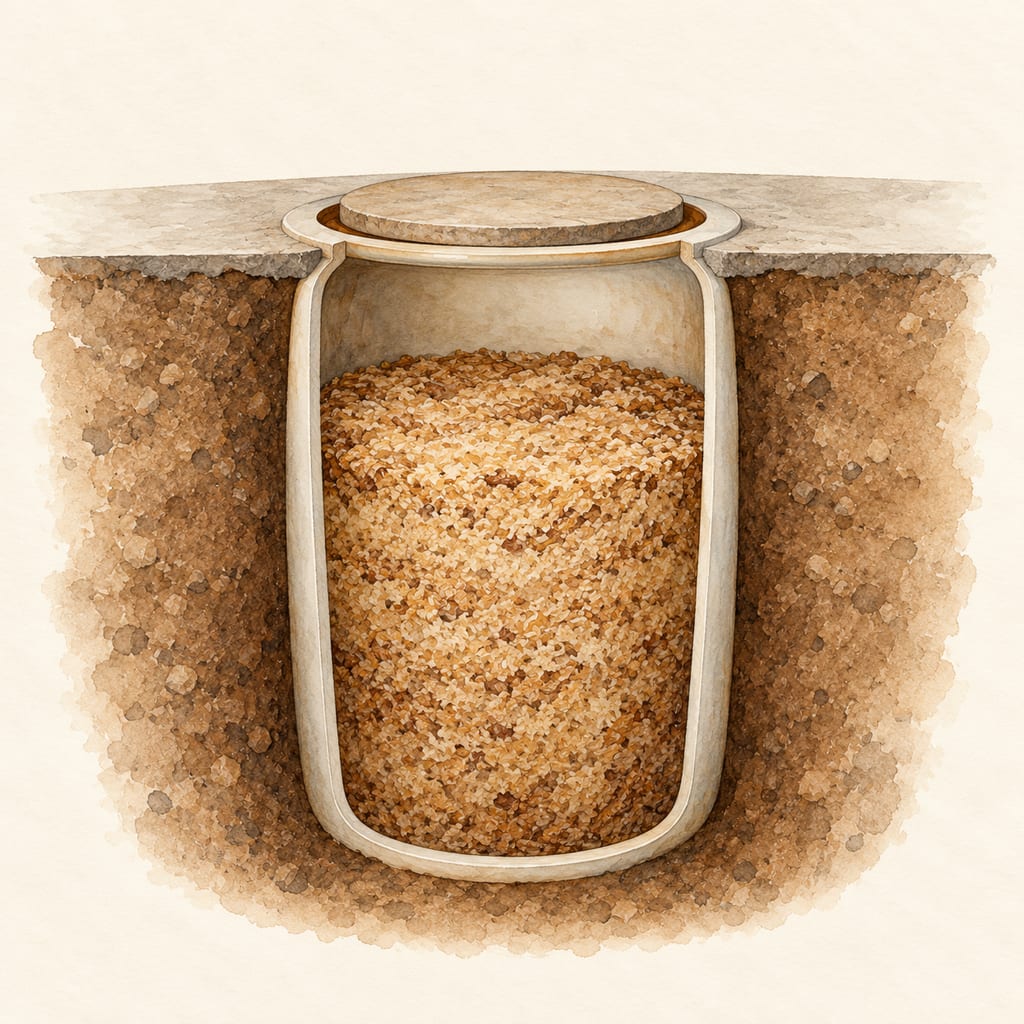
A buried ceramic jar is a vessel for the solid-state grain fermentation that precedes distillation in light-aroma baijiu. The documented arrangement has a circular mouth at or near floor level while the curved body sits below it. That placement distinguishes the jar system from the large mud cellars associated with strong-aroma baijiu, whose pit ecology is different. A scholarly review notes underground jars among the traditional containers used for light-aroma production; it does not give an origin date or a single standard design.
A 2019 account of Fenjiu describes porcelain cylindrical vats sunk into the floor. This is a named producer example, not a universal specification: the sources used here do not establish shared wall shape, depth, capacity, lid design or sealing method. The floor-level view in the accompanying illustration follows the documented room arrangement and leaves the hidden jar body unspecified.
Sources for this section
Use in the fermentation cycle
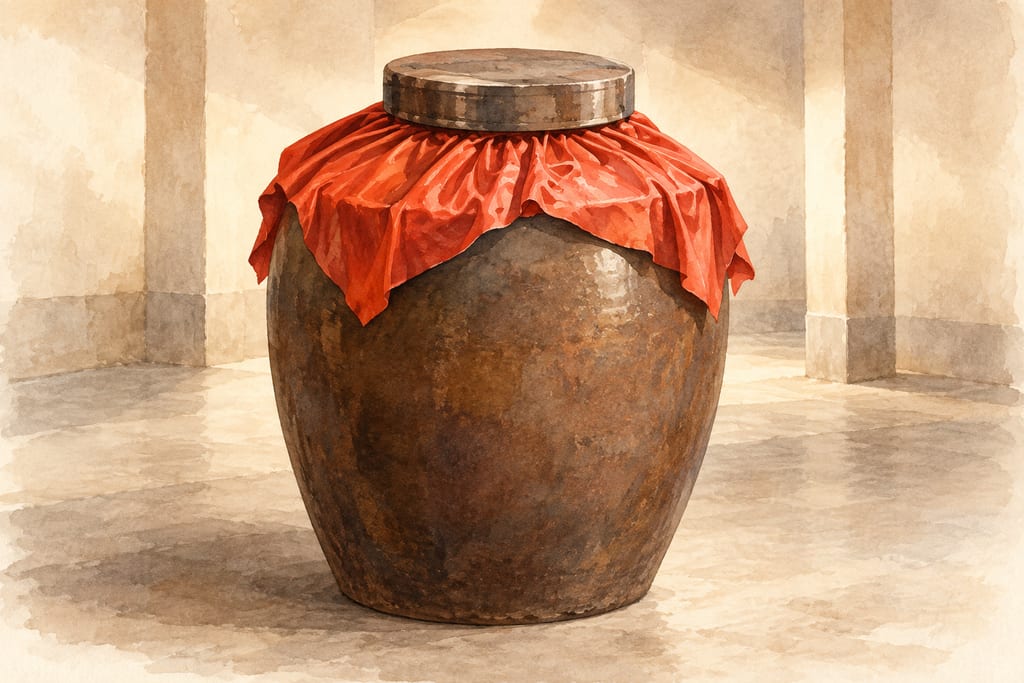
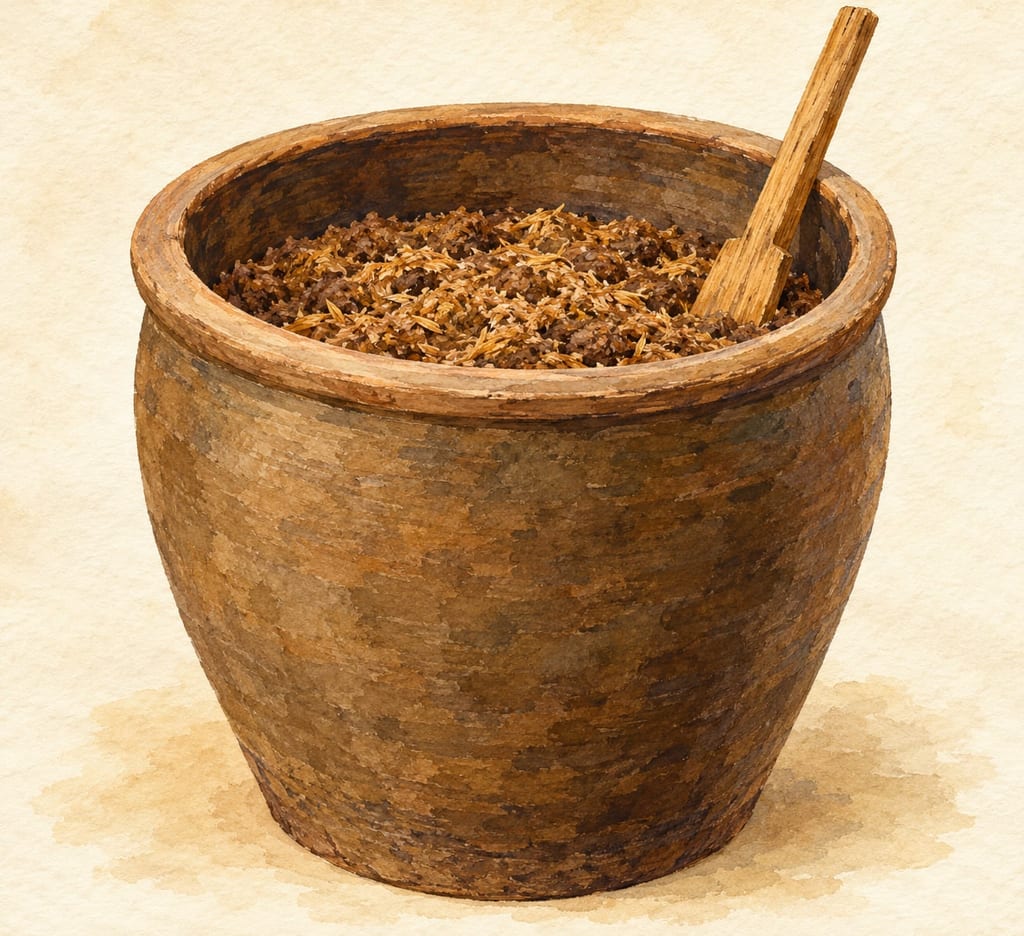
The jar holds a solid-state grain charge after the prepared grain is inoculated with qu. The Fenjiu report describes the contents being placed in buried porcelain vats and sealed for fermentation; it gives a 28-day fermentation period for that particular process description. That number belongs to the reported Fenjiu method, not to every light-aroma baijiu producer. Fermentation vessels must also be distinguished from ceramic jars used later to mature distilled spirit: those are a separate process stage and do not define this buried fermenter.
In the same report, jars are emptied after fermentation and reused for a subsequent round. The account also describes washing and a peppercorn-water seasoning practice before use. Because this is a producer-focused report rather than a general technical standard, those care details are recorded as Fenjiu-specific reporting and should not be generalized to every buried jar.
Sources for this section
Place and limits of the evidence
The grounded geographic example is Fenjiu in Shanxi, China. Broader review literature discusses underground jars for light-aroma baijiu, but the material available here does not establish that one jar shape, burial depth or handling routine applies across China. Nor does it support a historical date for the invention of buried ceramic baijiu jars. The vessel class can therefore be described by its documented function and placement while dimensions, construction details and a wider distribution remain unspecified.
Sources for this section
History
A Fenjiu process report published in 2019 describes its light-aroma production using porcelain fermentation vats buried in the floor. A scholarly review also identifies underground jars as a traditional container for light-aroma baijiu, but the sources cited here do not date the vessel class’s origin or establish a standard jar profile.
Equipment details
CareThe Fenjiu account says the jars are washed and prepared between rounds, but its reported seasoning practice should not be treated as a universal standard.
Made of
- porcelain — fermentation vessel
Fenjiu reportage describes buried porcelain vats; no material specification is generalized to all examples.
Limits
The sources do not establish a universal jar profile, body proportions, depth or capacity; exact dimensions should not be inferred from a floor-level view.
Source →Places
China
Documented preparation · Country evidenceThe review describes underground jars in light-aroma baijiu; Fenjiu reportage documents a specific producer example.
Shanxi
Documented preparation · Region evidenceFenjiu is located in Shanxi; this entry identifies the reported producer example rather than a universal geographic distribution.