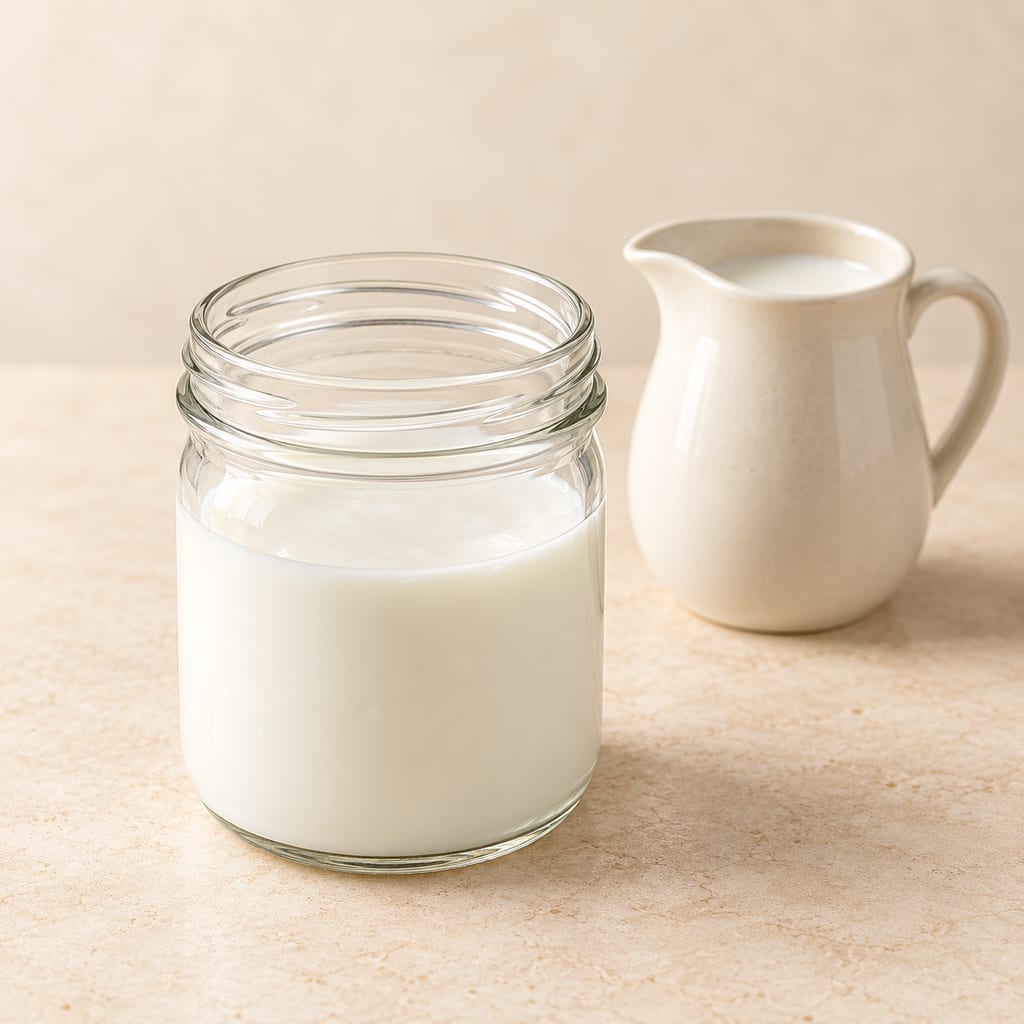
Set yogurt
Set yogurt keeps the milk’s cultured gel intact in its final container. This Canadian home method follows the same heating and inoculation as stirred yogurt, without the final stirring.
 FermenteaWhere food goes to change
Equipment · All-in-one appliances
Excalibur food dehydrator
A maker-branded range of electric food dehydrators using forced horizontal airflow. Tray counts, controls and dimensions vary by model; the 3900B is one documented nine-tray example.
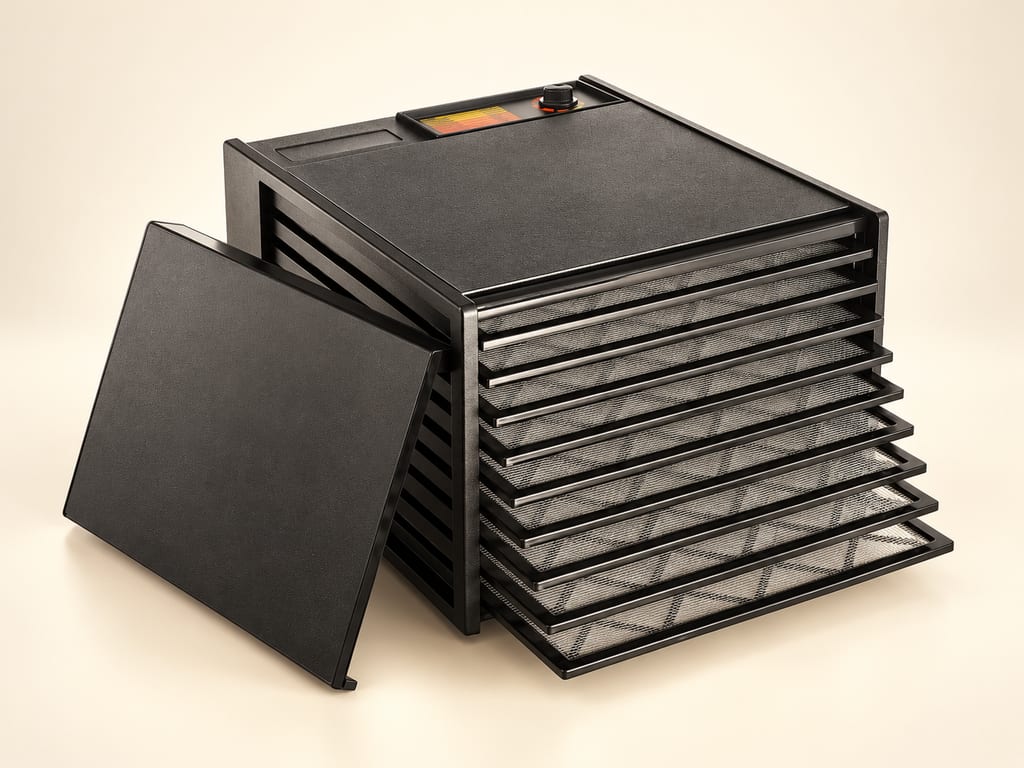
Excalibur is a maker-branded range of electric food dehydrators. Its current catalogue divides products by tray count and presents different cabinet forms and controls, so the name alone does not identify one universal size, thermostat or capacity. One documented example is the 3900B: Lowe's lists it as a black nine-tray model with fifteen square feet of drying area. That figure belongs to this model, not every Excalibur.
The 3900B listing describes square 15-inch trays, a seven-inch fan and a thermostat range of 105–165°F. It gives overall dimensions of 17 × 19 × 12.5 inches and electrical power of 600 W. Those details help when comparing this cabinet with counter or storage space. Other Excalibur models have different tray counts, doors, timers or digital controls. Check the model plate and manual before applying a specification or accessory recommendation.
The ordinary task is to move warm air across food arranged on removable trays, carrying away moisture as it evaporates from each exposed surface. Excalibur describes its Parallexx system as drawing in cool air, heating it and distributing it horizontally over the trays. Its guidance says this arrangement is intended to spread airflow across the load without rotating trays. That is the maker's account of the design, not a guarantee that every food load dries identically.
Drying depends on preparation and conditions. Excalibur names time, temperature, air circulation and food preparation as the four main factors. Its guide says to cut pieces to consistent thickness: slices with similar surface area are more likely to dry at a similar pace. The maker warns that raising heat too much can cause case hardening, in which the outside becomes leathery and slows moisture leaving the interior. A hotter setting is not a simple substitute for evenly cut pieces, room for moving air and suitable drying time.
The maker also explains that wet food can be cooler than surrounding air because evaporation removes heat from its surface. As air temperature fluctuates, water leaves the surface and moisture from the centre moves outward to replace it. Excalibur says the dial is calibrated to food temperature during dehydration; it is not a continuous direct reading of air temperature. This applies to a drying load where moisture is evaporating, not every use of the cabinet.
Excalibur publishes another use: holding capped jars of cultured milk in the warm cabinet. The recipe heats half a gallon of milk to 185°F, cools it to 115°F, mixes in four tablespoons of yogurt with active cultures, then transfers the mixture to lidded glass jars. It removes every dehydrator tray and places the jars inside. The setting is 110°F for nine hours, followed by refrigeration; the yogurt thickens as it cools.
This is a specific maker-published recipe, not evidence that every model is a purpose-built yogurt maker. The recipe gives a controller setting and elapsed time, but no temperature measured inside the jars. Since the jars are capped rather than exposed as a drying load, the maker's evaporative-cooling explanation for wet food should not be mistaken for a measured jar temperature. The linked set-yogurt page provides a reader-facing account of the product made by this method.
The manufacturer says its products are manufactured in the United States and China using materials sourced from the United States and elsewhere. Its FAQ identifies #5 polypropylene tray screens and a polycarbonate case. These statements describe the maker's range; they do not identify the factory or material specification for an individual unit. The company sells through its factory and selected stores and provides a separate route for international buyers. This records a contemporary product with international sales channels, not a guarantee of availability in every market.
For products covered by its FAQ, the maker says trays can go on a dishwasher's top rack or be cleaned with a damp cloth and mild detergent. It suggests soaking tray inserts before rinsing and wiping the cabinet with a damp sponge. Follow instructions supplied with the exact appliance and accessories, particularly where a model or tray material differs. The sources reviewed do not date the first Excalibur dehydrator; current listings are not launch records.
Excalibur's current manufacturer pages describe a range of electric dehydrators and document how their airflow and temperature controls work. They establish neither the brand's launch date nor this item's first production date.
The maker's drying guide stresses that drying time varies with location, humidity, room temperature and item size; thick or uneven pieces dry less consistently. Raising heat too much can dry the surface into a leathery barrier (case hardening) while moisture remains inside.
Source →The maker explains that evaporation cools wet food and that its dial is calibrated to food temperature during dehydration, not a direct measurement of air temperature. Its yogurt recipe gives a 110°F setting but no temperature measurement inside a capped jar; do not treat the displayed setting as a measured jar temperature.
Source →Specifications are model-specific. The 3900B is listed as a nine-tray, 600 W appliance; those figures do not describe every Excalibur dehydrator.
Source →The maker says its products are manufactured in the United States and China; this brand-wide statement does not identify where a specific unit was made.
The maker says its products are manufactured in the United States and China; this brand-wide statement does not identify where a specific unit was made.
Set yogurt keeps the milk’s cultured gel intact in its final container. This Canadian home method follows the same heating and inoculation as stirred yogurt, without the final stirring.
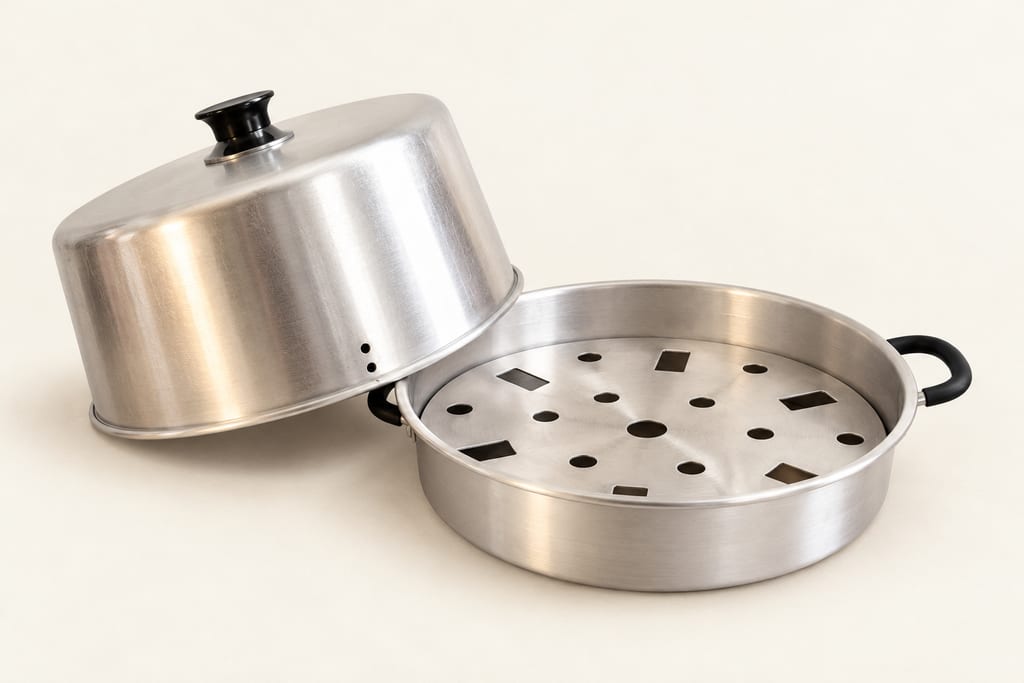
A shallow rack base and tall vented cover process jars in atmospheric steam. NCHFP limits the method to tested high-acid or acidified recipes requiring no more than 45 minutes, including altitude adjustment; this is not pressure canning.
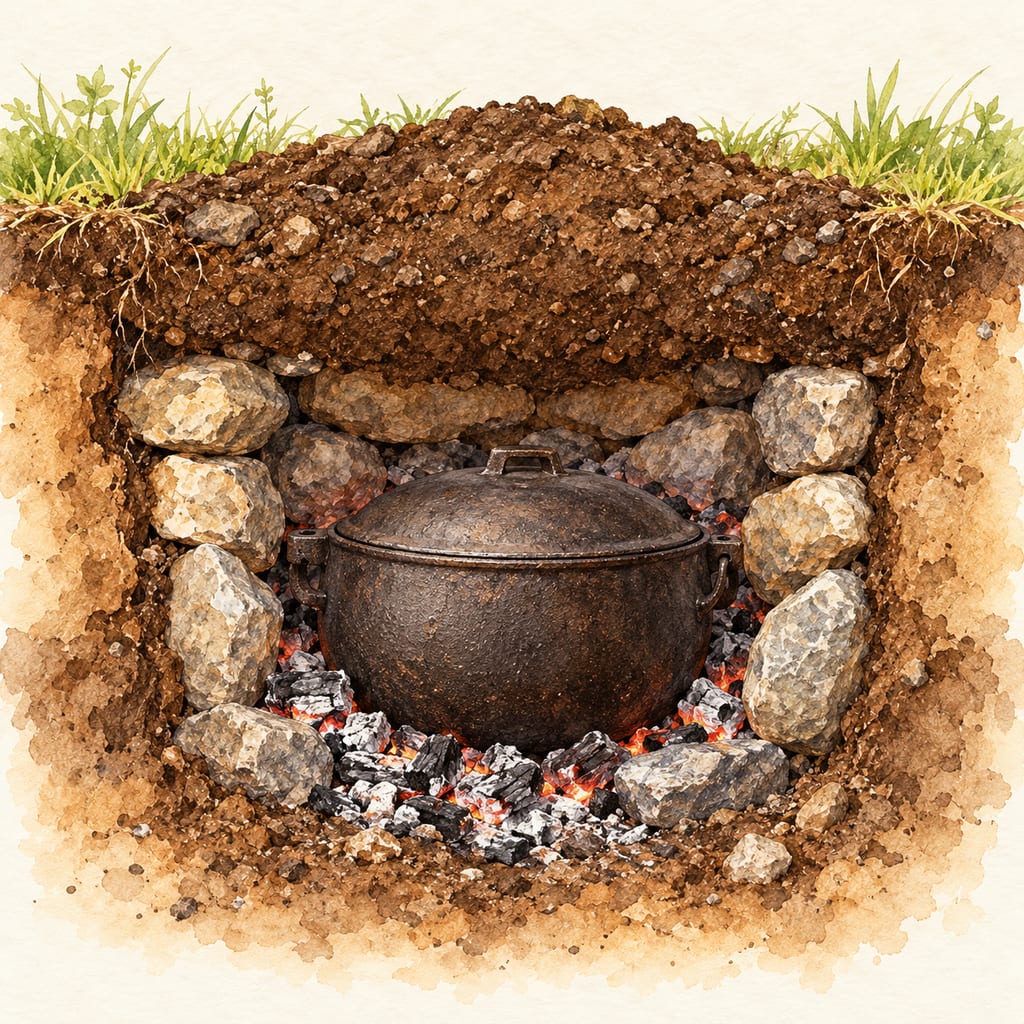
A covered iron vessel used in Maine bean-hole cooking, set into a preheated stone-lined pit and buried for a slow cook.
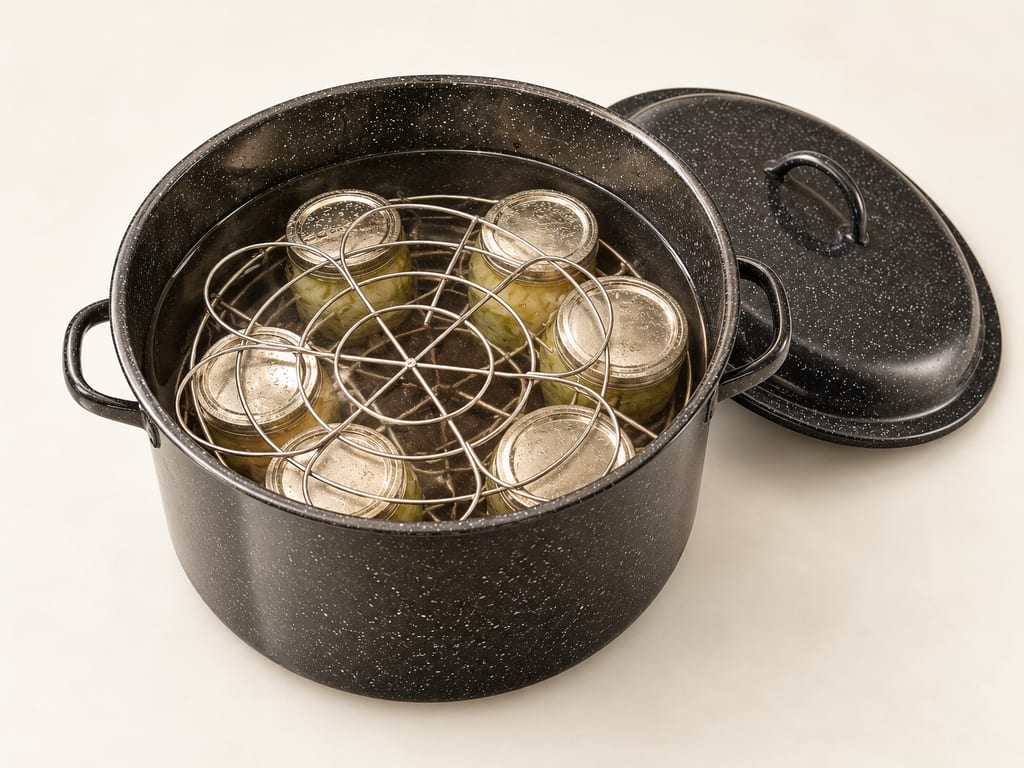
A deep, lidded pot with a removable rack processes jars beneath boiling water. It is intended for foods with tested boiling-water processes; low-acid foods require pressure canning.
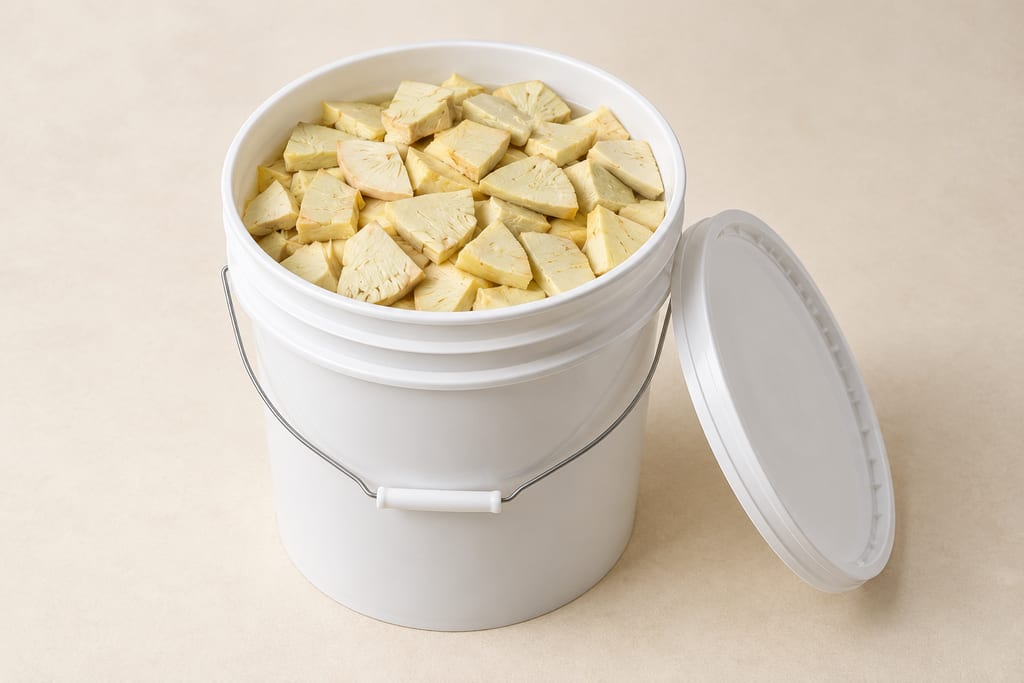
A contemporary household enclosure for preparing mā, fermented breadfruit, documented in Hawai‘i using food-safe buckets, coolers or large sealable bags in place of a pit.
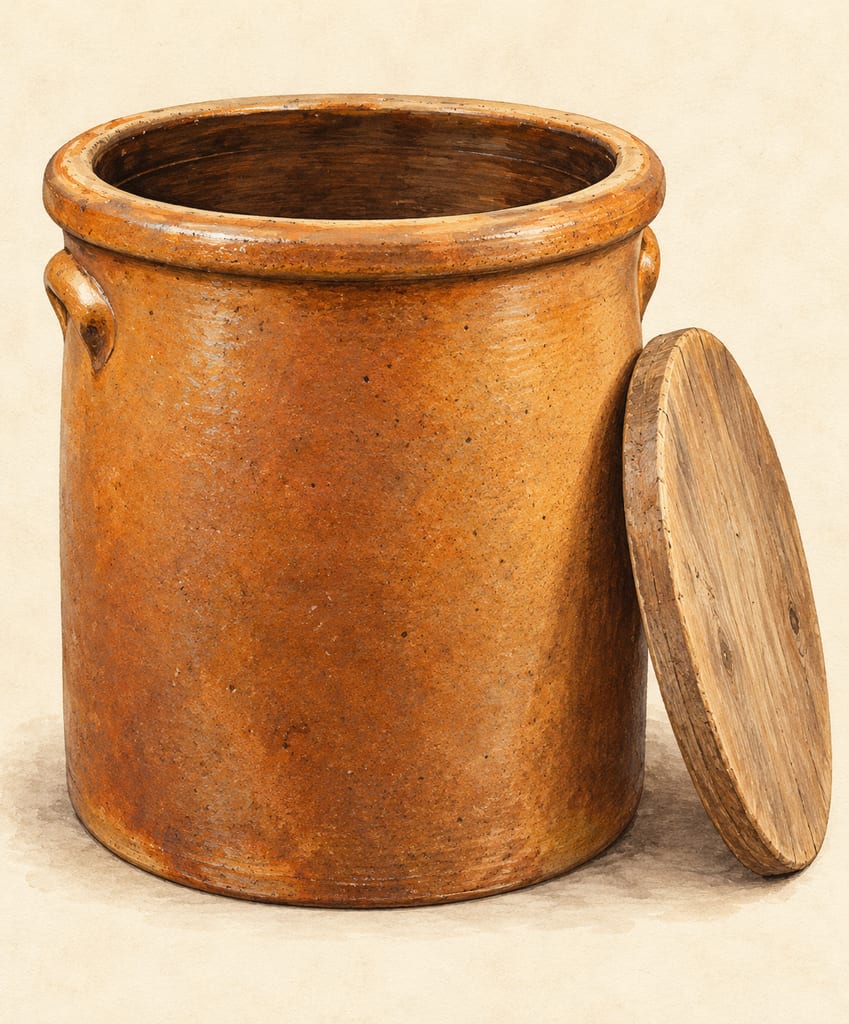
Containers for salt-curing fish and meat range from broad-mouthed stoneware crocks to tubs, cut-down barrels and chests. Their material, depth, cover and ability to retain or drain liquid shape how the food sits in salt or brine.
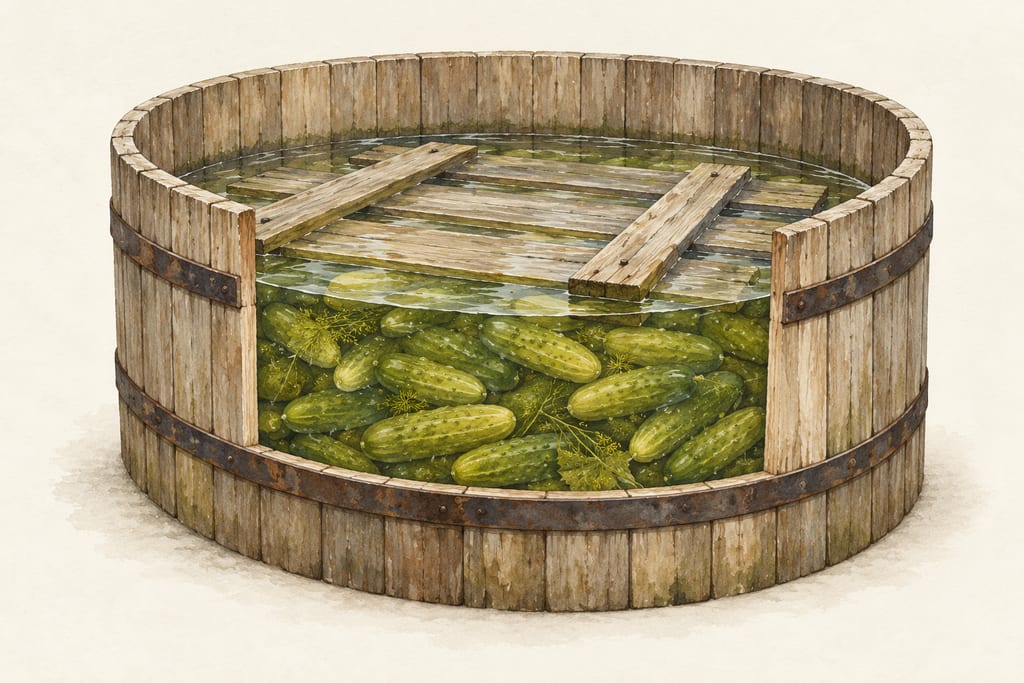
A bulk brining vat holds cucumbers and other vegetables under cover brine for fermentation and storage. North Carolina sources document a mid-century wooden tank yard and later outdoor fiberglass systems.
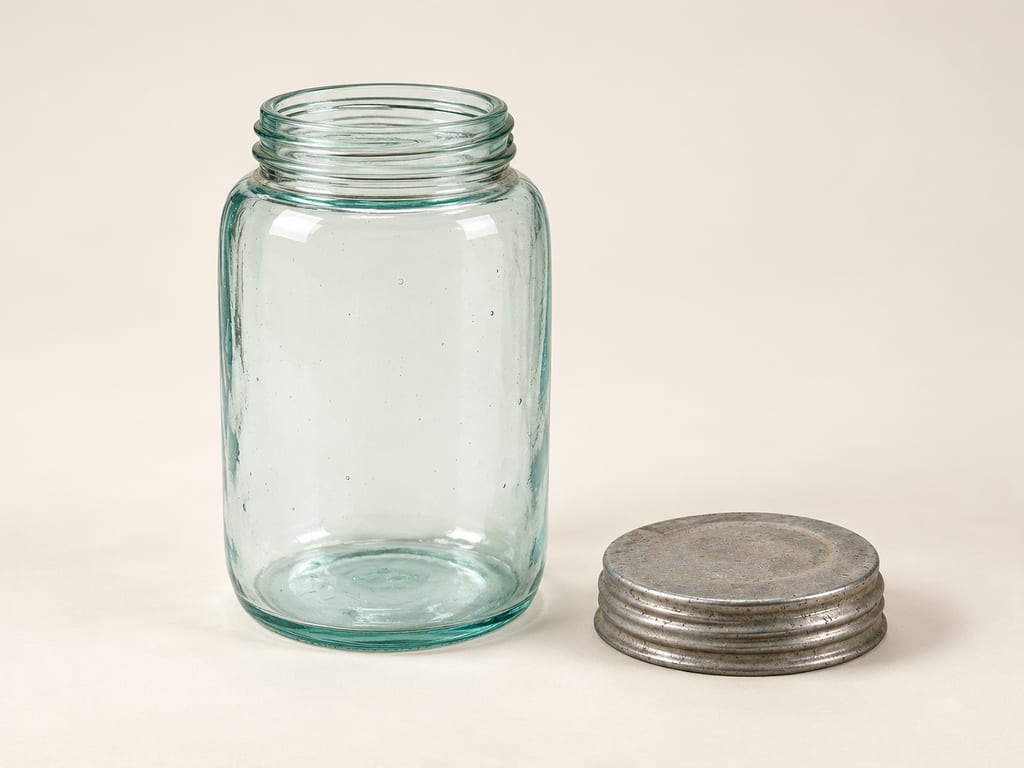
Threaded, heat-processing jars hold food and a fitted lid during a tested canning process; jar size and process belong to the specific recipe.
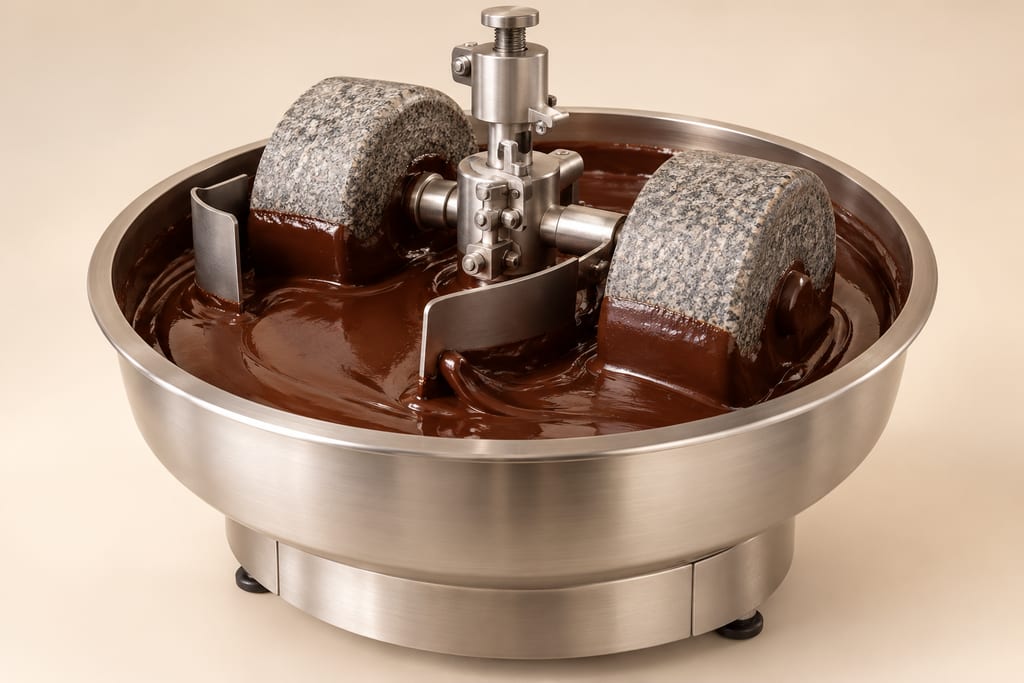
A chocolate refiner or melanger uses powered rotation and stone rollers to refine cocoa mass. Some models also process nut and seed pastes; design, material and operating limits vary.

Soft, spreadable Calabrian pork sausage made with a great deal of red chilli and fatty pork, stuffed into natural casings, sometimes smoked and matured while staying soft.

A way to add independent temperature logging to an existing food dehydrator without changing its built-in controls or protections. It is a monitoring method, not a rewiring plan.

Pleurotus cystidiosus is the abalone mushroom, a cultivated oyster-type fungus with dark brown caps that grows more slowly and is more demanding than other Pleurotus species.

A dark, balanced vinegar from Emilia-Romagna made by combining cooked or concentrated grape must with wine vinegar, then acetifying and refining it in wood under a protected specification.

A living dairy inoculum that starts controlled cream fermentation, developing acidity and aroma before sour cream or cultured butter is finished.

A small electric incubator holds jars at a selected temperature for yogurt and other documented warm food preparations. Controls, capacity and vessel arrangement vary by model.

Adygean salt is a seasoned table salt associated with Adygea and the wider North Caucasian culinary tradition. Salt is blended with garlic and a variable selection of herbs and spices; the exact mix depends on the named style and maker.

The African Caesar-group mushroom, Amanita masasiensis, is a wild ectomycorrhizal species of central and southern African woodlands, eaten locally. The genus contains deadly poisonous species, so identification needs care.
No community contributions have been published for this entry yet.
Sign in to contribute. Published comments and photos are free to read.
Excalibur DehydratorProduct range · Model variation
DehydratorsThe manufacturer lists several tray-count and cabinet designs, including four-, five-, eight-, nine- and ten-tray sections; models and features differ.
Cited in: A range, not one fixed specification; Materials, geography and model-specific care
Excalibur DehydratorAirflow · Temperature control
Hyperwave/ParallexxThe maker says cool air is drawn in, heated and distributed across trays by horizontal airflow.
Its Hyperwave description says warmer phases evaporate surface moisture and cooler phases allow moisture from within to move toward the drier surface.
Cited in: How the airflow dries food
Excalibur DehydratorOperation · Drying factors · Limits
Intro to DehydratingThe maker names time, temperature, air circulation and food preparation as four drying factors.
It recommends consistent slice thickness and describes case hardening when the surface dries too fast.
Its chart lists a 110–120°F yogurt thermostat range and other food-specific ranges.
It says drying times vary with location, humidity, temperature and item size.
Cited in: How the airflow dries food
Excalibur DehydratorMaterials · Temperature explanation · Geography · Care · Distribution
FAQsThe maker says its products are made in the United States and China with US- and globally sourced materials, but does not specify a factory for a particular model.
It identifies #5 polypropylene tray screens and a polycarbonate case.
It says the dial refers to food temperature and explains evaporative cooling during drying.
It describes factory-direct and selected-store sales, with international sales information separately.
It gives cleaning guidance for tray screens, inserts and the case.
Cited in: How the airflow dries food; The maker's jar-yogurt method; Materials, geography and model-specific care
Excalibur DehydratorsDocumented secondary use
Homemade YogurtThe maker's recipe removes all dehydrator trays, places lidded glass jars inside and holds the controller at 110°F for nine hours.
It says to refrigerate the jars after incubation; the yogurt thickens as it cools.
Cited in: The maker's jar-yogurt method
Lowe'sModel specific features · Dimensions · Electrical rating
Excalibur 9-Tray Black Food Dehydrator (Model 3900B)The retailer identifies the 3900B as a nine-tray, 600 W model with 15 square feet of drying area and a seven-inch fan.
The listing gives 17 × 19 × 12.5-inch dimensions, nine 15 × 15-inch trays and a 105–165°F thermostat range; these specifications apply only to that model.
Cited in: A range, not one fixed specification