A liquor-making installation in Xushui
Liu Ling Zui is associated with Xushui, in Baoding, Hebei Province. China's 2008 UNESCO Tentative List submission includes it among the country's liquor-making sites. A tentative-list submission is not an inscription on the World Heritage List; it is a state-party account of a proposed site and its significance.
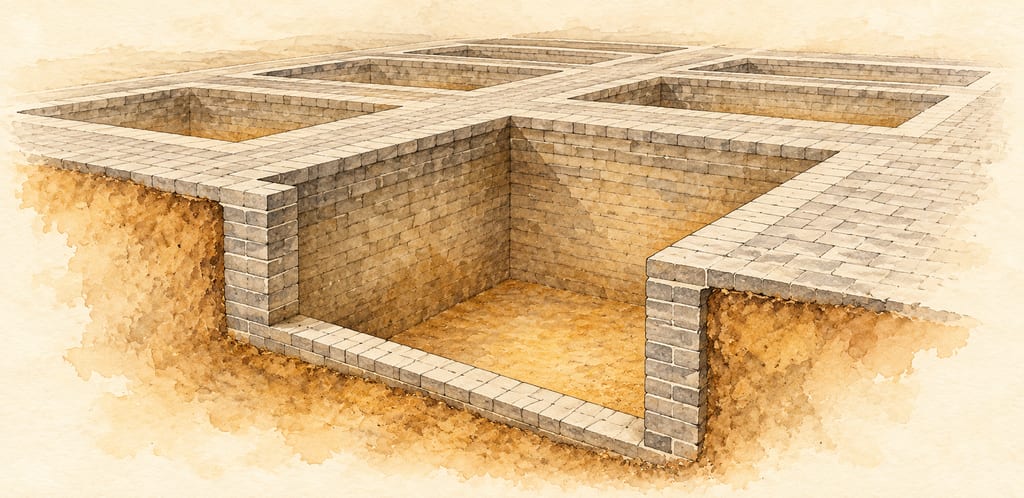
The installation is a group of fixed rectangular brick-lined pools, rather than a portable jar or kettle. The nomination gives individual-pool dimensions and describes flat-laid brick construction. Its internal count is inconsistent, so the physical form is more securely documented than the total number of pools.
Sources for this section
Rectangular pools set into the site
The nomination gives an individual pool as about 3.45 metres long, 1.6–1.7 metres wide and 2 metres deep. These measurements should not be mistaken for the full installation's footprint. The same document separately gives a broader site measurement, without making it the pool group's dimensions.
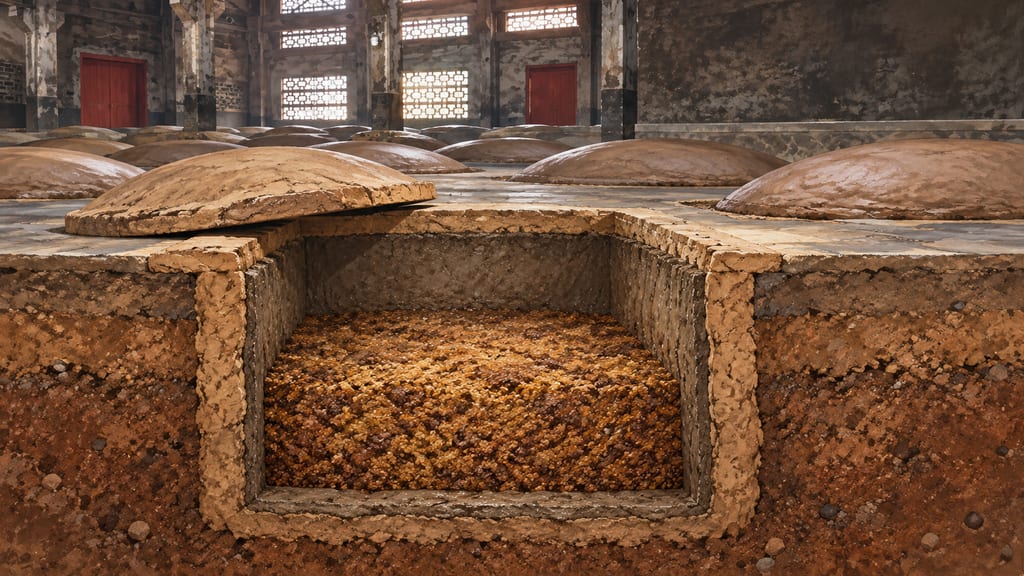
The count wording needs care. The submission says six pools, then says there were eight in each of two lines. A 2025 CRI report describes two rows of eight and shows the pools in a protected display environment. These descriptions do not make the earlier contradiction disappear; the total should remain qualified.
Sources for this section
Historic site and present-day baijiu
A local government article reports sixteen older pools, dates them to the Song–Jin period and describes nearly 900 years of use. The Tentative List submission instead gives Jin-or-Yuan dating. These are heritage accounts with different chronological formulations, not a single verified construction date.
Liu Ling Zui continues to make baijiu. The Ministry of Commerce's Old-brand Digital Museum identifies it as strong-aroma baijiu and discusses present-day production. That account supports the present-day style classification and continued production context, but it does not demonstrate that current methods are unchanged from the earlier period.
Sources for this section
Limits of the surviving description
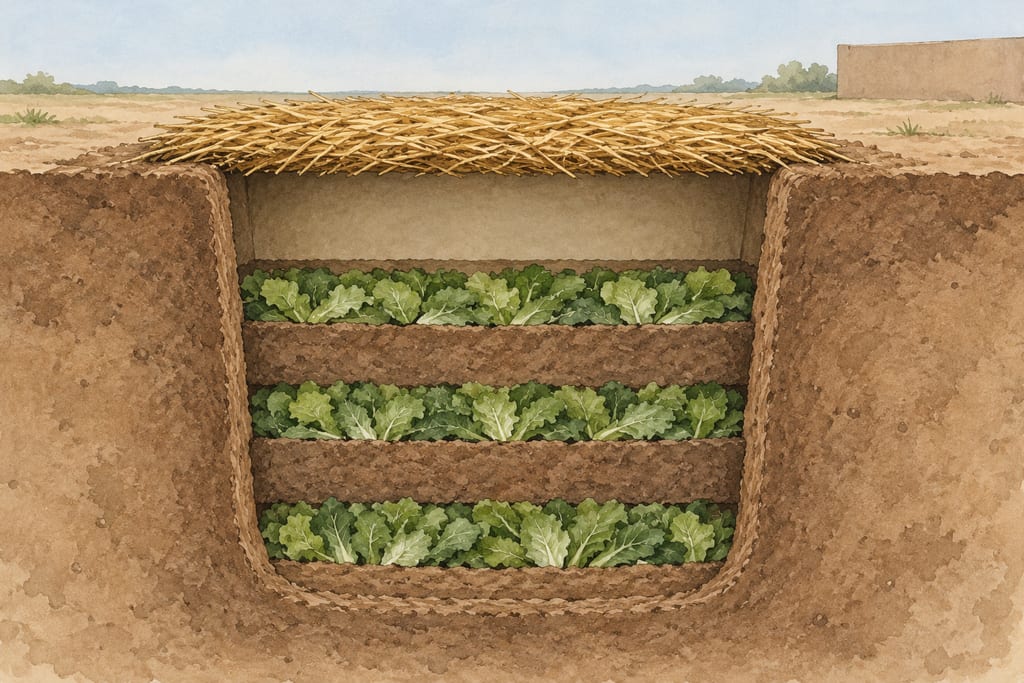
The Tentative List nomination mentions bamboo strips midway in the wall and iron plates near its top, describing them as used to fix the ferment. It does not give a clear enough account to reconstruct their exact placement, fastening or structural role. This page records that mention without converting it into a construction specification.
The current CRI photograph shows open pools within a protected modern display. It does not show an original roof or historical fill, and the photograph's lack of a reuse licence means it is linked with attribution rather than reproduced as a local asset. The generated cutaway is explanatory editorial art, not archaeological evidence.
Sources for this section
History
The 2008 Tentative List submission describes a Jin-or-Yuan origin, while a 2010 local-government article gives Song–Jin dating and reports nearly 900 years of use. Later heritage coverage also repeats continuity claims; these accounts do not establish one precise construction date.
Site
SettingHistoric liquor-making site at Xushui, Baoding, Hebei, China.
GroundFixed rectangular grey-brick pools; the 2008 nomination describes the individual pool form.
FootprintIndividual pool: about 3.45 m long, 1.6–1.7 m wide and 2 m deep. A separate 60.5 m × 85 m figure in the nomination refers to the broader site, not the pool group.
NotesThe pool count is not settled: the nomination gives conflicting figures, while later reporting presents two rows of eight. The sources do not establish exact construction sequencing or full engineering details.
A build is made where it stands: moving it means building it again.
Places
Liu Ling Zui, Xushui
Historical attestation · Locality evidenceThe UNESCO Tentative List submission pins the site to Xushui County; a local government article gives a conflicting chronology.