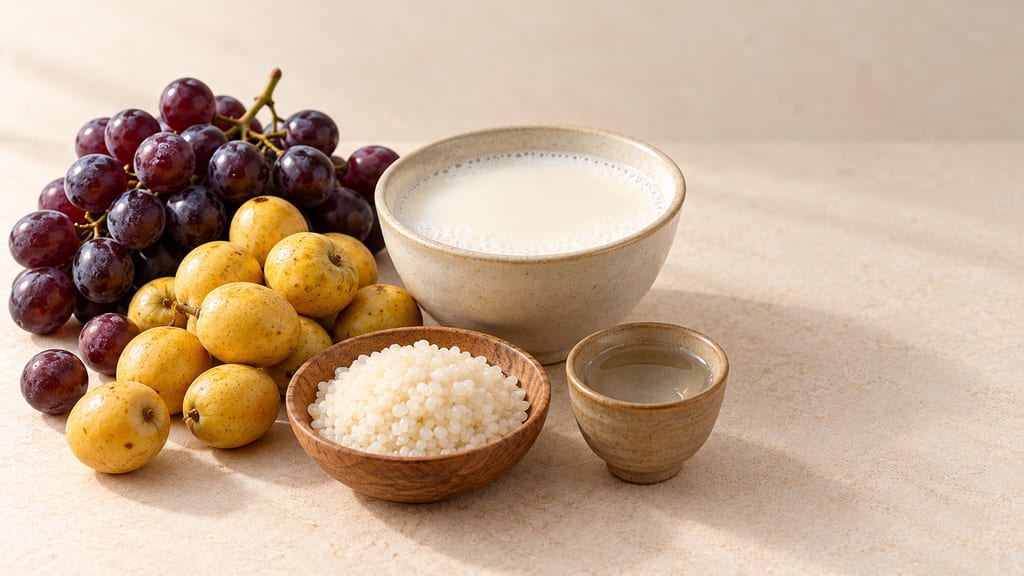
Harvests into drinks: fruit, grain and milk
A marula harvest, a rice mash and a bowl of fermented mare’s milk reveal different ways to make alcohol, and different kinds of knowledge behind the drink.
 FermenteaWhere food goes to change
Equipment · Historical object · Jars, pots and crocks
Jiahu pottery preserves chemical evidence of an early mixed fermented drink involving rice, honey and fruit. Its jar forms provide archaeological context, not proof one vessel served every brewing stage.
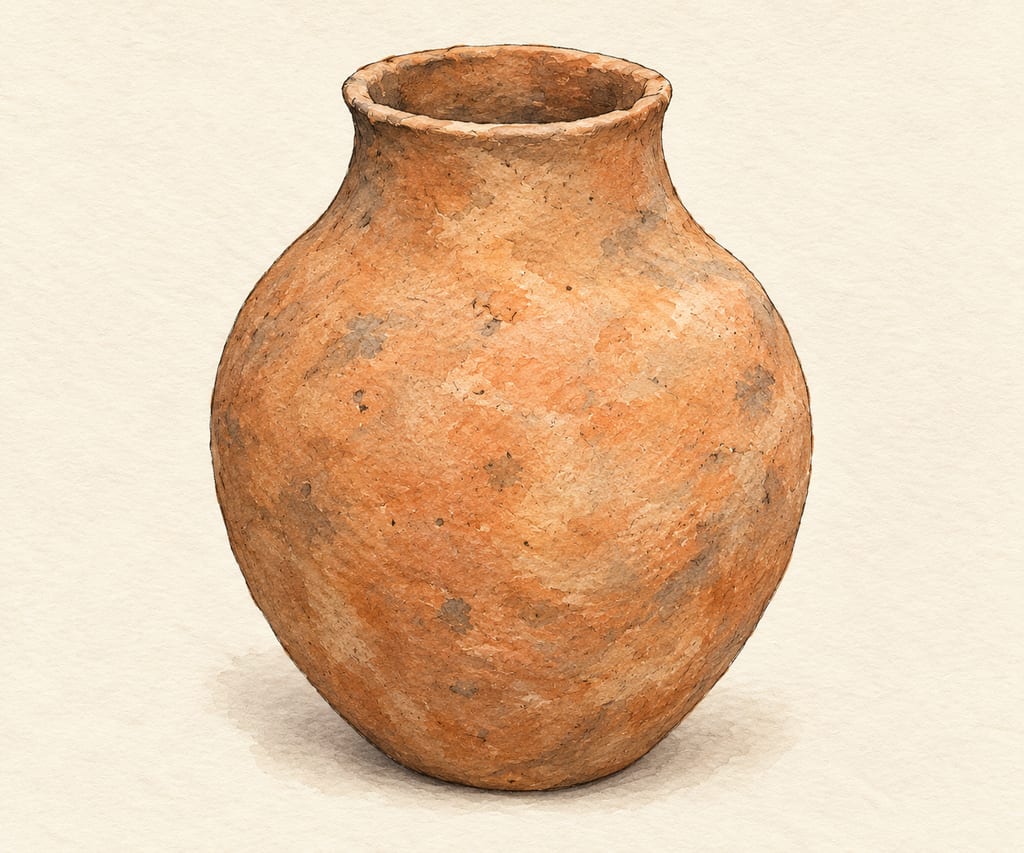
At Jiahu, a Neolithic village in Henan, pottery held chemical traces of a fermented drink made from a mixture that included rice, honey and fruit. The fruit evidence is described as hawthorn and/or grape. The relevant residues are dated to about 7000–6600 BCE, within the seventh millennium BCE. This makes the Jiahu finds an important early case of fermented beverages in China, while the exact recipe and the work done by any one vessel remain beyond what the residues can show.
Pottery matters to this story partly because it lasts. Organic compounds absorbed into the vessel fabric can survive long after the liquid and the people who made it are gone. Archaeologists can analyze those residues to identify ingredients and beverage evidence. The jar therefore belongs to both a history of fermentation and a history of what archaeological materials preserve.
The Jiahu profile described in the vessel study is a rounded jar with a pronounced shoulder and a narrowed neck. The broader pottery assemblage includes two-handled jars with narrow mouths, vessels with flaring necks, bowls and perforated basins. These are different forms, and a picture of one should not be treated as a complete brewing set. The sources identify pottery but do not specify a capacity, exact dimensions, clay recipe or firing schedule for the particular jars discussed here.
The narrowed opening offers a contained space, but shape alone cannot tell us whether a jar was used for fermenting, holding, serving, or several tasks in sequence. A residue found in pottery can support a connection between vessel and beverage without demonstrating that the pictured complete jar held the whole mixture or managed every stage.
The chemical and botanical evidence supports a mixed fermented beverage; it is not a surviving ancient sample of the drink. Nor does it yield a step-by-step method or prove that every jar in the assemblage was a fermenter. The vessel reference image in this record is contextual museum-display pottery attributed to Jiahu, not the residue-tested sherds. The generated hero is an interpretive illustration of the described rounded, shouldered profile, not a photograph or reconstruction of an identified archaeological object.
No inspected source gives a standard closure, cleaning practice, vessel capacity or dimensions for these jars. Those details should remain open rather than borrowed from later pottery traditions. The evidence is strongest when kept at its actual scale: pottery from Jiahu preserves traces of an early mixed drink, and the jar forms help explain the material setting without supplying a complete brewing technology.
Jiahu pottery jars preserve absorbed organic residues associated with a mixed fermented beverage of rice, honey and fruit, including hawthorn and/or grape. The Penn Museum places the relevant residues at approximately 7000–6600 BCE; the primary study identifies Jiahu in Henan and the seventh millennium BCE. These are residue findings from pottery, not surviving liquid or a written recipe. The evidence establishes an early fermented mixture, while the role of an individual jar and the full brewing sequence remain uncertain.
Residue evidence identifies a mixed fermented beverage but does not establish that the illustrated jar performed every brewing stage or recover a standardized process.
Source →The sources do not give a capacity, dimensions, closure, care procedure or construction recipe for the discussed Jiahu jars.
Source →The evidence is tied to pottery from the Jiahu Neolithic village in Henan; this does not claim a broader origin for pottery jars.
A marula harvest, a rice mash and a bowl of fermented mare’s milk reveal different ways to make alcohol, and different kinds of knowledge behind the drink.
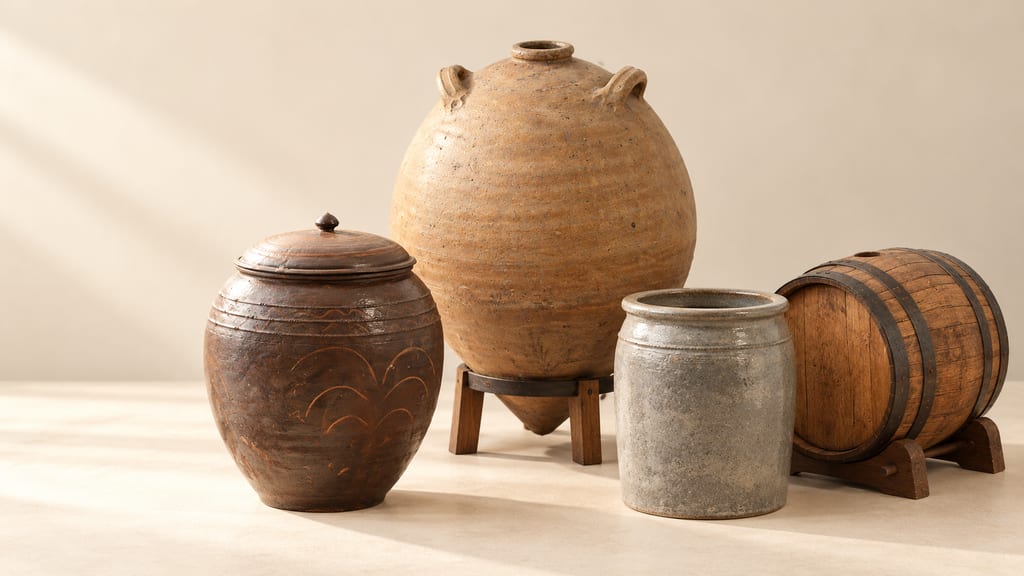
Jars, barrels, skins, leaves, pits and whole rooms decide much of what happens to fermented and cured food. This is how a container works on its contents, and how people in different places chose theirs.
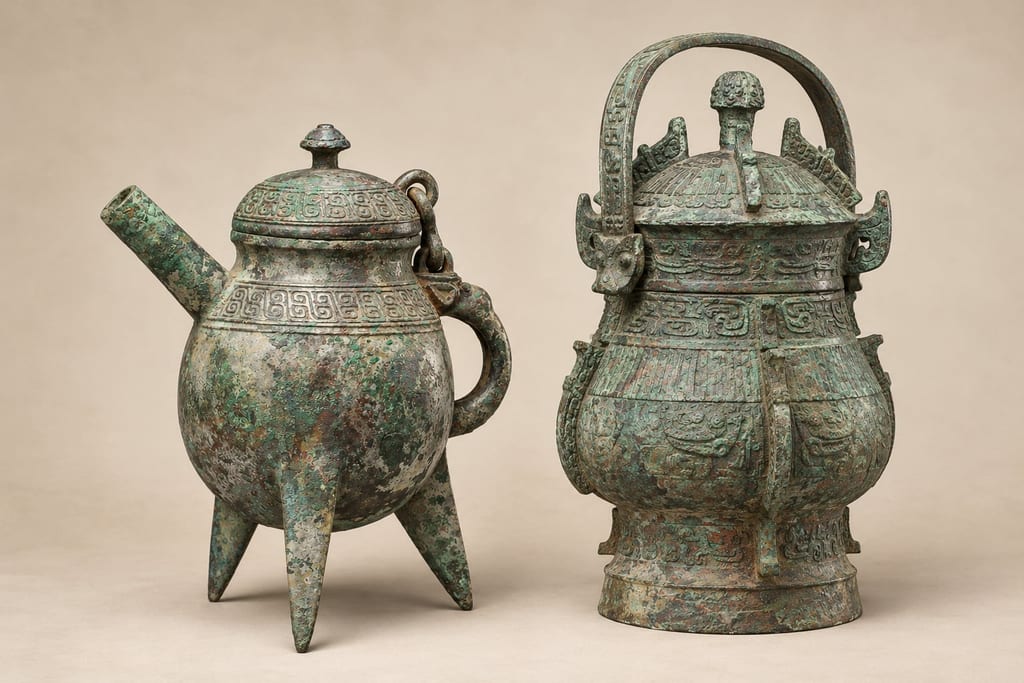
Lidded bronze he and you vessels from Henan burials preserved liquids interpreted as fermented cereal drinks. The residue evidence does not show that the bronze vessels were primary fermenters.
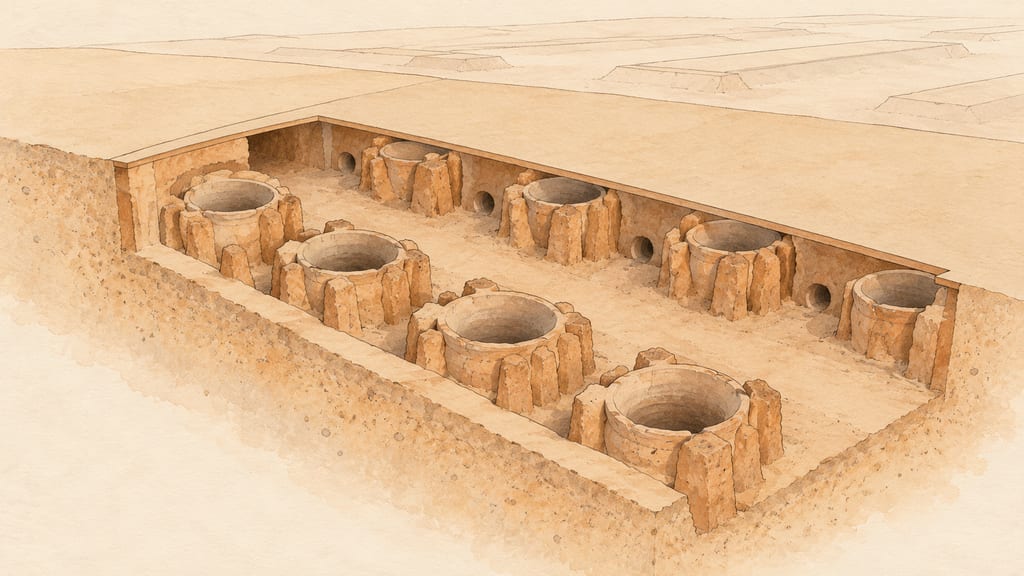
At North Abydos in Egypt, a fixed early Dynastic brewery comprised parallel semi-subterranean installations with rows of ceramic mash vats; excavation reports revise their number, scale and estimated batch capacity.
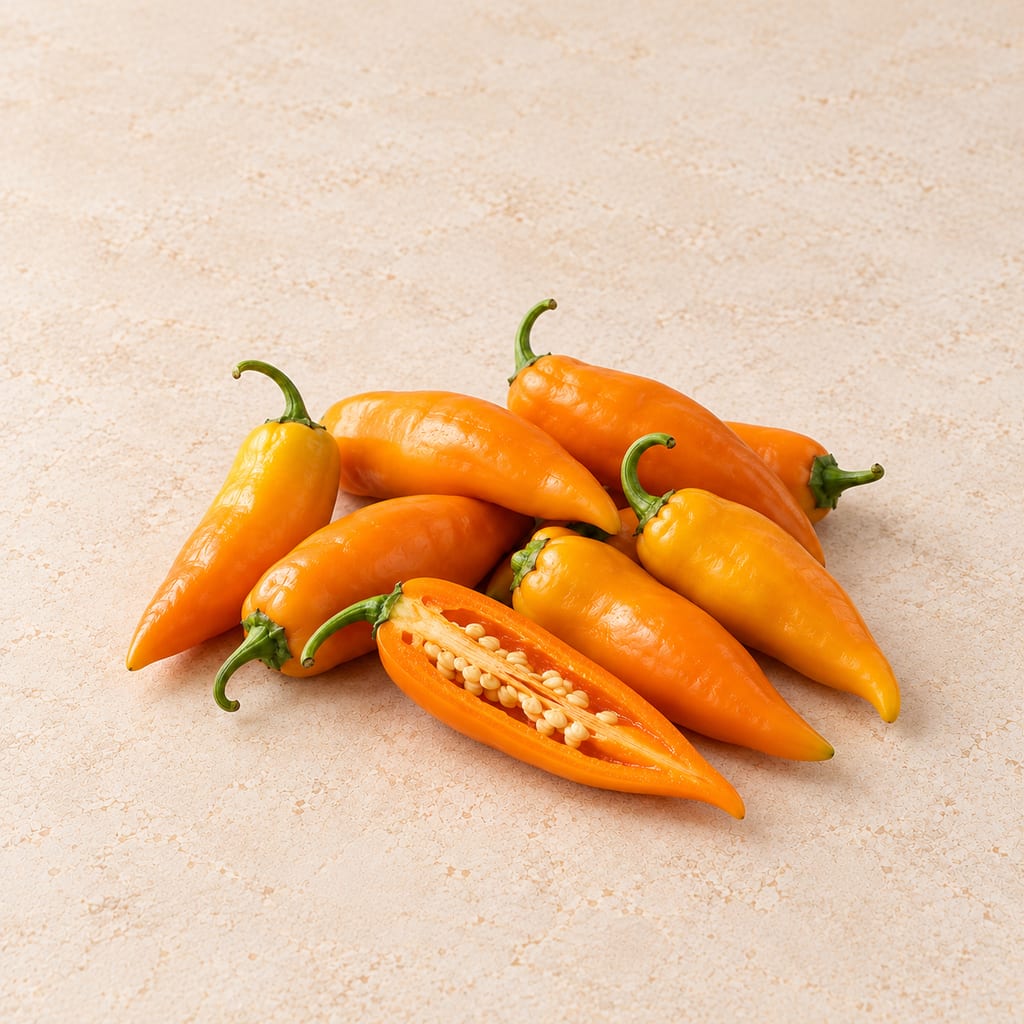
Ají amarillo is the orange-yellow Peruvian chilli cultivar group of Capsicum baccatum, used to colour and season huancaína sauce and ají de gallina. Published heat estimates do not establish one range for the named cultivar.

Toasted almonds are whole sweet almond kernels dry-roasted until golden to brown. Heat replaces their marzipan note with a roasted, nutty one; they thicken and flavour romesco.

Kodiak salmon, halibut and cod cut as seg'aq and hung on an initaq rack to become tamuuq, with kac'amaasaq and kupcuunaq named as different results.
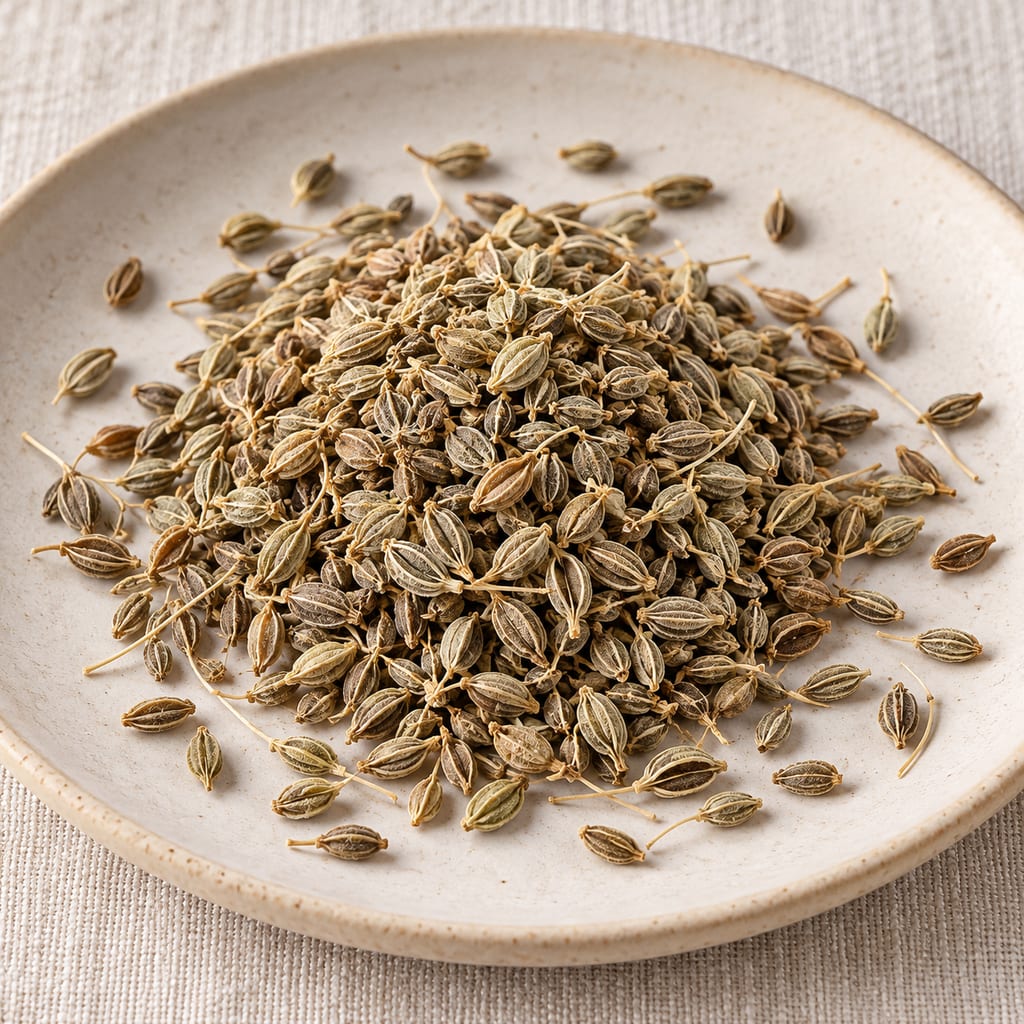
Aniseed is the dried ripe fruit of Pimpinella anisum, an aromatic Apiaceae spice commonly called a seed. It adds a sweet, warm aroma to breads such as Moroccan krachel and South African mosbolletjies, and is distinct from star anise.
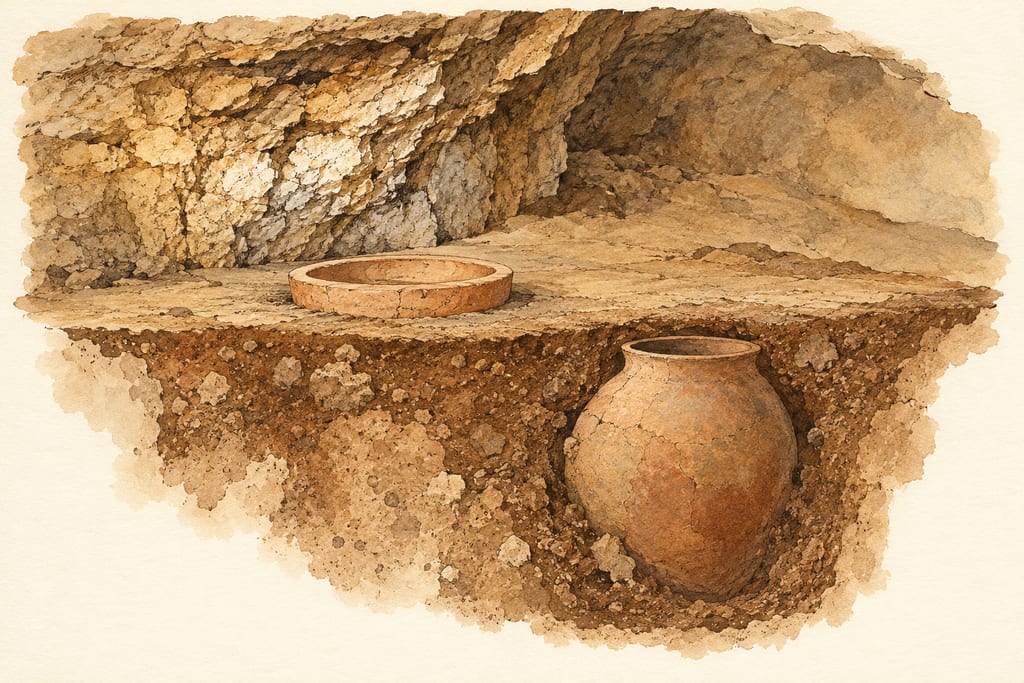
A fixed Late Chalcolithic installation in Areni-1 cave combined a shallow clay pressing basin with a large jar set into the cave floor and storage vessels nearby.

Ripe avocado flesh is the soft, buttery, fat-rich pulp of Persea americana, eaten raw. It is low in acid, so it is a fresh ingredient that needs care in chilled dishes.
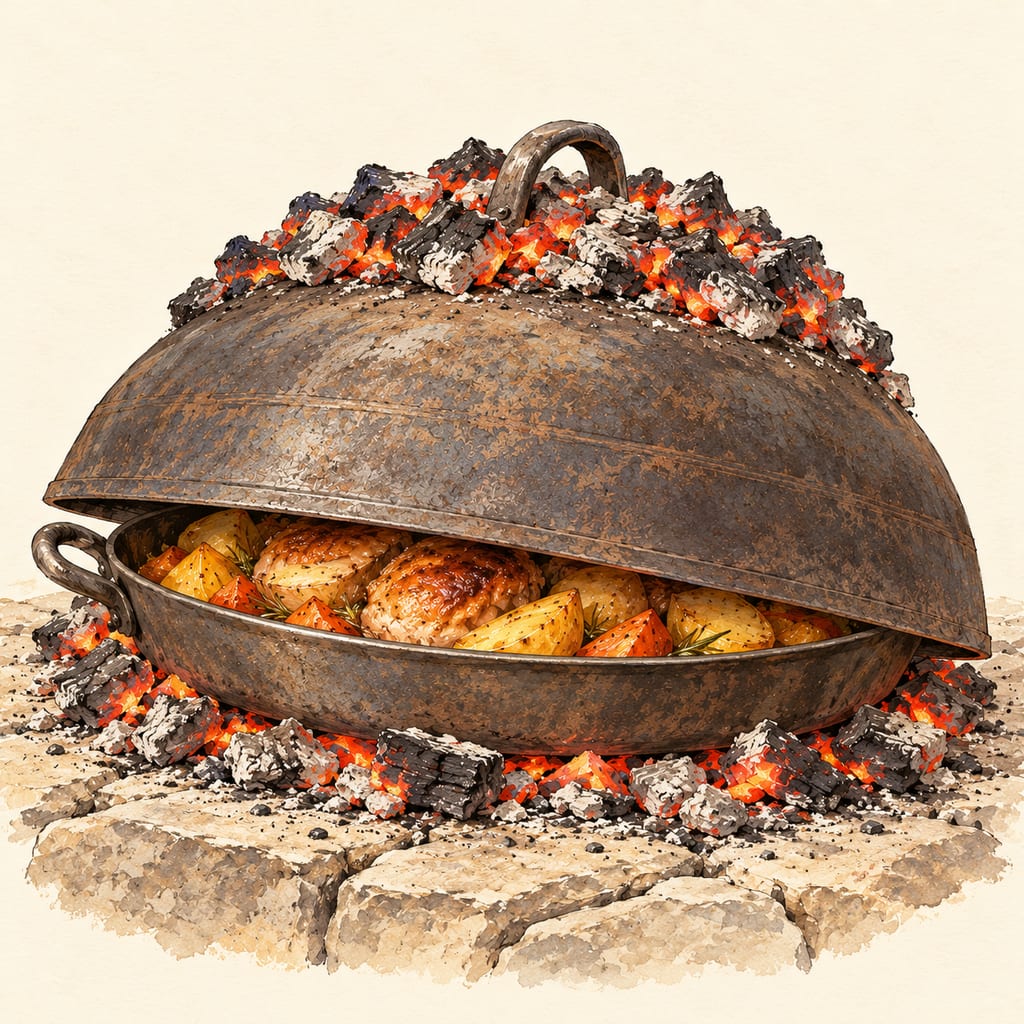
A portable dome and pan used over a hearth, with embers on the lid and heat from below. Regional peka and saç forms share this principle while differing in materials, pan shape and how the food is cooked.
No community contributions have been published for this entry yet.
Sign in to contribute. Published comments and photos are free to read.
Proceedings of the National Academy of Sciences, 101(51), 2004History · Form · Archaeological evidence
Fermented Beverages of Pre- and Proto-historic ChinaJiahu, Henan, seventh millennium BCE; organic residues in pottery jars; mixed fermented beverage involving rice, honey and fruit (hawthorn and/or grape).
Cited in: Jiahu and the early mixed drink; Shape, material and the wider assemblage; What the evidence can and cannot say
Penn MuseumHistory · Geography · Archaeological evidence
The Earliest Alcoholic Beverage in the WorldJiahu is in Henan, Northern China; residues dated approximately 7000–6600 BCE; organic material absorbed and preserved in pottery jars; beverage described as rice, honey and hawthorn fruit and/or grape.
Cited in: Jiahu and the early mixed drink; Shape, material and the wider assemblage; What the evidence can and cannot say