Hogweed barszcz
The original Polish barszcz: young hogweed leaves soured in warm water for a few days, then boiled into soup with egg, butter, cream or millet. Recorded from 1595, with warnings about the sap and lookalikes.
 FermenteaWhere food goes to change
Barrel-fermented cabbage · Kołobrzeg barrel cabbage
Kapusta kiszona z beczki is barrel-fermented cabbage from the Kołobrzeg area, entered on Poland’s List of Traditional Products in 2008. It is salted and fermented, with raw grated carrot added after souring.
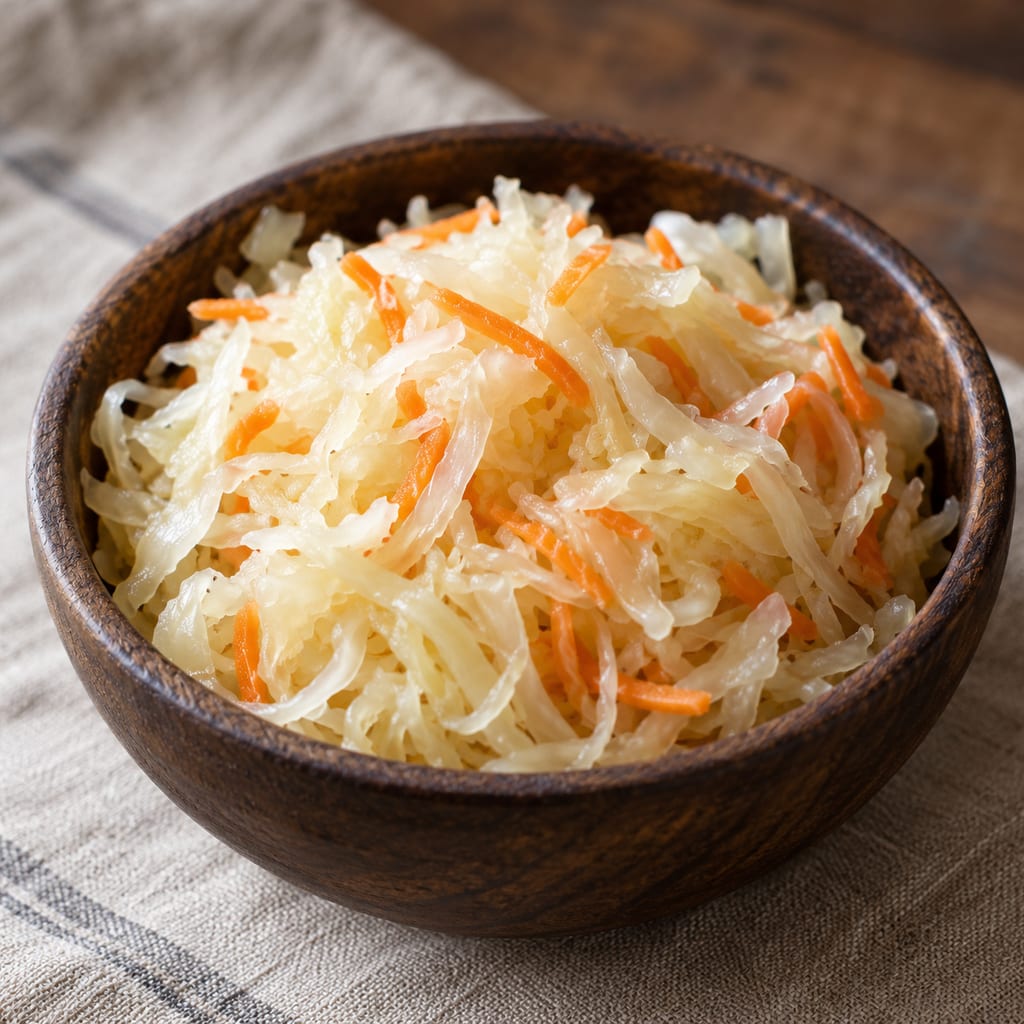
Kapusta kiszona z beczki, barrel-fermented cabbage, is a registered traditional product from the Kołobrzeg area of West Pomerania. The Polish Ministry of Agriculture lists it as a salted, fermented cabbage to which raw grated carrot is added after souring. The carrot gives the product crunch and a sweeter flavour than plain sauerkraut.
The product record describes cabbage fermented with salt only. Raw grated carrot is added after fermentation. The cabbage is cut into narrow strips that sit submerged in the sour juice. The record gives no salt ratio, no fermentation time and no temperature for this variant.
The Ministry places the product in Kołobrzeg County, West Pomeranian Voivodeship, and names several villages where cabbage is grown there. Its entry on the national list dates from 2 April 2008. The list is a promotional register of traditional products. It is not the EU protected geographical name scheme, and a place name on the list does not establish origin or protect the name.
The record places barrel cabbage in the wider cellar practice of rural Pomerania. It cites nineteenth-century descriptions of large cellar barrels, and it notes that pre-1945 Kołobrzeg County grew vegetables for market. These sources show a tradition of barrel storage in the region. They do not show that the exact present-day formula is old.
The record gives no ratio, duration, temperature or safety endpoint for this product. The Ministry page also summarises general household barrel instructions. Those instructions describe a broader cabbage method and should not be read as this registered product’s recipe. A home maker should use a tested sauerkraut method and the container guidance listed in the sources.
The Ministry record gives the listing date as 2 April 2008. It cites nineteenth-century accounts of cabbage gardens and large cellar barrels in West Pomeranian rural life and describes pre-1945 Kołobrzeg County as a vegetable-growing area. These are contextual records. They do not show that the present-day product formula existed unchanged or began in 2008.
Scaling: source batch only
The product record names salt fermentation and a carrot addition but gives no salt ratio, duration, temperature or endpoint for this variant.
Hazard sourceUse a separately validated fermentation method for salt rate, endpoint and storage. Smell, taste and appearance do not establish safety.
Control sourceThe registration confirms a listed traditional product. It does not validate a home process.
Sour taste and the appearance of the juice do not establish safety.
The Ministry record names villages where cabbage is grown in Kołobrzeg County. The listing is a regional association, not a protected geographic origin.
The original Polish barszcz: young hogweed leaves soured in warm water for a few days, then boiled into soup with egg, butter, cream or millet. Recorded from 1595, with warnings about the sap and lookalikes.
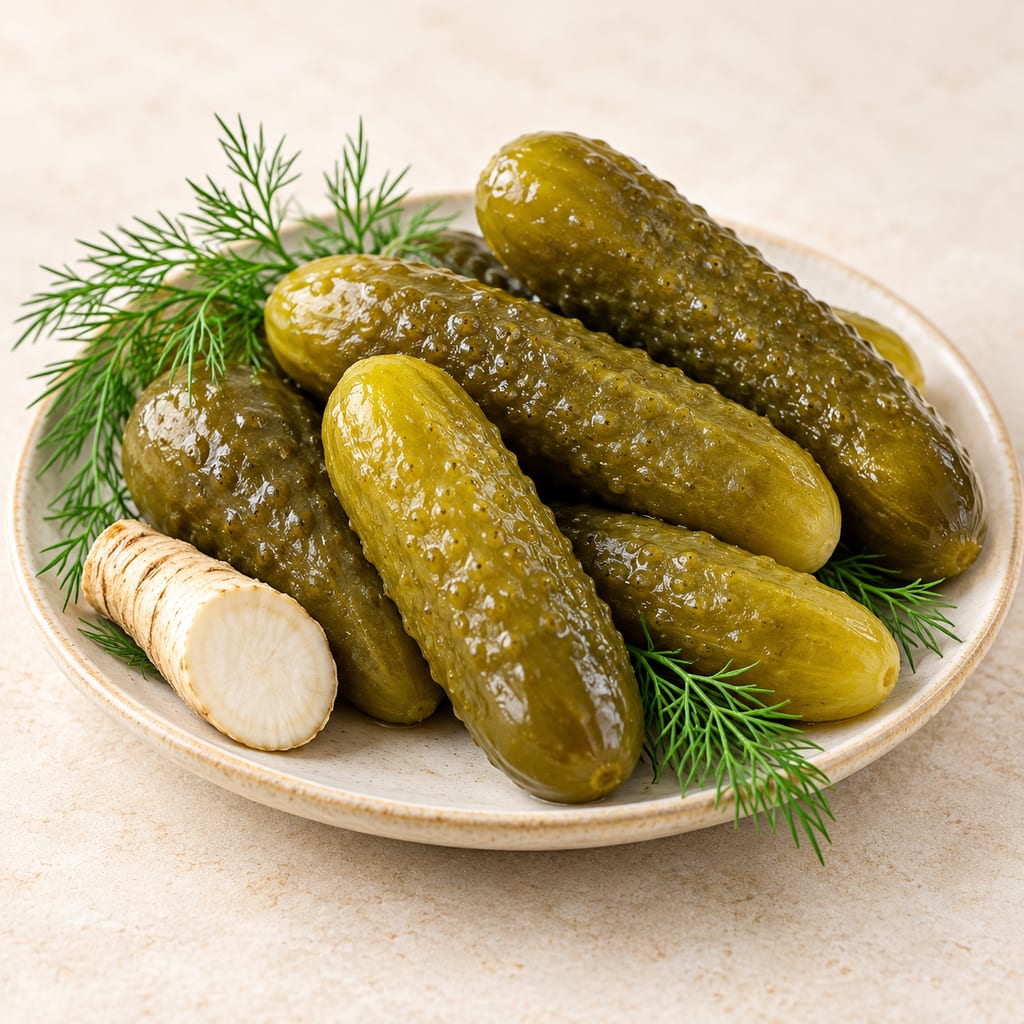
Ogórki kiszone are Polish brine-fermented cucumbers. Two registered local practices keep the barrels in a well near Zakliczyn and under lake water at Kalisz Pomorski. Neither gives a validated process.
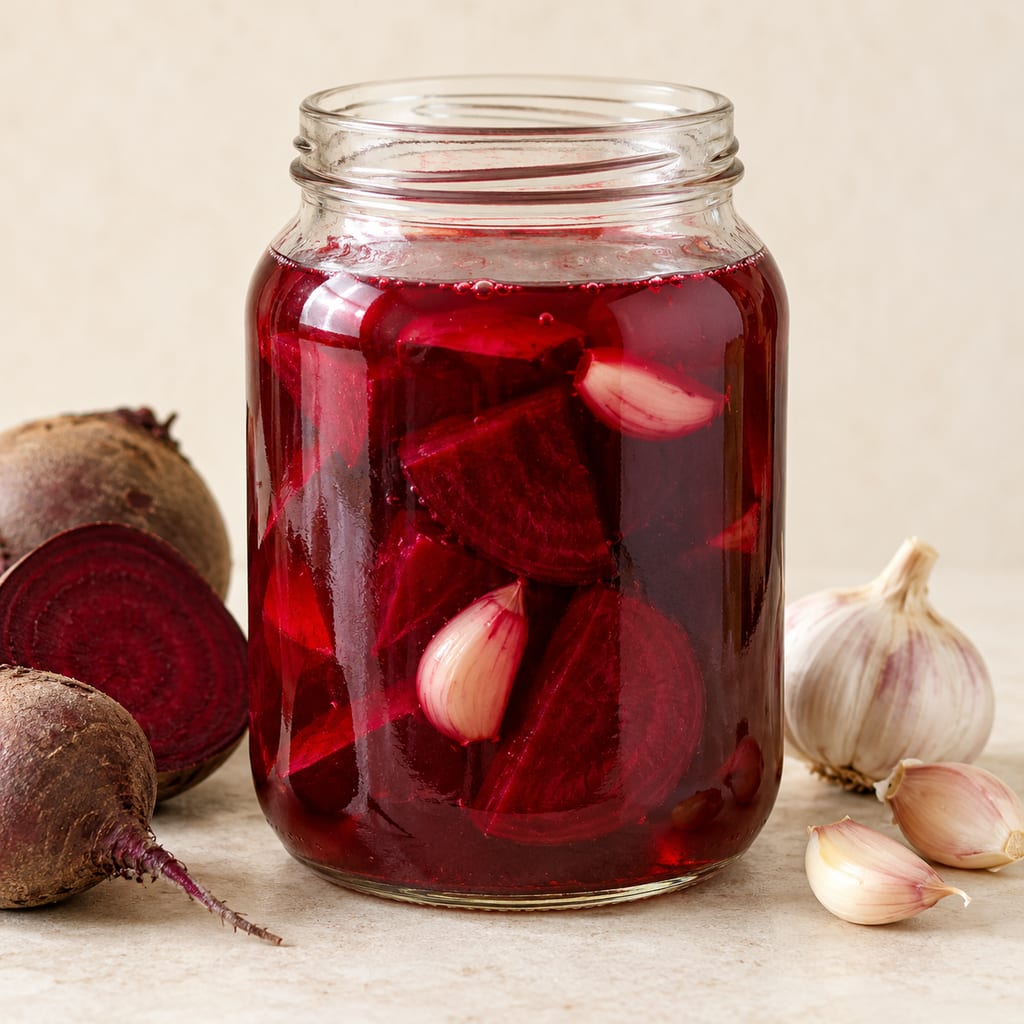
Zakwas buraczany is the fermented red-beet liquid used as the sour base for Polish beet barszcz. The liquid is made from beetroot, garlic, salt and water, and the official sources give no quantities.

A yeast-raised wheat ring shaped from a firm dough, briefly boiled and baked. This source-batch formula gives a gently malted crust and a chewy crumb.
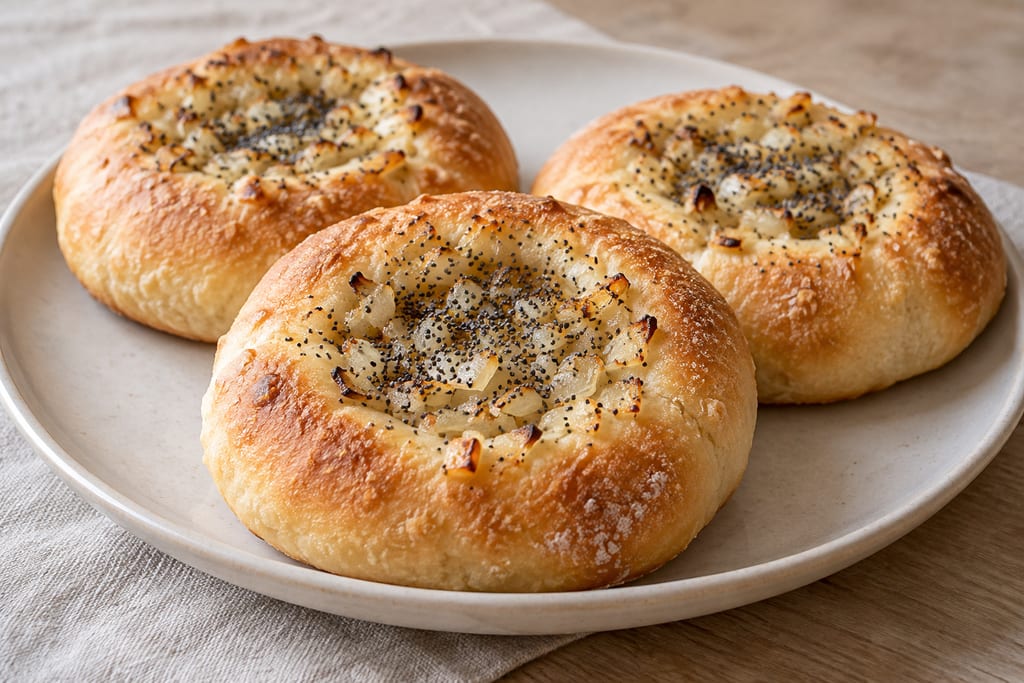
Bialys are soft, yeasted wheat rolls baked without boiling, each shaped with an onion-filled central depression instead of a hole.
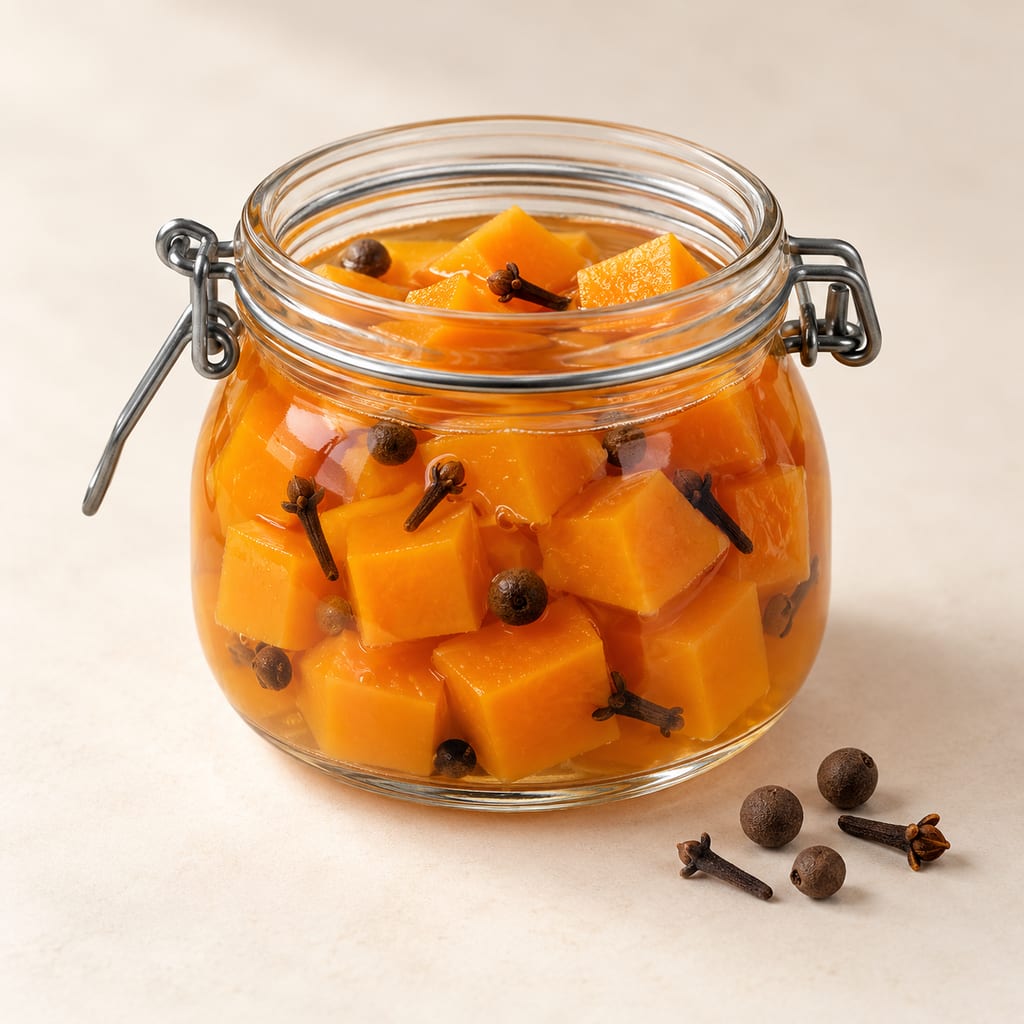
Dynia marynowana: Freeze for winter; small fresh portion refrigerated up to 48 hours.
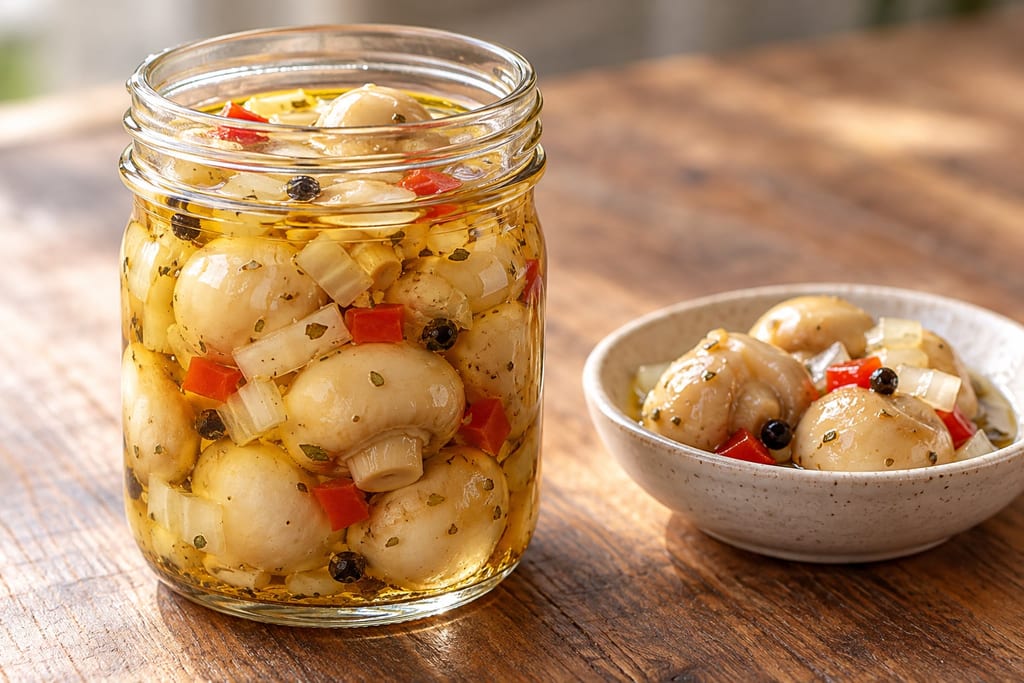
Small edible mushrooms are briefly cooked and packed in a seasoned vinegar marinade, a sweet-sour preserve served cold in Poland and neighbouring cuisines.
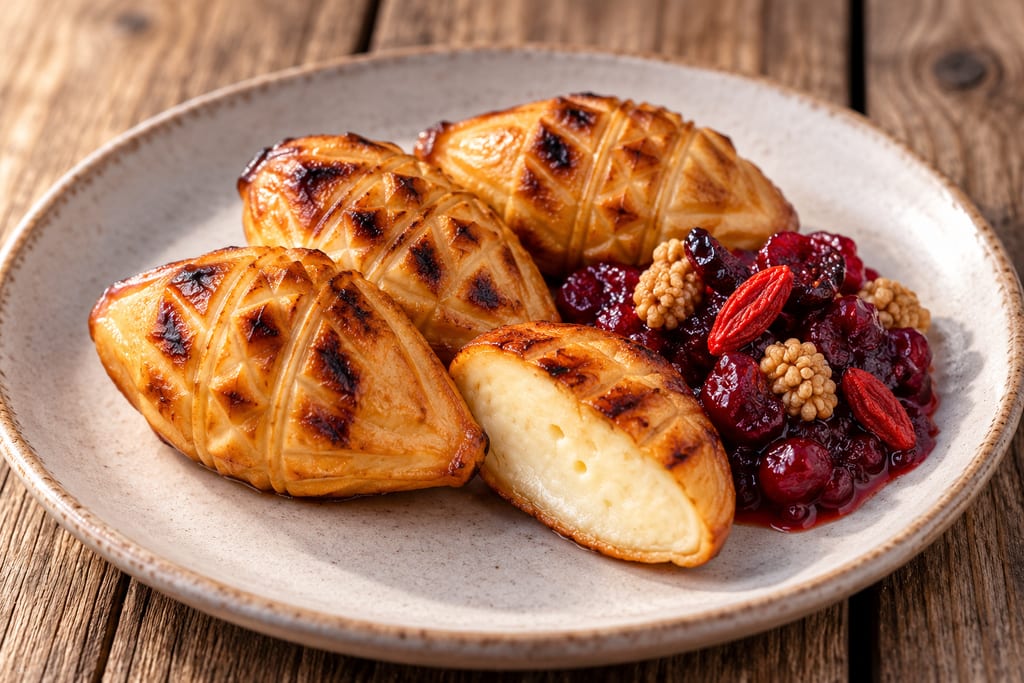
Small Oscypek are grilled until the exterior is crisp and the cheese softens, then served with cranberry, goji berries and mulberries.
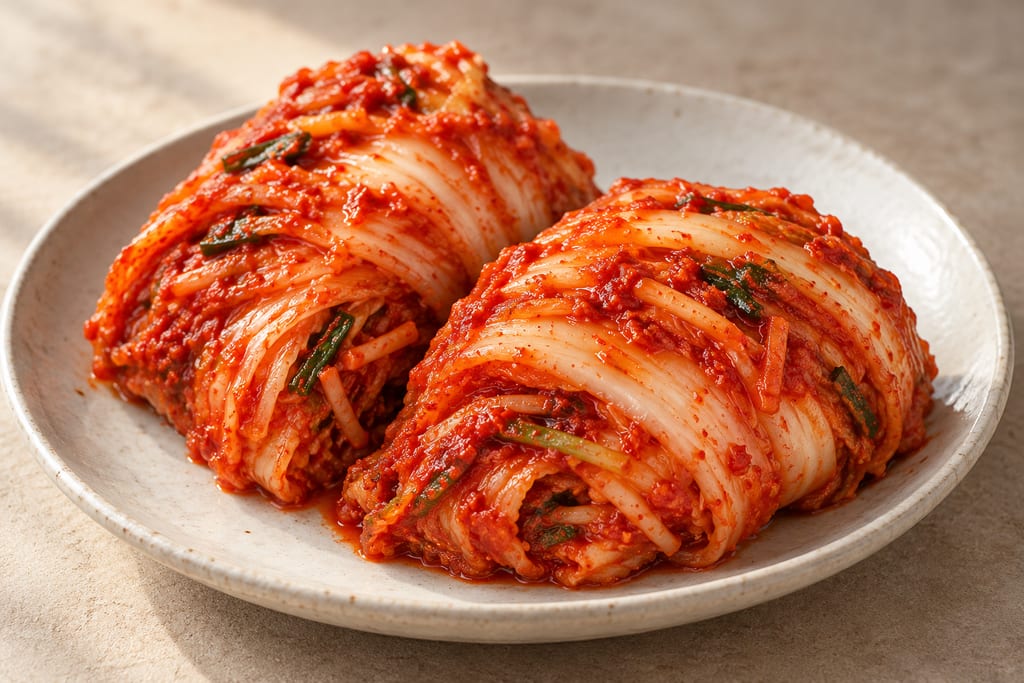
Napa cabbage salted, seasoned with a paste of gochugaru, garlic, ginger and salted seafood, and left to sour through lactic fermentation; Korea's everyday winter preserve.
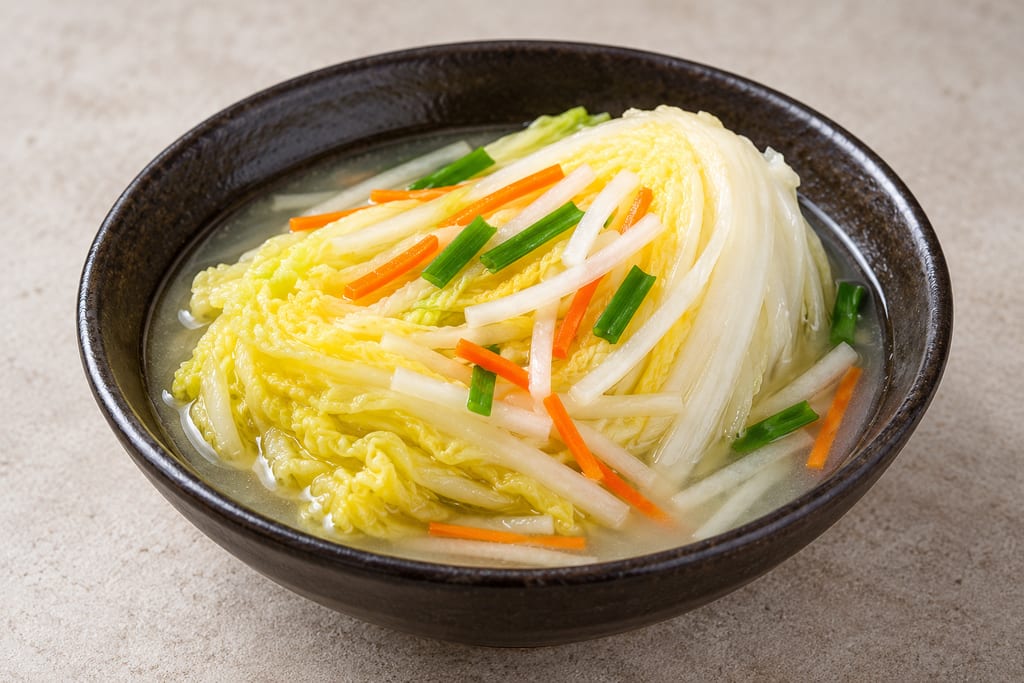
Napa cabbage is brined and filled with pear, radish, alliums, chives and fruit; this Korean kimchi omits red pepper flakes.
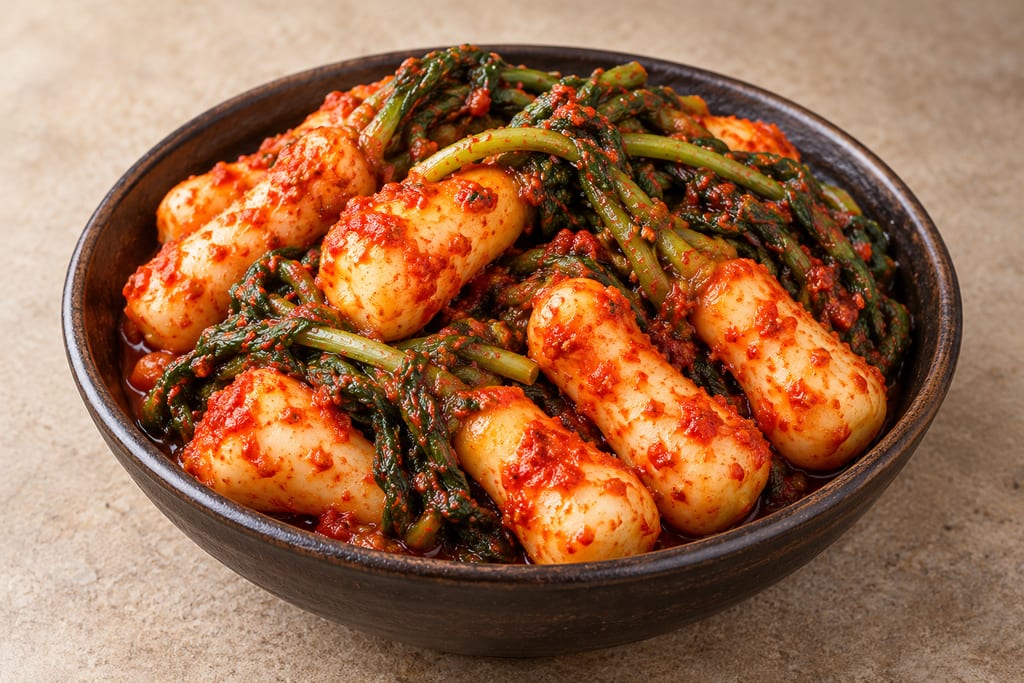
Small ponytail radishes keep their greens attached and ferment in a flour-and-chile seasoning paste.
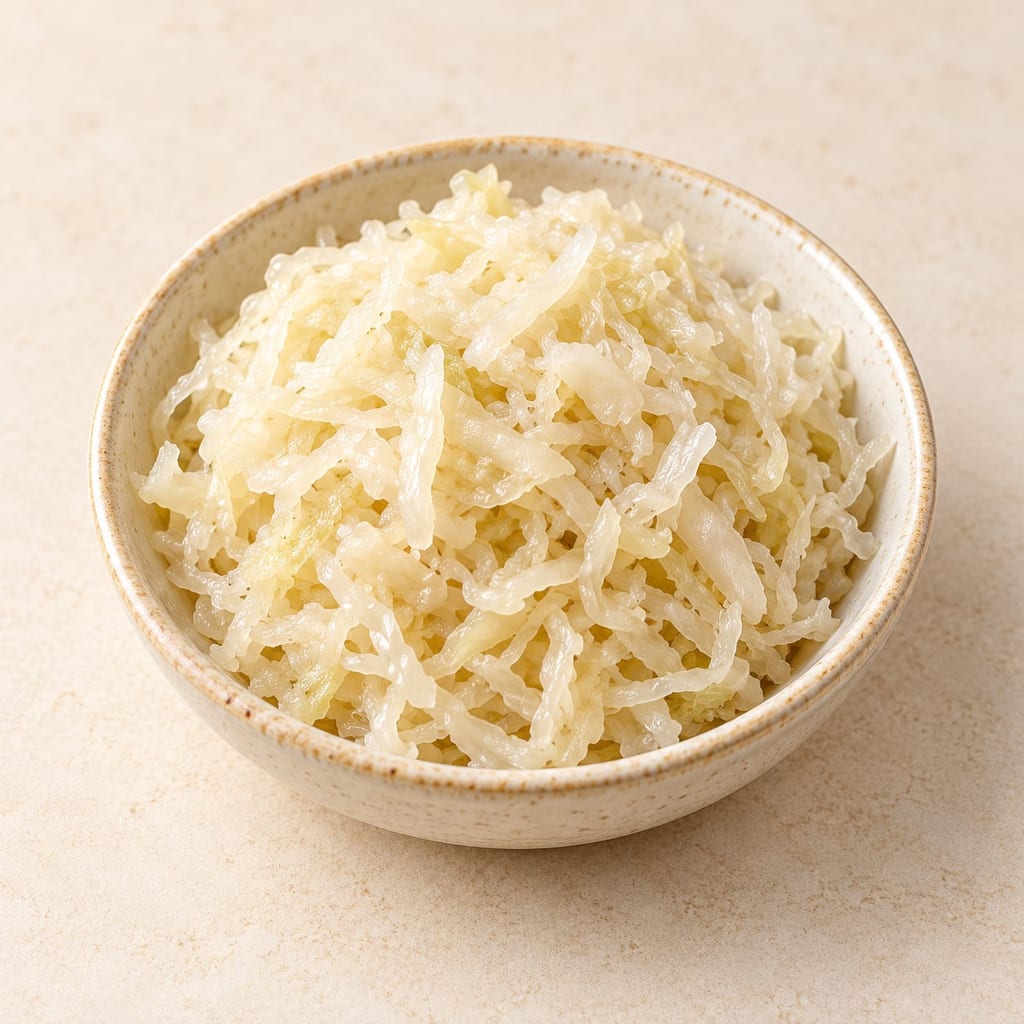
Finely cut cabbage fermented with salt in vats by natural lactic fermentation, a protected Alsatian product sold raw or cooked after fermentation.
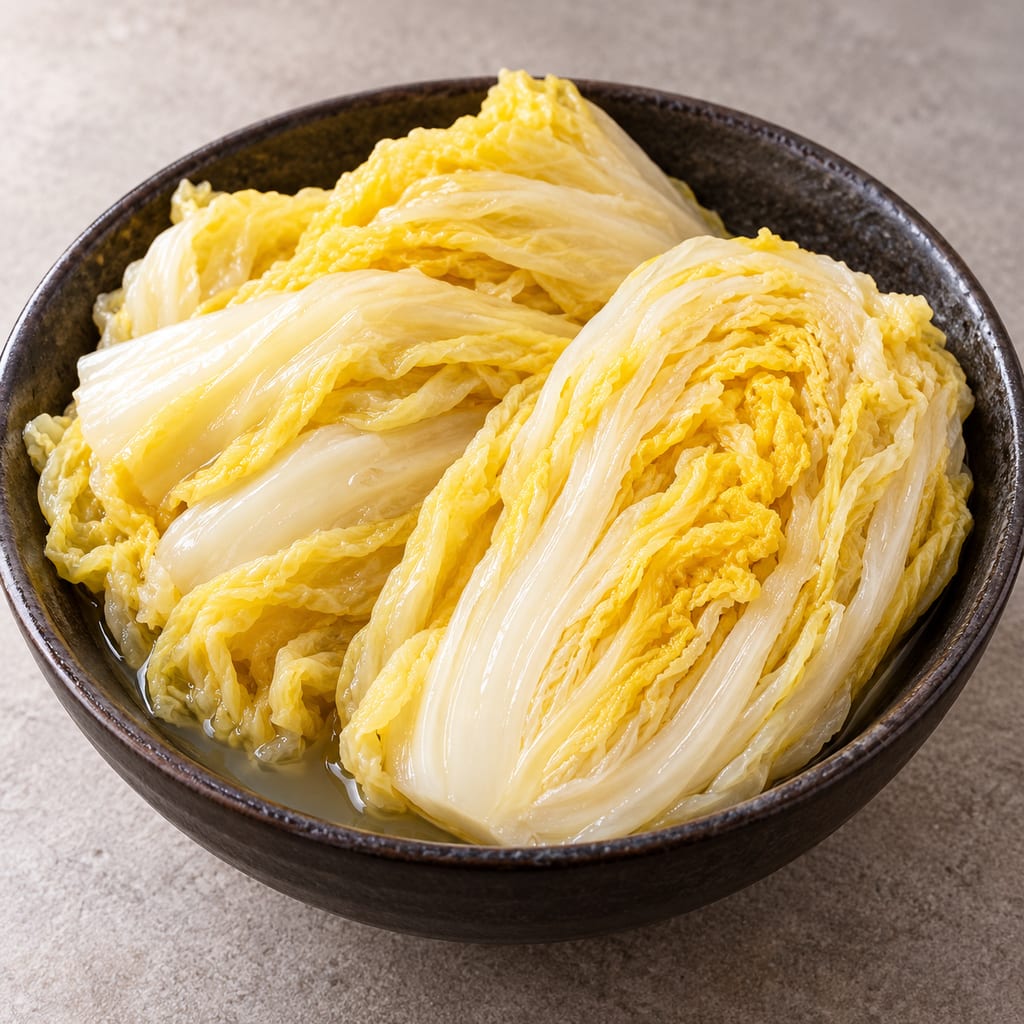
Napa cabbage fermented in a salt brine in Northeast China, traditionally in large ceramic or glass jars, until it turns sour.
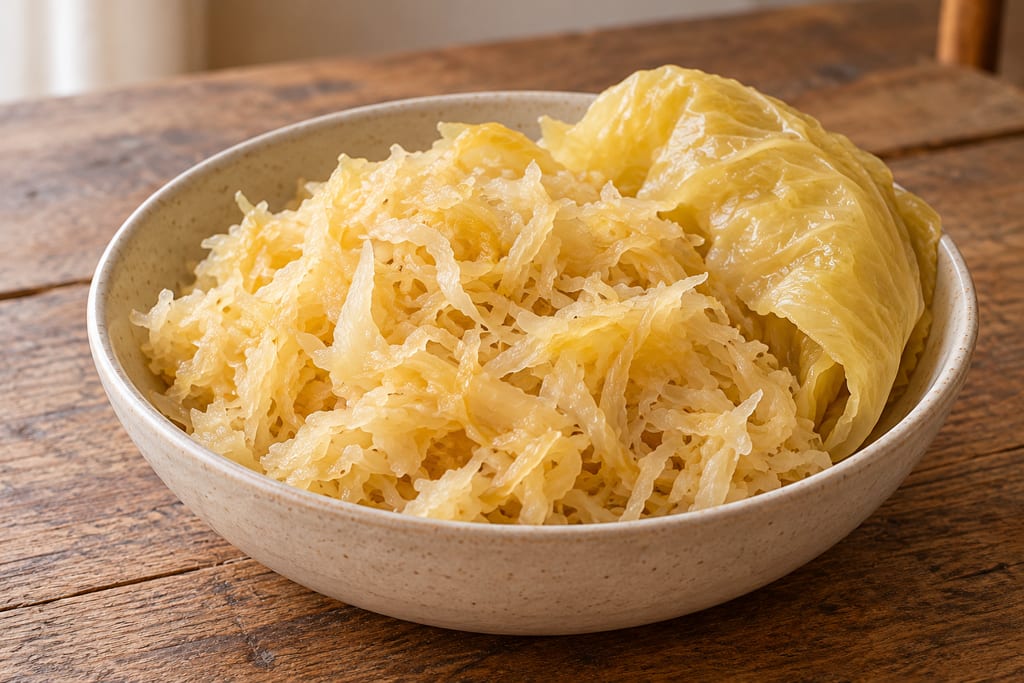
Serbian sour cabbage from the Futog area, made from the autochthonous Futoški cabbage population and registered as a protected product in 2008. It is a subset of general Serbian kiseli kupus.
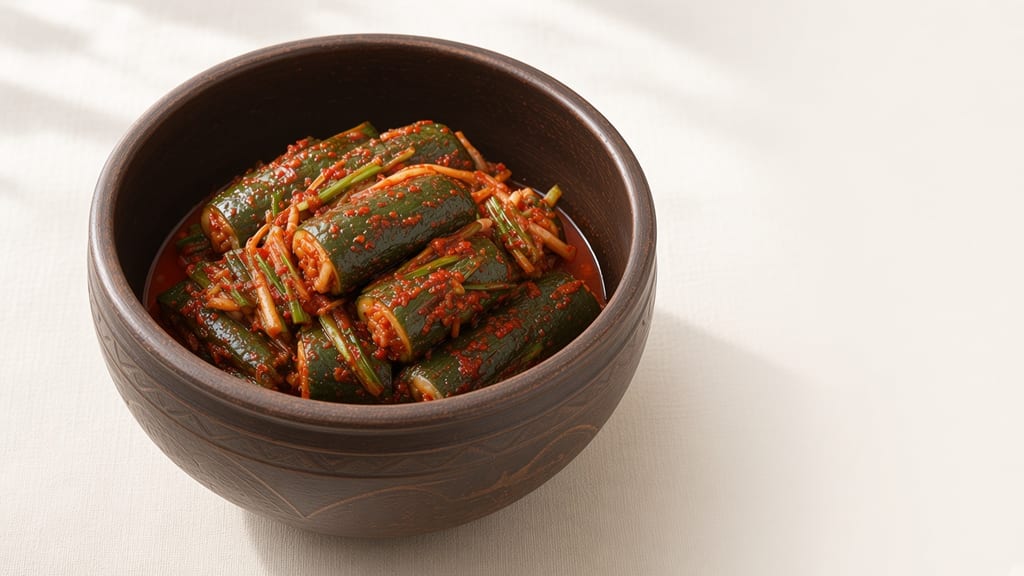
Hwanggwa damjeo is a cucumber kimchi from Yu Jung-rim's Jeungbo sallim gyeongje of 1766. Slit cucumbers are packed with chilli powder and garlic, scalded with hot salted water and sealed overnight.
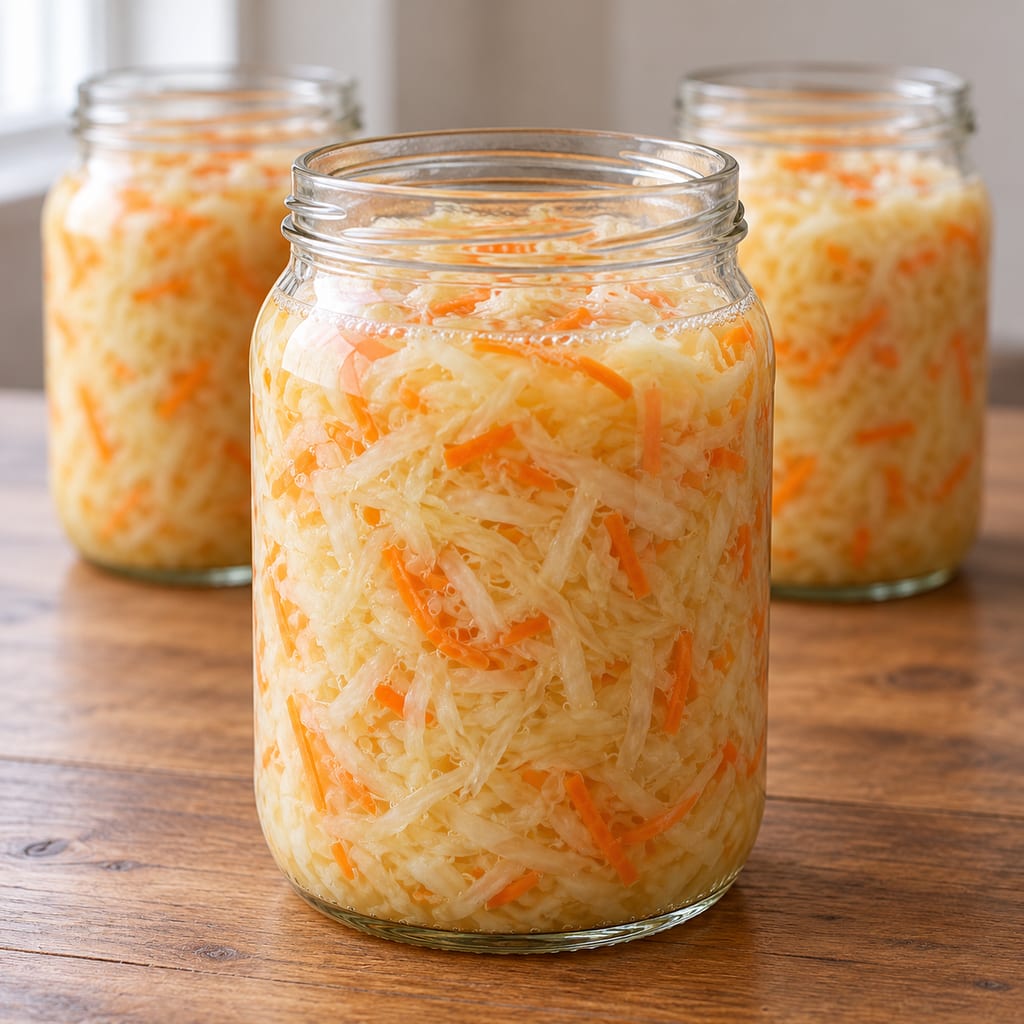
Shredded cabbage and grated carrot are salted to 20 g/kg, rested, packed into three jars and monitored during a creator-reported eight-day fermentation; measured temperature is not given.
No community contributions have been published for this entry yet.
Sign in to contribute. Published comments and photos are free to read.
Ministerstwo Rolnictwa i Rozwoju Wsi (Ministry of Agriculture and Rural Development, Poland)Method · History · Geography
Kapusta kiszona z beczkiCabbage fermented with salt; raw grated carrot added after souring
Listed 2 April 2008 on the Polish List of Traditional Products
Villages in Kołobrzeg County named as growing areas
Cited in: Overview; The product as registered; Place and register; Earlier cellar practice; Limits and safety
Ministerstwo Rolnictwa i Rozwoju WsiGeography
Lista produktów tradycyjnychThe list promotes traditional products; it does not protect the name
Cited in: Place and register
Kancelaria Sejmu, published by Ministerstwo Rolnictwa i Rozwoju WsiHistory
Ustawa o rejestracji i ochronie nazw pochodzenia, oznaczeń geograficznych oraz gwarantowanych tradycyjnych specjalności, oraz o produktach tradycyjnychA traditional method must have been used for at least 25 years for list eligibility
Cited in: Place and register
National Center for Home Food Preservation, University of GeorgiaSafety
SauerkrautGeneral fermentation guidance
Cited in: Limits and safety