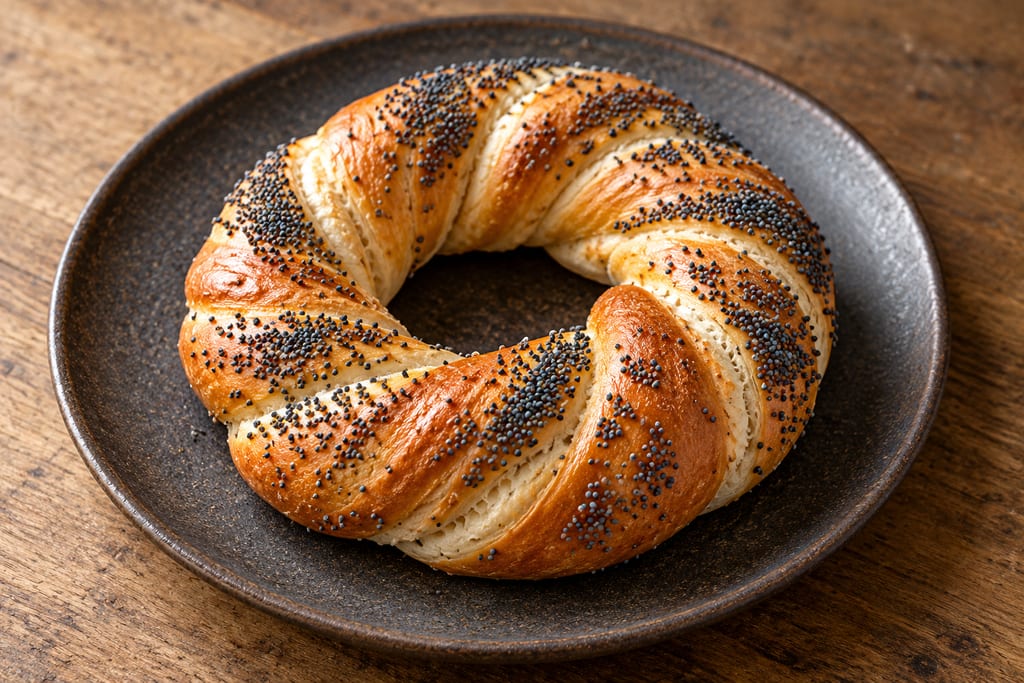
Home-style obwarzanek (Kraków twisted ring)
A home version of the Kraków twisted ring: yeast dough is braided, briefly dipped in boiling water, topped with seeds or salt, then baked. It is not represented as a certified PGI product.
 FermenteaWhere food goes to change
Polish fermented cucumbers · Ogórki kiszone w studni · Jeziorowy ogórek kiszony
Ogórki kiszone are Polish brine-fermented cucumbers. Two registered local practices keep the barrels in a well near Zakliczyn and under lake water at Kalisz Pomorski. Neither gives a validated process.
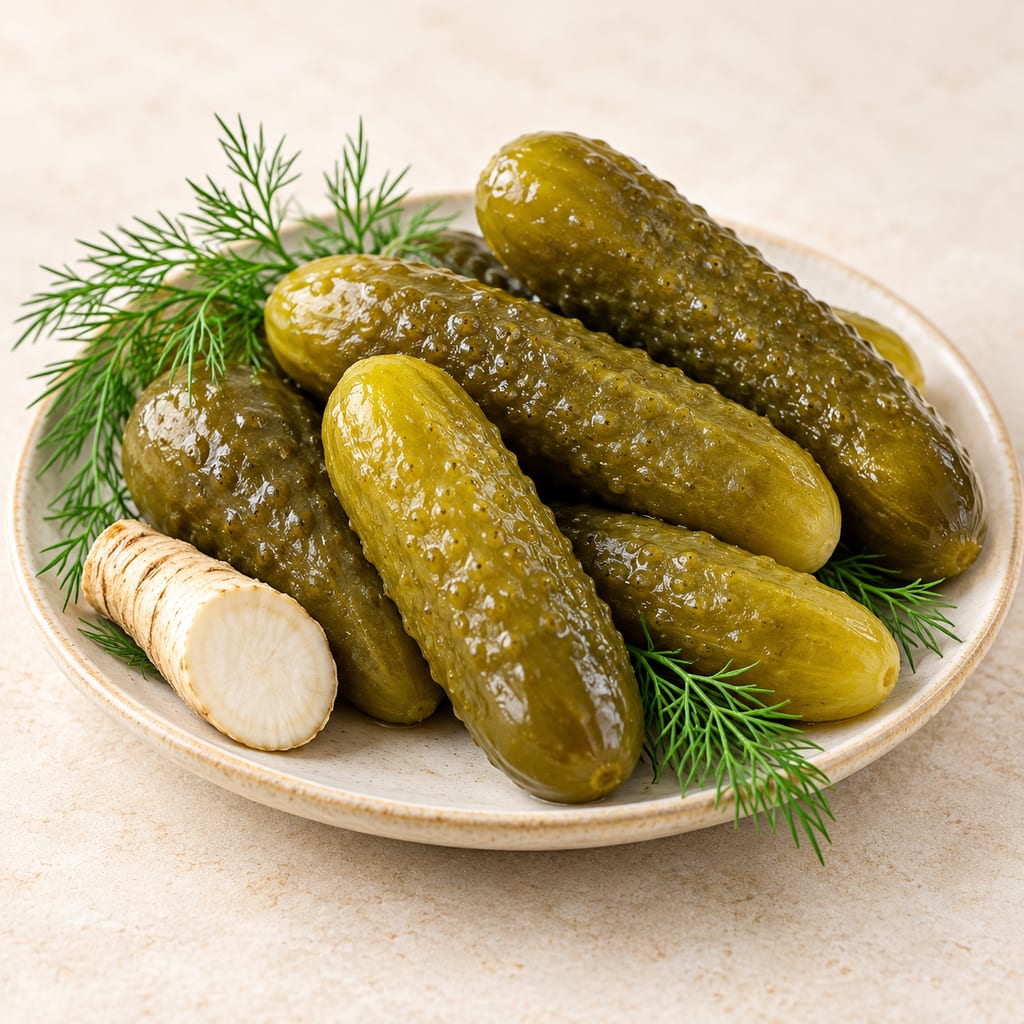
Ogórki kiszone are cucumbers fermented in salted brine. Polish registers distinguish them from vinegar-acidified pickles, which are a different process. Two local practices in the official record show how cucumbers were held in barrels through the cool season: one in a well near Zakliczyn, and one under lake water at Kalisz Pomorski.
The Zakliczyn-area account describes field cucumbers packed after harvest into barrels or jars with horseradish, dill, garlic and salt. The vessel is covered with water and closed tightly. The barrel was first submerged in a pond and later lowered into a well. The official register records the practice from local interviews, and it was registered in 2013.
The second register entry concerns a cooperative branch at Kalisz Pomorski, in West Pomerania. The cooperative stored fermented cucumbers with dill, garlic and horseradish in large spruce barrels of about 100 litres, kept beneath the water of a natural lake. According to informants the operation ran from the 1960s until May 1984. The entry was registered in 2008.
A 2024 study sampled naturally fermented, unpasteurised cucumbers from four Polish producers, including producers in Małopolskie and West Pomerania. It found active lactic acid bacteria in the cucumbers and brine. The study does not identify its samples as either named local variant, and it did not record the full manufacturing processes. It is a modern study, not historical evidence for these traditions.
Neither register entry gives a salt ratio, a fermentation duration or a safety endpoint. The reported 3 to 4 °C applies to the Kalisz Pomorski under-water storage and is not a general fermentation or storage target. Appearance, acidity and the submerged storage do not show a batch is safe. Home makers should follow a tested brine-pickle method, of which the containers guidance in the sources is one part.
Both official entries rest on attributed local interviews rather than dated origin evidence. The Zakliczyn-area account describes household repetition of a pond-to-well practice. The Kalisz Pomorski entry documents a cooperative with a 1960s history. Registration dates (2013 for the well cucumber and 2008 for the lake cucumber) mark listing, not invention.
Scaling: source batch only
Both register accounts describe local storage. Neither gives a salt ratio, endpoint or safety control, and a 2024 study does not validate a home process.
Hazard sourceUse a separately validated fermentation method for salt rate, endpoint and storage. Smell, taste and appearance do not establish safety.
Control sourceDo not infer completion or safety from acidity, appearance or the submerged storage.
The 2024 study sampled four producers and reports microbial diversity. It does not establish a safe process for home use.
The official register places the well practice in the Zakliczyn area, from interviews. It is not a claim of origin.
A cooperative branch that stored barrels in a natural lake. The register describes the local operation only.
A home version of the Kraków twisted ring: yeast dough is braided, briefly dipped in boiling water, topped with seeds or salt, then baked. It is not represented as a certified PGI product.
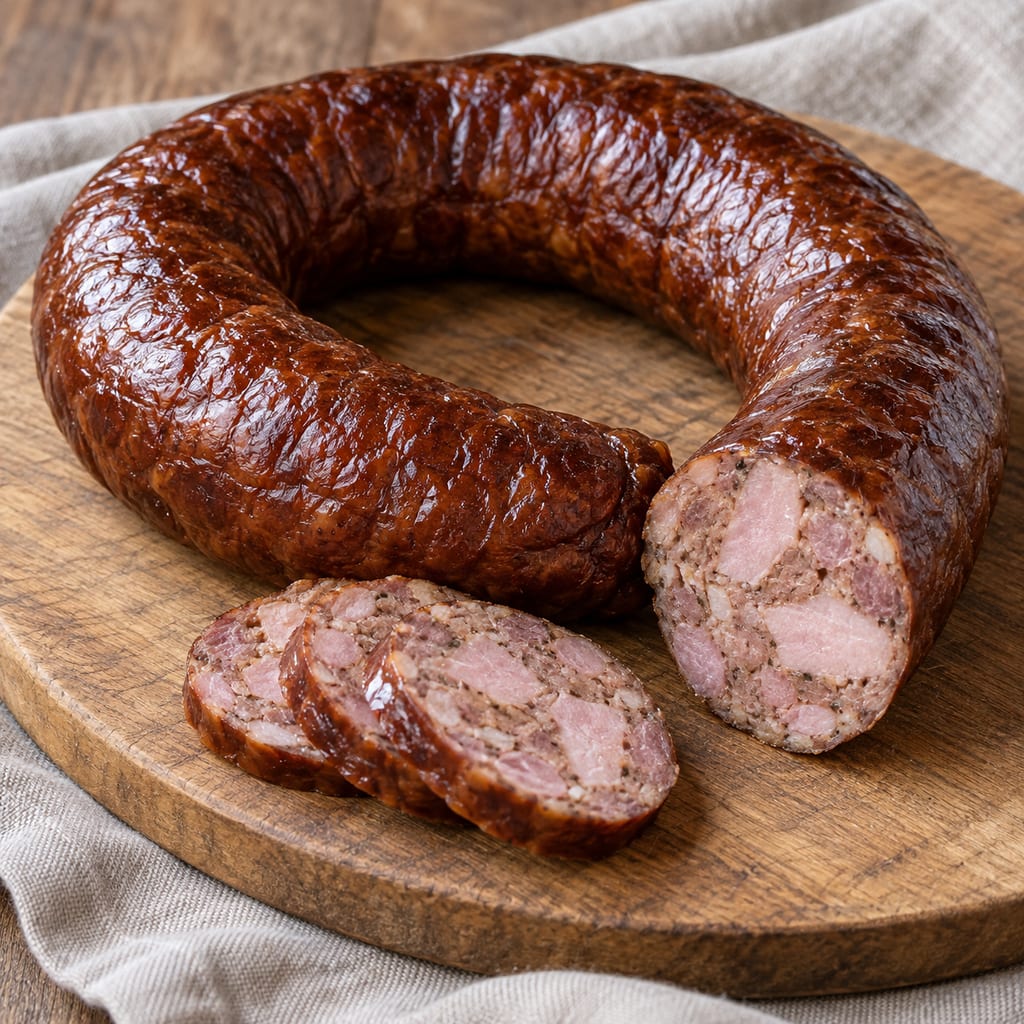
A protected pork sausage associated with Liszki and Czernichów; its application describes commercial curing and smoking, not a home batch.
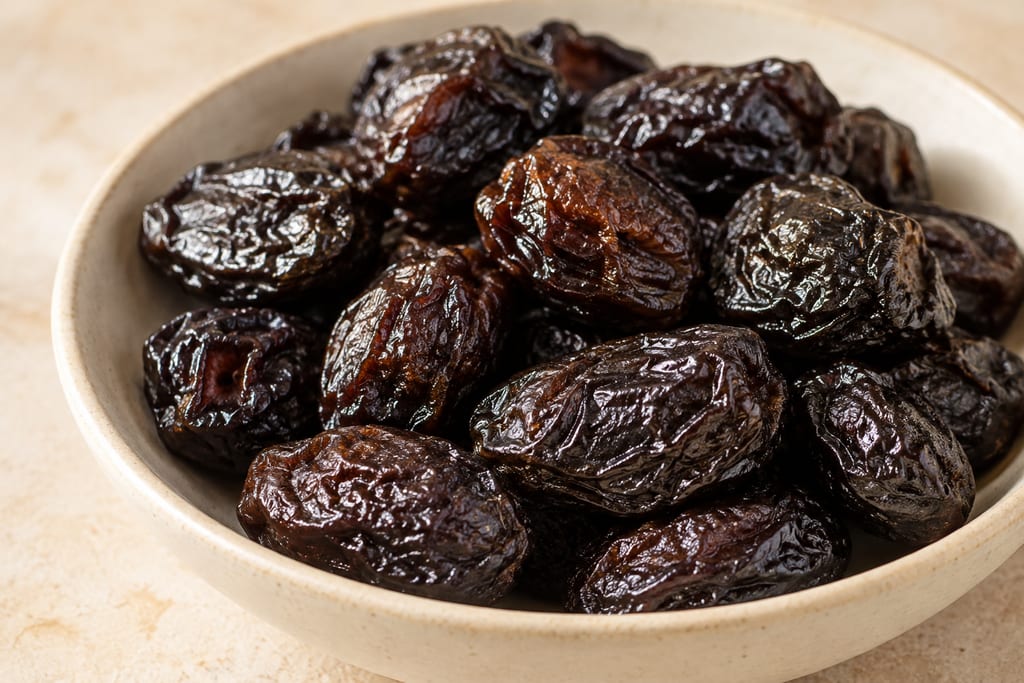
Małopolska plums smoked and part-dried over a wood fire in a regional kiln for several days, giving a dark, concentrated fruit with a protected name.
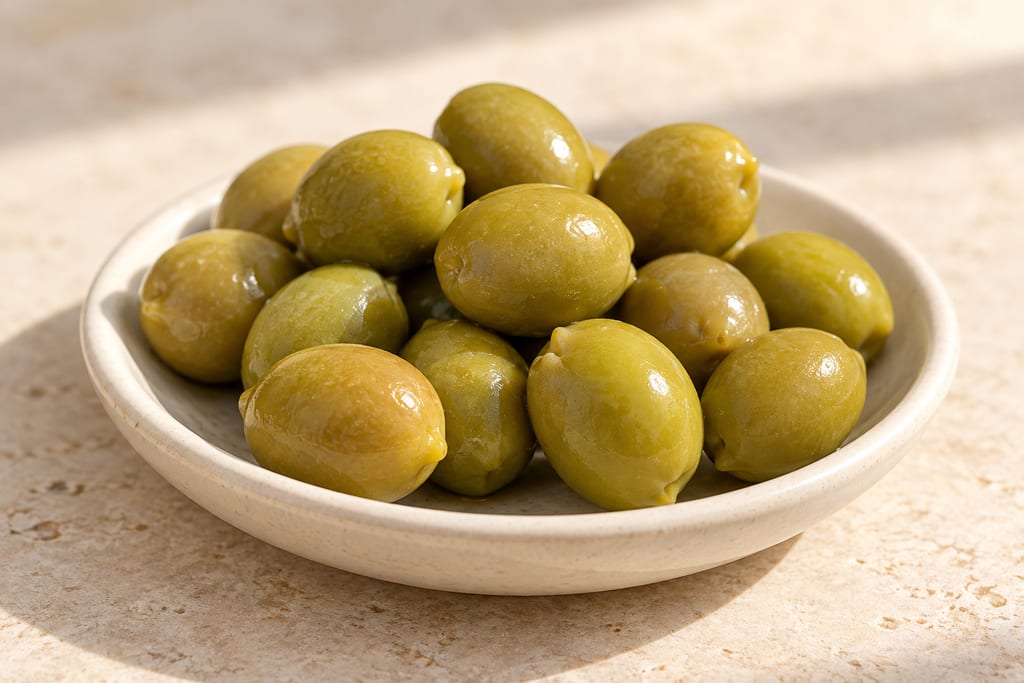
A Portuguese table-olive product from the Negrinha cultivar in northeastern Portugal, sold in three commercial styles, two of them brined fermentations and one oxidised to black.
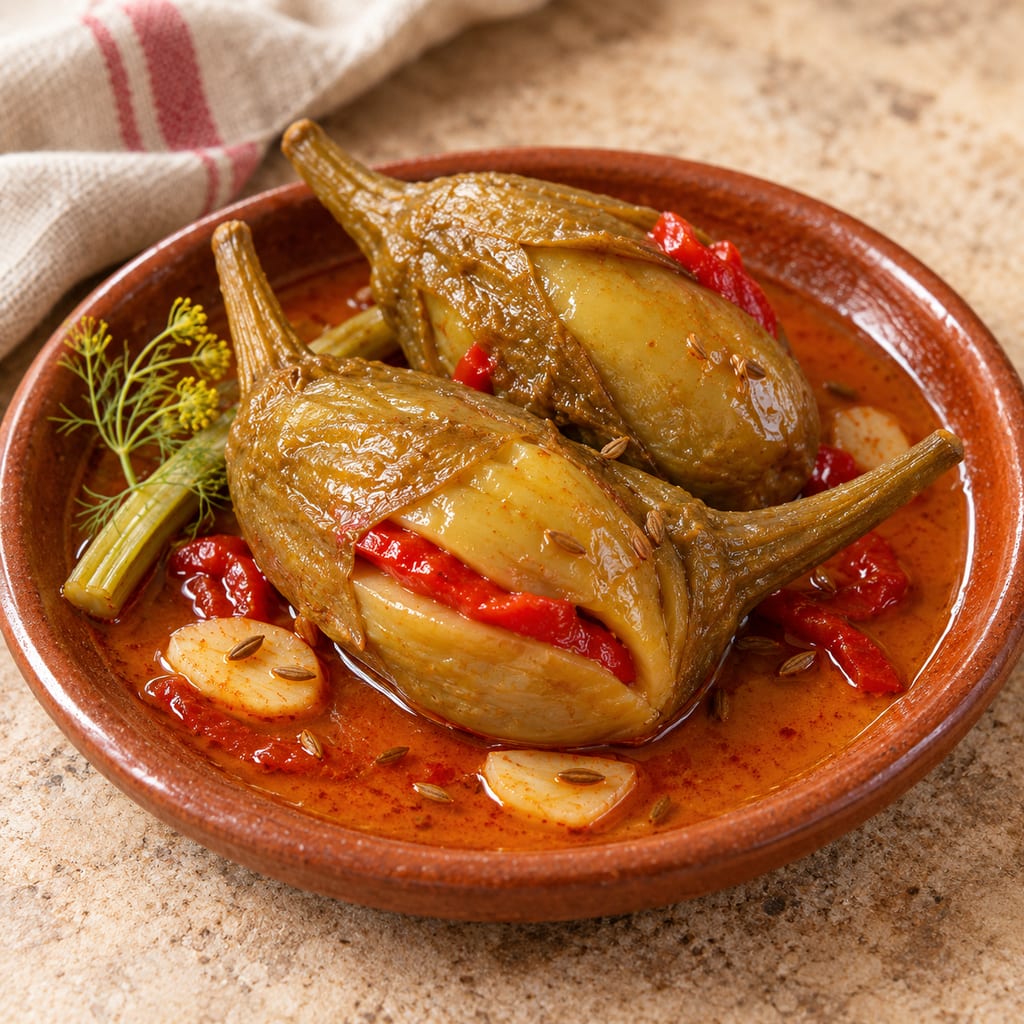
A protected aubergine preserve from Ciudad Real in Spain: tender fruit of the local Dealmagro variety, cooked briefly and then fermented in a vinegared, paprika-seasoned dressing.
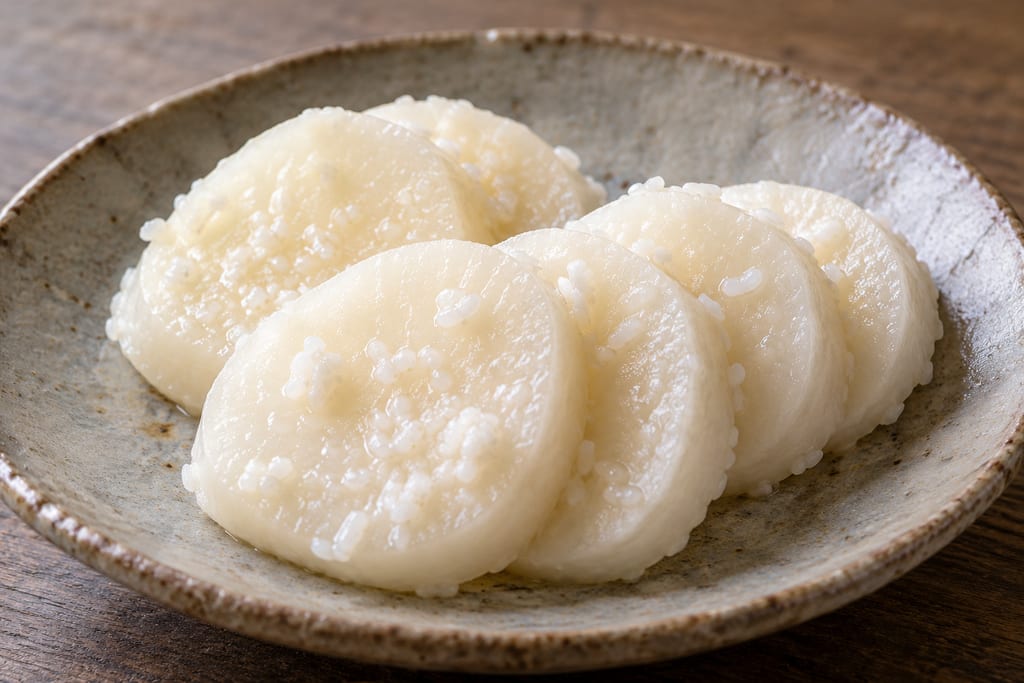
A sweet, crisp Japanese daikon pickle from Tokyo's Nihonbashi district, made by salting fresh radish and dressing it in rice koji, sugar or koji amazake without the heavy drying used for takuan.
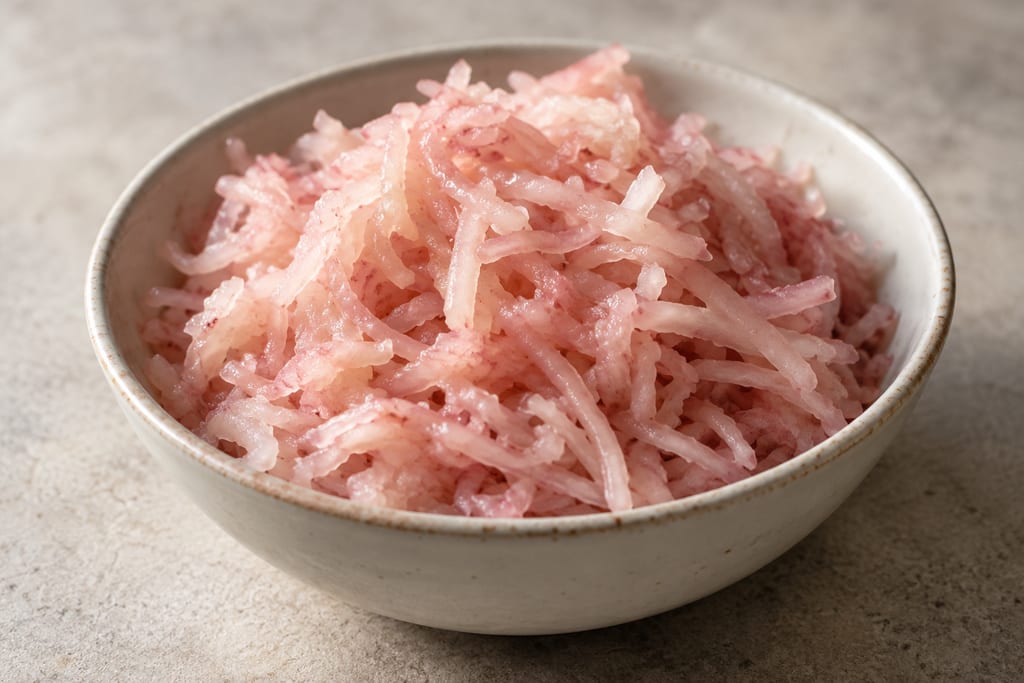
Source-specific Brovada DOP producer method for Friuli Venezia Giulia turnips and red-grape marc. This records a regulated producer process; it is not a validated home-scale recipe.
An industrial fermentation patio places factory-made fiberglass-reinforced polyester olive tanks below floor level, with drainage and transfer infrastructure arranged around the buried vessels.
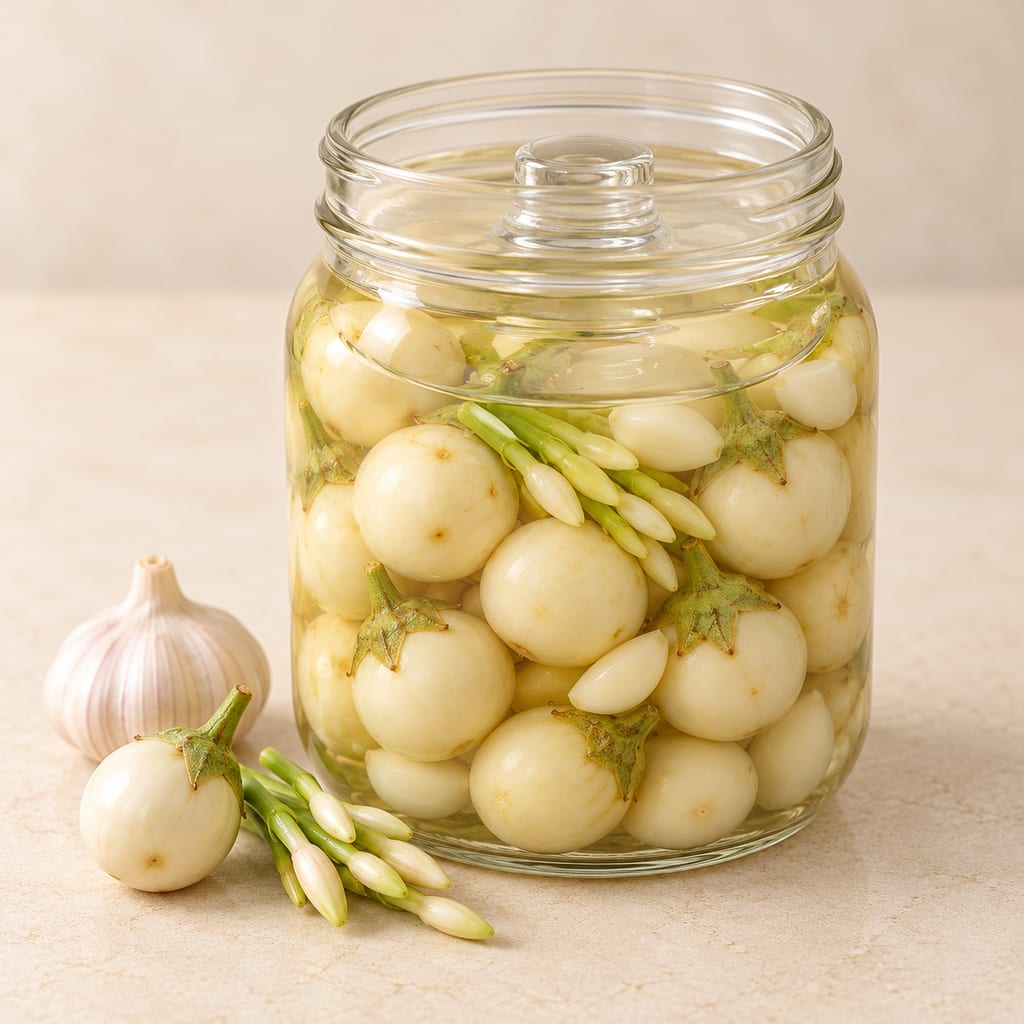
Vietnamese salted and fermented small eggplant, dried on the day of purchase, then held submerged in warm salty water with garlic and galingale flower for a week or longer.
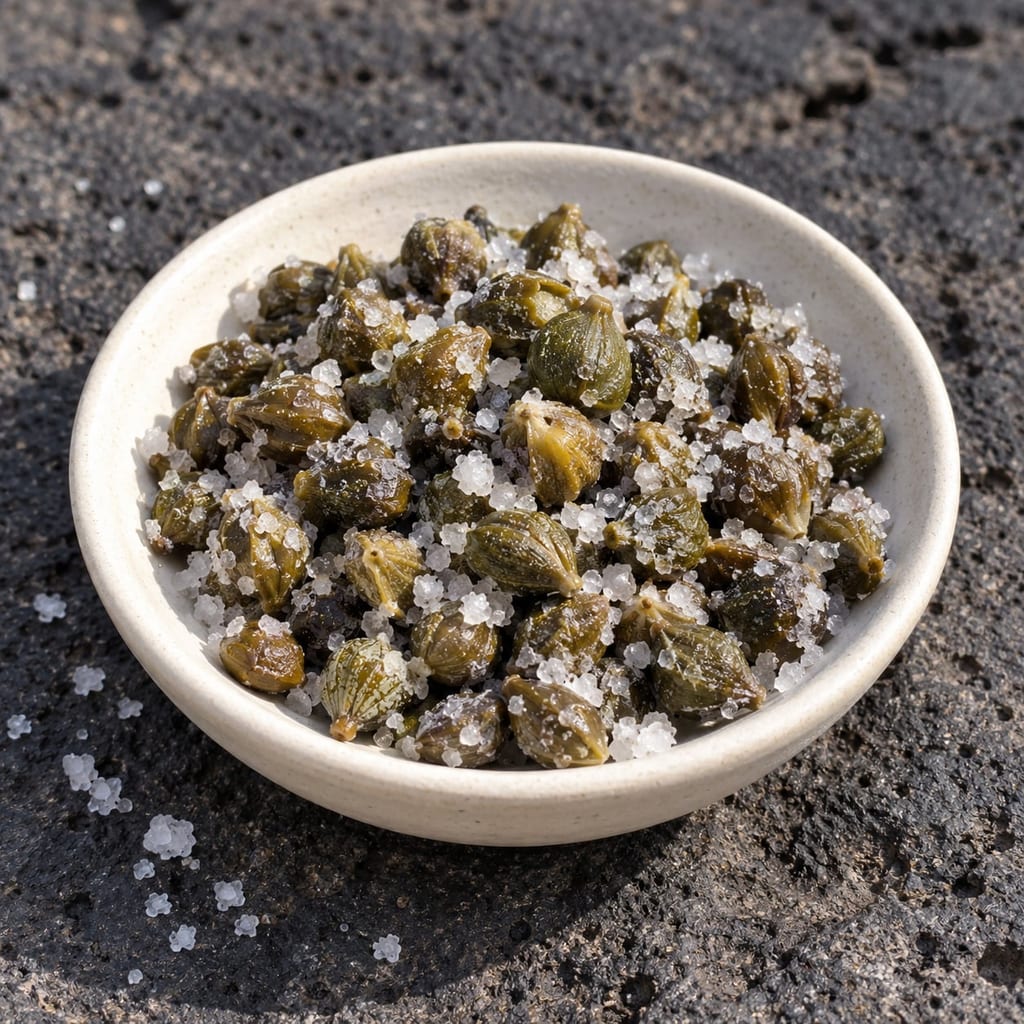
A protected Sicilian product: unopened caper buds from the island of Pantelleria, dry-salted with sea salt in a two-stage process that encourages lactic fermentation.
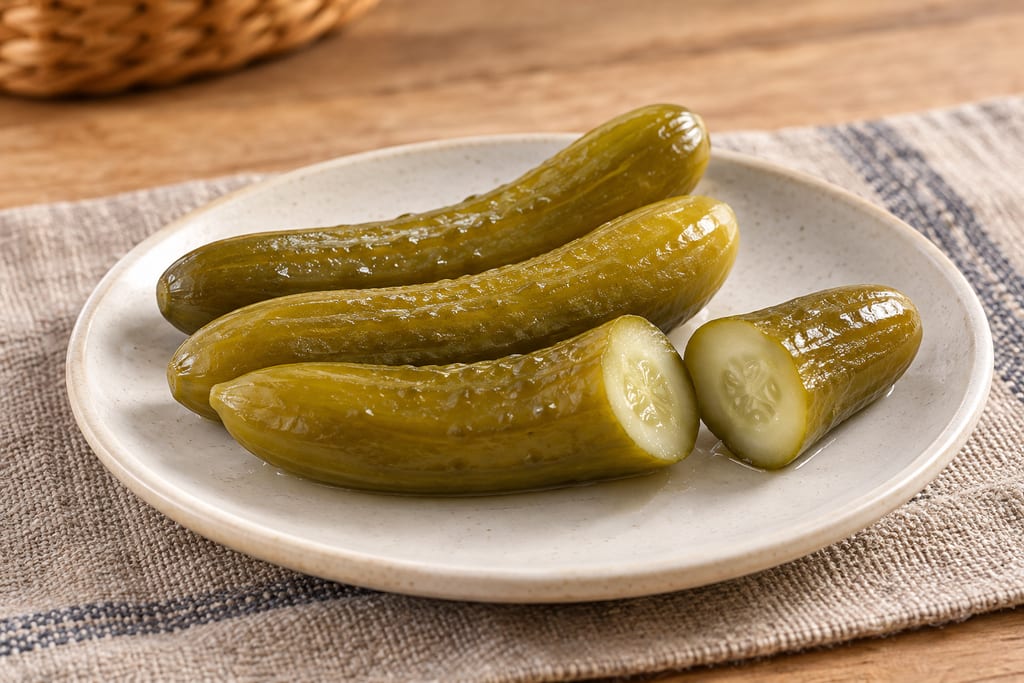
Çubuk turşusu is a registered pickle from Çubuk district in Ankara. Its cucumber variant is sold as Salatalık Turşusu, and a commercial specification sets its brine and room-temperature period.
No community contributions have been published for this entry yet.
Sign in to contribute. Published comments and photos are free to read.
Polish Ministry of Agriculture and Rural DevelopmentMethod · History · Geography
Ogórki kiszone w studniSealed barrel with horseradish, dill, garlic and salt, covered with water
Barrel first submerged in a pond and later lowered into a well
Cited in: Overview; The well cucumber near Zakliczyn
Polish Ministry of Agriculture and Rural DevelopmentMethod · History · Geography
Jeziorowy ogórek kiszonyCooperative barrels of 100 litres stored submerged in a natural lake
Operation from the 1960s to May 1984, per informants
Reported storage temperature of 3 to 4 °C under water
Cited in: Overview; The lake barrels at Kalisz Pomorski; Limits and safety
Food Research International 177 (2024), 113851Safety
Tasting of traditional Polish fermented cucumbers: Microbiology, morpho-textural features, and volatilomeActive lactic acid bacteria in naturally fermented, unpasteurised cucumbers from four producers
Salt-brined lactic fermentation distinguished from vinegar pickling
Cited in: What the 2024 study adds; Limits and safety
National Center for Home Food Preservation, University of GeorgiaEquipment
Suitable Containers, Covers, and Weights for Fermenting FoodGeneral guidance on containers, covers and weights
Cited in: Limits and safety