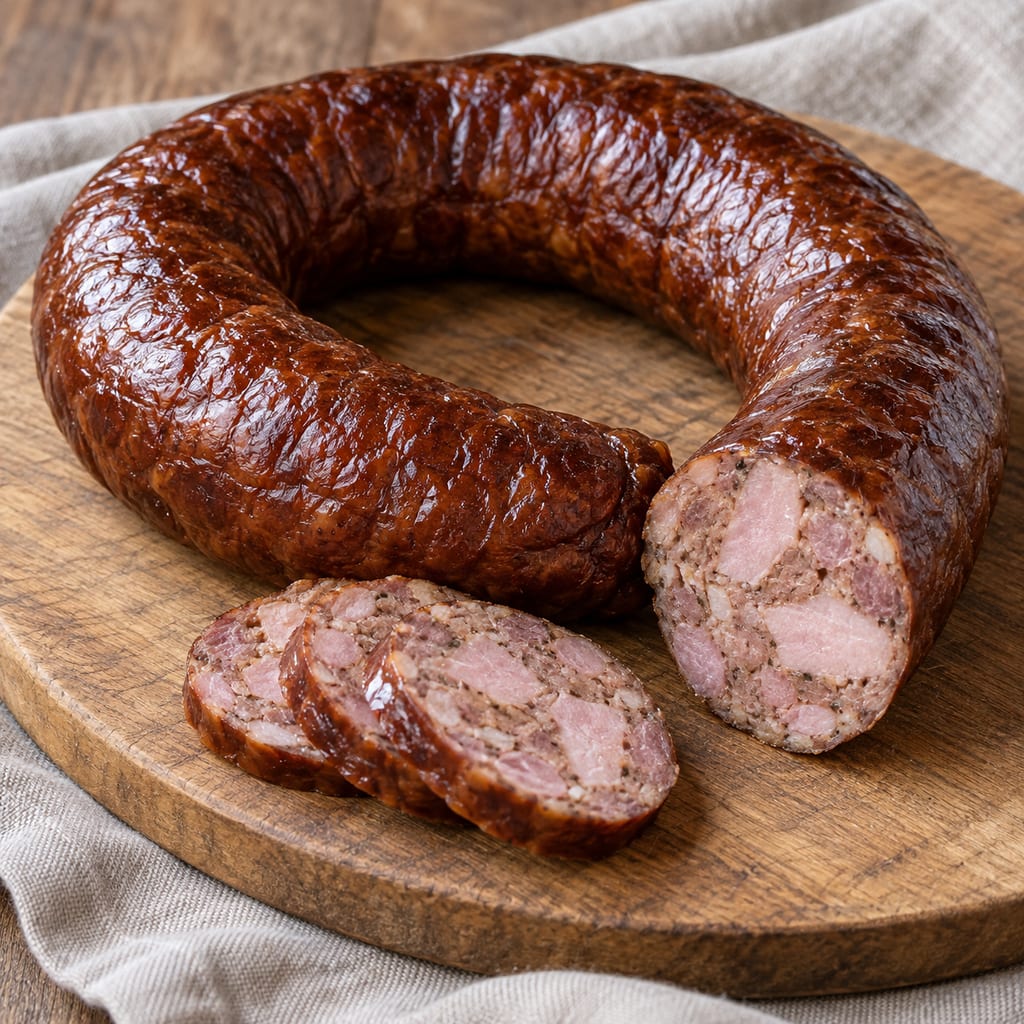
Kiełbasa lisiecka
A protected pork sausage associated with Liszki and Czernichów; its application describes commercial curing and smoking, not a home batch.
 FermenteaWhere food goes to change
Modern adaptation
Obwarzanek krakowski · Obwarzanek krakowski · Kraków obwarzanek
A home version of the Kraków twisted ring: yeast dough is braided, briefly dipped in boiling water, topped with seeds or salt, then baked. It is not represented as a certified PGI product.
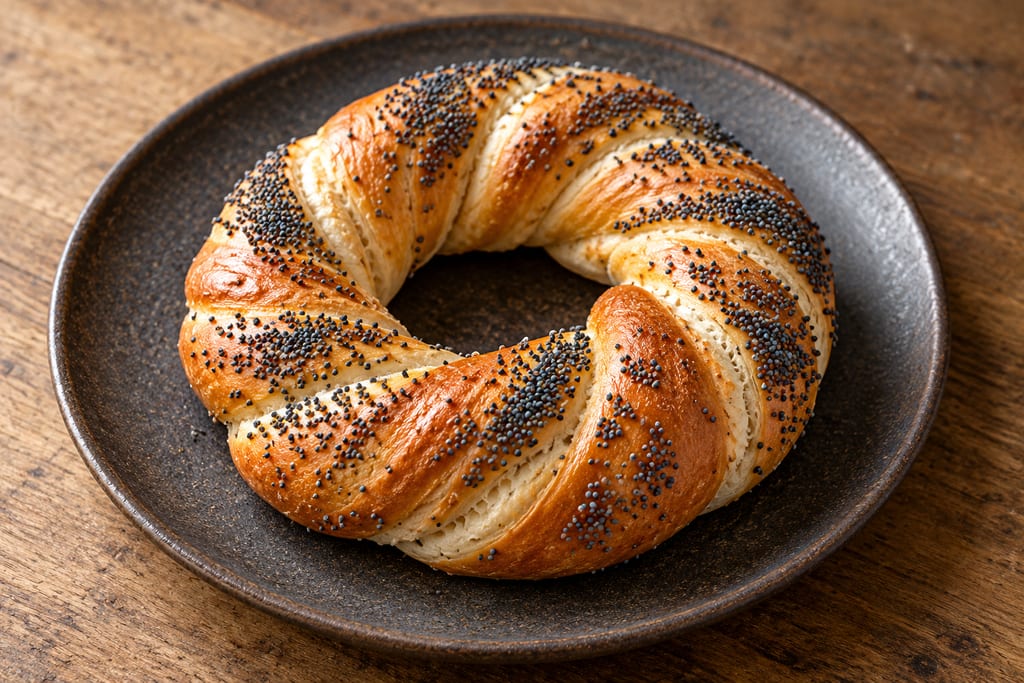
This home recipe uses the full English formula published by Żywe Muzeum Obwarzanka. The City of Kraków also links to the museum method, but its short summary lists only 60 ml water and says to add more if the dough is too stiff. The museum's full page gives 160 ml total: 50 ml for dissolving the yeast and the remaining 110 ml for the dough. This page follows that complete measured formula rather than treating the 60 ml listed in the city summary as the full batch amount. The dough is braided from paired strands, briefly dipped in boiling water, topped while wet and baked. It is a home version, not a claim that the batch is certified or produced under the protected designation.
For four rings, use 380 g flour, 160 ml warm water, 15 g fresh yeast or 7 g dry yeast, ½ tablespoon sugar, 1 teaspoon salt and 25 g butter. Dissolve the sugar and yeast in 50 ml of the warm water. Add the remaining 110 ml with the melted and cooled butter to the salted flour and knead until combined. Cover and leave the dough until doubled, about an hour. Divide it into four portions; split each in half and roll paired ropes about 30 cm long. Twist the ropes together, curve each braid into a ring and join the ends. Dip each ring in boiling water for about 10 seconds, drain, add poppy, sesame or salt while wet, then bake at 180°C for 20–30 minutes until brown.
The name “Obwarzanek krakowski” is a Protected Geographical Indication. The European specification limits production to Kraków city and the Kraków and Wieliczka districts, defines a 12–17 cm ring with 2–4 cm strands and 80–120 g unit weight, sets ingredient ratios, and calls for parboiling in water at least 90°C until the ring floats. This home recipe does not specify all those dimensions or ingredient ratios and is not presented as compliant with the protected specification. A home ring made elsewhere is not the protected regional product.
The European Commission's PGI application cites the first reference to obwarzanki being baked in Kraków and surrounding areas in the royal court accounts: on 2 March 1394, an entry records a ring of obrzanka for the queen. Separately, Poland's Ministry of Agriculture entry documents Kraków bakers' privileges in 1257 and a 1529 decree concerning bread baking. These attestations establish documented history, not the origin of this modern home formula. Do not taste the raw dough. CDC advises baking raw flour dough before eating and washing hands and utensils after handling it.
The European Commission's PGI application cites a 2 March 1394 entry in the royal court accounts for a ring of obrzanka for the queen. Poland's Ministry of Agriculture entry documents Kraków bakers' privileges in 1257 and a 1529 decree concerning bread baking. These attestations establish documented history, not the origin of the modern home formula.
Yield 4 rings · Scaling: source batch only
Do not taste uncooked dough; raw flour can contain germs and must be cooked before eating.
Hazard sourceBake the rings before eating and wash hands and utensils after handling raw flour or dough.
Control sourceLift rings from boiling water with a slotted spoon and keep hands clear of the pot.
The government source documents the named product's Kraków association; this home method does not claim to be made in the protected geographical area or qualify for PGI status.
A protected pork sausage associated with Liszki and Czernichów; its application describes commercial curing and smoking, not a home batch.
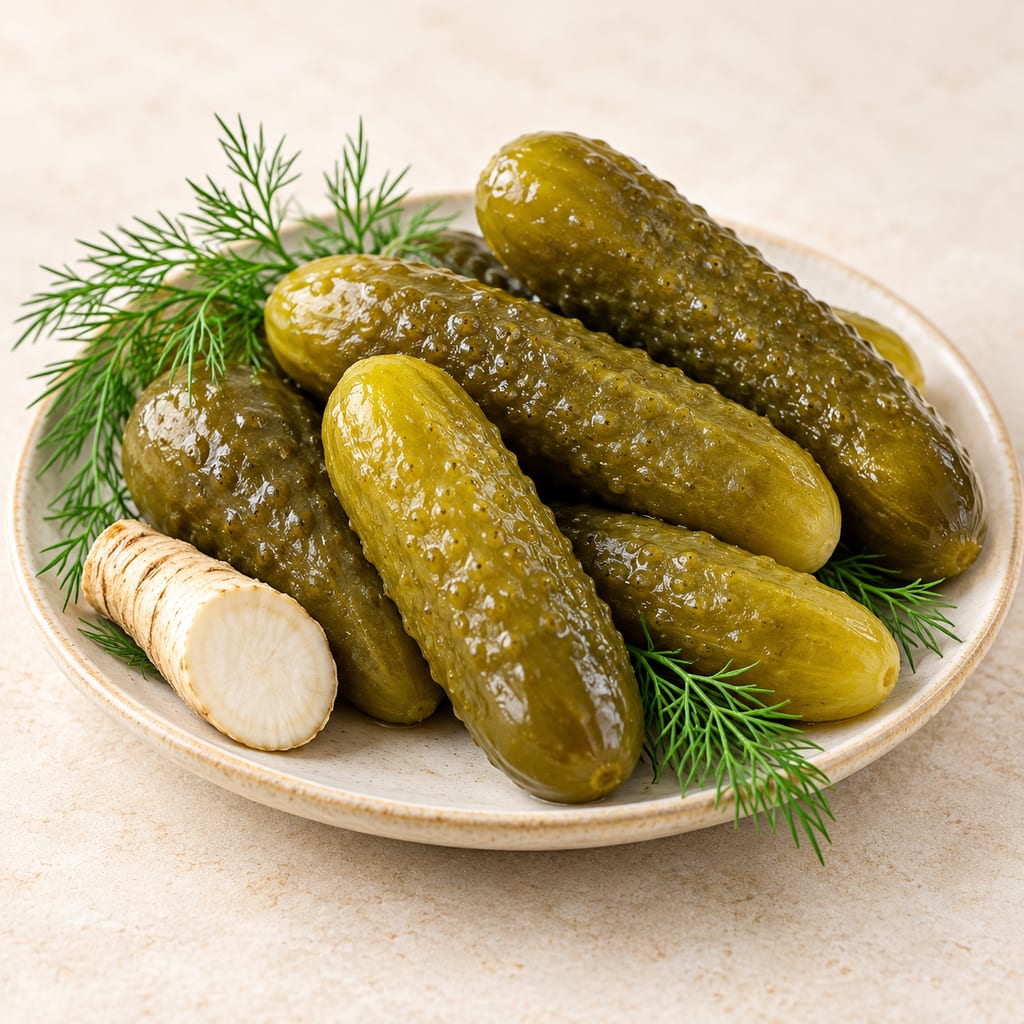
Ogórki kiszone are Polish brine-fermented cucumbers. Two registered local practices keep the barrels in a well near Zakliczyn and under lake water at Kalisz Pomorski. Neither gives a validated process.

Małopolska plums smoked and part-dried over a wood fire in a regional kiln for several days, giving a dark, concentrated fruit with a protected name.
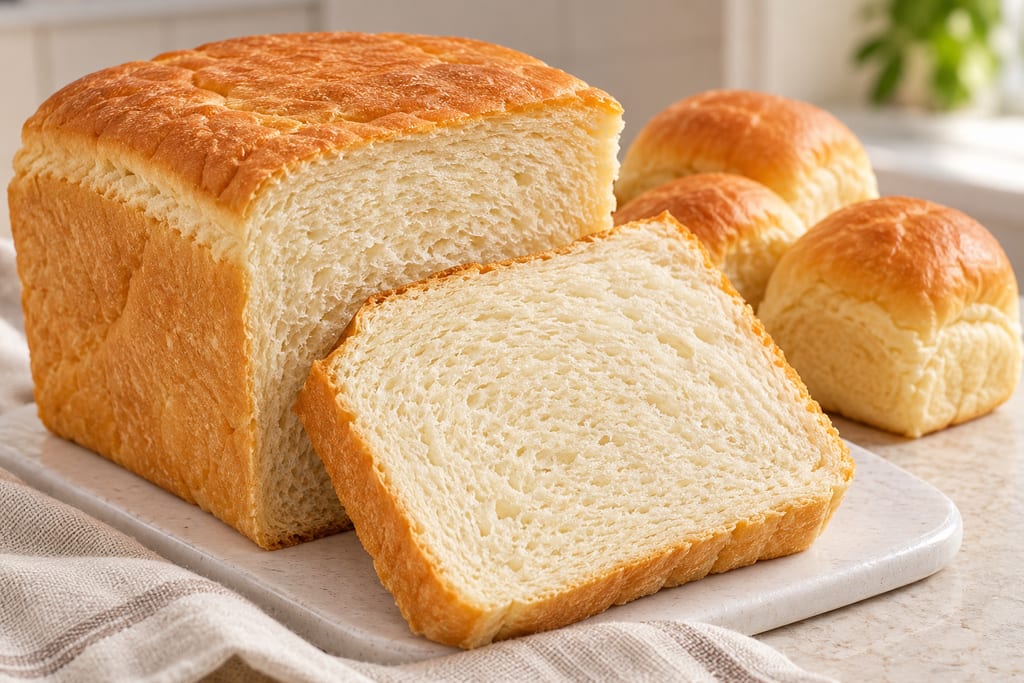
This softer home-style Agege bread uses a scalded flour paste, an enriched yeast dough and a 9×5-inch loaf pan, with rolls from the extra dough.
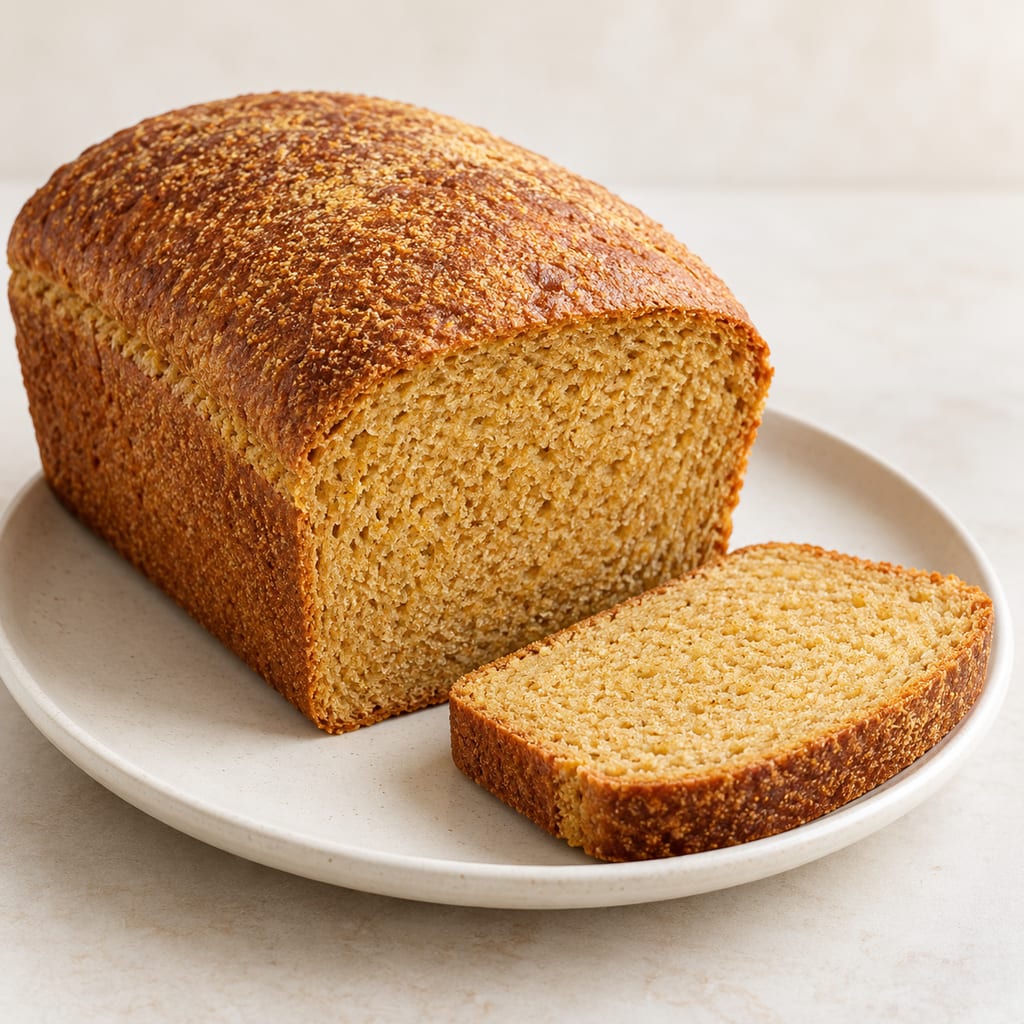
Anadama is a New England yeast loaf made with wheat flour, cornmeal and molasses. Scalded cornmeal enriches the dough, while molasses lends sweetness and a dark crust; it is especially good toasted or beside soup and baked beans.

A yeast-raised wheat ring shaped from a firm dough, briefly boiled and baked. This source-batch formula gives a gently malted crust and a chewy crumb.
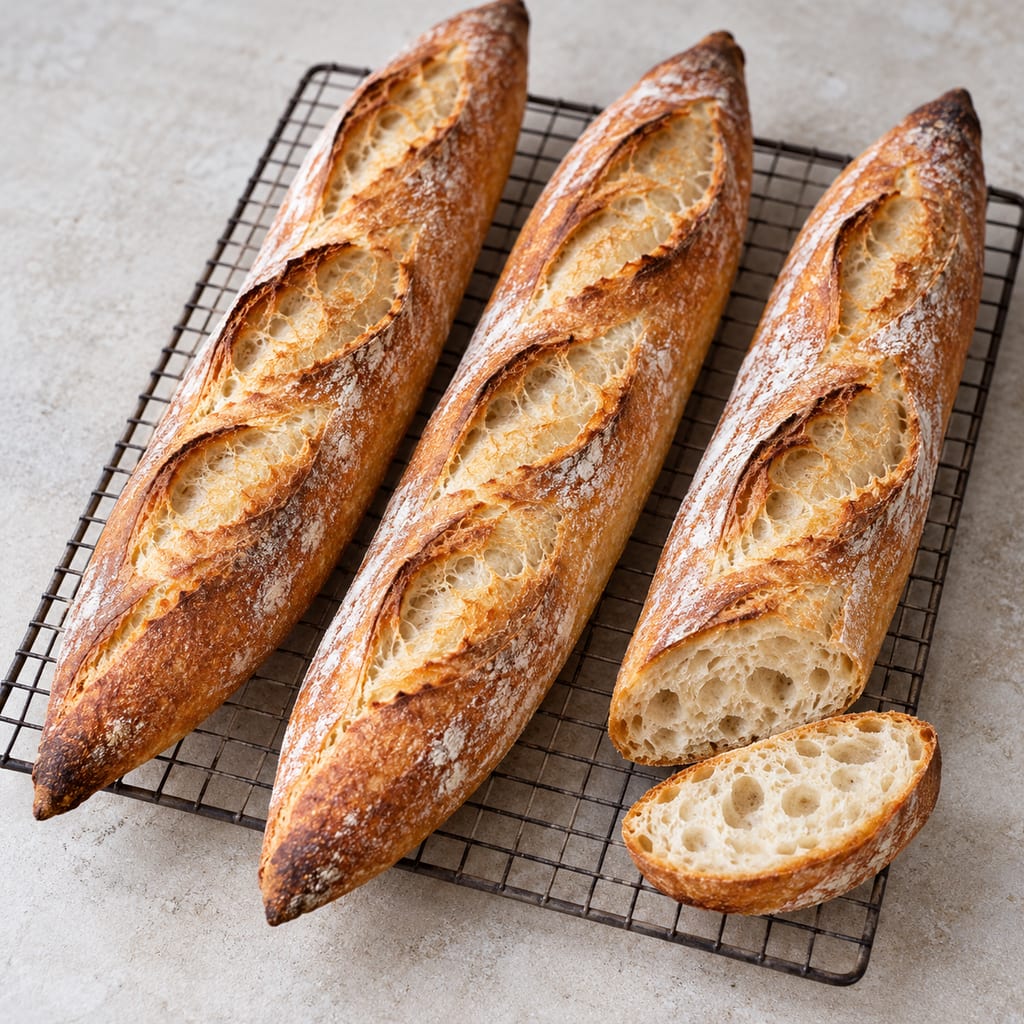
Three long, crusty wheat loaves made with an overnight yeast poolish, shaped by hand and baked with steam for a crisp crust.
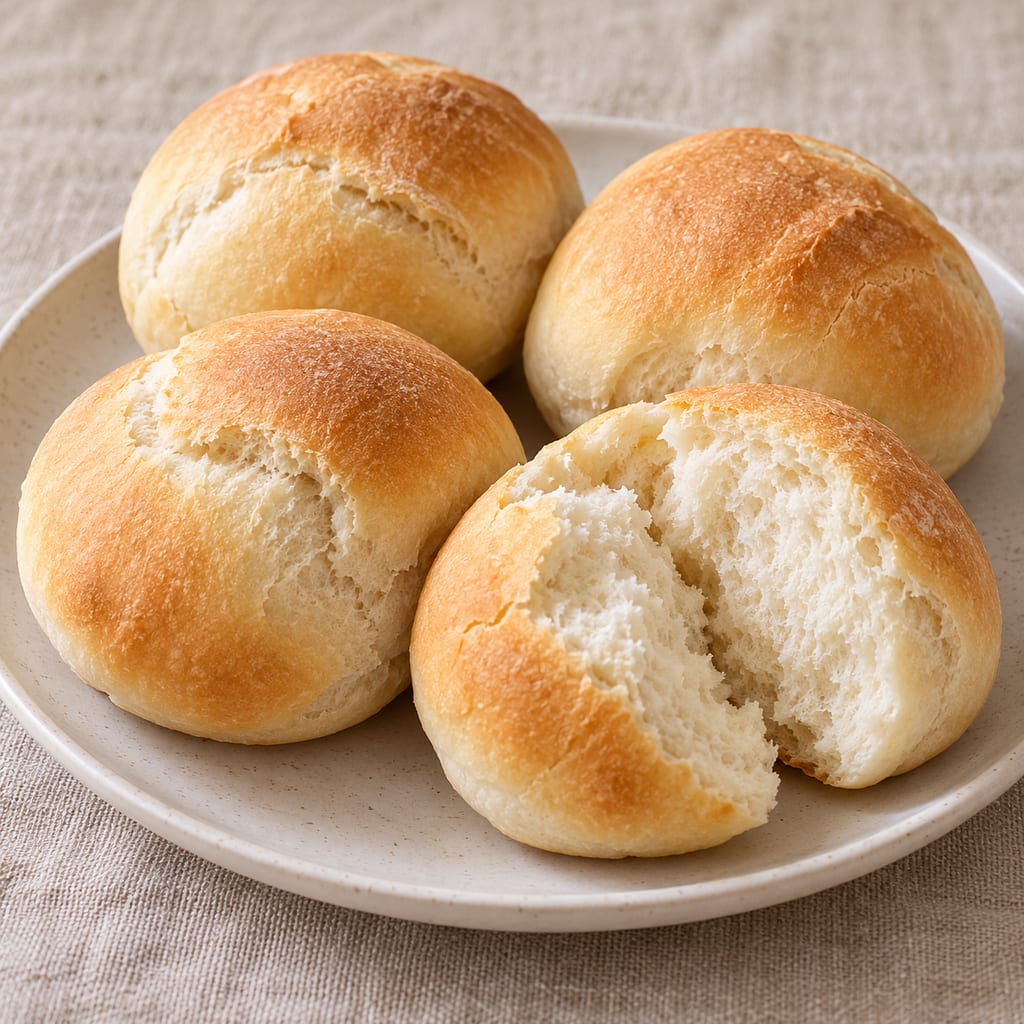
A lightly salted, yeast-raised Barbadian roll, baked in a dozen-roll home batch and often split for cutters.
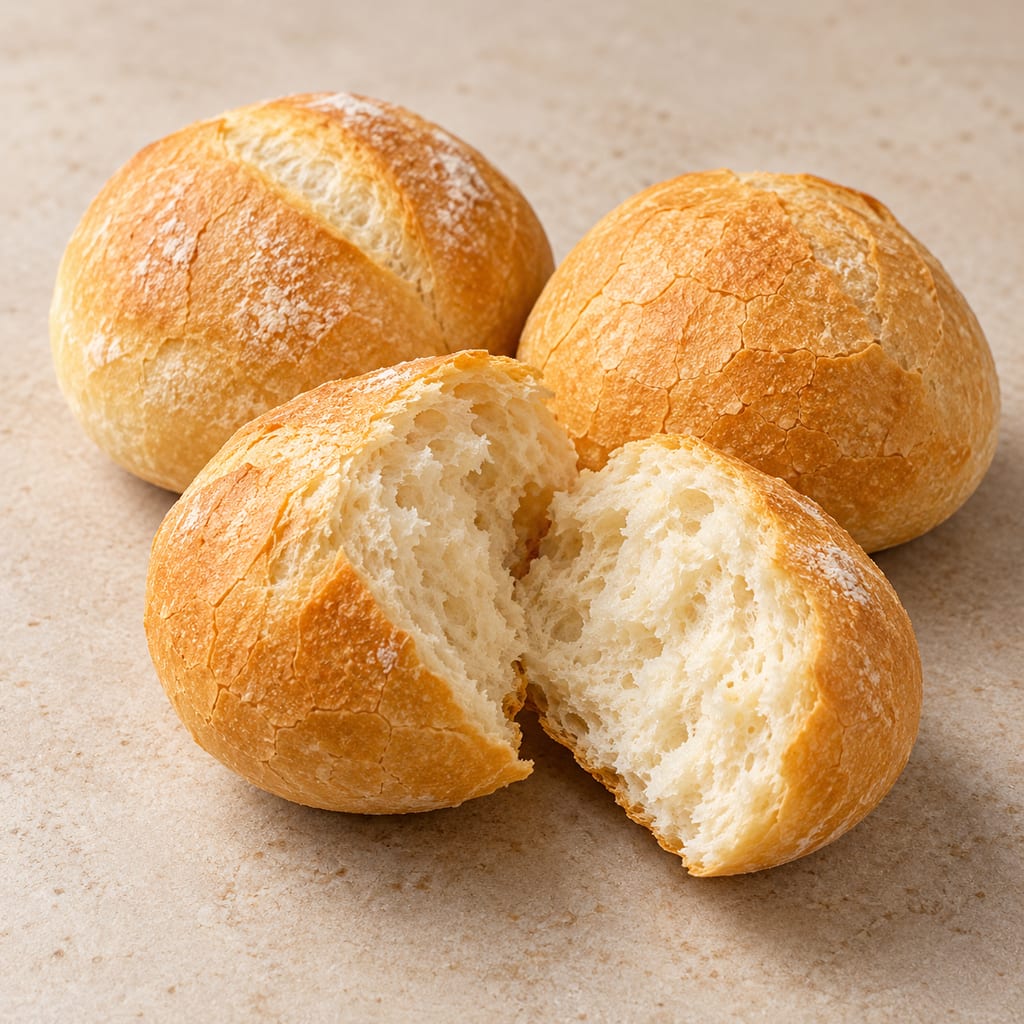
A crisp Belgian roll made from a supplier’s Croc-flour dough, mixed by hand or machine, proofed in rounds and baked with steam.
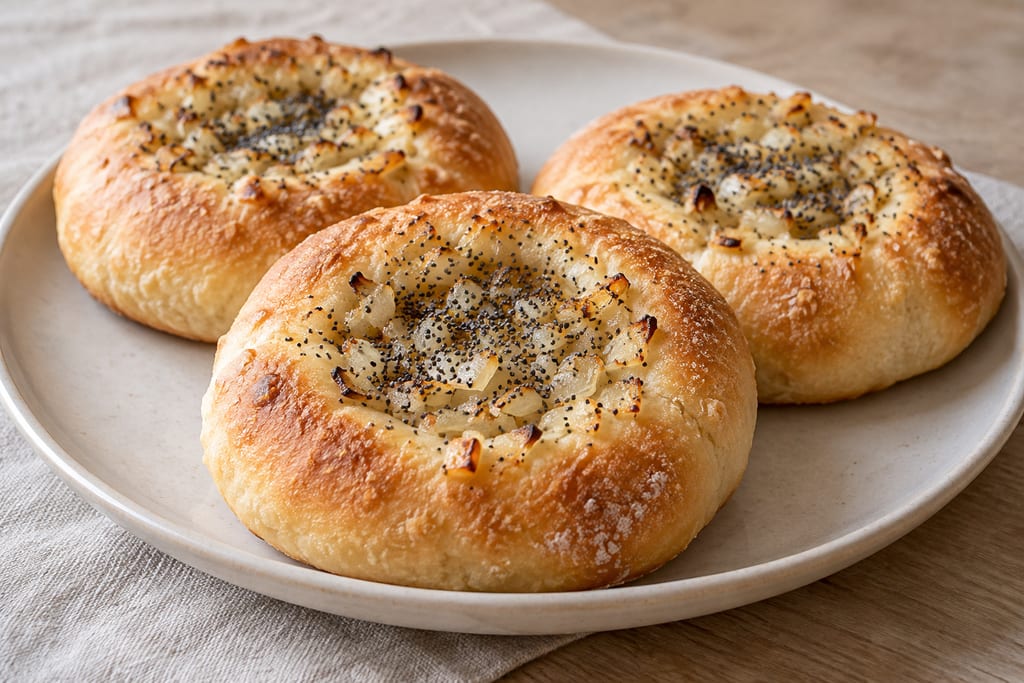
Bialys are soft, yeasted wheat rolls baked without boiling, each shaped with an onion-filled central depression instead of a hole.
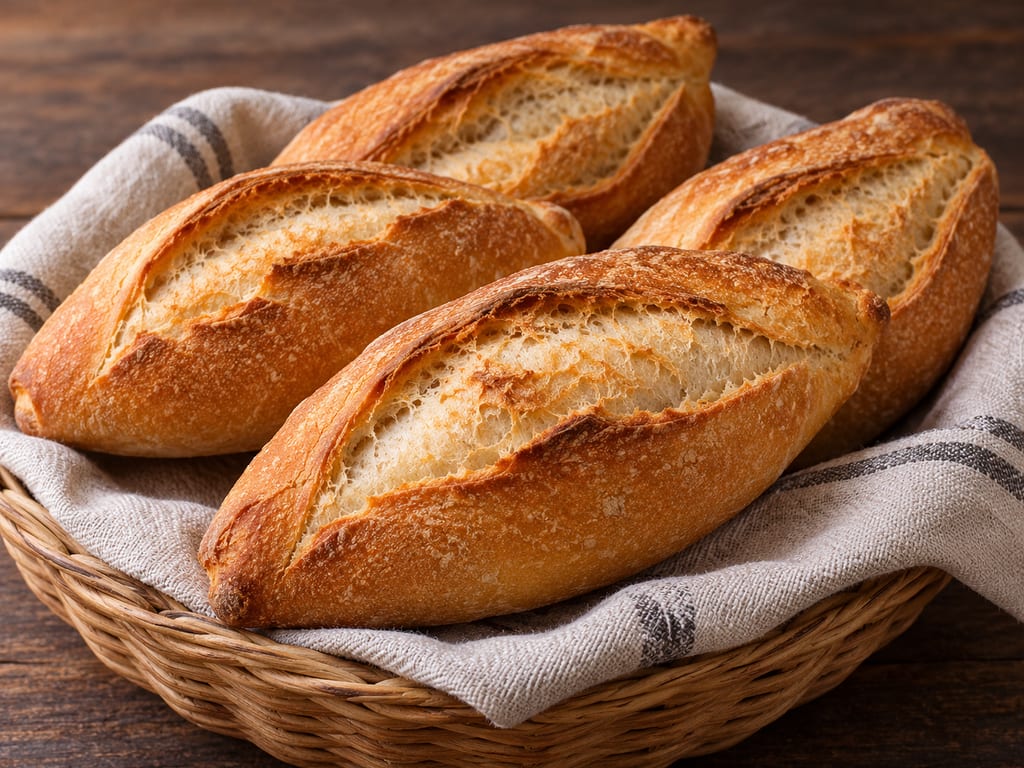
A measured, commercial-yeast home method for Guadalajara-style birote salado, with a six-hour preferment, shaped rolls and a two-temperature steam bake. This formula contains no egg.

Protected Italian vinegar made only from cooked grape must, fermented and aged in a battery of wooden barrels for at least 12 years: sweet, sharp and syrupy.
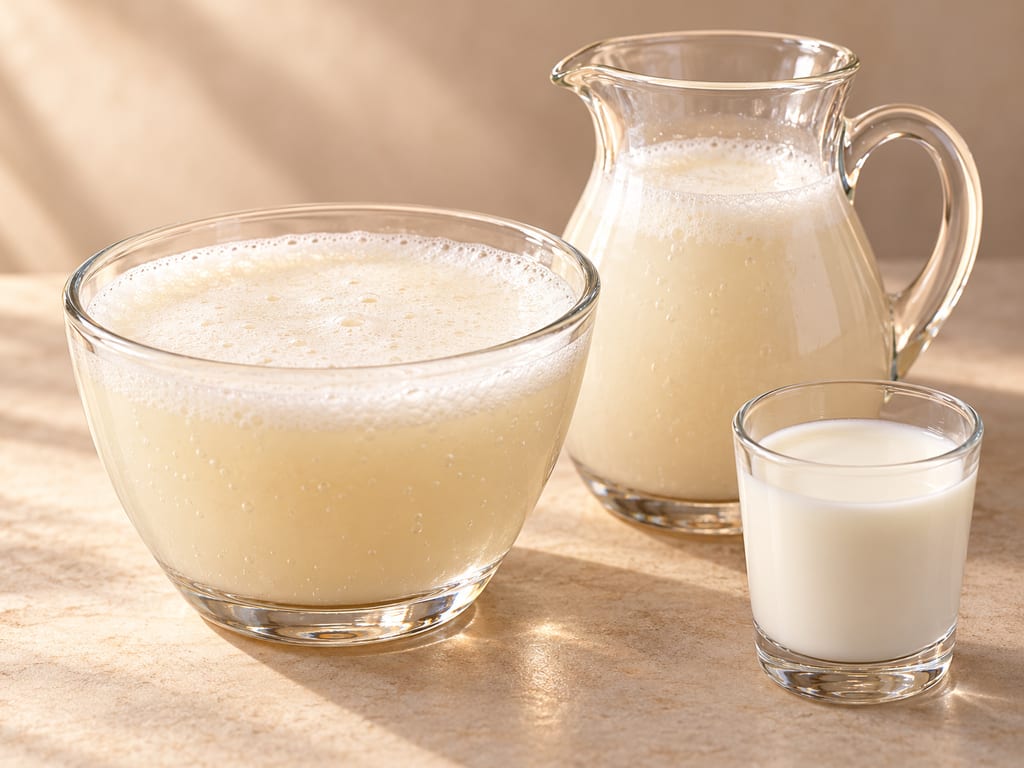
Airag is Mongolia’s fermented mare’s-milk drink, traditionally churned with saved starter in a reusable cowhide khokhuur.

Appam, or hoppers, are South Indian and Sri Lankan rice pancakes made from a fermented coconut-and-rice batter and cooked in a curved pan to a crisp lacy rim and a soft, spongy centre.
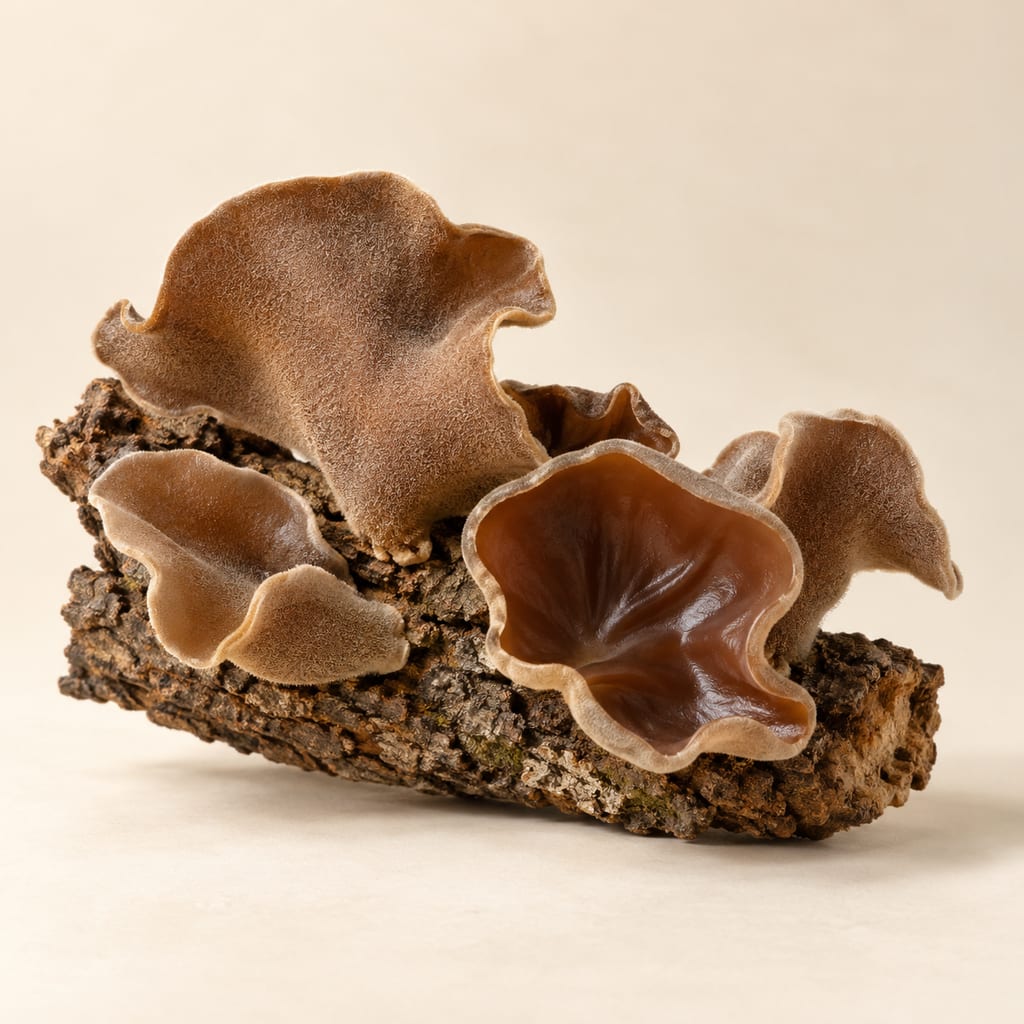
Auricularia tremellosa is a wood ear fungus of the genus that supplies most dried wood ear sold in China; its own food record is thin, and the culinary practice described here comes from the closely related wood ear species.
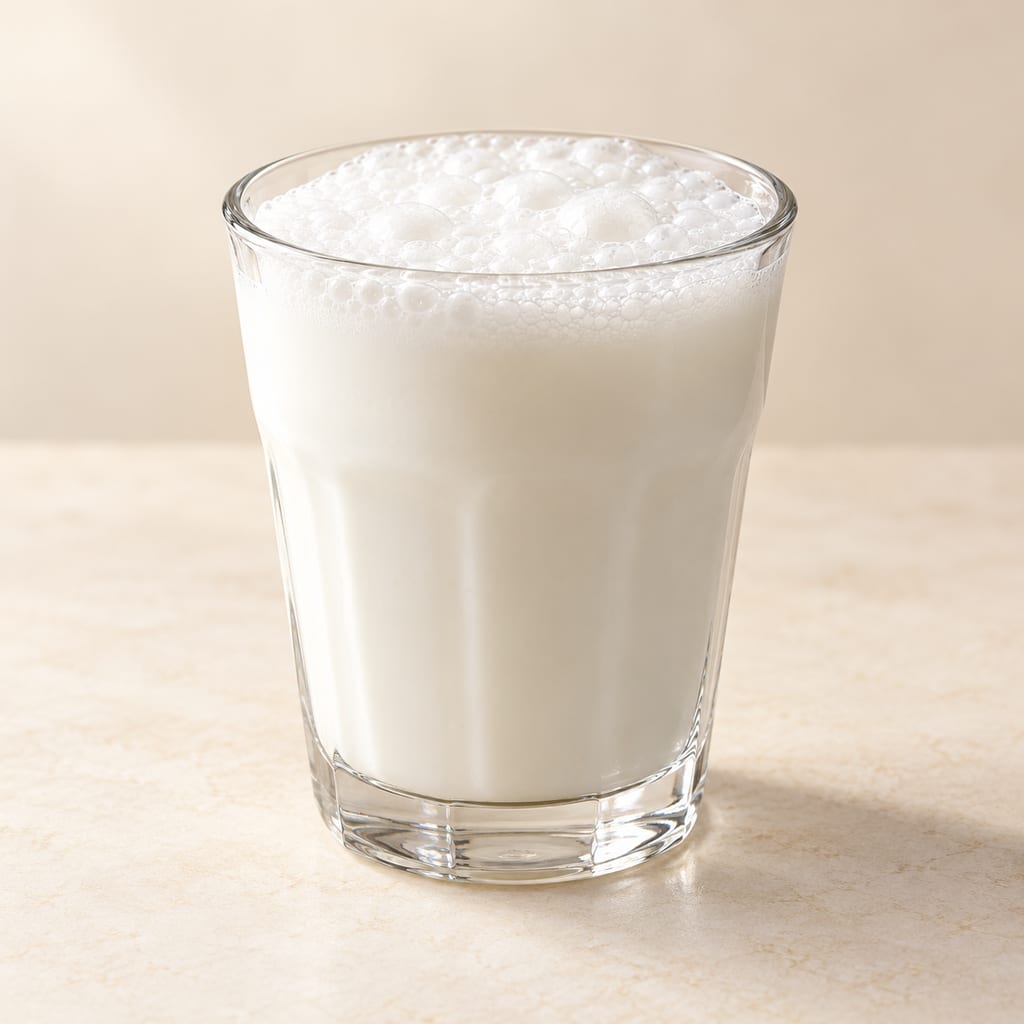
Ayran is Turkey’s cold, savoury yogurt drink: plain yogurt is loosened with water and lightly salted, then whisked smooth or aerated into a soft cap of foam.
A thin stone griddle used over an open hearth. Norwegian archaeology documents the established tradition from the early Middle Ages; a Viking-period origin is only a cautious suggestion linked to Shetland.

Crushed or milled barley cooked in water until the starch softens and the mixture thickens, the plainest way a northern household turned stored grain into a meal, here with apple and hazelnut.

Black carrot is the anthocyanin-pigmented Eastern carrot (Daucus carota var. atrorubens), the purple root that preceded orange types and still colours kanji and şalgam.
No community contributions have been published for this entry yet.
Sign in to contribute. Published comments and photos are free to read.
Żywe Muzeum ObwarzankaMethod
Homemade ObwarzankiThe museum's full 4-piece formula lists 380 g flour, 160 ml warm water, 15 g yeast or 7 g dry yeast, ½ spoon sugar, 1 tsp salt, 25 g butter and optional poppy, sesame or salt topping.
Its method uses 50 ml water to dissolve yeast and sugar, then adds the remaining recipe water and cooled butter to flour; proof about 1 hour, form four rings from paired 30 cm strands, dip each in boiling water for 10 seconds and bake at 180°C for 20–30 minutes.
The full page's 160 ml total differs from the City of Kraków summary, which lists 60 ml and allows more water as needed.
Cited in: A home Kraków-style ring; Mix, twist, dip and bake
City of KrakówMethod · Identity
Nie ma poranka bez obwarzanka, czyli jak się robi obwarzanki?Attributes its home recipe to Żywe Muzeum Obwarzanka.
The city summary lists 60 ml warm water and says to add more if the dough is too stiff; the museum's full English recipe separately lists 160 ml total. The selected recipe follows the museum's explicit complete formula.
It describes an hour's rise, braided rings, a brief hot-water dip, toppings and baking 20–30 minutes at 180–190°C.
Cited in: A home Kraków-style ring
Ministry of Agriculture and Rural Development of PolandIdentity · History · Geography
Obwarzanek krakowskiThe traditional product register entry identifies the product with Małopolskie and gives its spiral ring form and toppings.
It reports historical references to Kraków bakers in 1257 and the first cited court-account reference to obwarzanki in 1394.
The Ministry source is used for identity and historical/geographic context, not as a home recipe.
Cited in: Historical context and raw dough
Official Journal of the European Union / European CommissionContext · Geography · Method
Publication of an application pursuant to Council Regulation (EC) No 510/2006: Obwarzanek krakowskiThe PGI product specification describes a 12–17 cm ring, strands 2–4 cm thick and a weight of 80–120 g.
It sets ingredient proportions per 100 kg flour, allows up to 30% rye flour, and specifies parboiling in water at no less than 90°C until the ring rises to the surface.
The protected production area is Kraków city and Kraków and Wieliczka districts; the recipe here is not a protected-product production claim.
Cited in: The protected product has defined requirements; Historical context and raw dough
Centers for Disease Control and PreventionSafety
Raw Flour and DoughDo not eat raw dough made with uncooked flour; bake it according to the recipe and clean hands and work surfaces after handling flour and dough.
Cited in: Historical context and raw dough