
Spices and aromatics
Dill
Dill is an annual culinary herb grown for its leaves, flowers and seeds. Garden guidance and regional food sources describe different harvest stages and dishes, with cultivation advice that varies by climate and intended crop.
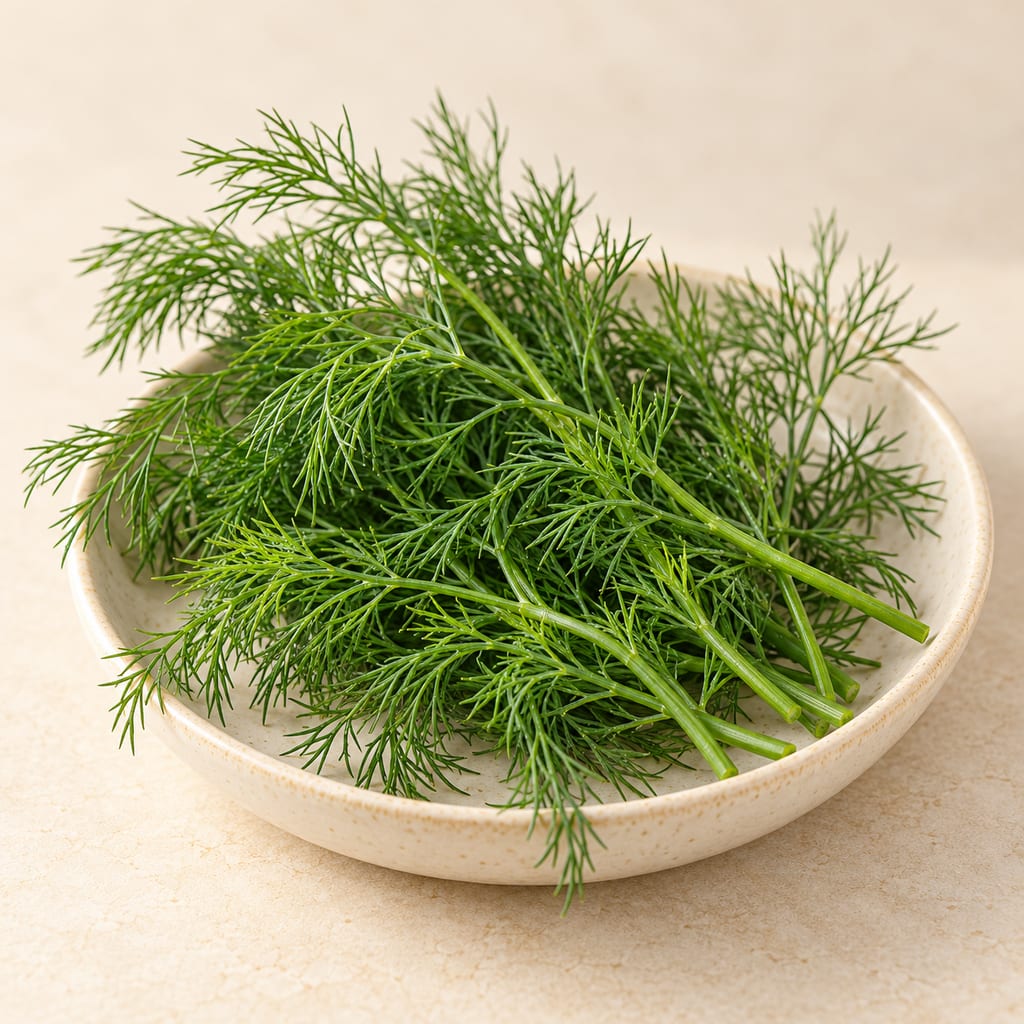
Plant and harvest parts
Kew accepts Anethum graveolens L. as an annual species native from North Africa to Chad and from Iran to the Arabian Peninsula. The RHS describes dill as a garden culinary herb grown for finely divided leaves, with flowers and seeds also used. Leaves, flower heads and mature seeds are distinct harvest forms; “dill” on its own does not establish which part a recipe expects.
The RHS describes a succession of leafy growth followed by flowering and seed production. The Illinois Extension and NC State guides also discuss the annual plant and seed harvest. NC State notes that dill can be confused with fennel in gardens; that source’s scent and hollow-stem observations are not a field identification key.
Food uses across the cited regions
The RHS records dill leaves with fish, chicken and eggs, and in soups, salads and pickles; it describes flowers in salads or pickles and seeds in baking and pickling. It says seeds have a stronger flavor than leaves. Those uses describe different parts and should not be collapsed into one interchangeable ingredient.
Regional records add distinct contexts. The Iğdır provincial culture page lists dill and parsley in etli sarma filling. The Muğla cookbook lists dill among the herbs for stuffed grey mullet and for herb tray pastry. IranCultura’s Baghali polo description uses dill with rice and broad beans, with optional parsley or coriander. These records document named regional dishes; their ingredient lists and preparation details remain specific to each source.
Growing dill in garden and container settings
RHS guidance is framed for UK home gardens: sow outdoors from mid-spring into a warm, sunny, sheltered position, in fertile, free-draining soil. It describes direct sowing as preferable because dill dislikes root disturbance; it also allows indoor sowing, with gentle transplanting before a long taproot forms. The guide says hot, dry weather can prompt early flowering and reduce leaf growth, so it recommends watering during dry spells. It does not assign a named RHS hardiness rating on the inspected page.
The same RHS guide describes compact cultivars for containers and a container-grown option, while Illinois Extension advises direct sowing in spring in full sun and moist, well-drained soil and notes the taproot can make transplanting difficult. NC State’s plant account recommends temperate conditions, well-drained slightly acidic soil, steady watering and wind shelter, but its temperature and sowing guidance reflects its own extension context. None of these pages establishes one global frost threshold, soil pH range or greenhouse setpoint; local timing and cultivar matter.
Sources for this section
Harvest, storage and unresolved process details
RHS reports leaf harvest beginning several weeks after sowing and says regular cutting encourages leafy growth; letting some plants flower allows seed collection. It describes leaves as quick to wilt and recommends prompt use, while also giving source-specific home drying and seed collection descriptions. These notes do not establish a universal safe storage duration.
The inspected regional recipes do not provide a common complete dill method. IranCultura describes layered rice and beans with dill and a long covered cooking sequence, but its dried-dill measure is ambiguous; the Persian Cultural Center excerpt refers readers to another issue for the rice method. The Iğdır and Muğla pages document ingredient contexts but leave other method details. Compatibility with other recipes requires checking the exact plant part named.
Research gaps
No universal frost/heat threshold, hardiness scheme, critical day length, pH target or greenhouse control was established across the reviewed sources.
These regional dishes are separate culinary examples and do not establish a single preparation method or a validated preservation endpoint. The translated dried-dill measure on IranCultura’s ingredient list is unclear.
Fresh-leaf storage advice is source-specific and does not establish a validated food-safety shelf life.
Sources for this section
Research status
The underlying plant account received a partial source review. Its review scope is described in the original plant article.
Sources for this section
Places
Unknown
Relationship not established · Place not establishedThe available research does not establish a single origin for this ingredient.
Community
No community contributions have been published for this entry yet.
Share what you made
Sign in to contribute. Published comments and photos are free to read.
Sources
Royal Botanic Gardens, KewIngredient research
Anethum graveolens L., Plants of the World OnlineCited in: Plant and harvest parts; Research gaps
Royal Horticultural SocietyIngredient research
How to Grow DillCited in: Plant and harvest parts; Food uses across the cited regions; Growing dill in garden and container settings; Harvest, storage and unresolved process details; Research gaps
University of Illinois ExtensionIngredient research
DillCited in: Plant and harvest parts; Growing dill in garden and container settings; Research gaps
North Carolina State ExtensionIngredient research
Anethum graveolens, Plant ToolboxCited in: Plant and harvest parts; Growing dill in garden and container settings; Research gaps
Iğdır Provincial Directorate of Culture and TourismIngredient research
Sebze YemekleriCited in: Food uses across the cited regions; Harvest, storage and unresolved process details; Research gaps
Türkiye Ministry of Culture and Tourism, Cultural PortalIngredient research
Muğla Mutfağı, pages 44–45Cited in: Food uses across the cited regions; Harvest, storage and unresolved process details; Research gaps
Cultural Institute of the Islamic Republic of Iran in RomeIngredient research
Baghali polo: rice with beans and dillCited in: Food uses across the cited regions; Harvest, storage and unresolved process details; Research gaps
Türkiye Ministry of Culture and Tourism, Cultural PortalIngredient research
Muğla Mutfağı, pages 104–105Cited in: Food uses across the cited regions; Harvest, storage and unresolved process details; Research gaps
Persian Cultural Center, Peyk magazine (September–October 2017); recipe credited to Pari Ardalan MalekIngredient research
Baghala Polo (Rice with fava beans and dill), Peyk No. 171, p. 10Cited in: Harvest, storage and unresolved process details; Research gaps
FermenteaResearch provenance
Dill (Anethum graveolens): original plant researchCited in: Research status