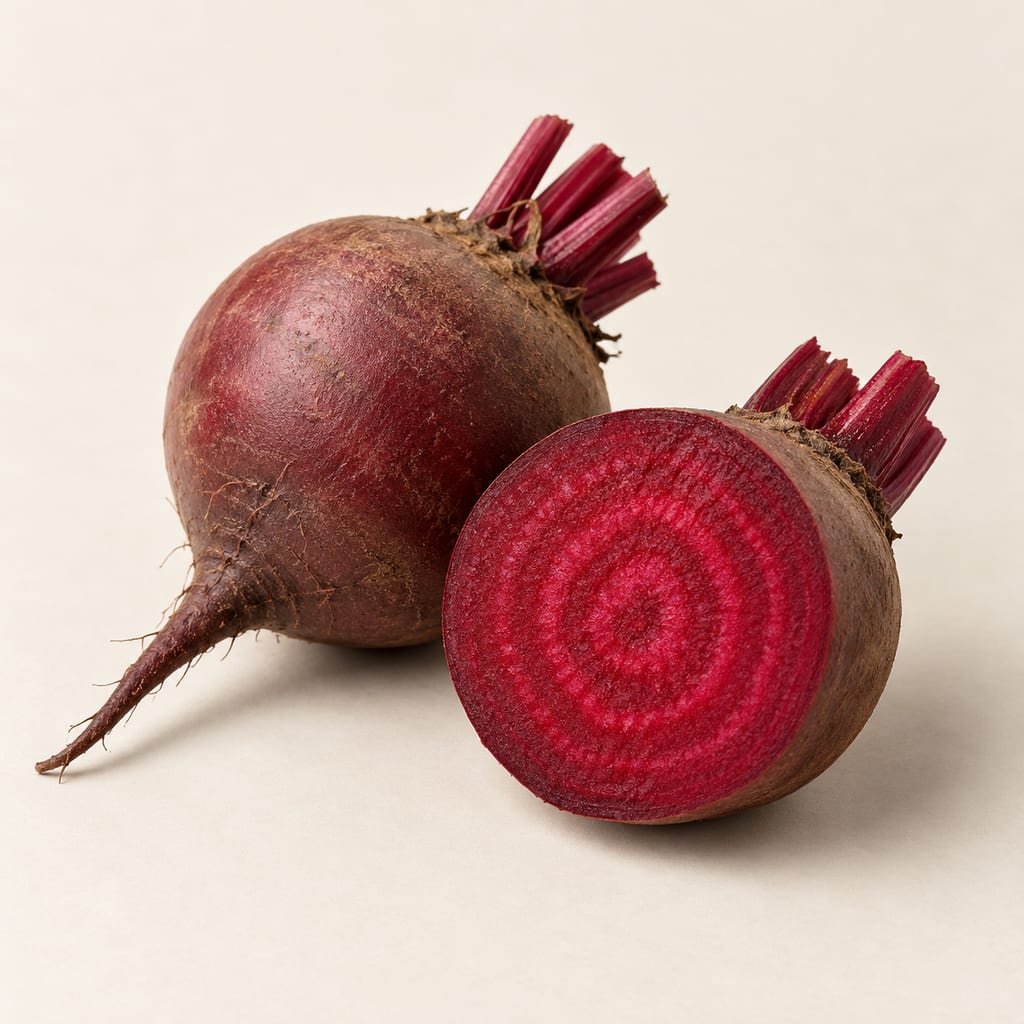
Beetroot
Beetroot is the red taproot of Beta vulgaris. In Poland its soured juice replaced hogweed as the base of barszcz from the eighteenth century, and beet leaven is still made for Christmas Eve.
 FermenteaWhere food goes to change
Zakwas z kiszonych buračków · Zakwas z kiszonych buračków · Beet leaven · Polish beetroot leaven · Beet brine
Zakwas buraczany is the fermented red-beet liquid used as the sour base for Polish beet barszcz. The liquid is made from beetroot, garlic, salt and water, and the official sources give no quantities.
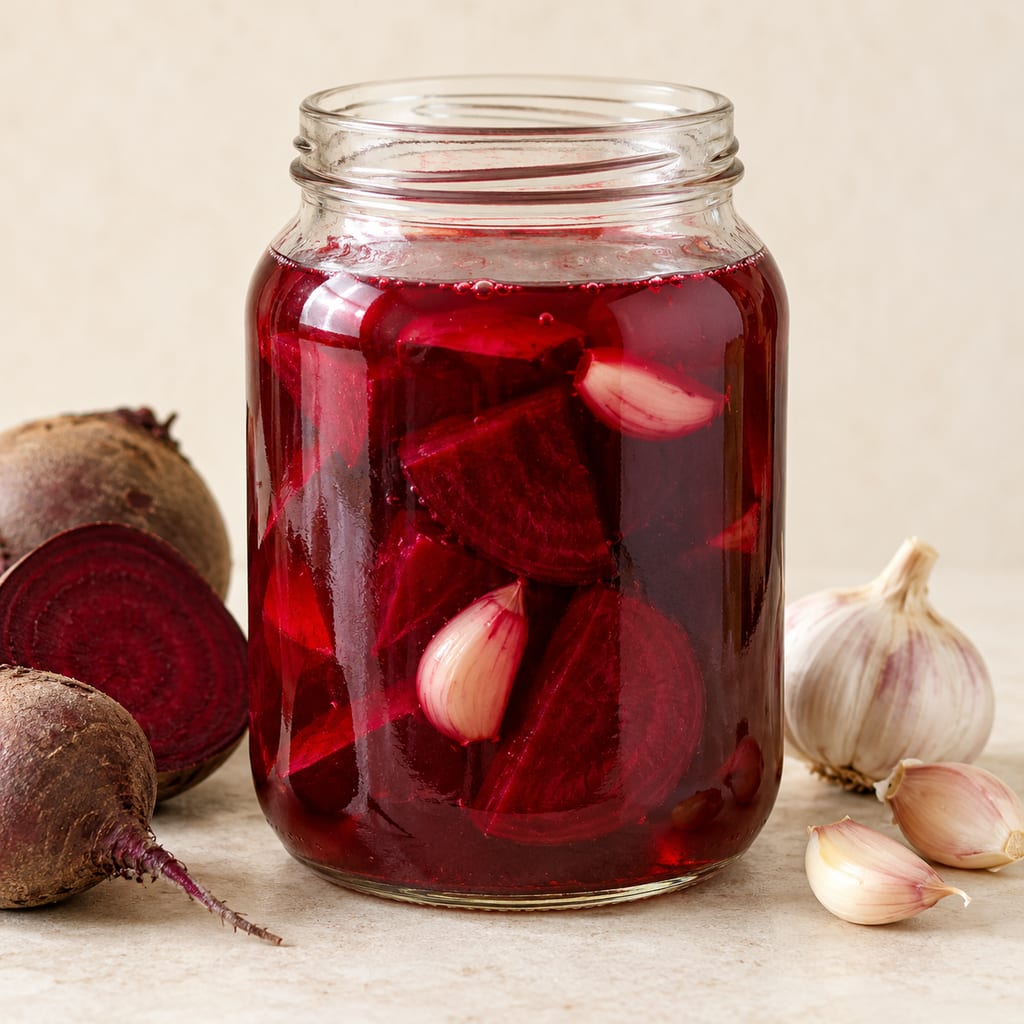
Zakwas buraczany is the sour, dark-red liquid that forms when beetroot ferments with garlic, salt and water. In Polish cooking the liquid is the ferment and beet barszcz is the dish made from it. The official record stresses that the leaven is distinct from the fermented beet pieces and from the soup.
The register describes the product as naturally cloudy and unfiltered, dark red, with a beet and garlic character. The sour taste develops during fermentation. The register lists beetroot, garlic, salt and water and gives no quantities, pH or endpoint. A 2024 study of spontaneous beetroot leaven varied slice thickness, temperature and time in controlled batches, which shows the method can be studied but does not give a household formula.
The register says beet fermentation mattered before Christmas Eve, because the traditional barszcz was expected to use beet leaven and fermented beets. The liquid is still used in other dishes. That supports a seasonal culinary association, not an exclusive season.
The leaven appears under several names in Polish sources, including zakwas buraczany, kwas z buračków and kwas buraczany. Separate regional register entries describe similar beet liquids in Mazowsze and Podlaskie. Those are comparators. Their process details are not evidence for the national entry.
The sources give no quantities, no fermentation duration for a household batch and no storage limit. The laboratory study is a controlled experiment and its values are not safety limits. Sourness, colour and smell do not establish safety, and the word zakwas does not show a specific alcohol content.
The Ministry record was published on 18 October 2022 and says the product entered Poland’s List of Traditional Products on 26 September 2022. Those are listing dates, not invention dates. The record quotes Janusz Czapski on lactic-fermented beetroot in barszcz. The cookbook title it cites, Kucharz Polski: 1635 praktycznych przepisów, gives a count of recipes; the 1635 is not an origin date for beet leaven.
Scaling: source batch only
The register gives no salt concentration, pH, endpoint or storage limit. The 2022 beverage-category listing does not establish alcohol content or safety.
Hazard sourceUse a separately validated fermentation method for salt rate, endpoint and storage. Smell, taste and appearance do not establish safety.
Control sourceDo not treat the word zakwas or the register listing as evidence of safety.
The 2024 study used research batches and does not provide a household formula.
The register describes the leaven as a Polish culinary tradition and does not assign a narrower locality.
Beetroot is the red taproot of Beta vulgaris. In Poland its soured juice replaced hogweed as the base of barszcz from the eighteenth century, and beet leaven is still made for Christmas Eve.
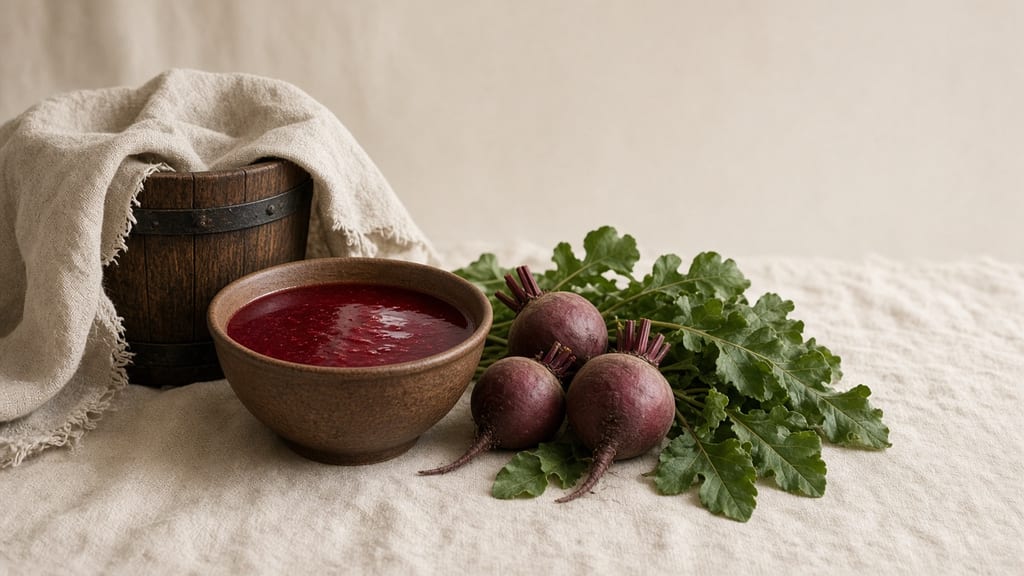
Before beetroot, Polish barszcz was a soup of soured hogweed leaves. Herbals, menus and an old cookbook show how a rye sour and then the beet barrel took over its name.
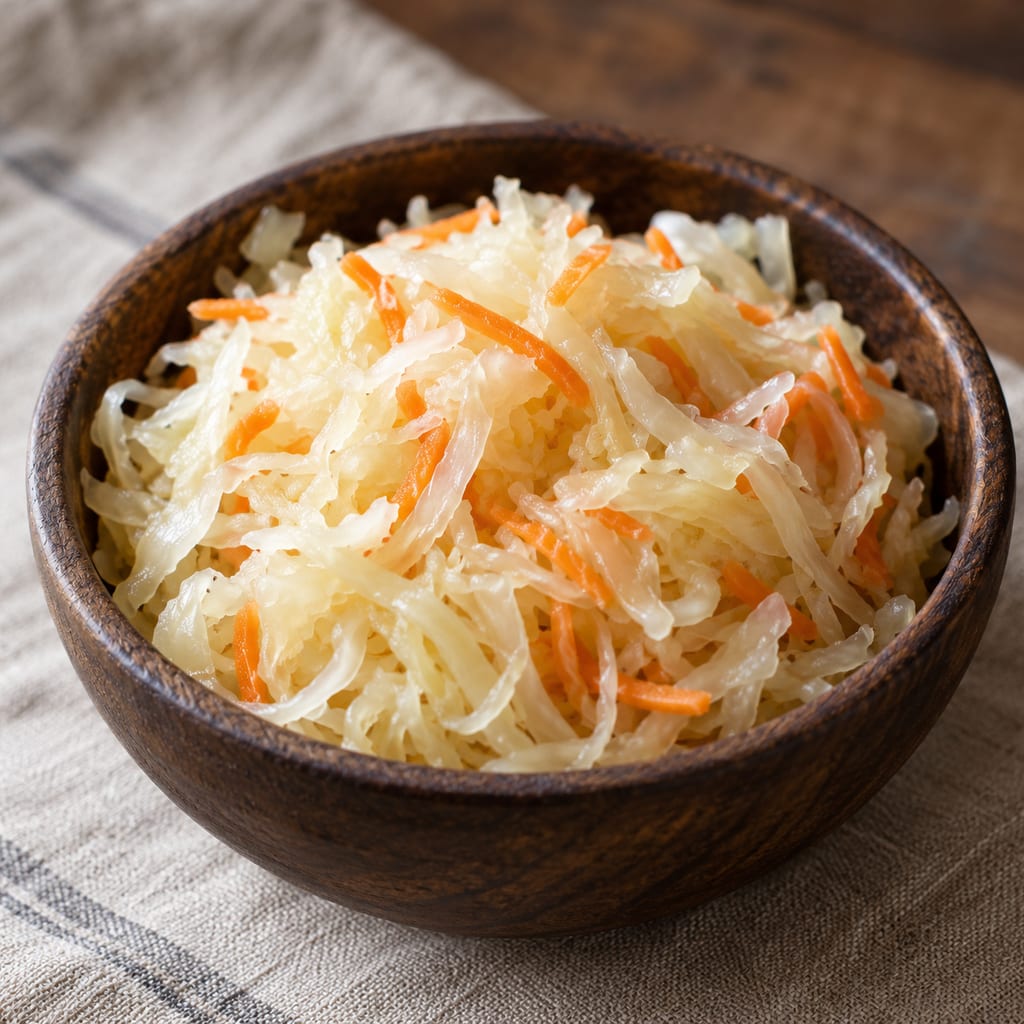
Kapusta kiszona z beczki is barrel-fermented cabbage from the Kołobrzeg area, entered on Poland’s List of Traditional Products in 2008. It is salted and fermented, with raw grated carrot added after souring.
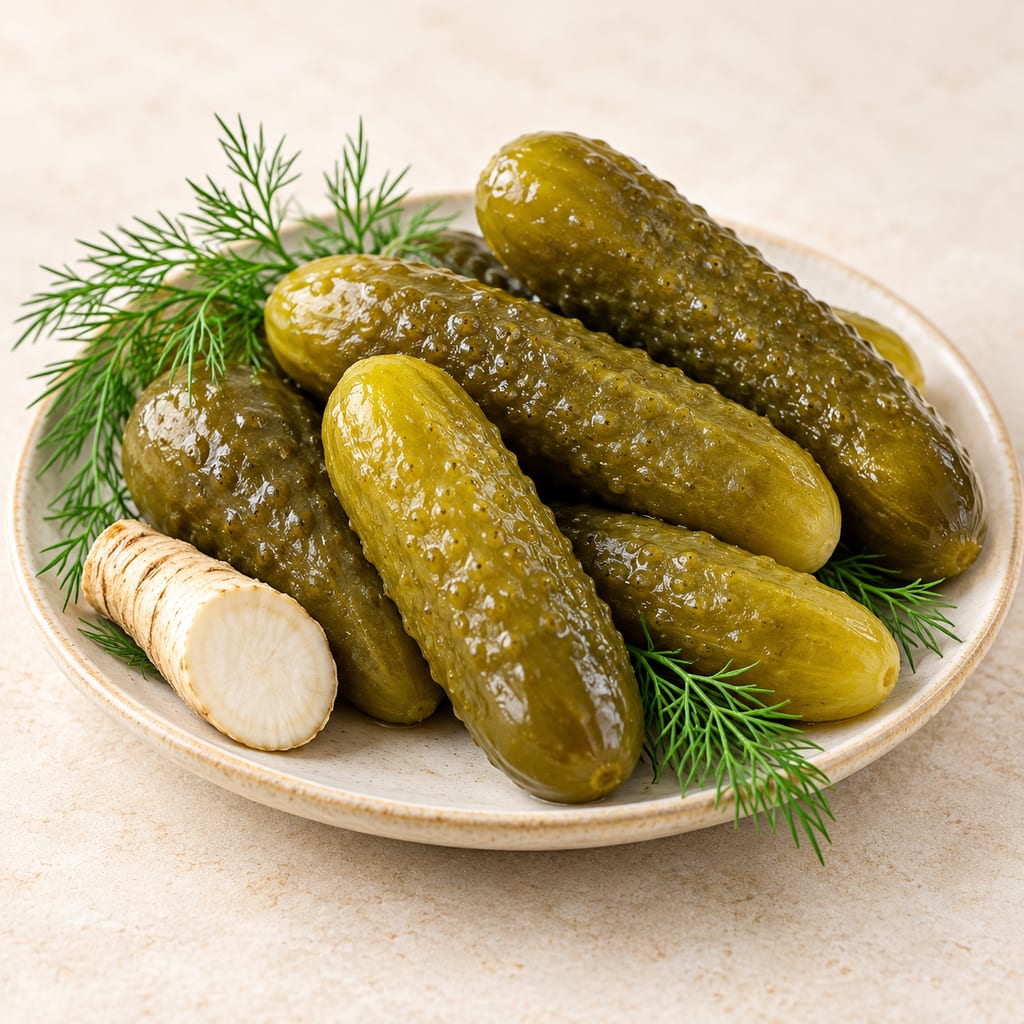
Ogórki kiszone are Polish brine-fermented cucumbers. Two registered local practices keep the barrels in a well near Zakliczyn and under lake water at Kalisz Pomorski. Neither gives a validated process.

A yeast-raised wheat ring shaped from a firm dough, briefly boiled and baked. This source-batch formula gives a gently malted crust and a chewy crumb.
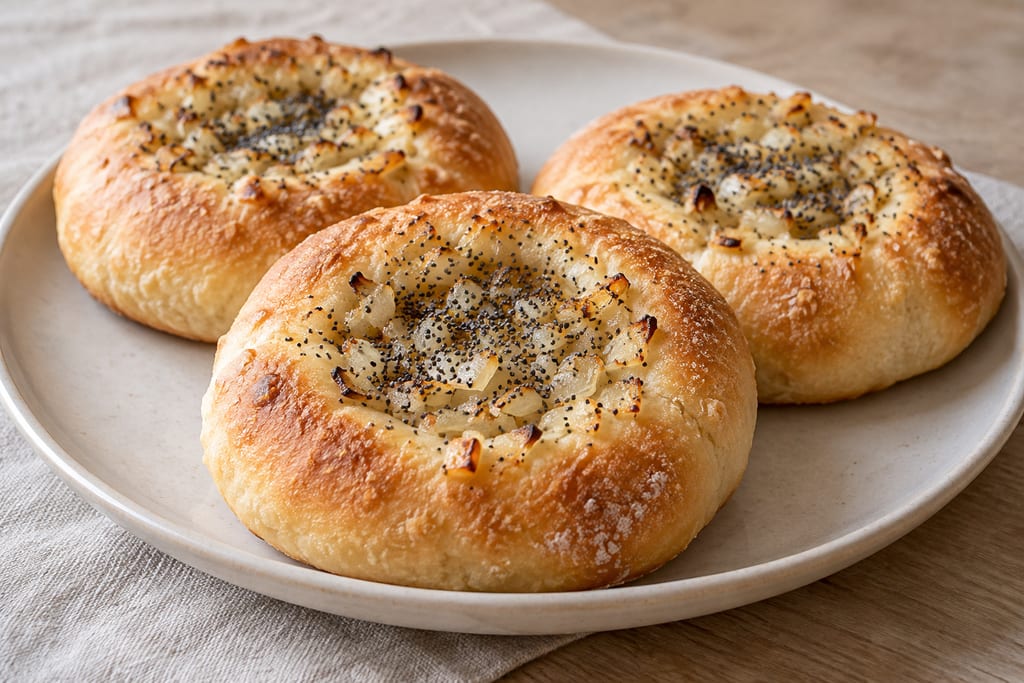
Bialys are soft, yeasted wheat rolls baked without boiling, each shaped with an onion-filled central depression instead of a hole.
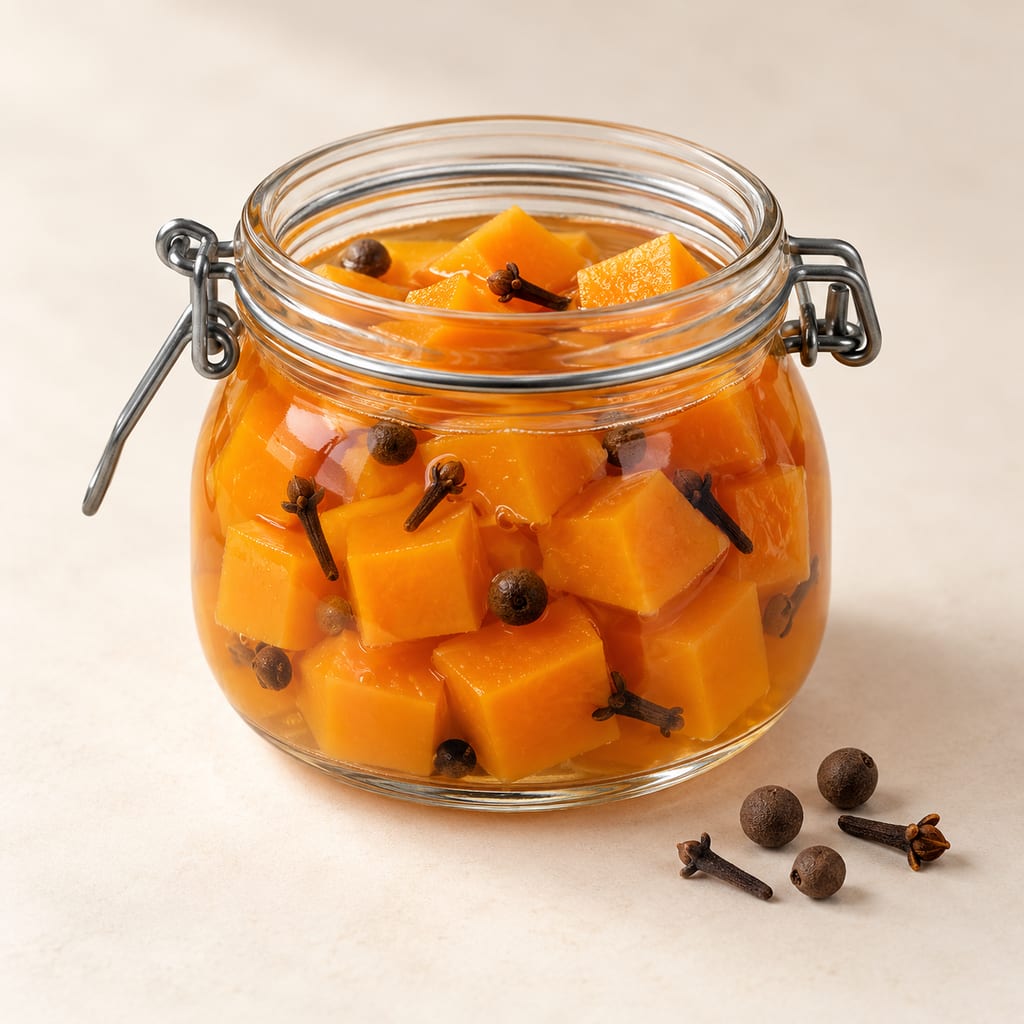
Dynia marynowana: Freeze for winter; small fresh portion refrigerated up to 48 hours.
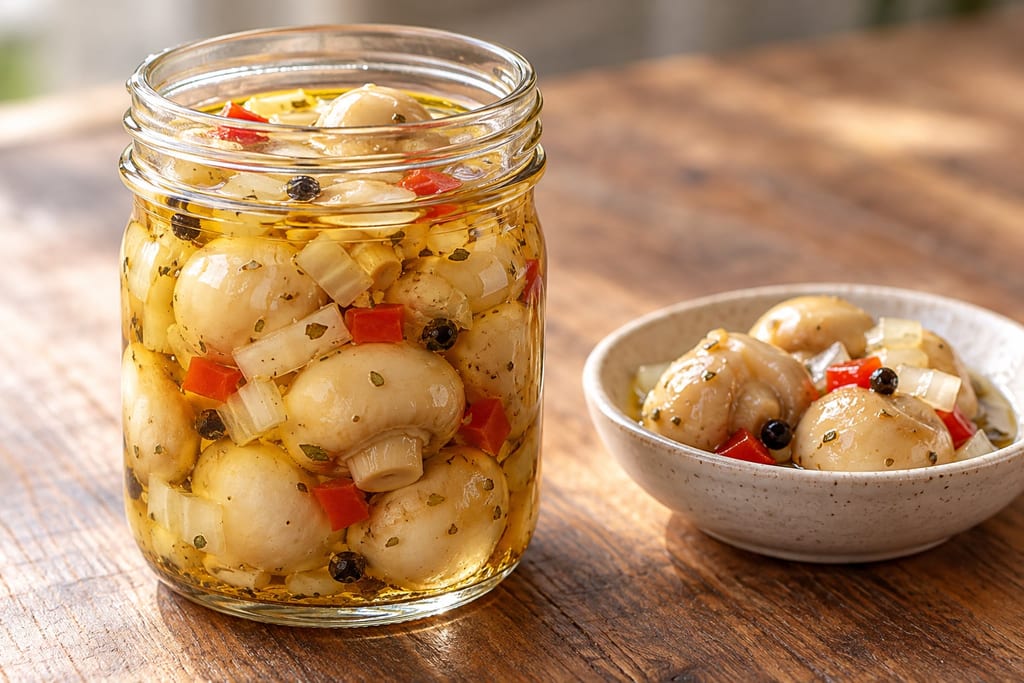
Small edible mushrooms are briefly cooked and packed in a seasoned vinegar marinade, a sweet-sour preserve served cold in Poland and neighbouring cuisines.
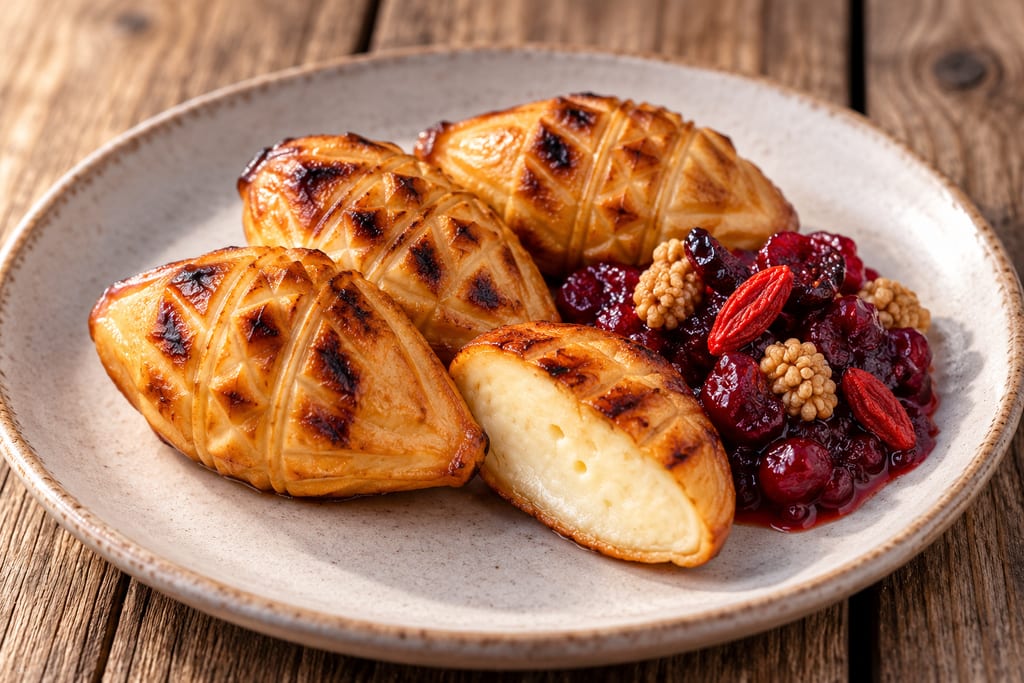
Small Oscypek are grilled until the exterior is crisp and the cheese softens, then served with cranberry, goji berries and mulberries.
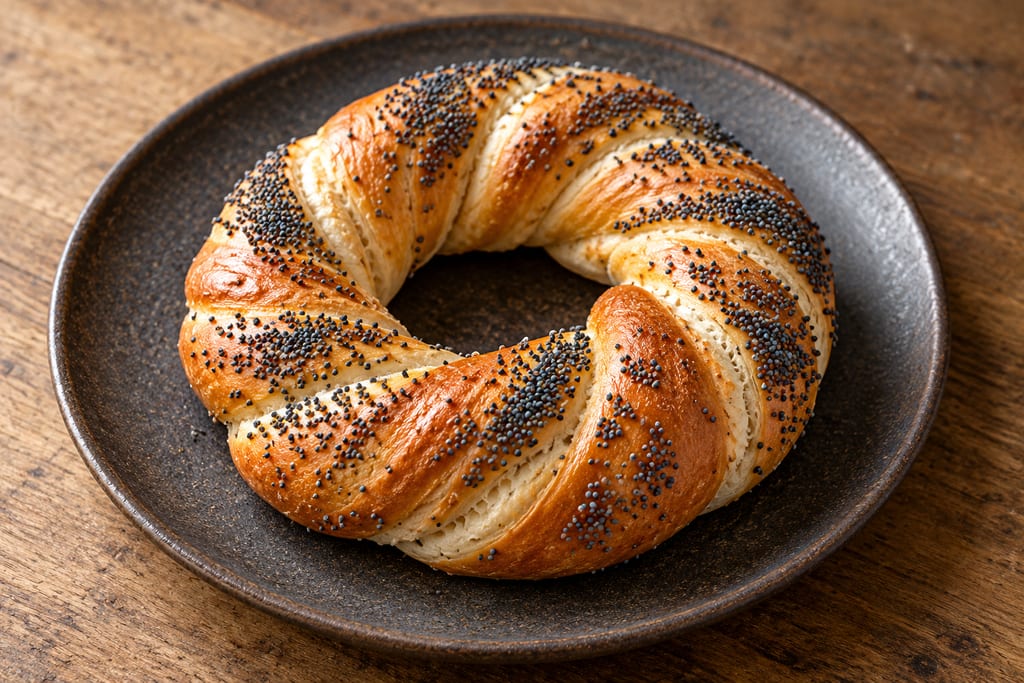
A home version of the Kraków twisted ring: yeast dough is braided, briefly dipped in boiling water, topped with seeds or salt, then baked. It is not represented as a certified PGI product.
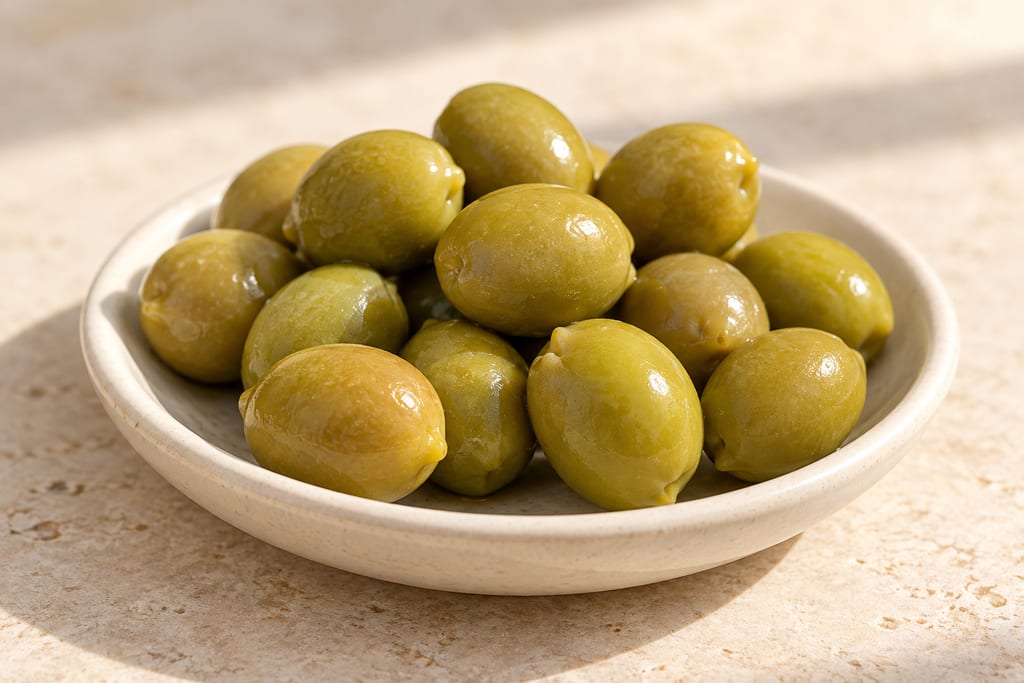
A Portuguese table-olive product from the Negrinha cultivar in northeastern Portugal, sold in three commercial styles, two of them brined fermentations and one oxidised to black.
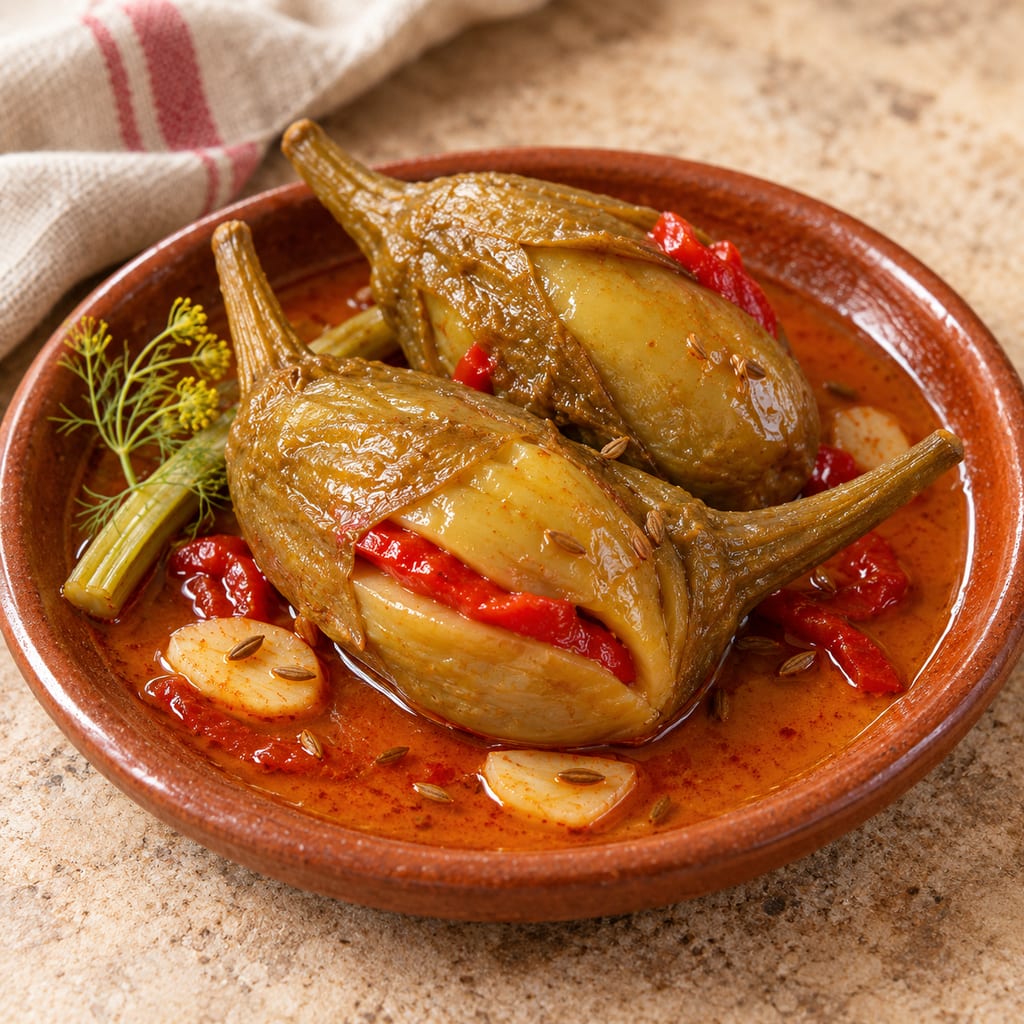
A protected aubergine preserve from Ciudad Real in Spain: tender fruit of the local Dealmagro variety, cooked briefly and then fermented in a vinegared, paprika-seasoned dressing.
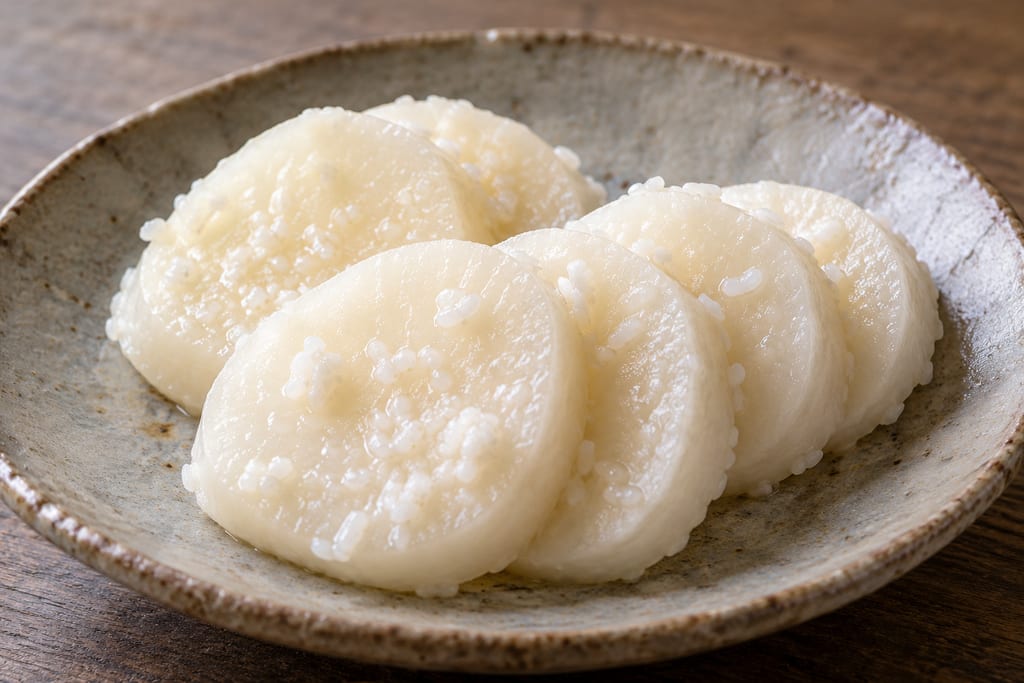
A sweet, crisp Japanese daikon pickle from Tokyo's Nihonbashi district, made by salting fresh radish and dressing it in rice koji, sugar or koji amazake without the heavy drying used for takuan.
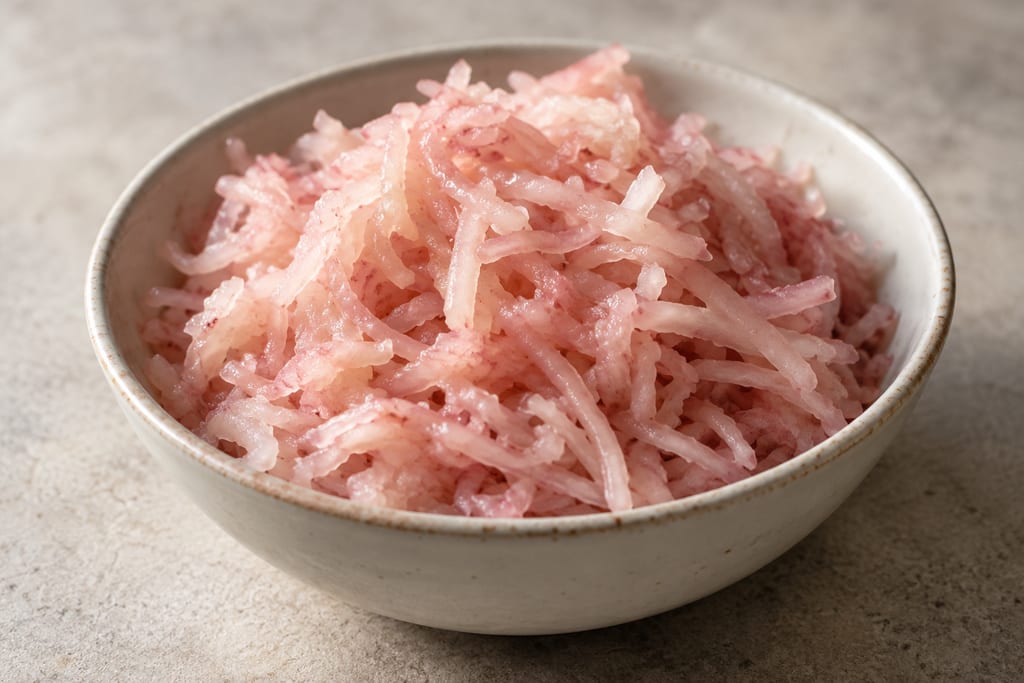
Source-specific Brovada DOP producer method for Friuli Venezia Giulia turnips and red-grape marc. This records a regulated producer process; it is not a validated home-scale recipe.
An industrial fermentation patio places factory-made fiberglass-reinforced polyester olive tanks below floor level, with drainage and transfer infrastructure arranged around the buried vessels.
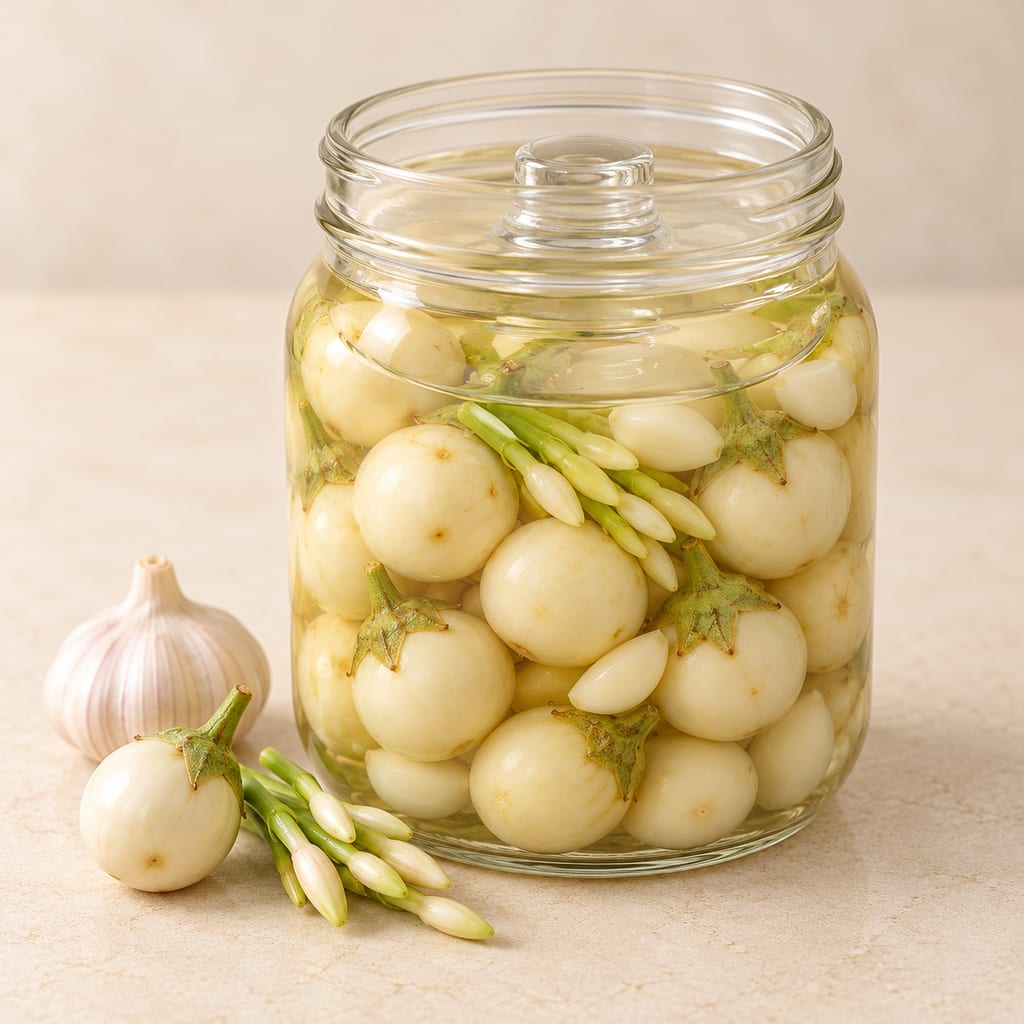
Vietnamese salted and fermented small eggplant, dried on the day of purchase, then held submerged in warm salty water with garlic and galingale flower for a week or longer.
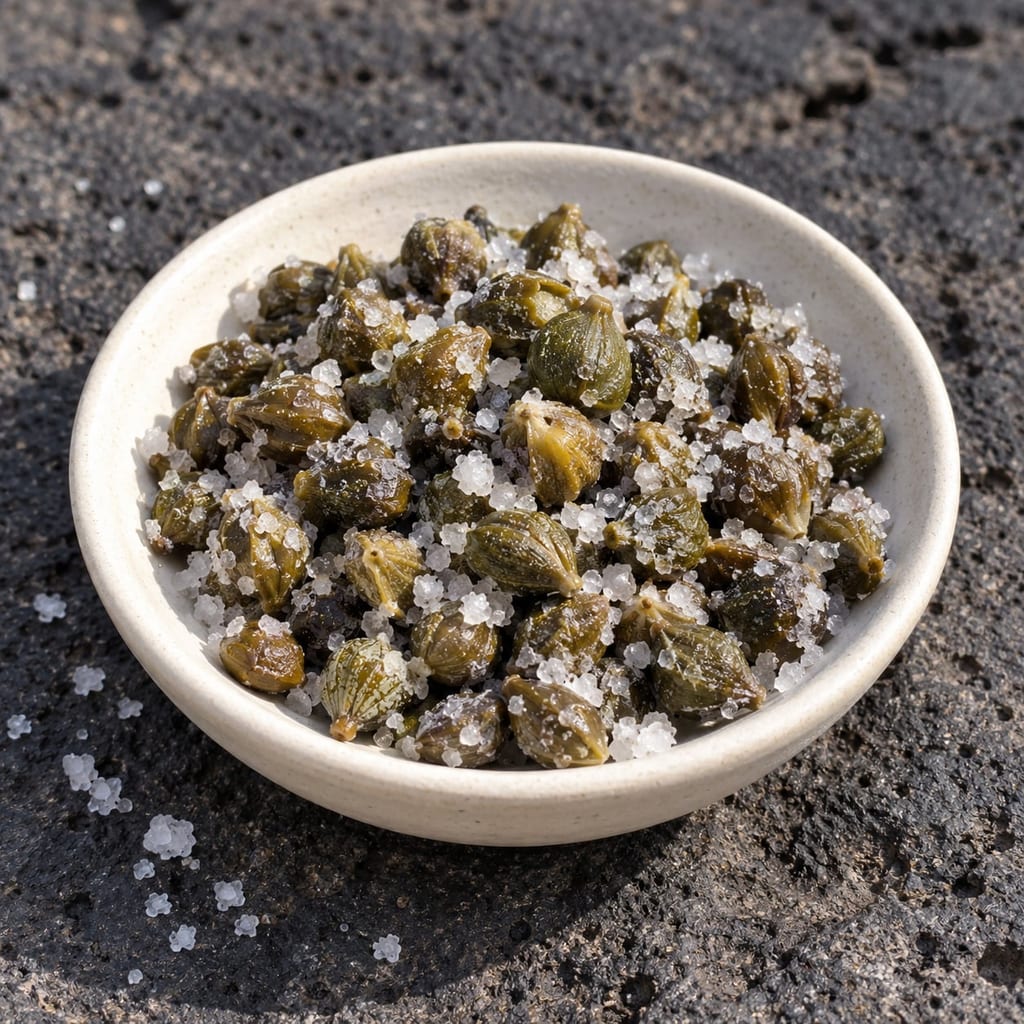
A protected Sicilian product: unopened caper buds from the island of Pantelleria, dry-salted with sea salt in a two-stage process that encourages lactic fermentation.
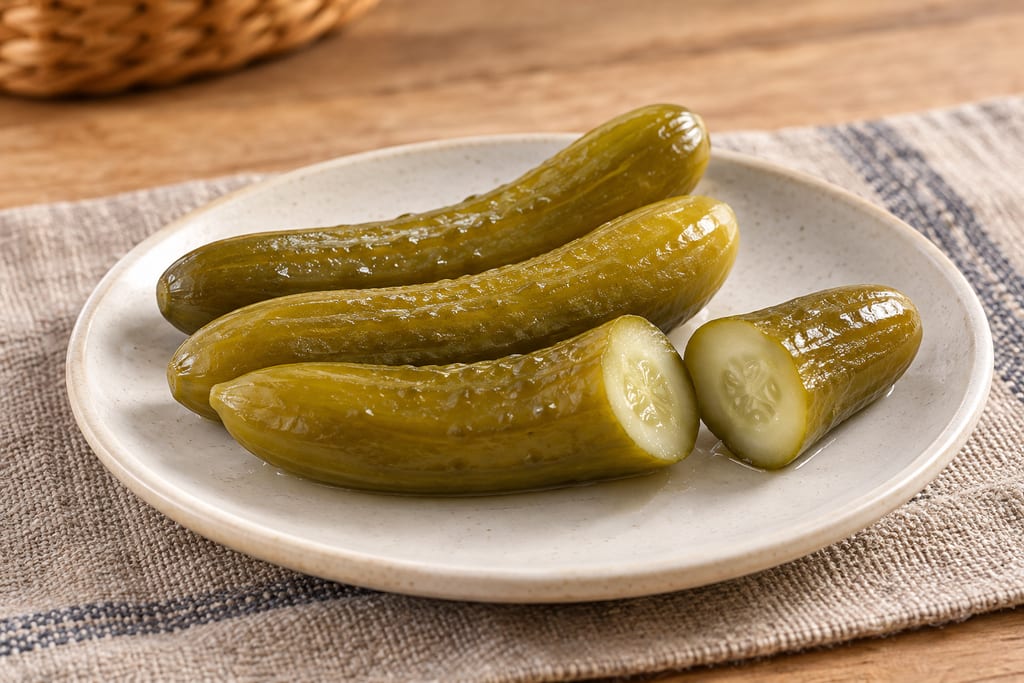
Çubuk turşusu is a registered pickle from Çubuk district in Ankara. Its cucumber variant is sold as Salatalık Turşusu, and a commercial specification sets its brine and room-temperature period.
No community contributions have been published for this entry yet.
Sign in to contribute. Published comments and photos are free to read.
Polish Ministry of Agriculture and Rural DevelopmentMethod · History · Geography
Zakwas z kiszonych buračkówBeetroot, garlic, salt and water; naturally cloudy, unfiltered liquid
Sour base for beet barszcz and Christmas Eve cooking
Listed 26 September 2022
Cited in: Overview; Making the leaven; Barszcz and the Christmas Eve table; Names and related registers; Limits and safety
Polish Journal of Food and Nutrition Sciences 74(3) (2024), 255–267Safety
Spontaneous Fermentation of Beetroot: Effect of Fermentation Time and Temperature and Slice Thickness on Leaven QualityControlled research batches varying time, temperature and slice thickness
Cited in: Making the leaven; Limits and safety